1
K. Vadivelan
2
B. Priyaraj
CORRESPONDING AUTHOR
1K. Vadivelan M.P.T (Paediatric Neurology)
Associate Professor,
SRM College of Physiotherapy,
SRM University, Tamil Nadu.
Int J Physiother. Vol 2(2), 459-464, April (2015) ISSN: 2348 - 8336
ABSTRACT
Background: Children adopting different styles of sitting in class rooms may have an influence over the hamstring length which indirectly produces an effect on posture, gait and musculoskeletal problems. Hence, physiotherapists play an important role in preventing the problems that are to be developed due to the sitting posture adopted at school. Hence, it is important for all the health professionals to understand and know about the effect of different sitting styles of children in school over the children health.The purpose of this study was to determine the influence of two sitting postures (crossed leg sitting and bench sitting) on hamstring flexibility in school going children. Aim of the Study to observe the influence of bench sitting and crossed-leg sitting on hamstring flexibility in school going children.
Methods: 200 school children (105 boys and 95 girls) from private schools (those who are bench sitting) and 200 school children (109 boys and 91 girls) from government schools (those who are crossed leg sitting) aged 6-10 years were included in this study. Active Knee Extension (AKE) test with the aid of a simple and economically cheap stabilizing apparatus was used to determine hamstring flexibility. Measurements were taken for both right and left knee.
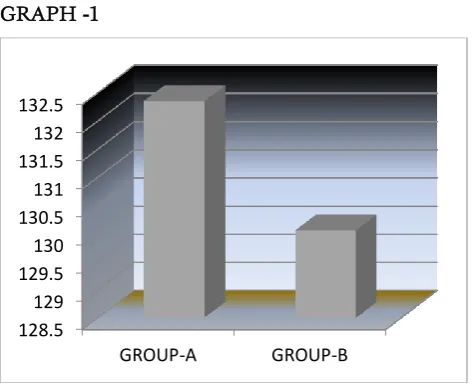
Results: The mean Active Knee Extension (AKE) score for bench sitting children was 132.4 and for crossed leg sitting children was 130.1. The difference observed in knee extension range of motion between the groups was statistically significant (p<0.05).
Conclusion: Hamstring flexibility was greater in bench sitting children as compared to crossed leg sitting children.
Keywords:Active Knee Extension (AKE); hamstring flexibility; bench sitting; crossed leg sitting.
Received 17th March 2015, revised 27th March 2015, accepted 08th April 2015
DOI: 10.15621/ijphy/2015/v2i2/65254
www.ijphy.org
2MPT (Paediatrics)
INTRODUCTION
The definition of posture according to the American Orthopaedic Association, made in 1947 says “Good posture is a state of equilibrium of muscles and skeleton that protect the body’s supporting structures from damage or deformation in any state of rest or work. Bad posture is a relation of body parts that causes increasing effort on the supporting structures, wherein there is less efficient body-base equilibrium.”
Children spend about 80% of their school time in the classroom performing various activities like reading, writing, etc which require them to sit continuously for long hours. Thus, the school children are at a special risk of adapting poor postural habits. The students of the primary school in India use bench and desk in the classroom in urban setups, however in rural areas the students sit on the floor with folded knees in an Indian
traditional sitting posture1.
In right angled seating, such as in bench or desk, the children acquires a ‘slumped’ posture to compensate for fatigue and discomfort, resulting in posterior rotation of the pelvis, accentuation of thoracic kyphosis and cervical lordosis, loss of lumbar lordosis of the spine and increased risk of tissue trauma in the sacral area. According to some authors the tendency for the pelvis to rotate posteriorly may be due to tension in the hamstrings and gluteal muscles which promotes flexion of the lumbar spine hence inducing posterior rotation of
the pelvis.2 Moreover faulty posture during
childhood is an important causal factor for the development of degenerative conditions of the spinal column, which present in adults in the form of back pain, with or without functional
disturbances.3
The hamstring muscles are located in the posterior thigh and are connected to the hips from one side and to the knee from the other, so that they can
flex knee.4 Hamstring is an important antigravity
muscle of the lower limb and its flexibility is important for maintaining normal posture and gait
in both adults and children.5 The lack of hamstring
muscle extensibility creates a decrease of pelvic mobility that leads to an invariable biomechanical change in the pressure distribution in spine. Hence, poor hamstring flexibility has been
associated with postural deviations, gait
limitations, increased risk of falls, and
susceptibility to musculoskeletal injuries.6
Active knee extension (AKE) test attempts to indicate hamstring musculotendinous length by measuring the angle of knee flexion during active knee extension while the hip is held at 90º of
flexion and intratester reliability is high for this
test7. Polyvinyl chloride (PVC) hollow tubes were
used as stabilizing apparatus for the performance of active knee extension test as it is simple, easy and portable to use, light, easily cut, commonly available in hardware stores, and inexpensive. When used with a universal goniometer, this apparatus allows measurement in the active knee extension test to be conducted by a single assessor
without assistance.8
The lordosed seat posture, regularly interspersed with movement, is the optimal sitting posture and assists in maintaining lumbar postural health and
preventing low back pain.2 Children adopting
different styles of sitting in class rooms may have an influence over the hamstring length which indirectly produces an effect on posture, gait and
musculoskeletal problems. Hence,
physiotherapists play an important role in preventing the problems that are to be developed due to the sitting posture adopted at school. Hence, it is important for all the health professionals to understand and know about the effect of different sitting styles of children in school over the children health. So aim of this study is to find the influence of bench sitting and crossed-leg sitting on hamstring flexibility in school going children. PROCEDURE
Approval was obtained from the concerned authoritative school Headmaster for institutional ethical committee clearance. Both male and female aged 6-10 years were recruited on the basis of inclusion criteria like absence of back pain or hip pain that might limit the test performance and Subjects willing to participate in the study. Informed consent was obtained from parents of all the subjects. Subject’s age, gender, height, weight and Body Mass Index was noted. The exclusion criteria was Impairment of musculoskeletal system affecting the spine or lower extremities, Previous back and lower limb surgery, spine / lower extremity injuries in the last six months, Physically challenged children.
ACTIVE KNEE EXTENSION TEST
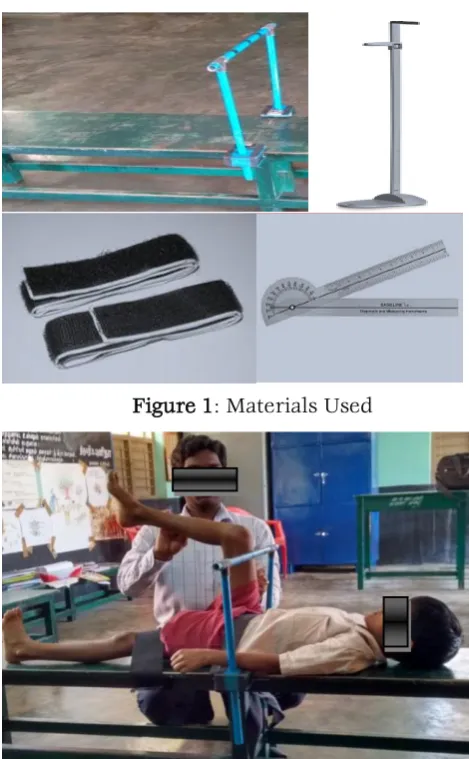
The apparatus was based on those used by an
earlier study.9 it consists of single horizontal bar
anchored (removable) by two vertical poles on either side of the bench. Participants were positioned on bench in supine position with both lower extremities extended. Both anterior superior iliac spines were positioned by aligning them with the vertical bars of the apparatus. The one lower limb not being tested was secured to the bench with Velcro straps across the thigh and another over anterior superior iliac spine to stabilize the pelvis. The hip of the extremity to be measured was maintained at 90º flexion such that the anterior thigh will rest against the horizontal bar of PVC throughout the procedure.
To ensure right hip position, goniometric measurement of hip flexion angle was done. The subject then actively extended the knee till he/she felt slight pain in posterior thigh. The angle of right knee was measured using the goniometer. After the measurement, the right hip was maintained at 90 degree while the subject was told to relax knee into a flexed position. Measurement was recorded on data sheet. The test was then performed for the left leg.
Figure 1: Materials Used
Figure 2: Measurement of hamstring flexibility
DATA ANALYSIS
The data were analyzed using descriptive (means and standard deviation) and inferential statistics. Comparison of means value of both Group A and Group B was done using one sample t- test. Independent t- test was used to compare the changes in mean values of Group A and Group B. Relationship between age, body mass index, and active knee extension in both Group A and Group B was also investigated using the Pearson Product Moment Coefficient of Correlation. All statistical analyses were performed on an IBM compatible microcomputer using the Statistical Package for the Social Sciences (SPSS) (Windows version 17.0 Chicago IL, USA). An alpha level of 0.05 or less was
taken to indicate statistical significance.
Independent t-test is used to compare difference between two groups
RESULTS
Table 1: Physical characteristics and total active knee extension score of subjects in both groups
GROUP-A (Bench sitting)
GROUP-B (Crossed-leg
sitting)
Variables Mean ± SD Mean ± SD
Age (yrs) Height(m) Weight(kg)
BMI (kg/m2)
AKE Total
7.9± 1.4 1.2 ± 0.1 22.9± 5.7 15.0± 2.7 132.4± 7.5
8.0±1.4 1.2 ± 0.1 20.7 ±5.0 14.6±1.6 130.1±7.4
Table 1 shows the subject’s mean height, weight and body mass index (BMI) for Group-A were 1.2
m, 22.9 kg and 15.0 kgm-2respectively.Mean height,
weight and body mass index (BMI) for Group-B
were 1.2 m, 20.7 kg and 14.6 kgm-2respectively. The
total active knee extensions score for Group-A and Group-B were132.4 and 130.1 respectively.
Table 2: Correlation between age, body mass index and active knee extension of group a
(children sitting on bench).
VARIABLES AGE BMI AKE
Total
AGE Pearson Correlation p-value
1 .108
.129 .108 .129
BMI Pearson Correlation p-value
.108 .129
1 .096 .177
Table 3: Correlation between age, body mass index and active knee extension of group b
(children sitting on crossed-leg).
AGE BMI AKE
Total
AGE Pearson Correlation p-value
1 .100 .161
-.048 .503
BMI Pearson Correlation p-value
.100 .161
1 .118 .095
Table 3 shows correlation between age, BMI, and active knee extension (AKE) for Group-B. The result shows those age and body mass indexes were not statistically correlated with active knee extension in Group B (children sitting on crossed-leg) (P > 0.05).
Table 4: Comparison with in group-A and group-B over mean value of active knee extension test
Groups t-value df P-value
Group-A 258.575 199 0.000
Group-B 260.944 199 0.000
Table 4 shows the difference of mean values within Group-A and Group-B using one sample t test. The result showed significant difference of means within the Group-A and Group-B (P < 0.05). Table 5: Comparison of Mean Values of Active Knee Extension Tests Between Group A (Bench Sitting) and Group B (Crossed-Leg Sitting)
t df p-value
3.202 398 0.000
Table 5 above showed comparison of mean values between Group-A and Group-B. The result indicated that there was significant difference in active knee extension between Group-A and Group-B (t = 3.202, P = 0.000).
GRAPH -1
Graph-1 show there is a difference between hamstring flexibility in children sitting on bench (group-A) and children sitting with crossed leg (group-B). The result infers that children sitting on bench have higher hamstring flexibility when compared with children sitting with crossed leg. DISCUSSION
This study focused onto observes the influence of desk sitting and crossed-leg sitting on hamstring flexibility in school going children. The sample frame consists of 400 students 200 students from government schools – (crossed-leg sitting) and 200 students from private schools – (bench sitting). Group-A (bench sitting) had 105 boys and 95 girls where as Group-B (crossed-leg sitting) included 109 boys and 91 girls. 11 Kattankulathur block schools were covered. Based on the selection criteria, a simple random sampling according to the age required was conducted.
Several measures are used to test muscle lengths
around the pelvis10. Both the Straight Leg Raise Test
and Active Knee Extension Test are used to measure the length of the hamstrings. The active knee extension test involves less motion in the lumbar spine and pelvis and so was chosen for this test. It should be noted that the active knee extension test relies on the subject’s perception of exertion at full range and this is a limitation to the test. Active knee extension test has been considered by some to be gold standard for
hamstring flexibility assessment.11 Active knee
extension test has demonstrated good reliability when performed with various stabilizing apparatus
such as wooden frame apparatus12,13,cross wire.9
PVC hollow bars has shown excellent inter and intra-rater reliability. PVC bars were also used for this study. Researchers have suggested conducting the study on larger sample size for a preciser reliability of PVC hollow bars.
In goniometry, locating the end point is essential and must be exact to ensure accurate repeatability of measurements. In the active knee extension test, locating the end point point of motion was reliable because we used strict body stabilization of adjacent joints. Because knee extension was active and subjects were instructed not to force the leg past the point of initial mild resistance, we believe motion in the hip of tested extremity, the sacroiliac joints was eliminated.
The mean active knee extension score for Group-A was 132.4º and for Group B was 130.1º. The difference between the means of two groups was statistically significant. This study indicates that Group A (bench sitting) children exhibit greater hamstring flexibility than Group B (crossed-leg
128.5 129 129.5 130 130.5 131 131.5 132 132.5
sitting) which is not consistent with findings of
Dutta et alwho concluded that Indian traditional
sitting posture had lesser muscular stress and greater stability in posture than sitting on bench among primary school children.
Sitting in chair or bench had a statistically and clinically better hamstring flexibility than floor sitting (crossed leg) children which would provide a better, musculoskeletal discomforts free future to those children, because as previously discussed Hamstring flexibility may indirectly influence posture, gait, musculoskeletal problems which
goes in hand with Kotwicki, et al14,15 stated that
sitting slight forward bending position provides a more stable posture and eliminates the impact of lower limb discrepancy, and therefore may be considered a recommended position.
Hamstring flexibility was found to be compromised in floor sitting children; also discomfort in legs is reported by those children while assessment was taken. The greater prevalence of discomfort in legs and thigh during sitting on the floor with folded knees might be due to compression of leg and thigh muscles as well as imposing body weight on these areas. Extreme flexion of lower limb at knee joints probably another associated factor for discomfort. A normative data score had been established for hamstring length for school children using sit and reach test. No such data was available for active knee extension test to measure the hamstring flexibility in school going children. Thus, future studies can be done to determine normative data scores for school going children using active knee extension test.
The limitations of this study were difficulty in educating the subjects about the procedure, as the procedure was time consuming as it was performed by a single therapist, only 11 schools from entire Kattankulathur block could be covered due to time limitations. Comparison of active knee extension scores between boys and girls was not done in this study. Normative data scores for school going children using Active Knee Extension scores can be established in further studies. Active knee extension scores for both males and females needs to be established. Influence of Physical Education (play time) duration should be considered. Future studies should determine whether obesity influences Active Knee Extension scores.
CONCLUSION
In school going children, crossed leg sitting postures reduces the hamstring flexibility. Thus, sitting postures influences hamstring flexibility as bench sitting children have shown greater
hamstring flexibility by demonstrating
greater active knee extension score as compared to crossed leg sitting children. Normative data scores needs to be established to determine as to which extent the sitting postures influence hamstring flexibility.
REFERENCES
1. SubrataDutta, Prakash C Dhara. Evaluation of
different sitting postures of rural primary school boys in the class room. J Ergonomics. 2012; 2(3):1-7.
2. Jenny Pynt, Joy Higgs, Martin Mackey. Seeking
the optimal posture of the seated lumbar spine. Physiotherapy Theory and Practice. 2001; 17 (1):5-21.
3. KnuselJelk. Pezzi-balls and ergonomic
furniture in classroom. Results of a prospective longitudinal study. Schweiz Rundsch Med Prax. 1994.5; 83(14):407-13.
4. Abdolali Banaeifar, Morteza Rash, Yahya
Sokhangoiee. The correlation of sit and reach test and the hip joint’s goniomter angle in terms of measurining the hamstring muscle’s length in krajs primary school students. International Journal of sports studies. 2013; 3(12), 1307-131.
5. GawasVaruna, Dharmayat Snehal, Nitsoore
Peeyoosha. Hamstring index in school children-A cross sectional study in Belgaum city. Indian Journal of Physiotherapy and Occupational Therapy. 2011; 5 (2):162-168.
6. Mayora-Vega, D; Merino-Marban, r. and
Garcia-Romero, J.C. Validity of sit and reach with plantar flexion test in children aged 10-12 years. Rev.int. med.scienc.act.fis.deporte-ISSN: 1577-0354.
7. Neto T1, Jacobsohn L, Carita AI, Oliveira R.
Reliability of the Active Knee Extension Test and the Straight Leg Raise Test in Subjects With Flexibility Deficits. J Sport Rehabil. 2014
8. Mohamad Sharif. A. Hamid, Mohamed Razif
Mohamed Ali, and Ashril Y. Use of Interrater and Intrarater Reliability of the Active Knee Extension (AKE) Test among Healthy Adults. J Phys Ther Sci. 2013; 25(8): 957–961.
9. Richard Gajdosik and Gary Lusin. Hamstring
Muscle tightness: reliability of an Active-Knee-Extension Test. Phys Ther.1983; 63:1085-88.
10.Norris, C.M., 2000. Back Stability. Human
Kinetics. Champaign, Illinois.
11.Davis DS, Quinn RO, Whiteman CT, Williams
JD, Young CR. Concurrent validity of four clinical tests used to measure hamstring flexibility. J Strength Cond Res. 2008; 22 (2):583-8.
12.Denise M. Cameron, Richard W Bohannon.
and Active Straight Leg Raise test. JOSPT. 1993; 17(5):257-60.
13.Bandy WD, Irion JM The effect of time on static
stretch on the flexibility of the hamstring muscles.PhysTher.1994;74(9):845-50.
14.Kotwicki T, Chowanska J, Kinel E, Lorkowska
M, Stryla W, et al. (2007) Sitting forward bending position versus standing position for
studying the back shape in scoliotic children. Scoliosis.2007;2(1):S34.
15.C.M. Norris, M. Matthews Correlation between
hamstring muscle length and pelvic tilt range during forward bending in healthy individuals: An initial evaluation. Journal of Bodywork and Movement Therapies. 2006; 10:122–126.
Citation
Vadivelan .K, Priyaraj .B. (2015). INFLUENCE OF TWO DIFFERENT SITTING POSTURES ON
HAMSTRING MUSCLE FLEXIBILITY IN SCHOOL GOING CHILDREN. International Journal of