---
*Corresponding author (): [email protected]
Received: 16 April 2016/ Revised: 01 June 2016 Accepted: 11 June 2016
Improving
Pistacia vera
micropropagation: with emphasis on the efficiency
of minerals, vitamins and PGRs
Moharram-ali Delijam, Ghasem-Ali Garoosi*, Esmaeil Nezami-Alanagh
and Ramin Hosseini
Department of Biotechnology, Faculty of Agriculture and Natural Resources, Imam Khomeini International University (IKIU), Qazvin, Iran.
ABSTRACT
:
A complete micropropagation protocol was developed for Pistacia vera cv. Ghazvini, an important rootstock in Pistachio orchards in Iran. In present study, the efficiency of a new medium called GNH (Garoosi, Nezami and Haddad) was investigated against some standard media. Different vitamins, calcium (Ca) sources and plant growth regulators (PGRs) were tested on in vitro shoot multiplication and root induction. Results indicated that mean number of shoots (4.25 ± 0.25), and productivity (69.87 ± 9.19 mm) increased significantly when GNH medium formed the basal medium, compared to the standard media including Murashige and Skoog medium (MS), Juglans Medium (DKW), and McCown Woody Plant Medium (WPM). The most suitable concentration Ca and vitamin sources for shoot multiplication were 3.0 mM Ca gluconate and DKW-vitamins. The most suitable PGRs were a combination of 0.5 or 1.0 mg l-1 BAPand 0.1 mg l-1 IBA. The highest rooting parameters were obtained when 3.0 mM Ca gluconate or Fe-EDDHA (with 0.2
mM Fe) were incorporated into the GNH medium containing 2.0 mg l-1α-naphthalenacetic acid (NAA). Finally, nearly
70% of the plantlets survived acclimatization in the greenhouse. The results suggested the GNH medium (supplemented with Ca gluconate and DKW-vitamins), as a considerable and specific medium for the rapid micropropagation of Pistacia vera cv. Ghazvini.
KEYWORDS: Ca gluconate, Ghazvini, GNH medium, Micropropagation, Minerals, Pistacia vera, Vitamins
INTRODUCTION
Pistachia vera cv. Ghazvini is one of the most popular rootstocks in pistachio orchards in Iran. It shows sever tolerance to salinity (21) together with resistance to drought as well as calcareous regions (5). Recent reports have shown that the micropropagation of some cultivars of Pistacia vera using conventional media including MS (26), DKW (12) and/or WPM (22) is costly because of the low shooting rates as well aslosing a large number of tissue culture-generated plants, as a result of
also play a decisive role in plant growth and development processes (2). Despite this, to date there is no report concerning the effect of vitamins on the shoot multiplication of Pistacia vera. Aside from the aforementioned components, studying the interaction effect of different concentrations of BAP with IBA on shoot multiplication would be beneficial to develop a repeatable protocol for shoot multiplication of this rootstock. Chemical composition of the culture medium is one of the most important factors during in vitro rooting of woody plants (4). The nutrient medium of Murashige and Skoog, conventionally used for the in vitro rooting of Pistacia vera, contains iron (Fe) in the chelated form of Fe-EDTA (3). However, the results presented by Antonopoulou and co- workers (2007) indicate that the concentration of Na2EDTA (37.3 mg l-1) is in excess of
chelating Fe2+ (27.8 mg l-1 FeSO4.7H2O). Furthermore,
many problems are attributed to the use of Fe-EDTA, such as precipitation, decrease of Fe availability and the production of toxic formaldehyde (4, 16, 35).
On the other hand, the replacement of EDTA by Fe-EDDHA has had positive effects on the rooting of various species including Malus sp. (9) Prunus sp. (4, 24), and Rosa sp. (30). However, there is no report concerning the effect of different Fe sources on in vitro rooting of Pistacia vera.The main objectives of the present study are to develop an integrated protocol for the micropropagation of Pistacia vera cv. Ghazvini with emphasis on a) introducing GNH medium (a new medium) compared to the other standard media including MS, WPM, and DKW; b) studying the effect of different Ca and vitamin sources, BAP as well as IBA on shoot multiplication and c) studying the effect of different Ca and Fe sources on in vitro rooting of this rootstock.
MATERIALS AND METHODS
Axillary nodal segments of pistachio (Pistacia vera, cv. Ghazvini) rootstock were obtained generously from the Agriculture Research Center of Qazvin Province, Iran. The nodal sections (2 – 3 cm in height, containing dormant vegetative axillary buds) were excised from 30-year-old trees and used as explants to establish the micropropagation system. The nodal sections were washed under running tap water and were then sterilized in 96% ethanol for 3-4 s, followed by 0.1% HgCl2
solution containing 0.1% (v/v) Tween-20, for 5 min. The explants were then rinsed 3 times with sterile distilled water. Finally, dormant buds with a small amount of
surrounding tissue were separated from the nodal sections and placed vertically in a natural orientation on the MS medium (26) supplemented with 3% sucrose, 1.0 mg l-1
BAP (6-benzylaminopurine), 0.1 mg l-1 IBA
(Indole-3-butyric acid), and 0.57% Plant Agar (Duchefa).
The pH was adjusted to 5.7 prior to autoclaving (121ºC, 1 kg. cm-2. s-1 for 20 min). The cultures were kept under
16 h photoperiod (white fluorescent lamps; irradiance of 65 µmol. m-2. s-1) and day/night temperature of 25/22 ±
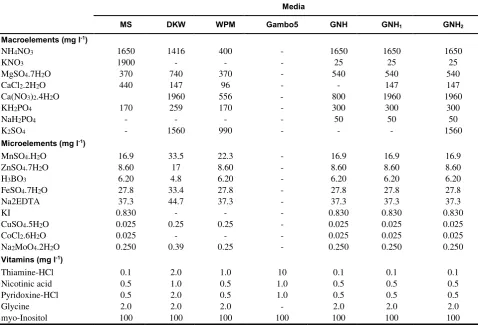
2°C) and subcultured into a fresh medium every 3 to 4 weeks. Shoot multiplication experiments. In the first experiment, GNH medium (27) was tested in combination with GNH1, GNH2, standard MS (26),
Woody plant medium (WPM) (22) and DKW (12) media (Table 1).
In the second experiment, the GNH medium (free of Ca and vitamins) was used as the basal medium and the effect of Ca source (1200 mg l-1 (3.0 mM) Ca gluconate
or 800 mg l-1 (3.38 mM) Ca Nitrate) in combination with
MS-vitamins (26), DKW-vitamins (12), or Gamborg B5-vitamins (14) (Table 1) was investigated. In the third experiment, the effects of different concentrations of BAP (0.0, 0.5, 1.0, or 2.0 mg l-1) in combination with IBA
(0.0, 0.1, or 0.2 mg l-1) based on GNH medium
supplemented with Ca gluconate (3.0 mM) or Ca Nitrate (3.38 mM) were tested. All the media were supplemented with 3% sucrose, 1.0 mg l-1 BAP, 0.1mg l-1 IBA, and
0.57% Plant Agar and pH adjusted to 5.7 before autoclaving. Each experiment, with a completely randomized design with subsampling, consisted of four replications with 4 shoots per treatment. These explants had been obtained from shoot-tip multiplication cultures. The experiments were repeated three times. Mean number of shoots, shoot length, fresh weight and productivity (sum of mean number of shoots × Length) per explant as well as growth quality observations were recorded. Rooting experiments. For root induction and elongation, well developed shoots (1 to 3 cm in length) were used.
In the first experiment, the effect of IBA and NAA each at 0.0, 1.0, 2.0, 3.0, or 4.0 mg l-1 based on GNH medium
supplemented with 3% sucrose and 0.57% Plant Agar were investigated, separately. Shoots were grown on auxin-containing medium for one week and then on the auxin-free medium for the next two weeks.
Table 1. Mineral compositions (mg l-1) of the different culture media according to commercial formulations (Duchefa 2003-2005) used for Pistacia vera cv. Ghazvini micropropagation.
or Fe-EDDHA (with 0.1 or 0.2 mM Fe)] on rooting of shoots were determined based on the GNH medium supplemented with 3% sucrose, 2.0 mg l-1 NAA, and
0.57% Plant Agar. The choice of auxin was based on the results of the first experiment. Each experiment, with a completely randomized design, consisted of four replicates with 4 shoots per treatment. These explants had been obtained from shoot-tip multiplication cultures. The experiments were repeated three times. The percentage of rooted shoots per treatment, the number of roots per rooted shoot, and root length were determined.
Acclimatization of the rooted plantlets. After 4 to 5 weeks on the rooting medium, rooted plantlets were washed and transplanted into 10 × 9 cm plastic pots containing sterilized the mixture (3 Perlite: 1 peat moss). Plantlets were acclimatized for 3 weeks in plastic boxes placed in a growth chamber at 24 °C under a 16 h photoperiod (100 µ mol. m-2.s-1). Covers were gradually opened during the
last week to lower the humidity, followed by transferring the acclimatized plants to a greenhouse in 16 × 15 cm plastic pots containing 3 peat moss: 1 perlit.
Data analysis
Since the data did not follow a normal distribution, the number of shoots and roots were square root transformed and rooting percentage was arcsin transformed. The transformed data were then analyzed with the analysis of variance using the GLM procedure of SAS Software (Version 9.1) followed by Duncan's multiple range test (DMRT) to test for significant differences between means at P ≤ 0.05.
RESULTS
Most explants (60%) were free from contamination after sterilization. Axillary buds break appeared 3 to 4 weeks after placing the explants on the MS medium containing 1.0 mg l-1 BAP and 0.1 mg l-1 IBA. After 5 to 6 weeks,
shoots were 1.0 to 1.5 cm in length and excised into shoot tips and nodal sections for shoot multiplication. Medium browning because of secretion of phenolic compounds occurred within a few days after culture, but was diminished by frequent transferring to the fresh medium
Media
MS DKW WPM Gambo5 GNH GNH1 GNH2
Macroelements (mg l-1)
NH4NO3 1650 1416 400 - 1650 1650 1650
KNO3 1900 - - - 25 25 25
MgSO4.7H2O 370 740 370 - 540 540 540
CaCl2.2H2O 440 147 96 - - 147 147
Ca(NO3)2.4H2O 1960 556 - 800 1960 1960
KH2PO4 170 259 170 - 300 300 300
NaH2PO4 - - - - 50 50 50
K2SO4 - 1560 990 - - - 1560
Microelements (mg l-1)
MnSO4.H2O 16.9 33.5 22.3 - 16.9 16.9 16.9
ZnSO4.7H2O 8.60 17 8.60 - 8.60 8.60 8.60
H3BO3 6.20 4.8 6.20 - 6.20 6.20 6.20
FeSO4.7H2O 27.8 33.4 27.8 - 27.8 27.8 27.8
Na2EDTA 37.3 44.7 37.3 - 37.3 37.3 37.3
KI 0.830 - - - 0.830 0.830 0.830
CuSO4.5H2O 0.025 0.25 0.25 - 0.025 0.025 0.025
CoCl2.6H2O 0.025 - - - 0.025 0.025 0.025
Na2MoO4.2H2O 0.250 0.39 0.25 - 0.250 0.250 0.250
Vitamins (mg l-1)
Thiamine-HCl 0.1 2.0 1.0 10 0.1 0.1 0.1
Nicotinic acid 0.5 1.0 0.5 1.0 0.5 0.5 0.5
Pyridoxine-HCl 0.5 2.0 0.5 1.0 0.5 0.5 0.5
Glycine 2.0 2.0 2.0 - 2.0 2.0 2.0
Table 2. Effect of different basal media containing 30 g l-1 sucrose, 1.0 mg l-1 BAP, and 0.1 mg l-1 IBA on the mean number of shoots, fresh weight, shoot length, and productivity of Pistacia vera cv. Ghazvini shoot tips. Means ± SE of 4 replicates each with four cultures; different letters within a column indicate significant differences at P ≤ 0.05 according to DMRT.
during the first weeks after initiation. First experiment: Number of shoots (P = 0.0005), fresh weight (P = 0.0354), average length(P = 0.008), and productivity (P = 0.0067) were significantly affected by the medium, so that the greatest shoot number (4.25) with the highest productivity (69.87 mm) were observed on the GNH medium (Table 2). Whilst almost two shoots were produced on the MS, WPM, and DKW media, the longest shoots (up to 2.0 cm) were obtained on the latter one. The shoots grown on the GNH1 and GNH2 media, on the other
hand, were yellowish with significantly fewer shoot number than GNH medium. In addition, the shoots grown on both MS and WPM were yellowish and shorter with the lowest productivity (Table 2). Whereas, on the GNH medium, the shoots were healthy with the production of fewer calli (at the cut edge) compared to DKW, GNH1,
and GNH2 (Data not shown). Second experiment: From
the above mentioned results, GNH medium was, substituted as the basal medium to study the effect of Ca source, including 1200 mg l-1 (3.0 mM) Ca gluconate or
800 mg l-1 (3.38 mM) Ca Nitrate in combination with
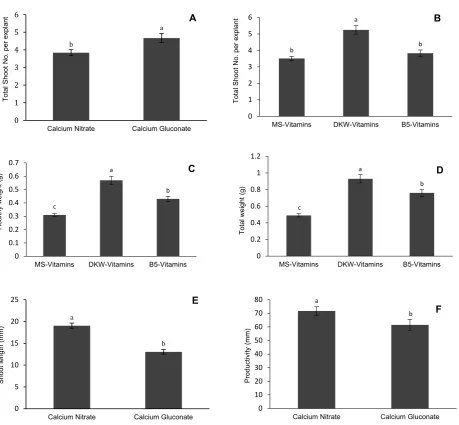
different vitamin sources including MS-vitamins, DKW-vitamins, or Gamborg B5-vitamins. Results indicate that the main factors (Ca and vitamin sources) significantly affected shoot number (P = 0.0043 and P = 0.0001, respectively) fresh weight(P = 0.0001), shoot length (P = 0.0001), and productivity (P = 0.0001), giving the maximum mean number of shoots on the GNH medium
supplemented with either 3.0 mM Ca gluconate (4.67) or DKW-vitamins (5.25) (Fig. 1A and B).
Also, the greatest fresh weight (0.93 g) was produced on the medium supplemented with DKW-vitamins (Fig. 1C). The role of Ca Nitrate, on the other hand, was noticeable on both shoot length and productivity parameters, attaining the longest shoots (19.05 mm) with the highest productivity (71.74 mm) (Fig. 1D and E). MS-vitamins, therefore, was replaced by DKW-vitamins to form the vitamin source of GNH medium.
Finally, in the last shoot-multiplication experiment (third experiment), the effect of different Ca sources (Ca gluconate or Ca Nitrate) in combination with IBA (0.0, 0.1, or 0.2 mg l-1) and BAP (0.0, 0.5, 1.0, or 2.0 mg l-1)
based on GNH medium were tested.
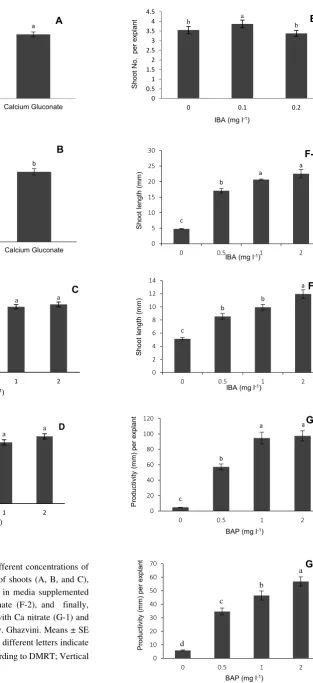
The results of ANOVA indicate that the number of shoots and fresh weight were significantly influenced by Ca source, IBA, and BAP. On the contrary, shoot length and productivity were significantly affected by the interaction effect of Ca source × BAP (each P = 0.0001) (data not shown).
The greatest mean number of shoots (3.86; P = 0.003) was obtained in the presence of Ca gluconate, whereas the highest fresh weight (0.8; P = 0.0001) was observed when Ca Nitrate was incorporated into the medium (Fig. 2A and B).
On the contrary, all shoots grown on the media supplemented with 0.5 mg l-1 BAP (3.38) were healthy Medium Shoot Number ±
SE Fresh weight (g) ± SE Shoot length (mm) ± SE Productivity (mm) ± SE
GNH 4.25±0.25a 0.27±0.03abc 16.25±1.63ab 69.87±9.19a
GNH1 2.06±0.24b 0.33±0.02ab 14.53±1.40abc 33.27±7.31bc
GNH2 2.18±0.26b 0.38±0.04a 15.87±2.03ab 40.62±8.5bc
MS 1.93±0.18b 0.23±0.03bc 10.80±0.75bc 21.2±2.79c
WPM 2.08±0.28b 0.217±0.03bc 9.8±0.38c 20.83±3.23c
Figure 1. The effect of Ca and vitamin sources on the mean number of shoots (A, B), fresh weight (C), shoot length (D), and
productivity (E) in Pistacia vera cv. Ghazvini. Means ± SE of 4 replicates each with four cultures; different letters indicate significant differences at P ≤ 0.05according to DMRT; Vertical bars show standard errors.
but almost 25% of the obtained shoots in the medium containing 2.0 mg l-1 BAP were discarded as a result of
hyperhydricity and STN (Data not shown). The effect of IBA, on the other hand, for the mean number of shoots was significantly different (P = 0.0157), giving the greatest shoot numbers (3.87) when medium was supplemented with 0.1 mg l-1 IBA (Fig. 2E). The effect of
IBA, on the other hand, for the mean number of shoots was significantly different (P = 0.0157), giving the greatest shoot numbers (3.87) when medium was supplemented with 0.1 mg l-1 IBA (Fig. 2E).
Finally, shoot length and productivity were affected significantly by the interaction effect of BAP × Ca source (each P = 0.0001). In the media supplemented with Ca
nitrate, using either 1.0 or 2.0 mg dm -3, the highest shoot
length and productivity (22.54 and 97.37 mm, respectively) (Fig. 2F-1 and F-2) were observed, whilst 2.0 mg l-1 BAP in the presence of Ca gluconate produced
the highest shoots (11.96 mm) with the greatest productivity (56.85 mm) (Fig. 2 G-1 and G-2). Rooting experiments. Well-developed shoots (with 1.0 to 2.0 cm in length) were used as the plant material to establish rooting experiments. While callus was visible at the shoot base after 1 week of culture on the auxin-containing GNH medium, a subsequent transferring on auxin-free GNH medium for 2 weeks was sufficient to initiate root elongation. Results of the first experiment indicate that NAA induced roots more effectively than IBA, producing b a 0 1 2 3 4 5 6
Calcium Nitrate Calcium Gluconate
T o ta l S h o o t N o . p e r e x p la n
t A
b a b 0 1 2 3 4 5 6
MS-Vitamins DKW-Vitamins B5-Vitamins
T o ta l S h o o t N o . p e r e x p la n t B c a b 0 0.1 0.2 0.3 0.4 0.5 0.6 0.7
MS-Vitamins DKW-Vitamins B5-Vitamins
H e a lt h y w e ig h t (g ) C c a b 0 0.2 0.4 0.6 0.8 1 1.2
MS-Vitamins DKW-Vitamins B5-Vitamins
T o ta l w e ig h t (g ) D a b 0 5 10 15 20 25
Calcium Nitrate Calcium Gluconate
S h o o t le n g th ( m m ) E a b 0 10 20 30 40 50 60 70 80
Calcium Nitrate Calcium Gluconate
Figure 2. The effect of Ca souce, different concentrations of IBA, and BAP on the mean number of shoots (A, B, and C), fresh weight (D and E), shoot length in media supplemented with Ca nitrate (F-1) and Ca gluconate (F-2), and finally, productivity in media supplemented with Ca nitrate (G-1) and Ca gluconate (G-2) in Pisiacia vera cv. Ghazvini. Means ± SE of 4 replicates each with four cultures; different letters indicate significant differences at P ≤ 0.05 according to DMRT; Vertical bars show standard errors.
. b a 0 1 2 3 4 5
Calcium Nitrate Calcium Gluconate
S h o o t N o . p e r e x p la n t A a b 0 0.1 0.2 0.3 0.4 0.5 0.6 0.7 0.8 0.9
Calcium Nitrate Calcium Gluconate
F re s h w e ig h t (g ) p e r e x p la n t B c b a a 0 1 2 3 4 5 6
0 0.5 1 2
S h o o t N o . p e r e x p la n t
BAP (mg l-1)
C c b a a 0 0.2 0.4 0.6 0.8 1 1.2
0 0.5 1 2
F re s h w e ig h t (g ) p e r e x p la n t
BAP (mg l-1)
D
b a b
0 0.5 1 1.5 2 2.5 3 3.5 4 4.5
0 0.1 0.2
S h o o t N o . p e r e x p la n t
IBA (mg l-1)
E c b a a 0 5 10 15 20 25 30
0 0.5 1 2
S h o o t le n g th ( m m )
IBA (mg l-1)
F-1 c b b a 0 2 4 6 8 10 12 14
0 0.5 1 2
S h o o t le n g th ( m m )
IBA (mg l-1)
F-2 c b a a 0 20 40 60 80 100 120
0 0.5 1 2
P ro d u c ti v it y (m m ) p e r e x p la n t
BAP (mg l-1)
G-1 d c b a 0 10 20 30 40 50 60 70
0 0.5 1 2
P ro d u c ti v it y (m m ) p e r e x p la n t
BAP (mg l-1)
a maximum of 18% shoots forming roots with 2.0 mg l-1
NAA (Data not shown). In the second rooting experiment, the effect of different Ca and Fe sources using 2.0 mg l-1 NAA based on GNH medium was
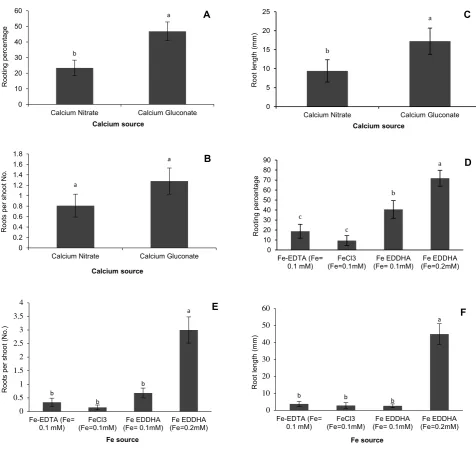
studied. Results indicate that both factors (Ca and Fe sources) significantly affected the rooting parameters including rooting percentage (P = 0.0013 and P = 0.0001, respectively), mean number of roots per shoot (P = 0.017 and P = 0.0001, respectively), and root length (P = 0.0121 and P = 0.0001, respectively), whilst their interaction was not significantly influenced (data not shown).
Ca gluconate compared to Ca nitrate improved rooting
percentage (46.87 %), mean number of roots (1.28), and root length (17.25 mm) (Fig. 3A, B, and C). Fe source had also a highly a significant effect on the parameters studied. The highest rooting percentage (71.87 %), the mean number of roots per shoot (3.0), and root length (44.99 mm) were obtained when Fe-EDDHA (with Fe = 0.2 mM) formed the Fe source of medium (Fig. 3D, E, and F). Whilst, the incorporation of Fe-EDDHA (with Fe = 0.1mM) compared to Fe-EDTA improved 2.0 folds (40.62 %) the rooting percentage, the lowest rooting percentage (9.37 %) was observed when FeCl3 (an
inorganic Fe source) was incorporated into the medium (Fig. 4c).
Figure 3. The effect of different Ca and Fe sources on the rooting percentage (A and D), the mean number of roots per shoot (B and E), and root length (C and F) for shoots from shoot tips of Pistacia vera cv. Ghazvini. Means ± SE of 4 replicates each with four cultures; different letters indicate significant differences at P ≤ 0.05 according to DMRT; Vertical bars show standard errors.
b a 0 10 20 30 40 50 60
Calcium Nitrate Calcium Gluconate
R o o ti n g p e rc e n ta g e Calcium source A a a 0 0.2 0.4 0.6 0.8 1 1.2 1.4 1.6 1.8
Calcium Nitrate Calcium Gluconate
R o o ts p e r s h o o t N o . Calcium source B b a 0 5 10 15 20 25
Calcium Nitrate Calcium Gluconate
R o o t le n g th ( m m ) Calcium source C c c b a 0 10 20 30 40 50 60 70 80 90 Fe-EDTA (Fe= 0.1 mM) FeCl3 (Fe=0.1mM) Fe EDDHA (Fe= 0.1mM) Fe EDDHA (Fe=0.2mM) R o o ti n g p e rc e n ta g e D b b b a 0 0.5 1 1.5 2 2.5 3 3.5 4 Fe-EDTA (Fe= 0.1 mM) FeCl3 (Fe=0.1mM) Fe EDDHA (Fe= 0.1mM) Fe EDDHA (Fe=0.2mM) R o o ts p e r s h o o t (N o .) Fe source E
b b b
Figure 4. Different stages of pistachio micropropagation. Shoot proliferation: a) GNH medium supplemented with 1 mg l-1 BAP, 0.1 mg l-1 IBA, DKW-vitamins; b) GNH medium supplemented with 2 mg l-1 BAP, 0.1 mg l-1 IBA, DKW-vitamin. Rooting stages: c) GNH medium containing 1200 mg l-1 Ca gluconate and 2.0 mg l-1 NAA. Acclimatization stage: d) Plastic pots containing sterilized mixture (3 peat moss: 1 perlit) (bar = 9 mm for all pictures).
Acclimatization of the rooted plantlets. In vitro plantlets were actively growing during the acclimatization process and no stress symptoms were observed after transfer to the greenhouse and transplanting to larger pots. In total, nearly 70% of the potted pistachio plantlets survived acclimatization (Fig. 4d).
DISCUSSION
Establishing reliable protocols for the mass multiplication of some economical cultivars of Pistacia vera is still one of the important subjects for in vitro plant culture researchers. There are numerous reports indicating that the in vitro establishment of Pistacia vera species on the standard media including MS, WPM, and DKW has been limited because of hyperhydricity, shoot tip necrosis, and the production of base callus at the cut edge (1, 3, 11).
In agreement with previous literatures, a primary comparison in the mineral composition of the standard media including DKW, MS, and WPM, indicated that
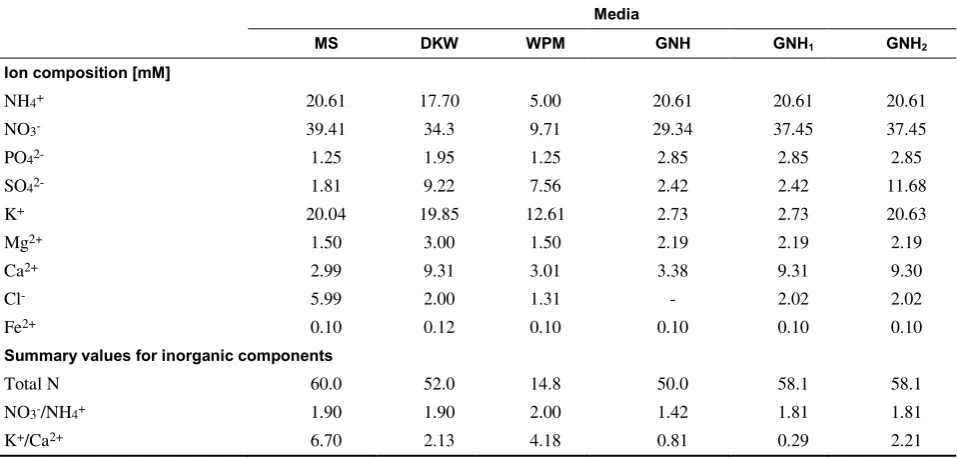
each one of these media suffered from some deficits in its mineral composition (20, 31). The most important difference between GNH medium and the standard media (MS, WPM, and DKW) is a decrease in the concentration of Cl-, SO42-, K+, Ca2+ (37; Table 3). The
NO3- / NH4+ ratio together with sufficient total nitrogen
are amongst the main pre-requirements to increase the multiplication rate in plants (20).
For instance, in agreement with our results (Table 2), Bell and coworkers (2009) reported that the low nitrogen content of the WPM led to chlorosis symptoms with the subsequent negative effects on shoot regeneration of pear, as a sensitive member of Prunus sp. to medium minerals. The K+ / Ca2+ ratio also play a decisive role in improving
growth parameters. Malavolta and coworkers (1997) reported that the high K+ / Ca2+ ratio causes Fe deficiency
in culture media. Interestingly, the calculation of the mentioned equation, indicate that GNH medium with a K+ / Ca2+ ratio of 0.83 is the lowest one in comparison
with MS, DKW, and WPM (Table 3). These results are in coincidence with those previous reports (28).
A
B
Table 3.Ion concentrations of the different culture media used for Pistacia vera cv. Ghazvini micropropagation. Minerals are based upon conversion from mg l-1 amounts.
Media
MS DKW WPM GNH GNH1 GNH2
Ion composition [mM]
NH4+ 20.61 17.70 5.00 20.61 20.61 20.61
NO3- 39.41 34.3 9.71 29.34 37.45 37.45
PO42- 1.25 1.95 1.25 2.85 2.85 2.85
SO42- 1.81 9.22 7.56 2.42 2.42 11.68
K+ 20.04 19.85 12.61 2.73 2.73 20.63
Mg2+ 1.50 3.00 1.50 2.19 2.19 2.19
Ca2+ 2.99 9.31 3.01 3.38 9.31 9.30
Cl- 5.99 2.00 1.31 - 2.02 2.02
Fe2+ 0.10 0.12 0.10 0.10 0.10 0.10
Summary values for inorganic components
Total N 60.0 52.0 14.8 50.0 58.1 58.1
NO3-/NH4+ 1.90 1.90 2.00 1.42 1.81 1.81
K+/Ca2+ 6.70 2.13 4.18 0.81 0.29 2.21
This does not, however, support the hypothesis proposed by Bosela and Michler (2008), where potassium dilution from 20.1 to 8.1 mM resulted in a 2- to 3-fold increase in hyperhydricity, indicating needs to the addition of potassium at high concentrations to the medium. Correria and coworkers (2003) reported that Ca depletion effects are always visible in young leaves, although photosynthetic efficiency is not affected. In this study, two new media were designed (GNH1 and GNH2, Tables
1 and 3) to assess the effect of Ca2+ and SO42- of the DKW
on shoot multiplication. As a result, growth parameters were not improved compared to the GNH medium, leading to a hypothesis that these ions are in excess of the required amounts for pistachio shoot growth and multiplication.
This is in agreement with our previous report (28) where the optimum concentration of Ca2+ for Prunus sp. shoot
multiplication using Neurofuzzy logic technology was determined up to 3.0 mM. Morad and Henry (1998) in contrast to our findings, proposed a new mineral composition for in vitro culture of Solanum paludosum with a large amount of Calcium than that of potassium element. The available reports indicate that the Cl- of
media would also be responsible for hyperhydricity symptoms in woody plants (11, 32).
The results presented here, indicated that pistachio shoot multiplication was also affected by the Ca source, giving the greatest shoot number with fewer STN symptoms on the medium supplemented with 3.0 mM Ca gluconate
compared to the medium supplemented with Ca nitrate. Ramage and Williams (2002) proposed that cytokinin-induced adventitious bud formation in Torenia may have partially originated from an increase in intracellular Ca. These uptakes may be a possible reason to the highest shoot multiplication ratio in the media supplemented with Ca gluconate rather than with Ca nitrate. Moreover, in agreement with our finding, results reported by others revealed that the use of Ca gluconate at the range of 9 to 15 mM had no significant effect on the mean number of shoots of woody plants, especially in Pistacia vera (1, 11), giving the hypothesis that to obtain a desirable shoot multiplication rate, one needs to consider a threshold level for Ca. To support the proposed idea, our unpublished results indicated that the use of Ca gluconate up to 3.0 mM significantly increased the shoot number in pistachio compared to its higher concentrations (15 or 30 mM).
Regarding the effect of different vitamin sources on the growth quality, the shoots grown on DKW-vitamins (with 2.0 mg l-1 Thiamine-HCl) were healthy with dark green
leaves in comparison with the shoots grown on MS-vitamins (with 0.1 mg l-1 Thiamine-HCl) and Gamborg
B5-vitamins (with 10 mg l-1 Thiamine-HCl) (Data not
shown). By looking at the components of the vitamin sources, it seems likely that thiamine would mainly be responsible for these observations, since it varies from 0.1 mg l-1 to 10 mg l-1. Hwan lee and Soonok (2005) reported
such as glycolysis or in pentose phosphate and tricarboxilic acid cycles. They also showed that, it is a secondary messenger in activation of proteins with low molecular weights as well as the activation of defective enzymes which increase plant resistance to pathogens. Cytokines and auxins have been widely used during the micropropagation of Pistacia vera BAP at 0.5 -2.5 mg l-1
and IBA at 0.0-0.5 mg l-1 concentrations have been shown
to be the most suitable combinations for the mass multiplication of pistachio (18, 34).
Nevertheless, there is no report concerning the simultaneous application of different Ca sources with PGRs for the micropropagation of Pistacia vera cv. Ghazvini, in particular. Interestingly, results presented herein revealed the significant effects of “Ca source × BAP” for both shoot length and productivity, giving the longest shoots and greatest productivity when using BAP at higher concentrations (Fig. 2). However, with the limits of this study, the including of BAP at mentioned concentrations did not significantly have a suppressive effect on shoots height, suggesting the application of BAP beyond 2.0 mg l-1 as threshold for mentioned growth
parameter. For shoot multiplication, the use of 0.1 mg l-1
IBA in combination with either 0.5 or 1.0 mg l-1 BAP
gave the highest shoot multiplication rate in this rootstock.
Fe deficiency as well as its excess in the medium may have a negative impact on in vitro rooting. It has been shown that Fe-EDTA, commonly used as the Fe source in the media, causes many problems such as Fe deficiency and the production of toxic compounds (4, 35). In this study the highest rooting percentage was attained when 187 mg l-1 Fe-EDDHA (Fe = 0.2 mM) (71.87 %) used as
the Fe source of the medium. Concerning the effect of different Fe sources including FeCl3, EDTA, and
Fe-EDDHA (each with 0.1 mM Fe), the greatest rooting percentage (43.6 %) was observed when Fe-EDDHA used, whereas it significantly decreased by 9.37% when an inorganic Fe source (FeCl3) was integrated into the
medium. These findings are also in agreement with the reports on other woody plants, Prunus sp. (4, 24). Calcium is one of the decisive components in the medium contributing in many plant physiological processes (17, 33). Results presented herein indicated for the first time that Ca source is also important to enhance rooting percentage of pistachio, giving the highest rooting percentage in the medium supplemented with 3.0 mM Ca
gluconate, compared to Ca nitrate with the same concentration.
Finally, the rooted shoots were successfully acclimatized in the sterilized peat moss and perlite mixture. The highest survival-viability percentage was observed in 4 weeks after transfer to in vivo conditions. From the results it could be concluded that a) GNH medium would be a possible option to be used as a basal medium for the multiplication of Pistacia vera compared to MS, WPM, and DKW; b) shoot multiplication was significantly increased when Ca gluconate and DKW-vitamins were incorporated into the media, in comparison with the other sources tested; c) rooting parameters were significantly affected by both Ca and Fe sources, giving the highest rooting percentage on the media supplemented with Fe-EDDHA and Ca gluconate.
ACKNOWLEDGEMENTS
The authors are grateful to the Imam Khomeini International University (IKIU) for the financial supports. An especial thanks also goes to Prof. Pedro Pablo Gallego and Prof. Maurizio Micheli for their critical review of the manuscript
REFERENCES
[1]Abousalim, A. and Mantell, S.1994. A practical method for alleviating shoot-tip necrosis symptoms in in vitro shoot cultures of Pistacia vera cv. Mateur. Journal of Horticultural Science, 69: 357-366.
[2]Ahn, IP., Kim, S. and Lee YH. 2005. Vitamin B1 functions as an activator of plant disease resistance. Plant physiology, 138: 1505-1515.
[3]Akdemir, H., Süzerer, V., Onay, A., Tilkat, E., Ersali, Y. and Çiftçi, YO. 2013. Micropropagation of the pistachio and its rootstocks by temporary immersion system. Plant Cell, Tissue and Organ Culture, 1-12.
[4]Antonopoulou, C., Dimassi, K., Therios, I., Chatzissavvidis, C. and Papadakis I. 2007. The effect of Fe-EDDHA and of ascorbic acid on in vitro rooting of the peach rootstock GF-677 explants. Acta Physiologiae Plantarum, 29: 559-561.
[5]Arzani, K., Ghasemi, M., Yadollahi, A. and Hokmabadi H. 2013. Study of foliar epidermal anatomy of four pistachio rootstocks under water stress. IDESIA (Chile), 31: 101-107.
[7]Benmahioul, B., Dorion, N., Kaid-Harche, M. and Daguin, F. 2012. Micropropagation and ex vitro rooting of pistachio (Pistacia vera L.). Plant Cell, Tissue and Organ Culture, 108: 353-358.
[8]Bosela, MJ. and Michler, C. 2008. Media effects on black walnut (Juglans nigra L.) shoot culture growth in vitro: evaluation of multiple nutrient formulations and cytokinin types. In Vitro Cellular & Developmental Biology-Plant, 44: 316-329.
[9] Ciccotti, A., Bisognin, C., Battocletti, I., Salvadori, A., Herdemertens, M. and Jarausch, W. 2008. Micropropagation of apple proliferation-resistant apomictic Malus sieboldii genotypes. Agronomy Research, 6: 445-458.
[10] Correia, P., Pestana, M, and Martins-Loução, M. 2003. Nutrient deficiencies in carob (Ceratonia siliqua L.) grown in solution culture. Journal of horticultural science & biotechnology, 78: 847-852.
[11] Dolcet-Sanjuan, R. and Claveria, E. 1995. Improved shoot-tip micropropagation of Pistacia vera L. and the beneficial effects of methyl jasmonate. Journal of the American Society for Horticultural Science, 120: 938-942.
[12] Driver, J. and Kuniyuki, A. 1984. In vitro propagation of Paradox walnut rootstock. HortScience, 19: 507-509. [13] Duchefa 2003-2005. Biochemicals Plant Cell And Tissue
ulture. In: V. DBB (ed), Haarlem, pp 38-53.
[14] Gamborg, OLc., Miller, RA. and Ojima, K. 1968. Nutrient requirements of suspension cultures of soybean root cells. Experimental cell research, 50: 151-158.
[15] García Martín, E., Imbroda, I., Lorente Alonso, P., Marín Velázquez JA., Arbeloa Matute A., Padilla I., Barceló A. and Andreu Puyal, P. 2012. Micropropagation and in vitro grafting techniques to assist the selection of a pistachio rootstock from a population of terebinth (Pistacia terebinthus L.) collected in the SE of Spain. Acta Horticulturae, 961: 245-252.
[16] Hangarter, R. and Stasinopoulos T., 1991. Effect of Fe-catalyzed photooxidation of EDTA on root growth in plant culture media. Plant physiology, 96: 843-847.
[17] Hepler, P. 2005. Calcium: a central regulator of plant growth and development. The Plant Cell Online, 17: 2142-2155.
[18] Hussain, A. 2012. Micro-propagation Studies in Juvenile Tissues of Pistacia vera L. Biologia (Pakistan), 58: 101-121.
[19] Hwan lee, Y. and Soonok, K. 2005. Vitamin B1 functions as an Activa of plant disease resistance. Plant Physiol, 138: 1505-1515.
[20] Ivanova, M. and Van Staden, J. 2009. Nitrogen source, concentration, and NH4+: NO3− ratio influence shoot regeneration and hyperhydricity in tissue cultured Aloe polyphylla. Plant Cell, Tissue and Organ Culture, 99: 167-174
[21] Karimi, S. and Rahemi, M. 2012. Growth and Chemical Composition of Pistachio Seedling Rootstock in Response to Exogenous Polyamines under Salinity Stress.
International Journal of Nuts and Related Sciences, 3: 21-29.
[22] Lloyd, G. and McCown, B. 1980. Commercially-feasible micropropagation of mountain laurel, Kalmia latifolia, by use of shoot-tip culture. Combined Proceedings, International Plant Propagators' Society, pp 421-427 [23] Malavolta, E., Vitti, GC. and Oliveira, SA. 1997.
Avaliação do estado nutricional das plantas: princípios e aplicações. 2nd ed. POTAFOS, Piracicaba, 319p. [24] Molassiotis, A., Dimassi, K., Therios, I. and Diamantidis,
G. 2003. Fe-EDDHA promotes rooting of rootstock GF-677 (Prunus amygdalusx P. persica) explants in vitro. Biologia Plantarum, 47: 141-144.
[25] Morard, P. and Henry, M. 1998. Optimization of the mineral composition of in vitro culture media. Journal of plant nutrition, 21: 1565-1576.
[26] Murashige, T. and Skoog, F. 1962. A revised medium for rapid growth and bio assays with tobacco tissue cultures. Physiologia plantarum, 15: 473-497.
[27] Nezami-Alanagh, E., Garoosi, G. and Haddad, R. 2010. The effect of PGRs on in vitro shoot multiplication of GF677 hybrid (Prunus persica× P. amygdalus) rootstock on GNH medium. Iranian Journal of Genetics and Plant Breeding, 1: 34-47.
[28] Nezami-Alanagh, E., Garoosi, GA., Haddad, R., Maleki, S., Landín M. and Gallego, PP., 2014. Design of tissue culture media for efficient Prunus rootstock micropropagation using artificial intelligence models. Plant Cell Tissue & Organ Culture, 116(3): 349-359. [29] Nezami, SR., Yadollahi, A., Hokmabadi, H. and Eftekhari,
M. 2015. Control of shoot tip necrosis and plant death during in vitro multiplication of pistachio rootstock UCB1 (Pistacia integrima×P. atlantica). Journal of Nuts, 6(1): 27-35.
[30] Noodezh, HM., Moieni, A. and Baghizadeh, A. 2012. In vitro propagation of the Damask rose (Rosa damascena Mill.). In Vitro Cellular & Developmental Biology-Plant, 48: 530-538.
[31] Pérez-Tornero, O. and Burgos, L. 2000. Different media requirements for micropropagation of apricot cultivars. Plant cell, tissue and organ culture, 63: 133-141. [32] Pérez-Tornero, O., Egea, J., Olmos, E. and Burgos, L.
2001. Control of hyperhydricity in micropropagated apricot cultivars. In Vitro Cellular & Developmental Biology-Plant, 37: 250-254.
[33] Ramage, CM. and Williams, RR. 2002. Mineral nutrition and plant morphogenesis. In Vitro Cellular & Developmental Biology-Plant, 38: 116-124
[34] Tilkat, E., Akdemir, H., Özden-Tokatli, Y., Yildirim, H., Süzerer, V. and Onay, A. 2009. Plant production though adventive organogenesis of mature pistachio, Pistacia vera L. cultivars 'Atli' and 'Sirit'. V International Symposium of Pistachios and Almonds, 912: 567-673.
دﻮﺒﻬﺑ
:ﻪﺘﺴﭘ يدﺎﯾدزاﺰﯾر
و ﺎﻫ ﻦﯿﻣﺎﺘﯾو ،ﯽﻧﺪﻌﻣ داﻮﻣ ﯽﯾارﺎﮐ ﺮﺑ ﺪﯿﮐﺎﺗ ﺎﺑ
يﺪﺷر يﺎﻫ هﺪﻨﻨﮐ ﻢﯿﻈﻨﺗ
ﻣﺮﺤﻣ
ﺠﯿﻟد ﯽﻠﻌ
،ﻢ
ﻤﺳﺎﻗ
ﯽﺳوﺮﮔ ﯽﻠﻌ
*ﻤﺳا ،
ﻻآ ﯽﻣﺎﻈﻧ ﻞﯿﻌ
ﯽﻨﯿﺴﺣ ﻦﯿﻣار ،ﻖﻧ
هوﺮﮔ
،يژﻮﻟﻮﻨﮑﺗﻮﯿﺑ
ﯽﻌﯿﺒﻃ ﻊﺑﺎﻨﻣ و يزروﺎﺸﮐ هﺪﮑﺸﻧاد
اد ،
ﻧ
هﺎﮕﺸ
ﯽﻨﯿﻤﺧ مﺎﻣا ﯽﻠﻠﻤﻟا ﻦﯿﺑ
)
IKIU
(
ﻦﯾوﺰﻗ ،
ناﺮﯾا ،
*
هﺪﻨﺴﯾﻮﻧ
لﻮﺌﺴﻣ
:
[email protected]
هﺪﯿﮑﭼ
ﯽﻨﯾوﺰﻗ ﻪﺘﺴﭘ ﯽﺸﯾور ﻪﯾﺎﭘ يدﺎﯾدزاﺰﯾر ياﺮﺑ يدﺮﺑرﺎﮐ ﻞﻤﻌﻟارﻮﺘﺳد ﮏﯾ ﺶﻫوﮋﭘ ﻦﯾا رد
cv.
GhazviniPistaciavera
ﻪﯾﺎﭘ زا ﯽﮑﯾ ،
يﺎﻫ
غﺎﺑ رد ﯽﺸﯾور ﻢﻬﻣ
ﻦﯾا رد .ﺪﺷ هداد ﻪﻌﺳﻮﺗ ،ناﺮﯾا ﻪﺘﺴﭘ يﺎﻫ
ﻂﯿﺤﻣ ﺮﯿﺛﺎﺗ ،ﻪﻌﻟﺎﻄﻣ
ﺪﯾﺪﺟ ﺖﺸﮐ
GNH
)
Garoosi,
NezamiandHadda(
ﻂﯿﺤﻣ ﯽﺧﺮﺑ ﻞﺑﺎﻘﻣ رد
ﺖﺸﮐ
.ﺖﻓﺮﮔ راﺮﻗ ﯽﺳرﺮﺑ درﻮﻣ دراﺪﻧﺎﺘﺳا يﺎﻫ
ﻢﯿﻈﻨﺗ و ﻢﯿﺴﻠﮐ ،ﻦﯿﻣﺎﺘﯾو ﻒﻠﺘﺨﻣ ﻊﺑﺎﻨﻣ
هﺪﻨﻨﮐ
رد ﯽﻫﺎﯿﮔ يﺪﺷر يﺎﻫ
ﻪﻗﺎﺳ
نورد ﻂﯾاﺮﺷ رد ﻪﺸﯾر يﺎﻘﻟا و ﯽﯾاز
ﻪﮐ داد نﺎﺸﻧ ﺞﯾﺎﺘﻧ .ﺪﯾدﺮﮔ ﺶﯾﺎﻣزآ ﻪﺸﯿﺷ
ﻂﯿﺤﻣ زا هدﺎﻔﺘﺳا
ﺖﺸﮐ
GNH
ﻂﯿﺤﻣ ناﻮﻨﻋ ﻪﺑ
ﺖﺸﮐ
ﻪﻗﺎﺳ ﻦﯿﮕﻧﺎﯿﻣ راد ﯽﻨﻌﻣ ﺶﯾاﺰﻓا ﻪﺑ ﺮﺠﻨﻣ ،ﻪﯾﺎﭘ
) ﯽﯾاز
25
/0
±
25
/4
) يروآﺮﭘ ناﺰﯿﻣ و (
19
/9
±
87
/
69
ﻂﯿﺤﻣ ﺎﺑ ﻪﺴﯾﺎﻘﻣ رد (
ﺖﺸﮐ
يﺎﻫ
ﻂﯿﺤﻣ ﻞﺜﻣ دراﺪﻧﺎﺘﺳا
ﺖﺸﮐ
يﺎﻫ
MurashigeandSkoog(
MS)
،
Juglans(
DKW)
و
McCownWoody PlantMedium(
WPM)
ﺐﺳﺎﻨﻣ .ﺪﯾدﺮﮔ
ﻪﻗﺎﺳ ﺖﻬﺟ ﻦﯿﻣﺎﺘﯾو و ﻢﯿﺴﻠﮐ ﻊﺑﺎﻨﻣ ﺖﻈﻠﻏ ﻦﯾﺮﺗ
ﯽﯾاز
3/
0
ﯽﻠﯿﻣ
ﻦﯿﻣﺎﺘﯾو و تﺎﻧﻮﮐﻮﻠﮔ ﻢﯿﺴﻠﮐ رﻻﻮﻣ
ﻂﯿﺤﻣ يﺎﻫ
ﺖﺸﮐ
DKWﺐﺳﺎﻨﻣ .ﺖﺷاد ﺪﻫﺎﺷ يﺎﻫرﺎﻤﯿﺗ ﺎﺑ يراد ﯽﻨﻌﻣ فﻼﺘﺧا ﻪﮐ دﻮﺑ
ﻢﯿﻈﻨﺗ ﻦﯾﺮﺗ
هﺪﻨﻨﮐ
نآ ﺖﻈﻠﻏ ﻦﯾﺮﺘﻬﺑ و ﯽﻫﺎﯿﮔ يﺪﺷر يﺎﻫ
زا ﯽﺒﯿﮐﺮﺗ ﺎﻫ
5/
0
ﺎﯾ
1/
0
ﯽﻠﯿﻣ
مﺮﮔ
ﺮﺘﯿﻟ ﺮﺑ
BAPو
1
/0
ﯽﻠﯿﻣ
ﺮﺘﯿﻟ ﺮﺑ مﺮﮔ
IBAﻪﮑﯿﻧﺎﻣز .ﺪﻧدﻮﺑ
3/
0
ﯽﻠﯿﻣ
ﺎﯾ تﺎﻧﻮﮐﻮﻠﮔ ﻢﯿﺴﻠﮐ رﻻﻮﻣ
Fe-EDDHAياراد )
2/
0
ﯽﻠﯿﻣ
رﻻﻮﻣ
Feﻂﯿﺤﻣ ﻞﺧاد (
ﺖﺸﮐ
GNH
يوﺎﺣ
2/
0
ﯽﻠﯿﻣ
ﻦﻟﺎﺘﻔﻧ ﺮﺘﯿﻟ ﺮﺑ مﺮﮔ
ﺪﯿﺳا ﮏﯿﺘﺳا
(
NAA)
ﻪﺸﯾر ناﺰﯿﻣ ﻦﯾﺮﺘﺸﯿﺑ ،ﺪﺷ هدوﺰﻓا
ﯽﯾاز
دوﺪﺣ ،ﺖﯾﺎﻬﻧ رد .ﺪﯾدﺮﮔ ﻞﺻﺎﺣ
70
ﻪﭽﻫﺎﯿﮔ ﺪﺻرد
ﻂﯿﺤﻣ ،ﺞﯾﺎﺘﻧ سﺎﺳا ﺮﺑ .ﺪﻨﺘﻓﺮﮔ راﺮﻗ ﻪﻌﻟﺎﻄﻣ درﻮﻣ ﻪﻧﺎﺨﻠﮔ رد يرﺎﮔزﺎﺳ ياﺮﺑ ﺎﻫ
ﺖﺸﮐ
GNH
ﻦﯿﻣﺎﺘﯾو و تﺎﻧﻮﮐﻮﻠﮔ ﻢﯿﺴﻠﮐ يوﺎﺣ)
ﻂﯿﺤﻣ يﺎﻫ
ﺖﺸﮐ
DKWﻂﯿﺤﻣ ناﻮﻨﻋ ﻪﺑ ،(
ﻊﯾﺮﺳ يدﺎﯾدزاﺰﯾر ياﺮﺑ ﯽﺻﺎﺼﺘﺧاو ﻪﺟﻮﺗ ﻞﺑﺎﻗ ﺖﺸﮐ
Pistaciaveracv
.
Ghazviniﯽﻣ دﺎﻬﻨﺸﯿﭘ
.ددﺮﮔ
تﺎﻤﻠﮐ
:يﺪﯿﻠﮐ
،يدﺎﯾدزاﺰﯾر
Pistaciavera،
Ghazvini