R E S E A R C H
Open Access
A Brouwer fixed-point theorem for graph
endomorphisms
Oliver Knill
**Correspondence:
[email protected] Department of Mathematics, Harvard University, Cambridge, MA 02138, USA
Abstract
We prove a Lefschetz formulaL(T) =x∈FiT(x) for graph endomorphismsT:G→G, whereGis a general finite simple graph andFis the set of simplices fixed byT. The degreeiT(x) ofTat the simplexxis defined as (–1)dim(x)sign(T|x), a graded sign of the
permutation ofTrestricted to the simplex. The Lefschetz numberL(T) is defined similarly as in the continuum asL(T) =k(–1)ktr(T
k), whereTkis the map induced on
thekth cohomology groupHk(G) ofG. The theorem can be seen as a generalization of
the Nowakowski-Rival fixed-edge theorem (Nowakowski and Rival in J. Graph Theory 3:339-350, 1979). A special case is the identity mapT, where the formula reduces to the Euler-Poincaré formula equating the Euler characteristic with the cohomological Euler characteristic. The theorem assures that ifL(T) is nonzero, thenThas a fixed clique. A special case is the discrete Brouwer fixed-point theorem for graphs: ifTis a graph endomorphism of a connected graphG, which is star-shaped in the sense that only the zeroth cohomology group is nontrivial, like for connected trees or
triangularizations of star shaped Euclidean domains, then there is cliquexwhich is fixed byT. IfAis the automorphism group of a graph, we look at the average Lefschetz numberL(G). We prove that this is the Euler characteristic of the chainG/A
and especially an integer. We also show that as a consequence of the Lefschetz formula, the zeta function
ζ
T(z) = exp(∞
n=1L(Tn)z n
n) is a product of two dynamical
zeta functions and, therefore, has an analytic continuation as a rational function. This explicitly computable product formula involves the dimension and the signature of prime orbits.
MSC: 58J20; 47H10; 37C25; 05C80; 05C82; 05C10; 90B15; 57M15; 55M20
Keywords: graph theory; graph endormorphisms; Lefschetz number; Euler characteristic; Brouwer fixed point; dynamical zeta function
1 Introduction
Brouwer’s fixed-point theorem assures that any continuous transformation on the closed ball in Euclidean space has a fixed point. First tackled by Poincaré in and by Bohl in [] in the context of differential equations [], then by Hadamard in and Brouwer in [], in general, it is now a basic application in algebraic topology [–]. It has its use for example in game theory: the Kakutani generalization [] has been used to prove Nash equilibria []. It is also useful for the theorem of Perron-Frobenius in linear algebra [], which is one of the mathematical foundations for the page rank used to measure the relevance of nodes in a network. More general than Brouwer is Lefschetz’ fixed-point the-oremx∈FiT(x) =L(T) [] from , which assures that if the Lefschetz numberL(T) of
a continuous transformation on a manifold is nonzero, thenThas a fixed point. In ,
Hopf [] extended this to arbitrary finite Euclidean simplicial complexes and proved that ifT has no fixed point thenL(T) = . The third chapter of [] and [] provides more history. Brouwer’s theorem follows from Lefschetz because a manifoldMhomeomorphic to the unit ball hasHk(M) and is trivial fork> so thatL(T) = assures the existence of
a fixed point.
Since Brouwer’s fixed-point theorem has been approached graph theoretically with hexagonal lattices [] or using results on graph colorings like the Sperner lemma [], it is natural to inquire for a direct combinatorial analogue on graphs without relating to any Euclidean structure. But already the most simple examples like rotation on a triangle show that an automorphism of a graph does not need to have a fixed vertex, even if the graph is a triangularization of the unit disc. Indeed, many graph endomorphisms in con-tractible graphs do not have fixed points. Even the one-dimensional Brouwer fixed-point theorem, which is equivalent to the intermediate value theorem does not hold: a reflection (a,b)→(b,a) on a two point graph does not have a fixed vertex.
The reason for the failure is that searching for fixed vertices is too narrow. We do not have to look for fixed points but fixed simplices. These fundamental entities are also called cliques in graph theory. This is natural since already the discrete exterior algebra deals with functions on the setG=kGkof simplices of the graphG, whereG=Vis the set
of verticesG=Eis the number edges,Gthe set of triangles inGetc. The Euler charac-teristic is the graded cardinalityk(–)k|G
k|=
k(–)kvkofG. The role of tensors in the
continuum is played by functions onG. Ak-form in particular is an antisymmetric func-tion onGk. The definition of the exterior derivativedf(x) =
i(–)if(x, . . . ,xˆi, . . . ,xk) =
f(δx) is already the Stokes theorem in its core because for ak-simplexx, the boundary
δx=i(x, . . . ,xˆi, . . . ,xk) is the union of (k– )-dimensional simplices inx, which form the
boundary ofx. The definition of exterior derivative tells thatdf evaluated at a pointxis the same thanf evaluated at the boundary pointδx. We see that in graph theory, the term ‘point’ comes naturally when used for cliques of the graph.
Because of the atomic nature of cliques, we therefore prove a Lefschetz formula which holds for graph endomorphisms of finite simple graphs and where the simplices are the basic ‘points’. Despite the discrete setting, the structure of the proof is close to Hopf ’s approach to the classical Lefschetz theorem []. More text book proofs can now be found in [, , ]. While the definition of Lefschetz number goes over directly, it was the definition of the degree = index of a map at a fixed simplex, which we needed to look for. Direct discretizations of the classical definition of the Kronecker-Brower degree iT(x) =sign det( –dT(x)) do not work. We found that the degree (which we also often call
index)
iT(x) = (–)dim(x)sign(T|x)
leads to a theorem. In this definition,n=dim(x) is the dimension of the complete graphx= Kn+andsign(T|x) is the signature of the permutation induced onx. With this definition, every cyclic permutation on a simplex has index and the sum of the indices over all fixed subsimplices of a simplex is for any permutationT. This matches thatL(T) = for any automorphism of a simplexKn. The main result is the Lefschetz formula
L(T) =
where F(T) is the subset of G which is fixed byT. The proof uses the Euler-Poincaré formula, which is the special case whenTis the identity. A second part is to verify that for a fixed-point free mapL(T) = . A final ingredient is to showL(f|U∪V) =L(f|U) +L(f|V) for twoT-invariant disjoint simplex setsU,V. The Lefschetz number applied to the fixed point set is the Euler characteristic and equal to the sum of indices, the Lefschetz number applied toHis zero.
The probabilistic link [] between Poincaré-Hopfx∈Vif(x) =χ(G) and Gauss-Bonnet
x∈VK(x) =χ(G) obtained by integrating over all injective functionsfon the vertex setV
motivates to look for an analogue of Gauss-Bonnet in this context. This is possible: define a Lefschetz curvatureκ(x) on the set of simplicesxofGas the rational number
κ(x) = |Aut(G)|
T∈Autx(G) iT(x).
It is an almost immediate consequence of the Lefschetz formula that the Gauss-Bonnet type formula
x∈G
κ(x) =L(G) ()
holds, whereL(G) is the average overA=Aut(G) of all automorphisms. It is a graph in-variant which refers to the symmetry group of the graph. Unlike the Euler characteristic, it can be nonzero for odd dimensional graphs. For one-dimensional geometric graphs, for example,L(G) is the number of connected components and the curvatureκ(x) on each edge or vertex ofCnis constant /(n). For complete graphs, the Lefschetz curvature is
concentrated on the setGof vertices and constant /(n+ ). An other extreme case is whenAis trivial, where curvature is for even-dimensional simplices and – for odd-dimensional simplices. The Gauss-Bonnet type formula () is then just a reformulation of the Euler-Poincaré formula becauseL(G) is then the cohomological Euler characteristic.
While L(G) behaves more like a spectral invariant of the graph as the latter also de-pends crucially on symmetries, we will see thatL(G) is the Euler characteristic of the quo-tient chainG/Aof the graph by its automorphism group. The quotient chain is a discrete analogue of an orbifold. In the caseP, for example, where we have automorphisms, the Lefschetz numbers are (, , , , , ) with the identityL(Id) =χ(G) = , the rotations L(T) = and reflections of two vertices giveL(T) = . The averageL(G) = is the Euler characteristic ofK∼G/A. For the complete graphK, which has the same automor-phisms, the Lefschetz numbers are (, , , , , ) and againL(G) = . The proof thatL(G) is a Euler characteristic only uses the Burnside lemma in group theory and is much simpler than the analogous result for orbifolds.
Since the Lefschetz number is a weighted count of fixed points, the Lefschetz number of the iterateTnis a weighted count of periodic orbits. The Lefschetz zeta function
ζT(z) =exp
∞
n= LTnz
n
n
the Lefschetz formula implies that the Lefschetz zeta function of a graph automorphism is the product of two zeta functions defined in dynamical systems theory. It therefore has a product formula. This formula is a finite product over all possible prime periods
ζT(z) =
∞
p=
–zpa(p)–b(p) +zpc(p)–d(p),
wherea(p) rsp.c(p) is the number of odd-dimensional prime periodic orbits{x,Tx, . . . , Tp–x}for whichTp|xhas positive rsp. negative signature andb(p) rsp.d(p) are the
num-ber of even-dimensional prime periodic orbits for whichTp|xhas positive rsp. negative
signature.
The zeta function (or rather its analytic continuation given by the rational function in the form of the just mentioned product formula) contains the Lefschetz numbers of iterates of the map because it defines a Taylor series with periodic coefficients
d dzlog
ζ(z)=
∞
n=
LTnzn–.
For the zeta function of a reflection at a circular graph Cn, for example, where ζ(z) =
(z+ )/( –z), the right-hand side is + z+ z+· · · so thatL(Tn) = for oddn. An
imme-diate consequence of product formulas for dynamical zeta functions is a product formula, which is in the case of the identityζId(z) = ( –z)–χ(G) again just a reformulation of the Euler-Poincaré formula. As in number theory, where the coefficients in DirichletL-series are multiplicative characters, also dynamical zeta functions have coefficients which are multiplicative by definition. When using the degreeiT(x), this is not multiplicative
be-cause of the dimension factor (–)dim(x). We can split the permutation part from the di-mension part, however, and write a product formula for the zeta function which involves two dynamical zeta functions.
Because graphs have finite automorphism groupsA=Aut(G), one can define a zeta function of the graph as
ζG(z) = T∈Aut(G)
ζT(z).
As the Lefschetz zeta function of a transformation, the graph zeta function is a ratio-nal function. For a reflection T at a circular graph Cn, for example, we have ζT(z) =
( +z)/( –z) becauseL(T) = ,L(T) = andexp(noddzn/n) = ( +z)/( –z) so that
ζG(z) = ( +z)/( –z). For a graph with a trivial automorphism group, we have ζG(z) = ζId(z) = ( –z)–χ(G). These examples prompt the question about the role of the order of the zero or of pole atz= . The order atz= is important wherever zeta functions ap-pear, in particular, for the original Riemann zeta function, which has a pole of order . An other example is for subshifts of finite type with Markov matrixA, where the Bowen-Lanford formula [] writes the dynamical zeta function asζ(z) = /det( –Az), which by Perron-Frobenius has a pole of orderkatz= ifAhaskirreducible components.
formula is also in this discrete incarnation a generalization of the Euler-Poincaré formula, which is a linear algebra result in the case of graphs. If we look at the set G of all the simplices of a graph, then this set can be divided into a setF, which is fixed and a setN which wander under the dynamics. The fixed simplices can be dealt with combinatorically. Let us see what happens in the special case whenT acts on a complete graphGand where x is the simplex, which is the entire graph. Understanding this is crucial. The Lefschetz fixed-point formula isy∈F(T)iT(y) =L(T) = . Let us see the proof: the
per-mutation T induced onGdecomposes into cyclesy, . . . ,yk, which all are subsimplices
ofG. Since also arbitrary unions of simplices are simplices, the transformationT fixes k– simplices, which is the set of all subsets except the empty set which does not count
as a fixed point. We haveiT(yj) = because the order of the cyclic permutation cancels the
dimensional grading. NextiT(yi∪yj) = – and in general
iT(y) = (–)|y|–,
where|y|is the number of orbits iny. In other words,iT(y) depends on the dimension of the
‘orbit simplex’. Sincey∈F(T)⊂x(–)|y|–= andi(∅) = –, we have
y∈F(T)⊂x,y =∅iT(y) = ,
which agrees withL(T) =χ(G) = .
As we realized in July , our fixed-point theorem generalizes the Nowakowski-Rival fixed-edge theorem [], which tells that a graph endomorphism of a simple connected graph with no loops has either a fixed edge or vertex. By adding loops, this is a fixed-edge theorem. The Nowakowski-Rival theorem is a consequence of the discrete Brouwer theorem in the case of trees which is contractible. In [], the theorem was generalized to a commutative family of such maps.
2 The Lefschetz number
Given a finite simple graphG= (V,E) we denote byGkthe set of completeKk+subgraphs ofG. Elements inGkare called cliques. The setGis the set of all triangles inG,G=Ethe
set of edges andG=Vthe set of vertices. If the cardinality ofGkis denoted byvk, then
the Euler characteristic ofGis defined as
χ(G) =
∞
k= (–)kvk,
a finite sum.
To get the discrete exterior bundle, define ak-form as a function onGk, which is
antisym-metric in its (k+ ) arguments. The setkof allk-forms is a vector space of dimensionv k.
The exterior derivative d:k →k+ is defined as df(x) =
i(–)if(x, . . . ,xˆi, . . . ,xk),
where xˆ denotes a variable taken away. A form is closed ifdf = . It is exact iff =dg. The vector spaceHk(G) of closed forms modulo exact forms is the cohomology group of
dimensionbk, the Betti number. The cohomological Euler characteristic ofGis defined as
∞
k= (–)kbk.
it is not contained in a larger simplex.Gis orientable if one can find an orientation, which is compatible on the intersection of maximal simplices. IfGshould be nonorientable, we can look at a double coverGofGand defineHk(G) asHk(G). A graph automorphism
lifts to the cover and a fixed point in the cover projects down to a fixed point onG. Our results do not depend on whetherGis orientable or not.
Example LetGbe a triangle. The vector space of -forms is three-dimensional, the space of -forms three-dimensional and the space of forms one-dimensional. An orientation is given by definingf(, , ) = . This induces orientations on the edgesf(, ) =f(, ) = f(, ) = .
A graph endomorphism is a mapT ofV such that if (a,b)∈E thenT(a,b)∈E. IfT is invertible, thenf is called a graph automorphism. Denote byTpthe induced map on
the vector spaceHp(G). As a linear map, it can be described by a matrix, once a basis is
introduced onHp(G).
Remark We can focus on graph automorphisms because the imageim(T) isT-invariant andTrestricted to the attractorim(Tn) for sufficiently largenis an automorphism. This
is already evident when ignoring the graph structure and looking at permutations of finite sets only.
The following definition is similar as in the continuum.
Definition Given a graph endomorphismT :G→Gon a simple graphG, define the Lefschetz number as
L(T) =
∞
p=
(–)ptr(Tp),
whereTkis the mapTinduces onHk(G).
Examples () For the identity mapT, the numberL(T) is the cohomological Euler
char-acteristic ofG. Denote byF(T) the set of fixed points ofT. In the same way as the classical Lefschetz-Hopf theorem, we have thenL(T) =xiT(x) =x(–)dim(x), whereiTis the
in-dex of the transformation.
() IfGis a zero dimensional graph, a graph without edges, andT is a permutation of V, then it is an automorphism andL(T) is equal to the number of fixed points ofT. The reason is that onlyH(G) is nontrivial and has dimensionv. The transformationT
is the permutation defined byT andtr(T) is the number of fixed points.
() IfGis a complete graph, then any permutation is an automorphism. OnlyH(G) is nontrivial and has dimension andL(T) = .
() For a cyclic graphCnwithn≥, bothH(G) andH(G) are nontrivial. IfTpreserves
orientation and is not the identity, then there are no fixed points. The Lefschetz number is . For the reflectionT, the Lefschetz number is . Any reflection has either edges or two vertices or a vertex and an edge fixed.
() The Petersen graph has order and size has a Euler characteristic – and an au-tomorphism group of elements. The Lefschetz number of the identity is –, there are automorphisms withL(T) = and automorphisms withL(T) = and automor-phisms withL(T) = . The sum of all Lefschetz numbers is and the average Lefschetz number therefore is . We will call thisL(G) and see that it isχ(G/A), whereG/Ais the quotient chain which is here a graph consisting of one point only.
3 Lefschetz fixed point theorem
Definition Denote byF(T) the set of simplicesxwhich are invariant under the endo-morphismT. A simplex is invariant ifT(x) =x. In this case,T|xis a permutation of the simplex.
Definition For a fixed simplexxin the graphGand an endomorphismT, define the index
iT(x) = (–)dim(x)sign(T|x),
wheresign(T|x) is the signature of the permutationTinduces onx. The integersign(T)∈ {–, }is the determinant of the corresponding permutation matrix.
Remarks () In the continuum, the inner structure of a fixed point is accessible through the derivative and classically,iT(x) =sign(det(dT(x) –I)) is the index of a fixed point.
() Is there a formal relation between the continuum and the discrete? In the continuum, we haveiT(x) =p() wherepis the characteristic polynomial ofdT(x). In the discrete, we
haveiT(x) = –p() wherepis the characteristic polynomial of the permutation matrix –P
ofTrestricted tox.
Examples () Ifxis a -dimensional simplex (a vertex), theniT(x) = for every fixed point
xand the sum of indices agrees withL(T).
() Ifxis a -dimensional simplexK(an edge) andf is the identity, theniT(x) = –. Iff
flips two point inx=K, theniT(x) = .
() Let Gbe a cyclic graphCn withn≥. An automorphism is either a rotation or
a reflection. We havetr(T) = – in the orientation preserving case andtr(T) = in the orientation reversing case. For any invariant simplex, we haveiT(x) = .
() IfGis a wheel graph andTis a rotation, then there is one fixed point andL(T) = . The index of the fixed point is as any -dimensional fixed point has index .
Theorem .(Lefschetz formula) For any graph endomorphism T of a simple graph G with fixed point setF(T),we have
L(T) =
Examples () For the identity mapT(x) =x, we haveL(T) =χ(G) as in the continuum. The formula rephrases the Euler-Poincaré formula telling that the homological Euler char-acteristic is the graph theoretical Euler charchar-acteristic becauseiT(x) = (–)dim(x)and every
xis a fixed point.
() AssumeGis a -dimensional circular graphCnwithn≥. IfT is orientation
pre-serving, then the Lefschetz number is , otherwise it is and we have two fixed points. Lets computeL(T) in the orientation preserving case: the spaceH(G) isRand the mapT induces the identity on it. The spaceH(G) consists of all constant functions on edges and T induces –Id. IfTis orientation reversing, then the left hand side is – (–) = . Indeed we have then two fixed points.
() AssumeGis an octahedron andTis an orientation preserving automorphims ofG, thenTonH(G) andT onH(G) are both the identity and sinceH(G) is trivial, the Lefschetz number is . There are always at least two fixed simplices. It is possible to have two triangles or two vertices invariant.
() The Lefschetz number of any map induced on the wheel graphs is because only H(G) is nontrivial. Any endomorphism has at least one fixed point.
() IfGis the icosahedron, then there are automorphims, which have just two triangles fixed. Also two fixed points are possible.
() AssumeTis an orientation reversing map, a reflection on an octahedron. We do not need to have a fixed point. Indeed, the mapTinduced onH(G) is – and the Lefschetz number isL(G) = – = .
() IfGconsists of two triangles glued together at one edge, thenχ(G) = . TakeTwhich exchanges the two triangles. This leaves the central edge invariant. The Lefschetz number ofTis .
() For a complete graphG=Kn+, any permutation is a graph automorphism. The
Lefschetz number is because onlyH(G) is nontrivial. The index of any cyclic subsimplex is . As in the identity case, we havex∈F(T)iT(x) = , which is theL(T). As mentioned
in the Introduction, one can see this special case as a Euler-Poincaré formula for the orbit graph becauseTon every cyclic orbityis a cyclic permutation withiT(y) = .
The classical Poincaré lemma in Euclidean space assures that for a region homeomor-phic to a star-shaped region onlyH(G) is nonzero. This motivates to define the following.
Definition A graphG= (V,E) is called star-shaped if all vector spacesHk(G) are trivial
fork≥.
Examples () Given an arbitrary graphH= (V,E), then the pyramid construction
G=V∪ {p},E∪(v,p)|v∈V
is star-shaped.
() Any treeGis star-shaped as there are no triangles in the tree makingHk(G) trivially vanish fork≥. The vector spaceH(G) is trivial because there are no loops.
() The complete graph is star-shaped.
() The cycle graphCnis not star-shaped forn> .
() The icosahedron and octahedron are both not star-shaped. Actually, any orientable -dimensional geometric graph (a graph where each unit sphere is a -dimensional circu-lar graph) is not star-shaped as Poincaré dualityH(G)∼H(G) holds for such graphs.
As in the continuum, the Brouwer fixed-point theorem follows.
Theorem .(Brouwer fixed point) A graph endomorphism T on a connected star-shaped
graph G has a fixed clique.
Proof We haveL(T) = because onlyH(G) =Ris nontrivial andGis connected. Apply
the Lefschetz fixed-point theorem.
4 Proof
We can restrict ourself to graph automorphisms because an endomorphismTrestricted to the attractorG=∞k=Tk(G) ofT is an automorphism. Any fixed point ofT is obviously
in the attractorGso that the sum in the Lefschetz formula does not change when looking atT onGinstead ofT onG. Also the Lefschetz numberL(T) does not change as any invariant cohomology class, an eigenvectorwof the linear mapLkon the vector space
Hk(G) must be supported onG.
The setGdecomposes into two sets, the union of the setFof simplices which are fixed and the setN of simplices which are not fixed by the automorphismT. It is possible that some elements inN can be a subsimplex of an element inF. For a cyclic rotation on the triangleK, for example, the triangle itself is inFbut its vertices are inN.
To see the Lefschetz number more clearly, we extendTtoGk. Given ak-simplexx, it has
an orbitx,T(x),T(x), . . . ,Tn
k(x), which will eventually circle in a loop sinceTkis a map on
a finite set.
Definition The Euler characteristic of a subsetAofGis defined as
χ(A) = ∞
p=
(–)p|A∩Gp|.
The Lefschetz numberLofTrestricted to an invariant setAis defined as
L(T|A) =
∞
p=
(–)ptr(Tp|A),
whereTpis the map induced on the linear subspace generated by functions onA.
Remarks () The linear subspace generated by functions onAis in general not invariant under the exterior derivatived: a function supported onAhasdf, which is defined onG and not onAin general.
Lemma .(Additivity ofL) AssumeU,V are disjoint subsets ofGand assume both are T -invariant.Then
L(T|U∪V) =L(T|U) +L(T|V).
Especially,for T= Id,
χ(U∪V) =χ(U) +χ(V).
Remark The vertex sets defined by two subsetsU,V⊂Gdo not need to be disjoint. For a triangleG=K, for example,U=GandV=Gare disjoint sets inGeven so everyy∈V is a subgraph of every nonempty subset ofU.
Proof We only have to show that
Lk(G) =Lk(U) +Lk(V).
LetUlbe the set ofl-simplices inU,Vlthe set of simplices inV. The setsUlareTinvariant
forl≤k. Any memberflof a cohomology classHl(G) is a function onUlcan be
decom-posed asfl=fU wherefU has support inUletc. The matrixLkis a block matrix and the
trace is the sum of the traces of the blocks.
Corollary . AssumeU,Vare T -invariant subsets ofG,then
L(T|U∪V) =L(T|U) +L(T|V) –L(T|U∩V).
Proof WriteW=U∩V and apply Lemma . twice for the disjoint setsU=U\W,W
and thenU,V\W, which has the unionU∪V.
Lemma . If T has no fixed point inG,then L(T) = .More generally,L(T|N) = if T has no fixed points onN⊂G.
Proof Given a simplexx, the orbitU={Tk(x)}isT-invariant andL(T|U) = . To see this, note thatHk(U) is trivial fork≥. There are two possibilities: eitherUis connected, orU
hasn> connectivity components. In the first case, the orbit graphU has a retraction to a cyclic subgraph so thatH(U) =RandH(U) =R. In that case,T,Tare both identities onH(U),H(U) andL(T) = . In the second case,H(G) isn-dimensional and is the only cohomology, which is nontrivial. The mapTis a cyclic permutation matrix onHwhich has trace zero. For twoT-invariant setsU,V⊂G, the intersection is also invariant and also has zero Lefschetz number. Therefore, the Lefschetz number of the union of all orbits
is zero by Lemma ..
The next lemma assures that for any finite simple graphG, the graph theoretical Euler characteristic is equal to the cohomological Euler characteristic.
In other words, for any simple graph, the cohomological Euler characteristicL(Id) is the same than the graph theoretical Euler characteristic.
Proof This is linear algebra [, ]: denote byCmthe vector space ofm-forms onG. It has
dimensionvm. The kernelZm=ker(d) of dimensionzmand rangeRm=ran(d) of dimension
rm. From the rank-nullity theorem in linear algebradim(ker(dm)) +dim(ran(dm)) =vm, we
get
zm=vm–rm. ()
From the definition of the cohomology groupsHm(G) =Z
m(G)/Rm–(G) of dimensionbm,
we get
bm=zm–rm–. ()
Adding Equations () and () gives
vm–bm=rm–+rm.
Summing this up overm(usingr–= ,rm= form>m)
∞
m=
(–)m(vm–bm) = ∞
m=
(–)m(rm–+rm) =
which implies∞m=(–)mv m=
∞
m=(–)mbm.
Lemma .(Fixed point) IfFis the set of simplices in G fixed by T then
L(T|F) =χ(F) = x∈F
iT(x).
Proof Because everyx∈F is fixed we have a disjoint unionF=x∈F(T)xandL(T) =
χ(F). Because T is the identity on each fixed point, we haveiT(x) = (–)dim(x) and the
second equality holds.
Examples () If there arenmaximal invariant simplices, which do not intersect, then L(T) =n. This follows from the additivity ofLand the fact thatTrestricted to a simplex hasL(T|x) = , independent ofT.
() LetG=K. LetTbe a permutation with two cyclic orbitsy,zof order , inside. The transformation has fixed pointsx,y,zin total. We haveiT(x) = (–)+sign(T|x) = and
iT(y) = (–)sign(T|y) = –,iT(y) = (–)sign(T|y) = and the sum isiT(x) +iT(y) +iT(z) =
=L(T).
Now, we are ready to prove the theorem.
Proof The fixed point setFofTis invariant and satisfiesL(T|F) =χ(F) =x∈F(T)iT(x).
The setN of simplices, which are not fixed satisfiesL(T|N) = .
L(T) =L(T|G) =L(T|F) +L(T|N) =L(T|F) =χ(F) =
x∈F(T) iT(x).
Example To illustrate the proof, we look at an example, where we split a triangle into triangles and rotate it by degrees. The fixed point setFconsists of the central triangle alone and the complementFc=H=G\F. The fixed point set consists only of one point,
the central trianglex∈G. All other parts of the supergraphGmove, including the edges and vertices of the triangle itself.
5 Lefschetz curvature
We have seen in [] that averaging the Poincaré-Hopf index theorem formula []
x∈V
if(x) =χ(G)
over a probability space of all injective functionsf :V→Rleads to Gauss-Bonnet []
x∈V
K(x) =χ(G).
It is therefore natural to look at the averageiT(x) as a curvature when we sum up over all
stabilizer elements inAx=Autx(G).
Definition Define the Lefschetz curvature of a simplexx∈Gas
κ(x) = |A|
T∈Ax
iT(x)
and the average Lefschetz number
L(G) = |A|
T∈A
L(T)
when averaging over all automorphisms.
The numberL(G) has an interpretation as the expected index of fixed points of a graph if we chose a random automorphism in the automorphism group. It is a lower bound for the expected number of fixed points of a random automorphism on a graph.
Examples () For a cycle graphCnwithn≥, half of the automorphisms haveL(T) =
and half haveL(T) = . The average Lefschetz number is .
() For a complete graphKn, all automorphisms satisfyL(T) = so that the average
Lefschetz number is .
() For the Petersen graphG, the average Lefschetz number is .
Theorem .(Average Lefschetz)
x∈G
κ(x) =L(G).
Proof Use the Lefschetz fixed-point theorem to sum overA=Aut(G):
L(G) = |A|
T∈A
L(T)
=
|A|
T∈A
x∈F(T) ix(T)
=
|A|
x∈G
T∈Ax
ix(T)
=
x∈G
|A|
T∈Ax
ix(T) =
x∈G κ(x).
Remark Unlike the Gauss-Bonnet theorem, this Gauss-Bonnet type theorem sums over all possible simplicesG, not only verticesVof the graph. The Lefschetz curvature is con-stant on each orbit of the automorphism groupAand the sum over all curvatures over such an equivalence class is an integer or –. Theorem . is the Euler-Poincaré formula in disguise since we will interpretL(G) as an Euler characteristic of an ‘orbifold’ chain.
Examples () IfGis the complete graphKn+, thenA=Sn+is the full permutation group and sinceL(T) = for allT, we also haveL(G) = . Now lets compute the Lefschetz cur-vature. For every fixedxwe haveiT(x) = (–)dim(x)sign(T|x) and averaging over allTgives
zero except ifxis a vertex, where
κ(x) = |Ax| |A| =
n+ .
The Lefschetz curvature of a vertex is the same than the Euler curvature of a vertex. The curvature is zero onGkfork> because the indices of even odd dimensional permutations
cancel.
() IfGis star-shaped thenL(T) = for allTandL(G) = . It reflects the Brouwer ana-logue that every transformation has a fixed point. IfGis a star graphSn, then the
automor-phism group isDn. For the center pointiT(x) = for all transformations andκ(x) = . All
other points haveκ(x) = . While the Euler curvature is positive at the spikes and negative in the center, the Lefschetz curvature is entirely concentrated at the center.
() IfG=Cnforn≥, thenA=Dnis the dihedral group. For reflections we haveL(T) =
, for the rotations,L(T) = . Therefore, L(G) = . The stabilizer groupAx(G) consists
always of two elements whether it is a vertex or edge andiT(x) = in both cases. We have κ(x) = /(n) andxκ(x) = . The curvature is located both on vertices and edges. Unlike the Euler curvature, the Lefschetz curvature is now nonzero.
() IfGis the wheel graphWnwithn≥, then againAis the dihedral group. We still
() IfGhas a trivial automorphism group, thenL(G) =χ(G) is the Euler characteristic. Also each stabilizer group is trivial andiT(x) = (–)|x|so thatκ(x) =iT(x) = (–)|x|. In this
case, the curvature is spread on all simplices, even-dimensional ones have positive cur-vature and odd-dimensional ones have negative curcur-vature. It is amusing that the Euler-Poincaré formula can now be seen as a Gauss-Bonnet formula for Lefschetz curvature.
() For the octahedronG, the orientation preserving automorphismsTsatisfyL(T) = . They are realized as rotations if the graph is embedded as a convex regular polygon. The orientation reversing automorphisms have L(T) = . The average Lefschetz number is L(G) = and the Lefschetz curvature is constant at every point.
() We can look at the Erdoes-Rényi probability spacen[] of mgraphsGon a
ver-tex set withm=n(n– )/ edges. The numberL(G) is a random variable onn. We com-puted the expectation En[L] for smallnas follows: E[L] = , E[L] = /, E[L] = /, E[L] = ,/,, E[L] = ,/,. Like the expectation of Euler characteristic of random graphs, the expectation ofL(G) is expected to oscillate more and more asn→ ∞. WhileL(G) takes values or in the casen= , . . . , , there are graphs on vertices, where the maximal Lefschetz number is and the minimal Lefschetz number is . The compu-tation forn= is already quite involved since we have , graphs and look at all the automorphisms and for each automorphism find all fixed points.
We will now show that the average Lefschetz numberL(G) obtained by averaging over the automorphism groupA=Aut(G) is always an integer, since it is the Euler characteristic of a chain, which is an integer.
Definition LetG/Abe the orbigraph (a chain) defined by the automorphism groupA acting onG. Two vertices are identified if there is an automorphism mapping one into the other.
Remarks ()G/Ais not a graph in general. It sometimes is a multigraph, possibly with loops [] but in general, it is only a chain.
() If geometric graphsGin which unit spheres have topological properties from spheres and fixed dimension are considered discrete analogues of manifolds andBis a subgroup of automorphisms ofG, thenG/Bplays the role of an orbifold. Examples are geometric graphs with boundary, where each unit sphere is either sphere-like or a half-sphere of the same fixed dimension.
Theorem .(Average Lefschetz is Euler characteristic) The Lefschetz number satisfies L(G) =χ(G/A)and is an integer.
Proof The proof uses elementary group theory and Theorem .. () The Burnside lemma for the finite groupAacting onGassures
|G/A|= |A|
T∈A FT,
whereFTis the set of fixed points ofTandG/Ais the set of simplices inG/A.
() The number (–)dim(x) of a simplex x∈G/A is equal to the indexiT(y) for every
dim(y) =|y|– of the simplex ofT|ysatisfies
iT(y) = (–)|y|–.
() LetG+be the set of simplicesx, which are mapped underG→G/Ato an even di-mensional simplex. These are the simplicesyfor whichT|yhave index independent ofT. Similarly, letG–be the set of simplices which are projected to an odd dimensional simplex. All these simplices have negative index for allT∈A. We therefore know that we have a partitionG=G+∪G–and that for anyT∈Aand everyy∈Gthe indexiy(T) is equal to
(–)dim(x)wherex=y/A.
() We can now use the Burnside lemma restricted toAinvariant setsG+,G–and get
|G/A|k=
|A| T∈A FT +,
|G/A|k+= |A| T∈A FT –,
whereFT
±is the set of fixed simplicesyofTfor whichiT(y) =±.
() Let now|G/A|k the set of simplices inG/Awhich have dimensionk. We use the
Lefschetz fixed point formula to finish the proof:
χ(G/A) = ∞
k=
(–)k|G/A|k=
|A|
T∈A FT
+–F–T
=
|A|
T∈A
x∈F(T) iT(x) =
|A|
T∈A
L(T) =L(G).
Remarks () SinceL(G) =χ(G/A) andκis constant on each orbit, the Lefschetz curvature of a simplexxcan be rewritten as (–)|x/A|/|Ax|wherex/Ais the simplex after identifica-tion withAandAxis the orbit ofxunder the automorphism group. SinceL(G) =χ(G/A), the Gauss-Bonnet type formula (Theorem .) can also be seen to an Euler-Poincaré for-mula in general. The numberκ(x) encodes so the orbit length ofxunder the automor-phism groupA.
() One can also see this as graded summation of an elementary result in linear alge-bra (see [], p.): if a finite group acts linearly on a finite dimensional vector space V, then dim(F) = (/|A|)T∈Atr(T). Let j:F →V be the inclusion. Define f(v) = /|A|T∈AT(v). The image offis inF. Ifπ:V→Fis the projection thenf =jπ. Ifv∈F, thenTv=vfor allT ∈Aso thatf(v) =v. Thereforeπj= Id|F anddim(F) =tr(Id|F) = tr(πj) =tr(jπ) =tr(f). IfAis cyclic this simplifies todim(F) =tr(T).
() The proof Theorem . does not requireG/Ato be a graph. IfAis a group acting as automorphism onG, thenG/Ais only a chain, not a graph.
Examples () LetGbe the complete graphKn. Its automorphism group hasn! elements.
The orbifold graph is a single point. The average Lefschetz number is .
() LetGbe cycle graphCn. The automorphism group is the dyadic groupDnwith n
elements. The orbigraph is again a single point. The average Lefschetz number is . () LetGbe the discrete graphPn. Its automorphism group is the full permutation group
() LetGbe the octahedron. Its automorphism group has elements. The orbigraph is again a single point and the average Lefschetz number is .
Remark The analogue statement for manifolds needs more algebraic topology like the Leray-Serre spectral sequence []: if a manifoldGhas a finite groupAof symmetries, then the average Lefschetz numberL(T) of all the symmetry transformationsT is the Euler characteristicχ(O) of the orbifoldO=M/A.
6 Lefschetz zeta function
Having a Lefschetz number, it is custom to define a Lefschetz zeta function which encodes the Lefschetz numbers of iteratesTnof the graph automorphismT. Zeta functions are
one of those objects which are interesting in any mathematical field, whether it is number theory, complex analysis, topology, dynamical systems or algebraic geometry. In the case of graph theory, it is a situation where one can see basic ideas like analytic continuation work. For any pair (G,T), whereT is an automorphism of a finite simple graph, we can construct an explicit rational functionζ(z). The product formula we will derive allows to compute this function by hand for small graph dynamical systems.
Definition The Lefschetz zeta function of an automorphismTof a graphGis defined as
ζT(z) =exp
∞
n= LTnz
n
n
.
For example,Tis a reflection of a circular graphCwhereL(T) =L(Id) =χ(G) = and L(T) =L(T) =L(T) =· · ·= , we have
ζT(z) =exp
∞
n= z
n–
n–
=explog( +z) –log( –z)= +z –z.
The Lefschetz zeta function is an algebraic version of the Artin-Mazur zeta function []. It is already interesting for the identity since
ζId(z) =exp
∞
n= LTnz
n n =exp ∞ n=
χ(G)z
n
n
=exp–χ(G)log(–z)= (–z)–χ(G).
Proposition . ζT(z)is a rational function.
Proof By definition L(Tn) =
k(–)ktr(Tkn) we see that exp(
ntr(Tkn)(–)nzn/n) = exp(–log(det( –zTk))) =det( –zTk)–for everykand so
ζT(z) = ∞
k=
det( –zTk)(–)
k+ .
The Lefschetz formula allows to write this as a product over periodic simplex orbits. Let F(Tn) denote the set of fixed simplices ofTn. Then
ζT(z) = ∞
m=x∈F(Tm)
exp
iTm(x)z
m m =exp ∞ m= zm m
x∈F(Tm)
iTm(x)
SinceiTn(x) = (–)dim(x)m–
k=φ(Tkx), whereφ(y) =det(PT(y)) is the determinant of the
per-mutationy→T(y) induced on the simplex, we can write this asζT|E(z)/ζT|O(z), a quotient of two dynamical systems zeta function
ζ(z) =exp ∞ m= zm m
x∈F(Tm)
m–
k=
φTkx
withφ∈ {–, }giving the sign of the permutation.
Definition LetF(p) be the set of periodic orbits of minimal periodp. They are called prime orbits. Leta(p) rsp.c(p) be the number of odd dimensional prime periodic orbits {x,Tx, . . . ,Tp–x}for whichTp|xhas positive rsp. negative signature. Letb(p) rsp.d(p) be
the number of odd-dimensional prime periodic orbits for whichTp|xhas positive (rsp.)
negative signature.
One only has to remember: ‘signature andz-sign flip flop’ and ‘dimension has exponents odd on top’.
Theorem .(Product formula) The zeta function of an automorphism T on a simple
graph G is the rational function
ζT(z) = ∞
p=
–zpa(p)–b(p) +zpc(p)–d(p).
Proof Because prime periods are smaller or equal than the product of the cycle lengths of the permutation, the product is finite. While we can follow the computation from the book [] almost verbatim, there is a twist: since the permutation part of the index is mul-tiplicative when iterating an orbit, the dimension part is not. If the dimension is odd, then each transformation step changes the sign in the inner sum of the zeta function. If we writeiT(x) = (–)dim(x)φ(x), whereφ(x) is the sign of the permutation, then only theφpart
is multiplicative. Letxbe a periodic orbit of minimal periodp. If we loop itqtimes, we can write (xq) =pq–
k= φ(Tkx) = [
p–
k=φ(Tkx)]q= [ (x)]q. As in []:
x∈F(Tm)
xm=
p|m
x∈F(p)
p xm/p.
The definition () gives (substitutingq=m/pin the third identity):
ζ(z) =exp ∞ m= zm m
x∈F(m)
m–
k=
φTkx
=exp ∞ m= p|m zm mp
x∈F(p)
xm/p
=exp ∞ p= ∞ q= zpq q
x∈F(p)
xq =exp ∞ p= ∞ q=
x∈F(p) zpq q xq =exp ∞ p=
x∈F(p)
∞ q= zpq q xq =exp ∞ p=
x∈F(p)
∞
q= (zp)q
q
(x)q
=exp ∞
p=
x∈F(p) –log
–zp
p–
k=
φTkx
=
∞
p=x∈F(p)
–zp
p–
k=
φTkx
–
=
x∈F
–zp(x)
p(x)–
k=
φTkx
–
= –zpa(p)–b(p) +zpc(p)–d(p).
It is in the last identity that we have split upFinto classes, depending on whether the dimension is even or odd or whether the permutation Tp(x) onxis even or odd. If the signature is –, then this produces an alternating sum before the log comes in which leads to a (+zp)±factor depending on the dimension. If the signature is , then we have (–zp)±
factors depending on the dimension.
Corollary . If G is the union of two disjoint graphs G,Gand T is an automorphism of G inducing automorphisms Tion Gi,then
ζT(z) =ζT(z)ζT(z).
Proof The numbersa(p),b(p),c(p),d(p) are additive.
Remarks () As in number theory, product formulas are typical for zeta function. The prototype is the Euler product formula or so called golden key
ζ(s) =
p
–p–s–=
p
–zlog(p)–,
where z=e–swas plugged in just to get formally more close to the dynamical formula above and explain the etymology of the dynamical-zeta function.
() One usually asks for a functional equation in the case of zeta functions. If the number of even dimensional and odd dimensional fixed points correspond, we have a symmetry z→–z.
Examples () ForT= Id, we havea() =koddvk andb() =
kevenvk so thatζId(z) =
( –z)a–b= ( –z)–χ(G).
() For a reflectionT atC, we have two periodic vertex orbit of periodp= , one peri-odic vertex orbit of period and two edge orbits of period . The product formula gives
( –z) ( –z)( –z)=
+z –z.
() For a rotationT ofC, we have a periodic vertex orbit of period and a periodic edge orbits of period . The product formula gives . This follows also directly from the definition sinceL(Tk) = for allk.
() For any automorphismT of the complete graphG=Kn, we haveL(Tn) = so that ζT(z) = ( –z)–.
() For the identity on the Petersen graph, we have fixed vertices of index and edges of index –. The identity ζ(Id) = ( –z)/( –z)= ( –z) reflects the fact that
Finite graphs have finite automorphism groups so that one can look at
ζG(z) = T∈A
ζT(z).
Corollary . ζ(z)is a rational function.
Proof It is a finite product of rational functions.
Corollary . If G is the union of two disjoint graphs Gi,then
ζG(z) =ζG(z)ζG(z).
Proof This follows from Corollary ..
Examples () We have seenζT(z) = ( +z)/( –z) for reflections andζ(z) = for rotations
so thatζCn(z) = ( +z
–z)n.
() IfGhas a trivial automorphism group, the product formula is equivalent to the Euler-Poincaré formula andζG(z) =ζId(z) = ( –z)–χ(G).
() For the complete graphKn, we haveζG(z) = ( –z)–n!. The order of the pole atz=
is the size of the automorphism group. () For the Petersen graph, we computed
ζG(z) = ( –z)( +z)
+z +z+z –z –z –z.
Remark There are other zeta functions for graphs. The Ihara zeta function [] is defined asp( –u|p|)–, wherepruns over all closed prime paths in the graph and|p|is its length. ForCn, it is ( –zn)– because there are only two prime paths and both have lengthn.
The Ihara zeta function appears unrelated to the above zeta function and is closer to the
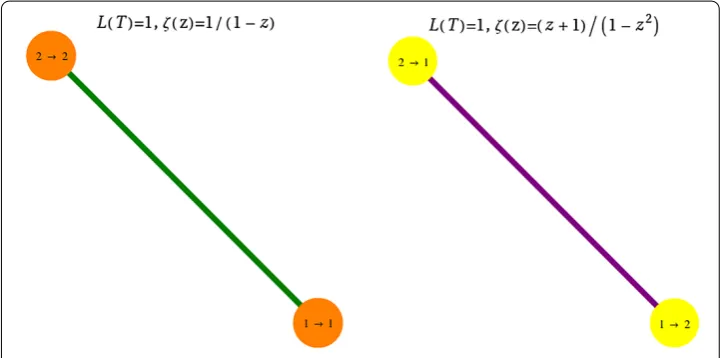
Figure 2 A graphGof order 8 and size 9 with automorphism groupS2×S2.T1=Idwith 8 fixed vertices of index 1 and 9 fixed edges of index –1 has Lefschetz numberL(T) = –1.T2has 6 fixed vertices of index 1 and 5 fixed edges of index –1 with Lefschetz numberL(T2) = 1.T3has two fixed vertices of index 1 and one edge of index 1 leading toL(T3) = 3.T4finally has only one fixed edge of index 1.
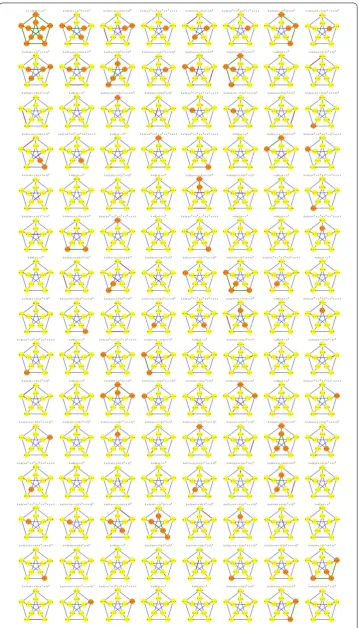
Figure 5 This figure shows the 120 automorphisms of the Petersen graph.The automorphism group is
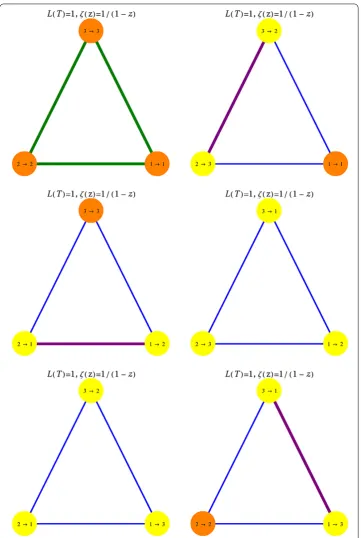
Figure 6 The dihedral groupA=D4is the automorphism group of the graphG=C4.The
Selberg zeta function [], where the geodesic flow play the role of automorphism. Both are of course isomorphism invariants. Unlike the average Lefschetz numberL(G), which is also an isomorphism invariant, the zeta function encodes more information about the graph thanG/A.
Figures - provide examples of graphs for which the Zeta function and the Lefschetz number have been computed for all automorphisms.
Competing interests
The author declares that they have no competing interests.
Acknowledgements
Thanks go to Tom Tucker for clarifying some notions on groups acting on graphs and thanks to Hao Xu for pointing out some typos in an earlier version.
Received: 11 June 2012 Accepted: 21 March 2013 Published: 5 April 2013
References
1. Bohl, P: Ueber die Bewegung eines mechanischen Systems in der Nähe einer Gleichgewichtslage. J. Reine Angew. Math.127, 179-276 (1904)
2. Zeidler, E: Nonlinear Functional Analysis and Its Applications I. Springer, New York (1986) 3. Brouwer, LEJ: Über Abbildung von Mannigfaltigkeiten. Math. Ann.71(1), 97-115 (1911) 4. Hatcher, A: Algebraic Topology. Cambridge University Press, Cambridge (2002)
5. Milnor, J: Topology from the Differential Viewpoint. University of Virginia Press, Charlottesville (1965) 6. Guillemin, V, Pollack, A: Differential Topology. Prentice Hall, New York (1974)
7. Kakutani, S: A generalization of Brouwer’s fixed point theorem. Duke Math. J.8, 457-459 (1941)
8. Franklin, JN: Methods of Mathematical Economics: Linear and Nonlinear Programming, Fixed-Point Theorems. Classics in Applied Mathematics, vol. 37. SIAM, Philadelphia (2002)
9. Lefschetz, S: Introduction to Topology. Princeton University Press, Princeton (1949)
10. Hopf, H: A new proof of the Lefschetz formula on invariant points. Proc. Natl. Acad. Sci. USA14, 149-153 (1928) 11. Dieudonne, J: A History of Algebraic and Differential Topology, 1900-1960. Birkhäuser, Basel (1989)
12. Granas, A, Dugundji, J: Fixed Point Theory. Springer Monographs in Mathematics. Springer, New York (2003) 13. Gale, D: The game of Hex and the Brouwer fixed-point theorem. Am. Math. Mon.86(10), 818-827 (1979)
14. Mazurkiewicz, S, Knaster, B, Kuratowski, C: Ein Beweis des Fixpunktsatzes fürn-dimensional Simplexe. Fundam. Math.
14, 132-137 (1929)
15. Jezierski, J, Marzantowicz, W: Homotopy Methods in Topological Fixed and Periodic Points Theory. Springer, Dordrecht (2006)
16. Spanier, EH: Algebraic Topology. Springer, Berlin (1966)
17. Knill, O: On index expectation and curvature for networks (2012). http://arxiv.org/abs/1202.4514 18. Artin, M, Mazur, B: On periodic points. Ann. Math.81, 82-99 (1965)
19. Ruelle, D: Dynamical Zeta Functions for Piecewise Monotone Maps of the Interval. CRM Monograph Series. Am. Math. Soc., Providence (1991)
20. Bowen, R, Lanford, OE III: Zeta functions of restrictions of the shift transformation. In: Global Analysis (Proc. Sympos. Pure Math., Vol. XIV, Berkeley, Calif., 1968), pp. 43-49. Am. Math. Soc., Providence (1970)
21. Nowakowski, R, Rival, I: Fixed-edge theorem for graphs with loops. J. Graph Theory3, 339-350 (1979) 22. Espínolaa, R, Krirkb, WA: Fixed point theorems inr-trees with applications to graph theory. Topol. Appl.153,
1046-1055 (2006)
23. Eckmann, B: The Euler characteristic - a few highlights in its long history. In: Mathematical Survey Lectures: 1943-2004 (1999)
24. Edelsbrunner, H, Harer, J: Computational Topology: An Introduction. Am. Math. Soc., Providence (2010) 25. Knill, O: A graph theoretical Poincaré-Hopf theorem (2012). http://arxiv.org/abs/1201.1162
26. Knill, O: A graph theoretical Gauss-Bonnet-Chern theorem (2011). http://arxiv.org/abs/1111.5395 27. Erdös, P, Rényi, A: On random graphs. I. Publ. Math. (Debr.)6, 290-297 (1959)
28. Gross, JL, Tucker, TW: Topological Graph Theory. Wiley, New York (1987)
29. Hirzebruch, F, Zagier, D: The Atiyah-Singer Theorem and Elementary Number Theory. Mathematics Lecture Series, vol. 3. Publish or Perish Inc., Boston (1974)
30. Ebert, J: Euler characteristic of orbifolds (2011).
http://mathoverflow.net/questions/51993/euler-characteristic-of-orbifolds
31. Terras, A: Zeta Functions of Graphs. Cambridge Studies in Advanced Mathematics, vol. 128. Cambridge University Press, Cambridge (2011)
doi:10.1186/1687-1812-2013-85
Cite this article as:Knill:A Brouwer fixed-point theorem for graph endomorphisms.Fixed Point Theory and Applications