O R I G I N A L
Validation of criterion-based patient assignment and treatment
effectiveness of a multidisciplinary modularized managed care
program for headache
Thomas-Martin Wallasch•Christiane Hermann
Received: 23 March 2012 / Accepted: 16 April 2012 / Published online: 13 May 2012
ÓThe Author(s) 2012. This article is published with open access at Springerlink.com
Abstract This prospective observational study evaluates the validity of an algorithm for assigning patients to a multidisciplinary modularized managed care headache treatment program. N=545 chronic headache sufferers [migraine (53.8 %), migraine?tension type (30.1 %), tension type (8.3 %) or medication overuse headache (6.2 %), other primary headaches (1.5 %)] were assigned to one of four treatment modules differing with regard to the number and types of interventions entailed (e.g., medication, psychological intervention, physical therapy, etc.). A rather simple assignment algorithm based on headache frequency, medication use and psychiatric comorbidity was used. Patients in the different modules were compared with regard to the experienced burden of disease. 1-year follow-up outcome data are reported (N=160). Headache frequency and analgesic consump-tion differed significantly among patients in the modules. Headache-related disability was highest in patients with high headache frequency with/without medication overuse or psychiatric comorbidity (modules 2/3) compared to patients with low headache frequency and medication
(module 0). Physical functioning was lowest in patients with chronic headache regardless of additional problems (modules 1/2/3). Psychological functioning was lowest in patients with severe chronicity with/without additional problems (module 2/3) compared to headache suffers with no/moderate chro-nicity (module 0/1). Anxiety or depression was highest in patients with severe chronicity. In 1-year follow-up, headache frequency (minus 45.3 %), consumption of attack-aborting drugs (minus 71.4 %) and headache-related disability decreased (minus 35.9 %). Our results demonstrate the clin-ical effectiveness and the criterion validity of the treatment assignment algorithm based on headache frequency, medi-cation use and psychiatric comorbidity.
Keywords Integrated careMultidisciplinary modularized treatment programOutcome study Headache-related disability
Headache-related quality of lifeChronic headache
Introduction
Headache (HA) is one of the most common types of chronic pain. In adults, about 4 % experience HA episodes on a near daily or daily basis [1]. Chronic headache imposes an immense burden on the individual and society because of significant morbidity and indirect and direct costs. The annual value of lost productivity in the United States is estimated to reach $13 billion for migraine and $19 billion for all headache disorders [2,3]. Headache-related disability (HRD) is reported by more than 85 % of migraineurs. Headaches reduce the quality of life, decrease social and job functioning, and increase utili-zation of health care systems [4,5]. Accordingly, the World Health Organization (WHO) has ranked migraine among the top 20 most disabling medical diseases worldwide [6]. T.-M. Wallasch and C. Hermann contributed equally to this paper.
T.-M. Wallasch
Headache Center Berlin at the Sankt
Gertrauden Krankenhaus Berlin, Berlin, Germany
T.-M. Wallasch (&)
MEDAS Ostschweiz, Interdisciplinary Medicine, Kornhausstr. 3, 9000 St. Gallen, Switzerland e-mail: [email protected]
C. Hermann (&)
Department of Clinical Psychology,
Despite advances in the acute and preventive treatment of primary headaches, many headache patients remain misdiagnosed and undertreated [7–10]. Headache sufferers are often dissatisfied with the health care they receive. On average, patients with chronic headache utilize more health care resources than patients with other chronic diseases, for example consuming twice as much medication [11,12].
Cross-sectional and longitudinal epidemiological studies as well as clinical studies, family and twin studies have repeatedly reported a high comorbidity between headache and mood and anxiety disorders. Psychiatric disorders may interfere with headache treatment. HA patients with a comorbid mood or anxiety disorders report lower health-related quality of life (HRQoL) [13, 14], have a poorer prognosis and respond less well to treatment. The preva-lence and impact of psychiatric disorders in headache patients underline the necessity for screening patients as part of routine clinical care and not only of refractory patients in tertiary headache centers [15].
In clinical practice, there is a lack of multidisciplinary headache treatment programs that entail a comprehensive assessment including a headache diagnosis according to ICDH-II criteria [16], screening for psychiatric comorbid-ity, craniomandibular dysfunctioning and musculoskeletal disorders, and provide treatment according to clinical guidelines [17, 18]. Unfortunately, little is known about such integrated headache programs and the patients participating in such programs [19,20].
In 2005, Diener and co-workers launched the West German Headache Center, a managed and modularized healthcare system for chronic headache patients [21, 22] that was rated by the Harvard business school as one of the best medical programs worldwide [23]. Later, centers in Berlin, Munich and Jena followed. Primarily, this paper focuses on the validity of patient assignment to the treat-ment modules of our integrated headache care program. Specifically, patients in the different modules were com-pared with regard to pain-related disability, health-related quality of life and psychological distress. For a subset of patients, we also report 1-year follow-up data of patients with frequent or difficult to treat headaches. Detailed data on the program’s cost-effectiveness have been reported elsewhere [24].
Methods
The Headache Center Berlin (HCB)
The Headache Center Berlin started in 07/2006 as a tertiary outpatient headache clinic. Treatment is multidisciplinary with daily treatment sessions. Additional inpatient treat-ment facilities (5 beds) are available for patients with
medication overuse and severe psychiatric comorbidity. The HCB cooperates with a network of primary care physicians and headache specialists (secondary care). All network partners are connected with the HCB by specifi-cally designed online documentation software [25]. At the HCB, European Headache Federation guidelines for the organization of headache clinics are implemented [26]. Study design
This prospective study was done to evaluate the new treatment approach used in the HCB. Adult patients ([18 years) with frequent and\or difficult to treat head-ache diagnoses of migraine (M), tension-type headhead-ache (TTH), and medication overuse headache (MOH) were consecutively enrolled within a time period of 18 months (11/2006–04/2008). Headache diagnoses were made according to ICHD-II criteria [16] by a board-certified neurologist (TMW). The baseline data of the total cohort were used for determining the validity of treatment assignment. A representative subgroup of these patients completed treatment during this time period. For these, we report the 1-year follow-up data. The remaining patients followed the treatment program. A reduction of headache frequency (days with headache/month) of[50 % was defined as treatment success and served as primary outcome parameter. Secondary outcomes were changes in headache-related disability, anxiety and depression and analgesic use. All patients signed a written informed con-sent form. The project was approved by the local Ethics Committee.
Assessment
[27], which is the standard classification system used in the German health system. A physical therapist examined posture and muscle function. Subsequent to the assessment, both team and patient met in a pain conference and made a joint decision about further treatment.
Treatment
As stated earlier, the managed care system entails a mod-ularized treatment protocol. Patients were assigned to one of four treatment modules taking into consideration head-ache frequency, medication overuse and psychiatric comorbidity. Typically, treatment duration is 1 year. Module 0: no or little chronicity
Patients assigned to module 0 have a maximum of 5 HA days/month. Patients are referred back to primary care physicians with recommendation for improved headache management (e.g. change of medication).
Module 1: moderate chronicity
Patients with a HA frequency between 6 and\10 HA days/ month and\10 days with intake of analgesics/triptans are assigned to this module. Treatment includes education and patient self-management for preventing headache episodes. Medication is optimized if necessary.
Module 2: severe chronicity
Patients with more than 10 HA days/month and more than 10 days with intake of analgesics/triptans are assigned to module 2. Patients receive module 1 treatment with a maximum of 12 additional outpatient sessions on 5 con-secutive days from 9.00 a.m. to 4.00 p.m. The program entails group sessions and individual appointments with the neurologist, psychologist and the physical therapist. The neurologist provides headache education (90 min per day). The psychologist provides cognitive-behavioral pain management. The physical training comprises endurance sport, physical therapy and Nordic walking (60 min per day).
Module 3: severe chronicity with additional problems Patients with more than 15 HA days/month and more than 15 days with intake of analgesics/triptans and severe psy-chiatric comorbidity are assigned to this module. Aside from participating in the outpatient program of module 2, they are hospitalized for 5 up to a maximum of 7 days and undergone drug withdrawal. Treatment entails initiating adequate acute and prophylactic drug management.
Study patients
During a time period of 18 months (11/2006–04/2008), a cohort of 545 headache sufferers was consecutively refer-red to the HCB, which started in 07/2006 with a new modularized headache managed care program. Baseline data of these patients (N=545) were available for vali-dation of criterion-based patient assignment to the present modularized headache treatment program. With the exception of patients suffering from medication overuse headache, patients with secondary headaches were exclu-ded. Of the total cohort,N=83 patients were assigned to module 0, N=158 patients to module 1, N=249 to module 2 andN=55 patients to module 3.
During the 18-month study period N=160 patients completed the treatment, while the remaining patients followed treatment program. For these, 12-month follow-up outcome data are reported. Of these, N=47 (29.4 %) had been assigned to module 1, N=97 (60.6 %) to module 2 andN=16 (10 %) to module 3.
Questionnaires
All questionnaires were administered on a pocket PC using AC-STB software from Akkaya company, Ko¨ln, Germany [24,25].
Headache-related disability
The Migraine Disability Assessment (MIDAS) Question-naire [28, 29] was developed to assess headache-related disability. It contains five questions assessing the number of missed days (full or with substantial loss of productivity) at work, household chores, and leisure time. Reliability and validity of the MIDAS have extensively been demonstrated [28–30]. The total MIDAS score can be used to grade migraine-related disability [grade 1 (minimal disability): 1–5 points, grade 2 (mild): 6–10 points, grade 3 (moder-ate): 11–20 points, grade 4 (severe): [20 points] [28]. Headache frequency (past 3 months) and intensity are assessed by two additional MIDAS items.
Chronic Pain Grade Questionnaire (CPGQ)
limiting pain); and grade 4 (high disability, severely lim-iting pain). Reliability and validity of the CPGQ have been shown for the German version [32].
Health-related quality of life (HRQoL)
Health-related quality of life was assessed using the German version of the 12 item-Short Form Health Survey (SF12 [33], German version: [34]). The SF12 contains 2 subscales of functioning (‘‘physical’’/‘‘psychological’’). The SF12 is reliable and valid, norms for the general population are available [34].
Anxiety and depression
The Hospital Anxiety and Depression Scale (HADS, (German: [35]) contains seven items each for assessing depression and anxiety. The HADS is recommended for
patients with somatic problems [14]. In its original version, a score between 0 and 7 is considered to be in the normal range, a score between 8 and 10 as being slightly elevated, and a score of 11 and higher as indicating the probable presence of a mood or anxiety disorder.
Data analysis
Depending on the type of outcome variable, differences between modules were computed either with one-way analysis of variances (ANOVA) followed by Tukey’s HSD post hoc tests for all pairwise contrasts or by chi-square tests. Treatment data were computed either with Student t test or Mann–Whitney U test when variables were not normally distributed. All analyses were performed using Predictive Analytics SoftWare (PASW) by SPSS. A p value of 0.05 was considered as significant.
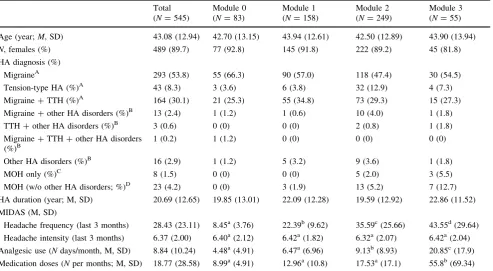
Table 1 Sociodemographic data and clinical characteristics of all headache patients
Total (N=545)
Module 0 (N=83)
Module 1 (N=158)
Module 2 (N=249)
Module 3 (N=55)
Age (year;M, SD) 43.08 (12.94) 42.70 (13.15) 43.94 (12.61) 42.50 (12.89) 43.90 (13.94)
N, females (%) 489 (89.7) 77 (92.8) 145 (91.8) 222 (89.2) 45 (81.8)
HA diagnosis (%)
MigraineA 293 (53.8) 55 (66.3) 90 (57.0) 118 (47.4) 30 (54.5)
Tension-type HA (%)A 43 (8.3) 3 (3.6) 6 (3.8) 32 (12.9) 4 (7.3)
Migraine?TTH (%)A 164 (30.1) 21 (25.3) 55 (34.8) 73 (29.3) 15 (27.3)
Migraine?other HA disorders (%)B 13 (2.4) 1 (1.2) 1 (0.6) 10 (4.0) 1 (1.8)
TTH?other HA disorders (%)B 3 (0.6) 0 (0) 0 (0) 2 (0.8) 1 (1.8)
Migraine?TTH?other HA disorders (%)B
1 (0.2) 1 (1.2) 0 (0) 0 (0) 0 (0)
Other HA disorders (%)B 16 (2.9) 1 (1.2) 5 (3.2) 9 (3.6) 1 (1.8)
MOH only (%)C 8 (1.5) 0 (0) 0 (0) 5 (2.0) 3 (5.5)
MOH (w/o other HA disorders; %)D 23 (4.2) 0 (0) 3 (1.9) 13 (5.2) 7 (12.7)
HA duration (year; M, SD) 20.69 (12.65) 19.85 (13.01) 22.09 (12.28) 19.59 (12.92) 22.86 (11.52)
MIDAS (M, SD)
Headache frequency (last 3 months) 28.43 (23.11) 8.45a(3.76) 22.39b(9.62) 35.59c(25.66) 43.55d(29.64)
Headache intensity (last 3 months) 6.37 (2.00) 6.40a(2.12) 6.42a(1.82) 6.32a(2.07) 6.42a(2.04)
Analgesic use (Ndays/month, M, SD) 8.84 (10.24) 4.48a(4.91) 6.47a(6.96) 9.13b(8.93) 20.85c(17.9)
Medication doses (Nper months; M, SD) 18.77 (28.58) 8.99a(4.91) 12.96a(10.8) 17.53a(17.1) 55.8b(69.34)
Differences between modules were computed either with one-way analysis of variances (ANOVA [49]) or withv2tests, depending on the type of variable. Means with different lowercase superscripts differ significantly (Tukey’s HSD)
HAheadache,MOHmedication overuse headache,TTHtension-type HA
? Headache diagnosis was missing for two patients, one each in modules 0 and 1. Hence, percent values do not add up to 100
A With or without MOH
B Other HAs refer to all HA diagnoses except MOH
C Underlying primary headache not definable
Results
Study sample
Table1 shows sociodemographics, diagnoses and head-ache characteristics at baseline of the total cohort. There were no significant differences in headache diagnoses, headache characteristics and sociodemographics of the subgroup of treated patients in comparison with the total cohort.
Comparison of modules
There was no significant difference between patients in the four modules with regard to age (p[0.5) and sex pro-portion (p[0.15). The vast majority of patients suffered from migraine alone or in combination with tension-type or other headaches. For the past 3 months, patients reported on average a headache frequency of 28.43±23.11 days which differed significantly across groups (F(3,541)= 51.16,p\0.001). As illustrated in Table1 and confirmed by significant pairwise post hoc contrasts, headache fre-quency increased significantly from modules 0 to 1, 1 to 2, and 2 to 3. Headache intensity was on average 6.37±2.00 with no significant difference between modules (p[0.9). Patients relied on analgesics on an average of 8.84± 10.24 days per month. Analgesic uses varied significantly across modules (F(3,539)=40.35, p\0.001) with patients in modules 0 and 1 using significantly less anal-gesics than patients in modules 2 and 3, and patients in module 3 having a significantly more frequent use than patients in module 2 (see Table2). Patients reported an average consumption of medication doses of 6.34±10.15 per month which varied significantly across the modules (F(3,539)=44.14, p\0.001) with patients in module 3
using the greatest amount of medication compared to all other patients. Patients in modules 0, 1 and 2 did not sig-nificantly differ with regard to the number of medication doses.
Headache-related disability
The MIDAS total score differed significantly between modules (F(3,541)=23.14, p\0.001). Post hoc Tukey contrasts revealed that patients in module 0 had a signifi-cantly lower MIDAS total score compared to all other patients. Patients in module 1 had significantly lower MIDAS total scores than patients in modules 2 and 3, with the latter two not differing significantly (see Table2). Consistently, the percentage of patients having a MIDAS grade III or IV increased significantly from module 0 to module 3 (v2(9)=49.4,p\0.001; see Table2).
Chronic Pain Grading Questionnaire (von Korff index) Similar to the MIDAS grades, the von Korff grades of severity differed significantly between modules (v2(9) = 47.03,p\0.001; see Table2). The proportion of patients with a severity grade of III or IV increased from modules 0 (27 %) to 3 (72 %) with modules 1 (50 %) and 2 (57 %) lying in between.
Anxiety and depression
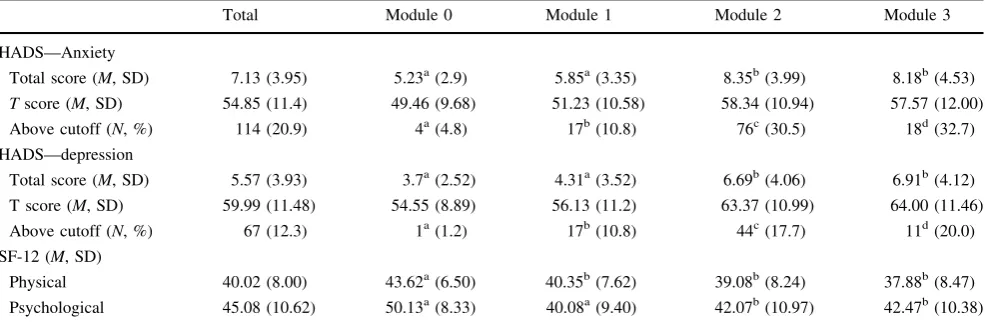
One-way ANOVAs revealed significant differences with regard to HADS anxiety (F(3,541)=23.84, p\0.001) and depression scores (F(3,541)=22.94,p\0.001). Post hoc contrasts (Tukey HSD) showed that anxiety and depression levels of patients in modules 0 and 1 were not significantly different. However, both groups reported
Table 2 Pain-related disability (MIDAS, von Korff index)
Total Module 0 Module 1 Module 2 Module 3
MIDAS
Total score (M, SD) 43.43 (42.44) 18.49a(17.20) 33.77b(29.12) 53.9c(48.52) 61.42c(48.55)
Grade 1 (N, %) 63 (11.6) 19 (22.9) 16 (10.1) 26 (10.4) 2 (3.6)
Grade 2 (N, %) 58 (10.6) 15 (18.1) 21 (13.3) 16 (6.4) 6 (10.9)
Grade 3 (N, %) 79 (14.5) 22 (26.5) 21 (13.3) 32 (12.9) 4 (7.3)
Grade 4 (N, %) 345 (63.3) 27 (32.5) 100 (63.3) 175 (70.3) 43 (78.2)
CPGQ (von Korff)
Grade 1 (N, %) 138 (25.3) 39 (47.0) 43 (27.2) 50 (20.1) 6 (10.9)
Grade 2 (N, %) 122 (22.4) 21 (25.3) 36 (22.8) 56 (22.5) 9 (16.4)
Grade 3 (N, %) 212 (38.9) 22 (26.5) 63 (39.9) 97 (39.0) 30 (54.5)
Grade 4 (N, %) 73 (13.4) 1 (1.2) 16 (10.1) 46 (18.5) 10 (18.2)
Differences between modules were computed either with one-way analysis of variances (ANOVA [49]) orv2tests, depending on the type of
significantly less anxiety and depressive symptoms than patients in modules 2 and 3, with the latter not differing significantly. Correspondingly, the percentage of patients with a HADS anxiety (v2(3)=40.06, p\0.001) or depression score (v2(3)=23.34, p\0.001) above the cutoff of 11 differed significantly between modules, with the patients in modules 2 and 3 being most likely to have an anxiety or mood disorder (see Table3).
Health-related quality of life
With regard to physical HQoL, patients in module 0 reported a significantly higher level compared to the patients in all other modules, with no significant difference between modules 1, 2 and 3 (F(3,541)=8.45,p\0.001; see Table3). With regard to psychological HQoL, the one-way ANOVA also revealed a significant group main effect (F(3,541)=20.18, p\0.001). Similar to the findings obtained for the HADS, the post hoc Tukey HSD contrasts showed that patients in modules 0 and 1 reported a similar level of psychological HQoL which was significantly lower than in modules 2 and 3 patients which, in turn, were not significantly different.
One-year follow-up
Mean reduction in HA frequency was 6.8 days/month. Headache frequency decreased from 15.00±8.19 to 8.22±8.63 (-45.3 %) days/month (t=5.056,df=157, p\0.001). 61.1 % of the patients (96/157) experienced a reduction of HA frequency (N HA days per month) of greater than 50 %. Headache-related disability (MIDAS) decreased significantly from 55.96±61.28 to 35.87±55.09
(t=4.924,df=129,p\0.001). HADS anxiety was also significantly lower at the 1-year follow-up (pre: M = 7.60±4.24; follow-up: M=6.66±4.24; t=2.567, df=91, p =0.012). The level of depressive symptoms (HADS) did not change significantly (pre: M =5.70± 3.77; follow-up: M =5.10 ±4.54). Medication (analge-sics, triptans, ergotamine) was used by 98.7 % of the patients at baseline and by 89.9 % of patients at the 1-year follow-up with a highly significant reduction in the number of days with medication use per month (pre: M = 10.92±7.31; follow-up: 3.99±3.62; (t =9.686,df=157, p\0.000). At baseline, 24 % of the patients reported an intake frequency of C15 days/month. 57 % of patients used acute medication on 6–14 days/month and 17.7 % on 1–5 days/month. At the end of treatment, only 1.3 % of the patients consumed acute medication on C15 days/month, 23.4 % relied on acute medication on 6–14 days/month. About two-thirds of the patients (65.2 %) used acute medication on 1 up to 5 days/month. The number of patients who abstained from acute medication increased from 1.3 to 10.1 %. The number of patients who abstained from acute medication increased significantly from 1.3 % at baseline to 10.1 % at the end of treatment [v2
(61.348)=43.4;df=9;p\0.001].
Discussion
Providing efficient multidisciplinary treatment for difficult to treat patients is a challenge. Few data exist on how to assign patients to treatment and on effectiveness of such a multidis-ciplinary integrated headache care program for patients with frequent HAs, including MOH. A modularized program was Table 3 Anxiety, depression and health-related quality of life (SF12) (M; SD) in the patients assigned to the four modules
Total Module 0 Module 1 Module 2 Module 3
HADS—Anxiety
Total score (M, SD) 7.13 (3.95) 5.23a(2.9) 5.85a(3.35) 8.35b(3.99) 8.18b(4.53)
Tscore (M, SD) 54.85 (11.4) 49.46 (9.68) 51.23 (10.58) 58.34 (10.94) 57.57 (12.00)
Above cutoff (N, %) 114 (20.9) 4a(4.8) 17b(10.8) 76c(30.5) 18d(32.7)
HADS—depression
Total score (M, SD) 5.57 (3.93) 3.7a(2.52) 4.31a(3.52) 6.69b(4.06) 6.91b(4.12)
T score (M, SD) 59.99 (11.48) 54.55 (8.89) 56.13 (11.2) 63.37 (10.99) 64.00 (11.46)
Above cutoff (N, %) 67 (12.3) 1a(1.2) 17b(10.8) 44c(17.7) 11d(20.0)
SF-12 (M, SD)
Physical 40.02 (8.00) 43.62a(6.50) 40.35b(7.62) 39.08b(8.24) 37.88b(8.47)
Psychological 45.08 (10.62) 50.13a(8.33) 40.08a(9.40) 42.07b(10.97) 42.47b(10.38)
Differences between modules were computed either with one-way analysis of variances (ANOVA [49]) orv2tests, depending on the type of
variable. Means with different superscripts differ significantly (Tukey’s HSD)
chosen, because this allows to tailor the treatment to an indi-vidual’s needs, and because it is not the referring physician who assigns the patient to specific interventions but treatment assignment is based on a multidisciplinary assessment.
The primary goal of the present study was the validation of a criterion-based patient assignment to the modules of our integrated headache care program. Our results docu-ment that the algorithm used to assign the patients to treatment modules specifically designed to meet their need works. A main aim was to offer managed health care for out- and inpatients that is tailored individually using HA frequency, analgesic consumption, and psychiatric comor-bidity as criteria for treatment indication. Most of the available interdisciplinary headache concepts only offer a standardized program which does not allow an individual adjustment based on patients’ needs [36, 37]. We devel-oped a modularized headache treatment program with the aim of treating chronic headache suffers according their burden of disease. Patients are assigned to treatment modules based on headache frequency, medication overuse and psychiatric comorbidity. Most crucially, it needs to be shown that this algorithm allows a valid patient assignment with regard to headache-related disability and quality of life. As was to be expected when HA frequency is used as assignment criterion, HA frequency rose significantly from modules 0 to 3 with a significant increase between each module. By contrast, HA intensity was comparable in all patients. Similarly, analgesic consumption differed signif-icantly in the four modules. Patients assigned to module 3 reported significantly more days of analgesic consumption and medication doses per month than those in the other modules. Patients in module 2 relied on medication on significantly fewer days per month than those in module 3, but on significantly more days than those in modules 0 and 1. The total number of medication doses per month did not differ significantly between modules 0, 1 and 2. These results show that the patients’ assignment based on HA frequency and medication use was well efficient.
Importantly, we aimed at validating patients’ assign-ment to the different treatassign-ment modules with regard to external criteria, such as headache-related disability and health-related quality of life. The average MIDAS total score was 43.3, ranging from 18.5 in module 0 to 61.4 in module 3. Overall, these MIDAS scores well match those previously reported for chronic headache sufferers [38,39]. Disability in patients assigned to module 2 or 3 was comparable. However, these patients were significantly more disabled than patients in modules 0 and 1, with patients in module 0 being also significantly less disabled than patients in module 1. Correspondingly, the percentage of patients having a MIDAS grade III or IV increased significantly from module 0 to module 3. A rather similar pattern was observed with regard to the von Korff chronic
observations that psychiatric comorbidity contributes to the chronicity and intractability of headache [41,43].
A second aim of the present study was to provide pre-liminary data on the effectiveness of this modularized HA treatment program. In a subset of patients, the primary and secondary outcome variables improved significantly. Specif-ically, mean HA frequency decreased by about 6.8 days/ month. On average, HA frequency was reduced by 45.3 %. This success rate is similar to previous studies which reported improvements of about 35 % (e.g. Lemstra et al. [44]: 33.6 % at 3-month follow-up; Gaul et al. [21]: 34.3 % at a follow-up time between 12 and 18 months after the end of treatment). The number of days with acute medication intake, known as predictor of MOH [45], was also significantly reduced. The percentage of patients who relied on non-pharmacological self-management strategies increased from about 1.3 % at baseline to 10.1 % after 1 year. At follow-up, only 1.3 % of the patient used medication on more than 15 days per month, at baseline 24 % of the patients showed this pattern of medi-cation use. This reduction is impressive, because previous studies have reported relapse rates of drug withdrawal of up to 40 % within 1 year [46–48].
Taken together, our study shows that using a simple algorithm, it is feasible to assign HA patients to treatment modules tailored to patients’ needs. Such a treatment assignment to a modularized treatment program seems promising for an effective and cost-efficient treatment of chronic HA patients.
Conflict of interest None.
Open Access This article is distributed under the terms of the Creative Commons Attribution License which permits any use, dis-tribution, and reproduction in any medium, provided the original author(s) and the source are credited.
References
1. Scher AI, Midgette LA, Lipton RB (2008) Risk factors for headache chronification. Headache 48:16–25
2. Hu XH, Markson LE, Lipton RB, Stewart WF, Berger ML (1999) Burden of migraine in the United States: disability and economic costs. Arch Intern Med 159:813–818
3. Osterhaus JT, Gutterman DL, Plachetka JR (1992) Healthcare resource and lost labour costs of migraine headache in the US. Pharmacoeconomics 2:67–76
4. Stovner L, Hagen K, Jensen R, Katsarava Z, Lipton R, Scher A, Steiner T, Zwart JA (2007) The global burden of headache: a documentation of headache prevalence and disability worldwide. Cephalalgia 27:193–210
5. Smith R (1998) Impact of migraine on the family. Headache 38:423–426
6. Leonardi M, Steiner TJ, Scher AT, Lipton RB (2005) The global burden of migraine: measuring disability in headache disorders with WHO’s Classification of functioning, disability and health (ICF). J Headache Pain 6:429–440
7. Pascual J, Lainez MJ, Baos V, Garcia ML, Lopez-Gil A (2007) Predictive model for the migraine-ACT questionnaire in primary care. Curr Med Res Opin 23:3033–3039
8. Lipton RB, Diamond S, Reed M, Diamond ML, Stewart WF (2001) Migraine diagnosis and treatment: results from the American Migraine Study II. Headache 41:638–645
9. Devine JW, Farley JF, Hadsall RS (2005) Patterns and predictors of prescription medication use in the management of headache: findings from the 2000 medical expenditure panel survey. Headache 45:1171–1180
10. Lipton RB, Stewart WF, Celentano DD, Reed ML (1992) Undiagnosed migraine headaches. A comparison of symptom-based and reported physician diagnosis. Arch Intern Med 152:1273–1278
11. Barton CW (1994) Evaluation and treatment of headache patients in the emergency department: a survey. Headache 34:91–94 12. Clouse JC, Osterhaus JT (1994) Healthcare resource use and costs
associated with migraine in a managed healthcare setting. Ann Pharmacother 28:659–664
13. Wang SJ, Fuh JL, Lu SR, Juang KD (2001) Quality of life differs among headache diagnoses: analysis of SF-36 survey in 901 headache patients. Pain 89:285–292
14. Maizels M, Smitherman TA, Penzien DB (2006) A review of screening tools for psychiatric comorbidity in headache patients. Headache 3:98–109
15. Baskin SM, Lipchik GL, Smitherman TA (2006) Mood and anxiety disorders in chronic headache. Headache 46:76–87 16. Headache Classification Subcommittee of the International
Headache Society (2004) The International Classification of Headache Disorders: 2nd edition. Cephalalgia 24:9–160 17. Evers S, May A, Fritsche G, Kropp P, Lampl C, Limmroth V,
Malzacher V, Sandor P, Straube A, Diener H-C (2008) Akut-therapie und Prophylaxe der Migra¨ne—Leitlinie der Deutschen Migra¨ne-und Kopfschmerzgesellschaft und der Deutschen Gesellschaft fu¨r Neurologie. Nervenheilkunde 27:933–949 18. Straube A, May A, Kropp P, Katsarava Z, Haag G, Lampl C,
Sa´ndor PS, Diener H-C, Evers S (2007) Therapie prima¨rer chronischer Kopfschmerzen: Chronische Migra¨ne, chronischer Kopfschmerz vom Spannungstyp und andere chronische ta¨gliche Kopfschmerzen—Evidenzbasierte Empfehlungen der Deutschen Migra¨ne-und Kopfschmerzgesellschaft in Zusammenarbeit mit der O¨ sterreichischen Kopfschmerzgesellschaft und der Schwe-izerischen Kopfwehgesellschaft. Nervenheilkunde 26:186–199 19. Cassidy EM, Tomkins E, Hardiman O, O’Keane V (2003) Factors
associated with burden of primary headache in a specialty clinic. Headache 43:638–644
20. Jensen R, Zeeberg P, Dehlendorff C, Olesen J (2010) Predictors of outcome of the treatment programme in a multidisciplinary headache centre. Cephalalgia 30(10):1214–1224
21. Gaul C, van Doorn C, Webering N, Dlugay M, Katsarava Z, Diener HC, Fritsche G (2011) Clinical outcome of a headache-specific multidisciplinary treatment program and adherence to treatment recommendations in a tertiary headache center: an observational study. J Headache Pain 12:475–483
22. Gaul C, Bromstrup J, Fritsche G, Diener HC, Katsarava Z (2011) Evaluating integrated headache care: a one-year follow-up observational study in patients treated at the Essen headache centre. BMC Neurol 11:124
23. Porter ME, Guth C, Dannemiller E (2007) The West German Headache Center: integrated migraine care, Harvard Business School Publishing, Boston
24. Wollny M (2009) Integrierte Versorgung Kopfschmerz aus Sicht der Krankenkassen. Warum und wem hilft0s? Nervenheilkunde 28:347–349
Dokumentation und Verlaufskontrolle von Kopfschmerzpatien-ten. Der Schmerz 2:145–153
26. Antonaci F, Valade D, Lanteri-Minet M, Lainez JM, Jensen R, Steiner TJ (2008) Proposals for the organisation of headache services in Europe. Intern Emerg Med 1:25–28
27. World Health Organization (1993) The ICD-10 classification of mental and behavioural disorders: diagnostic criteria for research 28. Stewart WF, Lipton RB, Whyte J, Dowson A, Kolodner K, Liberman JN, Sawyer J (1999) An international study to assess reliability of the migraine disability assessment (MIDAS) score. Neurology 53:988–994
29. Stewart WF, Lipton RB, Dowson AJ, Sawyer J (2001) Devel-opment and testing of the migraine disability assessment (MIDAS) questionnaire to assess headache-related disability. Neurology 56:20–28
30. Agosti R, Chrubasik JE, Kohlmann T (2008) Der Midas Fragebogen—Sprachliche Validierung der deutschen Version. Ars Medici 16
31. Von Korff M, Ormel J, Keefe FJ, Dworkin SF (1992) Grading the severity of chronic pain. Pain 50:133–149
32. Klasen BW, Hallner D, Schaub C, Willburger R, Hasenbring M (2004) Validation and reliability of the German version of the chronic pain grade questionnaire in primary care back pain patients. Psychosoc Med 1:Doc07
33. Ware J Jr, Kosinski M, Keller SD (1996) A 12-item short-form health survey: construction of scales and preliminary tests of reliability and validity. Med Care 34:220–233
34. Bullinger M, Kirchberger I (1998) Fragebogen zum Allgemeinen Gesundheitszustand SF12
35. Herrmann-Lingen C, Buss U, Snaith RP (2005) Hospital Anxiety and Depression Scale—Deutsche Version (HADS-D) (2.Aufl.) 36. Blumenfeld A, Tischio M (2003) Center of excellence for
headache care: group model at Kaiser Permanente. Headache 43:431–440
37. Gunreben-Stempfle B, Griessinger N, Lang E, Muehlhans B, Sittl R, Ulrich K (2009) Effectiveness of an intensive multidisciplin-ary headache treatment program. Headache 49:990–1000 38. Bigal ME, Rapoport AM, Lipton RB, Tepper SJ, Sheftell FD
(2003) Assessment of migraine disability using the migraine
disability assessment (MIDAS) questionnaire: a comparison of chronic migraine with episodic migraine. Headache 43:336–342 39. D’Amico D, Grazzi L, Usai S, Rigamonti A, Curone M, Bussone G (2005) Disability pattern in chronic migraine with medication overuse: a comparison with migraine without aura. Headache 45:553–560
40. Lipton RB, Silberstein SD, Saper JR, Bigal ME, Goadsby PJ (2003) Why headache treatment fails. Neurology 60:1064–1070 41. Nicholson RA, Houle TT, Rhudy JL, Norton PJ (2007)
Psycho-logical risk factors in headache. Headache 47:413–426 42. Penzien DB, Rains JC, Andrasik F (2002) Behavioral
manage-ment of recurrent headache: three decades of experience and empiricism. Appl Psychophys Biofeedback 27:163–181 43. Heckman BD, Holroyd KA, Himawan L, O’Donnell FJ, Tietjen
G, Utley C, Stillman M (2009) Do psychiatric comorbidities influence headache treatment outcomes? Results of a naturalistic longitudinal treatment study. Pain 146:56–6443
44. Lemstra M, Stewart B (2002) Olszynski. Effectiveness of multidisciplinary intervention in the treatment of migraine: a randomized clinical trial. Headache 42:845–854
45. Katsarava Z, Muessig M, Dzagnidze A, Fritsche G, Diener HC, Limmroth V (2005) Medication overuse headache: rates and predictors for relapse in a 4-year prospective study. Cephalalgia 25:12–15
46. Hagen K, Stovner LJ (2011) A randomized controlled trial on medication-overuse headache: outcome after 1 and 4 years. Acta Neurol Scand Suppl 191:38–43
47. Sances G, Ghiotto N, Galli F, Guaschino E, Rezzani C, Guidetti V, Nappi G (2010) Risk factors in medication-overuse headache: a 1-year follow-up study (care II protocol). Cephalalgia 30(3): 329–336
48. Ghiotto N, Sances G, Galli F, Tassorelli C, Guaschino E, Sandrini G, Nappi G (2009) Medication overuse headache and applica-bility of the ICHD-II diagnostic criteria: 1-year follow-up study (CARE I protocol). Cephalalgia 29(2):233–243