ScholarWorks
Walden Dissertations and Doctoral Studies Walden Dissertations and Doctoral StudiesCollection
2018
Measuring Third Grade Reading Performance
With and Without Using the Study Island Program
Caprice Mitchell Walden University
Follow this and additional works at:https://scholarworks.waldenu.edu/dissertations
Part of theEducational Assessment, Evaluation, and Research Commons,Other Education Commons, and theReading and Language Commons
This Dissertation is brought to you for free and open access by the Walden Dissertations and Doctoral Studies Collection at ScholarWorks. It has been accepted for inclusion in Walden Dissertations and Doctoral Studies by an authorized administrator of ScholarWorks. For more information, please [email protected].
Walden University
College of Education
This is to certify that the doctoral study by
Caprice Phillips-Mitchell
has been found to be complete and satisfactory in all respects, and that any and all revisions required by
the review committee have been made.
Review Committee
Dr. Amy White, Committee Chairperson, Education Faculty Dr. Tammye Turpin, Committee Member, Education Faculty
Dr. Sydney Parent, University Reviewer, Education Faculty
Chief Academic Officer Eric Riedel, Ph.D.
Walden University 2018
Measuring Third Grade Reading Performance With and Without Using the Study Island Program
by
Caprice A. Phillips-Mitchell
MEd, Dominican University, 2010 MLIS., Dominican University, 2002 MAT., National Louis University, 2000
BA., Robert Morris University, 1996
Doctoral Study in Partial Fulfillment of the Requirements for the Degree of
Doctor of Education
Walden University December 2018
The low test scores on third graders’ Illinois State Assessment Test (ISAT) is a concern in the Allgood Elementary School community. Thirty percent of third graders are
retained because they do not meet the standard on the ISAT. A technology-assisted reading program, Study Island, was implemented to increase reading proficiency. The purpose of this study was to determine if there was an improvement in standardized test performance after the implementation of Study Island for the academic school years 2009-2012. Dewey’s theory of experience provided the theoretical framework for the study because when students are engaged in hands on experience in education it reflects a meaningful learning experience. A correlational study was conducted to examine whether the computer-based program had an effect on student reading performance on the ISAT. The sample consisted of students in two third-grade classrooms (N = 305) enrolled during these years. Archived ISAT scores were used to compare student performance. A one-way ANOVA determined whether statistically significant differences existed in the mean scores of students who did and did not use the Study Island reading program. The results show, ISAT scores were significantly higher only after the second year of
implementation of the program. The findings, presented in a white paper, can promote social change by helping school officials make informed decisions on implementing Study Island, ultimately to improve reading outcomes for students and help them become critical thinkers in society.
Using the Study Island Program
by
Caprice A. Phillips-Mitchell
MEd, Dominican University, 2010 MLIS., Dominican University, 2002 MAT., National Louis University, 2000
BA., Robert Morris University, 1996
Proposal Submitted in Partial Fulfillment of the Requirements for the Degree of
Doctor of Education
Walden University December 2018
I am thankful to God and the variables that created the structure and creativity for my life. Among these variables are my loving parents, who taught me as a child to value education. They always instilled in me that education was my inheritance. My father taught me a proverb at an early age, “Educate that you may be free.” Thank God for my loving and wonderful husband; supported me unwaveringly throughout over three years of the dissertation process and allowed me to follow my dream without complaining about the long hours of studying. Thank you for being the extraordinary man you are to our children. Finally, special thanks to my family, friends, and colleagues, who assisted me throughout this process and I shall be forever grateful to God who made it all possible.
I would like to acknowledge and thank Dr. Amy White and Dr. Tammye Turpin for being exemplary committee members and being patient with me throughout the rigorous doctoral process. Also, special thanks to Walden University’s faculty and staff that have assisted me throughout the years of my doctoral journey to assure I completed the program.
i
Table of Contents
List of Tables ... iv
List of Figures ...v
Section 1: The Problem ...1
Introduction ...1
Definition of the Problem ...2
Rationale ...4
Definitions...5
Significance...6
Guiding/Research Question ...7
Review of the Literature ...8
Theoretical Framework ...9
Other factors influencing literacy ... 22
Implications...27
Summary and Transition ...28
Section 2: Methodology……….29
Research Design and Approach ...30
Setting and Sample ...31
Instrumentation and Materials ...32
Reliability and Validity ...33
Reliability ... 33
ii
Data Collection Technique ... 35
Assumptions, Limitations, Scope and Delimitations ...36
Assumptions and Limitations ... 36
Scope and Delimitations ...37
Protection of Participants Rights ...37
Data Analysis Results ...38
Descriptive Statistics ... 38
Conclusion ...44
Section 3: The Project ...46
Introduction ...46
Description and Goals ... 46
Rationale ...47
Review of Literature ...48
White Paper Effectiveness ... 49
Effective Use of Technology in Reading Instruction ... 49
Impact of Technology and Student Learning... 51
Educational Technology ... 53
Using Instructional Technology with Fidelity ... 53
Technology and Collaboration With Fidelity ... 55
Project Description...57
Needed Resources and Existing Supports... 57
iii
Implementation and Timetable ... 58
Project Evaluation Plan ...58
Roles and Responsibilities ... 60
Project Implications ...61
Importance of Project to Stakeholders ... 62
Importance of Project in a Larger Context ... 62
Conclusion ...63
Section 4: Reflections and Conclusions ...64
Introduction ... 64
Project Strengths and Limitations ... 64
Recommendations for Alternative Approaches ...65
Scholarship, Project Development, and Evaluation & Leadership Change...65
Scholarship ... 66
Project Development and Evaluation ... 67
Leadership and Change ... 68
Reflection on Importance of the Work ...68
Analysis of Self as a Scholar ... 69
Future Research ... 73
Conclusion ...74
Appendix A: Project ...93
Conceptual Framework ...95
iv List of Tables
Table 1. ISAT Scores by School Year………...40 Table 2. ISAT Reading Score Standards Met by School Year………..………40 Table 3. Results of One-Way ANOVA Comparing ISAT Scores Before and During
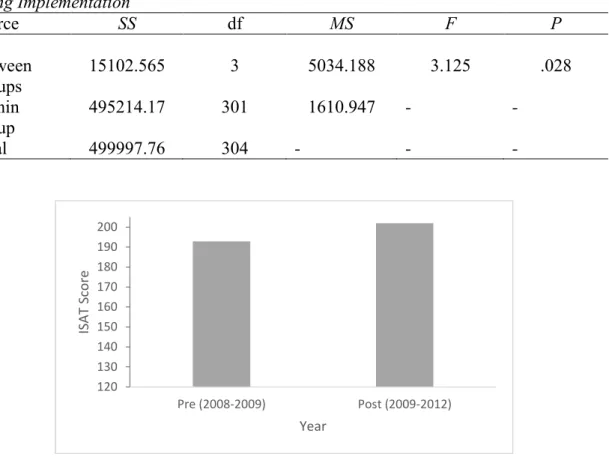
Study Island………..….….42 Table 4. Results of One-Way ANOVA Comparing ISAT Scores Between Academic
v
List of Figures
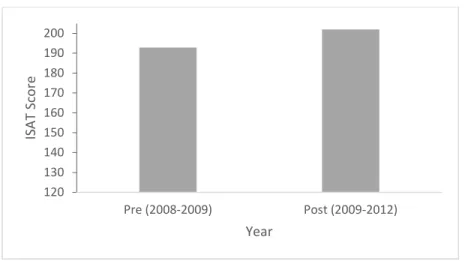
Figure 1: ISAT scores prior and during Study Island……….………42 Figure 2: ISAT scores by year………44
Section 1: The Problem
Introduction
Allgood Elementary School (a pseudonym) is in an urban community setting. The faculty and staff are diverse. The student population is 99% African American, primarily from families considered to be of low socioeconomic status. According to a 2010 public study from the district, Allgood Elementary School’s vision states that “Allgood
Elementary School will create and support a strong school culture that ensures success for every student, in every classroom, every day.” The following is the school’s mission statement, according to their website:
Allgood Elementary School is to provide instruction that will be challenging to all students that will enhance or assist in students being successful with their
academics while using fine arts within their curriculum for students to accomplish high marks on the Illinois State Achievement Test at exceeding or meeting
standards.
Still, the third-grade students’ percentage rate performance on the Illinois State Achievement Test (ISAT) is not reflective of goals in the school’s published mission statement and does not represent annual yearly progress for 30% of students who are failing reading. The mission of Allgood Elementary School is for students to meet or exceed reading scores on standardized tests, but actual performance does not align with this mission statement (District Study, 2010).
Definition of the Problem
The problem at Allgood School is that the district implemented the Study Island program and yet more than 30% of students were still retained in third grade because of low scores on the ISAT (District Study, 2010). According to Simms (2012), there has been a gap nationally in reading achievement at the beginning of kindergarten and it extends throughout students’ educational years. United States policymakers have
attempted to close the achievement gaps between minority groups of students before the start of first grade (D'Agostino, & Rodgers, 2017).
It is concerning that there are test score disparities amongst a racial class of students (Mason, 2016). However, the reading achievement gap will persist if the inequality is not addressed (Huang, 2015). Federal, state and local policies need to
advocate for greater equity for all students of a race in order to decrease the academic gap in reading (Herrera, Zhou, & Petscher, 2017). Huang (2015) found that there must be a higher-level learning outcome for students to close the academic achievement gap. Students must have an opportunity to have results that are based in knowledge-transfer skills. These capabilities allow students to solve real-world problems. Students should have an opportunity to reflect on their learning consistently to close the achievement gap in reading (Simms, 2012).
Allgood Elementary School’s administrators and teachers are aware of this problem and have been working to rectify the issue, but have reported little success (District Study, 2010). According to the district’s internal study, multiple factors have caused learning discrepancies for students, which, in turn, affects their achievement
scores (Thompson, Meyers, & Oshima, 2011). According to Hammond (2007), “Recurring explanations of educational inequality among pundits, policymakers, and everyday people typically blame children and their families for lack of effort, poor child rearing, a culture of poverty” (p. 320). Students are trying their best to achieve at grade level, but educators have not fully addressed the variables that keep them from self-actualizing to their fullest potential (Hammond, 2007). The District Study (2010) noted there were stress factors in the district, such as poverty, that have interfered with effective teaching and learning.
According to the district’s internal study in 2010, the stress factors are caused by lack of support in the classroom from the school administration, lack of classroom management skills, low performing test scores, lack of parental support, and lack of resources to aid student academic achievement in the classroom. Subsequently, the administration provided a reading specialist to assist teachers (District Study, 2010). By using the yearly, state standardized test data, teachers discovered that students needed assistance in developing vocabulary skills to assist them in working on comprehension skills through reading more nonfiction (District Study, 2010). Bates (2006) stated that “the fundamental problem with the one size fits all approach is that it decontextualizes learning for many students, decoupling it from the worlds in which they live” (p.149). The District also purchased technology in the form of Study Island reading program to assist teachers in meeting these specific instructional deficits.
Rationale
The 2010 District internal study recommended that the administration at Allgood Elementary School put forth an effort to make a difference in the scores of the students, meeting and exceeding the scores on the annual state test (District Study, 2010).
According to the same District study, in the 2005/2006 school year, only 56.4% of students met or exceeded state goals. In 2006/2007, a higher percentage of students met or exceeded state goals, approximately 7%, for a surprising 65.60% (District Study, 2009). However, the District studies illustrated that out of the third-grade population, only 64.80% met or exceeded grade level in 2010. The district study found that the reasons the reading scores have increased from 1 year to the next was due to addressing instructors’ concerns and providing them with professional staff development in language arts and support services in overcrowded classrooms.
The 2008 ISAT results showed 64% of students passing compared to 56.9% in 2009, which was a decline of 7.8 %. Reading scores in 2010 were 64.8% passing, compared to 55.4% in 2011 a year-to-year decrease of 9.4%. The 2012 reading scores were 64% passing compared to 2013 reading scores of 54.1% passing a decline of 9.9% (District Study, 2013).
The literacy teachers and administration collaborated on a continuous basis
regarding students’ improvement by looking at their data on a quarterly schedule (District Study, 2010). The data were used as a driving force for instruction and for analyzing the students’ work during common planning time to address any issues (District Study, 2010). To help increase student achievement, parent involvement nights and more
rigorous enforcement of the conduct codes were implemented along with other reading innovations, such as the Study Island reading program.The purpose of this study was to determine if there was an improvement in standardized test performance in reading after the implementation and use of Study Island. The results are expected to promote
informed decisions in purchasing and using reading technology programs for the school district.
Definitions
The following definitions define important terms and phrases used in this study. Adequate Yearly Progress: Each respective state board of education sets its criteria that meet federal guidelines and prevent a student from promoting to the next grade level. The five criteria are (a) academic standards are set at the same scale for every student; (b) standards should be reliable and valid; (c) all students are meeting academic gains at each respective school year; (d) students’ progress are monitored throughout the school year; and (e) differentiated instruction is utilized for the purposes of achieving goals for different groups of students that are aligned with No Child Left Behind Act (Thompson, Meyers, & Oshima, 2011).
Assessment: A test or other method for measuring achievement (Virginia Department of Education, (2014).
Correlation: A mutual relationship between two or more things (Crowe, Connor, & Petscher, 2009).
Illinois State Assessment Test: A test given to students on an annual basis in second through eighth grades in the subjects of math and reading and in fourth and
seventh grades in science. The test results are disseminated on the last day of October annually (McNeil, 2006).
Self-Actualization: A need that is present in individuals to fulfill a potential (Dewey 2001).
Study Island Technology Program: This commercial online program facilitates K-12 students to achieve grade-level academic standards (“Archipelago Up to Study Island Grows,” 2010).
Significance
This project study was significant because many third graders in the district do not achieve the scores necessary to be promoted. Mahdavi and Tensfeldt (2013) stated it best:
The ability to read is an important precondition for much of what makes a person successful in modern life. Reading is necessary to get most jobs; to pass a test to get a coveted license to drive; to access menus, contracts, transit schedules, and more. (p. 77)
Third graders’ failure to score at a proficient level is a great concern throughout the educational system (Madaus & Russell, 2010). This study may help educators to understand how educational reading software programs may increase students’ reading proficiency.
According to Ponce, Mayer, and Lopez (2013), reading technology and programs such as Study Island can improve reading proficiency. However, according to the
while Study Island was in use. This gap in practice warrants further investigation about the effectiveness of the Study Island reading program at Allgood Elementary School.
Third-grade students who are struggling readers are at greater risk of not graduating from high school (Simms, 2012). A technology reading program such as Study Island may be effective when used on a continuous basis with the proper guidance from the teacher to promote reading skills that will enhance each student’s reading abilities (Adam, 2011). This study may also be significant for teachers, because it can help them gain confidence in using the reading technology provided. Students will
benefit if the program is shown to help them become reading proficiently and can be used more consistently in the classroom. Moreover, the study outcome is expected to be
significant to building and district administrators who make programmatic and funding decisions. This project study has the potential to guide social change by providing third grade students with a means to become proficient readers. According to Schwerdt and West’s (2013) assessment, stigmatization can harm 3rd-grade students who are retained in third grade. Parents and teachers for students who are retained in the same grade level will reduce their academic expectations of these students. In addition, retention causes challenges for students adjusting to a new group of grade-level peers for the following academic school year.
Guiding/Research Question
Educators at Allgood Elementary are aware that third-grade students are not meeting their academic goals on the ISAT and have been working on a plan to address the issue. The following questions will guide the project study:
RQ1: Is there a statistically significant difference in third grade ISAT scores after the implementation of the Study Island reading program?
RQ2: Did the use of the Study Island reading program increase third-grade ISAT reading scores during its first three years of implementation (2009-2010, 2010-2011, and 2011-2012)?
The hypotheses being tested are that there are statistically significant differences between students using Study Island, and those who did not and that there is an increase in third-grade reading scores from 2009-2012.
Review of the Literature
Using technology, such as Study Island, to increase reading proficiency is not a new concept. There are both advantages and disadvantages to using assistive technology to improve the reading scores of elementary students. This review is organized around the themes of (a) advantages and disadvantages to the use of technology for reading
proficiency, (b) teachers’ collaboration, (c) the importance of promoting community among teachers, administration, and staff to increase reading proficiency and (d) the use of technology to promote learning and comprehension.
I identified scholarly articles from the following databases EBSCO, ERIC, and ProQuest. I retrieved articles by using the following keywords: third-grade education, reading, computers, Study Island, reading software programs, curricula, educational evaluation, students, educational technology, language arts, reading comprehension, comprehension, learning, teachers, teaching methods, activity programs in education, achievement gap, reading management, programmed instruction, books and reading,
tutors, academic achievement, elementary schools, school children, evidence-based education, Illinois standard achievement tests, school administrators, school
improvement programs, government policy, study and teaching, evaluation, teacher training, low-income students, technology, test scoring, literacy programs, educational test and measurements, school district, fluency, oral reading, social status, struggling readers, computer-assisted programs, and remedial reading intervention.
Theoretical Framework
Dewey’s theory of experience (1986) provides the theoretical framework for the study. The current disposition about teaching and learning stems from the belief that educators must have respect for students and how they, as human beings, process information. Students teach teachers how to teach. Fulano de T. (2010) discussed that in Maslow’s theory “learning can only take place when basic needs have been met” (p. 40). Human beings can do anything they set their minds to do when given the opportunity to excel without the boundaries within schools and in the educational system that hinders their thought processes of living up to their fullest potential. Also, studies have proven the hands-on approach to learning to be successful in teaching as it deals with real-life situations (Samaras, Legge, Breslin, ZMittapalli, Looney & Wilcox, 2007). Students can reach their full potential when they can self-actualize. Theorists Maslow and Dewey had similar beliefs about individuals’ needs being met that if hindered, it can disrupt learning (Dewey 2001).
Morant and Maslow (1965) found that a human being not only has the skills to judge his or her work, but also the ability to showcase that individual’s intellectual
talents, as they relate to having a knowledge base of interacting with others. To
appreciate how the two types of theorists one needs to understand their individuality, the importance of being respectful of what goes on within other human beings, and how that relates to getting the most out of students within the educational system.
According to Maslow, “Knowledge is continuous, flowing, changing and needs to account for individual needs and development” (as cited in Fulano de T., 2010, p. 138). Maslow further stated that humans’ right is to “self-actualize” themselves, but he also found that in society this right has been extracted from children (as cited in Fulano de T., 2010, p. 296). How can teaching and learning move students to a place of
self-actualization without hindering the student from living up to his or her fullest potential as a human being? This question is essential to educators who are striving toward effective teaching and learning goals. The educational system may be currently hindering students because it does not encourage them to be reflective on the process of their learning, and teachers are not teaching in a capacity to make it possible. Fives et al. (2014) confirm that students with a favorable view of their ability to learn do, indeed, demonstrate higher levels of reading proficiency. The framework informs this project study as the use of targeted programs like Study Island, theoretically, help move students from failure to success and actualization.
Review of Current Literature
The Debate has raged the past three decades over best practices in reading instruction, particularly for struggling readers (Vasquez III and Slocum, 2012). Studies have examined many reading intervention programs to promote an increase in
proficiency on national reading tests (Frost & Sorenson, 2007). According to Frost & Sorensen (2007) third grade students who are taught with “multi-level and simultaneous activity” will make achievement gains in reading scores. Consequently, according to Connor, Jakobsons, and Meadows (2009), the National Assessment of Educational Progress (2007) reported 40% of United States fourth graders were not able to excel on a basic reading level assessment. It has been concluded with about 15 million children in the United States are not at the 50% mastery level of fundamental reading skills
(Conner& et al., 2009). The Department of Education has implemented a scientific approach to address the needs of struggling readers in third grade (Conner et al., 2009). The United States federal government focused attention on student achievement rather than resources for students in grades kindergarten through third grade (Manacorda, 2012). The Reading First Initiative was funded with 6 billion dollars to address students in low performing schools (Conner et al., 2009). According to the Education Commission of the States (2015), 14 states are now even requiring new teachers to demonstrate some competence in the teaching of reading. The Commission report (2015) clearly states, “Ensuring that students are reading proficiently by third grade is a key component of keeping students on track to graduate high school and pursue college and careers” (para 1). There is considerable interest in finding and funding interventions which increase reading proficiency.
The utilization of early reading intervention is paramount for diagnosis of reading disabilities and scientific approaches to facilitate proficiency of struggling readers
to excel in reading and increase their confidence as lifelong learners when given early intervention strategies (Blachman et al., 2014). Smithson (2012) found when students set goals they become higher achievers in reading. There is a positive relationship between students diagnosed as struggling readers and effective strategies used to promote reading achievement (Blachman et al., 2014). In summary, there is national concern about third-grade students’ low reading scores and how low results has affected academic
achievement in public education among low-income students. In the past, laws such as No Child Left Behind were to enforce educational equality (Bellei, 2013). Reading initiatives like Reading First were funded to address low reading scores in kindergarten through third grade (Manacorda, 2012). The benefit of the programs implemented is evidence that reading academic achievement is a concern nationally. Though much research has focused on the problem of low reading achievement, the practical solutions have not been shown to promote much success (Gibson, Cartledge, & Keyes, 2011).
Computer-Based Reading Instruction
The use of computer-based instruction may increase reading comprehension. For children to be able to read, they must think and use cognitive development skills and abilities, which promote understanding of what they learn. Computer-based instruction has increased dialogue among students regarding the number of independent reading passages students had read (Ponce, Mayer, & Lopez, 2013). When students use
computers to facilitate instruction, they have a higher reading achievement rate (Wild, 2009). Investigators concluded that paper-based, as opposed to computer-aided, the teaching was not as successful as it related to phonological awareness with beginning
readers. Therefore, a computer-aided instruction was more favorable, and students had great opportunities to learn using the computer (Wild, 2009).
Ng (2008) argued that there is a vast discrepancy between a child’s performance and their actual abilities because they are not in unison with the teacher’s expectations. The concern has brought forth tension in the “learning process” of the child (Ng, 2008, p. 28). The computer offers differentiated approaches to facilitating the child in his or her thinking abilities. It helps the child to learn through a self-directed plan. The computer-based instruction does not hinder the child from learning but promotes achievement while the student is in control of his or her progress (Ng, 2008). Furthermore, technology gives the teacher an opportunity to view his or her students’ becoming self-confident while engaged independently (Groenke, 2011). When support for learning is prevalent during instructional time, students show reading comprehension gains (Carlisle et al., 2011).
Cole and Hillard (2007) investigated the impact of a reading program, that included music and video technology, had on 36 third-grade students. Teachers
diagnosed the third-grade students, who were all from low socioeconomic backgrounds, as struggling readers, and the researchers randomly assigned the students to groups using both a traditional approach to reading instruction and a web-based approach (Cole & Hillard, 2007). The students who took advantage of the conventional method did not score as well as the students who used the technology-enhanced reading program (Cole & Hillard, 2007).
Likewise, Fenty, Mulcahy, and Washburn, (2015) found all the African American students in their pre-posttest study showed gains in reading fluency and comprehension
after interacting with a technology-enhanced reading program. Volpe, Burns, DuBois, and Zaslofsky, (2011) reported similarly positive results using computer-enhanced instruction to teach early literacy skills to Kindergarteners. Cheung and Slavin (2012) meta-analyzed 84 studies on the impacts of educational technology on K-12 reading proficiency and found technology had a positive effect on the reading outcomes of elementary school students. Knezek and Christensen (2007) concluded that the integration of technology increased students’ reading comprehension and reading accuracy. There are studies available indicating the positive effects of technology in the teaching of reading.
In other studies, supplemental technology also increased reading ability. Delacruz (2014) used technology to supplement guided reading instruction in a low income, Southern school. All students in this qualitative study indicated the use of technology during reading instruction increased their motivation to read. Additionally, House (2012) found the use of technology was significantly related to increasing reading achievement in immigrant students. Technology is most certainly emerging as a trend in reading instruction. The use of e-readers and companion software produced a statistically
significant increase in reading end-of-year test scores when compared to students who did not use the e-readers or programs (Union, Union, & Green, 2015).
While access to technology has increased, the impact of these programs is unclear. While many studies report successes (Fenty, Mulcahy, & Washburn, 2015; Mahdavi & Tensfeldt, 2013; Ponce, Mayer, & Lopez, 2013), there are also studies that do not report success. Khan and Gorard (2012) published in their randomized experimental
study that while students using the computer program to reinforce reading proficiency did show gains, the control group showed even more massive increases in reading
proficiency. Another relevant concern is the cost of hardware, software, and reliable, high-speed internet access to use many of the reading programs available (Mayora, Nieves, & Ojeda, 2014). There are also documented risks that teachers may merely add technology to the reading classroom and not consider the real benefits and uses of the technology (Spencer, & Smullen, 2014). When teachers are not adequately trained, or software is not carefully matched to the needs of the population, both time and valuable resources may be wasted.
Students are in need of more than just increasing the amount of time they spend reading to improve reading achievement (Amendum, S. J., Vernon-Feagans, L., & Ginsberg, M. C. (2011). Researchers have mixed reviews about the subject. However, there is a need for formative feedback that will give teachers and students a
comprehensive insight of the actions they need to take to increase students’ reading comprehension (Topping, Samuels, & Paul, 2007). The learning gap for reading may be closed if the use of individualized computer programs to increase literacy is increased (Putman, 2014). A Las Vegas high school adopted a reading program to assist students who are struggling with reading, and their scores have risen to a proficient reading level (Adam, 2011).
According to Marinak (2007), technology-based programs increases reluctant readers reading comprehension levels. Marinak (2007) designed a study to investigate 75 third-grade students’ involvement with reading books. Marinak measured the effects of
how reading rewards promoted students’ reading the text. Marinak found that there is not a need for educators to reward students for reading because those students who were motivated to read had a desire to do so without external rewards to encourage them to read. For instance, for a child to be motivated to read, he or she has to be confident about reading. The reading scores of third-grade students will not increase if their confidence in reading is not evident (Martin, 2011). Sokal (2010), found that boys are less involved in reading than girls. While it may seem that girls are more proficient in reading than boys that are not absolute. Research has proven computer-based instruction to have had an impact on males’ reading achievement gains (Sokal, 2010).
Marinak and Gambrell (2010) surmised a child’s motivation to read increases their success rate in reaching reading abilities in respective grade level. Throughout the years researchers have found that there is an erosion of elementary-level students being motivated to read. Marinak and Gambrell performed a research study on 288 third-grade students whom educators considered to be reading at an average readability level. The constructs that the researchers explored in the study were students’ values about reading and them having an inner motivation to learn. The results were a higher percentage of girls read more than boys in the research study (Marinak & Gambrell, 2010).
Students’ success rate is predicated upon their motivation when using reading technology programs and teachers’ formative feedback (Topping et al., 2007). However, McCollum, McNese, Styron, and Lee (2007) investigated three types of reading strategies for 323 third graders to select an effective reading program to promote reading growth for the students within the Caribbean school district. Hence, it is essential for educators to
understand that any successful program must include cooperative learning, assessment of progress, a full-time facilitator to monitor the program, heterogeneous grouping, progress monitoring and literacy, and an oral skills curriculum (McCollum et al., 2007). The monitoring of reading technology programs is essential for students’ reading academic growth (McCollum et al., 2007).
Study Island
Study Island, one reading technology program, has many features to assist students in achieving their academic goals. Study Island, in short, is an assistive technology program aligned with common core standards and aimed at increasing literacy learning (Steyers, 2012). The program also allows educators to create
assessments aligned to the needs of their students (Hixson, 2010). One compelling feature is a custom assessment builder, which gives students an opportunity to build their skills in reading and math. The targeted grade levels for assessment builders were third through eighth grade. Also, teachers can observe each student as he or she works. The facilitator can give students immediate feedback. Helpful guides within the Study Island program allow parents to receive notification via e-mail, and students can make selections on the application for assistance for reading unknown words (Hixson, 2010). Study Island has features to assist students in their academic pursuits.
A 2012 efficacy study (Edmentum, 2012) described the rates of improvement in reading proficiency for classrooms using Study Island compared to those where the software was not in use. Seventy percent of classes (N = 327) demonstrated increases in reading, compared to non-using classrooms. On average, classes experiencing gains in
reading showed 9% growth, compared to non-using classrooms (Edmentum, 2012). Unfortunately, in a thorough search of the literature, and sub-searches for the term “Study Island” within search results, no recent research could be found. Having access to only studies produced by the owner of Study Island is insufficient to conclude.
In the absence of peer-reviewed literature to better explore the effectiveness of the Study Island program, recent dissertations were consulted. While a thesis is not
considered peer-reviewed, panels of faculty “experts” do supervise and “vet” these studies. Bernard (2013) found that while the cohort of middle school students made statistically significant gains in reading after using Study Island technologies, at the elementary level, no difference was detected. Another study (Grimes, 2012) found that Study Island only increased reading proficiency if students were adequately managed, well-behaved and focused on the online modules. At the high school level, in a non-equivalent groups design, when means of two cohorts of students (N = 800) were compared, those using Study Island scored significantly higher than those who did not use the program. Empirical studies detailing the benefits and detriments of the Study Island computer program are scarce. Among those studies available, the impact of the computer-assisted learning is unpredictable.
Other Reading Software
Pye (2007) found that integrating technology increases reading achievement for kindergarteners through third-grade students. The Award program targets students in primary grades for the success of students’ reading by the age of eight. Moreover, to create a practical design to ensure it met the reading curriculum of students using the
program took approximately seven years. The program entitled Award allows educators to give immediate feedback to students about their progress as in the Study Island reading program. Besides, parents and students can have access to printouts and program reports for monitoring progress. All the amenities of the program met guidelines for Reading First legislative laws. Students can improve their reading scores by using technology (“Education Week Releases Annual Special Report: Quality Counts,” 2006). In the article, the authors noted that technology supports students who have challenges with reading. Children should have learned how to read by the end of third grade (“Education Week Releases Annual Special Report,” 2006). The need to use technology to support their grade reading gains is an urgent matter, and using technology makes the difference (“Education Week Releases Annual Special Report,” 2006).
Reading initiative technology programs are useful when aligned with state standards (Pye, 2007). According to Pye (2007), the Reading First initiative is a kindergarten through a third-grade program that helps students become better readers. Reading First has 300 selections of programs that address story elements to increase students’ comprehension levels. Story elements that are on databases have shown promise for kindergarteners through third grade (Union, Union, & Green, 2015). When technology programs are aligned with reading instruction standards, students can make gains on reading tests.
The Assessment of Reading
In America, testing is a part of how people think, and because of this, it is difficult to comprehend that testing is technology. However, testing in schools and using the
scores demean the learning process and the quality of education (Huddleston, (2015). For example, teachers complain they are teaching to the test and not to the whole child (Madaus & Russell, 2010). Administrators place pressure on teachers to increase scores, so teachers do not use their best judgment and their teaching methodology becomes less effective because they administer lessons on a routine basis (Madaus & Russell, 2010). Madaus and Russell (2010) stated,
Like many of today’s policymakers, DeValera posits that tests provide the evidence that determines whether taxpayers’ money is well spent. This reasoning is reflected clearly in President Bush’s and President Obama’s reliance on tests to evaluate the success of educational programs. This use of tests to measure the outcomes of education reflects a larger belief in the use of metrics to determine the success of any policy. (Madaus & Russell, 2010, p. 21)
Reading remediation strategies are used in primary grade levels to increase reading comprehension (Lucariello, Butler, & Tine, 2012). Authors of a seven-year longitudinal study investigated the progress of 166 students. The authors investigated if a software application that was created for remediation would be effective. The results were positive because the computer programs that assessed students on remedial reading content showed that reading technology is good for increasing students’ reading scores (Saine, Lerkkanen, Ahonen, Tolvanen, & Lyytinen, 2011). Reading remediation technology programs are significant tools for developing reading comprehension.
Kontovourki and Campis (2010) conducted an ethnographic case study, which consisted of educators working with third-grade students to prepare them for annual tests.
The researchers collected data using interviews, observations, official documents, and booklets used for test preparation. The study sheds light on how students were able to share their feelings about taking tests. According to Kontovouki and Campis, educators encouraged students to succeed on the test. For example, teachers in public schools find themselves teaching to the test in many cases. Some of the students do not feel that they can make the score on the third-grade test. Depending upon the students’ prior knowledge and experiences, if it is either simple or more challenging to teach the students test-taking strategies that will promote higher test scores. Third-grade students need much
motivation, especially when they have low morale about taking tests (Venable, 2015).
Ineffectiveness of Computer-Based Reading Instruction
According to Sorrell, Bell, and McCallum (2007), utilizing technology that supported reading instruction did not improve reading comprehension. Reading the instruction on computers is significantly different than traditional reading instruction, and the Sorrell et al.’s study results indicated that there were no differences between the two instructional deliveries. Students using educational reading software did not increase their reading comprehension (Sorrell et al., 2007).
Hansen (2009) noted that reading management is essential when managing a computer software program. There is limited research concerning the effectiveness of computer software for reading (Niedo, Lee, Breznitz, & Berninger, 2014). There is not a significant determinant of which reading program product is the best or could have been compared on a critical basis (Hansen, 2009).
Researchers deem students struggling with reading in the United States to be less effective when utilizing computer-assisted instruction on an individualized basis.
According to Jarmulowicz, Taran, and Hay (2007), “Both morphological awareness and phonological awareness are metalinguistic skills that are believed to be important to reading” (p.1593). However, students to whom educators gave cooperative learning opportunities in their classrooms had a higher rate of reading success than those who used computer-assisted instructions. The participants included K-5 grade students (Slavin, Lake, Davis, & Madden, 2011).
Other Factors Influencing Literacy
Myrberg and Rosén (2009) noted that parental involvement promotes literacy. In the socioeconomic disparities, there was a high rate of literacy issues. The foundation of the study stemmed from the fact that the researchers investigated 10,000 third-grade students along with the level of their parents’ educational history. For instance, if a child is reading below grade level, there is a possibility that the parents lack reading abilities or that there is a need for specialized services that deal with learning disabilities along with other variables (Myrberg & Rosen, 2009). The level of variables changed according to the home constructs. In the study, the researchers mentioned that some students may have not ever been read aloud to at home or have been a part of the Head Start program in education. The parents and their children work together because the children are affected by the household in which they live, and consideration has to be taken into account by the teachers of third-grade students that have low reading scores and reading abilities
children’s achievement rate in schools. Crowe et al. (2009) studied a large sample of third-grade students (30,000) in the Reading First program in the state of Florida. Crowe et al. (2009) concluded, using hierarchical linear modeling, the lower socioeconomic class did play a role in their academic failure. The comparison between the two social classes showed that social class made a difference in the success rate of students’ reading gains.
Judge, Puckett, and Bell (2006) completed a study on the technology being accessible to third-grade students in low and extreme poverty schools. The sampling included over 8,000 students who attended public schools. The researchers conducted the study over a period of four years. Researchers (Judge et al., 2006) conclusion points to the fact that those students who were from a low poverty background did not have as many computers in their schools but had access to a computer in their homes. However, students from a higher socioeconomic household had a wealth of computers within their school setting but did not have a computer at home. The high achievement was seen in students with computers at home who were also from a middle-class background; as opposed to students who did not have a computer due to low poverty level has proven that there is a digital divide (Judge et al., 2006). The use of reading software at school to enhance reading achievement in these cases did not provide an improvement in the low- income students’ reading achievement (Judge et al., 2006).
The International Reading Association (“Children’s Choices for 2008,” 2008) concluded students could learn how to enhance their reading abilities, even with a lack of resources, such as technology and additional reading resources that would increase
reading behaviors. Students viewed themselves on a video that the educators recorded, and the educators informed them about their reading behaviors in various segments. The facilitators and students discussed the segments as a group, which enabled students to monitor their reading abilities and make self-corrections (“Children’s Choices for 2008,” 2008). Technology has a limited impact on students’ reading abilities and the assessment process (“Children’s Choices for 2008,” 2008). Educators can use limited resources to make students want to be lifelong readers.
A study by Sturm et al. (2006) examined alternative communication to enhance students’ literacy skills in first through third grades. They found there was a need for communication and reading and writing tools to support the program at school (Sturm et al., 2006). Cheung (2013) noted that most students who have used such a program but are unsupported at home had not shown substantial growth in their literacy. Furthermore, Richardson (2014) found that many of the students did not have necessary literacy skills before the program. The researchers disseminated surveys among first- and third-grade teachers to assess their literacy instructional techniques to evaluate the paradigm of the changes in teaching literacy skills to students (Richardson, 2014).
When teachers collaborate, and there is administrative support, the students excel. The energy of effective instruction supersedes the disparities of students not
accomplishing their learning goals in school (McCombs, 2010). The school must also have an atmosphere that is conducive to learning (Shirvani, 2009). Technology plays a significant role in students’ becoming successful or education-oriented, but it must start from the facilitators who give them a bridge to cross in on the environment of learning.
McCombs (2010) clearly stated, “Students are so excited about what they can accomplish now that they want to incorporate technology into everything they do” (p. 13). The technology program does not work if there is not proper guidance from teachers
(McCombs, 2010). Therefore, teachers need support for computer-assisted programs to facilitate students thoroughly in their quest toward increasing their literacy skills (McCombs, 2010). Consadine, Horton, and Moorman (2009) stated,
Students today live in an environment in which reading and writing, through digital media as well as traditional texts, are pervasive. The challenges for teachers are to connect the literacy skills that students develop in their social environment with the literacy environment of the school. (p. 471)
To use technology for students for literacy purposes is essential due to the technical skills they have acquired from living in the technology age. Educators need to bring together their computer skills and literacy content and allow students to connect what they learn while using digital information to become successful. Educators facilitate students to become productive individuals (Considine et al., 2009). Moreover, with computers students can assess their strengths and weaknesses.
Learning can build upon prior knowledge when using digital devices. Technology is a tool that educators can use to promote learning. Yi-Mei, Swan, and Kratcoski (2008) performed research to investigate ways in which students’ use of technology could evaluate the abilities of students’ learning. The use of technology allowed students to construct meaning and use multimedia to assess their knowledge simultaneously. Technology will enable students to collaborate and learn in many ways. Most
importantly, when students learn using technology, it promotes higher achievement (Yi-Mei et al., 2008).
The researchers also proved that teacher collaboration plays a vital role in students’ achieving the test-taking goals (Kontovouki & Campis, 2010).
Lamb, Porter, and Lopez (2008) found that teacher collaboration is a powerful tool in technology to complete a language arts activity. The reading coach, bilingual teacher, and third-grade teacher worked together as a team to promote learning. Lamb et al. found that the students were more enthusiastic about completing language arts lessons using technology. Also, students’ attitudes about technology were evident when they were excited about reading their summaries on the computers (Lamb et al., 2008). More important, “the cycle of planning, implementing studying results, and adjusting strategies so that improvement is continuous, must frequently be repeated” (Simmons, 2011, p. 39).
In conclusion, knowledge evolves on a continuous basis. Contemporary trends come about, and educators must stay abreast with the latest trends of teaching and learning to be effective in motivating students to make academic gains. Teachers must upgrade their computer skills for education and learn to facilitate students accordingly (Moorewood, Ankrum, & Bean, 2010). While the research may indicate inconsistent outcomes of using technology in reading instruction, it is unlikely programs like Study Island will gain less momentum in a 21st Century curriculum. Teachers are committed to being lifelong learners because they have to stay connected to the importance of effective instructional practices as they relate to the subject matters that are being taught
Implications
Third-grade reading proficiency is a concern at Allgood Elementary School. By comparing gains in reading achievement before and after using a technology-based reading program such as Study Island, the school may be able to understand better how technology-based programs can help third graders’ reading proficiency. The impact of this project study may be to further implement technology-based programs to assist students and individualize reading instruction to meet the needs of all students. By helping students feel more efficacious in their reading, not only may their reading scores increase, but it may help students attain Maslow’s higher levels of belonging, such as actualization. Ultimately, all educational innovations should lead students to self-actualization. While this change in a child’s self-view would be unlikely from one reading program, this project study uses Maslow’s hierarchy of needs to investigate whether or not technology addresses students’ human needs within the area of reading and technology. According to Storz and Nestor (2008), the philosophy discussed in this study gives teachers a better view of why it is essential to be critical in reflecting on their teaching of reading.
According to Dotson and Henderson (2009), reflective activities, like this study, might modify future practices. The findings from this examination of the impact of a technology program can benefit the District in making an informed decision in purchasing instructional programs to increase learning outcomes and reading scores. Educators concluded that activities that promote social change foster a sense of self and
how one sees him or herself in the world of others, as well as how to meet the needs of others in a positive matter (Scoffhan & Barnes, 2009).
As a result of this project study, teachers and school leaders may gain a better grasp of whether or not time- and resource-consuming programs, like Study Island, are indeed providing the intended results for students. While the project portion of the study will be determined by the results of the data analysis, project directions might include targeted staff development on the uses of Study Island, or a white paper outlining the findings and advocating for the increase, or even the dissolution of the program, depending on the outcome of the study.
The project study may lead to a project that would increase teachers’
comprehension of how to better use technology to empower readers in the classroom. Ultimately, the goal of social change may be reached by giving teachers and school leaders information that will assist the school in providing students with firm foundations in reading (Babcock, & Bedard, 2011). A reading skill is needed to succeed not only in school but also in life (“Children’s Choices for 2008,” 2008).
Summary and Transition
Section 1 addressed the problem of the study and provided the rationale for the investigation. Additionally, definitions were included, the significance of research, guiding questions, theoretical framework, and review of the literature. The problem at Allgood Elementary School is that 30% of third graders do not perform sufficiently well on the ISAT, and it is unclear whether implementation of the Study Island computer-aided instructional model has helped students increase their reading proficiency. While
other noncurricular innovations have been implemented, such as teacher collaboration, technology-assisted reading programs like Study Island have been purchased to support teachers in better individualizing the instruction of reading. Whether or not Study Island has been effective in increasing ISAT is unknown. Determining whether this program is helping students improve reading proficiency was the primary purpose of this project study. The literature review supported such an investigation by presenting the
disadvantages and possible advantages of the use of technology in reading instruction. Section 2 will present the methodology, design, and approach to answering the guiding research questions. The sections thenceforth address confidentiality, participants’ participation, and how participants are selected. Additionally, this section will include limitations, assumptions, scope, and delimitations.
Section 2: The Methodology
Introduction
The problem at Allgood School was that although the district had implemented the Study Island technology program, more than 30% of students were retained in third grade because of low scores on the ISAT (District Study, 2010). I investigated whether the Study Island program improved third-grade students’ standardized assessment performance, which predicted the ISAT scores. To examine the program’s effectiveness, I used (a) students’ prior benchmark assessment scores and (b) archival data from the teachers’ records about students’ academic performance. The archival data were used to determine whether fewer third grade students were retained in the years following Study Island implementation. For this project study, the hypothesis was that student ISAT scores increased by using the Study Island technology program. Also, I compared the test scores of the students from the years 2009-2013 to look for ongoing trends in the use of technology to improve reading scores.
At Allgood Elementary, 64% of the school’s third-grade population had scored met or above standard. However, there was still concern about the 44% of third graders who were not meeting the ISAT requirements and achieved at grade level proficiency. The study investigated whether there was growth in third-grade students’ ISAT scores in reading when they used the program on a regular basis.
Research Design and Approach
In this study, a quantitative design was used to translate human experiences into numbers (Fitzgerald, Rumrill, & Schenker, 2004). In this case, the numbers consisted of
two sets of student scores. The aim was to determine the relationship between them, that is, to determine whether ISAT reading scores improved after the Study Island program was implemented. A qualitative approach was not appropriate, as the comparative nature of the study does not indicate this design. According to Creswell (2008), comparative designs are used to determine a possible difference between two or more variables. Analysis of variance research describes the difference between two variables (Duffy & Chenail, 2008). The project study met the definition of quantitative research because it used quantitative data to investigate the relationship between variables. The purpose of this project study was to investigate if Study Island after the purchase and use of it has assisted in improving third-graders’ test scores in the school years since implementation (2009-2013).
Setting and Sample
The population at Allgood Elementary School is 99.1% African American who live within an urban environment; 98.7% of students receive free lunch and 12.8% of students are homeless. The study sample included only third-grade students, ages 8 -10 years. The sampling method was a convenience sampling (Creswell, 2008), as all students attended the school study site and were enrolled in the third grade during the years that the Study Island program was introduced into the curriculum. I analyzed all third graders’ test scores from the time of Study Island implementation.
Third-grade students’ archival data were required for the study. The school contained two teachers per grade level with an average of 23 students per class. One principal, one assistant principal, one counselor, nurse, speech pathologist, social worker,
lunch manager, three porters, one engineer, two custodians, 18 general education
classroom teachers, 3 Special Education teachers and 6 paraprofessionals staff members staff the school. There were approximately 100 third graders per year, from 2009-2013. All available archived scores were represented for this convenience sample.The sample consisted of third graders enrolled in Allgood during the study period, 2009-2013. The exact sample size included 316 third graders. Students were in third grade for the 2009-2013 school years and had attended Allgood Elementary School long enough for their scores to be counted by the State.
Instrumentation and Materials
The primary instrument was the Illinois Standards Achievement Test (ISAT), which measured the achievement of students in reading and mathematics in grades three through eight and science in grades four and seven (Godt, 2010). It defines what students in public schools in Illinois should have accomplished at the end of each respective grade level. In 2010 Illinois aligned the curriculum to be more rigorous and to prepare students for being productive citizens (Godt, 2010). According to the ISAT Interpretative Guide (2013),
The ISAT includes multiple choice, short response and extended response items consistent with the learning standards for that grade and subject. Beginning with the 2006 ISAT administration, reading, mathematics, and science tests included a combination of multiple-choice items from the Stanford Achievement Test, Tenth Edition (SAT 10) and items written by Illinois educators. The reading and
response from students. ISAT assessment is aligned with Illinois Learning Standards, which defines what students in public schools in Illinois should have accomplished at the end of each tested grade level. (p. 1)
The data consisted of archived ISAT scores. The ISAT scores from the school years 2009-2013 were used to determine if the impact of the Study Island technology program affected reading achievement. A Post-test only design was used.
Reliability and Validity
Reliability
Test reliability refers to the degree to which a test is consistent and stable in measuring what it is intended to measure. Most simply put, a test is reliable if it is consistent within itself and across time (Duffy & Chenail, 2008). The ISAT reliability is based on testing students in third grade through eighth grade. The test-retest reliability coefficient measures the consistency of scores over time. For example, a low-test retest reliability coefficient is based on students’ test scores are prone to shift unpredictably from one time to another (Illinois State Board of Education, 2011).Additionally, it is complex to predict and decide based on the internal consistency of overall test scores. Test scores are characterized by internal consistency, which is index coefficient alpha. The alpha range varies from 0.00 to 1.00 which relates to coefficient generalizability by items an individual selected on the test. (Illinois State Board of Education, 2013). However, the ISAT alpha coefficients have a value above 0.90 are considered to be a robust test (Illinois State Board of Education, 2013).
Validity
According to Creswell (2008), test validity refers to the degree to which the test measures what it claims to measure. Test validity is also the extent to which inferences, conclusions, and decisions made based on test scores are appropriate and meaningful. Results from the study may not generalize to the greater population as the entire sample is drawn from one school. Test validity is the degree to which test measures what it is intended to measure (Illinois State Board of Education, 2013). Evidence that supports to test validity argument is gathered for various aspects and through different methods. This process is known as validation of test scores interpretation and use (Illinois State Board of Education, 2013). Additionally, an alignment analysis for each subject area was conducted in September 2006 and reported in November 2006 by Norman Webb (Illinois State Board of Education, 2013). The alignment has been noted as consistent across the continuous use of the Illinois Assessment Framework (Illinois State Board of Education, 2013). Another piece of evidence content validity was provided in the form of the 2013 test construction specifications. This document contained a description of the blueprint, the process, the decisions made for defining and developing the ISAT tests (Illinois State Board of Education, 2013).
Data Collection and Analysis
Data Collection Technique
I began data collection after receiving (a) Walden’s Institutional Review Board approval (08-24-16-0148384) and (b) approval from the school district. As no students were involved, and only archival, de-identified data were used, there was no consent needed. Once the archived benchmark assessments for ISAT from the 2009-2013 schools’ years were presented, the analyses were completed. Data were requested in an excel spreadsheet, coded only for the significant variables, with no other identifiers attached.
All data were password protected stored in the school district’s database. According to Cresswell (2008), it would not be necessary to obtain approval from the parents if the (a) archival data were used to collect information about the performance of the students in an educational program in the school; (b) information collected about the performance of the students on the ISAT is a part of the regular education program at the school; and (c) no information will be collected that would enable the identification of any student individually.
To store and analyze the data, the IBM SPSS Statistics (Statistical Package for the Social Science) package was used. An analysis of variance (ANOVA) was used to assess whether the means of the groups were statistically different from each other (Cresswell, 2008). For example, the test helped determine if students who used technology in 2009-2010 had statistically different test scores than those students who did not have access to technology before the implementation of Study Island.
The hypothesis tested was that third-grade students who used the technology- assisted reading instruction scored statistically higher than students who received no technology-assisted reading instruction. The ANOVA compared the means and standard deviations of the two samples to see if there were a statistically significant difference between mean scores of students when using Study Island compared to the students who did not have access to the program. As is acceptable in education, the critical alpha value was set at p = 0.05 with a 95% confidence band (Johnston, 2012). Additionally, if F-calculated is greater than the critical value for F, the hypothesis was rejected, meaning there was a statistically significant difference between groups. However, if the F value is less than the critical value the hypothesis is accepted, meaning there was not a
statistically significant difference between test scores on ISAT of those students who used reading comprehension technology. I used IBM’s Statistical Package for the Social Sciences (SPSS), version 21, to analyze the data. The examination of three years of data allowed for a more consistent picture of potential score changes over time. A trend analysis was completed to detect if the overall use of the Study Island software allowed scores to trend in a positive direction.
Assumptions, Limitations, Scope and Delimitations
Assumptions and Limitations
The study assumed that all archival data were accurate. The information provided by the District was analyzed accurately and promptly. All data were password protected to secure student confidentiality. The data were void of any student identifiers.
Allgood Elementary School within one school district. In addition, the data were limited to only third grade students’ archived test scores. Since this was a quantitative study, no students were interviewed, which could have provided insight into the uses of the program. Teachers’ insights regarding proficiency of reading-based technology effectiveness were not collected. The results were not applicable to the single school setting and were not generalizable to other districts.
Scope and Delimitations
I conducted a quantitative study in which I used archival data based on reading ISAT scores. Participants included third-grade students from Allgood Elementary School located in an urban area. I investigated third-grade students who used Study Island technology program to determine if the introduction of Study Island and the use of the program made a significant difference on ISAT reading test scores for third graders.
Protection of Participants Rights
All data were password protected and stored in a locked cabinet. I completed the district data use application and obtained formal approval from the Walden Institutional Review Board before the study was implemented. According to Cresswell (2008), it is not necessary to obtain permission from the parents of the students as only archival, de-identified data were used in the analysis. No further protections were needed, as the data were already anonymized by the District before it was provided. All data collected will be destroyed after completion of the project study.
Data Analysis Results
I conducted two, one-way ANOVAs to determine (a) whether there was a significant difference in ISAT scores during Study Island implementation, and (b)
whether subsequent years of Study Island implementation resulted in higher ISAT scores. I evaluated the ANOVAs at the .05 significance level, as is acceptable in education (Johnston, 2012). First, I present descriptive statistics. Next, I reiterate the research questions and hypotheses, followed by the results of the analyses conducted to answer those research questions.
Descriptive Statistics
I collected data from Allgood Elementary school for academic years 2008 to 2012, for a total of four years of third-grade ISAT test scores. There were 305 total students assigned to these classrooms, all of whom were African American. No other demographic variables were provided in the archival dataset. The Study Island program was used during academic years 2009-2012.
Outliers and normality. I assessed the data for outlying values in ISAT scores, which could bias results (Tabachnick & Fidell, 2013). I used Tabachnick & Fidell’s (2013) procedure, where Z scores are created and assessed for values falling beyond ±3.29. No ISAT score had an associated Z score beyond that threshold, indicating that no outliers were present in the sample. I then assessed the data for normality at each year grouping. Kline (2015) states that if associated skew and kurtosis values are