R & D
VALUE CREATION IN E-BUSINESS by
R. AMIT* and C. ZOTT**
2000/74/ENT/SM
(Revised Version of 2000/54/ENT/SM)
* The Wharton School, University of Pennsylvania, 3620 Locust Walk, Philadelphia, PA 19104-6370, USA.
** Assistant Professor of Entrepreneurship at INSEAD, Boulevard de Constance, 77305 Fontainebleau Cedex, France.
A working paper in the INSEAD Working Paper Series is intended as a means whereby a faculty researcher’s thoughts and findings may be communicated to interested readers. The paper should be considered preliminary in nature and may require revision.
Value Creation in e-Business∗
By Raphael Amit The Wharton School University of Pennsylvania 3620 Locust walk Philadelphia, PA 19104-6370 Telephone: (215) 898-7731 Fax: (215) 573-7189 E-Mail: [email protected] And Christoph Zott INSEAD Euro-Asia Center 006 Boulevard de Constance 77305 Fontainebleau Cedex FRANCE Telephone: 33 1 6072 4493 Fax: 33 1 60 72 42 23 E-mail: [email protected] Revised: November 13, 2000
∗We are most grateful to the SMJ Special Issue Co-Editors and two anonymous referees for their guidance and patience, and for their constructive suggestions and comments on earlier versions of this manuscript. We thank Iwona Bancerek, Jon Donlevy, Dovev Lavie, and Alasdair Macauley for their research assistance. Raffi Amit acknowledges generous financial support from the Wharton e-business research center (a unit of WeBI), the Snider Entrepreneurship Research Center, the Robert B. Goergen Chair in Entrepreneurship at the Wharton School, and the Social Sciences and Humanities Research Council of Canada (Grant Number 412 98 0025). Christoph Zott gratefully acknowledges financial support from the 3iVenturelab and from eLab@INSEAD. We also acknowledge the contributions of Jennifer Wohl, Janet Gannon, and the W. Maurice Young Entrepreneurship and Venture Capital Research Center at the University of British Columbia, with which both authors were previously affiliated. We received useful feedback on earlier versions of this paper from Howard Aldrich, Charles Baden-Fuller, Izak Benbasat, Max Boisot, Mason Carpenter, Yves Doz, Bo Erikson, Martin Gargiulo, Sumantra Goshal, Anita McGahan, Ian MacMillan, Paul Schoemaker, Craig Smith, Belen Villalonga, Bob de Wit, George Yip, and from participants at a faculty seminar at the Wharton School.
Value Creation in e-Business
Abstract
We explore the theoretical foundations of value creation in e-business by examining how 59 American and European e-businesses that have recently become publicly traded corporations create value. Grounded in the rich data obtained from case study analyses and in the received theory in entrepreneurship and strategic management, we develop a model of the sources of value creation. The model suggests that the value-creation potential of e-businesses hinges on four interdependent dimensions, namely, efficiency, complementarities, lock-in, and novelty. Our findings suggest that no single entrepreneurship or strategic management theory can fully explain the value-creation potential of e-business. Rather, an integration of the received theoretical perspectives on value creation is needed. To enable such an integration, we offer the business-model construct as a unit of analysis for future research on value creation. A business model depicts the design of transaction content, structure, and governance so as to create value through the exploitation of business opportunities. We propose that a firm’s business model is an important locus of innovation and a crucial source of value creation for the firm and its suppliers, partners, and customers.
Value Creation in e-Business
INTRODUCTION
As we enter the twenty-first century, business conducted over the Internet (which we refer to as “e-business”), with its dynamic, rapidly growing, and highly competitive characteristics, promises new avenues for the creation of wealth. Established firms are creating new online businesses, while new ventures are exploiting the opportunities the Internet provides. The sale of goods by US firms over the Internet was estimated to be $109 billion in 1999 and should reach $251 billion by the end of 2000.1 It is likely that over 93% of US firms will have some of their business trade conducted over the Internet by 2002.2 Although US firms are considered world leaders in e-business, the rapid growth of businesses that use the Internet is a global phenomenon. Europe is expected to bridge the e-business gap with the US by experiencing triple digit growth in this area over the 1999-2001 period. For example, by the end of 2000, European retail over the Internet should be worth $8.5 billion (compared with $40.5 billion in North America), and European firms' e-retail revenues are set to increase to $19.2 billion by 2001 (compared with $67.6 billion forecast for North America).3 The increase in the number of e-business transactions at major web sites (60,000 per day in 1999 compared to 29,000 per day in 1998)4 highlights the extraordinary growth and transformation of this new global business landscape.5
E-business is clearly generating tremendous new wealth, mostly through entrepreneurial start-ups and corporate ventures. It is also transforming the rules of competition for established businesses in unprecedented ways. One would thus expect e-business to have attracted the attention of scholars in the fields of entrepreneurship and strategic management. Indeed, the advent of e-business presents a strong case for the confluence of the entrepreneurship and strategy research streams, as advocated by Hitt and Ireland (2000) and by McGrath and MacMillan (2000). Yet, academic research on e-business is currently sparse. The literature has neither articulated the central issues related to this new phenomenon, nor has it developed theory that captures the unique features of virtual markets.
This paper begins to fill this theoretical gap by seeking to identify the sources of value creation in e-business. To do this, we begin the paper with a theory section that highlights the value creation potential embedded in virtual markets, and that explores the sources of value creation in the received entrepreneurship and strategic management literatures. Specifically, we review how value is created within the theoretical views of the value chain framework (Porter, 1985), Schumpeter’s theory of creative destruction
(Schumpeter, 1942), the resource-based view of the firm (e.g., Barney, 1991), strategic network theory (e.g., Dyer and Singh, 1998), and transaction costs economics (Williamson, 1975). We also discuss the applicability of these theories in the context of the emergence of virtual markets. In the data and methods section that follows the theory section, we describe the grounded theory development methodology (Glaser and Strauss, 1967) that we use to determine which of the sources of value suggested by the literature are germane to e-businesses. The terms “source of value creation” and “value driver” (which are used interchangeably in this paper) refer to any factor that enhances the total value created by an e-business. This value, in turn, is the sum of all values that can be appropriated by the participants in e-business transactions (Brandenburger and Stuart, 1996). The data and methods section is followed by a presentation of the findings that emerged from our analysis of 59 e-businesses. Although we do not go into detail on each of the businesses studied, we use examples from our exploration to illustrate the concepts that emerged. Our analysis reveals four primary and inter-related value drivers of e-businesses: novelty, lock-in, complementarity, and efficiency. We observe that value creation in e-business goes beyond the value that can be realized through the configuration of the value chain (Porter, 1985), the formation of strategic networks among firms (Dyer and Singh, 1998), or the exploitation of firm-specific core competencies (Barney, 1991). E-business firms often innovate through novel exchange mechanisms and transaction structures not present in firms that are more traditional. Throughout the discussion of the value drivers of e-business, we include some observations regarding the inter-relationships among the four drivers.
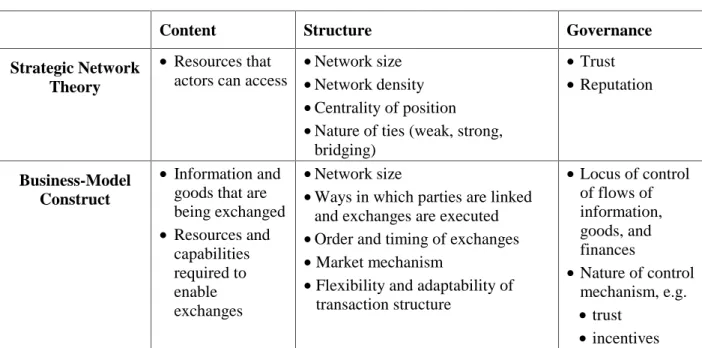
In the discussion section of the paper, we build on our findings to offer some new ways of integrating the entrepreneurship and strategic management literatures. Our central observations are that no single entrepreneurship or strategic management theory can fully explain the valucreation potential of business. Rather, each of the theories offers an important insight into one aspect of value creation in e-business. In an attempt to contribute to the work that seeks to integrate entrepreneurship and strategic management perspectives (e.g., Jones, Hesterly and Borgatti, 1997; Gulati, 1999; Hitt and Ireland, 2000; McGrath and Macmillan, 2000), we propose the business-model construct as a unifying unit of analysis that captures the value creation arising from multiple sources. The business model depicts the design of transaction content, structure, and governance so as to create value through the exploitation of business opportunities. By addressing the central issues in e-business that emerge at the intersection of strategic
management and entrepreneurship, we hope to contribute to theory development in both fields. The paper concludes with some final observations and avenues for further research.
THEORY
Before reviewing the sources of value creation implied by a range of theoretical perspectives in the entrepreneurship and strategic management literatures, we begin this section by highlighting the value-creation potential embedded in virtual markets. Our literature review then focuses on value chain analysis, Schumpeterian innovation, the resource-based view of the firm, strategic network theory, and transaction cost economics. For each of these perspectives, we describe the main theoretical approach, expose the main sources of value creation suggested, and discuss the theoretical implications of the emergence of virtual markets.
Virtual markets
Virtual markets refer to settings in which business transactions are conducted via open networks based on the fixed and wireless Internet infrastructure. These markets are characterized by high connectivity (Dutta and Segev, 1999), a focus on transactions (Balakrishnan, Kumara and Sundaresan, 1999), the importance of information goods and networks (Shapiro and Varian, 1999), and high reach and richness of information (Evans and Wurster, 1999). Reach refers to the number of people and products that are reachable quickly and cheaply in virtual markets; richness refers to the depth and detail of information that can be accumulated, offered, and exchanged between market participants. Virtual markets have unprecedented reach because they are characterized by a near lack of geographical boundaries.6
As an electronic network with open standards, the Internet supports the emergence of virtual communities (Hagel and Armstrong, 1997) and commercial arrangements that disregard traditional boundaries between firms along the value chain. Business processes can be shared among firms from different industries, even without any awareness of the end customers. As more information about products and services becomes instantly available to customers, and as information goods (Shapiro and Varian, 1999) are transmitted over the Internet, traditional intermediary businesses and information brokers are circumvented (“dis-intermediated”), and the guiding logic behind some traditional industries (e.g., travel agencies) begins to disintegrate. At the same time, new ways of creating value are opened up by the new forms of connecting buyers and sellers in existing markets (“re-intermediation”), and by innovative market mechanisms (e.g., reverse market auctions) and economic exchanges.
There are several other characteristics of virtual markets that, when considered together, have a profound effect on how value-creating economic transactions are structured and conducted. These include the ease of extending one’s product range to include complementary products, improved access to complementary assets (i.e., resources, capabilities, and technologies), new forms of collaboration among firms (e.g., affiliate programs), the potential reduction of asymmetric information among economic agents through the Internet medium, and real-time customizability of products and services. Industry boundaries are thus easily crossed as value chains are being redefined (Sampler, 1998). This in turn may affect the scope of the firm as opportunities for outsourcing arise in the presence of reduced transaction costs and increased returns to scale (see Lucking-Reiley and Spulber, 2000; for example, many companies now find it economically viable to outsource their IT services).
In summary, the characteristics of virtual markets combined with the vastly reduced costs of information processing7 allow for profound changes in the ways companies operate and in how economic exchanges are structured. They also open new opportunities for wealth creation. Thus, conventional theories of how value is created are being challenged.
Value chain analysis
Porter’s (1985) value chain framework analyzes value creation at the firm level. Value chain analysis identifies the activities of the firm and then studies the economic implications of those activities. It includes four steps: (1) defining the strategic business unit, (2) identifying critical activities, (3) defining products, and (4) determining the value of an activity. The main questions that the value chain framework addresses are as follows: 1) What activities should a firm perform, and how? and 2) what is the configuration of the firm’s activities that would enable it to add value to the product and to compete in its industry? Value chain analysis explores the primary activities, which have a direct impact on value creation, and support activities, which affect value only through their impact on the performance of the primary activities. Primary activities involve the creation of physical products and include inbound logistics, operations, outbound logistics, marketing and sales, and service.
Porter defines value as “the amount buyers are willing to pay for what a firm provides them. Value is measured by total revenue…A firm is profitable if the value it commands exceeds the costs involved in creating the product” (1985:38). Value can be created by differentiation along every step of the value chain, through activities resulting in products and services that lower buyers’ costs or raise buyers’ performance.
Drivers of product differentiation, and hence sources of value creation, are policy choices (what activities to perform and how), linkages (within the value chain or with suppliers and channels), timing (of activities), location, sharing of activities among business units, learning, integration, scale and institutional factors (see Porter, 1985, pp.124-127). Porter and Millar (1985) argue that information technology creates value by supporting differentiation strategies.
Value chain analysis can be helpful in examining value creation in virtual markets. For, example Amazon.com decided to build its own warehouses in order to increase the speed and reliability of the delivery of products ordered online. By doing so, it was able to add value to sales and fulfillment activities. Stabell and Fjeldstad (1998) found the value chain model more suitable for the analysis of production and manufacturing firms than for service firms where the resulting chain does not fully capture the essence of the value creation mechanisms of the firm. Citing the example of an insurance company, they ask: “What is received, what is produced, what is shipped?” (1998:414). Similar questions can be asked about the activities of e-business firms such as Amazon.com and about e-businesses whose main transactions involve the processing of information flows. Building on this insight, Rayport and Sviokla (1995) propose a “virtual” value chain that includes a sequence of gathering, organizing, selecting, synthesizing, and distributing information. While this modification of the value chain concept corresponds better to the realities of virtual markets, and in particular to the importance of information goods (Shapiro and Varian, 1999), there may still be room to capture the richness of e-business activity more fully. Value creation opportunities in virtual markets may result from new combinations of information, physical products and services, innovative configurations of transactions, and the reconfiguration and integration of resources, capabilities, roles and relationships among suppliers, partners and customers.
Schumpeterian innovation
Schumpeter (1934) pioneered the theory of economic development and new value creation through the process of technological change and innovation. He viewed technological development as discontinuous change and disequilibrium resulting from innovation. Schumpeter identified several sources of innovation (hence, value creation) including the introduction of new goods or new production methods, the creation of new markets, the discovery of new supply sources, and the reorganization of industries. He introduced the notion of “creative destruction” (Schumpeter, 1942) noting that following technological change certain rents become available to entrepreneurs, which later diminish as innovations become established practices in
economic life. These rents were later named Schumpeterian rents, defined as rents stemming from risky initiatives and entrepreneurial insights in uncertain and complex environments, which are subject to self-destruction as knowledge diffuses. In his early work, Schumpeter (1934, 1939) highlighted the contribution of individual entrepreneurs and placed an emphasis on the innovations and services rendered by the new combinations of resources.
In Schumpeter’s theory, innovation is the source of value creation. Schumpeterian innovation emphasizes the importance of technology and considers novel combinations of resources (and the services they provide) as the foundations of new products and production methods. These, in turn, lead to the transformation of markets and industries, and hence to economic development. Teece (1987) adds that the effectiveness of protective property rights (appropriability regime) and complementary assets can add to the value creation potential of innovations. Moran and Ghoshal (1999) highlight the role of economic exchange through which the latent value imbedded in the new combination of resources is realizable. Hitt and Ireland (2000) contribute to this theory by addressing the determinants and consequences of the innovation process and by linking this process with the strategic management of growing enterprises.
As innovative entrepreneurs exploit new opportunities for value creation, the evolution of the resulting virtual markets can be described in terms of Schumpeter’s model of creative destruction. However, virtual markets broaden the notion of innovation since they span firm and industry boundaries, involve new exchange mechanisms and unique transaction methods (rather than merely new products, or production processes), and foster new forms of collaborations among firms. Furthermore, while innovation is certainly a major driving force of the economic development of new and established markets, it may not be the only source of value creation in virtual markets, as suggested by the other theoretical frameworks reviewed in this section.
Resource-based view of the firm
The resource-based view (RBV) of the firm, which builds on Schumpeter’s perspective on value creation, views the firm as a bundle of resources and capabilities. The RBV states that marshalling and uniquely combining a set of complementary and specialized resources and capabilities (which are heterogeneous within an industry, scarce, durable, not easily traded, and difficult to imitate), may lead to value creation (Penrose, 1959; Wernerfelt, 1984; Barney, 1991; Peteraf, 1993; Amit and Schoemaker, 1993). The supposition is that, even in equilibrium, firms may differ in terms of the resources and capabilities they
control, and that such asymmetric firms may coexist until some exogenous change or Schumpeterian shock occurs. Hence, RBV theory postulates that the services rendered by the firm’s unique bundle of resources and capabilities may lead to value creation.
A firm’s resources and capabilities “are valuable if, and only if, they reduce a firm’s costs or increase its revenues compared to what would have been the case if the firm did not possess those resources” (Barney, 1997:147). While the RBV literature has often been concerned with questions of value appropriation and sustainability of competitive advantage (e.g., Barney, 1991), a recent extension to RBV, the dynamic capabilities approach (Teece, Pisano and Shuen, 1997; Eisenhardt and Martin, 2000), explores how valuable resource positions are built and acquired over time. Dynamic capabilities are rooted in a firm’s managerial and organizational processes, such as those aimed at coordination and integration, learning, reconfiguration, and transformation. These capabilities enable firms to create and capture Schumpeterian rents (Teece, Pisano, and Shuen, 1997). Examples of such value-creating processes are product development, strategic decision-making, alliance formation, knowledge creation, and capabilities transfer (Eisenhardt and Martin, 2000).
The emergence of virtual markets clearly opens up new sources of value creation since relational capabilities and new complementarities among a firm’s resources and capabilities can be exploited (e.g., between on line and off line capabilities). However, virtual markets also present a challenge to RBV theory. As information-based resources and capabilities, which have a higher degree of mobility than other types of resources and capabilities, increase in their importance within e-business firms, value migration is likely to increase and the sustainability of newly created value may be reduced. As well, time compression diseconomies (Dierickx and Cool, 1989) provide an effective barrier to imitation for firm-specific resources and capabilities that had to be built over time due to factor market imperfections, and hence enable the preservation of value. The prospect of value preservation or sustainability is an important incentive for value creation. In a networked economy however, there is an alternative to ownership or control of resources and capabilities (either through building or acquiring them). Accessing such resources through partnering and resource sharing agreements is more viable in virtual markets yet the preservation of value, and hence its creation becomes more challenging, because rivals may have easy access to substitute resources as well. Strategic networks
participating firms. They may take the form of strategic alliances, joint-ventures, long-term buyer-supplier partnerships, and other ties” (Gulati, Nohria and Zaheer, 2000:203). The main questions that strategic network theorists seek to answer are as follows: 1) Why and how are strategic networks of firms formed? 2) What is the set of inter-firm relationships that allows firms to compete in the marketplace? 3) How is value created in networks (for example, through inter-firm asset co-specialization)? and 4) How do firms’ differential positions and relationships in networks affect their performance?
Traditionally, network theorists with a background in sociology or organization theory have focused on the implications of network structure for value creation. The configuration of the network in terms of density and centrality (Freeman, 1979), for example, has been considered an important determinant of network advantages, such as access, timing, and referral benefits (Burt, 1992). Moreover, the size of the network and the heterogeneity of its ties have been conjectured to have a positive effect on the availability of valuable information to the participants within that network (Granovetter, 1973).
The appearance of networks of firms in which market and hierarchical governance mechanisms coexist has significantly enhanced the range of possible organizational arrangements for value creation (Doz and Hamel, 1998; Gulati, 1998). Consequently, strategic management and entrepreneurship scholars have moved beyond structural arguments to explore the importance of governance mechanisms such as trust (e.g., Lorenzoni and Lipparini, 1999), and the importance of resources and capabilities (e.g., Gulati, 1999), especially those of suppliers and customers (Afuah, 2000), for value creation. For example, in their study of the Canadian biotechnology industry, Baum, Calabrese and Silverman (2000) found that biotech startups can improve their performance by configuring alliances into networks that enable them to tap into the capabilities and information of their alliance partners. In addition to enabling access to information, markets, and technologies (Gulati, Nohira, and Zaheer, 2000), strategic networks offer the potential to share risk, generate economies of scale and scope (Katz and Shapiro, 1985; Shapiro and Varian, 1999), share knowledge and facilitate learning (Anand and Khanna, 2000; Dyer and Nobeoka, 2000; Dyer and Singh, 1998), and reap the benefits that accrue from interdependent activities such as workflow systems (Blankenburg Holm, Eriksson, and Johansson, 1999). Other sources of value in strategic networks include shortened time to market (Kogut, 2000), enhanced transaction efficiency, reduced asymmetries of information, and improved coordination between the firms involved in an alliance (Gulati, Nohria, and Zaheer, 2000).
The network perspective is clearly relevant for understanding wealth creation in e-business because of the importance of networks of firms, suppliers, customers, and other partners in the virtual market space (Shapiro and Varian, 1999; Prahalad and Ramaswamy, 2000). However, it may not fully capture the value-creation potential of e-businesses that enable transactions in new and unique ways. For example, strategic network theory and the formal tools provided by network analysis (e.g., notions of network density, centrality, network externalities) only partially explain the value-creation potential of a company such as Priceline.com. This business is fundamentally anchored in the innovation of its transaction mechanism (namely, the introduction of reverse markets in which customers post desired prices for sellers’ acceptance) by which items such as airline tickets are sold over the Internet. Priceline.com has even been granted a business method patent on their innovative transaction method. This method distinguishes the firm from an ordinary, online travel agency and poises the firm to tap the more traditional, well-known sources of value in networks discussed above. As this example indicates, virtual markets, with their unprecedented reach, connectivity, and low-cost information processing power, open entirely new possibilities for value creation through the structuring of transactions in novel ways. These new transaction structures are not fully captured by network theory.
Transaction cost economics
The central question addressed by transaction cost economics is why firms internalize transactions that might otherwise be conducted in markets (Coase, 1937). The main theoretical framework was developed by Williamson (1975, 1979, 1983). He suggests that “a transaction occurs when a good or service is transferred across a technologically separable interface. One stage of processing or assembly activity terminates, and another begins” (1983: 104). Williamson identified bounded rationality coupled with uncertainty and complexity, asymmetric information, and opportunism in small-numbers situations as conditions under which transactional inefficiencies may arise that vary with the adopted governance mechanism (Williamson, 1975). At its core, then, transaction cost theory is concerned with explaining the choice of the most efficient governance form given a transaction that is embedded in a specific economic context. Critical dimensions of transactions influencing this choice are uncertainty, exchange frequency, and the specificity of assets enabling the exchange (Klein Crawford and Alchian, 1978; Williamson, 1979). Transaction costs include the costs of planning, adapting, executing, and monitoring task completion (Williamson, 1983).
Transaction cost economics identifies transaction efficiency as a major source of value, as enhanced efficiency reduces costs. It suggests that value creation can derive from the attenuation of uncertainty, complexity, information asymmetry, and small-number bargaining conditions (Williamson, 1975). Moreover, reputation, trust, and transactional experience can lower the cost of idiosyncratic exchanges between firms (Williamson, 1979, 1983). Recently, researchers have focused on the ways in which investment in information technology can reduce coordination costs and transaction risk (Clemons and Row, 1992). In general, organizations that economize on transaction costs can be expected to extract more value from transactions.
One of the main effects of transacting over the Internet, or in any highly networked environment, is the reduction in transaction costs it engenders (Dyer, 1997). Hence, the transaction cost approach critically informs our understanding of value creation in e-business. Transaction costs include “the time spent by managers and employees searching for customers and suppliers, communicating with counterparts in other companies regarding transaction details…the costs of travel, physical space for meetings, and processing paper documents,” as well as the costs of production and inventory management (Lucking-Reiley and Spulber, 2000). In addition to decreasing these direct costs of economic transactions, e-businesses may also reduce indirect costs, such as the costs of adverse selection, moral hazard, and hold-up. This may result from an increased frequency of transactions (because of open standards, anyone can interact with anyone else), a reduction in transaction uncertainty (by providing a wealth of transaction-specific information), and a reduction in asset specificity (for example, through lower site specificity––the next site is only “one click away”). The small-numbers bargaining condition may be relieved in the virtual market situation because of the possibility for large numbers of previously unconnected parties (e.g., buyers and sellers) to interact.
Nonetheless, the emphasis of transaction cost economics on efficiency may divert attention from other fundamental sources of value such as innovation and the reconfiguration of resources (Goshal and Moran, 1996). The theory also focuses on cost minimization by single parties and neglects the interdependence between exchange parties and the opportunities for joint value maximization that this presents (Zajac and Olsen, 1993). In addition, governance modes other than hierarchies and markets (e.g., joint ventures) receive relatively little attention, which contrasts with the importance of strategic networks in e-business. Finally, Williamson (1983) implies that a transaction is a discrete event that is valuable by itself, as it reflects the choice of the most efficient governance form and hence can be a source of transactional
efficiencies. However, in the context of virtual markets, considering any given exchange in isolation from other exchanges that may complement or facilitate that exchange makes it difficult to assess the value created by a specific economic exchange. This is evident from the absence of direct empirical validation of the relationship between exchange attributes and market and firm performance (Poppo and Zenger, 1998), and the absence of estimates of transaction costs themselves (see Shelanski and Klein, 1995, for a review). Summary
Each theoretical framework discussed above makes valuable suggestions about possible sources of value creation. As we have seen, many of the insights gained from cumulative research in entrepreneurship and strategic management are applicable to e-business. However, the multitude of value drivers suggested in the literature raises the question of precisely which sources of value are of particular importance in e-business, and whether unique value drivers can be identified in the context of e-business. We have also drawn attention to the fact that each theoretical framework that might explain value creation has limitations when applied in the context of highly interconnected electronic markets. We believe that this reinforces the need for an identification and prioritization of the sources of value creation in e-business. We begin this process by grounding a model of the sources of value creation in e-business in data on e-business firms. DATA AND METHOD
Research strategy
A lack of prior theorizing about a topic makes the inductive case-study approach an appropriate choice of methodology for developing theory (Eisenhardt, 1989). Hence, to gain a deeper understanding of value creation in business, we conducted in-depth inquiries into the sources of value creation of 59 e-business firms. Our research analysts investigated each firm using approximately 50 mainly open-ended questions to guide their inquiry. The analysts wrote up the answers to the questions using information gathered from multiple data sources, writing up to several paragraphs in response to each question.
Our research design was based on multiple cases and multiple investigators, thereby allowing for replication logic (Yin, 1989). That is, we treated a series of cases like a series of experiments. Each case served to test the theoretical insights gained from the examination of previous cases, and to modify or refine them. This replication logic fosters the emergence of testable theory that is free of researcher bias (Eisenhardt, 1989), and allows for a close correspondence between theory and data (Glaser and Strauss, 1967). Such a grounding of the emerging theory in the data can provide a new perspective on an already
researched topic (e.g., Hitt, Harrison, Ireland and Best, 1998). However, it is especially useful in the early stages of research on a topic, when it is not clear yet to what extent the research question is informed by existing theories (for a recent example of such an inductive study, see Galunic and Eisenhardt, 2000). Both motivations hold in the context of e-business. Furthermore, using case studies is a good research strategy for examining “a contemporary phenomenon in its real-life context, especially when the boundaries between phenomenon and context are not clearly evident” (Yin, 1981: 59). This difficulty is present in the e-business context.
Population of e-business firms
We define an e-business firm as one that derives a significant proportion (at least 10%) of its revenues from transactions conducted over the Internet. This definition of an e-business firm is quite broad. It includes, for example, Internet Service Providers (e.g., European ISP Freeserve), and companies that have not aligned all of their internal business processes with the Internet but that use the Internet solely as a sales channel (e.g., companies such as the speech recognition software provider Lernout and Hauspie). On the other hand, it excludes providers of Internet-related hardware or software, that is, firms that facilitate e-business but that do not engage in the activity themselves (e.g., a backbone switch manufacturer, such as Packet Engines Inc.).
Companies that derive all of their revenues from e-business (so-called “pure plays”) are relatively easy to identify using publicly available descriptions of their major lines of business (e.g., Amazon.com). In other instances, however, it is more difficult to establish whether a firm derives significant revenues from e-business. This is the case for many incumbents (e.g., the British retailer Iceland). It is often impossible to assert if this criterion has been met since companies seldom report their e-business revenues as a separate category. In these cases, we used other information to determine the company’s fit with our target population. For example, we checked whether trade publications referred to the company as an e-business, or whether publications such as The Wall Street Journal and The Financial Times considered the company an e-business pioneer or early innovator in the virtual market space.
Sample
For the US, we created a list of e-businesses that went public between April 2, 1996 (Lycos) and October 15, 1999 (Women.com Networks) using information available on www.hoovers.com. This list
companies was then taken at random from this list. It represents a broad cross-section of firms (see Appendix). By contrast, the challenge in creating the European sub-sample was in identifying public e-businesses. The number of European firms engaged in e-business, as well as the development of indicators of Internet usage and e-business activity in Europe, have lagged behind the corresponding figures in the US in recent years (Morgan Stanley Dean Witter, 1999). Despite these difficulties, we established a sample of 29 public European e-businesses (also listed in the Appendix). Companies were found on all major European exchanges, as well as on new venture markets (such as Germany’s Neuer Markt).
To be eligible for inclusion in our sample, an e-business had to (a) be based either in the US or in Europe, (b) be publicly quoted on a stock exchange, and (c) involve individual consumers in some of the electronic transactions it enables. The international scope of our study not only reflects the decreasing importance of geographic boundaries in virtual markets, it also strengthens our theory development. Theory building on value creation in e-business from inductive case studies is less idiosyncratic if one allows for cases from different economic environments.8
We chose to include only public companies in our sample to ensure the availability and accuracy of information. We are aware that this limits the scope of our analysis, as there are many private firms with interesting business ideas. However, unlike private firms, publicly traded companies provide a wealth of data that can be collected, organized, and analyzed. At this point, it is unclear whether or not this choice introduces a large-company bias into our sample, and hence into our conceptual development, because there are many large, private e-business operations, and several large, public firms not included in our sample (e.g., AOL, and Yahoo).
Including only public companies in our sample may bias it towards surviving companies. While limitations on the availability of data prevent us from broadening the sample to firms that “failed” (according to some definition of failure), we do not believe that the survival bias affects the theoretical development. First, some of the firms we studied will likely fail eventually. Second, the argument can be made for theoretical rather than random sampling of cases, and for studying “extreme situations and polar types in which the process of interest is transparently observable” (Eisenhardt, 1989: 537).
As implied by sampling criterion (c), we focused our study on e-business firms that enabled transactions in which individual consumers were involved. These companies are hereafter collectively referred to as “with-C” companies. For example, our sample included so-called “B-to-C”
(business-to-consumer) companies, which are companies that directly and exclusively engage in transactions with individual customers. We did not sample businesses that solely engaged in commercial activities with other businesses (so-called “B-to-B,” or “business-to-business” companies). We made this choice based primarily on the fact that the quality of data available for “with-C” firms was higher than that available for “B-to-B” firms at the time this research project was launched.9
Data collection
We gathered detailed data on our sample companies mainly from publicly available sources: IPO prospectuses (our major source), annual reports, investment analysts’ reports, and companies’ web sites. A structured questionnaire was used to collect information about (a) the company (e.g., founding date, size, lines of business, products and services provided, and some financial data), (b) the nature and sequence of transactions that the firm enables (e.g., questions included: “What is the company’s role in consummating each transaction?” and “Who are the other players involved?”), (c) Potential sources of value creation (e.g., questions included: “How important are complementary products or services?” and “Are they part of the transaction offering?”), and (d) the firm’s strategy (e.g., questions included: “How does the company position itself vis-à-vis competitors?”). Most of the approximately 50 questions enumerated in the questionnaire were open-ended, which was consistent with our primary objective of developing a conceptual framework that was informed by empirical evidence.
Much high-quality data about US firms was obtained from the SEC’s EDGAR database, which is available to the public online. Data on companies included in the database adheres to a single, US standard set by the SEC. In Europe, however, there is no central data depository. In addition, company reporting requirements vary across European countries, ranging from strict (e.g., the UK) to relatively lax (e.g., Italy). European firms also vary widely in their accounting and disclosure practices, making comparisons across firms difficult. This made the use of multiple sources of information particularly important.
Data analysis
In inductive studies, data analysis is often hard to distinguish from data collection since building theory that is grounded in the data is an iterative process in which the emergent frame is compared systematically with evidence from each case (Eisenhardt, 1989). Some researchers argue for a deliberate process of joint data collection and analysis (e.g., Glaser and Strauss, 1967). We employed this joint process by frequently moving between the data and the emerging theory as we developed our model. The value
driver categories derived from our preliminary analysis of the initial data clearly influenced the design of the subsequent questionnaire that we used for further data collection.10
We used standard techniques for both within-case analysis and cross-case analysis (Eisenhardt, 1989; Glaser and Strauss, 1967; Miles and Huberman, 1984; Yin, 1989). Within-case evidence was acquired by taking notes rather than by writing narratives. For this purpose, research analysts answered the questions enumerated in the questionnaire, integrating and triangulating facts from the various data sources mentioned above. As observed by Yin (1981: 60), “The final case studies resembled comprehensive examinations rather than term papers.” Different members of the research team then analyzed these products sequentially and independently, and periodically discussed their observations in order to reach agreement about the findings. These analyses were the basis for generating initial hypotheses about the value driver categories, and for helping us gain insight into what makes e-business firms tick.
The final model was shaped through intensive cross-case analysis. We first split the sample into two groups, with different researchers responsible for each set. Eisenhardt (1989) notes that this strategy of dividing the data by data source is valid for cross-case analysis. We then identified the predominant sources of value creation and compared these patterns across the sub samples. In order to corroborate our findings, we tabulated the evidence underlying the sources of value creation as suggested by Miles and Huberman (1984).11
Two key theoretical insights emerge from our data analysis. One is that four potential sources of value creation are present in e-businesses, namely efficiency, complementarities, lock-in, and novelty. The other is that, in e-business, the main locus of value creation, and hence the appropriate unit of analysis, spans firm and industry boundaries and can be captured by the business model. In the next section we discuss the four value drivers and the interdependencies among them. In the discussion section, we then offer a precise definition of a business model and show how this construct captures the identified sources of value in a more comprehensive way than more traditional units of analysis such as the firm, the industry, the individual transaction, or the network.
EMERGENT THEORY: SOURCES OF VALUE CREATION IN E-BUSINESS [INSERT FIGURE 1 ABOUT HERE]
Figure 1 depicts the four sources of value creation in e-business that emerged from the data analysis. The term “value” refers to the total value created in e-business transactions regardless of whether it is the
firm, the customer, or any other participant in the transaction who appropriates that value. We therefore adopt Brandenburger and Stuart’s (1996) view of total value created as the sum of the values appropriated by each party involved in a transaction.12 Each of the four major value drivers that were identified in the analysis–efficiency, complementarities, lock-in, and novelty–and the linkages among them, are discussed below. We suggest that the presence of these value drivers, which are anchored in the received entrepreneurship and strategic management theory, enhances the value-creation potential of e-business. Efficiency
The data analysis points to transaction efficiency as one of the primary value drivers for e-business. This finding, which is consistent with transaction costs theory (Williamson, 1975, 1983, 1989), suggests that transaction efficiency increases when the costs per transaction decrease, where “costs” are broadly defined (as elaborated in detail below).Therefore, the greater the transaction efficiency gains that are enabled by a particular e-business, the lower the costs and hence the more valuable it will be.
Efficiency enhancements relative to off-line businesses (i.e., those of companies operating in traditional markets), and relative to other online businesses (i.e., those of companies operating in virtual markets), can be realized in a number of ways. One is by reducing information asymmetries between buyers and sellers through the supply of up-to-date and comprehensive information. The speed and facility with which information can be transmitted via the Internet makes this approach convenient and easy. Improved information can also reduce customers’ search and bargaining costs (Lucking-Reiley and Spulber, 2000), as well as opportunistic behavior (Williamson, 1975). By leveraging the cheap interconnectivity of virtual markets, e-businesses further enhance transaction efficiency by enabling faster and more informed decision-making. As well, they provide for greater selection at lower costs by reducing distribution costs, streamlining inventory management, simplifying transactions (thus reduce the likelihood of mistakes), allowing individual customers to benefit from scale economies through demand aggregation and bulk purchasing, streamlining the supply chain, and speeding up transaction processing and order fulfillment, thereby benefiting both vendors and customers. Marketing and sales costs, transaction-processing costs, and communication costs, can also be reduced in an efficient e-business, and the firm’s value-creating potential can be enhanced through scalability (i.e., increasing the number of transactions that flow through the e-business platform).
Autobytel.com is a case in point. Potential auto buyers are supplied with detailed and comprehensive comparative shopping information on different models and the costs to the dealers of these models. Potential buyers can then quickly make well-informed decisions. The buying process is substantially simplified and accelerated, and bargaining costs are reduced. While vendors’ margins on each sale might be lower, sales volumes increase at essentially no marginal costs.
Efficiency gains in highly networked industries are well documented in the management literature. A study of highly networked Japanese firms, for example, suggests that information flows and reduced asymmetries of information, among other factors, are important in reducing the potential transaction costs associated with specialized assets (Dyer, 1997). More generally, information technology is believed to lead to a reduction in the costs of coordinating and executing transactions (Clemons and Row, 1992).
Complementarities
Complementarities are present whenever having a bundle of goods together provides more value than the total value of having each of the goods separately. In the strategy literature, Brandenburger and Nalebuff (1996) have highlighted the importance of providing complementary outputs to customers.13 They state that, “A player is your complementor if customers value your product more when they have the other player’s product than when they have your product alone” (1996:18). RBV theory also highlights the role of complementarities among strategic assets as a source of value creation (Amit and Schoemaker, 1993); and network theory highlights the importance of complementarities among the participants in the network (Gulati, 1999). Hence, complementarities can be expected to increase value by enabling revenue increases.
The data analysis suggests that e-businesses leverage this potential for value creation by offering bundles of complementary products and services to their customers. These complementary goods may be vertical complementarities (e.g., after-sales services) or horizontal complementarities (e.g., one-stop shopping, or cameras and films) that are provided by partner firms. They are often directly related to a core transaction enabled by the firm. For example, e-bookers, a European online travel site, grants its customers access to weather information, currency exchange rate information, and appointments with immunization clinics. These services enhance the value of the core products (airline tickets and vacation packages) and make it convenient for users to book travel and vacations with E-bookers.
The data also point to off-line assets that complement online offerings. Customers who buy products over the Internet value the possibility of getting after-sales service offered through bricks-and-mortar retail
outlets, including the convenience of returning or exchanging merchandise. This complementarity between on- and off-line businesses is the essence of “click-and-mortar” offerings such as that provided by a company such as barnesandnoble.com. The complementary between barnesandnoble.com and its bricks-and-mortar counterpart creates value for customers by offering them the opportunity to browse and order on line, and to receive books in bricks-and-mortar stores. It also creates value for its business partners by allowing them to utilize the interconnectivity of virtual markets to cross-market their products on computer screens that are placed in Barnes & Noble bookstores.
The data further suggest that e-businesses offer complementary goods that may not be directly related to the core transactions. Consider, for example, Xoom.com, a company that facilitates community building among Internet users and exploits its customer base through a mix of e-business activities, such as auctions, sales, and direct marketing. Xoom.com attracts customers by offering an array of free complementary Internet services, such as home page building and hosting, access to chat rooms and message boards, e-mail, online greeting cards, downloadable software utilities, and clip art. These services are not directly related to the products Xoom.com sells or to the auctions they host. However, they fit well with the community aspect of Xoom.com since they facilitate communication among members.
E-businesses may also create value by capitalizing on complementarities among activities (such as supply-chain integration), and complementarities among technologies such as linking the imaging technology of one business with the Internet communication technology of another, thereby unleashing hidden value.
Our analysis also highlights the interdependency between the sources of value creation. Efficiency gains made possible by information technology pave the way for the exploitation of complementarities in e-business. Weaving together the resources and capabilities of distinct firms, a hallmark of e-businesses, is economically compelling when transaction costs, and hence the threat of opportunism, are low. We note that the reverse is also true: complementarities may lead to increased efficiency, at least from a customer’s point of view. When customers have access to products and services that are complementary to the primary product of interest, efficiency may be enhanced, for example, through reduced search costs (e.g., when purchasing a car with the help of Autobytel.com, one is automatically offered car insurance, a complementary product) and improved decision-making.
Lock-In
The value-creating potential of an e-business is enhanced by the extent to which customers are motivated to engage in repeat transactions (which tends to increase transaction volume), and by the extent to which strategic partners have incentives to maintain and improve their associations (which may result in both increased willingness to pay of customers and lower opportunity costs for firms). These value-creating attributes of an e-business can be achieved through “lock-in.” Lock-in prevents the migration of customers and strategic partners to competitors, thus creating value in the aforementioned ways. Lock-in is manifested as switching costs, which are anchored in Williamson’s (1975) transaction cost framework, and as network externalities, which has its roots in network theory (Katz and Shapiro, 1985; Shapiro and Varian, 1999). It should also be noted that, as RBV theory suggests, a firm’s strategic assets, such as its brand name, and buyer-seller trust, both contribute to lock-in.
The data analysis reveals several ways in which customer retention can be enhanced. First, loyalty programs (Varian, 1999) can be established that reward repeat customers with special bonuses. For example, US retailer barnesandnoble.com has a rewards program in collaboration with Master Card, and bonus points collected with the Master Card can be redeemed for barnesandnoble.com reward certificates, which in turn can be used as payment for barnesandnoble.com products. Second, firms can develop dominant design proprietary standards (Teece, 1987) for business processes, products, and services (e.g., Amazon’s patented shopping cart). Third, firms can establish trustful relationships with customers, for example, by offering them transaction safety and reliability guaranteed by independent and highly credible third parties. Consodata, a European direct mailing firm, demonstrates this ideal. Consodata promotes in-house systems to protect data from misuse, but, more importantly, also accommodates inspections by the French government agency CNIL (Commission Nationale Informatique et Libertés). To the extent that customers develop trust in an e-business company through such measures, they are more likely to remain loyal to the site rather than switch to a competitor.
Familiarity with the interface design of a web site requires customer learning; once this learning has begun, it inhibits customers from switching to other sites where their learning would have to begin again (Smith, Bailey and Brynjolfsson, 1999). This argument gains strength when opportunities for customization (initiated by the customer) and personalization (initiated by the e-business) are exploited. Our data suggest that e-businesses enhance lock-in by enabling customers to customize products, services, or information to
their individual needs in a variety of ways. For example, E*Trade’s web site contains a customizable, one-stop “market command center” that provides frequently updated commentary on stock trading throughout the day, customized news, alerts, and real-time stock-quotes. Other e-business sites offer customized “one-click ordering” as a standard feature. In addition, many online vendors use data mining methods to personalize products, information, and services. These methods include the analysis of submitted customer information, click streams, and past purchases in order to set up personalized storefronts or create a personalized interface, conduct direct advertising, target emails, and facilitate cross selling. For example, online electronics retailer Cyberian Outpost uses click analysis software and past purchase analysis for effective cross-selling; even impulse items (i.e., “add-ons”) are recommended to customers at the checkout. Personalization can also be achieved with filtering tools that compare a customer’s purchase patterns with those of like-minded customers and make recommendations based on inferred tastes (Smith et al., 1999). This mechanism exhibits the interesting property that the more the customer interacts with the system, the more accurate the matching results become. Customers then have high incentives to use the system. This creates a positive feedback loop (Arthur, 1990). More important for our discussion of e-business, however, is the idea that increasing returns (Arthur, 1996) and positive feedback may derive from network effects (Katz and Shapiro, 1985; Shapiro and Varian, 1999). These are discussed below.
Virtual markets also enable e-business firms to create virtual communities that bond participants to a particular e-business (Hagel and Armstrong, 1997). Such communities enable frequent interactions on a wide range of topics and thereby create a loyalty and enhance transaction frequency (e.g., Verticalnet.com). We note how all of the above measures use and leverage the unique characteristics introduced by virtual markets, such as high interconnectivity, speed of information processing, and lack of geographical constraints. Given the enormous reach of virtual markets, e-business firms often connect numerous parties that participate in commercial transactions. They can thus be considered network generators. Networks may exhibit externalities in that the production or consumption activities of one party connected to the network have an effect on the production or utility functions of other participants in the network. This effect is not transmitted through the price mechanism. Network externalities are usually understood as positive consumption externalities in which “the utility that a user derives from consumption of the good increases with the number of other agents consuming the good” (Katz and Shapiro, 1985:424). Henceforth, we will refer only to consumption externalities when discussing network externalities. In the context of e-business, network
externalities are present when the value created for customers increases with the size of the customer base. Consider, for example, a community site such as that created by Fortunecity, where a user benefits when there are more participants with whom she or he can interact in chat rooms, on bulletin boards, etc. After a new member has joined the community, it becomes more attractive for other potential members to subscribe. The opposite is also true — if a site is unattractive and loses members, it becomes less attractive for existing subscribers, who may drop out. A dangerous downward spiral is set in motion that, in the extreme case, can destroy the business.
There may also be indirect network externalities that arise when economic agents benefit from the existence of a positive feedback loop with another group of agents. Consider, for example, online auction companies such as eBay or QXL. A buyer on one of these auction sites has no immediate advantage from the presence of additional buyers. On the contrary, other buyers who are willing to purchase the same merchandise may prevent the desired trade. However, the presence of more buyers (a signal of current and future market liquidity) makes it more attractive for potential sellers to put their products up for sale at that particular site. This, in return, enhances the site’s attractiveness to potential buyers. Buyers thus benefit indirectly from increasing numbers of other buyers. The same logic holds for sellers.
The indirect network effect, which Katz and Shapiro (1985) term the “hardware-software paradigm,” can be attributed to the complementary nature of some of the major components of the network in which an e-business firm is embedded (Economides, 1996). In an auction setting, the complementary components of the network would be the buyers and sellers. Here, the total value created is a direct function of network size. Although some e-businesses (for example, those revolving around online communities and auctions) are more likely than others (for example, those focusing mainly on direct, online sales) to exhibit important network externalities, e-business operations can be designed to harness the power of this lock-in mechanism. Amazon.com, for example, has adopted various community features (Kotha, 1998). Among other things, it has created a “community of interests” by allowing its customers to write book reviews. (This, by the way, is an interesting example of how highly networked e-businesses can enable customers themselves to create value.) Even stronger are the network effects created by online vendors of video game software, such as Cryo-Interactive or Gameplay.com, that provide a web location where customers can interact and play games (obtained from the web provider) with each other.
Efficiency and complementarities as sources of value creation (as described above) can also be helpful in fostering lock-in. The efficiency features and complementary product and service offerings of an e-business may serve to attract and retain customers and partners. The higher the relative benefits offered to these parties, the higher their incentives to stick with or join the network established by the e-business. The increasing return properties inherent to network effects then magnify the relative benefits offered, thus triggering positive feedback dynamics.
Conversely, when an e-business creates lock-in, this can also have positive effects on its efficiency and on the degree to which it provides for complementarities. For example, many auction sites enable buyers to rate sellers. This feature increases buyers’ trust in the fairness of transactions and therefore fosters stickiness. This feature also provides a strong incentive for repeat sellers to refrain from cheating, which clearly enhances transaction efficiency. Moreover, a strong potential for lock-in provides an incentive for profile partners to contribute complementary products and services because of the promise of high-volume (repeat) business. There are thus important relationships between lock-in, efficiency, and complementarities as sources of value creation. The potential value of an e- business depends on the combined effects of all these value drivers.
Novelty
The value-creation potential of innovations has been articulated by Schumpeter (1934). While the introduction of new products or services, new methods of production, distribution, or marketing, or the tapping of new markets have been the traditional sources of value creation through innovations, our data analysis reveals that e-businesses also innovate in the ways they do business, that is, in the structuring of transactions. For example, eBay was the first company to introduce customer-to-customer auctions on a large scale. In this architecture, even low-value items could be successfully traded between individual consumers. Priceline.com introduced reverse markets, whereby individual buyers indicate their purchase needs and reservation prices to sellers. Autobytel.com revolutionized the automobile-retailing process in the US through linking potential buyers, auto dealers, finance companies, and insurance companies, thus enabling around-the-clock one-stop car shopping from home. These companies all introduced new ways of conducting and aligning commercial transactions. They create revenue flows, and thereby value, by connecting previously unconnected parties, eliminating inefficiencies in the buying and selling processes through adopting innovative transaction methods, capturing latent consumer needs (such as haggle-free car
purchasing from the convenience of your home), and/or by creating entirely new markets (e.g., auctions for low-ticket items).
The unique characteristics of virtual markets (i.e., the removal of geographical and physical constraints, possible reversal of information flows from customers to vendors, and other novel information bundling and channeling techniques) make the possibilities for innovation seem endless. For example, e-business firms can identify and incorporate valuable new complementary products and services into their bundle of offerings in novel ways. Another dimension of innovation in e-business refers to the appropriate selection of participating parties. For example, firms can direct and intensify traffic to their web site by initiating affiliate programs with third parties, who are compensated for enabling the execution of transactions from their own web sites.
There can be substantial first-mover advantages for e-business innovators (Lieberman and Montgomery, 1988). Being the first to market with a novel business method (such as Priceline.com’s) makes it easier to create switching costs by capturing “mindshare,” and by developing brand awareness and reputation. As well, e-business innovators can gain by learning and accumulating proprietary knowledge, and by preempting scarce resources (e.g., eBay.com’s proprietary data set on sellers’ auction history).
Novelty and lock-in, two of the four value drivers in our model, are linked in two important ways. First, e-business innovators have an advantage in attracting and retaining customers, especially in conjunction with a strong brand. Second, being first to market is an essential prerequisite to being successful in markets that are characterized by increasing returns (Arthur, 1996; Shapiro and Varian, 1999). First movers are in a good position to initiate the positive feedback dynamics that derive from network externalities (Katz and Shapiro, 1985; Arthur 1990), and to achieve a critical mass of suppliers and/or customers before others do. In “winner-takes-most ” markets, it is imperative to enter a new market first (Shapiro and Varian, 1999).
Novelty is also linked with complementarities. The main innovation of some e-businesses resides in their complementary elements, such as the resources and capabilities they combine (e.g., Schumpeter, 1934; Penrose, 1956; Moran and Goshal, 1999). Cyberian Outpost, a US Internet-only computer retailer, lets customers select computer configurations along with accessories and peripheral solutions by giving them access to an up-to-date database containing over 170,000 products, including information on their functionality and compatibility. The database contains information on many complementary products from
partner firms (for example, computer hardware manufacturers, accessories producers, and software developers). Each product is presented to interested buyers with possible complementary solutions, including warranty options. Of course, the database also contains information on substitute products. From the customer’s perspective, however, information about any of these products is complementary because it enables them to make better choices. Cyberian Outpost is thus a good example of a novel e-business architecture that is based almost exclusively on the logic of harnessing complementarities for customers.
Finally, there is also an important relationship between novelty and efficiency. Certain efficiency features of e-businesses may be due to novel assets that can be created and exploited in the context of virtual markets. For example, Artnet.com, a European company that enables online art auctions, reduces the asymmetry of information between the buyers and sellers of art (traditionally a source of severe inefficiencies) through maintaining and expanding a database of transactions (including information on price) that is accessible to its clients. This information service, which allows participants in auctions to benchmark current transactions against historic art sales, is novel in the art auction business. It also increases transaction efficiency by reducing market failures that are due to informational problems.
Table 1 illustrates, in summary form, the results of our in-depth, case-based analyses of the sources of value creation of three of our sample firms. The table depicts the specific ways in which novelty, lock-in, complementarities, and efficiency are manifested in these particular firms. While some traditional strategy frameworks such as RBV (e.g., Barney, 1991) focus on the competitive advantage of firms, and hence on value appropriation, our model, which emerged from the analysis of the data, is concerned with total value creation. We believe that value creation strikes at the heart of the strategic management and entrepreneurship fields, as it is an essential prerequisite for value appropriation (see also Porter, 1985; Brandenburger and Stuart, 1996).
[INSERT TABLE 1 ABOUT HERE] DISCUSSION
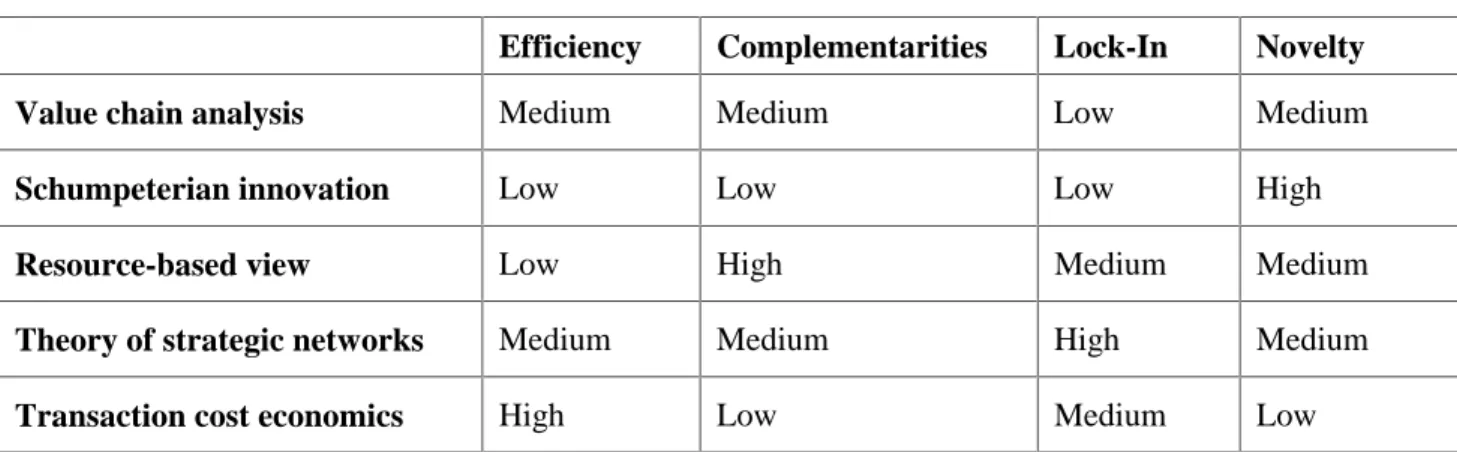
Two major insights emerge from the preceding section. The first is that four potential sources of value creation are present in e-businesses, namely efficiency, complementarities, lock-in, and novelty. However, as Table 2 shows, the theoretical lenses that are commonly used in the fields of strategic management and entrepreneurship for viewing and explaining wealth creation emphasize distinct sources of value. In our analysis, each of the identified sources of value creation (each of which cuts across established
theoretical frameworks) commands equal attention. Our analysis thus suggests that no single theoretical framework discussed in this paper (i.e., value chain analysis, Schumpeterian innovation, RBV, strategic network theory, transaction cost economics) should be given priority over the others when examining the value-creation potential of e-businesses. In other words, our analysis calls for an integration of the various frameworks, in particular for the linking of strategic management and entrepreneurship theories of value creation (Hitt and Ireland, 2000; McGrath and MacMillan, 2000). Scholars in both fields have recently made considerable progress in advancing this idea. For example, Gulati (1999) and Afuah (2000) have successfully begun to integrate RBV and strategic network theory, emphasizing the importance of resources and capabilities of network partners for a firm’s performance. Jones, Hesterly and Borgatti (1997) have initiated the integration of transaction cost economics and network theory, arguing that because they enable flexibility, enhance cooperation, and create trust, networks arise under conditions of asset specificity, demand uncertainty, and task complexity and frequency. These works are promising and important steps towards an improved theoretical understanding of the phenomenon of wealth creation. However, as our analysis shows, there are abundant lessons to be learned from studies of e-businesses in action.
[INSERT TABLE 2 ABOUT HERE]
The second theoretical insight emanating from the preceding section refers to the interdependence of the sources of value and to the locus of value creation in e-business. As we have seen, the presence of each value driver can enhance the effectiveness of any other driver. This gives even more weight to our call for an improved integration of the various theories of value creation in order to yield a more complete picture of the functioning of e-businesses and capture the various sources of value creation.
One stepping stone on the road towards an integrated theory of value creation would be the definition of a unit of analysis that captures the various interdependent sources of value identified in this paper. Note that the different theoretical approaches reviewed above suggest distinct units of analysis that are commensurate with the alleged main locus of value creation. In the value chain framework, it is the firm’s activities, in Schumpeter’s theory of economic development, it is the firm (and in particular the entrepreneur), in RBV, it is the resources and capabilities that constitute the firm, in strategic network theory, it is the network of firms, and in transaction cost economics, it is the transaction that is both the unit of analysis and the presumed locus of value creation. Using any of these theoretical frameworks in isolation would result in some crucial aspects of value creation in e-business either being ignored or not being given