PDXScholar
Dissertations and Theses Dissertations and Theses
Spring 6-3-2013
Nursing Student Anxiety in Simulation Settings: A Mixed Methods
Study
Mary Louise Cato Portland State University
Let us know how access to this document benefits you.
Follow this and additional works at:http://pdxscholar.library.pdx.edu/open_access_etds Part of theEducational Leadership Commons
This Dissertation is brought to you for free and open access. It has been accepted for inclusion in Dissertations and Theses by an authorized administrator of PDXScholar. For more information, please [email protected].
Recommended Citation
Cato, Mary Louise, "Nursing Student Anxiety in Simulation Settings: A Mixed Methods Study" (2013).Dissertations and Theses.Paper 1035.
Nursing Student Anxiety in Simulation Settings: A Mixed Methods Study
by
Mary Louise Cato
A dissertation submitted in partial fulfillment of the requirements for the degree of
Doctor of Education in
Educational Leadership: Postsecondary Education
Dissertation Committee: Candyce Reynolds, Chair
Andrew Job Dannelle Stevens
Leslie McBride
Portland State University 2013
Abstract
The use of simulation as a clinical learning activity is growing in nursing programs across the country. Using simulation, educators can provide students with a realistic patient situation using mannequins or actors as patients in a simulated
environment. Students can practice multiple aspects of patient care without the risk of making mistakes with real patients, and faculty can reinforce course objectives and evaluate student learning. Because of the technology, the environment, and the methods by which simulation is implemented, it may cause anxiety in learners, which may
interfere with the learning process. Anxious students may miss an opportunity for learning valuable aspects of nursing care that are reinforced in simulation.
This paper will describe a study of the student perspective on simulation, particularly related to the anxiety experienced by many learners. Nursing students in a baccalaureate program who participate in simulation in their clinical courses were recruited for the study, which consisted of a survey and a focus group. Participants were asked to rate nineteen aspects of simulation in regards to the feelings they elicit, from confidence to anxiety. The survey, completed by 73 of the 178 eligible participants, also included open-ended questions in which students could elaborate on their responses. A focus group was held after the survey, during which nine volunteer participants were asked further questions about their feelings and reactions in simulation, specifically as related to their effect on learning. During a facilitated discussion, they also offered
suggestions for interventions that they believed would decrease their anxiety and improve the learning environment in simulation.
After an analysis of the data, a “comfort-stretch-panic” model (Palethorpe & Wilson, 2011) emerged as a useful framework for understanding the student perspective. Students in the “stretch” zone, in which they perceived a manageable amount of stress, were motivated to perform and experienced optimal learning from the simulation session. The student suggestions for interventions which would aid their learning may be useful for transitioning them into the “stretch” zone, and should be considered as potential tools in simulation practice.
Acknowledgements I am indebted to a number of people for their assistance and support during my dissertation work. The faculty in the Graduate School of Education were inspirational from the first course through the last. The colleagues in my cohort impressed me with their knowledge and skills, and I feel privileged to have been on this journey with them. My advisor and dissertation chair, Dr. Candyce Reynolds, continuously challenged me and encouraged me to think more deeply, and my committee provided me with helpful ideas for my research. My colleagues at OHSU were supportive and understanding of the energy and effort needed to pursue my interests in student perspectives on learning. The students I work with every day continue to motivate me to be a better teacher, and I appreciate their willingness to share their thoughts and ideas for this study. And, last but not least, I am grateful to my friends and family for sustaining me through this process.
Table of Contents
Abstract ... i
Acknowledgements ... iii
List of Tables ... vii
Chapter 1 - Overview and Conceptualization of the Research ... 1
Anxiety, Learning, and Simulation ... 4
Background of the Problem in Practice……….8
The Research Problem……….. 9
Research Methodology ... 10
Summary ... 10
Chapter 2 - Literature Review... 11
Integration of Simulation in Nursing Education ... 11
Prevalence of Simulation Use in Nursing ... 13
Rationale and Evidence for Effectiveness of Simulation ... 15
Evidence for Effectiveness of Simulation ... 26
Stress and Anxiety ... 39
Learning Under Stress/Anxiety ... 41
Nursing Students’ Experiences ... 47
Summary and Implications ... 54
Methodology ... 56
Chapter 3 - Methodology ... 58
Purpose of the Study ... 58
Research Perspective ... 58
Research Setting... 59
Target Population and Participant Selection ... 60
Instruments and Measures ... 62
Procedures ... 64
Obtaining Informed Consent... 65
Role of the Researcher ... 66
Data Collection and Data Analysis ... 67
Summary ... 70
Chapter 4 - Results ... 71
Simulation Survey ... 71
Survey Psychometrics ... 71
Participants ... 72
Relationship of Responses to Student Characteristics ... 75
Rating of Elements ... 80
Open-ended Survey Questions ... 82
Focus Group ... 94
Setting ... 95
“Draw Yourself in Simulation” Activity ... 95
Guided Focus Group Questions ... 97
Integrated Results... 111
Summary ... 114
Chapter 5 - Summary, Conclusions, Implications ... 115
Themes Derived From Data ... 116
Clinical Situation/Patient Scenario ... 117
Being on Camera/Observed ... 124
Feedback/Faculty and Peers ... 126
Orientation/Preparation ... 127
Peers/Colleagues ... 130
Safe Environment... 132
Challenges/Prepares for Real Life ... 134
Group Differences in Anxiety ... 135
Working with Medical Equipment-Gender ... 136
The Preparation Beforehand - Late in Program Vs. Early in ... 136
Working with Medical Equipment - Accelerated Program Vs. 3-year Program ... 137
Administering Medications - Accelerated Vs. 3-year Program ... 138
Differences in Accelerated Vs. 3-year Program Students ... 139
Research Aims……….………....141
Implementing the Findings: A Broad Perspective ... 141
Implementing the Findings: Student Suggestions ... 144
Limitations of the Study... 151
Reflection on Recommendations ... 152
Suggestions for Additional Research ... 154
Measuring Anxiety ... 155 Evaluating Interventions………...……….155 Comparing Programs ... 156 Faculty Development ... 157 Conclusion ... 157 References ... 159
Appendix A - Informed Consent for Research Study, Survey... 170
Appendix B - Survey ... 172
List of Tables
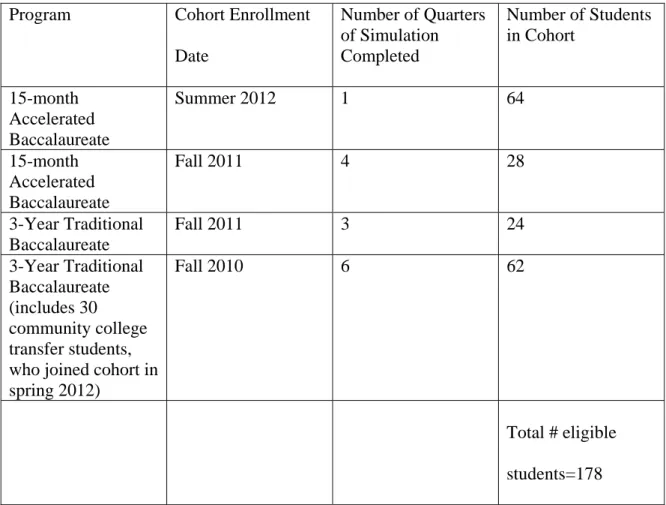
3.1 Students Eligible for Simulation Study……… 61
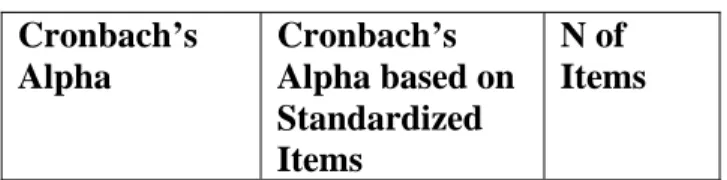
4.1 Reliability Statistics – Survey……….. 71
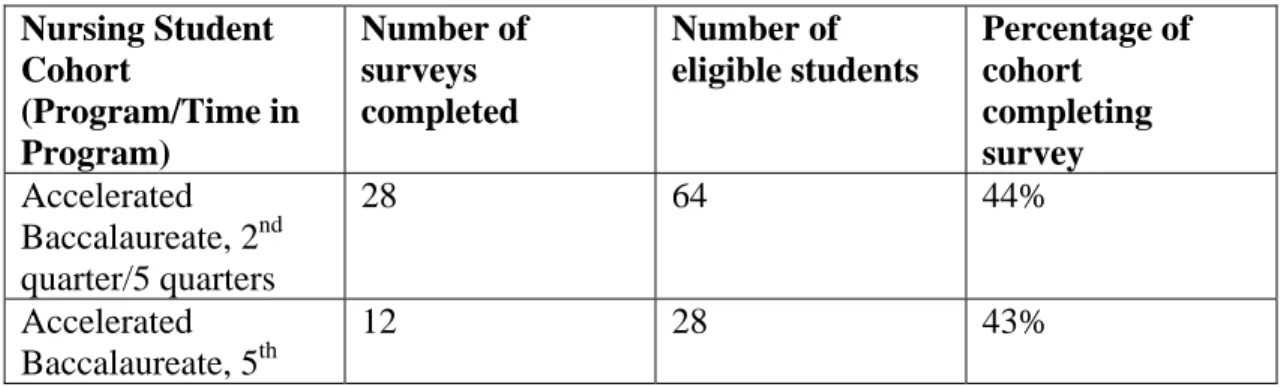
4.2 Numbers of Nursing Students Completing Survey……….. 72
4.3 Number of Survey Respondents with Previous Degree………... 73
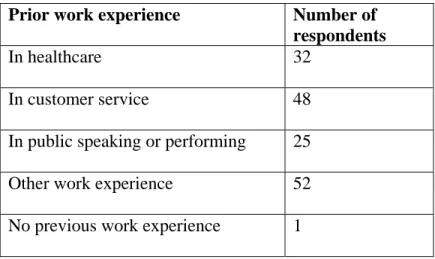
4.4 Prior Work Experience of Survey Respondents……….. 74
4.5 Age Ranges of Survey Respondents……… 74
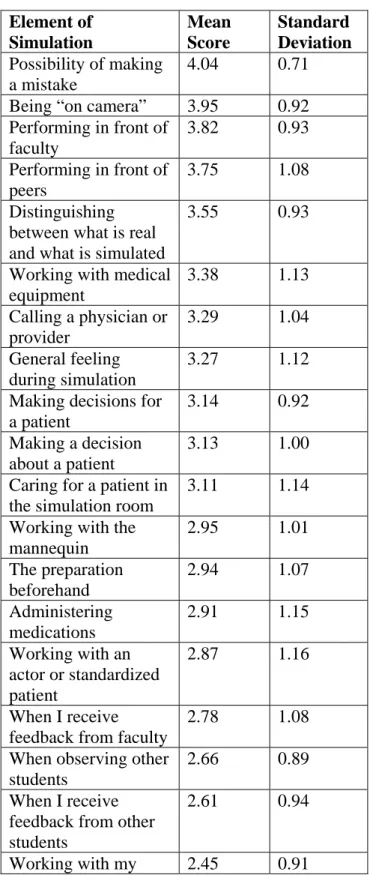
4.6 Differences in Survey Responses Based on Program /Time in Program…. 76 4.7 Anxiety Scores - Elements of Simulation……… 81
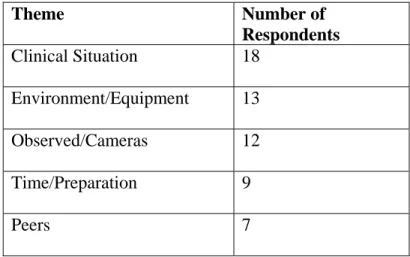
4.8 Themes for Confidence-building Elements / Respondents Mentioning….. 84
4.9 Themes for Anxiety-Related Elements and Respondents Mentioning…… 89
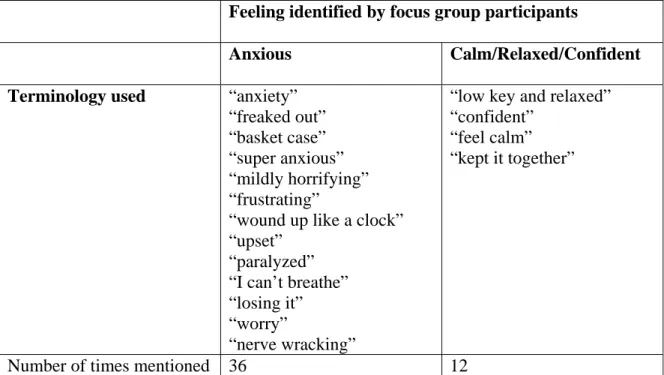
4.10 Frequency of Feelings Identified by Participants……… 98
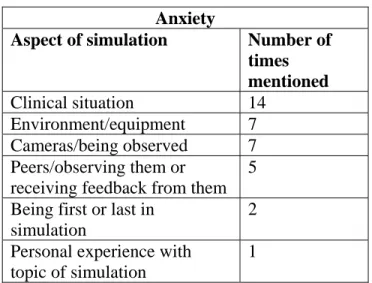
4.11 Causes of Anxiety and Times Mentioned……… 99
4.12 Causes of Calm/Relaxed/Confident Feelings and Times Mentioned…….. 99
4.13 Themes/Helps Anxiety or Increases Confidence………. 102
4.14 Student Recommendations to Improve Learning in Simulation………….. 106
5.1 Themes-Sources of Anxiety and Confidence………... 117
Chapter 1 - Overview and Conceptualization of the Research
Technology is allowing nurse educators to develop creative techniques to teach students the knowledge and skills they will need to practice their profession. Due to a national nursing shortage, an increase in the number of nursing education programs, and a shortage of clinical learning sites, many nursing programs are utilizing simulation to help students learn the roles and responsibilities of the nurse. These teaching tools include the use of a simulated clinical environment in which students practice with mannequins or actors as patients and may include being observed via cameras by faculty and colleagues. The equipment and methodology support learning, but may also cause stress and anxiety for some students, which may in turn impact their ability to learn.
Simulation, as utilized in nursing education, is defined as an “attempt to replicate some or nearly all of the essential aspects of a clinical situation so that the situation may be more readily understood and managed when it occurs for real in clinical practice” (Morton, 1995, p. 76). The term “simulation” is often used to describe learning activities that are based on use of a high-fidelity mannequin designed to respond physiologically in ways similar to a human. Faculty in both nursing and medical schools, however, may also use other types of simulation, including role-playing, standardized patients or actors, and lower fidelity (or less realistic) mannequins intended for training of a specific skill. Typically, a simulation consists of a student or group of students providing care for a simulated patient, who is represented by a mannequin or an actor, depending on the clinical situation. Often, simulation is an activity in which students participate in groups in a planned patient care scenario and are observed by faculty and colleagues. The patient
care scenario is followed by a reflection, or debriefing period, during which the case is deconstructed and analyzed and feedback is given to the participants by faculty and other students. Simulation is usually used to complement clinical learning that is done in patient care environments such as hospitals, clinics, long-term care centers and community settings.
Nursing education literature substantiates the fact that simulation is becoming increasingly common as a clinical learning tool (Jeffries, 2007; Kaakinen & Arwood, 2009; Sinclair & Ferguson, 2009). The National Council of State Boards of Nursing did a national survey of the use of simulation in nursing education in 2010. The results from 1,060 pre-licensure nursing programs revealed that 87% used simulation, and most respondents reported integrating simulation into five or more courses. The majority of respondents (81%) also thought they should be using more simulation but faced barriers such as lack of faculty training and cost (Hayden, 2010).
There is increasing evidence in the literature that simulation can be an effective means to promote learning in nursing and other healthcare professions. Simulation has been demonstrated to be effective in improving student cognitive skills and critical thinking (Elfrink, Kirkpatrick, Nininger, & Schubert, 2010; Kaddoura, 2010), self-confidence and self-efficacy, (Blum, Borglund, & Parcells, 2010; Wagner, Bear, & Sander, 2009; Schoening, Sittner, & Todd, 2006; Sinclair & Ferguson, 2009), clinical skills and clinical performance (Alinier, Hunt, Gordon, & Harwood, 2006; Anderson & Warren, 2011; Meyer, Connors, Hou, & Gajewski, 2011), safe medication administration (Sears, Goldsworthy, & Goodman, 2010), and leadership skills (Reed, Lancaster,
&Musser, 2009). As students graduate and enter the practice arena, simulation has been used to help them transition into professional practice (Chappy, 2010; Stefanski & Rossler, 2009). Also, in the interest of patient safety, simulation is used to facilitate teamwork and communication both inter- and intra-professionally (Kuehster & Hall, 2010). Focusing on the affective domain, others have used simulation to promote learning in the areas of cultural diversity and caring (Haas, Seckman, & Rea, 2010; Eggenberger, Keller, & Locsin, 2010; Storr, 2010), nursing care at end-of-life (Hamilton, 2010; Smith-Stoner, 2009), and ethical decision-making (Gropelli, 2010).
Because it is a practice discipline, nursing must be taught not only in the classroom, but in clinical areas as well. Students need to apply the knowledge learned, practice the necessary skills, and incorporate the behaviors needed to practice nursing in a real environment. Simulation has been incorporated into nursing education because it allows students to “engage in the same critical thinking and clinical decision-making skills required in actual clinical practice” (Sinclair & Ferguson, 2009, p. 1). When utilized as a clinical learning activity, simulation builds upon what students know and allows them to demonstrate their knowledge and skills in a safe learning environment by providing “a wide range of experiences that are either too rare or too risky for novices to engage in using actual patients” (Hovancsek, 2007, p. 3). With deliberate planning, thoughtful curricular integration, and support from faculty, simulation can help bridge the gap between the classroom and the patient care environment.
Some students report anxiety in simulation that may affect learning. Cordeau (2010) examined the experience of novice nursing students who were involved in a
graded clinical simulation activity. Several themes were identified by the students, including perceived anxiety that occurred “during all levels of the process” (Cordeau, p. 14.) Walton, Chute, and Ball (2011) examined the student perspective of simulation in a grounded theory study. Students reported high levels of anxiety with all simulations, though this reportedly decreased with continued practice. Lasater (2007) reported that students experienced heightened anxiety levels while in simulation, particularly related to the anticipation of an unexpected event.
There is evidence that the stress of simulation may be problematic for those learning to become nurses. Simulation (or practicing clinical nursing in a simulated environment) has been integrated into many nursing curricula, and has been proven to be an effective learning activity. Yet, some students experience such high stress levels in a simulation environment that their learning is compromised. Unless they receive support, students may not obtain the maximum learning benefits possible in the simulation component of their curriculum.
Anxiety, Learning, and Simulation
In order to understand the problems of stress and anxiety related to simulation, several definitions and explanations will be useful. The relationship between stress and anxiety is important to understand. Stress is“a physical, chemical, or emotional factor that causes bodily or mental tension and may be a factor in disease causation,” or “a state resulting from a stress; especially: one of bodily or mental tension resulting from factors that tend to alter an existent equilibrium” (Merriam-Webster.com, 2011).
Anxiety is “painful or apprehensive uneasiness of mind usually over an impending or anticipated ill,” “fearful concern or interest,” and “an abnormal and overwhelming sense of apprehension and fear often marked by physiological signs (as sweating, tension, and increased pulse), by doubt concerning the reality and nature of the threat, and by self-doubt about one's capacity to cope with it” (Merriam-Webster.com, 2011).Stress and anxiety are related. Stress can come from any situation or thought that makes a person frustrated or angry, and stress responses can differ from person to person. Anxiety is a feeling of apprehension or fear; it is the psychophysiologic signal that the stress response has been initiated (Robinson, 1990). Stress is normal, and can have the positive effect of motivating an individual to action. An excess of stress, however, is harmful, and can cause physical symptoms such as pain, dizziness, headaches, muscle tension, sweating, decreased concentration, and trembling (MedLine Plus, 2011).
Learning to manage their anxiety in simulation may help students in areas beyond the simulation environment. The practice of nursing exposes students to a number of stressors, including patient situations, critical events, and communication challenges. Many of these situations cause anxiety, particularly for new practitioners. By helping students manage anxiety in simulation, faculty may be helping them learn to provide better patient care by dealing with the stress of a “real” patient care environment. Showing concern for students experiencing anxiety also reinforces the caring nature of nursing, as modeled by faculty.
Faculty may have other reasons for helping anxious students. In nursing programs where simulation has been integrated into the curriculum, all students are expected to
participate. One of the benefits of simulation is that all students can be exposed to the same clinical event, with the intention of integrating what they have learned into practice. Simulation activities may be integral to meeting course objectives. If a student
experiences too much anxiety, faculty may need to spend individual time with that student to help them not only manage the anxiety, but attain the learning objectives of the simulation. Clinical hours for pre-licensure nursing education are mandated by state boards of nursing, and many programs use simulation as a portion of students’ clinical hours. This means that all students must participate in order to meet clinical hour requirements. It is within the role of faculty to ensure that students meet these requirements.
Stress may not be a completely negative experience in a learning environment. Joëls et al (2006) propose that the timing of a stressor has an impact on whether or not it facilitates learning. They found that there is improved learning when the stress is
experienced during the learning activity, and that stress may help students remember what is learned. In other words, stress can be associated with either impaired cognitive performance or “good learning and memory performance” (p. 152). Zoladz and Diamond (2009) suggest that the stress may impair or facilitate learning and memory in a dose-response manner. They explain that “the magnitude of the stress-induced enhancement of a simple learning experience increases linearly as the stressor intensity and corticosteroid levels increase. For more complex learning tasks, especially those that involve great cognitive demands which require prefrontal cortex activity, high levels of stress would interfere with performance” (p. 136). They describe this as a “true hormetic relationship
between stress and learning,” “where low levels of stress stimulate and high levels of stress impair cognitive processes.” In other words, “subjects under a minimal amount of stress (or motivation) would exhibit relatively weak levels of performance. From this low motivational level, increasing levels of stress would facilitate performance, and
importantly, high levels of stress would actually produce performance that is significantly impaired” (p. 136). This concept is important for nursing faculty who need to create an environment for using simulations in which students experience an optimal level of stress for effective learning.
Sappington (1984) addressed the responsibility of educators to create emotionally safe learning environments for students. Sappington interviewed teachers about what caused fears for their adult students, and what could be done to alleviate them. The teachers identified areas they believed affected students, including fear of failure and embarrassment, and being incompetent. Sappington made recommendations to respect students as adults and give them control in the learning environment. This type of safe environment may facilitate student learning in simulation, and in fact, simulation is frequently identified as a “safe” learning environment. What that means to students and faculty is not well understood.
Some studies have explored nursing programs and nursing students in general, and identified stressors reported by students. These stressors include heavy workloads, family responsibilities, and writing assignments (Weitzel & McCahon, 2008). Gibbons, Dempster, and Moutray (2007) also explored eustress, or positive stress leading to improved learning. They found that experiential learning and providing patient care were
sources of eustress for students, although this experience referred to time on clinical units and not in a simulation lab. For some students, the environment in simulation may be more stressful than a real clinical unit. Students identified faculty as sources of support to help cope with stress. Strategies to help students cope should be identified in simulation as well as other learning environments.
Background of the Problem in Practice
Because of the intensity of the realistic activity and the public nature of simulation, many students report being stressed in the simulation setting. Some have commented that simulation can be more stressful than clinical learning with “real” patients. For example, the following statements were made by nursing students in evaluations at the end of a clinical course:
My IQ drops twenty-five points just walking through the door of the sim room. I just get so nervous.
The scenario inside the sim lab is always a little bit stressful and tense because I know they are watched, scrutinized, and judged, though well-intentioned. But the debriefing session is always great. I learned a lot from everybody’s comments. I am not comfortable in practicing at simulation because I fear that I do something completely wrong AND EVERYONE IS WATCHING! (Student evaluations, personal communication, 2008).
Although several studies found that simulation may cause some participants to be anxious, there is little documentation of what aspects of the simulation experience cause that anxiety. There are likely environmental, technological, and human factors that cause discomfort for learners in simulation, but those specific factors have not been studied from a student or learner perspective. In addition to the specific anxiety-producing elements of simulation, it is important to identify ways to help students manage their
anxiety. These management techniques should also be examined from a student, or learner, perspective.
The Research Problem
While stress may facilitate learning, faculty need to determine how much stress is helpful, when it becomes detrimental, and how to create an environment that is optimal for student well-being and learning. Clearly, simulation has become a widely utilized clinical learning activity in nursing education. Simulation may take place in a stressful environment, and can cause anxiety, which may deter student learning. In order to help students learn, we need to understand what is causing their anxiety and help them discover and use strategies to manage it.
While there are studies providing evidence that students are stressed in simulation and in clinical learning environments, few have looked at student experiences and
explored what might help. This study will further the knowledge about stress and anxiety in simulation by examining specific elements of the experience and asking students to provide information about what might help them to learn. Specifically, the student experience in simulation will be explored by asking what aspects of simulation are causing anxiety, and what would help them manage their anxiety. We know that simulation can improve learning, and that nursing programs may be able to expand clinical experiences for students by using a simulated environment. What is learned from this study may be used beyond the simulation environment, as students may benefit from the implementation of strategies to help them manage their anxiety in real clinical
Research Methodology
In order to understand the problem of simulation anxiety, the student perspective of the experience must be explored. This study began with a survey in which students were asked to rate a list of potential stressors present in the simulation environment. Stressors included the technical aspects of simulation, such as video equipment and mannequins, as well as the human aspects, such as being observed by faculty and student colleagues. Participants had an opportunity to respond to an open-ended question and list other self-identified stressors in the simulation experience. The survey was piloted in summer 2012, and was revised according to student input for additional data collection in fall 2012. A focus group was held after the results of the surveys had been reviewed. The most frequently identified stressors were discussed in the group and student suggestions for interventions to help them manage their anxiety were elicited.
Summary
To review, this exploratory study examined anxiety in simulation from a student perspective. Students who participated in simulation as a component of their
pre-licensure nursing curriculum were asked about their experience. A survey was given which asked students to identify which specific components of simulation caused anxiety. The most stressful components identified by the students were determined and used as a framework for discussion in a focus group. The focus group also addressed student suggestions of what might be helpful for them in managing their anxiety.
Chapter 2 - Literature Review
In this chapter, three areas of literature will be discussed: integration of simulation in nursing education, rationale and evidence for effectiveness of simulation as a teaching strategy, and stress and anxiety as they relate to learning and to simulation. The
methodology of this study will be introduced. As stated in Chapter 1, simulation has been integrated into many nursing curricula, and evidence exists that it is an effective learning activity. Simulation can also cause students to feel stressed and anxious, and in some instances this anxiety may compromise their learning. It is important that educators using simulation understand this anxiety and provide some type of support or tool to help students manage their anxiety so they obtain the maximum learning benefits possible in the simulation component of their curriculum.
Integration of Simulation in Nursing Education
In nursing and healthcare, both in educational programs and in practice, simulation is used in a multitude of ways. Simulation has been defined as “techniques used to represent nursing processes and actions in an educational context” (Schiavenato, 2009, p. 389). This broad definition includes the practice of many aspects of the nursing role. On a basic skill level, this could include the simulation of skills such as
intramuscular injection on a plastic body part model, and the teaching of intravenous fluid pump operation in a skills lab. On a more complex level, simulation may include practicing the nurse role in a patient care situation involving not only technical skills, but also cognitive skills such as patient assessment and teaching, critical thinking, teamwork, and communication.
For some authors, the term “simulation” is used more specifically to describe learning activities that are based on the use of a high-fidelity mannequin designed to respond physiologically in ways similar to a human. Note that both “manikin” and “mannequin” are considered acceptable spellings in the healthcare simulation literature. In this paper, I will use “mannequin,” but “manikin” will be cited in several articles. Defining simulation by the type of mannequin is unfortunate, as it doesn’t do justice to the capability and range of experiences possible for the use of simulation as a
teaching/learning strategy. For the purposes of this literature review, the definition of simulation will not be limited by the type of equipment used, and will include learning activities using not only mannequins but other types of “live” participants as well. From this broader perspective, there are two aspects of a simulation activity. One of these is the nursing situation being represented, from the performance of a simple technical skill to a complex patient situation. The other is related to how the patient is portrayed, which might take the form of a simple body part or “task trainer,” a mannequin of varying fidelity, or a human actor or standardized patient (SP) as a patient. Rather than limit this discussion to literature describing simulation in terms of equipment used, the literature about other types of simulation will be examined as well, particularly as experiences that may be stressful for students. As Schiavenato (2009) explains, “the challenge in nursing education is not the integration of the human patient simulator in nursing curriculum but rather the reconceptualization of simulation as a teaching tool encompassing varied methods and a wealth of applications throughout the prenursing and nursing curricula” (p. 392). If we are to examine how simulation is being utilized, and also look towards the
future and find ways to improve learning through the use of simulation, the broader definition is one that should be used.
Prevalence of Simulation Use in Nursing
The National Council of State Boards of Nursing (NCSBN) study was initiated in 2010 for the purpose of assessing the use of simulation in pre-licensure nursing programs in the United States. This large-scale study began with the mailing of 1729 surveys to
programs for registered nurse (RN) education, including associate, baccalaureate, and master’s degree programs. The 62% response rate (1060 surveys) included data from every state in the country. Colleges, universities, and technical schools from both urban and rural areas were represented.
Three types of simulation, as determined by fidelity, were defined for the NCSBN survey, and these included not only the use of a mannequin, but a “standardized patient” as well. Standardized patients are “people who may or may not be professional actors who are instructed on how to act as if they have a particular disease or condition in a given patient situation in a given healthcare setting” (Nehring & Lashley, 2010, p. 14). In this study, high-fidelity simulation referred to a “patient-care scenario that uses a
standardized patient or a full-body patient simulator that can be programmed to respond to affective and psychomotor changes, such as breathing chest action” (Hayden, 2010, p. 52). Medium-fidelity simulation involves a “patient-care scenario that uses a full-body simulator with installed human qualities such as breath sounds without chest rise” (Hayden, 2010, p. 52). The third type of simulation used “task trainers,” or “part of a
manikin designed for a specific psychomotor skill, for example, an arm for iv insertion practice” (Hayden, 2010, p. 52).
Eighty-seven percent of the respondents in the NCSBN study reported using high- or medium- fidelity simulation experiences in their programs, with 54% using simulation in five or more nursing courses. Simulation was used most frequently in courses teaching foundations of nursing and care of medical and surgical patients. Although assessment and psychomotor skills were listed as the focus of most simulations, faculty also reported using simulation for teaching behavioral skills such as communication, clinical decision-making, and interdisciplinary team training.
The results of this large study provide evidence that instructors utilize and value simulation as a desired teaching strategy. This is evident in the responses to a question about how much simulation should be used in nursing programs. Respondents were asked whether they believed their nursing education programs should be using more or less simulation. Eighty-one percent thought that using more simulation would be preferred, 18% believed they were using the right amount, and only three respondents believed they were using too much (Hayden, 2010). Although authors often lamented the fact that there is little evidence supporting the use of simulation as a teaching strategy, there are many articles in which the benefits of simulation are discussed, though not all are research-based. The definitions of simulation vary within the literature, complicating the attempt to summarize the findings. The literature regarding this topic will be explored in the following section.
Rationale and Evidence for Effectiveness of Simulation
Learning theory has been used as rationale for simulation in multiple studies. In an article about simulation in healthcare, Clapper (2010) cites several learning theories and discusses how they might be applied to simulation learning experiences. At the forefront in the simulation literature is Malcolm Knowles’ theory of andragogy, though Clapper encourages educators to also consider other theories as frameworks for
simulation. These include Brookfield’s use of critical reflection, which Clapper believes is a useful experience not only for learners, but for instructors as well, who should “receive regular feedback from students on what is working in the classroom and what is not” (p. e8). In a discussion of learning Clapper alludes to the effect of stress on learning as “an emotional thing” and states, “being that the brain is very susceptible to emotion, positive emotion can pave the way for memory and higher-order thought” (p.ell). Fear and intimidation, however can have negative effects on learning, and the question arises – how much stress is too much? Some participants in simulation may be worried about being “unveiled as a fraud” (p. e12), which could be extremely stressful. Clapper suggests that although the experience in simulation might evoke negative emotions, discussing those emotions is an important part of the debriefing process after a simulation, and may help learners make meaning of the experience. (Clapper, 2010).
In an extensive review of 120 articles on nursing simulation, Kaakinen and Arwood (2009) found that the majority of articles (104) discussed the use of simulation as a teaching strategy, and did not address learning theory in the simulation design. Sixteen articles discussed learning as a purpose for simulation and utilized a specific
learning theory as an important element. Bandura was the learning theorist identified most frequently by Kaakinen and Arwood in the nursing simulation articles they
reviewed. The authors believe that “using Bandura as a foundational theorist for planning and designing simulation focuses the effort on tenets of behaviorism and operant
conditioning” (p. 12), and might not be encouraging students to focus on higher cognitive levels such as critical thinking. Bandura’s theory therefore, may not be ideally suited to simulations, especially those designed for learning higher order thinking rather than simply practice of skills and tasks.
Kaakinen and Arwood (2009) also found that Kolb’s theory on experiential learning has been applied to simulation. In order for Kolb’s theory to be useful, Kaakinen and Arwood state that a pretest would need to be done to determine students’ learning styles, a practice which is time-consuming and not often done. They also state that teaching in a manner preferred by students “provides for a positive social learning environment and a positive student experience, but it does not necessarily challenge the student’s thinking” (p. 14). Other theories discussed include Knowles’ Adult Learning Theory, social construct theory or constructivism, reflective practice, and novice to expert theory. Kaakinen and Arwood conclude that faculty designing simulations must first determine the purpose: teaching or learning. If the purpose is viewed from a learning paradigm, they propose that social construct theories are most beneficial as a framework for the design.
Although there is little direct reference to stress in the learning theories addressed, they each contain ideas that could be applied to stress and its effect on learning, and
specifically the learning that occurs in simulation. Clapper (2010) cited multiple learning theories and discussed how each could be applied to simulation, including addressing the emotional aspect of learning. It is interesting to note that the early simulation literature (late 1990’s to 2004), is primarily focused on equipment and techniques, but more recent articles are based on learning theories, student perspectives, and research. As simulation has become an accepted, widely used learning strategy, faculty are making increased efforts to ground it in research and make connections to accepted theories of learning, with an ultimate goal of that learning being transferred to real environments and the safe provision of patient care.
Knowles and the adult learner. Malcolm Knowles first introduced his idea of adult learning, or andragogy, in the early 1970’s. The concept that children and adults learn differently was the basis for Knowles’ work. In the sixth edition of The Adult Learner (2005), Holton and Swanson add to the content and address some of the critique and debate that occurred in response to Knowles’ original work. They assert that
“andragogy presents core principles of adult learning that in turn enable those designing and conducting adult learning to build more effective learning processes for adults” and that andragogy “is a transactional model in that it speaks to the characteristics of the learning transaction, not to the goals and aims of that transaction” (Knowles, Holton, & Swanson, 2005, p. 2).
Knowles believes that, in the education of children, the child plays a submissive role and the teacher has full responsibility for the learning. The andragogical model, however, places more responsibility on the learner, using the following precepts:
Adults need to know why they need to learn something;
Adults maintain the concept of responsibility for their own decisions, their own lives;
Adults enter the educational activity with a greater volume and more varied experiences than do children;
Adults have a readiness to learn those things that they need to know in order to cope effectively with real-life situations;
Adults are life-centered in their orientation to learning; and
Adults are more responsive to internal motivators than external motivators (p. 73).
These precepts certainly apply to students in a nursing program who have chosen the nursing field as one of interest, and intend to use what they are learning in a professional role.
Although Knowles (2005) does not specifically mention the relationship between stress and learning, he does discuss some conditions that support learning, and the role of the andragogical teacher in helping to create those conditions. Stress is least likely to occur when, “The learning environment is characterized by physical comfort, mutual trust and respect, mutual helpfulness, freedom of expression, and acceptance of
differences” (p. 93). Knowles lists some principles of teaching which address the learning environment, which include: the teacher “accepts each student as a person of worth and respects his feelings and ideas,” and “seeks to build relationships of mutual trust and helpfulness among the students by encouraging cooperative activities and refraining from inducing competitiveness and judgmentalness” (p. 93). The fear of being watched, being
judged, and possibly of not being as competent as others can be a contributing factor to the stress of learning situations that use simulation. A teacher who created the accepting environment described above, especially in the reflection or debriefing component of simulation, could presumably alleviate some of the stress for students. As Sappington (1984) suggests, a facilitator must manage “a variety of learning styles, levels of experience, and individual concerns and anxieties” in order to build “an environment where fear/safety motivates individuals to ever deeper levels of learning” (p. 28).
Another concept discussed by Knowles (2005) is “learning-how-to-learn,” which he believes “holds great promise for helping adults to expand their learning
effectiveness” (p. 217). Citing a model designed by Gibbons in 1990, Knowles discusses three aspects of learning pertinent to learning how to learn: reason, emotion, and action. Of these, emotion is most applicable to the idea of stress and learning. The elements of emotion described by Gibbons are “experiencing feelings, clarity, developing confidence, developing determination, and trusting intuition” (Knowles, p. 218). Helping a learner manage these elements may help bring the stress of a learning situation to a manageable level.
How People Learn. Twocommittees of the National Research Council, the Committee on Developments in the Science of Learning and the Committee on Learning Research and Educational Practice, explored the linking of research findings to classroom practice and learning, and these findings were summarized in How People Learn. In this book, Bransford, Brown, and Cocking, Eds, (2000) reported on many of these research studies as they examined scientific literature on cognition, learning, and development,
and explored multiple ideas about ways to facilitate learning. Although much of their work investigates learning as applied to children, they also discuss learning at the college level. The importance of a learner’s pre-existing knowledge is foundational in adult education, and Bransford, Brown, and Cocking state that the “ logical extension of the view that new knowledge must be constructed from existing knowledge is that teachers need to pay attention to the incomplete understandings, the false beliefs, and the naïve renditions of concepts that learners bring with them to a given subject” (p. 10). Since fear of being observed, being critiqued, or appearing incompetent may increase students’ stress during a learning activity, the teacher needs to decrease the stress enough that students are willing to admit to their incomplete understandings and express their beliefs. Without an open and accepting learning environment, the teacher may never know what pre-existing knowledge and beliefs students are using as foundations for their new knowledge. As Bransford, Brown and Cocking (2000) explain, “students who think that intelligence is a fixed entity are more likely to be performance oriented than learning oriented- they want to look good rather than risk making mistakes while learning” (p. 23). In simulation, being learning oriented is crucial. It is important that students accept the fact that mistakes may be made, and that mistakes are opportunities for further learning.
Transfer of learning is another important concept explored by the committees. Transfer of learning applies directly to simulation in nursing education, since the goal of simulation is not only to help students learn in a simulated environment, but for them to transfer what they have learned to help them practice safely and competently with “real” patients. Some of the elements that influence the transfer of learning are learning for
understanding as opposed to memorization, pattern recognition, and the use of feedback. Bransford, Brown and Cocking (2000) cite studies on the importance of transfer and state that “students need feedback about the degree to which they know when, where, and how to use the knowledge they are learning” (p. 59). Making this a focus of simulation may help students who are feeling stressed or threatened by helping them focus on the fact that what’s happening is not about them, but rather about the patients they will care for in the future. Designing the simulations at a level appropriate for the students will also facilitate learning. It is possible to create a high level of stress by presenting students with a challenge that is too great for their level of knowledge and skill. Bransford, Brown, and Cocking believe that challenges should be “at the proper level of difficulty in order to be and to remain motivating: tasks that are too easy become boring; tasks that are too difficult cause frustration” (p. 61).
Bransford and Schwartz (1999) believe that educators value learning activities that affect a learner after the activity is done. Certainly, nurse educators hope that students carry what they have learned in simulation to their “real” patients. Educators, Bransford and Schwarz claim, “are hopeful that students will show evidence of transfer in a variety of situations: from one problem to another within a course, from one course to another, from one school year to the next, and from their years in school to their years in the workplace” (p. 61). The transfer of learning from the simulation environment to the real world is difficult to prove, since students learn in multiple venues such as lectures, labs, and clinical sites, often experiencing all within a short period of time. However, since “effective transfer requires a sufficient degree of original learning” (p. 63), the
reinforcement of didactic and skill-based learning in simulation is likely supportive of transfer of knowledge to the real world.
A final idea from How People Learn relates to the use of technology. Bransford, Brown and Cocking (2000) recommend using tools of technology such as videos, simulations, and internet connections to help create effective learning environments and opportunities for transfer of learning. Technology, however, cannot be helpful as a learning tool without the involvement of a teacher, who plans and facilitates the learning. The use of technology in learning is “never solely a technical matter, concerned only with properties of educational hardware and software,” but must function “in a social
environment, mediated by learning conversations with peers and teachers” (p. 230).
Constructivism and social constructivism. Constructivism is a learning theory based on the idea that learners construct understanding for themselves. Hmelo-Silver, Duncan, and Chinn (2007) believe that all learning is a constructivist process because knowledge construction is the goal. The constructivist view includes the ideas that learning occurs when multiple perspectives are incorporated into the learner’s previous knowledge, and that the teacher’s role is to facilitate and guide learning, and to create environments conducive to learning. The role of the student is to engage in exploring, questioning, and interpreting knowledge. The following are some of the principles of constructivism which are applicable to simulation: the use of real-world settings or case-based learning, the encouragement of thoughtful reflection on experience, collaboration among learners, integration of prior knowledge, and hands-on activities (Jonnasen, 1994).
The social constructivist view is particularly applicable to simulation, because it contends that learning is a social process that occurs when individuals interact with one another, or are engaged in social activities. In a constructivist view, “the potential for learning at different levels is thought to grow as the environment becomes richer and more engaging for the learner” (Rieber, 1992, p. 94). Rieber writes from an instructional technology viewpoint and discusses the creation of computer “microworlds,” defined as “a small but complete subset of reality in which one can go to learn about a specific domain through personal discovery and exploration” (p. 94). Rieber explains that microworlds differ from simulations in several ways, but focuses on what is similar in their design. He lists the following principles for incorporating constructivist goals into the design of learning activities, all of which apply to the use of simulation in nursing education:
Provide a meaningful learning context that supports intrinsically motivating and self-regulated learning.
Establish a pattern whereby the learner goes from the “known to the unknown.”
Provide a balance between deductive and inductive learning. Emphasize the usefulness of errors.
Anticipate and nurture incidental learning (p. 98).
Detractors of social constructivism contend that constructivist teaching, along with strategies like problem-based learning and discovery learning is based on minimal guidance and is therefore not likely to be effective (Kirschner, Sweller, & Clark, 2006). These authors state, “empirical research on this issue has provided overwhelming and unambiguous evidence that minimal guidance during instruction is significantly less effective and efficient than guidance specifically designed to support the cognitive
processing necessary for learning” (p. 76). The learning that takes place in simulation, however, is not without the guidance of an instructor. Proponents of constructivism claim that in problem-based learning, “students learn content, strategies, and self-directed learning skills through collaboratively solving problems, reflecting on their experiences, and engaging in self-directed inquiry” (Hmelo-Silver, Duncan, & Chinn, 2007, p. 100), which is exactly what happens in simulation. In simulation, as in problem-based learning, scaffolding is provided by instructors who coach, structure tasks, and provide
opportunities to solve problems. Simulation requires much more than minimal guidance in order to provide students with optimal opportunities for learning.
The importance of the teacher or facilitator is addressed more directly in Vygotsky’s theory of social constructivism. Two important concepts in Vygotsky’s theory are the More Knowledgeable Other (MKO) and the Zone of Proximal
Development (ZPD). The MKO is a person who has more knowledge about or experience with a specific topic than the learner and who may or may not be the teacher. The ZPD is an individual’s potential for learning, or the point in cognitive development between requiring the assistance of the MKO to perform a task and being able to perform a task independently. As Lutz and Huitt (2004) explain, “This zone indicates that at any point in development, there are three levels of ability that are possible: That which a person can do without guidance or help, that which a person cannot do even if helped, and that which a person can do with help” (p. 72). Vygotsky believes that “when a student is at the ZPD for a particular task, providing the appropriate assistance (scaffolding) will give the student enough of a ‘boost’ to achieve the task. Once the student, with the benefit of
scaffolding, masters the task, the scaffolding can then be removed and the student will then be able to complete the task again on his own” (Galloway, 2001).
Brandon and All (2010) call for a restructuring of nursing education based on a constructivist model, citing the importance of a student-centered, interactive curriculum as critical to this restructuring. They propose minimizing the use of lecture and
memorization of facts and increasing the use of concept-based learning activities, believing that engaging active learners and helping them build on their knowledge together will help nursing students during their education and as they become expert practitioners. As Brandon and All explain, “Nurses are far more than beings of
memorization. They must be lifelong, adult learners who engage in reflective practice, self-critique, and self-direction, and they must be able to synthesize information, link concepts, and think critically. Therefore, it is imperative to evaluate the use of constructivism in nursing education curricula” (p. 89).
The use of simulation aligns well with Vygotsky’s theory of social constructivism and Brandon and All’s promotion of constructivist curricula. Although faculty create and implement the simulation cases, and facilitate the learning that occurs in a simulated environment, it is the students who are responsible for actively engaging in the nursing scenario. Much of simulation is team-based, and students must work together to plan and perform the needed nursing care. After the simulation, during a debriefing period, the team has an opportunity to discuss the case and reflect on their own interventions as well as those of others in the group. In this way, simulation can be used to help them create more knowledge and understanding together.
Evidence for Effectiveness of Simulation
Although it is difficult to prove that simulation or any teaching strategy is solely responsible for effective learning of clinical skills, multiple researchers have made connections between simulation and learning. Large-scale reviews as well as selected simulation studies will be described.
Large-scale reviews. Several large-scale review articles have provided
information on simulation and its outcomes and effectiveness as a teaching strategy. A consistent definition for simulation has not been utilized; therefore the results have varied usefulness. A review by Weaver (2011), for instance, searched multiple databases and literature for evidence supporting the use of simulation as an alternative clinical experience. The search included articles from 1998-2008, and yielded 24 articles addressing nursing education and patient simulation.
The articles examined by Weaver used several terms for simulation, including patient simulation, high-fidelity patient simulation, and human patient simulation. The latter term, human patient simulation, is interesting, since nurses and other healthcare providers are not likely practicing on any patients who are not human. The term human patient simulation may be based on a specific model of mannequin termed an “HPS” or “Human Patient Simulator” by its manufacturer. There are now several manufacturers designing and producing mannequins, and they are referred to by multiple names other than HPS.
Weaver states that for this review, “patient simulation refers to high-fidelity patient simulation conducted using realistic scenarios with a high-fidelity manikin”
(Weaver, 2011, p. 38).Therefore, although twenty-four articles were examined, they all relied on the use of a mannequin as a teaching tool, eliminating other types of simulation using actors or SP’s. The findings revealed that high-fidelity patient simulation “benefits nursing students in terms of knowledge, value, realism, and learner satisfaction,” but that “findings were mixed in the areas of student confidence, knowledge transfer, and stress” (Weaver, p. 37). Knowledge transfer is an important aspect of simulation because it addresses the reason for using the strategy in educational programs, which ultimately is improved patient care. If students cannot apply what they have learned in simulation to real situations in real environments, then it is of questionable use.
Brewer (2011) performed an integrative review of literature to explore techniques that contributed to successful simulation practice. Brewer used the term human patient simulation (HPS) in the review, and defined it as “the use of life-size full-body
mannequins capable of electronically interacting with humans” (p. 311). This definition limits the investigation to studies in which a mannequin was used, and excludes any simulation done with actors or SP’s. Thirty-seven studies were reviewed and all but 10 were excluded due to not meeting the author’s criteria. The 10 included studies took place between 2005 and 2010, reflecting current practice in nursing education and in simulation. The studies all used simulated hospital rooms for the activity, and in all studies the students prepared in advance for the simulation. All ten of the studies described the research design along with reporting and analyzing of data.
Based on the review, Brewer concluded that while simulation use is increasing, “HPS use has not developed to its fullest potential” (p. 317). This author would have
found more literature on the use of simulation if studies utilizing actors or SP’s were included. By limiting the review to mannequin-based simulation, the richness of learning experiences provided by the addition of actors and SP’s was missing. Faculty, simulation planners, and simulation facilitators contribute far more to the learning than does the technology or the equipment. Brewer’s conclusion that more research is needed to prove the value of simulation in nursing education is important, however, and broadening the definition of simulation would definitely yield more data.
In a review of simulation in nursing over the past 40 years, Nehring and Lashley (2009) examined the nursing research on the topic and labeled it inconclusive. They stated that it is “hampered by low sample sizes, different samples, different constructs, and instruments with questionable validity” (p. 538). They identified a general attitude among faculty and students towards simulation that deemed it useful as a teaching tool in addition to real clinical experiences, but stated “the statistical measurement of its efficacy is hard to measure, especially its application to performance in the actual clinical setting” (p. 538). In spite of this difficulty in measuring the value of simulation, Nehring and Lashley cite the 2002 recommendations of the National Advisory Council on Nurse Education and Practice that all faculty be oriented on the use of simulation, and the National Council of State Boards of Nursing that simulation be included as a teaching strategy in nursing (p. 540).
Leigh (2008) explained that nursing students need confidence in their own knowledge and abilities before they can attend to the needs of their patients. Identifying that the terms self-efficacy, confidence, and self-confidence are often used
interchangeably, Leigh reviewed the literature examining these constructs and the usefulness of simulation in their attainment. The review included 62 quantitative and qualitative studies, with the majority using qualitative methods. Studies were limited to those using a high-fidelity mannequin in patient scenarios taking place in clinical settings (thus excluding actors or SP’s and environments such as community settings.) Many positive outcomes of simulation were identified in the studies, including improvement in critical thinking and leadership skills, practicing in a non-threatening environment, applying knowledge to practice, learning from mistakes, identifying gaps in knowledge, decreasing stress in a clinical environment, and providing valuable feedback. In
discussing the effects of simulation on self-efficacy, Leigh cites 15 studies in which an increase in confidence or self-efficacy was found. Specific benefits listed were
confidence in technical skills, increased motivation to learn, learning to control feelings of panic and fear, and ability to handle the unexpected. In spite of these findings, Leigh identifies a number of areas in which more research is needed. Questions such as how much simulation practice is needed, and whether the self-efficacy continues when students become nurses has not been studied. Understanding that the ultimate goal of simulation training is improved patient care, research on self-efficacy as it relates to patient outcomes is also needed.
In an effort to gather and analyze the research that has been done on simulation, the International Society for Simulation in Healthcare held a Research Summit at their annual meeting in January 2011. As part of this summit, Nestel, Groom, Eikeland-Husebo, and O’Donnell, (2011) were asked to summarize the best evidence and answer
the question: “To what extent does simulation support learning and teaching in procedural skills?” Their search of literature from 2000-2010 yielded 81 abstracts that met their criteria. Fifty different journals were represented in the panel’s literature search, and most papers cited were empirical. The simulation participants, or learners, included a variety of levels of students and practitioners. Simulated patients included not only mannequins or task trainers, but live patients or actors as well. Learning outcomes were described as changes in knowledge, skills, and attitudes, and all but 7 of the 81 studies reported an increase in at least one of these areas based on simulation. From their review, the panel concluded that simulation not only increases participants’ knowledge and skills, but also that participants are highly satisfied with the use of simulation as an educational method. Most studies focused on short-term rather than long-term gains from the
simulation activities, however, and while there were some studies providing evidence of the transfer of what has been learned in simulation to the real clinical setting, these studies were limited. The panel also recommended further study to “optimize the alignment of learner, instructor, simulator, setting, and simulation for learning and teaching procedural skills” (Nestal et al, p. S12).
Selected studies. In addition to the review articles, other studies will be identified which provide specific evidence about simulation’s effect on learning. These studies address different approaches to simulation and describe multiple types of methodology employed to provide students with a specific learning experience. They were selected to illustrate the wide range of learning experiences that simulation can provide.
Crider and McNiesh (2011) explain how they applied a professional
apprenticeship model and integrated a psychiatric-mental health (PMH) scenario into a nursing education program. The professional apprenticeships to which they refer were described by Benner, Sutphen, Leonard, and Day (2010) in their work “Educating Nurses: A Call for Radical Transformation,” a volume in the Carnegie Foundation’s “Preparation for the Professions” series. In this work, Benner, Sutphen, Leonard and Day describe what they term the three apprenticeships, which are part of professional practice: “(1) an apprenticeship to learn nursing knowledge and science, (2) a practical
apprenticeship to learn skilled know-how and clinical reasoning, and (3) an
apprenticeship of ethical comportment and formation” (p. 25). Crider and McNiesh (2011) used this framework as they created a scenario to help students practice the professional role of the nurse in caring for a psychiatric patient. Recognizing that “clinical encounters are often fraught with ambiguity and uncertainty,” and that
“educating for a practice discipline requires experiential and situated learning” (p. 42), the authors describe how they implemented a scenario in which students care for a schizophrenic patient. They identified that their students had expressed fear and anxiety about caring for a patient with a mental illness. Providing evidence that simulation should not be defined strictly by experiences with a mannequin, the authors created a simulation scenario about a patient who was experiencing paranoia and hallucinations, and utilized an actor as the patient. Students were provided an opportunity to practice establishing a therapeutic relationship with the patient. In a debriefing afterward, the authors
patients with mental illness. This type of patient encounter may happen in a real patient setting, and exposure in a structured environment with instructor support is relevant practice that addresses the three apprenticeships.
Kameg, Mitchell, Clochesy, Howard, and Suresky (2009) also advocated for the use of simulation for teaching communication in psychiatric nursing. They cite the anxiety and lack of confidence expressed by students in caring for psychiatric patients and the need to practice communication in a supportive environment. Patient safety in many areas is dependent upon the healthcare providers’ ability to communicate not only with patients and families, but with one another as well. Simulation is identified as an area in which students can not only practice, but also receive immediate feedback on how they used communication in a clinical situation. The authors conclude that although there are studies on the use of simulation to teach technical and psychomotor skills, there is little literature or student outcome data on simulation’s value in teaching nursing students to communicate.
A qualitative research study by Eggenberger, Keller, and Locsin (2010) examined the caring behaviors of nursing students in a scenario using a high-fidelity patient
simulator. Seventy-seven nursing students in an adult acute care nursing course
participated in a simulation with a high-fidelity mannequin. The scenario depicted a male patient, his wife (an actor) at his bedside, experiencing chest pain progressing to a need for cardiopulmonary resuscitation (CPR). Students were prepared in advance by
reviewing CPR guidelines along with equipment and medications. They participated in the simulation scenario and a group debriefing afterward. Data regarding their experience
was obtained through focus groups along with anonymous program evaluations. The students were asked questions about how they came to know the patient and how they experienced and practiced caring behaviors. The themes that emerged from the focus groups are evidence that the study participants were able to identify and appreciate caring behaviors in the patient care situation. These thematic categories included “knowing persons through descriptions from significant others, utilizing ways of knowing in nursing, and identifying nursing calls and responses” (p. 26). Although a high-fidelity mannequin was needed to create a realistic situational context, participants mentioned multiple examples of caring, including knowing the patient through the interaction with his wife, treating the patient and not just his monitor, and caring for their own colleagues as they dealt with the patient. Recognizing the value of simulation as more than the practice of technical skills, the authors conclude, “it is gratifying to see that students have absorbed this way of being and caring for the persons they nurse, particularly in a
simulated environment” (p. 28).
Gonzales et al., (2010) questioned whether caring could be taught using simulated patient care scenarios. Their review of the literature focused on qualitative studies and concluded that positive effects of using simulation include confidence and nurse
satisfaction with the teaching strategy, but that there was little evidence of the impact of simulation on the caring aspect of nursing. The research team used a meta-synthesis approach in their analysis. Their findings described the following commonalities between simulation and caring: simulation marginalizes caring; simulation positively affects nurses’ self-worth and performance, which can contribute to nurses’ caring. Furthermore,
the educator has an impact on the use of simulation to teach caring. The authors did note that students expressed empathy while caring for simulated patients, but doubted that this was sincere. They recommend that future research be done on caring and simulation. A greater amount of literature looks beyond the caring aspect of nursing and examines constructs such as perceived knowledge and skill attainment. Kaddoura (2010) explored new graduate nurses’ impressions of simulation, specifically its effect on critical thinking, learning, and confidence in a critical care environment. Kaddoura identified that educational programs cannot provide students with every situation they might encounter in practice and that the teaching of critical thinking enables nurses to apply what they have learned to a multitude of situations. Critical thinking is deemed necessary for nurses to make skilled assessments, interpret complex data, manage medical technology, and deal with ethical dilemmas, among other skills. Kaddoura’s exploratory descriptive study collected data from a convenience sample of 10 new nursing graduates who completed demographic questionnaires and participated in interviews. The participants were engaged in a six month critical care training course that included approximately eight days of simulation-based training. The simulation training focused on situations that nurses could practice in a nonthreatening environment with support of experienced nurses.
Three themes emerged from Kaddoura’s data. The first includes cognitive and psychomotor skills such as providing holistic care, and applying what they had learned in class to a patient situation. The second theme refers to the attainment of critical thinking skills through teamwork and feedback. The third theme relates to safety and practice in a
non-threatening environment, which participants identified as critical to the development of confidence. Based on the participants’ overwhelmingly positive reactions to the
simulation-based learning activities, the author recommends that simulation replace some of the more traditional methods of teaching nursing. The value of a safe environment for practice was stressed as beneficial to learning critical thinking skills.
Reising, Carr, Shea, and King, (2011) compared communication outcomes in traditional and simulation strategies with an interprofessional group of participants. Using a prospective, descriptive survey design, data were collected on 41 nursing students and 19 medical students. The patient scenario was a “mock code,” or a critical event in which a patient deteriorates and requires Advanced Cardiac Life Support (ACLS), a situation that in real practice requires a multi-disciplinary team management approach. Students were divided into interprofessional teams, each containing both nursing and medical students. The teams were assigned to either a simulation-based strategy using a high-fidelity mannequin or a traditional presentation of an unfolding case in which the scenario was presented by a facilitator and discussed by the team.
In both strategies, students reported appreciation for an opportunity to interact with another discipline, a better sense of their role on the team, and the importance of teamwork in attaining a positive patient outcome. The greatest difference in comments between the simulation group and the traditional group was that the simulation group gained an increased awareness of the timing needed to manage the patient situation, as well as the need for practitioners to assume a variety of roles. This timing can be critical to patient outcomes in an ACLS situation. The only quantitative difference between the