A PROCESS MODEL OF APPLICANT FAKING ON OVERT INTEGRITY TESTS
A Dissertation by JANIE YU
Submitted to the Office of Graduate Studies of Texas A&M University
in partial fulfillment of the requirements for the degree of DOCTOR OF PHILOSOPHY
December 2008
A PROCESS MODEL OF APPLICANT FAKING ON OVERT INTEGRITY TESTS
A Dissertation by JANIE YU
Submitted to the Office of Graduate Studies of Texas A&M University
in partial fulfillment of the requirements for the degree of DOCTOR OF PHILOSOPHY
Approved by:
Chair of Committee, Daniel A. Newman Committee Members, Winfred E. Arthur, Jr.
Laura M. Koehly Michael K. Lindell Head of Department, Les Morey
December 2008
ABSTRACT
A Process Model of Applicant Faking on Overt Integrity Tests. (December 2008)
Janie Yu, B.A., University of California, Los Angeles; M.A., California State University, Long Beach Chair of Advisory Committee: Dr. Daniel A. Newman
To better understand the cognitive processes associated with faking behaviors, Ajzen’s Theory of Planned Behavior was adapted to the study of faking on overt integrity tests. This decision-based model is then expanded through the inclusion of a key outcome (counterproductive work behavior) and basic individual differences
(conscientious personality and cognitive ability). Results from two student samples (n = 233 and n = 160) demonstrate that conscientiousness negatively predicts attitudes toward faking on employment tests, while cognitive ability predicts the ability to fake. In turn, faking ability moderates the effect of self-reported faking motive on actual test scores, while self-reported faking decreases the validity of integrity tests for predicting
ACKNOWLEDGMENTS
I would like to thank my committee members Drs. Dan Newman, Laura Koehly, Winfred Arthur and Mike Lindell for their support throughout the dissertation process – I am lucky that they joined me on this scholarly adventure.
TABLE OF CONTENTS
Page
ABSTRACT………. iii
ACKNOWLEDGMENTS……… iv
TABLE OF CONTENTS………. v
LIST OF FIGURES……….. vii
LIST OF TABLES……… viii
INTRODUCTION……… 1
Integrity in the workplace……… 3
Faking and selection tests……… 8
Current findings in faking research……….. 13
A MODEL OF FAKING DECISIONS……… 20
Theory of planned behavior……….. 21
Faking behaviors and overt integrity test performance………. 25
Individual differences and faking………. 28
Faking behaviors and overt integrity test validity………. 30
Additional potential effects of faking……… 32
METHOD……….. 36 Participants……….... 36 Measures……… 37 Procedure………... 44 STUDY 1 RESULTS…..………. 47 Descriptive statistics………. 47 Manipulation checks………. 47
Relationship between cognitions and intentions………... 49
Hypothesis tests……….... 50
STUDY 2 RESULTS…..………. 62
Page
Manipulation checks………. 62
Relationship between cognitions and intentions………... 62
Hypothesis tests……….... 65
DISCUSSION……….. 71
Implications………. 79
Limitations and future directions………. 82
CONCLUSION………... 85 REFERENCES……… 86 APPENDIX A……….. 95 APPENDIX B……….. 96 APPENDIX C……….. 99 VITA………. 100
LIST OF FIGURES
FIGURE Page
1 Theory of Planned Behavior ……….. 23
2 Overall model of proposed relationships and associated hypotheses ……….. 35
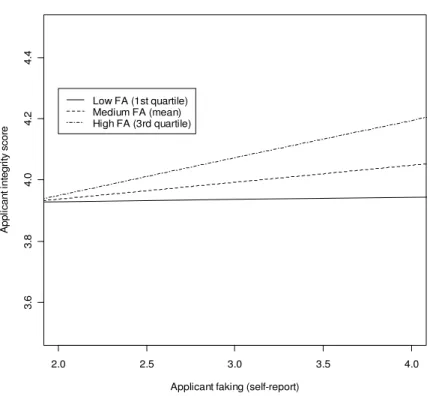
3 Applicant faking (SR) x faking ability ……….. 56
4 Applicant faking (IM) x faking ability ……….. 57
5 Faking behavior (SR) x applicant integrity test validity ……… 60
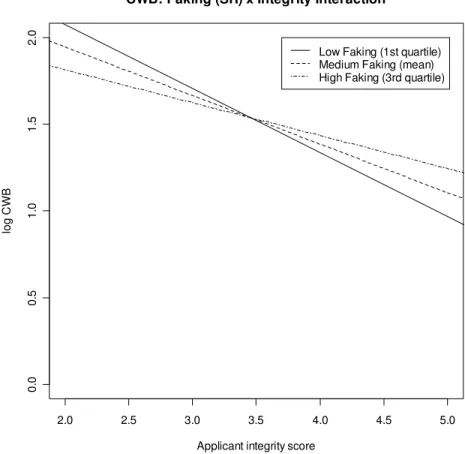
6 Effect of applicant integrity x self-report faking behaviors on log CWB scores ………. 70
LIST OF TABLES
TABLE Page
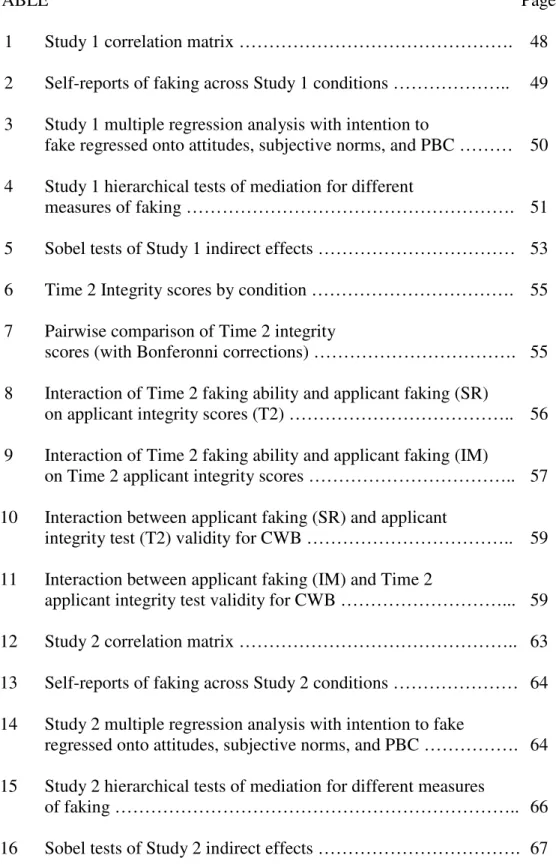
1 Study 1 correlation matrix ………. 48 2 Self-reports of faking across Study 1 conditions ……….. 49 3 Study 1 multiple regression analysis with intention to
fake regressed onto attitudes, subjective norms, and PBC ……… 50 4 Study 1 hierarchical tests of mediation for different
measures of faking ………. 51 5 Sobel tests of Study 1 indirect effects ……… 53 6 Time 2 Integrity scores by condition ………. 55 7 Pairwise comparison of Time 2 integrity
scores (with Bonferonni corrections) ………. 55 8 Interaction of Time 2 faking ability and applicant faking (SR)
on applicant integrity scores (T2) ……….. 56 9 Interaction of Time 2 faking ability and applicant faking (IM)
on Time 2 applicant integrity scores ……….. 57 10 Interaction between applicant faking (SR) and applicant
integrity test (T2) validity for CWB ……….. 59 11 Interaction between applicant faking (IM) and Time 2
applicant integrity test validity for CWB ………... 59 12 Study 2 correlation matrix ……….. 63 13 Self-reports of faking across Study 2 conditions ……… 64 14 Study 2 multiple regression analysis with intention to fake
regressed onto attitudes, subjective norms, and PBC ………. 64 15 Study 2 hierarchical tests of mediation for different measures
of faking ……….. 66 16 Sobel tests of Study 2 indirect effects ………. 67
TABLE Page 17 Integrity scores by condition ……….. 67 18 Pairwise comparison of integrity scores
(with Bonferonni corrections) ………. 67 19 Interaction of faking ability and applicant faking (SR) ………….. 68 20 Interaction of faking ability and applicant faking (IM) ………….. 68 21 Interaction between applicant faking behavior (SR) and
applicant integrity test validity for CWB ……… 69 22 Interaction between impression management and applicant
INTRODUCTION
Though expanding, our understanding of applicant faking in the context of the selection process remains incomplete. While most researchers agree that job applicants can and do elevate their scores on non-cognitive tests by faking (e.g., Arthur, Woehr, & Graziano, 2000; Berry, Sackett, & Wiemann, 2007; Hough & Oswald, 2007; Ones, Viswesvaran, & Reiss, 1996), the antecedent processes and subsequent consequences of faking are still unclear. Part of our lack of understanding may be attributable to the lack of empirically tested models or appropriate theoretical structures to explain the process (Griffith & McDaniel, 2006; Murphy, 2000). Moreover, there seems to be a limited understanding of possible outcomes associated with applicant faking, such as counterproductive work behaviors (CWB). With mixed evidence on the extent and impact of faking, researchers appear to be divided on how much faking matters in practice, and additional research is needed (e.g., Griffith, Chmielowski, & Yoshita, 2007; Hogan, Barrett, & Hogan, 2007; McFarland & Ryan, 2006; Morgeson et al., 2007).
According to recent studies, approximately 30-50% of job applicants consciously try to elevate their scores (Donovan, Dwight, & Hurtz, 2003; Griffith et al., 2007)1. Faking on the part of job applicants represents part of a strategic approach to compete for employment through the use of deliberate attempts to manipulate information and create false beliefs and impressions in others (Masip, Garrido, & Herrero, 2004, as cited
This dissertation follows the style and format of the Journal of Applied Psychology.
1
For example, Donovan et al. (2003) surveyed applicants using a randomized response technique (to ensure anonymity), and found that applicants admitted to extensive faking efforts: 56% of respondents admitted to exaggerating positive characteristics, and 17% admitted to outright fabrication.
in Griffith & McDaniel, 2006). Unfortunately, applicant faking has proven difficult to detect and study since, by its very nature, the behavior is hidden. While substantial research has been devoted to detecting and mitigating applicant faking, no techniques appear to solve the problem adequately (Berry et al., 2007; Morgeson et al., 2007). In addition, while several studies have attempted to identify processes and characteristics relevant to faking on measures such as personality tests, much less is known about faking on other kinds of non-cognitive measures such as integrity tests, which differ substantially in both content and application.
Research on faking has focused on two general themes: (1) whether applicants can and do fake (e.g., Cunningham, Wong, & Barbee, 1994; Rosse, Stecher, Miller, & Levin, 1998; Ryan & Sackett, 1987), and (2) the degree to which faking affects the validity of these pre-employment tests (e.g., Barrick & Mount, 1996; Cunningham et al., 1994; Hough, Eaton, Dunnette, Kamp, & McCloy, 1990; Ones et al., 1996; Ones & Viswesvaran, 1998a; Rosse et al., 1998; Schmitt & Oswald, 2006; Zickar & Drawsgow, 1996; Zickar, 2000). If the extent of faking were relatively constant across individuals, then faking would not generally harm the quality of personnel decisions based on test scores; such decisions are generally based on rank-order (Douglas, McDaniel, & Snell, 1996), not mean-level information. However, research has demonstrated the existence of individual differences in the extent to which applicants fake (Mueller-Hanson,
Heggestad, & Thornton, 2006; Morgeson et al., 2007), though our understanding of these influences is limited.
The goal of the current paper is to sketch a theoretical structure for the faking process to explain why and when applicants will intentionally distort their responses (i.e., fake) on integrity tests, a commonly used non-cognitive selection tool. The theory of planned behavior framework (Ajzen, 1985; 1991; and Ajzen & Madden, 1986; Beck & Ajzen, 1991) will be used to build a decision-based model of the faking process. This model will (1) describe the basic decisional processes that relate to faking behavior, (2) differentiate between two primary aspects of faking behavior, (3) assess some of the ways in which individual differences in personality and ability are related to individual differences in faking-related attitudes, behaviors, and outcomes, and (4) examine the effect of faking on individual integrity test scores, and the estimated validity of those scores for predicting workplace deviance, a key organizational outcome.
Integrity in the workplace
Research on integrity subsumes a wide variety of behaviors such as illegal drug use, fraud, petty theft, and unwarranted absenteeism (Berry et al., 2007; Murphy, 2000; Ones, Viswesvaran, & Schmidt, 2003). Tests designed to measure integrity are
especially popular in industrial sectors such as retail and finance, where they are used to help select applicants for positions that have unsupervised access to money or
merchandise (Berry et al., 2007; Sackett, Burris, & Callahan, 1989), or other positions in which employee theft or dishonesty produce high costs to organizations (Murphy, 1993; Ryan & Sackett, 1987; Sackett & Harris, 1984). These tests are often used as part of a larger selection process to screen out individuals whose dishonesty or CWBs could lead to significant long-term costs if they were to be hired.
Reviews of integrity tests have generally found them to be valid selection tools, capable of predicting a number of important organizational outcomes. Integrity tests demonstrate predictive and concurrent validities for criteria such as job performance, workplace violence, absenteeism, turnover, substance abuse, theft, and other CWBs (Berry et al., 2007; Murphy, 2000; Ones et al.,1993, 2003; Ones & Viswesvaran, 1998a). For example, research has found that integrity test scores show significant predictive validities, such as mean correlations of .21 (.34 correcting for statistical artifacts) with job performance and .33 with measures of counterproductivity (.47 correcting for
statistical artifacts; Ones et al., 1993; Schmidt & Hunter, 1998; Wanek, Sackett, & Ones, 2003). The widespread use of integrity tests is likely to continue due to a lack of viable alternative measures (for example, federal legislation drastically limits the use of polygraph testing, one of the more prominent alternatives to paper-and-pencil integrity tests) and a relative lack of adverse impact against protected groups (O’Bannon,
Goldinger, & Appleby, 1989; Ones, Viswesvaran, & Schmidt, 1995; Sackett & Wanek, 1996). Specifically, subgroup differences are negligible and there is no correlation of race, sex, or age with integrity scores (Ones & Viswesvaran, 1998b).
Despite broad agreement on the criterion-related validity of integrity tests, there are several potential issues with their use. One major issue is exactly what kind of test is being used; this is a critical issue, as there are multiple types of integrity tests which involve different types of items and ways of measuring integrity. Research suggests these tests might assess slightly different constructs. Tests designed to measure integrity consist of two major types designed to assess individual integrity in different ways,
using different items: (1) covert (or “veiled purpose”) tests and (2) overt (or “clear purpose”) tests.
Covert tests are personality-based tests designed to indirectly infer integrity from responses to questions that are not obviously related to integrity. Most covert integrity tests share a number of features, and are composed of items designed to measure one or more of the following areas: (1) general personality traits and beliefs related to integrity, and (2) reactions to hypothetical situations. Some personality–based tests of integrity are related to constructs such as thrill-seeking, socialization, and resistance to authority (Sackett et al, 1989). More recent tests have incorporated broad dimensions of personality that have been empirically linked to theft and CWBs, notably conscientiousness, agreeableness, and emotional stability (Berry et al., 2007).
Overt integrity tests also share several features. For example, they are generally composed of items that measure the following domains: (1) direct admissions of illegal or questionable activities and (2) attitudes or opinions regarding illegal or questionable behavior. Overt tests usually include direct and indirect measures of perceptions of norms relating to honesty. The rationale for this type of measure is that some individuals believe dishonesty, theft, and similar behaviors are common or widely accepted, and these individuals are more likely to engage in such behaviors themselves. Even questions asking for direct admissions of wrongdoing are probably best understood as measures of perceived norms. For example, individuals who are willing to admit on integrity tests to theft, dishonesty, and rule-breaking might well be individuals who believe that such behaviors are commonplace, or at least likely to be tacitly accepted by others.
Research into the construct validity of integrity tests has produced different views on what these two major types of tests measure. Some researchers have suggested that both types of integrity tests tap into the same underlying construct(s). Other
researchers have argued that personality-based tests and overt integrity tests may represent slightly different constructs, and tap into different individual traits and experiences.
Early research by Ones (1994) involved a confirmatory factor analysis (CFA) on three overt tests and four personality-based tests. She found that the relationships
between the variables were best described by a hierarchical model in which separate overt and covert factors had strong loadings on a single overall integrity factor, which was labeled “conscientiousness.” In a similar study, Hogan and Brinkmeyer (1997) found that scores on two different overt and covert tests loaded on different first-order factors, which loaded on a single higher-order factor again labeled “conscientiousness.” Wanek et al. (2003) found that overt and covert tests had similar overall relationships with four separate principal components of integrity (antisocial behavior, socialization, positive outlook, and diligence).
However, other research has found evidence that personality-based tests and overt tests may tap into different constructs. Wooley and Hakstian (1992) found that scores on an overt test correlated very poorly with scores on three different personality-based measures (largest r = .39, other rs smaller or not significant). Ones (1994) found that overt tests appeared to be less cohesive in focus (represented by smaller
tests (r = .45, corrected for statistical artifacts, compared to .70). The meta-analysis also found that overt and covert tests tended to have relatively low correlations with one another (r = .39, corrected for statistical artifacts), suggesting that scores on different types of tests may vary considerably (see Ones, 1994). In addition, there is evidence that the two types of tests may differ in their relationships to personality constructs. Ones (1994) also showed that conscientiousness, agreeableness, and emotional stability correlated .45, .44, and .37 with scores on personality-based tests, and .39, .34, and .28 with overt test scores (all correlations corrected for unreliability and range restriction).
While these correlations are of roughly similar magnitude, evidence for
consistently different patterns of relationships with one another and other variables led several major reviews of the integrity testing literature to conclude that overt and covert tests tap into broadly similar constructs in dissimilar ways (Cullen & Sackett, 2004) and that research on the two types of tests cannot be treated as interchangeable (Berry et al., 2007). Research has also found that test-takers react differently to the two types of tests – for example, perceiving that overt tests are more procedurally fair (Whitney, Diaz, Mineghino, & Powers, 1999). Finally, the literature suggests that overt tests, given their clear-purpose nature, may be more susceptible to applicant faking than covert tests (e.g., Murphy, 2000; Sacket & Harris, 1984). To date, a significant portion of research into faking and non-cognitive selection tests has focused on personality tests. However, more research on the faking of overt integrity test is needed. Faking on integrity tests is
psychologically different from faking on personality tests because of factors such as the strong moral undertones associated with failing or passing integrity tests. In this sense,
the need to manage one’s response should be more salient for those taking an integrity tests because of the clear implications of not passing the test (i.e., the possibility of being labeled dishonest).
Faking and selection tests
Past research has identified a number of different types of response distortion that have the potential to negatively affect selection processes. One of the major distinctions, first made by Meehl and Hathaway (1946), was between the concepts of
unconscious self-deception (social desirability) and consciously motivated faking
(impression management).Self-deception refers to positively biased responses that respondents believe to be true (Paulhus, 1984). Guion (1965) suggested that self-deceptive responses occur when test-takers lack self-insight or unintentionally use the test to present an idealized self-concept. By contrast, faking (i.e., impression
management) involves a deliberate and insincere attempt to create a favorable impression in others (Paulhus, 1984).
Both of these facets of response distortion represent important barriers to accurate measurement in a selection context, leading to bias that affects estimates of applicants’ true standing on some construct of interest. Response distortion is seen as a particularly important problem in the domain of non-cognitive selection tests, such as personality tests. Since these tests have no clear right or wrong answer, individuals have much more latitude in the way that they use their responses to present an image (whether consciously or unconsciously). Social desirability represents a dispositional source of honest error (McFarland & Ryan, 2000; Tett et al., 2006); such distortions are not
expected to vary much across different situations (Paulhus, 1984). However, faking represents deliberately dishonest error; this sort of deceptive behavior is especially troubling for employers (Griffith & McDaniel, 2006), who are justifiably worried about the potential for hiring someone who is willing to tell them deliberate falsehoods for personal gain.
To detect and measure applicant faking, researchers have used several different measures. One of the most common approaches is the use of scales to detect faking and other types of response distortion (Hough et al., 1990; Rosse et al., 1998), sometimes referred to as lie scales or social desirability scales (Paulhus, 1991). Lie scales designed to detect faking (e.g., active impression management) represent an attempt to assess faking behavior across different contexts and situations (McFarland & Ryan, 2006). In this sense, it is more like a disposition than a measure of conscious response distortion elicited by the situation (Christiansen, 1998; Smith & Ellingson, 2002). Difference scores based on comparisons between scores from different conditions are another popular way of measuring faking, since they are seen as more objective. However, they are subject to a number of statistical issues (Edwards, 2001). A third way of measuring faking is the use of self-reports (Dwight & Donovan, 2003; Hurtz & Bohon, 1997): simply asking individuals to estimate the extent to which they distorted their responses on a given test. Compared to lie scales, difference scores and self-report measures of faking tend to be very situation-specific and predict who is more likely to fake within a given context (McFarland & Ryan, 2006).
However it is defined (cross-situation or situation-specific), faking has the potential to affect the validity of the selection processes used by organizations, especially integrity tests. Test scores may have long-lasting effects on individual
outcomes. False positive decisions could mean the hiring of individuals who are prone to engage in dishonest behaviors in the employment setting; false negatives associated with low integrity test scores not only lead to rejection for the position, but imply the
applicant was dishonest, a serious social stigma (Griffith & McDaniel, 2006). For these reasons, deliberate faking is a particularly important issue for applicant selection systems in general, and integrity tests in particular.
Unfortunately, there appears to be little agreement about the impact of faking on the validity of selection tests, perhaps due to inconsistencies in the way faking has been assessed (for example, lie scales, difference scores, and self-reports). Some research has found that response distortion has little to no effect on criterion-related validity (e.g., Ones et al., 1996; Schmitt & Oswald, 2006), and that corrections for it do not change criterion-related validities (Hough, 1998; Ones & Viswesvaran, 1998a; Schmitt & Oswald, 2006). Schmitt and Oswald (2006) concluded that given typical selection scenarios, removing respondents displaying high levels of response distortion has minimal impact on mean performance at the aggregate level. These findings have led some authors to take a dim view of the need for additional faking research (e.g., Morgeson et al., 2007).
However, a growing body of literature suggests that conclusions about the innocuousness of faking are premature, particularly in the case of integrity tests (Griffith
& McDaniel, 2006). In their recent review of the use of personality-based selection tests, Morgeson et al. (2007) cite a number of studies which find that faking can affect hiring decisions, especially in situations with low selection ratios and top-down selection procedures. Other research has found that faking introduces construct-irrelevant variance and can degrade test validity (Griffith, 1998), and that the differences between applicant and non-applicant settings can affect the construct-related validity of selection tests (Stark, Chernyshenko, Chan, Lee, & Drasgow, 2001).
Finally, psychometric studies have shown that tests with similar levels of predictive validity at the test level may have different measurement properties that can affect the accuracy of the selection test and the quality of selection decisions being made. Millsap (2007) has pointed out that regression (predictive) invariance is separate from factorial (measurement) invariance; thus, it is possible to have a construct with the same predictive validity for two groups (for example, faking and non-faking applicants) but for mean differences in the construct between the groups to result in a selection decision which favors one group over another, even when the predictive validity of a test is the same for the two groups. This has the effect of reducing the sensitivity of the selection test and increasing bias in selection rates (Millsap, 2007), and suggests that faking could be a problem even if there was no negative effect on criterion-related validity coefficients.
Beyond the conflicting evidence in the literature, there are a number of conceptual issues with the current research which suggest that additional research on faking is warranted, especially with regard to overt integrity tests. First, existing faking
research has been based on a wide variety of terms and concepts, including faking, social desirability, response distortion, and impression management. These different terms have sometimes been used interchangeably (e.g., Ones et al., 1995; Ones et al., 1996; Rosse et al., 1998). This confusion makes it difficult to assess the generalizability and value of previous research, given that different researchers have used the same term to refer to fundamentally different response distortion processes. Hence, the lack of consistent terminology and operational definitions of the phenomenon represents a potential source of inconclusive or contradictory results (Griffith & McDaniel, 2006; Rosse et al., 1998). Moreover, most of these results are based on studies of personality tests, not overt integrity tests, which comprise different content and items (Murphy, 2000).
There have also been inconsistencies in the way that faking is measured. Some researchers have used lie scales such as the BIDR (Paulus, 1991) to operationalize faking (Rosse et al., 1998); others have used experimental manipulations of response instructions (Griffith et al., 2006; Ryan & Sackett, 1987) and difference scores
(McFarland & Ryan, 2000) or self-reports (Dwight & Donovan, 2003; Hurtz & Bohon, 1997). Given the known limitations and problems with the use of lie scales and related measures (Alliger & Dwight, 2000; Hurtz & Alliger, 2002; McFarland & Ryan, 2000), it is not entirely clear whether the conflicting conclusions of faking research are partly the result of differences in how faking is measured. Research that includes multiple
operationalizations could help provide results that generalize across different types of faking, or identify limitations in these measures. Moreover, unlike personality-based
tests, overt integrity tests do not attempt to hide their purpose and do not always contain lie scales (Sackett & Harris, 1984); therefore, the conclusions of research based on covert or personality-based tests may not necessarily apply to overt integrity tests.
A third issue is that deliberate faking, regardless of its effect on test performance and predictive validity, represents a dishonest behavior. An individual willing to engage in one type of dishonest behavior may be more likely to engage in other types of
dishonest behaviors – in fact, this is the entire premise behind questions about past behaviors on overt integrity tests. Thus, even if faking has a limited effect on the ability of a test to predict future job performance, it is possible that the increased selection of individuals willing to lie on a test could increase the frequency of behaviors such as theft or other serious CWBs (Patterson, DeBaryshe, & Ramsey, 1989)over an individual’s tenure in the organization.
Current findings in faking research
Based on these issues, further research on faking appears to be warranted. In the faking literature, several topics have proven to be of central importance. One such issue is the extent to which applicants are able to fake, and whether or not they actually do so. Another, equally important issue is the extent to which faking on selection tests affects the quality of selection decisions made on the basis of that test.
Overall, research suggests that test takers are both willing and able to fake on integrity measures (Cunningham et al., 1994; Ones et al., 1996; Robie, Brown & Beaty, 2007; Ryan & Sackett, 1987). The dominant method in studies that examine whether people are able to fake are controlled experiments (using both between- and
within-subjects designs) that compare mean integrity test scores obtained under instructions to respond honestly to those obtained under instructions to fake in various ways (e.g., Sackett & Wanek, 1996). Research that compares scores generated from such instructions has been used to demonstrate the extent to which test takers can fake.
Ryan and Sackett (1987) were among the first to show that test takers are able to follow instructions to fake, respond honestly, or to respond as applicants. The results revealed that participants who were instructed to fake good could easily do so, scoring a full standard deviation above the overall mean. However, those instructed to respond as job applicants provided responses more similar to those from the “honest” condition than the “fake good” condition. While a 24% difference was found between the faking good group and the honest group, only an 8% difference was found between the job applicant group and the honest group. A more recent study showed that honest responderstake less time to complete and make fewer corrections to their personality inventories than faking responders (Robie et al., 2007), and that respondents may be categorized into one of three different categories: honest responders, slight fakers, and extreme fakers.
According to a current review of integrity testing research (Berry et al., 2007), there appears to be a consensus that respondents are able to fake when instructed to do so. However, there is some concern about the extent to which sample type might affect the degree of faking displayed by test takers (i.e., whether applicants might fake more than a student sample and whether applicants might fake more than incumbents). Research on personality tests suggests that sample type (e.g., applicant versus
al., 1990). In another study on pre-employment personality tests, Rosse et al. (1998) found that job applicants engaged in response distortion on more items than incumbents, and that applicants were able to distinguish between items that did or did not reflect job-relevant information. Among job applicants who were hired, 87% had extremely high response distortion scores on the test, especially on items that were job-related.
In another study of overt integrity test scores of managerial applicants and incumbents, Van Iddekinge, Raymark, Eidson, and Putka (2003) found that applicants only scored .09 SD higher than incumbents, suggesting the integrity test was resistant to faking. In a recent meta-analysis, Birkeland, Manson, Kisamore, Brannick, and Smith (2006) found that job applicants scored higher than non-applicants on extraversion, emotional stability, conscientiousness and openness. They interpret these mean
differences as measures of faking, and note that the degree of faking on each dimension varied depending on job type.
In a more recent study, Hogan et al. (2007) collected data from job applicants who completed a personality test twice – individuals completed the application process once, were turned down, and reapplied 6 months later. Participants included over 5,200 rejected applicants (from a population of over 260,000 applicants) who applied for a customer service job with a nationwide U.S. employer in the transportation industry. Although the applicants had increased experience with the test and demonstrated motivation to get the job, Hogan et al. (2007) found that about 5% of the rejected applicants improved their scores on the second administration more than would be predicted by chance. The study also found that social skills, social desirability, and a
covert measure of integrity were significant predictors of change in the personality test scores.
However, research by Griffith et al., (2007) found that 30%-50% of applicants elevated their scores when applying for a job, with applicant scores that fell outside the 95% confidence interval established by their honest scores. They also found that faking had substantial effects on hiring decisions: at a .5 selection ratio, 31% of applicants who were hired on the basis of their applicant test scores would not have been hired on the basis of their scores as incumbents. At a .1 selection ratio, 66% of applicants who would have been selected on the basis of their applicant test scores had faked their way to the top. Thus, Griffith et al. (2007) showed that faking can have substantial effects on rank ordering and hiring decisions in applicant settings. Given Griffith et al.’s (2007) finding that a high percentage of applicants are able to alter their test scores as applicants, it is possible that Hogan et al.’s (2007) results might be attributable to the rejected applicants simply being bad at impression management. In fact, some of the rejected applicants received lower scores on the second administration of the same test.
The second major issue in faking research is whether or not faking affects the validity of selection procedures. In this area, there have been a number of studies; several of them have supported the idea that faking harms test validity, but a number of influential studies have found little to no effect of faking.
Some have argued that the effects of faking are minimal, based on studies
showing little or no faking-related attenuation in criterion-related validities (e.g., Barrick & Mount, 1996; Hough et al., 1990; Ones & Viswesvaran, 1998a). Cunningham et al.
(1994) found that while people can and do fake, integrity tests possess predictive validity in spite of impression management. In a series of meta-analyses, Ones et al. (1993; 1996) found performance criterion validities of .40 for applicants and .29 for incumbents, and found that response distortion did not attenuate or suppress the
predictive validity of integrity tests. This suggests that validities under conditions most associated with the motivation to fake (e.g., applicant settings) were not attenuated, but were actually 38% larger.In a military recruiting sample, Hough et al. (1990) measured faking effects using mean-level personality scores and response distortion scores of applicants and incumbents. Although subsequent analyses by Rynes (1993) found that 29% of participants faked, Hough et al. (1990) found only small differences in criterion-related ability associated with faking on personality tests.
However, a number of researchers have pointed out that faking may have
substantive effects on selection system outcomes even in the absence of direct effects on criterion-related validities, and that typical assessments of criterion-related validity are not sufficient to rule out the impact of faking. Instead, the effects of faking should be studied through an examination of the quality of individual hiring decisions (Alliger & Dwight, 2000).
Researchers have noted that the sensitivity of criterion-related validity
coefficients to faking is influenced by the size of the applicant pool, whether top down strategies are used, and the selection ratio (e.g., Donovan et al., 2003; Rosse et al., 1998). Under top-down selection strategies, even if only a few individuals fake, those who fake will rise to the top of the distribution and will increase their chances of being
hired, regardless of the overall validity coefficient (Donovan et al., 2003). In this scenario, successful fakers actually possess a lower “true score” on the target construct than their test scores would indicate (Donovan et al., 2003), increasing the probability of a false positive hiring decision. For instance, Rosse et al. (1998) found that the
percentage of job applicants with elevated faking scores increased as selection ratios decreased, and that corrections for faking affected the rank order of applicants, and simulation studies by Zickar and Drasgow (1996) and Zickar (2000) found that test takers who faked were disproportionately ranked among the top applicants, despite few changes in the observed validity coefficient.
Mueller-Hanson, Heggestad, and Thornton (2003) used an experiment in an applied setting to examine the effect of personality test faking on criterion-related validity and the quality of selection. They found that the incentive condition (in which test takers were given a $20 incentive) had more prediction errors among those with scores at the high end of the selection test score distribution. The mean difference between the control and incentive groups on the personality test was .41 SD. This same study also indicated that, as the selection ratio decreased, examinees from the “honest” condition were selected proportionally less often than examinees from the “incentive” group (36% versus 64% at a selection ratio of .10). Finally, their results showed that when the selection ratio was small, individuals in the “incentive” condition were also likely to have lower mean levels of performance than those in the “honest” condition.
Overall, these studies suggest that faking will continue to play an important role in selection test research and applications – including integrity testing – contrary to
recent statements about the potential futility of faking research (see Griffith &
McDaniel, 2006; Morgeson et al., 2007). Specifically, research on faking has shown that individuals can and do fake, and that faking can affect selection decisions. However, less is known about the specific processes involved in individual decisions to engage in impression management behaviors on selection tests, or how that process is affected by individual differences like personality or cognitive ability. Thus, an important next step in faking research is the development of models of faking behavior for various non-cognitive selection measures, such as integrity tests. Some initial attempts to develop such models have been proposed in the case of personality tests; these will be reviewed in the next section, and will serve as the basis for a model of some of the major causes and consequences of faking on overt integrity tests.
A MODEL OF FAKING DECISIONS
Recently, a number of authors have suggested that attitudes towards faking might be used as a proxy for the intent to fake and the likelihood of engaging in faking (Rees & Metcalfe, 2003) and play an important role in the decision to fake (McFarland, 2000). According to this perspective, faking is the result of individual decisions or intentions based on individual attitudes and cognitions towards faking (Mueller-Hanson et al., 2006; Snell, Sydell, & Lueke, 1999). Empirical support for this perspective has been found in at least two prior studies. Mueller-Hanson et al. (2006) found that attitudes and cognitions towards faking predicted willingness to fake, and McFarland (2000) found that faking on a Big Five measure of personality (NEO-FFI; Costa & McCrae, 1989, cf. McFarland, 2000) could be explained by individual intentions to fake, which were related to individual cognitions and attitudes towards faking.
However, individual cognitions towards faking, faking behaviors, and even the end result of such faking may be influenced by a number of individual differences; and faking itself is not necessarily a unitary construct. Thus, the proposed model integrates a cognitive/decision-theoretic model of faking on overt integrity tests with research on key individual differences, taking into account critical distinctions among faking criteria. At the heart of the proposed model is Ajzen’s (1985; 1991) theory of planned behavior (TPB), which has been used for decades to study the link between cognitions and behavior.
Theory of planned behavior
According to the TPB, behaviors are a function of three behavior-specific attitudes and cognitions, mediated by intentions. Although widely used in other behavioral contexts, the TPB has rarely been used to study faking in the context of selection tests, with two relatively recent exceptions. McFarland (2000) found that faking behaviors on four of the five NEO-FFI scales (neuroticism, extraversion, agreeableness, and conscientiousness) were predicted by intention to fake, and that intention to fake was significantly (albeit weakly) related to individual attitudes towards faking and perceived behavioral control, but not social norms. More recently, Mueller-Hanson et al. (2006) found that a common factor represented by the three TPB-related cognitions was a strong predictor of intentions to fake (β = .99, p < .01), which was itself a strong predictor of faking behavior on a five-factor model test of personality (β = .70, p
< .01).
These results confirm that faking cognitions can be a significant factor in the decision to fake. However, the results of the larger study by McFarland (2000) are slightly mixed. While intentions to fake were related to applicant-honest difference scores on some personality measures (especially conscientiousness and agreeableness), relationships were generally small, with large variation in the correlation between
intentions and faking behavior across the different measures of personality (r from .00 to .20).
These results also suggest that intentions to fake are not equally good predictors of applicant faking behavior across different types of tests, and that the appropriateness
of a TPB-based model of faking may be moderated by the content of the test. One major difference in test content is the nature of the items used on the test: meanings of items on overt (i.e., clear-purpose) tests are more obvious than those on covert (i.e., personality-based) tests, by definition. This implies that, compared to personality-based tests, applicant decisions to fake could be even more important for overt integrity tests. A second difference between overt integrity tests and other non-cognitive measures is the nature of the construct: integrity has clear overlap with
conscientiousness and neuroticism (Ones, 1994), but has particularly powerful meanings attached to high and low test performance. A person who receives low scores on an overt integrity tests receives strongly negative value-based labels like “thief,” “liar,” or
“unethical.” By contrast, low scores on personality-based tests (even on related constructs like conscientiousness) do not always carry such clearly negative
connotations; responses to certain items could be interpreted as either “disorganized” or “big picture person.”
Together, these two factors suggest the possibility that intentions to fake will be more easily translated into increased scores for overt integrity tests. If this is true, then the TPB would be even more appropriate for such tests than for other non-cognitive measures. This would explain the mixed findings of McFarland (2000) and expand on the results of Mueller-Hanson et al. (2006).
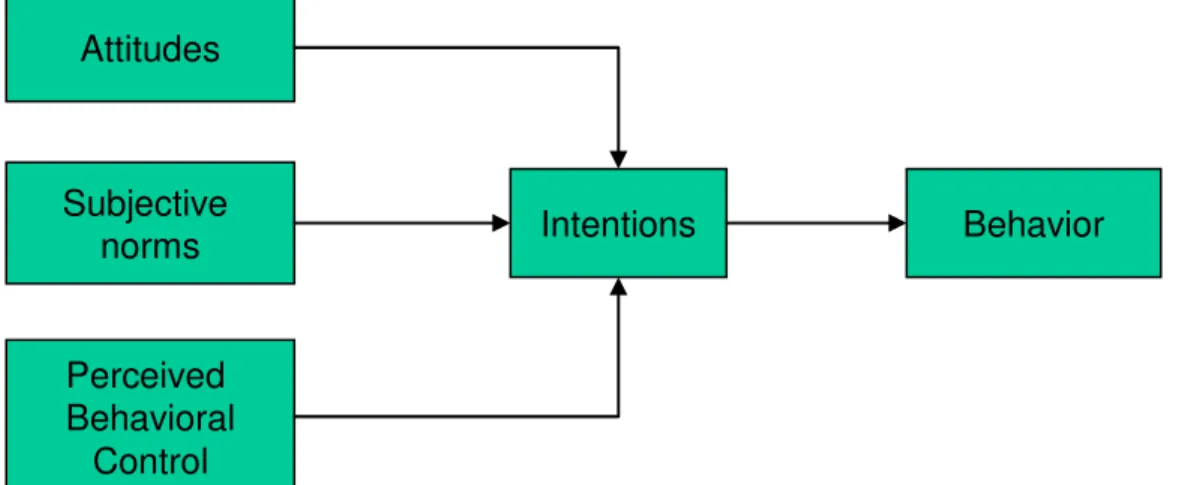
In this proposed study, the TPB (Figure 1) was used to predict intentions to distort responses (i.e., fake) and subsequent applicant faking behavior on an overt integrity test. The framework identifies three cognitive components (attitudes, social
norms and perceived behavior control) that are believed to jointly predict the intention to perform a given behavior, with intention mediating the effects of the three cognitive components on the actual behavior (Ajzen, 1985; 1991; and Ajzen & Madden, 1986). Beck and Ajzen (1991) found that attitudes regarding several types of dishonesty are related to intentions to behave in a dishonest manner. Positive attitudes toward a
behavior are linked to stronger intentions to perform that behavior. This study will assess whether individual attitudes towards faking, subjective faking norms, and perceived behavioral control over faking explain variance in faking on pre-employment integrity tests, and whether these effects are mediated by individual intentions to fake. A description of these individual components is presented below.
Figure 1. Theory of Planned Behavior
Attitudes refer to an individual’s evaluative appraisal of the behavior in question. It has been found that positive attitudes toward a behavior lead to greater intentions to perform that behavior. For example, Beck and Ajzen (1991) found that attitudes toward
Attitudes Subjective norms Perceived Behavioral Control Intentions Behavior
dishonest actions predicted intentions to cheat on a test, shoplift, and lie. It is expected that these results will generalize to faking on an integrity test.
Subjective norms refer to perceived social pressure to engage in a given behavior. Studies on the TPB have consistently shown that when subjective norms toward a behavior are positive, the intention to perform that behavior will be greater (Ajzen, 1991, Schifter & Ajzen, 1985). For example, when individuals perceive that important others (e.g., parents or friends) approve of the behavior under consideration, they should be more likely to intend to engage in that behavior (Ajzen, 1991). It is expected that these results will generalize to faking on an integrity test, such that those who have more positive subjective norms toward faking will be more likely to have the intention to fake on the test.
The third variable in the TPB framework is perceived behavioral control. According to Ajzen (1991), this variable is similar to Bandura’s perceived self-efficacy (Bandura, 1986; 1991). Perceived behavioral control refers to an individual’s
perceptions of their ability to perform a given behavior. If the person believes they can perform the behavior with ease, he or she would be more likely to intend to behave in that manner. In this study, it is expected that those who perceive themselves to have greater control over faking behavior will have a greater intention to fake.
Finally, greater intentions to perform a behavior increase the likelihood that the behavior is performed (Ajzen, 1991; Ajzen & Fishbein, 1980; Beck & Ajzen, 1991; Fishbein & Ajzen, 1975). Intentions predict a wide variety of behaviors, from losing weight (Shifter & Ajzen, 1985) to stealing (Beck & Ajzen, 1991). Intentions to fake will
be positively related to attempts to engage in faking behavior, so people with a greater intention to fake will fake more extensively on the test.
It is expected that the more favorable the attitude and the subjective norm, and the greater the perceived control, the more a person should be likely to intend to engage in a behavior. Taken together, the current research suggests that:
H1: Intentions to fake will mediate the relationship of applicant faking behaviors with attitudes, social norms, perceived behavioral control. Specifically, attitudes towards faking, perceived social norms towards faking, and perceived behavioral control over faking will predict intentions to fake on an overt integrity test. Intentions to fake will predict actual faking behavior on overt integrity tests. In addition, this study will rely on multiple operationalizations of faking, which will provide information on the extent to which the model may be generalized across different measures of faking, including difference scores, self-reports, and lie scale measures.
Faking behaviors and overt integrity test performance
With the TPB, the model provides a potential explanation for the way in which cognitions about faking on selection tests translate into actual faking behaviors. However, faking behaviors are primarily of interest to employers and researchers because of the potential effect they have on observed applicant test performance. In order to understand how individual faking behaviors on integrity tests translate into applicant test performance, research suggests that two separate aspects of faking play an
important role: applicant faking behavior (which might also be referred to as motivated faking or typical faking) and faking ability.
Applicant faking behavior reflects “typical” or “will do” faking, of the sort expected to arise from the level of motivation induced by a selection context. This is the aspect of faking most studies of applicant faking measure. More recently, studies of faking have begun to pay attention to a second aspect of faking – ability to fake. Faking ability is the extent to which an individual is able to successfully fake on the test, regardless of their actual inclination to do so in a job application context. Thus, it represents “can do” or “maximal” faking on a selection test. Faking ability has been operationalized two primary ways: first, through measures of test knowledge (e.g., McFarland, 2000; Mueller-Hanson et al., 2006); second, through the use of instructions to applicants to “beat” the test or maximize their score.
The distinction between will-do and can-do faking has previously been acknowledged as conceptually important. It has appeared in recent research, although studies have taken different views about their relationship and measured them in
different ways. In a conceptual article, Snell et al. (1999) argued that successful selection test faking required both the motivation and ability to fake, and that different
characteristics of the test, test-taker, or situation would ultimately influence the amount of successful faking observed on a given test. In their model, faking motivation and faking ability are expected to interact, since ability without motivation or motivation without ability are not expected to lead to successful faking. In other words, Snell et al. (1999) argue that faking on selection tests should display a similar relationship to the
classic “performance = motivation x ability” formula: increased ability should maximize the relationship between the applicant’s faking behaviors and their resulting test
performance.
The relationship between “can-do” faking (faking ability) and “will-do” faking (applicant faking) has been discussed in a small number of studies (for example, Mueller-Hanson et al., 2006), but the specific relationship between the two has rarely been tested. To the extent that empirical tests of their relationship have appeared in the literature, the results have been mixed. For example, McFarland (2000) found that increased knowledge about a selection test (by providing a description of the test constructs) actually weakened the relationship between faking intentions and faking behavior. Mueller-Hanson et al. (2006) found no evidence for any main effects of faking ability on faking intentions or faking behavior, or any relationship with faking
motivation, but failed to test for any interactions of the sort predicted by earlier
conceptual work on non-cognitive faking (McFarland, 2000; Snell et al., 1999). Despite the lack of empirical evidence, the basic premise articulated by Snell et al. (1999) remains: both ability and motivation are conceptually necessary in order to successfully fake on a selection test. Thus, existing research leads to the following two hypotheses:
H2: Increased applicant faking will result in elevated integrity test scores. H3: Faking ability will moderate the effects of applicant faking on test
performance, such that individuals who engage in faking and have a high ability to do so will outperform those who have a low ability to do so.
Individual differences and faking
Another area the faking literature suggests requires additional attention is the role played by individual differences in explaining observed individual-level variation in faking. The effect of individual differences on faking may occur at a number of different stages in the faking process. For example, individuals who are more conscientious or display greater levels of trait honesty may have different perceptions of the frequency or acceptability of faking behavior among their peers, due to either self-selection or social influence effects. Individuals who are less honest or conscientious may differ in the extent to which they believe such behaviors have negative consequences. There are a number of individual differences which theoretical and empirical research suggest might lead to individual variance in faking and, ultimately, integrity test scores.
Conscientiousness. One of the most potentially relevant predictors of integrity test faking behavior is conscientiousness, as research has reported links to both faking and integrity. For example, McFarland and Ryan (2000) found that individuals with higher conscientiousness scores had lower rates of faking (r = - .57) in an applicant instruction condition. Conscientiousness is also one of the core constructs measured by personality-based integrity tests (Hogan & Brinkmeyer, 1997; Sackett & Wanek, 1996; Wanek et al., 2003). However, research also shows that conscientiousness predicts attitudinal-based (i.e., “overt”) integrity tests (Berry et al., 2007), not just trait-based integrity. In other words, individuals higher in conscientiousness are less likely to report attitudes consistent with low levels of integrity. In the context of the current model, this implies that:
H4: Higher levels of conscientiousness will predict more negative attitudes towards integrity test faking behaviors.
Cognitive ability. Successful faking on self-report measures such as integrity tests imply several conditions (Morgeson et al., 2007): that test-takers have sufficient self-insight to accurately respond to an item, that they understand the item as intended, and that they consciously deviate from the truth so they can create a specific impression. That is, successful faking is presumed to involve some level of ability (1) to understand written items on the test and identify the key concepts they contain, and (2) to reason about those concepts and their relationship to employer desires. In terms of individual differences which might be expected to predict these factors, the most obvious is general mental ability.
Cognitive ability has significant links to a number of lower-order factors that may affect the likelihood of successful faking attempts, such as language comprehension and lexical ability, memory and learning, inductive reasoning, among other factors (Carroll, 1993; Deary, 2000). There is also empirical evidence to support this
relationship. For example, Brown and Cothern (2002) found that cognitive ability was a significant predictor of faking success, and Alliger, Lilenfeld, and Mitchell (1996) found that intelligence and the ability to fake an overt integrity test were significantly
correlated (r = .36). More recently, the review by Berry et al. (2007) described recent research that has found a relationship between faking and cognitive ability.
Beyond its direct effect on the ability to fake, cognitive ability also has the potential to affect individual differences in perceived behavioral control. For instance,
Bell and Kozlowski (2002) found that cognitive ability is related to individual’s
perceptions of their ability and self-efficacy. That is, people with greater levels of ability tend to have greater beliefs in their ability to perform a task. Based on this research, it is therefore expected that:
H5: Higher levels of cognitive ability will be associated with a higher ability to fake, and
H6: Higher levels of cognitive ability will be associated with increased perceptions of behavioral control over faking.
Faking behaviors and overt integrity test validity
Ultimately, any process model of integrity test faking needs to take into account the effect that faking has on the validity of inferences drawn from the observed test scores. In the most recent review of the literature on integrity testing, Berry et al. (2007) review research showing that integrity tests are valid predictors for a number of criteria, such as CWBs – including rule breaking, theft, and cheating in a laboratory setting. In addition, meta-analytic approaches (Ones et al., 1993) have shown that integrity test scores are substantial predictors of supervisor ratings of performance (ρ = .35), self-admissions of narrow and broad criteria of counterproductive work behavior (ρ = .58), and various narrow criteria of theft (ρ = .52). However, research on the effect of faking on integrity test validity has been less clear.
Ones and colleagues (1996; 1998a) provided evidence suggesting that scores on social desirability scales did not moderate the ability of integrity tests to predict
scores did not appear to reduce the ability of integrity test scores to successfully predict training performance (ρ = .36) or CWBs (ρ = .32). However, these results were based on 20 studies, used only social desirability scale scores (i.e., the meta-analysis included no measures of actual faking behavior), and did not differentiate between the effects of social desirability scores on overt integrity tests or personality-based tests. In a subsequent study, Jackson, Wroblewski, and Ashton (2000) found that “typical” (i.e., will-do) faking reduced the criterion-related validity coefficients of an integrity test with self-report CWBs from r = .48 to r = .18. Thus, the overall picture with regard to faking behaviors and the validity of integrity tests is unclear.
Although the existing evidence is unclear, from a psychometric perspective, factors that affect the quality of measurement are expected to have an effect on a measure’s criterion-related validity, and faking behaviors represent a significant source of response distortion and bias. Even in the case where predictive validity is not
substantially harmed, Millsap (1997; 2007, see also Borsboom, 2006) has noted that measurement issues may still affect selection criteria, by reducing the sensitivity of the selection test – and, as a result – the accuracy of the decisions made using that
instrument. In the area of personality testing, these conclusions have been supported by others (e.g., Morgeson et al., 2007). Thus, to the extent that individuals are able to successfully fake on an overt integrity test, support for the following hypothesis is expected:
H7: Increased levels of applicant faking are expected to moderate the relationship between observed integrity test scores and CWBs, with
increased levels of faking reducing the strength of the relationship.
Additional potential effects of faking
Another way of looking at the validity of integrity tests is through the quality of hiring decisions being made (Christiansen, Goffin, Johnston, & Rothstein, 1994; Rosse et al., 1998). Morgeson et al. (2007) note that faking on personality tests may do more than simply raise scores – to the extent that individuals may fake differently on the basis of their individual differences and their situations, and that these individual differences in faking may result in changes to the rank order of applicants. In the case of overt integrity tests, even if measures of predictive validity are robust to applicant faking, the quality of employment decisions being made on the basis of the test will be a function of many factors such as selection ratios, the type of decision being made (e.g., top down selection versus other systems), and the extent to which individuals differentially increase their scores on the test.
To add to the complexity of this area of study, research on faking suggests that not only do individuals fake, but that that some individuals fake more than others. For example, Griffith et al. (2007) found substantial individual variance in the magnitude of changes in test scores between applicants versus incumbents who were instructed to respond honestly. Looking at just the top ten applicants out of a total of 60, effect sizes associated with applicant responding (i.e., motivated faking) ranged from .11 to 1.54. This broad range of scores suggests that there is substantial variance in individual faking, even for a narrow band of scores on a measure of conscientiousness.
Other studies have found that – regardless of mixed findings on the effects of faking with respect to criterion-related validity – faking can still have substantial effects on the measurement properties of the test. Stark et al. (2001) found that personality and impression management scales both exhibited substantial differential item functioning (DIF), and some degree of differential test functioning (DTF), leading them to conclude that each test contained items that favored one group (applicants or non-applicants) over another, which could lead to observable differences at the test level. In addition to mean level differences, they found that the situation (applicant versus non-applicant) affected the construct-related validity of the personality and impression management scales, and that applicant samples showed lower levels of reliability, consistent with previous research.
Additional research by Zickar (2000) and Zickar and Drasgow (1996) came to similar conclusions; in a series of simulations, they found that even though faking may not necessarily affect the overall validity coefficients, individuals who faked tended to be overrepresented in the top scores of the test. They also found that even low levels of faking could potentially have large effects on rank orders – when 5% of a hypothetical sample consisted of “slight fakers”, such fakers made up 15% of the top scorers on the test. Fakers also appeared to have lower “true levels” of the target trait than honest responders who were also top scorers.
According to Zickar (2000), individuals who endorsed less positive response options when responding honestly were likely to endorse the same option when responding in a situation in which they were asked to fake. In other words, honest
individuals may fake less than others, even when asked to do so. This result is aligned with previous results showing that higher levels of conscientiousness are associated with a lower willingness to fake (Mueller-Hanson et al., 2006) and that impression
management scores across different instructional conditions (often used as an indicator of faking; see McFarland & Ryan, 2006) reflect more of an individual trait than a situational variable. Thus, there appears to be evidence for significant individual differences in faking, even in the face of similar situational pressures introduced by different instructional conditions. To the extent that there are individual differences in responses to situational pressures to fake, research suggests the following hypothesis:
H8: Increased levels of applicant faking should be associated with differences in the rank order of individual integrity test scores, such that instructions to fake will alter the rank order of individual integrity test scores.
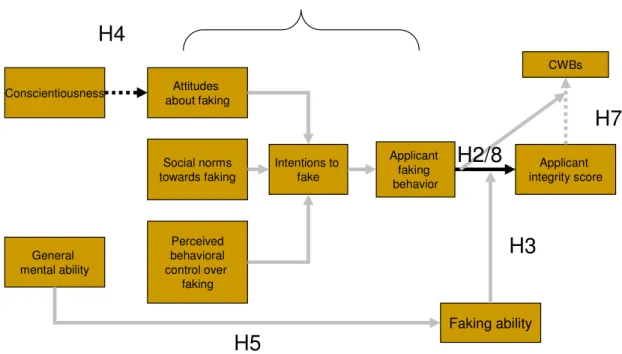
Figure 2 provides an overview of the model based on the different hypotheses, describing how the various cognitive, behavioral, individual differences, and outcome variables are hypothesized to relate to one another.
Figure 2. Overall model of proposed relationships and associated hypotheses Attitudes towards faking Subjective norms Perceived behavioral control Faking intentions Applicant faking Faking ability Applicant integrity score Conscientiousness Cognitive ability Counterproductive work behaviors
H1
H2/H8
H3
H4
H5
H6
H7
METHOD
To test the various hypotheses, two separate studies were conducted, using slightly different sets of measures and administrations (see below for details). The inclusion of a second study allowed for the use of an additional measure of cognitive ability that was not available in Study 1. The variations in administrations also provided some information on potential issues related to priming and temporal stability.
Participants
Study 1. A total of 289 undergraduates from a large southwestern university were recruited for Study 1. Of these individuals, 233 returned approximately 1 week later to complete the study at Time 2, so the attrition rate from Time 1 to Time 2 was 19%. The majority of participants were Caucasian (75%) and female (67%), with some minority representation (Latino, 12%; Asian, 6%; African American, 5%). The majority of the sample contained first or second year students (29% freshmen; 35% sophomore), but substantial numbers of third and fourth years students also participated (23% junior; 14% senior).
Many (67%) participants reported working at least 10 hours per week. This indicates that most had some recent experience in the workplace. Most (62%) of participants completed the applicant measures with a specific job in mind, of which roughly 40% involved retail or food service positions. Almost half of participants reported having taken similar employment tests in the past, but the use of such tests was not generally endorsed - only 38% agreed with the statement that “These sorts of tests should be used to select applicants.” The vast majority (92%) of respondents said they
responded honestly to items when instructed to do so, and a majority of students reported being motivated to take the test seriously by the rewards offered to participants [i.e., being the recipient of a $20 monetary award (56%) and earning extra credit toward their class (51%)].
Study 2. For Study 2, a total of 187 participants from a large southwestern university were initially recruited. There was a 14% attrition rate, with 160 participants completing the full study at time 2. This sample was slightly more diverse in terms of ethnicity (70% Caucasian; 19% Latino; 5% Asian; 5% African American) and gender (54% female). The sample was more stratified in terms of student classification, containing nearly 60% freshmen, and only 17% sophomores.
The sample generally had less current work experience (45% reported working at least 10 hours per week). Fewer participants also reported that their responses to items were given with a specific job in mind (34%), but those who did tended to use similar jobs as a reference point for responses (44% thought of a retail/food job when answering items). As with the Study 1 sample, a large proportion of participants reported having some previous experience with these sorts of tests (48%), and less than half agreed that such tests should be used (42%). Most (98%) of participants reported responding to items truthfully when instructed to do so, and most were motivated by the opportunity to obtain a $20 monetary award (55%) and earn extra credit toward their class (97%).
Measures
Conscientiousness. Conscientiousness was assessed using a 10-item scale from Goldberg (1999). This short public domain scale has been shown to correlate .79 with
the NEO conscientiousness scale (Goldberg, 1999). Coefficient alpha for Study 1 was .77; alpha for Study 2 was .80. Higher scores represent greater levels of
conscientiousness.
Cognitive ability. Cognitive ability (or general mental ability, GMA) was measured in two different ways. First, it was measured using archival Scholastic
Aptitude Test (SAT) scores (combined verbal and math) as a proxy for cognitive ability. Although imperfect, several authors have found substantial relationships between SAT scores and cognitive ability. Frey and Detterman (2004) found that composite SAT scores had a correlation of .72 with the Raven’s Advanced Progressive Matrices (Raven, Raven, & Court, 1998a, cf. Frey & Detterman, 2004) test, corrected for range
attenuation. They also found a correlation of .82 with the Armed Services Vocational Aptitude Battery, another widely used proxy for cognitive ability. Rohde and Thompson (2007) found that composite SAT scores correlated .39 (uncorrected) with the Raven’s Advanced Progressive Matrices and .69 with the Mill Hill Vocabulary Scales (Raven, Raven, & Court, 1998b, cf. Frey & Detterman, 2004), a verbal-based test of general cognitive ability. SAT scores are used in both Study 1 and Study 2.
In Study 2, cognitive ability was also measured using the Wonderlic Personnel Test, a short test designed to offer measures of g for use in a variety of applicant settings. The internal consistency of the Wonderlic reported by the manual varies from .82 to .94 (Wonderlic, 1992). Reliability in the current study was estimated at α = .80.
Integrity. Integrity was measured using the Employee Reliability Index (ERI), a multiple-choice employment-based overt integrity measure developed by Ryan and
Sackett (1987). The ERI is a research tool designed to closely mirror existing overt integrity measures. It consists of 74 items divided into three subscales: 52 items measuring integrity-related attitudes, 11 items measuring admission to theft, and 11 items measuring social desirability. The social desirability scale is used to detect response distortion, and is not considered a part of the actual construct. The remaining 63 items were used to measure overall integrity. In the honest condition, coefficient alpha reliabilities were .93 for Studies 1 and 2. For applicant conditions, alpha was between .92 and .94. For fake-good conditions, alpha was .96.
Typical faking behavior. Applicant faking behavior is measured in a variety of different ways, including difference scores (applicant condition minus honest condition), self-reports, and lie scale scores.
The most direct method of measuring faking is to use difference scores between scores produced in an applicant-response condition from scores produced in an honest-response condition (see Ellingson, Sackett, & Hough, 1999; McDaniel, Douglas, & Snell, 1997; McFarland & Ryan, 2000). Difference scores are known to have a number of potential problems (Edwards, 2001), but have been used in the context of faking research.
Edwards (2001) cited two of the main issues of difference scores as possibly low reliability and unclear validity. Reliability of difference scores is a major issue since the reliability of the difference score is lower than either of the component tests, difference scores have the potential for low levels of internal consistency (for example, see