Manoharan. European Journal of Pharmaceutical and Medical Research
DEVELOPMENT AND VALIDATION OF A STABILITY-INDICATING RP-HPLC
METHOD FOR THE ESTIMATION OF MUPIROCIN IN BULK AND OINTMENT
DOSAGE FORM
Gunasekar Manoharan*
College of Pharmacy, Pharmaceutical Chemistry Department, Jazan University, Alrawda Dist, Jazan, 82726, Saudi Arabia.
Article Received on 20/08/2016 Article Revised on 10/09/2016 Article Accepted on 01/10/2016
INTRODUCTION
Mupirocin comes under the drug class of antibiotic.[1] Mupirocin (MUP) is chemically 9-[(E)-4- [(2S,3R,4R,5S)-3,4-dihydroxy-5-[[(2S,3S)-3-[(2S,3S)-3-hydroxybutan-2-yl]oxiran-2-yl]methyl] oxan-2-yl]-3-methylbut-2-enoyl]oxynonanoic acid.[2] Mupirocin is used in the treatment of topical bacterial skin infections, which is effective against Gram-positive bacteria topically; for example, furuncle, impetigo, open wounds.[3] Mupirocin is widely used for the treatment of methicillin-resistant Staphylococcus aureus (MRSA).[4] Mupirocin is inactive for most anaerobic bacteria, mycobacteria, mycoplasma, chlamydia, yeast and fungi.[5] The mechanism of action of Mupirocin is by inhibiting the bacterial isoleucyl-tRNA synthetase and by blocking protein synthesis.[5] The structural analogy with isoleucyn and it interacts reversible with aminoacid specifically at the active site of the enzyme. The depletion of cellular levels of isoleucine-charged transfer RNA leads to the arrest of protein synthesis.[6] According to the literature review several methods has been developed for Mupirocin, like UV spectroscopy, capillary electrophoresis, HPTLC and HPLC method.[7-12] The thorough literature survey revealed that a few stability-indicating normal and RP-HPLC methods for Mupirocin in respective dosage forms are available but all of these methods are specific to the bulk drugs. The proposed aim of the study was to develop simple,
estimation of Mupirocin in the bulk and pharmaceutical formulation.
MATERIALS AND METHODS
Chemicals: The Mupirocin powder reference standard (RS) was purchased from Sigma, Germany. The Avoban 2% w/w marketed drug of Mupirocin, manufactured and marketed by Avelon Pharma, purchased from Jazan local Pharmacy, Saudi Arabia. The HPLC grade Methanol was purchased from Merck.
Instrumentation
RP-HPLC instrumentation: Shimadzu LC-20 AT HPLC system, using SPD-10 detector (SPD- M20A, Japan). A Zorbax Eclipse Plus, Agilent Technology column (150mm x 4.6mm, 5μm) with Pore size 95Å. The column temoerature was maintained at a 27ºC and the flow rate 1.0 ml/min. The injection volume is 20μl, 270nm was set as a wavelength and the HPLC run time was seted for 15 minutes. Phosphate buffer was prepared RP-HPLC Standard solutions
Preparation of Mobile phase: Accreatly weighed 1.35g of KH2PO4 transfered in to 1 liter volumaetric flask and dissolved by 500 ml of HPLC grade water and the pH was adjusted to 6 by gradual adding of phosphoric acid, the resulting solution was filtered with 0.45μ membrane filter. The final mobile phase was prepared by adding the
ISSN 2394-3211 EJPMR
EUROPEAN JOURNAL OF PHARMACEUTICAL AND MEDICAL RESEARCH
www.ejpmr.com
*Corresponding Author: Dr. Gunasekar Manoharan
College of Pharmacy, Pharmaceutical Chemistry Department, Jazan University, Alrawda Dist, Jazan, 82726, Saudi Arabia.
ABSTRACT
A simple, gradient RP- HPLC method has been developed and validated for Mupirocin in bulk and ointment formulation. The successful estimation was carried out of the drug product is developed on C(18) column reversed-phase using Methanol: Phosphate buffer (20:80 v/v) as mobile reversed-phase composition. The flow rate was adjusted to 1.0 mL/minute and the absorption maxima were observed at 270 nm utilizing Shimadzu SPD-20A Prominence UV-Vis detector. Mupirocin showed a good and precise linearity in the range 20-100 μg/mL. The HPLC, assay shows the purity ranging 98.95 to 103.07% for ointment formulation. The mean percentage purity is 101.47%. The chromatographic retention time of Mupirocin was found to be 7.3 minutes. The statistical analysis shows the method accuracy. Various forced degradation studies was conducted on Mupirocin ointment to examine the stability of the drug. The developed method validated according to the ICH guidelines.
Preparation of Mupirocin Stock solution: Accurately 2 mg Mupirocin was taken in 100 ml volumetric flasks and mixed with 100 ml of mobile phase solution. For 5 minutes the resulting solution is kept in the sonicator. The concentration of 20-100 μg/ml was achived by diluting the standard stock solution with mobile phase. Mupirocin powder freely soluble in methanol.
Preparation of sample solution: 1 gm of marketed sample of Avoban 2% w/w ointment weighed accurately and equivalent of 20 mg of Mupirocin transferred into 25ml volumetric flasks and dissolved with 25 ml mobile phase and filtered through Whatman 1 filter paper. Further dilutions were made based on the required concentrations.
Solution stability: The prepared drug solution stability was analysed during the time of analysis and also repeated the same analysis method on same day with different time intervels. The same analysis is repeated after 24 hrs by keeping the drug solution under laboratory temperature (35 ± 1°C) and in refrigeration (6 ± 1°C).
Forced degradation study: Mupirocin ointment was put into different stress conditions to perform degradation studies. The degradation study was conducted to examine the proposed assay technique. Mupirocin is freely soluble in Methanol and also methonol is the portion of mobile phase, so methol was used as solvent. In all the experiments Mupirocin ointment contents equivalent to 20mg Mupirocin was weighed. Accordig to the stock solution procedure the solutions was prepared. 60 μg/ml of Mupirocin is taken for every analysis. The drug solution was treated with acid, base, oxidative, dry and wet heat and direct sun light (photolytic stress). According to the proposed method the resulting drug samples were examined.
Acid degradation study: The stability of Mupirocin ointment in acidic state was examined by treating with
different strength of Hydrochloric acid 0.1N to 4N HCL. Solution of 60 μg/ml Mupirocin is taken for this study was treated with 4N hydrochloric acid in presence of methanol. The treated drug solution was kept in dark chamber at 35oC for 12 hours.
Alkali degradation study: The stability of the Mupirocin ointment in alkaline condition was examined by treating with different strength of sodium hydroxide 0.1N to 4N NaOH. Solution of 60 μg/ml Mupirocin is taken for this study was treated with 4N sodium hydroxide in presence of methanol. The treated drug solution was kept in dark chamber at 35oC for 12 hours. Oxidation study: The stability of Mupirocin ointment under oxidative condition using hydrogen peroxide was examined. Solution of 60 μg/ml Mupirocin is taken for this study was treated using 20 % H2O2 in methanol. The treated drug solution was incubated at 35ºC for 12 hours.
Wet heat study: Solution of 60 μg/ml Mupirocin is taken for this study treated with HPLC grade water and the resulting solution was kept in dark chamber at 35oC for 12 hours.
Dry heat study: To conduct a dry heat analysis the drug solution was prepared by 2gm of Mupirocin ointment approximately in a clean aluminium foil and kept in an oven at 35oC for 12. The resulting Mupirocin was weighed and solutions were prepared same as the preparation of stock solution procedure, 60 μg/ml of Mupirocin is taken for analysis.
Photo stability study (Sun light): 2gm of Mupirocin ointment on a glass dish and exposed to direct sunlight. Exposing Mupirocin ointment over a period of 4 hours carried the testing. The resulting Mupirocin ointment was weighed and solutions were prepared same as the preparation of stock solution procedure, 60 μg/ml of Mupirocin is taken for analysis.
RESULTS AND DISCUSSION
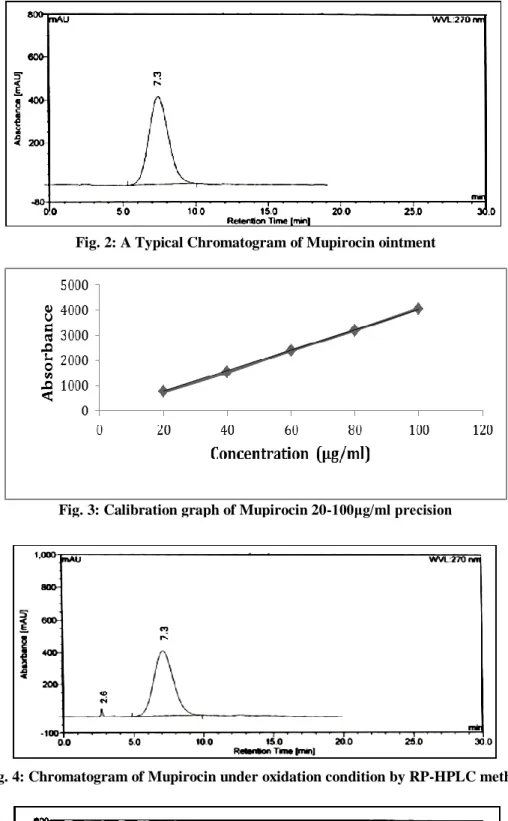
Fig. 2: A Typical Chromatogram of Mupirocin ointment
Fig. 3: Calibration graph of Mupirocin 20-100μg/ml precision
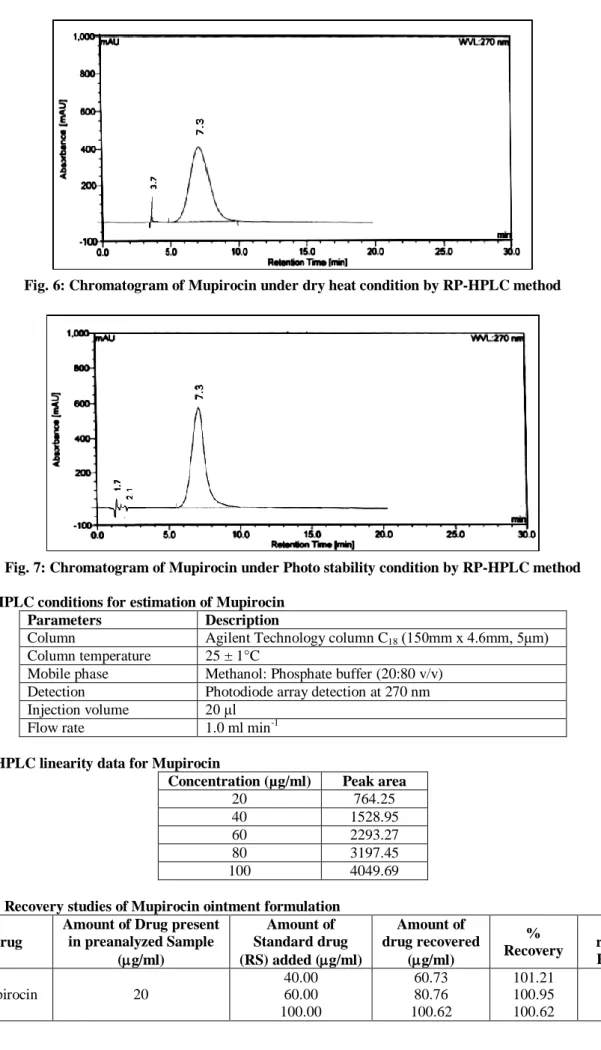
Fig. 6: Chromatogram of Mupirocin under dry heat condition by RP-HPLC method
Fig. 7: Chromatogram of Mupirocin under Photo stability condition by RP-HPLC method Table. I: HPLC conditions for estimation of Mupirocin
Parameters Description
Column Agilent Technology column C18 (150mm x 4.6mm, 5μm) Column temperature 25 ± 1°C
Mobile phase Methanol: Phosphate buffer (20:80 v/v) Detection Photodiode array detection at 270 nm Injection volume 20 μl
Flow rate 1.0 ml min-1 Table. 2: HPLC linearity data for Mupirocin
Concentration (µg/ml) Peak area 20 764.25 40 1528.95 60 2293.27 80 3197.45 100 4049.69 Table.III : Recovery studies of Mupirocin ointment formulation
S No Drug
Amount of Drug present in preanalyzed Sample (g/ml) Amount of Standard drug (RS) added (g/ml) Amount of drug recovered (g/ml) % Recovery Mean recovery in Percentage 1. Mupirocin 20 40.00 60.00 100.00 60.73 80.76 100.62 101.21 100.95 100.62 100.92
Table. IV: Method precision data of Mupirocin by RP-HPLC method
Mupirocin 60 μg/ml (n=4) Retention time Area
1 7.321 2273.67 2 7.291 2143.27 3 7.223 2203.49 4 7.341 2253.22 Mean 7.3 2218.21 S.D a 0.0321 123.432 % CVb 0.453 0.543 4 observations
Table. V: Intermediate precision data of Mupirocin by RP-HPLC method Mupirocin μg/ml Inter-day measured
mean area ± S.D.a %CV b (nc=4) Intra-day measured mean area ± S.D.a %CV b (nc=4) 20 757.85± 4.45 0.9842 697.54± 4.75 1.065 40 1599.75±3.05 0.9964 1679.75±2.05 0.987 60 2273.22±5.56 1.0432 2376.22±4.16 0.996 nc = 4 observations
Table. VI: Results of Limit of detection & limit of quantification Parameters Mupirocin LOD (µg/ml) 0.20 LOQ (µg/ml) 0.30 Table. VII: Results of system suitability parameters
SNo Parameters Mupirocin
1. Theoretical plates 4557 2. Tailing factor 0.977 3. Resolution factor 2.74 4. Retention time 7.3± 0.2 5. Calibration range or Linear dynamic range 20-100 μg/ml Table.VIII: Quantitative estimation (Assay) data of Mupirocin
S No Drug Label claim (mg/Oin)
Amount found (mg/Oin)
Mean amount found (mg/ Oin) Percentage purity (% w/w) Mean percentage purity (% w/w) % Deviation 1. Mupirocin 20 20.77 20.40 20.21 19.79 20.44 20.32 103.07 102.10 101.05 98.95 102.20 101.47 + 0.6 +1.1 +0.5 -1.0 +0.4 Table. IX : Results of statistical parameters Statistical parameters
n= 4 observations
Table. X: Summary of Force degradation of Mupirocin by RP-HPLC method
SNO Stress condition/ state Time % Assay ± S.D. a(nb=5) 1 Acidic 4N HCL(35 oC)/ solution 12 hrs 97.774 ± 1.732 2 Alkali 4N NaOH (35 oC)/ solution 12 hrs 99.223± 0.7243
SNo Parameters Mupirocin
1. Standard deviation (SD) 3.03 2. Relative standard deviation (RSD) 0.0776
3. % RSD 0.716
4. Standard error (SE) 0.02286 5. Correlation Coefficient (r) 0.9987
6. Slope (a) 40.711
7. Intercept (b) 17.176 8. Regression equationY = (aX+b) Y = 40.711 X + 17.176
4 Dry heat (35 oC)/ solid 12 hrs 94.551±1.343 5 Oxidative 20 % H2O2 (35 oC)/ solution 12 hrs 98.567±1.232 6 Photo stability/ solid 4 hrs 82.764±1.333 S.D.a is standard deviation for nb = 5 observations
Method optimization
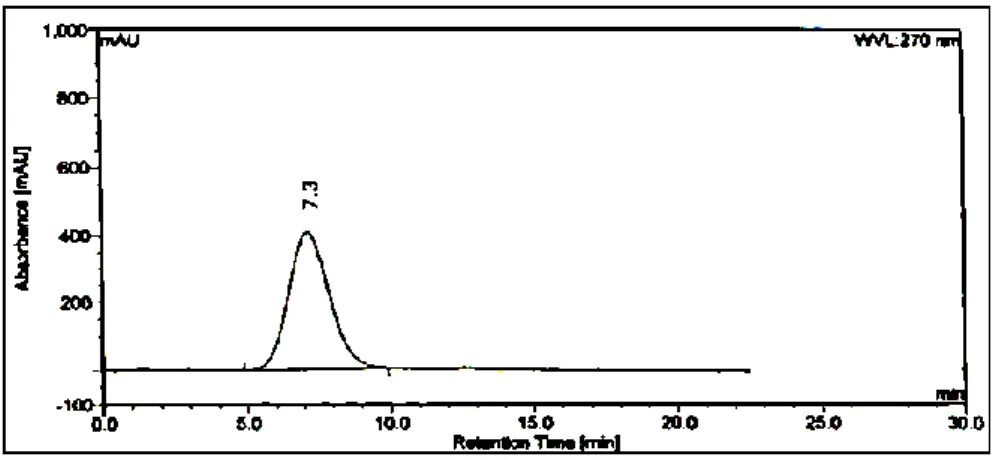
Chromatogram with good shape peaks and good retention time shows good resolution for Mupirocin and forced degradation products. The proposed method was to identify the number of degradation products formed during the stressed conditions. The typical RP-HPLC conditions are presented in Table 1. The good separation of Mupirocin and the products degraded peak under stressed conditions shows the success of the method. The HPLC chromatogram of Mupirocin standard and Mupirocin ointment is presented in figure 1 and 2. Method validation: The method proceeded to achive sencitive, easy and economical for degermination and estimation by HPLC from ointment formulation. Based on the ICH recommended guidelines the experimental was validated.
Linearity: The proposed method Linearity was examined for five concentrations. The concentration ranges from 20-100 μg/ml. The Mupirocin standard linearity was determined by the plotting graph concentration vs absorbance. By absorbance as a functional of analyte concentration linearity was evaluated for Mupirocin. The linearity graphs presented in figure 3, and data presented in Table 2. The system suitability is demonstrated by the linearity analysis. Accuracy: The recovery experiment shows the accuracy of the method. The good recovery shows the method was accurate. The analysis for recovery was performed by known amount of Mupirocin working standard added to pre-analysed solution of formulation in the test concentration range of (40%, 60% and 100 %). For each recovery level three samples was prepared and repeated for 3 consecutive days. The statistical results for recovery study are well within the range (S.D. < 2.0). The Mupirocin drug recoveries results are presented in Table 3.
Precision: The proposed method precision (repeatability) experiment results of are shown in Table 4. In the proposed method intraday and interday precision was examined by analyzing the responeses of the sample on the same day for 4 repeatations and 3 alternate days for 20-80 μg/ml concentration range of Mupirocin. The obtained results are represented in % RSD. The % CV of the proposed method was precise as the values < 1.0 % for the repeatability study. The precision data are presented in Table 5.
Specificity: The standard reference and the drug formulation shows specificity of the method. The RP-HPLC chromatogram of Mupirocin both bulk and the ointment formaulation are presented in figure 1, 2. The
bulk and ointment formaulation retention time was found to be 7.3. For the ointment formulation there was no excipients interference was detected, which shows the specificity of the method. The proposed method shows the ability to determine the analyte in presence of excipients.
Limit of detection and quantitation
The limit of detection and quantification for Mupirocin is presented in table 6.
System suitability: For the system suitability parameters five repeats of standards and two repeats of sample preparation are injected, the data is presented in table 7. The Assay data of Mupirocin presented in table 8.
Statistical Parameters: The obtained assay results are subjected to the coefficient of variation, statistical analysis, regression equation and standard deviation are presented in table 9.
Force degradation of Mupirocin in formulation Mupirocin showed slight and moderate degradation in dry heat, oxidative and Photo stability (Sun light) condition for a short period of time. Table 10 indicates the degradation of Mupirocin under different stress conditions. According to the ICH guidelines of the forced degradation study of Mupirocin was examined. Alkali degradation
The stability of the Mupirocin ointment in alkaline condition was examined. There was no degraded product was separated from Mupirocin. The chromatogram of alkali-degraded result was compared with the formulation and standard chromatogram. The result shows around 1–2 % of the Mupirocin drug is degraded and in alkaline condition the drug was highly stable. Acid degradation
The stability of the Mupirocin ointment in acid condition was examined. The chromatogram of acidic condition product was compared with the formulation and standard chromatogram. The result shows around 1–2 % of the Mupirocin drug is degraded. The result shows that drug in acidic condition was highly stable.
Oxidation
The stability of the Mupirocin ointment in oxidation condition was examined. It was observed around 2-4% degradation was taken place on exposure to 20 % H2O2 for 12 hrs. The chromatogram of oxidation product was compared with the formulation, standard chromatogram and blank H2O2. No degradation product peaks was obseved. The 20 % H2O2 peak time observed at RT 2.6,
and in the peak height and area no significant decrease with time presented in figure 4. The result shows that the drug was highly stable to oxidative conditions.
Wet heat (Hydrolysis)
The stability of the Mupirocin ointment in neutral condition, 1–3 % drug degradation was observed after 12 hrs of incubation at 35ºC. The chromatogram of wet heat degraded product was compared with the formulation and standard chromatogram presented in figure 5. In the wet degraded chromatogram Mupirocin peak area and height was decreased and no degradation peak was observed.
Dry heat
The chromatogram for Mupirocin in dry heat shows the drug is slightly unstable as compare to acid, base and wet degradation. Around 3-7% drug degradation was observed. The chromatogram of dry heat degraded product was compared with the formulation and standard chromatogram. In the dry degraded chromatogram the drug decomposed into minor degradation product. The result shows no significant decrease in the peak height and peak area with time presented in figure 6.
Photo stability (Sun light)
The chromatogram for Mupirocin under photo stablilty study was found to be unstable after drug exposure to direct sunlight for 4 hours. Almost 10-20% of the drug degraded in 4 hours. Two minor drug degradation peaks is observed between 1-2.5 minute and also there was a significant increase in the drug peak height and decrease in peak area was observed presented in figure 7. CONCLUSION
The force degradation study was performed according to the guidelines of International Conference on Harmonization (ICH), The developed RP-HPLC method shows the accuracey, sensitive and stability indicating. The developed method is rapid, reproducible. The developed method can be used for the routine analysis for Mupirocin formulations.
ACKNOWLEDGEMENT
The authors highly thankful to Jazan University for providng facilities need for this research work.
REFERENCES
1. United States Pharmacopoeia-27 National Formulary-22, United States Pharmacopoeial Convention, Rockville 2004; 1489: 1850.
2. Product Monograph Bactroban (PDF). Retrieved September 8, 2014
3. Tripathi K. Essentials of Medical Pharmacology: Tripathi M (eds), Antibiotic drugs, 6th ed., Jaypee Publications, USA 2006; 733-734.
4. Alcaide V. Efficacy of broad spectrum antibiotic (mupirocin) in an in vitro model of infected skin. Burns, 1993; 19(5): 392‐395.
isoleucyl‐transfer ribonucleic acid synthetase in Escherichia coli by pseudomonic acid. J. Biochem, 1978; 176(1): 305‐318.
6. Hughes J and Mellows G. Interaction of pseudomonic acid A with Escherichia coli B of isoleucyl‐tRNA synthetase. J. Biochem, 1980; 191(1): 209‐219.
7. Deepak V and Pawar S. Quanitative estimation of mupirocin calcium from ointment formulation by UV spectroscopy. Intermational journal of pharmacy and pharmaceutical sciences, 2010; 2(3): 86-87. 8. Porter RS and Chen TK. High‐performance liquid
chromatographic analysis of mupiroci in polyethylene glycol 400 and 3350 using dual ultraviolet and evaporative light scattering detection. J. Chromatogr. A, 1996; 732(2): 399‐402.
9. Baboota S, Faiyaz S, Ahuja A, Ali J, Shafiq S, and Ahmad S. Development and validation of a stability-indicating HPLC method for analysis of celecoxib (CXB) in bulk drug and microemulsion formulations. Acta Chromatogr, 2007; 18: 116-129. 10. Echevarria L, Blanco J, Campanero A, Santoyo S,
Ygartuay P. Development and validation of a liquid chromatographic method for in vitro mupirocin quantification in both skin layers and percutaneous penetration studies. J. of chromatogr. B, 2003; 796(2): 233‐241.
11. Sridhar S and Anusha T. Simutaneous estimation of metronidazole and mupirocin by RP-HPLC method. An International journal of advances in pharmaceutical sciences, 2014; 5(6): 2519-2523. 12. Amrutiya N, Madan M and Bajaj A. Development
and validation of RP-HPLC Method for Simultaneous estimation Prednicarbet, Mupirocin and Ketoconazole in Topical Dosage form. J of Ana Chem, 2010; 65(11): 1148-1154.