LANGUAGE ATTITUDES AND LINGUISTIC PROFILING AMONG MICRO-ENTERPRISERS IN MEXICO
A Dissertation by
REBECCA ANN BREWER
Submitted to the Office of Graduate Studies of Texas A&M University
in partial fulfillment of the requirements for the degree of DOCTOR OF PHILOSOPHY
Chair of Committee, Hilaire Kallendorf Co-Chair of Committee, Shari Kendall Committee Members, Irene Moyna
Stephen Miller Jamis Perrett Head of Department, Steven Oberhelman
August 2013
Major Subject: Hispanic Studies
ABSTRACT
This study examines the language attitudes of entrepreneurial students enrolled in the Academy for Creating Enterprise (ACE) in Mexico City toward six rural and urban varieties of Mexican Spanish to consider whether their attitudes towards these varieties influence their decisions about hiring.
A verbal guise test and focus groups were used to determine the current attitudes held by 98 ACE students towards the popular and upper-class dialects of Mexico City; the urban dialect of Mérida, Yucatan; the urban dialect of Ciudad Juárez, Chihuahua; the urban dialect of Monterrey, Nuevo León; and the rural dialect of San Jeronimito,
Guerrero. It was determined that the ACE students, who are current and future
entrepreneurs and employers, do engage in “linguistic profiling” (Purnell et al., 1999), preferring the northern varieties of Spanish and the variety spoken by the upper class of Mexico City in all three dimensions of attractiveness, status, and hireability. These results indicate that speakers of the popular variety of Mexico City and the southern varieties of Yucatán and Guerrero are less likely to be hired. In addition, the students’ ratings of hireability were also influenced by the students’ age, gender, business owner status, and exposure to the dialect in question. The students’ level of income was found to be the most likely to influence the ratings of speaker attractiveness and status.
This case study of current and future employers enrolled at ACE responds to a call for the application of language attitudes research (Edwards, 1982; Garrett, 2010) and provides a model for working with an organization. Based on these findings, it was
determined that ACE should modify its curriculum to include explicit training regarding linguistic attitudes and hiring practices.
DEDICATION
ACKNOWLEDGMENTS
I am very grateful to my mentor and guide, Shari Kendall. She has provided me with the help and support I so desperately needed, time after time. I appreciate her willingness to take the time to help me see the light at the end of the tunnel.
I am also very grateful to Hilaire Kallendorf, who also provided me with great strength and support through her uplifting conversations, advice, and her own example.
I couldn’t have done this without the support of my best friend and husband, Jeremi Brewer. He believed in me even in my darkest hours. He pushed me to succeed through his tireless example and many efforts. I enjoy every moment of our adventures together. T.I.P.
I am eternally grateful to my daughters, who, without even knowing it, inspired me to complete this process.
The support of my parents, Jeff and Janice Richardson, and my siblings, must also be acknowledged since much of the time spent during holiday visits was filled with many hours of writing and research. I couldn’t have done this without their help and support as well.
My committee members have also been of great help to me as they spent many hours reviewing and commenting and helping me see the value of my work. Tony Love also greatly assisted me in conducting the data analysis. I thank him for his efforts and for helping when he had no obligation to do so.
A special thank you to the Academy for Creating Enterprise founders Stephen and Bette Gibson for allowing me the opportunity to conduct research on their campus in Mexico City and for giving me so many other marvelous opportunities. I also thank Gandhi Blas and the other staff members at the Academy in Mexico for assisting me with the data collection. The students of Brigham Young University who completed an internship with the Academy also deserve recognition for their assistance in entering the data. I also thank the students of the Academy for participating so willingly and for giving me their honest opinion.
Finally, I would like to thank Lynne Hansen for introducing me to the wonderful world of linguistics. Her enthusiasm and love of learning inspired me to further my education.
TABLE OF CONTENTS Page ABSTRACT ...ii DEDICATION ... iv ACKNOWLEDGMENTS ... v LIST OF FIGURES ... ix LIST OF TABLES ... x CHAPTER IINTRODUCTION ... 1 Language Attitudes ... 3
Regional Dialects of Mexico ... 6
The Academy for Creating Enterprise (ACE): Contextualization of Subjects for this Study ... 20
Contributions of the Study ... 25
Previous Work on Language Attitudes ... 27
Research Questions ... 29
Limitations of Research ... 30
Structure of the Study ... 32
CHAPTER IIREVIEW OF THE LITERATURE ... 36
Section I: Language Attitudes—A Historical Background ... 37
Section II: Theoretical Framework—The Mentalist Perspective ... 40
Section III: Methodologies of Language Attitude Studies ... 42
Section IV: Language Attitude Studies and Hireability ... 51
Section V: Themes and Findings of Language Attitude Studies ... 56
Chapter Conclusion ... 78
CHAPTER IIIMETHODOLOGY ... 80
Research Questions ... 81
Research Design ... 81
Procedures ... 86
Data Collection ... 92
Coding and Organizing the Data ... 102
Conclusion ... 108
CHAPTER IVDATA ANALYSIS & DISCUSSION ... 110
Reliability of the Instrument ... 111
Findings ... 112
Qualitative Results ... 141
Conclusion ... 150
CHAPTER VDISCUSSION AND CONCLUSION ... 153
Summary ... 155
Discussion ... 158
Conclusions ... 168
Possible Practical Applications ... 169
Suggestions for Future Research ... 170
REFERENCES ... 172 APPENDIX A ... 186 APPENDIX B ... 187 APPENDIX C ... 192 APPENDIX D ... 193 APPENDIX E ... 196 APPENDIX F ... 202
LIST OF FIGURES
Page
Figure 1 Seventeen regional dialects defined by Lope Blanch (1990) ... 11
Figure 2 Ten regional dialects (Lope Blanch, 1997) ... 13
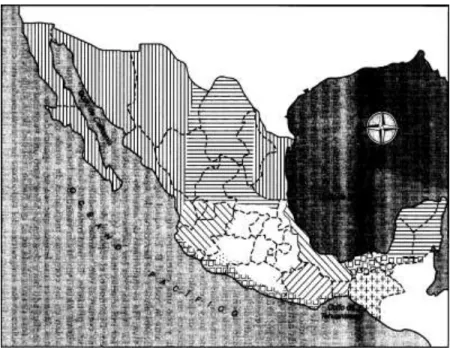
Figure 3 Dialect regions of Mexico with cities of study (Adapted from Lope Blanch [1997])... 15
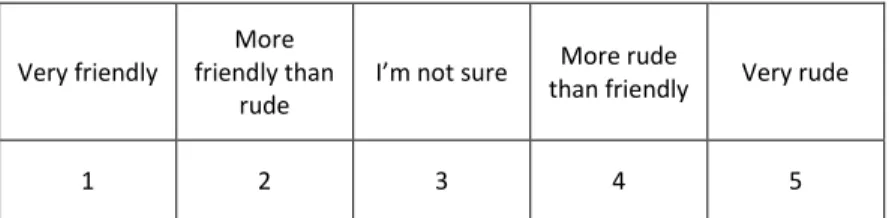
Figure 4 Semantic differential scale ... 44
Figure 5 Example of Likert-type scale from elicitation sheet ... 95
Figure 6 Point allotment for Likert-type semantic differential scale ... 102
Figure 7 Means and trend of status and socio-intellectual prestige by income ... 126
LIST OF TABLES
Page Table 1 Regional Dialects of Mexico Identified by Henríquez Ureña (Lope
Blanch, 1997) ... 10
Table 2 Regional Dialects Identified by Lope Blanch (1990) ... 11
Table 3 Ten Major Regional Dialects Identified by Lope Blanch (1997) ... 12
Table 4 Presentation Order by Group and Variety ... 101
Table 5 Descriptive Statistics for Attitudinal Dimensions ... 112
Table 6 Coding of Speaker Variables ... 113
Table 7 Analysis of Variance: Attractiveness and Speaker Variables ... 114
Table 8 Mean Attractiveness by Speaker Origin ... 114
Table 9 Mean Attractiveness by Speaker Gender ... 116
Table 10 Mean Attractiveness by Text Style ... 116
Table 11 Analysis of Variance: Status & Socio-intellectual Prestige and Speaker Variables... 117
Table 12 Mean Status and Socio-Intellectual Prestige by Speaker Origin ... 117
Table 13 Mean Status and Socio-Intellectual Prestige by Gender ... 118
Table 14 Mean Status and Socio-Intellectual Prestige by Text Style ... 119
Table 15 Analysis of Variance: Hireability and Speaker Variables ... 119
Table 16 Mean Hireability by Speaker Origin ... 120
Table 17 Mean Hireability by Text Style ... 121
Page
Table 19 Rater Origin ... 123
Table 20 Mean Status and Socio-Intellectual Prestige by Income ... 125
Table 21 Analysis of Variance: Hireability and Rater Variables ... 127
Table 22 Mean Hireability by Rater Age ... 128
Table 23 Mean Hireability by Rater Gender ... 129
Table 24 Mean Hireability by Rater Business Owner Status ... 129
Table 25 Mean Hireability by Rater’s Identification of Speaker Origin ... 130
Table 26 Linear Regression Analysis: Decision to Hire, Attitudinal Dimensions, and Rater Variables ... 130
Table 27 Pearson Correlations: Attitudinal Dimensions and Rater’s Decision to Hire ... 132
Table 28 Linear Regression Analysis: Decision to Hire and Speaker Variables ... 132
Table 29 Analysis of Variance: Rater’s Decision to Hire and Speaker Variables ... 133
Table 30 Mean Hiring Decision by Speaker Origin ... 134
Table 31 Mean Hiring Decision by Text Style ... 135
Table 32 Chi-Square Tests: Job Position and Speaker Region of Origin Statistics . 136 Table 33 Chi-Square Tests: Job Position and Speaker Region of Origin ... 137
Table 34 Chi-Square Tests: Job Position and Speaker Gender Statistics ... 138
Table 35 Chi Square Tests: Job Position and Speaker Gender ... 139
Table 36 Chi-Square Tests: Job Position and Speaker Text Style Statistics ... 139
Page Table 38 Responses from Reason for Hiring Question: Chihuahua and Monterey
Males and Females ... 146 Table 39 Responses from Reason for Hiring Question: Mexico City Upper-Class
and Popular Males and Females ... 147 Table 40 Responses from Reason for Hiring Question: San Jeronimito and
Merida Males and Females ... 148
CHAPTER I INTRODUCTION
Gilead then cut Ephraim off from the fords of the Jordan, and whenever Ephraimite fugitives said, 'Let me cross,' the men of Gilead would ask, 'Are you an Ephraimite?'
If he said, 'No,' they then said, 'Very well, say "Shibboleth" (תלבש).' If anyone said, "Sibboleth" (תלבס), because he could not pronounce it, then they would seize him and kill him by the fords of the Jordan. Forty-two thousand Ephraimites fell on this occasion.
—Judges 12:5-6, NJB
Language has always been one of the most divisive variables within human societies. How we speak can determine where we live, where we work, and how much money we earn. In fact, as the passage from the book of Judges illustrates, it was because of how the Ephraimite spoke that sent him, and 42,000 other human beings,to their graves. Certainly, one could argue how these verses highlight an unlikely result for our modern times; however, the reality that individuals are discriminated against because of the way they speak is undeniable. The playwright George Bernard Shaw illustrated this in his play Pygmalion, which eventually was used as the basis for the popular musical My Fair Lady. The premise of the play revolves around two main characters: Professor Henry Higgins, a hypersensitive phonetician, and Eliza Doolittle, a woman who sells flowers in the street for money. In the play, Professor Higgins believes that, if
low…and dirty” Cockney accent, then she would inevitably improve her socio-economic opportunities by passing as a “well-born lady” and consequently gain better employment (Shaw, 1916, p. 37).
Much later, Dr. John Baugh, professor of education and linguistics at Stanford University, confirmed Professor Higgins’ suspicions when he found a direct correlation between speech, dialectal discrimination, and opportunities. In 1999, Baugh left
messages on the machines of apartment leasing agencies in the “upper-scale” San Francisco Bay region using the exact same words in three distinct dialects of American English: (a) African American Vernacular English (AAVE), (b) Chicano English (ChE), and (c) Standard American English (SAE; Purnell, Idsardi, & Baugh, 1999, p. 19). A significant difference was found in the number of callbacks corresponding with each dialect—with the SAE dialect receiving significantly more callbacks than the AAVE and ChE dialects. Baugh (2000) coined the term “linguistic profiling,” and defined it as “discrimination based solely upon auditory cues…used to identify an individual as belonging to a linguistic subgroup…or racial subgroup” (p. 363). The dialectal
discrimination presented in the book of Judges, George Bernard Shaw’s Pygmalion, and Baugh’s apartment agency recordings demonstrates how individuals who use a
stigmatized dialect find themselves at a disadvantage because of the language attitudes maintained in their societies.
As a Hispanist and sociolinguist, I am motivated to discover what the current language attitudes are in Mexico regarding the various dialects of Mexican Spanish. More specifically, my intent with this study is to discover what the language attitudes are
of current (and future) Mexican micro-enterprisers attending the Academy for Creating Enterprise in Mexico towards six regional dialects of Mexican Spanish, and how their language attitudes may influence their current and future hiring practices.
The remainder of this chapter will be organized into the following sections: (a) a succinct introduction to language attitudes including an overview of how language attitudes influence the financial achievements of individuals, the lack of language attitudes studies conducted in Mexico, and a note on micro-enterprisers in Mexico; (b) a brief history of Mexico and demonstrate the emphasis historians have placed on the divide between the north and the south, along with a description of the regional dialects that will be examined in this study; (c) a description of the Academy for Creating Enterprise (ACE) and its history, mission, funding sources, educational methodologies, student body, and also a clarification of my personal relationship with the institution, and an explanation for why I chose ACE students as participants in this study; (d) an
evaluation of the chief innovations this study offers to language attitude studies; (e) an outline of the four primary research questions for this study; (f) the limitations of this study; and finally, (g) the structure for this study.
Language Attitudes
Language attitudes stem from language ideology. Irvine (1989) defined language ideology as “the system of ideas [and values] about social and linguistic relationships” (p. 255). In essence, the leaders of a society establish a value-system by which the dialects found within their society are ranked. Subsequently, every individual living in that society is measured by that (arbitrary) value-system. Because those in authority
establish the value-system, they inevitably determine that their own dialect should be established as the standard variety, or the “correct way” of speaking. Eventually, as Schilling-Estes (2006) explained, “Standard varieties are considered to be more prestigious than other, nonstandard varieties, and are generally thought of as
‘correct’…in education, the workplace, and the government” (p. 312). Therefore, the speakers of standard varieties are often perceived as more prestigious and more educated than speakers of non-standard varieties.
Language attitudes can affect all aspects of a speaker’s life. Bourdieu and Thompson (1999) stated that a “linguistic exchange… is also an economic exchange” wherein “utterances are not only…signs to be understood and deciphered [but] are also signs of wealth…and signs of authority” (p. 67). Thus, the way a person speaks
represents a certain category of wealth, education, and personality, whether or not the individual fits those categories. This is especially true in situations such as a job interview where a job applicant may be rejected based on their non-standard dialect, although their work experience and/or education show their ability to perform the job well, as Anderson (1981) found in his study among potential and actual employers and their attitudes towards speakers of standard and non-standard English varieties and their hireability. Thus, it is important to understand what language attitudes exist within societies in order to show possible repercussions that speakers of non-standard varieties may face.
Language Attitudes in Mexico
Despite being home to the largest native Spanish-speaking population in the world, there is a scarce amount of research regarding the language attitudes towards varieties of Mexican Spanish. Terborg, García Landa, and Moore (2006) addressed this reality in their definitive article on the historic contextualization of Mexican Spanish and language policy. In their article, Terborg et al. (2006) explained, “Over the past 150 years some research had been carried out on Mexican Spanish in Mexico, but the majority of the linguistic work [in Mexico] has been done on indigenous languages” (p. 422, italics mine). Thus, the attitudes towards the varieties of Spanish in Mexico should be explored further.
The lack of literature regarding the general language attitudes in Mexico necessitates action; especially considering how the language attitudes maintained by a society at large can have far-reaching consequences for individuals who speak non-standard varieties. Thus, because of my interest in language attitudes in Mexico, and specifically in the hireability of individuals who use non-standard dialects, I am
motivated to contribute contemporary, empirical data to the scarce body of literature by identifying and documenting the current language attitudes present in one segment of Mexico’s society and how these attitudes may relate to the hireability of individuals who speak a non-standard variety of Mexican Spanish. Furthermore, I focus on the language attitudes of current and future Mexican micro-enterprisers towards the various regional dialects of Mexican Spanish because, to my knowledge, no studies have previously explored these attitudes, even though micro-enterprisers currently employ approximately
45% of Mexico’s labor force (Secretaria de Economia, 2012). Therefore, understanding the language attitudes of the individuals within this group may provide crucial insights into which dialect areas are recognized, the social characteristics attributed to the individuals who speak these dialects, and how these attributions may influence hiring practices.
Regional Dialects of Mexico
Prior to examining the language attitudes of Mexico, it is important to understand the history of Mexico and its language. This section aims to show how the history of Mexico affects its current language situation. It also aims to show what the current regional dialects are in Mexico and to describe the six varieties examined in this study. History of Language in Mexico
There exists great variation in the Spanish of Mexico due to several factors, namely, the influence of indigenous languages and the geographic regions containing differing degrees of industrialization. Mexico is home to the largest native Spanish-speaking population in the world. According to the 2010 Censo de Población y Vivienda
(Population and Housing Census) from Mexico’s Instituto Nacional de Estadística,
Geografía e Informática (National Institute of Statistics, Geography, and Computing), an
estimated 93% (97.3 million people) of Mexico’s total population speaks Mexican Spanish natively (INEGI, 2010). To help put this into perspective, the number of Spanish speakers in Mexico is more than double the population of Spain (nearly 47.2 million). In the Americas, there are as many Spanish-speakers in Mexico as there are people in the following 11 Central and South American countries combined: Bolivia (10
million), Costa Rica (4.7 million), Ecuador (14.7 million), El Salvador (6.2 million), Guatemala (14.7 million), Honduras (7.7 million), Nicaragua (5.9 million), Panama (3.6 million), Paraguay (6.6 million), Uruguay (3.4 million), and half of Venezuela (14.7 million).
Pre-conquest. Prior to the arrival of the Spanish to Mexico in the 16th century, there were many different indigenous ethnic groups that spoke numerous languages. The Aztecs were a great imperial power and used Nahuatl as “the language of commerce, law, economics, science, art, education and literature” (Hidalgo, 1996, p. 46). However, many other tribes spoke Nahuatl as their second language or they had interpreters to communicate with the Aztecs (Hidalgo, 1996). In fact, Brice Heath (1972) stated that the tribes who did not speak Nahuatl “suffered a loss of privilege and prestige” (p. 3). They were viewed as outcasts and ridiculed for their speech. Thus, once the Spaniards arrived, a sort of linguistic tension already existed in Mexico.
Conquest. When the Spanish arrived, they first aimed for the conquest of the Aztec Imperial power, leading to the fall of Tenochtitlan in 1521 and the foundation of Mexico City. The Spanish then followed the Aztec battles to the South and the west. The Spaniards tried to implement a program to train interpreters to strengthen the
relationship between the Indians and the Spanish, but this plan ultimately failed as the Indians did not adopt the Spanish language (Hidalgo, 1996, p. 47). Thus, the educating of the Indians was left to the missionaries. After nearly 60 years of struggle with trying to learn the various indigenous languages, the missionaries saw the need to forego trying to teach the Indians Spanish and to instead learn Nahuatl themselves in order to teach the
Catholic faith (Hidalgo, 1996, p. 47). In 1570, King Philip II mandated that Nahuatl should be the official language since it was “the most widely spread in New Spain” (Hidalgo, 1996, p. 48). Later, in 1599, King Philip III decided that the priests should learn the different indigenous languages, which proved impossible for the priests due to the large quantity of indigenous tongues. In 1618, the same King Philip III completely removed the monolingual Spanish-speaking priests from the missions. Finally, in 1634, King Philip IV mandated that “Spanish should be promoted as the sole language of New Spain” (Hidalgo, 1996, p. 49). In 1821, with its independence from Spain, Mexico found itself in an interesting position wherein many of her inhabitants spoke Spanish, yet approxmitaely 60% of the population spoke independent indigenous languages (Cifuentes, 1992, p. 12). Their independence brought them a “new name,” a “new ethnicity,” and a “new identity,” which was represented by Mexican Spanish (Hidalgo, 1996, p. 52). Although the mandate from King Philip IV in 1634 did not seem to have an immediate response in Mexico, Spanish is now considered the national language of Mexico.
Present day. There has since been a great shift from the many indigenous languages to Spanish. The government’s push in the 1940s for Indigenous awareness “accelerated an unanticipated shift to Spanish” (Hidalgo, 1996, p. 58). The Spanish heritage seemed to grow deeper and deeper. Hidalgo (1996) stated, “Another factor responsible for the disappearance of the Indian languages is the migration to the city, where the Indians have become part of the cheapest labor force” (p. 58). Although Spanish has dominated the linguistic battles, there are still over 6.9 million speakers of
indigenous languages age 3 and up in Mexico (INEGI, 2010). While there remain many speakers of indigenous languages, the number of Spanish speakers continues to grow, albeit with much variation. Even among the Spanish speakers, as Hidalgo (1996) stated, the vast majority “speak a regional or social variety of Mexican Spanish” (p. 53). These regional varieties also exist due to historical and cultural factors.
History and Culture Affect the Regional Dialects
After the Spanish conquest of Mexico City, there was swift movement across the south to overpower the tribes that the Aztecs had either previously conquered or were trying to conquer at that time. Because of the geography of Mexico and the geographic dispersion of the tribes, there was a divide between north and south. With Mexico City at the frontier, the dividing line, although “blurred somewhat…still stands” (Sauer, 1941, p. 364).
Regions and their dialects. Due to Mexico’s vast geographic extension and rich history, there are several dialects of Mexican Spanish in existence. Henríquez Ureña demonstrated this in his seminal research in 1921. In his study, Henríquez Ureña identified and described the various regional dialects throughout most of Spanish-speaking Latin America and ultimately concluded that there were at least five dialectal regions (or zones) in Mexico (p. 361; see Table 1).
Table 1
Regional Dialects of Mexico Identified by Henríquez Ureña (Lope Blanch, 1997)
Number Variety
1 North of the Mexican Republic 2 High plateau of Central Mexico 3 Subtropical Eastern coast 4 Yucatan Peninsula
5 Central America, including Chiapas
In response to the work published by Henríquez Ureña, Lope Blanch (1975) argued that, while Henríquez Ureña should be commended for his efforts, his conclusions regarding the defining of the dialectal regions of Mexico were not “sufficient” (p. 127). Lope Blanch then embarked upon his longitudinal investigation wherein, over the span of 23 years, he meticulously delineated the dialect regions of Mexico by examining the phonetic, lexical, and syntactic variation of Mexican Spanish (p. 127). Finally, in 1990, Lope Blanch published his extensive descriptive work on the regional dialects of Mexican Spanish in the Atlas Lingüístico de México, wherein he identified 17 dialectal regions in Mexico (see Table 2; also see Figure 1, as cited by Hidalgo, 1996, p. 65).
Table 2
Regional Dialects Identified by Lope Blanch (1990)
Number Variety Number Variety
1 Yucatan 11 Northwestern varieties
2 Campeche 12 Central high plateau
3 Tabasco 13 Northwestern varieties
4 Southern Veracruz 14 Chihuahua
5 Veracruz 15 Southern Baja California
6 Chiapas 16 Northeastern varieties
7 Juchitán, Oaxaca 17 Transitional zone 8 High plateau of Oaxaca
9 Southern high plateau 10 Michoacán
Figure 1 displays these dialects in the dialect map by Hidalgo (1996, p. 65).
After his publication of the 17 dialectal regions, Lope Blanch (1997) revisited his work and gave an overview of the variation found in Mexican Spanish. In addition, he categorized the 17 dialects into 10 major dialect regions shown in Table 3 and Figure 2. He stated that there were likely several sub-regions within the 10 different regions but that further studies would be required to define the limits of the Mexican dialects.
Table 3
Ten Major Regional Dialects Identified by Lope Blanch (1997)
Number Variety
1 Yucatan Peninsula
2 Chiapas
3 Tabasco
4 Veracruz
5 Oaxaca and surrounding high plateaus
6 High plateaus of Mexico City and the surrounding areas 7 Coasts of Oaxaca and Guerrero
8 Northeastern region of Sinaloa, Chihuahua, Sonora, and Baja California 9 Northern high plateaus
Figure 2 depicts the 10 regional dialects identified by Lope Blanch (1997).
Figure 2. Ten regional dialects(Lope Blanch, 1997, p. 89).
Lope Blanch (1997) identified 10 different regional dialects, with the proviso that there are, within each of the identified regions, other varieties that could possibly be considered distinct regional dialects. He also mentioned the great need for further study and investigation of the existing regional dialects. The regional dialects he identified are (a) The Yucatan Peninsula; (b) Chiapas; (c) Tabasco; (d) Veracruz; (e) Oaxaca and the surrounding high plateaus; (f) the high plateaus of Mexico City and the surrounding areas; (g) the coasts of Oaxaca and Guerrero; (h) the northeastern region of Sinaloa, Chihuahua, Sonora, and Baja California; (i) the northern high plateaus; and (j)
Tamaulipas and Nuevo León (p. 88). Figure 3 shows an updated version of the dialect map of Lope Blanch (1997).
The work of Henriquez Ureña (1921) and Lope Blanch (1990, 1997) helped define the regional dialects that exist in Mexican Spanish and serve as the foundation for the Mexican Spanish varieties that I will use in this study. While each of these dialects merits further study, especially regarding language attitudes, due to subject availability and phase one of the pilot study (see Chapter III), six dialects were chosen for this dissertation: (a) Popular urban dialect of Mexico City; (b) Suburban dialect of Mérida, Yucatan; (c) Suburban dialect of Ciudad Juárez, Chihuahua; (d) Urban dialect of Monterrey, Nuevo León; (e) Rural dialect of San Jeronimito, Guerrero; and (f) Urban dialect of the upper-class of Mexico City. The dialects from Mexico City are in the central part of the country (Regions 1 and 6); the dialect from Yucatan (Region 2), is in the southern peninsula of the Gulf of Mexico; the dialect from Chihuahua (Region 3) is in the northern region of Mexico, near the US border; the dialect from Nuevo Leon (Region 4) is also in the northern region, although slightly more southern than the dialect from Chihuahua; and the dialect from Guerrero (Region 5) is on the southern Pacific coast of Mexico. Following is a brief description of these varieties.
15
Mexico City. The dialectal region of Mexico City, including surrounding areas of the state of Mexico, as well as parts of Puebla and Guadalajara, is referred to as the central dialect region. As Martín Butragueño (2006) described, this area contains both a popular variety and a variety spoken by the upper class or more educated individuals. While there are several differences between the varieties spoken by the two main social classes, Martín Butragueño focused on assibilation of /ɾ/ and /r/. Those of a higher socioeconomic class prefer assibilation of /ɾ/, but not of /r/. Inhabitants of the same area but of a lower socioeconomic class, speak the popular variety, and prefer the opposite of the upper class, the assibilation of /r/, but not of /ɾ/. The popular variety is commonly referred to as Chilango Spanish and highly stigmatized by those who do not speak it (Hidalgo, 1987). Esquinca Moreno’s (1999) participants “mocked” the popular variety of Mexico City and described it as speaking in a “sing song manner” (p. 85). However, the variety spoken by the upper class, as Pineda, Pineda, Cuetara, Castellanos, and Lopez (2004) stated, “represents the variety spoken by most of the population in the country” (p. 976). Thus, these two urban varieties merit further study regarding language attitudes.
North. The north was not so easily won by the Spanish, since it was populated by a “large number of very small tribes” (Sauer, 1941, p. 356). Yet, after many battles, the Spanish founded Monterrey in 1596. Hamnett (1999) described this as their statement to the north of their immovable presence. The natives of the north were soon banished to small, remote areas or sent off to the south to be used as slaves (Sauer, 1941, p. 364). The Spaniards then developed the north with mining cities, ranches, and cotton
plantations. As Sauer (1941) stated, “For the most part, men of the North have made the revolutions and wielded the power, men from Sonora, Chihuahua, Coahuila, Nuevo León” (p. 364). This pattern remains today, as Monterrey is thought of as a city of power and industry with its “impressive economic growth [that] has more than matched that of the country as a whole” (Browning & Feindt, 1971, p. 309).
Because of its advantages in industry, education, and economy, Monterrey has been chosen as a dialect of study for this dissertation. The dialect was termed by Martín Butragueño (2009) as the Northern Mexico dialect, which includes Nuevo León. It is characterized by vowel weakening, and /e/ and /o/ are commonly diphthongized with a strong vowel. There are also lexical differences found in this region, for example,
cócono is usedfor the word pavo “turkey” and huila for the word papalote “kite” (p.
32). These phonological and lexical differences, as well as historical and cultural differences make the Nuevo León dialect interesting for study.
The state of Chihuahua is also considered to be part of the north of Mexico, as it borders the United States. However, as Lope Blanch (1997) demonstrated, it belongs to a different dialect region than the Monterrey dialect, namely, the Northwest Dialects. The dialect of Chihuahua and surrounding northwestern region is characterized by the fricativization of /č/. Due to its shared border with the United States, Martín Butragueño (2009) mentioned that this regional dialect is in need of further investigation in order to better describe its characteristics, as it currently termed a “transitional zone” (p. 16). The Chihuahua dialect, with its prominent phonological differences, calls for further
South. Because of the Aztec reign, Spain more easily conquered the southern parts of Mexico. The great indigenous cultures of the south have been considered somewhat more civilized than the north, and the culture remains strong in spite of the Spanish inquisition (Sauer, 1941). Sauer (1941) stated, “The South still shows its
aboriginal fundament of patient, steady toil done by apt craftsmen, who can create things of remarkable beauty if they have the chance” (p. 364). However, because of the
remaining parts of indigenous culture, the north “has dominance…over the Southern hearth,” especially due to its lack of industrialization compared to the north (Sauer, 1941, p. 364).
The coast of Guerrero is often described as the Pacific coast and tourism provides the greatest source of income (Martín Butragueño, 2009). Guerrero is among the poorest states of Mexico (García-Verdú, 2005) and, because it was home to one of the largest ports of African slaves, African languages have historically influenced the phonological characteristics of the coastal dialect. The characteristics of this dialect include, as Althoff (1994) and Martín Butragueño (2009) explained, the weakening of /s/ before a voiced consonant, weakening of final consonants, confusion of /ɾ/ and /l/, and velarization of final /n/. However, Althoff (1994) acknowledged that, while the influence of African languages in Mexican Spanish has “been recognized in the specialized literature… it has not received much scholarly attention” (p. 249). In addition to the phonological
differences found in Guerrero’s coastal dialect, many archaic forms of Spanish are found. For example, nadien for nadie, adding a final /s/ in the informal “you” verb form of the preterit tense, as is seen in the case of fuistes rather than fuiste. As the Guerrero
coast’s dialect holds highly stigmatized phonological and lexical differences, it too is merits further study regarding the language attitudes held by others in the country (Althoff, 1994).
Due to geographic isolation and a strong indigenous presence, the Yucatan Peninsula has distinct phonological and lexical features characterized by the indigenous language: Mayan. Lope Blanch (1997) stated that the Yucatan dialect is different from the neighboring Caribbean dialects because of the strong pronunciation of the
consonants and the lack of /s/ aspiration. Hidalgo (1996) also mentioned the
glottalization of voiceless stops, as well as the retroflex phoneme [R] characteristic of Yucatan Spanish. One example of the lexical differences is that, while Standard Mexican Spanish uses the word benjamín for the “baby of the family,” in the Yucatan Peninsula, this person is referred to as tup, tupito, topo, or chutito (p. 64). Hidalgo (1996) stated, “The vocabulary of this region is in most ways different from other varieties of Mexican Spanish,” as well as the “pronunciation and syntax” (p. 67). She also stated that the Yucatan variety has many borrowings from Maya-Yucatecan and thus “can be singled out as an independent dialect zone” (p. 68). As possibly the most distinct regional dialect, the Yucatan variety will also be considered in this study.
Conclusion
Each of the six varieties to be examined in this study contain non-standard characteristics, except for the Mexico City variety spoken by the upper class, which is considered to be the country’s standard Mexican Spanish variety (Hidalgo, 1996). Riegelhaupt and Carrasco (2000) stated that the use of “a few stigmatized characteristics
of Spanish can be generalized by standard Spanish speakers so as to create the impression of lack of education, and low social status” (p. 417). Thus, the further investigation of the language attitudes held toward the speakers of the non-standard varieties is required.
The Academy for Creating Enterprise (ACE): Contextualization of Subjects for this Study
This study examines the language attitudes of individuals enrolled at La
Academia para la Creación de Empresas (The Academy for Creating Enterprise, or
ACE), a not-for-profit micro-enterprise entrepreneurship school located in the northernmost border of Mexico City. Following is a succinct overview of ACE. History
Serial entrepreneur and successful businessman Stephen W. Gibson began the Called2Serve (C2S) Foundation in 1993 with his wife Bette M. Gibson. Immediately after registering the C2S Foundation, both Stephen and Bette took a 19-month sabbatical and moved from their home in Provo, Utah, to Cebu, the Philippines. Their purpose was to establish the Academy for Creating Enterprise (ACE)—a residential boarding school where individuals in poverty could attend for a low cost and learn how to launch and operate micro-enterprises.
Using their own financial resources, the Gibsons located and rented a large
Cebuano home that would provide comfortable accommodations for up to 40 students
who would eventually live there for a period of 8 weeks. This home would later become known as the campus for ACE. After 19 months in the Philippines, the Gibsons returned
back to Provo and left ACE under an all-Filipino management team. Upon their return, the Gibsons began searching for opportunities to replicate ACE in different countries around the world.
In 2010, the C2S Foundation expanded ACE’s program to Mexico City and opened a similar business boarding school on a four-acre campus owned by the Church of Jesus Christ of Latter-day Saints (LDS Church). The campus had previously been used as a boarding school for Mexicans studying agronomy and naturally lent itself to replicate ACE’s Filipino boarding-school training program.
Personal Relationship
My personal relationship with ACE began in 2007 when I enrolled in a Small Business Management and Entrepreneurship course taught by the Gibsons. Shortly after my enrollment in their course, I applied for a position as an Undergraduate Student Research Assistant with ACE through Brigham Young University-Hawai’i (BYU-H). After being accepted into the internship program, I began working with the Gibsons to publish ACE’s fifth volume of curriculum entitled Where There Are No Jobs: Creating
Family Prosperity. In 2008, I translated Volume 5 into Spanish and piloted the
curriculum as an intern for ACE in Mexico City over a period of 4 months. Expansion to Mexico
In early 2010, the Gibsons informed me that the C2S Foundation would be replicating ACE’s Filipino model and expanding into Mexico in early 2011. Seeing the potential for in-country research, I petitioned the Founders and Board of Directors regarding the research for this study on language attitudes among ACE students in
Mexico. I was granted permission to conduct research on the language attitudes among ACE Mexico students with the following stipulations:
Upon concluding this research, I would be required to report the outcomes to the entire Board of Directors.
In that report, I would be required to demonstrate whether or not language attitudes existed among ACE Mexico students.
In the event that ACE Mexico students did, in fact, demonstrate language attitudes, I would be asked to recommend a pragmatic solution that they would, in turn, implement into their established curriculum.
Funding
In Mexico, efforts have been made to make ACE a self-sustaining program and to decrease dependency on grants and private donations. Students are required to pay their own travel expenses to and from the campus. The subsidized tuition, however, is established at $350 USD.1 In the event that a student is unable to pay $350 USD, he or she is asked to pay as much as he or she is able to afford. The C2S Foundation then assumes the difference, which in Mexico is roughly $300 USD. However, during their time at the Academy, the students participate in an activity wherein they are given an object that has little, or no, inherent value (e.g. a rock, an egg, a blade of grass, a tomato, or a piece of paper) and ultimately earn part of their tuition. They go to homes or
businesses in the area to trade their rock for a pen—something of little or no value. In turn, they will then trade that pen for an orange, which they will then trade for two bananas. Eventually, their bananas may be traded for a small bag of rice or two small bags of beans. Those beans and rice can then be sold for a few pesos and then the students can purchase a box of chocolates and triple their money by selling the
individual chocolates. After only a few hours, each group of students finds themselves with anywhere from $50 USD-$100 USD. Thus, after 6 weeks, the students are able to pay back their debt to the Academy from the money they earned in their income-generating activities.
ACE Students
ACE’s purpose is to train individuals who have returned from serving proselytizing missions for the LDS Church to aid them in achieving self-reliance by starting or improving a micro-enterprise. In turn, ACE suggests that these individuals have a higher probability of employing others.Every student enrolled in ACE’s
residential program is a member of the LDS Church and is a returned missionary (RM). This means that each student has donated 18 months (women) or 24 months (men) to proselytize, as well as provide humanitarian aid, to individuals in Mexico or abroad. The ages of ACE students range from 20 years old to 55 years old. Both males and females attend ACE and the student body breakdown is approximately 66% male and 34% female.
Teaching Methodology
ACE is a full-time, rigorous boarding school. Its teaching methodology is built around the expectation that each student will live on the campus and be trained between 12 to 16 hours a day, 6 days a week. The teaching methodology implemented at ACE provides ample time for both theory and practical application, which are fundamental to the acquisition of business management skills. However, ACE’s methodology is
than theory. Ultimately, students spend 30% of their time learning theory in the traditional classroom setting and 70% of their time applying the theory in the field. Application
The focus of ACE’s educational program is that every student should spend the majority of his or her time in the “Launch & Learn” program. The “Launch & Learn” program requires every student, regardless of whether or not they have a business at home, to apply the theory they receive in the classroom by “launching” (starting) an income-generating activity (IGA), or small business, while they are enrolled at ACE. The students are not required to formally register, or incorporate, their IGAs because of the short duration of the program. However, ACE students are asked to abide by all federal and city laws by obtaining a peddler’s license, which allows them to sell their products or services on the street or to small businesses.
The strength of the “Launch & Learn” program is that it is occurring while students are taking classes. For example, the first 4 to 6 hours of their daily training is conducted in a traditional classroom setting where they receive the theory of business management and entrepreneurship through case studies, lectures, and literature. During the remaining 6 to 10 hours of their daily training, ACE students actively operate their small businesses in teams and “learn” how to implement the theory discussed in the classroom. The “Launch and Learn” methodology is the backbone of ACE’s curriculum and students endure this rigorous pace of learning throughout their entire duration of the
program.2 The application-based teaching methodology implemented at ACE makes this school a good site for studying language attitudes and hireability because the students are already engaged in some aspects of running a business and either currently hiring for their existing businesses or thinking seriously about hiring in the future. The ACE organization is particularly interested in hiring at this time because, in a recent survey, ACE graduates reported that they were having trouble hiring the right individuals for their businesses. Consequently, ACE is eager to learn whether the language attitudes of their students influence their hiring practices.
Contributions of the Study
This study adds contemporary data to the scarce body of literature regarding the current language attitudes in Mexico. More specifically, it contributes to existing
research on the language attitudes of potential and/or actual employers (Anderson, 1981; Atkins, 1993; Carlson & McHenry, 2006) and extends this research to Mexico. In
addition, this study offers two innovations. First, it investigates the language attitudes of Mexican men and women who are current and/or future micro-enterprisers. This is a perspective that, to my knowledge, has yet to be published in the literature. It is important to understand the language attitudes maintained by micro-enterprisers in Mexico because, as stated previously, micro-enterprisers employ nearly half of Mexico’s labor force (Secretaría de Economía, 2012). Admittedly, while ACE students are not representative of all micro-enterprisers throughout Mexico, they do provide an initial
2
The “Launch & Learn” program was developed and implemented by Stephen Gibson at ACE in the Philippines. The program has since been adopted by BYU’s Marriott School of Management. Versions of the “Launch & Learn” program have subsequently been adopted and adapted by Babson College, Stanford, Thunderbird School of Management, and other universities.
perspective toward further understanding the language attitudes of micro-enterprisers in Mexico. In turn, this investigation may be considered as a foundation for future,
generalizable research regarding language attitudes and hireability among micro-enterprises in Mexico. Furthermore, language attitude scholars have called for studies with real-world applications (Edwards, 1982; Garrett, 2010). By working with an
organization to address a significant issue for that organization, this case study of current and future employers enrolled at ACE responds to this call and provides a model for applying language attitudes research to real-world problems.
The second innovation this study offers is the combination of both qualitative and quantitative data elicitation methods. While the majority of language attitude studies use quantitative methods (Carlson & McHenry, 2006; Labov, 1966; Lambert, Hodgson, Gardner, & Fillenbaum, 1960; Preston, 1989), finding a study that employs both types of methods has proven to be difficult. Garrett, Coupland, and Williams (2003) argued that studies that use qualitative methods along with quantitative methods may allow for “more powerful interpretations” of the findings (p. 81). Therefore, in an effort to unearth the language attitudes of micro-enterprisers in Mexico, this study, uses three different methods. First, the quantitative method, a verbal guise technique (VGT) is used for all participants. Then, two qualitative methods, focus groups and a dialect map, were used among 18 of the participants. Each of these tools is used in addition to demographic and sociolinguistic questionnaires.
Previous Work on Language Attitudes
These three methods were chosen for this study based on past research that proves their effectiveness, and has resulted in significant findings. The verbal guise technique (VGT) is a quantitative method that involves the recorded voices of native speakers of each of the language varieties in question. Listeners are asked to evaluate the speakers’ “capabilities, personalities, emotional states, and various other social or
linguistic characteristics” (Ball & Giles, 1982, p. 103). In turn, based solely on the auditory cues from the recording, the listeners (raters) form judgments of certain features of the person in question such as their personality, intelligence, social status, and their hireability. Lambert et al. (1960) pioneered the Matched Guise Technique when they investigated the language attitudes of Canadians towards French and English by using two quantitative methods: a matched guise test and a questionnaire. They found that all raters generally favored the English speakers. In the Matched Guise Technique, raters believe that they are hearing two speakers speaking different language varieties whereas they are actually hearing one person using two different language varieties—adopting two “guises,” in this case, bilingual speakers of English and French. Due to the difficulty in finding competent bilingual speakers for some combinations of varieties, the Verbal Guise Technique was developed in order to use multiple speakers while eliciting the language attitudes of listeners (Markel, Eisler, & Reese, 1967). Markel et al. (1967) used a VGT when they elicited the language attitudes of female college students in New York towards 12 female speakers. They found that regional dialect was a significant factor in determining speaker personality. Amastae and Elias-Olivares (1978) also used the VGT
when they investigated the language attitudes of university students and border residents in Mexico towards five different standard and non-standard Spanish and English
varieties. They were required to use multiple speakers in order to provide credible samples of each of the varieties.
Focus groups are a qualitative method that has been used in language attitude studies to help identify the salient language attitudes held by the listeners (raters). As shown in Garrett et al.’s (2003) study regarding the language attitudes held by teachers and young students in Wales towards several regional dialects, a focus group session consists of two or more participants who are asked direct questions regarding their language attitudes towards a specific language group. As Oppenheim (1992)
demonstrated, group interviews can “spark off new ideas” in the participants as they engage in a discussion regarding language attitudes (p. 79). Another advantage of using focus groups, as Garrett et al. (2003) stated, is that they permit the participants to “respond in their own terms rather than being confined to predetermined categories” (p. 35). Thus, focus groups are a useful tool to elicit language attitudes in addition to a VGT.
Another qualitative method of language attitude elicitation I employ in this study is the use of a dialect map. Dialect maps, or “folk maps,” are used to help identify the perceptions of individuals regarding the differences between regional dialects. Preston (1986) conducted personal interviews using dialect maps in order to understand what the perceived dialect areas are of university students from different parts of the United States. He found that his respondents were able to not only identify the different speech
areas, but were also able to label them and rate them based on “correctness” and “pleasantness.” The implementation of a dialect map is relatively simple, but highly informative. Participants are shown a map of their country and are then asked to identify the various regional dialects of their country on the map by drawing a circle around the geographic area wherein they believe specific regional dialects are spoken. The result is that the participants clearly illustrate their perceptions of where “they believe varieties are different” (Preston, 2002, p. 52). Whether or not the answers given by the
participants coincide with professional dialect maps is not the primary objective— although studies in the United States have shown and stated that they generally do correspond to major dialect areas (Preston, 1989). The purpose of dialect maps is to demonstrate that individuals in nearly every society are aware that dialectal differences exist. They also demonstrate that individuals hold stereotypes towards the speakers of the different dialects and the maps are one way to help identify those stereotypes.
While the elicitation instruments differ, previous research shows that language attitudes exist in countries all over the world, including a limited amount of research previously conducted in Mexico. Research has also shown how the language attitudes maintained within a given society influence where individuals are able to find housing, as well as whether or not individuals seeking employment are hired, which is inevitably correlated with the speaker’s socio-economic success.
Research Questions
The specific research questions that I will use to consider the relation between language attitudes and hiring practices are the following:
1. What language attitudes do 20-50 year old ACE students in Mexico hold with respect to the following varieties of Spanish:
a. Popular dialect of Mexico City b. Suburban dialect of Mérida, Yucatan
c. Suburban dialect of Ciudad Juárez, Chihuahua d. Urban dialect of Monterrey, Nuevo León e. Rural dialect of San Jeronimito, Guerrero f. Urban dialect of the upper-class of Mexico City
2. How do the rater’s origin, economic level, gender, age, business owner status, and education level play a role in the language attitudes of Mexican adults enrolled at ACE?
3. Do the language attitudes of ACE students towards the six regional dialects of Mexican Spanish influence their decision of whom they are more or less likely to hire?
4. Should ACE create culturally appropriate curriculum that includes explicit training regarding linguistic attitudes?
Limitations of Research
This study is not without limitations. The most apparent limitation for this study is that ACE students and graduates are members of the LDS Church—a religious sub-population of Mexico. However, other studies of language attitudes have also been conducted among sample populations sharing a religion. For example, Komondouros and McEntee-Atalianis (2007) investigated the language attitudes towards Greek and Turkish of a Greek Orthodox community in Istanbul and found that while the residents feel it is important to speak Greek (their native language) and preserve it for future generations, the younger generation is already showing signs of a language shift from Greek to Turkish. Another example can be found in Tannenbaum and Ofner’s (2008) study, which examined the language attitudes held by a sample population of a Haredi community in Israel towards Hebrew, Yiddish, and English. Their study found that the subjects strongly preferred Yiddish and Hebrew to English in all dimensions.
Recognizing the limitations of their respective studies, neither Komondouros and McEntee-Atalianis (2007) nor Tannenbaum and Ofner (2008) sought to generalize their findings beyond the subgroup of the population sampled. However, their findings have contributed to the general field of language attitudes studies because they identified the strong linguistic stereotypes held by these religious subgroups and the language
ideologies underlying the stereotypes.
The second limitation of this study is the fact that the participants are all returned missionaries. Thus, this population has increased exposure to other regional accents in comparison with other Mexican micro-enterprisers. As several studies mention, it is likely that a person with extended exposure to a particular accent may find it more recognizable than someone with little to no exposure to the accent, which may alter their perception of that accent (De la Zerda & Hopper, 1979; DeShields & Kara, 2011; Milroy & McClenaghan, 1977; Suarez Budenbender, 2009).
The third limitation of this study is that ACE students have obtained more formal education than the general Mexican population. While 22.3% of the Mexican population has completed high school (Instituto Nacional de Estadistica y Geografia [INEGI], 2010), approximately 85% of ACE students have completed high school or beyond. ACE students achieve higher educational levels because the LDS church requires young men and young women seeking to serve a full-time mission to graduate from high school prior to their departure.
Because ACE students are all LDS returned missionaries with extended exposure to regional dialects different than their own, as well as having higher levels of education,
it is evident that the results of this study may not be generalizable to the entire population of Mexican micro-enterprisers. However, this population is of particular interest to the Called2Serve Foundation and to me due to the possible need for the
development of linguistically appropriate curriculum. As such, this study presents a
model for applying the theories and methods of language attitudes research to real-world situations in which actual communities of speakers may benefit from this knowledge. In addition, this study will contribute to the existing research on language attitudes by using qualitative and quantitative methods, which enable this study to offer a stepping-stone for others due to the in-depth perspective on language attitudes provided by the results.
Structure of the Study
Chapter II is a comprehensive review of the literature on language attitude studies and is divided into five sections. Section I offers a brief account on how the behaviorist and mentalist approaches of social psychology evolved into the theoretical underpinnings of language attitude research. Section II expounds upon the quantitative and qualitative methodologies employed in this study and compares them to
investigations that have used the same instruments. Section III demonstrates that the characteristics used to describe the speakers, which are elicited through the various methods, typically fall under the two measurement dimensions of status and
attractiveness and defines those dimensions. Section IV emphasizes the primary themes and variables of this study, namely (a) speaker variables, (b) rater variables, and (c) language variety variables. Section IV also parallels these three variables with general language attitude studies, language attitude studies focused on Spanish, and language
attitude studies previously conducted in Mexico. Finally, Section V focuses on language attitude studies that have emphasized the dimension of hireability.
Chapter III outlines the methodology used for answering the four research questions of this study. Included in this chapter is a broader explanation of the sample population used in this study. This chapter also describes the instruments used for analysis, which was performed using SPSS 20, and gives the descriptions of the coding of both the quantitative and qualitative data, where necessary.
Chapter IV analyzes the data in response to each research question.This chapter also shows the reliability of the test instrument. Regarding the speaker characteristics examined in this study, this chapter illustrates that the dialects from Chihuahua, Monterrey, and the upper class of Mexico City were preferred to others in all three dimensions of attractiveness, status, and hireability. The females were rated higher in the attractiveness dimension, while the males were rated higher in the status and socio-intellectual prestige dimension. The speakers who read the passage were preferred in all three dimensions. Concerning the effects of rater characteristics, it was found that rater income was the most significant variable in determining the ratings of speaker-status and socio-intellectual prestige. In determining hireability, the rater characteristics of age, gender, business owner status, and identification of the speaker’s origin significantly affected their ratings. Regarding perceived hireability, raters desired to hire speakers from Chihuahua, Monterrey, and the upper class of Mexico City. The raters also preferred to hire the speakers who read the passage. The raters’ hiring decision was correspondingly affected by the speaker’s origin as well as the text style. When choosing
a job position for the speaker, the raters were more likely to choose the speakers from Yucatan, Guerrero, and those of the popular variety of Mexico City for the laborer position. The speakers from Chihuahua and the upper class of Mexico City were more likely to be chosen for the supervisor position. Finally, this chapter shows that the qualitative data showed that the speakers from Chihuahua and Monterrey were viewed as more intelligent, more educated, but also less friendly and were generally considered rude. The speakers of the dialect from the upper class of Mexico City were also viewed as intelligent, but also as friendly. The speakers of the popular dialect of Mexico City were viewed as less intelligent, less educated, and also less friendly. The speakers from Guerrero and Yucatan were viewed as less intelligent, yet hard working, friendly, and honest.
In addition to presenting a discussion of the results identified in Chapter IV, Chapter V revisits the limitations of this study, provides recommendations for future research, and considers the implications for the results of the study. The results showed that ACE students do maintain different language attitudes towards the six varieties of Mexican Spanish presented. The variety spoken by the upper class of Mexico City and the northern varieties were preferred to the southern varieties, as well as the popular variety of Mexico City, a finding that supports Santa Ana and Parodi (1998). These attitudes may affect the speakers of the southern Mexican Spanish varieties insomuch that they are less likely to obtain higher paid positions when considered for employment by ACE graduates. Thus, I suggest that ACE implement a curriculum that helps its
students become aware of possible linguistic stereotyping in the hiring process and the effects that stereotyping may have on their businesses and fellow ACE graduates.
CHAPTER II
REVIEW OF THE LITERATURE
In the previous chapter, I illustrated how far-reaching the language attitudes maintained by a society can be to those who do not speak the standardized dialect—it can be the difference between life and death; it can determine where they can live, and it can especially determine how much money they make or whether or not they obtain certain employment. In the previous chapter I also revealed the need for contemporary research concerning language attitude studies in Mexico. Then, I explained that my intent with this study is to discover how the language attitudes of current (and future) Mexican micro-enterprisers towards different regional dialects of Mexican Spanish may influence who they are more or less likely to hire.
This chapter offers a comprehensive review of the literature regarding language attitudes. First, I begin with a brief historical overview of language attitude research, beginning with the work of psychologist Tom Hatherly Pear, who pioneered the concept of eliciting language attitudes. Second, I provide an overview of the theoretical
underpinnings that have most influenced the discipline of language attitudinal research, namely: the mentalist and behaviorist approaches of social psychology. Third, I offer a comprehensive analysis of those methodologies used in previous language attitude studies that are relevant to this specific study, as well as define “status” and “solidarity,” which are the dimensions evaluated in this study. Fourth, I offer an in-depth evaluation of previous language attitude studies that have evaluated (a) speaker variables, and (b)
rater variables, as they specifically relate to this study. Fifth, I synthesize the research that has exclusively examined the dimension of hireability and has shown how raters are able to decide whether or not to hire the speaker and assign job positions using only the auditory cues provided by the researchers.
Section I: Language Attitudes—A Historical Background
In the early 1930s, British social psychologist Tom Hatherly Pear was intrigued by the relationship between speech and personality. More specifically, Pear was
motivated to investigate how individuals listening to a speaker perceive that specific speaker when they are unable to base their opinions on body language, gestures, or physical appearance. Pear began exploring this idea when he concluded that human beings listening to a radio broadcaster had no troubles in determining (or at least making an assumption about) the inherent stereotyped qualities (physical traits and likeability) of the broadcaster by simply listening to him (or her) speak on the radio. He found that while listeners were not very accurate in determining the actual personality of the
speaker, they seemed to agree on the personality traits they believed the speaker to have. For Pear, the idea that (we) humans can judge the personality, physical appearance, and character of another human based solely on auditory cues was not only fascinating, but rather, it was a step toward a social theory that, as Cargile, Giles, Ryan, and Bradac (1994) explained, could demonstrate how human beings maintain deeply ingrained stereotypes, prejudices, preferences, and beliefs—all of which fall under the notion of “attitudes”—towards other languages and dialects, as well as the members of the different ethnic groups who use those languages and dialects.
Ultimately, as Campbell-Kibler (2006) explained, Pear concluded that the listeners were not able to identify the true character, personality, or physical appearance of the radio broadcaster by simply listening to them speak. However, what Pear did discover through his research was that the listeners provided similar responses (stereotyped attitudes) regarding the personality traits they believed the speaker had. Thus, Pear’s initial discovery that the attitudes of the listeners could be elicited, as well as the fact that these attitudes were similar in nature, led subsequent researchers down the path of formalizing the discipline and investigation of language attitudes. Since then, many researchers have placed considerable attention on this social phenomenon. For example, in an effort to quantify the stereotypes held as language attitudes, Lambert et al. (1960) pioneered the matched guise technique in a study conducted in Canada among speakers of French and speakers of English. They demonstrated how an individual listening to a speaker could identify that speaker as being a member of a particular ethnic or cultural group, as well as rate the speaker based on perceived personality, intelligence, and physical traits. The raters listened to speakers in both French and English and
evaluated them based on their speech characteristics. Although the listeners believed they were rating four different individuals, they were actually rating two bilingual speakers. Remarkably, Lambert and his colleagues found that the English speakers were perceived as taller, more intelligent, and more qualified for higher paid positions by both the English and the French speakers.
In his review of the literature, Edwards (1982) showed that stereotyping based on audio cues is common and that listeners react subjectively to accents by assigning
personality traits that reflect the stereotyped characteristics or perceptions of a particular accent group. Preston (1999) subsequently reinforced Edwards’ conclusion when he revealed that his participants assigned characteristics to specific languages and/or
dialects. This was achieved by asking his participants from Michigan to rate the speakers from 12 different regions in the United States by using a dialect map. The respondents were given 12 adjective pairs such as slow/fast, smart/dumb, drawl/no drawl,
formal/casual, polite/rude, friendly/unfriendly, and good English/bad English. It was discovered that the respondents believed the people from the South to have bad English. The respondents also gave the people from their home state high ratings of correctness. Furthermore, he found that the Northern states were given more positive ratings overall, while the Southern states were given more negative ratings. Preston ultimately
concluded that his research revealed how social trends and stereotypes toward different languages and/or dialects influence the respondents’ beliefs regarding the speaker.
In 1999, Stanford professor John Baugh and his colleagues developed the concept of “linguistic profiling” (Purnell et al., 1999). Baugh made phone calls to several upscale apartment-leasing agencies in the San Francisco Bay area. Baugh intentionally called the agencies at a time when the office was closed. When leaving the messages, Baugh employed one of the following three dialects of the English language: (a) African American Vernacular English (AAVE), (b) Chicano English (ChE), and (c) Standard American English (SAE). From their approach, the researchers ultimately observed the behavior of the agencies based on the number of callbacks received for each regional dialect used in the message. Their results showed that, when speaking
![Figure 3. Dialect regions of Mexico with cities of study (Adapted from Lope Blanch [1997])](https://thumb-us.123doks.com/thumbv2/123dok_us/10201909.2923166/27.1188.149.942.159.688/figure-dialect-regions-mexico-cities-study-adapted-blanch.webp)