University of Arkansas, Fayetteville
ScholarWorks@UARK
Theses and Dissertations5-2016
Using an Online Learning Module in a Nursing
Program to Improve Knowledge and Skills to
Prevent Falls in the Community Dwelling Older
Adult Population
Susan Kane Patton
University of Arkansas, Fayetteville
Follow this and additional works at:http://scholarworks.uark.edu/etd
Part of theCommunity Health and Preventive Medicine Commons,Geriatric Nursing Commons, and theGeriatrics Commons
This Dissertation is brought to you for free and open access by ScholarWorks@UARK. It has been accepted for inclusion in Theses and Dissertations by an authorized administrator of ScholarWorks@UARK. For more information, please [email protected].
Recommended Citation
Patton, Susan Kane, "Using an Online Learning Module in a Nursing Program to Improve Knowledge and Skills to Prevent Falls in the Community Dwelling Older Adult Population" (2016).Theses and Dissertations. 1455.
Using an Online Learning Module in a Nursing Program to Improve Knowledge and Skills to Prevent Falls in the Community Dwelling Older Adult Population
A dissertation submitted in partial fulfillment of the requirements for the degree of
Doctor of Philosophy in Community Health Promotion
by
Susan Patton
University of Arkansas Medical Sciences Bachelor of Science in Nursing, 1974
University of Arkansas Little Rock Master of Health Care Administration, 1990
University of Arkansas Master of Science in Nursing, 2011
May 2016 University of Arkansas
This dissertation is approved for recommendation to the Graduate Council.
__________________________________ Dr. Ches Jones Dissertation Director _________________________________ Dr. Nan Smith-Blair Committee Member __________________________________ ____________________________________
Dr. Leah Jean Henry Dr. Bart Hammig
Abstract
Nationally, 28.4% of older adults fall each year. Falls and resulting injury result in decreased mobility, functional impairment, loss of independence, and increased mortality. Utilization of evidence based protocols by providers to identify older adults at risk of falling is limited and rates of participation by older adults in prevention activities is low. Because of nursing’s increasing role in caring for older adults, development of fall prevention education for nursing students would result in increased awareness of the need for fall prevention in
community dwelling older adults and increased access of older adults to falls risk assessment. There is a need to extend research to inform teaching and learning strategies for fall prevention.
After pretesting, a convenience sample of 52 BSN students and 20 graduate nursing students completed an online education program and performed a falls risk assessment on an older adult before completing a posttest and self-efficacy survey. Data were analyzed using multivariate statistical tests. A qualitative approach was used to investigate a subset of student’s views about relationships between acquiring knowledge, self-efficacy, and skill mastery and their perceptions of barriers and facilitators to incorporating falls risk assessment into practice. Data were analyzed using the constant comparative method to review, code, and categorize data.
Results revealed a rise in knowledge and student self-reporting of self-efficacy with falls risk assessment skills. Themes that emerged from semi-structured interviews included nurses are too busy to perform fall risk assessments, the older adult is a barrier, the importance of
increasing awareness of falls prevention among nurses, opportunities to address health beliefs of older adults, and need for policies or guidelines.
In conclusion, an online program enhanced with opportunity for hands on practice provides an effective environment for learning to use falls risk tools and should be incorporated into nursing education in order to increase older adults’ access to fall risk assessment.
Dedication
I dedicate my dissertation work to my family: past, present, and future. Although my parents never obtained an advanced degree, they understood the value of education and passed on a love of learning and a push for tenacity. I hope to continue the legacy.
Acknowledgements
I would like to express my appreciation to my advisor, Dr. Ches Jones, for the guidance provided to me through completion of this degree. I feel fortunate to have had the opportunity to work with him.
I would also like to thank my committee members, Drs. Nan Smith-Blair, Leah Jean Henry, and Bart Hammig for the guidance, mentorship, challenging suggestions, and collegiality provided to me over the years. A great deal of gratitude is also reserved for Drs. Kristen
Jozkowski, Kathleen Barta, Marianne Neighbors, and Wen-Juo Lo for the contributions each made to my education at the University of Arkansas. I would like to acknowledge Drs. Audrey Weymiller and Charleen McNeill for reviewing my data. I reserve a special thank you for my students for providing inspiration and giving meaning to the John Cotton Dana quote: “Who dares to teach must never cease to learn.”
Finally, I would like to acknowledge the innumerable sacrifices made by my husband, Robert, and granddaughter, Elizah, as they supported my pursuit of this final degree.
Table of Contents Page ABSTRACT DEDICATION ACKNOWLEDGEMENTS TABLE OF CONTENTS LIST OF TABLES LIST OF FIGURES Chapter 1. INTRODUCTION 1
Statement of the Problem 4
Purpose of the Study 4
Research Questions and Hypotheses 4
Definition of Terms 6
Theoretical Framework 7
2. REVIEW OF THE LITERATURE 11
Approach to the Literature 12
Epidemiology of Falling in Community Dwelling Older Adults 12
Risk Factors for Falling 15
Effective Falls Risk Assessment Tools 25
Interventions Effective in Preventing Falls 30
Evidence for Engaging Older Adults and Caregivers in Fall Prevention 42 Evidence from the Field of Knowledge Translation Providing Support for
Effective Teaching/Learning Strategies to Increase Providers’ Knowledge, Attitudes, and Skills of Falls Risk Assessment and Prevention
64 3. METHOD 73 Design 73 Study Sample 75 Intervention 76 Data Analysis 78 4. RESULTS 79
Analysis of Scale Development 88
Statistical and Numerical Changes in Knowledge 84
Statistical and Numerical Changes in Self-Efficacy 85 Relationships between Changes in Knowledge, Competency, and Changes in
Self-Efficacy 87
Perceptions of Nursing Students on the Barriers and Facilitators to Integrating
Falls Risk Evaluation and Management into Practice 91
Barriers 92
Nurses are Too Busy to Perform Falls Risk Assessments 92
The Older Adult Could be a Barrier 93
Facilitators 94
Focus on Staff Awareness 94
Opportunities to Address Health Beliefs of Older Adults 96 Focus on Staff Accountability (There Needs to be a Policy) 97
Progressive Mastery 98 Observational Learning and Reinforcement 99
5. DISCUSSION 101
Does Completion of an Online Falls Prevention Course Increase the
Knowledge in Falls Risk Assessment and Management among Undergraduate and Graduate Nursing Students?
104
Does Completion of an Online Falls Prevention Course Increase Self-efficacy in Falls Risk Assessment and Management among Undergraduate and
Graduate Nursing Students?
105
What is the Relationship between Knowledge, Skill Mastery, and
Self-efficacy? 106
What are the Perceptions of Nursing Students on the Barriers and Facilitators
to Integrating Fall Risk Evaluation and Management into Practice? 110
Recommendations for Research 120
Recommendations for Policy 121
Limitations 122
Conclusion 123
REFERENCES 126
APPENDICES
Appendix A. Falls Risk Assessment Competency Checklist 142 Appendix B. Falls Prevention Pre and Post Test 143 Appendix C. Student Report of Falls Prevention Self-efficacy 146 Appendix D. Fall Assessment and Prevention Interview Guide 147
List of Tables
Table 1. Item Statistics 81
Table 2. Pre Self-Efficacy Survey Inter-item Correlations 82 Table 3. The Corrected Item-Total Correlations for the Self-Efficacy Items 84
Table 4. Test Item Analysis 84
Table 5. Knowledge gains results 86
Table 6. Paired Samples Tests of Student Reports of Self-Confidence with Fall
Prevention Skills 87
Table 7. Correlations among gains in knowledge, competency scores, and gains in
self-efficacy 89
Table 8. Summary Statistics, Correlations, and Results from the Regression Analysis 89
Table 9. Independent Samples Test 91
Table 10. Themes for fall risk prevention as reported by undergraduate nursing
List of Figures
Figure 1. Kirkpatrick’s Hierarchy of Levels of Evaluation 8 Figure 2. Visual Depiction of Factors Influencing Outcomes of Falls Risk Assessment
and Management Learning Intervention Based on Bandura's Social
Cognitive Theory 11
Figure 3. Distribution of competency scores. 88
Figure 4. Scatterplot depicting the relationship between standardized predicted and
residual self-efficacy scores 90
1
Chapter 1 Introduction
According to the National Center for Injury Prevention and Control (2015), one-third of people aged 65 and older fall each year, every 20 minutes an older adult dies from a fall in the United States, and one out of five falls causes a serious injury such as a head trauma or fracture. A hospital based study attributed 40% of hospital admissions of older adults to fall-related injuries, resulting in a length of stay of 11.6 days. Approximately 50% of older adults
hospitalized for fall related injuries are discharged to a nursing home (cited in Shumway-Cook et al., 2009). The Centers for Disease Control and Prevention (CDC) estimates that, based on inflation adjustments for a 2006 study, direct fall-related medical costs for people 65 years old and over in the United States were $34 billion in 2013. On average, the hospitalization cost for a fall injury tops $35,000 (Cameron, Schneider, Childress, & Gilchrist, 2015).
The risk of falling and sustaining an injury as the result of a fall increases with age (American Geriatrics Society/British Geriatrics Society, 2011). Older adults who fall once are two to three times more likely to fall again within one year (Nicklett & Taylor, 2014). Other risk factors for falling include female gender, leg weakness, balance disorders, poor vision, certain medications such as sedatives, and environmental hazards such as uneven walking surfaces. The likelihood of falling increases linearly with the increasing number of risk factors (Stevens & Phelan, 2013). Evidence indicates that early identification of older adults at risk for falls can decrease rates of falls and fall-related injury. Clinical guidelines recommend annual falls risk screening for adults over sixty-five, and evidence based screening tools are available to health care providers. However, uptake of evidence based screening and assessment protocols has been limited (Shubert, 2013).
2
Recent systematic reviews of interventions for primary care settings found that in
addition to risk assessment; group based exercise such as Tai Chi, physical therapy, home safety assessment, and vitamin D supplementation are effective in reducing fall rates and injuries from falls in community settings (Moyer, 2012; Gillespie, Robertson, Sherrington, Gates, & Lamb, 2012; Choi & Hector, 2012). Despite evidence that intervention combined with follow-up can reduce the rate of falls by as much as 24% (Gillespie et al., 2012), diffusion of assessment and management practices into the clinical setting remains challenging (Fortinsky et al., 2008). One study showed that only half of older adults reported talking to a health care provider following a fall. Among those who reported a fall, only 60% reported receiving information to prevent future falls (Shumway-Cook et al., 2009).
In the face of high quality reviews and clinical guidelines providing evidence for
prevention of falls in community dwelling older adults, the annual rate of falls requiring medical care is rising, independent of age (Cigolle, 2015). It is clear that both clinicians and older adults may be required to change behavior in order to successfully prevent falls (Goodwin, Jones-Hughes, Thompson-Cook, Boddy, & Stein, 2011). Several studies have addressed the public health impact and translation potential of fall prevention interventions into practice settings, some using the Diffusion of Innovations theory to explain how fall prevention programs spread. High level leadership involvement, engagement of and collaboration with stakeholders, the use of clinical leaders as champions, observable benefits of the intervention, adaptability of the program to meet the needs of the organization, and adequate allocation of resources were found to be facilitators of successful spread of fall prevention programs (Fortinsky et al., 2008;
Goodwin et al., 2011; Miake-Lye et al., 2011). Applying the Reach, Effectiveness, Adoption, Implementation, and Maintenance (RE-AIM) framework to evaluate the external validity of
3
physical activity interventions, McMahon and Fleury (2012) found that few studies report
specific descriptions of program content, making replication of interventions in practice difficult. Fall prevention programs can only be effective if older adults participate in them. Uptake rates in the community are often less than 50% (Yardley, Donovan-Hall, Francis, & Todd, 2006) and, engagement rates are typically around 50% at 12 months following intervention (Nyman & Victor, 2012). Studies using constructs from behavioral change models have demonstrated that a better understanding of older adults’ perceptions is needed in order to increase uptake and
adherence to fall prevention interventions. In fact, research suggests that many older people don’t know that fall risks can be reduced because there is a fatalistic acceptance of falling that may contribute to low uptake of falls prevention interventions (World Health Organization, [WHO] 2007). With the goal of increasing participation levels, the Prevention of Falls Network Europe (ProFaNE) developed guidelines for maximizing the acceptability of falls-prevention interventions among older people (Yardley et al., 2007) based on the literature. There is evidence that these behavioral change recommendations, such as emphasizing the benefits of undertaking interventions and utilizing a variety of forms of social encouragement or
reinforcement, should be included in all fall prevention programs.
It has been demonstrated that falls are reduced when clinicians are trained to assess risk and apply evidence based prevention strategies (Goodwin et al., 2011). However, lack of sufficient knowledge to deliver falls prevention education is a barrier identified by providers (Stevens & Phelan, 2013; Zachary, Casteel, Nocera, & Runyan, 2011). To fill the knowledge gap, CDC’s Injury Center developed a suite of materials to help clinicians incorporate falls risk assessment, management, and referral into practice. The completed Stopping Elderly Accidents, Deaths, and Injuries (STEADI) toolkit is based on current evidence of what works to prevent
4
falls and incorporates behavioral change strategies based on Prochaska’s Transtheoretical Stages of Change Model (Stevens & Phelan, 2013).
Translated programs also need a delivery system in order to implement a successful fall prevention program. Research is needed to determine the capacities required to deliver a program with fidelity and how much training is needed for a particular health care professional to effectively implement fall prevention (Stevens, Baldwin, Ballesteros, Noonan, & Sleet, 2010). Because of the multifactorial nature of falls, fall risk reduction programs are a shared
responsibility of all health care providers. Nurses, with their professional focus on health, their presence as the largest segment of the health care profession and one of the largest segments of the U.S. workforce as a whole, and their access to older adults in the community are well
positioned to increase the capacity for fall prevention. Because of the rapidly increasing number of older adults utilizing health care services (by 2030, the number of U.S. adults aged 65 or older will more than double to about 71 million [CDC, 2015]), most nurses will care for older adults during the course of their careers. Nursing education programs must meet this challenge by incorporating gerontological nursing content throughout the curriculum to ensure that graduates are competent to meet the needs of the aging population.
Incorporating the skills required to assess and manage fall risk in community dwelling older adults into the education of undergraduate and advanced practice nurses would increase the presence of health promotion competencies and domains in nurses’ practices and result in
increased access of older adults to fall screenings and management. Statement of the Problem
Despite the need for the integration of fall prevention in community dwelling older adults into nursing education, the pedagogical basis is limited. Though there is evidence from studies of
5
fall prevention education programs for health professionals, there is little research that explores the effectiveness of teaching strategies to increase knowledge and application of fall prevention in nursing students.
Purpose of the Study
A mixed methods study was conducted to examine the effect of an online education module using STEADI resources on the knowledge and self-efficacy in falls risk assessment and management among undergraduate and graduate nursing students.
Research Questions and Hypotheses
There were five research questions for the study.
1. Does completion of an online falls prevention course increase the knowledge in falls risk assessment and management among undergraduate and graduate nursing students? We know that falls are reduced when clinicians are trained to assess risk and apply evidence based interventions (Goodwin et al., 2011) and that online delivery of the training is effective in increasing knowledge among health care professionals (Maloney et al., 2011; Scott et al., 2011). Falls prevention knowledge increased when nursing students
completed a face to face interdisciplinary course in fall prevention in older adults, although the number attending was small (Dauenhauer, 2015). My hypothesis is that among nursing students, completion of an online training module in falls prevention will increase knowledge of falls assessment and management.
2. Does completion of an online falls prevention course increase self-efficacy in falls risk assessment and management among undergraduate and graduate nursing students? We know that medical students reported an increase in self-confidence after completing a hands on falls assessment on an older adult (Demons et al., 2014). My hypothesis is that
6
nursing students will report an increase in self-efficacy in falls assessment and management after performing an assessment on an older adult and formulating a prevention plan.
3. What is the relationship between knowledge as measured by test scores and self-efficacy in falls risk assessment and management in the study group? My hypothesis is that students who were successful in knowledge acquisition will also perceive that they performed well when applying their knowledge and skills.
4. What is the relationship between skill mastery and self-efficacy? My hypothesis is that students who are provided an opportunity to practice the skills of falls assessment will also perceive that they performed well.
5. What are the perceptions of nursing students on the barriers and facilitators to integrating falls risk evaluation and management into practice? The intention is identify themes that informed students identify as integral to evaluation and management that would result in improved implementation in practice. As no previous study investigated this specific topic in nursing students, I plan to use qualitative methods for concept development. Definitions of Terms
For the purposes of this study, fall will be defined as an unexpected event in which the participant comes to rest on the ground, floor, or lower level (Lamb, Jorstad-Stein, Hauer, K., & Becker, C., 2005). The definition was developed and is recommended by ProFaNE, a
collaborative project to reduce the burden of fall injury in older people through excellence in research and promotion of best practice. The goals of the ProFaNE project are to identify major gaps in knowledge in fall injury prevention and to facilitate collaboration necessary for large scale clinical research activity. It is particularly important to have a clear, simple definition for
7
studies in which older adults self-report their own falls as their concept of a fall may differ from that of researchers or health care providers (Gillespie et al., 2009).
Community dwelling refers to older adults who are not residing in a long term care facility or who are not hospitalized in an acute care facility. A multifactorial intervention is defined as a program or protocol that includes assessment of and interventions for more than one of the multiple risk factors that contribute to the likelihood of falling and involves contributions from several health disciplines (Shubert, 2011). A single factor intervention addresses one of the risk factors for falling. Examples include medication management, home safety education, or exercise (Shubert, 2011). Evidence based interventions or programs are interventions that have been translated and tested in the community setting in randomized controlled trials and found to be effective in reducing the risk of falling (Shubert, 2011). Frailty is defined as a clinical
syndrome in which three or more of the following criteria were present: unintentional weight loss (10 pounds in past year), self-reported exhaustion, weakness (grip strength), slow walking speed, and low physical activity. Serious fall injuries are defined as all fractures and dislocations, head injuries resulting in loss of consciousness and hospitalization, joint injuries other than
dislocations, and internal injuries resulting in hospitalization (Tinetti, Doucette, Claus, & Marottoli, 1995).
Theoretical Framework
Two theoretical frameworks were used to guide this study. I chose Kirkpatrick’s Model of Evaluation for educational events because the design of my study involves an educational event as an intervention. Dr. Donald Kirkland created the model in 1954 as the subject of his doctoral dissertation on evaluating training in industry. He had observed that technical training could be evaluated by observing participant’s reactions, learning, and behavior as well as the
8
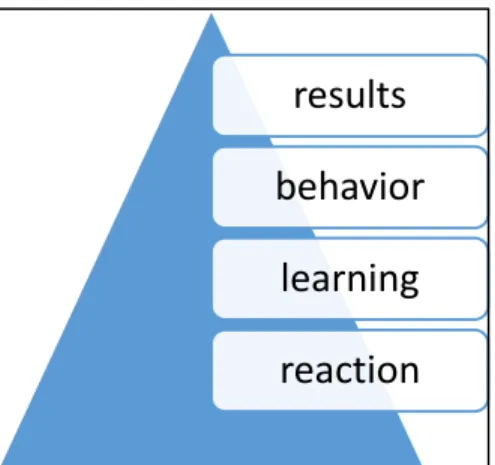
impact on the organization for which the learners worked (Yardley & Dorman, 2012). The model evaluates the effectiveness of education at four different levels with each level building on the previous one. Level one, reaction, refers to how learners react to the educational event - their level of satisfaction, engagement, and perception of relevance. Level two, learning, refers to the degree to which learners acquire the knowledge and skills based on their participation in the event. Level three, behavior, refers to the degree participants transfer or apply what they learned in their own practice. Level four, results, refers to the degree targeted outcomes occur as a result of the educational event and subsequent event. For purposes of this study, levels one through three will be evaluated.
In the late 1990’s, the Best Evidence for Medical Education (BEME) adopted a modified version of Kirkpatrick’s levels and referred to it as the hierarchy, to be used to grade the impact of education interventions and appraising research in medical education (Yardley & Dorman, 2012). In Kirkpatrick’s hierarchy of levels of evaluation, the complexity of behavioral change increases as evaluation of intervention ascends the hierarchy as shown in Figure 1. The model is often used to evaluate programs in medical education, where there is a need to make a link between educational interventions and patient outcomes (Hutchinson, 1999).
Figure 1. Model depicting Kirkpatrick’s Hierarchy of Levels of Evaluation.
results
behavior
learning
reaction
9
In critiquing the suitability of Kirkpatrick’s levels for appraising educational interventions, Yardley and Dornan (2012) point out that the levels may be unsuitable for evaluating long-term or continuous learning as opposed to short-term learning with tangible outcomes. Kirkpatrick’s solution to measuring intangible benefits of training was to link them to tangible behaviors that were specific and measurable. Another criticism of the hierarchy is the lack of supportive evidence to indicate that lower-level outcomes are pre-requisite to higher-level ones (as cited in Yardley & Dornan, 2012). Although the model can be useful in evaluating outcomes which can be observed with experimental design and there are numerous references to the successful application of the levels, none are from a field as complex as education in health sciences. Furthermore, the model does not allow for the variety of outcomes that can be
evaluated using qualitative as well as quantitative methods. Therefore, I chose a different theory to guide the qualitative component of the study, the Social Cognitive Theory (SCT).
The interview protocol for the qualitative component of the study was based on constructs of the SCT. I wanted a model of behavior change that would address knowledge, attitudes, social influences, and self-efficacy of providers. I chose SCT because of the emphasis on learning and maintenance of behavior over time. Originally known as the Social Learning Theory (SLT), Albert Bandura based the theory on work and research done by Miller and Dollard in 1941 (Rimer & Glanz, 2005). Bandura later updated the SLT by adding the construct of self-efficacy and renaming it SCT. There are six constructs in SCT:
1. Reciprocal determinism is the central concept of SCT and refers to the dynamic and reciprocal interaction of a person with a set of learned experiences, the environment or external social context, and behavior.
10
2. Behavioral capability refers to a person’s ability to perform a behavior through essential knowledge and skills.
3. Expectations are the anticipated outcomes of a behavior. They derive principally from previous behavior and focus on the value that is placed on the outcome. 4. Self-efficacy refers to the level of a person’s confidence in his or her ability to
successfully perform a behavior. It is influenced by a person’s capabilities and also by environmental barriers and facilitators.
5. Observational learning is a behavioral acquisition that occurs by watching the actions and outcomes of others’ behaviors.
6. Reinforcements are responses to a person’s behavior that increase or decrease the likelihood of reoccurrence (Rimer & Glanz, 2005).
The theory posits that self-efficacy beliefs operate together with behavioral capability, outcome expectations, and perceived environmental barriers and facilitators in the regulation of motivation and behavior (Bandura, 1998). I used several constructs of the theory in planning the learning intervention for this study. According to Bandura (1994), the most effective way to increase self-efficacy is through progressive mastery experiences. As part of the online program, students will complete a test to measure their knowledge, complete a case study, and perform an actual falls risk assessment on an older adult. The second way of increasing self-efficacy is through vicarious experiences provided by social models. Prior to conducting an assessment and developing a fall prevention plan for an older adult, students will have an opportunity to watch a video recording of an exemplary assessment and plan. Reinforcement through instructor
feedback will also strengthen beliefs that they can successfully provide fall risk prevention information to patients. This study tested the relationships between behavioral capabilities,
self-11
efficacy, outcome expectations, and the health promotion behavior of falls risk assessment and management (see Figure 2).
Figure 2. Visual Depiction of Factors Influencing Outcomes of Falls Risk Assessment and Management Learning Intervention Based on Bandura's Social Cognitive Theory.
Chapter 2
Review of the Literature
Chapter Two includes a review of literature on falls in community dwelling older adults, best practices for assessing and managing fall risk, translating evidence into practice, and strategies for training healthcare providers in falls assessment and management. This review is divided into the following sections: epidemiology of falls in community dwelling older adults, risk factors for falling, evidence on effective risk assessment tools, evidence on effective
12
interventions, evidence for engaging older adults and caregivers, evidence for engaging healthcare providers, and evidence on effective teaching/learning strategies for fall prevention Approach to the Literature
The primary search strategy considered the Medline EBSCO database, articles published between January 2008 and June 2015, articles published in English, and key words “fall
prevention”, “older adults”, and “community”. Date delimitations were 2008 to the present. The initial search retrieved 151 abstracts. Inclusion criteria were original research studies or
systematic reviews in peer-reviewed journals that examined fall prevention in community dwelling older adults and included literature on falls prevention from Scandinavia, the
Netherlands, Britain, Canada, Australia, and New Zealand. Literature from developing countries was not included as scant research has been conducted and few preventive programs offered on falls in older persons in developing countries. Bibliographies of selected articles were reviewed for potentially relevant articles. A number of seminal articles published prior to 2008 were included if more recent updates in these areas of research or analysis were not available. Reports from the American Association of Colleges of Nursing, World Health Organization, National Council on Aging, and Centers for Disease Control on falls prevention in older age were also reviewed.
Epidemiology of Falling in Community Dwelling Older Adults
Approximately 30% to 40% of people aged 65 and older fall each year (Cigolle, 2015; Phelan, Mahoney, Voit, & Stevens, 2015; Tinetti & Kumar, 2010). Falls are the leading cause of both fatal and nonfatal injuries in this age group (Centers for Disease Control and Prevention, 2013). More than 20% of the older adults who fall seek medical attention for suspected injury (Bohl, Phelan, Fishman, and Harris, 2012), and 10% of the falls result in serious injuries such as
13
fractures or head trauma (Stevens, Corso, Finkelstein, & Miller, 2006) that require
hospitalization. In 2013, 2.5 million nonfatal falls among older adults were treated in emergency departments and more than 734,000 of these patients were hospitalized (CDC, 2010). Falls and fatal and nonfatal fall related injuries increase with age. The death rate due to falls is 10 per 100,000 persons for those aged 65 to 74 years and 147 per 100,000 persons for those aged 85 years or older (as cited in Michael et al., 2010).
In order to estimate the number of older adults who fall and are not injured or who sustain minor or moderate injuries and seek treatment in clinics or physician offices, the CDC analyzed data from the 2006 Behavioral Risk Factor Surveillance System (BRFSS) survey. The survey included the following questions about falls: “The next question asks about a recent fall. By a fall, we mean when a person unintentionally comes to rest on the ground or another lower level. In the past three months, how many times have you fallen?” If a fall was reported, the next question was, “How many of these falls caused an injury? By an injury, we mean the fall caused you to limit your regular activities for at least a day or to go see a doctor.” Results of this analysis indicate that annually one in three adults aged 65 and older fall; 20% to 30% of these falls result in injuries that affect the ability to engage in activities of daily living (ADLs). (United Health Foundation, 2016).
Fall related injuries among older adults are associated with significant economic costs. In 2013, the direct medical costs of falls in the United States, adjusted for inflation, totaled $34 billion (Cohen, Miller, Shi, Sandhu, & Lipsitz, 2015; Stevens et al., 2006). Fractures were the most common and most costly type of nonfatal injury, accounting for over one third of nonfatal injuries and 61 % of costs (Stevens et al., 2006). Falls for which medical attention are sought result in higher costs for several months after a fall, particularly for falls requiring hospitalization
14
(Bohl et al., 2010). The costs of fall injuries increase with age. Costs in 2000 for women, 58% of older adults, were two to three times higher than for men across all medical treatment settings. Fractures accounted for 35% of injuries, but 61% of costs (Stevens et al., 2006).
Falls and injuries from falls are also costly to older adults’ in terms of quality of life. In a prospective study of a cohort of community dwelling older persons, Tinetti and Williams (1997) found a strong association between falls and nursing home admission, even after controlling for factors known to be associated with falls or placement in skilled nursing facilities. Hazard ratios for admission to a skilled nursing facility, adjusted for demographic, psychosocial, cognitive, health-related, and functional characteristics were 3.1, 95% CI [1.9,4.9] for one fall without serious injury, 5.5, 95% CIs [2.1,14.2] for two or more falls without serious injury, and 10.2, 95% CIs [5.8 ,17.9] for one or more falls with serious injury. Older adults with a history of falling also scored lower on the Falls Efficacy Scale (Tinetti & Williams, 1997), rating on a ten point scale how confident he or she felt about carrying out each of ten ADLs.
Falls and fear of falling are among the most common causes of restricted activity among community dwelling older persons. Restricted activity associated with falling and fear of falling is significantly correlated with increases in health care utilization among older persons living in the community and the likelihood of developing new or worsening disabilities (Gill, Desai, Gahbauer, Holford, & Williams, 2001; Gill, Allore, Gahbauer, & Murphy, 2010).
“Falls prevention is a challenge to population aging” (WHO, 2007, p. 3) and a public health initiative addressed in Healthy People 2020. Healthy People was first published in 1979 as Healthy People: The Surgeon General’s Report on Health Promotion and Disease Prevention, with the purpose of reducing mortality rates of all Americans and increasing the independence of older adults (Nardi & Petr, 2003). Healthy People 2020, the fourth edition of 10-year disease
15
prevention and health promotion objectives for the nation, includes a new focus, Older Adults, with the goal to improve the health, function, and quality of life of older adults. Objective 11, reduce the rate of emergency department visits due to falls among older adults, relates to fall prevention (US Department of Health and Human Services, n.d.). Although falls are the leading cause of injury deaths among older adults, nonfatal falls account for the greatest impact on public health. For every fall death, 111 fall injuries are treated in emergency departments (Stevens, Baldwin, Ballesteros, Noonan, & Sleet, 2010). In the United Sates, there were 5,235 emergency department visits per 100,000 due to falls among older adults in 2007 (age adjusted to year 2000 standard population). The rate for the population 85 years and older was 13,580 emergency visits per 100,000. The target for 2020 is a 10% improvement, which translates to
4,712 emergency department visits per 100,000 (U.S. Department of Health and Human Services, n.d.).
It should be noted that current knowledge of the epidemiology of falls is constrained by the existing sources of data: death certificates, emergency department and hospital admission records, and telephone surveys (Stevens et al., 2010). The BRFSS, for example, has a 51% response rate and relies on self-report. Many falls go unreported, especially falls without injury (Deandra et al., 2010). Emergency department admission data and hospital admission data may contain duplicate counts if patients are transferred to a higher level of care due to complications. Data from death certificates reflect the primary cause of death, although it may be secondary to a fall. Further research based on consistent sources of data is needed to determine whether
disparities in state-specific fall death rates are due to underlying risk factors or issues with data collection.
16
Falls in older adults occur as the result of a complex interaction of biological factors (intrinsic) with behavioral (activity related) and environmental (extrinsic) factors (WHO, 2007).
As with other conditions affecting older adults such as delirium and urinary incontinence, falling is classified as a geriatric syndrome. Defining features of geriatric syndromes include the contribution of multiple factors and interaction between chronic predisposing diseases and impairments and acute precipitating insults. The ability to transfer and walk safely depends on coordination among sensory (vision, vestibular, proprioception), central and peripheral nervous, cardiopulmonary, musculoskeletal, and other systems (Tinetti & Kumar, 2010, p. 261).
Risk factors identified in the literature include older age, female gender, White race, visual impairment, tremor, incontinence, limitations in ADLs, environmental hazards, and medical conditions such as Parkinson’s disease or osteoarthritis, (American Geriatrics Society and British Geriatrics Society, [AGS & BGS], 2010; Deandra et al., 2010; Nicklett and Taylor, 2014; Shumway-Cook et al., 2009; Yamashita, Jeon, Bailer, Nelson, & Mehdizadeh, 2011), low body mass index (BMI) suggesting malnutrition, impaired cognition (Li et al., 2013), foot problems, inappropriate walking aids or assistive devices, living alone (Todd & Skelton, 2004), and comorbidities such as heart disease and diabetes (Day et al., 2011). History of a previous fall with fracture, White race, impaired balance, and cognitive impairment are risk factors associated with serious fall injuries (Stevens et al., 2010).
Most falls result from the interactions among multiple risk factors, and the risk of falling increases linearly with the number of risk factors present. In an early study of community dwelling older adults (cited in Stevens & Phelan, 2013), the proportion of older people who fell in one year increased from 19% for those with one risk factor to 32% for two risk factors, 60% for three risk factors, and 78% for four or more risk factors. The prevalence of risk factors increase with age (Stevens et al., 2010; Tinetti & Kumar, 2010), explaining why the rate of falls increases with age. However, even among community dwelling people aged 75 and older
17
without other risk factors, approximately 10% will fall during any given year (cited by Phelan et al., 2015). The rate of falling has remained at approximately 30% since 1998 (Barry, Galvin, Keogh, Horgan, & Fahey, 2014). Because falls exponentially increase with age-related
biological change (WHO, 2007), falling is anticipated to increase due to changing demography. Using data from the Health and Retirement Study, Cigolle (2015) investigated temporal trends in falling from 1998 to 2010 to test the hypothesis that increases in prevalence of falling in the United States would be due to increases in the older population. Among all adults 65 years and older, the 2-year prevalence of self-reported falls increased from 28.25% in 1998 to 36.3% in 2010, which exceeds what would be expected due to aging of the population. The increase, in fact, was most marked at the younger end of the age range. Further research is needed in order to identify whether an increase in fall risk factors, an increase in fall risk behavior, or a
combination of both are responsible for the increased prevalence (Cigolle, 2015).
Yamashita, Noe, and Bailer (2012) examined data from the 2004 and 2006 Health Retirement Study to identify fall risk factors and possible interaction effects and concluded that older age may serve as a surrogate measure, reflecting age-related physical functional decline and a number of chronic conditions associated with fall risk. Because of this aging phenomenon, age 77 is suggested as a cut-off for identifying higher risk groups. Grundstrom, Guse, and Layde (2012) analyzed self-reported information from the BRFSS for 2008 to identify risk factors for falls and fall injuries in adults 85 years of age and older. Below average health, male sex, perceived insufficient sleep, health problems requiring assistive devices, alcohol consumption, increasing BMI, and a history of stroke were independently associated with a greater risk of falls or fall related injuries. There was greater risk in those 85 and older due to deterioration of overall health status with age. Among those with excellent overall health status, however, there
18
was no greater risk of falling compared to the 65-84 year old age group. The researchers point out that further research is needed on fall reduction strategies for those with deteriorating general health and those with very high BMI.
Deandra et al. (2010) conducted a systematic review and meta-analysis to explore risk factors for falls and recurrent falls in community dwelling older people. The odds ratio for 31 risk factors were extracted from 74 studies. The strongest associations were found for history of falling, gait problems, use of walking aids, Parkinson’s disease and use of antiepileptic drugs. Other risk factors identified include chronic medical conditions, problems with vision, dizziness, polypharmacy, depression, risk-taking behaviors, home and living situation, and lack of social support and contact. History of falls, fear of falling, and use of walking aids were associated with about a three-fold increase in the risk of falling. Although these factors cannot be prevented, they can help to identify persons at highest risk of falling and those most likely to benefit from intervention.
In a recent analysis of a national sample of Medicare beneficiaries (the national Health and Aging Trends Study), 24% of participants reported mobility device use and 9.3% reported use of multiple devices in the last month (Gell, Wallace, LaCroix, Mroz, & Patel, 2015). The use of mobility devices increased with age and was significantly associated with non-White race and ethnicity, female sex, lower education level, greater morbidities, and obesity. After adjusting for these demographic and health characteristics and physical function, the incidence of falls and recurrent falls was not associated with the use of devices. However, activity limiting worry about falling was significantly higher in the cane-only users than in non-users, which could indicate a mismatch between the device and the older adult. Based on data from the Health and Retirement Study, there has been a 50% increase in the use of mobility devices since 2004 (cited
19
by Gell et al., 2015). It is not clear whether this increase is due to increased fear of falling, increased disability, greater longevity, or increasing acceptance of the use of mobility devices. There is a need to further explore the determinants of increased use as this information will help inform clinical guidelines on how to identify the appropriate device based on impairment, physical activity level, fall risk, and home environment (Gell et al., 2015).
Leveille et al. (2009) used a 13 item joint pain questionnaire to assess chronic
musculoskeletal pain in hands, wrists, shoulders, back, chest, hip, knees, and feet and observed a strong relationship between pain severity ratings with risk for falls. More severe or disabling pain at baseline was associated with higher fall rates. The relationship persisted even after adjusting for multiple confounders and fall risk factors. Stanmore (2015) estimates that one in three adults with rheumatoid arthritis, independent of age, will fall once or more times a year. To examine the prevalence of falls among middle-aged and older adults with arthritis, CDC analyzed data from the 2012 BRFSS. The prevalence of falls and fall injuries was significantly higher among adults with arthritis compared with those without arthritis (CDC, 2014).
Hyashibara et al. (2010) conducted a prospective one-year study to determine the incidence of falls and risk factors in women with rheumatoid arthritis. Fifty percent of the women reported falls, two with fractures. The fall group had more swollen joints and took more
antihypertensives and or diuretics, and had lower postural stability and reduced performance. It is unclear whether pain, balance and gait impairment, or side effects of drugs played a role in increasing the risk of falls. Data from the 2011 National Health and Aging Trends Study was analyzed to determine the prevalence of falls related outcomes according to chronic pain status (Patel et al., 2014). Bothersome pain was reported by 52.9% of the participants. Prevalence of recurrent (greater than two) falls among those reporting pain was 19.5% compared to 7.4% in
20
those without pain. The robust relationship persisted even after adjusting for arthritis and depression symptoms. These studies provide evidence that questions related to pain and painful conditions such as arthritis should be included in fall risk assessments and pain management should be a part of falls prevention programs.
The risk of falling increases with certain medications and the number of medications consumed (Cranwell-Bruce, 2008). Sedatives, antidepressants, anticonvulsants, antihypertensive medications, benzodiazepines, antipsychotics, and analgesics are considered to be fall risk
increasing medications (FRIDS) (Quigley, 2007; Tinetti & Kumar, 2010; Woolcott et al., 2009). Yamashita, Jeon, Bailer, Nelson, and Mehdizadeh (2011) found that the risk of falls increases when the number of medications is equal to or greater than four. Confounding by medication indication is also an important consideration (Woolcott et al., 2009), and the combinations of medications may also be a better predictor of falls than individual medications. With
polypharmacy, the factors leading to increased fall risk include adverse drug effects, drug interactions, electrolyte imbalance, and decreased drug clearance rates associated with aging (Cranwell-Bruce, 2008).
Most of the research on falls in older adults considers indoor falls even though almost half of all falls occur outdoors (Chippendale and Boltz, 2014; Kelsey, Procter-Gray, Hannan, & Li, 2012). It is important to divide them because risk factors for indoor and outdoor falls differ. Outdoor falls are associated with active lifestyle and characteristics of the environment while indoor falls are more often associated with physical difficulties and poor health (Kelsey, Procter-Gray, Hannan, & Li, 2012). Gyllencreutz, Bjӧrnstig, Rolfsman, and Saveman (2015) used emergency department (ED) hospital admission data and questionnaires to explore fall related injuries that occur when walking in public outdoor environments in Sweden. The falls occurred
21
more frequently in winter months and women were over-represented. Fractures were the most common injury type. Younger seniors were injured more often than older seniors. Findings from a qualitative study that explored the experience of older adults in their neighborhoods in relation to perceived fall risk and fear of falling identified uneven walking surfaces, curbs, clutter on sidewalks, poor lighting, and poor visibility of cyclists as risk factors for falling outdoors (Chippendale and Boltz, 2014). Li et al. (2014) analyzed data on walking habits, falls, and fall injuries among participants of Maintenance of Balance, Independent Living, Intellect, and Zest in the Elderly (MOBILIZE) Boston, a longitudinal study that began in 2005. Neighborhood socioeconomic status indicators at census block levels were included in the analysis. Lower neighborhood socioeconomic status was associated with more utilitarian walking and higher rates of falls on sidewalks, streets, and curbs. Utilitarian walking is defined as walking to shop and do other necessary tasks of daily living. It is particularly important to older adults who are unable to drive or cannot afford to drive (Li et al., 2013). Utilitarian only walkers lived in neighborhoods with the lowest socioeconomic status and had the highest rates of falls. Falls on sidewalks and streets were more likely to result in injury than falls in recreational areas. Non-walkers had the highest rates of indoor falls. These studies point at the need to pay attention to socioeconomic status and the built environment conditions, especially in neighborhoods with high concentrations of older adults, as many of the current fall prevention measures are directed at relatively frail, inactive people who fall indoors.
In a recent study examining circumstances surrounding fall related hip fractures, falls were further divided according to activity at the time of fall. The older adults who fell during positional change had the poorest functional status, those who fell indoors due to environmental reasons had moderate physical function but high levels of co-morbidity and FRIDs, and those
22
who fell in snow free outdoor environments appeared to have a poorer health and functional status, higher use of FRIDs, and a higher incidence of previous falls than those who fell on snow or ice or experienced activity related falls. Those describing activity related falls reported the least functional limitations and were the most physically active (Leavy, Byberg, Michaelsson, & Melhus, 2015). The findings from this study can help inform efforts to tailor fall prevention to individuals of varying levels of health and function who are at risk for falls and hip fracture. For example, for frail elderly people, fall prevention should focus on task specific training of
muscular strength, transfer strategies, and evaluation of orthostatic hypotension. For those with a history of falls and moderate physical function, the focus should be on medication review and fall risk education. For more vigorous older adults, the emphasis should be on efforts to continue outdoor mobility as long as possible.
Recent discharge from a hospital increases fall risk (Mahoney et al., 2000). Fall rates and injurious fall rates for patients discharged from the hospital are increased for six months
following discharge when compared to the general community population (Hill, 2010). Up to 40% of patients fall in the six months after discharge and up to 15% of unplanned hospital readmissions during this period are due to falls (Hill, Hoffmann, & Haines, 2013). Previous research also found the rate of falls to be higher for older adults discharged from the hospital and requiring home health care, especially within the first month after discharge (cited by Haines et al., 2009). Post-discharge falls are also more likely to result in injury compared with falls in the general community dwelling population. Older people have over the twice the risk of sustaining a hip fracture after a hospital admission, especially in the first four weeks after discharge (Hill, Etherton-Beer, & Haines, 2013). Hill et al. (2013) found that most post-discharge falls occurred indoors, between six and ten in the morning, and in the bedroom. Factors associated with falling
23
included requiring assistance with ADLs, falling in the hospital prior to discharge (Hill et al., 2013), requiring use of walking frame, being unable to walk one block prior to hospitalization, and having poor standing balance (Haines et al., 2009). Older people who fell and required assistance with ADLs were less likely to fall outside. Increased risk of falling in the post-discharge period is likely a result of deconditioning that occurs with immobility associated with hospitalization, surgical interventions, deteriorating health, and medication side effects. In one study, older adults admitted to a hospital in the United States were shown to not return to pre-hospitalization levels of independence in ADLs one month following discharge (cited by Haines et al., 2009).
Fear of falling is the most reported fear among older adults, exceeding fear of robbery or financial difficulties (cited by Yardley & Smith, 2002). The relationship between falling and fear of falling is circular. Previous falls predict fear of falling and fear of falling is predictive of future falls (Tiernan, Lysack, Neufeld, Goldberg, & Lichtenberg, 2014). Higher levels of
perceived fall risk or fear of falling can lead to falls independent of physiological risk (Delbaere, Close, Brodaty, Sachdev & Lord, 2010). Major risk factors for developing fear of falling are one or more falls in the past six months, being female, limitations in ADLs, and being older (Boyd and Stevens, 2009; Kempen, van Haastregt, McKee, Delbaere, & Zijlstra; 2009; Scheffer, Schuurmans, van Dijk, van der Hooft, & De Rooij, 2008). In a telephone survey of older adults conducted between 2001 and 2003, 15.9% of those who reported to be moderately or very afraid of falling reported a recent fall compared to 5.7% of those who reported they were not or were slightly afraid (Boyd & Stevens, 2009). Yardley and Smith (2002) surveyed older adults over 75 years of age to assess feared consequences of falling. The most feared consequences were loss of functional independence and damage to identity. These fears were significantly correlated
24
with avoidance of activity after adjusting for age, sex, and recent history of a fall. In a secondary data analysis on the National Survey of Self-Care and Aging interview data, 24% of older adults reported falling and fear of falling was reported by 22% (Bertera & Bertera, 2008). Both
increased with age. Fear of falling was found to be the most important factor in predicting activity avoidance among older adults, and the number of falls experienced increased the impact fear of falling had on activity avoidance. Other reported consequences of fear of falling include decline in physical and mental performance and progressive loss of health related quality of life (Scheffer et al., 2008; Gell et al., 2015). Fear of falling is often operationalized by falls efficacy, the perception of one’s ability to avoid falling. Tiernan et al. (2014) found that higher falls efficacy was associated with better self-rated health in older African Americans, suggesting that improving falls self-efficacy in this group may be beneficial to mobility and overall health and well-being.
Peel, McClure, and Hendrikz (2007) examined the relationship between psychosocial determinants of healthy aging and risk of fall related hip fracture in community dwelling older adults in Australia. Being currently married, living in present residence for five years or more, using proactive coping strategies, having private health insurance, having a high level of life satisfaction, and engagement in social activities in older age were all protective of fall related hip fracture injury in older people. Another study examining the impact of psychosocial variables on fear of falling and avoidance of activity (Kempen et al., 2009) found that psychosocial variables did not contribute independently to the difference between mild and severe fear of falling and to the difference between mild and severe avoidance of activity. However, low general self-efficacy, low mastery, loneliness, feelings of anxiety, and symptoms of depression were
25
of these psychosocial associations can help to identify older adults at risk of fear of falling and activity avoidance and need to be considered by those planning effective healthy aging
interventions and programs.
Effective Falls Risk Assessment Tools
The first step in fall prevention in the community is to identify older adults at risk for falls.
All older adults who are under the care of a health professional (or their
caregivers) should be asked at least once a year about falls, frequency of falling, and difficulties in gait or balance (AGS & BGS, 2011, p. 149-150).
Any positive answer to the screening questions puts the person in a high-risk group. Once a high-risk person has been identified, a multifactorial fall risk assessment should be performed (AGS & BGS, 2011). The multifactorial risk assessment can reveal factors that put the older person at risk of falling and help identify the most appropriate interventions for prevention.
Numerous screening tools have been used to identify community dwelling older adults at risk for falling and many have been evaluated in clinical trials. They vary in complexity from a single question or test to scales involving 10 or more assessments (Gates, Smith, Fisher, & Lamb, 2012). However, no tool has been widely used or widely validated and tools developed for one population may not be appropriate for predicting falls when used in a different setting. A recent systematic review of the evidence on the accuracy of screening tools for predicting risk of falling in community-living older adults concluded that, at the time of report, no screening test is accurate enough to be regarded as a gold standard for predicting falls (Gates et al., 2012; Moyer, 2012). While some evidence does exist that simple screening questions may be as accurate as more complex screening tests in predicting who will fall, a history of falls and assessment of
26
abnormalities of gait or balance are found to be the best predictors of future falls (Gates et al., 2012).
The Timed Up and Go (TUG) test is a commonly used screening test for falls in the community setting and is recommended as a screening tool in guidelines published by the AGS and the BGS. It was developed in 1991 as a modified version of the Get Up and Go test. The patient is timed while they rise from an arm chair walk to a line on the floor three meters away, turn and walk back to the chair and sit down again. A faster time indicates better functional status. A score of 13.5 seconds or less is often used as a cut point to identify those at risk of falls, but values range from 10 to 33 seconds in the literature (Barry, Galvin, Keogh, Horgan, & Fahey, 2014). In a systematic review of 25 studies and a meta-analysis of 10 studies that validated the TUG test as a predictor of risk of falls in community dwelling older adults, it was found to be more useful at ruling in than ruling out falls in high risk older adults. These findings may be explained by the fact that TUG is a single test which reflects strength, balance and mobility whereas the risk of falling depends upon multiple intrinsic and extrinsic factors, including medication use and morbidity (Barry et al., 2014).
The Falls Efficacy Scale International (FES-I) is the most widely used tool that measures fear of falling during physical and social activities inside and outside the home (Greenberg, 2011). In order to compare fear of falling across a range of international cultures, the FES-I was developed and tested by The Prevention of Falls Network Europe using different samples in different countries. It is currently the best validated instrument for this purpose with excellent internal validity (Cronbach’s alpha = 0.96) and test-retest reliability (Intra-class coefficient ICC, = 0.96). Factor analysis discriminated two factors. The first explained 36.8% of the variance and loaded most highly on lower demand physical activities inside the home such as getting in and
27
out of a chair or preparing a meal. The second factor explained 32.7% of the variance and loaded on more demanding physical activities outside the home such as walking on uneven or slippery surfaces. When a single factor solution was specified, all items loaded strongly on a unitary dimension explaining 61.7% of the variance. Scores in different sub-groups demonstrate sensitivity to demographic characteristics and fall risk factors. For example, older participants, people who reported taking more than four medications, and women had significantly higher total FES-I scores (Yardley et al., 2005). Kumar, Carpenter, Morris, Iliffe, and Kendrick (2014) used the 16 item FES-I and data collected on socio-demographic characteristics, self-perceived health, exercise, and functional measures to identify factors associated with fear of falling. Factors associated with significantly higher odds of fear of falling were female gender, age over 80, non-White ethnicity, higher BMI, social isolation, living alone, lower educational level, lower annual household income, use of walking aid, higher number of comorbidities, higher number of medications, and taking longer than 13.5 seconds to complete the TUG test.
Mazumder, Lambert, Nguyen, Bourdette, and Cameron (2015) used a seven item version of the FES-I to assess fear of falling and future falls in people with multiple sclerosis (MS) and found it to be a valid measure of fear of falling in people with MS. Higher scores on the seven item version of the FES-I were associated with a higher risk of future recurrent falls, whether or not the individual had fallen in the past.
Lach (2005) tested a single item question: “At the present time are you very fearful, somewhat fearful, or not fearful that you might fall (fall again)” along with measures of
depression, cognition, balance, and functional status, and history of falls to determine risk factors for developing fear of falling. Having two or more falls, feeling unsteady, and reporting fair or poor health status were independent risk factors for developing fear of falling. A secondary
28
analysis of the Lifespan Investigation of Family, Health, and Environment (LIFHE) data set examined the relationship between fear of falling and self-rated health. A single question:
“Would you say your health is excellent, very good, good, fair, or poor?” identified older African Americans with low falls efficacy and high risk for falling (Tiernan et al., 2014). However, other studies have found that a single-item question to assess fear of falling is less sensitive than a multi-item questionnaire (cited in Mazumder et al., 2015). Whether a single question, a version of the FES-I, or a single question followed by the FES-I is used, factors associated with fear of falling are easy to assess for and can be useful in targeting falls prevention intervention to reduce falls and fear of falling.
Renfro and Fehrer (2011) describe the content selection and development of a
multifactorial Fall Risk Assessment and Screening Tool (FRAST) designed specifically for use in primary care settings by minimally trained staff. Fifteen items were selected for inclusion, including four previously validated measures: balance, depression, falls efficacy, and home safety. The FRAST was validated via data collection across the state of Montana. Providers reported that the multifactorial assessment tool is comprehensive and easy to apply in the
primary care setting. Further testing with different populations is currently underway (Renfro & Fehrer, 2011).
A fall risk self-assessment tool was designed with the intent of promoting early
identification of evidence based fall risks (Vivrette, Rubenstein, Martin, Josephson, & Kramer, 2011). In development, focus groups with community dwelling seniors were held to identify the following risk factors: weakness, gait or balance deficiency, environmental hazards, poor vision, medications, dizziness, non-adherence to prescribed assistive devices, inattention, reaching or climbing for high objects, inappropriate footwear, and loss of sensation in feet. Forty older
29
adults then completed the tool and results were compared to a clinical evaluation or risks using the AGS/BGS guidelines to assess independent predictors of falls. There was strong agreement between the self-rated tool and the clinical evaluation (kappa = .875, p <.0001). Individual item kappa values ranged from .305 to .832. After dropping one item, vision risk, because of
inadequate agreement with the clinical evaluation, the final tool had good concurrent validity (Rubenstein, Vivrette, Harker, Stevens, & Kramer, 2011). Interestingly, the participants’ experiences with the tool reflect a lack of attention to fall prevention in primary care. Older adults did not view doctors as major resources for information on fall prevention, but they shared their intention of using the tool to prompt a discussion about fall prevention with their doctor (Vivrette et al., 2011).
It is clear that more research is needed in order to identify the most appropriate tools for use in various settings, considering effort required, applicability, sensitivity, and specificity (Todd & Skelton, 2004). It is also recommend that further studies of tools have a sufficiently large sample size to estimate sensitivity and specificity with precision, be conducted in a clinically relevant population with a sufficient duration of follow-up, and use reliable methods for recording falls. Fall records based on older adults’ recall have been shown to lack reliability (Cummings, Nevitt, & Kidd, 1988). For this reason, fall diaries or caregiver reports are
considered to be the gold standard for collecting fall data. Interventions Effective in Preventing Falls
Fall prevention means optimal management of falls risk to prevent falls that are
preventable. The most effective research interventions report reductions of 35% to 40% in fall rates. A certain number of older adults will still fall, regardless of intervention, but every effort should be made to minimize risk (Shubert, 2011).
30
Several decades of research on interventions to reduce falls have provided evidence for fall prevention interventions. Many are based on The American Geriatrics Society/British Geriatrics Society Clinical Practice Guideline for Prevention of Falls in Older Persons (2010), which provides recommendations and an algorithm describing decision-making and intervention that can be used in the management of older persons in the community setting. Development of the guideline began with a literature search that included meta-analyses, systematic literature reviews, RCTs, controlled before and after studies, and cohort studies published between 2001 and 2008. The evidence supports a multifactorial approach to interventions designed to prevent falls in older persons. In a multifactorial intervention, participants are offered only the
interventions that target risk factors identified through a fall risk assessment. The targeted approach has been implemented primarily in the community setting and includes balance, gait, and strength training such as Tai Chi or physical therapy in group programs or individual programs in the home; performing environmental modification to promote safe performance of ADLs; treating vision impairment; minimization of medications; managing postural hypotension; managing heart rate and rhythm abnormalities; correcting Vitamin D deficiency; and managing foot and footwear problems.
A recent systematic review of the literature, conducted by the U.S. Preventive Services Task Force, found that interventions provided through primary care, including risk assessment, exercise, physical therapy, and vitamin D supplementation reduce falls in older adults (Moyer, 2012). Exercise and physical therapy improve strength and balance. Stimulation of vitamin D receptors in skeletal muscle promotes protein synthesis. Vitamin D receptors are known to decline with age (Moyer, 2012).
31
A 2012 Cochrane Systematic Review of 159 randomized controlled trials (RCTs) involving 79,193 participants of interventions to reduce falls in community-dwelling older people (Gillespie et al., 2012) found that multiple-component group exercise reduced rate of falls and risk of falling as did Tai Chi and individually prescribed multiple-component home-based exercise. Overall, vitamin D did not reduce rate of falls or risk of falling, but may have been effective in people with lower vitamin D levels before treatment. Home safety assessment and modification interventions were effective in reducing rate of falls and risk of falling and were even more effective in people at higher risk of falling, including those with severe visual impairment, and when delivered by an occupational therapist. An intervention to treat visual problems actually resulted in a significant increase in the rate of falls and risk of falling. When regular wearers of multifocal glasses were provided with single lens glasses, all falls and outside falls were significantly reduced in the subgroup that regularly took part in outside activities (Gillespie et al., 2012). A meta-analysis of RCTs conducted between 2000 and 2009 indicate that similar fall prevention programs were effective in reducing fall rates by 9% in community
settings (Choi & Hector, 2012). The CDC (2010) reports that risk assessment, structured exercise programs focused on improving strength and balance, home modification focused on assessing and reducing environmental fall hazards, and multifactorial strategies including two or more approaches with a combination of risk assessment, medical assessment, medication
assessment, home safety evaluation, behavioral change strategies, improving self-efficacy, group based exercise, and psychosocial support are effective interventions for preventing falls in community dwelling older adults.
Single interventions investigated in RCTs include cardiac pacing, vision improvement, home modifications, medication reduction, and physical therapy or exercise (Tinetti & Kumar,