Common Format for Information that is
Digitally
Signed:
A
Final Report
N.
Hastings,
W.
Polk,
and
D.
Cooper
November
1,
2001
1
Introduction
Oneofthemoretantalizingandelusivegoalsofthecomputerageisthepaperlessoffice. The
ubiquitous paper documents and forms are rarely the end product of an organization, but
representasubstantialoverheadcostinourdailyprocesses. Thepaperlessofficerepresentsan opportunitytoincreaseefficiencyofoureverydayprocesses. Capitalizingonthisopportunity wouldpermitorganizationstoperformtheirworkfaster, reducecostsassociatedwithstorage of documents, and concentrate resources on their core businesses.
Succeeding in this quest is critical to many sectors, including our health care industry. While paper isneverthe final product,paper formsare presentatevery step inthe process. Paper documentsevery healthcare procedure, every billing request,and every prescription. Patientsfile reams of paper tosupportinsurance claims, and theyreceivereams ofpaper in return.
Thismountainofpaperisattimesanimpedimenttoprovisioninghealthcare. Processing of paper requests may delay approval of requests for needed care. If the patient is sent for consultationswithspecialists,the papercharts andanalysismustflowaswell. Processingof
paper may delay reimbursement of patient expenses. Errors in reading or processing paper
documentsmayresultindenialofcare,errorsinfillingmedications,ormistakesindiagnosis.
Scarceresources mustbe devotedtogenerating, processing,and transmittingpaper instead
of providing health care services.
Theprospectofthe paperlessofficeremainselusivebecauseofone keyfactor: signatures.
Oneofthemostcommonandwidelyacceptedaspectsofpaperdocumentsisthehandwritten
signature. The signature is used to establish who did what and why. Pharmacists rely
upon the doctor’s signature on a prescription form to ensure that they dispense medicine
appropriately and legally. Nurses and doctors rely on signatures in charts to ensure that
diagnostics have been performed, medicines dispensed, and to authenticate information in
charts. Insurancecompaniesrelyuponsignatures toidentifyapplicants. People, companies,
and our legal system, are exquisitelycomfortable with the handwritten signature.
There is no ubiquitous, widely accepted analog for the handwritten signature in the
electronic world. The most common analog is the PIN or password, but these are weaker
not achieved wide acceptance. There are several factors for the slow acceptance of digital signatures. Some are socialfactors, and are outsidethe scopeof this document.
One technical factor that is often overlooked is the lack of interoperability between for
mats for digitally signed information. Most common applications do not directly support
digital signatures, so the signatures must be applied after document creation. Once the
document has been signed, the document itself cannot be processed or displayed by the
application that created it. That is, a signed WordPerfect document cannot be opened by
WordPerfect. Even worse, the application of signatures is generally performed bya propri
etaryprocess and can onlybe verified using the same vendor’s products.
This paperproposesformatsfordigitallysignedobjectsthat donot alterthedocument’s abilitytobeprocessedordisplayedbytheapplicationthatcreatedit. Theformatisbasedon openindustrystandardsinhopesthatabroadvarietyofproductsmaybeusedinteroperably tocreate and verify digital signatures.
1.1
History
This paper describesthe final resultsof atwo year researchproject. The goalof the project
wasthedevelopmentofcommonsignedobjectformatstoprovidesecurityand interoperabil
itytoelectronicdocumentsandprocessesinthehealthcaresector. Inyear1,theresearchers examinedexisting signingstructures and definedseveral abstractmodels forsigned objects. Inyear 2,the researchobjectivesweretwo-fold: identificationof acomprehensivesetof dig
ital signing methods that implemented all the abstract models; and definition of a signing
structure in bothASN.1 and XML that supported these methods.
The findings and results of year 1 are documented in [5]. The researchers identified
six signing models and examined nine standard digital signature formats. In addition, the
research reviewed eight current products that provided the ability to digitally sign various
objects. Withthisinformation, theresearchersproposedtodevelopacommon signedobject
format thatcould beused independentof thesigning application. The signingobject would
enableinteroperabilityofdigitalsignatureverificationforeachoftheabstractsigningmodels. Atthebeginningofyear2,newresarcherswereassignedtotheproject. Theseresearchers
noticed that the abstract signing models were focused solely on physical structure and the
precise correlation between signatures and data. Theyobserved that fundamental concepts
from the world of physical documents were not addressed. They were also concerned with
the compatibilityof theresearch withexisting applicationsandproprietary dataformats. It
seems unlikely that application developers will abandon their own internal data formats in
favor of a genericformat.
In year 2, the researchers began by reviewing the attributes of handwritten signatures
on physical documents. After completing this review, they revised the abstract signing
models. Nexttheresearchersreviewedtheattributesofdigitallysigneddocumentstoidentify
the overlap in functionality. Where the digital objects represent a visually representable
document,the attributesof physicaland digitalsignaturesmay beusedinacomplementary
fashion.
This document describes anabstract format for digitallysigned objects. The signed ob
the abstract designare definedusing standard ASN.1 and XML constructs.
2
Attributes
of
Physical
Signed
documents
A description of the features of a physically signed document should be reviewed in order
to provide the parameters needed to determine what capabilities need to be supported by
an electronically signed document. This will help map the physically signed documents to
electronically signed documents.
The physicalact of signingadocument byhanddemonstratesthe intentof the signerto
legallyaccepttheinformationwithinadocumentassociatedwiththeirsignature. Ingeneral,
each person that physically signs part or all of a document uses a unique mark to indicate
their intent to accept specific information within a document. This unique physical mark
must contain enough information so that it can be traced back to the creator of the mark
using methods suchas handwritinganalysis or notarizationby a trustedthird party.
2.1
Visual
Context
Thevisualcontextofaphysicallysigneddocumentistheonlypointofreferencethatverifiers
of a signed document have to derive their interpretation of the information being relayed
in the document including the acceptance by the document’s signers. Some of the visual
queuesthatarefound inphysicaldocumentsare handwrittencorrections,locationofspecific information (date, who received copies, etc.), and the intent of the signer.
The location of dates contained withinthe document implies different things associated
withthat date. Thedate inthe headingof adocumentgenerally indicatesthe creation date ofthe document. Thedatenexttoasignature generallyindicatesthe datethe signersigned
information within the document. The visual queues associated with a signature, including
itslocationwithinadocument,are veryimportant indeterminingtheinformation signedby asigner. Thesignature attheend of thedocument generallyindicatesthe signeracceptsall
the informationwithin thedocument. The initialsattheside of ahandwrittenmodification
generallymeansthe signeracceptsthemodification. Asignatureonalinelabelled“witness” indicates that the signer is only attesting to fact that they observed someone else sign the document. Signatures arefrequentlyplacedinsignature blocksthatcontaintextoftheform “I hereby affirmthat ...”,providing explicit information about the signer’sintent.
2.2
Linking
Content
to
Signatures
The visual contextof a physicallysigned documenthas limitations,however. A verifierof a
signature onaphysically signeddocument mayfind ithard todetermine which information
was present when a signer applied their signature. A skilled malicious person may be able
toadd, delete, ormodify information withina signed document throughvarious techniques
after a signer has applied a signature; because a physical signature lacks the capability to
explicitly map a signature to the information covered by the signature. In addition, the
verifier can havedifficulties determiningwhat information the signer was intendingto sign.
multiple signatures are present in a document, the mapping of the information covered by
a specific signature or signatures becomes even more complex. Is the pricing information
covered bythe sales representative’ssignature, the sales manager’s signature, orboth? Withphysicaldocuments,itispossibletomakechangestothedocumentaftersignatures
have beenapplied. The verifiercannot always discern which information wasplaced on the
documentbeforethe signature, andwhich informationwasaddedatalaterdate. Ofcourse,
the signer was onlyattesting tothe information that was present atthe time the signature was applied.
Handwritten corrections and annotations to atype-written, physicaldocument are gen
erally easy to detect and usually havesome indication, like the initials, of the modifier and
acceptanceoftheinformation. Thelocationofadocument’sinformationimpliesmuchabout
the specific information.
2.3
Strength
of
Signature
Verification
While people are comfortable with handwritten signatures, few can effectively evaluate the
validity of a signature. This task depends upon handwriting analysis which is an inexact
science. High profile fraud cases, such as the recent “Hitler Diaries”, show that even the
experts can be fooled. For the average person, handwritten signatures are accepted on an
initialidentificationthat aperson iswhotheyclaimtobeand bysimplevisual inspectionof the signature. Onlywhenthe authenticity ofasignature is broughtintoquestion tosettlea dispute doesrigorous analysis of aperson’s identity and signature take place.
2.4
Signature
and
Document
Separation
When a document is signed in the physical world, the signature or signatures physically
become part of that document. Wherever the document travels, the signature(s) on the
document will gowith it. So, there isa conceptof not being able tophysicallyseparate the
signature(s) ona document and the actualdocument which wasto be signed. In general,a
signature and the document associated with it are physically stored together. The physical
inseparability of the document and its signature(s) provides a level of assurance both to
the signer and verifier. The signer has the comfort of knowing that hissignature cannot be
easilyremovedfromthe document withoutsomemethod offorgery. Likewise,the verifierof
the document’s signature is assured that a signature ona document is somehow associated
with the information contained in the document. The verifier only has to interpret the
information that was signed and its meaning but does not haveto collect and/or construct
the information because the signature and document are physically together.
3
Signing
Models
for
Physical
Signed
documents
The requirement for signatures on electronic documents is not new. The goal of these
processes is to support information flow models that currently exist in the physical world.
Patient: John Smith
Date of X−ray: January 2, 2000 X−ray read by: Dr. Mark Greene Assessment: Broken collarbone
Signed:
Dr. Mark Green
Dr. Mark Green
Patient: John SmithDate of X−ray: January 2, 2000 X−ray read by: Dr. Mark Greene Assessment: Broken collarbone
Signed:
Dr. Mark Greene
Figure1: Annotated X-ray Signed bya Physician
The simplest usage models assume only one signer. The most complex models support
multiple signers, each representing different assertions, and the document may change at
every stage until the final signature is applied.
3.1
One
Signature
The simplestusage models for signatures address situations where only one party needs to
sign the document.
3.1.1 Simple Single Signature
Thisisthesimplestusagemodeland applieswhereasingleindividualsignsthecompleteset
of information contained in a form, a letter, or a file. Figure 1 shows an annotated X-ray
signed by a physician as an example of how this signature type is used in the health care
industry.
3.1.2 Single Signature, Selected Content
Thisusage modelapplieswhereasingleindividualsignsaselectedsubsetofthe information contained ina form, aletter, or a file. In many cases, a form contains amixture of content from multiple sources. The signer cannot attest toall of the information on the form, only a certain portion. An example of this is shown asFigure 2. The signer is attesting that he
will pay the amount shown in the completed total. The signer is not attesting that prices
onthe receiptare appropriate!
3.2
Multiple
Signatures,
Static
Content
Many paper processesrequire multiplesignatures. This adds newlevels ofcomplexity, since different signers may be attesting to different information.
3.2.1 Simple Multiple Signatures
This usage model applies where multiple individuals sign the complete set of information
containedinaform,aletter,orafile. Inthiscase,theindividualssignexactlythesamesetof
Invoice:
2
1
stethoscopes
microscope
$200.00
$995.00
Total
$1195.00
I agree to pay the total amount shown above:
Dr. Mark Greene
Figure2: A Signed Credit Card Receipt
Patient: John Smith
Date of X−ray: January 2, 2000 X−ray read by: Dr. Mark Greene Assessment: Broken collarbone
Signed:
Dr. Mark Green
Dr. Mark Green
Patient: John SmithDate of X−ray: January 2, 2000 X−ray read by: Dr. Mark Greene Assessment: Broken collarbone
Dr. Mark Greene
Signed:Signed:
Dr. Sally Jones
Figure3: Annotated X-ray Signed byTwo Physicians
sign the information. This implies that each signer is acknowledging only seeing the set
of information signed, not the fact the other signatures are present. Figure 3 shows an
annotated X-ray signed by two physicians as anexample of how this signature type is used
inthe healthcare industry.
3.2.2 Simple Hierarchical Signatures
Thisusagemodelapplieswheremultipleindividualsattesttothesamesetofinformationplus
the set of previously applied signatures. This usage model is important when a document
must be reviewed and signed in a specific order, but reviewers cannot change the content.
In this case, the individuals all sign the same set of information, with later signatures also signingprevious signatures. This indicates thatthe document isbothcomplete andentirely correct beforeany signatures are applied.
The first signer signs the basic set of information on the document. The second signer
signs the basic set of information along with the first signature. The third signer signs
the basic set of information along with the first and second signatures, and so forth. If a
subsequent signer finds an error, the information must be modified and the process starts
from the beginning. Figure 4 shows an example hospital purchase order signed by the
Purchase Order:
1 Magnetic resonance imaging (MRI) $150,000
Dr. Mark Greene
Dr. Sally Jones
Dr. Marcus Welby
Requester’s Signature: Unit Approval: Hospital Approval:Figure4: Purchase Order with Multiple HierarchicalSignatures
Applicant’s Personal Information: Name:
Barbara Black, Ph.D.
Athletic director’s signature:Athletic participation: Approved/Denied
Dr. Mark Greene
Mr. Jack Jones
Parent’s signature: Physician’s signature: recommendation Physician’s participation Medical History: Date of Exam: Date of vaccinations: Physical restrictions: Mental problems: Physical problems: Place of Birth: Date of Birth:
Figure 5: Application to Participate in Athletic Programs with Separate Signatures for
Different Parts of the Application
3.3
Multiple
Signatures,
Dynamic
Content
In truth, very few physicaldocuments that require multiple signatures have static content.
Multiple signatures imply that multiple people are reviewing and approving the content.
The realityofsuchaworkflowisthat latersignerswill wishtomodify oramendthecontent
of thedocument. In thissection,we definetwo usagemodels wherethe contentischanging.
3.3.1 Multiple Signatures, Selected Content
This format applies where multiple signatures appear in one document, but each signature
applies to selected content from the document. The selected content may include previous
signatures where appropriate. Figure 5 shows an example athletic program participation
application whereeach signer isresponsible for the signing different information.
Mr. JonesandDr. Greenearesigningdisjointsetsof information;Mr. Jones isattesting
to the personal information and Dr. Greene is attesting to the medicalhistory. Ms. Black
is actually attesting to an overlapping set of information: Mr. Jones’ and Dr. Greene’s
signatures,aswellasherownapprovalofthe application. (Shecannotattesttothecontents ofeitherthepersonalinformationormedicalhistory,butmaybeattestingthatthosesections
werecompleted.)
Purchase Order: 100 stethocopes $10,000 Requester’s Signature: Unit Approval: Hospital Approval:
John White
Judith Redd
Mark Byer
75 $7,500 $5,995 J.R. J.R. M.B. M.B.Figure 6: Purchase Order with Multiple Signatures and DynamicContent
Mr. Jonessuppliesthepersonalinformationbeforesigningit. Dr. Greenefillsinthemedical history beforesigninghissection. Ms. Blackmust indicate herapproval (or disapproval)by circlingthe appropriateinformation before she signs the form.
In this case, Ms. Black’s signature is hierarchical but Mr. Jones’ and Dr. Greene’s are
not. That is, Ms. Black cannot approve the application without signatures from a parent
and doctor. However, the doctor may be first or secondto fillin hisinformation.
NotethatMs. Blackcannotmodifyanyofthe informationinMr. Jones’orDr. Greene’s
sections of the document. Each of the signers completes their ownsection of the document
and does not change other fields. If Ms. Black had noticed a mistake, she would have to
restart the entire process.
3.3.2 Multiple Signatures, Information Modification
This usage model applies whereone document contains multiple signatures but signers can
unilaterally modify (add/remove) information prior to signing. This information may be
covered byone of the previous signer’ssignatures.
Forexample, considerthe purchaseorder inFigure6. Mr. White has draftedapurchase
orderfor 100stethoscopes. However,Ms. Redd hasreducedthe quantity to75stethoscopes
beforeshe signedoffonthe procurement. Finally, thepurchase pricewasadjustedwhen the
final order was placedto reflecta negotiated discount beforeMr. Byer placedthe order.
Mr. White initiates the order to fulfill a perceived business requirement. His signature
indicates that he believes the equipment is needed and that he estimated (or confirmed)
the listed price. Ms. Redd has modified the purchase request to indicate that only 75
stethoscopes are really required or that the institution can only spare funds to cover that quantity. Mr. Byeracceptsthat75stethoscopesarerequiredbasedonMs. Redd’ssignature, but recalculates the final price using hisown pricing schedulesor preferredsources.
4
Attributes
of
Electronic
Signed
Documents
The electronically signed documents must minimally support the attributes of physically
and the signatures can fitinto alegal framework based onphysicalsignatures.
4.1
Context
The context of a digital signature has two aspects: the first is the electronic context, the second is the visual context. In combination, these aspects capture the intent of signer by the electronic signature. Unlike a physical signature, where the signer is in control of the instrumentused tocreateauniquemark, thesignermustdependadevicetocreatethe elec
tronic signature correctly. What prevents the device from creating a signature without the
signer’sknowledge? Ingeneral,apencannotcreateamarkwithoutanexternalmanipulator
such asa person.
4.1.1 Electronic Context
A digital signature is generated using a specific stream of data as an input. The signature
cannotbeverifiedwithoutpreciselyreconstructingthedatainputstream. Digital signatures
may begenerated overan object asawhole, ormay begenerated overa subsetof the data.
Datathatfallsoutsidethesignatureinputstreammaybemodified,deleted,oraddedwithout affecting the digitalsignature. Clearly, the digitalsignature cannot beconstrued as making any assertion regarding data outsidethe input stream.
Wewillrefertodataincludedinthe inputstreamastheelectroniccontextofasignature.
4.2
Visual
Context
A signer cannot examinethe data which is containedin the input stream. In the electronic
world, everything is represented in ones and zeros, which are not easy for a human verifier
tointerpretvisually. Asaresult,the signerandverifierofanelectronicallysigneddocument generallywill needtorelyonadevicetorenderthe documentforinterpretation. Thesigner is attesting toinformation that is displayed withinthe applicationthat created ormodified the signed object. The verifier evaluates that attestation on the basis of the object’s dis playedcharacteristics. Aswithphysicaldocuments,boththesignerandverifierareprimarily concerned with the visual contextof their signature.
The electronic world does add some complexity here because two different electronically
signed documents may render the same visual representation. Conversely, an single elec
tronicallysigned document may be rendered intodifferent visual representationsdepending
onthe device used to renderthe document. Ifthe visual representations of a document are
differentforthe signersandtheverifiers, thereisariskthatthe signers’intentions insigning
the document will not beproperly conveyedto the verifiers.
So, the suitability of an application for use with digital signatures must be considered. Whileindependentofthe digitalsignaturemechanisms, theconsistentrenderingof electron ically signed documents is criticalto the correctinterpretation of a signature.
4.2.1 Contextual Conflicts
Theelectroniccontextandvisual contextofadocumentareevaluatedindependently. When
the two contexts are in conflict, the verifier can only depend upon the intersection of the
two contexts. It is critical that the signature verifier reconstruct the electronic contextof a signature, and verify that it isconsistent with oris a superset of the visual context.
4.3
Multiple
Signatures
with
Different
Context
Forelectronicallysigneddocumentsthat containmultiplesignatures,itisrequiredthateach signature be generated over the same information. This is the feature of the signature pro
viding integrity over the information which is signed. However, the smallest change to an
electronically signed document requires all of the signers to generate their signature over
the modifieddocument. If a change occurs ina physically signed document, the signatures
already on the document to not automatically become invalid. This could provide conve
niencetoallthesigningpartiesbecausetheydonothavetosignthenew,modifieddocument.
However, if the modifications are not obvious, such as adding a zero to the end of a dollar
amount, the verifierof the signature(s)on the documentmay not know that one ormore of
the signers may be unaware of the change to the document.
4.4
Shorthand
Mechanisms
for
Document
Modifications
In electronicallysigned documents, amechanism to capturea simplechange toa document
is not as straightforward as with physically signed documents. As noted in section 2.1, it
is generally accepted that initials of all signing parties of a physical document next to the
modification within a document indicates acceptance of the change by the parties. This
providesashorthandmechanism tohandlemodificationofadocumentwithoutregenerating
the document with the updated information. Currently, there is not an equivalent mecha
nism in electronically signed documents because one of the features of electronically signed documents is the integrity of the information that is signed. If the information associated
with a signature has been modifiedin anyway, the signature will not verify properly.
4.5
Signature
and
Document
Separation
The ability to separatea signature and the document and information associatedwith it is
easily done with electronically signed documents. Unlike with physically signed documents
wherethesignatureisstoredwiththedocumentandinformationassociatedwithit,electron
ically signed documentsdo not necessarilyrequire asignature and the associated document
andinformation tobestoredtogether. Becausetheinformation usedtogenerateasignature
may not be located with the signature, the verifier of the signature may haveto gather the
information needed to verify the signature. The information may not be available to the
verifier, in which case the verifier would be unable to verify the signature. On the other
hand, having the ability to separatethe signature and document provides the flexabilityto
manipulatethese two pieces of information. A document can be reviewed withoutrevealing
5
Electronic
Signing
Models
Electronic signatures can be used to providemany of the properties that are available with
physicallysigned documents. Some ofthe propertiesthat are provided by physicallysigned
documentsdonotmap toelectronic signaturesverywell,however. Onthe otherhand,some
propertiesthatare notavailable withphysicallysigneddocumentscanbe implementedwith
electronic signatures.
5.1
Signature
Verification
As was mentioned in section 2.3, it is not possible for the average person to verify that a signature ona piece of paper is not a forgery. With digital signatures, however, a verifier’s
computer can check that the signature onthe document was actuallycreatedby the person
who appears to havesigned the document.
A digital signature isgenerated bycomputing a cryptographichash (thumbprint) of the
information to be signed and then protecting that hash using a private key that belongs to
the signer. The verifier, who possesses a copy of the signer’s public key can verify that the
document was signed using the signer’s private key. Since the signer is the only one who
possesses the private key, only the signer could havecreated the signature.
Another feature of digital signatures is that they provide integrity protection. If any
part of the document is changed after it has been signed, the signature will not verify. As aresult, auser who verifies the digitalsignature ona document can not onlydetermine the identity of the signer, but can also ensure that the document has not beenchanged since it was signed. As wasmentionedin section2.2, this isnot necessarily the case withphysically
signed documents.
Even though changes can not be made to the document without invalidating the sig
nature, it is still possible to support dynamic content with digital signatures. In order to
do so, however, it is necessary to maintain multiple copies of the document. If the second
signerofadocumentmakeschangestothedocumentbeforesigningit,acopyoftheoriginal document mustbe maintained inorder tobe able toverifythe first signer’s signature. This
copy may be in the form of a complete copy of the document or may be a description of
the differences between the two versions of the document. By maintaining two copies, one
can not only verify both signatures, but one can also unambiguously determine what the
document looked like whenit wassigned byeachsigner. This isauseful property that may
not always be available with physically signed documents.
5.2
Complete
vs.
Selective
Data
Coverage
Withmanyphysicallysigneddocuments,visual contextplays animportantroleinthe inter pretationofthemeaningofthedocument. Insomecases,asignermaynotbeattestingtoall
oftheinformation inadocument. Inaphysicallysigneddocument,this maybeconveyedby
the location in which the signature isplaced. The signature may, for example, be placedin a“signature block” thatstates “I affirmthat the informationin boxes1- 5 aboveiscorrect
With digital signatures, it is possible to sign only a portion of a document. When a
cryptographic hash is computed, it can be computed overany subset of the document that
the signer wishes. By signing only those portions of the document to which the signer is
attesting, the signer can ensure that there is noambiguity about what wasbeing signed.
The problem with this approach, however, is that the signature verification is being
performed byacomputer, not bythe personwho will be relyingonthe signature. It isvery
difficult, in general, for a computer program to convey to a human user what subset of a
document has beendigitally signedand what portion of the document has not beensigned.
One solution to this problem is to take advantage of the visual context notion from
physically signed documents. When a user signs a document, that user can place a mark
onthe document atthe place inthe document that he orshe intends tosign it. This mark
could be a graphical image of a handwritten signature or simply the signer’s type-written
name. Theresulting document, with thesigner’s mark, would thenbe digitallysigned. The
digital signature would allow the verifier to determine that the document being verified is
the one that was signed by the signer and to verify the identity of the signer. The visual
contextsurrounding the signer’s markcould then be used to determine the signer’sintent.
5.3
Encapsulated
Signed
Data
vs.
Detached
Signatures
With physically signed documents, the signature is applied to the document and then be
comesapartofthedocument. Adigitalsignature,ontheotherhand,mayeitherencapsulate theobjectthathasbeensignedorbestoredseparatelyfromtheobject. Whenthedigitalsig natureencapsulatesthesignedobject,thismostcloselymodelsphysicallysigneddocuments. Encapsulatingthesignedobjectwiththesignatureprovidessomedegreeofconvenience. The signed object may easilybe stored ortransferred asa single object.
The problemwithencapsulatingthe signedobject withinthe signatureisthattheresult ing objectcan nolongerbeprocessedbythe signatureunaware applicationthatwasusedto createthe object. Forexample, ifthe contentsof aWordPerfectfile issigned,andthe result is written to a file as a single object, the resulting file can not be read bythe WordPerfect
application. The signature information would have to be stripped from the file before the
WordPerfect applicationwould be able toprocess it.
Unlike with physically signed documents, a digital signature may be stored separately
from the object that was signed without diminishing the binding between the object and
the signature. If the digital signature is stored as a separate, detached, object from the
object (e.g., document) that was signed, then the object that was signed can still be read
by signature unaware applications. This means that the document processing application
would not need tobe modified tohandle signatures. Signature processingcould be handled
separately, by a different application, and users who did not havethe signature verification software could still read the document.
The drawback todetachedsignatures is that itrequires two separateobjects, the signed document and the signature, to be maintained separately. The signature byitself is useless and the document by itselfbears noindication that it wasever signed.
6
An
Abstract
Format
for
Digital
Signatures
In this section we will derive an abstract format for digital signatures. We will select at tributesfor the format tosatisfy the following requirements:
1. the objectcoveredbythe digitalsignaturemay becreatedbyany application,and the
processingof this object mustbe unaffected bythe signature;
2. the context of the digitalsignature mustbe clear; and
3. allthe abstractsigning models mustbe supported.
6.1
Maintaining
Application
Independence
To maintain application independence without affecting processing, we will take advantage
of the physical separability of digital signatures. There is no requirement that the digital
signature andthe signedobjectbe combined. Thisimposes apenaltyinincreasedoverhead,
since the system or user must manage two linked objects. We believe the ability to cre
ate and modify signed objects with applications that are not signature aware is adequate
compensation for this cost.
To achieve this goal, we will use detachedsignatures exclusively.
6.2
Clear
Signature
Context
As definedabove, the signature context isthe intersection of the electronic contextand the visual contextof asignature. Electronic contextisdifficulttodemonstrate tousers. On the other hand, all users are familiar with visual context. Signature context would be clearest if we couldensure that the intersection of the electronic context and the visual contextof a signature is always the visual context.
This may easily be achieved throughover-signing. If the electronic contextis the entire object, the visual context must be the intersection. As a result, we will require that every digitalsignaturebecalculatedovertheentiredocumentasitexistsatthetimethe signature
is applied. We will depend upon forms and document designers to clearly indicate intent
throughvisual context.
6.3
Supporting
Hierarchical
and
Parallel
Signatures
Someofthesigningmodelsdescribedinthisdocumentsupportbothhierarchicalandparallel
signatures. Where signatures are hierarchical, the order of signing is preserved and each
signature covers the preceding signatures. Where signatures are parallel, the signatures
attest tothe same content, but not the signatures themselves.
There are fewrequirements(if any) fortruly parallelsignatures. Ingeneral, adocument flowsfromone signertothe next. Ordermay notbe important,but thereisstill atemporal
order to the application of signatures. As we are depending upon visual context, it is
The solution is to require all signatures to be hierarchical to the preceding signatures.
Hierarchical signatures may be thought of as the temporal equivalent of over-signing. By
insisting on hierarchical signatures, we can ensure that the visual context does not provide
temporal information that ismisleading.
6.4
Supporting
Abstract
Signing
Models
Givendetached signaturesand over-signing, the nextchallengeissupportingallof the com
plex signature models presented in section 3. This is simpler than it sounds. With
over-signing,wedonotdependuponstructureinthesignatureconstructitself. Allthatisrequired to establish the context of the signature is reconstructing the contents of the document at
the time the signature wasgenerated.
6.4.1 Archive Signatures and Corresponding Documents
The simplest and most straightforward solution assumes unlimited storage capacity. Each
time a signature is created, the corresponding document is archived. A “current” copy
remainsavailable forprocessing. Whenauserdecidestoverifyaparticulardigitalsignature,
the signature verification module would verify the signature using the appropriate archived
document. If the signature verified, the user could determine the signature context by
opening the archived document inits nativeapplication.
While systems do not have unlimited storage capacity, this may be a viable solution
for some cases. Storage has become relatively inexpensive. Thanks to 40 and 80 gigabyte
hard disks, most desktop systems have sufficient storage to maintain several old copies of
important files. Digital signatures are measured in kilobytes, so adding signatures to the
equation shouldnot present aproblem.
Still, duplication of files lacks elegance and could have a severe impact as business pro
cesses increasingly migrate to paperless systems. Fortunately, more elegant and practical
solutionsexist.
6.5
Document
Recovery
Strategies
A more elegant solution maintains the current copy of the document along with sufficient
rollback information to support file reconstruction for signature verification and determina
tion of visual context. The rollback technique mustreliably producethe same binary image
so that the signature verifies using the reconstructeddocument.
6.5.1 Application Specific Rollback
Rollback/history to support document reconstruction may be implemented using applica
tion specific commands if the application uses a distinguished encoding technique. Many
applications maintain rollback information for the convenience of users; where applications expose this information this is anattractive solution.
Unfortunately,manyapplicationsuseencodingsthatarenotdistinguished. Insuchcases,
different. For example, whitespace may be compressed in HTML documents. That is, the
strings “Bob White” and “Bob White” are considered equivalent. Applications that use
encodings that are not distinguished usually cannotrollback tothe same binary image.
Even where applications use distinguished encodings, they may not expose rollback in
formation. This forces us to an alternative solution, where rollback information is created
independently fromthe application.
6.5.2 Application Independent Rollback
Rollback/historyto supportdocument reconstruction may always be implemented usingan
independent binary differences program. The program must be used to maintain a
his-tory/rollback as the document evolves. The associated reconstruction program uses the
binary differencestoreconstruct the binaryimage atsigningtime. The user canthen verify the signature and establishthe signature context using the native application.
Application independent rollback is attractive because it provides a complete solution.
Binary differencesmay be used even wherethe application doesnot employ adistinguished
encoding technique. However, it should be noted that binary differences programs are far
lessmature than text-baseddifferences programs.
7
Concrete
Formats
for
Application
Independent
Dig
itally
Signed
Objects
In [5], two basic encoding techniques were identified for the formatting of digitally signed
objects. The two techniques were the Cryptographic Message Syntax (CMS) and the eX
tensible Markup Language (XML). CMSis a binary encoding technique based on Abstract
Syntax Notation One (ASN.1) while XML is atext based encodingtechnique.
We begin this section by identifying the CMS features that are required to support the
abstract structure described in the preceding section. Next we describe the XML-based
analog tothese features.
7.1
CMS
The Cryptographic Message Syntax (CMS) is a widely used standard encoding for signed
data [4]. The CMS syntax is defined using ASN.1. A number of encoding rules have been
defined for data that is described using ASN.1, but CMS values must be generated using
the BasicEncoding Rules(BER). The DistinguishedEncoding Rules (DER)are asubset of
BER, and are the most popular encodingrules for ASN.1-based data that isto be signed.
WithCMS, a signeddocument may be encapsulatedwith the signatureor the signature
maybedetached. Aswasnotedinsection6,we considerdetachedsignaturestobethe most
appropriate forthe given application. A CMS message,when detachedsignatures are used,
consistsoflistofsigners. Forthepurposesofthisapplication,eachCMSmessagewillcontain exactly one signer. The signer’s information inthe messageincludes that signer’s signature
may be eithersigned orunsigned. The signing timeis one example of anattribute that can be associated witha signature.
CMS messages may be used to support models in which more than one signer signs a
document. If a CMS message is created in which the data that is signed is itself a CMS
message,thenthesignaturesinthe“outer”CMSmessagesignsthe signaturesinthe“inner”
CMS message in addition to the data that was signed by the “inner” CMS message. This
can be used to support the multiple signature models in sections 3.2 and 3.3. By using
nested CMSmessages, allmultiply signed messagesare technicallyhierarchically signed. In other words, eachsuccessive digital signature sign’s allof the previous signatures. When it is not the signer’s intent to sign previous signatures, visual context can be used to convey the intent of the signer.
In order to support multiple signatures with static content, it is sufficient touse nested
CMS messages. In order to support dynamic content, a more complicated scheme must
be employed. In order for a verifier to be able to determine what version of a document
each signature was computed over, the CMS message must provide the verifier with this
information. In order to maintain compliance with the standard, this information must
be provided as an attribute in the signer’s information field. The CMS syntax allows for
arbitrary attributes to be associated with signatures. However, only a few attributes are
definedwithinthedocumentthatdefinesCMS[4]. Sincenoneofthestandardizedattributes
canbeusedtoconveythenecessaryversioninginformation,anewattributemustbedefined.
As was described in section 6.4.1, the easiest way to maintain information about each
version of a document that was signed is to store an entire copy of each version of the
document. In order to allow a verifier to determine which version of the document each
signer signed, the CMS message must include references to each version of the document,
except the final version.
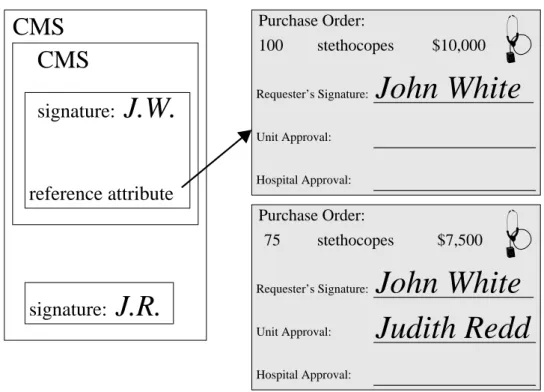
Figure 7shows anexample of howour newly defined, referenceattribute can beused to
maintain version information. In this figure, Mr. White has created and signed a purchase
orderfor100stethoscopes. HeforwardsthedocumenttoMs. Redd,whochangesthenumber
ofstethoscopesintheorderfrom100to75andthensignsthedocument. Inordertosignthe
document, Ms. Redd first adds an unsigned, reference attribute to Mr. White’s signature
in the CMS message that Mr. White createdwhen hesigned the document. The reference
attribute is a pointer to a copy of a version of the document as it existed when Mr. White
signedit. Sincethe referenceattribute isunsigned, Ms. Redd’saddingthis attribute toMr.
White’s signature information will not invalidate Mr. White’s signature. After adding the
referenceattribute,Ms. ReddcanthensigntheresultingCMSmessage. Whenshecomputes
the cryptographichash for her signature, she will compute the hash overher ownversion of
the documentinsteadofthe versioncreatedbyMr. White. Inotherwords, she will perform
thecomputationasiftheeContentintheencapContentInfointhe“inner”CMSmessage
contained her version of the document. Figure7 contains a graphical representation of the
resulting CMS message.
Signatureverificationisperformedstartingwiththe“outermost”CMSmessageandwork
ing inwardtoward the “innermost”CMSmessage. The“outermost” signature isverifiedby
computing acryptographichash overallof the CMSmessagesthat are encapsulatedwithin
Purchase Order: 100 stethocopes $10,000 Requester’s Signature: Unit Approval: Hospital Approval:
John White
CMS
CMS
signature:
J.W.
Purchase Order: stethocopes Requester’s Signature: Unit Approval: Hospital Approval:John White
Judith Redd
signature:
J.R.
75 $7,500reference attribute
Figure 7: Purchase Order with Multiple Signatures and DynamicContent
CMSmessagecontained the currentversion ofthe document. The “outermost”CMSwrap
per is then removed so that the remaining signatures can be verified. If the next signer’s
informationinthenextoutermost CMSmessagedoesnotcontainareferenceattribute,then
the signature can be verified just as the “outermost” signature was verified. If the signer’s informationcontainsareferenceattribute,thenthe cryptographichashthatiscomputedfor
signature verification should be computed as if the eContent in the encapContentInfo
in the “innermost” CMSmessage contained the version of the document pointed to by the
reference. Theremainingsignatureswouldthenbeverifiedusingthereferenceddocumentas
thecurrentversion. Itistheresponsibilityoftheverifier’s applicationtodisplaythedifferent versionsof the document insucha waythat itis clear which versionsof the documentwere
signed bywhich signers.
There are three basic ways in which the reference attribute may refer to a version of
a document. One could mimic the concept of encapsulated signatures by including a copy
of the document in the reference attribute. Alternatively, the document could be stored
separately,and thereferenceattributecouldincludeapointertothe document. Thepointer
could take the form of aUniform Resource Identifier (URI).
Aswasmentionedinsection6.5,thereferencecouldalsobeadifferencesfile. Inthiscase, the reference attribute could contain a description of the differencesbetween the version of thedocumentthatwassignedbythesignerwhosesigner’sinformationcontainsthereference
attributeandtheversionofthedocumentthatwassignedbythe signerwhoseCMSmessage
immediatelysurroundsthisCMSmessage. Sincethedifferencesmaybedescribedineitheran
application-specificorapplication-independent manner, the referenceattribute mustspecify
included,thedifferencesfilemayeitherbeincludedinthereferenceattributeorthereference attribute may simply include aURI specifyingthe locationof the differencesfile.
If, in the process of verifying a nested CMS message, a verifier encounters a reference
attribute in which the signed version of the document is described using a differences file
instead of by including the entire document, the verifier simply needs to create the signed
versionof the document byapplyingthe differences file tothe versionof the document that
was used toverify the previously verified signature.
7.2
eXtensible
Markup
Language
The eXtensibleMarkup Language(XML) isadocument markuplanguage. XML isastruc
tural and semantic markup language. That is, its tags describe the structure and specify
semantics associated with the data in anXML document. This is inherently different from
HTML, where the tags describe the presentation of information (e.g., bold oritalic font, or
the font size). XML documents are encoded as text.
Security was not initially an objective of the XML standards. Security services, such
as authentication and confidentiality, were not directly supported. Security services can, of
course, be layered on top through complementary protocols such as SSL, but there was a
desirefor nativeXML securityservices. TheXML Digital Signature Specificationisdefined
in RFC 3075, XML-Signature Syntax and Processing, or XMLdsig [3]. This specification
was designed to “provide integrity, message authentication, and/or signer authentication
services for data of any type, whether located within the XML that includes the signature
orelsewhere.”
7.3
Profiling
XML
The XML Advanced Electronic Signatures (XAdES) specification [2] defines an XML for
mat for advanced electronic signatures, including an XML schema for new XML types able
to contain the information conveyed by CMS signedData. These signatures are built on
XMLDSIG withthe additionof specificationsfortwo maintypesofproperties: signedprop
ertiesand unsignedproperties. The firstare additionaldataobjectsthat arealso securedby the signature produced bythe signer onthe <SignedInfo> element, which impliesthat the
signer has these data objects, computes a cryptographic hash for allof them and generates
thecorresponding<Reference>element. Theunsignedpropertiesaredataobjectsaddedby thesigner,bytheverifier,orbyotherpartiesaftertheproductionofthe signature. Theyare not securedbythe signaturein the<Signature>element (theone computed bythesigner);
however they can be signed byother parties.
The ETSI-defined attributes and schema provide most of the tools needed to encode
digital signatures. However,XML is very richin features, and some of them prove counter
productivetodigitallysignedmessages. Theauthorssuggestthatseveraladditionalfeatures
of XML must be profiledfor interoperable and secure use.
First,therearemanydifferentwaystoencodedocumentsthatarefunctionallyequivalent.
Forexample,singleand doublequotes maybe usedinterchangeablyaroundattribute values
servers to facilitate local processing or to compress data. This flexibility is considered a feature,butpresentsamajorimpedimenttotheuseofdigitalsignatures. Adigitalsignature
can not be verified if the document has been modified.
XMLdsigaddressesthisproblemthroughtheuseofcanonicalizationalgorithms. Acanon
icalization routinetranslates equivalent XML documents toa consistentstate. If the signer
and relying party translate the document to the same state (before generating and verify
ing the digital signature, respectively) then the digital signature will verify. Unfortunately,
XMLdsigdid not select asingle canonicalizationalgorithm, and anumber ofalgorithms ex
ist. The specificationpermits the signertoselectthe canonicalization algorithmand specify it as part of the signature. This introduces interoperability problems: the verifier may not supportthespecifiedalgorithm. Forthepurposesofthisdocument,theonlycanonicalization routinethat may beused isthe c14n algorithm specified in [1].
The XMLdsigspecification also permits users to generate three types of signatures: de
tached, enveloping, or enveloped. For this specification, we will only use the detached sig nature. In this case, the signature is over content external to the <Signature> element.
Consequently, the signature is “detached” from the content it signs. This corresponds pre
ciselyto the CMSdetached signature.
8
Conclusion
TheinvestigationsupportedbytheAdvancedTechnologyProgram(ATP)hasyieldedseveral
significantconclusions. As describedinthisreport, digitalsignatures canbeused effectively to support the features present in physical signatures used today. The investigators deter mined that whenmigrating from physicaltodigital signatures, digitalsignatures cannot be used withoutregardtothe signer’svisual frame ofreference thatisinherent withphysically signeddocuments. However,digitalsignatures neednot explicitlymimic everyaspect of the
visual context. In fact, the electronically signed documents may be easier to interpret by
the verifier than their physical counterparts in some cases. The critical factor when using
digitalsignatures is that the visual contextnever exceeds the scopeof the digital signature. From a technical perspective, the investigators determined that it is possible for digital signaturestobecomputedandverifiedindependentoftheapplicationusedtocreate,display,
or modify the electronically signed document by using a standard signed document format
as described in section 7. By using a standard signed document format, digital signature
technology can be used effectively to provide security to the electronic analog of today’s
paper processes. Infact,it isthe beliefof the investigators thatsecurityprovided bydigital signature technology is greaterthan that currently found usingphysical signatures.
The conclusions found through this investigation can be leveraged to further develop
applicationsthat use publickey cryptography, publickeyinfrastructures, digitalsignatures,
References
[1] Canonical XML, W3C working draft, 1999. See <http://www.w3.org/TR/1999/WD
xml-c14n-19991115>.
[2] XML advanced electronicsignatures (XAdES), draft ETSItechnicalspecification, ETSI
TS 101 903 draftv0.0.8, July 2001.
[3] Donald E. Eastlake 3rd, Joseph M. Reagle Jr., and David Solo. XML-signature syntax
and processing, RFC3075, March 2001.
[4] Russell Housley. Cryptographic messagesyntax, RFC 2630,June 1999.
[5] Kathy L. Lyons-Burke and Nelson Hastings. Common format for information that is
digitally signed: Aninterim report, August 2000.
A
Meeting
the
ATP
Proposal
Milestones
This section of the report describes how the milestones set in the ATP proposal for the
Development of a Common Format for Digitally Signed Objects as required by the ATP
program were met. The first milestone for FY01 was the identification of a comprehensive
setof digitalsigning methodsthat would be used toimplement the signingmodels required
bythe healthcareindustry. Thismilestone wasmet bytheinvestigationthatwasusedinthe
development of section 3 of this report. The second milestone for FY01 was the definition
of a signing object structure in both ASN.1 and XML that supports the identified signing
methods. This milestone was met by the investigation that was used in the development of