by
Yinghao Huang
A dissertation submitted in partial fulfillment
of the requirements for the degree of
Doctor of Philosophy
(Information Systems Engineering)
in the University of Michigan-Dearborn
2014
Doctoral Committee:
Professor Yi Lu Murphey, Chair
Professor William Grosky
Assistant Professor Hafiz Malik
Associate Professor Paul Watta
Intelligent Typo Correction and Text Categorization Using Machine Learning
and Ontology Networks
©2014 Yinghao Huang All Rights Reserved
ii
DEDICATION
I dedicate this dissertation to my beloved family – to my parents, as without their love and support over the years this work would not be possible, and to my loving wife, Yi Gao, and my dear daughter, Mackenzie, who make our life an inspirational journey.
iii
ACKNOWLEDGEMENTS
I would like to thank my advisor Dr. Yi Lu Murphey for her valuable guidance, advices, support, and the inspirational discussions we had. I thank her for not only training me with professional research abilities, but also teach me rules and principles that will become knowledge and wisdom in my future. I would also like to thank members of my doctoral committee, Professors Bill Grosky, Paul Watta and Hafiz Malik for their suggestions and guidance.
I have been lucky to be a part of a group of enthusiastic researchers at the UM – Dearborn ISL lab. I appreciate the opportunities for collaborations and discussions with variety of people, including Jungme Park, Chen Fang, Qi Dai, Wenduo Wang, Shen Xu, Dai Li, Xipeng Wang, etc. It has been a precious experience to work with them and learn from them. Special thanks to Xipeng Wang, for helping me with experiments and having discussion with me about research problems and exchange ideas.
Finally, I would like to thank my wife, Yi Gao, for her support over the years and encouragement for continuing my research work.
iv
T
ABLE OFC
ONTENTSPage
DEDICATION... ii
ACKNOWLEDGEMENTS ... iii
LIST OF FIGURES ... vii
LIST OF TABLES ... ix
ABSTRACT ... x
INTRODUCTION ... 1
CHAPTER 1. 1.1. Motivation ... 1
1.2. Problem description and research focus ... 3
1.3. Major research contributions ... 6
1.4. Structure of dissertation ... 8
BACKGROUND AND RELATED WORK ... 9
CHAPTER 2. 2.1 Text mining ... 10
2.2 Typo correction ... 12
2.3 Ontology networks ... 18
2.4 Text representation models ... 21
2.4.1 Vector Space Model (VSM) ... 21
2.4.2 Latent Semantic Indexing (LSI)... 25
2.4.3 Statistical topic models ... 27
2.5 Text categorization ... 33
2.5.1 Text categorization based on machine learning algorithms ... 33
2.5.2 Text categorization based on statistical topic models ... 36
2.5.3 Text categorization based on ontology network ... 37
AUTOMATIC TYPO CORRECTION USING MACHINE LEARNING CHAPTER 3. AND EXTERNAL KNOWLEDGE BASES ... 39
3.1 Machine learning algorithms to extracting knowledge for typo correction ... 40
v
3.1.2 Building a lexicon of similar typos and domain-specific abbreviations ... 42
3.1.3 Extracting contextual knowledge ... 47
3.1.4 Assessing typo correction candidates ... 51
3.2 Intelligent Typo Detection and Correction (ITDC)... 58
3.2.1 Typo detection and correction candidate generation ... 59
3.2.2 Word boundary error detection and correction ... 60
3.2.3 Abbreviation processing ... 62
3.2.4 Correction candidate weight generation, ranking and selection ... 63
3.3 Empirical study ... 67
3.3.1 Building general knowledge bases... 67
3.3.2 Building domain specific knowledge bases ... 68
3.3.3 Typo detection and correction ... 68
TEXT CATEGORIZATION BASED ON MACHINE LEARNING, CHAPTER 4. STATISTICAL MODELING AND ONTOLOGY NETWORK ... 78
4.1 Text categorization based on VSM and PLSA topic modeling ... 80
4.1.1 A VSM Model with a new global weighting scheme ... 80
4.1.2 A VSM augmented with PLSA topic modeling ... 82
4.1.3 A VSM augmented with semi-supervised PLSA topic modeling ... 88
4.2 A VSM augmented with WordNet ontology ... 99
4.2.1 An augmented TD matrix generated using WordNet ... 99
4.2.2 Generate document-document connection for semi-supervised PLSA using WordNet ... 105
4.3 A step-by-step example of proposed text representation model generation procedure 108 4.3.1 Build VSM model with CE_W global weighting scheme ... 109
4.3.2 Build VSM model with PLSA topic modeling ... 110
4.3.3 Build VSM model with WordNet ontology ... 115
4.3.4 Build VSM model with semi-supervised PLSA ... 117
4.3.5 System evaluation based on document distance measure ... 127
4.4 Generate hybird VSM model for classification... 130
EMPIRICAL CASE STUDY AND EXPERIMENTAL RESULTS CHAPTER 5. EVALUATION ON TEXT CATEGORIZATION ... 132
vi
5.1 Datasets ... 133
5.2 Experiment setup ... 135
5.3 Build VSM model with PLSA ... 136
5.4 Build VSM model with WordNet ontology ... 139
5.5 Build VSM model with semi-supervised PLSA ... 142
5.6 Text categorization performance summary & analysis ... 146
CONCLUSION AND FUTURE WORK ... 150
CHAPTER 6. REFERENCES ... 153
vii
LIST
OF
FIGURES
Fig. 1. Examples of well-structured and unstructured text documents ... 3
Fig. 2.Results of POS tagging on well-structured and unstructured text documents ... 17
Fig. 3. Example of WordNet ontology instance visualization ... 19
Fig. 4. Example of TD matrix generation ... 23
Fig. 5. Mathematical Representation of Singular Value Decomposition ... 26
Fig. 6. Graphical model representation of PLSA ... 28
Figure 7. Graphical model representation of PLSA ... 31
Figure 8. Graphical model representation of PLSA ... 35
Fig. 9. Extracting knowledge for typo detection and correction ... 41
Fig. 10. Four types of topographical spelling errors ... 43
Fig. 11. Example of n-gram statistics ... 50
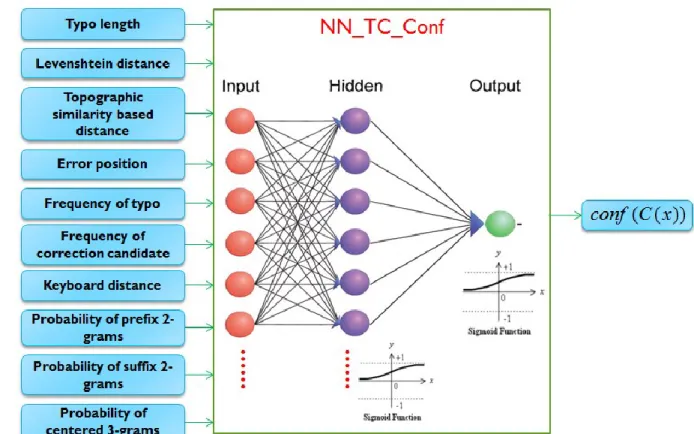
Fig. 12. NN_TC_Conf: a neural network for measuring the confidence about a correction candidate of a typo ... 52
Fig. 13. QWERTY keyboard distance matrix ... 54
Fig. 14. Overview of ITDC (Intelligent Typo Detection and Correction) system ... 58
Fig. 15. Candidate ranking and selection ... 66
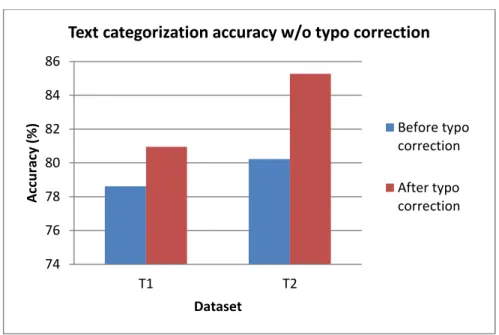
Fig. 16. Example of text categorization accuracy w/o typo correction ... 77
Fig. 17. Example of text categorization feature size w/o typo correction ... 77
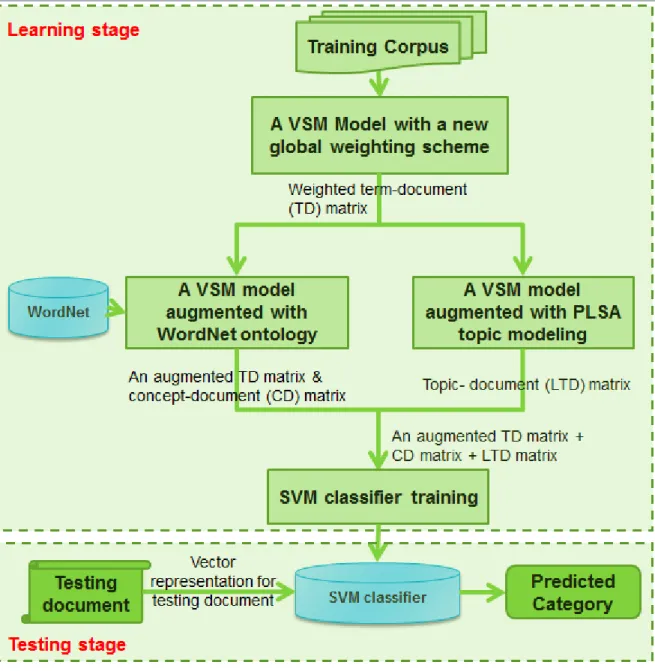
Figure 18. Proposed text categorization model framework ... 79
Figure 19. Graphical model representation of semi-supervised PLSA ... 90
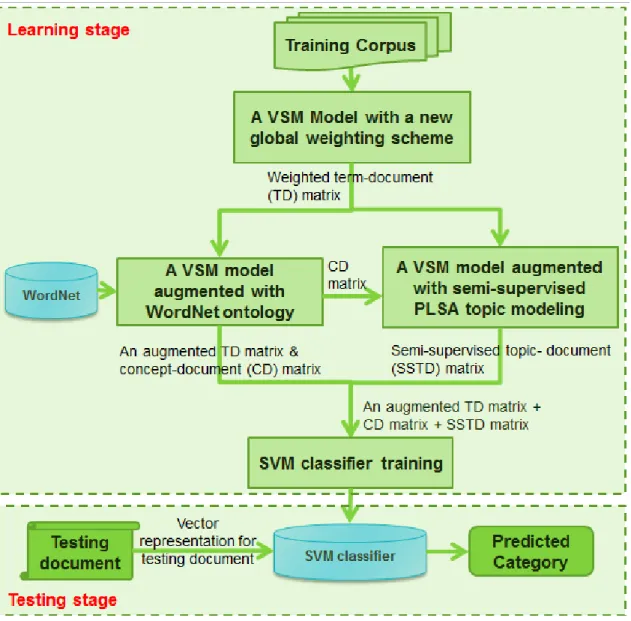
Figure 20. Proposed text categorization model framework ... 98
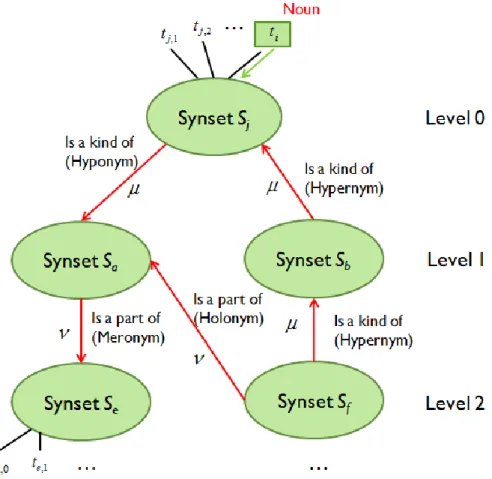
Figure 21. Example of generating related words in WordNet ... 101
Figure 22. Example of weighting edges in the tree structure generated for synset ... 102
Figure 23. Example of concept generation in “add” rule ... 104
Figure 24. Example of EM algorithm Initialization... 111
Figure 25. Example of EM algorithm E-Step ... 112
Figure 26. Example of EM algorithm M-Step ... 113
Figure 27. Example of EM algorithm result after convergence ... 114
Figure 28. EM algorithm result for testing document Du ... 115
Figure 29. Example of EM algorithm Initialization for semi-supervised PLSA ... 119
Figure 30. Example of EM algorithm E-Step for semi-supervised PLSA ... 120
Figure 31. Example of EM algorithm M-Step for semi-supervised PLSA ... 121
Figure 32. Example of EM algorithm result for semi-supervised PLSA after convergence ... 122
viii
Figure 34. PTr(D|z) generated for semi-supervised PLSA ... 125
Figure 35. Comparison between PLSA and semi-supervised PLSA ... 126
Figure 36. VSM matrix generation and combination ... 131
Figure 37. Example of log-likelihood maximization for PLSA ... 136
Figure 38. Text categorization performance based on different number of topics generated by PLSA ... 138
Figure 39. Text categorization performance based on different number of topics generated by PLSA ... 145
Figure 40. Text categorization performance based on different number of topics generated by PLSA ... 145
ix
LIST
OF
TABLES
Table 1 Example of similar term groups ... 47
Table 2 Example of Levenshtein distance ... 53
Table 3 Example of entries in T&C_L1 ... 60
Table 4 Example of entries in T&C_L2 ... 62
Table 5 Example of entries in T&C_L3 ... 63
Table 6 Example of word boundary errors ... 70
Table 7 Example of uncommon ABBREVIATIONS ... 71
Table 8 Example of Typos recognized by GTKB2 ... 72
Table 9 Example of Typos recognized by DB2 ... 72
Table 10 Typos recognized by DB3 ... 73
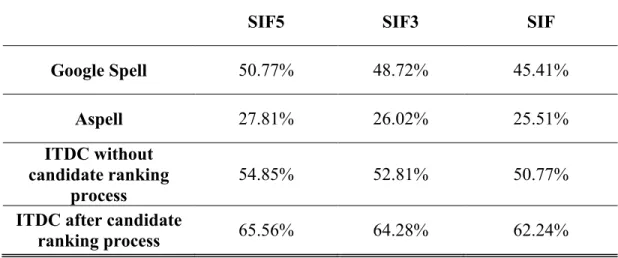
Table 11 Performance Comparison with State-of-art Spell Checkers on T1 ... 74
Table 12 Performance comparison with state-of-art spell checkers on T2 ... 75
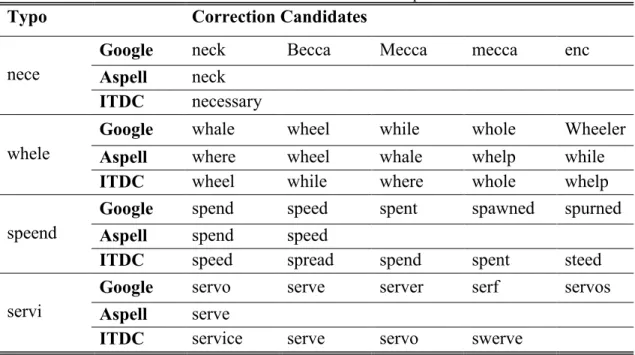
Table 13 Correction candidate List comparison ... 75
Table 14 Tf-idf representation for HCI_GF ... 109
Table 15 Tf-CE_W representation for HCI_GF ... 109
Table 16 CD matrix generation for Tr and Du ... 116
Table 17 Tf-CE_W representation for Tr and Du after using WordNet “replace” rule ... 117
Table 18 Connection matrix for HCI_GF ... 118
Table 19 Euclidean distance between Du and training documents based on different text representation - I ... 127
Table 20 Euclidean distance between Du and training documents based on different text representation - II ... 128
Table 21 Text categorization performance based on different number of topics generated by PLSA ... 137
Table 22 Text categorization performance using WordNet based on different word class ... 140
Table 23 Text categorization performance using WordNet based on different hypernym/hyponym and meronym/holonym weighting ... 141
Table 24 Text categorization accuracy using semi-supervised PLSA based on different hyper-weight values ... 143
Table 25 Text categorization accuracy using semi-supervised PLSA based on different hyper-weight values ... 144
Table 26 Text categorization accuracy comparison ... 148
x
ABSTRACT
In this dissertation, we present our research work in text mining field, mainly focusing on accurately and efficiently performing the task of text preprocessing and text categorization, using machine learning techniques and ontology networks. Specifically, an innovative intelligent typo correction system, ITDC, is proposed to automatically correct misspellings in text documents using general language knowledge and domain specific knowledge extracted by machine learning algorithms. It has the capability of correcting a broad range of typos, from simple typos such as duplication, omission, transposition, substitution characters, to complex spelling errors, such as word boundary errors, unconventional use of acronyms, and multiple versions of abbreviations of the same words. It uses the generated knowledge for identifying unconventional acronyms, grouping similar words (correctly spelled and misspelled), and ranking correction candidates.
An innovative text categorization model, VSM_WN_TM, is also presented. VSM_WN_TM is a special Vector Space Model (VSM) that incorporates word frequencies, ontology networks and latent semantic information. Unlike the traditional text representation using only Bag-of-words (BOW) features, it also incorporates semantic and syntactic relationship among words such as synonymy, co-occurrence and context, with the purpose of providing more inclusive and accurate text representation.
The results from the performed experiments are highly encouraging. The ITDC system is evaluated through a case study that involves the automatic processing of automotive fault diagnostic text documents. The performance generated from more than 580000 automotive fault
xi
diagnostic documents provided by two different automotive manufacturers show that the proposed system outperforms state-of-art spell checking systems.
The proposed VSM_WN_TM model is evaluated on three publicly available datasets and one domain-specific dataset. Experiment results show that our approach significantly improves text classification by outperforming baseline approaches such as using only latent features and traditional VSM approaches.
Indexed Keywords: text mining, text preprocessing, text categorization, typo correction, machine learning, ontology networks, statistical language modeling.
1
INTRODUCTION
CHAPTER 1.
1.1.
Motivation
We have witnessed the blooming of web-based text resource volume in recent decades within different domains, such as social networks (Email, Twitter, Micro blogs, customer reviews, etc.), automotive industries (vehicle diagnostics, customer queries, etc.) and medical science (physician diagnostics, patient medical records, etc.). With the proliferation of text data, text mining techniques have drawn significant attention by people in both academic and industrial field for quite a long time. Text mining is generally defined as finding interesting patterns and trends of data. Especially in the age of “Big Data” [1], when data management systems are overloaded daily by data in free text form, text document processing brings more and more necessity for automated, accurate and efficient text mining algorithms. These algorithms could be used to fulfill different objectives, such as data preprocessing, text clustering and categorization, information retrieval, etc.
Text mining is characterized as the process of analyzing text to extract information that is useful for particular purposes. The key point that makes text mining so special in the field of data mining, which is already a well-developed area that is entering a mature phase [2], is that text needs to be transferred into numerical representations before conducting further analysis, and in most of the text mining applications, text has an unstructured and causally written form that causes difficulties for extracting useful information, such as clinical document analysis [3,4],
2
emails, instant messages, automotive diagnostic text mining [5], etc. For example, a lot of spelling errors occur in text data and can be problematic for text data mining.
One of the most crucial tasks in the text mining field is text categorization. This is the task of building a classifier that assigns a pre-defined category to each text document in the text collection, the source of which highly depends on the problem and the application domain. Due to the fact that the document category is usually defined based on various application requirements, the typical approach of text categorization is to derive numerical features that represent text. After that, supervised machine learning techniques are used to train a classifier based on those extracted features and the categories of pre-classified text documents, to later perform categorization tasks on previously unseen text documents. As a result, the performance of text categorization task depends on the feature generation method used and the machine learning techniques adopted.
In this dissertation, we present our research work in intelligent text mining that focuses on accurately and efficiently performing the task in two main areas. The first area includes developing a system that automatically corrects misspellings in text documents so that they are much more comprehensible by machines and much more accurate for further processing such as text categorization. The second area is to develop a text categorization model that incorporates word based text features with semantic relationship learned from ontology networks and latent semantic structure information from statistical topic modeling. This hybrid text representation model could significantly help improving text categorization accuracy.
3
1.2.
Problem description and research focus
As discussed in section 1.1, unstructured and free-style written text documents are commonly found in many text mining applications. These documents often do not follow grammar rules, and contain misspelled words, abbreviations and specific terminologies that are not found in standard English dictionaries and may be barely comprehensible to people outside the application field. We use an example to illustrate the different problem complexity comparing well-structured text documents with unstructured text documents. Fig. 1 illustrates those two document examples. In both documents, non-word misspellings are marked in red. It is obvious that unstructured documents are much harder to understand, and the typos are much more difficult to be identified and corrected. In terms of accuracy, misspelling correction in such applications is indisputably essential for automatic text retrieval, categorization or clustering systems, since typos can be misinterpreted in many different ways by automatic text processing systems. In terms of efficiency, automated intelligent typo correction is also of significant necessity in text mining applications that deals with vast amount of data, which makes manual inspection almost impossible.
4
Many automatic spelling correction systems have already been developed to help people with their typing tasks, such as texting, web searching, etc. However, the current automatic typo correction technologies are still short in accuracy [6,7].
In text categorization, the document category is defined by users based on the application requirements, such as the topic that a news article discusses, the importance of a vehicle diagnostic record that describes vehicle repair details [5], and the fact stated in a medical diagnostic document that whether or not an injury condition sustains [4], etc. Consider the following automotive diagnostic records in two categories: The first record is defined as category A, which is an “important” document because it describes the “root cause” of the vehicle problem: “connector corroded”. The second is defined as category B, which is unimportant, because it only describes the vehicle inspection process generally.
Category-A document: “perform abs self roadtest found rear wheel speeds sensor connector corroded into sensor replace sensor and connector road tester ok clear code”
Category-B document: “road roadtest traction control lamp on eec roadtest code c1280 u415 om rcm contact hot line 103912699 check connection at rcm check mounting bolts ok clear code”
To solve the above categorization problem, a typical approach of representing a text document is the Vector Space Model (VSM) [8], in which each document is represented by a weighted vector that provides a mathematical representation which is convenient for computation and analysis. However, this approach does not consider the semantic relationship between words, such as synonyms, hyponyms (IS-A relationship between words), etc. The classification accuracy is
5
especially deteriorated in document sets where different categories have similar word occurrences [4, 9]. As a result, a text categorization model that captures underlying semantic and syntactic information besides single word occurrence features is of great necessity.
The major research focuses in this dissertation include:
Automatic typo detection and correction for an unstructured and large-scale text corpus by incorporating general language knowledge and domain specific knowledge generated by machine learning algorithms.
Incorporating ontology network information and machine learning techniques to automatic text categorization, by capturing semantic and syntactic relationship between words.
6
1.3.
Major research contributions
The major original contributions of this dissertation include research work in intelligent typo correction and text categorization. First of all, we developed and implemented an intelligent typo detection and correction algorithm, which is a significant step forward towards fully-automatic spelling correction for processing large size corpora of unstructured text documents. Secondly, we propose a systematic way of building accurate text representations using single word information, as well as syntactic and semantic relationship between words to improve the performances of various text mining tasks, such as text categorization, text clustering, predictive analysis, information extraction, etc. Third, our approaches in these two fields can be combined together for other real-world applications that require text preprocessing and text categorization. Last but not least, they can be easily transplanted and applied to other text corpus, besides those discussed in this dissertation, e.g. text used in social networks such as instant messages and Twitter.
A summary of the major research achievements is presented here, including:
Proposed an automated intelligent typo correction framework for unstructured and large-scale text collections, using general language knowledge and domain specific knowledge extracted by machine learning algorithms for identifying unconventional acronyms, grouping similar words (correctly spelled and misspelled), and ranking correction candidates.
Proposed a hybrid text categorization approach that focuses on building VSM models with both ontology networks and statistical language model. We first generate the original
7
BOW representation by using an intuitive global weight scheme, and then build VSM models based on the WordNet ontology and statistical topic modeling.
Evaluated our methods on publicly available datasets and domain-specific datasets: Freeform technician verbatim problem descriptions (VDR)
Reuters-21578
Nist Topic Detection and Tracking corpus (TDT2) 20 newsgroups
Evaluated our system by comparing with state-of-art systems and baseline approaches: Google spell checker
Aspell spell checker
Text categorization based on VSM only
Text categorization based on latent semantic feature only
Analysis of text categorization performance, including the influence of number of latent topics, hyper weight of document connectivity in topic model, word class used for synonym set generation, and ontology weighting between words.
Created open source packages for typo correction system, called ITDC, and text categorization system, called VSM_WN_TM, which can be adapted to other text mining applications.
8
1.4.
Structure of dissertation
The remainder of this dissertation is organized as follows: Chapter 2 discusses the technical background and literature survey in the area of typo correction and text categorization. Chapter 3 introduces the ITDC typo correction system. Chapter 4 presents the VSM_WN_TM text categorization model and details of how to build text representation model using an ontology network and statistical language model. Chapter 5 discusses the details of our empirical case study, the evaluation of our system and the performance analysis. Finally, Chapter 6 gives an concise conclusion and discusses future work that can build on the ideas presented here.
9
BACKGROUND
AND
RELATED
WORK
CHAPTER 2.
This chapter describes the background information related to text mining, typo correction and ontology networks. Text representation models are also discussed including the vector space model and statistical language models. The chapter also gives a literature survey on relevant text categorization approaches including machine learning algorithms, statistical language models and ontology networks.
10
2.1
Text mining
Text mining, also known as knowledge discovery from text (KDT), is first mentioned in Feldman et al. [10]. It is defined as the applications of text processing and analysis that utilize combined techniques from information retrieval, natural language processing (NLP) that extract data from text, as well as machine learning and data mining algorithms, with the goal of finding useful patterns from text [11]. Decent estimates show that more than 80% of information is represented in the form of text [12], and this percentage will likely increase due to the continuous availability of online textual information. As a result, there has been significant development of text mining techniques in previous two decades.
A typical text mining tool first extracts a text document from text collection and conduct preprocessing steps, such as spell checking, removing special symbols or punctuations, tokenizing sentences into stream of words, etc. These procedures aim at providing a clean and understandable format of text for both human and machines. Even though there are plenty of efforts made to explore syntactic and semantic information from text, at the document level, most approaches are based on the concept that a text document is represented by a set of tokenized words; That is, a bag-of-words (BOW) [13]. The next step is to convert the cleaned text into numeric representations that are more appropriate for further automated processing and analysis by machines. The step is called text encoding [14], and state-of-art predominant approaches include vector space model [15] and statistical language models [16], which will be discussed in detail in section 2.4.
11
The text analysis phase, following with the text encoding, is used to extract interesting patterns or trends from text based on different application requirements. For instance, automatically label previously unseen documents based on user-defined category (text classification), find groups of documents with similar content (text clustering), extract parts of text and assign specific attributes (information extraction), etc. Common approaches here include machine learning, data mining and statistical analysis.
In summary, a typical work flow for text mining problems includes the following aspects:
Extracting information for human consumption, including text summarization, document retrieval, information retrieval, etc.
Assessing document similarity, including text categorization, document clustering, identifying key-phrases, etc.
Extracting structured information, including entity extraction, information extraction, learning rules from text, etc.
Mining structured text, including document clustering with links, wrapper induction, etc.
The scope of this dissertation, as mentioned in Chapter 1, mainly includes typo correction and text categorization based on machine learning, statistical language modeling techniques and external knowledge, which will also be discussed in detail in section 2.3 and 2.5.
12
2.2
Typo correction
As we mentioned earlier in Chapter 1, typo detection and correction is an important text process in many text mining applications. The major objective here is to reduce the errors made by machines due to the misinterpretation of misspelled text, and to provide a more understandable format for both human and machines for text mining tasks.
In this dissertation, our research focuses on correcting a broad range of typos, including simple duplication, omission, transposition, substitution characters, spelling errors, and unusual use of shorthand and acronyms. Typos can be divided into two major categories: “non-word errors” and “real-word errors”. Conventional spelling checkers typically use dictionaries to detect typos. Each term within a text document is compared against the valid words in a dictionary or a lexicon. Any term that does not match any word in the dictionary is flagged as an error. This kind of typos is called “non-word errors” [17,18], for instances, “abreviate” instead of “abbreviate”, “veruified” instead of “verified”, etc. Typing errors that result in a valid word, but not the one that the user intended, is called “real-word errors” [19,20], such as “font seat” instead of “front seat”, etc. The focus of our research in this paper is mainly on detecting and correcting non-word typos.
In general, two types of applications require typo corrections: the online programs involving text as input, and the offline automatic text document processing. Many online applications, such as web search engines and text based user interface programs, provide a list of correctly spelled words to user as he/she is typing each word on computers/phones/handheld devices.
13
Many automatic spelling correction systems have already been developed to help people with their typing tasks, such as texting, web searching, etc. However, the current automatic typo correction technologies are still short in accuracy [21,22]. In many text mining applications, such as text documents analysis, retrieval, and categorization, typos need to be detected and corrected automatically in order to achieve accurate results efficiently. Our solution is to combine domain specific knowledge with the general language knowledge to achieve accurate typo correction. In this research, we focus on the application of unstructured text mining in vehicle diagnostic records.
Discovering knowledge from unstructured text documents has many important applications including automotive fault diagnostics, medical document processing, and social network [23,24,25,26]. Large amounts of data have been collected in daily operations in many corporations, hospitals and government agencies, many of which are unstructured text data. The sheer volume of data makes manual or even semi-manual categorization or classification cumbersome and fallible. Automatic text categorization technologies have been developed and applied to many application problems including finding answers to similar questions or queries, classifying news by subject or newsgroup, categorizing web pages, organizing e-mail messages, etc. Many challenges exist in automatic text processing technologies, including representing semantics and abstract concepts and processing words with semantic ambiguity, such as polysemy and synonymy. Typos add another layer of complexity in automatic text document process.
The particular type of documents we are interested in has the following characteristics. These documents are short, and typically typed hastily in very short time period, e.g. in seconds or minutes, by people with varying education background and interests. Examples of such
14
documents are short text messages, email text, medical descriptions of patients’ symptoms, vehicle diagnostic documents such as customer’s descriptions of vehicle problems, and technicians’ descriptions of repair process, and etc. These documents often do not follow grammar rules, and contain misspelled words, abbreviations and domain specific terminologies that are not found in standard English dictionaries and barely comprehensible to people outside the application field.
Most of the current state-of-art typo correction systems are “interactive spelling checkers”, which return multiple spell correction candidates, and allows user to select the intended correction [21]. Early in 1960s, researchers have already started working on text spelling error detection and correction. Many studies have been conducted with the purpose of developing correction techniques for non-word errors. Over time various approaches and successful systems were developed. Popular methods for finding misspellings and assessing suggestion candidates for misspellings include part-of-speech (POS) tagging [27,28], minimum editing distance [28,29], nearest neighbor search procedure, similarity key methods such as SoundEX systems and Metaphone algorithms [28,30], and modified version of Longest Common Subsequence algorithm [19]. Error correction methods, especially real-word error correction, are typically based on syntactic and semantic knowledge such as n-gram based techniques [17,32,33], and statistical learning from training data sets such as web documents are used as context to help correcting typos [33,34,20]. Many methods have been developed to create and rank correction candidate lists of detected typos, such as statistical language models [31], machine learning techniques [18,27,32,35], complex network approaches [36], and noisy channel models [33,37]. The spell checkers used for online applications mostly use online text as the resource for typo correction, such as news pages from the Web that are clean and well-spelled [33]; web queries
15
input to search engines by Internet users [20]; and Google n-gram dataset [34,39,40]. These interactive spelling checkers discussed above require user to manually select a candidate to replace the typo, which are good for interactive software systems such as MS Office, but, not applicable to automatic document processing, such as document retrieval or classification, in which a system having the capability of performing fully automated error detection and correction is required.
A number of automatic typo correction algorithms have being developed so far. A typical approach is to select the best candidate generated for each typo based on word context or semantic information such as POS tagging [21,41,42]. Two interesting typo correction algorithms were proposed by Sebastian and David [41], one based on supervised learning and another unsupervised learning. The supervise learning algorithm uses a reverse edit distance method to generate a candidate list and then one on the list that has the highest score based on word occurrence or word’s bigram stemmer score. The unsupervised algorithm attempts to correct spelling errors by first using low-frequency word as candidate typo, with the assumption that low-frequency word is usually a typo and a word will be misspelled in exactly the same way very few times. After the candidate typos are selected, the algorithm uses other words in the document set as valid lexicon, and select best candidate based on predefined rule set of word context. They reported over 90% accuracy generated by the supervised learning system on the 2200 misspellings words provided from a NASA database, and over 70% accuracy by the unsupervised system on 5833 misspellings from Orbiter Structure database. An example of text documents in the NASA database is shown in Fig. 1. However, for processing unstructured text documents, several issues need to be addressed. First, low-frequency words could also be valid words, especially those words in document sets that have smaller sizes. For example, in the
16
vehicle diagnostic corpus we processed has more than 10% of the valid words only appear 1 time, such as “contaminate”, “erratic”, “unsecured” and so forth. Secondly, a word could be misspelled in the same way repeatedly due to the typing pattern of users. Last but not least, a single English dictionary as external source for typo detection and correction is insufficient, especially for unstructured domain-specific text with valid words not in typical lexicon. Patrick et al. developed an automatic spell correction system that takes advantage of the entire context surrounding misspelling [42]. They also explore the use of the part-of-speech for selecting candidates. The system they proposed has 97-98% of accuracy on over 600 randomly selected medical documents. However, this approach is based on the assumption that POS tagging result is reliable.
Although the systems discussed above all reported high accuracy on typo correction, they were developed and evaluated on text documents that were well written in terms of grammar, structure, and sentence and word boundary. For the unstructured and causally written text documents, such as the engineering diagnostic records [43] we are dealing with, these methods do not work well. We use an example to illustrate the different problem complexity in these two types of documents. Fig. 1 illustrates two document examples: one is a well-structured text, and the other is unstructured text. In both documents, misspellings were marked in red. The parsing results generated by using Stanford POS tagger [38] on the two documents in Fig. 1 are shown in Fig. 2, in which incorrect POS tags were followed by true POS tags marked by red. Obviously, POS tagging is not reliable when it is applied to the unstructured document, i.e. the vehicle diagnostic records, considering the ambiguity of sentence boundary and poor quality of grammar in the document.
17
The above discussion leads to our work in typo correction for processing unstructured documents with a focus on typo correction techniques for three types of non-word typos: word boundary errors, self-invented abbreviations, and ambiguous acronyms. We attempt to fill in the gap between the interactive and fully-automatic spelling correction techniques for processing large size corpora of unstructured text documents. The corrected text documents can then be used for further text processing, such as text document categorization and text document retrieval.
18
2.3
Ontology networks
Concerning that although machines can do a lot of things under human directions, they do not understand human language. People are always trying to find a way that makes machine process languages in a more sophisticated manner, besides the simple BOW representation. The basic idea here is that, if every document is marked or enriched by some knowledge that captures syntactic or semantic information between words, machines are able to “understand” text better. In the field of computer science and text mining, ontology network is generally defined as “a formal, explicit specifications of shared conceptualizations of a domain of interest that are shared by a group of people” [44]. Therefore, it provides a solution to facilitate text understanding and automatic processing of textual resources. It is explained in detail as follows by Ding and Foo, in [45]:
“ ‘Conceptualization’ refers to an abstract model of phenomena in the world by having identified the relevant concepts of those phenomena. ‘Explicit’ means that the type of concepts used, and the constraints on their use are explicitly defined. ‘Formal’ refers to the fact that the ontology should be machine readable. ‘Shared’ reflects that ontology should capture consensual knowledge accepted by the communities.”
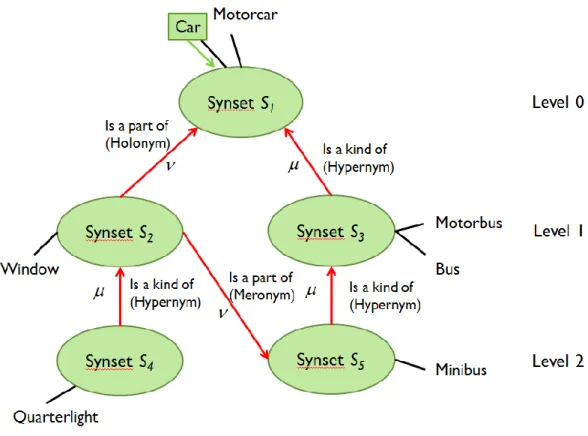
More specifically, the most widely used type of ontologies in text mining applications is called “terminological ontologies”, which are mainly specified by subtype-supertype (IS-A) relations and describe concepts by using concept labels or synonyms [44]. Examples of well-known terminological ontologies include WordNet [49], Semantic Wiki [50], etc. Fig. 3 shows an example of WordNet ontology instance that explicitly provides relationship between words such as synonym, hyponym, etc. Since our focus in this dissertation is based on terminological
19
ontologies, this will be further discussed in detail in Chapter 4.
In this research we define a concept as a set of synonyms that have similar semantic meanings in a specific application domain. In Fig. 3, concepts are highlighted in blue. The undirected connections connect word to its semantic meanings, and the directed connection represents IS-A relationship between words, which is also called as Hyponym/Hypernym relationship.
An immediate question for using ontology in text mining applications is that how to construct one that can be effectively used for data mining. Ontologies can be learnt from various resources such as structured, semi-structured or unstructured text corpus in specific domain, relational databases, publicly available taxonomies, etc. As a result, ontology learning techniques are divided into two groups: Constructing ontologies from scratch using unsupervised learning
20
methods, and extending existent ontologies using supervised learning and classification methods [44,52,53]. The first approach usually requires a lot of manual or semi-manual work to build word ontology from scratch, and the adaptability of such ontology is usually restrained by domain-specific resources [50,54,55]. Therefore, to a large extent, current research work mainly focuses on learning ontologies from existing resources such as English lexicons [56]. Furthermore, most of the state-of-art approaches use only nouns for ontology building, and a large extent of methods aims at constructing IS-A-related concept hierarchies. [44,57,58].
Currently, a number of ontology learning algorithms has already been well-developed and powerful text ontology systems such as WordNet have generated and publicly available for use of academic or industry purpose. However, how to appropriately utilize such information effectively to facilitate various text data mining applications is still open for exploring. For example, in the field of text categorization, a mostly used approach is to use publicly available ontology to generate “Concept” level features as additional information to the text representation [46,47,48], while several issues still brings in great difficulties and challenges for solving the above problem, such as mapping ontology relationship to text feature representations, weighting word features based on ontology relationships, etc. [59,60].
As a result, this dissertation research focuses on how to incorporate information provided by ontology into text mining tasks such as text categorization, rather than on how to learn ontology from textual resources. We believe that a hybrid approach that combines conventional methods with appropriately generated ontology network information can enhance the quality of text representation, and thus improve the performances of text mining tasks using such representation. This leads to several well-known representation models developed by researchers for textual resources in recent decades, which will be discussed in the following section 2.4.
21
2.4
Text representation models
2.4.1
Vector Space Model (VSM)
As mentioned above in section 1.2, the conventional approach of representing a text document is the Vector Space Model (VSM) [8], where a text document is modeled as elements in a vector space. Each element is representing an index term that is most useful identifying the main theme of a document. Baeza-Yates and Ribeiro-Neto gave the definition of vector space model as follows [61]:
“For the vector model, the pair (ki, dj) represents the occurrence frequencies that term ki in
the document dj. A weight wi,j associated with the pair (ki, dj) is positive and non-binary.”
From the above definition, it is clear that VSM generation usually includes three stages: term selection, document indexing and weighting scheme selection.
In the first stage, text are tokenized into a stream of words, and a bag of content bearing terms, also known as indexed terms, are extracted from the document text. This term selection step, in the development of VSM, is considered as the most important step that largely impacts the system's performance. Generally speaking, it is done the words in the following several ways:
Stop word removing: Words in a document do not describe the content which are called stop words (function words) are removed from document. The stop words can be identified with some automatic way. For example, terms which have very high or very low frequency can be considered as function words [62].
22
Stemming: It is the process for reducing inflected words to their stem. For example, the words "accelerate", "acceleration", and "accelerating" are stemmed to the root word, "accel". As a result, it is considered as reducing dimension of selected words and help identifying similar words. The most widely used stemming algorithm is Porter Stemming algorithm [63]. The idea is that the suffixes in English mostly consist of a combination of smaller and simpler suffixes. In this dissertation, the stemming process is not our focus, considering that although stemming algorithm could reduce feature dimension, it also lose the information of full terms, and additional storage might be required to store both the stemmed and unstemmed forms [64].
In the case of the classification problem, research works have been done in feature selection by using labeled training documents. This process ensures that the selected terms are highly related to the presence of a particular class, using a variety of measuring approaches such as Gini Index, Information Gain, Mutual Information, etc [65,66]. Again, this is not the focus in this dissertation, because that these measures are mostly based on training data, and important features for previously unseen documents may possibly be removed from this stage.
In a lot of domain-specific applications in which text documents are usually unstructured, causally written, with plenty of grammar and spelling mistakes, as mentioned in section 1.2, misspelling correction is also a very essential step in removing noisy terms that could significantly help feature selection. Our work in this field will be presented in detail in Chapter 3.
23
The second stage is to construct a term-document (TD) matrix using indexed terms. Each entry in TD matrix indicates how many times that one term occurs in one document. More specifically, a document collection containing a total number of N documents identified by K
terms is represented as a K * N TD matrix. With the purpose of measuring how well each term describes the document contents, each entry of the TD matrix is represented by a “local weight” that is typically the occurrence frequency of individual term in one document [67]. Note here, each document is represented as a row vector in the TD matrix. An example of TD matrix generated from three documents is illustrated in Fig.4. To simplify the problem, all the words within these three documents are selected as indexed terms.
Research work has shown that using only local weight is insufficient to evaluate the importance of indexed terms [68]. For instance, some terms, due to their rare appearance in a few documents, do a better job to discriminate these documents from others. Some terms, on the contrast, appear too frequently in the whole collection to distinguish documents in different categories. As a result, after the TD matrix is generated, each entry needs to be weighted using a “global weight”, which is used to reflect the overall importance of the index term in the whole document collection. The idea is that a term occurring rarely should have a high global weight and frequently occurring terms should be weighted low. Several well-known global weights are introduced in [69]:
24 Normal:
j ij tf 2 1 GfIdf: i i df gf Idf: log2 1 i df ndocs 1-Entropy or Noise:
j ij ij ndocs p p ) log( ) log( 1 where i ij ij gf tf p tfij–occurrence frequency of term i within document j;
dfi– document frequency, which is the total number of documents in the document
collection that contain term i.
gfi– global frequency at which term i occurs in the entire document collection
ndocs – total number of documents in the whole document collection.
Generally speaking, each entry wi,j of TD matrix is assigned with two-part values,
i ij j
i L GW
w, , where Lij is the local weight and GWi is the term’s global weight. The most
commonly used term weighting scheme is tf-idf (term frequency-inverse document frequency) [67]. It assigns a high degree of importance to terms occurring rare in a document collection.
From the above discussion, when we take a deep look at those global weighting schemes, it is obvious that they are all focused on the entire document collection. Based on our observation, important term words or their synonyms appear frequently in documents in a specific category, especially when the user defined category is determined by some specific keywords [4]. Therefore, we designed a new global weighting scheme during the generation of VSM models, which will be discussed in detail in Chapter 4.
25
The advantage of using VSM model to represent text is that, instead of fully “understanding” the content of a document, the VSM simply generates a logical view of the document. For those applications with short, poorly-structured text documents or those documents that having grammar errors or spelling errors, VSM simplifies the procedure of natural language processing and ease the system implementation. These simplifications are proved effective by many research results [2,4,11,13,68]. This is the major reason that our work on text categorization is also using VSM as our fundamental text representation approach. However, VSM also has several limitations [70], such as poor representation of long documents, ignoring the semantic relationship between documents with similar context or synonyms, informal weighting schemes, etc. As a result, this dissertation presents our great effort in improving the conventional VSM model.
Considering the fact that traditional VSM can be inaccurate under the condition that a given word is expressed in many ways (synonymy) or a word has multiple meanings (polysemy) with different context, approaches that dig out underlying semantic relationships between words are required in many text mining applications. Latent semantic indexing (LSI) is one of the earliest techniques that try to solve the above problem.
2.4.2
Latent Semantic Indexing (LSI)
LSI algorithm, also called latent semantic analysis (LSA), is first introduced in 1988 for natural language processing [71]. It is a variant of the VSM that allows the low-rank approximation to the original TD matrix.
In the LSI each document is mapped into a lower dimensional space by decomposition of the TD matrix. The assumption made by LSI is that, some “latent” semantic structure exists
26
according to the overall pattern of term occurrence. The low-rank approximation aims at merging the dimensions associated with similar terms, as well as enhancing or eliminating polysemy relationships based on right word meaning used in the context. The lower dimensional space is build using singular value decomposition (SVD) which is associated with the latent semantic structure [72]. The major steps of LSI are presented as following:
Given a mn matrix A, it is decomposed into the products of three matrices by using SVD method.
T V U
A , where UTUVTV In, I
n is a size n identity matrix, diag(1,2,...,n),
0
i
for 1ir, and j 0 for r1 jn, r is the rank of A, U and V contains left and
right singular vectors of A, respectively, and diagonal matrix contains the singular values of A. Then we get new matrices Uk ,Vk by keep only the k largest singular values of , a rank-k
approximation matrix to A is constructed with the following formula:
T k k k k U V A A .
The mathematical representation of SVD is shown in Fig. 5.
Ak U V T k k k Term Vectors Document Vectors k m×n m×r r×r r×n = ∑
27
The above SVD method attempts to capture underlying semantic structure in the association of terms and documents, as well as reducing feature dimensions by defining a much smaller value k
than the number of indexed terms. It greatly reduces the memory requirement and the computing time of measuring the similarity between an unseen document and a known document. However, in this dissertation, we do not use this approach to capture the semantic relationship in text, due to the following drawbacks of LSI:
The core technique of LSI, SVD, is a mathematical method; therefore the resulting singular values are not interpretable.
SVD is very sensitive to the change of data. Sometimes the low-rank approximation has negative values which are meaningless [72].
LSI requires relatively high computational performance and memory in comparison to other information retrieval techniques. Without distributed implementation it is not applicable to large-scaled document corpus [73].
It still remains to be verified experimentally whether the LSI outperforms the VSM in text mining tasks such as text categorization. The concept in the LSI reduced-dimension space is assumed to be a weighted average of multiple meanings, while losing single term information and some real meaning information [68]. Under such cases, the LSI might exhibit a less satisfying classifying ability.
2.4.3
Statistical topic models
We now move from LSI to the discussion of statistical topic models, which is derived from LSI but interpret LSI from statistical point of view to provide a better understanding for text
28
data. This is a major focus of improving conventional VSM model in this dissertation, since it provides a solid statistical foundation for finding hidden semantic structure of text documents.
2.4.3.1Probabilistic Latent Semantic Analysis (PLSA)
Probabilistic latent semantic analysis (PLSA) is a well-known statistical topic model for text clustering and information retrieval [74]. It represents a document with a mixture distribution over “latent topics”, which are characterized by a distribution over the indexed terms. The latent topics provide a reduced dimension representation of documents in a given collection. It is a statistical variant of LSI developed based on a statistical generative model called Aspect Model [74]. The starting point of PLSA is the term-document frequency (TDF) matrix, and it follows the bag-of-words assumption, in which each word appears independently, and the occurring order of each word is not considered. Fig. 6 shows the graphical model representation of PLSA, based on Bayesian Networks [109].
In the above graphical model, the solid circles D and t represent a document and a term that are observed respectively. The PLSA model is a generative model that assumes there is a latent “topic” variable z between documents and terms. The two rectangles, marked by K and N, represent the number of sample words and documents observed, respectively. P(D), P(z|D),
29 )
| (t z
P represents the probabilities of observing a document D, a latent topic z occurring in D, and word t belonging to z, respectively.
The typical approach of PLSA modeling, is to estimate the probability functions P(z|D) and )
| (t z
P , for all document-topic and term-topic pair (z, D) and (t, z) through machine learning. For each pair of document-topic, (z, D), and term-topic, (t, z), we attempt to find the values for functions P(z|D) and P(t|z) that maximize the following log–likelihood objective function:
) ) | ( ) | ( ) ( log( ) , ( ,
t D z D z P z t P D P t D n L , (1)where n(D,t)denotes the term frequency of t appears in document D.
The variables P(z|D) and P(t|z) are what we are interested in and want to estimate, since )
(D
P is not related to the parameter we want to estimate and we assume that it is constant among documents in Tr, we then have:
) ) | ( ) | ( log( ) , ( max arg ) max( arg ,
t D z D z P z t P t D n L (2)We will use the well-known Expectation Maximization (EM) algorithm [75] to solve this maximization likelihood estimation problem. Each iteration of EM algorithm consists of expectation step (E-step) and maximization step (M-step). In E-step, based on the current estimated P(z|D) and P(t|z), the posterior probability of P(z|D,t) is computed for each document-word pair. In M-Step, P(z|D) and P(t|z) are updated by maximizing equation (2). This is an unsupervised machine learning process, and the detailed steps of EM algorithm will be discussed in Chapter 4.
30
2.4.3.2Latent Dirichlet Allocation (LDA)
Similar with PLSA, Latent Dirichlet Allocation (LDA) is a generative probabilistic model for text collection [78]. In LDA, each document is modeled as a finite mixture over a set of latent topics. The basic idea is that documents are represented as random mixtures over latent topics, where each topic is characterized by a distribution over words [78]. LDA assumes the following generative process for each document D in a corpus Tr:
1. Choose K~Poisson(
) for each of the N documents in Tr. 2. Choose
~Dir(
)3. For each of the K words in D,
a. Choose a topic zn ~Multinomial()
b. Choose a word tn from p(tnzn,
), a multinomial probability conditioned on zn.There are several assumptions to be made in this model. First of all, the latent topic dimensionality G of the Dirichlet distribution is known and fixed. Secondly, the word probabilities are determined by a G * K matrix
where. Finally, K is independent of all the other data generating variables ( and z) [78]. The G-dimensional Dirichlet random variable has the following probability density function:
1 1 1 1 1 ... ) ( 1
G G i G i G i i p ,31
where is a size G vector with i 0 , and (x) is the Gamma function. Given the parameters and
, the joint distribution of a topic mixture , a set of K topics z, and a set ofK words t is given by:
) , ( ) ( ) ( ) , , , ( 1 N n n n n p z p t z p t z p
Therefore, the LDA model is represented as a probabilistic graphical model in Fig. 7. It is obvious that LDA is a three-level hierarchical Bayesian model.
Although LDA is claimed to overcome some shortcomings of PLSA, such as reducing number of parameters being estimated, and treating the topic mixture weights as a hidden random variable rather than a large set of individual parameters linked to training set [78], in this dissertation, we mainly focuses on extending basic PLSA model rather than applying LDA, based on the following several reasons:
PLSA approximation is based on maximum likelihood estimation, while LDA is based on Bayesian estimation, by using both prior knowledge and available data [77]. When data size is large, their performance tends to be very similar [76].
32
Considering the complexity of variational inference of LDA, PLSA is much easier to be implemented and extended using semi-supervised manner. We would rather focus on how to combine statistical topic model with supervised information from training set as well as external ontology resources, than find out which model or estimation method is better.
With parameters partially fixed after training, PLSA could also be applied to process previously unseen document, thus makes text categorization possible. This will be further discussed in Chapter 4.
The following section will mainly discuss research works have been done in the field of text categorization, which is one of the major focuses in this dissertation.
33
2.5
Text categorization
Text categorization, as introduced in section 1.1, is one of the most popular tasks in text mining field nowadays, due to the increased availability of documents in digital form and the ensuing need to organize and differentiate them for further analysis. Mathematically, as described in [79], if Tr is a set of N documents, Tr
D1,D2,...,DN
, and C is a set of predefined categories,
c c cM
C 1, 2,..., , the task is to approximate the classifier that maps each diTrto a cjC, so that the estimated target mapping function ˆ:TrC coincide the real mapping function
C Tr
:
as much as possible.Document categories defined by users always vary by different application requirements, such as the topic a news article discusses, the importance of a vehicle diagnostic record that describes vehicle repair details [80], the fact stated in a medical diagnostic document that whether or not an injury condition sustains [4], etc. One way to solve the text categorization problem is to use human experts to manually classify documents. Of course, this approach is costly and time-consuming. In the research community today, the dominant approach to this problem is based on machine learning techniques, which is proved to be effective in analyzing large amount of data and has the straight portability to different application domains [81].
34
Machine learning approach for text categorization has gained popularity since early 90’s. In this approach, a general inductive process is adopted to develop a classifier that classifies previously unseen documents by gleaning the characteristic of available training documents. There are already plenty of research works that focus on developing and improving machine learning techniques adopted for building classification models, which are generally reviewed in [76,81]. A list of major techniques that have been applied in text categorization literature is presented as following:
Classifiers based on document clustering algorithms such as k-means clustering [82], hierarchical clustering [83], self-organizing maps [4,84], etc.
Example based classifiers such as k-nearest-neighbor classifiers [92,93] that classify unseen data by finding the closest data samples in the training set using similarity measures.
Probabilistic classifiers such as Naïve Bayes classifiers [85,86] that measures the probability of a sample belongs to a certain category.
Decision tree classifiers, which is a hierarchical decomposition of the training data space. At each node of the tree, the attribute that most effectively splits data samples into respective subsets is selected, based on information gain ratio. The splitting is recursively conducted until the leaf nodes contain a certain minimum number of samples, or some conditions on class purity are met [76].
Classifiers that are derived from regression related algorithms, such as Linear Least Squares Fit (LLSF) method [87], logistic regression classifier [88], neural network classifier which is based on logistic regression and usually is considered as a nonlinear combination of a number of logistic regression classifiers [89,90,91].
35
Linear classifiers such as support vector machines (SVM) [94,95], which is a type of classifiers that attempt to determine “good” linear separators among categories. It is proposed first by Vladimir Vapnik in 1979, but did not receive much attention until late 90’s. The basic idea is to find out a separation hyperplane for data samples so that the normal distance of any of the data points from the hyperplane is the largest. Fig. 8 shows an example of 2-dimensional case for SVM classifier learning. The crosses and circles represent training examples in different categories, whereas lines represent decision surfaces, and the thicker line represents the best separation hyperplane, since the distance from it to the nearest data point is maximized. Small squares indicate the support vectors, which are training samples lying on the maximum margin surface [81].
In this dissertation, we consistently use SVM as our text categorization classifier throughout different experiments, with the following major reasons:
SVM provides much more robust performance as compared to many other machine learning techniques such as rule based classifiers and decision trees [97].
36
SVM is quite robust to high dimensionality. It is ideally suited for text categorization because of the sparse high-dimensional nature of text [96].
Term selection is often not needed in SVM classification, as SVMs tend to be fairly robust to over-fitting and can scale up to considerable dimensionalities [76].
Whatever machine learning techniques are used to build text classifiers, the classification accuracy will be “bottlenecked” if the representation quality of the document is poor, i.e., the representation of a document does not reflect close relationship with its assigned category. Furthermore, based on [98], research works have proved that the sophistication of feature selection in text categorization is more important than choosing the best classifier. Therefore, our research focus in this dissertation on the text categorization task is rather improving text representation and combining with a consistent and promising machine learning approach for evaluation, than choosing and improving the classifier itself.
2.5.2
Text categorization based on statistical topic models
Statistical topic models, including PLSA, LDA, etc., provide a solid probabilistic foundation for document modeling and representation, in terms of digging out latent semantic structures from text. In the literature, these models are mainly used for unsupervised text clustering, information retrieval and dimension reduction, and research works of utilizing them for text categorization is still rare. Most of the work been done on applying topic model to text categorization is to purely use estimated latent features for classification, such as [99,100,101,102], which is claimed in [103] to be less accurate than using bag-of-word (BOW) features, especially when training data size is large. The major limitation of the above work is