A Phenomenological Exploration of the
Experiences of International Students
Shanna Beth Saubert
Submitted in accordance with the requirements for the degree of
Doctor of Philosophy
The University of Leeds
School of Education
The candidate confirms that the work submitted is their own and that appropriate credit has been given where reference has been made to the work of others.
This copy has been supplied on the understanding that it is copyright material and that no quotation from the thesis may be published without proper acknowledgement.
The right of Shanna Saubert to be identified as Author of this work has been asserted by her in accordance with the Copyright, Designs and Patents Act 1988.
Acknowledgements
I feel as though there are not enough words available to adequately and appropriately thank all those who have helped with well-timed encouragement and constructive guidance during this process. The list goes on and on but I would like to express my heartfelt gratitude to everyone.
I would like to thank my fellow international students for participating in this study and providing me with information about their own experiences; those at the International Student Office and the students’ union for discussing different aspects of the intended research in relation to ongoing efforts to improve student experiences; colleagues in RAISE, NRPA, and NAFSA who have pointed towards additional resources as well as questioned and encouraged me to explore these issues further and participate in relevant international discussions; the wide network of friends and colleagues that has developed over the past few years including fellow students and staff in the School of Education and within the ESSL Faculty to those I have had the pleasure of running around with while trying to orientate myself or otherwise taking time to take a step back to laugh, dance a reel, and refocus.
My dear friend and research colleague, Fernando Ona: thank you for believing in me and getting me to take a chance. Without you, this might never have happened. My magnanimous supervisors, Gary Chambers and Matt Homer: thank you for helping me navigate through the maze that has been this PhD journey. I am indebted to you both for all the support and encouragement you’ve given, the helpful feedback and insights gathered from our discussions, the tough questions that got me to think more about what I wanted to do/say and how to get it done, and of course the prodigious cups of tea and water which kept us all from losing our voices.
My friends, near and far and in-between, all who have shared in this journey encompassing every emotion from laughter to tears, frustration to joy. You are
constants with hugs, jokes, movie nights, food, drinks, runs, and random adventures. And last, but definitely not least, my family. I am truly blessed to have such wonderful people standing behind me and lifting me up, often rousing or at least consenting to my random and eclectic bouts of curiosity, and encouraging me towards the proverbial finish line especially when it felt too difficult to continue – regardless of the physical distance between us. I have been given wonderful examples of love and understanding throughout my life and am beyond thankful for those who are still here, as well as for those who are gone but will never be forgotten. I love you more!
Abstract
International students have an undeniable effect on the higher education (HE)
landscape worldwide, from economics and political strategies to HE efforts to focus on and improve ‘the student experience’. However, most previous research about
students’ motivations for having an international experience and experiences of student engagement has focused on factors identified from the staff perspective rather than that of the students. As ‘student engagement’ is a widely used term in HE policy and practice, it is important to increase understanding: of the concept itself; how
motivations influence student engagement; and how different types of student engagement may affect students’ perceptions of their experiences. Therefore, this research explores the nature of the relationships between identified motivations, types of student engagement, and perceptions of international students at a university in the United Kingdom (UK) in order to increase understanding of the students’ experiences from the students’ perspective.
Using a phenomenological approach with a mixed methods design, data was collected from students during the 2012/13 academic year which included 249 questionnaires and 10 semi-structured interviews. Students reported various motivations which impacted their decision to come to the UK for part of their HE experience and also had an effect on how they engaged in their international experiences. Additionally,
responses from students indicate that students tend to focus on the non-academic aspects of their experiences (i.e. social interactions, friendships, travel, clubs and societies, etc.) when reflecting on their international experiences with other students as opposed to academic aspects (i.e. studying, coursework, etc.). Finally, the findings suggest, when compared with academic engagement behaviours, international students’ perceptions of their experience were more influenced by behaviours for non-academic engagement; specifically, data indicates that non-non-academic engagement behaviours can decrease students’ concerns whilst abroad and also have a positive influence on students’ overall perceptions about their international experience.
Table of Contents
List of Tables... i
List of Figures ... ii
Abbreviations and Acronyms ... iii
Chapter One: Introduction ... 1
1.1 Rationale for the Research – Why focus on international students? ... 2
1.2 Statement of the Problem – What is missing from discussions about ‘the student experience’?... 5
1.3 Research Motivations ... 9
1.4 Definitions of Key Terms ... 10
Chapter Two: Literature Review ... 12
2.1 Conceptualising ‘Quality’ in Higher Education ... 13
2.1.1 Conceptualising Quality: The SERVQUAL Framework and Applications ... 15
2.1.1.1 Previous Studies Examining Student Satisfaction ... 19
2.1.2 Conceptualising Quality: Looking beyond Satisfaction... 26
2.1.3 Conceptualising Quality: Focusing on Experiences ... 28
2.2 Conceptualising the ‘Student Experience’ in Higher Education ... 30
2.2.1 Conceptualising the Student Experience: Feedback and the Student Voice 33 2.2.1.1 Feedback and the Student Voice: The National Student Survey ... 34
2.2.1.2 Feedback and the Student Voice: The International Student Barometer ... 37
2.2.2 Conceptualising the Student Experience: Reviewing Previous Models ... 39
2.3 Conceptualising ‘Student Engagement’ in Higher Education ... 44
2.3.1 Conceptualising Student Engagement: A Behavioural Perspective ... 46
2.3.1.1 Student Behaviours: The National Survey of Student Engagement ... 48
2.3.2 Conceptualising Student Engagement: An Emotional Perspective ... 50
2.3.3 Conceptualising Student Engagement: A Cognitive Perspective ... 54
2.3.4 Conceptualising Student Engagement: A More Holistic Perspective ... 57
2.4 Summarising Key Concepts Relative to the Students’ Perspective... 58
2.5 Examining Previous Research of International Student Experiences ... 61
2.5.1 International Student Experiences: Noting Cultural Differences ... 64
2.5.2 International Student Experiences: Noting Students’ Motivations ... 66
2.5.3 International Student Experiences: Noting Meaningful Outcomes ... 68
2.6 Synthesising Previous Research and Reviewing Identified Gaps ... 70
2.6.1 Synthesising Previous Research: Connecting Theory to Practice ... 71
2.6.2 Synthesising Previous Research: Research Objectives and Questions ... 76
2.7 Summary of the Literature ... 77
Chapter Three: Methodology ... 79
3.1 Research Questions and Design ... 79
3.2 Research Paradigms ... 80
3.2.1 Applied Paradigm ... 81
3.3 Research Methodologies ... 83
3.3.1 Applied Methodology ... 84
3.3.2 Study Population and Sample ... 85
3.4 Methods for Data Collection ... 88
3.4.1 Developing the Questionnaire – Constructs and Items ... 88
3.4.1.1 Pilot Study of the Questionnaire ... 95
3.4.1.2 Pilot Study: Lessons Learned and Implications for the Main Study ... 97
3.4.2 Developing the Interviews – Preliminary Interview Schedule ... 97
3.5 Methods for Data Analysis ...100
3.5.1 Quantitative Analyses...100
3.5.2 Qualitative Analyses ...103
3.6 Issues for Consideration in Research ...105
3.6.1 Reliability and Validity Issues ...105
3.6.2 Ethical Issues ...107
Chapter Four: Results from Quantitative Analyses ... 109
4.1 Descriptive Analyses ... 109
4.1.1 Descriptive Analyses: Planned Behaviours... 113
4.1.2 Descriptive Analyses: Student Engagement ... 119
4.1.3 Descriptive Analyses: Perceptions about the International Experience ... 121
4.1.4 Descriptive Analyses: Student Involvement in Clubs and/or Societies ... 122
4.2 Scale Reliability Analyses ... 126
4.2.1 Scale Reliability Analyses: Student Motivations ... 127
4.2.2 Scale Reliability Analyses: Student Concerns ... 129
4.2.3 Scale Reliability Analyses: Student Engagement... 129
4.2.4 Scale Reliability Analyses: Students’ Perceptions about their Experiences 132 4.3 Correlation Analyses ... 134
4.4 ANOVA and Multiple Regression Analyses ... 136
4.5 Structural Equation Modeling... 139
4.5.1 Structural Equation Modeling: Individual SEM Components ... 140
4.5.2 Structural Equation Modeling: Overall SEM ... 143
4.6 Summary of Analyses ... 145
Chapter Five: Results from Qualitative Analyses ... 147
5.1 Descriptive Analyses ... 150
5.2 Why did you choose to come to the University? ... 152
5.2.1 Learning and/or Using English as a Foreign Language ... 153
5.3 How would you describe your experience?... 154
5.3.1 Different Learning and Teaching Styles ... 155
5.3.2 Meeting People From All Over the World ... 157
5.3.3 Traveling and Living in Another Culture ... 160
5.4 What would you say to students who are considering studying abroad? ... 163
5.5 Difficulties Relating to Local Students... 165
5.6 Summary of Analyses ... 169
Chapter Six: Discussion of Findings ... 170
6.1 Review of Research Questions and Data Collection Methods ... 170
6.2 International Students’ Motivations ... 171
6.3 International Students’ Engagement ... 174
6.4 International Students’ Perceptions about Their Experiences ... 178
6.5 Theoretical Considerations ... 183
6.6 Significance of the Study ... 185
6.7 Study Limitations ... 186
6.8 Summary of Discussion ... 189
Chapter Seven: Conclusion ... 190
7.1 Review of Major Findings ... 190
7.2 Personal Reflections on the Research ... 192
7.3 Contributions to Knowledge ... 193
7.3.1 Implications for Policy and Practice ... 196
7.4 Recognising Alternative Methods ... 198
7.4.1 Recommendations for Future Research ... 199
References ... 201
Appendices ... 229
Appendix A: Answers to the Questionnaire ... 230
Appendix B: Results from SEM Analysis ... 242
i
List of Tables
Table 1. Reviewing Trends and Economic Distinctions ... 28
Table 2. Different Foci in Student Engagement Research ... 58
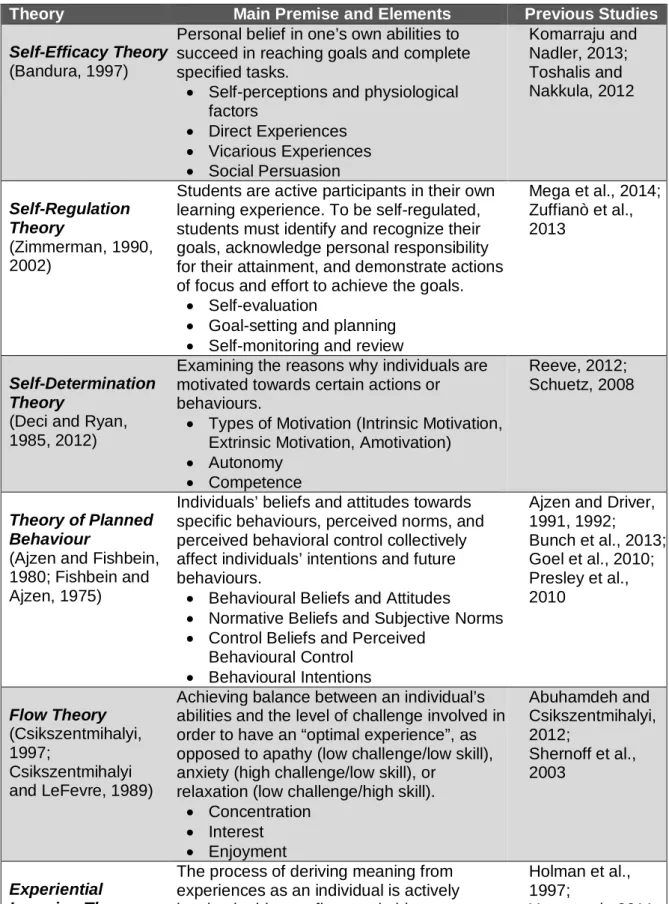
Table 3. Overview of Theories for Motivation and Learning... 72
Table 4: Research Design and Implementation... 87
Table 5: Summary of Student Characteristics for the Questionnaire ... 110
Table 6: Student Representation by Country ... 112
Table 7: Previous Experiences and Preparations ... 114
Table 8: Comparing Expectations and Experienced Levels of Concern ... 117
Table 9: Comparing Student Involvement in Activities between the University and in Student’s Home Country ... 118
Table 10: Motivation Subscales and Items ... 128
Table 11: Experienced concerns scale and items ... 129
Table 12: Student Engagement Subscales and Items ... 131
Table 13: Satisfaction Subscales and Items ... 132
Table 14: Experience Quality Subscale and Items ... 134
Table 15: Reliability Statistics for Variables and Subscales... 134
Table 16: Correlations between Motivation, Engagement, Concerns, Satisfaction, and Experience Quality ... 135
Table 17: ANOVA for Student Characteristics compared with Experience Quality .... 137
Table 18: Multiple Regression Coefficients for Predicting Experience Quality ... 138
Table 19. Standardised Path Coefficients between Variables ... 144
Table 20: Summary of Coding for Qualitative Data ... 148
Table 21: Thematic Coding Summary of Qualitative Data ... 149
Table 22: Overview of Semi-structured Interview Sessions ... 151
Table 23: Correlations between Variables and Individual Factors in SEM ... 242
ii
List of Figures
Figure 1. SERVQUAL gaps model ... 15
Figure 2. Determinants of customer expectations ... 17
Figure 3. Components of transactional satisfaction evaluations ... 18
Figure 4. Components of overall quality evaluations ... 19
Figure 5. NSS results and improvements 2012-2014 ... 21
Figure 6. High, average, and low institutional performance on 'Overall Satisfaction' ... 22
Figure 7. Different types of experiences ... 29
Figure 8. The I-E-O model of educational assessment ... 39
Figure 9. The 3P model of classroom learning ... 41
Figure 10. Student-centred model of the service-quality experience ... 42
Figure 11. Model linking classrooms, learning, and persistence ... 52
Figure 12. Connecting previously divergent areas of research ... 70
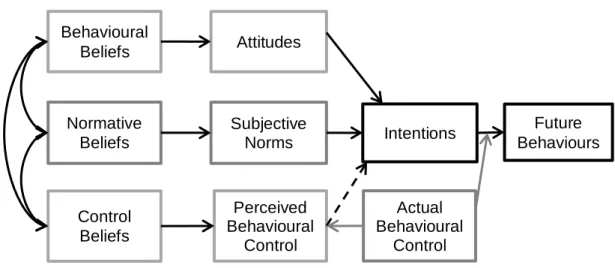
Figure 13. Model of the theory of planned behaviour ... 75
Figure 14. Conceptual model regarding the experiences of international students ... 76
Figure 15. Interactive model of research design ... 79
Figure 16. Research process ... 85
Figure 17. Proposed model for exploring international student experiences ... 102
Figure 18. Comparing gender across age groups ... 111
Figure 19. World regions represented by students ... 112
Figure 20. Student evaluations of experience quality ... 122
Figure 21. Student involvement in clubs/societies according to world regions ... 123
Figure 22. Student involvement in clubs/societies according to academic level... 124
Figure 23. Student involvement in clubs/societies according to faculty ... 124
Figure 24. Motivation reflecting five factors ... 141
Figure 25. Student Engagement as two variables ... 141
Figure 26. Student Perceptions reflected in eight factors ... 142
Figure 27. SEM depicting tested relationships between variables ... 143
iii
Abbreviations and Acronyms
ACER Australian Council for Educational Research
AUSSE Australasian Survey of Student Engagement (Australia) CEQ College Experience Questionnaire (Australia)
CSEQ College Student Experiences Questionnaire (USA)
FE Further Education
HE Higher education
HEA Higher Education Agency
HEAR Higher Education Achievement Report HEI Higher education institution
HESA Higher Education Statistics Agency IIE Institute of International Education ISB International Student Barometer NSS National Student Survey
NSSE National Survey of Student Engagement (USA and Canada) NUS National Union of Students
PMI Prime Minister’s Initiative (1999-2005)
PMI2 Prime Minister’s Initiative for International Education (2006-2011) PTES Postgraduate Taught Experience Survey
PRES Postgraduate Research Experience Survey (PRES)
QAA United Kingdom Quality Assurance Agency for Higher Education Quality Code United Kingdom Quality Code for Higher Education
UK United Kingdom
UKCISA United Kingdom Council for International Student Affairs (2007-now) UKCOSA originally United Kingdom Council for Overseas Student Affairs
(1968-1992), this then changed to UKCOSA: The Council for International Education (1993-2006)
UNESCO United Nations Educational, Scientific and Cultural Organisation
Standard Abbreviations for Statistical Terminology CFA Confirmatory factor analysis EFA Exploratory factor analysis SEM Structural Equation Modeling
1
Chapter One: Introduction
International education is a complex and growing field of interest which can be quite difficult to describe. In the foreword of The SAGE Handbook of International Higher Education, Josef Mestenhauser (2012) explains this chosen “specialization”:
Everybody is apparently expected to have one, so I often answer “international education”. Yet, I always feel that such an answer is totally inadequate to explain that my field is untraditional; that it is not a disciplinary “speciality”; that it does not reside in its own “box” but that it is found in many boxes; that it is a composite of borrowings from virtually every academic discipline and every culture; and that international education is therefore multidimensional, multidisciplinary, and
cross-cultural. (p.vii)
International education is indeed “multidimensional, multidisciplinary, and cross-cultural” as it connects and crosses between the fields of education, language and culture studies, sociology, politics, geography, economics, and so forth. Historically, only privileged and wealthy students were encouraged to participate in international education experiences due to the cost and other restrictions related to access to education in general (Byram and Feng, 2006; Deardorff et al. 2012; Lewin, 2009); such experiences were considered a capstone for young male aristocrats who could claim they had spent part of their education on a ‘Grand Tour’ traveling and living abroad, often in continental Europe (ibid). However, recent advancements in policies provide evidence of advocating increased access to international education experiences for everyone, recognising that students and staff from all cultures and backgrounds and every academic discipline can benefit from international education experiences;
examples of such policies exist at national levels such as the Paul Simon Study Abroad Act in the United States of America (NAFSA, 2013; Paul Simon Public Policy Institute, 2013) and the Prime Minister’s Initiative in the United Kingdom (UK) (IIE, 2014; UKCISA, 2012b), as well at the supra-national level with the Joint Quality Assurance Capacity Building Project for ASEAN countries (Wu, 2012) and the Bologna Process within the European Higher Education Area (Sweeney, 2010).
These policies also affect higher education institutions (HEIs) in developing and adapting strategic plans and partnership agreements to include an higher education (HE) internationalisation agenda (Deardorff and van Gaalen, 2012; Nolan and Hunter, 2012; University of Leeds, 2009, 2014b), often referring to the reputation of the institution as well as increased attention to the numbers of incoming and outgoing students and staff who participate in international education experiences. The
rationales behind changing such policies and practices are widespread and according to Knight (2012) encompass four different dimensions:
2
• academic (i.e. comparisons of international standards, increased attention to international dimensions in teaching and research),
• economic (i.e. predictions and evaluations based on revenue generation and competition at individual, institutional, and national levels),
• political (i.e. critical examinations of national security and foreign policy), • and/or social (i.e. interventions and programmes for increasing intercultural
understanding, community and social developments).
Though presented separately as individual foci, these four dimensions are not discrete entities in international education; rather, they are interdependent with each one relying on or affecting another. Furthermore, although research in international education has been conducted at every level from elementary to tertiary (or post-secondary)
education and has included both staff and students (Lewin, 2009; Deardorff et al., 2012), the experiences of incoming international students at HEIs remain a topic of continued current debates with comments reflecting all of the four dimensions as stated above (Garner, 2014; Jobbins, 2014; UKCISA, 2014c).
1.1 Rationale for the Research – Why focus on international students?
Research in international education (Deardorff et al., 2012; Lewin, 2009) is traditionally divided into studies which either focus on staff (i.e. programme administration, training for professional development) or on students (i.e. motivations, satisfaction). There is also a noted divide in the field (NAFSA, 2014) which either focuses on individuals who go abroad (i.e. education abroad or study abroad) or those who come from other countries to study (i.e. foreign or international students). The terminology used in these separate areas of international education thus distinguishes between two groups of students (i.e. incoming and outgoing), acknowledging different cultures and individual students’ needs as well as practical implications regarding the availability of different support services and distinct administrative requirements for specific visa regulations or immigration procedures.
However, while there is an agreed meaning attributed to ‘study abroad’ in reference to emigration with students who leave the country, there is less consistency in the conventional understanding of ‘international students’ (Banks and Bhandari, 2012). Some institutions report data for ‘international students’ based on residency and citizenship or visa status (i.e. holding a passport from another country or needing a special visa), while others provide their data based on the fees students pay for academic tuition (i.e. one rate for home and EU students, a separate rate for students from outside the EU). Further, some institutions only collect data for those students enrolled in full degree-granting programmes and/or programmes of a full academic year (as opposed to short-term mobility programmes of six months or less). Each of
3 these distinctions seems to exclude significant numbers of students who do not fit into these categories for data collection (see for example UNESCO UIS, 2014; University of Leeds, 2014a). This creates noticeable discrepancies in the amount and types of available data while discounting a basic similarity between the students, which as the UKCOSA (2004) report succinctly states, “all non-UK students face similar issues in adjusting to life in the UK,… regardless of the level of fees they pay” (p.18). Thus, for the purposes of this study, a more inclusive definition of ‘international students’ as proposed by the Institute of International Education (IIE) (2012) is most appropriate:
students who undertake all or part of their higher education experience in a country other than their home country or who travel across a national boundary to a country other than their home country to undertake all or part of their higher education experience.
This definition is intentionally broad as it includes both degree-seeking (i.e.
undergraduate, postgraduate taught, and postgraduate research students) and non-degree students (i.e. International Foundation Year, Erasmus or other exchange programmes, and study abroad students) in order to include all students from regions across the world. When combined in this manner, the effects of the international student population on HE policies and practices are considerable; according to data compiled by the UNESCO Institute for Statistics (UIS) (2014), more than 3.5 million students worldwide enrolled in tertiary education and studied at HEIs outside their country of residence in 2012, representing approximately 2% of total HE enrolments1. Among this substantial number, over 425,000 international students enrolled in HEIs in the UK in 2012/13, constituting 18% of total UK HE enrolments (IIE, 2014; QAA, 2014; UKCISA, 2014b) and contributing an estimated £4.9 billion to the UK economy
(Universities UK, 2014), with £3.4 billion coming from non-EU students.
The UK has a long history of attracting international students and is consistently rated among the top host destinations for international students – currently ranked 2nd behind the United States of America (IIE, 2014; UKCISA, 2012a; UNESCO UIS, 2014).
Since 1999, important reforms have been introduced by the UK government which focus on improving international education strategies (UKCOSA, 2004, 2007; UKCISA, 2008, 2011, 2012b); namely, the Prime Minister’s Initiative (PMI) began as a five-year national strategy from 1999-2005 which was then followed by the Prime Minister’s Initiative for International Education (PMI2) from 2006–2011.
1
This percentage is based on examining the UIS dataset (UNESCO UIS, 2014), which compiles available national data along with UIS estimations of enrolments; the data only covers students “who pursue a higher education degree outside their country of usual residence (so called ‘degree mobility’) and exclude students who are under short-term, for-credit study and exchange programmes that last less than a full school year”. According to the dataset, total enrolment in tertiary education worldwide in 2012 was 169,578,903 which included 3,503,341 incoming international students (ibid).
4
At the launch of PMI in June 1999, then Prime Minister Tony Blair stated:
Our universities and colleges are second to none. Their world-class reputation means that they are among the most popular for international students. I am determined to build on this strength with a long-term strategy to attract many more. The institutions, their students and our economy will reap considerable
rewards. (Gürüz, 2011, pp.245-246)
Since 2011, however, the UK government has implemented various immigration reforms which have been considered a deterrent to HEI recruitment efforts and general perceptions of international students wishing to study in the UK (see Home Office, 2014; UKCISA, 2014a) including:
2011 Revision of the visa system by the UK Border Agency (UKBA), tying the visa to the HEI which issues the Certificate of Acceptance for Studies (CAS); HEIs must now monitor international students’ attendance and academic progress and report to the UKBA.
International students are now limited to the amount of work they may undertake, if any, during their studies (depending on the terms of the visa, between 10-20 hours per week during regular term time) and must apply for a separate visa if they wish to stay in the UK to work after their studies are completed.
2012 UK Home Office eliminates Tier 4 post study work visa, which previously allowed international students to stay in the UK to work after their studies. 2014 Immigration Act 2014 increases the enforcement powers for immigration
officers, prohibits banking institutions from opening bank accounts for anyone without express permission to do so, requires landlords to check the immigration status of prospective tenants, increases the use and retention of biometric data collected, and adds new charges for access to National Health Service (NHS) treatment in hospital to immigration application fees which are calculated based on annual estimates.
These official policy revisions were intended to ‘fix’ noted deficiencies with the system: We want to attract more world-class individuals with the knowledge and expertise that will drive leading research and economic growth. However we have reformed the student visa system because it has been abused for too long, with providers selling immigration, not education. (Richardson, 2013) These changes in UK immigration policy have subsequently attracted notice both domestically and abroad, especially in 2012 when the UKBA temporarily revoked London Metropolitan University’s official Tier 4 sponsorship status (London
Metropolitan University, 2012; NUS, 2012); this action not only affected prospective international students with offers for placements to study at the university starting in the autumn but also those students who were already enrolled in programmes (effectively
5 halting their studies unless they were successful in transferring to another HEI). The university responded by taking legal action against the UKBA (Vasagar, 2012), claiming it had met and/or exceeded the UKBA’s requirements which had been significantly changed more than ten times in the previous three years:
London Met is concerned that the current immigration policy is creating confusion across universities in the country and irrevocable damage to the UK’s globally
recognised education sector. (ibid)
Such complications with immigration procedures, along with rising tuition fees, have been argued to have a significant detrimental effect on HE in the UK (Garner, 2014; Jobbins, 2014; Kandiko Howson, 2014; Sellgren, 2013), noting the evidence of a decrease in the number of international student HE applications and subsequent HEI enrolments in the UK since 2012 (HESA, 2014; UKCISA, 2014b).
In fact, the government had initially introduced PMI as an economic response to a relative decline in international student enrolments in the UK during the 1990s, and so provided a specific aim to increase the number of international students enrolled in HE and further education (FE) programmes by 2005 (DTZ, 2011); PMI2 then further expanded the UK’s international education agenda with focused efforts to increase the number of British students going to other countries in addition to evaluating the range of services and support available for international students in the UK (ibid). Specifically, the UK government used PMI2 to focus on four main areas or ‘strands’ (Hallett, 2011) to “secure the UK’s position as a leader in international education”:
1. marketing and communications (i.e. selling the benefits of UK education to increase numbers of incoming international students);
2. diversification of HE markets (i.e. reduce dependence on small number of countries sending high numbers of students to the UK and increase enrolments of students from less represented countries);
3. ensuring the quality of the student experience (i.e. managing expectations and increasing student satisfaction with the student experience and employability); 4. and building strategic partnerships and alliances (i.e. establishing long-term
relationships through HE and FE partnerships projects). (ibid) The third of PMI2’s four strands – the student experience – has attracted a great deal of attention by funding multiple collaborative projects which have been administered by the Higher Education Academy (HEA), the National Union of Students (NUS), and numerous HE and FE institutions (see UKCISA, 2013a).
1.2 Statement of the Problem – What is missing from discussions about ‘the student experience’?
Different organisational entities (DIUS, 2009; DTZ, 2011; Gosling, 2013; UKCISA, 2013a, 2014c; UKCOSA, 2004) have interpreted the target of “ensuring the quality of
6
the student experience” in relation to improving student satisfaction ratings with HEIs and students’ unions, as delineated in PMI2. As a result, HEIs increasingly use large institutional surveys such as the National Student Survey (NSS) and the International Student Barometer (ISB) to get feedback from students in order to compare levels of student satisfaction with teaching, services, and support, specifically noting trends and progressions over time and also evaluating comparative data between institutions (HEFCE, 2013, 2014; i-graduate, 2012; NSS, 2014; QAA, 2013; UKCISA, 2011). The results from such surveys have prompted HEIs to evaluate existing services to identify areas which need improvement as well as examples of good practices that
demonstrate ‘excellence in teaching and learning’ (ibid). However, other research has indicated that “satisfaction” should not be considered synonymous with “quality” (Brookes, 2003; Chen and Chen, 2010; Cole et al., 2002; Douglas et al., 2008; Grace et al., 2012; Wiklund and Wiklund, 1999).
While satisfaction is used to signify the degree to which one’s expectations are or are not met, experience quality is a representation of the student’s overall impressions characterised by an emotive evaluation of their experience (Dale, 2003; Douglas et al., 2006, 2008; Parasuraman et al., 1985, 1988; Pine and Gilmore, 1999). With this in mind, experience quality encompasses not only students’ satisfaction with provisions made by the HEI (i.e. course content, facilities, services, etc.), but also students’ attitudes and other perceptions about the total experience (i.e. overall satisfaction, overall quality, and willingness or intention to recommend to others) (ibid). A closer examination of students’ attitudes and perceptions regarding experience quality, beyond measures of satisfaction, is considered useful as such perceptions can affect the reputation of an HEI, or even that of the national HE system. For instance, the UK is traditionally seen as a “world-leading” competitive force in international education (Gürüz, 2011) which is often attributed to different marketable features of the UK education system including:
an international reputation for education and research
the profile of its elite global higher education brands
historical trade and political links
the popularity of English language study and culture
post-study work prospects (Universities UK, 2012, p.12) Each of these characteristics is cited as a reason for why international students choose to come to the UK to study (Böhm et al., 2004; UKCISA, 2011; UKCOSA, 2004), reflecting socio-cultural, political, and economic incentives for students and the UK. Yet most of these characteristics depend on previous and current students confirming and perpetuating the belief that there is a unique value and distinctive benefits in choosing the UK education system over another. Encouraging international students to come to
7 study in the UK and helping them to have positive experiences is of crucial importance on many levels, for as Dame Alexandra Burslem (2004) states,
…the international diversity on our campuses enriches the environment for all staff and students… Perhaps most importantly, their familiarity with the UK will allow them to influence others – positively or negatively, depending on their experiences – both in their home countries and wherever else in the world they go. Over and above our responsibility to ensure a higher quality of experience for all our students, as future partners in diplomacy, trade and cultural exchange, and as people likely to become influencers and decision-makers, we should take very seriously the question of whether international students’ experiences of the
UK are positive. (p.6)
Along with references to ‘the student experience’, some institutions and researchers have gone further to include the term ‘student engagement’ in various marketing and publications (HEFCE, 2008, 2014; i-graduate, 2012; Ingham, 2012; Nygaard et al., 2013; QAA, 2013; SPARQS, 2014; University of Leeds, 2009, 2014b). The Quality Assurance Agency for Higher Education (QAA) (2013), for example, states:
Student engagement is all about involving and empowering students in the process of shaping the student learning experience. QAA is committed to working with higher education institutions and students’ unions to help them develop the tools to actively involve students in the organisation of their own learning and student experience.
Although such efforts support increasing the active involvement of students, the understanding of ‘student engagement’ seems unclear. Fundamentally, such statements lack explicit references as to what student engagement means, how students can or should be involved and/or empowered, and how student engagement can be seen to directly affect the students’ experiences. Furthermore, while there is considerable available research (see Bryson, 2014b; Chapman et al., 2013; Ku, 2001; Ku et al., 2008; Nygaard et al., 2013; QAA, 2012; Solomonides et al., 2012; Trowler and Trowler, 2010) from a staff perspective which considers student engagement issues for staff and students, sometimes recruiting students as co-investigators or consultants in the research process, there is a dearth of evidence for research on student engagement which has been initiated and conducted from the students’ perspective.
While there is considerable debate regarding the proper interpretation of ‘student engagement’ (ibid), this study considers the definition of ‘student engagement’ as proposed by Bryson (2014a) better for clearly articulating the most salient points:
what a student brings to Higher Education in terms of goals, aspirations, values and beliefs and how these are shaped and mediated by their experience whilst a student. SE is constructed and reconstructed through the lenses of the
perceptions and identities held by students and the meaning and sense a student makes of their experiences and interactions. (p.14) Compared to previous descriptions (Astin, 1984; Ku, 2001; Ku et al., 2008; McInnis et al., 2001; Pace, 1984; Schlechty, 2011), the above definition of student engagement
8
acknowledges the effects of students’ personal backgrounds, emotional responses, behaviours, interactions with others, and cognitive perceptions about their experiences; thus, considering student engagement to be both an “outcome” and a “process” in the students’ experiences beyond just examining their academic grades and/or persistence as measured by staff and the institution (ibid). As such, student engagement is not a static concept which may be easily measured and interpreted. Rather, as Kahu (2013) states, there are important emotional, cognitive, and behavioural components of
student engagement which are related to identified antecedents and consequences. As students’ perceptions regarding satisfaction and experience quality may be considered appropriate as measurable consequences or outcomes of student engagement
(Bryson, 2014a; Kahu, 2013; Solomonides et al., 2012), their previous experiences and motivations may also have noticeable effects on the students’ general perceptions of their experience as the antecedents of student engagement. However, in reviewing relevant content from previous published studies, it seems that few examples exist of recent research which has explored the topic of motivation in relation to student engagement beyond their involvement in academic activities (Astin, 1984; Martin, 2007; Milem and Berger, 1997), which could more adequately identify the level of association between the two concepts.
Research shows that various subgroups within the general student population have different motivations towards their student experience which can then directly affect how they engage in their HE experience (see Harper and Quaye, 2009; Nygaard et al., 2013). For example, international students have different motivations than domestic students and also face separate concerns with how they engage in the HE experience (UKCOSA, 2004), which includes coping with adjusting to a different education system as well as opportunities to experience different attitudes, behaviours, dress, foods, sights, and even variations in language. Much of the previous research has focused on retrospectively exploring students’ motivations in terms of benefits of international education identified by staff such as opportunities to experience other cultures (Di Pietro and Page, 2008; Freestone and Geldens, 2008; Van Hoof, 2005), improving foreign language skills (Allen and Herron, 2003; Cohen et al., 2005; Engle and Engle, 2004), improving future career opportunities (Hamza, 2010; McLeod and Wainwright, 2009), and engaging in positive global citizenship behaviours through increased awareness and understanding of other cultures (Douglas and Jones-Rikkers, 2001; McAllister et al., 2005; McLeod and Wainwright, 2009). Students often become more self-aware and further develop their intercultural skills, whilst they enjoy what many believe to be “once-in-a-lifetime” experiences (Byram and Feng, 2006; Lewin, 2009).
9 However, when compared to the great quantity of research centred on the experiences of domestic students, a relatively small proportion of the research in student
engagement is focused on international students (Anderson et al., 2009; Hardy et al., 2013; Montgomery, 2010; Warmington et al., 2013). Of the few published studies which have addressed the topic of student engagement for international students (ibid), no evidence has been found of studies which have taken a mixed methods approach to more thoroughly explore the relationships between students’ motivations, students’ engagement, and students’ perceptions about satisfaction and/or experience quality. This study therefore aims to address a gap in the existing literature on international students’ experiences by using mixed methods to focus on motivations, student engagement, and perceptions about their experiences regarding satisfaction and experience quality. A phenomenological approach is utilised in the methodological design and interpretation of the findings of this study in order to focus more on the students themselves rather than the HEI or staff. Thus this study hopes to contribute to the existing knowledge base by providing additional information from the students’ perspective regarding the student experience and those of international students in particular.
1.3 Research Motivations
The initial impulse to conduct this research began as a result of a conversation between students and a member of staff during a first-year undergraduate module. When discussing various attendance policies and university regulations, one of the students replied, “Some of the best things you learn in life don’t come from a classroom”. This struck me at the time as being quite profound, even in its relative simplicity. As an undergraduate, I was enrolled in a dual honours programme (International Studies and German) and also worked in the university’s recreation department. I kept busy both academically and socially, making connections with other students and staff and becoming very involved with student clubs and societies. This continued throughout my undergraduate experience until I went to study abroad for a year in Austria. This became a significant period of adjustment as I received very little support from staff at the host university (i.e. unaware of visa regulations, loan disbursal dates and procedures, and how or when to send academic transcripts back to my home university), I was not assigned to any specific academic department (i.e. I
enrolled in various classes across multiple disciplines in relation to international studies – history, politics, language, law, etc. – of which most were taught in my target
language of German), there were no university clubs or societies to join, and I was not allowed to work according to visa restrictions. Yet, in spite of these difficulties, or in fact maybe because of them, I had a wonderful study abroad experience; I learned more about myself, became more familiar with another culture, made friends from across the
10
world at the university and during my travels, and found out how to cope with a different academic system.
I returned home to find I then had to re-adjust to everything that was once familiar – language, culture, food, studies, etc. However, I maintained an interest in the experiences of international students and continued to work with the university’s international office in addition to the part-time position I had in the recreation
department. In my final year, I proposed this research (i.e. exploring the experiences of international students) to my academic advisor as an idea for an undergraduate
honours project but was directed elsewhere as it was not their area of expertise and there was not much research available at the time on which to base the study. So, I kept the idea as an alternative interest for potential graduate or postgraduate work with an international focus. With this in mind, I subsequently planned this study as part of completing a masters degree, until I found myself once again diverted to focus on another topic due to extenuating circumstances. As I knew I wanted to go abroad again and felt strongly that this was a topic worth exploring, I submitted a detailed outline of the research proposal with my application for postgraduate research study. Being an international student enrolled at a UK university has ultimately provided an opportunity to examine the topic from a perspective (i.e. the student perspective) which has not been fully explored before in this manner. My previous experiences studying and working at different universities have also affected the design and interpretation of this study with an emphasis on both academic and non-academic aspects of the student experience, particularly in relation to international students. A further examination of my position as the researcher for this study is provided in Chapter Three.
1.4 Definitions of Key Terms
Definitions of motivations, student engagement, satisfaction, and experience quality are discussed further in Chapter Two; however, the following brief working definitions are provided in reference to key terms as used in this study.
Experience quality: a holistic evaluation of the student experience based on examining students’ perceptions about various aspects of their experiences whilst abroad; in this study, experience quality refers to a combination of students’ emotive responses related to a total measure of satisfaction, willingness to recommend the international HE experience, and an overall measure rating the international experience.
International students: students who are not originally from the UK and have come to the UK in order to complete part, or all, of their HE experience.
11 Motivations: why students choose to undertake an international education experience (i.e. study abroad) as part of their HE experience.
Satisfaction: the level to which students’ responses indicate that particular expectations have been met in regard to targeted outcomes.
Student engagement: both a process and an outcome, measured in reference to students’ behaviours and involvement in academic and non-academic activities as a precursor to students’ perceptions of experience quality.
12
Chapter Two: Literature Review
This chapter discusses the theoretical context and background in which this research is situated. As such, a review of literature relating to the student experience and the concept of student engagement is provided along with an overview of the theoretical framework which underpins this study. In taking account of previous research and relevant theories, this chapter establishes the justification for this study by noting particular gaps in the general discourse around students’ experiences and student engagement, and more specifically in relation to those of international students. As stated earlier in Chapter One, research in international education is complex as it incorporates different features from various, otherwise seemingly disparate, fields (i.e. education, foreign languages, sociology, politics, etc); the complexity of such
interdisciplinary research is further compounded if a study is intended to connect theory with practice and/or aims to address perceived inconsistencies in existing research by utilising an alternative perspective to those presented in previous studies. Development of this particular study has involved recognising the usefulness of multiple contributions from the fields of business, education, and recreation and tourism for the express purpose of advancing knowledge about the experiences of international students in HE from the students’ perspective. With this in mind, the literature review is divided into six primary sections in order to develop a more thorough and coherent discussion of the specific concepts and relevant research for a critical exploration of the experiences of international students. The first three sections focus on presenting further clarification of the individual concepts of ‘quality’ (Section 2.1), ‘student experience’ (Section 2.2), and ‘student engagement’ (Section 2.3) which were briefly introduced in the previous chapter, as well as discussing both the practical and theoretical distinctions between their relative components. The fourth section (Section 2.4) then provides a summary of these key concepts to consider research which involves focusing more on the students’ perspective of the HE experience. The fifth section (Section 2.5) then provides a
synthesis of existing research in relation to the particular experiences of international students, noting various cultural differences, motivations, and outcomes. The final section (Section 2.6) then summarily abridges the chapter by identifying specific objectives and the primary questions for this study based on reviewing the noted gaps from the research and evaluating relevant theories of motivation and student
engagement, thus leading towards a discussion of methodology used in this study which will be presented in Chapter Three.
13 2.1 Conceptualising ‘Quality’ in Higher Education
As stated earlier in Chapter One, the Prime Minister’s Initiative for International
Education (PMI2) identifies four key strands for increasing and improving international education efforts in the UK (DTZ, 2011; UKCOSA, 2007; UKCISA, 2011, 2014); one of the strands encourages a “new focus on strengthening the overall quality of the
international student experience” (Hallett, 2011). However, when such key terms are merely used in a tokenistic manner as ‘jargon’ or ‘buzzwords’ in targeted initiatives such as PMI2 and individual HEI strategic plans (Nolan and Hunter, 2012; Sweeney, 2010; University of Leeds, 2009; Van der Velden, 2012a), the meanings behind ‘quality’ and ‘student experience’ are unclear as well as whose perspective this ‘new focus’ should come from. Additionally, as international students’ experiences are
multidimensional beyond just traditional academics (King et al., 2010), as will be discussed further in Section 2.2, relevant research for exploring experiences and student engagement is also found in the fields of leisure, recreation, and tourism. In the UK, the Quality Assurance Agency for Higher Education (QAA) is promoted as “the independent body entrusted with monitoring, and advising on, standards and quality in UK higher education” (QAA, 2014); in this role, they state:
We are dedicated to checking that the three million students working towards a UK qualification get the higher education experience they are entitled to expect. Established in 1997, the QAA conducts regular external reviews of HEIs to assess whether they are following set expectations from the UK Quality Code for Higher Education (Quality Code), which replaced the former Academic Infrastructure in 2012 (QAA, 2012). The Quality Code contains specific guidance and recommendations for HEIs in the UK regarding accepted standards for teaching, assessment, and degree qualifications; thus, the information gathered by the QAA in reference to the Quality Code provides evidence from HEIs to students and the general public centred on accountability and competitive marketing with principles borrowed from customer service, “based on provision of ‘what the customer wants’ and information about what is on offer” measured in “student satisfaction and league tables” (Fry, 1995, p.1). Comparisons between strategies for managing non-profit HE provisions and for-profit competitive businesses in the private sector are numerous (Altbach et al., 2009; Aldridge and Rowley, 1998; Baldwin, 1994; BIS, 2013a; CBI, 1994; Deardorff and van Gaalen, 2012; Fry, 1995; Grace et al., 2012; Pascarella and Terenzini, 1998). Sporn (1999) describes this change from historical European HE management structures:
The nation-state seems to have outserved its purpose, and its function has been redefined as supervising (as opposed to controlling) higher education
development. This is a change from the past, when state ministries were
responsible for all areas of higher education – including funding, access policies, program planning, and employment issues involving academics and
14
administration. The move towards a supervisory role for the state led to the introduction of quality standards and external reviews, greater institutional autonomy, buffer organizations, new information flows, and alternative
procedures for resource allocation and funding. (pp.70-71) Thus, the establishment of various initiatives and independent organisations2 which provide specific guidance for HEIs continues to reflect previous national government practices, even though HE has generally become decentralised with individual HEIs responsible for their own management practices. The comparisons between HE and private business practices are especially prevalent in the UK since the 2012 tuition fee increase (from £3000 to £9000 per year), as individuals question the ‘value’ of HE and compare HEIs by reviewing course requirements, published rankings and league tables, marketing of available services, and the perceived benefits of enrolment (Bohms, 2011; Coughlan, 2010; Paton, 2013). Even the language used in the Quality Code seems to adopt or mirror terminology from the customer service industry including feedback reports and student ‘satisfaction’ as a proxy for ‘quality’, requiring HEIs to meet minimum standards with specific ‘Expectations’ for the QAA’s quality control audit assessments (QAA, 2014). Yet, Parasuraman et al. (1985, 1988) explain that satisfaction is a precursor to quality, with the difference being that “quality is a global judgment, or attitude, relating to the superiority of the service, whereas
satisfaction is related to a specific transaction”. Interestingly, though taking note of the difference between temporal satisfaction with specific aspects versus aggregate
perceptions of the entire process, other researchers (Douglas et al., 2008; Grace et al., 2012; Wiers-Jenssen et al., 2002) are inconsistent in that they prefer to use the term ‘overall satisfaction’ for the entire process with ‘quality’ being specific to the course or programme. However, this only increases confusion as the terms have thus switched connotations from their earlier meaning, producing convoluted explanations such as: Measures of student satisfaction cover five dimensions: the quality of teaching, the quality of support facilities and physical facilities, social climate and leisure activities. Most of these variables are measured on a five-point scale, ranging from ‘very discontent’ to ‘very content’... Students were asked to indicate their overall satisfaction, how close the college/university is to an ideal higher education institution, how they judge the institution compared to prior
expectations, and whether it is likely that they would recommend the institution to friends and acquaintances. (Wiers-Jenssen et al., 2002, p.187) The above example is taken from a study on student satisfaction conducted in Norway. While the separate measures of student satisfaction seem consistent (asking “are you satisfied with x/y/z?” on an individual transactional level), their measure of ‘overall satisfaction’ actually seems to refer more to an evaluation of the entire process of the
2 Quality Assurance Agency (QAA), International Network for Quality Assurance Agencies
in Higher Education (INQAAHE), Global Initiative for Quality Assurance Capacity (GIQAC), European Network for Quality Assurance (ENQA), European Quality Assurance Register (EQAR), Council for Higher Education Accreditation (CHEA) (Altbach et al., 2009, p.64)
15 HE experience at the HEI and students’ related emotional responses to this process, which theoretically is closer to quality than satisfaction. However, this also brings into question whether HEIs and staff are more interested in a transactional level of research (i.e. considering HE to be a single episode, in order to identify specific areas in need of improvement) or conducting wider research to encompass an overall, global focus on students’ and staff attitudes (i.e. considering HE to be an aggregate of multiple encounters over time, assessing overall quality impressions).
2.1.1 Conceptualising Quality: The SERVQUAL Framework and Applications Different studies on student satisfaction (Arambewela and Hall, 2006, 2009; Clewes, 2003; Douglas et al., 2008) cite earlier work from the research team of Parasuraman, Zeithaml, and Berry (1985, 1988), involving the development and assessment of the service quality (SERVQUAL) framework and survey instrument. SERVQUAL has its origins in retail marketing, using executive interviews and cross-sectional focus groups with customers selected from four different firms involved in either financial services or product repair and maintenance (ibid). However, many other fields use SERVQUAL as a foundation for research in customer services, including education (Parasuraman et al., 1991, 1994; Zeithaml et al., 1993). In broad terms, SERVQUAL utilises a gaps model to evaluate service experiences between customers and service providers by focusing on deficits among expectations, perceptions, service delivery and
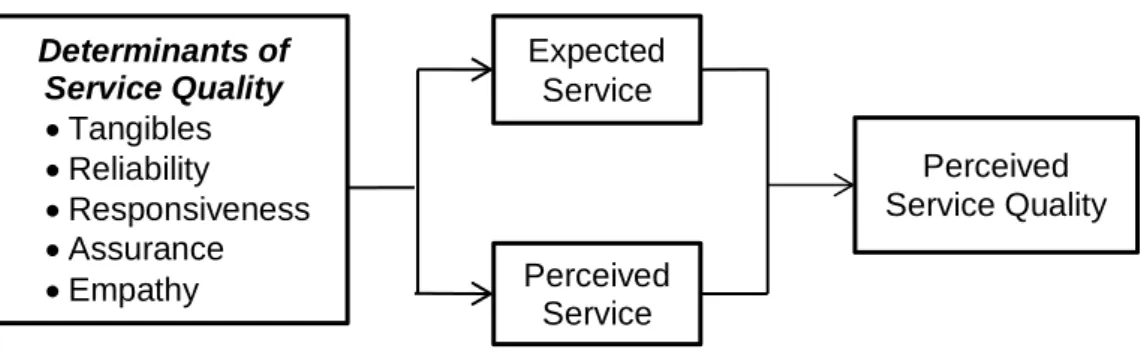
performance, and communication. According to the team (ibid), service quality is an aggregate measurement focusing on differences between what customers expect and their perceptions of the service/s received (Figure 1).
Figure 1. SERVQUAL gaps model
(adapted from Parasuraman et al., 1991, 1994; Zeithaml et al., 1993)
In order to provide a quantifiable measure for service quality, the SERVQUAL survey uses 22 items to address customer expectations and perceptions along five different dimensions:
1. Tangibles: physical facilities, equipment, appearance of personnel
2. Reliability: ability to perform the promised service dependably and accurately 3. Responsiveness: willingness to help customers and provide prompt service 4. Assurance: knowledge and courtesy of employees and their ability to convey
trust and confidence
5. Empathy: caring, individualized attention the firm provides its customers
(Parasuraman et al., 1988, p.23) Determinants of Service Quality •Tangibles •Reliability •Responsiveness •Assurance •Empathy Expected Service Perceived Service Perceived Service Quality
16
The five dimensions are adapted depending on the service provider, whether the service product involves manufactured goods with distinct transaction stages (i.e. creating, marketing, selling) or more esoteric experiences with multiple interactions between the customer and provider or service staff. Furthermore, although the five dimensions are conceptually distinct, they are also interrelated (Parasuraman et al., 1991), though the exact nature of these relationships is not specified.
In a subsequent study (Zeithaml et al., 1993), the team also provide evidence
regarding preceding factors or antecedents of customers’ expectations, identifying five distinct areas from the customer standpoint which involve personal needs, perceived alternatives, self-perceived role, situational factors, and past experience. These five additional areas are thus added to the explicit promises (i.e. advertising, marketing communications) and implicit promises (i.e. tangibles, price) of the service provider, and word-of-mouth recommendations (i.e. personal acquaintances, expert reports) that a customer receives, which can then affect their expectations regarding what they consider to be their level of desired service versus adequate service (ibid).
Figure 2 shows the relationships identified by Zeithaml et al. (1993) between each of the determinants for customers’ expectations of desired and adequate service. Noting the difference between expectations of desired service versus adequate service is important as services may “vary across providers, across employees from the same provider, and even within the same service employee” (ibid, p.6). However, between what is desired and what is determined adequate, or minimally acceptable, there is a flexible ‘zone of tolerance’ in which, “There is a certain level of service you expect… as long as the service is within a certain ‘window’ of that level you don’t complain” (ibid). Based on their research, the team concludes that there are variations in customers’ tolerance zones and, furthermore, that there are also fluctuations in tolerance zones among the five previously identified dimensions of service (i.e. tangibles, reliability, responsiveness, assurance, and empathy) (ibid). Most of the fluctuations occur with what customers consider adequate service, as over time their judgements about what they would like to experience versus may only change slightly whereas their minimum standards for service(s) may change significantly more (ibid).
17 Figure 2. Determinants of customer expectations
(taken from Zeithaml et al., 1993, p.5)
The final part of the SERVQUAL framework which should be addressed involves whether satisfaction precedes perceptions of quality or vice versa. Some studies would argue that perceptions of quality precede perceptions of overall satisfaction, including:
• Student satisfaction in HE (Clewes, 2003; Douglas et al., 2006, 2008; Grace et al., 2012; McInnis et al., 2000; Ramsden, 1991; Wiers-Jenssen, 2002)
• Customer satisfaction in leisure and tourism (Baker and Crompton, 2000; Bigné et al., 2005; Campo and Yagüe, 2009; Chen and Chen, 2010; Cole and Illum, 2006; Cole et al., 2002; Dmitrović et al., 2009; Hosany and Witham, 2009; Huang and Hsu, 2010; Pegg and Patterson, 2010; Yoon and Uysal, 2005)
• International student satisfaction (Arambewela and Hall, 2006, 2009; Khawaja and Dempsey, 2008)
18
These studies tend to use ‘performance indicators’ regarding satisfaction with the quality of specific encounters or aspects of service situations to predict overall satisfaction; thus, such research is conducted based on Cronin and Taylor’s (1992) premise against SERVQUAL that customers’ expectations are not as important as how the service is performed or delivered. However, Parasuraman et al. (1994) question this position as studies such as those listed are focused primarily on evaluating customers’ satisfaction with specific transactional episodes rather than global, overall attitudinal measures of quality, which is not SERVQUAL’s original premise. The
preference or tendency to focus on particular episodes or specific practices rather than the whole experience is conventionally acknowledged by the researchers. For
example, in conducting research with the Course Experience Questionnaire (CEQ) survey instrument in Australian HE, McInnis et al. (2000) explain the scope of their research by stating,
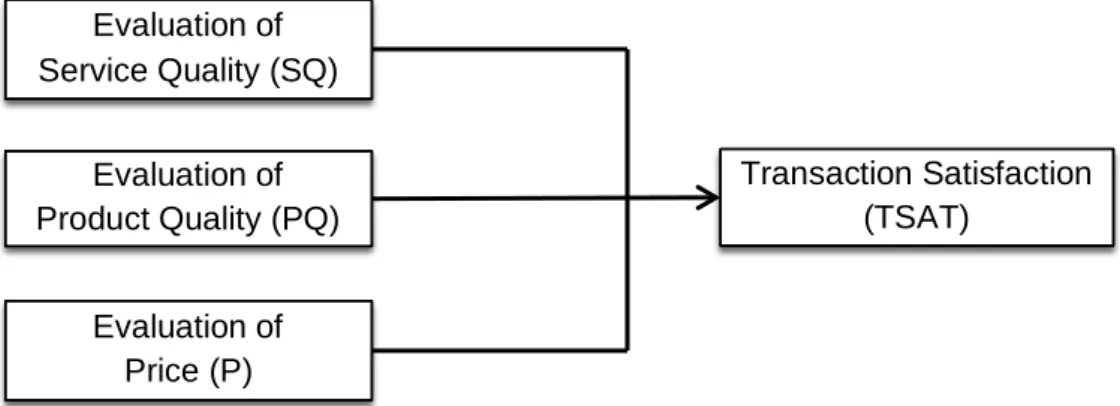
While classroom instruction is obviously an important part of the learning environment provided by universities, it is far from the sum of the university experience for students. The CEQ does not account for the social dimension of the student experience and the learning climate that is very much a product of a mix of student attitudes, outlooks and behaviours. (p.4) Recognising that many researchers are more inclined to focus on individual segments which can be controlled by the provider (as demonstrated by McInnis et al. above) as opposed to holistic perceptions of the entire process, which would include factors outside the provider’s locus of control, Parasuraman et al. (1994) suggest two different models for examining service quality – a transactional model and a global or overall model. The first model (shown in Figure 3) centres on a single experience or
transaction between a customer and service provider. According to this transactional model of service quality, customers have perceptions about the quality of service (SQ), the quality of the product (PQ), and the price (P) which affect whether or not they will be satisfied with their experience with the chosen service. In this model, the measure of customers’ satisfaction is used to address specific areas of service provision which are lacking and may be improved.
Figure 3. Components of transactional satisfaction evaluations (adapted from Parasuraman et al., 1994, p.121)
Transaction Satisfaction (TSAT) Evaluation of Service Quality (SQ) Evaluation of Product Quality (PQ) Evaluation of Price (P)
19 Figure 4. Components of overall quality evaluations
(adapted from Parasuraman et al., 1994, p.121)
The second model (shown in Figure 4) postulates that customers’ perceptions about the overall quality of the service provider depend on multiple measures of satisfaction based on various transactions and/or interactions within the service experience with the service provider. Thus, this model incorporates the earlier transactional satisfaction model while recognising that there may be multiple service encounter transactions which can then affect customers’ impressions regarding overall quality. With this model, individual areas of service provision in need of further scrutiny from the service provider may be identified (i.e. individual transactions) but the focus is on the collective attitudinal measure of customers’ overall quality impressions about the service
provider. Furthermore, the model shows that customers’ overall quality impressions about service providers are multidimensional, depending on four summative
evaluations in perceptions of satisfaction, service quality, product quality, and price. Most previous studies (as cited earlier) utilise the first model (Figure 3, transactional satisfaction) with distinct incidents, resulting in a noted gap in available research using the second model (Figure 4, overall quality) to examine experiences.
2.1.1.1 Previous Studies Examining Student Satisfaction
As previously stated, many studies in different fields have been published based on the aforementioned transactional model of overall satisfaction (depicted in Figure 3), as opposed to the paucity of studies which consider overall quality (depicted in Figure 4). Although this study intends to examine the experiences of students from a quality perspective rather than that of satisfaction, there is useful information to be gleaned by
TSATn SQn PQn Pn Transaction n TSAT1 SQ1 PQ1 P1 Transaction 1
Overall Quality Impressions *Satisfaction
*Service Quality *Product Quality *Price
20
examining studies which consider satisfaction to be a suitable proxy for overall quality. As a review of all studies would be beyond the purview of this research, a brief review of key studies examining satisfaction based on research with students is provided here. Some widely-used instruments are based on using student feedback through reports of overall satisfaction with specific reference to learning and teaching experiences, these include the Australasian Survey of Student Engagement (AUSSE) and Course
Experience Questionnaire (CEQ) in Australia (ACER, 2014; Coates, 2009, 2010; McInnis et al., 2001), the International Student Barometer (ISB) which is used worldwide (Garrett, 2014), the National Student Survey (NSS) in the UK (Ramsden, 2008; Ramsden et al., 2010), and the National Survey of Student Engagement (NSSE) in North America (Kuh, 2001a, 2001b). The customised information provided to HEIs in reports from these instruments is considered useful as research shows that reported overall satisfaction is linked with students’ willingness to recommend the HEI to others (Garrett, 2014; Kuh et al., 2006; Pascarella and Terenzini, 1998; UKCOSA, 2007); thus these instruments are used to provide accountability data to HEIs based on individual institution responses, as well as comparisons between institutions and academic departments which may indicate areas in need of improvement. Although the general majority of HE students seem to be satisfied with their experiences when reviewing reports across the different datasets for the AUSSE (ACER, 2014; Coates, 2010), the CEQ (McInnis et al., 2001), the NSS (BIS, 2011; Grove, 2014), the ISB (Garrett, 2014; UKCISA, 2011; UKCOSA, 2004), and NSSE (Kuh et al., 2006), critics note that
comparing HEIs based on published rankings can be troublesome as:
League tables are fraught with methodological problems, but are avidly read by students (notably international and postgraduate ones) and HEI managers alike. …Nonetheless, HEIs are strongly influenced by league tables since they relate to institutional reputation, and executive teams and governing bodies use them as KPIs [Key Performance Indicators] or strategic targets. (Middlehurst, 2011, p.25) The instruments have produced other useful findings beyond league tables though, with noticeable variations in responses between particular groups of students:
• Accommodation – students living in university accommodation or on campus seem to be inclined to report higher satisfaction (Coates, 2009);
• Age – younger students generally report higher satisfaction than older students (Coates, 2009; Garrett, 2014; UKCOSA, 2004);
• Nationality – international students have a tendency to report lower levels of satisfaction than domestic students (Coates, 2009), and among international students European students are more likely to report higher levels of
satisfaction and recommendation than students from Asia and the Middle East (Archer et al., 2010; Garrett, 2014; UKCOSA, 2004); and
• Social connections – students reporting close friendships and perceptions of supportive campus environments tend to report higher levels of satisfaction (Coates, 2009; Kuh et al., 2006; UKCOSA, 2004).