IRL @ UMSL
Dissertations UMSL Graduate Works
9-15-2017
Work Ethic, Turnover, and Performance: An
Examination of Predictive Validity for Entry-level
Employees
Christina Banister
Follow this and additional works at:https://irl.umsl.edu/dissertation
Part of theApplied Behavior Analysis Commons,Industrial and Organizational Psychology Commons,Organizational Behavior and Theory Commons, and thePerformance Management Commons
This Dissertation is brought to you for free and open access by the UMSL Graduate Works at IRL @ UMSL. It has been accepted for inclusion in Dissertations by an authorized administrator of IRL @ UMSL. For more information, please [email protected].
Recommended Citation
Banister, Christina, "Work Ethic, Turnover, and Performance: An Examination of Predictive Validity for Entry-level Employees" (2017).Dissertations. 705.
WORK ETHIC, TURNOVER, AND PERFORMANCE:
AN EXAMINATION OF PREDICTIVE VALIDITY FOR ENTRY-LEVEL EMPLOYEES
Christina M. Banister
M.A., Industrial and Organizational Psychology, University of Missouri – St. Louis, 2011 B.A., Psychology, Washington University in St. Louis, 2004
A Dissertation Submitted to the Graduate School at the University of Missouri-St. Louis in Partial Fulfillment of the Requirements for the Degree
Doctor of Philosophy in Psychology with an emphasis in Industrial and Organizational
December 2017 Advisory Committee John Meriac, Ph.D. Chairperson Therese Macan, Ph.D. Mark Tubbs, Ph.D.
Abstract
Work ethic is continually cited as a top factor in hiring new employees (Flynn, 1994; Shimko, 1990; VanNess, Melinsky, Buff, & Seifert, 2010). Research on the relationship between work ethic and job performance has typically shown positive results in a variety of contexts (Meriac & Gorman, 2017; Miller et al., 2002). The purpose of this study was to examine dimensions of work ethic and its relationship with turnover and contextual performance in an often-neglected segment of the workforce: entry-level employees. Data were collected from a large fast food franchise, including work ethic, turnover data, and supervisor-rated job performance. In Study 1, the relationships between the work ethic dimensions and turnover were examined. In Study 2, the relationships between work ethic dimensions and performance outcomes were examined through the mediating mechanism of job involvement. Turnover results indicated that dimensions of work ethic, including self-reliance, leisure and morality/ethics are potential predictors of avoidable and
involuntary turnover. Wasted time, morality/ethics and leisure were significant predictors of manager-rated performance outcomes and counterproductive behaviors. Implications and future research directions are discussed.
Acknowledgements
I would like to take this opportunity to thank everyone who has supported me through my graduate journey at UMSL. I’ve was given a chance to do something I never thought was possible and I’ve grown beyond my wildest dreams.
I am truly thankful for my advisor, John, who has had my back throughout graduate school. From my first published journal article to hopefully many more to come, thank you for always supporting me.
I’m forever indebted to my committee members (John, Therese, Mark, and Alice) who have challenged me, supported me and helped me grow throughout the dissertation process.
A big thanks to Therese for her “pep” talk at SIOP in Anaheim. Thank you for your encouraging words, the small things go a long way.
To my cohort (Cari, Amanda, Heather, and Shannon), who still to this day give me a hard time for being the last to reach the end of our journey. You all are lifelong friends and I never would have gotten here without your love and support.
Finally, to my family, we all know I wouldn’t be here without you. I’m not sure there are enough words to say how grateful I am for my mother and father who have been my support through graduate school. To my dad who has listened, encouraged and now understands what I/O Psych is, to my mother who has been my rock through all the good and the bad, and to my sister who kept me motivated (yes I know you are a lawyer), thank you for it all.
Table of Contents
Abstract ... i
Acknowledgements ... ii
Work ethic, turnover, and performance: An examination of predictive validity for entry-level employees ... 1
Work Ethic ... 4
Study 1: Work Ethic as a Predictor of Employee Turnover ... 8
Study 1: Method ... 20 Participants ... 20 Procedures ... 20 Measures ... 24 Demographics ... 24 Work Ethic ... 24 Social Desirability ... 24 Turnover ... 25 Study 1: Results ... 26 Study 1: Discussion ... 30
Study 2: Work Ethic as a Predictor of Performance Outcomes ... 34
Job Involvement ... 34
Work Ethic and Job Involvement ... 36
Job Involvement and Performance ... 41
Task Performance and Job Involvement ... 43
Organizational Citizenship Behavior and Job Involvement ... 45
Workplace Deviance and Job Involvement ... 47
Participants ... 54 Procedures ... 57 Measures ... 58 Demographics ... 58 Social Desirability ... 58 Job Involvement ... 58 Work Ethic ... 58 Task Performance ... 59 Workplace Deviance ... 59 OCB ... 60 Study 2: Results ... 60 Performance Data ... 61 Measurement Model ... 61 Analyses ... 65 Study 2: Discussion ... 68 General Discussion ... 74
Advancing Work Ethic Theory and Implications ... 74
Study Limitations and Future Directions ... 77
Conclusion ... 80
References ... 81 - 96 Tables ... 97 - 107 Figure Caption Page ... 108 Figures ... 109 - 119 Appendices ... 120 - 126
List of Tables
Table 1. MWEP Dimensions, Definitions and Sample Items ... 97
Table 2. Expanded Avoidability Taxonomy ... 98
Table 3. Study 1 Demographics ... 99
Table 4. Study 1 Means, Standard Deviations, and Intercorrelations ... 100 - 101 Table 5. Study 1 Logistic Regression of Turnover on Work Ethic Dimensions. ... 102
Table 6. Study 1 Logistic Regression of Voluntary Turnover on Work Ethic Dimensions ... 103
Table 7. Study 1 Logistic Regression including only Involuntary Turnover Sample ... 104
Table 8. Study 2 Demographics ... 105
Table 9. Study 2 Means, Standard Deviations, and Intercorrelations. ... 106
List of Figures
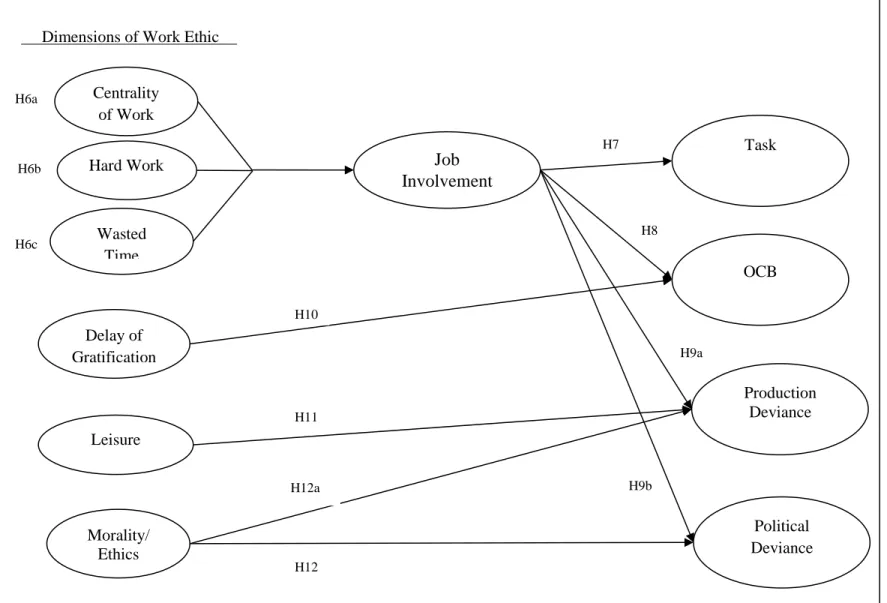
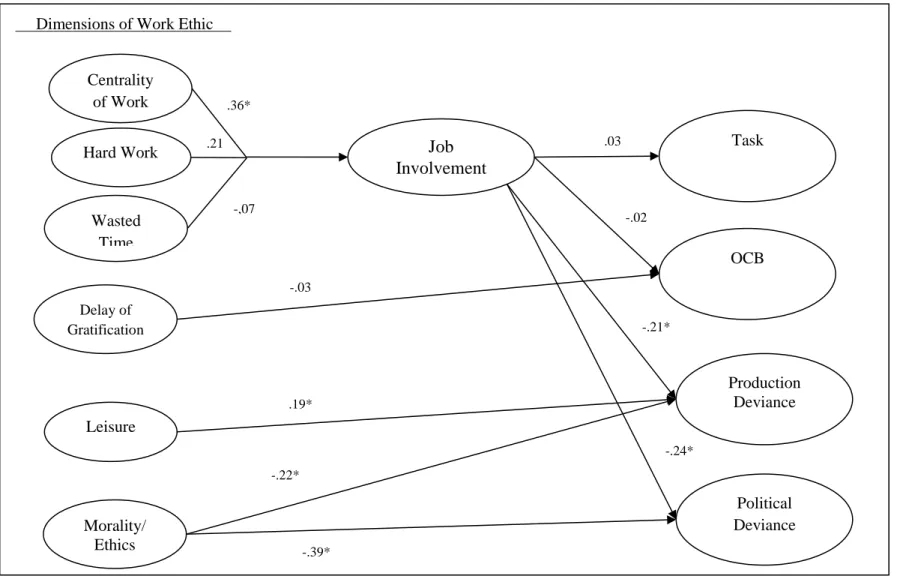
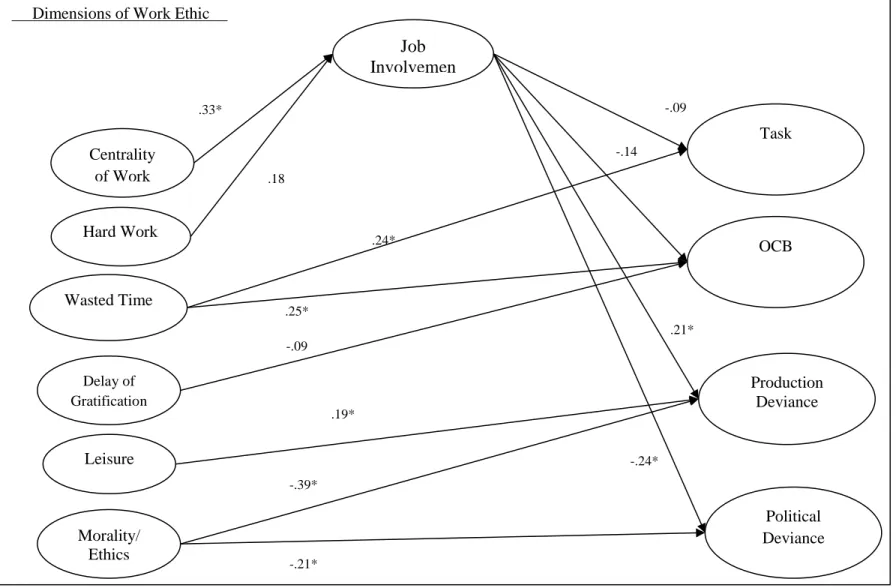
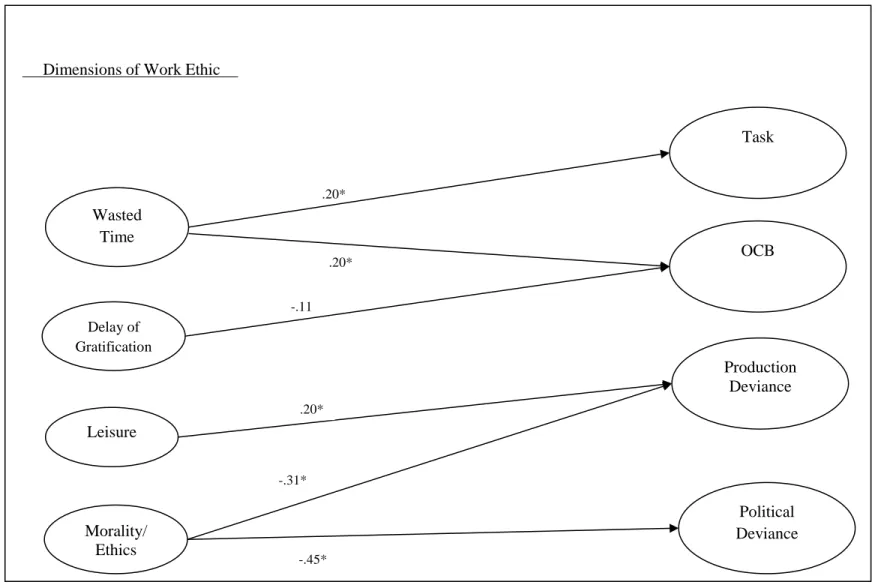
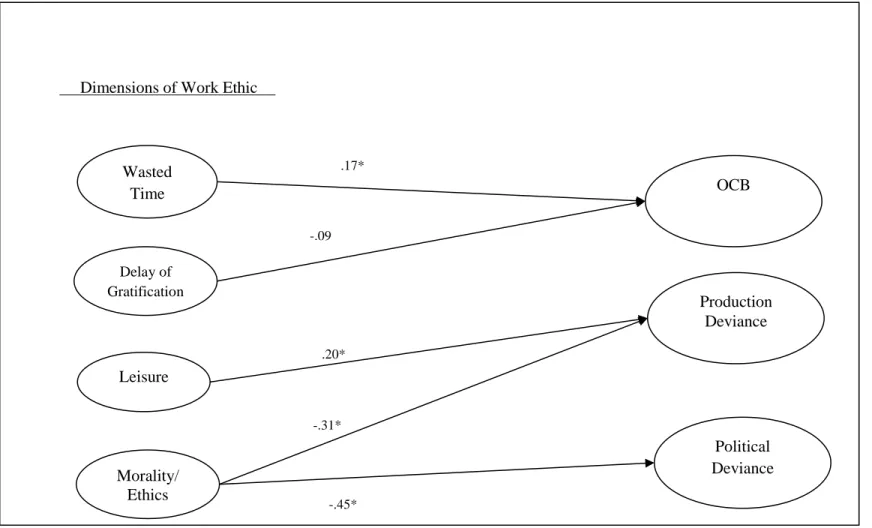
Figure 1. Study 1 Hypothesized Model ... 109 Figure 2. Study 2 Hypothesized Model ... 110 Figure 3. Study 2 Results from SEM modelling of Hypothesized Model with path coefficients. . 111 Figure 4. Study 2 Results from SEM modelling of Hypothesized Model with wasted time direct paths ... 112 Figure 5. Study 2 Results from SEM modelling of Hypothesized Model with no paths ... 113 Figure 6. Study 2 Results from SEM modelling of Hypothesized Model with direct paths ... 114 Figure 7. Study 2 Results from SEM modelling of Hypothesized Model and controlled for social
desirability. ... 115 Figure 8. Study 2 Results from SEM modelling of Hypothesized Model with wasted time direct paths
and controlled for social desirability ... 116 Figure 9. Study 2 Results from SEM modelling new model with removed Job Involvement, Centrality
of Work and Hard Work. ... 117 Figure 10. Study 2 Results from SEM modelling new model with removed Task Performance, Job
Involvement, Centrality of Work and Hard Work ... 118 Figure 11. Study 2 Results from SEM modelling new model with removed Task Performance, Delay
List of Appendices
Appendix A: Study Measures ... 120 Appendix B: Manager Training Guide. ... 125 Appendix C: Turnover Manager Check list ... 126
Work ethic, turnover, and performance:
An examination of predictive validity for entry-level employees Identifying constructs that can both buffer the negative impacts of the work
environment on performance and decrease turnover enable organizations through efficient use of resources in hiring and selecting applicants while additionally increasing their bottom line. One such construct is work ethic. That is, “the set of beliefs and attitudes reflecting the fundamental value of work” (Meriac, Woehr, & Banister, 2010, p.1). Hiring managers believe work ethic is important. More than 50% of hiring managers reported that there was “a greater concern about an applicant’s attitude rather than their aptitude”
(Flynn, 1994, p. 16). Another survey found that while younger workers often lack experience, the most cited reason for hiring entry level employees is their work ethic, above both reliability and availability of the candidate (Shimko, 1990). Furthermore, over 60% of surveyed managers identified work ethic as the most important factor in hiring employees, beyond other social and analytical traits, when all basic skills were already possessed by the applicant (Flynn, 1994).
On a broader level, organizations are expressing general concerns about work ethic among potential employees. Common complaints include a general decline in work ethic is declining in modern countries (Ali & Azim, 1995; Eisenberger, 1989). Concerns with decreased work ethics correspond directly to decreased job performance, higher levels of turnover, and increases in workplace deviance, ranging from breaking organizational policy to breaking laws (Klebnikov, 1993; Shimko, 1992; Sheehy, 1990; Yandle, 1992). It is a widely held belief that when hiring employees, their work ethic plays a role in the decision process.
According to the Bureau of Labor statistics (2012), there are currently over four million entry level food and beverage workers. That number is estimated to grow by over a million in the next eight years. In addition, of those in the food and beverage industry, 55% worked in limited service eating places, which includes fast food restaurants. Due to the large number of jobs that are produced by the fast food industry, it is imperative to understand problems and concerns that are faced in employing new entry level workers.
One of the most cited grievances in the fast food industry has been the turnover rate of their employees. The cost of recruiting, interviewing, hiring, and training has become burdensome, not just to the bottom line profit of companies, but to the morale of managers and teams within each individual restaurant. Whether an organization was corporate-owned or franchise-owned did not change the turnover rate of unskilled fast-food workers, which ranged from 50% to 100% between 2000 and 2008 (Nobscot Corporation, 2006).
Additional research has shown that when new hires start, there are higher levels of anticipation and responsibility, but the tendency for these behaviors decrease within the first two months (DelCampo, 2006). Employees may leave their positions for a variety of reasons including: arguments with a supervisor or co-worker, a change in perceptions of the organizational culture, or disinterest in their current job. It is imperative that
organizations take into account the bottom line cost of recruitment and training of an employee. The estimated value of attracting, selecting, and training a new fast food employee can cost up to $10,000 per person (McKay, Avery, Tonidandel, Morris,
Hernandez, & Hebl, 2007). When all of the human capital costs, in combination with the loss of productivity, specifically in the fast food industry, can add up to $10 billion per year (Holtom, Mitchell, Lee, & Eberly, 2008; Ongori & Agolla, 2008). Taken in context,
for an individual franchise restaurant, the average annual replacement caused by employee churn can cost between $50,000 to $100,000 (i.e., with 20 employees and a 50% turnover rate). Identifying those with stronger work ethic may lead to a reduction in turnover for entry level employees.
A unique attribute of the fast food industry is that the workers are often young and most work part time. This labor population, which accounts for 50% of the work force, need little to no educational or pre-existing skills (Bureau of Labor Statistics, 2012). Entry level fast food work is classified as unskilled. The only training is specific, and happens on the job (i.e., food preparation, sanitation, and cash handling). In addition, workers under 24 (who are likely to look for work in an entry level job) are more likely to be unemployed than those who are older and have had time to acquire work experience (Pallais, 2011). In June, 2012, for example, 26.5% of workers 16-19 and 14.4% of workers 20 to 24 years old were unemployed, compared with 8.4% of the general population (Bureau of Labor
Statistics, 2012). Due to lack of work experience it may be more difficult to judge how an inexperienced, younger worker may perform. Finding a construct (i.e., work ethic) that may aid in identifying high performers, when there is a lack of work experience to draw from, would be advantageous for organizations.
In recent years, there has been less focus on entry level jobs. While good management is necessary to understand how to recruit employees, train employees, and maintain a well-run store, the assumption that if you hire good managers the rest will “fall into place” may be placing more responsibility on a manager than can accurately be
evaluated. While managers play an integral part, we cannot overemphasize the importance of work ethic in entry level employees. The proposed study does not address the above
concerns with managers, rather focusing on an all too often overlooked sample population: the entry level worker. By focusing on hiring the best entry level employees we might make a more immediate direct impact on a business. That is, examining entry level employee selection can identify constructs, like work ethic, that may aid in selecting
employees who are potentially less likely to turnover and who may be stronger performers.
Work Ethic
Work ethic grew out of the post-reformation religious movement, where a new religious movement, the Protestant church followed values and practices of social welfare and focused on the individual (Byrne, 1990). Since the Reformation, modern societies have identified with Max Weber’s value system (i.e., Protestant Work Ethic (PWE)). In his two-part essay entitled The Protestant Ethic and the Spirit of Capitalism (Weber, 1905), PWE was characterized by three components: “hard work, self-denial, and the avoidance of idleness” (Highhouse, Zickar, Yankelevich, 2010, p. 349). Ultimately PWE was associated with the ideal of working hard at your job would lead to success and ultimately to one’s calling. From a religious perspective, this came to be seen as a sign of receiving salvation from God. Thus, performing your job became seen as a precedent for job success, and being successful in your job became “a sign of salvation” under PWE (Cherrington, 1980; Weber, 1905). Work ethic has often been viewed as a unidimensional construct, however it is made up of multiple components.
While PWE was originally defined by a religious definition, the first research oriented view of PWE came from studies completed by McClelland, Atkinson, Clark, and Lowell (1953) and McClelland (1961). These researchers focused on operationalizing one piece of work ethic (self-reliance), in particular, self-reliance training done by parents to
engage independence in their children. Additionally, early research also defined PWE as a “need for achievement,” rather than its own uniquely developed construct; however, subsequent research, found similar yet distinct operations between PWE and achievement. The first attempts at dissecting PWE into dimensions, was Weber’s (1905) PWE construct, which consisted of five separate yet related constructs. These included, “hard work as a value in itself; hard work as the key to success; ascetic existence (dangers of
self-indulgence); independence or self-reliance; and avoidance of leisure” (Ryan, 2002, p. 124). More current research has examined the structures of various measures of work ethic and identified several differing dimensions (Furnham, 1990; Heaven, 1989; McHoskey, 1994; Miller et al., 2002; Tang, 1993). There have been multiple questionnaires developed to measure work ethic (Blood, 1969; Buchholz, 1978; Goldstein & Eichlorn, 1961; Mirles & Garrett, 1971; Ray, 1982); while, much of the theoretical research on work ethic has defined the construct as multi- dimensional, the questionnaire’s created did not capture these dimensions, rather measured work ethic as a unidimensional construct (Lim, Woehr, You, & Gorman, 2007).
Taken from Weber’s original work, Miller et al. (2002) suggest that “work ethic is not a single unitary construct but a constellation of attitudes and beliefs pertaining to work behavior” (Meriac et al., 2010, p. 317). Furthermore, development of a multi-dimensional work ethic scale has aided further research in the attitudinal domain (Miller et al., 2002; Meriac, Woehr, Gorman, & Thomas, 2013). The current and validated work ethic scale being used in this study is the short form of the Multi-dimensional Work Ethic Profile (MWEP; Miller et al., 2002; Meriac et al., 2013).
In accordance with the MWEP, Miller et al. (2002) suggested characteristics of the work ethic construct are that it (a) is multidimensional; (b) pertains to work and work-related activity in general, not specific to any particular job (yet may generalize to domains other than work- school, hobbies, etc.); (c) is learned; (d) refers to attitudes and beliefs (not necessarily behavior); (e) is a motivational construct reflected in behavior; and (e) is secular, not necessarily tied to any one set of religious beliefs (p.5).
Furthermore, the scale consists of seven dimensions that comprise work ethic: centrality of work, self-reliance, hard work, leisure, morality/ethics, delay of gratification, and wasted time. Centrality of work refers to the “belief in work for work’s sake and the importance of work” (Miller et al., 2002, p.5). Self-reliance refers to “striving for
independence in one’s daily work” (Miller et al., 2002, p.5). Hard work is the belief in the virtues of hard work (Miller et al., 2002).” The leisure dimension focuses on “pro-leisure attitudes and beliefs in the importance of non-work activities” (Miller et al., 2002, p.5).The morality/ethics dimension refers to “believing in a just and moral existence” (Miller et al., 2002, p.5). Delay of gratification is focused on “the orientation towards the future and the postponement of rewards” (Miller et al., 2002, p.5). Finally, wasted time is concerned with “attitudes and beliefs reflecting active and productive use of time” (Miller et al., 2002, p.5). Each of the seven dimensions represents a unique part of the overall work ethic construct. Previous correlations have been found to range from .08 and .50 between the seven
dimensions suggesting each has unique variance to add to the overall work ethic concept (Miller et al., 2002; See Table 1 for sample item).
Work ethic, in addition to being a set of beliefs and attitudes reflecting fundamental values of work, is defined as similar to a personality construct (Meriac et al., 2010;
Merrens & Garrett, 1975; Mirels & Garrett, 1971). Moreover, work ethic has been shown to be a semi-stable trait that begins developing at an early age. A longitudinal study assessing the development of work ethic in adolescents found that work ethic can be passed down from parent, through learned behaviors, to their children as part of broader cultural attitudes (ter Bogt, Raaijmakers, & van Wel, 2003). Furthermore, in early development, young individuals have identified with the concept of hard work and research, through structural analysis, has confirmed these findings (ter Bogt et al., 2003). These studies do not suggest that work ethic can only be learned at a young age, rather that aspects of work ethic can be seen at early ages.
The proposed study worked to advance current theory in the work ethic domain by examining a sample population that had been underutilized in the field of psychology: entry level employees. Entry level jobs are described as being conventional and realistic, and there is often a clear line of authority to follow (O*Net, 2013). Previous research has shown the quality and quantity of outcomes evaluated with work ethic are best shown in jobs that place a “premium on conventional adherence to prescribed role-appropriate behavior and require little innovativeness and creativity” (Mirels & Garrett, 1971).
Work ethic is a viable antecedent to explaining turnover. In addition to turnover, other outcomes affected by work ethic may include performance variables, such as, task performance, organizational citizenship behaviors (OCB), and workplace deviance. While research has shown some direct relationships between work ethic dimensions and overall performance, not all dimensions had direct relationships with performance (Miller et al., 2002). There may be additional explanatory mechanisms, such as job involvement that can
help interpret why certain dimensions of work ethic are predictors of different types of performance.
The proposed study examined the ability of work ethic to predict turnover in its early stages (i.e., within the first 45 days of employment); as well as, to predict
performance in entry level employees. Research has uncovered employee morale effects both turnover and poor performance (Yuceler, 2009). For example, within the first 2 months at work, there is a marketed decline in employee morale, and this shift suggests employees are quick to become complacent in their job (DelCampo, 2006); however, despite a drop in morale, if an individual stays with the organization through this period of time they are less likely to leave or quit their job in the long run (Dike, 2011). By
identifying constructs, such as work ethic dimensions in employees, we may be able to identify those who are more likely to extend employment despite other deterrents (Study 1) and perform more successfully in entry level positions (Study 2).
By linking practical concerns (i.e., higher performance and lower turnover) in a workplace that is plagued with deficiencies to theoretical constructs (i.e., work ethic and job involvement) that are cited by hiring managers as being some of the most relevant characteristics they look for in new hires, this study aimed to advance science in both theoretical and practical ways.
Study 1: Work Ethic as a Predictor of Employee Turnover
Employee turnover impacts all organizations. Voluntary employee turnover has been identified as a concern due to its potential for a negative effect on an organization’s bottom line (Chen, Ployhart, Cooper-Thomas, Anderson, & Bliese, 2011; Shaw, Gupta, & Delery, 2005). Areas affected by turnover and that have organization wide impacts include
future revenue growth of an organization and overall profitability (Baron, Hannan, & Burton, 2001; Glebbeek & Bax, 2004). Additionally, turnover rates also have a direct impact on job specific performance at the individual level, including a decrease in customer satisfaction and on the job productivity (Huselid, 1995; Koys, 2001).
Employee turnover is consistently viewed as a negative impact for an organization’s bottom-line (Hennes, Leone, & Miller, 2008). Furthermore, previous research has found this type of turnover, voluntary turnover, impacts organizations both in productivity and monetary cost (Clark, 2008; Hennes et al., 2008; O’Reiley, 2008). Sexton, McMurtrey, Michalopoulos, and Smith (2004) argue that turnover in the U.S., is costly to organization both from an employee productivity standpoint as well as the direct
replacement cost of the employee who has terminated. That is, high employee turnover is likely to decrease overall productivity and negatively impact a company’s bottom line. For example, the U.S. Department of Labor has estimated, the cost of attracting, hiring, and training for a new position is likely to cost the organization up to 30% of the individual’s salary (Bureau of Labor, 2012). Therefore, when a productive individual leaves an organization voluntarily, the organization is forced to take on the cost of replacing and training a new employee, the time lost while recruiting and selecting a new employee, and any disruption in customer relationships the turnover may have caused. A loss of
production is likely to happen because new employees are less experienced and in turn less productive.
To combat turnover issues, one approach has been to make changes in an
individual’s work environment. As suggested by Schneider’s (1987) attraction-selection-attrition (ASA) theory, social and cultural forces are driving factors in organizations that
create a homogenous environment for personalities, competencies, values, and interests (Schneider, Goldstein, & Smith, 1995). Based on ASA theory, individuals are attracted to organizations that align to their own thoughts and interests. When organizations select individuals, they look for an alignment of organizational goals, consistent with the individual’s goals. If this alignment is correct, then employee’s will likely stay with the organization because of the “fit” of supported interests. Issues arise, if the employee and organization are not aligned when comparing the work the individual does against their own goals and interests, and the employee may choose to leave the organization due this misalignment.
Increasing job satisfaction for employees is well documented in research. For example, one important predictor of turnover is job satisfaction (Griffeth, Hom, &
Gaertner, 2000); however, differing research has found environmental factors, rather than individual factors (i.e., characteristics of the job), as predictors of job satisfaction (Staw, Bell, & Clausen, 1986). Retaining high-performing employees is important for a variety of factors, performance, profit, etc.; however, another line of focus should include whether some individuals are more aligned to quitting behaviors, compared to others, regardless of the working environment. On the opposite side of the coin, research needs to consider whether some individuals are predisposed to be more likely to stay despite harsh working conditions or lower job satisfaction (Zimmerman, 2008). Historically, research has found that individual differences (i.e., personality traits such as impulsivity) should affect turnover (Mobley, Griffeth, Hand, & Meglino, 1979). Similarly, Steers and Mowday (1981) suggested individual differentiators (i.e., individual attributes/values) are antecedents to turnover; one such individual difference construct may be work ethic.
Depending on the reason, employee turnover may demonstrate positive effects on an organization and in some instances increase profits and positively influence
organizational goals. As suggested by Dalton and Todor (1982), the common assumption is individuals who leave an organization are likely to be poor performers and with this
turnover, allows the organization to reassess and hire more effective replacements. Therefore, turnover is evaluated as functional to an organization when poor performers leave, and dysfunctional to an organization when good performers leave. However, these classifications of turnover are predicated on being able to define the performance of an individual before they leave, and it may be difficult to assess performance of individuals who leave within a short time frame (i.e., within the first 45 days) of being hired.
To determine the length of tenure for an entry level fast food employee one focus group and two stakeholder interviews were conducted with current subject matter experts in the field. The researcher conducted both the focus group and stakeholder interviews. The focus group consisted of four senior level operators in the fast food industry and the
stakeholder interviews included two hospitality assessment consultants. All senior level operators had been in the industry and their current jobs for five or more years and had direct contact with the position being surveyed. In addition, the hospitality assessment consultants had previously worked directly in the fast food industry and had been in the current consultant position for at least three years. The consensus between the focus group and stakeholder interviews, on average, found an entry level fast food employee would take three weeks to become proficient in their job. During those three weeks a minimum of five shifts that lasted at least four hours each would be required for training and learning
procedures. To become proficient in an entry level fast food job, the consensus was 21 days to become proficient.
In addition to determining the length of time for proficiency, current industry standards suggest that a great amount of staff turnover can happen within the first 45 days of employment. According to the Wynhurst Group in a SHRM presentation, “22% of staff turnover occurs in the first 45 days of employment” (2007). Furthermore, the quoted cost to replace an employee who quits can “range between $3,000 and $18,000” (Llarena, 2013). Specifically, for the entry level fast food restaurant in this study, to train a new entry level employee costs, on average, $2,200 (Cost analysis completed by organization used in proposed study, 2013). The current entry level employee who leaves the
organization before 45 days costs the organization in multiple ways: (1) Higher overhead costs for hiring and training a new employee and (2) decrease in organizational citizenship behaviors that maintain a loyal customer base. That is, those individuals who stay longer at the company are more productive (due to job knowledge and increase team work) and in turn increase the sales bottom line (Focus Groups with current SEMs in the organization).
Based on the findings from the focus group and stakeholder interviews, new employees take approximately 21 days to become proficient in their job responsibilities (assuming they meet the training requirements laid out by the focus group). Additionally, industry standards suggest turnover typically occurs within the first 45 days of a new employee start date. Combining all the information, the proposed study evaluated employee turnover after 45 days.
The cost of turnover is high and while, practically, personality tests have the potential to screen out or prevent turnover, there has been few studies done to evaluate
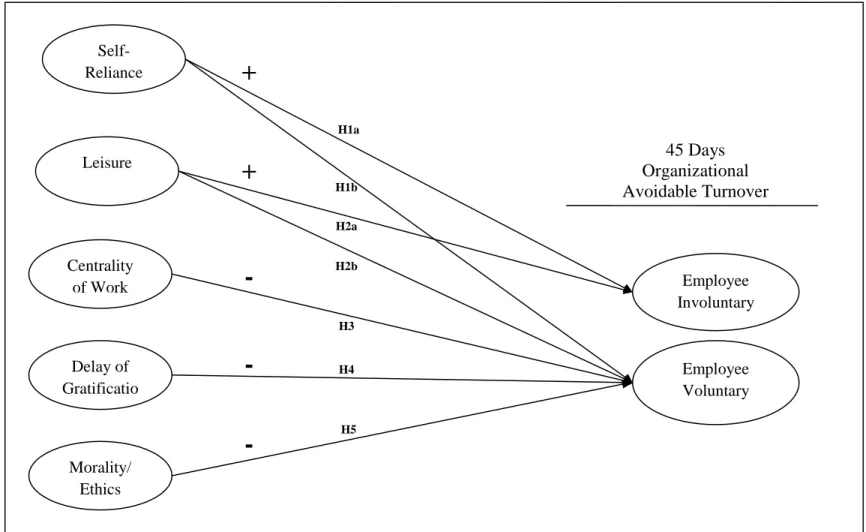
such behavior. It is expected that certain work ethic dimensions will be related to quitting behaviors, based on theory. For example, in the fast food industry, evaluating length of tenure will vary as it is common for high turnover in the industry as a whole. Fast food work often serves as a source of employment for individuals between careers or while individuals are seeking a preferred employment opportunity. Due to the transient nature of individuals in the fast food industry, retention is important. For example, if an employee stays with an organization for a minimum of forty-five days, the organization is likely to receive benefits from the tenured employee (i.e., the skills they use for daily work). Therefore, dimensions of work ethic should be antecedents of an employee’s decision to turnover within their first forty-five days of employment. That is, individuals with high scores on dimensions of self-reliance and leisure may be more likely to turnover than those employees who are low in those dimensions of work ethic. Furthermore, those individuals high in delay of gratification, centrality of work, and morality/ethics dimensions may remain longer at an organization than those who are low in these dimensions. Further dimension information and hypotheses are discussed below. See Figure 1 for a model of proposed hypotheses.
Employees in entry level jobs may typically leave for reasons such as: lacking consistent self-control, choosing not to show up to work when scheduled, not working well as a team player, and having personality conflicts with other employees or customers. Many of these behaviors, such as being a bad team player, may be a manifestation of the work ethic sub-dimension self-reliance. For example, self-reliance refers to “striving for independence in one’s daily work” (Miller et al., 2002, p. 5). According to Van Ness et al. (2010) self-reliance becomes important for those who need to make a mark in their careers,
often those who are new to job roles, and have more to prove; compared to those
individuals who have created more robust credentials and don’t need to rely on themselves, as their status speaks to their ability. That is, self-reliance may aid in boosting an
employee’s outward demeanor, relay a higher sense of worth for the individual being observed, and promote individuality of the employee. In addition, workers who are self-reliant are more likely to exhibit high levels of self-expression, more capable of working independently, prefer high levels of responsibility, and being able to make decisions (VanNess et al., 2010). As an entry level fast employee, responsibilities may be more focused on being a team player and following direction. There would be little room for self-expression and having the opportunity to make influential decisions. Therefore, a person who considers themselves highly self-reliant would be more likely to leave an organization or be fired under the pretense of having a bad attitude or not being a team player.
Hypothesis 1: Self-reliance will be positively related to turnover. The leisure dimension focuses on “pro-leisure attitudes and beliefs in the
importance of non-work activities” (Miller et al., 2002, p. 5). Previous theoretical research on leisure evolved around work being a human requirement to produce goods and services in turn for a paycheck; whereas, personal fulfillment comes from leisure activities. Leisure activities allow an individual to have a choice regarding the use their time and allow
pursuit of activities of interest, including pursuits in innovation and creative. When viewed in this context, the fewer hours spent working means the more leisure time a person has; this dichotomizes work and leisure putting them at opposite ends of the spectrum
activities would be less inclined to want to work compared to an individual who has a low interest in leisure activities. That is, someone who identifies with a leisure orientation would be negatively related to someone who identifies with a strong work ethic (Miller et al., 2002). Employees who are more interested in leisure activities are more likely to avoid work or skip work than to find enjoyment in work and more likely to leave. Therefore, a person who considers themselves high in leisure would be more likely to leave an organization or be fired for not showing up to work or showing up late to work.
Hypothesis 2: Leisure will be positively related to turnover.
Delay of gratification is defined as the “ability to forgo short-term rewards in order to reap some benefit in the future” (Miller et al., 2002, p. 5). That is, maintaining a chosen course of action, such as high levels of self-control, while abandoning the prospective of instant gratification (Reynolds & Schiffbauer, 2005). Therefore, employees who are less likely to make impulsive choices are less likely to leave a current job without a plan (Maertz & Campion, 2004). Previous research in adolescents found that delay of
gratification and the ability to self-regulate emotions, in regards to impulsive choices, were correlated with a lack of self-control in other areas of individual’s life. For example, these individuals showed lower achievement levels and often had substance abuse issues
(Wulfert, Block, Santa Ana, Rodriguez, & Colsman, 2002). In addition, people who make spontaneous decisions have more problems with planning and impulse-control. Finally, those who are tend to impulsively quit are a key subgroup when explaining models of turnover (Clark & Watson, 1999; Eysenck, 1997). Therefore, those on the opposite end of the spectrum, with the ability to delay gratification are more likely to see the benefits of maintaining longer-term employment. For example, individuals in an entry level job who
maintain tenure over longer periods of time are likely to be considered for promotions within the organization, whereas those low in delay of gratification may be more inclined to quit their job for a job they feel would give them more instant gratification.
Hypothesis 3: Delay of gratification will be negatively related to turnover.
Centrality of work refers to the “belief in work for work’s sake and the importance of work” (Miller et al., 2002, p. 5). Centrality of work cuts to the heart of the PWE, “forgoing a need for compensation, rather focusing on one’s own self-identification” (Hirschfeld & Field, 2000). Furthermore, social identity theory is rampant in the literature, explaining the relation around how people identify with specific social situations; however, there is less research on individual identification processes, and in particular how one’s centrality of work influences behavior (Ashforth & Mael, 1989). Those high in centrality of work identify with their job responsibilities, and furthermore see work as in integral part of their life (Diefendorff, Brown, Kamin, & Lord, 2002). That is, individuals with higher in centrality of work will rate work as more important than other activities in their life, compared to individuals who identify with low levels of centrality of work. There is also a general consensus, in the research, that centrality of work is a more stable work attitude. That is, centrality of work, within a person, is less likely to be affected by shifting
conditions within the work environment (Hirschfeld & Feild, 2000). Individual with high levels of centrality of work are interested in creating and building relationships that can be mutually beneficial; therefore, those with high levels of centrality of work lend more credence to work principals, such as having a psychological contract. The very definition of centrality at work, suggests work is one of the most important roles in and individual’s life. That is, if work is valued above all else, individuals would be more willing to invest
in work through networking and mutual relationship building and therefore less likely to leave (Grant & Wade-Benzoni, 2009). The opposite end of the spectrum suggests, people with low centrality of work, will attach less value to work and less likely to produce additional effort to their work (Grant & Wade-Benzoni, 2009). As a consequence, those low in centrality of work maybe be more willing to leave an organization. While no
research has looked at actual turnover, a recent study found centrality of work had a strong negative relationship with turnover intentions (-.27; Meriac, Woehr, Gorman, & Thomas, 2012), suggesting those higher in centrality of work are less likely to leave their job.
Hypothesis 4: Centrality of work will be negatively related to turnover.
Morality and ethics are another dimension of work ethic. For the purpose of this study morality and ethics are being used interchangeably and are defined, in a broad sense, around how people should act or are expected to act. Furthermore, morality and ethics, taken in the context of work ethic, are represented by a believing in an honest and just existence in one’s work (Miller et al., 2002; Van Ness et al., 2010). In regards to centrality of work, people with a high morality/ethics may be focused on relationship building with their organization and therefore, may feel they have a psychological contract with their employer. If a person has intentions towards turnover, the may be more inclined to ask themselves if they owe or have obligations toward their organization, and include this as part of their turnover decision process (Zimmerman, 2008). The reciprocal nature of a psychological contract between an employee and the organization may be seen as the organization giving the employee an opportunity and the employee may feel the need to return that agreement by remaining with the company. In addition, those who score higher in the morality/ethics dimension may be more inclined to believe that sticking with an
organization is good regardless of a poor environment and that multiple jobs is a related to a sign of poor character (Maertz & Griffeth, 2004). Since remaining true to one’s beliefs is important for those with high levels of morality/ethics they may be less likely to leave an organization.
Hypothesis 5: Morality/ethics will be negatively related to turnover.
In accordance with Abelson’s (1987) model, turnover can be classified as being employee voluntary or employee involuntary and organizational acceptable or
organizational unacceptable (See Figure 1). While previous turnover research focused on whether employees voluntarily or involuntarily left an organization (Bluedorn, 1978; Price, 1977), this classification excludes the differences between those employees who leave an organizations for avoidable reasons (e.g., better pay, better working conditions, and better management), and those employees who voluntarily leave due to organizational
unavoidable reasons (e.g., moving due to another spouse or staying home to take care of family). The Abelson (1987) categorization also delineates differences between those who are organizationally avoidable, employee involuntary (those who are fired or laid off) and those who are organizationally unavoidable, employee involuntary (death or medical leave). Based on Abelson’s model (1987) the reasons people leave are categorized into the four groups: avoidable-voluntary turnover, avoidable-involuntary turnover, unavoidable-voluntary turnover, and unavoidable-inunavoidable-voluntary turnover.
Based on Abelson’s research (1987), if an employee leaves a company for reasons outside of their control, the attitudes of these people are marketable different than those who leave an organization due to avoidable reasons (i.e., better work environment elsewhere). That is they are more similar to individuals who stay at the company. The
general consensus is that unavoidable turnover will be less affected by individual
differences, and for the purpose of this study those individuals would have been removed (had there been any in the sample who turned over) as it could make results less
interpretable (Barrick & Zimmerman, 2005). Previous research has concluded that, when measuring turnover, it is more beneficial to parse out avoidable vs unavoidable for criterion testing (Hom & Griffeth, 1995). To account for these differences the research questions (and supplemental analysis) focused on those who have organizationally avoidable turnover, and are either likely to voluntarily leave the organization (Research Question 1) or who are likely to involuntary leave the organization or be fired (Research Question 2).
Research Question 1: Are individuals more likely to turnover in the avoidable voluntary turnover group if they have high levels of self-reliance and high levels of leisure (i.e., is avoidable turnover positively related to self-reliance and leisure) or low levels of delay of gratification, centrality of work, and morality/ethics (i.e., is avoidable turnover negatively related to delay of gratification, centrality of work, and morality/ethics)?
Research Question 2: Are individuals more likely to turnover in the avoidable
involuntary turnover group if they have high levels of self-reliance and leisure or low levels of delay of gratification, centrality of work, or morality/ethics (i.e., is
avoidable turnover negatively related to delay of gratification, centrality of work, and morality/ethics)?
Study 1 Method Participants
A power analysis was conducted to determine the number of employees needed. For the proposed study, based on a small effect size and power of 0.80, data were collected from 203 entry level employees who have just been hired at 25 pizza fast food restaurants located along the east coast. All restaurants are part of a single franchise. Multivariate outliers for the work ethic scales were examined and dealt with on a case-by-case basis using Mahalanobis distances (D2). Data was collected for 203 individuals; however, two cases were removed based on multivariate outliers and lack of variance. The final sample for Study 1 consisted of 201 individuals, of which 32 had left or been fired from the organization within the first six months.
Participants were entry level employees who were hired in a fast food restaurant. The restaurants were quick service type restaurants along the east coast. New employees were sampled from 40 different stores across four North American states (Maryland, Virginia, North Caroline and South Caroline). No store had more than 10 employees sampled, however there were more store locations in Maryland and North Carolina and the majority of employees surveyed were based from these two states. A comparison of work ethic dimension scores aggregated at the state level showed no significant differences in scoring profiles for new employees across the four states. Descriptive statistics and correlations among the study 1 variables are presented in Table 3 and Table 4.
Procedures
To account for different hiring dates, employees were enrolled on a rolling basis into Study 1. Employees completed their onboarding paperwork on their first day and
were then individually followed for their first 45 days of employment (or until they turned over if before the first 45 days). This allowed for continuous enrollment over the course of Study 1 (i.e., December 2016 through May 2017).
When individuals were hired and completed their on-boarding paperwork (i.e., these are brand new employees) during their first day of work, the study measures were included in their new hire packet. Participants had the option to complete the measures while filling out their company paperwork, online or take a paper version home and complete them later. A stamped return addressed envelope was included to mail the completed measures back to the researcher directly at a university mailbox. All envelopes were addressed to the Work Ethic Study at the University of Missouri. A separate mailbox was set up in the psychology department for the Work Ethic Study to ensure that
questionnaires were received by the researcher. Participants were instructed after completion of the measures to include a signed copy of the informed consent, the
completed measures (both were stapled together), seal the envelope and return via the US postal service.
The following written instructions were given to the participant:
Please read all instructions before completing the survey. You are being asked to take part in a study looking at examining attitudes towards work. Your organization is working with the University of Missouri- St. Louis to help understand why some individuals perform better at work, and why some individuals are more likely to leave their job.
The following survey WILL NOT affect your current employment and is NOT a
of Missouri- St. Louis will be the only people to see your individual responses. Your manager will not see your survey answers.
Please read each question carefully and give your honest rating. Once you have completed the survey please fold and place in the attached stamped return addressed envelope. Please drop in a mailbox or give to your local postmaster for delivery. Your time and effort is greatly appreciated!
Step 1: Read the Informed Consent Document. You have two copies of an informed consent. One is yours to keep; the second will be mailed back to us.
Step 2: If you agree to participate: Please Sign & Print your name on both of the Informed Consent Documents. The informed consent attached to the survey will be mailed with the survey. Please leave these stapled together.
Step 3: Complete the survey questions.
Step 4: Place survey with the stapled informed consent in envelope and seal the envelope. Step 5: Place in the mail.
Step 6: If you have any questions or concerns please contact Work Ethic Study at ([email protected]).
All study materials including informed consent forms were shipped to the individual fast food restaurant. Prior to handing out any measures, all managers were given the same briefing and written instructions by the researcher. This briefing and written instructions for the study included the following: (1) an explanation of the current study taking place, (2) instructions on handing out the measures with the on-boarding paperwork, (3) possible questions from the employee, (4) instructions on when an employee quits the organization; how to report that information back to the researcher, and (5) contact information for the
researcher, and (6) IRB paperwork for the Manager to complete. (Please see Appendix for a copy of instructions).
Participation in this study was not revealed to the organization; however, the research team used the employee’s name to compare to a list of employees who were terminated at the end of the study, as provided by the manager to the research team. The company was not provided names of who completed the initial measures, but because the research team had access to the employee name, the responses were not anonymous. Participants were given the measures when they were given the on-boarding paperwork. They were given the option to complete the measures while doing their paperwork or informed they could take the measures home and complete them off site in a paper or online format. Either way, the employee was responsible for dropping the measures in the mail after completion. Once the measures were completed participants mailed back in a stamped return addressed envelope.
When any employee quit or was fired, managers were asked to submit online termination data over an online questionnaire. Managers filled out the employee name, store number, and date of termination. Forced choice checkboxes and instructions required the manager to pick an option for the reason for termination (See Appendix D). In
addition, an explanation box was included if further information needs to be provided (please see Appendix for online form format and manager instructions).
The research team matched the online manager termination forms with measures returned from new employees. An individual’s name was attached to the IRB
documentation which was mailed back with the questionnaires. In the case of individuals having the same name, a store number was also included on the questionnaire for
identification purposes. Store numbers were on the paperwork when the measures arrived at stores. An individual’s name and store number was used to match their responses with their turnover information provided through an online tool (see Appendix) the manager completed.
Data were manually entered from the measures by the research team and ten percent of data were double entered to check for accuracy. In return for participation the
organization received aggregate data on turnover for their organization. Aggregate data included summary information only and no individual results were given to the
organization.
Measures
Demographics. Demographic information was collected, including age, gender, race, and store location.
Work Ethic. The MWEP-SF (Meriac et al., 2013) was used to measure the seven dimensions of work ethic. Responses were measured on a 1-7 Likert-type scale ranging from Strongly Disagree to Strongly Agree. The scale has 28 items, in random order. The seven dimensions are self-reliance, morality/ethics, leisure, hard work, centrality of work, wasted time, and delay of gratification. The MWEP-SF has historically gone through psychometric validation. Internal consistency for the sub dimensions for Study 1 were: self-reliance (.83), morality/ethics (.83), leisure (.86), hard work (.85), centrality of work (.90), wasted time (.81), and delay of gratification (.83). The leisure scale was not reverse coded for the individual analyses; however, before combining the leisure dimension into the overall MWEP dimension, the leisure dimension was reverse coded to align directions with the other six dimensions.
Social Desirability. Five questions were asked to check for socially desirable
answers. These True/False questions have been adapted from the Crowne-Marlowe Social Desirability scale. Reliability for study 1 was α = .69. Social desirability was used as a control variable in the analysis. See Tables 5-7, Model 2 for results.
Turnover. Each individual was hired and was followed for their first 45 days of employment. In line with Abelson’s (1987) model, data were coded in terms of whether the turnover was employee voluntary or employee involuntary and organization avoidable or organization unavoidable. The three turnover categories for this study were: (1) employees who stayed with the organization, (2) employees who left for involuntary, avoidable reasons, and (3) employees who left for voluntary, avoidable reasons. To verify termination reason, managers entered into an online, forced-choice form the primary reason for termination (see Appendix for form). Some of the reasons employees who turned over due to avoidable-voluntary group included: better job, better working conditions elsewhere, problems with management, better organization to work for elsewhere; while, reasons for turnover in the avoidable-involuntary category include: abusive language, failure to perform the job, job abandonment, and policy violation.
After data were coded into the above listed categories, it was determined the sample size was too small to run the hypothesized analysis for individuals that turned over within the first 45 days. The original hypotheses were to examine how many individuals made it to their 45th day of employment; however, due to low turnover, only 9 individuals quit or were fired in their first 45 days. Of the total, cleaned sample (N = 201), 32 individuals (16%, days ranged 13 – 162 days, average 72 days tenure, mode 17 days tenure) left the organization within the six months turnover data was collected. To account for the small
sample of turnover, logistic regression was run on the entire sample that turned over and hypotheses were tested against the full sample of individuals who turned over. Additional, supplemental analyses (for the research questions) were conducted based on the smaller sub-samples of individuals who were terminated (N = 6) and who left for voluntary, avoidable reasons (N = 26) during the 6 month period data was collected; however, due to the small sample sizes for the avoidable and unavoidable turnover groups, these were considered preliminary analysis to answer the research questions and results are addressed in the discussion.
Study 1 Results
Logistic regression analysis was used to test the five hypotheses for Study 1. Due to the nature of the entry level job, all employees will turnover at one point or another. Rather, the aim of Study 1 was to examine if a company hiring these entry level employees will be able to recoup the cost of training and outfitting an entry level employee before they leave. To test the individual contribution of each of the five predictors, the likelihood-ratios, Wald test, and odds ratios are reported in Table 5.
Specifically, turnover was regressed on each of the seven MWEP dimensions. As a group, the seven dimensions accounted for 9% of the variance in turnover (Model 1, Table 5). To account for social desirability in responses, a second model (Model 2, Table 5) was run, controlling for social desirability in the first block. This increased the overall variance accounted for by the seven dimensions of work ethic to 10%. Neither Model 1 or Model 2, with the seven dimensions combined, were significant predictors of turnover; however, three of the seven dimensions (self-reliance, morality/ethics, and leisure)
approached significance in Model 1 and two (self-reliance and morality/ethics) approached significance in Model 2.
Individual logistic regression analysis and relative weights analysis were performed for each dimension due to the multicollinearity among the MWEP dimensions (Models 3 – 9). Multicollinearity was established based on the combined evidence of large bivariate correlations between dimensions of work ethic (see Table 2), variance inflation factor (VIF) statistics greater than 2.5 and Tolerance greater than .40 (Allison, 1999). The dimensions with the strongest relationship were the four MWEP dimensions:
morality/ethics, centrality of work, hard work and wasted time. To understand the effects each dimension had on the models, additional relative weights analyses (RWA) were conducted based on Tonidandel and LeBreton’s (2010) methodology for RWA in logistic regression. The purpose of evaluating relative importance for each of the seven work ethic predictors was to identify the contribution each work ethic variable made to the total variance in turnover, when both the individual work ethic dimension is considered by itself and in conjunction with the other six dimensions (Johnson & LeBreton, 2004). Results for the raw relative weights, rescaled relative weights, and confidence intervals are reported for Models 1 and 2 in Tables 5, 6 and 7.
Results of the individual logistics regression analyses indicated that morality/ethics was approaching significance and negatively related to turnover (β = -.45, p = .07,
Nagelkerke R2 = .03). The RWA for morality/ethics was not significant, however did account for the largest amount of accounted variance in the overall R2 (28%) for Model 1. This suggests that new employees who place a higher value on morality/ethics were less likely to turnover. No other individual relationships were significant or approaching
significant. These results suggest potential support for Hypothesis 5, that morality/ethics would be negatively related to turnover. Based on the overall turnover analysis, no other hypotheses (H1 – H4) were supported.
To better understand the nature of the relationship between work ethic and turnover, supplemental analyses were conducted to answer the research questions. A second logistic regression was run using a smaller sample (N = 195), comparing only those employees who voluntarily left the organization (compared to those who remained at the
organization). Results can be found in Table 6.
Specifically, voluntary avoidable turnover was regressed on each of the seven MWEP dimensions. As a group, the seven dimensions accounted for 12% of the variance in turnover (Model 1, Table 6). To account for social desirability in responses, a second model (Model 2, Table 6) was run, controlling for social desirability in the first block. This increased the overall variance accounted for by the seven dimensions of work ethic to 13%. Both Model 1 and Model 2, with the seven dimensions combined, were approaching significance for predicting voluntary, avoidable turnover. Further, two of the seven
dimensions, self-reliance (β = .98, p < .05) and leisure (β = -.49, p < .05), were significant in Model 1 and self-reliance (β = 1.03, p < .05) remained significant when social
desirability was controlled for in Model 2. The RWAs for self-reliance and leisure were not significant; however, for self-reliance the RWA did account for the largest amount of accounted variance in the overall R2 (38%) for Model 1 and Model 2. Taking into consideration the turnover sample only included those individuals who were deemed avoidable turnover, the above results suggest support for Hypothesis 1, that self-reliance is positively related to turnover. A second finding in Model 1, is the significant negative
relationship between leisure and turnover. While significant, the leisure result was in the opposite direction hypothesized, suggesting as individuals leisure score increase the likelihood of avoidable turnover decreases. Implications of higher leisure scores can be found in the discussion.
The final logistic regression was run using the involuntary sample of turnover. A large caveat of this secondary analysis was the extremely small sample of involuntary turnover subjects. With only 6 out of the 175 sample that were fired, the following should be interpreted cautiously. A smaller sample (N = 175), which compared those who stayed against those who were left involuntarily can be found in Table 7. Specifically,
involuntary turnover was regressed on each of the seven MWEP dimensions. As a group, the seven dimensions accounted for 24% of the variance in turnover (Model 1, Table 6). To account for social desirability in responses, a second model (Model 2, Table 6) was run, controlling for social desirability in the first block. This decreased the overall variance accounted for by the seven dimensions of work ethic to 3%. Both Model 1 and Model 2, with the seven dimensions combined, were not significant for predicting involuntary turnover; however, morality/ethics (β = -2.19, p < .05) was significant in Model 1 and remained significant when social desirability was controlled for in Model 2 (β = -2.34, p < .05). Taking into consideration the turnover sample only included those individuals who were deemed involuntary turnover, the above results suggest support for Hypothesis 5, that morality/ethics is negatively related to turnover.
Results of the individual analyses for the 7 MWEP dimension regressed onto involuntary turnover indicated that morality/ethics remained significant and negatively related to turnover (β = -.91, p < .05, Nagelkerke R2 = .08). The RWA for morality/ethics
was not significant, however, morality/ethics did account for a largest amount of variance in the overall R2 (34%) for Model 2, when social desirability was controlled. This
potentially suggests that new employees who place a higher value on morality/ethics were less likely to be fired, accounting for 8% of the involuntary turnover variance. No other individual relationships in the involuntary analysis were significant or approaching significant. These results, despite the small sample size, continue to suggest potential support that morality/ethics would be negatively related to turnover.
Study 1 Discussion
Previous meta-analytic research has found that individual differences impact
turnover behaviors; however, research has focused on broad level personality traits, such as the Big Five personality factors or work ethic as a unidimensional trait (Zimmerman, 2008). Previous research has not, before now, examined the relationship between dimensions of work ethic and actual turnover.
The fast food industry is marked by an environment that is fast-paced and requires team work for task completion. This environment may be too much for some individuals to handle; leading to employees self-selecting out or being terminated. The loss to organizations, due to employee turnover, can include direct replacement costs, lost
productivity, and loss of corporate profits. It is estimated that turnover can cost up to 30% of a new hire’s salary to replace a person (Sexton et al., 2004). By identifying dispositional traits that may reduce short-term turnover in employees, organizations may be able to retain employees longer, reaping greater benefit for the organization.
The current study found that, despite a small sample size for turnover, there are clear implications for predicting specific types of turnover based on dimensions of work
ethic. For example, both self-reliance and morality and ethics showed potentially support for predictors of overall turnover in organizations. Further, when the sample was broken down into avoidable turnover, self-reliance was a significant predictor of organizational leavers. A clear call out is the need for further examination of self-reliance (e.g., with a larger sample size) in turnover research, as those individuals who scored higher were more likely to leave the organization within the first 6 months of tenure. This potentially
suggests, individuals in a fast paced, fast food environment who prefer to rely on themselves rather than a team are more prone to leave the organization faster and
organizations would benefit from potentially evaluating individuals for self-reliance as a screen out criteria in the selection process for low level, team oriented type job roles.
A second finding was the relationship between leisure and avoidable turnover in entry level positions. While it was initially hypothesized that leisure would be positively related to turnover, the opposite was actually found. Individuals who were more aligned to higher levels of leisure were also less likely to leave an organization for avoidable reasons (i.e., better working conditions or problems with management). The impact of this result could mean that individuals in entry level type jobs, while valuing having leisure time are more capable at distinguishing and separating between their leisure time and their work. That is, due to the nature of entry level work, an individual can easily separate their tasks at work with what they do outside of work. As task responsibility and job complexity
increase, work-life balance may be harder to attain as you are capable of taking work home with you and not leaving work at the office. In the context of entry level fast food jobs, this is not the case. Once you leave work, your job responsibilities are completed until your next shift. Therefore, you are more able to separate and potentially enjoy your leisure
time, while not equating one (i.e., your job) with the other (i.e., your leisure). This could potentially explain why, in this sample, we found a negative relationship between avoidable turnover and leisure disposition.
A third finding was the significant relationship between morality/ethics and
involuntary turnover. While not initially hypothesized at an involuntary level, this finding supports the assumption that individual with a higher orientation towards morality/ethics are less likely to be fired from an organization. The sample size for the analysis was extremely small; however, the results are in line with historic research on morality and ethics (Maertz & Griffeth, 2004; Zimmerman, 2008) and research on work ethic
dimensions and counterproductive behaviors (Meriac & Gorman, 2017). Research between dimensions of conscientiousness and work ethic dimensions also supports the preliminary evidence found in this study. Christopher, Zabel, and Jones (2008) found strong
relationships between dutifulness and morality/ethics, whereas both constructs involve showing restraint in and individual’s dealings and environment. This evidence bolsters the use of dimensions of work ethic, specifically morality/ethics as part of the wider
nomological net of constructs that can be used a potential selection criteria for identification of turnover (i.e., getting fired).
A limitation of study 1 was the multicollinearity of the work ethic variables, morality/ethics, centrality of work, hard work and wasted time. The correlational
relationships between these four variables were significant and had both variance inflation factor (VIF) statistics greater than 2.5 and Tolerance greater than .40 (Allison, 1999). Multicollinearity is an issue because it can increase the variance of the coefficient estimates, make it difficult to understand which variables are influencing the overall R2,
and can potentially make regression estimates sensitive to any minor changes made in the analysis. For study 1, relative weights analyses were run to account for which constructs were contributing the most to the change in R2 and provide additional evidence and support for the findings (Tonidandel & LeBreton, 2010). Across all three logistic regressions analyses, none of the predictors’ raw weights were relevant, which suggested further testing with a larger sample would be important to confirm the work ethic – turnover relationships.
A second limitation for study 1 was the restriction of range in responses. In Study 1, employees had to first be hired into the organization. During the recruitment phase, some applicants were not hired into the organization and this study has no information on that pool of individuals. Next, employees were given the option to complete the measures. As this research was conducted voluntarily, we do not have information on individuals who did not complete Study 1 paperwork. Therefore, results may have been different had all individuals who applied been hired into the organization and had all employee’s been required to complete the measures on hire.
The majority of applicant and employees working in entry-level work would not consider this type of role a career. All employees will eventually leave their job, either leaving their current organization for another type of work, moving up within the
organization, or retiring. One contribution of this study was to examine the likelihood of predicting short term turnover (i.e., 45 days) in entry level workers. Research has shown turning over prematurely results in a great loss due to the recruitment, selection, training, and other costs associated with hiring and onboarding a new employee.
While the benefit of Study 1 incorporates dimensions of work ethic and its prediction of turnover, due to limitations with the sample size there were not enough individuals who turned over at the 45 day mark, to investigate this claim. This limitation could be due to a variety of factors, including but not limited to the economic conditions on the east coast, lack of job opportunities available to individuals and/or potential career paths available during the winter/spring of 2016/2017, and management level turnover within the organization. In the spring of 2016 a new Director of Operations took control and began evaluating management capabilities; higher than normal turnover took place during 2016 at a management level, potentially influencing individuals to stay at the organization to see if the “grass became greener” with new management in place.
Study 2: Work Ethic as a Predictor of Performance Outcomes
Another major concern for those in the fast food industry is a profit margin that is determined by the measurement and weight of each customer’s order. Employee
performance is vital, particularly with such small profit margins. Work ethic, in addition to identifying turnover, may help to identify high performers within entry level positions. Individual attributes and values such as the dimensions of work ethic are viable
antecedents to explaining performance. While research has shown some direct
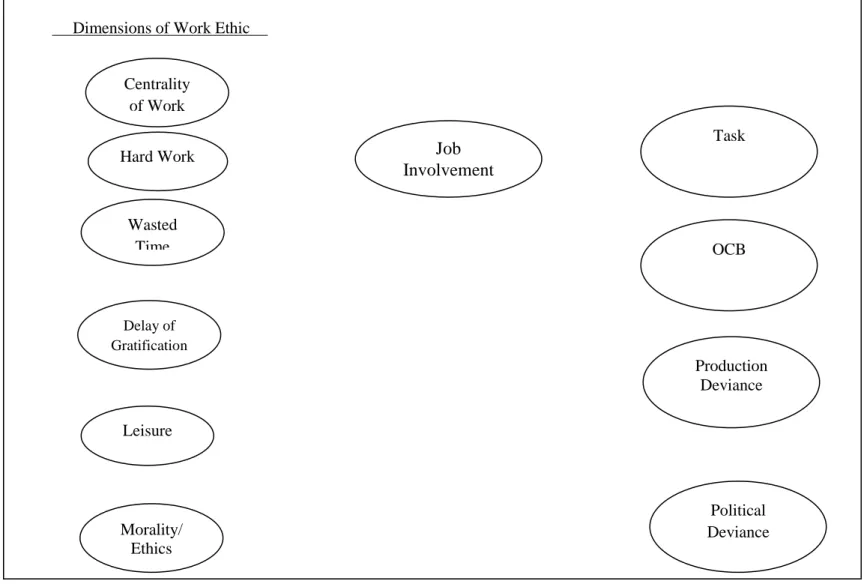
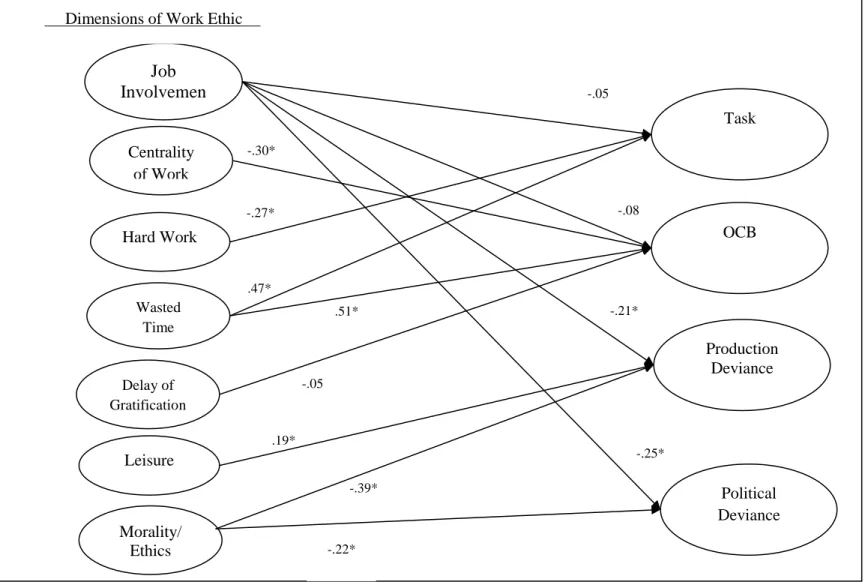
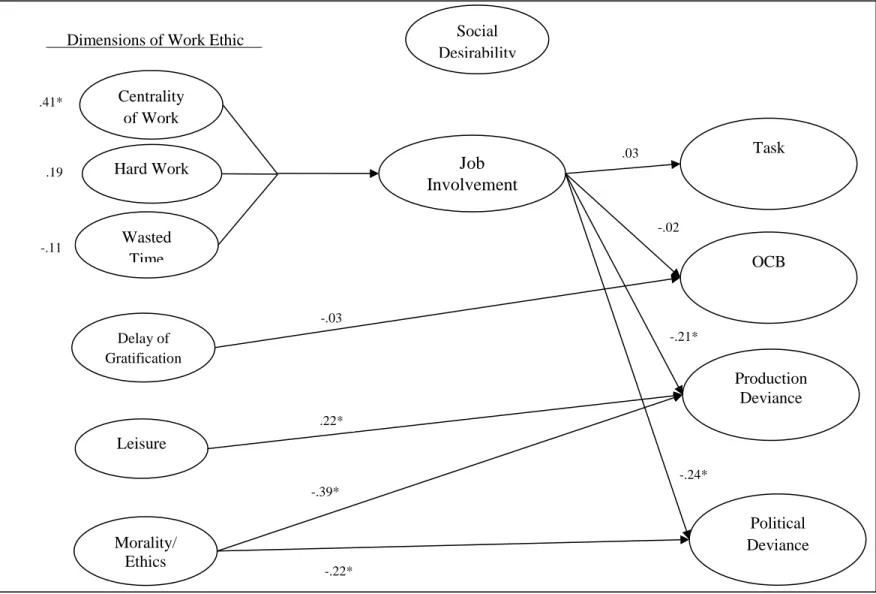
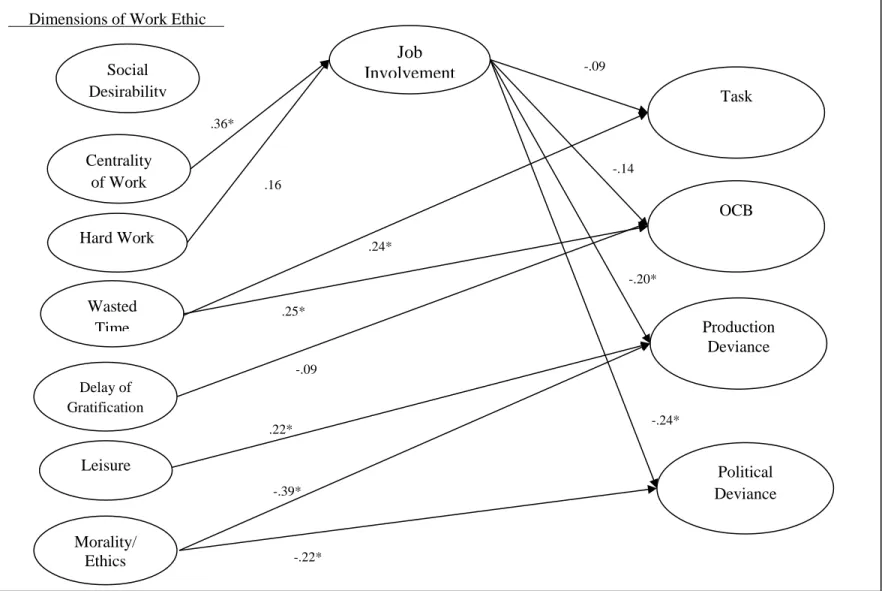
relationships between work ethic dimensions and performance outcomes, there may be additional explanatory mechanisms that can help interpret why dimensions of work ethic are predictors of performance. In the case of entry level employees, job involvement may help to explain the relationships between work ethic and performance outcomes (See Figure 2 for model).