Table of Contents
Table of Contents ... 3
Abbreviations... 5
Acknowledgements ... 6
Executive Summary ... 9
PART I – STRATEGIC CONTEXT ... 16
1. INTRODUCTION ... 16
Traditional Procurement ... 17
2. INTERNATIONAL EXPERIENCE ... 17
Lessons ... 20
3. READINESS -CHALLENGES AND GAPS ... 23
1. Government Leadership & Institutional Arrangements ... 24
2. Human Resources... 27
3. Planning and Management ... 29
4. Policy ... 30
5. Legislation ... 31
6. Infrastructure and Web Service ... 36
7. Standards ... 38
8. Private Sector Integration ... 39
9. Systems ... 41
PART II – E-PROCUREMENT STRATEGIC PLANNING ... 44
1. SCOPE ... 44
2. VISION AND OBJECTIVES ... 45
3. FUNCTIONAL REQUIREMENTS AND PRIORITIZATION ... 46
1. Procurement Portal ... 47 2. Registration... 48 3. E-Bidding ... 49 4. E-Purchasing ... 49 5. E-Framework Agreements ... 50 6. E-Catalogues ... 52 7. E-Payments ... 53
8. Procurement Management Information System (PMIS) ... 55
9. Workflow Management System ... 56
10. E-Contract Management Module ... 56
11. FMIS Interface ... 57
12. Help Desk ... 57
4. TECHNICAL REQUIREMENTS ... 57
5. SPECIFICATIONS FOR CONTRACTING SYSTEM DEVELOPMENT ... 58
6. OWNERSHIP,DEVELOPMENT AND SUPPORT ... 59
PART III – IMPLEMENTATION ROADMAP ... 63
1. INSTITUTIONAL REQUIREMENTS ... 63
1. PPRA ... 64
2. Project Steering Committee (PSC) ... 64
3. Project Implementation Committee (PIC) ... 64
4. Project Management Unit (PMU) ... 65
5. Project Advisory Council (PAC) ... 65
2. PROJECT MANAGEMENT... 66
3. MANAGEMENT REGULATIONS,LEGISLATION,BUSINESS MODEL ... 66
1. Legislation ... 68
2. Business Model ... 68
5. FUNCTIONS AND STANDARDS ... 71
6. INFRASTRUCTURE AND WEB SERVICES ... 71
7. CAPACITY BUILDING AND CHANGE MANAGEMENT ... 71
8. PRIVATE SECTOR ACTIVATION ... 73
9. ACTION PLAN ... 74
Pilot Implementation ... 77
PART IV – FUNDING ESTIMATES ... 79
OPTION I. ESTABLISHING COMMON UNITARY E-PROCUREMENT INFRASTRUCTURE ... 79
Option II. Separate e-Procurement Systems in Federal and each Province ... 80
ANNEX 1 – TERMS OF REFERENCE... 82
ANNEX 2 – FOOTNOTES TO THE LAW REGARDING E-PROCUREMENT ... 84
ANNEX 3 – E-SIGNATURES ... 88
ANNEX 4 – BUSINESS CASE ... 97
Financial and Non-Financial Impacts ... 97
Methods... 100
Transparency, Reporting and Assessment ... 100
Pakistan Benefit / Cost ... 101
ANNEX 5 – NON-FUNCTIONAL REQUIREMENTS ... 104
Usability ... 104
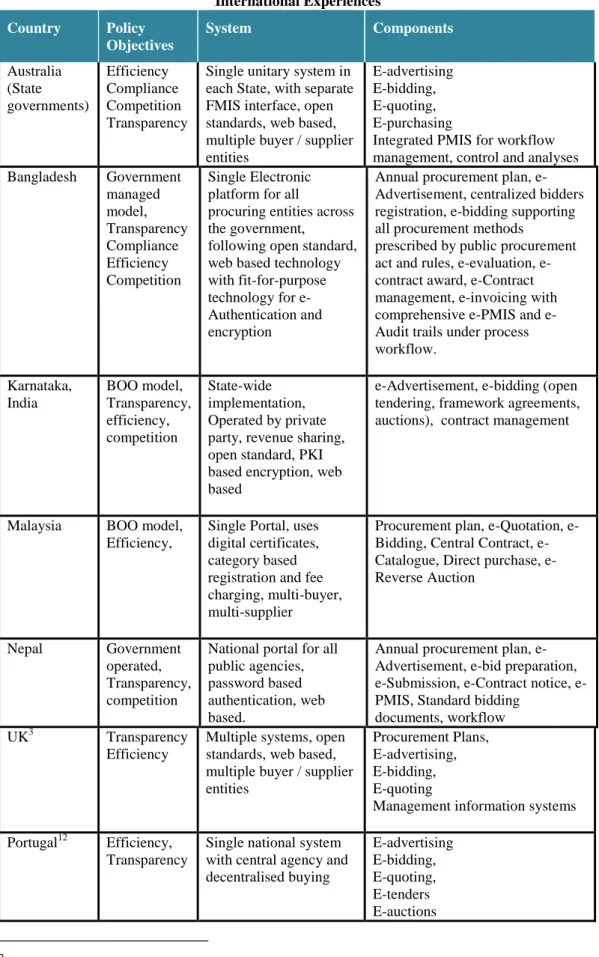
User Security & Administration ... 106
Information Communication, Interface and Storage ... 108
Interoperability ... 109
Risk Management and Security ... 110
Scalability ... 111
Performance Assessment ... 111
Hardware ... 112
ANNEX 6 – RELIABILITY AND PERFORMANCE MEASUREMENT ... 114
Reliability Metrics ... 114
System Performance ... 116
ANNEX 7 – PROJECT RISK MANAGEMENT ... 118
Risk Management Plan ... 120
Abbreviations
BOQ Bill of Quantities
BPR Business Process Re-engineering COTS Customised Off The Shelf system CPV Common procurement vocabulary DRS Disaster Recovery Site
EOI Expression of interest ETS Electronic tendering system
EU European Union
FAQ Frequently Asked Questions
FMIS Financial Management Information System GDP Gross domestic product
GOP Government of Pakistan (National) ICB International Competitive Bidding
ICT Information and Communications Technology IMF International Monetary Fund
IT Information Technology
JV Joint venture
KPI Key Performance Indicator M&E Monitoring and evaluation MDB Multilateral Development Banks NCB National Competitive Bidding NOA Notice of award
OECD Organisation for Economic Cooperation and Development PAC Project Advisory Committee
PE Procuring entity
PIC Project Implementation Committee PITB Punjab Information Technology Board PKI Public key infrastructure
PMIS Procurement management information system PMU Project Management Unit
POC Proposal opening committee
PPRA Public Procurement Regulatory Authority PPP Public private partnership
PSC Project Steering Committee
REOI Requests for expressions of interest RFP Request for proposals
RFT Request for tenders SLA Service level agreement SOR Schedule of Rates
TOC Tender opening committee UN United Nations
UNSPSC United Nations Standard Products and Services Code UNCITRAL United Nations Commission on International Trade Law
Acknowledgements
This report was prepared by Dr Paul R Schapper, Mr Rajesh Kumar Shakya and Mr Mahfooz Bhatti of IGS with the highest quality collaboration from the World Bank team led by Ms Uzma Sadaf. Excellent input and advice was received from participants in the following consultations
Ms Nazrat Bashir Managing Director PPRA Public Procurement Regulatory
Authority Islamabad
Mr Alam Zeb Khan Director General PPRA Public Procurement Regulatory
Authority Islamabad
Mr Rizwan Mehmood Assistant Director IT PPRA Public Procurement Regulatory Authority Islamabad
Mr Shahid Hussain Managing Director PPRA PPRA Punjab
Mr Nadeem Ikram Deputy Director (Admin & Finance)
PPRA Punjab
Ms Maryam Daud Web Developer/ data Administrator
PPRA Punjab
Mr. Aijaz Ahmed Memon Managing Director Sindh PPRA
Sindh PPRA
Mr. Rafique Mustafa Shaikh Director Capacity Building SPPRA
Sindh PPRA
Mr. Essa Memon Director Enforcement SPPRA Sindh PPRA
Mr Imran Ikhlaque Manager IT Sindh PPRA
Mr Iftikhar Ahmed Joint Secretary HRM/ Financial Advisor
Ministry of Finance Islamabad
Mr Waqar Ahmed Joint Secretary Budget Ministry of Finance Islamabad
Mir Afzal Khan Deputy Secretary Services Ministry of Finance Islamabad
Mr Afzal Aijaz Deputy Secretary HRM Ministry of Finance Islamabad
Mr Raja Akhtar Deputy Financial Advisor (Housing)
Ministry of Finance Islamabad
Pervez Abbas Naqvi Director Budget/Computer Ministry of Finance Islamabad
Ms Asma Malik Programmer IT/ Network Admistrator
Ministry of Finance Islamabad
Mr Faheem Anwar Web Master Ministry of Finance Islamabad
Mr Aamir Malik Member IT Ministry IT Islamabad
Mr Syed Iftikhar Hussein Shah Director IT Ministry IT Islamabad
Ms Uzma Sadaf Sr Procurement Specialist World Bank Islamabad
Mr Fahad Arif Shaikh Procurement Unit World Bank Islamabad
Mr Rehan Hyder Sr Procurement Specialist World Bank Islamabad
Mr Mohammad AzharulHaq World Bank Islamabad
Mr Ziauddin Qureshi Director Procurement Pakistan Railways Islamabad
Mr Suhail Iqbal Siddiqui Joint Director Procurement
Pakistan Railways Islamabad
Mr Azhar Ghafur Chief Controller of Stores Pakistan Railways Lahore HQ
Mr Shafique Ahmed Randhawa Joint Director Procurement CCP
Pakistan Railways Lahore HQ
Mr Dost Mohammad Deputy Chief Controller Procurement
Mr Athar Riaz Deputy Chief Controller Procurement Technical
Pakistan Railways Lahore HQ
Col Pervez Iqbal Sulehri General Manager Planning & Procurement
National Highways Authority
Mr Khurshid Ahmed Director MIS National Highways Authority
Mr Aijaz Ahmed Deputy Director Procurement National Highways Authority
Mr Ihsan Rafiq Assistant Director (MIS) National Highways Authority
Mr Hussein Afzal Member Water Water & Power Devel. Authority
Mr Shoaib Iqbal General Manager (Hydel Power) Water & Power Devel. Authority
Mr Nasir Hanif GM CCC Water & Power Devel. Authority
Mr Farukh Saeed Director General Finance(Water) Water & Power Devel. Authority
Mr Riaz Ali Shah Chief Engineer CCC Water & Power Devel. Authority
Mr Mohammad Amin Director Contracts Water & Power Devel. Authority
Mr Khalid Hussein Director Rules Water & Power Devel. Authority
Mr Razzaque Ahmed Director ISS&P Water & Power Devel. Authority
Mr Shamashad A Khan CEO DBDO Water & Power Devel. Authority
Mr Babar Hameed ADG Computer Water & Power Devel. Authority
Humayoun Sarwar AO Computer Water & Power Devel. Authority
Javed Akhtar latif Director Contracts Water & Power Devel. Authority
Mr safdar Mohammad Director Establishment Water & Power Devel. Authority
Tariq Mehmood Director Coordination Water & Power Devel. Authority
Mr Sajjad Ahmed DG Finance (B&C) Water & Power Devel. Authority
Brig Mukhtar Ahmed PSO to Chairman Water & Power Devel. Authority
Mr. Taslim Kazi Director General Services State Bank of Pakistan
Mr. Sabah Zaman Chief Information Officer State Bank of Pakistan
Mr. Asim Iqbal Director Payments State Bank of Pakistan
Mr. Syed Sohail Jawad HoD Payment Systems State Bank of Pakistan
Mr. Zamir Ahmed Deputy Director State Bank of Pakistan
Mr. Babar Hamid Chaudhary GM Procurement Pakistan State Oil
Mr. Tariq Mahesar Director Procurement Pakistan State Oil
Mr Ahmed Raza Sarwar Additional Secretary (Budget)
Finance Department Government of Punjab
Mr Sajid Latif Director General E Government Punjab IT Board
Mr Muhammad Wasim Bhatti Joint Director Development & Procurement
Punjab IT Board
Ms Sarah Ahmed Project Coordinator PITB Punjab IT Board
Mr Khalid Hussein Additional Secretary (Technical)
Irrigation Department Punjab
Habibullah Bodla Chief Project Management implementation Unit
Irrigation Department Punjab
Syed Aamir Raza Director Engineering & M&E Irrigation Department Punjab
Dr Mohammad Javed Deputy Director SPRU Irrigation Department Punjab
Mohammad Aamir Khan Director SPRU Irrigation Department Punjab
Mir Mouhammad Usman Deputy Secretary C&W Communication & Works Department Punjab
Mr. Syed Hassan Naqvi Special Secretary (Finance)
Finance Department Government of Sindh
Mr. Aftab Ahmed Memon Director Economic Reform Unit Finance
Finance Department Government of Sindh
Mr. Pathan Abro Deputy Secretary/incharge SAP Systems receipts
Finance Department Government of Sindh
Mr. Nadeem Jafri Section Officer General Sindh IT Department
Mr Babar Hussein Effendi Secretary Irrigation Department
Irrigation Department Government of Sindh
Mr. Jam Mitha Khan Chief Engineer/Advisor Water distribution Cell
Irrigation Department Government of Sindh
Mr Mohammad Bux Incharge Computer Cell Irrigation Department
Government of Sindh
Mr. Syed Zahid Hussain Shah Additional Secretary (Technical) W&S
Works & Services Department Sindh
Mr. Hudda Deputy Director W&S Deptt. Works & Services Department
Mr. Mohammad Ali Khoso Addl, Secretary GA SGA &CD Govt of Sindh
Mr. Abdul Rehman General Secretary KCA Karachi Contractors Association
Mr. Rao Saeed Deputy Secretary General KCA Karachi Contractors Association
Mr. Abid Burney Vice Chairman KCA Karachi Contractors Association
Mr. Saeed Ahmed Mughal Media Secretary Karachi Contractors Association
Mr. Ashafaque Ahmed Finance Secretary Karachi Contractors Association
Mr. S. Tahir Ali Joint Secretary Karachi Contractors Association
Mr. Liaquat Ali Office Secretary Karachi Contractors Association
Mr. Afzal ur Rehman Chairman CAP Constructors Association of
Pakistan (CAP)
Mr. Deepak Kumar Chawla CEO Prime Traders M/s Prime Traders Pvt Limited
Mr. Sanjay Pinjani Director Prime Traders M/s Prime Traders Pvt Limited
Mr. I. A. Osmani Senior Vice Chairman PEC/ Chairman Osmani & Co
Pakistan Engineering Council
Mr. G R Bhatti Advisor/Consultant PEC Pakistan Engineering Council
Mr. Samiullah Mughal Senior Registrar PEC Karachi
Executive Summary
The governance of procurement is pivotal to public trust in government and is a barometer for the quality of public administration, making it a priority target for the strengthening in most governments.
1 Public procurement is also a key aspect of public administration that links the public financial system with social and economic outcomes, and as such is a major determinant of the quality of community services and infrastructure, and the effectiveness of the Government. This function cuts across almost all areas of planning, programme management, and budgeting.
Different research shows:
Government procurement accounts for a substantial proportion of Gross Domestic Product (15-20% or more in most countries)1.;
Public procurement in one form or another accounts for 70% of government expenditure in developing countries2.
2 It has also been recognised by the OECD3 (2007) that “public procurement is the government activity most vulnerable to waste, fraud and corruption due to its complexity, the size of the financial flows it generates and the close interaction between the public and the private sectors”.
3 In Pakistan the public sector, excluding interest payments and defence4, accounts for approximately 10% of GDP. This represents approximately Ra 2300 billion for the 2013/14 financial year. Of this, about 30% is for non-salaries and wages. As a result of the introduction of e-Procurement, different countries have reported substantial savings ranging from 5-30% of public expenditure in public procurement. Even if it is assumed only 1% saving were made for Pakistan, this would mean approximately Ra 7000 million / year could be saved.
4 An e-Procurement Readiness Assessment and a Procurement Performance Benchmark Study were carried out with the focus on enabling drivers for the success of e-Procurement at the instigation of the World Bank Country office in Pakistan in consultation with the PPRAs during the Jan, 2014 – March, 2014. MDB e-Procurement Readiness Assessment Survey Questionnaire was updated to capture the Pakistan country context. Respondents from procuring entities, bidding community, private sector associations, government oversight and regulatory agencies and other stakeholders participated in the survey, and also stakeholders (PDEs, Ministries, professional associations, Internet and other service providers, oversight agencies, etc.) were consulted face-to-face.
5 Based on the assessments, Pakistan is, in general, ready for e-procurement in both the public and the private sector. The private sector is enthusiastic about the benefits of e-procurement.
1 Government Procurement at Gatt/WTO: 25 Years of Plurilateral Framework by Margaret Liang,
2007
2 Fighting Collusion to optimize public procurement expenditure: The OECD Experience
(https://www.wbginvestmentclimate.org/uploads/WB%20-%20Bid%20rigging%20Presentation.pdf), 30 March, 2011
3 www.oecd.org/document/5/0,3343,en_2649_34135_41883909_1_1_1_1,00.html
4 It is arguable that some ordinary defence expenditures could be included under
6 Following recommendations are made based on the findings and accepted best practices for the success of e-Procurement implementation:
Leadership:
7 National Procurement Strategy (2013-16) endeavours to lay down a roadmap for procurement regulators in Pakistan to realize the efficiency and transparency objectives and principles of public procurement. However, it is recommended that this policy statement be articulated more effectively at political level to clearly highlight the need for introducing e-Procurement reform as policy initiative.
8 It is recommended that there should be a common Unitary e-Procurement Infrastructure. Separate developments of e-procurement within individual provinces or within individual ministries or departments fragment the opportunities and should not be contemplated. Fragmented development increases cost and raises risks that systems would not be interoperable or would not have common core data capture that would enable proper performance assessments and financial integration. Fragmentation also exacerbates security risks.
9 It is recommended that the PPRAs adopt a common understanding of the unitary system as an information infrastructure rather than centralisation of procurement itself. It is recommended that individual entities and levels of government remain fully responsible and in control of what they buy, how much they buy and when they buy it – and that procurement remains fully decentralised but utilises a common infrastructure, just as it utilises other common national infrastructures for commerce such as the national procurement laws, and national banking systems. The Common Unitary e-Procurement Infrastructure refers to the establishment of a single set of Primary Data Centre and Disaster Recovery Centre. An e-Procurement Software Solution should be procured with licensing arrangement in such a way that the e-Procurement System database could be separately clustered for individual provinces. It should also provide facility for the separate instances of the user interface, procurement processes and practices of the e-Procurement portal could be configured based on the prevalent federal and provincial procurement processes and practices, but still having provision of interoperability and information exchange facilities across the provincial and federal portals.
10 In order to implement the e-Procurement reform at Federal and Provincial levels, it is recommended to assign the lead role to relevant PPRAs. If a National approach is adopted, the Federal PPRA can lead the coordination. It would be desirable for this program and institutional arrangement to be sanctioned with a public statement from the Federal Government5 with the objectives of improving efficiency, transparency and business development
11 It is recommended that role responsibility for e-procurement be clarified. There is a perception that e-procurement is an IT department responsibility. E-procurement is very much a PPRA (or Finance) responsibility and the Federal and Provincial PPRAs should take the lead in this area to assert this reality. International experiences suggest that it has a little success if e-procurement initiative has been initiated by IT departments instead of PPRAs, as it is more close to the procurement management than the IT management.
5
Individual Ministerial authority is often insufficient. The e-Procurement programme represents a whole-of-government strategy that cuts across all Ministerial portfolios.
12 It is also desirable and recommended that the government signal its commitment to e-Procurement resolution publically, and to set a timeframe for a comprehensive e-Procurement system to be operational. Key performance outcomes from this policy should also be signalled such as in relation to targeted savings and transparency.
Human Resources Management:
13 It is recommended that the training and education programs should be conducted for the bidding community as well as government procurement personnel. 14 It is also recommended to consider setting up e-Procurement unit with required set of skills and expertise in each of the PPRAs for the implementation of e-Procurement System.
Planning and Management:
15 Planning and management of procurement are governed by consistent legislation, standard bidding documents, and standard processes apply generally. The Business Process Reengineering (BPR) for e-Procurement is recommended for an efficient process.
16 It is recommended that a comprehensive procurement performance measurement and monitoring frameworks be developed and which should ultimately be integrated with the e-Procurement system as its core component.
Policy / Regulation:
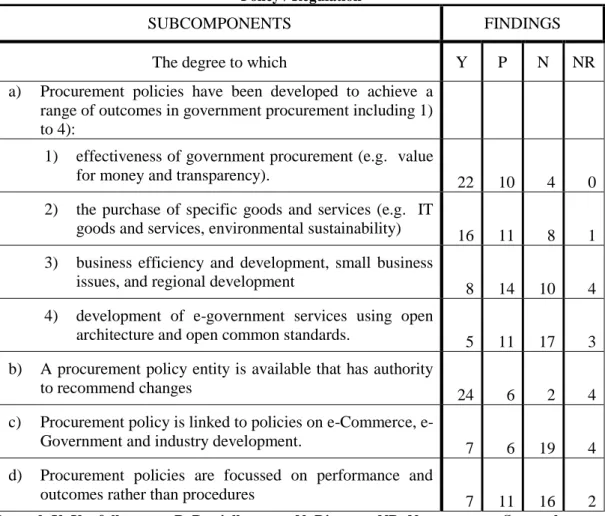
17 For all government e-Services working together, there is a need of a robust model for a Government Interoperability Framework, which the e-procurement also should encompass. It is recommended that the Federal Ministry of information Technology may focus on technical interoperability policy settings, security protocols and infrastructure, rather than application development. Online security has been weak.
18 It is recommended that the e-Procurement system specified in this project will be consistent with open international standards, and in particular will be based on Service Oriented Architecture (SOA).
19 It is also recommended that IT procurement via the e-Procurement portal should automatically attract a policy check flag to ensure that the buying processes are consistent with interoperability policies.
Legislation and Regulations:
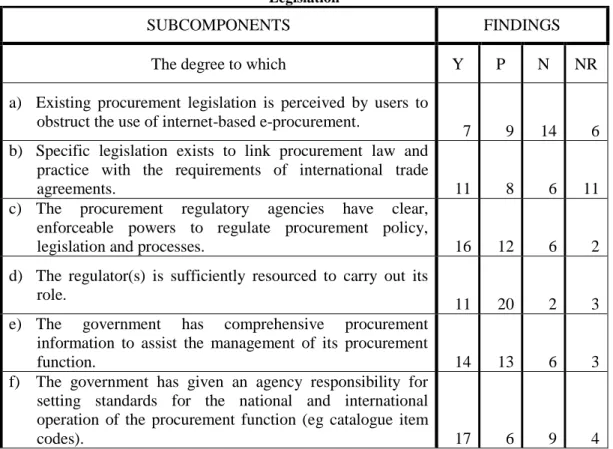
20 It is recommended that e-Procurement guidelines be published, which will document all the operational, technical, security, stakeholder relationship, terms and conditions of e-Procurement use, legal, compliance, performance, authentication, authority, processes and practices to be applied in case of e-Procurement.
21 It is recommended that the PPRA endorse in e-Procurement guidelines the equivalence of “in writing” in its current paper based procurement practice with the “electronic mean”. The Electronic Transaction Ordinance (2002) also mean “in writing” equivalence to the digital means of authentication. This would address the widespread confusion about the legal status of e-Procurement.
22 It is strongly recommended that the e-procurement system should avoid the requirement of digital certificates and PKI for authentication, and apply an alternative solution such as set out in the implementation plan.
Infrastructure and Standards:
23 It is recommended that the consultation among provinces and federal PPRAs should opt for using existing/established data centres and enhance that if required to reduce the cost of establishment of new data centre as well as ongoing operation and maintenance costs
24 It is recommended that the e-procurement system be designed around open international interoperability and middleware standards, and in particular be based on Service Oriented Architecture (SOA).
25 It is recommended that the Federal Ministry of information Technology focus on technical interoperability policy settings, security protocols and infrastructure, rather than application development. .
Private Sector Integration:
26 Private sector was found receptive to introduction of e-Procurement reform, however, there was strong requirement of regular supply side trainings and interaction to improve to competitive environment. It was recommended leading private sector association of constructors that e-Procurement be phased first with high value contracts as the firms participating are more active and have adequate IT capacity to handle and participate in e-bidding process. This is fully consistent with the international experience and is adopted in the Implementation Roadmap in Part III below.
27 It is recommended that the bidding community be consulted; required skills enhancement trainings are organized in regular basis; and partnered in e-procurement system implementation.
Systems:
There are several attempts by individual entities to develop e-procurement for their particular business.
28 Currently these developments are few and do not represent a major break-out of independent developments that would compromise an effective system. It is recommended that a unitary system proceed with some urgency while the advantages of e-procurement are not compromised by fragmentation.
Following consultations with the representatives from the Federal and Provincial PPRAs in May 2014, the following recommendations apply:
29 It is recommended that the Vision for the e-Procurement program be governed by the core principles of procurement including Governance, Efficiency and Economic development and investment and, more broadly, enhance trust in government.
30 It was recommended above that a Common Unitary e-Procurement Platform with separate instances of e-Procurement Portal having individually clustered database and own administrative authority to manage federal or provincial
procurements still having cross provinces bidding opportunity postings. This would not encroach on the independent procurement management and organisation by individual provincial governments, and could best be considered as a common information infrastructure to be shared.
31 Recommendation The PPRA Boards endorse and approve the e-Procurement Strategy and implementation plan, as well as e-e-Procurement guidelines.
32 Recommendation Key stakeholders and individuals should be identified and co-opted into the support committees PSC, PIC, PAC.
33 Recommendation A Project Management Unit should be established by the PPRA, including co-opted members from other agencies if required.
34 Recommendation A set of project performance targets be established by the PPRA and used as a basis for reporting to the Government.
35 It is recommended that the government, primarily through the PPRA(s), itself maintain oversight of all e-Procurement procedures, since they are an integral part of government administrative functions, and accountability.
36 It is recommended that a Off-The-Shelf (COTS) product with customization having in-house ownership with outsourced O&M, option be adopted (Option 2, Table 12).
37 Recommendation A help desk be established during with the rollout of service modules. The help desk needs to be staffed by individuals with a service-oriented ethic who also know the subject matter or where to find it.
38 Recommendation: PPRA(s) to revise procurement processes and practices through Business Process Reengineering (BPR) to be consistent with the effective and efficient functioning of e-Procurement technology and should be documented in e-Procurement guidelines
39 It is recommended that a BPR committee be established by the PPRA including the system developer and involving major procuring entities, to review existing standard documentation and to minimise analogue information requirements.
40 It is recommended that the e-Procurement system should not make mandatory use of digital certificates and PKI for authentication, but will apply an alternative cost effective and fit-for-purpose solution for the acceleration of the e-Procurement rollout.
41 It is recommended that the Government (Provincial & Federal) should own and control its procurement system. However, both for the development of the system, and the ongoing maintenance, it is also recommended that the government consider private sector support, rather than trying to compete with the private sector to retain comprehensive skills in this area at public sector salaries.
42 It is recommended that the PPRA develop a policy on risk, reliability and performance requirements and determine whether to create additional facilities and document in e-Procurement guidelines.
43 It is recommended that a Training programme be established by the developer / service provider, to be approved by the PPRA, in order that procurement officers
from departments can be introduced to the systems and be able to walk through the screens. This training would be timed to coincide with rollout for respective departments commencing with the pilot agencies.
44 Recommendation: The PPRA develop a program to incorporate procurement managers in the transition to the e-Procurement environment as well as extend procurement training generally
45 It is also recommended that a lead-agency model be adopted to pilot the e-Procurement: This means that rollout should commence with just nominated lead agencies, each of which should be large procuring organisations. Not all procurement entities within these lead agencies need to be involved, but if possible some champions should be identified to lead.
46 It is recommended that the PPRA, in consultation with the major business associations, develop a business activation strategy to address existing government contracted suppliers, non-contracted suppliers and also work with the service industry that supports e-procurement applications.
47 It is recommended that rollout should be phased and that it be preceded by a pilot phase of implementation that should last for the period of at least one procurement cycle for one type of procurement method.
48 It is recommended that the e-Procurement system should be prepared at the outset with all major types of procurement methods and all major end-to-end procurement processes. Pilot implementation should not be based on a partial selection of procurement functions. All functions are equally important across the procurement process. Selection of procurement methods and procurement packages for the pilot implementation should be left to the Pilot organizations. E-Reverse Auctions are not recommended.
49 It is recommended that parallel bid submission of hard copy as well as electronic submission should not be part of a phased implementation. Parallel bid submission only increases additional burden to public sector agencies, and it slows down the e-Procurement rollout.
50 Recommendation A Training programme be established by the developer / service provider, to be approved by the PPRA, in order that procurement officers from departments can be introduced to the systems and be able to walk through the screens. This training would be timed to coincide with rollout for respective departments commencing with the pilot agencies.
51 Recommendation: The PPRA develop a program to incorporate procurement managers in the transition to the e-Procurement environment as well as extend procurement training generally. This program could include:
An orientation and awareness program of half a day for all procurement officers in the public sector as each significant new functionality is activated.
Access to high-level policy, management and technical advice through the Support Service.
An awareness program for dissemination of e-Procurement objectives and characteristics to all stakeholders including executives and policy officers. The program will separately target Executives, Policy Officials and Procurement professionals.
52 It is recommended that the PPRA launch a publicity campaign around the implementation, that builds up during the development phase and raises awareness in what changes can be expected for buyers and suppliers. A good campaign is likely to attract media attention on possible savings and efficiency improvements. 53 It is recommended that the PPRA, in consultation with the major business associations, develop a business activation strategy to address existing government contracted suppliers, non-contracted suppliers and also work with the service industry that supports e-procurement applications. The principal method of delivery of this strategy should include a road show around major centres providing business seminars, e-mail, and advertising and through the business associations.
PART I – STRATEGIC CONTEXT
1. INTRODUCTION
The governance of procurement is pivotal to public trust in government and is a barometer for the quality of public administration, making it a priority target for the strengthening in most governments.
54 Public procurement is also a key aspect of public administration that links the public financial system with social and economic outcomes, and as such is a major determinant of the quality of community services and infrastructure, and the effectiveness of the Government. This function cuts across almost all areas of planning, programme management, and budgeting.
Different research shows:
Government procurement accounts for a substantial proportion of Gross Domestic Product (15-20% or more in most6 countries)7;
Public procurement in one form or another accounts for 70% of government expenditure in developing countries8.
55 It has also been recognised by the OECD9 (2007) that “public procurement is the government activity most vulnerable to waste, fraud and corruption due to its complexity, the size of the financial flows it generates and the close interaction between the public and the private sectors”.
56 Procurement policy regulates the public sector’s interactions with domestic and international markets in ways that directly impact national efficiency and competitiveness. Public procurement is a common vehicle for business and industry development policies, and most regional and bilateral trade agreements have significant provisions aimed at granting reciprocal access to domestic government procurement markets.
57 Poor management of procurement invariably reduces development outcomes and is likely to reduce foreign direct investment. These effects have already been reported by the International Monetary Fund10 (IMF), which has identified national consequences for low and middle income countries in terms of (i) over-spending on capital, (ii) under spending on asset maintenance, (iii) poor quality infrastructure, and (iv) reduced government revenues.
58 The IMF study concluded that poor governance of procurement can result in infrastructure that reduces national growth - investment becomes a disinvestment.
6 As discussed in the following, a lesser figure is used for Pakistan
7 Government Procurement at Gatt/WTO: 25 Years of Plurilateral Framework by Margaret Liang,
2007
8 Fighting Collusion to optimize public procurement expenditure: The OECD Experience
(https://www.wbginvestmentclimate.org/uploads/WB%20-%20Bid%20rigging%20Presentation.pdf), 30 March, 2011
9 www.oecd.org/document/5/0,3343,en_2649_34135_41883909_1_1_1_1,00.html
10 Roads to Nowhere: V. Tanzi, H. Davoodi; 1998, International Monetary Fund, ISBN
The poor quality and under-spending on maintenance also implies that what infrastructure exists has lower economic productivity.
59 For these reasons, the strengthening governance in procurement has been described as the single most significant option for development in many countries. Traditional Procurement
60 Problems inherent in traditional paper-based procurement processes include incomplete management information, inefficient procedures, high compliance costs for suppliers and departments, simplistic and inferior procurement methodologies, and a profound lack of transparency. Persistence with paper-based procurement processes also slows the take-up of productive information technologies in the economy generally, and is characterised by:
Uncoordinated buying across government with different departments having different contracts and different prices for the same goods;
High process costs associated with testing the market; Out dated market intelligence;
Maverick spending (off contract); Inefficient payments processes; Obsolete audit information;
Error-prone contract management tracking.
61 In this traditional environment, many opportunities for improved social and economic outcomes are invisible because the relevant management and planning information is inaccessible.
62 Many of these issues can be partly or largely addressed thought the effective use of information technologies, or e-Procurement. This Report11 is concerned about the development and implementation of e-procurement in the Pakistan public sector - the terms of reference for this work are listed in Annex 1.
2. INTERNATIONAL EXPERIENCE
63 International experience has varied widely with, in some cases, e-procurement being rolled out and adopted quickly, while in other cases rollout has been followed by only slow take-up if at all. In Andre Pradesh, e-bidding was mandated and implemented without a transition period. In Bangladesh, a significant phase-in process over several years is currently underway for the complete system, and in Kazakhstan an e-procurement system is being phased in terms of individual functions. A partial system is being phased in by Nepal. Across the European Union (EU) as a whole, the development and application of e-Procurement has been slow by international standards (see Table 1)
64 Features of e-procurement are broadly similar between countries, differing in terms of the detail of national laws, customs, the supplier-base, and institutional
11
arrangements. Some international experiences from which e-Procurement lessons and best and worst practices may be identified are summarized in Table 1.
Table 1 International Experiences Country Policy Objectives System Components Australia (State governments) Efficiency Compliance Competition Transparency
Single unitary system in each State, with separate FMIS interface, open standards, web based, multiple buyer / supplier entities
E-advertising E-bidding, E-quoting, E-purchasing
Integrated PMIS for workflow management, control and analyses Bangladesh Government managed model, Transparency Compliance Efficiency Competition Single Electronic platform for all
procuring entities across the government,
following open standard, web based technology with fit-for-purpose technology for e-Authentication and encryption
Annual procurement plan, e-Advertisement, centralized bidders registration, e-bidding supporting all procurement methods
prescribed by public procurement act and rules, evaluation, e-contract award, e-Contract management, e-invoicing with comprehensive PMIS and e-Audit trails under process workflow. Karnataka, India BOO model, Transparency, efficiency, competition State-wide implementation, Operated by private party, revenue sharing, open standard, PKI based encryption, web based
e-Advertisement, e-bidding (open tendering, framework agreements, auctions), contract management
Malaysia BOO model,
Efficiency,
Single Portal, uses digital certificates, category based registration and fee charging, multi-buyer, multi-supplier
Procurement plan, Quotation, Bidding, Central Contract, Catalogue, Direct purchase, e-Reverse Auction
Nepal Government
operated, Transparency, competition
National portal for all public agencies, password based authentication, web based.
Annual procurement plan, e-Advertisement, e-bid preparation, Submission, Contract notice, e-PMIS, Standard bidding
documents, workflow
UK3 Transparency
Efficiency
Multiple systems, open standards, web based, multiple buyer / supplier entities
Procurement Plans, E-advertising, E-bidding, E-quoting
Management information systems Portugal12 Efficiency,
Transparency
Single national system with central agency and decentralised buying E-advertising E-bidding, E-quoting, E-tenders E-auctions 12
E-framework agreements
Chile Transparency
Efficiency Competition
Single National unitary system, with separate FMIS interface, open standards, web based, multiple buyer / supplier entities
E-advertising E-bidding, E-quoting, E-purchasing
Integrated PMIS for workflow management, control and analyses, Contract management India (Andhra Pradesh State government) Transparency Efficiency Development
Single unitary system in each State, with separate FMIS interface, open standards, web based, multiple buyer / supplier entities
E-advertising E-bidding, E-quoting, E-purchasing
Integrated PMIS for workflow management, control and analyses Kazakhstan Efficiency Single National unitary
system, with separate FMIS interface, partly developed, multiple buyer / supplier entities
Procurement Plan, E-Quoting E-Bidding E-R/Auctions
Integrated PMIS for workflow management, control and analyses
Korea Transparency Efficiency Economic development Policy development
Single national unitary system, with separate FMIS interface, open standards, web based, PKI Based, Centralized Procurement, multiple buyer / supplier entities
E-advertising E-bidding, E-quoting, E-R/Auctions E-purchasing
Integrated PMIS for workflow management, control and analyses, Integration with other supporting government systems
Singapore Efficiency Compliance Competition
Single national unitary system, with separate FMIS interface, open standards, web based, multiple buyer / supplier entities
E-advertising E-bidding, E-quoting, E-purchasing
Integrated PMIS for workflow management, control and analyses
65 European Union (EU) procurement polices have been primarily focussed on cross-border trade but this concern has been handicapped by a lack of technical and management interoperability standards between states, while at the national level e-Procurement has often been a relatively low national priority. Other problems have included early UNCITRAL signature law, which complicated entry/participation requirements for economic operators. The UNCITRAL model has since been substantially amended but individual State policies and systems have not.
66 Bangladesh has from 2011 been implementing one of the most comprehensive end-to-end e-Procurement system in the world, covering all the procurement methods as prescribed in the public procurement act and regulations. Over a very short time, it has gained wide user adoption in the government and private sector. The system is operated by the government but outsourcing its operation and maintenance functions. The Bangladesh government commenced its pilot implementation from four nominated (lead) target agencies from Roads and Highways, Local government, Rural Electrification, and Water Development sectors.
67 Malaysia started its ePeroleham e-Procurement system in the year of 2000 in Build-Own-Operate (BOO) model with a private company but regulated by the Finance Ministry. It covers selected procurement methods like quotation, open tendering, direct purchase from catalogues, and reverse auctions. Seventy-five (75%) of the public agencies have adopted the system13.
68 Many of the states in India have got their own state-wide e-Procurement system having very similar functionalities. BOO is the common model applied in India with an exception of a failed case of BOO in Andhra Pradesh.
69 South Korea Procurement implementation is one of the successful Procurements, having interfaced with other government systems. The e-Procurement system is based on the principle of centralized procurement. Most of the procurement processes are fully automated.
Lessons
70 A key lesson from all national developments is that e-Procurement is not simply a software application, and approaching it in those terms will not lead to a successful outcome. It is rare for a system of e-Procurement that has been developed for one jurisdiction to be successfully adopted unchanged by another. 71 An e-procurement initiative can learn from the successes and failures of international experiences.
Key Learning – Technical integration and managing technical standards are critical 72 E-procurement is a strategic programme and a good business design is vital. Technical tools are not sufficient to ensure success. Succinctly, e-Procurement is not a technical solution but an end-to-end business solution.
73 International experiences in relation to some of the operational issues have included the following:
i. One of the most contentious areas of application is in relation to fees and charges applied in the e-procurement system. It is common in some countries for fees to be attached to online registration, downloading of bidding documents, and digital certificates. In these cases the preferred position is for document download to incur no charge while bid submission may incur a fee – this is a superior approach because it does not weaken transparency (anyone can access the bid documents for no charge), and it probably does not inhibit competition, recognising that suppliers incur costs for paper bid submissions regardless.
ii. In the example of Kazakhstan there is a policy for accelerating e-procurement rollout and so registration is free, and fee for digital signature is also free as are all of the processes – this is the preferred approach, especially where e-procurement is new to a jurisdiction. iii. A further issue is when the government keeps the door open to paper
bids even while it is implementing e-procurement. This is a two edged
13
requirement. It addresses the need for suppliers to adjust and also addresses circumstances where connectivity is weak. However it also slows the rate of take-up of the systems and can defeat the purpose of promoting e-procurement. It is recommended that this practice have a finite life.
iv. A common problem is in relation to digital certificates. The issuance of digital certificates is a potential weakness in the Public Key Infrastructure (PKI) framework. There is a commercial relationship between the digital certificate provider and the government provider. Governments usually want some strong standards around the provision of digital certificates, such that they often like to license these players. This licensing is always at a domestic level. This means that a potential offshore supplier to government may need to travel to the country to get a certificate. This can be required each year, and clearly represents a potential barrier to competition. Also, this is not acceptable under MDB guidelines. Superior approaches are now available.
v. In the case of Russia, Belarus and Kazakhstan there is an agreement that the e-procurement system operate seamlessly between all members of the Custom Union, while there is a similar requirement for members within the EU. One approach is for the member states of these market entities to adopt a policy of mutual recognition, such that a government provider who has a digital certificate from one jurisdiction automatically has recognition in all member states, without need to re-register. An alternative solution is for reputable international commercial certification authorities also be recognised. New developments are underway, for example based on biometrics
vi. Some e-Procurement developments do not have good quality disaster recovery / backup, which means that there may be non-compliance with track-ability conditions for good practice both in bidding and in e-reverse auctions.
vii. In some instances e-Procurement has not proceeded in a coordinated fashion across a government but is fragmented between ministries or departments. A centralised coordinated approach is greatly superior in terms of cost, efficiency and interoperability. For example fragmentation multiplies security costs and weaknesses, and also requires suppliers to deal with multiple sites. A unitary infrastructure for all government entities is to be strongly preferred. Sometimes it is claimed that this conflicts with decentralisation policies: this is not correct – e-Procurement is a technical and management infrastructure and does not imply centralised procurement as further discussed below. 74 Where third party service providers host the system, there may need to be audits undertaken of the provider. The scope for the government to undertake this, or to receive independent audit reports, must be part of the service agreement. For example from 1999-2002 a comprehensive e-bidding system operated by the government of Western Australia provided an online bidding service to the Leeds government in the UK – this was the first ‘Cloud’-like e-procurement service provided internationally. The UK Leeds government auditor gained access to all audits of the system undertaken by the government of Western Australia.
Key Learning – Servicing e-Procurement requires skilled resources
75 E-procurement system development requires a multi-functional team that can i. Understand public procurement policies and practices
ii. Benchmark and re-engineer business processes
iii. Understand business requirements and the technical capabilities iv. Coordinate change management
v. Develop training programmes
Key Learning – Government procurement differs from that in private corporations 76 Financial packages (FMIS) in ERP solutions often include components marketed as ‘e-Procurement’. However these often have their origins in private industry supply lines and are usually a poor fit for government requirements without expensive customisation and even more expensive upgrades when new versions of the FMIS appear. Most of such financial systems used in Ministries of Finance cover recording requisitions from the public agencies, allocating budgets for the public agencies, and also payment release requests and payment transactions to suppliers. The whole block of processes required for transparency, competition, equity, efficiency and compliance to the procurement processes and practices as prescribed in the procurement laws and regulations are missing in such financial packages. It lacks interactivity with the public agencies and bidders as well as interactions with numerous other users involved in the procurement process.
Key Learning – Effective strategies can improve supplier and buyer adoption 77 These strategies should:
i. Support government and business priorities ii. Provide online access for Framework Agreements iii. Integrate with agencies existing FMIS
iv. Provide meaningful integration with business activities v. Ensure systems are user-friendly
vi. An effective communications plan.
Key Learning – Flexibility in process development and support structures can improve outcomes
78 E-procurement is a technical implementation that enables the transformation of organisation structures and practices. Flexibility in the development and enablement of the systems and processes allows diverse requirements of stakeholders to be recognised and supported.
Common Issues and Questions
i. Will the government endorse, empower and resource a lead agency to implement e-Procurement? This should be considered in terms of the Institutional arrangements for procurement in the government.
ii. What expertise / professional development is required and from where will this come, and how will this be maintained?
iii. Does e-Procurement mean centralisation of procurement?
iv. Does e-Procurement belong as part of the Financial Management Information System?
v. Should the e-Procurement system be acquired as an off-the-shelf system?
vi. What will the system cost to install and maintain and can this be justified? See Business Case for e-Procurement.
vii. Should a paper-based system be maintained in parallel to the e-Procurement system?
viii. Should the e-Procurement system interoperate with the tax system and other such systems in government?
ix. Who should arrange for training for e-Procurement and what does this involve?
x. Is new legislation required? xi. What are the security risks?
These questions will be addressed in the course of this strategy and implementation plan.
3. READINESS - CHALLENGES AND GAPS
80 An e-Procurement Readiness Assessment and a Procurement Performance Benchmark Study were undertaken in consultation with the PPRAs to identify the enablers for e-Procurement in Pakistan. The MDB e-Procurement Readiness Assessment Survey Questionnaire was updated to capture the Pakistan country context. Respondents from procuring entities, the bidding community, private sector associations, government oversight and regulatory agencies and other stakeholders participated in the survey. Other key stakeholders (PDEs, Ministries, professional associations, Internet and other service providers, oversight agencies, etc.) were consulted face-to-face.
81 The e-Procurement Readiness Assessment identifies nine key components (Table 2) for e-procurement readiness as follows:
Table 2: Readiness Components
Institutional Capacity (the capacity for government to set directions
and lead and resourcethe changes
required).
1. Government or Institutional Leadership
(vision, sponsorship, resources, stakeholder support and implementation support). 2. Human Resource Management (education,
skills development, expertise and career paths).
Governance (establishing the rules, management support, performance monitoring and evaluation to support e-Procurement).
3. Planning and Management (strategic planning and re-engineering of
management protocols, business rules and processes).
4. Policy (setting intent and guidelines that can be consistently applied).
5. Legislation and Regulation (supporting rules and the external and internal monitoring of the efficiency, performance and compliance).
Business Functionality and Standards
(sustainable infrastructure, support services and common standards to ensure accessible, integrated and consistent procurement services can be established).
6. Infrastructure and Web Services (reasonable access to, and quality of e-services and their sustainable development).
7. Standards (management, procurement and technical standards to ensure consistency of the approach to e-Procurement and interoperability across the systems involved).
Third Party Involvement
(ensuring the private sector is enabled to participate and be involved in e-Procurement)
8. Private Sector Integration (suppliers are enabled and have incentives to participate in e-Procurement).
Application of Technology
(appropriate, integrated, sustainable and modifiable technology is phased in to provide tendering, contract management and purchasing services).
9. Systems (the planning, selection,
development, implementation and support of e-procurement systems).
82 From discussions with Government officials and other stakeholders in Pakistan, numerous observations were made. Much of this other feedback related to the transparency objective of e-procurement.
1. Government Leadership & Institutional Arrangements
83 Almost all international experience is that the foremost essential element for e-Procurement implementation is government leadership, commitment and the establishment of required institutional arrangements including a vision and It is essential to appreciate that key issues within these aspects must be addressed regardless of how e-procurement is developed or acquired.
objectives for e-Procurement, and authorisation and resourcing of the implementing lead agency to drive the required changes.
i. In Pakistan there is significant interest in e-Procurement development by businesses, and Government administration: a lack of transparency and corruption are perceived as major issues and threat to implementation of any reform agenda. The National Procurement Strategy (2013-16) endeavours to lay down a roadmap for procurement regulators in Pakistan to realize the efficiency and transparency objectives and principles of public procurement. However, this policy statement needs to be articulated more effectively at political level to clearly highlight need for introducing e-Procurement as a strategic driver for the procurement reform initiative. The Federal Government in general supports e-Procurement reform as one of the major drivers in its National procurement strategy. The Federal Ministry of Finance and PPRA were keen to support the introduction of e-Procurement at the Federal level. There is already a low level recognition and implementation of elements of e-procurement in procurement regulations and to a lesser extent in procurement practices.
ii. Sindh PPRA and Government of Sindh have already endorsed the draft National procurement strategy circulated by the Federal PPRA, which reflect that there is high acceptance of the need for e-procurement reform in Sindh.
iii. The Federal PPRA maintains an e-portal, and an interest in online self-paced training for the private sector, and is building a complaints database. The PPRA also is maintaining an online blacklist. There are procurement portals at the provincial levels with similar functionality. iv. Sindh IT Department has taken many small-scale initiatives towards
introducing e-government in Sindh. However, one of its earlier initiative on e-Procurement software development was shelved due to lack of interest by respective departments.
v. Punjab province is working on an overall governance reform agenda including measures to enhance procurement transparency using simple technological innovations. However, PPRA Punjab is not well resourced and there is need for staff and technology support. Similar to Sindh and Federal PPRA, the Punjab PPRA has also succeeded in making its presence felt at administrative level and queries and summaries being routed through the PPRA before finalization of procurement decisions by respective agencies.
84 Based on the readiness of individual Provinces and for the efficient use of resources and avoiding duplication of costs, it is recommended that a common Unitary Procurement Infrastructure be established. Separate developments of e-procurement within individual provinces, or individual ministries or departments fragment the opportunities. Fragmented development increases costs and raises risks that systems would not be interoperable or would not have common core data capture that would enable proper performance assessments and financial integration. Fragmentation also exacerbates security risks.
85 Common Unitary e-Procurement Infrastructure is sometimes presumed to represent the centralisation of procurement but this is not the case. It represents a unified information infrastructure for procurement rather than centralisation of procurement itself. Individual entities and levels of government can remain fully responsible and in control of what they buy, what contracts they adopt, how much they buy and when they buy it – procurement remains decentralised but is utilising a common infrastructure or tool, just as it utilises other common national infrastructures for commerce such as the national procurement laws, and national banking systems.
86 The Common Unitary e-Procurement Infrastructure refers to the establishment of a single Primary Data Centre and Disaster Recovery Centre. An e-Procurement Software Solution should be procured with licensing arrangements such that the e-Procurement System database can be separately clustered for individual provinces. It should also provide for separate user interfaces, separate procurement processes and practices based on the individual federal and provincial authorities, but still having provision of interoperability and information exchange facilities across the provincial and federal portals. This arrangement provides the facility of independent administration and operation of the federal and provincial e-Procurement systems by respective federal and provincial authorities.
Table 3
Government Leadership and Institutioanal Arrangements
SUBCOMPONENTS FINDINGS
The degree to which Y P N NR
a) A Federal/Provincial strategy or any other public commitment to modernise public procurement and/or adopt
e-Procurement is in place. 9 19 5 3
b) The government has nominated a high level authority to be responsible for driving procurement modernisation and
change. 16 9 6 5
c) There is a lead agency for procurement that has high level procurement policy, legislative, technical and management
expertise and knowledge. 18 12 4 2
d) The lead agency for public procurement (where it exists) is adequately resourced to carry out its functions
5 21 6 4
e) The lead agency responsible for public procurement has an effective working relationship with the Ministry responsible
for technology and e-government. 10 11 10 5
f) A government lead agency is responsible for managing the development and implementation of the e-Procurement
system. 11 5 14 6
g) The lead agency has the resources to provide for the development, implementation and operation of an
e-procurement system. 6 9 17 4
Legend: Y=Yes fully agree; P=Partially agree; N=Disagree, NR=No responses. Scores show numbers of responses across all those surveyed.
87 Feedback shown in Table 3 for the leadership role suggests that there is reasonable recognition of the authority and roles of the procurement regulatory agencies but this should be strengthened, but also that these are not well resourced, and that there is not currently a high priority reform program.
88 To lead an e-procurement strategy there needs to be a capacity to arrange interdepartmental committees to develop various aspects such as business process re-engineering.
89 In order to implement e-Procurement reform at Federal and Provincial levels, it is recommended that the lead role be assigned to relevant PPRAs. If a National approach is adopted, the Federal PPRA can lead the coordination. It would be desirable for this program and institutional arrangement to be sanctioned with a public statement from the Federal Government14 with the objectives of:
i. Ensuring transparency for all stakeholders;
ii. Reducing bureaucracy and improving efficiency of the government; iii. Creating significant efficiencies and savings for businesses;
iv. Strengthening trust in government business dealings and improving the investment climate in the country;
v. Mandating a government-wide framework for e-Procurement including an integrated system;
vi. Implementing e-Procurement operating and systems policies.
90 The PPRA should be accountable for undertaking the management and implementation of the programme. It would be highly undesirable for e-procurement to be implemented by individual line agencies, or by an IT department – e-procurement is mostly about procurement rather than ’e’ or a pure IT intervention. It is recommended that a lead agency is agreed in consultation among the federal and provincial PPRAs. The lead agency for the e-Procurement system must be able to lead procurement reform, procurement policy and direct the development of Business Process Re-engineering (BPR) and new methods for procurement that are enabled by e-Procurement.
91 It is also desirable and recommended that the government signal its commitment to e-Procurement resolution publically, and to set a timeframe for a comprehensive e-Procurement system to be operational. Key performance outcomes from this policy should also be signalled such as in relation to targeted savings and transparency.
2. Human Resources
92 In jurisdictions that have successfully adopted e-Procurement, there have usually been significant government efforts to make provision for the education and training of executives, managers and staff with procurement responsibilities. Education and training should also target suppliers. Table 4 below identifies the sub components involved.
14
Individual Ministerial authority is insufficient. The e-Procurement programme represents a whole-of-government strategy that cuts across all Ministerial portfolios.
Table 4
Human Resource Management
SUB-COMPONENTS FINDINGS
The degree to which Y P N NR
a) There is an agency or function responsible for human resource management issues in relation to procurement.
11 13 11 1
b) An education and training program for executives, managers and staff in strategic and operational
procurement is in place 10 18 8 0
c) Education and training related to government procurement is available to suppliers
6 9 21 0
d) The range of expertise required to plan and implement a strategic implementation plan for e-Procurement is
available to government. 7 12 15 2
e) Actions have been taken to review the jobs and responsibilities of procurement staff to ensure a viable career structure is in place and that modernisation issues
can be addressed. 6 9 19 2
f) Procurement personnel in the procuring agency are adequately skilled to operate computer.
18 12 5 1
g) Procurement personnel are receptive of required changes from manual to electronic procurement.
10 16 9 1
Legend: Y=Yes fully agree; P=Partially agree; N=Disagree, NR=No responses. Scores show numbers of responses across all those surveyed.
93 The survey feedback shown in Table 4 suggests that there is a reasonable-to-good level of IT literacy in government, and that staff preparedness for change is moderate, confirming that the strategy for e-procurement will need to be phased and lead by individual champions, and this will be recommended in the implementation plan. Training programs are available for the government sector but little for suppliers – this will also require attention and will be addressed in the implementation plan. There is a low level awareness of the training requirements for this initiative, and ownership of a training strategy is not well defined. In most country experiences, training is a crucial component of e-Procurement implementation, both for the various layers of government and for the private sector. However, both the public and private sectors have a reasonable or high degree of e-literacy and it is considered that this is not expected to be a major issue. Nevertheless it will be addressed further in the implementation plan.
94 It is recommended that the training and education programmes should be conducted for the bidding community as well as government procurement personnel. 95 It is also recommended that consideration be given to setting up an e-Procurement unit with the appropriate set of skills and expertise in each of the PPRAs for the implementation of the e-Procurement System.
3. Planning and Management
96 Planning and management of procurement are governed by consistent legislation, standard bidding documents, and standard processes apply generally. These features will make the BPR for e-Procurement a relatively efficient process. There is less confidence that the procurement processes are well managed in the buying entities, and there is little or no spend analysis undertaken on a whole of government basis. Procurement regulatory compliance including procurement planning is considered weak, partly because there is not a strong ownership of the processes.
Table 5
Planning and Management
SUBCOMPONENTS FINDINGS
The degree to which Y P N NR
1. A plan that sets deadlines, responsibilities and financing for the development of government procurement including e-procurement at the Federal and Provincial level is
available. 5 11 14 6
2. Any available plan for e-procurement has the support and involvement of key public sector, business and community
stakeholders. 3 9 19 5
3. Clear procurement guidelines and procedures are well documented and easily available to government agencies
and suppliers. 24 9 1 1
4. The procurement procedures and guidelines are consistently applied across government agencies.
25 8 2 1
5. Specialised procurement processes are developed for specialised goods, aggregated buying, common goods
and/or major capital asset