Pepperdine University Pepperdine University
Pepperdine Digital Commons
Pepperdine Digital Commons
Theses and Dissertations
2018
Working towards an inclusive and transparent public planning
Working towards an inclusive and transparent public planning
process in compliance with California's local control funding
process in compliance with California's local control funding
formula
formula
McKenzie Tarango
Follow this and additional works at: https://digitalcommons.pepperdine.edu/etd
Recommended Citation Recommended Citation
Tarango, McKenzie, "Working towards an inclusive and transparent public planning process in compliance with California's local control funding formula" (2018). Theses and Dissertations. 964.
https://digitalcommons.pepperdine.edu/etd/964
This Dissertation is brought to you for free and open access by Pepperdine Digital Commons. It has been accepted for inclusion in Theses and Dissertations by an authorized administrator of Pepperdine Digital Commons. For more
Pepperdine University
Graduate School of Education and Psychology
WORKING TOWARDS AN INCLUSIVE AND TRANSPARENT PUBLIC PLANNING PROCESS IN COMPLIANCE WITH CALIFORNIA’S LOCAL CONTROL FUNDING FORMULA
A dissertation manuscript submitted in partial satisfaction of the requirements for the degree of
Doctor of Education in Educational Leadership by
McKenzie Tarango June, 2018
This dissertation, written by
McKenzie Tarango
under the guidance of a Faculty Committee and approved by its members, has been submitted to and accepted by the Graduate Faculty in partial fulfillment of the requirements for the degree of
DOCTOR OF EDUCATION
Doctoral committee:
Stephen Kirnon, Ed.D., Chairperson Kay Davis, Ed.D.
TABLE OF CONTENTS Page LIST OF TABLES ... v LIST OF FIGURES ... vi DEDICATION ... viii VITA ... ix ABSTRACT ... x Chapter 1: Introduction ... 1
Background of the Study ...2
Problem Statement ...7
Purpose Statement ...8
Importance of Study ...9
Definition of Terms...9
Conceptual and Theoretical Framework Introduction ...12
Research Questions ...13
Limitations ...14
Delimitations ...14
Assumptions ...15
Organization of the Study ...15
Chapter 2: Literature Review ... 17
Historical Background of the LCFF ...17
The LCAP Structure ...20
Theoretical Framework ...27
Conceptual Framework ...33
The Elements of a Successful School, Parent, and Community Inclusive Process ...44
Chapter Summary ...53
Chapter 3: Methodology ... 54
Research Design and Rationale ...55
Researcher Positionality...57
Selection of Data Sources ...56
Data Collection Instrument and Procedures ...58
Data Analysis ...65
Institutional Review Board Human Subject Considerations ...67
Page
Research Questions ...71
Research Design...72
The Interviews ...73
Summary of Interview Findings ...77
Summary ...108
Chapter 5: Discussion Findings, Conclusions, and Recommendations ... 110
Problem Statement ...110
Purpose ...112
Conceptual and Theoretical Framework ...113
Research Questions ...114
Research Design Overview ...115
Key Findings (Themes)...116
Conclusions ...124
Implications for Policy and Practice ...127
Recommendations for Further Research ...128
Closing Remarks ...128
REFERENCES ... 130
APPENDIX A: Job Description: Superintendent ... 143
APPENDIX B: LCAP Cycle ... 144
APPENDIX C: LCAP Approval Timeline ... 145
APPENDIX D: Approved Revised LCAP Template ... 146
APPENDIX E: IAP2’s Public Participation Spectrum ... 169
APPENDIX F: Introductory Email ... 170
APPENDIX G: Informed Consent ... 171
APPENDIX H: LCFF State Priorities and Related Data Elements ... 174
APPENDIX I: Local Control Accountability Plan Preparation ... 175
LIST OF TABLES
Page
Table 1. Code of Ethics ... 38
Table 2. Level of Public Participation with Recommended Tools ... 39
Table 3. Possible Integration of IAP2 Public Participation and Collective Impact Steps ... 47
Table 4. Traditional and Collaborative Governance ... 48
Table 5. Relationships Between Research Questions, Interview Questions, and Literature ... 60
Table 6. Themes Pertaining to the Measures, Guidelines, and Techniques for Inclusiveness, Fairness, and Openness ... 75
Table 7. Interview Findings by Component, Theme, and Subtheme... 76
Table 8. IAP2’s Seven Core Values ... 107
Table 9. Themes, Categories, and Subthemes ... 116
Table 10. Themes Organized by IAP2’s Core Values ... 124
LIST OF FIGURES
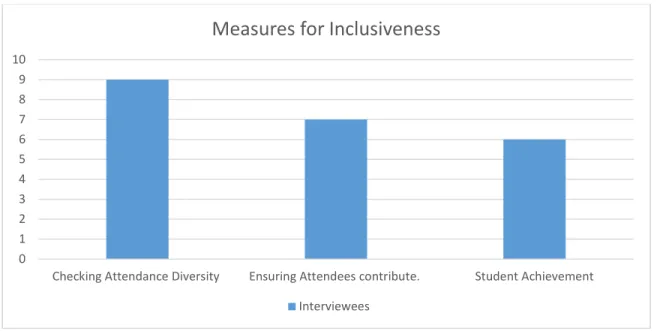
Page Figure 1. Nine components of the planning management group. ... 50 Figure 2. Number of interviewees who commented about the various subthemes related to
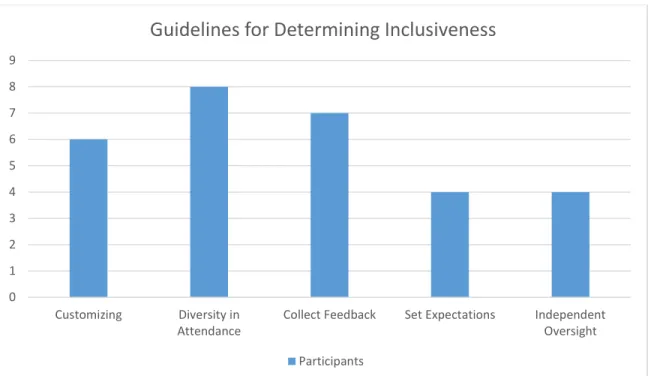
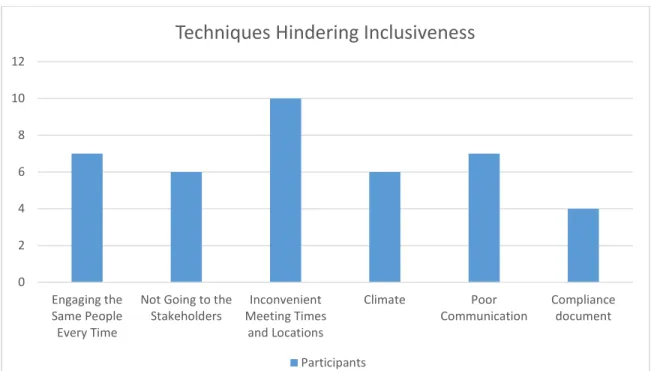
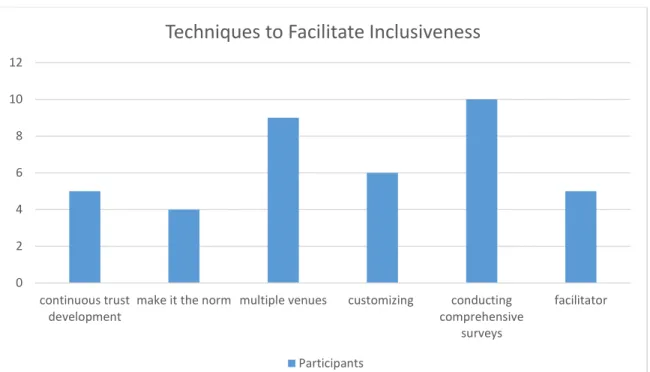
measures to determine inclusiveness. ... 79 Figure 3. Number of interviewees who contributed to the various subthemes related to guidelines to determine inclusiveness. ... 81 Figure 4. Number of interviewees who contributed to the various subthemes related to techniques
hindering inclusiveness. ... 85 Figure 6. Number of interviewees who contributed to the various subthemes related to measures
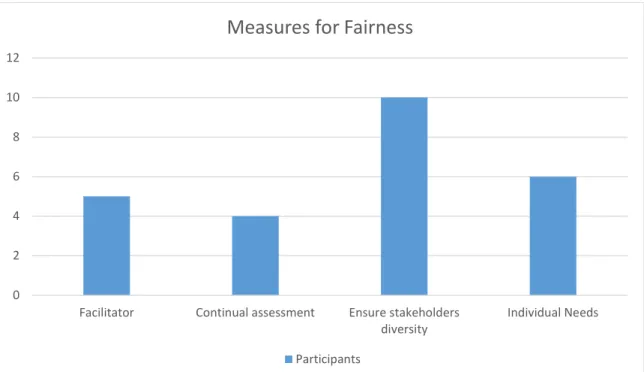
to determine fairness. ... 91 Figure 7. Number of interviewees who commented about the various subthemes related to
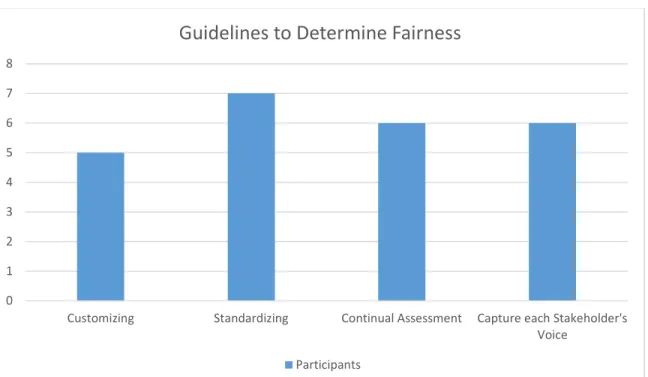
guidelines to determine fairness. ... 93 Figure 8. Number of interviewees who contributed to the various subthemes related to techniques
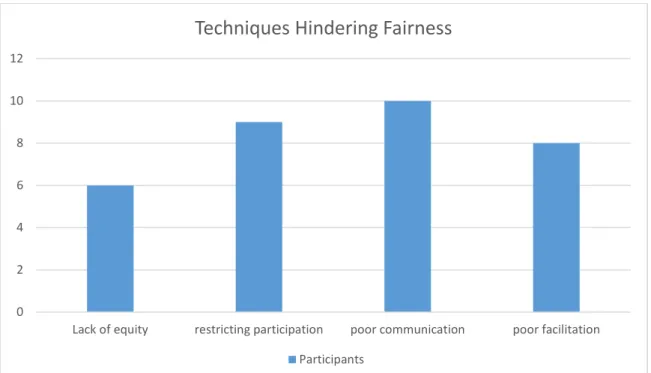
hindering fairness. ... 96 Figure 9. Number of interviewees who contributed to the various subthemes related to techniques
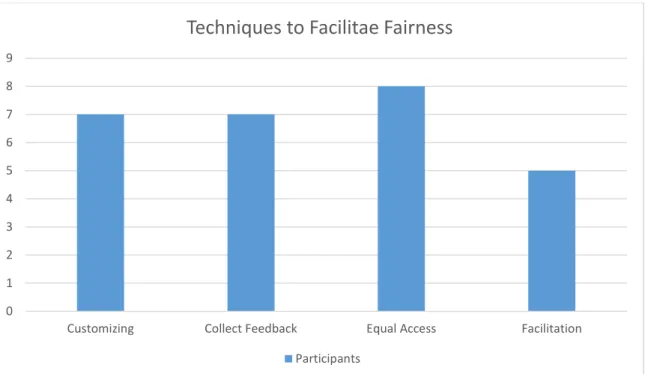
to facilitate fairness. ... 98 Figure 10. Number of interviewees who contributed to the various subthemes related to measures
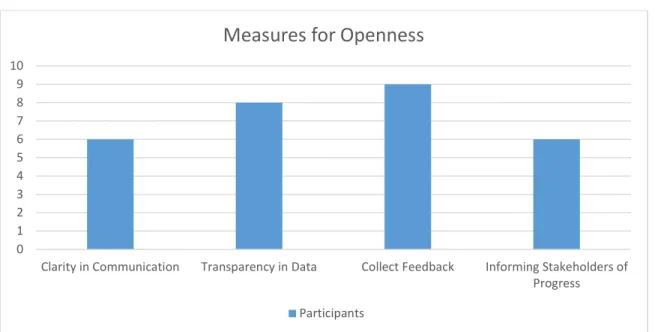
ensuring openness. ... 101 Figure 11. Number of interviewees who contributed to the various subthemes related to
guidelines to determine openness. ... 103 Figure 12. Number of interviewees who contributed to the various subthemes related to
techniques to hinder openness. ... 104 Figure 13. Number of interviewees who contributed to the various subthemes related to
techniques to facilitate openness. ... 106 Figure B1. Annual LCAP cycle. ... 144 Figure C1. County superintendent process and timeline to review and approve district budgets
Page Figure E1. IAP2’s public participation spectrum. ... 169 Figure H1. LCFF state priorities and related data elements. ... 174 Figure I1. LCAP preparation. ... 175
DEDICATION
To my husband and children who have provided unwavering love and support throughout this journey. To my father and mother who have always believed and preached I could achieve whatever I put my mind to. Most importantly to my father in heaven, who showers me with blessing everyday of my life, may my continued work always reflect his righteousness.
VITA EDUCATION
PEPPERDINE UNIVERSITY 2017
Doctor of Education Leadership Administration and Policy
AZUSA PACIFIC UNIVERSITY 2012
Master of Arts in Educational Leadership Administrative Credential
UNIVERSITY OF LA VERNE 2010
Master of Education
UNIVERSITY OF LA VERNE 2009
Single Subject Social Studies Teaching Credential
CALIFORNIA STATE UNIVERSITY SAN BERNARDINO 2006
Bachelor of Arts Political Science
PUBLIC EDUCATION EXPERIENCE
VICTOR VALLEY UNION HIGH SCHOOL DISTRICT July 2016-Present
Coordinator, Alternative Education
VICTOR VALLEY UNION HIGH SCHOOL DISTRICT July 2015-June 2016
Secondary Assistant Principal
SILVER VALLEY UNIFIED SCHOOL DISTRICT September 2013-June 2015
Interim Elementary Principal and Secondary Assistant Principal
HESPERIA UNIFIED SCHOOL DISTRICT August 2010-September 2013
U.S. History Teacher
LEWIS CENTER: AAE January 2008-August 2010
American Government & Economics Teacher OTHER EXPERIENCE
CALIFORNIA STATE LEGISLATURE January 2007-April 2013 Field Representative
VICTORVILLE CHAMBER OF COMMERCE March 2005-December 2011 Legislative Affairs Representative
DESERT COMMUNITY BANK September 2001-March 2005
ABSTRACT
The Local Control Funding Formula (LCFF) dispensation requires a Local Control
Accountability Plan (LCAP) in which the public participates in a Public Planning Process (PPP) with the district. The problem this qualitative phenomenographic study addressed is how the LCAP’s omission of a definition for the inclusive and transparent PPP may unintentionally lead to disproportionate inclusion of individual participants or stakeholder groups. Therefore, the researcher examined 10 California school district superintendents’ or their designees’ conceptions about what constitutes an inclusive, fair, and open PPP. For the purposes of this study, the International Association for Public Participation’s (IAP2) Quality Assurance Standards, specifically the 7 core values, served as the conceptual framework.
The objective of the research was twofold, first to identify how local educational agency (LEA) leaders conceive the use of the IAP2’s core values to define successful public stakeholder engagement for the LCAP in terms of inclusivity, fairness, and openness. The second goal was to determine what measures, guidelines, and techniques these leaders believe can contribute to the inclusiveness, fairness, and openness of the LCAP public stakeholder engagement process.
This study resulted in 3 conclusions study. First, the interviewees accepted the IAP2 core values as a foundation for best practices in the LCAP’s stakeholder engagement process. Second, data from the study clearly suggest that each interviewee has his/her own conception of what measures, guidelines, and techniques contribute to the inclusiveness, fairness, and openness of the LCAP stakeholder engagement process. Third, authentic participation, communication, equity, facilitation, local control, and trust are suggested as imperative to an inclusive, fair, and open stakeholder engagement PPP.
The researcher made three recommendations. First, the California Department of Education (CDE) should adopt a set of stakeholder engagement PPP core values for districts to use as a foundation. Second, the CDE should seek out a district or districts to pilot a set of core values to guide the stakeholder engagement component of the LCAP. Third, until the CDE is able to establish a rubric or set of core values to guide the stakeholder engagement PPP, districts should identify their own set of core values based on current research such as IAP2.
Chapter 1: Introduction
People tend to associate educational expenditure with educational quality; although there is a strong relationship between these two variables, educational quality requires more than adequate money spent on students (Coleman, 1966; Hanushek, 1986; Hill & Kiewiet, 2015). Hanushek (1986) asserted that the ways in which funds are spent are more important than how much is spent because large expenditures do not necessarily account for education quality. Tow (2006) conducted a study on the educational system in California and found “class size, poverty, student ethnicity, and teacher characteristics to be important indicators of student achievement” (p. 27), suggesting that “additional funding should go specifically towards the programs that are more effective” (p. 27).
The U.S. educational funding system is complicated, and no clear-cut funding policy exists (Howell & Miller, 1997). Howell and Miller (1997) asserted that the “school finance mechanisms (are) designed to promote equality, adequacy, and efficiency” (p. 39) in each state. Educational funding stems from three funds—federal, state, and local government—that
contribute at different levels (Wong & Casing, 2010). Distributing the money fairly and
equitably between districts and schools is a major task that is typically accomplished via student based budgeting (SBB; Baker & Elmer, 2009). The SBB system uses weighted pupil funding to distribute financial resources to districts and schools. Students are weighted in accordance with their educational needs and the financial implications of teaching them (Levin et al., 2013). In the majority of districts, staff is allocated according to staffing ratios. For example, the staffing ratios may determine that one teacher be appointed for 25 students, and when the school has 350 students a vice principal can be appointed. The goals of SBB are to instill fiscal equity and benefit students’ achievement (Curtis, Sinclair, & Malen, 2014). Furthermore, the SBB system
provides principals more autonomy to allocate funds where it is most needed, thus facilitating more effective resource allocation and utilization to improve student achievement (Levin et al., 2013).
Background of the Study
On July 1, 2013, Governor Jerry Brown signed into law legislation that brought significant changes to the funding of kindergarten-12 (K-12) public education. The new legislation changed the 40-year-old category model with the new Local Control Funding Formula (LCFF). This legislation aims to redistribute available funding to areas where it is needed most, namely to students from poor backgrounds, English learners, and foster children (Humphrey & Koppich, 2014). The State Board of Education identified eight priorities toward which LCFF funding should be directed. A requirement of the new funding system is that districts should host “inclusive and transparent public planning process” (Menefee-Libey & Kerchner, 2015, p. 4) during which budgetary priorities and educational goals to address the eight state priorities must be formulated collaboratively. Therefore, an integral part of the LCFF is the Local Control Accountability Plan (LCAP), a 3-year, district level plan updated annually through a public planning process, identifying the school district’s key goals for students as well as the specific actions and expenditures the district will need to take to achieve the goals. The LCFF streamlines the previous funding system of state categorical programs through the
introduction of a student-weighted model. The LCFF requires student numbers and identification of how many students belong to the following groups: (a) low income, (b) English learners, and (c) foster care. After receiving these figures from the different districts, the education department applies the formula, which then allocates funds to the districts. Although this new formula seems easier than the former categorical model, and did away with hours of deliberation to determine
the schools’ needs, the allocation of the funds to various programs must now be done at a district and school level, which brings its own set of difficulties (Menefee-Libey & Kerchner, 2015).
How the LCFF works. According to Miles and Feinberg (2014), in 2013 California’s educational spending ranked 49th in the nation. With the implementation of the LCFF, which is being phased in over 8 years, another $25 billion will be added to the state’s education budget. For the 2013-2014 budget, an additional $2.1 billion became available for educational spending, representing an increase of 4.7% per district or $338 per learner. The new dispensation benefits needy students; therefore, districts with a larger percentage of needy students will receive 6.4% more funding on average through LCFF. Therefore, 15% of the districts with a low percentage of needy students will not receive more funding, as their funding ratio is already high. In the final analysis, no district will receive less funding than in the 2012-2013 budget. This new funding dispensation will move California to the 45th position—its former national position of per pupil funding before the recession in 2007. The funding allocation stands on three pillars—equity, transparency, and flexibility. The LCAP plays a key role in each of these pillars.
Equity. Apart from increased funding, the allocation of funds will be more transparent and done according to a formula based on two aspects of the learner population in a district: (a) basic per student allocation; and (b) supplementary allocation for the English learner (EL), low income (LI), and foster youth (FY) subgroups. Students in these subgroups—EL/LI/FY—get an extra 20% funding per student, and those students who fall within more than one subgroup are only counted once (Fuller & Tobben, 2014). An extra funding allocation, the “concentration funding” (Miles & Feinberg, 2014, p. 2), is reserved for districts with more than 55% EL or LI students. The LCAP provides a forum for the district to describe how they intend to expend
supplemental funds to meet annual goals for all students and each student group for each state priorities.
Transparency. In contrast with the previous system that was extremely hard to understand, the LCFF is easily understandable: number of students in district (base grant + supplementary grant + concentration grant = monetary funding). Transparency goes, further as the LCFF Act requires the districts to join forces with parents and community groups to create an annual expenditure LCAP. The LCAP was designed with the intention of being easily
understandable by all stakeholders, as well as readily accessible to the public so that all stakeholders know where the funds are being spent (Miles & Feinberg, 2014).
Flexibility. The new dispensation did away with the 32 categorical programs (pre-determined funding allocations), and in the future these funds will be added to the base funds of districts to spend at their discretion (Miles & Feinberg, 2014). In sum, by means of changing the funding allocation and distribution and channeling additional funds to needy students, the California education funding system empowers districts and the public to exercise more control over educational spending through the LCAP process. How this newfound freedom and
responsibilities will play out in the future remains to be seen.
Funding. The LCFF funding is to be directed toward achieving the state’s eight
priorities. Each district will develop goals, identify actions, and allocate LCFF funding through the LCAP’s “inclusive and transparent public planning process” (Menefee-Libey & Kerchner, 2015, p. 4). The LCFF Act identified eight state priorities. These priorities are:
• Basic Services
• Common Core State Standards – focus on deep knowledge and problem solving skills • Parent Involvement
• Student Achievement • Student Engagement • School Climate
• Access to a Broad Curriculum • Other School Outcomes
Local control accountability plan (LCAP). Districts are not alone in distributing LCFF funds for different programs; the act requires collaboration with public participants through a LCAP to determine priorities and allocate funds. To date the regulations relating to the public planning process (PPP) are vague, but the LCAP template provided by the educational state board requires districts to reflect on the districts’ recorded collaborative goal setting and budgeting activities (Fuller & Tobben, 2014). Fuller and Tobben (2014) posed a series of questions in their review of the LCFF. A pressing concern is how the extra funds allocated to vulnerable groups and districts serving high percentages of these groups will be moved to these targeted groups. Another question revolves around the LCAP—how the collaborative process of goal setting and budgeting will grow in the districts and whether a range of public participants will be engaged in the process.
In fact, more needs to be done than just the reflective narrative. After 2 years of LCFF implementation, Humphrey and Koppich (2014) and Menefee-Libey and Kerchner (2015) published studies about the implementation of the LCFF and the LCAP process. Both studies found the required PPP in need of further exploration. Humphrey and Koppich pointed out the tendency to have uneven representation of stakeholders. Representation is often loaded toward the more opinionated and domineering individuals to the detriment of minority and vulnerable groups. Menefee-Libey and Kerchner asserted that, should the California legislature be serious
about the inclusive PPP, more clarity would be needed to ensure that it complies with the
requirements of the law. In October 2016, the Policy Analysis for California Education, the same agency that published Humphrey and Koppich’s research in 2014, released a study identifying seven key priority areas in bringing the equity potential of LCFF to fruition. One the of the seven key priorities was “deeply engaging families and communities” (p. 7), acknowledging that districts throughout the state are struggling with how to engage stakeholders consistently and meaningfully in the ongoing transparency, communication, and shared decision making.
California Education Code 35035 designates district superintendents and or their
designees as responsible for the preparation, submission, and implementation of the LCAP. The superintendent is ultimately responsible for the LCAP planning process and is charged with ensuring the obligation to conduct an inclusive, fair, and open planning process is met. The superintendent is responsible for ensuring both employee organizations and community groups are consulted in the planning process and is required to respond in writing to their questions. After the community planning component has been met, the superintendent is charged with formally recommending the LCAP to the district’s board of education. Once the board of education adopts the plan, the superintendent leads the cabinet in identifying implementation strategies and provides the professional expertise to implement the LCAP, assess the progress, and make recommendations for LCAP revisions.
Many questions have arisen since the implementation of the new LCAP. Some of these questions pertain to the decision-making process at the district level, the PPP, establishing inclusive and open participation in this process, opportunities and challenges districts face in allocating the funds, and the stakeholder process in determining accountability measures to hold educators accountable (Humphrey & Koppich, 2014). With a focus on the PPP, the researcher
aimed to explore some of the basic questions pertaining to the nature of a fair and inclusive PPP. Currently the LCFF specifies who should be part of the LCAP PPP; however, it allows local control in identifying how to conduct an inclusive, fair, and open PPP. Therefore, an opportunity existed to study and analyze the superintendents’ or their designees’ practices, experiences and conceptions of what constitutes an inclusive, fair, and open PPP.
Problem Statement
Executing the PPP in an inclusive and transparent manner as mandated by the new LCFF Act and the LCAP is challenging (Affeldt, 2015; Fuller & Tobben, 2014; Knudson, 2014). According to the requirements of the new funding system, districts should host an “inclusive and transparent public planning process” (Menefee-Libey & Kerchner, 2015, p. 4) during which budgetary district administrators and the public should collaboratively formulate priorities and targets. However the legislation does not explain what constitutes an inclusive, fair and open PPP (Affeldt, 2015). Taylor (2013) provided a detailed account of the LCFF and discussed the
requirement for districts to consult with the schools, parents, and bargaining units. Although Taylor’s account of the LCFF provided an overview of stakeholder groups that should be consulted (i.e., school personnel, parents, and bargaining units), specificity is lacking regarding the new legislation’s reference to the inclusion of numerous individuals and groups with diverse points of view and interests who are impacted by funding allocation.
Although the LCAP guidelines stipulate that the PPP for the allocation of funding should be undertaken every 3 years, the guidelines do not describe how public participation should be measured. Arguing that the 3-year planning process is problematic, Warren (2014) called for an annual planning and revision process. The LCFF addresses the necessity for school districts to facilitative inclusive processes but does not provide an explanation for how this is to be achieved
and, likewise, does not propose criteria for measuring success or failure in terms of inclusivity
and transparency (Affeldt, 2015; Humphrey & Koppich, 2014). The problem this study
addressed is how the LCAP’s omission of a definition for the inclusive and transparent PPP may unintentionally lead to disproportionate inclusion of individual participants or stakeholder groups. This imbalance could result in dominating individual voices overpowering those
vulnerable groups for whom this legislation was intended (Koppich, Humphrey, & Marsh, 2015). Therefore, both an opportunity and a need existed to examine California school district
superintendents’ or their designees’ conceptions about what constitutes an inclusive, fair, and open PPP as mandated by the LCAP.
Purpose Statement
California Education Code 35035 designates school district superintendents as responsible for the preparation, submission, and implementation of the LCAP. The
superintendent is ultimately responsible for the LCAP planning process and is charged with ensuring that it is conducted in an inclusive, fair, and open manner. Each school district board upon the recommendation of the Superintendent can designate a superintendent designee. The purpose of this qualitative phenomenographic study was to examine conceptions about what constitutes an inclusive, fair, and open LCAP PPP among superintendents in San Bernardino County, a high poverty county in Southern California. For the purposes of this study, the
International Association for Public Participation’s Quality Assurance Standards, specifically the seven core values, served as the conceptual framework that defines the public
Importance of Study
The new LCFF dispensation requires a LCAP in which the public participates in collaboration with the district. However, the dispensation does not provide guidelines on
conducting an inclusive, fair, and open planning process or how the process should be evaluated. Since the LCFF and LCAP are only 4 years old, only a few studies exist to determine their implementation success (Humphrey & Koppich, 2014; Knudson, 2014; Menefee-Libey & Kerchner, 2015). Concerns, complaints, and lawsuits have already emerged regarding the PPP; this study served to address the gap in the LCFF regulations regarding the inclusion of the public and evaluation of the openness and fairness of the planning process (Koppich et al., 2015). This study addressed this identified gap and contributes to the body of knowledge by providing
guidelines via which to perform and evaluate the PPP to determine its openness and fairness. The findings of this study can be utilized on a district and state level to address the important
community aspect of the LCFF and its requirement of an inclusive, fair, and open PPP. Clarity as to what constitutes an inclusive, fair, and open planning process will assist the state and districts in assessing practices, thus ensuring that the intent of the LCFF and LCAP is being implemented with fidelity. Moreover, the findings of this study can assist in further developing and solidifying the voices of stakeholders, specifically, students, parents, minorities, and vulnerable groups.
Definition of Terms
The following acronyms and terms are used frequently throughout the dissertation. Many of the acronyms come from the California State Department of Education, whereas other
definitions were gathered from varied sources including the International Association for Public Participation (IAP2, 2015a), as this organization is globally recognized as a leader in public participation.
Community engagement: According to the Government of Western Australia, Department of Local Government (2012),
Community engagement ensures communities can participate in decisions that affect them, and at a level that meets their expectations. It helps strengthen the relationship between communities and government, enabling stakeholders to become part of the process, while assisting to build consensus. (p. 1)
Community planning: “Community planning is a process that seeks to engage all
members of a community to create more prosperous, convenient, equitable, healthy and attractive places for present and future generations” (Arnstein, 1969, p. 13).
English-language learner (ELL) or English Learner (EL):
A pupil who was not born in the United States or whose native language is a language other than English or who comes from an environment where a language other than English is dominant; and whose difficulties in speaking, reading, writing, or
understanding the English language may be sufficient to deny the individual the ability to meet the state’s proficient level of achievement on state assessments, the ability to
successfully achieve in classrooms where the language of instruction is English, or the opportunity to participate fully in society. (English Learner and Immigrant Pupil Federal Conformity Act, 2002, p. 1)
Family: Epstein (2016) viewed family as the parents of a child as well as other caregivers
such as grandparents or foster parents who are responsible for and involved in building a relationship with the school and teachers.
K-12: This acronym generally defines school grades of kindergarten, primary, and
Local Control and Accountability Plan (LCAP): A plan developed by each local educational agency (LEA) to set out how local educational funds will be spent. The LEA must present the LCAP annually on July 1 for approval to the County Office of Education (COE). Initial approval of the LCAP occurred on July 1, 2014 (EdSource, 2016).
Local Control Funding Formula (LCFF): Governor Brown formulated and proposed the
LCFF, which is the most comprehensive educational funding reform in decades, representing a complete change in school funding in California. The LCFF was approved by state legislature in June of 2013. The LCFF is focused on local decision making, equity, accountability, and
transparency, and provides the basic building blocks for LEAs to enhance student achievement and close the achievement gap. It will take 8 years to implement the new system. Transitioning to the new system commenced in 2013-2014 (EdSource, 2016).
Local Education Agency (LEA):
A public board of education or other public authority within a state that maintains administrative control of public elementary or secondary schools in a city, county, township, school district, or other political subdivision of a state. School districts and county offices of education are both LEAs. Sometimes charter schools function as LEAs. (EdSource, n.d., p. 1)
Stakeholders: “Any individual, group of individuals, organisation or politics entity with
an interest or stake in the outcome of a decision” (IAP2, 2015a, p. 8). Freeman (1984) depicted stakeholders as “those groups and individuals who can affect or be affected” (p. 25) by an organization and its objectives or achievements.
Stakeholder engagement: “The terms public participation and community and/or
Superintendent: A state superintendent of public instruction serves a 4-year term and is the chief representative of public schools, providing education policy and direction to the local school districts (California Voter Foundation, 1994). According to Martens (2012), a school superintendent is “the top executive (‘CEO’) in the school district. The superintendent implements the school board’s vision by making day-to-day decisions about educational programs, spending, staff, and facilities. The superintendent hires, supervises, and manages the central staff and principals” (p. 1). See Appendix A for a full job description.
Public Participation: “A process that involves the public in problem-solving or
decision-making and that uses public input to make better decisions” (IAP2, 2015a, p. 8).
Conceptual and Theoretical Framework Introduction
There is a growing body of evidence supporting the link between stakeholder engagement and positive community change. In his 1984 publication of Strategic Management: A
Stakeholder Approach, R. Edward Freeman introduced stakeholder theory, which was used as a
theoretical framework in this study in determining an inclusive planning process. Stakeholder theory was originally formulated to study the “principle of who or what really counts” (p. 412) in corporations and was validated through research conducted by Donaldson and Preston (1995). Donaldson and Preston presented evidence supporting stakeholder theory as it pertains to descriptive, instrumental, normative, and managerial aspects. Jones and Wicks (1999), who introduced convergent stakeholder theory, a combination of the normative and instrumental aspects of stakeholder theory, later expanded upon stakeholder theory. The normative and instrumental aspects of convergent stakeholder theory are centered on the management of stakeholders; normative refers to how businesses should operate in relation to moral principles,
The normative and instrumental aspects of convergent stakeholder theory as presented by Jones and Wicks served as the focus of this study, as they provide a lens through which to view the management of stakeholders to achieve the goals of the district and the eight state priorities. IAP2’s framework of Quality Assurance Standards, specifically the seven core values was used as a conceptual framework in determining fairness and openness in conducting the PPP. This framework was an appropriate lens through which to view the problem because it explores the discourse process of groups in terms of the fairness and openness in deeper engagement of stakeholders throughout the educational decision-making process, including planning and evaluation of impact. The core values of IAP2 (2004), designed in 2004, include factors such as: (a) everyone who is influenced by a resolution is entitled to be involved in the decision-making process (b) the stakeholders’ opinions will be used in the final decision, (c) the needs and interests of the participants and makers are recognized, (d) the decision-makers actively seeks for and involved everyone who is affected by the decision, (e) the design of the process focuses on enabling participation of all participants, (f) the stakeholders will receive all needed information, and (g) feedback to stakeholders will include the effect of their input in the final decision. Kania and Kramer’s (2011) theory of collective impact, which outlines the conditions for effective collaborations for positive community change, will further inform these stakeholder theories in combination with IAP2.
Research Questions
The following research questions (RQs) provided guidance for this study:
• RQ1. How do local education agency leaders conceive the use of the IAP2’s core values to define successful public stakeholder engagement for the LCAP in terms of inclusivity, fairness, and openness?
• RQ2. What measures, guidelines, and techniques do local education agency leaders conceive can contribute to the inclusiveness of the LCAP public stakeholder
engagement process?
• RQ3. What measures, guidelines, and techniques do local education agency leaders conceive can contribute to the fairness of the LCAP public stakeholder engagement process?
• RQ4. What measures, guidelines, and techniques do local educational agency leaders conceive can contribute to the openness of the LCAP public stakeholder engagement process?
Limitations
As with any study, certain limitations outside the researcher’s control arise. The internal validity of the study may be impacted by the structure of the interview questions, the schools identified for the study, the personal experience of the interviewee, and the degree to which the interviewee is comfortable speaking openly and honestly. Lastly, percentage of participants within the region is a limitation.
Delimitations
There are seven delimitations to this study. First, this study was delimited up to 10
current K-12 public school district Superintendents or his/her designee in San Bernardino County who have been in the position for a minimum of 2 years. Second, the study was limited to
superintendents or his/her designee, as California Education Code specifically identifies
superintendents as solely responsible for the implementation of the LCAP. Third, understanding the LCAP process is fairly new, the study was limited to current superintendents or his/her designee in an effort to ensure they have had experience in the LCAP process. Fourth, the study
was limited to superintendents or his/her designee who have been in their position for at least 2 years to ensure the subject has gone through an entire cycle of the LCAP process. Fifth, the study was limited to superintendents or his/her designee of K-12 districts to provide a common student grade variation to assure subjects have experienced the same phenomenon. Sixth, the sample size of the study was limited to assist the researcher in conducting the research in a timely manner while maintaining reliability in the sample size. Seventh, the geographical location of the study was limited to San Bernardino County to provide the researcher reasonable access to the subjects.
Assumptions
An assumption of this study was that superintendents or his/her designee have knowledge of and experience in the LCAP process, as they are deemed responsible for it in California’s education code. The second assumption was that the participating superintendents or his/her designee would answer the interview questions in an honest and candid manner. The third assumption was that the inclusion criteria of the sample are appropriate and, therefore, assure that the participants have all experienced the same or similar phenomenon of the study.
Organization of the Study
This research paper is presented in five chapters. Chapter 1 introduces the topic and problem, reviews the purpose of the study, presents the research questions, discusses the research’s limitations, and defines the key terms. Chapter 2 consists of a literature review covering the pertinent areas relevant to this study, including stakeholder engagement, success strategies, obstacles to success, and the purpose of stakeholder engagement in the LCAP development. Chapter 3 consists of the research design and approach, a description of the population, data collection method, protection of human subjects, the role of the researcher, and
the data analysis process. Chapter 4 reports the findings of the study. Finally, Chapter 5
summarizes the study by inferring conclusions based on the research findings. Recommendations for future study are considered in this final chapter.
Chapter 2: Literature Review
The new LCFF dispensation requires a LCAP, a 3-year, district level plan updated annually through a PPP, identifying the school district’s key goals for students as well as the specific actions and expenditures the district will need to take to achieve the goals. However, besides the necessity for districts to host inclusive processes, the LCFF does not explain how this is to be achieved and, likewise, does not propose criteria for measuring the success or failure in terms of inclusivity and transparency (Affeldt, 2015; Humphrey & Koppich, 2014). The purpose of this study is to examine conceptions about what constitutes an inclusive, fair, and open LCAP PPP and explore stakeholder engagement to determine what practices constitute an inclusive, fair, and open PPP. For the purposes of this study, stakeholder engagement theory served as the theoretical framework and the IAP2’s Quality Assurance Standards, specifically the seven core values, served as the conceptual framework that defines the public engagement/participation planning process. The variables reviewed in this literature review include: (a) stakeholders; and (b) a fair, inclusive, and open PPP. As such this literature review includes the following
elements: (a) a historical background of the LCFF; (b) the LCAP structure; (c) the theoretical framework for the study; (d) the conceptual framework of the study; (e) the elements of a successful school, parent, and community inclusive process; and (f) a chapter summary.
Historical Background of the LCFF
The United States’ K-12 public education funding system is complicated, and no clear-cut funding policy exists (Howell & Miller, 1997). K-12 public education funding stems from three sources—federal, state, and local government—all of which contribute at different levels using different methods to determine funding allocations (Wong & Casing, 2010).
In looking at the federal government’s approach in allocating funds to educational programs, it appears the SBB system is used most frequently to perform this task (Baker & Elmer, 2009). The SBB system uses weighted pupil funding to distribute financial resources to districts and schools (Miles & Feinberg, 2014). In the SBB model students are weighted in accordance with their educational needs and the financial implications of teaching the students (Levin et al., 2013). In the SBB model the funding follows the student based on the students’ need (Education Resource Strategies, 2014). According to Education Resource Strategies (2014), “This differs fundamentally from the traditional funding model still employed by most American school districts, which distribute resources to schools in the form of staff and dollars” (p. 6) often determined by the quantity of students being served.
The goals of SBB are to instill fiscal equity and support student achievement (Curtis et al., 2014). Furthermore, the SBB system provides principals more autonomy to allocate funds where it is most needed, thus facilitating even more effective resource allocation and utilization to improve student achievement (Levin et al., 2013). Apart from the SBB system’s complicated calculations that take significant time to perform, allocation of funds where it is needed most is left to LEAs a practice intended to benefit minority groups such as ELs, LI students, FY, or students with disabilities.
In contrast to the federal government’s SBB system, many states still embrace the traditional funding model (Education Resource Strategies, 2014), which is employed by the majority of districts across the United States. In this model, funding follows the student
regardless of individual student need. The traditional model is most notably observed through the district practice wherein staff is allocated according to staffing ratios. For example, the staffing ratios may determine that one teacher be appointed for 25 students and when the school has 350
students a vice principal can be appointed (Curtis et al., 2014). People tend to associate
educational expenditure with educational quality; although there is a strong relationship between these two variables, educational quality requires more than adequate money spent on students (Coleman, 1966; Hanushek, 1986; Hill & Kiewiet, 2015). Hanushek (1986) asserted that the way funds are spent is more important than how much is spent, since large amounts spent do not necessarily account for education quality. The traditional funding model does not address the needs of individual students or provide equity in school funding, both of which are necessary in order to ensure each student’s need is met (National Education Association [NEA], 2005). Tow (2006) conducted a study on the educational system in California and found that “class size, poverty, student ethnicity, and teacher characteristics to be important indicators of student achievement.” (p. 27). As a result, Tow suggested “additional funding should go specifically towards the programs that are more effective” (p. 27). According to the National Education Association (NEA, 2005), “There is a growing body of research that supports the implementation of a relatively new system of allocating resources within a school district based on individual student needs” (p. 5).
California has long embraced the traditional funding model, but after years of research by policy advisors, the California State Legislature, with the full support of Governor Jerry Brown, introduced a plan to shift the long-term accountability focus from fiscal compliance to
educational outcomes in an effort to support schools “so they improve rather than punishing them for failing” (Fuller & Tobben, 2014, p. 5). In 2013, California eliminated the vast majority of state imposed categorical spending criteria in public education and embraced the SBB model when the state legislature passed Assembly Bill 97, thus creating the LCFF “to enable educators to overcome the barriers that confront non-English speaking families and those with low and
very modest incomes” (Brown, 2016, para. 23). The LCFF redistributed available funding to areas where it is needed most, namely students from poor backgrounds, ELs, and FY (Humphrey & Koppich, 2014; Legislative Analyst’s Office [LAO], 2013). This transition was a clear move from the traditional funding model of categorical funding, in which the state provided districts money for specific purposes and programs, to a SBB model, in which the state allocated funds based on student needs.
The LCAP Structure
State funds for K-12 public education are distributed to LEAs through the LCFF. The LCFF requires the LEA to determine how to best expend the funds to benefit students using a LCAP. The LCAP is a 3-year, district level plan updated annually through a PPP, identifying the school district’s key goals for students as well as the specific actions and expenditures the district will need to take to achieve the goals (CDE, n.d.). The CDE provides LEAs a specific timeline to follow in developing and implementing the LCAP and a template to display the plan.
LCAP development cycle and approval timeline. California Education Code 52070 and LCFF legislation provide a specific timeline for the LCAP cycle (see Appendix B) and approval process (see Appendix C). The LCFF indicates that districts should prepare a
preliminary LCAP that the public should scrutinize. Children Now (2014) suggested a timeframe for preparing all the LCFF steps; by March the LCFF/LCAP should convene a community process to outline financing strategies into a preliminary LCAP. Taylor (2013) wrote a
comprehensive analysis of the LCFF/LCAP in which he set out the LCAP process. According to Taylor, districts must conduct a minimum of two public hearings to discuss/adopt/update the LCAP. One hearing should be dedicated to receiving suggestions and observations from the public about the expenditures proposed in the LCAP. The follow-up hearing is tasked with either
the LEA’s Board of Trustees adopting or updating the LCAP. The 2016 annual California School Board Association (CSBA) conference was dedicated to discuss the implementation of the LCFF and the approval process for the LCAP. After 5 days the district must present the plan to its COE for appraisal, which must respond within 15 days after receipt of the LCAP. The district has 15 days to respond to the COE recommendations during which period another public hearing should be held. Although the district must consider the advice of the COE, it does not have to alter its LCAP. By October, the COE must approve the district’s LCAP provided that (a) it is in keeping with the LCAP template, (b) the budgetary allocations are sufficient for the activities set out in the LCAP, and (c) the supplemental and concentration funding allocations observes the spending obligations.
LCAP template. The template was designed with the intention of being easily understandable by all stakeholders, as well as readily accessible to the public so that all stakeholders know where the funds are being spent (Miles & Feinberg, 2014). The LCAP template has been developed and modified various times to streamline the examining and assessing of the LCAP by stakeholders. Most recently in November 2016, the State Board of Education adopted a new LCAP template to be implemented in the 2017/2018 school year. The LCAP template attached in Appendix D includes five key sections. The first section is the Plan Summary, an Introduction incorporating five components: (a) district overview, (b) LCAP highlights, (c) review of performance, (d) increased or improved services, and (e) budget summary. The second section is the Annual Update, which includes three components: (a) annual measurable outcomes, (b) actions/services, and (c) analysis. The third section,
Stakeholder Engagement, is designed to provide a reflective narrative describing the Stakeholder Engagement process used to develop the LCAP. In the fourth section—Goals, Actions, and
Services— the LEA describes annual goals that address each of the eight LCFF state priorities. Although each LEA has discretion in determining where to allocate spending, LCFF requires districts to direct allocations toward achieving the state’s eight educational priorities: (a) basic services, (b) Common Core State Standards—focus on deep knowledge and problem solving skills, (c) parent involvement, (d) student achievement, (e) student engagement, (f) school climate, (g) access to a broad curriculum, and (g) other school outcomes. Section four also provides an area for the LEA to list the action steps required to achieve the goal, the required budget expenditures, the scope of services, and what students will be served. The fifth section, the Demonstration of Increased or Improved Services for Unduplicated Pupils, requires the district to describe services for unduplicated pupils and how those services are increased or improved. Each of the five sections within the LCAP plays a key role in the implementation of the LCFF. Because this study explores stakeholder engagement to determine what practices constitute an inclusive, fair, and open PPP, there is a need to further explore the third section of the LCAP, Stakeholder Engagement, as it was designed to capture and make available to others a glimpse of the PPP used in the development of the LCAP for that specific LEA.
Stakeholder engagement in the LCAP. When introducing the LCAP, a key component of LCFF, Governor Brown (2013) stated, “We are bringing government closer to the people, to the classroom where real decisions are made, and directing the money where the need and the challenge is greatest” (p. 1). LCFF tasks each district with developing goals, identifying actions, and allocating funding. However, districts are not alone in distributing LCFF funds for different programs; the act requires collaboration with public participants through a LCAP to determine priorities and allocate funds. By means of changing the funding allocation and distribution, and channeling additional funds to needy students, the California education funding system
empowers districts and the public to exercise more control over educational spending through the LCAP process, which requires public planning. To date the regulations relating to the PPP and stakeholder engagement are vague, but the LCAP template provided by the educational state board requires districts to reflect on the districts’ recorded collaborative goal setting and budgeting activities (Fuller & Tobben, 2014). The LCAP template provides a forum for the district to identify how they intend to expend supplemental funds to meet annual goals for all students and each student group for each state priority and describe how the LEA engaged its stakeholders in the PPP (CDE, n.d.).
Each LEA is responsible for redistributing LCFF funds through the LCAP by engaging stakeholders in the decision-making process. The LCFF requires LEAs to allocate funds to action steps that will achieve district goals aligned to the eight state priorities while funding measurable actions that will improve and increase the learning opportunities of the students, especially the unduplicated students (ELs, students in poverty, and students in foster care), as stipulated by the LCAP. Stakeholder engagement receives a prominent position in the LCAP process, with an emphasis on building partnerships between the stakeholders so that everyone can collaborate, benefit, and share the responsibility of effective decision-making.
According to the LCAP template (CDE, n.d.), section three of the LCAP, Stakeholder Engagement, is reserved for districts to
Describe the process used to consult with the Parent Advisory Committee, the English Learner Parent Advisory Committee, parents, students, school personnel, the LEA’s local bargaining units, and the community to inform the development of the LCAP and the annual review and analysis for the indicated LCAP year. (p. 9)
After the LEA details the involvement process with “how, when, and with whom did the LEA consult as part of the planning process for this LCAP/Annual Review and Analysis” (p. 6) the LEA is than tasked with describing “how…these consultations impact the LCAP for the upcoming year” (p. 6). The stakeholder engagement requirement of the LCAP creates avenues for districts to grow through better understanding of the community’s beliefs, values, challenges, and desires, while generating community buy-in and support, thus fostering an environment of trust and confidence. However, this opportunity is also accompanied by its own set of challenges (Institute for Local Government, 2014).
Stakeholder engagement challenges. In the Legislature’s attempt to bring government closer to the people, “community groups were disappointed with the lack of capacity in district offices to fulfill the new demands of meaningful engagement and the frequent failure to address basic requirements for parent and student engagement” (Affeldt, 2015, p. 10). The Education
Analysis Archives, a peer reviewed journal, published a study by John Affeldt (2015) of Public
Advocates, Inc. This study identified five challenges in the stakeholder engagement component of the LCAP: (a) setting meetings at times parents and students can make; (b) providing
sufficient notice to target populations of the meetings and their purpose; (c) offering child care and food; (d) providing translation and interpretation; and (e) providing trainings on LCFF, LCAP, and budgets so that parents and students can participate meaningfully. Another recent study stated that “too many districts approach LCAP community engagement as a checkbox, instead of a meaningful exercise in shared decision making” (Jongco, 2016, p. 3).
Waner (2016) conducted several LCAP meetings during the 2013-14 and 2015-16 school years, sharing lessons learned from these experiences. During the initial phases of the LCAP meetings, the stakeholders moved from uncharted territory and experienced challenges such as
cultural differences. Early on during the follow-up process, the organizers realized that it was essential to validate input from stakeholders; they also recognized the necessity of gathering feedback on how their input served to effect change. During the 2015-16 meetings there was better cultural buy-in of the process, improved focus, using data to base decisions on, and valuing every stakeholder’s input.
In the absence of regulations on how to conduct LCAP engagement, Waner (2016) gave the following guidelines:
• Provide an equal opportunity for participation to all stakeholders by using various innovative methods (tools).
• Provide feedback on how the stakeholders’ input served to change the school system. • Provide information in small chunks and easy to follow language.
• Refrain from using acronyms and educational terms as it serves to alienate the stakeholders and not promote mutual understanding.
• Show respect to the stakeholders and their time.
• Meet the stakeholders where they are—in the communities. • Promote an open door and quick response culture.
• Create a friendly atmosphere by providing refreshments.
The LCFF legislation outlining specific stakeholder engagement meetings may fall short of providing the follow through to ensure fidelity of implementation. A parent advisory
committee that includes unduplicated students (EL, LI, and FY students) must be established and provide input to the superintendent and governing board relating to the LCAP (CDE, 2017). The requirement that the superintendent has to provide a written response to the parent advisory committee’s advice serves to validate the committee’s input. However, the requirements do not
include a written response from the superintendent regarding comments made during
engagement meetings. Following the stakeholder engagement consultations, at least one public hearing has to follow during which input from the public is gathered on the allocation of funds as set out in the LCAP. The California County Superintendents Educational Services Association (CCSESA; 2014) cautions COEs that the aforementioned process could easily represent the customary top-down involvement where the stakeholders have to rubber-stamp decisions already made by administrators. Public participation has different tools or techniques to facilitate
stakeholder participation and the suggested public hearings may not be sufficient. Waner (2016) suggested that successful engagement of the public needs to engage the public in discussions of forums during which opinions and suggestions could be noted.
Community and stakeholder groups are not the only ones who have identified challenges in current stakeholder engagement practices and understandings. Section three of the LCAP template, Stakeholder Engagement, also asks the LEA to describe how the consultation process impacted the development of the LCAP, including its goals, actions, services, and expenditures. Section three creates an avenue to reflect upon the stakeholder engagement process that was used during the cycle; however, there is no mechanism in place to determine if the engagement was “meaningful:” a component said to be “critical to the development of the LCAP” (CDE, n.d., p. 9). Nor is there a mechanism in place to determine if the PPP was inclusive, fair, and open. The first component of the third section of the LCAP template, Stakeholder Engagement, requires LEAs to provide information on the process followed to engage stakeholders such as parents, students and the community. Understanding that the LEA’s COE must approve the LEA’s proposed LCAP and acknowledging that there is no specific rubric to guide the approval process, it may be prudent to review the approval process resources provided to COEs by the
CCSESA. The 2014 CCSESA manual stated that meaningful engagement with stakeholders was a requirement in the LCAP process and that the COE will review the LCAP documentation to ascertain whether the requirement of meaningful stakeholder engagement was met. While there is no specific rubric to assist in determining whether a district engaged in meaningful stakeholder engagement the CCSESA provides section-by-section guidelines for a COE LCAP reviewer to verify that the LEA’s LCAP requirements have been met. As it pertains to Section 3,
Stakeholder Engagement, CCSESA proposes that reporting on engagement could simply include meeting dates and a summary of the involvement process to meet the district goals.
California’s shift from the traditional public education funding model to the SBB model embedded into the LCFF redistributed available funding to areas where it is needed most. The LCFF’s LCAP requirement ensures stakeholders have a substantial role in the PPP by requiring collaboration with stakeholders through the LCAP process to determine priorities and allocate funds. The third section of the LCAP template, Stakeholder Engagement, is designed to provide a reflective narrative describing the Stakeholder Engagement process used to develop the LCAP. Although the stakeholder engagement component of the LCAP creates avenues for districts to grow in their service to the community it has also brought challenges (Institute for Local Government, 2014). To facilitate collaboration it is important to build relationships among the different stakeholders, in this process mutual trust and open communication is essential
(Knudson, 2014).
Theoretical Framework
Stakeholder theory. Freeman first proposed the stakeholder theory in 1984; since that time, both Freeman and other researchers have expanded upon the theory. Freeman (1984) defined stakeholders as “any group or individual who is affected by or can affect the
achievement of an organization’s objectives” (p. 46). Freeman introduced the idea that business organizations have stakeholders and that businesses should pay more attention to those
stakeholders. In fact, organizations that pay attention to their stakeholders persistently will benefit in the long run by creating more value. Freeman’s stakeholder theory has been applied to various disciplines, including health care and legal practice (Freeman, Harrison, Wicks, Parmar, & de Colle, 2010). Despite several researchers’ efforts, there are still differences in opinion regarding the fundamental question of “Who or What Really Counts” (Freeman, 1984, p. 46). Mitchell, Agle, and Wood (1997) pointed out that the identification of stakeholders involves both normative and descriptive qualities. The normative aspect centers on who the stakeholders
should be, whereas the descriptive aspect describes the conditions to be fulfilled under which a manager would consider a group to be stakeholders (Donaldson & Preston, 1995). In the current study the LCFF/LCAP law broadly indicated which basic groups should be considered
stakeholders and to whom the superintendent should pay attention. California Education Code 52060 specifically identifies “teachers, principals, administrators, other school personnel, local bargaining units of the school district, parents, and pupils” as stakeholders who should be consulted with in the development of the local control and accountability plan.
The stakeholder theory advocates a useful, effective, successful, and ethical way to manage businesses in an environment that is complex and disordered (Freeman, 1984). Its usefulness lies in the fact that organizations have to manage stakeholders whether they like it or not and whether they are successful or not (Donaldson & Preston, 1995). Stakeholders who are handled well will react positively toward the organization by remaining loyal and participating in a manner that will benefit the organization. The stakeholder approach is successful, in the sense that it channels the stakeholders’ energy toward achieving the organizational goals. Furthermore,
stakeholder theory is useful in a complex and disordered environment as organizations that manage their stakeholders successfully receive useful insights from the stakeholders that can be used in strategic decision making, which gives them a competitive advantage (Harrison,
Freeman, & de Abreu, 2015). The LCAP was designed to embrace the idea that stakeholder insight in the development of the strategic plan will lead to a competitive advantage within educational entities. According to Phillips, Freeman, and Wicks (2003) and Phillips and Margolis (1999), humans are responsible for themselves and should engage in actions that are not harmful to those around them. This principle, then, constitutes the ethical realm of
stakeholder theory: namely that managers are responsible for their actions and decisions in the organization which should not be harmful to either the stakeholders or the organization
(Donaldson & Preston, 1995). This phenomenon is reciprocal, as the same responsibility rests with the stakeholders toward the manager and organization (Harrison et al., 2015).
It is the responsibility of managers to manage for stakeholders by attending to their needs and best interests (Donaldson & Preston, 1995). Stakeholder theory advises that all stakeholders should be treated with “fairness, honesty, and even generosity” (Harrison et al., 2015, p. 859). Organizations that manage for stakeholders will use more resources than needed to benefit the stakeholders and in turn will receive the stakeholders’ trust and sharing of information, which benefits the organization (Donaldson & Preston, 1995). Not all managers manage for
stakeholders, as they fear doing so might be counterproductive (Harrison et al., 2015); however, many researchers have found organizations that value their stakeholders have a competitive advantage. With the development and implementation of the LCAP and its requirement of stakeholder engagement, it is evident that elected leadership within California is now embracing this concept of valuing and including stakeholders in planning and implementation processes.
A core value of stakeholder theory is trust, and Jones (1995) pointed out that the trust relationship between the organization and stakeholders leads to better cooperation, a greater willingness of the stakeholders to disclose personal information, and a competitive advantage (Harrison & Wicks, 2013). The normative and instrumental aspects of convergent stakeholder theory as presented by Jones and Wicks (1999) provide a lens through which to view the management of stakeholders to achieve the goals of the district and the eight state priorities. Harrison and Wicks (2013) pointed out that trust implies the willingness of one party to become vulnerable to the other and is reciprocal in nature. Trust is built upon the expectation that both parties will be fair in their relationship. It is highly doubtful that stakeholders will demonstrate behaviors such as openness, kindness, and loyalty towards the organization if they are not treated fairly and if they cannot in real terms expect the organization to redistribute some of the profits created, back to the stakeholder.
Although several researchers have addressed the notion of trust (Pirson, Martin, & Parmar, 2014), distrust has not received much attention (Laude, Weibel, Sachs, & Schafheitle, 2017). Unfortunately not all organizations have proven to be trustworthy—for instance, Volkswagen’s emissions damages, British Petroleum’s (BP’s) Deepwater Horizon oil spill— thereby corroding stakeholders’ trust. Similar to the effect of trust, distrust also has implications for the continued success of the organization. Distrust is not simply the absence of trust or a very low degree of trust; it has its own multidimensional composition (Bijlsma-Frankema, Sitkin, & Weibel, 2015). Distrust has therefore completely different precursors and outcomes compared to trust (Guo, Lumineau, & Lewicki, 2017). The precursors of distrust are value incongruence, outgroup bias and malevolence, all of which lead to a reduction in value creation. Laude et al. (2017) asserted that people hold protected values such as religion and other values that elicit a
strong emotional reaction when violated. The authors pointed out that certain ethical issues exist (e.g., growing popularity of tobacco use in developing countries linked with too little information on the dangers of smoking) that are hard to resolve, requiring superior problem solving skills and group management skills. The theory of distrust has links with social identity theory, which asserts that people organize themselves in groups depending on their interests, similar needs, etc. Those with similar interests will belong to a specific group (the in-group) and membership in this group is regarded in a positive light. The outgroup is made up of those who do not belong to the in-group and the outgroup is perceived negatively; this tendency leads to an outgroup bias exists, which leads to distrust of the outgroup (Laude et al., 2017).
This notion of distrust and attitude toward in-groups and outgroups has implications for the LCAP stakeholder engagement. The LCFF law stipulates that unduplicated students (EL, FY, and LI children) should receive a greater portion of the budget and that special programs should be designed and followed to close the achievement gap. The students belonging to these groups are also known as minority students or, as suggested by Laude et al. (2017), outgroup students. These outgroup students and their parents were found to be lacking in parent-teacher
participation, which establishes them as outgroup students (Menefee-Libey & Kerchner, 2015). As suggested by Laude et al., this outgroup status can trigger outgroup bias, which may lead to distrust of the outgroup. The literature suggests that the well-meaning isolation of the
unduplicated students and allocation of more resources to this outgroup students could elicit negativity from the in-group stakeholders, which might complicate stakeholder engagement. Furthermore, the literature suggests that outgroup parents might ace cultural biases prohibiting them from voicing their opinions in the greater forum, especially in the presence of persons with higher social standing, such as superintendents and teachers. Additionally, the literature suggests
that this situation could lead to animosity, distrust, poor cooperation, and little to no disclosure. Given the findings of Laude et al.’s, study it could be asserted that the facilitator of the
stakeholder engagement sessions should be very skilled in handling such situations diplomatically.
Harrison and Wicks (2013) debated the fact that value in business centers on finances, with the question of who earns more dividends at the core. This assumption violates the basic principle of stakeholder theory, which is focused on the similarity or joint-ness of stakeholders. In the current study, the stakeholder focus is on the identification of who the stakeholders are on the one hand, and the particular interests or needs of the stakeholder groups on the other hand, as the LCFF indicates that unduplicated pupils (e.g., EL, FY, and LI pupils) are to receive
additional funding (Taylor, 2013). Although the stakeholders are unified via their interest and participation in education of the students, they are also potentially divided due to their particular interests or grouping (regular student group [in-group] versus unduplicated pupils group
[outgroup]), which may lead to dissonance during meetings. The literature suggests that the leaders and managers of the LCAP PPP who chair these meetings might need a range of facilitation tools to manage different opinions and conflicting situations.
Mitchell et al. (1997) classified stakeholders according to their salience and potential impact. Stakeholder salience refers to the “degree to which managers give priority to competing stakeholder claims” (p. 868). To identify the most salient stakeholders, Mitchell et al. considered their “power, legitimacy and urgency” (Leisyte, Westerheijden, Epping, Faber & de Weert, 2013, p. 84). In the current study, the saliency of the unduplicated students’ parents could speak to the criteria of legitimacy and urgency since they are identified by law, and addressing their needs is urgent for the sake of the state assessments and the need to bridge the achievement gap.