Monetary Policy in Developing Countries:
The Case of Nigeria
Michael Chinedu Ononugbo
Submitted in accordance with the requirements for the degree of PhD The University of Leeds
Leeds University Business School
The candidate confirms that the work submitted is his own and that appropriate credit has been given where reference has been made to the work of others.
This copy has been supplied on the understanding that it is copyright material and that no quotation from the thesis may be published without proper
acknowledgement.
ISBN: © 2012
The University of Leeds; & Michael Chinedu Ononugbo
To my adorable children – Emma and Tony... ...and my darling wife – Ann
Acknowledgment
Foremost gratitude to GOD the father almighty for his providence, grace and favour. This endeavour would have been futile without his benevolence.
I am indebted in no small measure to my supervisors Prof. Giuseppe Fontana and Prof. Malcolm Sawyer for their unrelenting enthusiasm, cheerful readiness and constructive guidance. Their warmth and depth of knowledge was a continued source of inspiration throughout duration of this study. The gentle but ingenious nudges, which shaped my thoughts and the course of this dissertation, are truly appreciated.
I am most obliged to Prof. Gary Dymski and Prof. Jagjit Chadha for their invaluable and insightful comments. Special thanks to Dr. Mathew Greenwood-Nimmo for creating time to read parts of this work and for his invaluable suggestions in the econometric analysis. I am also immensely grateful to Prof. Virginie Pérotin, Dr. Kevin Reilly, Dr. Luisa Zanchi and other members of the economics division for their genuine concerns and encouragements which contributed incalculably to my progress.
To all my friends, too numerous to list, I extend a very heartfelt appreciation for being accommodating through thick and thin. May GOD reward you all abundantly.
The study would not have been possible without the gracious studentship from the Leeds University Business School. This funding provided both financial and psychological support for me and my family over the entire study period. For this I am most grateful.
Most importantly, I owe the overall success of this study to every member of my wonderful family for their support and prayers. My children – both begotten since I arrived in Leeds – and my wife have remained sources of affection, happiness, fulfilment and encouragement. With their endless and unconditional love, they were the pillar of my strength throughout the tough days; their smiles warmed my heart regularly after every tedious day’s work and their understanding saw me through. Hence, to them I dedicate this work in fond appreciation.
Abstract
In recent times, monetary policy has increasingly adopted the interest rate as an instrument and inflation as the ultimate objective. This is congruous with the propositions of the New consensus macroeconomics (NCM) and synonymous with the somewhat widespread practice of inflation targeting. However, the optimality of a monetary policy approach depends critically on its effectiveness and costs; which would differ between developing and developed countries. This thesis investigates the effectiveness and costs of an NCM-type monetary policy in Nigeria. Essentially, it is a systematic study of the implications of monetary policy in Nigeria, while paying attention to the peculiarities of the Nigerian economy and using a rigorous up-to-date framework. Effectiveness is investigated by considering some underlying assumptions of the NCM. First, the assumption of a complete pass-through from the policy interest rate to the market rates (which is critical for the success of monetary policy) is investigated. Here an array of market, retail deposit and lending rates are examined while an attempt is also made to capture the role of financial market (under)development. Second, the effect of monetary policy on aggregate demand is investigated, since it constitutes the intermediate target of policy. Given the high incidence of poverty in Nigeria and our associated assumption that consumption would, in this case, be inelastic to policy changes, the aggregate demand effect is limited to investigating the responsiveness of investment to monetary policy induced changes in the interest rate. Finally, the cost and benefit analysis of monetary policy in Nigeria is investigated by estimating a NCM-type Phillips curve. To understand the dynamics and source of inflation the standard NCM-type Phillips curve is augmented with supply factors. The relative importance of demand vis-à-vis supply factors as well as the cost and benefits of disinflation are thereafter determined. These are analysed using both theoretical and empirical approaches. Results indicated that an NCM-type monetary policy is generally ineffective in anchoring interest rates or aggregate demand and may be conducted at a considerably high cost in terms of output loss and financial instability. These findings and their policy implications are not entirely surprising given the institutional features of the Nigerian economy. They generally suggest that the use of interest rate policies tended to create more problems than it can solve. Hence, to avert the associated problems, there is a need for other instruments which the central bank can control effectively. Moreover, monetary policy focus should be on long-run output expansion and short-run price-stability, rather than the converse. This would have the benefit of moderating poverty and unemployment.
Table of Content
Acknowledgment ... vii
Abstract ... ix
Table of Content ... xi
List of Tables ... xv
List of Figures ... xvii
List of Abbreviations ... xix
GENERAL INTRODUCTION ... 1
1: THEORETICAL OVERVIEW OF CONTEMPORARY MONETARY POLICY ... 9
1.1 Introduction ... 9
1.2 Alternative Theoretical Views ... 10
1.3 Contemporary Issues in the Conduct of Monetary Policy ... 15
1.3.1 The New Consensus Model ... 17
1.3.2 Implication of the NCM Framework: Inflation Targeting ... 23
1.3.3 Limitations and Critiques of the NCM ... 26
1.4 Relevance of the NCM for Developing Countries ... 29
1.5 Concluding Remarks ... 33
2: COMMON IDIOSYNCRASIES OF DEVELOPING COUNTRIES ... 35
2.1 Introduction ... 35
2.2 Prevailing Characteristics ... 35
2.3 Some Stylised Facts ... 37
2.4 Monetary Policy in Developing Economies ... 44
2.5 Concluding Remarks ... 52
3: MONETARY POLICY IN NIGERIA ... 53
3.1 Introduction ... 53
3.2 The Conduct of Monetary Policy: General Overview ... 53
3.3 Cardinal Features of the Nigerian Economy ... 56
3.4 Features of Monetary Policy in Nigeria ... 61
3.4.1 CBN Relationship with the Federal Government ... 62
3.4.2 CBN and the Banking System ... 64
3.4.2.1 The Nature of the Banking System ... 64
3.4.3 Relationship with the Economy ... 72
3.5 Concluding Remarks ... 75
4: MONETARY POLICY UNDER THE NCM: EXAMINING BANKS’ PRICING BEHAVIOUR AND ITS EFFECT ON INTEREST RATE PASS-THROUGH ... 77
4.1 Introduction ... 77
4.2 Interest Rate Pass-Through: Conceptual and Theoretical Discussions ... 79
4.3 Determinants of Pass-Through: A Review of Theoretical Literature... 93
4.4 The Atypical Case of Developing Countries... 97
4.5 Quantitative Estimates of Pass-through ... 100
4.6 Implications of Inexact Pass-Through for Monetary Policy ... 103
4.7 Conclusion ... 106
5: INTEREST RATE CHANNEL OF MONETARY POLICY: ANALYSIS OF THE PASS-THROUGH IN NIGERIA ... 107
5.1 Introduction ... 107
5.2 Empirical Literature ... 109
5.3 Data and Stylised Considerations ... 116
5.3.1 Data ... 116
5.3.2 Stylised Analysis ... 118
5.4 Methodology and Econometric Framework ... 123
5.4.1 The ARDL Model ... 123
5.4.2 The State-Space Model ... 128
5.5 Empirical Analysis and Discussions ... 130
5.5.1 The Linear Model ... 131
5.5.1.1 Results of Symmetric Policy-to-Market and Policy-to-Retail Pass-through ... 132
5.5.1.2 Results of Symmetric Interbank-to-Retail Pass-through ... 136
5.5.1.3 Stylised Deductions from the Linear Models ... 138
5.5.2 The Nonlinear Model: Examining the Asymmetry in Pass-through ... 142
5.5.2.1 Result of Asymmetric Policy-to-Market and Policy-to-Retail Pass-through ... 142
5.5.2.2 Results of Asymmetric Interbank-to-Retail Pass-through ... 146
5.5.2.3 Stylised Deductions from the Nonlinear Models ... 147
5.5.3 The State-space Model: Analysis of the Dynamic Pass-Through ... 150
5.6 Conclusion ... 157
6: THE EFFECTIVENESS OF MONETARY POLICY IN NIGERIA: HOW RESPONSIVE IS PRIVATE INVESTMENT? ... 161
6.2 Monetary Policy and Aggregate Demand: Why Study Investment? ... 163
6.3 Competing Theories on the Determinant of Investment ... 167
6.3.1 The Neoclassical Theories ... 167
6.3.2 The Accelerator Theories ... 167
6.3.2.1 Fixed Accelerator ... 168
6.3.2.2 Flexible Accelerator ... 168
6.3.2.2 Financial Accelerator ... 169
6.3.3 Tobin’s- Model ... 169
6.3.4 The Real Option Theories ... 170
6.3.5 Post-Keynesians Theories ... 170
6.4 Monetary Policy and Private Investment ... 171
6.4.1 The Credit Effect of Monetary Policy on Investment... 172
6.4.2 The Price Effect: Relationship between Interest rate and Investment ... 176
6.5 Private Investment in Developing Countries ... 184
6.6 Pattern and Trend of Investment in Nigeria: Data and Stylised Analysis ... 188
6.6.1 Data ... 188
6.6.2 Preliminary and Stylised Analysis ... 191
6.7 Methodology and Model Specification ... 197
6.8 Empirical Analysis... 203
6.8.1 The Linear-ARDL Model ... 204
6.8.2 The Simple T-ARDL[1] Model: Analyses of the Backward Bending Function ... 205
6.8.3 The Momentum T-ARDL[2] Model: Analyses of the Monetary Policy Effect ... 207
6.9 Discussions and Findings ... 210
6.9.1 Monetary Policy Effects ... 211
6.9.2 The Effects of Other Determinants: Examining the Standardised Coefficients ... 215
6.10 Conclusion ... 217
7: INFLATION AND OUTPUT IN NIGERIA: THE RELATIONSHIP AND IMPLICATIONS FOR MONETARY POLICY ... 223
7.1 Introduction ... 223
7.2 The Inflation-Output Nexus ... 225
7.2.1 The Phillips Curve ... 225
7.2.2 The Cost of Disinflation ... 227
7.2.3 Considerations for Developing Countries ... 234
7.3 The Case of Nigeria ... 236
7.4.2 Methodology ... 247
7.4.3 The Data ... 249
7.5 Empirical Analysis ... 249
7.5.1 The Linear-ARDL Model ... 250
7.5.2 The Nonlinear-ARDL Models ... 254
7.5.2.1 The Asymmetric NARDL Model ... 254
7.5.2.2 The Nonlinear T-ARDL[1] Model ... 255
7.5.2.3 The Nonlinear T-ARDL[2] Model ... 257
7.6 Analysis of Findings ... 259
7.7 Conclusion ... 265
GENERAL CONCLUSIONS ... 269
BIBLIOGRAPHY ... 277
List of Tables
Table 2.1: Dynamic Correlations of Inflation Rate and Output Growth for Selected Developing
Countries---38
Table 2.2: Measures of Financial Depth for Selected Developing Countries---41
Table 3.1: Contributions of the Oil Sector to the Nigerian Economy---56
Table 3.2: Volatility and Averages of Major Macroeconomic Indicators 1985-2011---61
Table 3.3: Banking System Credit Structure---64
Table 3.4: Banking Industry Assessment Ratios---68
Table 3.5: Monetary System Cash Ratios ---74
Table 4.1: Summary of the Empirical Estimates of Pass-through---102
Table 5.1: Dynamic Correlation of Policy Rate and the Interbank Rate with other Interest Rates (1985:M1-2011:M1) ---122
Table 5.2: Tests of Stationarity of Time-Series Variables ---131
Table 5.3: Linear-ARDL Results for Policy Rate Pass-through (Excluding Exogenous Variables) ----133
Table 5.4: Linear-ARDL Results for Policy Rate Pass-through Including 1996-Dummies---134
Table 5.5: Linear-ARDL Results for Policy Rate Pass-through Including 1996-Dummies and M2/GDP---136
Table 5.6: Linear-ARDL Results for Interbank Pass-through (Excluding Exogenous Variables) ---137
Table 5.7: Linear-ARDL Results for Interbank Rate Pass-through Including M2/GDP---138
Table 5.8: Nonlinear-ARDL Results for Policy Rate Pass-through (Excluding Exogenous Variables)-143 Table 5.9: Nonlinear-ARDL Results for Policy Rate Pass-through Including 1996 Dummies---144
Table 5.10: Nonlinear-ARDL Results for Policy Rate Pass-through Including 1996-Dummies and M2/GDP---145
Table 5.11: Nonlinear-ARDL Results for Interbank Pass-through (Excluding Exogenous Variables)--147
Table 5.12: Nonlinear-ARDL Results for Interbank Pass-through Including M2/GDP---148
Table 5.13: Summary of Pass-through from Policy Rate to Retail Rates---150
Table 5.14: Summary of Pass-through from Interbank Rate to Retail Rates---150
Table 5.15: Estimated Parameters of the State-Space Models---152
Table 6.1: Partial Cross Correlation of Investment with Selected Determinants---192
Table 6.2: Growth Volatilities and Averages for GDP and its Components---195
Table 6.4: Stationarity Test for Candidate Variables---204
Table 6.5: Result ARDL Model of Investment: Monetary Policy Effects---206
Table 6.6: Scaled Long-run Coefficient of Determinants---216
Table 6.7: Scaled Short-run Coefficient of Determinants---217
Table 7.1: Times-Series Property of Variables---250
Table 7.2: Results of the Linear-ARDL Phillips Curve Models ---251
Table 7.3: Results of the Nonlinear-ARDL Phillips Curve Models---256
Table 7.4: Scaled Coefficients of the Linear Models---261
Table 7.5: Scaled Coefficients of the Nonlinear Models---262
List of Figures
Figure 1.1: The New-Classical Framework --- 13
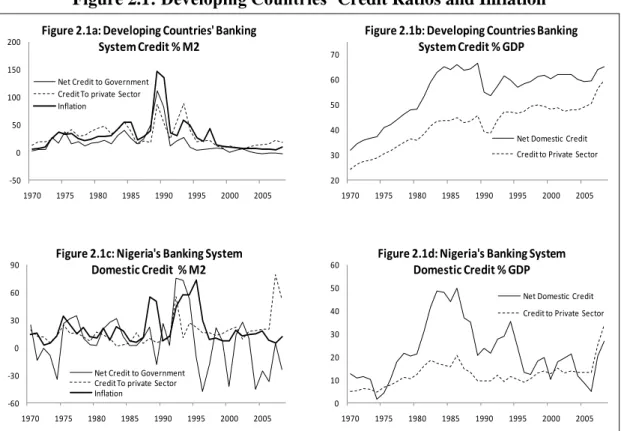
Figure 2.1: Developing Countries’ Credit Ratios and Inflation --- 40
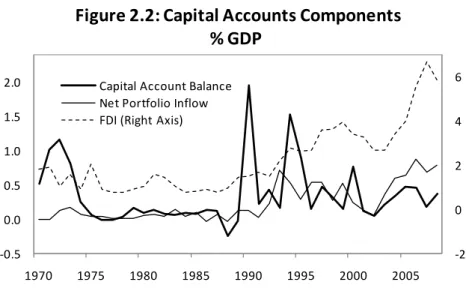
Figure 2.2: Capital Accounts Components % of GDP--- 42
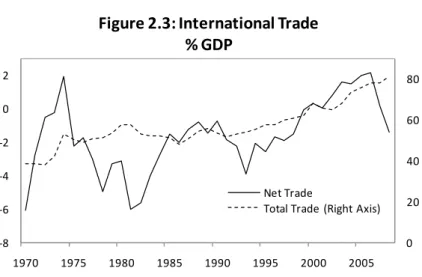
Figure 2.3: International Trade % of GDP--- 43
Figure 2.4: Developing Countries Interest Rate Trends --- 45
Figure 2.5: Exchange Rate Level and Volatility--- 46
Figure 2.6a: Inflation Targets and Outcome--- 47
Figure 2.6b: Average Inflation Rates (Pre- vs. Post-IT) --- 48
Figure 2.7: Average Inflation and GDP Volatilities--- 49
Figure 2.8: Non-BRICKS Average Inflation and GDP Volatility--- 50
Figure 2.9: Inflation-Output Correspondences--- 51
Figure 2.10: Long-run Inflation-Output Trade-off --- 52
Figure 3.1: Oil Prices and Fiscal Deficit --- 57
Figure 3.2: Fiscal Deficit and Inflation Rate--- 58
Figure 3.3: Electricity, Capacity Utilisation and GDP Growth rate --- 59
Figure 3.4: CBN Financing of Fiscal Deficit --- 62
Figure 3.5: Structure of DMBs’ Credit in Nigeria--- 67
Figure 3.6: Trends in Real Monetary Aggregates --- 70
Figure 3.7: Real Monetary Aggregates and Inflation Rate--- 72
Figure 3.8: Capital Market Impact of Monetary Policy --- 75
Figure 3.9: Asset Price and Inflation Rate ---75
Figure 4.1: Relationship between Interest Rate Mark-up and Pass-through ---85
Figure 4.2: Asymmetry in Pass-through --- 90
Figure 4.3: Pass-through and Liquidity --- 92
Figure 5.1: Interest Rate Trends in Nigeria---118
Figure 5.2: Deposit Rates Spreads versus Policy and Lending Rates---119
Figure 5.4: Long-run Dynamics of Policy Rate Pass-Through---154
Figure 5.5: Structural Shifts in Policy Rate Pass-through ---155
Figure 5.6: Time Dynamics of Short-run Pass-Through---156
Figure 6.1: Real Interest Rate versus Investment Growth Rate---193
Figure 6.2: Trends in Real Interest and Expenditure Growth Rates---194
Figure 6.3: Inter-Temporal Relationship between Real and Financial Variables---195
Figure 6.4: Fitted Long-run Investment-Interest-Rate Relationship---208
Figure 6.5: Cumulative Dynamic Multipliers---210
Figure 7.1: A Lucas Wedge Analysis of the Welfare Effect of Disinflation---240
Figure 7.2: The Phillips Curve: Nigeria’s Inflation and Output Gap---241
Figure 7.3: Price Acceleration and Output Gap---242
Figure 7.4: Dynamic Multipliers of the Linear Models ---253
List of Abbreviations
AD Aggregate Demand
ADF Augmented Dickey-Fuller
ADR Average Deposit Rate
AIC Akaike Information Criterion
ALR Average Lending Rate
ARCH Autoregressive Conditional Heteroskedasticity
ARDL Autoregressive Distributed Lag
AS Aggregate Supply
ASI All Share Index
BOFIA Bank and Other Financial Institutions Act
BRICKS Brazil, Russia, India, China, Korea (South), South Africa
CB Central Bank
CBN Central Bank of Nigeria
CiC Currency in Circulation
CoB Currency Outside Banks
CPI Consumer Price Index
CRR Cash Reserve Ratio
DMB Deposit Money Bank
DR Deposit Rate
ECB European Central Bank
FD Fiscal Deficit
FGN Federal Government of Nigeria
FOS Federal Office of Statistics
GARCH Generalised Autoregressive Conditional Heteroskedasticity
GDP Gross Domestic Product
HAC Heteroskedastic and Autocorrelation Consistent
IBR Interbank Rate
IFEM Interbank Foreign Exchange Market
IRR Internal Rate of Return
IT Inflation Targeting
KPSS Kwaitkowski-Phillips-Schmidt-Shin
LR Lending Rate
LR-PC Long-run Phillips Curve
M.A.L Mean Adjustment Lag
M2 Broad Money Stock
MLR Maximum Lending Rate
MPC Monetary Policy Committee
MPR Monetary Policy Rate
MR Monetary Rule
MRR Minimum Rediscount Rate
NAIRU Non-accelerating Inflation Rate of Unemployment
NARDL Nonlinear Autoregressive Distributed Lag
NCM New Consensus Macroeconomics
NIBOR Nigeria Interbank Offer Rate
NISER Nigeria Institute of Social and Economic Research
NTB Nigerian Treasury Bills
OECD Organisation for Economic Co-operation and Development
OLS Ordinary Least Squares
OMO Open Market Operations
PC Phillips Curve
PCA Principal Component Analysis
PLR Prime Lending Rate
PSS Pesaran-Shin-Smith
QTM Quantity Theory of Money
REER Real Effective Exchange Rate
RESET Regression Specification Error Test
RSS Residual Sum of Squares
SDR Savings Deposit Rate
SR-PC Short-run Phillips Curve
T-ARDL Threshold Autoregressive Distributed Lag
TBR Treasury Bills Rate
TDR Term Deposit Rate
VIF Variance Inflation Factor
WAMZ West African Monetary Zone
GENERAL INTRODUCTION
Monetary policy is typically concerned with the way in which monetary authorities use the instruments at their disposal to influence the decision of economic agents with the intention of achieving overall macroeconomic stability. Theoretical debate on the instruments of monetary policy has been based on two major paradigms: monetarist vs. Wicksellian. Under the monetarist view money supply is within the control of the central bank, so that Friedman’s rule (of maintaining a target rate of growth of the money supply) is more apt in determining optimal inflation and economic growth (Carlin and Soskice, 2006,ch.5). The Wicksellian paradigm deems money as endogenous so that the interest rate becomes the appropriate instrument of monetary policy. However, recent developments in mainstream monetary policy have led to the refutation of the monetarist framework based on the premise that the interest rate paradigm represents the true behaviour of central banks (Fontana, 2007).
Consequently, modern design of monetary policy has followed the proposition of the
new consensus macroeconomics (NCM). The basic principle of the NCM is the use of short-term interest rate to achieve price-stability (Meyer, 2001; Arestis, 2007). The objective of price-stability is centred on the supply-side equilibrium and the inability of monetary policy to have any long-run impact on real variables (Bean, 2007; Fontana, 2009a). In the short-run, however, the existence of nominal rigidities means that policy can affect real variables temporarily. At the centre of this is the relationship between price and real variables, as captured by the Phillips curve. Thus, a major feature of the NCM framework is the Phillips curve, which is assumed to be sloped in the short-run (negatively when inflation-unemployment relationship is portrayed; positively when it is inflation-output) but vertical in the long-run. This illustrates the trade-off between output and inflation in the short-run and implies that disinflation would result in temporary output loss and/or increased unemployment (Arestis and Sawyer, 2004; Carlin and Soskice, 2006,ch.3). In the long-run, however, the vertical Phillips curve based on rational expectations and continuous market clearing, suggests that monetary policy can only influence prices and not real variables. Thus, monetary policy should aim exclusively at price-stability. Proponents of the NCM and the objective of price-stability have further argued that it is a requisite condition for
sustained growth and employment while high inflation is damaging to the economy (Epstein and Yeldan, 2008).
Typical discussions of monetary policy like this, however, do not distinguish between developed and developing countries (Huang and Wei, 2006). Thus, central banks in developing countries are adopting inflation targeting (IT), which is founded on the tenets of the NCM. This is based on the erroneous but widespread belief that policies would have similar outcomes irrespective of the development status of the country (Epstein and Yeldan, 2008). Generally, most developing countries are characterised by weak institutions and financial underdevelopment which ensure that the effectiveness, transmission and implications of policy differ from those of advanced countries (Ghatak and Sánchez-Fung, 2007). Therefore, the gains and costs of low inflation can vary considerably between developing and developed countries.
IT intrinsically requires central banks to be highly averse to inflation – or at least reputably more inflation averse than political policymakers. The degree of aversion has important implications for the cost of disinflation. According to Carlin and Soskice (2006,ch.3), the nonlinearity of the short-run Phillips curve causes the cost of disinflation to increase with the degree of inflation aversion so that IT may be very expensive overall. Hence, even if the NCM/IT approach is effective in stabilising prices it may have adverse consequences on economic growth, employment, equality, and poverty reduction particularly among developing countries (Cordero, 2008; Epstein, 2008a). Under IT, price-stability is normally defined as inflation rate circa 2-3 per cent. For developing countries, the inflation threshold – which is the level beyond which inflation becomes harmful – is variously estimated at 11-18 per cent (Dada, 2011; Khan and Senhadji, 2001; Pollin and Zhu, 2006). In this regard, moderate inflation rate may therefore be optimal for developing countries rather the very low rate advocated for developed countries (Huang and Wei, 2006). There would thus be little justification for low inflation as the dominant objective of monetary policy in developing countries. The negative effect of IT on growth and employment underlies the need for the alternative monetary policy approach, especially for
In addition to those countries already practicing formal IT, a number of developing countries practice an implicit IT, while some (like Nigeria) propose to adopt the explicit version within the medium term. Nigeria is an oil-driven emerging economy, with moderate inflation, high unemployment, a regional economic and financial hub, and a principal proponent of the West African Monetary Zone (WAZM). Given its policymaker’s drive to lower inflation at all cost, this study focuses on Nigeria. In Nigeria, monetary policy is conducted with the use of the short-term interest rate as key instrument, while price-stability is the overriding objective. Price-stability is here defined as achieving and sustaining a “single-digit” rate of inflation; thus, giving the Central Bank of Nigeria (CBN) an asymmetric target below a 10 per cent threshold. Nigeria is, however, characterised by weak institutional features, underdeveloped financial sector and a dominant government sector.1 These debilitate the conduct of monetary policy and diminish its reliability. Importantly, financial market underdevelopment can enfeeble the ability of policy to influence the money market interest rates. Such ineffectiveness would bring about a weak transmission mechanism and emphasises the need for an alternative approach (CBN, 2007a). In the medium term, thus, the CBN plans to migrate to a full-fledged IT framework. This would entail the announcement of a specific inflation target around which the effectiveness of the Bank’s policy actions would be judged. Adopting IT requires CBN independence, credibility, an adequate understanding of the transmission mechanism of monetary policy and the willingness to sacrifice other macroeconomic objectives (such as economic growth and employment) for the attainment of price-stability.
Inadequate knowledge of the economic system can deter policy actions from having the desired effects. Similarly, inadequate understanding of the consequences of monetary policy would lead to misjudgement and would substantially increase the costs of achieving any given goal. In Nigeria, uncertainty about the transmission mechanism and incomplete understanding of the system has remained a major challenge for monetary policy (Uchendu, 2009a). This is compounded by the existence of a vibrant informal sector, the fabric of which remains largely
1
The weak institutional features are manifested in prevalent corruption in public administration, low credibility of the monetary authorities and gross inability of government to adequately use taxation to generate revenue. This inadequate tax revenue makes government reliant on the CBN for FD financing; hence, the incidence of fiscal dominance. These issues – including the constitutional and legal backing of FD financing – are further discussed in chapter 3.
indiscernible. Monetary policy in Nigeria is, therefore, undermined and characterised by uncertainty and inadequate knowledge (by policymakers and others) of the economy. These challenges are believed to contribute to volatility and slow economic growth in Nigeria (Batini, 2004; Balogun, 2007).
Most studies on the design of monetary policy in Nigeria have generally tended to investigate the effectiveness of the monetary policy – in terms of money supply changes rather than interest rates – with narrow focus on it costs. Feridun et al. (2005) found that the monetary policy approach in Nigeria, though ineffective, has resulted in increased instability in inflation and in the exchange rate. This instability, according to Adam and Goderis (2008) and Olubusoye and Oyaromade (2008), can be further attributed to the disruptive effect of crude oil price volatility on monetary policy efforts. Crude oil price volatility impacts on monetary policy through its impact on the fiscal revenue and monetary expansion. The dominance of the fiscal sector and the continued monetisation of crude oil receipts creates liquidity in the system and heats up the economy. Hence, in measuring the effects of monetary policy in Nigeria, Chuku (2009) concluded that the monetary authority should place more emphasis on quantity-based anchors as against price-based ones. In a recent study, Dada (2011) investigated the suitability of an IT framework in Nigeria via a nonlinear IS-LM framework which assumes monetary growth as the CBN policy variable, and found that IT would increase output variability. However, the reality is that the quantity theory of money (QTM) approach which underlies all these studies is obsolete, given the realisation that money cannot be exogenously controlled by central banks. Hence, the practice of monetary policy is not synonymous with managing the level and growth rate of the money supply, and policy effectiveness does not depend on the ability to control the growth rate of money stock.
The current practice of monetary policy, in many countries, is congruous with the assumptions, conclusions and recommendations of the NCM, with the short-term nominal interest rate as instrument and price-stability as objective. This assumes among other things that the financial and/or money markets are adequately developed and capable of effectively conducting policy impulses to the rest of economy. Furthermore, low inflation is assumed achievable at minimal cost. However, Nigeria’s financial system is relatively underdeveloped, shallow, bank dominated and
characterised by a dearth of market instruments and securities. This can impede the pass-through from policy rate changes to market rates; thus, diminishing policy effectiveness. Besides, the fact that banks may be more willing to hold risk-free government securities rather than lend to private investors implies that monetary policy interest rate changes may not affect aggregate demand as suggested by the NCM. This further undermines the effectiveness of monetary policy. Again, even if the NCM-type policy were effective, the cost of such policy in Nigeria may be severe; especially given the realities of the economy. Though, recent economic growth and the inflation rate (during 2001-2011) averaged 7 and 11 per cent, respectively; unemployment has remained high at about 20 per cent while poverty is rife – with
over 60 per cent of the population living below $1.25/day in 2004.2 At 48 per cent in
2001-2011, average capacity utilisation is also low. An NCM-type policy by depressing demand would further aggravate unemployment and poverty; an enormous cost to bear. This poses a serious concern as to whether an overriding price-stability objective should be pursued.
Recognising the many challenges facing Nigeria, Batini (2004) attempted an ex-ante
analysis of monetary policy in Nigeria, with a view to recommending an optimal alternative. She noted the undesirable and prevailing effects of fiscal dominance, a subservient central bank, a weak transmission mechanism, and an underdeveloped financial system for monetary policy. However, her analysis held these effects inconsequential, by examining available alternatives if these challenges were successfully resolved. Batini concluded that a long-run inflation target (à la NCM) complemented by a freely floating exchange rate regime is the optimal policy option. One major highlight of Batini’s study is the assumption that all the underlying problems have been adequately settled. However, the reality is that though resolution of these issues is possible in the long-run, it is more-or-less impracticable in the short-run. Hence, these factors, and others, are a major feature of the Nigerian economy now and in the foreseeable future. Even if NCM-type policy was effective in the absence of these factors, the question still arises: is the NCM-type monetary policy optimal for Nigeria in the presence of the identified constraints and the country’s institutional features? Optimality requires that a given policy option be both effective
2
and achievable at a minimal cost. Given the current reality of the Nigerian economy, there is the need to understand the effectiveness and potential costs of an interest rate based IT-type monetary policy. Thus, this study aims to fill the identified gap by investigating the aptness, for Nigeria, of some of the assumptions and recommendations of the NCM; especially those bothering on effectiveness and costs.
The specific goals of this study are to
Assess the transmission of policy rate changes to market and retail interest
rates. The ability of the financial market to act as the pivot of the economy is critically presumed by the NCM. Essentially, the NCM framework is based on the assumption that policy rate impulses are conveyed on a one-to-one basis to the other market/retail rates while these subsequently affect the level of aggregate demand. Hence, an inexact and/or time-varying pass-through may hinder policy effectiveness or policy determinacy.
Examine the responsiveness of aggregate demand (or its components) to
interest rate changes. In the NCM framework, the effectiveness of monetary policy in achieving its target of price-stability depends on the ability to influence demand. An inability to adequately control demand renders policy ineffective. Under the NCM, aggregate demand function is usually derived from household consumption behaviour over time. Nonetheless, this study focuses essentially on the investment component of demand to deduce policy effectiveness.
Determine the long-run consequences/cost of an NCM-type monetary policy in
Nigeria. The NCM is built on the assumption of long-run neutrality of monetary policy. Hence, policy changes can have no permanent effect on output and employment, given a vertical long-run Phillips curve and supply-determined equilibrium. However, if the long-run Phillips curve is oblique (or if inflation is supply-driven), then the cost of disinflation can be enormous. Beside, changes in interest rates may have other ramifications that can increase financial instability.
To achieve these objectives, empirical analyses are conducted using time-series econometrics technique in the relevant chapters. The study principally employs quarterly data (although pass-through analysis adopted monthly data) starting from 1985:1 up to the most recent data that was available at the time of estimation. These data, as much as possible, reflected the oil versus non-oil dichotomy of the Nigerian economy and are sourced mainly from the Central Bank of Nigeria and the National Bureau of Statistics of Nigeria. Stylized facts in the preliminary chapters are, however, discussed using annual data on different variables spanning 1970-2011 (at the longest) for 38 developing countries. These are obtained from the World Development Indicators published by the World Bank.
The thesis is divided into seven chapters excluding the introductory and concluding sections. Chapters one to three contain discussions on the theories of monetary policy, on the general features of developing countries, and on the conduct of monetary policy in Nigeria, respectively; chapters four to seven comprise analytical and empirical exercises. The specific content of these are as follows:
Chapter one presents an overview of the currently competing theories of monetary
policy, an exposition of the key assumptions and equations of the NCM, as well as the implications and limitations of the NCM. The link between the NCM and IT is discussed here, while noting that policy effects and consequences would differ for developing vis-à-vis developed countries.
Chapter two provides a general discussion of developing countries. It highlights the key distinguishing features of developing vis-à-vis developed countries and presents stylised analyses of important financial and macro-variables in developing countries. Monetary policy frameworks are also compared among thirty-eight developing countries, for inflation targeters versus non-targeters.
Chapter three narrows the discussions to Nigeria. Here an overview of the
monetary policy in Nigeria is provided, covering a historical discussion on the conduct of monetary policy, the features of the Nigerian economy and the relationship between the CBN and rest of the economy.
Chapter four begins the systematic analysis NCM-type monetary policy for
earlier. The chapter contains a theoretical discussion on the nature, determinants and implications of the interest rate pass-through in developing countries. Here, we explain the pricing behaviour of banks, the relationship between pass-through and mark-up, and the determinants of market power. The chapter also expounds the implications of inexact pass-through for NCM-type monetary policy.
Chapter five investigates the pattern of the interest rate pass-through in Nigeria, following theoretical discussions in the preceding chapter. Empirical analysis is conducted for policy-to-market, policy-to-retail, and market-to-retail interest rates. We examine the reliability of pass-through by rigorously applying up to date modelling techniques to an array of interest rates. These enabled the determination of asymmetric and inter-temporal effects in pass-through.
Chapter six examines the effectiveness of an NCM-type monetary policy via retail
lending rates on aggregate demand – proxied by investment. This chapter relates to the preceding chapter by considering real policy effects subsequent to pass-through, and considers a whole range of investment theories. Hence, using an exhaustive eclectic modelling framework, the potential effects of other determinants of investment are examined in order to identify the most important factors. Again, using modern techniques, empirical analyses examine both asymmetric and non-monotonic monetary policy effects.
Chapter seven analyses the ramification of disinflation for an NCM-type
monetary policy reflected in the Phillips curve relationship. This chapter follows from preceding chapters and derives from the core objective of the NCM. Hence, if monetary policy is effective in affecting retail interest rates and aggregate demand (investment), disinflation may still be achieved at a high cost. Essentially, we examine the assumption of long-run neutrality of monetary policy and the welfare implication of non-neutrality in Nigeria. The investigation utilises advanced threshold econometric techniques which allows the concurrent determination of the slope and curvature of the long-run Phillips curve with the associated costs, in a supply-augmented framework.
1:
THEORETICAL OVERVIEW OF
CONTEMPORARY MONETARY POLICY
1.1
Introduction
Generally, monetary policy is discussed under two paradigms viz: the money supply or
the interest rate theories (Allsopp and Vines, 2000; Carlin and Soskice, 2006, ch.5). The money supply view is associated with the QTM approach in which money is considered as exogenous and under the control of central banks (CBs).3 Underlying this is the notion that inflation correlates with the growth rate of money supply so that money becomes the most appropriate instrument of monetary policy (Carlin and Soskice, op.cit; Davidson, 2006). The interest rate paradigm generally follows the Wicksellian structure where money is considered as endogenously determined in the economy and outside the control of the authorities (Fontana, 2007). In the absence of shocks, therefore, inflation reflects government interest rate policy decisions (Carlin
and Soskice, op.cit). Following the proven inability of CBs to control money supply,
emphasis has shifted essentially to the short-term nominal interest rate as the instrument of monetary policy; hence, the fall of monetarism.
Contemporary monetary policy is congruent with NCM tenets; with inflation as the overriding objective and the interest rate as the sole instrument of monetary policy. In the NCM model, money supply is treated as residual (set by the demand for money) and inflation as an aggregate demand (AD) phenomenon. The key assumptions underlying the NCM and its major conclusions have been criticised both theoretically and practically (see Davidson, 2006; and Fontana, 2009a). In this chapter, we present an overview of the currently competing theories of monetary policy, an exposition of the key assumptions and equations of the NCM, as well as the implications and limitations of the NCM especially for developing countries.
3
The QTM postulates a direct and proportional relationship between money supply and the rate of inflation. It is based on the assumption of a constant velocity of money so that the product of money supply and its velocity is equivalent to nominal income (i.e. ). It thus suggests that changes in money supply would lead to proportional changes in nominal income. If real income ( ) is held constant, these changes impact directly on the price level. However, changes in real money balances can affect output given the constant money velocity; so that .
1.2
Alternative Theoretical Views
Although there is a general acceptance of the importance of monetary policy for macroeconomic management, there is no consensus on the appropriate approach for its conduct. This disagreement appears both in the scale and scope of monetary policy. For instance, there is considerable division with regards to the variables that are germane to its conduct and its effectiveness over a time horizon. Palley (2007) observed that these differences derive from the various theoretical understandings of competing schools of thought. Following the doctrine of monetarism and the belief that inflation is a monetary phenomenon since the 1970s, the weight of monetary policy in macroeconomic stabilisation increased considerably (Arestis and Sawyer, 2008a). With this came the consensus that CBs have the responsibility of controlling inflation (or at least targeting inflation as the central objective). Debilitation of the monetarist school notwithstanding, the role of monetary policy remained intact, while the debate on how it should be framed and conducted has taken prominence.
Competing ideologies on the role and nature of monetary policy include those of the new-classical, new-Keynesians and post-Keynesians. Critical area of divergence include: the relationship between prices (wages) and output (unemployment) as specified by the Phillips curve (PC); the nature of prices and wages inflexibility; and exogenous/endogenous treatment of demand vis-à-vis real growth (Palley, 2007). The basic conclusion of the new-classical school is that monetary policy only affects inflation but not unemployment, real wages and growth. In essence, real economic magnitudes are self-adjusting so that their equilibrium path is independent of monetary policy (Gali, 2008). In the new-Keynesian analysis monetary policy affects real variables in short-run but not unemployment and growth in long-run, while the
post Keynesian model disputes any form of dichotomy in the long-run (Palley, op.cit).
The new-classical model has its derivation basically from classical economics which was essentially based on the QTM. In the classical theory, monetary policy is synonymous with money supply or its rate of change based on the belief that interest rates are determined in the real sector (Bain and Howells, 2009,ch.3; Carlin and Soskice, 2006,ch.2). Given the importance of money in the classical framework, Meyer (2001,p.1) argued that “monetarism is the reincarnation of classical macroeconomics, with its focus on the long-run properties of the economy as opposed
to short-run dynamics.” The QTM underlined the neutrality of money and assumed a stable velocity of money via a stable demand for money. Neutrality entails that real variables are unaffected by money supply and are driven only by real factors like savings and productivity (Bain and Howells, 2009,ch.1; Gali, 2008). The theory suggests that prices are directly related to money supply, the growth of which (in excess of real output growth) is inflationary. The basic conclusion of the classical analysis is that policy is irrelevant; monetary authorities cannot affect the level or growth rate of output. In essence, there is no trade-off between inflation and output. Any intervention by the CB would only distort price-stability.
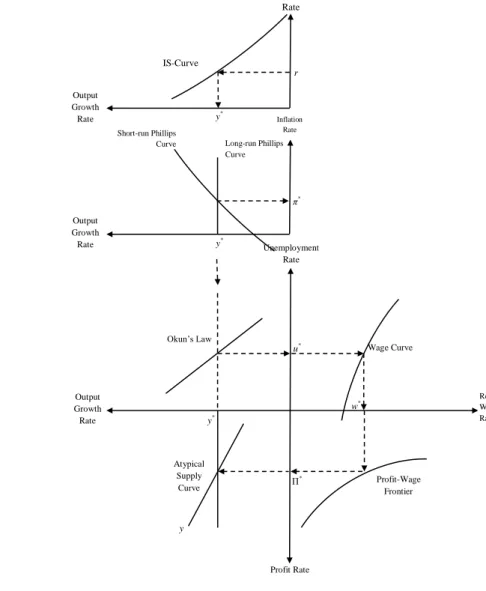
A major departure of the new-classical economists from their classical ancestors is the acceptance of a trade-off between inflation and output in the short-run. This trade-off, captured by the PC, is enriched in new-classical analysis by applying rational expectations hypothesis to the model of continuous market clearing (Bain and Howells, 2009,ch.6). Again with the collapse of monetarism, monetary policy became associated with short-term nominal interest rate management. According to Palley (2007), the new-classical model can be captured by interactions of the interest rate, inflation rate, real wage rate, unemployment rate, output growth and profit rate, with associated microeconomic foundations and the incorporation of rational expectations. Figure 1.1 presents an illustration of the model (at equilibrium) containing: an IS -curve (interest rate versus output); a PC (inflation versus output); Okun’s relationship (unemployment versus output); supply-function (profit versus output); profit-wage-frontier (profit versus real wage); and the wage-curve (unemployment versus real wage). The model implicitly contains the assumption of continuous market clearing which supposes that prices adjust instantaneously to clear the market. This implies the absence of involuntary unemployment at the market-clearing wage rate. By combining the rational expectation concept with the assumption of continuous market clearing, the new-classical model postulates that unemployment oscillates around its natural level (Bain and Howells, op.cit). This further implies that there exists a level of unemployment at which inflationary pressures abate and output is at full employment equilibrium; hence, the non-accelerating inflation rate of unemployment (NAIRU). At the NAIRU the PC is vertical and there is supply-driven equilibrium.
According to the framework, interest rate affects investment and consumption components of the AD which are subsequently transmitted to real growth. The incorporation of the rational expectations hypothesis in the model means that economic agents can (on average) correctly predict policy actions. This has implications for the outcome of policy. Only unexpected policy would have temporary real effects on the economy while anticipated policy actions would have nominal effects. Thus, even under the assumption of rational expectation, provided that markets clear continuously, systematic policy would be incapable of altering real economic activities (Handa, 2000,ch.15; Carlin and Soskice, 2006,ch.3). For instance, (in figure 1.1) if the monetary authorities embarked upon an unanticipated reduction in the interest rate, this would increase AD and inflation. Money wage rises as unemployment declines. However, real wage falls below its equilibrium raising profits and causing output expansion. This is nonetheless temporary as agents, armed with the correct model of the economy, would adjust their expectation in line with the new level of inflation. As the policy surprise dissipates, the short-run Phillips curve (SR-PC) shifts upward, unemployment and real wage rise, and all real variables revert back to their equilibrium level at a higher level of inflation. According to Palley (2007) this, therefore, implies that the goal of monetary policy should be price stabilisation. Hence, monetary policy would only have nominal effect in the long-run when expectations are fully adjusted.
The conclusion of the new-classical framework that expansionary monetary policy would have no effect on unemployment suggests that policy cannot be justified on the basis of the deviations of actual unemployment from the natural rate, since these deviations are random. (Bain and Howells, 2009,ch.6). This reflects “the assumption of continuous market clearing [which accordingly] implies that...all unemployment is voluntary” (op.cit, p.164). The new-Keynesians, however, dispute the assumption of continuous market clearing but acknowledge the idea of a long-run equilibrium and the propensity of an economy to revert to this equilibrium. This equilibrium reversion is not instantaneous but may take a considerable time. Unlike the new-classical economists which believe that disequilibrium results from incorrect expectations due to policy surprises, the new-Keynesians argue that disequilibrium results from price rigidities that arise from the institutional features of a market. Consequently, the fulcrum of new-Keynesian analysis is the sticky wage and price model (Carlin and
Soskice, 2006,ch.15). According to this model, wage contracts prevent nominal wage adjustment in the short-run (at least until the contract runs through). Hence, an expansionary monetary policy increases AD and inflation. In addition, it lowers unemployment and real wage while nominal wages remains unchanged due to existing contract. The fall in real wage increase profits and spurs producers to increase output. In the long-run, however, as wage contracts end, nominal wage begins to be adjusted upward thereby increasing real wage. This causes a decline in profit, output and employment. Thus, contrary to new-classical postulations, when prices and wages are rigid, the equilibrium outcome of real variables is not exogenous to monetary policy (Gali, 2008). Monetary policy may, thus, be used to manage deviations of output and employment around their NAIRU-consistent level (Palley, 2007).
Figure 1.1: The New-Classical Framework
Source: Adapted from Palley (2007)
Interest Rate IS-Curve Output Growth Rate Output Growth Rate Output Growth Rate Short-run Phillips
Curve Long-run Phillips Curve Okun’s Law Unemployment Rate Real Wage Rate Profit Rate Wage Curve Profit-Wage Frontier y* y* y* y π* u* w* Π* Atypical Supply Curve r * Inflation Rate
An amalgamation of some of the key assumptions of the new-classical (rational expectations) and the new-Keynesians (short-run rigidities and long-run flexibility) constitutes the bedrock of the NCM model, the policy conclusion of which is that price-stability is the main objective of monetary policy. According to Setterfield (2006), the key elements of the NCM model are the assumption of real wage bargaining, monetary neutrality, supply-driven equilibrium and demand-determined inflation. Following Clarida et al. (1999) and Meyer (2001), these elements are
typically summarised by three equations – IS-type AD, PC, and monetary rule (MR) –
with micro-foundations in agents’ optimisation procedure (see Gali, 2008; Walsh, 2003,ch.5; and Woodford, 2003,ch.4). The views of the NCM (discussed in later sections) are parallel to those of the new-Keynesians and new-classical in arguing that a CB cannot engage in real output stabilisation in the long-run, since the combination of rational expectation and continuous market clearing ensures the emergence of inflationary pressures without output gains. The CB should thus concentrate on long-run price-stability and short-long-run output stabilisation (Fontana and Palacio-Vera, 2007).
Post-Keynesians are sceptical of NAIRU as a unique rate of unemployment that is unaffected by the path of demand and consistent with constant inflation. While some like Davidson (2006) totally rejects this concept, others like Arestis and Sawyer (2005) accept the existence of a level of economic activity that is consistent with zero inflation; hence, inflation barrier. For Davidson, the argument of price-stability as the key policy objective crumples without the “vague slippery...notion” of NAIRU (p.691). However, unlike NAIRU which emphasises supply-side equilibrium based on labour market dynamics, inflation barrier recognises the interrelationship between the goods market and the labour market. Hence, the barrier is set by product market conditions and productive capacity – rather than by labour market conditions. It also envisaged that this barrier be continuously changing and path dependent, and does not act as a strong attractor for the actual level of unemployment.
Essentially, post-Keynesians posit that inflation derives from conflicts over income share between workers and employers; and supply factors related to productive capacity (Arestis and Sawyer, op.cit; Setterfield, 2009). In this regard, attempts by workers or firms to increase their share alter the inflation barrier and are inflationary. Changes in income distribution (between firms’ profit and workers’ wages) depend on
bargaining power which in turn depends on the level of unemployment and can affect economic growth. Investment and capital stock also play a critical role in the economy affecting both AD and aggregate supply (AS), and hence the level of economic activity and unemployment. Changes and/or intensity (i.e. productivity) of capital stock affect incomes distribution and inflation barrier. Hence, the interest rate by affecting investment affects capital stock and productive capacity, and via hysteresis can affect an economy’s long-run path.4 In general, the post-Keynesian framework contains an oblique long-run Phillips curve (LR-PC) implying a long-run trade-off between inflation and output (or unemployment), making IT undesirable and costly. Setterfield (2006) broadly summarise post-Keynesian stance as nominal (rather than real) wage bargaining, monetary non-neutrality, demand-driven equilibrium, cost-determined inflation. Post-Keynesians conclude that the one-instrument-one-objective approach is sub-optimal. Policy should, rather, be conducted in a multi-instrument-multi-objective framework to ensure balanced and socially optimal outcome (Heintz and Ndikumana, 2011).
1.3
Contemporary Issues in the Conduct of Monetary Policy
Following the collapse of monetarism, monetary policy became associated with CBs management of the short-term interest rate. This is viewed by many as a significant alignment of the theories and practice of monetary policy. In fact, as noted by Fontana (2007)
“One of the greatest achievements of the modern mainstream approach to monetary policy is to have rejected the old quantity theoretic framework and to have replaced it with a[n]...interest rate analysis, which closely reflects the actual behaviour of central banks” (p.43).
The view that money is exogenous (and within the control of CBs) is rejected by many modern economists, particularly the post-Keynesians. Consequently, there is reduced focus on monetary aggregates in many CBs around the world. Nonetheless, the belief remains that inflation is a monetary policy phenomenon and thus the responsibility of CBs. Monetary policy, therefore, has become prominent in macroeconomic
4
Hysteresis refers to the possibility that output loss (or high unemployment) in time t can lead to lower growth rates (or increased unemployment rate) in period t+h; h=1,2,...
management and is conducted in a one-instrument-one-target framework (Arestis, 2007; Arestis and Sawyer, 2008a). In this case, the interest rate is the instrument of monetary policy while inflation is the target.5 This typifies IT whether explicitly or implicitly (Carlin and Soskice, 2006,ch.3). According to Arestis and Sawyer (2008b) the use of the interest rate as the major instrument of monetary policy has some fundamental elements viz: objectives of price-stability; a PC with real economic activity and expectations explaining inflation; incorporation of a variant of the classical dichotomy; and the notion of a supply-side equilibrium. These elements are consistent with the NCM model and constitute features of the economic model on which the justification for IT by an independent CB is based.
Although NCM and IT are broadly treated as congruent in this thesis, there is however some subtle distinctions between these. IT is a conditioning policy framework adopted by an independent CB which is perceived by rational economic agents to be credibly committed to an overriding objective of price-stability. The practice of IT in many countries is associated closely with the work of Kydland and Prescott (1977) and Barro and Gordon (1983) which argued that in an economy characterised by rational
expectations, given the problems of time-inconsistency, discretionary policies would
lead to sub-optimal equilibrium while rule-based policies would maximise the social
objective function. In these studies, macroeconomic policy is deemed an expectations-game between the policymakers and the rational economic agents. Since policymakers are inclined to expanding economy activities, agents’ aim to avoid policy surprises by anticipating policymakers’ decisions. Rule-based policies built on pre-commitment to a certain objective eliminate policy surprises where discretionary policies devoid of any commitment create surprises.
In the Kydland–Prescott–Barro–Gordon tradition, given that real economic activities are invariant to policies due to agents’ rational expectations, systematic attempts of policymakers to expand economic activities would only create inflation surprises; that is the so-called inflation bias (Gerlach, 2003; Hartely, 2006). Thus, discretionary policies would raise inflation rate above the optimal level that would have been achieved if rules were followed. Under rational expectations, therefore,
5
Whilst IT has been widely used, there is however, a range of countries in which the exchange rate is of considerable concern for monetary policy.
commitment to an inflation objective ensures that inflation expectations by agents
coincide with that defined by the rule (Barro and Gordon, op.cit). Following the works
of Kydland and Prescott (op.cit) and Barro and Gordon (op.cit), therefore, IT highlights the role of policy institutions (i.e. CBs) rather than policy choices/tools.
As a conditioning framework, IT is based on an inflation-averse CB legally committed to the objective of price-stability and as such seen to be credible by rational agents in achieving this objective. The basic difference between IT and NCM is that while the former is a conditioning approach that requires commitment and credibility of a CB, the latter is an optimal control framework that does not explicitly require such commitment. Besides, under IT the expectations channel of transmission is deemed important while the AD channel is emphasised by the NCM. Furthermore, under NCM the policy instrument is restricted strictly to the short-term interest rate whereas IT allows the use monetary growth, interest rates or any other feasible monetary policy instrument. However, IT and NCM are somewhat similar; first, in the sense that are both built on the notion of rational expectations; second, they both contain a monetary policy rule, and lastly, they both emphasise an overriding objective of price-stability. In our analysis, the link between both frameworks is due to the contemporary practice of IT, where the short-term interest rate is largely adopted as the monetary policy instrument to combat inflation.
1.3.1 The New Consensus Model
The NCM is a perpetuation of the new-Keynesian principles which also contained some new-classical ideologies (Gnos and Rochon, 2007). It basically highlights the long-run new-classical growth models so that the long-run outcomes of output and employment are supply-driven, while monetary policy remains important in the short-run (Fontana, 2008). Hence, it is based on supply-side driven equilibrium with the business cycle oscillating near this equilibrium (Arestis, 2007). The NCM was developed with the fundamental reasoning that Say’s law holds (through the way in which the policy interest rate is set); hence, in the long-run effective demand has no real implications in the economy (Arestis and Sawyer, 2008a). Further underpinnings of the NCM are: the existence of temporal nominal rigidities in wages and prices so that monetary policy would have real effects in the short-run; inflation is a monetary policy phenomenon; there is rational expectations as agents possess correct knowledge
of the workings of the economic model; and, due to the concept of Ricardian equivalence, fiscal policy is deemed impotent.
Conventionally, the NCM is derived in Woodford (2003,ch.4) from inter-temporal general equilibrium and is represented by AD, PC and MR equations (Arestis and Sawyer, 2008a).6 These summarise the dynamics of output (or output gap), inflation and the interest rate (Fontana, 2007). Primarily, an AD relationship is represented as
( ) 1.1
where is the level of output, is autonomous demand, represents the short-term
nominal interest rate and is inflation expectation. The equation shows that
output is an inverse function of the real interest rate. In the NCM model, however, the equation is expressed in the form of deviations from equilibrium. Hence, a canonical NCM-AD relationship is given as
̃ ( ̅) 1.2 ̃ ̅
where ̅ is (the NAIRU-consistent) equilibrium output and ̃ is output gap. The term
̅ is the equilibrium real interest rate – analogous to Wicksell’s natural rate of interest
– congruous with the NAIRU and zero output gap (Fontana, 2007).7
This implies that monetary policy, by changing the short-term nominal interest rate, can affect the output gap. The AD equation represents the demand side of the economy and basically suggests that the output gap is explained by real interest rate disequilibrium. Under the assumption of nominal rigidities the equation is dynamised multi-period as
̃ ∑ ̃ ∑ ( ̅) implying
̃ ̃ ( ̅) 1.3
6
Arestis (2007) expanded the model to six equations by incorporating the external sector. This attempted to capture the effect of exchange rate in a NCM framework.
7
Wicksell’s natural rate of interest is perceived to correspond to the rate of interest which would bring savings and investment into equality in a barter (non-monetary) economy. Fontana (2007) provides a detailed discussion of the Wicksellian natural rate and its role in the NCM model.
where are typically assumed. This shows that in addition to real interest rate differentials, previous outcomes of output gap are important in determining its current evolution. However, in a more general form Gali (2008) and Woodford (2003,ch.4) derived the NCM-AD from household optimisation behaviour by log-linearising the associated Euler equation approximately as
̃ ̃ ( ) 1.4
where ( ) represents random errors. This shows that the short-term real
interest rate (rather than its disequilibrium) explains AD dynamics and represents the prevalent characterization of AD. By emphasising household utility, the NCM-AD supplants firms’ investment behaviour and the equilibrium interest rate in the economy; thus, suggesting that household consumption and savings patterns vis-à-vis the prevailing real interest rates are sufficient determinants of AD. This point is, however, discussed further in chapter 6.
The second NCM equation is a PC describing supply-related effects. Allowing for sticky prices and rational expectations, it is simply written as
( ̅) 1.5 Inflation ( ) is depicted as a positive function of output gap, future expectations of inflation ( ) and inflation inertia ( ). The model suggests an output-inflation trade-off in the short-run – where implies that such trade-off disappears in the long-run. In essence, the NCM postulates a vertical LR-PC at the NAIRU. Therefore, as Meyer (2001) puts it
“... the [NCM-PC] pins down the degree to which prices are sticky in the short run, allowing scope for both short-run movements in actual output relative to potential and for stabilization policy, while providing a mechanism that ensures a transition to the long-run classic equilibrium” (p.3).
By postulating a continuous supply-side equilibrium, the NCM model assumes that inflation is demand driven. Accordingly, the model suggests that supply shocks –
( ) – are transient, stochastic and neither affect inflation nor inflation
expectations (Arestis and Sawyer, 2006). In essence, the NCM assumes that inflation can be controlled by AD management and that the interest rate is the appropriate monetary policy instrument. It further suggests that at the equilibrium rate of interest the output gap is zero (implying also that AD equates AS) and inflation constant. Consequently, deviation of the interest rate from its natural level impacts on the output gap which in turn influences the level of inflation. The assumption of random supply shock with zero mean complements the premise of a constant NAIRU so that the natural level of output is unaffected by monetary policy shocks (Gali, 2008). Expansionary monetary policies are, thus, steered at demand shocks in order to increase economic activity thereby raising the rate of inflation (Smith and Wickens, 2007). Hence, the final impact of monetary policy is on the rate of inflation and as such this should constitute the policy target. The fundamental trust of the NCM is that the short-term interest rate management would only be effective (i.e. affect inflation rate) if it impacts on the level of AD (Bain and Howells, 2009,ch.8). By assuming that inflation is a demand phenomenon, the NCM critically undermines other sources of inflation particularly cost related factors (Gnos and Rochon, 2007).
The last equation of the NCM model is the monetary policy rule (which is CBs’ reaction function) illustrating the process of interest rate determination in the economy and represented simply as
̅ ( ) ( ̅) 1.6 This shows that the difference between the actual and the equilibrium real interest rate depends on deviations of actual inflation from inflation target ( ) and the output gap. Equation 1.6 is a Taylor-type-rule that endogenises interest rate adjustments by CBs and has two distinct derivations (Arestis and Sawyer, 2008a; 2008b). The first is a methodical search ( )that generalises CBs’ behaviour (Allsopp and Vines, 2000). Alternatively, it is derived (as in Carlin and Soskice, 2006,ch.5; Clarida et al., 1999; and Svensson, 2003) by minimising a CB’s quadratic loss function of the form
where the parameter is the weight assigned to output deviations from its trend. If then more weight is placed on output stabilisation vis-à-vis price-stability.
Conversely, implies inflation aversion while indicates strict IT.
Generally, is assumed so that the objective of CBs is to minimise output loss associated with disinflation.
The operating rule, thus, depicts the policy “instrument [as] a function of a small subset of the information available to [CBs]” with inflation and output gaps as
operating targets (Svensson, 2003, p.426). According to Clarida et al. (1999, p.1670),
“the policy problem is to choose a time path for the instrument to engineer time paths of the target variables...that [minimises] the objective function.” The operating rule therefore shows that the CB reacts to economic developments in a systematic and
predictable manner (Arestis, 2007; Gnos and Rochon, 2007; Svensson, op.cit). Hence,
a rise in inflation above target would lead to higher interest rate to slow the economy and reduce inflation and vice-versa. One important implication of the monetary rule is
that if and ̅ , then CBs actually fix ̅ . This
presupposes that ̅ is unique, attainable and known thereby enabling CBs to steer the
economy towards equilibrium (Arestis and Sawyer, 2008a). Precise knowledge of the equilibrium real interest rate is, however, impossible. 8
Nonetheless, the NCM-MR relationship suggests that accurate knowledge of ̅
alongside inflation expectations enable CBs to fix the short-term nominal interest rate. This is seen by re-arranging the monetary rule
̅ ( ) ( ̅) 1.6` which, by incorporating interest rate smoothing, is sometimes modified as
( ) [ ̅ ( ) ( ̅)] 1.8 This represents a prototype operating rule contained in contemporary literature of monetary policy where