U
SER
B
EHAVIOUR IN
P
ERSONAL
D
ATA
D
ISCLOSURE
M
IGUEL
M
ALHEIROS
U
NIVERSITY
C
OLLEGE
L
ONDON
P
H
D
T
HESIS
2013
2
D
ECLARATION
I, Miguel Malheiros confirm that the work presented in this thesis is my own. Where information has been derived from other sources, I confirm that this has been indicated in the thesis.
3
A
BSTRACT
Organisations see the collection and use of data about their customers, citizens or employees as necessary to enable value-adding activities such as personalised service or targeted advertising. At the same time, the increased efficiency and cost-effectiveness of information systems have removed most economic disincentives for widespread collection of personal data. HCI privacy research has mainly focused on identifying features of information systems or organisational practices that lead to privacy invasions and making recommendations on how to address them. This approach fails to consider that the organisations deploying these systems may have a vested interest in potentially privacy invasive features. This thesis approaches the problem from a utilitarian perspective and posits that organisational data practices construed as unfair or invasive by individuals can lead them to engage in privacy protection behaviours that have a negative impact on the organisation’s data quality.
The main limitations of past privacy research include (1) overreliance on self-reported data; (2) difficulty in explaining the dissonance between privacy attitudes and privacy practice; (3) excessive focus on specific contexts and resulting lack of generalisation.
This thesis addressed these limitations by proposing a context-neutral model for personal data disclosure behaviour that identifies factors that influence individuals’ perception of data requests from organisations and links those perceptions to actual disclosure decisions. This model synthesises findings from a series of interviews, questionnaires, and experiments on privacy perceptions of (1) loan application forms; (2) serious-games; (3) the UK census of 2011; and (4) targeted advertising, as well as existing research.
Results in this thesis show that individuals’ decision to comply or not with data collection efforts of organisations depends largely on the same factors regardless of the context. In particular, a validation field experiment on online disclosure with 320 participants showed that perceptions of unfair data requests or expected use of the data lead to lower response rates and increased falsification of answers. Both these outcomes negatively impact organisations’ data quality and ability to make informed decisions suggesting that more privacy conscious data collection procedures may lead to increased utility for both organisations and individuals.
4
A
CKNOWLEDGEMENTS
Completing this thesis would never have been possible without the help of several people. I am deeply grateful to my supervisor, Prof. Angela Sasse, for her guidance and enthusiasm in driving my research to be as good as possible and for always pushing me to improve as a researcher.
I would like to thank my second supervisor, Prof. John Shawe-Taylor, my transfer viva examiner, Dr. Chris Clack, and my viva examiners, Dr. Emiliano De Cristofaro and Dr. Edgar Whitley, for their challenging questions, recommendations, and valuable insights which were crucial in shaping this thesis.
I want to express my gratitude to my research group, in particular to Dr. Sacha Brostoff and Dr. Charlene Jennett for their invaluable teachings and help and without whom I would never have been able to complete my PhD. Special thanks to Dr. Sören Preibusch for the stimulating discussions we had and for his insightful suggestions on experimental design.
I would like to acknowledge the financial support of the Fundação para a Ciência e a
Tecnologia (Portuguese Foundation for Science and Technology) that made my PhD possible. Last, but not least, I wish to thank my family, girlfriend, and friends for always making me laugh and encouraging me to do a good job.
5
T
ABLE OF
C
ONTENTS
Chapter 1: Introduction ... 12 1.1 Research Problem ... 13 1.2 Scope of Thesis ... 14 1.3 Contributions ... 16 1.3.1 Theoretical Contribution ... 16 1.3.2 Methodological Contribution ... 18 1.3.3 Empirical Contributions ... 181.4 Publications Relating to this Thesis ... 19
1.5 Overview of Studies in this Thesis... 21
Chapter 2: Literature Review ... 23
2.1 Disclosure Behaviour ... 23
2.1.1 Factors Linked to Privacy Attitudes and Behaviour ... 24
2.1.2 The Privacy Paradox: Stated Concern versus Actual Behaviour ... 29
2.1.3 Psychological Biases in Privacy Decision Making ... 30
2.1.4 Privacy Trade-Offs ... 31
2.1.5 Privacy Protection Behaviours ... 32
2.1.6 Property rights over personal information ... 33
2.2 Perspectives on Privacy ... 34
2.2.1 A Multi-Disciplinary Concept ... 36
2.2.2 Multi-Dimensionality of Privacy ... 37
2.2.3 Personal and Sensitive Data ... 40
2.3 Privacy and Technology ... 40
2.3.1 Designing for privacy ... 41
2.3.2 Data mining ... 43
2.3.3 Data quality ... 44
2.3.4 Data and Information ... 46
6
2.4.1 Data-centric view ... 47
2.4.2 Identifying privacy invasions ... 48
2.5 Conclusions ... 49
Chapter 3: Methodology ... 51
3.1 Quantitative and qualitative research ... 51
3.2 Privacy Research Methodology... 51
3.2.1 Surveys ... 51
3.2.2 Interviews ... 52
3.2.3 Focus groups ... 53
3.2.4 Diary methods ... 54
3.2.5 Experiments ... 55
3.2.6 Qualitative Data Analysis ... 55
3.3 Methods Used in This Thesis... 58
3.3.1 Use of Qualitative and Quantitative Methods ... 58
3.3.2 Addressing Limitations of Past Research ... 59
Chapter 4: Applying for Credit ... 62
4.1 Introduction ... 62
4.2 Background ... 64
4.3 Study 1: Expert Interviews ... 65
4.3.1 Aims... 65
4.3.2 Method ... 66
4.3.3 Findings ... 66
4.4 Study 2: Perceptions of Loan Application Data Items ... 69
4.4.1 Aims... 69
4.4.2 Method ... 69
4.4.3 Findings ... 71
4.5 Study 3: Perceptions of Alternative Loan Application Data Items ... 74
7
4.5.2 Method ... 74
4.5.3 Findings ... 75
4.6 Study 4: Experiences of Being Denied Credit ... 77
4.6.1 Aims... 77
4.6.2 Method ... 77
4.6.3 Findings ... 78
4.7 Study 5: Disclosure Behaviour with Uncertain Reward ... 80
4.7.1 Aims... 80
4.7.2 Method ... 80
4.7.3 Findings ... 85
4.8 Discussion ... 92
Chapter 5: Serious-Games Studies ... 97
5.1 Background ... 97 5.2 Study 1 ... 99 5.2.1 Aims... 99 5.2.2 Method ... 99 5.2.3 Findings ... 99 5.3 Study 2 ... 100 5.3.1 Aims... 100 5.3.2 Method ... 100 5.3.3 Findings ... 101 5.4 Study 3 ... 102 5.4.1 Aims... 102 5.4.2 Method ... 103 5.4.3 Findings ... 105 5.5 Discussion ... 113
Chapter 6: Census Studies ... 117
8 6.1.1 Privacy Concerns ... 117 6.1.2 Previous Research ... 118 6.2 Study 1 ... 120 6.2.1 Aims... 120 6.2.2 Method ... 120 6.2.3 Results ... 121 6.3 Study 2 ... 126 6.3.1 Aims... 126 6.3.2 Method ... 127 6.3.3 Results ... 128 6.4 Discussion ... 131
Chapter 7: Advertising Studies ... 136
7.1 Background ... 136 7.2 Study 1 ... 138 7.2.1 Aims... 138 7.2.2 Method ... 139 7.2.3 Results ... 141 7.2.4 Discussion ... 146
Chapter 8: A Context-Neutral Model for Individual Disclosure Behaviour ... 148
8.1 Perception of Data Request ... 150
8.1.1 Perceived Relevance ... 150
8.1.2 Sensitivity ... 151
8.1.3 Effort ... 151
8.1.4 Availability ... 152
8.2 Expected Data Usage ... 152
8.2.1 Projected Image ... 152
8.2.2 Projected Outcome ... 153
9
8.2.4 Linkability to Identity ... 154
8.2.5 Transparency ... 154
8.3 Perception of Data Receiver ... 155
8.3.1 Relationship & Trust ... 155
8.3.2 Security ... 155
Chapter 9: Validation ... 156
9.1 Aims... 156
9.1.1 Experimental Hypotheses ... 157
9.2 Method ... 157
9.2.1 Phase 1 of Experiment: Platixx Web Form ... 157
9.2.2 Phase 2 of Experiment: UCL Branded Questionnaire ... 159
9.2.3 Ethics Approval ... 159
9.2.4 Coding ... 159
9.3 Results ... 161
9.3.1 Perceived Effort, Fairness, Relevance, and Sensitivity of Data Requests ... 163
9.3.2 Effect of Fairness, Relevance, Sensitivity, and Effort on Disclosure ... 164
9.3.3 Effect of Fairness, Relevance, Sensitivity, and Effort on Truthfulness ... 165
9.4 Discussion ... 166 Chapter 10: Conclusions ... 169 10.1 Contributions ... 170 10.1.1 Theoretical Contribution ... 170 10.1.2 Methodological Contribution ... 171 10.1.3 Empirical Contributions ... 172 10.2 Future work ... 176 References ... 179
10
L
IST OF
F
IGURES
Figure 1.1: A context-neutral model for individual disclosure behaviour ... 17
Figure 2.1: Solove's (2008) privacy issues taxonomy ... 39
Figure 4.1: Application form progress bar ... 82
Figure 4.2: Insufficient information message ... 83
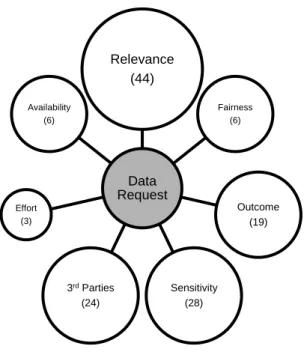
Figure 4.3: Factors that influence perception of data requests ... 87
Figure 4.4: Loan Application Disclosure Model ... 96
Figure 5.1: Factors affecting perception of TARGET’s data practices ... 106
Figure 5.2: Perceptions of data collection and usage in serious-games deployed in organisational contexts ... 116
Figure 6.1: Census disclosure decision model ... 134
Figure 7.1: Examples of "Flyaway" Ads ... 140
Figure 8.1: A context-neutral model for individual disclosure behaviour ... 149
11
L
IST OF
T
ABLES
Table 1.1: Overview of studies conducted for this thesis ... 22
Table 2.1: Approaches to privacy research from different disciplines ... 37
Table 2.2: Dimensions of privacy ... 38
Table 3.1: Limitations of past research ... 61
Table 4.1: List of Studies in this Chapter ... 63
Table 4.2: List of Expert Interviews ... 66
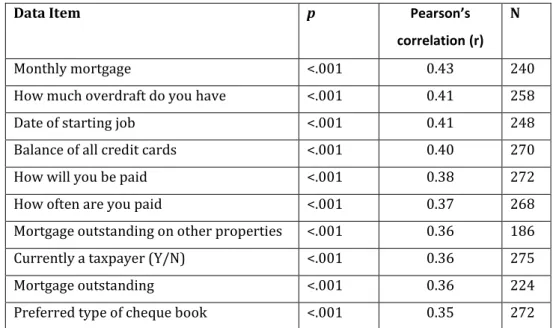
Table 4.3: Comfort ratings for loan application data requests ... 72
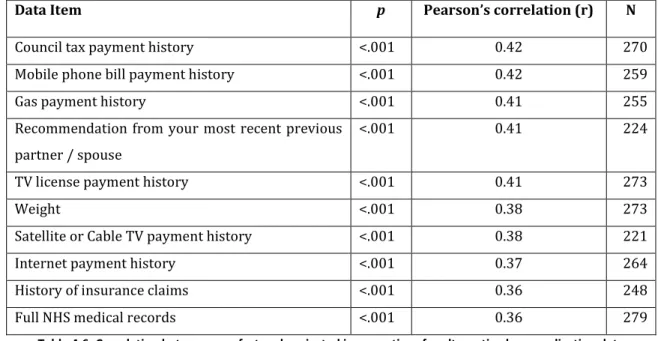
Table 4.4: Correlation between comfort and projected image ratings ... 73
Table 4.5: Comfort ratings for alternative loan application data requests ... 76
Table 4.6: Correlation between comfort and projected image ratings for alternative loan application data requests ... 77
Table 4.7: List of basic items ... 81
Table 4.8: List of novel items ... 82
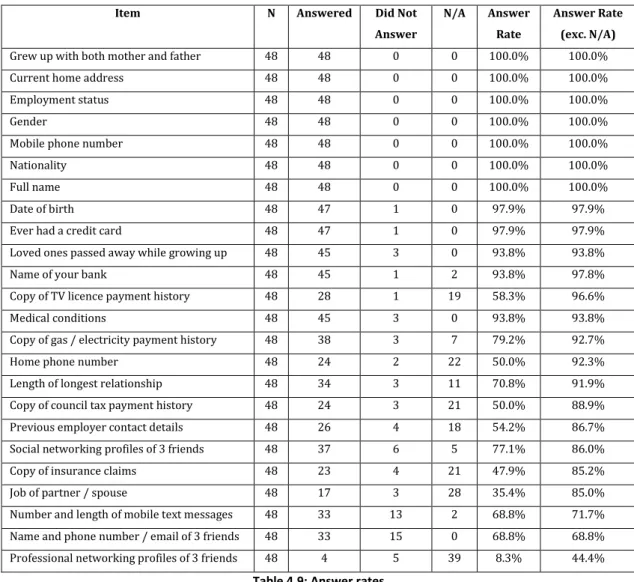
Table 4.9: Answer rates ... 86
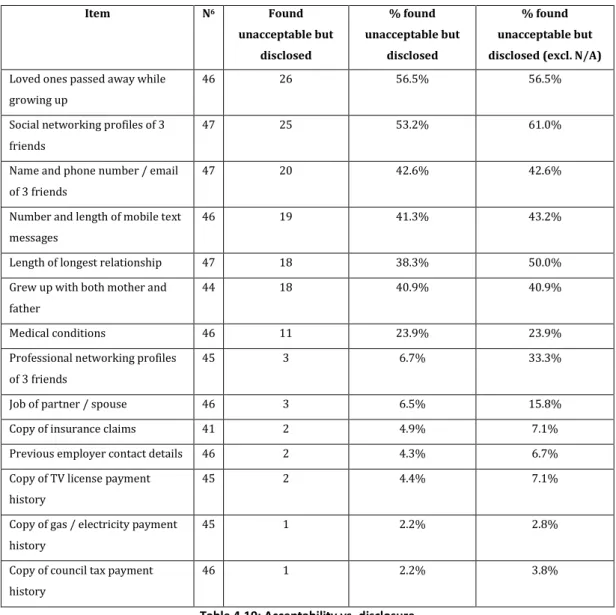
Table 4.10: Acceptability vs. disclosure ... 91
Table 5.1: List of Studies in this Chapter ... 98
Table 5.2: Data Access Requirements Table ... 100
Table 6.1: Studies in this Chapter ... 119
Table 6.2: Comfort ratings for census items ... 128
Table 6.3: Relationship between census return data and privacy protection behaviour . 129 Table 6.4: Relationship between average sensitivity and privacy protection behaviour . 130 Table 6.5: Relationship between average sensitivity and census return date ... 130
Table 6.6: Effect of ethnicity on privacy protection behaviours ... 131
Table 6.7: Effect of ethnicity on sensitivity ... 131
Table 7.1: Surveys on targeted advertising ... 137
Table 7.2: Total Fixation Duration Per Page ... 142
Table 7.3: Self-Reported Noticeability of Ads ... 143
Table 7.4: Self reported Comfort with ads ... 143
Table 7.5: Self reported Interest in ads ... 144
Table 8.1: Thesis support for model factors ... 150
Table 9.1: Disclosure statistics per treatment and follow-up questionnaire ratings ... 162
Table 9.2: Item Disclosure and truthfulness regressed on perceived effort, fairness, relevance, and sensitivity. ... 166
12
Chapter 1:
I
NTRODUCTION
The development and proliferation of computerised information systems in modern societies have increased the ability of organisations to collect, store, process and transfer large quantities of data in an efficient way. As a result, more personal data is being collected by public and commercial organisations with the stated aims of reducing costs, improving service quality, or predicting behaviour in order to manage risk.
The data that organisations store about their customers, citizens or employees is seen as a source of competitive advantage, but most organisations lack a formal assessment of the value they are realising from this data: they don’t know which benefits are made possible or which costs they are incurring by having specific data. Without a detailed cost-benefit analysis of data ownership, there is risk of blindly hoarding data in a manner that can undermine, rather than further, organisational goals. In addition to the direct costs associated with maintaining data, such as storage, cleaning, and migration, there could be costs associated with negative perception of an organisation’s data practices. Individuals value their personal data, and even though they may be willing to disclose it in exchange for benefits, they may perceive the collection and use of specific personal data items as invasive, and react adversely.
When individuals are faced with a request for personal data, they assess the costs and benefits of complying with the request. If the perceived benefits outweigh the perceived costs, they will disclose the data (Adams & Sasse, 2001). If individuals choose to disclose personal data and later perceive that an invasion of privacy took place (e.g.: data being used for a purpose different than for what it was collected), their trust in the organisation responsible will decrease and the next time they deal with a similar data request they will perceive it more negatively, potentially rejecting it (Adams & Sasse, 2001). If, on the other hand, the perceived costs are too high, then individuals will avoid disclosing data, such as when too many data items are requested (Hui et al., 2007), questions are difficult to answer, or seem unnecessary. Responses used to cope with requests perceived as too costly compared to the benefits include withholding (Metzger, 2007) and falsifying data (Horne et al., 2007).
An individual rejecting a service represents a lost opportunity for the organisation providing that service, as well as a potential reputation cost. The withholding and falsification of data can affect the quality of data held by the organisation, leading to incorrect assessments of individuals and sub-optimal or wrong business or public policy decisions (Horne et al., 2007). If an organisation’s information systems have low-quality data as input (and have no way to detect this), they will get low-quality results – “garbage in, garbage out”.
13
To date, it has been assumed that the more personal data an organisation collects the better. However, excessive data collection can not only have the immediate effect of alienating the individuals whose data is being requested, but also potentially cause the degradation of an organisation’s data quality. If a more balanced and transparent data relationship is achieved between data subjects and data receivers (or data controllers), where targeted high value data collection is privileged over large indiscriminate data collection, individuals will react more positively to personal data requests while organisations will be able to obtain higher quality data, adding more value to their internal business processes.
1.1
R
ESEARCHP
ROBLEMPrivacy research in computer science has mainly been undertaken in the fields of human-computer interaction (HCI) and information security with the aim of developing mechanisms that allow individuals to have better awareness and control over the flow of their personal data. HCI research has focused on understanding users’ perceptions of privacy when interacting with information systems and finding new ways to provide them with feedback on the personal data practices of these systems and the organisations that own them. Information security research has focused on enabling users to protect their personal data through techniques such as encryption, access control, or anonymisation.
Regardless of the merits of supporting transparency and control for users, privacy research in computer science has not positioned organisational data practices in a value-oriented space. Organisations collect users’ personal data to leverage their operations and - until proven that invasive practices are counter-productive to their goals - they will continue to do so. Thus, the research presented in this thesis interprets the data practices of organisations not as attacks against individual privacy, but as value-driven actions that should include negative reactions of individuals in their own cost-benefit assessments.
Some privacy research from the fields of marketing and behavioural economics has taken this approach. That research agrees that individuals make trade-offs when it comes to their personal data. If they perceive that the benefits of a service or product that requires their personal data to be higher than the costs then they will volunteer their data (Milne & Gordon, 1993; Adams & Sasse, 2001; Dinev & Hart, 2006; Grossklags & Acquisti, 2007). Past research in this field has tried to pinpoint what benefits must be offered for individuals to disclose different items of personal data (Hann et al. 2002a; 2002b; Hui et al. 2007; Cvrcek et al., 2006; Kourti, 2009) and, like in the field of HCI, has looked at how individuals’ perceptions of data requests are formed (e.g.: Culnan, 1993) and how they affect willingness to disclose personal data (Dinev & Hart, 2006) and actual disclosure (Metzger, 2007; Horne, 2007).
14
This thesis is positioned in this space and is focused on mapping out the factors that individuals consider when an organisation asks to collect their personal data – e.g. perceived fairness of the data request – and investigating the relationship between these factors and truthful disclosure or privacy protection behaviours. Privacy protection behaviours like falsifying or omitting answers to data decrease the quality of the data provided and impair the data receiver’s ability to generate value from that data. This research, tries to link data collection practices to its respective data quality impact by means of understanding how individuals react to them.
Past privacy research has mainly focussed on specific contexts, such as marketing and e-commerce, and has rarely tried to generalise their findings due to the extremely contextual nature of privacy. While this thesis acknowledges this, an attempt is made here to determine whether the factors that users consider when asked to disclose their personal data are the same in different contexts. The result is a proposed context-neutral model for individual disclosure behaviour.
1.2
S
COPE OFT
HESISThe focus of the research described here is to understand how individuals perceive organisational requests for their personal data and how those perceptions affect their willingness to comply with those requests. It is positioned close to the field of privacy calculus (see, for example, Dinev & Hart, 2006) in that it acknowledges that individuals may wish to pay a privacy cost so that they may realise some other benefit – e.g. in the form of a service such as a loan – and attempts to determine what leads individuals to accept (or refuse) to pay that price. It differs from other research in the field in that it focuses less on determining the costs and benefits of disclosure and instead tries to understand why a specific transaction is perceived as costly or beneficial and how that affects the individual’s final decision.
Therefore, a quantification of the value of privacy (such as in Hann et al., 2002a; Cvrcek et al., 2006; or Preibusch et al., 2013) is outside the scope of this thesis. This research makes no attempt to link the identified perception factors to quantified costs and benefits. While it is assumed that individuals consider all these factors when determining the utility of complying with the data request, value assessments are treated as a black box from which a decision emerges. Thus, the methodological issue of eliciting value considerations from participants is avoided. The approach taken here is similar to that of Holbrook’s (1999) when mapping the dimensions of consumer value – i.e. the features that consumers consider when assessing products and services – in a qualitative way.
15
Different types of contexts of interaction (individual-organisation interactions) were covered in this research. First, interactions where a customer interacts with a service provider and is asked to explicitly disclose personal data so that the transaction is complete. Interactions like these are investigated in the Applying for Credit (Chapter 3) and Advertising studies (Chapter 4). In former, there is a clearer trade-off between the costs of disclosure and the benefit obtained. In the latter, the potential for profiling and cross-site advertising make the costs less clear. In the second type of interactions studied, citizens are asked by their government to disclose personal data to facilitate the administration of public affairs as in the case of the UK Census (Chapter 6). In this situation the immediate benefits for the citizen may not be clear and, instead, there is only a promise of future social benefits. The costs of not complying with the data request, however, are obvious - e.g. £1000 fine for not completing the UK census. Finally, the monitoring of employees by their employers is investigated in the Serious Games studies (Chapter 5). In this scenario, an employee is required or asked to interact with an information system of her/his employer to fulfil some organisational purpose. There may be immediate and tangible benefits for the employee resulting from agreeing to this type of monitoring, such as constructive feedback. However, withdrawing their consent to be monitored may not be a viable option since the employee may feel coerced by the employer. Outside the scope of this thesis are, notably, interactions with a health provider requiring the disclosure of personal data in order to obtain healthcare. Healthcare privacy is a topic which has been extensively studied in the literature.
The focus of this thesis was on individuals’ perceptions of explicit collection of their personal data, such as in cases where individuals are asked to disclose their data by filling in an application or registration forms and can meaningfully reject to disclose their data (Chapter 3, Chapter 6, and Chapter 9). On the other hand, it was also investigated how individuals perceived interactions where an information system tracks their behaviour where data collection is implicit (Chapter 5) and can be passed in an obscure way from one context to another (Chapter 4).
While regulatory bodies have precise definitions for what constitutes personal data (see Section 2.2.3), no distinction is made in this thesis between items relating to an individual, but that are not officially considered personal, and those that are. For the purpose of the research described here any data item that an individual perceives as personal is personal data. Moreover, the focus of this thesis is on the factors that affect individuals’ perceptions of requests for personal data items and not on the data items themselves.
16
1.3
C
ONTRIBUTIONSThis thesis makes several theoretical and empirical contributions to the understanding of individuals’ perceptions and behaviour regarding organisational personal data practices in general and requests for personal data in particular.
1.3.1
Theoretical Contribution
1.3.1.1
A context-neutral model for individual disclosure behaviour
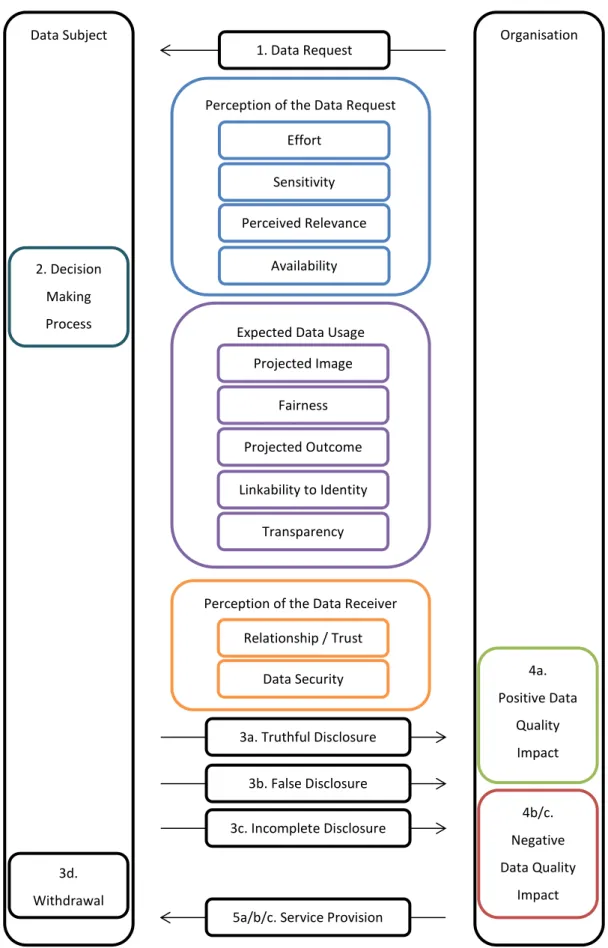
This model identifies the factors that influence how individuals perceive data requests from organisations, and how those perceptions can affect their response to the requests (see Figure 1.1). Individuals asked to disclose their personal data evaluate the request according to these factors, and depending on this evaluation decide whether to comply with the request, falsify, or omit their answer.
The model is based on the findings from the studies conducted in this thesis, which looked at different types of relationships between individuals and organisations where personal data is collected, and on existing privacy research. It builds on existing privacy research by including non-privacy factors that have an influence on disclosure behaviour, such as effort of answering. The model is context-neutral because the same factors emerged in studies focusing on different situations where organisations ask individuals for their data. As a result, this thesis proposes that an individual will react differently to data collection practices happening in different contexts, but will consider the same group of factors.
The model is relevant for any organisation that collects and uses personal data. It can be used to understand the potential impact of data collection efforts on the data subjects and how their potential responses can affect the organisation’s data quality. The data collection effort can then be adjusted to minimise negative responses and maximise the value of the data for the organisation.
The model is relevant for researchers as it can be used as a base for future studies. New research can focus on augmenting the model with additional factors, validating the impact of these factors in new contexts of interaction, or bounding the impact of the factors on the actual response for specific individual-organisation relationships.
17
Figure 1.1: A context-neutral model for individual disclosure behaviour
Expected Data Usage Perception of the Data Request
Data Subject Organisation
1. Data Request Projected Image Effort Sensitivity Fairness Projected Outcome Perceived Relevance Availability
Perception of the Data Receiver Relationship / Trust
Data Security
3a. Truthful Disclosure
3b. False Disclosure
3c. Incomplete Disclosure
5a/b/c. Service Provision 3d. Withdrawal 4b/c. Negative Data Quality Impact 4a. Positive Data Quality Impact 2. Decision Making Process Linkability to Identity Transparency
18
1.3.2
M
ETHODOLOGICALC
ONTRIBUTION1.3.2.1
Estimating likelihood of privacy protection behaviours
This thesis addresses methodological limitations in past research by observing actual disclosure behaviour of individuals under deception in the field. Factors related to the perception of personal data requests are linked to actual disclosure decisions, including the decision to omit or falsify data. It is shown that, by regressing answer and falsification rates of questions on self-reported perception factors, such as question fairness or sensitivity, it is possible to approximate how data quality degrades or improves when perception of the question varies. This method can be used by organisations to determine whether it is valuable or counter-productive for them to collect specific data items. It can be repeated for specific organisational contexts and extended with additional factors.
1.3.3
E
MPIRICALC
ONTRIBUTIONS1.3.3.1
Research findings on loan applicants’ perceptions of personal data
collection and use by lenders
The findings identify issues with the lack of transparency of the risk assessment process and the collection, use and sharing of certain data items by lenders. These findings have implications for industry regulators who have an interest in minimising feelings of privacy invasions and discomfort of financial services customers. They also are of interest to lenders who can use these findings to improve customer relations and potentially create new products, which address the concerns identified.
1.3.3.2
Research findings on potential privacy issues of serious-games system
deployed in organisational contexts
The author’s findings suggest privacy issues may arise when deploying serious-games based competence development systems in organisational settings with employees having several concerns regarding the collection and use of game-generated data. Findings are relevant for game designers as they suggest mechanisms that can be employed to minimise privacy risks. They are also useful for large organisations that use technology-enhanced competence development systems since several practices that were considered unacceptable by prospective user are identified.
19
1.3.3.3
Research findings on citizens’ perceptions of government data collection
and use
The findings can help government organisations understand how their data practices are perceived and how they impact individuals. They can be used to maximise response rates and data quality as well as improve communications with citizens who do not feel their needs are addressed by government organisations.
1.3.3.4
Research findings on individuals’ perceptions of rich-media personalised
advertising
These findings identify potential privacy issues with personalised ads. Results are relevant for advertising professionals as they suggest that the gains in attention provided by increased personalisation can be offset by users feeling uncomfortable with their data being used for advertisement purposes. Findings can also support future research into how to design ads that are both acceptable are noticeable.
1.4
P
UBLICATIONSR
ELATING TO THIST
HESISPaper Title: Malheiros, M., Preibusch, S. & Sasse, M.A. (2013) “Fairly Truthful”: The Impact of Perceived Effort, Fairness, Relevance, and Sensitivity on Personal Data Disclosure. In M. Huth et al., eds. Trust and Trustworthy Computing. Lecture Notes in Computer Science. Springer Berlin Heidelberg, pp. 250–266.
Author’s Contribution: This paper presents a study conducted in collaboration with Dr. Sören Preibusch from Microsoft Research Cambridge. The study attempted to both validate part of the disclosure model presented in this thesis and answer some of Dr. Preibusch’s research questions. Each researcher designed the part of the study that addressed his research goal. Only the author’s part is reported in this thesis. Data was collected by Dr. Preibusch and analysed by the author. The paper was written by the author, Dr. Preibusch, and Prof. Sasse.
Relation to Thesis: Chapter 9
Paper Title: Malheiros, M., Brostoff, S., Jennett, C. & Sasse, M.A. (2012). Would You Sell Your Mother‘s Data? Personal Data Disclosure in a Simulated Credit Card Application. 11th Annual Workshop on the Economic of Information Security (WEIS 2012), Berlin, Germany, June 25-26, 2012
Author’s Contribution: This paper presents a study designed by Dr. Sacha Brostoff, Dr. Charlene Jennett, and the author. The author designed the website used in the experimental setup. The experiment was conducted by undergraduate UCL Psychology students Madalina
20
Vasilache, Diana Franculescu and Jessica Colson. All results were analysed by the author. The paper was written by the author, Dr. Brostoff, Dr. Jennett, and Prof. Sasse
Relation to Thesis: Chapter 4, Section 4.7
Paper Title: Malheiros, M., Jennett, C., Patel, S., Brostoff, S., Sasse, M. A. (2012). Too close for comfort: A study of the effectiveness and acceptability of rich-media personalized advertising. Proceedings of the 2012 ACM annual conference on Human Factors in Computing Systems. ( pp.579-588). New York, NY, USA: ACM
Author’s Contribution: This paper presents a study designed by the author and UCL MSc student Snehalee Patel. Data was collected by Snehalee Patel. Eye-tracking data was analysed by Dr. Charlene Jennett. Thematic analysis of interview transcripts was done by the author. The paper was written by the author, Dr. Jennett, Dr. Brostoff, and Prof. Sasse.
Relation to Thesis: Chapter 7, Section 7.2
Paper Title: Malheiros, M., Jennett, C., Seager, W. & Sasse, M.A. (2011) Trusting to Learn: Trust and Privacy Issues in Serious Games. In J. M. McCune et al., eds. Trust and Trustworthy Computing. Lecture Notes in Computer Science. Springer Berlin Heidelberg, pp. 116-130
Author’s Contribution: This paper presents two studies. The first was designed and carried out by Dr. Seager and author. The author did the data analysis. The second was designed and carried out by Dr. Jennett and the author. Dr. Jennett analysed the data related to trust perceptions and the author analysed the data related to privacy perceptions. The paper was written by the author, Dr. Jennett, and Prof. Sasse.
Relation to Thesis: Chapter 5, Sections 5.3 and 5.4
Paper Title: Jennett, C., Brostoff, S., Malheiros, M., Sasse, M. A. (2012). Adding insult to injury: Consumer experiences of being denied credit. International Journal of Consumer Studies 36(5), 549-555
Author’s Contribution: The study presented in this paper was planned by Dr. Sacha Brostoff, Dr. Charlene Jennett, and the author. The author implemented the corresponding online
21
questionnaire. Data analysis was done by the three researchers. Results were framed or re-analysed by the author for the purpose of this thesis. Qualitative answers were re-coded by the author in light of the research goals of this thesis. The paper was written by Dr. Jennett, Dr. Brostoff, the author, and Prof. Sasse.
Relation to Thesis: Chapter 4, Section 4.6
Paper Title: Jennett, C., Malheiros, M., Brostoff, S. & Sasse, M. A. (2012). Privacy for loan applicants versus predictive power: Is it possible to bridge the gap? In S. Gutwirth et al. (Eds.) European Data Protection: In Good Health? pp. 35-52. Springer Press.
Author’s Contribution: The studies that are described were planned by Dr. Sacha Brostoff, Dr. Charlene Jennett, and the author. The author implemented the corresponding online questionnaire. Data analysis was done by the three researchers. Results were framed or re-analysed by the author for the purpose of this thesis. The paper was written by Dr. Jennett, the author, Dr. Brostoff, and Prof. Sasse.
Relation to Thesis: Chapter 4, Sections 4.4 and 4.6
Paper Title: Jennett, C., Brostoff, S., Malheiros, M., Sasse, M. A. (2010). Investigating loan applicants' perceptions of alternative data items and the effect of incentives on disclosure. Privacy and Usability Methods Pow-wow (PUMP) 2010: Proceedings. British Computer Society.
Author’s Contribution: This paper describes the planning of two studies presented in this thesis. Planning of the studies and writing of this paper was carried out by Dr. Jennett, Dr. Brostoff, the author, and Prof. Sasse.
Relation to Thesis: Chapter 4, Section 4.5 and 4.7
1.5
O
VERVIEW OFS
TUDIES IN THIST
HESIS22
Applying for Credit Serious Games UK Census 2011 Advertising Validation
Study 1 Study 2 Study 3 Study 4 Study 5 Study 1 Study 2 Study 3 Study 1 Study 2 Study 1 Study 1
Section 4.3 4.4 4.5 4.6 4.7 5.2 5.3 5.4 6.2 6.3 7.2 Chapter 9 Topic Personal data in risk assessment Loan applications data requests Loan applications alternative data requests Collection and use of personal data by lenders Loan applications alternative data requests and disclosure behaviour Privacy risks in a serious-games platform Collection and use of data by a serious-games platform Collection and use of data by a serious-games platform Census data requests Census data requests and privacy protection behaviours Rich-media personalised advertising Impact of perceived effort, fairness, relevance, and sensitivity on personal data disclosure Method Semi-structured expert interviews
Online survey Online survey Online survey Lab experiment Group interview (Developer workshop) Focus Groups Semi-structured interviews Semi-structured interviews Online survey Lab experiment Field experiment N 10 283 285 298 48 N/A 8 32 11 174 30 279 Date Jun 2009 – Aug2010 Aug – Sept 2010 Aug – Sept 2010 Aug – Sept 2010
Mar 2011 Oct 2009 Feb 2010 Jun – Nov 2010 Mar - Apr 2011 Apr - May 2011 Jul – Sept 2011 Sept 2012 – Apr 2013 Table 1.1: Overview of studies conducted for this thesis
23
Chapter 2:
L
ITERATURE
R
EVIEW
This chapter reviews the literature on privacy and disclosure of personal data relevant for this thesis. It starts with a discussion of the different factors that have been linked to privacy perceptions and decision-making; why privacy behaviour sometimes appears to be inconsistent with privacy attitudes; how individuals make trade-offs with their personal data; and how they sometimes engage in privacy protection behaviours.
Second, an historical account of the evolution of the concept of privacy is given, from its first appearance in the discussion of the differences between private and public life to the more modern conceptualisations of privacy as intimacy. This is followed by a summary of the ways different fields of science approach the study of privacy and a breakdown of the different types of privacy and privacy invasions. The key concepts of data, information, and personal data are then clarified.
Third, the study of privacy in computer science is discussed. In particular, privacy sensitive design of information systems is discussed focusing on findings in the human-computer interaction and the security fields. The concepts of data mining and data quality, both highly relevant for the debate on the value of data, are presented.
Finally, the issues with the regulatory approach to solving privacy invasions are discussed. One such issue being the focus of privacy legislation in clear-cut definitions of what is and is not private, and another being the difficulty in identifying privacy invasions when so much personal data collection, use, and transfers goes undetected.
2.1
D
ISCLOSUREB
EHAVIOURTo provide a service, most organisations require customers to either voluntarily disclose items of personal data or accept their collection by other (usually automated) means. Customers assess the social and economic benefits of complying with the data practice and weigh it against the privacy cost of the disclosure. If they perceive the benefits of this exchange are bigger than its costs than they will go ahead with it; if not, then they will refuse it. This assessment is called “privacy calculus” (Laufer and Wolfe, 1977; Milne and Gordon, 1993; Culnan, 1993; Culnan and Armstrong, 1999; Dinev and Hart, 2006) – also privacy decision-making or privacy behaviour.
Research on the privacy calculus has attempted to determine (1) how individuals assess the costs and benefits of disclosure and how it affects their willingness to disclose personal data,
24
and (2) for which types (and amount) of benefits individuals are willing to disclose their personal data.
2.1.1
F
ACTORSL
INKED TOP
RIVACYA
TTITUDES ANDB
EHAVIOURIn this section, factors that have been linked to privacy attitudes and behaviour are discussed, both the ones that have been mentioned in privacy calculus literature, as well as the ones identified in HCI research.
2.1.1.1
Sensitivity
Individuals evaluate the sensitivity of the information they’re broadcasting according to a “scale of sensitivity” and not in a binary - sensitive vs. non-sensitive – way (Adams, 2001). The sensitivity depends on how “personally defining” the information is deemed to be and how the user predicts others will interpret the information. Thus, different types of personal data have varying degrees of sensitivity, which means individuals are more comfortable disclosing some items of personal data than others (Tolchinsky et al., 1981; Woodman et al., 1982; Ackerman et al., 1999). Items that are typically seen as more sensitive include: personal identifiers such as social security number (Metzger, 2007), financial data (Phelps et al., 2000), and medical data (Ackerman et al., 1999). The same data item can also be seen as more or less sensitive depending on the context where it is observed. For example, data items that are transferred outside their context of collection may become more sensitive because they lose contextual cues, increasing the chances that they are misinterpreted (Adams and Sasse, 2001; Nissenbaum, 2004). Organisational practices involving more sensitive items of personal data have been associated with feelings of discomfort (Ackerman et al., 1999) and privacy invasion (Tolchinsky et al., 1981; Woodman et al., 1982). Perceived sensitivity of a data item has been linked with behavioural intention (Malhotra et al., 2004) and disclosure behaviour: in a study where participants were asked to fill in an online form in exchange for a free CD, Metzger (2007) observed that disclosure and falsification rates of a data item were positively and significantly correlated with the self-reported sensitivity of that item.
2.1.1.2
Relevance
A request for a personal data item is perceived, by the data subject, as relevant or irrelevant depending on the context in which it happens. A doctor asking a patient for the history of cancer in her family is seen as a relevant request; the same request coming from a store clerk in the context of a loyalty card application would be seen as irrelevant - as well as unacceptable. Relevance judgements are based on what individuals perceive to be the legitimate data needs of the organisation asking for the data (Hine and Eve, 1998). Thus, what the organisation collecting the data presumes to be relevant and the individual’s perception
25
may differ. If the individual does not perceive a data item to be necessary for the communicated purpose of the current transaction it will see it as irrelevant. Data practices involving items of personal data perceived as irrelevant are considered less acceptable (Woodman et al., 1982), more invasive (Culnan, 1993), and as having a higher associated privacy cost (Annacker et al., 2001). However, perceived relevance of a data request has never been linked to disclosure behaviour.
2.1.1.3
Fairness
The concept of fairness, in the procedural sense of Fair Information Practice Principles (FIPs; see US Secretary's Advisory Committee, 1973), has been linked to disclosure attitudes (Culnan and Armstrong, 1999). In a re-analysis of responses to the 1994 Harris Survey on Interactive Services, Consumers and Privacy, Culnan and Armstrong observed that, when respondents were explicitly told that fair procedures would be employed in the management of their data, their level of privacy concern did not affect willingness to be profiled for advertising purposes. Unfortunately, the study did not investigate whether the promise of fair procedures increased willingness to be profiled.
Research on the interplay between fairness perceptions and privacy behaviour should look beyond legally rooted interpretations of fairness to individual perceptions of fairness. Individuals’ definitions of what constitutes fair uses of their personal data may not necessarily match the principles set out in data protection law. For this reason, procedurally fair data uses may still be interpreted as invasive (Raab and Bennett, 1998). Milne and Gordon (1993) propose interpreting exchanges of personal data for services as social contracts. The contracts are “social” in the sense that they are regulated, not only by legal norms, but also by implicit norms derived from what is socially acceptable and the expectations of the individual disclosing the data.
Milne and Gordon’s framing of personal data exchanges was done in the context of direct mail marketing, which had unclear regulation from the perspective of the consumer. Nowadays, most interactions requiring customers’ personal data are governed by legal statements such as terms of service or privacy policies that are binding on the organisations collecting the data. Still, these are often too long (McDonald and Cranor, 2008) or difficult to understand (Milne and Culnan, 2004) for the average customer. In that sense, one can say that, from the point of view of the data subjects, these interactions continue to be interpreted as social contracts – i.e. individuals’ expectations of what can be done with their personal data depend on what they consider socially acceptable or fair. Therefore, a more complete definition of fairness in the processing of personal data can be: the fulfilment of the social contract. Unfair data
26
practices are thus those that violate the social contract – i.e. the expectations of the individual - even if they do not violate the legal one.
2.1.1.4
Data Receiver
Attitudes towards personal data practices vary with the receiver of the data (Stone et al., 1983). Usually, individuals are more comfortable disclosing personal data to organisations or individuals that they trust and with whom they have an existing relationship (Ackerman et al., 1999) such as an employer (Tolchinsky et al., 1981; Woodman et al., 1982). However, in some cases, such as when data portrays the individual in a bad light, sharing with a close recipient can be perceived as more damaging than sharing with a stranger (Adams, 2001). In 2007, Kevin Colvin, an intern at Anglo Irish Bank, told his boss he had to miss work due to a “family emergency” (Williams, 2007). Kevin later shared a photo of himself at a party dressed as a fairy, on Facebook. His boss saw the picture and shared it in with the whole office in an email reply to Kevin. The photo would have been harmless if seen by strangers to Kevin, but because his employer saw it it became extremely sensitive.
While trust may increase disclosure, disclosure of personal data can also help build up trust between individuals (Joinson & Paine, 2007). Disclosure makes one vulnerable to the data receiver and accepting this vulnerability is a trusting action (Riegelsberger, 2007). Disclosure and trust thus have a mutually reinforcing relation that is at the basis of the intimacy definitions of privacy (Inness, 1992; Fried, 1967): friendship and love relationships are developed by successive surrenders of privacy. Adams (2001) points out that excessive focus on trust as a factor of privacy perceptions may hide the fact that trusted systems and trusted data receivers may still invade individuals’ privacy without their knowledge; thus, the fact that the individual trusts the receiver does not prevent per se unacceptable uses of their personal data.
2.1.1.5
Data Usage
Individuals’ attitudes towards disclosure of personal data depend on the communicated purpose of the data collection and how they think their data is going to be used(Ackerman et al., 1999; Phelps et al., 2000; Adams & Sasse, 2001). Some uses of personal data are seen as more acceptable than others. If individuals think that the data being disclosed in the current interaction “will be used to draw reliable and valid inferences about them” then they will consider it less privacy invasive (Culnan, 1993). Data being disclosed in one context that is then passed on to a third-party or used for a different purpose than the one originally communicated is usually seen as a privacy risk (secondary data use). Organisations that assume that personal data disclosed for the purposes of providing a service can be used for
27
direct marketing, for example, are ignoring that sensitivity of data varies when usage contexts change (Adams & Sasse, 2001).
Individuals will also assess whether a disclosure might result in harmful consequences for them (Tolchinsky et al., 1981; Phelps et al., 2000). Examples of harmful consequences include reputational impact (e.g. disclosing social activity makes one look bad in job interview) or being unable to achieve a goal (e.g. disclosing income level prevents individual from obtaining credit). It should be noted that when an individual discloses personal data to an organization s/he loses control over how the data will be used, making it difficult to foresee negative consequences. The data is stored by the data receiver, who can edit it, link it with other data, or disseminate it at a later date. All of which can cause the data to lose contextual cues increasing the likelihood of privacy invasions (Adams, 2001; Nissenbaum, 2004). One example of hidden data usage that can impact individuals’ life is the use of census data in marketing products used for geo-demographic profiling (e.g. Mosaic UK; Experian, 2013) which can result in social sorting, where individuals are offered services under harsher conditions (e.g. high insurance premiums or interest loans) or simply denied services because of the way they have been profiled (Lyon, 2003).
In the 2001 Culnan-Milne Survey on Consumers & Online Privacy Notices, 64% of participants said they had refused to disclose data to a website because they did not know how it would be used (Culnan & Milne, 2001). Making individuals understand how their personal data is used by organisations or information systems is an important factor in minimising perceptions of privacy invasion (Lederer et al., 2004). However, effectively communicating how data is used is not a trivial task. For example, individuals rarely read privacy policies (Kobsa & Teltzrow, 2004) and when they do most policies require too much time and effort to understand (Sherman, 2008). Providing a reason for each data request seems to be more effective: in a between-participants experiment on disclosure in web forms, between-participants were significantly more likely to answer questions when shown individual justifications for each one, than when provided with a link for a general privacy policy (Kobsa & Teltzrow, 2004).
2.1.1.6
Effort
The effort required to answer data requests has an impact on the likelihood of compliance. If a request is perceived as difficult to answer by individuals they will be less willing to provide it (Annacker et al., 2001). Difficult data requests include questions that require memory effort, looking up information in documents, or creating new answers (e.g. “Tell us what you think about X”) (Jarrett & Gaffney, 2009). Effort also depends on how many data items are
28
requested. Quantity of required data has been linked to perceived value of providing the data (Miltgen, 2007) and actual disclosure likelihood (Hui et al., 2007).
2.1.1.7
Contextual Factors
Disclosure behaviour is influenced by the context in which the interaction takes place. The social, organisational and cultural conditions in which the interaction takes place affect privacy perceptions because they determine the communication and behavioural norms of the situation (Adams, 2001; Stone and Stone, 1990 cited in Millberg et al. 2000). Moreover, the technology environment, the individual’s past experiences, knowledge and preconceptions of that technology, and the level of interaction she will have with it also have an influence on her perceptions (Adams, 2001; Hine and Eve, 1998; Stone and Stone, 1990).
2.1.1.8
Privacy Concern
Researchers have developed several different measures of privacy concern. One of the first and most used is Westin’s privacy segmentation (Harris and Associates Inc. & Westin, 1998). This scale consists of three privacy concern statements which participants are asked to rate with regards to their level of agreement (1 = strongly disagree and 4 = strongly agree):
“Consumers have lost all control over how personal information is collected and used by companies”
“Most businesses handle the personal information they collect about consumers in a proper and confidential way”
“Existing laws and organizational practices provide a reasonable level of protection for consumer privacy today”
Based on their answers respondents to Westin’s privacy segmentation are assigned to one of three groups: (1) privacy fundamentalists, who agree with the first statement and disagree with the other two; (2) privacy unconcerned, who disagree with the first statement and agree with the other two; or (3) privacy pragmatists, who comprise everyone else. While widely employed, possibly due to its shortness, there is little evidence that Westin’s scale is a good predictor of actual behaviour (Consolvo et al., 2005; Malheiros & Preibusch, 2013).
Smith et al. (1996) developed a 15-item scale aimed at measuring individuals’ concerns regarding organisational personal data practices, the Concern for Information Privacy Scale (CFIP). The items load on four factors: concern with (1) collection; (2) errors; (3) unauthorised secondary use; and (4) improper access. Stewart & Segars (2002) confirmed that each dimension (factor) of the scale is indeed reliable and distinct, but suggest representing CFIP as
29
a higher-order factor structure instead of the four first-order factors in the original scale, i.e. CFIP is not the four factors, but influences the four factors.
Since CFIP was focused on offline consumers and it was assumed that internet users’ concerns differed from them, Malhotra et al (2004) develop the Internet Users’ Information Privacy Concerns (IUIPC), a second-order model. IUIPC has three dimensions: users’ (1) concern with collection of personal data; (2) control over that collection; and (3) awareness of how the collected data is used. IUIPC had a negative impact on behavioural intention (through the factors trusting beliefs and risk beliefs, but no research was done linking it to actual disclosure behaviour.
Buchanan et al. (2007) attempted to develop a multi-dimensional privacy concern scale but find their 16 items load only on one factor, which they call privacy concern. They developed two more scales, one for general privacy caution and another for technical protection. They found that both Westin’s privacy scale and IUIPC were significantly and positively correlated with their privacy concern measure.
While these measures exhibit good internal validity, they have not been linked to actual privacy behaviour. Instead, only their relationship to self-reported behavioural intentions was investigated. In the context of privacy research this constitutes a major limitation of privacy scales, because privacy concern is often inflated comparing to actual behaviour. This discrepancy, known as the privacy paradox, is discussed in the next section.
2.1.2
T
HEP
RIVACYP
ARADOX:
S
TATEDC
ONCERN VERSUSA
CTUALB
EHAVIOUROne of the main research problems in privacy research is to explain why individuals’ stated privacy concerns differ from their disclosure behaviour. In its 1998 report to US Congress on online privacy, the Federal Trade Commission (1998) states that many consumers were still reluctant to participate in the online market. Citing a study by Louis Harris & Associates and Dr. Alan F. Westin (1997 in Federal Trade Commission, 1998), the FTC argues that “a substantial number of online consumers would rather forego information or products available through the Web than provide a Web site personal information without knowing what the site’s information practices are”. In a Business Week and Harris (1998) survey of the same year, respondents chose privacy as the number one factor affecting how much they use the internet. A survey conducted by the Pew Internet and American Life Project (2000) discovered that 86% of American internet users are in favour of policies that make companies ask people for permission before using their personal data and 54% think being tracked by websites is harmful because it is a privacy violation. Moreover, 84% of the users state they are concerned with businesses and strangers getting their – or their families - personal information. Similarly,
30
a Jupiter Research (2002) study concluded that 70% of US internet users are concerned that their privacy is at risk on the internet.
The overwhelming number of respondents to these surveys that said they were concerned with privacy and the collection of personal data seemed to indicate that a severe consumer backlash against internet use and e-commerce was in order. However, between 1998 and 2001, not only did e-commerce keep growing, it grew at a faster pace than predicted by privacy surveys (Harper and Singleton, 2001) and it kept on growing (comScore, 2008).
In an study that involved asking participants about their privacy notions and then watching their interaction with an e-commerce website, Berendt and Spiekermann, (2005) observed that subjects who had expressed concerns regarding their privacy online seemed to forget them when interacting with the website bot that asked them both product related and personal questions (non product-related). Unfortunately, the effect of using an anthropomorphic bot in the interaction and the fact that it may have lead participants be more comfortable with disclosing personal data was not investigated.
Harper and Singleton (2001) argue that this discrepancy is due to the flawed (or manipulative) design of some privacy surveys. Common errors, according to the authors, include starting with provocative questions, asking questions in a biased way (“push polling”) and mixing privacy with issues such as spam and credit card fraud. In addition, surveys suffer from the “talk is cheap” problem, i.e., consumers asking for better regulation often do not consider the costs that would be associated with it. Moreover, in unprompted surveys, privacy does not come up as a top concern.
Similarly, in a 2009 London School of Economics (LSE) study (Kourti, 2009), student participants were rewarded with chocolate bars in exchange for answering personal questions. The majority of participants disclosed a valid LSE username (91%), address (90%) and phone number (67%). A few people further revealed their date of birth and LSE password. It should be noted that the inquiry took place at a university fair and that the researchers never identified themselves. This experiment shows that some individuals are willing to trade sensitive data for small immediate rewards like confectionary items, seemingly undervaluing the privacy risks involved.
2.1.3
P
SYCHOLOGICALB
IASES INP
RIVACYD
ECISIONM
AKINGAcquisti (2004) explains the underestimation of privacy risks by suggesting that privacy decision-making does not follow a rational behaviour model. Even individuals who are privacy conscious and want to protect themselves may be unable to do so due to having: (1)
31
incomplete information; (2) bounded rationality; and (3) psychological distortions. Individuals do not usually possess enough information to estimate the risk resulting from a disclosure – i.e. the probability of suffering a privacy invasion and the magnitude of its impact on their lives. They are also unaware of the protective measures – legal and technological – that they can employ to decrease that risk. Even if they were aware of these facts, it would be very complex for an individual to calculate the costs and benefits of each disclosure decision and compare the utilities of each one to determine a course of action. Humans have limited processing power and time. Finally, assuming that individuals had enough information and rational capability to estimate the utility of each decision, psychological distortions can still lead them away from an optimal decision. These include: (1) hyperbolic discounting, i.e. underestimating the probability of future risks; (2) opting for immediate gratification when they should look to protect themselves; (3) having optimism bias, i.e. assuming their own risk is smaller than other people’s; and (4) difficulty in dealing with cumulative risks, such as the successive increase in the likelihood of suffering a privacy invasion that comes with each individual disclosure.
Aspects related to how data requests are framed can also influence disclosure behaviour. Acquisti et al (2012) replicate two effects that play on the comparative nature of decision-making: (1) herding; and (2) anchoring. In a series of studies, they found that individuals were more likely to disclose sensitive data if they were told that other people have made the same disclosure. They also found that the order in which questions are asked can influence the likelihood of an individual answering them. Individuals will “anchor” their perceived sensitivity of the questions on the first question they read. Thus, when questions are asked in decreasing order of sensitivity disclosure is higher.
Syverson (2003) disagrees that individuals are irrational in privacy decision-making. For the author, the probability that disclosing personal details will result in serious negative consequences – such as identity theft – is so low that going ahead with the disclosure in exchange for small rewards is the rational decision. One should also consider that not only immediate benefits contribute to individuals disclosing personal details. Individuals are willing to exchange personal data related to specific products or services if they perceive that it will contribute to a better service and product quality in the future (Annacker et al., 2001); thus, their decision-making is not always myopic.
2.1.4
P
RIVACYT
RADE-O
FFSEven when users perceive that an interaction can have implications for their privacy, they may still be willing to accept it if they consider its benefits outweigh the privacy risks (Laufer and
32
Wolfe, 1977; Milne and Gordon, 1993; Culnan, 1993; Culnan and Armstrong, 1999; Adams, 2001; Dinev and Hart, 2006). As mentioned above, when consumers are asked to exchange personal data for a service or product they are entering into a social contract. If the benefits from this social contract are larger than the costs resulting from loss of privacy they will agree to it (Milne and Gordon, 1993).
Previous studies have found mixed support for the claim that individuals are willing to pay for privacy. Hann et al. (2002a; 2002b) estimated that U.S. individuals would be willing to pay between 30 and 45 USD to prevent errors, improper access, and secondary use of their personal data by a website in one of three industries: financial, healthcare, and travel. While commendable for “putting a value” on privacy this research is limited for being based participant rankings of options and not actual financial commitments involving their own money. Moreover, it is likely that willingness to pay, and how much to pay, for privacy will be highly depended on contextual factors like brand perception, which go beyond the industry. Beresford et al. (2010) designed a field experiment where participants were asked to buy a DVD from one of two online stores identical in everything except the fact that one asked for more sensitive data during the purchase. In the treatment where the DVD was 1 EUR more expensive at the privacy sensitive store, participants preferred the cheaper store. In the treatment where DVDs were the same price, participants bought equally from the two stores. Less ambiguously, past research shows that individuals are willing to disclose personal data in exchange for economic benefits. Hui et al. (2007) found that monetary rewards had a positive effect on disclosure, while Kourti (2009) found evidence that individuals will exchange personal data for other types of rewards, such as chocolate. Cvrcek, D. et al (2006) asked participants to bid how much they would have to be paid to disclose their location data for commercial or academic uses. Using participants from five different countries, they found that the median bid for commercial use of data was roughly double the median bid for academic use of data, which was around 30 EUR.
These studies suggest individuals are more willing to sell their personal data than to pay for privacy. In fact, this was exactly what Grossklags & Acquisti (2007) found in a study comparing willingness to sell and willingness to protect personal data: participants showed a clear preference for selling their data over protecting it.
2.1.5
P
RIVACYP
ROTECTIONB
EHAVIOURSIn the case that individuals do not perceive the benefits of a disclosure to outweigh the costs there is a chance they will engage in privacy protection behaviours by either withholding
33
(Sheehan & Hoy, 1999; Culnan & Milne, 2001; Metzger, 2007) or falsifying their answers (Culnan & Milne, 2001; Lwin & Williams, 2003; Horne et al., 2007; Metzger, 2007). These can be interpreted as attempts to minimise the costs of disclosure while still obtaining the reward. While some factors have been linked to privacy protection behaviours, namely sensitivity and effort, it is not clear how likely individuals are to engage in them. This thesis investigates the relationship between other perceptual factors and privacy protection behaviours and the likelihood of individuals actually lying or omitting personal data.
2.1.6
P
ROPERTY RIGHTS OVER PERSONAL INFORMATIONPosner (1978, 1981) argues that, since personal information disclosure is costly for the person it relates to and valuable to others, people having property rights over it and being allowed to sell these rights would lead to exchanges that would maximize the information’s value for society. However, depending on the nature and origin of the information and transaction costs, there could be exceptions for this attribution of property rights. For example, for a magazine that wants to sell its subscriber list to another company the cost of obtaining consent is higher than the value of the list. As the value of the list is higher for the company buying it than the value of being protected from direct marketing is for the subscriber, Posner argues that property rights should be attributed to the magazine.
This is a purely utilitarian view, where the option that maximizes value for society is considered optimal. The author would argue that it is difficult to make any comparison at all. Although companies know the exact value of a subscribers list, measuring how different individuals value “not being bothered by direct marketers” is a much more difficult task. Moreover, it has been suggested that it is not the actual marketing that bothers people, but not knowing how companies got their names and addresses (Culnan, 1993).
The problem of framing privacy issues (or control over personal information issues) in an “individual preference versus society’s interest” way is that it misses out on fundamental aspects of privacy by ignoring its social value (Solove, 2008). If individual privacy loses every time it is pitted against society’s interests then an environment is created where privacy can always be invaded as long as it is done in the name of a “higher” societal value, such as security. This contributes to the surfacing of “chilling effects”, where citizens, believing to be under constant surveillance start to self-censor their behaviour for fear of looking suspicious in the eyes of the observers. These effects would adversely impact creativity, free speech, freedom and the quality of democracy. Because of this, Solove (2008) defends that privacy should not be seen as an individual value but as a societal good, in a sense applying Kant’s
34
categorical imperative in that if privacy losing against other interests becomes universal law, then the overarching consequences will be negative.
2.2
P
ERSPECTIVES ONP
RIVACYThe concept of privacy first emerged from the discussion of the public life / private life dichotomy, albeit not addressed directly. In Politics, Aristotle (1999), while speaking of the state, describes the oikos (home, household) as the domain of the private life and family relationships and sets it in opposition to the polis (community or state), the realm of political discussion and public affairs. In the 17th century, John Locke (1823), in Two Treatises of Government, also makes a distinction between the private and public realm by way of the discussion of the differences between paternal and political power (Kelly, 2002). He further states the limits of the power of politic authority over family matters, a point of argument which is reinforced in A Third Letter for Toleration (John Locke, 1988 cited in Kelly, 2002), where he makes an argument for the autonomy and freedom of interference, either from the government or others, in private affairs. This is a view shared by John Stuart Mill (1859), whose claim that “over himself, over his own body and mind, the individual is sovereign” also hints at a private realm of the individual, which only he has power over.
With the invention and increasing use of portable photographic cameras, and the widespread dissemination of photographs by means of newspapers, at the end of th