Front-End Project Governance
Choice of Project Concept and Decision-Making
– An International Perspective
Thesis for the degree of Philosophiae Doctor
Trondheim, September 2013
Norwegian University of Science and Technology
Faculty of Engineering Science and Technology
Department of Civil and Transport Engineering
NTNU
Norwegian University of Science and Technology Thesis for the degree of Philosophiae Doctor Faculty of Engineering Science and Technology Department of Civil and Transport Engineering © Asmamaw Tadege Shiferaw
ISBN 978-82-471-4621-7 (printed ver.) ISBN 978-82-471-4622-4 (electronic ver.) ISSN 1503-8181
Doctoral theses at NTNU, 2013:249 Printed by NTNU-trykk
This thesis has been conducted at the Norwegian University of Science and Technology, Department of Civil and Transport Engineering. The idea for this research initiated from
discussions I had with my supervisor regarding ‘front-end project governance system’, and
was developed in to a research topic based on published and unpublished results, and recommendations of various research at the Concept research program.
First and foremost, thanks to the Lord, for he is good. Then I would like to thank the University and the department for providing me with generous academic, administrative and financial facilities.
It is really difficult to express my gratitude to all the people who have helped and encouraged me along the journey of this work. Among them, I would like to especially thank the following people.
I must first convey my deepest thanks and appreciation for my supervisor, Professor Tore Haavaldsen, for his inspirational support and guidance from the beginning to the end. My collaboration with Professor Haavaldsen has been fruitful and extremely gratifying, both professionally and personally. He made my stay in Norway and my studies simple and friendly. From the first day of my arrival at Værnes, Trondheim until the last day of this thesis, he has been together with me. He is a father, a teacher and a friend. In short, I would say I was really lucky to have him as a supervisor. In the discussion we had at the start of this PhD, his inspirational talk on governance of major projects is what initially convinced me to take it on. That speech had a profound impact on the manner in which I selected the theme as my research topic, which in turn has changed my way of thinking and my belief towards projects.
In addition, I am indebted to my co-supervisor, Professor Ole Jonny Klakegg, whose numerous suggestions and critiques have been an invaluable aid in shaping its content. He traveled with me from Trondheim to Addis Ababa to Amsterdam and to Delft to interview
people. From my first paper to the last sentence of this thesis, his support has been incredible. He is a really very helpful, cooperative and resourceful person. He was always welcoming when I visited him and happy to review my papers.
I received timely, efficient and good-natured support from the department’s academic staff: Associate Professor Ola Lædre and Olav Torp; PhD candidates: Torill, Hallgrim, and Gholamreza. I am also grateful to Associate Professor Alex Klein-Paste, who has helped me in translations and general assistance with all things Dutch. Thanks also go to the department’s administrative staff: Daniel, Elin, Kjerstina, and Sonja. Special thanks go to Mariann Olsson. It has been a pleasure working with you.
Thank you to the scholars and practitioners who met with me from August 2009 – July 2013 and offered such thoughtful, candid reflections on different questions.
It is not easy to find words to express my love and acknowledgement to my lovely mother, ጌጤነሽበየነ. You are my root, mom; if you had not been the kind of woman you are, I would never have reached the level I am at today. All that I am or hope to be, I owe to you. My uncle Waga, my sister Yenenesh, my brothers Meseret, Behailu and Habtamu, thank you very much. The support you have provided over the years has been truly humbling. Considerable personal support has also come from friends, who are not named here, thank you so much.
The last but the best goes to my wife, Hi mu, with the most profound thanks and love for her unwavering support. She has been a key figure throughout my career, providing the bedrock of both strength and courage. My daughter, lille Solyana, the last chapter of this study, this is a gift from your father.
Asmamaw Tadege Shiferaw July 2013, Trondheim
Table of Contents
Preface and Acknowledgements………... iii
Table of Contents... vii
List of Figures………. ix
List of Tables……… xi
Overview of Papers………... xv
Abstract……….. xvii
1.
Introduction
………... 11.1Boom of investment and the need for effective project governance…………. 1.2Sustainability in the early project development process………... 1.3Relevance in the early project development process………. 1.4Structure of the thesis……… 1.5Research problem, purpose and questions……… 3 5 6 8 10
2.
Scope and Limitation
……… 133.
Research Methodology
………... 173.1 Research process……… 3.2 Study design……….. 19 21
4.
Concepts and Definitions
……… 31 4.1Governance……….4.2 Project governance………...
4.3 Effective project governance………
4.4 Project governance framework………... 4.5 Elements of project governance framework………. 4.6 Project success………
4.7 Sustainability………
4.8 Governance requirements for sustainability of projects……….
4.9 Relevance of projects………. 33 34 37 38 40 42 43 46 47
4.10 Governance requirements for relevance of projects……….... 48
5.
Summary of Front-End Governance of Projects:
The Netherlands,Norway and Ethiopia……….... 51 5.1 Netherlands as a country and the way projects are governed……….
5.2 Norway as a country and the way projects are governed………
5.3 Ethiopia as a country and the way projects are governed………..
53 60 64
6.
Project Concept Choice
………. 696.1The Netherlands………. 6.2 Norway……….. 6.3 Ethiopia………. 71 76 80
7.
Information Development and Decision-Making
……… 877.1The Netherlands………. 7.2 Norway……….. 7.3 Ethiopia………. 89 92 95
8.
Issues of Relevance and Sustainability
………... 101 8.1 The Netherlands………. 8.2 Norway………. 8.3 Ethiopia………. 103 108 1119.
Lesson from Good Experiences
……….. 11710.
Validity and Generalization
……….. 12311.
Conclusion and Recommendation
……….. 12911.1Project concept choice………
11.2 Information and decision-making………..
11.3 Lesson from differences………
11.4 Recommendations for further research……….
11.5 Contributions………. References………... 131 132 133 134 136 139
List of Figures
Figure Name Page
1.1 Thesis structure………. 9
2.1 Project different phases and scope of the study (time dimension)………... 15
3.1 Steps involved in the research process………..……….. 20
3.2 The three data collection methods and methodological triangulation……….. 24
3.3 Framework of the research strategy………... 25
3.4 The research approach roadmap in brief showing the research countries, planned research approach and comparison ………. 27
3.5 Platform of the research strategy showing the general domain, the countries studied, and the numbers from 1 to 9 indicate the articles published and their positions indicate the focus of the articles………... 30
4.1 Project governance framework……….. 40
4.2 The graphical representation of the three primary components of sustainability that must be considered in developing projects……….. 45
5.1 GDP per capita from 1991 to 2011 (The Netherlands)……….. 54
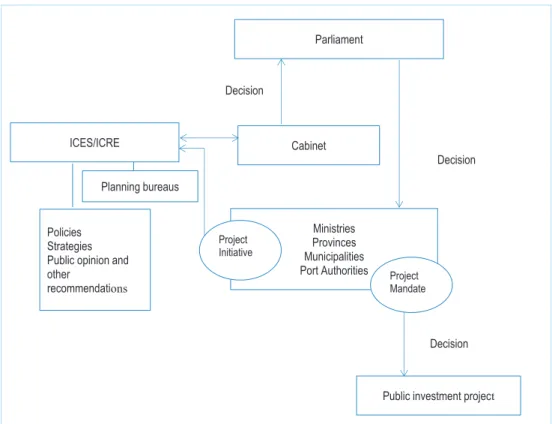
5.2 Project governance structure for FES funding and procedure for project development: project initiative, evaluation, decisions………... 57
5.3 GDP per capita from 1991 to 2011 (Norway)………... 60
5.4 The Norwegian quality-at-entry regime for major public investment projects………... 62
5.5 The Norwegian QA system, cost frame model ……… 64
5.6 GDP per capita from 1991 to 2011 (Ethiopia)………... 65
5.7 Project governance structure in Ethiopia………... 67
6.1 Three phases of the MIRT process……… 74
6.2 The MIRT explorative phase………... 76
7.1 Project development process according to the Norwegian QA system………... 94
List of Tables
Table Name Page
3.1 List of papers published on the research theme and their objectives……….. 28 5.1 Summary of project governance frameworks of the three countries based on typical
elements of project governance……… 68
6.1 The Dutch project preparation problems and proposed solutions according to the
MIRT rules and frameworks……… 72
6.2 Summary of the problems before the QA system and the proposed solutions
according to the Norwegian QA system………... 77 6.3 Summary of the different project governance frameworks: Choice of project
concept………... 84 7.1 Summary of the different project governance frameworks: Information
development……….. 97
7.2 Summary of the different project governance frameworks: decision-
making……… 98
8.1 Assessment of the MIRT process in relation to the governance requirements for
relevance of projects……… 104
8.2 Assessment of the MIRT process in relation to the governance
requirements for sustainability of projects………... 106
8.3 Assessment of the QA system in relation to the governance requirements for
relevance of projects……… 109
8.4 Assessment of the QA system in relation to the governance requirements for
sustainability of projects………... 110 8.5 Assessment of the MoFED guideline in relation to the governance requirements for
relevance of projects……… 112
8.6 Assessment of the MoFED guideline in relation to the governance requirements for
Table Name Page 8.7 Summary of the different project governance frameworks: Issues of relevance and
Overview of Papers
The following papers are part of this study and they are found in the second part of this thesis.
Paper 1
Shiferaw, A. T. and Klakegg, O.J. (2012). Linking Policies to Projects: A key to
Identifying the Right Public Investment Projects. Project Management Journal. 43(4), 14-26. PMI.
Paper 2
Shiferaw, A. T. and Haavaldsen, T. (2012). Project Governance as a Critical Success
Factor for the Development of Public Investment Projects: Peer-Reviewed Proceedings of
the 3rd International Conference on Construction and Project Management – ICCPM 2012, Dubai. Vol. 5, pp. 67-71. ISBN 978-981-07-3009-3, IACSIT Press. August 4-6, 2012. Paper 3
Shiferaw, A.T., Klakegg, O.J, and Haavaldsen, T. (2012). Governance of Public Investment Projects in Ethiopia. Project Management Journal. 43(4), 52-69. PMI.
Paper 4
Shiferaw, A. T., Klakegg, O. J., and Haavaldsen, T. (2011). Governance of Public
Investment Projects in Ethiopia. Peer-Reviewed Proceedings of the12th Annual
International Conference (Challenges in the Era of Globalization). Edmonton, Canada. ISBN: 0-9765288-6-X, pp. 742-741; May 17- 20, 2011.
Paper 5
Shiferaw, A. T and Klakegg, O.J. (2012). Project Evaluation: Accomplishments, Shortfalls and Lessons Learned in Ethiopian Housing Development Projects. Journal of Management in Engineering. ASCE 29(3), 289-301.
Paper 6
Shiferaw, A. T. (2013). Governance for Sustainability: The Dutch Experience for
Transport Infrastructure Projects. Submitted to Journal of Construction Engineering and
Management ASCE. Paper 7
Shiferaw, A.T. (2013). The Dutch Project Governance System: Weaknesses and
Improvements. Peer-reviewed proceedings of the 7th Nordic Construction Economics and
Organization 2013 conference. Trondheim, ISBN: 978-82-312-0273-0, Akademika forlag pp 203-214. May 12-14, 2013.
Paper 8
Shiferaw, A. T. (2013). The Norwegian Project Governance System: Weaknesses and
Improvements. Peer-reviewed proceedings of the 7th Nordic Construction Economics and
Organization 2013 conference. Trondheim, ISBN: 978-82-312-0273-0, Akademika forlag pp. 178-190, May 12-14, 2013.
Paper 9
Shiferaw, A. T. (2010). Likely but Unintended Consequences of Budget Margins According
to the Norwegian Quality Scheme. Peer- Reviewed Proceedings of the Third International
World of Construction Project Management Conference 2010. UK, Coventry University ISBN 978-1.84600-0409, pp. 55-62, October 20-22, 2010.
Abstract
The demand for new investment projects is increasing; however, the preparation of a large number of those projects has had practical problems and the relevant systems and processes have been criticized. According to recent publications, a lack of problem analysis, lack of alternatives, contested information/misinformation, and many pitfalls in the decision-making process are among the main causes for concern. Following on from this, improving the front-end project governance processes and systems has been the subject of increased attention as it may be seen as a requirement for the success of investment: by increasing the effectiveness of a project governance system, it will be possible to select and implement the right project concepts and make optimal decisions. However, achieving effective project governance and control has so far proved to be a challenge but important.
With this in mind, this thesis aims to increase the understanding of the front-end governance of public investment projects by exploring the experiences of different countries, and to contribute knowledge within the evolving debates on what to do to develop effective governance frameworks. The thesis looks at project governance processes and systems of three countries (the Netherlands, Norway and Ethiopia), aims to put forward good experiences through comparison and also hopes to answer the following questions: How do project governance systems and processes in these countries function to select project concepts and make decisions? What good experiences exist to improve the mechanism of choosing a right project concept and for making optimal decisions? To answer these questions I have collected data from the three countries in person, primarily through interviews, questionnaires and case studies, as well as reviewing a range of secondary resources, namely documentation and scientific literature. Findings of the research indicate that the Netherlands and Norway have made efforts to improve the effectiveness of their front-end project governance systems. Both countries have tried to develop contemporary processes, procedures and project governance structures that aim to
develop the right project concepts; have developed stage gates for the quality assurance process; and have established go/no go approvals.
In these countries, many reforms have been introduced: more attention has been given to identifying the needs and priorities of stakeholders; obligatory requirements have been developed to search for alternative concepts; and ex-ante evaluation criteria have been identified and adopted. On the other hand, due to a positive economic outlook, Ethiopia is planning and implementing ambitious investment projects. There have been achievements in this regard but the findings of this research indicate that there are significant problems that are associated with the front-end project governance system of the country.
The project governance systems and processes of the Netherlands, Norway and Ethiopia have some similar features but needless to say they have differences too. This research provides project governance experiences of the three countries. In these experiences, regardless of them being good or bad, there can be lessons other countries can learn from. The good experiences that are identified in this study include: the Dutch experience to involve as many participants as possible in the early phase; the efforts to integrate different policy issues horizontally and vertically in the project preparation process; the use of IT infrastructure to get feedback from stakeholders; and the Norwegian system of outsourcing the review of project initiative documents to independent consultants.
In general, this study shows some similarities and some differences in the project
preparation and decision-making processes, procedures and systems of the three countries. Expanding similar research to other countries is possible and can be an opportunity to learn from differences. In addition to this, I suggest that developing a system to translate the lessons into action and to track whether the designed effect has come as planned can be useful to improve the effectiveness of project governance system.
1 Introduction
Introduction
1.1 Boom of investment and the need for effective project governance
Over the past few decades, many major public investment projects have been implemented worldwide and there has also been a tidal wave of interest for new investments. Referring to the Economist (June 7, 2008: 80), Flyvbjerg (2009) describes the situation as the
“biggest boom of investment in history”. However, the preparation and the implementation processes of several of those projects have sparked debates and the effects of some of the projects have been a disappointment because they misfired and appeared as white elephants––alleged as a potential waste of citizens’ money with negative social and environmental consequences (Williams and Samset 2010; Priemus 2007 and 2008; and Flyvbjerg 2009 and 2012). Conversely, initiatives of some of the investments have faced strong resistance from stakeholders, including moves and counter-moves that have led to a vortex because stakeholders believe that the economic benefits of the projects are
outweighed by the damage caused to the natural environment and the degradation of the quality of life for society (Dias et al. 2011 and Tillema and Arts 2009). In some countries, such conflicts between different project stakeholders have polarized pro- and anti-project
sentiment and triggered long and costly legal battles that only end when one side “wins” at
the cost of the other. This type of combat between countering forces can sidetrack project promoters into wrong choices or lead inexperienced ones to kill good concepts (Miller and Lessard, 2008).
Following on from this, in recent years early-stage problem analysis, choosing the right project concepts and making the right decisions at the outset have become issues of steadily growing importance as these elements may be seen as requirements for the success of investments. In this regard, considerable research has been made by different researchers (Chapman 2012, Klakegg 2009, Miller and Lessard 2001 and 2008; O’Leary 2012; Priemus et al. 2008; and Samset and Volden 2012). In the UK, National Audit Office (NAO) and the Office of Government Commerce (OGC) have conducted research and listed eight common
causes of why investments can and do go wrong (UK Treasury, 2007): lack of a clear link between the project and key strategies/policies; lack of political commitment and
ownership from senior management; lack of participation of stakeholders in the early stages of project development process; and inadequate resource and skill are at the top of the list. According to Garland (2009), in one way or another, these factors have connections with the effectiveness of a country’s project governance system.
Project management scholars, Cicmil and Braddon (2012), Cook-Davies (2009), Flyvbjerg (2012), Garland (2009), Klakegg (2009), Miller and Lessard (2001), Priemus (2007), Priemus et al. (2008), Samset and Volden (2012), O’ Leary (2012), Weaver (2007), Williams and Samset (2010), and Williams et al. (2009) recommend better project governance at all stages of a project development process as a requirement to solve the specified problems. Miller and Lessard (2001) made an important contribution when they reminded us of the need for effective governance systems which is important in the project shaping process. Therefore, for the successful development of projects, identifying and analyzing the problem, developing alternative solutions, identifying the possible impacts of projects, and good decision-making are vital (De Bruijn and Leijten, 2008).
In recent years, it seems that the need for better project governance is gaining in maturity. The idea is that with an effective project governance system, a project initiative could be implemented successfully while ineffective project governance could position a project to failure (Garland, 2009). However, achieving effective project governance and control remains difficult (Weaver, 2007). Therefore, increasing the understanding of the front-end governance of public investment projects of different countries (processes, systems and their effects) could be helpful within the evolving debates on what to do to develop more effective governance systems (Samset et al. 2006, Samset 2008, and Williams and Samset 2010).
This study is the result, in part, of this recommendation and the rising importance given to front end project governance system in many countries. The study provides an international
dimension by investigating different processes, procedures and frameworks that have been adopted in different countries for the selection of project concepts and decision-making. The study puts considerable stress on inter-country variation and compares the project governance systems in the Netherlands, Norway and Ethiopia. However, I do not advocate any particular system. The intension is to learn how different systems work and to see what lessons can be drawn from the different systems that are used to select project concepts and to make decisions.
1.2 Sustainability in the early project development process
In all too many cases, it has been difficult to define project success, because as Pinto (2010), and Samset and Volden (2012) describe, success is a highly complex and aggregated measure. Therefore defining what success is, and measuring it is a bit tougher (Müller and Turner, 2009). For the purpose of this study, I would like to define the success of projects at a more strategic level as implementing projects according to the need and priority of the users and the affected parties, considering the sustainability of the project’s
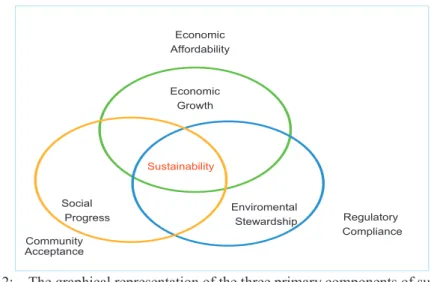
positive effects, and to win public approval. Failure of projects means failure to deliver all the planned benefits sustainably and failure to win public approval. Therefore, meeting the demands of the public and ensuring the sustainability of the positive effects of projects are important criteria in the process of developing successful projects (Klakegg, 2010). The development of successful projects is the result of multiple and interdependent episodes (Miller and Lessard, 2008). The issue of sustainability is one of the most important issues that must be addressed in this process. Some scholars argue that it is difficult to ensure the sustainability of a project’s effects at the front end of the process (Klakegg 2010; O’Leary 2012; and Samset 2003). Of course it might be difficult to assess the sustainability of a project’s effect in the early phase. But it is advisable to study the requirements of sustainability up-front and to consider them during the project development process, because building adaptive capacity is a prerequisite for sustainability. This
socio-economic systems and the environment. In this regard, project promoters are required to specify sustainability requirements that must be met if the project is to have sustainable effects in the long term. Sustainability requirements that need to be considered in the early stages of the project development process should include policy issues, economic and financial aspects, socio-economic aspects, institutional aspects and environmental aspects (Organization for Economic Cooperation and Development [OECD], 2006).
I posit that identifying and considering sustainability requirements in the early phase of a project development process is essential for fostering agreement from all stakeholders in relation to the project’s initiatives. In this study, sustainability is studied as an important criterion for selection of the right project concept. The aim is to study sustainability as a concept and to explore the potential advantages of sustainability requirements in the early phase of the project development process based on the experiences of different project governance systems.
1.3 Relevance in the early project development process
OECD (2006) defines project relevance as a criterion to assess the needs and usefulness of a project. It is a principle to decide whether a project initiative is prepared and implemented according to stakeholders’ interests. This means a project would be relevant if it is selected and implemented considering the wishes of the owners, the users and the countering forces. In addition, the extent of the objectives of an initiative aligned with the needs and priorities of the owners, the users and the affected parties, their achievability and their alignment with the development policies and strategies of the area are conditions that must be tested to ensure the relevance of projects.
Therefore, in the development of public investment projects particularly in the front end phase, ensuring the relevance of projects is as an important requirement (Klakegg, 2010). Several projects have failed in this wider perspective because they are not required by or are the priority of the public, or the objectives of the projects are not aligned with the
development strategies of the area. This means that important stakeholders of the project initiative were not consulted about their needs and priorities at the initial stage, and most of these projects were initiated and developed using top–down strategies of project promoters. To ensure the relevance of projects at the front-end, the participation of relevant parties during the project preparation and decision-making processes is vital (Deelstra et al., 2003) because participatory project preparation and decision-making is a means to getting the relevant information about the problem, the needs and priorities of the stakeholders, the possible alternative solutions, and uncertainties. Therefore creating a system to identify and prioritize nationally significant projects is required, focusing resources on the highest priority investments that deliver the most benefits in line with sustainability. Through participation, information could be gathered from different participants and flow to the decision-makers and then a project study will start based on consensus between important stakeholders. In the case of public investment projects, the participants could be the national government, provinces, the public or a variety of actors (e.g. market parties, environmental and social activities and other private parties) that have the resources and means of power that can be decisive for the success of projects. Participation also creates a state of ownership which can ease implementation and ultimately lead to the success of projects. Therefore, the project governance system should have a means to include all the relevant stakeholders from the beginning so that they have a say about their interests and can resolve their differences before the final decision on a project concept.
This study focuses also on governance requirements that are necessary to ensure the relevance of projects, because I believe that in the early phase of the project development process it is very important to know how the wishes of users or local inhabitants and the opposition are addressed, and how the objectives of a project are aligned with policies and strategies of national governments. How and when relevant stakeholders get a chance to have a say on project initiatives and how different governance systems check the alignment of project objectives with strategies are important queries.
1.4 Structure of the thesis
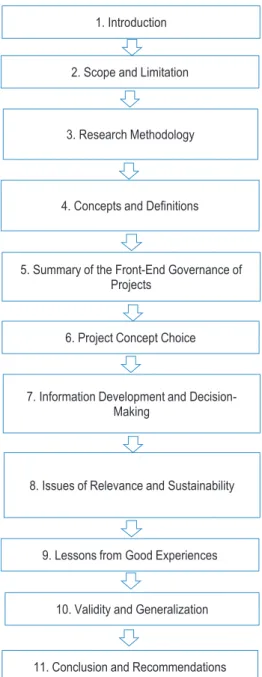
As shown in Figure 1.1, this thesis is structured in eleven sections. The first section introduces the rationale of the research, the need for effective project governance, and presents sustainability and relevance as requirements for the successful development of public investment projects. Chapter two introduces the scope and the limitations of the research. The scope part describes areas covered in this research and where the information that is used specifically comes from. While limitations part describes factors, usually
beyond the researcher’s control, that may affect the findings of the research and how the findings are interpreted. Chapter three presents the research methodology. In this part, the research process and the study design are discussed. Chapter four discusses the conceptual background of the study. In this part, governance, project governance, effective project governance, governance requirements for relevance and sustainability are defined and discussed. Chapter five introduces the Netherlands, Norway and Ethiopia and presents the summary of the project governance systems in these countries. Chapter six, seven, and eight provide the results of the research and discuss on the choice of project concept, information development and decision-making, and on relevance and sustainability issues respectively. Chapter nine presents lessons and good experiences drawn from the three countries. Chapter ten focuses on the validity of the research. Finally, the conclusions, recommendations and the contributions of the research are presented in chapter eleven.
Figure 1.1: Thesis structure 1. Introduction
2. Scope and Limitation
3. Research Methodology
4. Concepts and Definitions
5. Summary of the Front-End Governance of Projects
6. Project Concept Choice
7. Information Development and Decision-Making
8. Issues of Relevance and Sustainability
9. Lessons from Good Experiences
10. Validity and Generalization
1.5 Research problem, purpose and questions
Problem definition is the first and most essential step in research because it provides the focus and direction for the entire research (Polonsky and Waller, 2011). Similarly Sekaran (2003) describes the importance of problem definition: “no amount of good research can find solution to the situation, if the critical issue or the problem to be studied is not
pinpointed clearly”. Taking this into account, I started this research by defining the research problem statement. Based on the research problem statements, the research purpose and the research questions were then developed.
Research problem statement:
As described in section 1.1, for decades the provision of successful major public investment projects has been a challenge whether in developed or underdeveloped countries. The causes for low success rates of projects are interrelated and most of them are believed to be facets of project governance. Particularly poor front-end planning and decision-making may have made the success of those projects much harder. This study looks into the front-end project governance systems of three countries at the national level, principally the project concept selection processes and decision-making procedures.
The intention is to identify different processes and procedures and frameworks of the countries’ front-end project governance and to derive lessons to inform better project concept selection and decision-making. In order to do this, the following two sub-problem statements are developed.
Sub-problem 1: Identify processes, procedures and frameworks that are developed in the Netherlands, Norway, and Ethiopia in order to select project concepts and to make decisions.
Sub-problem 2: Derive lessons from the project governance experiences of the Netherlands, Norway and Ethiopia to inform better project concept selection and decision-making.
Research Purpose
The purpose of this study is to enlarge understanding of front-end project governance systems and to share experiences on how project concepts are selected and how decisions are made in different project governance systems. The research does not focus heavily on project governance theory but focuses on the processes, procedures and frameworks that have been developed in the selected three countries. To achieve this purpose, the research focuses on:
x Understanding key concepts of project governance systems
x Studying the front-end information development processes in the Netherlands, Norway, and Ethiopia
x Studying information quality control systems in the Netherlands, Norway and Ethiopia
x Studying decision-making procedures in Norway, the Netherlands and Ethiopia
x Comparing project preparation and decision-making processes of the Netherlands, Norway and Ethiopia, and drawing lessons from experiences.
x Presenting and communicating key research results.
Research questions
1. What are the important requirements, processes and frameworks that are developed for selecting project concepts and for making decisions? (in the Netherlands, Ethiopia and Norway)
1.1Do the established processes and structure of the project governance framework help to select the right project concept?
1.2Do the decision-makers, at the higher level, receive or demand relevant information about the problems and the alternative solutions before they make decisions on project concepts?
1.3Are relevance and sustainability of projects considered as key criteria for selecting a project concept and for making decisions?
2. What can we learn from the project governance frameworks of Netherlands, Norway and Ethiopia, which may apply to other countries?
2.
Scope and Limitation
The scope and limitations of the research Front-end project governance: Choice of concept
and decision-making–an international perspective are described as follows:
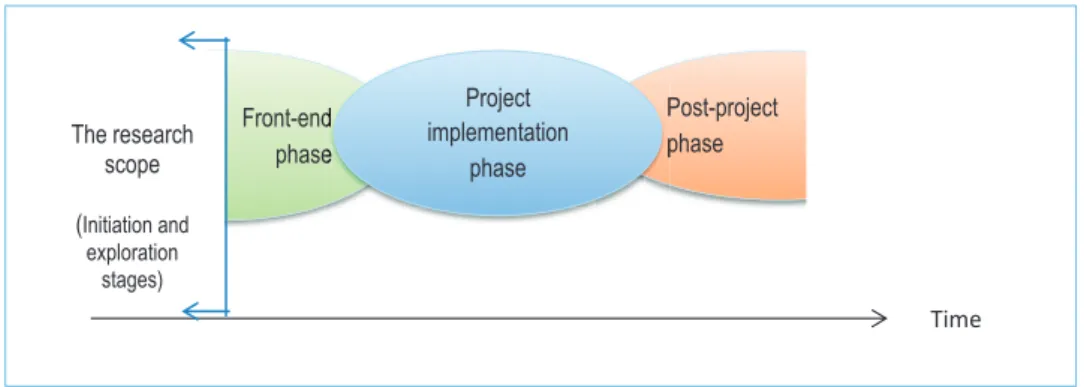
The project development process covers the life of the project as it moves through different phases from problem analysis to completion and operation of the project. It is a very wide topic to cover in a single piece of academic research, therefore the scope of this research is designed to cover only part of the front-end phase of the project development process. According to Samset (2009), the front-end phase of the project development process covers areas from project commencement when a project concept is conceived until the final decision to finance the project is made. However, this study does not cover all areas of the front-end phase as Samset defined. As illustrated in Figure 2.1, the study covers only part of the front-end phase: the initiation and exploration stages. It covers processes and procedures from the initial problem analysis and needs assessment to the choice of project concept and the decision-making associated with that. This means the study does not cover the project study, project implementation and post-project phases.
Figure 2.1: Project different phases and scope of the study (time dimension) Front-end phase Post-project phase d e P p Project implementation phase Time The research scope (Initiation and exploration stages)
The research is framed around national studies, and it is all about the governance of projects, in particular related to the current rules, processes and procedures that are applied in the three countries. The study is not about managing projects nor does it consider project management issues.
The study has an international perspective because it covers three different countries (geographically, economy, politics etc.) It covers the front-end project governance experiences in the Netherlands, Norway, and Ethiopian. It would be good to include more countries but there was a time limitation, and studying more countries could be done through intensive research rather than academic study.
The word “project” includes many issues and is a massive term. According to project management institute [PMI] (2008) project is “a temporary endeavor undertaken to create a
unique product or service…” The goal of a project could be splitting an atom, producing a new cell phone or developing an atomic bomb or many other things. The present study looks purely at public investment projects, particularly major construction projects that are handled by the national governments. The study does not consider small projects.
This study has no large sample size. But I do not consider the sample size of this research as a serious limitation, because acquiring more data does not necessarily lead to more information (Huberman and Milles, 1994). I used different data collection methods and a purposeful sampling strategy, in case if there is any shortcomings related to the sample size. Language is also considered as limitation of this research. In the Netherlands and Norway, there are research studies that are related to the topic of this study, but the research is conducted in Dutch and Norsk. I am limited to being able to read all the data from these studies and interpret them. As a solution, I have focused on English publications, but in some cases, I have got translation services from my Dutch and Norwegian colleagues. Shortage of literature on project governance is also limitation. Similarly, lack of prior research on the topic is a limitation for this research, particularly in Ethiopia, but previous studies in the Netherlands and Norway are used as a prelude.
3.
Research Methodology
Research is a process of steps that are used to collect and analyze information in order to increase our understanding on the issue about which we are concerned (Creswell, 2005), and it should be conducted in a systematic way to gain knowledge (Belbin, 1981). This chapter draws a picture about the manner in which this research has been conducted. It describes the research process, the research design, and the methods I choose to conduct the research. But research methodology is not a list of methods and techniques. Rather it is a careful and explicit account that reasons out the suitability of the research approach chosen: the research design, methods and techniques adopted (Jankowicz, 2011). Therefore, as Jankowicz describes, specifying the methodology and giving reasons why a particular method was adopted are good research practice. To meet this requirement, considerable attention has been paid to methodology: explicit and deliberate choice of approach, method and techniques; and I justify why I select them.
3.1 Research process
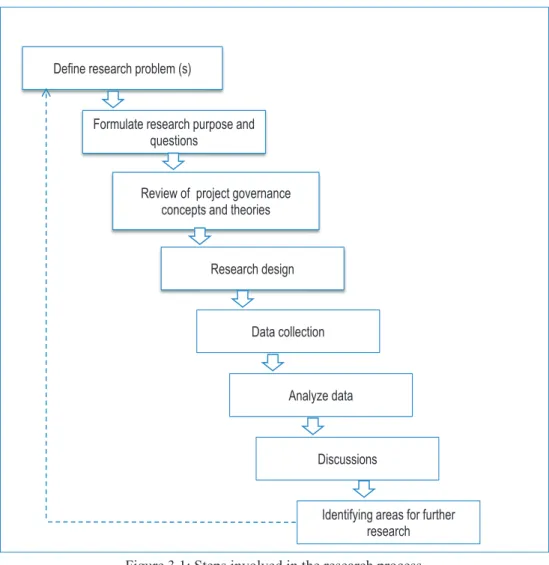
Before proceeding to the details of the research methodology and techniques, it seems appropriate to present a brief description of the research process. According to Jankowicz (2011), the research process of any research program is divided in to two: the project process and the research process. The project process covers all the activities in which our research work draws directly on skills we already possess, and the second phase contains much that is new, at least not obvious at first glance. On the other hand, the research process consists of a series of closely related actions or steps necessary to effectively carry out research. Figure 3.1 illustrates an overview of the actions and steps involved in the research process of this study.
First the research problem statements are defined from literature (conceptual literature concerning the concepts and theories of project governance, and empirical literature consisting of studies made earlier which are similar to this research theme). According to Elis and Levy (2008), the research problem is drawn from the general domain drawn by the
topic, and the identification of a problem is a cornerstone of any quality of the research. In this case, results and recommendations of various research at the Concept research program and several publications related to project governance and project management are used as an input to develop the research problem statements.
Figure 3.1: Steps involved in the research process
Define research problem (s)
Formulate research purpose and questions
Review of project governance concepts and theories
Research design
Data collection
Analyze data
Discussions
Identifying areas for further research
Secondly, the research purpose and the research questions are developed. Research purpose is the major intent or objective of the study used to address the problem (Creswell, 2005) and it is operationalized by the research questions. According to Creswell (2005), research questions narrow the research purpose into specific questions that the researcher would like to answer or address in the study. As shown in the introduction chapter, in this study research purpose is narrowed to two basic research questions.
After that, research instruments are chosen and the study analysis and the platform for the research strategy are identified. Then data are collected from the three countries (Ethiopia, the Netherlands and Norway). Data are collected based on the research questions and the purpose of the research. According to Robson (2002), the data that the researcher collects depend on the research questions and objectives which have given a particular focus to the researcher's observation.
3.2 Research design
The research design is the blueprint for fulfilling the research objectives and answering questions (Cooper and Schindler, 2008), and it provides a framework for the collection and analysis of data (Bryman and Bell, 2007). As mentioned in the introduction part, this study is part of an ongoing research at the Norwegian University of Science and Technology, Department of Civil and Transport Engineering and the Concept research program. Therefore, the study is not designed as the resolution of a one-off problem; rather it is designed to contribute knowledge to the continuing improvement in our understanding and sensitivity of project concept choice and decision-making. This research is thus designed to view project governance systems whole pictures of three countries. It is deliberately framed around national studies of the Netherlands, Norway and Ethiopia, not look at the details of projects.
The choice of research countries was based on the availability of contacts, the familiarity with the languages, finding cases, and full availability of English language documentations.
The Netherlands is selected because the Dutch planning system is widely acknowledged in the international project management literature, due to the link between researchers in the Netherlands and Norway, and the availability of English publications. Ethiopia is selected because for the last few years the country has developed several major public investment projects and it is of interest to include a case from a developing country. In addition, Ethiopia is my home country and it is believed that collecting data from one’s home
country would be relatively easy. The Norwegian system is included because many scholars have studied the Norwegian front-end project governance system (Samset et al. 2006; Klakegg 2010; Klakegg et al. 2009; Magnussen 2010; Christiansen 2011; Concept undated; Samset 2008; Olsson 2006; Klakegg and Haavaldsen 2009), and there are publications in English. Furthermore, Norway is hosting the researcher and the probability of getting reliable data from Norway was believed to be high.
Data collection is an important aspect of any type of research study (Saunders et al, 2007). Therefore, to collect relevant data regarding the front-end project governance systems of the three countries, I have defined a research framework. According to this framework, the research work starts with determining the research problem statements (already discussed in chapter one). Then based on the research problem statements, the research questions are prepared, then the research questions are disaggregated and then both primary and secondary data are collected from the three countries.
Primary data is collected for the specific purpose of the research, and secondary data is collected from other sources (Saunders et al, 2007). According to Robson (2002), the choice of the data collection method is critical, and it depends on the research questions and objectives, variables to be measured, the source and the resources available. In this
particular research, after knowing the nature of research questions and objectives; examining the variables and the sources, and the resources available in the research countries, I plan to use both primary and secondary data sources and three different data collection methods, because as Babbie (2008) describes a good study design uses more than
one research method, taking the advantage of their individual advantage. The data collection methods that are used in this research include:
1. Examination of extensive documentation provided by the respective governmental offices, records of meetings of officials, and an extensive literature review; 2. Case studies relevant to the study; and
3. Interviews (face to face and telephone), and questionnaires
The primary data is collected using questionnaires, case-studies, previous speeches of officials, observation, and semi structured interviews as well as discussions with stakeholders in the selected three countries. The secondary data is collected from
documentations of the three countries, scientific literature, periodicals, media sources and other sources based on the primary sources.
I prefer to use three different data collection methods, because the use of two or more data collection methods and the triangulation of data from these sources could increase the study accuracy and credibility (Denzin1978; Creswell and Miller 2000). Triangulation is the use of two or more sources of data or data collection methods within one study to facilitate the validation of data through cross verification, and it is a preferred approach in qualitative research (Bogdan and Biklen, 2003). This research is mostly a qualitative research and the use of different data collection methods and triangulation is advantageous for validation of data–– quality and trustworthiness of the research.
Denzin (1978) identifies four basic types of triangulation. The first one is data triangulation and it depicts the use of multiple data sources in the same study; the second one is
theoretical triangulation, which is the use of multiple theories in the interpretation of phenomenon; the third type is investigator triangulation, which is the use of more than two researchers in an investigation; and the fourth type is methodological triangulation. Methodological triangulation is preferred for this research, because methodological triangulation involves using two or more methods to gather data, such as interviews,
observations, questionnaires, and documents, and these methods are the preferred data collection methods for qualitative research (Bums and Grove, 2005).
There are two types of methodological triangulation that are used to achieve the validity of the research: ‘between-method triangulation’–– combining and using both qualitative and quantitative methods in studying a single phenomenon; and ‘within-method triangulation’– – cross checking for internal consistency (Hussein, 2009). I prefer the ‘within-method’
triangulation, because I do not have enough qualitative data to conduct ‘between-method
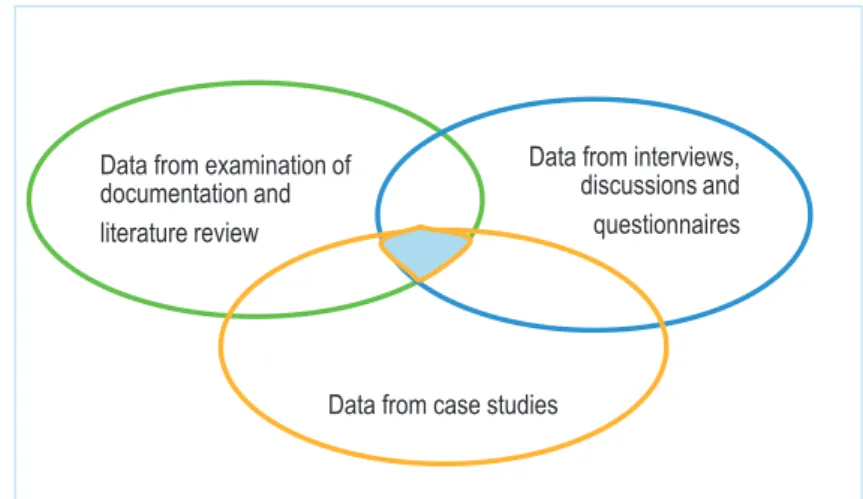
triangulation’. Figure 3.2 illustrates ‘within-method’ data triangulation of this research. The data used for analysis of this research are developed based on the methodological
triangulation of different data sources: questionnaires, interviews, and review of documentation.
Figure 3.2: The three data collection methods and methodological triangulation This research is designed as a mixed research (qualitative and quantitative) but mostly it is a qualitative research. It is conducted based on both inductive and deductive approaches, depending on the cases examined (for details refer papers in part two of this thesis). The value of qualitative research needs to be argued for and justified against established criteria.
Data from examination of documentation and literature review
Data from interviews, discussions and
questionnaires
In this study, I have planned to demonstrate the value and integrity of the research based on methodological triangulation, and using the criteria credibility, criticality and integrity. Data collection starts with study of different relevant documents. A large body of literature has been reviewed on the general domain of the research (project governance), together with other fundamental theories underpinning the main aim of the research. In this case, the aim is to collect data about the project governance systems of the Netherlands, Norway and Ethiopia. This is then followed by self-administered questionnaires distributed to relevant stakeholders and it is collected in person. Then one-to-one site and telephone interviews are conducted with key players of the project governance systems of the selected three
countries. Then study reports of the three countries are prepared. Finally a comparative analysis is made and lessons drawn. The framework of the research strategy is illustrated as shown in Figure 3.3.
Figure 3.3: Framework of the research strategy
Questions for the interviews and questionnaires are prepared based on the research questions. As I discussed in the introduction part, the research questions are developed based on the research objectives and considering the suitability of the research methods that are selected to be deployed in the three research countries. Addressing the key tasks of identifying the front-end project governance experiences of the Netherlands, Norway, and Ethiopia is the priority of the research.
I traveled to Ethiopia for data collection from the last week of July 2010 to the last week of August 2010 and for the second time from the 1st week of February 2011 to the 1st week of
Three countries’ study reports Comparative analysis Data 1. Questionnaires & interviews 2. Case Study 3. Document review
April 2011. In these periods, I interviewed 50 professionals: public officers, planners, researchers, market parties, and a few people from the general public. There were also two surveys, and a total of 72 respondents are participated.
Similarly, I traveled to the Netherlands (1st week of July 2011 and 3rd week of November 2011) and there were also several electronic communications and interviews with planners, public officers and researchers in the Netherlands. 12 key professionals are participated in the interviews, and questionnaires, and most of the respondents are interviewed at least two times.
Over the last four years, I have had several interviews and discussions in Norway. Different research results of the Concept research program, reports and quality assurance documents of the Norwegian project governance system, and PhD studies on the Norwegian project governance system are studied and used as source of evidence.
In the first phase, the project governance system in Ethiopia was studied. As discussed above, questionnaires, semi-structured interviews, extensive document reviews and a case study were the preferred research instruments to collect data. In the second phase, the project governance system of the Netherlands was studied, based on interviews, document reviews and case studies. In the third phase, information about the Norwegian project governance system was reviewed from previous research for the Concept research program and other studies relevant to the theme, and there were also interviews and discussions with Norwegian researchers. Then important findings were drawn based on the research
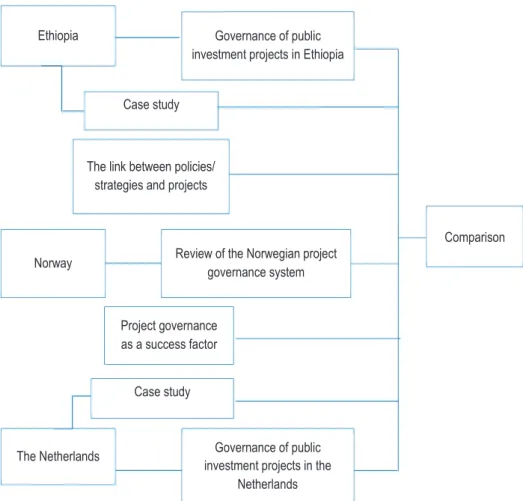
questions and according to the research objectives, and finally comparisons were made. Figure 3.4 illustrates the general roadmap of this research.
Figure 3.4: The research approach roadmap in brief showing the research countries, planned research approach and comparison
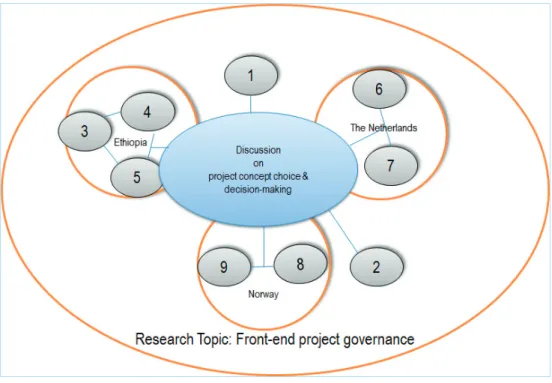
In parallel, preparing and publishing research results in internationally recognized journals and peer-reviewed conference proceedings were part of the whole research process. The papers were prepared based on the data from the three countries and organized as shown in Figure 3.5. In this regard, nine articles were prepared and published. Table 3.1 provides a list of the papers and their objectives, and Figure 3.5 illustrates the organization of the
thesis and the papers’ connection to demonstrate the full picture of the study. Ethiopia
Norway
The Netherlands
Governance of public investment projects in Ethiopia Case study
The link between policies/ strategies and projects
Project governance as a success factor
Governance of public investment projects in the
Netherlands Case study
Comparison Review of the Norwegian project
Table 3.1: List of papers published on the research theme and their objectives
Paper # Title Objective
General pa pers o n proj ect g overna nce 1 Linking policies to
projects: The key to identifying the right public investment projects
This article discusses the project governance system as a means to linking policies to projects. The article looks at governance of public investment projects; the importance of the project governance system in selecting the right projects; and factors that could affect the implementation of the project governance system.
2 Project governance as a
critical success factor for the development of public investment projects
This paper provides a comprehensive overview of the front-end project governance system and demonstrates the front-end project governance systems of the Netherlands and Norway. Further, the paper discusses the front-end project governance system as a critical must-have feature for the successful development of public investment projects.
Project g overn ance system in Eth io pia 3 Governance of public investment projects in Ethiopia (a)
The purpose of this article is to map and review the governance of public investment projects in Ethiopia. It also identifies the most important front-end challenges of public investment projects in the country.
4 Governance of public
investment projects in Ethiopia (b)
This is similar to paper three but it is a small conference paper. The purpose of the article is to investigate the project governance system in Ethiopia and find the challenges in relation to that.
5 Project evaluation:
Accomplishments, shortfalls and lessons learned in Ethiopian housing development projects
This is a case study, the purpose of which is to assess the efficiency, effectiveness, relevance, sustainability and impacts of housing
development projects in Ethiopia in order for lessons learned to be drawn upon in the selection, design and implementation of future projects, particularly those in Ethiopia.
Paper # Title Objective The Dutc h proj ect g overn an ce system 6 Governance for
sustainability: The Dutch experience for transport infrastructure projects
This paper explores the rules and framework developed for transport infrastructure planning in the Netherlands. It discusses the Faster and Better decision-making programs and presents a number of lessons on the theme: How the Dutch transport infrastructure projects’ governance framework is reformed with respect to the governance requirements for
sustainability? What can we learn from this reform to inform better infrastructure planning and decision-making?
7 The Dutch project
governance system: Weaknesses and Improvements
This paper investigates the most recent efforts of the Dutch government that have been made to improve the front-end governance of major infrastructure projects (project concept selection and the decision-making processes and procedures). The Norw egi an project gov ernanc e system
8 The Norwegian project
governance system: Weaknesses and Improvements
This paper reviews different findings on the Norwegian project system and discusses questions such as: Does the quality assurance (QA) system in Norway help the project concept selection process? Do decision-makers, at the higher level, receive relevant and reliable information about the problems and alternative solutions? Does the arrangement of the QA system address the issues of relevance and sustainability of projects?
9 Likely but unintended
consequences of budget margins according to the Norwegian quality scheme
This paper studies the likely but unintended consequences of budget margins based on the Norwegian QA system.
Finally, comparisons were made between the front-end project governance frameworks of the Netherlands, Norway and Ethiopia. The comparisons were made based on requirements that are important to select the right project concept and to achieve optimal decisions. The requirements are listed in the introduction and chapter four of this study. The nine papers listed in Table 1 are linked as shown in Figure 3.5 to show the platform of the research strategy.
Figure 3.5: Platform of the research strategy showing the general domain, the countries studied, and the numbers from 1 to 9 indicate the articles published and their positions indicate the focus of the articles.
4. Concepts and Definitions
4.1. GovernanceGovernance is a sensitive word that has been defined in different ways by different organizations and authors with many divergent views. The Organization for Economic Commission and Development (OECD) (2006), United Nations Economic and Social Commission for Asia and the Pacific (UNESCAP) (2011), World Bank (1991), World Bank (undated), Kaufmann et al. on behalf of the World Bank (2008), Asia Development Bank (ADB) (1995) and the Australian National Audit Office (ANAO) (2003) have defined governance according to their institutional interest. Similarly, different authors have also defined governance in a different manner. In this section, some selected definitions of governance that are relevant to this study will be examined and discussed.
OECD (2006) defines governance as: “……the process by which decisions are made and implemented (or not implemented).”
The World Bank (undated) defines governance as: “The process by which authority is conferred on rulers, by which they make the rules, and by which those rules are enforced
and modified”.
Thus, governance is the process of decision-making where the decision is made according to rules by the authorities. It is about how to take actions through various types of interactions (deliberation, negotiations, self-regulations or authoritative choice) (Kemp et al., 2005). Therefore, understanding governance requires an identification of the authorities and the rules, as well as the various processes by which they are selected, defined and linked together and with the society generally. This implies that depending on the characteristics of authorities, the type of rules and various processes, there could be different forms of governance and political processes. However, as Cadbury (2002) describes, whatever form it takes governance should be a holistic process and the goal should be meeting the interests of the stakeholders as far as possible, and its primary
function should be creating sustainable success (Mosaic undated; Brownill and Carpenter 2009; and Jones and Evans 2006). This means that meeting the interests of stakeholders and creating sustainable success are the two important requirements to help judge the
effectiveness of a governance system.
4.2 Project governance
Project governance is the subset of governance, but it focuses on governing projects’, programs’ and portfolios’ processes. O’Leary (2012), Garland (2009), Klakegg (2009), Association of Project Management [APM] (2006), Turner (2006, 2009), Clarke (2004), PMI(2008), Müller (2009), (Mosaic, undated), Narayanan and DeFillippi (2012) and others have all defined project governance in their own terms. In those definitions, project governance is presented with multiple interpretations but most describe project governance with processes, models, structures and principles that are established to choose projects that support the strategy and to achieve the objectives of projects/programs bringing together different episodes of a project-shaping process from choosing the project concept to execution and operation issues.
Particularly, the definitions given Garland (2009) and Miller and Lessard (2008) are aligned with the interest of this study. For instance, Garland defines project governance as:
“the process of project decision-making and the framework, models or structures that are
established to enable this”. Similarly, O’Leary (2012) describes project governance as a
means to provide the management structures, policies, processes and roles and responsibilities in the process to select and implement successful projects. In these definitions, project governance is described in relation to different activities which
comprise processes, procedures and structures that are used by project promoters to develop and analyze information, to select the right project alternative, to make optimal decisions and to implement them successfully. This implies that to understand project governance it is very important to understand the various processes, structures, principles and the different episodes that are developed to resolve problems and arrive at a closure.
According to Johnston and Evans (2006), governance structures are mechanisms that are necessary to achieve good governance, and authorities make decisions according to the framework provided by the project governance structures. The structure of project governance is useful to set out lines of accountability within the authority; to give the stakeholders the chance to participate effectively (collaboration, dialogue and interaction) in the project development process; enable the authority to deliver the required outcome by providing resources, giving direction, enabling trade-offs and timely decision-making; and to provide access to independent advice, support project reporting and information
dissemination to the stakeholders, and provide framework project disclosures (UK Treasury, 2007).
In contrast, processes and procedures of a project governance system are mechanisms that are used to assist decision-makers. Governance principles are a basis for the design of project governance models and help to solve problems that result from ineffective project governance (Garland, 2009). Projects are paths of interdependent shaping episodes, therefore identifying and understanding those episodes, processes, procedures and
principles in detail goes a great deal towards understanding project governance (Miller and Lessard, 2001). The various processes and procedures in project-shaping efforts help to refine, reconfigure and eventually agree on acceptable concepts and continue on to include the implementation and operation phases (Miller and Lessard, 2008). For instance, in the early front-end phase, from initial hypothesis to formal contracts and funding decisions, there are various processes that characterize the progression of projects. These include but are not limited to problem analysis, alternatives evaluation and ranking, negotiations between stakeholders and concrete moves to meet the expectations of stakeholders as well as choice of a project concept.
However, it is important to note that the structures and the various processes available do not make decisions by themselves; rather, they provide the framework through which
decisions on projects can be made (O’Leary, 2012). According to O’Leary, this framework
in the life cycle of a project. The framework provides the management structures, processes, set of policies and roles and responsibilities to ensure the selection of the right project concepts, the alignment of strategies/policies with the right project objective and the key go/no go decision points.
From this description, one can understand that the selection of the right projects and the optimal decisions depend on the framework and the set of policies, structures, processes and other supporting practices that are developed to enable this as well as the culture of the decision-makers at different governance levels. In other words, the selection of the right projects or the effectiveness of the decision-making process depends on the effectiveness of the project governance framework (Shiferaw and Klakegg, 2012). This begs the questions
“what does the right project mean” and “what does effective project governance mean”. The answer is that all too often what is right for one stakeholder may not be right for the other stakeholders. The actors involved, the criteria applied, the methods and the process used, the proposals submitted and the decisions made determine the rightness of the project (Sieber and Braunschweig, 2005). On the one hand, Cooke-Davies (2009) recommends front-end alignment of projects to business strategy as a requirement for doing the right project. On the other hand, Klakegg (2009) describe the right projects based on the alignment of the project objectives with the needs and priorities of the stakeholders and the sustainability of the project’s positive effects as main requirements. Weaver (2007) and Garland (2009) recommend the establishment of effective project governance for the selection and implementation of the right projects.
Looking at the above descriptions of right projects, it is the responsibility of governance to improve the project preparation and decision-making towards shaping the right projects. This means the selection and successful implementation of the right projects depend on the processes, rules and structures of the project governance system, and how these elements of a project governance system support the project selection, decision-making and
4.3 Effective project governance
Weaver (2007) defines effective project governance as a means to select the right project concept, make the right decisions and deliver the selected project in a way that meets the expectations of key stakeholders. In doing so, it includes activities like analyzing the trigger problem, evaluating the users’ needs and priorities, evaluating the benefits and predicting
the possible impacts of alternatives, checking the alignment of project objectives with government policies and strategies and allowing the involvement of relevant stakeholders in the project preparation and decision-making processes.
In contrast, as described in the introduction part of this study, there are several problems that result in failure of projects where ineffective project governance might be a significant factor. Some of the problems that arise would have been managed and dealt with if effective project governance systems had been implemented. The extent to which a project governance framework could solve those problems is one of the measures of its
effectiveness (Garland, 2009).
Weaver (2007) summarizes the effectiveness of project governance as setting the “right objectives”, then asking the “right questions” and making the “right decisions”. In doing so,
improving the effective project governance requires:
x Specifying the distribution of rights and responsibilities among different stakeholders
x Defining the rules and procedures for making decisions
x Defining the strategic framework needed to select the “right” projects to undertake
x Building the right set of skills
x Encouraging the efficient use of resources
x Monitoring performance
4.4 Project governance framework
Miller and Lessard (2008) define the project governance framework as setting a structure: a set of decision-making processes and methods for collecting and analyzing information to ensure that creativity and discipline are considered. Similarly Klakegg et al. (2009) define the project governance framework as “an organized structure that is established as
authoritative within the institution, comprising processes and rules established to ensure
projects meet their purpose”. From these definitions, one can understand that the project
governance framework is a decision-making structure that embraces predefined processes, procedures, principles and rules that are useful for selecting the right project option and
doing it right, and then achieving the project’s objectives.
The project governance framework also enables scrutiny at the right level and at the right
time; helps to ensure the involvement of stakeholders’ interests from the beginning; and
allows advice and consultation from independent sources for best practice, such as legal, accounting, policy and financial issues (UK Treasury, 2007). This implies that the
effectiveness of a project governance framework depends on how the governance structure and the various processes and systems support the decision-making process (O’Leary,
2012), and how the key elements of a project governance are organized in a framework to select and implement the right project concept and to make the optimal decision.
In the case of public investment projects, in order to challenge the problems related to
projects’ successes, public sector bodies are required to develop and put in place better project governance frameworks. The arrangement should focus on the key issues that are related to the selection of the right project concept and decision-making processes. It needs to provide better information to the decision-makers; it should find a way to balance the top–down and bottom–up project approaches; it is good if it is designed with staged gates to test the suitability of project initiative to proceed to the next stage; and an effective information quality control system should be prepared at the outset.
In addition, according to Garland (2009), to be effective a project governance framework must meet the following criteria:
x Be clear in its obj