Tackling external fraud
GOOD
PRACTICE
GUIDE
The National Audit Office scrutinises public spending on behalf of Parliament. The Comptroller and Auditor General, Tim Burr, is an Officer of the House of Commons. He is the head of the National Audit Office which employs some 850 staff. He and the National Audit Office are totally independent of Government. He certifies the accounts of all Government departments and a wide range of other public sector bodies; and he has statutory authority to report to Parliament on the economy, efficiency and effectiveness with which departments and other bodies have used their resources. Our work saves the taxpayer millions of pounds every year: at least £9 for every £1 spent running the Office.
Contents
Foreword
5
Introduction
6
Part : Understanding and managing the risks
0
of fraud
Taking a strategic approach to tackling external fraud
Assessing the scale of the threat
Understanding the types of fraud risks
6
Focusing resources on the most effective anti-fraud measures
7
Setting targets and monitoring performance
7
Responsibilities for tackling fraud
8
Part : Deterring and preventing external fraud
0
Changing public attitudes to fraud
Changing staff attitudes to create an anti-fraud culture
Controls to prevent fraud
4
Strengthening internal controls and checks
6
Part : Detecting and investigating external fraud
8
and imposing sanctions
Detecting fraud
9
Investigating cases of fraud
Imposing sanctions
6
The recovery of money defrauded
9
Evaluating the effectiveness of sanctions
4
Reports published by departments, HM Treasury, the National Audit Office and the Committee of Public Accounts show that much good work is being done across departments to prevent and detect fraud against public funds. But large sums of public money are still lost each year through external fraud. These losses arise from a wide range of different types of fraud. At one end of the scale are people who see an opportunity to make a small gain. At the other extreme a relatively small number of organised crime groups carry out premeditated systematic attacks for large sums of money. The law abiding public have the right to expect government departments and agencies to safeguard public funds and to crack down on those committing fraud. All types of fraudsters weigh up the potential gains against the risk of getting caught and the sanctions they may face. Government departments and agencies need to make fraud as unattractive as they can. Not acting against fraud can undermine the reputation, integrity and professionalism of the organisation and perceptions about the quality of the services it provides leading to a loss in public confidence.
A number of departments are carrying out fraud risk assessments to show the scale of the problem and are assessing how these risks can be reduced. Total elimination of fraud is unlikely ever to be achieved, but it is important for momentum to be maintained, and good practices developed and shared.
The purpose of the guide is to demonstrate and explain some of the good practices used by organisations in tackling external fraud. It includes checklists to help you assess your current practices. The guide should be of interest to public sector managers who are responsible for expenditure programmes and for protecting revenue, including policy staff, financial managers and internal auditors. Smaller departments and agencies will need to consider how practices used in some of the larger departments can be adapted and applied to their own circumstances.
We are grateful for the help provided by the departments and other organisations in producing this guide.
Foreword
John Kingman
Second Permanent Secretary HM Treasury
Caroline Mawhood
Assistant Auditor General National Audit Office
1 This guide concentrates on external fraud which is where third parties, such as businesses, individuals or organised crime groups, steal money from a department or agency, either by obtaining payments to which they are not entitled or keeping monies they should pay over to the department. Frauds may be opportunistic attempts by individual customers or businesses to obtain a financial advantage. The sums involved in any one such case may be small, but these can mount up to significant losses of public money if there are a lot of cases involved. At the other end of the scale, departments or agencies may suffer from more systematic and premeditated attacks by organised crime groups. These may be fewer in number but the losses in each case are substantial. In some cases fraudsters may work in collusion with the department’s staff. As well as diverting money that should be spent on public services fraud can undermine the position of honest citizens and businesses and support the activities of those involved in other serious crime.
2 The Fraud Act 20061 includes three classes of fraud:
l Fraud by false representation;
l Fraud by failing to disclose information; l Fraud by abuse of position.
In all three classes of fraud, the Act requires that for an offence to have occurred, the person must have acted dishonestly, and that they had to have acted with the intent of making a gain for themselves or anyone else, or inflicting a loss (or risk of a loss) on another. There are also offences of fraud specific to particular departments’ activities. 3 All government departments and agencies have a responsibility to develop anti-fraud policies to show those seeking to deanti-fraud the government that such action is unacceptable and will not be tolerated2. The annual Statement on Internal Control summarises the processes used to identify and manage risks including fraud3.In addition the Proceeds of Crime Act 004, the Money Laundering Regulations (005, 0076) and related legislation have placed responsibilities on regulated entities and every person carrying out “relevant business” within the meaning of the Regulations, to report where they know, or suspect, or have reasonable grounds to suspect, that money
Introduction
1 Fraud Act 2006 – http://www.opsi.gov.uk/acts/acts2006/pdf/ukpga_20060035_en.pdf
2 Managing Public Money, Annex 4.7 – http://documents.treasury.gov.uk/mpm/mpm_annex4.7.pdf
3 Managing Public Money, Annex 4.15 – http://documents.treasury.gov.uk/mpm/mpm_annex4.15.pdf
4 Proceeds of Crime Act 2002 – http://www.legislation.hmso.gov.uk/acts/acts2002/20020029.htm
5 The Money Laundering Regulations 2003 (Statutory Instrument 2003, Number 3075) – http://www.legislation.hmso.gov.uk/si/si2003/20033075.htm
6 The Money Laundering Regulations 2007 (Statutory Instrument 2007, Number 2157) – http://www.hm-treasury.gov.uk/media/F/1/money_laundering_regulations2007.pdf
laundering may be taking place. Most government departments are not classified as “relevant businesses” but it is good practice to assess the risks and potential exposure; and, where appropriate, departments should regard themselves as “relevant businesses” and act accordingly. These reporting responsibilities also apply to the National Audit Office as external auditor. Money laundering involves not only the direct proceeds of crime, but any dealings with criminal property. It includes possessing, or in any way dealing with, or concealing, the proceeds of any crime. Any failure to report suspicions of money laundering is now a criminal offence. Regulated entities must take appropriate measures to ensure that key staff are aware of the provisions of the Act and the Regulations, and appoint a Money Laundering Reporting Officer to report their knowledge or suspicions to the Serious Organised Crime Agency.
4 In response to the Fraud Review of 0067, the Government provided £9 million of new funding to implement its recommendations, including the setting up of:
l a National Fraud Strategic Authority – to define and co-ordinate delivery of a
national strategy that sets out a vision of success in tackling fraud; the steps needed to realise it; and measuring the impact that these efforts are having.
l The Fraud Loss Measurement Unit of the National Fraud Strategic Authority – to
provide robust estimates for repeat measurement of losses before and after action has been taken; and a strategic assessment of the risks and possible losses from future threats.
l The National Fraud Reporting Centre and Intelligence Bureau – to be the hub in
which knowledge about fraud is collated and managed. It will provide an outward facing service to the public; the business community and police forces; receiving reports of fraud offences and incidents, adding intelligence and providing packages of analysed information to target investigations and other action. These may include criminal investigations conducted by the police, confiscation investigations or other forms of action taken by government departments, agencies or by industry.
l The National Lead Force for Fraud – to provide resources and support for police
forces in tackling fraud. The City of London Police will take on the lead role. 5 Departments and agencies face a wide range of different risks from external fraud which are demonstrated in Figure 1. There are also many other types of fraud perpetrated by third parties, such as fraud by contractors. In some departments or agencies external fraud is a sizeable and continuing problem for their main business but in others it may only occur occasionally.
7 Fraud Review Final Report, July 2006 – http://www.attorneygeneral.gov.uk/Fraud%20Review/Fraud%20 Review%20Final%20Report%20July%202006.pdf
6 Departments should consider whether they need to develop a package of measures specifically tailored to each type of fraud. There will not be a “one size fits all” approach. But there is much value in promoting a wider understanding of how others tackle fraud and good practices which are successful elsewhere. Smaller departments and agencies should consider whether they can adapt and apply practices used by larger departments in tackling external fraud.
7 The guide shows how a number of departments are tackling fraud by taking an integrated strategic approach which is summarised in Figure 2. It also explains why they are taking this approach and what it involves. The strategic approach accords with the HM Treasury’s guidance The Orange Book: Management of Risk8 and Managing the Risk of Fraud: A Guide for Managers9 which provide guidance on the identification and management of risk, and guidance on controlling identified fraud risk to acceptable levels of exposure.
8 The Orange Book: Management of Risk – Principles and Concepts, HM Treasury, October 2004 http://www.hm-treasury.gov.uk/media/3/5/FE66035B-BCDC-D4B3-11057A7707D2521F.pdf
9 Managing the Risks of Fraud: A guide for managers – http://www.hm-treasury.gov.uk/media/C/3/ managing_the_risk_fraud_guide_for_managers.pdf
l Benefit claimants who fail to declare
all earnings, income or capital, or who conceal family circumstances, to obtain benefits to which they are not entitled.
l People who claim exemption from paying
for prescriptions to which they are not entitled.
l Dentists who claim for treatments which
they have not carried out.
l People who evade vehicle excise duty. l People or businesses who claim grants to
which they know they are not entitled.
l People who work in the hidden economy
and do not pay income tax or national insurance contributions on their earnings. They may also claim means tested benefits from the Department for Work and Pensions to which they are not entitled.
l People and businesses who register
with HM Revenue & Customs but fail to declare all transactions/income or assets on which tax is due.
l Staff colluding with criminals to defraud
the department or agency. For example in 2005 an employee in a department sold details of departmental records to an external accomplice to allow them to fraudulently claim £1.25 million of payments from the department.
l Serious criminals obtaining large
sums, for example: through evading tobacco, alcohol and hydrocarbon oil duties; setting up what appear to be legitimate companies but intend to carry out frauds, such as to steal VAT; committing organised fraud against the benefit system through stolen, forged or counterfeit instruments of payment; or through creating fictitious benefit claims.
Figure 1
8 The guide is structured as follows:
l Understanding and managing the risks of external fraud (Part ); l Preventing and deterring external fraud (Part );
l Detecting and investigating fraud and imposing sanctions (Part ).
Questions at the beginning of each Part are to help you assess your organisation’s practices. If you are not using a particular practice you will need to consider whether that is appropriate given your circumstances.
9 We hope that the guide is a useful source of reference for public sector managers in demonstrating the experience and good practice of others. It does not seek to provide “everything you need to know” to tackle external fraud. To do so would require many volumes. However, the guide provides references to useful sources of information and gives links to where these are available on websites. The case examples in the guide are for illustrative purposes only. There may be many other examples of good practice in other departments or agencies.
Figure 2
The main elements of an integrated strategic approach to tackling fraud
Understand the size of the problem
Understand the types of risk
Assign responsibilities for tackling fraud
Set targets Prepare plans for managing
fraud risks Monitor performance and
review plans as necessary
Implement measures to tackle fraud
Prevent and deter fraud Detect, investigate and impose sanctions
Part 1
Understanding and managing
the risks of fraud
In looking at this Part of the guide, ask yourself
whether your organisation:
l takes a strategic approach to tackling fraud risk;
l assesses the size of the threat from external fraud and, where significant, undertakes a separate risk assessment;
l knows the size of the fraud threat/types of fraud committed/who is committing them/how often/and how much is involved;
l has a package of measures in place to tackle losses from fraud where these are significant;
l has targets to stabilise or reduce fraud;
l has allocated responsibilities for tackling, and ownership of, fraud risks to ensure that risks are managed, plans are implemented and progress monitored. This Part of the guide looks at how you can tackle some of these issues and gives examples of how others approach these issues. As you read through the guide you will need to consider how appropriate the practices are to your circumstances.
“NHS fraud is not a victimless crime. Every
pound lost to fraud deprives the NHS of valuable
resources it needs to provide patient care.”
Taking a strategic approach to
tackling external fraud
“Protecting tax revenues is an essential part of the Government’s commitment to prosperity and fairness. Its strategy has delivered a major improvement in revenue collection over the last few years.”
Protecting tax revenues, HM Revenue & Customs strategy document, Budget Report 008
1.1 Some organisations have taken a strategic approach to understanding and managing the risks of fraud because this:
l Fits in with good corporate governance.
A major element of good corporate governance is a sound assessment of the organisation’s business risks. Fraud risk should be managed in the same way as managing any other business risk and should therefore be approached systematically at both the organisational and operational level.
l Helps with developing a range of measures
which apply proportionate and well targeted pressure at all levels of the problem.
l Can help achieve a cost effective approach in
tackling fraud by focusing on areas of greatest risk and where efforts may have the greatest impact. A strategic approach can provide a rational and robust basis in bidding for additional resources to tackle fraud.
l Can be a helpful way of communicating to staff
what the organisation is trying to do and what is expected from them. Some organisations have also published their strategies as a way of informing the public that they have a well thought out approach to tackling external fraud. This can also send a deterrent message to potential fraudsters that they are unlikely to succeed in attempts to commit fraud against the organisation. As examples, HM Revenue & Customs, the Department for Work and Pensions and the NHS Counter Fraud Service have published strategies.
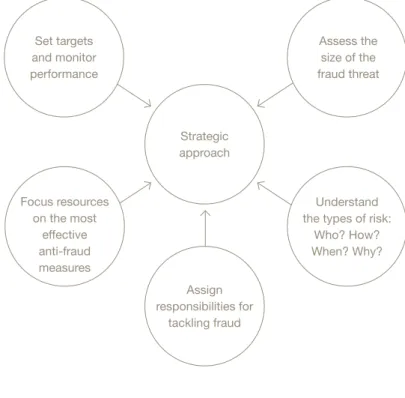
Figure 3 shows examples of how departments and agencies have reduced external fraud and
Figure 4 provides the main elements of a strategy to tackle external frauds.
Figure 3
Examples of how external fraud has been reduced
In 2006-07 the Department for Work and Pensions estimated that fraud against Jobseeker’s Allowance, Income Support and Pension Credit has fallen from £900 million to £430 million since 1997-98 – a reduction of just over 50 per cent.
In the 2008 Budget report, HM Revenue & Customs estimated that the set of strategic measures introduced to protect revenues over the previous 5 years had reduced tax losses in priority areas – VAT, the main excises, the main direct taxes and National Insurance Contributions – by over £5 billion a year.
Figure 4
The main elements of a strategic approach to tackling
external fraud
Strategic approach Set targets and monitor performance Understand the types of risk:Who? How? When? Why? Focus resources on the most effective anti-fraud measures Assess the size of the fraud threat Assign responsibilities for tackling fraud
1.2 In taking a strategic approach, some departments and agencies have taken an across the board approach to looking at external fraud, and some have looked at individual fraud risks and produced a strategy for each. Others tackle fraud within the context of an overall strategy to combat losses from all types of non-compliance. The overall compliance approach recognises that there is a ‘loss continuum’ ranging from inadvertent customer error at one end of the spectrum to fraud at the other with shades of grey in between
All of these approaches can be equally valid depending on a department’s circumstances and the stage they are at in developing their approach
(Figure 5). However, a common feature is that the departments and agencies develop fraud risk assessment tools to identify the fraud risks, their likelihood and impacts, and how to manage them. These tools need to be reviewed regularly to assess whether they remain appropriate or require updating to respond to the threat from new fraud risks.
The Department for Work and Pensions
has developed a counter fraud strategy for all welfare benefits. First set out in 1999, the strategy proposed action on four fronts:
l Getting it right – aiming to get benefit
payments correct from day one;
l Keeping it right – ensuring payments
are adjusted as circumstances change;
l Putting it right – detecting when
payments go wrong and taking prompt action to correct them with appropriate penalties to prevent a recurrence;
l Making sure the strategy works
– by monitoring progress, evaluating the strength of preventive measures and adjusting them in the light of experience.
The Department seeks to ensure that their goals of supporting people in their efforts to find work, whilst providing appropriate financial support where necessary, are not compromised by their efforts to prevent fraudulent abuse of the benefits system.
The NHS Counter Fraud Service’s
strategy consists of seven objectives:
l the creation of an anti-fraud culture; l maximum deterrence of fraud; l successful prevention of fraud which
cannot be deterred;
l prompt detection of fraud which
cannot be prevented;
l professional investigation of
detected fraud;
l effective sanctions where fraud
is proven;
l redress for money defrauded. HM Revenue and Customs’ approach to tackling fraud has a number of key components:
l the development of reliable
estimates of the size of tax losses as far as possible;
l establishing the nature and economics
of the activity and behaviour that cause the losses, through the analysis of intelligence and other data;
l a comprehensives set of responses
based on:
1 Support: building services that are tailored to the needs and circumstances of taxpayers;
2 Prevention: ensuring that basic processes and design make the system as secure as possible from fraud and avoidance;
3 Identifying and tackling those who set out to obtain an unfair tax advantage: using improved risk assessment and checks, with sanctions as appropriate tailored to behaviour.
l Monitoring effectiveness against key
outcomes to measure the success of the strategies.
Figure 5
Assessing the scale of the threat
“It will never be possible to measure 100 per cent of fraud; there will always remain undiscovered fraud. But better measurement is crucial to a properly designed and effective strategic response to fraud and to supporting better management of fraud risks.”
Fraud Review: Final Report
1.3 Assessing the scale of loss from fraud is an important first step in developing a strategy for tackling external fraud. An estimate highlights the scope for potential savings which can then help to determine the relative priority that should be given to tackling fraud in the context of all the other calls on an organisation’s resources. Such estimates then establish a baseline against which performance can be judged. If repeated at intervals, estimates can help an organisation assess how well they are doing and whether the threat is changing. There may be circumstances where an organisation decides it is not practicable to produce overall estimates. Nevertheless they may be able to use a range of techniques such as carrying out in-depth research into an area where fraud is suspected to gain a better understanding of the scale and nature of the threat (Figure 6).
1.4 Some may say that:
l It is too difficult to produce estimates of fraud
and that it is not worth attempting to do so;
l The resources used to produce an estimate
could be better used on tackling fraud, for example, by carrying out more investigations. These issues are dealt with below.
Producing reliable estimates
1.5 A number of departments have produced estimates of fraud or losses from fraud and error. For example, HM Revenue & Customs has produced estimates of overall losses on VAT and of particular types of loss such as missing trader fraud. This work is described in two documents – Measuring Indirect Tax Losses 2007 and Developing Methodologies for Measuring Direct Tax Losses which are available on the HM Revenue & Customs website.
1.6 Departments have used operational research and statistical methods to produce such estimates. Two main methods used are statistical modelling and sampling.
Statistical modelling
1.7 Statistical modelling has been used to produce overall estimates of fraud or loss notably on revenue activities. This involves comparing levels of actual receipts or expenditure with the total level of receipts or expenditure that might be expected using other sources of data on the level of activity under review (Figure 7).
Figure 6
HM Revenue & Customs’ approach to
measuring taxpayer compliance
Where it is not possible to produce reliable estimates of the amount of tax lost to fraud HM Revenue & Customs may use the following techniques:
l audit based studies – random enquiry
programmes to provide estimates of non-compliance and to facilitate research into understanding the risks of non-compliance in specific taxpayer and customer groups;
l modelling techniques applied to compliance data to
explain or predict taxpayer non-compliance.
Estimated evasion rates by the
BBC on the television licence fee are calculated using a statistical model. In summary, the model estimates the level of evasion by subtracting the number of licences currently in force from the estimated number of properties for which a licence should be held. Repeating the modelling process at regular intervals has shown an overall downward trend in the evasion rate in recent years with the latest figures showing a rate of 5.1 per cent for 2006-07.
HM Revenue & Customs produce a top-down estimate for losses on VAT. This entails
comparing the total level of expenditure in the economy that is theoretically liable for VAT with actual VAT receipts and assuming that the difference represents the total revenue loss. The theoretical tax liability is a global measure based mainly on data from the Office for National Statistics. Bottom up estimates can be used in combination with the top level estimates as a means of validating the level of losses. Methods to produce bottom up estimates include surveys and use of administrative and operational data.
Figure 7
1.8 Points to consider for statistical modelling are:
l The data required may be incomplete.
The model may use therefore a number of assumptions which mean that the results are subject to a margin of error. It is important to take this into account when making decisions on actions to reduce losses.
l Other work may be needed to give an insight
into those committing the fraud or the type of action that might deter them. This may include more in depth modelling work (see Figure on the BBC).
l Further research may be needed into the
causes of increases or decreases in the level of losses and the extent to which this is due to anti-fraud measures implemented.
Sampling
1.9 Estimates of loss can be generated by checking a representative sample of cases to see whether fraud is involved, and extrapolating the results to the whole population to estimate the total level of fraud loss in the area of expenditure or revenue (Figure 8). When checking individual cases it can be difficult to determine whether any discrepancy is due to fraud or error (recklessness, carelessness or ignorance) because of the judgements that need to be made. In its work in estimating fraud in individual expenditure streams, the NHS Counter Fraud Service is deciding whether fraud is involved by using the concept of fraud and burden of proof applicable in civil law – that is whether someone knowingly or recklessly obtained resources to which they were not entitled and the balance of probability. This is to ensure that all behaviour which can legally be determined as fraud is measured.
1.10 A key consideration in producing an estimate of fraud loss on an area of expenditure/revenue is the level of accuracy required. A greater degree of precision produces more reliable estimates (essential for assessing any real change in the level of fraud over time) but at additional cost because the size of the sample required increases (Figure 9).
Figure 8
The Driver and Vehicle Licensing Agency
use sampling to estimate the amount of
evasion of Vehicle Excise Duty
The Department for Transport commissions a roadside survey of over one million passing vehicles annually in June to identify unlicensed vehicles. Statistical weightings are then applied to the observed evasion rate in traffic to calculate the estimated evasion in the overall stock of vehicles, and then the estimated Vehicle Excise Duty revenue loss. The results are used to report performance against targets for the Department and the Driver and Vehicle Licensing Agency.
Figure 9
Generating precise estimates of fraud
requires larger sample sizes and incurs
higher measurement costs
The degree of precision of a fraud loss estimate depends on:
l the size of the sample checked. For example, the NHS Counter Fraud Service set sample sizes so that they can determine the level of fraud in each area to within to +/- one per cent;
l whether the sample is stratified according to the
type of risk;
l use of skilled reviewers able to detect where fraud
has occurred, the amount of loss suffered and the nature of the fraud;
l the quality control and validation arrangements
to ensure the review process is correctly and consistently applied.
1.11 For some organisations, producing a national estimate may be sufficient. In others, it may be necessary to produce estimates which are also broken down by region. This will have important implications for the sampling exercise and its costs, as separate samples within each region increase the total sample that must be checked (Figure 10).
Costs of estimating fraud
1.12 As indicated above, the costs of measurement vary according to:
l the frequency of the estimating exercise; l the sample sizes checked;
l the work involved in checking each
case sampled;
l the work involved in validating the results.
1.13 For smaller departments and agencies, a one-off estimate or one produced at intervals may be sufficient. Accepting less precision by using smaller sample sizes may be one way forward. Although the results will be less reliable, these will indicate whether further work is desirable. Others may require continuous measurement exercises to produce ongoing estimates of fraud loss. While this involves greatest cost, it does mean that a department is able to track changes over time in the estimated fraud loss, and the types of fraud committed. Figure 11 outlines the Department for Work and Pensions’ continuous measurement approach.
Figure 10
Generating regional estimates of fraud
loss involves larger sample sizes
Where a department needs estimates of the fraud loss within each of its regions, it will have to take a separate sample of transactions in each. To produce estimates that are sufficiently precise to reveal any important differences between regions in the rate of fraud loss requires the sampling of a much greater total number of transactions than when generating only a national level estimate.
Regional sampling will reveal which regions suffer the greatest and lowest levels of fraud loss and whether there are significant changes between regions over time.
The Department for Work and Pensions’ random sample of over 40,000 cases a year covered each of nearly 100 districts, three times a year, split between each type of benefit claimant.
The Department for Work and Pensions spent over £9 million in 2006-07 as part of their ongoing measurement of fraud and error in Income Support, Jobseeker’s Allowance, Pension Credit and Housing Benefit. The latest estimate shows that for the period October 2006 to September 2007, fraud losses were £210 million on Income Support, £60 million on Jobseeker’s Allowance, £110 million on Pension Credit and £140 million on Housing Benefit. Total losses across all benefits were around £800 million or 0.6 of expenditure.
The Department produces estimates of the incidence and magnitude of fraud, customer and official error in these benefits every six months.
The Department has carried out a programme of reviews for other benefits such as Disability Living Allowance produced in 2005 and Incapacity Benefit in 2001. The Department’s aim is to produce snapshot estimates of the amount fraud and error. The size and risk of potential loss determine which benefits are reviewed and how frequently.
Figure 11
The Department for Work and Pensions’ continuous
measurement approach
1.14 Costs can be spread over several years by carrying out a rolling programme of estimates. For example, the NHS Counter Fraud Service has set out to measure fraud across the Primary care services including the pharmaceutical, optical and dental services. Three exercises have been carried out across each of these areas. Exercises are also underway looking at fraud within the procurement process. Another alternative is to carry out a one-off measurement exercise (with possible follow up several years later) to confirm the significance of the level of fraud. This can be a useful approach where the level of fraud is thought to be less significant.
Understanding the types of fraud risks
1.15 A department or agency will be unable to develop an appropriate response based only on the estimates of fraud. They also ideally need to know:
l the types of fraud perpetrated against them,
for how long and the financial loss involved;
l who the fraudsters are, their characteristics
and behaviours, how often they carry out the frauds, which types of frauds they commit, how they do it, and whether they are opportunistic or organised.
1.16 Examination of detected fraud cases either from investigation or from the random samples of cases examined to produce estimates of fraud loss, can give an insight into these (Figure 12). Larger departments which face serious threats also have intelligence analysts and/or commission research into the threats. At the other end of the spectrum, there are some departments and agencies that may have few or no recent instances of external fraud. Checking a sample of cases, or carrying out research into the possible threats, will help to confirm whether the risks from fraud are low.
The BBC has commissioned market research programmes, over a number of years, which have shown that evaders of the television licence fee vary both in their behaviour and their attitude to the licence fee. Overall the research indicates that non-payers are more likely to be younger people and less well off. They also tend to regard the licence as unfair or “just a tax you get nothing for”. Further research was carried out to model the evader population by matching evasion rates for postcode areas with commercially available data on income and life style. This information helped to identify the characteristics of those most likely to evade. Areas with high evasion rates are most likely to have, for example, a higher than average proportion of younger people, low income households, students and single parent families.
The Department for Work and Pensions collects information about the types of fraud, the characteristics of the customers and the way the fraud and customer errors are detected. These help the Department target resources to detect and prevent fraud.
For example, the Department estimates that the most common benefit frauds in the period October 2006 to September 2007 were claiming as a single person, but living with a partner as husband and wife (£92 million); fraud committed by customers living abroad (£93 million) and undeclared earnings (£77 million). The Department recognises that these frauds are high risk, and it targets investigations at this type of fraud.
For Income Support, the Department generate separate estimates of fraud and error for each of their three main client groups – Lone Parents, Pensioners
and Disabled people/Others. The measurement reviews also provide estimates of the main causes of fraud and error and the proportion of benefits overpaid due to each cause. For example, this enabled the Department to estimate that in the period October 2006 to September 2007 the failure of lone parent claimants to disclose they were living together with a partner was the cause of nearly half of the amount overpaid for this reason across all benefits.
HM Revenue & Customs uses centralised risk assessment and analysis of bulk third party data to identify groups posing a high risk of understating taxable profits. It aims to develop campaigns to ‘leverage’ the effects of its anti-fraud work beyond the limited pool that can be directly investigated on a ‘one to one’ basis. The results show that its approach has reduced understated income.
Figure 12
Focusing resources on the most
effective anti-fraud measures
1.17 There is no single package of measures which can be applied universally by departments and agencies to tackle fraud. Measures need to be tailored to the type and size of threat faced. In deciding which measures to use and the extent to which to use them some departments have assessed the savings that could be achieved by targeting their resources in a better way. Savings could arise in three ways:
l The direct effects from recovering amounts
defrauded. Where the measures involve reallocating resources into existing activities the department can look at the current costs/ savings as a basis for estimating the return from increasing the levels of counter fraud activity. Where new measures are proposed, it is good practice to pilot these beforehand to test and refine their operation, assess their likely effectiveness and the type of savings that can be achieved.
l The preventive effect, through improved future
compliance from those previously detected committing fraud. For example, HM Revenue & Customs assumes that the VAT yield will increase immediately from businesses previously detected committing VAT fraud, but that this additional yield will gradually reduce if no further checks are subsequently made.
l The deterrent effects on others that become
more compliant as they learn of the greater efforts being taken to crack down on fraud. In practice it can be very difficult to assess these deterrent effects with any accuracy and Departments do not always seek to do so.
Setting targets and monitoring
performance
1.18 Some departments have set targets to stabilise or reduce fraud over a period of time
(Figure 13). Focusing targets on the overall level of fraud or loss is a good way of assessing performance, and generally a better measure than the amount of fraud or loss detected. The latter is difficult to interpret if the full scale of fraud or loss is not known. Other measures of performance are useful complements to estimates of total fraud loss, such as changes in regional levels of loss, the cost of tackling fraud compared to the return obtained and the rate of recovery of detected frauds.
Figure 13
Examples of Departmental targets to reduce fraud
and error
The Department for Work and Pensions has a strategic objective to “pay our customers the right benefits at the right time”. Supporting this objective is the aim to “drive down levels of fraud and error to deliver a reduction in benefit expenditure overpaid to 1.8 per cent and underpaid to 0.7 per cent by 2011.”
HM Revenue & Customs has a strategic objective to improve the extent to which individuals and businesses pay the tax due and receive the credits and payments to which they are entitled.
Key outcomes are:
l increase tax and national
insurance contributions actually received relative to the amounts that should be received;
l reduce the level of incorrect tax
credit payments as a result of error and fraud as a percentage of finalised entitlement; and
l maintain take-up of entitlements
1.19 Performance data on outcome targets may not be available until long after the period measured due to the amount of work involved in sampling cases, checking, calculation and validation of the results. To monitor performance in-year, managers may rely on output results to indicate whether the outcomes are likely to be achieved. For example, managers may monitor:
l the results of operational checks
on transactions;
l fraud investigation activity and outcomes
(see Part , Figure 31);
l number and types of sanctions imposed
(see Part , paragraph .9 and Figure 39);
l rate of recovery of defrauded amounts
detected (see Part , paragraphs .-.8).
Responsibilities for tackling fraud
1.20 The responsibility for tackling fraud and managing fraud risks start at the top of the organisation within the senior management board. At this level, ownership of fraud risks is assigned and responsibilities allocated for managing individual fraud risks. Although everybody in the organisation has a role to play in tackling fraud (paragraphs .5 to .7), some departments have also set up central units or focal points with responsibility for tackling external fraud. These have coordinated work on developing the department’s strategies’ ensuring their implementation, monitoring results and providing advice and guidance. Fraud can be a moving target as the scale and nature of the risks change, so that regular monitoring of the situation is needed to identify and respond to new threats. A focal point for tackling fraud can help. HM Revenue & Customs, Department for Work and Pensions and NHS Counter Fraud Service each have central units (Figure 14). Where fraud numbers and losses are significant, departments also have teams of professionally trained investigators or enforcement officers dedicated to investigating cases of fraud.
1.21 Regardless of the arrangements in place, departments and agencies need to ensure that someone is fully responsible for ensuring that the plans for tackling fraud are implemented in the way intended and that sufficient resources are in place. That individual should also be responsible for performance against targets. There is no point in having a well thought out strategy if it is not then put into effect.
Figure 14
Examples on how departments have
assigned responsibilities
The NHS Counter Fraud Service remit
“To have overall responsibility for all work to counter fraud and corruption within the Department of Health and the NHS with particular priority for countering fraud in Family Health Services.”
The Department for Work and Pensions
The Fraud and Error Strategy Division is a central unit which advises on fraud policy. Cases sent for investigation are either referred to the Fraud Investigation Service or Customer Compliance, both of which sit within Jobcentre Plus.
l The Fraud Investigation Service investigates
potential fraudulent attacks against all benefits made by the Department or administered on its behalf. It concentrates on those cases that are likely to result in a sanction.
l Customer Compliance was set up in April 2006 to
deal with cases where a full criminal investigation is not deemed appropriate but where action is needed to: identify levels of incorrectness; put it right and recover any overpayment; and ensure future compliance. The approach involves a robust face to face interview with customers in receipt of benefit. The approach is intended to target investigation resources more efficiently on dealing effectively with the cases of fraud most likely to result in a criminal sanction.
Part 2
Deterring and preventing
external fraud
2.1 Deterrence involves convincing potential fraudsters that frauds against a department or agency are not worthwhile. Prevention measures aim to stop frauds entering departments’ systems. Effective mechanisms for deterring and preventing fraud are essential elements in combating fraud. Realistically however, some fraudsters will never be deterred and not all frauds will be prevented. In these cases, prompt detection and professional investigations are needed (Part 3). Measures to deter and prevent fraud can be costly and departments need to ensure they are well designed for greatest effectiveness. Figure 15 sets out the main elements for deterring and preventing fraud.
In looking at this Part of the guide ask yourself
whether your organisation:
l seeks to influence customers’ and the wider general public’s attitudes to fraud; l sends a strong message to potential fraudsters that they are likely to be
caught and sanctions will be imposed. For example are there press releases on people/businesses prosecuted and are there any targeted or wider campaigns regionally or nationally?
l considers the fraud proofing of new programmes;
l ensures fraud controls are applied consistently and their use is monitored. What is the role of Internal Audit in this?
l considers strengthening controls where new fraud risks appear or where fraud starts to escalate;
l has an anti-fraud culture where staff understand the standards of conduct required and their personal responsibilities in preventing fraud; applying controls and reporting cases of suspected fraud.
Changing public attitudes to fraud
“National and local media campaigns continue to play an effective part of the Department’s strategy for tackling benefit fraud. As well as targeting hard hitting messages directly at actual and potential fraudsters, they also remind the public that benefit fraud is theft of honest taxpayer’s money. Combining clear messages that fraudsters will be caught and punished with continued awareness of the abuse of taxpayers’ money helps increase both deterrence and the social unacceptability of benefit fraud – two vital elements in maximising the fight against fraud.” David Barr, Head of Fraud and Error Strategy Division, Department for Work and Pensions
2.2 Departments have sought to influence the attitude of customers and the wider general public to fraud by deterring those who might consider committing fraud and by making fraud socially unacceptable. The aim should be to get public support in the efforts to tackle fraud. Some deterrence messages Departments have used to deter potential fraudsters from attempting fraud are:
l strong controls will stop them from
succeeding; followed by
l it is likely they will be caught;
l evidence of their fraud will then be discovered; l they will thus face penalties; and
l amounts defrauded will be recovered.
Figure 15
The main elements for deterring and preventing fraud
Deterrence and prevention Create an
anti-fraud culture
Fraud proof new programmes Strengthen controls
in response to emerging threats
Get the message to fraudsters that they will be
caught
Comply with existing controls
Gain support of the public
The approach used by the Department for Work and Pensions
The campaign has run in several phases, each with a different message and using different communication media. This aims to:
l reinforce honest behaviour
by customers;
l create a climate of intolerance to
benefit fraud among the wider public and undermine its social acceptability;
l deter potential fraudsters.
From September 2001, the campaign focused on dishonest claimants. Messages of deterrence and detection aimed to raise the fear of getting caught and portray the likely consequences. Scenarios used in television
advertisements showed benefit fraudsters being caught or punished, or both. In addition, the campaign used radio and regional press advertisements, the latter featuring real newspaper headlines from fraud prosecutions.
In June 2003, the next phase used the slogan “We’re on to you”. It featured a spotlight that followed fraudsters in realistic scenarios, such as at work, to show them that they would be found out if they were continuing to claim benefits to which they were no longer entitled, and to warn potential cheats that benefit fraud is a serious crime.
In August 2003, a new phase used small posters on lampposts and in pub washrooms. Aiming to look like an offer of cash in hand work, the message stated that continuing to claim benefits while working was benefit fraud and would only earn the person a criminal record. In November 2003, this phase was adapted. Small mock advertisements were placed in pubs, clubs and shop windows. The main message “Do you want to earn £££s and still sign on?” was designed to catch the eye of those considering cash in hand work, while continuing to claim benefits, to fund Christmas celebrations, and then to deter them from failing to report to the Department that they were now working.
In 2006, the Department started it’s “No ifs, no buts” phase of the campaign. This phase focuses on the benefit fraudster and targets their views that there may be excuses for committing benefit fraud which the campaign seeks to overturn. “No if, no buts” has been used in television and poster advertising, in local press and magazines, buses, and door drops, as well as on the Department’s website.
The Department arranges for independent evaluations of each phase of its
campaigns. Research for the Department suggests that between 2005 and 2006 there was an increase from 75 per cent to 83 per cent of people who strongly agree that it is wrong to claim benefits to which they are not entitled.
The approach used by HM Revenue& Customs to encourage self-employed people to register for tax
HM Revenue & Customs ran a series of advertising campaigns at a cost of £2 million specifically to raise awareness amongst the self-employed to register for tax. It ran three advertising campaigns during the period June 2005 to March 2007. One of the main messages was “it is a simple process to register and we are there to help, ring our helpline”. The advertising campaigns focused on particular groups who may have failed to register for tax such as e-traders and landlords.
The initial campaign costing £1.5 million resulted in:
l An estimated additional 5,000 people
calling the helpline to register. These are people who may have otherwise joined or remained in the hidden economy. HM Revenue & Customs estimates that it will collect £23 million in tax over three years from these people;
l A further 3,300 people called the
helpline to request the “Thinking of working for yourself?” and if these people register HM Revenue & Customs would collect an estimated £15 million in tax over three years.
Figure 16
Examples of Departmental campaigns to change public attitudes and to deter fraudsters
2.3 Departments have used a variety of methodsto publicise the success of their work, such as issuing press releases and putting information on their websites of cases prosecuted. These are cost effective actions which can be used by smaller departments and agencies. In the United States of America the Internal Revenue Service issues periodic “Tax Fraud Alerts” on their website warning the public of the risks and costs of buying into tax evasion schemes, as well as providing information on the latest “schemes, scams and cons”. The Alerts set out in more detail the main
strands of the Service’s enforcement programme and the consequences of non compliance. For example, for employment taxes, the relevant “Tax Fraud Alert” provides details of legal requirements, employer and employee responsibilities, examples of tax evasion schemes, and data on how non-compliance has been dealt with in the courts including specific significant examples. To strengthen their message, some departments have used media campaigns (Figure 16). Before introducing a national campaign, pilots can be used to test and improve the likely effectiveness.
2.4 To maximise the deterrent effect, departments have:
l researched fraudster behaviour and risk taking/
aversion to determine which messages will be most effective in changing their behaviour;
l designed media messages to achieve
maximum effect;
l used relevant media to ensure potential
fraudsters are aware of these messages;
l refreshed messages regularly to maintain a
strong deterrent effect;
l developed performance indicators to evaluate
the effectiveness of the approach. It can however be difficult to make a direct link between the campaign and reductions in fraud levels, because of other anti-fraud measures also in force;
l fed back the evaluation into renewed
campaigns to deter fraudsters.
Changing staff attitudes to create
an anti-fraud culture
“Creating an anti-fraud culture involves having a clear statement of ethical values, promoting staff awareness, recruiting honest staff and maintaining good staff morale”
Managing the Risk of Fraud: A Guide for Managers, HM Treasury
2.5 Creating an anti-fraud culture, in which all staff understand the standards of conduct required, their personal responsibilities in preventing fraud and the importance of controls, is vital in preventing external fraud, as Figure 17 illustrates. Publicising internally the organisation’s strategic approach to tackling fraud and what it is trying to achieve can be a good way of reinforcing the anti-fraud culture.
The creation of an anti-fraud culture is one of the primary aims of the
NHS Counter Fraud Service. Local Counter Fraud Specialists, who are employed by health bodies, are also responsible for creating an anti-fraud culture and are well placed to target those areas within their health bodies where fraud awareness may still be low. The NHS Counter Fraud Service has implemented a number of initiatives to raise awareness of the issue and the role that NHS staff can play in preventing and deterring fraud, including:
l delivering fraud awareness
presentations to key audiences both within the NHS and to external agencies;
l developing close working
relationships with stakeholders across the NHS and signing counter fraud agreements with regulatory and professional bodies representing over 1.4 million NHS staff and professionals;
l publishing the quarterly
magazine Insight which spreads good practice and seeks to strengthen further the anti-fraud culture;
l obtaining media coverage
in newspaper articles, radio broadcasts and television programmes. These can play an important role in raising fraud awareness and deterring those who may commit or seek to commit fraud;
l running awareness campaigns
such as Fraud Awareness Month to promote the role of the Local Counter Fraud Specialist, informing staff how they can report suspicions of fraud and generate referrals;
l providing Local Counter Fraud
Specialists with resources to assist them in raising awareness on a local level and in promoting the Fraud and Corruption reporting line – 0800 028 40 60.
Figure 17
The NHS Counter Fraud Service have emphasised the
value of an anti-fraud culture in preventing fraud
2.6 Training can help raise staff awareness of the risks of external fraud and the importance of compliance with internal control procedures and security checks to prevent such frauds. And close monitoring of staff compliance with these controls helps ensure their consistent application. Training may take several forms such as:
l fraud awareness workshops for a wide
range of staff;
l targeted personal mentoring for staff working
in areas found to be vulnerable to fraud;
l closer managerial supervision with
feedback to staff on their compliance with security procedures.
2.7 A staff survey or focus group may be used to test staff attitudes to security, and their compliance with controls to prevent fraud. The findings from such research can help identify opportunities to improve prevention and to strengthen internal controls, identify any messages that need to be reinforced, reveal any areas where compliance with prevention controls is insufficient and generate further information about the frauds identified by staff.
Controls to prevent fraud
“It is always possible to have controls which prevent fraud, but such controls need also to enable Departments to give a timely service to honest customers, without unacceptable burdens. Designing effective controls depends on understanding the scale and nature of the risks and the costs.” Caroline Mawhood, Assistant Auditor General, National Audit Office
2.8 There are a range of controls (for example, physical checks, reconciliation, supervisory checks and clear roles and responsibilities) that address risk, including fraud. Departments and agencies need to consider which controls are most appropriate in their particular circumstances. The consistent application of internal controls can be highly effective in preventing fraud losses. Internal Audit should provide assurance on the operation of those controls and their effectiveness in preventing fraud. Internal controls can impose both internal and external costs from their operation. Controls need to be designed which are proportionate to the risk, while enabling the organisation to deliver the services to its customers to meet their needs. 2.9 Two key aspects to prevention are:
l “fraud-proofing” new programmes
and systems;
l consistent application of existing controls and
strengthening of these where needed.
Fraud proofing new programmes and systems
2.10 Organisations need to recognise their responsibility when designing and implementing new policies, programmes and systems to build good controls in to manage fraud where there are vulnerabilities or to fraud proof them by designing them to be inherently less vulnerable to fraud. Complex rules of entitlement can increase the risks of fraud. Fraudsters can exploit the situation in two ways. The rules may be difficult to police effectively, requiring officials to consult volumes of guidance in their everyday work. Where customers are often uncertain of their obligations, it is easier for fraudsters to misrepresent their circumstances and if discovered claim that it was a genuine error. 2.11 Sufficient weight should be given to expert advice on the risks of fraud in new programmes and effective counter fraud measures should be integrated into the design. Where innovative schemes are being proposed, it is good practice to pilot these to identify any further risks of external fraud. Early consultation with internal audit and counter fraud specialists can help to identify the risks, and to obtain advice on how these can be minimised, at key stages during design and implementation of new programmes. An evaluation process is helpful in determining whether early risk assessments have been effective in countering fraud risks during development, piloting and initial implementation.
2.12 The NHS Counter Fraud Service liaises with policy leads across the Department of Health and Government in an ongoing initiative to fraud proof the Department’s future policies. The aim is to ensure that, as far as possible, new and existing NHS schemes are protected from fraud from the outset. Figure 18 shows steps taken to fraud proof the Department of Health’s Healthy Start scheme. The scheme offers free milk, fruit and vegetables to mothers on eligible benefits and beneficiaries are sent vouchers to exchange for these goods at approved retailers. Retailers then send the vouchers to the Department of Health for reimbursement.
Clear Rules
l Analysis of the Healthy Start
regulations to identify fraud risks.
l Introduction of application forms
for beneficiaries and retailers to join the scheme.
l Strict terms and conditions
with counter fraud information placed on all literature.
Prevention
l Physical security methods
placed on the Healthy Start voucher – anti-photocopying paper, watermarks.
Accountability
l Unique information included
on the Healthy Start voucher – National Insurance Number, unique barcodes and sequential numbering.
l Appropriate declarations
placed on forms to warn of the consequences of committing fraud.
Monitoring
l Detection methods for
Department of Health subcontracted administrators – a new payment machine that scans vouchers sent by retailers for reimbursement which identifies copied vouchers and prevents duplicate payments.
l Warning letters automatically
sent to beneficiary and retailer if attempt at duplicate payment occurs.
Sanctions
l Removal of retailers from the
scheme if convicted of fraud (in conjunction with a court ruling).
Figure 18
Strengthening internal controls and checks
2.13 It is important that the effectiveness of controls is continually reviewed. Controls which have traditionally worked well in countering fraud may no longer be effective where fraudsters have launched determined attacks. Detected cases of fraud may show that fraudsters are using new methods to circumvent controls indicating that these need to be strengthened. Internal Audit’s work may also identify system weaknesses which could lead to fraud.
2.14 In 00, the NHS Counter Fraud Service set up a Fraud Prevention Unit to identify specific areas of weakness in systems, recommend policy changes where appropriate and issue instructions and guidance to make them less vulnerable to fraud (Figure 19). A recent fraud prevention review involved the Unit examining the processes within trusts for identifying chargeable overseas visitors. The findings and recommendations from the fraud prevention review have been provided to the Department of Health to help with developing further regulations and guidance. The latest fraud prevention instruction issued by the Unit arose from an investigation into an allegation of fraud that a Primary Care Trust was being falsely invoiced for services. The investigation led to the introduction of standard claim forms, which include counter fraud declarations.
Figure 19
The methodology used by the NHS
Counter Fraud Service Fraud
Prevention Unit
Action by the Fraud Prevention Team
1 Identify possible areas of high risk of fraud in the NHS arising from system weaknesses. Sources will include the staff within the Counter Fraud Service including the Central Intelligence Unit, Risk Measurement Team, Quality Team and feedback from Local Counter Fraud Specialists.
2 Research the areas of system weakness and establish the amounts at risk.
3 Organise a programme of visits to selected NHS Trusts to gain experience of how the systems work in practice.
4 Issue questionnaires to NHS Trusts to assist in identifying the scale of any system weaknesses.
5 Collate the findings and recommendations from the research, reviews and questionnaires.
6 Issue instructions, best practice guidance and/or recommend policy change taking into account the amounts at risk.
7 Request compliance statements from NHS Trusts to provide assurance that good practice is being applied.
8 If appropriate, recommend that Local Counter Fraud Specialists carry out proactive fraud prevention work into the areas of high risk identified.
9 Measure the financial impact of the introduction of any new procedures.
10 Report findings, recommendations and action taken to Counter Fraud and Security Management Service policy, operational, and intelligence services as appropriate.
2.15 Strengthening internal controls can also help prevent or reduce criminal attacks. For example, the most serious VAT fraud that HM Revenue & Customs currently face is VAT missing trader fraud – a Europe-wide systematic attack on the VAT system orchestrated by organised crime groups. As part of its strategy, introduced in September 000, to tackle this fraud, HM Revenue & Customs enhanced their VAT registration checking procedures to make it easier for it to detect and prevent bogus registrations. Each VAT application form is assessed according to various risk criteria to identify potential fraudsters. Further checks are carried out on suspect applications and those that remain suspect are visited. The number of suspect registration applications refused increased from around ,500 in 005-06 to around 6,000 in 006-07.
2.16 New legislation may be required to improve controls. Figure 20 illustrates how improved legislation has helped to reduce fraud in HM Revenue & Customs.
2.17 Developments in technology can provide opportunities to strengthen controls in a cost effective manner to reduce the level of external fraud. Figure 21 illustrates how new technologies are used to prevent fraud.
Figure 20
Shows how HM Revenue and Customs
has improved fraud controls by
introducing new legislation
Missing Trader Intra-Community fraud is a systematic criminal attack on the VAT system that is recognised as a serious problem throughout the European Union. The Government’s strategy for tackling it was strengthened in response to a rapid and large rise in attempted fraud in 2005-06. This targets the people, goods and money flows associated with the fraud using measures including:
l legislation to make traders jointly and severally liable
for VAT debts and to change the VAT accounting practice on domestic business-to-business supplies (a ‘reverse charge’) for the most commonly traded goods which involve missing trade fraud;
l operational activity, including rigorous checks
on suspect applications for VAT registration, and the use of dedicated teams to carry out in-depth verification of suspect VAT repayment claims; and
l criminal investigation and prosecution of those
involved in the fraud, and the recovery of the proceeds of their crimes.
As a result of the strategy, HM Revenue & Customs estimate that attempted fraud has fallen by up to £1.5 billion in 2006-07, to between £2.25 billion and £3.25 billion.
The Association for Payment Clearing Services (APACS) has reported that the success of chip and PIN has meant that face-to-face credit card fraud has continued to drop, falling, in 2006, a further 47 per cent on 2005 levels. The chip cards prevent counterfeiting of cards by holding data securely preventing copying or alteration. The use of a four digit number PIN number also helps reduce the use of stolen cards.
The insurance industry uses Voice Risk Analysis to speed up the processing of claims and to identify possible higher risk claims. The technology detects minute changes in a caller’s voice caused by stress levels which give signs as to when the caller may be lying about their circumstances. It then assigns a risk profile to that caller. This prompts the call handler to probe more deeply into the information provided by the caller. There has been some criticism about the use of voice risk analysis for the purpose of tackling fraud with it being described as a lie detector that could deter genuine customers from claiming benefits.
The Department for Work and Pensions is trialling the technology within 7 local authority sites on Housing Benefit and Council Tax Benefit claims and a Jobcentre Plus call-centre. Expenditure on Voice Risk Analysis by the Department in 2007-08 was £700,000 of which £460,000 was paid directly to local authorities piloting the technology. In May 2008 a further £1.5 million was made available for 15 local authorities’ trials. The Department will evaluate the technology in August 2008 and has commissioned social research into the customer experience and whether or not it deters genuine customers from claiming benefits. Following this evaluation, the Department will assess whether the technology should be tested more widely.
Figure 21
Examples of how new technology is being used to
prevent and detect fraud in the private sector
Part 3
Detecting and investigating external
fraud and imposing sanctions
3.1 To show that departments and agencies are serious about tackling external fraud, they need to detect cases of fraud against them; investigate them where appropriate and impose sanctions which are proportionate to the crime. This will help to deter potential fraudsters in the future by showing that crime does not pay, especially if the outcomes of cases are well publicised. Departments also need to consider whether the frauds detected show new threats are emerging, or are on a larger scale than originally thought. From this work, departments and agencies will need to consider whether their strategic approach needs updating. They will also need to assess whether any frauds reveal systemic weaknesses which need to be tackled (Figure 22).
In looking at this Part of the guide, ask yourself
whether your organisation:
l has a well publicised telephone hotline, email and freepost address to which the public can report cases of suspected fraud;
l uses techniques proactively to detect cases of suspected fraud such as in-depth investigative work into “hotspot” areas, data matching exercises, data mining and neural networks as appropriate;
l assesses whether suspect cases of fraud need to be investigated further such as through the use of scoring systems;
l assesses whether the number of investigations is proportionate to the potential sums lost from fraud;
l tracks the progress of individual investigations;
l has sufficient investigative staff with the essential technical knowledge and experience;
l reviews independently the way fraud investigations have been conducted; l imposes appropriate sanctions on fraudsters such as fines, or other penalties,
or refers appropriate cases for criminal prosecution; l seeks to recover the amounts lost from fraud; l evaluates the effectiveness of sanctions; l works with others to tackle fraud.