eOONOMIG
GOMMeNTORY
Federal Reserve Bank of ClevelandPrice Isn't Everything
by E.J. Stevens
April 1, 1993
"hat determines the role of the public and private sectors in the nation's pay-ments system? This Economic
Commen-tary examines the transfer and settlement
of large-dollar payments, an exercise made timely by recent announcements of two potential innovations. In the public sector, the Federal Reserve has asked for comment on a proposal to open its Fedwire payment network two hours earlier each banking day, at 6:30 a m , and to keep even longer hours in the future. In the private sector, The Global Settlement Fund, Inc., has formed a new network for making pay-ments 24 hours a day.
The purpose of this article is not to evaluate these specific innovations, but to argue that price competition between Fedwire and private networks, man-dated by the Monetary Control Act of
1980, is only one factor determining the public/private mix. The Federal Reserve's monetary policy responsibil-ities also have an important influence on the viability of public and private large-dollar payment service. For about 60 years, Federal Reserve Banks provided payment services with-out charge to any bank that was a mem-ber of the Federal Reserve System. Membership carried with it the costly obligation to maintain required reserves of non-interest-bearing base money. With passage of the Monetary Control Act in 1980, Congress changed this ar-rangement. Thereafter, all depository institutions (referred to here simply as banks) faced reserve requirements and could use Federal Reserve payment services, but these services had to be priced at levels intended to recover
their full cost, including an allowance for the interest expense and profit mar-gin that competing private suppliers would require.
Explicit price competition between pri-vate and federal payment services was a true innovation in American payments history. Prior to 1980, successive Con-gresses and federal agencies had man-dated specific federal payment services, beginning with the charter of the First Bank of the United States in 1791 and the Mint Act of 1792. Since 1980, the mix of public and private service has reflected a market response to prices based on the relative efficiency of federal and private providers. Price, however, should not be viewed as the only determinant of federal involvement in the payments system. Monetary policy objectives and operating mechanisms influence both design and demand in large-dollar payment service.
• Monetary Policy and Systemic Risk
In a market economy grounded in pri-vate property, the presumption is that unregulated private-market production is preferred to public-sector production in the absence of some "externality" that prevents optimal market outcomes. In the case of immediate large-dollar payments, systemic risk is a potential externality. The sheer size of payments (some banks routinely make daily pay-ments hundreds of times larger than their normal operating balance at the Fed), and the interrelatedness of the banks and financial markets involved in them, create the possibility of sys-temic risk. That is, if one bank can't
The Monetary Control Act of 1980 mandates price competition between public- and private-sector payment services. Competition ensures effi-cient, low-price service in making large-dollar payments on the Federal Reserve Banks' Fedwire network. Nevertheless, Fedwire's market share could decline. Monetary policy limits the volume of deposits used in making Fedwire payments, while competing private networks provide payment services that use Treasury securities to economize on those deposits.
complete its payments on a day, it might leave otherwise solvent receiving banks illiquid and unable to pay yet other banks, who in turn become unable to pay, resulting in a cascade of failed payments, rejected transactions, market turmoil, and general financial crisis. The crucial monetary policy aspect of the systemic risk concept is not that losses may occur from failed payments, or even that losses might be large. These are, after all, risk exposures against which all private agents must expect to protect themselves through in-surance, adequate capital, and prudent screening of counterparties. A public policy concern arises because even pru-dent banks and financial institutions may be unable to identify and control their exposure to systemic risk, which can be transmitted through perfectly creditworthy institutions caught up in a systemic cascade of illiquidity. A bank run is the classic image of a li-quidity crisis, in which the actual failure of one or more banks sends worried de-positors running to withdraw cash even from sound banks. Federal deposit in-surance minimizes the likelihood of such panics among small depositors, which could disrupt payments. Of course, insurance can create a moral hazard for the insurance system.' If insured depositors can ignore the credit quality of their banks, then the insurance system may need to devise a substitute for market discipline, using supervision and examination, for example, to prevent poorly run banks from draining the in-surance fund.
Large-dollar payment systems can allow an electronic "run" on a single bank, as worried lenders or depositors shift funds from it to other banks either directly or by purchasing securities. However, un-like the classic case, the banking system does not lose reserves when funds move from bank to bank, and solvent banks
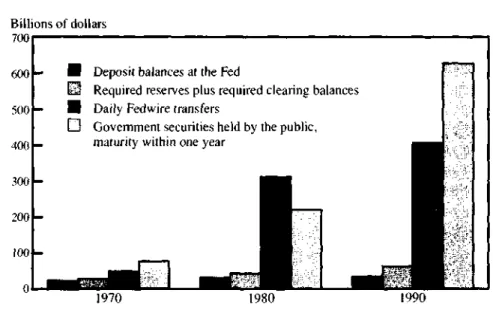
FIGURE 1 THE ECLIPSE OF DEPOSIT BALANCES AT THE FED
Billions of dollars 700
M Deposit balances at the Fed
D Required reserves plus required clearing balances I Daily Fedwire transfers
[~~1 Government securities held by the public, maturity within one year
1970 1980
SOURCES: Board of Governors of the Federal Reserve System, and U.S. Department of the Treasury.
normally can cover temporary shortages of reserves by borrowing in the inter-bank markets. A genuine liquidity crisis would emerge if some banks were to hoard reserves—reflecting ner-vousness about the safety of lending in an unsettled period, or arrival of unex-pected payments after the conclusion of normal business, or a computer fail-ure that masks a bank's true position or makes transfers impossible. Such illi-quidity might also reflect shrinkage of the aggregate supply of reserves, per-haps from an unexpected drain into the Treasury's account at the Fed. Within the whirlwind of daily large-dollar pay-ments, an unexpected shortfall of re-ceipts may prevent a bank from mak-ing expected payments, leavmak-ing other banks with unexpected shortfalls and producing an incipient systemic crisis.
Federal Reserve monetary policy is in-tended to protect against systemic li-quidity crises by providing a supply of base money that is noninflationary, yet adequate to meet the needs of those making payments. The Fed has two familiar methods of supplying addition-al base money when more liquidity is needed. Its open-market purchases of Treasury securities, paid for by creating deposit balances at the Reserve Banks, can inject additional base money into
the banking system if large-dollar pay-ment flows are disrupted. With supply augmented, creditworthy banks in need of funds to settle their obligations might be able to borrow same-day funds in the interbank markets. By operational choice, the Fed conducts open-market operations only once a day, in the late morning. Thus, the Reserve Banks' dis-count window is an important second emergency source of base money for the banking system later in the day, pro-viding adjustment credit directly to creditworthy banks in need of funds. These Federal Reserve assurances of adequate liquidity, however, create a moral hazard analogous to that of de-posit insurance. If sound banks need not protect themselves from payment fail-ures, regardless of how uncertain their occurrence and impact may be, then the Federal Reserve may need a mecha-nism to ensure that the banking system maintains some minimum aggregate level of base money for market alloca-tion to banks facing unexpected pay-ment disruptions. Otherwise, the supply of base money might tend to become demand driven through the aggregate
liquidity escape valves, with potential inflationary or deflationary conse-quences. One function of reserve re-quirements is to protect against moral hazard: Open-market operations supply a pool of funds needed by the banking sys-tem to meet reserve requirements; averag-ing of reserves over a maintenance period allows interbank markets to reallocate this pool of funds daily to banks in need; and market discipline exerts pressure on banks to avoid illiquidity.'
The usefulness of reserve balances as a cushion against unexpected interruptions has been dwindling, however, with periodic reductions in requirements, in-creased reliance on vault cash to meet those requirements, and soaring volumes of same-day payments (see figure 1). Increasingly, the pool of deposit balances available to limit the Federal Reserve's moral hazard has been reinforced through the design and regulation of large-dollar payment systems.
• Moral Hazard and Large-Dollar Payments
Fedwire is the Federal Reserve Banks'
own telecommunication network. Banks use Fedwire in making almost half a tril-lion dollars of immediate payments daily, mostly of large amounts, by direct trans-fer of deposit balances at the Federal Reserve Banks. Using Fedwire eliminates systemic risk once a payment message is received, because Fedwire payments are settled immediately — in effect, the re-ceiving bank gets an irrevocable obliga-tion of the Fed, even if the paying bank has insufficient funds.
Eliminating systemic risk on Fedwire can contribute to the Fed's moral hazard. Within broad limits, paying banks are al-lowed to initiate transfers when their ac-counts are temporarily overdrawn during the day, avoiding the moral hazard protec-tion of reserve deposits. The Fed thereby accepts some risk that an overdrawn pay-ing bank might be able to remove its overdraft only by borrowing at the dis-count window. Current limits on daylight overdrafts, plus planned introduction of a fee for daylight overdrafts in excess of a minimum amount, limit the moral hazard
created by eliminating systemic risk from Fedwire payments.
The Clearing House Interbank Payment
System (CHIPS), operated by the private
New York Clearing House, handles a slightly larger daily dollar value of pay-ments than Fedwire. This is a net settle-ment system. A participating bank sends and receives nonwithdrawable payment messages on the CHIPS network through-out a day, building up a net debit or credit position with respect to all the other banks. Payments are settled only at 6:00 p.m. each day, when a bank actually pays or receives the cumulative net amount of its in- and out-payments from and to all other participating banks through its ac-count at a Federal Reserve Bank. A net settlement system could embody substantial systemic risk if one bank's in-ability to cover its net debit at settlement were to prevent all other participating banks from settling. Provision for an "un-winding" was once thought to be a way of dealing with such a settlement failure, removing all of the day's payments and receipts of the troubled bank and calculat-ing new settlement positions without any need for additional central-bank funds. The danger with unwinding is that, for some of the remaining banks, it might create unexpected new debit positions too large to cover quickly. Moreover, mem-bers of a net settlement network might discount this danger, reasoning that the Fed has a monetary policy responsibility to supply whatever funds might be needed to ensure settlement. This moral hazard is now limited on CHIPS by protections negotiated with the Fed.
These protections include membership standards, real-time monitoring and en-forcement of limits on debit positions, and a requirement that, in the event of a default, each participant will pay an addi-tional amount to complete the settlement. This additional obligation is in turn backed with preposted collateral in the form of U.S. government securities. The securities limit moral hazard both direct-ly, by ensuring settlement, and indirectdirect-ly, by creating a cost incentive for partici-pants to monitor and control the solvency and liquidity of fellow network users, lest the securities be used.
Treasury securities, at least conceptually,
might be transferred directly, rather than placed in a guarantee fund, as a substitute for transferring ownership of scarce de-posit balances at the Fed. Treasury secur-ities carry no more credit risk than de-posits at the Fed, and securities bear interest, making them less costly to hold than deposits.
Practically, however, making final pay-ments with Treasury securities is not an alternative to Fedwire and CHIPS. De-posits at the Fed and in banks are meas-ured in dollar units, divisible into pennies, but a unit of a Treasury security is defined as an indivisible face value of $10,000 (bills) or $ 1,000 (notes and bonds) to be repaid at maturity. Different coupon rates and maturity dates make the current-dollar market value of a unit of each specific issue different from that of each other issue, with market values changing around the clock as activity in the second-ary market moves around the globe. Thus, while Treasury interest-bearing securities are just as free of credit risk as deposits at the Fed, interest-rate risk makes their fu-ture dollar value uncertain. This is a serious disadvantage as long as prices of almost everything are denominated in dollars, not in units of one or more Treasury securities.
GlobeSet, operated by The Global
Settle-ment Fund, Inc., is a new paySettle-ment net-work using Treasury securities indirectly in place of deposit money, but designed
o to avoid the problems just outlined. Par-ticipants make immediate final payments to one another over the GlobeSet network by direct transfers of shares in the Fund, which is essentially a mutual fund of Treasury securities. Service is available 24 hours a day between Sunday evening and Friday night, New York time. The Fund proposes to set up comparable facil-ities for transactions denominated in Jap-anese yen and in British pounds that would allow 24-hour settlement of for-eign exchange trading of the three curren-cies among GlobeSet participants. Note the difference between GlobeSet payments and the payment facilities commonly offered to the public through money market mutual funds (MMMFs). Holders of MMMF shares write checks denominated in dollars, not fund shares, that are paid by redeeming fund shares and transferring deposit balances at the Fed to the recipient's bank in settle-ment. GlobeSet payments involve no bank or Fed deposits. Payments are denominated and made directly in Fund shares that the participants agree to accept as final payment.
GlobeSet payments are divisible not into dollars and pennies, but into individ-ual shares whose dollar value when bought or redeemed for deposit money will be maintained as close as possible to $ 1.00. Interest-rate risk is limited by re-stricting the portfolio to short maturities — no less than 50 percent in Treasury bills, notes, and bonds with 90 days or less to maturity, and the remainder in overnight repurchase agreements of the same limited set of securities, with a max-imum maturity of the whole portfolio of no more than 50 days. A dollar equiva-lent of a share is determined every two hours, by dividing the amortized-cost (not market) value of the portfolio by the num-ber of shares outstanding. Amortized cost "involves valuing an instrument at its cost and thereafter assuming a constant amortization or accretion to maturity of any interest, discount, or premium."
Payment of a dollar-denominated obli-gation with the most recently calculated dollar-equivalent number of shares is only approximately the same as realiz-ing the per-share market value of Fund investments. In return for accepting a possible discrepancy between amor-tized cost and market valuation, partici-pants can maintain balances that earn a return and that can be used to make im-mediate final payments 24 hours a day. Systemic settlement risk is apparently absent in GlobeSet payments because each payment is final when made and is made only with actual Fund shares.
• Off-Hours Transactions and Alternative Payment Networks A growing volume of off-hours dollar-denominated transactions, including off-shore transactions in European and Asian time zones and nighttime trading in finan-cial markets in the United States, is draw-ing special attention to risk exposures in large transactions. For example, the open hours of the payment networks of Japan, Germany, and the United States do not overlap. In a purchase of yen for dol-lars in Japan, the yen receipt would be settled at 3:00 p.m. in Japan, 17 hours before the dollar payment ultimately is settled on CHIPS, at 6:00 p.m. in New York. Also, final settlement of margin calls in nighttime trading of futures con-tracts at the Chicago Mercantile Ex-change has had to be delayed, awaiting the opening of Fedwire — an instance cited in support of both the proposed ear-lier opening of Fedwire and the initial use of GlobeSet.
As these examples suggest, incentives for innovation are operating in the mar-ket for large-dollar payment service. Private operators have an incentive to develop payment services for those in the off-hours market seeking to reduce risk exposures from delayed payments. Moreover, as long as new private serv-ices embody acceptable finality assur-ances, they would also reduce the Fed's moral hazard now inherent in delayed settlement of payments for off-hours transactions.
The Federal Reserve could develop payment services that reduce risk ex-posures in the off-hours market. Open-ing Fedwire earlier, or even 24 hours a day, would allow more timely settle-ment of paysettle-ments. As long as this did not create unacceptably large tempo-rary overdrafts, using Fedwire would also reduce moral hazard.
• Concluding Comment To what extent might successful in-novations be expected to come from the public sector, and to what extent from the private sector? The Monetary Control Act suggests that price com-petition will provide the answer, but price isn't everything in the market for large-dollar payments, where networks must embody protections against moral hazard for the Fed. Treasury securities are an important protection in private networks, and the quantity of these interest-bearing securities in the hands of the public has increased substantially over the past two decades (see figure 1).
Balances at the Fed, along with increas-ingly tough limitations on daylight overdrafts, are the moral hazard protec-tion on Fedwire.'' However, the com-bination of dwindling reserve require-ments, increasing use of vault cash in place of balances at the Fed to satisfy re-quirements, practical constraints on the size of required clearing balances, and the cost of holding non-interest-bearing excess reserve balances places tight limits on the supply of balances consis-tent with a noninflationary monetary policy. Regardless of price, the Fed's monetary policy responsibilities and its current operational linkages with the banking system — notably statutory prohibition of interest on both required and excess reserves — could limit the fu-ture share of Fedwire in the market for large-dollar payment services.
• Footnotes
1. Wayne D. Angell sketched some of these influences in "Large-Value Payment Sys-tems: What Have We Learned?" presented at the 12th Payment Systems International Conference, London, October 7, 1992. 2. Systemic risk is only one of many cate-gories of risk associated with payment and delivery in transactions. For a more com-plete description of potential risks, see C.E.V. Borio and P. Van den Bergh, "The Nature and Management of Payment Sys-tem Risks: An International Perspective," Bank for International Settlements, Eco-nomic Paper No. 36, February 1993. 3. Moral hazard refers to an incentive prob-lem in insurance. The insurer may eliminate an insured's incentive to avoid a risk precisely because any losses arising from that risk will be reimbursed from insurance. Coinsurance is a common remedy, using loss-sharing to main-tain the insured's incentive to prevent losses. Another approach is to use inspection and re-quirements to remove risks, substituting the insurer's risk control for that of the insured. 4. Providing base money "on tap" need not be hazardous as long as the Fed's price is right for noninflationary growth of the economy. However, the monetary policy tradition in the United States is for direct lending at a below-market discount rate. More important than the level of the rate, direct lending places a severe burden on the central bank, in a nation with a multitude of depository institutions, of avoiding adverse selection in lending. See E. J. Stevens, "Comparing Central Banks' Rulebooks," Fed-eral Reserve Bank of Cleveland, Economic
Re-view, vol. 28, no. 3 (1992 Quarter 3), pp. 2-15.
5. Banks must hold reserves equal to a re-quired percentage of certain deposit liabilities. After deducting vault cash held during a prior period, a bank may be required to maintain a deposit balance at the Fed, but only on
aver-age over a maintenance period. Banks that
hold balances on any day can defer progress in meeting their requirement until another day in order to lend to banks in urgent need of funds. Daily movements in interbank interest rates can provide the incentives for this reallo-cation of the aggregate pool of reserve funds within a reserve averaging period.
6. Two technical adjustments have offset the dwindling usefulness of reserve requirements. In addition to required reserves, banks can contract to hold required clearing balances that earn credits at the level of the federal funds rate. The role of this supplement is lim-ited because earnings credits can be used only to pay for Federal Reserve Bank priced serv-ices and because the volume of such balances appears to be sensitive to the level of interest rates. Also, provision for carryover of an ex-cess or deficient reserve position into an adja-cent maintenance period was increased from 2 percent to 4 percent of required reserves in October 1992.
7. While not an actual unwinding, the failure of Bankhaus Herstatt in 1974 high-lights these difficulties. German authorities closed this bank during the U.S. banking day, after Herstatt had received final pay-ment of marks for foreign exchange transac-tions, but before its counterparties had received dollars through CHIPS. The time-consuming difficulties encountered in com-pleting settlement led many to conclude that unwinding would not be feasible for a same-day net settlement system.
8. "GlobeSet" is the registered mark of The Global Settlement Fund, Inc., 61 Broadway, New York, N.Y., 10006. Complete details of the intended operation of the Fund are avail-able in the firm's Prospectus.
9. Deposits are involved only in shifting balances between dollars and shares, and even this can be accomplished without deposits by using Treasury securities. 10. "If at any time, however, the market value of... total assets deviates more than 1/2 of 1 percent from their value determined on an amortized cost basis, the Board of Directors will consider whether any action should be initiated to prevent any adverse ef-fects on the Portfolio's shareholders.... There may be periods during which the stated value of an instrument determined under the amor-tized cost method of valuation is higher or lower than the price the Portfolio would re-ceive if the instrument were sold, and the ac-curacy of amortized cost valuation can be af-fected by changes in interest rates and the credit standing of issuers of the Fund's port-folio investments .... There is no assurance [of] a stable net asset value per share." From The Global Settlement Fund, Inc.,
Prospec-tus, as amended on September 4, 1992.
11. These risks — and recommendations to central banks about their management — are discussed in Bank for International Settle-ments, Report on Netting Schemes, February 1989; and Report of the Committee on
Inter-bank Netting Schemes of the Central Banks of the Group of Ten Countries, November 1990.
12. Detailed descriptions of a variety of cases where innovations might prove useful can be found in Board of Governors of the Federal Reserve System, "Request for Com-ment," Docket No. R-0778, Federal
Regis-ter, vol. 57, no. 199 (October 14, 1992).
13. Securities are required as collateral for the daylight overdrafts of a small number of specialized Fedwire users.
E.J. Stevens is an assistant vice president and economist at the Federal Resene Bank of Cleveland.
The views stated herein are those of the author and not necessarily those of the Federal Reserve Bank of Cleveland or of the Board of Governors of the Federal Reserve System.
Economic Commentary is a semimonthly periodical published by the Federal Reserve Bank of Cleveland. Copies of the titles listed
below are available through the Public Affairs and Bank Relations Department, 1-800-543-3489. Unbalanced Growth and the U.S.
Productivity Slowdown Paul W. Bauer
January 1, 1992
Uncertain Inflation and Price-Level Rules
Jeffrey J. Hallman January 15, 1992
Is Household Debt Inhibiting the Recovery?
David Altig, Susan M. Byrne, and Katherine A. Samolyk
February 1, 1992
Roundtable's Rx for the Economy: First, Do No Harm
John J. Erceg and John B. Martin February 15, 1992
Is the Rust Belt's Revival Real? Gerald H. Anderson
March 1, 1992
The Case for Disinflation Lawrence B. Lindsey March 15, 1992
A Price Objective for Monetary Policy William T. Gavin and
Alan C. Stockman April 1, 1992
Can Conventional Theory Explain the Unconventional Recovery? David Altig and Michael F. Bryan April 15, 1992
Securitization: More than Just a Regulatory Artifact
Charles T. Carlstrom and Katherine A. Samolyk May 1, 1992
What Monetary Policy Can and Cannot Do
Jerry L. Jordan May 15, 1992
Gilt by Association: Uncovering Expected Inflation
Joseph G. Haubrich and Ann M. Dombrosky June 1,1992
Auctioning Treasury Securities E.J. Stevens and Diana Dumitru June 15, 1992
Has Someone Already Spent the Future?
Jagadeesh Gokhale July 1, 1992
The Business Cycle, Investment, and a Wayward M2: A Midyear Review Michael F. Bryan and John J. Erceg July 15, 1992
Should the United States Hold Foreign Currency Reserves? Gerald H. Anderson and Owen F. Humpage August 1, 1992
The Recent Rise in the Value of Education: Market Forces at Work Erica L. Groshen and
Colin Drozdowski August 15, 1992
FDICIA's Prompt Corrective Action Provisions
Christopher J. Pike and James B. Thomson September 1, 1992
The M2 Slowdown and Depository Intermediation: Implications for Monetary Policy
John B. Carlson and Katherine A. Samolyk September 15, 1992
Integrating Business and Personal Income Taxes
Jeffrey J. Hallman and Joseph G. Haubrich October 1, 1992
NAFTA and the Midwest
Randall W. Eberts and Lydia K. Leovic October 15, 1992
The Importance of Structure in Decisionmaking
Jerry L. Jordan November 1, 1992
Federal Credit and Insurance Programs: Beyond the Deficit Diversion
David Altig November 15, 1992
Skepticism about the Direction of Inflation: Causes, Costs, and Cures Jerry L. Jordan
December 1, 1992
FDICIA's Discount Window Provisions
Walker F. Todd December 15, 1992
Federal Reserve Bank of Cleveland Research Department
P.O. Box 6387 Cleveland, OH 44101
BULK RATE U.S. Postage Paid
Cleveland, OH Permit No. 385
Address Correction Requested:
Please send corrected mailing label to the above address.
Material may be reprinted provided that the source is credited. Please send copies of reprinted materials to the editor.