2019
The effects of internal crisis communication on communication
The effects of internal crisis communication on communication
satisfaction, employee satisfaction, organizational commitment,
satisfaction, employee satisfaction, organizational commitment,
and turnover intention for Thai hotel employees
and turnover intention for Thai hotel employees
Nishapat MeesangkaewIowa State University
Follow this and additional works at: https://lib.dr.iastate.edu/etd
Part of the Behavioral Neurobiology Commons, and the Social and Behavioral Sciences Commons
Recommended Citation Recommended Citation
Meesangkaew, Nishapat, "The effects of internal crisis communication on communication satisfaction, employee satisfaction, organizational commitment, and turnover intention for Thai hotel employees" (2019). Graduate Theses and Dissertations. 17511.
https://lib.dr.iastate.edu/etd/17511
This Dissertation is brought to you for free and open access by the Iowa State University Capstones, Theses and Dissertations at Iowa State University Digital Repository. It has been accepted for inclusion in Graduate Theses and Dissertations by an authorized administrator of Iowa State University Digital Repository. For more information, please contact [email protected].
The effects of internal crisis communication on communication satisfaction, employee satisfaction, organizational commitment, and turnover intention for Thai hotel employees
by
Nishapat Meesangkaew
A dissertation submitted to the graduate faculty in partial fulfillment of the requirements for the degree of
DOCTOR OF PHILOSOPHY
Major: Hospitality Management
Program of Study Committee: Thomas Schrier, Major Professor
Eric Brown Jessica Hurst Daniel Russell Tianshu Zheng
The student author, whose presentation of the scholarship herein was approved by the program of study committee, is solely responsible for the content of this dissertation. The Graduate College will ensure this dissertation is globally accessible and will not permit alterations after a
degree is conferred.
Iowa State University Ames, Iowa
2019
TABLE OF CONTENTS Page LIST OF FIGURES ... v LIST OF TABLES ... vi ACKNOWLEDGEMENTS ... viii ABSTRACT ... x CHAPTER 1 INTRODUCTION ... 1 Background ... 1 Research Objectives ... 4
Significance of the Study ... 5
Definition of Terms... 5
Chapter Summary ... 7
CHAPTER 2 REVIEW OF LITERATURE ... 8
The Importance of Tourism in Thailand ... 8
Crisis and Crisis Management ... 9
Causes of Crises ... 9
Political Instability ... 11
Background of Political Instability in Thailand ... 11
Crisis Management in the Hotel Industry ... 15
Internal Communication in the Organization ... 19
Communication in the Hotel Industry... 23
Internal Crisis Communication ... 24
Communication Satisfaction ... 27
Job Satisfaction ... 29
Organizational Commitment ... 30
Turnover ... 33
Antecedents and Consequences of Turnover ... 35
Turnover in the Hotel Industry ... 36
Human Resources Strategies to Reduce Turnover... 37
Model Development and Hypotheses ... 39
Theoretical Framework ... 39
Communication Practices and Communication Satisfaction ... 40
Communication Satisfaction and Job Satisfaction ... 41
Communication Satisfaction and Organizational Commitment ... 43
Job Satisfaction and Organizational Commitment ... 45
Job Satisfaction and Turnover Intention ... 46
Organizational Commitment and Turnover Intention... 47
Research Model ... 49
Purpose of This Study ... 49
Research Questions ... 50
Chapter Summary ... 51
CHAPTER 3 METHODOLOGY ... 52
Introduction ... 52
Use of Human Subjects ... 52
Sampling and Data Collection ... 52
Questionnaire Development... 53
Definitions and Measurements of Variables ... 54
Measurement of Internal Communication ... 54
Measurement of Communication Satisfaction ... 58
Measurement of Job Satisfaction ... 61
Measurement of Affective Organizational Commitment ... 62
Measurement of Turnover Intention ... 63
Data Analysis Method... 63
Reliability ... 63
Validity ... 64
Structural Equation Modeling (SEM) ... 64
Model Fit Indices Tests ... 65
Chapter Summary ... 65
CHAPTER 4 ANALYSIS AND RESULTS... 66
Characteristics of Respondents ... 66
Descriptive Statistics and Normality Analysis ... 70
Normality assumptions ... 71
Internal reliability... 71
Convergent validity ... 72
Correlations among variables ... 73
The Measurement Model ... 74
The structural model on affected subsample ... 76
Hypotheses testing ... 77
The structural model for not affected subsample ... 79
Hypothesis testing ... 79
Mediating effects ... 82
Testing for measurement invariance ... 86
Multiple Group... 88
Chapter Summary ... 93
CHAPTER 5 DISCUSSION AND CONCLUSION ... 94
Introduction ... 94
Theoretical Implications ... 99
Practical Implications... 100
Limitations of the study ... 102
REFERENCES ... 104
APPENDIX B SURVEY INSTRUMENT ENGLISH VERSION ... 118 APPENDIX C SURVEY INSTRUMENT THAI VERSION ... 132
LIST OF FIGURES
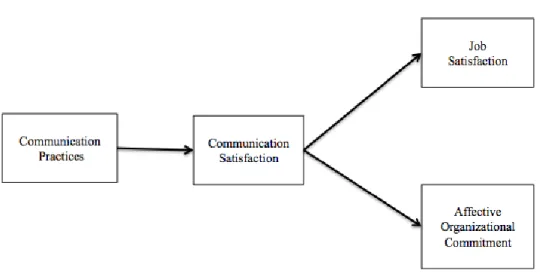
Page Figure 1. The relationships between communication practices, communication satisfaction,
and affective organization commitment... 40
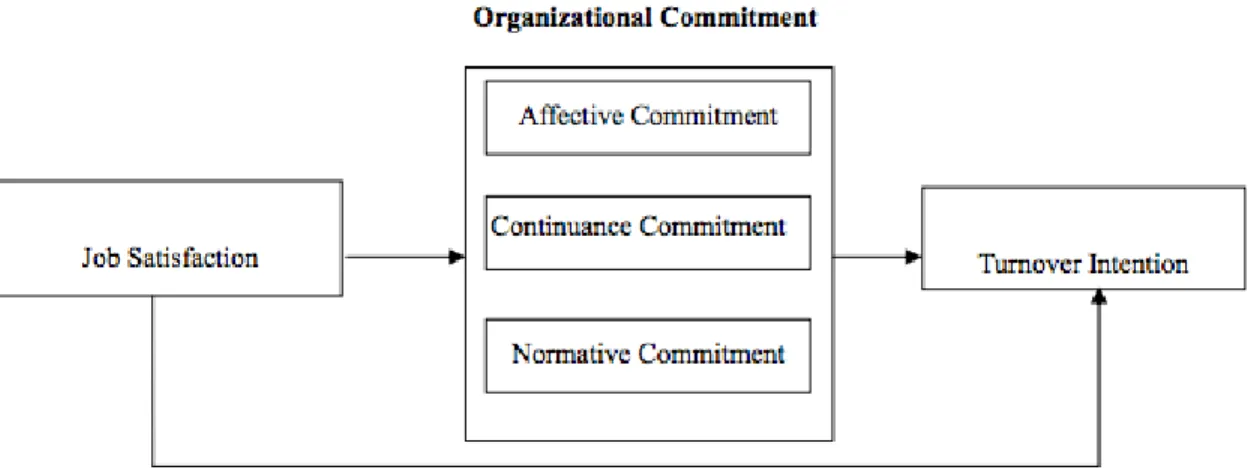
Figure 2. The relationship between job satisfaction, organizational commitment, and turnover intention ... 45
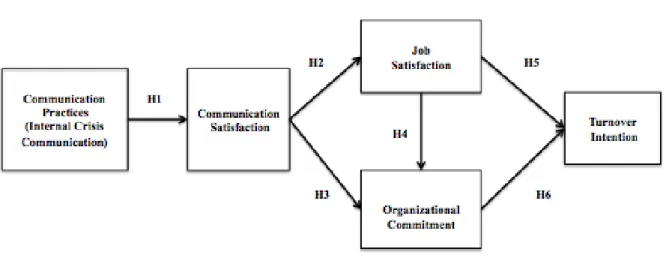
Figure 3. Research model of the study... 49
Figure 4. Affected subsample structural model ... 83
Figure 5. Not Affected subsample structural model ... 84
Figure 6. Unconstrained model ... 90
Figure 7. Constrained model ... 91
LIST OF TABLES
Page
Table 1. Type of Crisis... 10
Table 2. Timeline for Political Crisis in Thailand ... 12
Table 3. Average Hotel Occupancy in Thailand ... 16
Table 4. Number of International Tourist Arrivals in Thailand (in thouands) ... 17
Table 5. International Tourism Receipt in Thailand (Currency USD / Billion) ... 17
Table 6. Review of Crisis Management in the Hotel Industry ... 20
Table 7. Hypotheses of Internal Communication Toward Communication Satisfaction, Job Satisfaction, Organizational Commitment, and Turnover Intention ... 50
Table 8. Measurement of Internal Communication ... 56
Table 9. Measurement of Communication Satisfaction ... 60
Table 10. Measurement of Job Satisfaction ... 62
Table 11. Measurement of Affective Organizational Commitment ... 62
Table 12. Measurement of Turnover Intention ... 63
Table 13. Fit Indices and Their Acceptable Thresholds ... 65
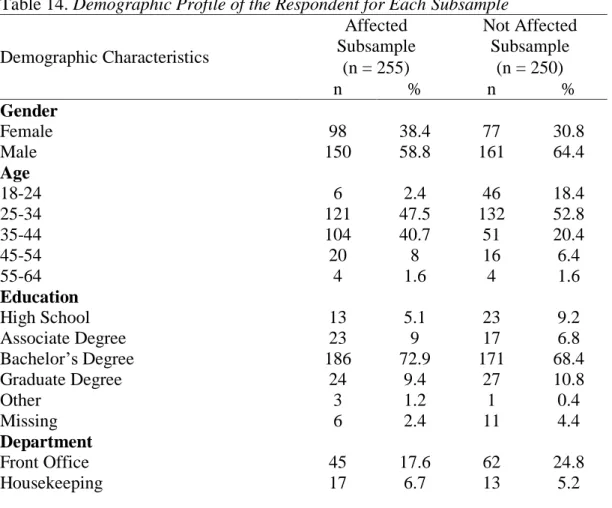
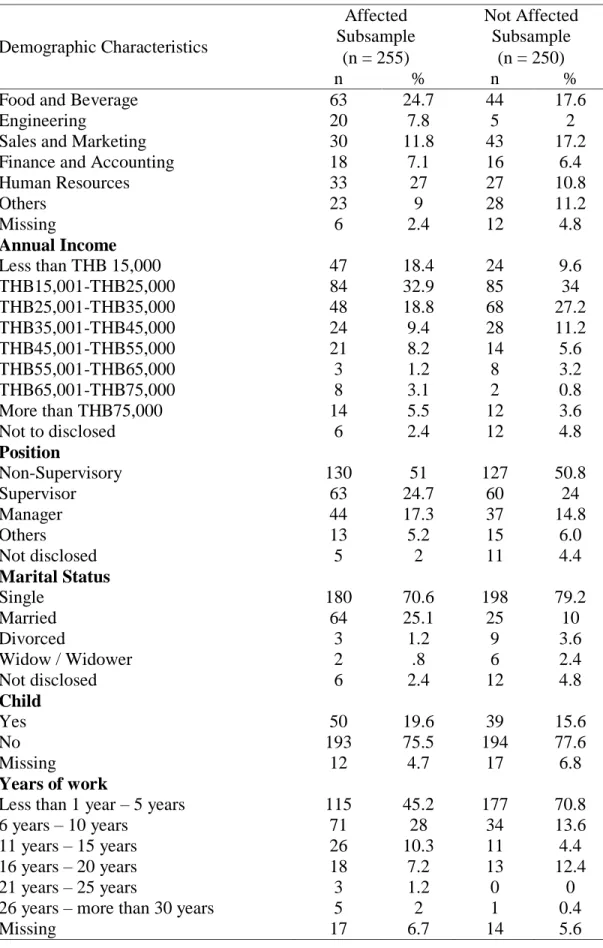
Table 14. Demographic Profile of the Respondent for Each Subsample ... 67
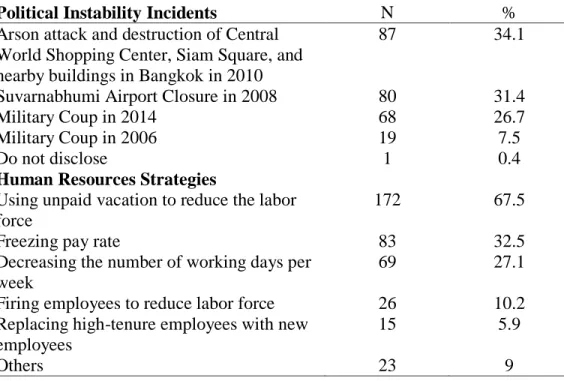
Table 15. Descriptive Statistics of Political Incidents in Thailand for the Affected Subsample ... 69
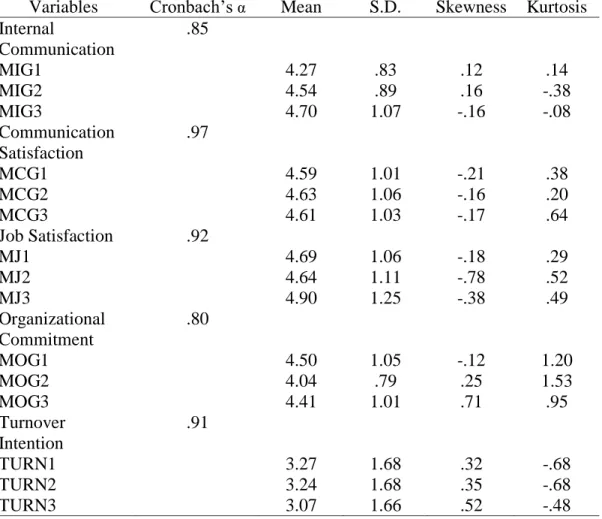
Table 16. Mean, Standard Deviations, Normality and Reliability of Indicator for Affected Subsample ... 72
Table 17. Means, Standard Deviations, Normality and Reliability of Indicator for Not Affected Subsample ... 73
Table 18. Correlation among Five Constructs ... 74
Table 19. Factor Loading in Each Indicator for the Affected Subsample ... 75
Table 21. Correlation among Five Constructs of the Affected Subsample ... 76
Table 22. Factor Loading in Initial Model for the Affected Sample ... 78
Table 23. Factor Loading in Modified Model for the Affected Subsample ... 78
Table 24. Standardized Parameter Estimates for the Affected Subsample ... 79
Table 25. Correlation among Five Constructs of the Not Affected Subsample ... 79
Table 26. Factor Loading in Initial Model for the Affected Subsample ... 81
Table 27. Factor Loading in Modified Model for the Not Affected Subsample ... 81
Table 28. Standardized Parameter Estimates for the Not Affected Subsample ... 82
Table 29. Regression Coefficient for Specific Indirect and Indirect Effect ... 85
Table 30. Factor Loading for Unstandardized for both Subsamples ... 86
Table 31. Factor Loading for Standardized for both Subsamples ... 87
Table 32. Correlation among Constructs ... 87
Table 33. Structured Mean ... 88
ACKNOWLEDGEMENTS
I would like to express my sincere appreciation to everyone who has supported me with the completion of my Ph.D. program. First and foremost, I would like to thank my Committee Chair, Dr. Thomas Schrier, for his patience, guidance, encouragement, and advice. Thank you so much for your support and understanding for both my academic life and personal life. It will always be a great honor to have you as my major professor. To Dr. Tianshu Zheng, thank you so much for your guidance and moral support. Throughout the year that I spent at Iowa State, I have always known that you are someone that I can lean on. Dr. Daniel Russell: to me you are the knight in shining armor. It would have not possible for me to finish my dissertation without your support and guidance. I would like to thank Dr. Jessica Hurst and Dr. Eric Brown for sharing your expertise and encouragement. I have learned a lot from both of you.
I would like to give my special thanks to my partner in crime, Atikom Apichatwoot. You are my ultimate cheerleader, coach, and dream maker. Thank you for never questioning me on what I have done or what I will do. This makes you more than special than the others, and that’s why I love you.
I would like to dedicate this dissertation to my wonderful family. Especially my mom — the reason I am who I am today is because you push me go for it. My dad, who is in heaven now, I hope you are smiling for me from there until we meet again, Dad. My stepdad who has always supported me since I was young: you are a part of my success. For my grandparents who have supported my education since I was a kid till now, I hope I have made you proud. Also, the rest of my family and my husband’s family for their love and support that they have for me since I was young.
Last, thank you to all my besties: Nethchanok, Sudawadee, Ked, Dao, Um, Jib, Job, and Eojina, who always share love and laugh with me. A very special thank to Zahida and Xiaowei who always support me. My life at Iowa State will be much more difficult without you. Thanks to the alumni at Silpakorn University for helping me with the survey of my dissertation.
And my gratitude to anyone whom I haven’t listed your name herewhose support either directly or indirectly helped me complete the Ph.D.
ABSTRACT
Internal communication is vital for day-to-day operation of an organization. Employees require effective internal communication, especially during a crisis. Poor communication leads to reduction of employee commitment, job satisfaction and productivity. If the employees are dissatisfied with communication, they may develop the intention to quit. Hence, it is important for managers to understand the communication system within the organization and use it as a tool to improve the attitude and relationship among the employees.
This research study examines the effect of organizations’ communication practices during crisis (internal crisis communication), communication satisfaction, employee satisfaction,
organizational commitment, and turnover intention as observed in the general situation and during the political crisis in Thailand. To achieve this goal, this study combines the model developed by Carrière and Bourque (2009) and Yücel (2012). The survey for two groups of hotel employees, those who were affected and those who were not affected by political instability, was conducted with employees who work in hotels in Thailand. For the affected group, the subjects must have worked in a hotel during a political crisis. Results from 550 online surveys indicated that the findings of the study didn’t show any significant differences for the relationships among constructs for both subsamples except for the relationship between job satisfaction and turnover intention and mediating roles. The result of measurement invariance across the groups pointed out that the only difference between the two subsamples was the relationship between job satisfaction and turnover intention. However, this relationship was significant in the not affected subsample. For the affected subsample, the relationship between job satisfaction and turnover intention was not significant. Unexpectedly, it was found that the results of the mediating effect for affected subsamples were not significant for any paths. However, the findings indicated that
for the not affected subsample, job satisfaction, and organizational commitment mediated communication satisfaction and turnover intention. In addition, communication satisfaction, job satisfaction, and organizational commitment mediated internal communication and turnover intention.
The contribution of this study is both academic and practical. First, this study makes a conceptual contribution to communication organization and turnover intention. It reflects the attitude of employees toward communication in an organization, especially during crisis. The outcome of this study adds to the general body of literature on communication and turnover intention. Second, this proposed research framework provides a new avenue for multiple areas of research such as organizational communication, crisis communication, turnover intention, and crisis management. Third, the findings suggested that employees who were not affected by political instability might leave the organization if they were not satisfied. These implied that hotel managers must constantly assess employees’ attitudes toward management strategies, organizational communication, and work environment in order to prevent turnover.
CHAPTER 1
INTRODUCTION
Background
Hotel employees’ turnover has been a critical issue among practitioners and scholars for many years. The turnover rate in service industries is one of the highest among all industries (Guchait & Cho, 2010). According to Limyothin and Trichun (2012), the problem of workforce shortage has also become the most important issue for the hotel business in Thailand. Davidson, Timo, and Wang (2010) stated that turnover can lead to tangible costs and intangible costs such as workplace efficiency and productivity. Therefore, several studies undertaken by researchers in the last two decades have focused on turnover rate in the hospitality industry (Gunchait & Cho, 2010; Moshin, Lengle, & Kumar, 2013; Stalcup & Pearson, 2001).
Wolvin (1994) states that nowadays, managers have started to pay attention to and value the importance of effective communication. In order to stay competitive in the global market, organizations should improve both internal and external communication systems (Wolvin, 1994). It is found that organizations that perform with highly effective internal communication practices have superior financial results and greater organizational stability (Yates, 2006). Chiang, Jang, Canter, and Prince (2008) suggest that a high quality of communication is associated with a high level of job satisfaction, while a low quality of communication leads to a low level of job
satisfaction. Learning about what information is valued by employees through internal communication practices helps managers to foster job satisfaction and organizational commitment (Carrière & Bourque, 2009).
Tourism is an industry which is highly sensible to negative events. There are few factors that may cause or contribute the development of a crisis in tourism (Santana, 2008). The crisis
can have natural and man-made causes, such as disasters, negative events, catastrophes,
problems or turning points, risk, chaos, vulnerability, safety, and security (Pforr & Hosie, 2008). The travel industry regards crisis as the result of external events, which are beyond control and produce a high degree of risk and uncertainty (Evans and Elphick, 2005). However, man-made causalities such as political instability and terrorism create public perceptions of danger, injury, loss of belonging, and death, particularly in some tourist destinations such as Egypt, the U.S., and Nigeria (Rittichainuwat & Chakraborty, 2009; Sonmez & Graefe, 1998).
The hotel industry is very important to Thailand. According to Euromonitor (2013), the lodging sector accounted for approximately 3% of Thailand’s GDP in 2011. However, the Thai hotel industry has faced many challenges, such as a shortage of workers since 2010 and political instability in Thailand that has become a major crisis for the industry since 2006
(Chinmaneevong, 2013; Kanlayanasukho, 2013). The Suvarnanabhumi International Airport was closed down in 2008 due to strikes by anti-government alliances (Kanlayanasukho, 2013). This event led to more than 3,000 passengers being stranded, which caused an immediate impact on the tourism image of Thailand (Ingram, Tabari & Watthanakhomprathip, 2013). Political
instability also resulted in a decline of visitors to Thailand (Kanlayanasukho, 2013). In 2014, the average hotel occupancy in key tourist cities like Bangkok, Phuket, Samui, and Pattaya
decreased from the previous year by almost 50% (The Nation, 2014). In the first quarter of 2014, Thailand lost 1.8 million tourists and an income of about 82 billion baht (ThaiPBS, 2014), which is equivalent to approximately USD 2,560,000.
Scholars have paid attention to and considered the external dimensions of crisis
communication, such as response strategies, stakeholder relations, and media choice, while the internal dimensions of crisis communication have been under-researched (Heide & Simonsson,
2014). Different crises cause employees to have different emotional, attitudinal, and behavioral outcomes, all of which still need to be examined (McDonald, Spark, & Glendon, 2010). During a crisis, employees experience fear and panic, which cause them to decide to leave their
organizations (Johansen, Aggerholm, & Frandsen, 2012). Abdullah and Antony (2012) state that when crises happened, internal communication strategies were developed reactively. And yet, the information needed among employees increased dramatically (Heide & Simonsson, 2014). Hence, poor communication can lead to negative feelings among employees, which can cause them to seek out the information through rumors (Proctor & Doukakis, 2003). In order to defend against rumors, false information, and unfounded allegations, organizations need to
communicate with both external and internal stakeholders (employees).
Heath (2010) stated that for at least three decades, many researchers and practitioners have conducted studies in the disciplines of crisis management and crisis communication. As seen in the literature review, when a crisis has happened, less attention has been paid to employees and how the organization treated them. Previous studies have heavily focused on external crisis communication with external stakeholders, such as customers, media, politicians, and NGOs, in order to protect the organization’s reputation from the effects of the crisis.
Therefore, it is time to focus on the woefully under-researched internal dimension of crisis communication (Frandsen & Johansen, 2011).
The study of employees’ turnover can be divided into three dimensions: cause, consequence, and retention strategies (Yang, Wan, & Fu, 2012). It was found that job
satisfaction was a significant predictor of organizational commitment and turnover. Difficulties that arose from change and uncertainty led to low job satisfaction and to staff feeling that they were ignored (Proctor & Doukakis, 2003). In addition, Makovits et al. (2014) found that
economic crisis led to a negative impact on employees’ job satisfaction and job security in Greece. The lack of accurate, adequate, timely, and coherent information during a crisis can affect the trust of the employees in their organization, which leads to a weakening of
organizational commitment (David, 2011). Therefore, the study of job satisfaction and organizational commitment during crises will be very useful for both academics and practitioners.
This study attempts to investigate the difference between employees who were affected and not affected by political in stability in Thailand by assessing the effects of internal
communication, communication satisfaction, job satisfaction, and organizational commitment toward employee turnover intention, which has not previously received close study in academic research.
Research Objectives
This research study examines the effect of organizations’ communication practices during crisis (internal crisis communication), communication satisfaction, employee satisfaction,
organizational commitment, and turnover intention as observed in general and during the political crisis in Thailand. The primary objectives of this study are:
1) To determine if there is a relationship between internal communication, communication satisfaction, employee satisfaction, and organizational commitment.
2) To determine if there is any relationship among job satisfaction, organizational commitment, and turnover intention in Thai hotel employees.
3) To investigate differences between employees affected and not affected by political instability in their perceptions of internal communication leading to turnover intention.
Significance of the Study
As will be shown in the literature review, most studies in crisis management focus on the strategies used by managers and the effectiveness of organizational crisis management. When crises have happened, little attention has been paid to the impact of political instability on hotel employees and their attitude toward management strategy. Internal crisis communication is regarded as a tool of crisis management in order to preserve employees’ trust and commitment to the organization. However, internal crisis communication is not well explored by academic researchers. Therefore, this study examines the relationship of internal crisis communication, communication satisfaction, job satisfaction, and organizational commitment toward employee turnover intention by focusing on the hotel industry.
The results of this research study will be beneficial to both academics and practitioners in the hotel industry, as well as other industry professionals. From an academic standpoint, this study will be among the first to examine the effect of internal crisis communication on
employees’ work attitude toward the organization negatively impacted by external crisis under circumstances of political instability. From the standpoint of management, understanding employee intentions will help researchers and managers develop more specific, effective
communication and know-how to handle employees. It will also help practitioners to understand the attitude of employees toward the crisis communication, which might affect their intention to stay with the organization or leave.
Definition of Terms
Internal communication: the strategic management of interactions and relationships between stakeholders at all levels within organizations (Welch & Jackson, 2007).
in a private or public organization, before, during, and after an organizational or societal crisis (Johansen, Aggerholm, & Frandsen, 2012).
Crisis: a disruption that physically affects a system as a whole and threatens its basic
assumptions, its subjective sense of self, and its existential core (Pauchant & Mitroff, 1992). Crisis management: an ongoing integrated and comprehensive effort that organizations
effectively put into place in an attempt first and foremost to understand and prevent crises and to effectively manage those that occur, taking into account in each and every step of their planning and training activities the interest of their stakeholder (Santana, 2004).
Political instability: a situation in which conditions and mechanisms of governance and rules are challenged as to their political legitimacy by elements operating from outside of the normal operations of the political system (Hall & O’Sullivan, 1996).
Communication satisfaction: an employee’s affective appraisal of the organization’s communication practices; this is a multidimensional construct (Carrière & Bourque, 2009). Job satisfaction: the pleasurable emotional state resulting from the appraisal of one’s job as achieving or facilitating the achievement of one’s job values (Locke, 1969).
Organizational commitment: a “psychological bond” to the organization that influences
individuals to act in ways that are consistent with the interests of the organization (Porter et al., 1974).
Turnover intention:a thought of leaving the organization (Tett & Meyer, 1993).
Turnover: the movement of people into and out of employment within an organization (Denvir & McMahon, 1992).
Chapter Summary
This chapter provided the background of crisis and political instability in Thailand, which explains how it affects the Thai hotel industry. In addition, research objectives and the
significance of this research were also discussed with an overview of the terms that will be used in this study. The following chapter reviews the literature related to the construct and the
CHAPTER 2
REVIEW OF LITERATURE
This chapter provides a foundation to better understand the concept of internal crisis communication and its influence on communication satisfaction, job satisfaction, organizational commitment, and turnover intention for hotel employees in Thailand. The literature review is composed of six main sections. The first section reviews communication practices and internal crisis communication. The second section covers communication satisfaction. The third section discusses job satisfaction. The fourth section reviews organizational commitment. The fifth section discusses general turnover intention and turnover in the hotel industry. Finally, the sixth section provides a theoretical framework to comprehend how internal crisis communication influences employees’ turnover intention.
The Importance of Tourism in Thailand
Tourism is a source of income for developing countries, and it also alleviates poverty (Saha & Yap, 2014). Thailand is a popular destination among international tourists because of its friendly people, delicious food, variety of tourist attractions, rich history and culture, and cheap cost of living (Tangvitoontham & Sattayanuwat, 2018). Thailand is positioned as a shopping paradise, with the additional attractions of natural beauty and reasonably priced food and accommodation (Rittichainuwat, Ou, & Brown, 2001). According to the World Travel & Tourism Council (2018), travel and tourism generated a direct income of THB 1,433.5bn (USD 42.2bn), 9.4% of total GDP in 2017. In addition, travel and tourism directly supported 2,336,500 jobs (6.2% of total employment) in 2017.
Crisis and Crisis Management
Crisis has been given different definitions by many researchers. However, the word crisis originally comes from the Greek krisis, which describes the turning point in a disease. Adkins (2010) combines these definitions and terms crisis as
an unexpected and unpredictable event which is caused by some type of events, threatens an organization’s stakeholders’ expectations, places non-routine demands on an
organization’s stakeholders’ expectations, places non-routine demands on an organization, produces uncertainty in an organization, has a negative impact on organizational performance, potentially produces negative outcomes, threatens high-priority organizational goals, harms either the organization or public, and produces accusations concerning the organization(s) involved. (p. 97)
There are differences between a crisis and an incident. A crisis describes a serious impact that disrupts or affects an entire organization. An incident, however, is a minor, localized
disruption (Coombs, 2010). Due to the nature of the service sector itself and the interactions between elements of the hospitality industry, these organizations face a variety of potential crises (Smith, 2005). According to Coombs (2010), crises can range from small-scale, such as staff illness, to larger external factors such as natural disasters and terrorist incidents.
Causes of Crises
Ritchie (2004) states that understanding crises and disasters—their lifecycle, potential impacts, and actions—can help in the development of more effective strategies for organizations to stop, reduce, or deal with the severity of such incidents’ impact on business. There are general factors that may cause or contribute to the development of crises in tourism (Santana, 2008). However, there is no universally accepted definition of what constitutes a crisis (Henderson,
2007). Coombs (1995) classifies crisis by focusing on stakeholders’ perceptions of whether the cause of the crisis is internal or external and whether it results from intentional or unintentional acts. Seeger, Sellnow, and Ulmer (2003) state that naming, defining, and classifying crises is instrumental in managing crises and determining a response. They also impute both causality and responsibility. The causes of crises have been identified in different ways. For example, PATA (2003) has distinguished crises into 2 categories: Natural and Man-Made, as presented in Table 1.
Table 1. Type of Crisis
Natural - Avalanche - Earthquake - Fire - Flood - Hurricane - Mudslide - Medical epidemic - Violent storm
Man-made - Act of terrorism
- Adventure sports - Aircraft crash - Assault
- Building fire / collapse - Civil / Political unrest - Cruise ship / ferry disaster - Hijacking
- Industrial action - Kidnapping - Murder
- Hostage situations
- Mechanical / system failure - Personal harassment
- Political action - Riots
- Surface transport accident - Terrorism
- War Source: PATA (2003)
Political Instability
The literature provides many terms that relate to political instability (Sönmez, 1998; Israeli & Reichel, 2003). Kanlayanasukho (2013) states that there is little analysis on the
difference between the terms “political crisis,” “political instability,” and “political violence” as used in previous studies.Alesina,Özler, Roubini, and Swagel (1996) define political instability as “the propensity of a change in the executive power, either by constitutional or unconstitutional means” (p. 191). Neumayer (2004) defines political violence as “the exercise of force that is politically motivated and can be exercised by government or antigovernment groups. It is regarded as a broader notion of political instability” (p. 260). They also identify six types of political instability: international wars, civil wars, coups, terrorism, riots and political and social unrest, and strikes. Crises create the perception of instability and danger to tourists, which causes the industry to suffer as tourists lose confidence in the destination (Santana, 2008). Table 2 presents a timeline for political crisis in Thailand from 2006 to 2015.
Background of Political Instability in Thailand
Thailand has experienced several political crises, such as political coups and revised constitutions (Chon, Singh, & Mikula, 1993). The country has suffered from a series of political crises since the opening decade of the 21st century, which led to negative consequences for both individuals and businesses (Campiranon, Laws, and Scott, 2011). The military coup d’etat of September 19, 2006, ousted the Thai Prime Minister (Cronin & Parry, 2013). This led to travel warnings from foreign governments of many countries (Kanlayanasukho, 2013). In 2008, the strikes on behalf of the anti-government people’s alliance, known as the “yellow shirts,” led to the closure of the Suvarnanabhumi International Airport. This resulted in more than 3,000 stranded airline passengers, which caused an immediate impact upon Thailand’s tourism image
(Ingram, Tabari, & Watthanakhomprathip, 2013). In April 2010, protests escalated into violence between soldiers and anti-government protesters in Bangkok. The situation led to 24 dead and over 800 injured. Hotel occupancy in Bangkok dropped by 30 percent compared to previous years. In 2014, Thailand’s military took control of the government and suspend the constitution (Fuller, 2014). Table 2 presents a timeline for political crisis in Thailand from 2006 – 2015. Table 2. Timeline for Political Crisis in Thailand
Year Incident Results
2006 - Military coup - Many foreign governments
warned their citizens in or visiting Thailand to be vigilant 2008 - The Suvarnanabhumi International
Airport was closed due to strikes on behalf of an anti-government people’s alliance
- More than 3,000 passengers were stranded
2010 -The United Front for Democracy Against Dictatorship (UDD) announced protests in Bangkok to call for elections -The prime minister declared a state of
emergency
-Tens of thousands of UDD protesters occupied the shopping district of Bangkok
- Major news outlets such as CNN, BBC, Reuters, etc. broadcasted around the world regarding to the demonstration in Thailand
- Foreign governments— including the U.S., the U.K., Canada, Australia, Sweden, and Singapore—warned their citizens to be vigilant
-There was a series of explosions in Bangkok
- At least one person was killed and more than 85, including 4 foreigners, were injured -Arsonists attempted to destroy the
Central World Shopping Center, Siam Square, and other buildings nearby in Bangkok
2014 -The army sized power in a coup - Many foreign governments warned their citizens to be vigilant
2015 -A bomb exploded at Bangkok’s Erawan shrine
- Officials believed the bomb was targeted at foreign tourists; it killed 22 people including Malaysians, Singaporeans, and Chinese
The Impact of Political Instability on the Thai Hotel Industry and Tourism
According to previous studies, political instability has significantly impacted the hotel industry in Thailand. According to the Bank of Thailand (2007), the overall tourism industry in 2006 increased from the previous year. For example, the hotel occupancy rate averaged at 63 percent, which increased from 60.6 percent in 2005. However, the political instability and coup during mid-September only affected the hotel occupancy in Bangkok for a short period. Table 3 presents the average hotel occupancy rate in Thailand during 2005–2015.
In 2008, the Thai tourism and hotel industry increased in the first half of 2008 compared to 2007. However, in the second half of the year, the industry was severely affected starting from early August onward. A disruptive demonstration in Bangkok caused the closure of the
international airport for two weeks during late November until early December 2008. This resulted in a tremendous drop in the number of international tourists in the second half of the year. The overall occupancy rate average dropped from 60.8 percent in 2007 to 56.4 percent in 2008. Therefore, the Thai government had to work closely with the private sector to gain tourists’ confidence. They promoted domestic tourism in order to compensate the revenue loss from international tourists (Bank of Thailand, 2009).
The report of Credit Suisse (2014) found that ongoing political turmoil in 2014 had a significant impact on Thai tourism; Mainland Chinese and Hong Kong tourists in particular were more sensitive than others. According of the study, tourism sector analysis showed a 0.7
percentage point reduction in 2014 GDP of Thailand because of the street protest. Table 5 presents international tourism receipt during 2005–2015. Tangvitoontham and Sattayanuwat (2017) studied the responsiveness of international tourists to uncertainty and instability in Thailand. The results of the study are in line with the report of Credit Suisse (2014). They
indicated that the majority of international tourists in Thailand during 2003–2015 were from East Asia, followed by ASEAN, Oceania, Europe, America, and South Asia respectively. They found that the certainty and instability impacted the behavior of tourists from different regions
differently. For example, tourists from ASEAN and East Asia were more sensitive than tourists from other regions such as South Asia, America, and Oceania. This resulted in declining numbers of inbound tourists to Thailand. According to STR Global (2014), political instability has affected a double-digit decline in overall occupancy of hotels throughout Thailand. They also report that Bangkok has experienced the most significant decline (-31.2%) in occupancy.
Furthermore, potential hotel openings have been suspended because of hoteliers’ concerns over the political situation.
In 2010, anti-government protests occurred from March to May. It was reported that the number of international tourist arrivals went down from 1.7 million in December 2009 to 1.1 million in April 2010. Hotel occupancy also dropped from 60.2 percent in January 2010 to 46.6 percent in April 2010. However, political instability in Thailand benefitted other ASEAN countries. In May 2010, travel agencies received the cancellation bookings to Thailand as tourists shifted their destinations to nearby countries (Euromonitor, 2010).
Johansen, Aggerholm, and Frandsen (2012) identified management perception towards employees’ reactions to crises as: needing more information, insecurity, utilizing more informal communication, frustration, feeling betrayed, panic, feeling ashamed, and finally leaving the organization. Hence, crisis communication is a valuable tool in crisis resolution, which requires thorough, longterm prior planning by the organizational management (David, 2011).
Rittichainuwat and Chakraborty (2009) interviewed 15 front office and human resources managers in hotels in Bangkok and found that the managers felt an impact from the bomb blast
in Bangkok on December 31, 2007. Therefore, the hotel established security plans such as examining guests’ photo IDs on check-in, conducting employee background checks, using metal detectors, installing security cameras, and having a security guard check vehicles. The hotel did not offer any discounts to attract tourists. However, they increased their safety measures to boost tourists’ confidence. The managers also stated that the risk of terrorism and political instability negatively affected the Thai hospitality industry in the short run. The speed of recovery resulted from the service providers’ efforts to increase safety standards rather than offering the discount. As a result of all of these reactions, political instability is regarded as one of the crises that has negatively affected the hotel industry in Thailand. The management of every hotel needs to come up with an internal crisis communication plan to manage their employees in order to respond to political instability.
Crisis Management in the Hotel Industry
Various types of crises that affect the hotel industry have been studied, such as political instability and terrorism (Israeli & Reichel, 2003; Stafford, Yu, & Armoo, 2002; Enz, Kosova, & Lomanno, 2011); natural disasters (Henderson, 2005; Cheung & Law, 2006); epidemics (Kim, Chun, & Lee, 2005; Chien & Law, 2003; Henderson & Ng, 2004); and financial and economic crises (Kamoche, 2003; del Mar Alonso-Almeida & Bremer, 2013). Wu, Lee, and Lin (2012) stated that to understand the employees’ attitudes and be able to predict their behavior during crises can help human resources to create human resources management (HRM) to handle the incidents and reduce their turnover rates after the crisis. However, most of these studies focus on crisis management and crisis responsiveness in terms of organization survival and the customer’s perspective.
16
Table 3. Average Hotel Occupancy in Thailand
Year Month
January February March April May June July August September October November December 2005 61.12 64.16 63.52 55.53 53.63 54.96 59.34 62.77 59.50 61.05 66.57 64.22 2006 69.71 73.75 66.39 58.83 57.45 56.36 61.88 63.60 57.62 57.21 67.50 62.28 2007 69.20 70.63 66.16 58.16 55.13 50.02 56.83 59.50 56.77 55.39 65.18 63.06 2008 67.28 70.81 65.88 55.45 54.70 52.72 56.48 52.27 45.53 51.17 54.49 42.49 2009 51.34 56.55 52.59 44.12 41.37 40.85 46.01 48.96 46.66 51.22 55.11 55.91 2010 60.21 65.70 57.18 45.97 34.40 36.15 45.53 48.77 45.77 49.03 59.10 59.08 2011 ุ 62.69 68.93 62.49 56.10 49.86 50.07 57.79 57.87 55.12 53.12 56.86 57.66 2012 65.02 69.92 64.32 58.02 53.57 52.73 57.38 60.70 54.14 57.60 76.54 69.16 2013 69.58 74.50 72.29 63.73 59.34 57.74 60.66 66.49 60.66 59.74 69.34 64.26 2014 60.86 62.19 57.93 54.81 46.37 40.66 49.15 54.86 50.99 58.37 66.35 67.93 2015 67.14 71.54 66.24 61.32 58.97 54.87 61.20 61.20 52.66 54.63 64.47 66.41 Source: Department of Tourism, Ministry of Tourism and Sports
17
Table 4. Number of International Tourist Arrivals in Thailand (in thouands)
Year Month
January February March April May June July August September October November December 2005 849 892 930 801 808 896 1,030 1,057 917 1,018 1,113 1,199 2006 1,262 1,183 1,176 1,076 981 1,051 1,163 1,217 979 1,051 1.236 1,441 2007 1,313 1,284 1,233 1,101 990 1,031 1,165 1,225 1,059 1,171 1,365 1,521 2008 1,437 1,481 1,407 1,222 1,172 1,155 1,275 1,214 890 1,094 1,076 1,156 2009 1,296 1,138 1,237 1,085 923 954 1,094 1,149 1,040 1,209 1,361 1,685 2010 1,605 1,614 1,439 1,108 826 964 1,275 1,270 1,241 1,316 1,478 1,819 2011 1,805 1,802 1,702 1,552 1,407 1,484 1,719 1,726 1,486 1,422 1,219 1,829 2012 1,992 1,853 1,895 1,686 1,564 1,644 1,815 1,926 1,611 1,801 2,143 2,435 2013 2,318 2,367 2,322 2,057 1,943 2,061 2,149 2,355 1,995 2,054 2,378 2,542 2014 2,282 2,075 2,018 1,934 1,670 1,491 1,896 2,084 1,869 2,207 2,425 2,853 2015 2,610 2,663 2,555 2,407 2,301 2,269 2,657 2,614 2,035 2,228 2,549 2,987 Source: Bank of Thailand
Table 5. International Tourism Receipt in Thailand (Currency USD / Billion) Year
2005 2006 2007 2008 2009 2010 2011 2012 2013 2014 2015 12.103 16.624 20.625 22.51 19.811 23.796 30.924 37.766 45.738 42.047 48.527 Source: World Tourism Organization
Table 5 presents the existing 12 papers published on crisis management in the hotel industry order from 2002–2012 and includes all pertinent information, such as author(s), year, type of crisis/setting, topic, and methodology.
Enz & Kosová (2012) stated that external crisis leads to unpredictable demand from the customers, which seriously affects the performance and growth of a hotel for a period of time. To sustain revenue, the hotels are forced to reduce their room rates (by up to 50% or more) and cut wages, which causes job insecurity, a decline in morale, and possibly low organizational commitment (Kamoche, 2013). Kim, Chun, and Lee (2005) suggest that hotel managers should pay attention to the importance of crisis management and execute a practical and realistic approach to overcome the crises.
Israeli and Reichel (2003) studied hospitality crisis management practices in Israel. They found that for human resources departments, the practices in crisis management were as follows:
- Firing employees to reduce the labor force - Using unpaid vacation to reduce the labor force - Decreasing the number of working days per week - Freezing pay rates
- Replacing high-tenure employees with new employees - Increasing reliance on outsourcing
From the study, they found that among the practices freezing pay rates was ranked highest in importance and use in crisis management, followed by increased reliance on
outsourcing and firing employees to reduce the workforce. However, to have an effective form of crisis management, it is essential to understand how a crisis develops and evolves and to become familiar with all phases that management needs to control (Santana, 2004).
Leung and Lam (2004) studied crisis management during the SARS threat in the Hong Kong hotel industry. The hotels needed to terminate their relationships with their employees because of economic necessity. They found that unpaid leave and involuntary separation were the most common immediate solutions employed by hotels. However, they proposed the following four-step procedure for terminating relationships with employees:
1. All employees should be informed at least one week before a layoff;
2. the layoff criteria should be made clear to all employees in order to create fairness among workers;
3. positive messages should be sent to both laid-off and remaining employees;
4. remaining employees might encounter stress and have a low morale, and therefore the hotel should provide counseling services for the employees.
Internal Communication in the Organization
Ruck and Welch (2012) state that effective internal communication leads to organizational success. Communication is an essential requirement for employee relations (Abdullah & Anthony, 2012). According to Chiang et al. (2008), communication contributes to good relationships between management and employees. Internal communication builds
20
Table 6. Review of Crisis Management in the Hotel Industry
Authors Type of Crisis / Setting Topic Methodology
Stafford, Yu, & Armoo (2002)
Terrorism / USA Crisis management and recovery - Conceptual paper Israeli & Reichel (2003)
Kamoche (2003)
Terrorism / Israel
Economic / Hong Kong
Crisis management practice
Crisis management focusing human resources practices
- Simple Additive Weighting (SAW) model
- In-depth interview with managers - Case studies - In-depth interview - Analyzing documentary evidence - Archival HR materials - Observation of employees at work Chien & Law (2003)
Henderson & Ng (2004) Ritchie, Dorrell, & Miller (2004)
Epidemic (SARS) / Hong Kong
Epidemic (SARS) / Singapore
Epidemic (Foot & Mouth disease) / United Kingdom
The impact of SARS outbreak on hotel industry
The impact of SARS on hotel industry / crisis management Crisis communication
- Conceptual paper - Conceptual paper - Secondary data analysis - In-depth semi-structured
21
Table 6 Continued
Authors Type of Crisis / Setting Topic Methodology
Leung & Lam (2004)
Henderson (2005)
Kim, Chun, & Lee (2005) Cheung & Law (2006) Israeli, Moshin, & Kumar (2011)
Enz & Kosová (2012)
Epidemic (SARS) / Hong Kong
Natural disaster (tsunami) / Thailand
Epidemic (SARS) / Korea Natural Disaster (tsunami) / Indonesia
Terrorism / India
Terrorism and economic / USA
Impact of SARS on hotel industry / human resources practices
Crisis management and recovery
The effects of SARS on hotel industry
Impact of tsunami on hotel industry
Crisis management practices The impact of external crisis on hotel performance
- Case study
- Analysis of hotel’s internal data
- Interview with hotel managers
- Conceptual paper - Conceptual paper
- Simple Additive Weighting (SAW) model
According to Andrews and Herschel (1996), information can flow in three directions within organizational communication systems:
1. Downward communication: Information flowing from upper to lower organizational levels.
2. Upward communication: Information flowing from subordinates to superiors.
3. Horizontal communication: Information flowing between and among individuals on the same organizational level.
Welch & Jackson (2007) proposed an Internal Communication Matrix, which classified internal communication into 4 levels: line manager and/or supervisor, team colleagues, project group colleagues, and strategic manager and/or top management. The matrix provides a typology of internal communication, which can be used as an analytical tool to classify and examine internal communication. The matrix may help in both the evaluation of internal communication and strategic planning in internal situational analysis of the organization.
Abdullah and Anthony (2012) state that proper internal communication tools are important. Therefore, the hotel industry uses various communication techniques such as
newsletters, CDs, press releases, bulletins, and memos to communicate with both employees and customers. However, Welch and Jackson (2007) state that beside well-managed communication, internal communication also includes informal chat such as the “grapevine.” In order to
communicate effectively with external groups, employees must have a strong foundation of effective internal communication (Proctor & Doukakis, 2003). Chaing et al. (2008) state that employees who are highly satisfied with communication will have a positive attitude toward motivation, and they are more likely to perform well in their job when they are motivated.
Problems in the organization can be solved by good communication at any level— interpersonal, organizational, and international (Down & Adrian, 2004). Hence, communication should be clear, consistent, correct, and complete between employer and employee (Chiang et al., 2008). Effective communication for both internal and external communication can help the organization to be competitive in the global marketplace (Wolvin, 1994). On the other hand, poor communication could lead to negative feelings among the organization’s employees (Prock & Doukakis, 2003). According to Hargie, Tourish, and Wilson (2002), the outcomes of poor communication include reduced employee commitment, greater absenteeism, and reduced productivity. If the employees are dissatisfied with peer communication, they may develop the intention to quit, or turnover intention (Scott et al., 1999).
Communication in the Hotel Industry
According to the nature of the hotel industry, where the work is labor intensive and turnover is high, understanding hotel employees’ attitudes and motivation has become an important issue to study (Chaing et al., 2008). The improved communication can enhance
quality, productivity, and competitiveness (Wolvin, 1994). In the hospitality industry setting, the employees are the contact point between a company’s internal and external environment.
Therefore, their interactions can powerfully deliver the brand promises, image, and experience to the customers (Chong, 2007).
According to Sandaram and Webster (2005), the interaction between service employees and customers is referred to as the service encounter. Sparks (1994) states that customers evaluate the quality of service, at least, on the manner in which information is communicated. Customers also view the display of affective characteristics, such as friendliness, responsiveness,
and enthusiasm, as positively influencing their perceptions of service quality. Hence, variation in levels of communication becomes a major concern for hotel employees (Sparks & Callan, 1992).
As communication is critical in the hotel industry, understanding communication satisfaction will help to improve communication issues (Fu & Mount, 2002). Abdullah and Antony (2012) studied perception of employees on internal communication of a leading five-star hotel in Malaysia and found that communication is a foundation of organization success. In order to communicate effectively to the public, employees must have effective internal
communication. Therefore, the practices of internal communication are important, since they can be tools to attain the organizational objective.
Internal Crisis Communication
Communication is a part of crisis management because crisis creates a need for
information (Coombs, 2010). It is an ongoing process that helps organizations to monitor their situation before and during the crisis in order to understand, provide an appropriate response to, and resolve the crisis (Seeger, Sellnow, & Ulmer, 2003). The study of crisis communication first appeared in management literature in the 1980s (Coombs, 2007). Crisis communication literature focuses on communication after a crisis breaks out and on through to the end of the turmoil (Sturges, 1994). David (2011) stated that internal crisis communications delivered through websites were authored by public relations or communication consultants or consultancies. For this study, internal communication in the hotel industry during a political instability crisis will be the focus. Therefore, internal crisis communication will be a focal point and the term will be used interchangeably with communication practices.
There are two primary objectives of crisis communication: first, to appease third party interveners and, second, to keep employees and others updated about the situation (Sturges,
1994). Both employees and stakeholders have high expectations toward the organization during the crisis (Downs & Hazen, 1977). Therefore, many organizations invest tremendously in both financial and human resources in order to develop an effective and efficient internal
communication system (Carrière & Bourque, 2009). The human resources staff is often designated to work as communication liaisons (Downs & Hazen, 1977). Both media and the Internet are used as gateways to get the information during the crisis (Frandsen & Johansen, 2011).
An organization’s internal communication practices consist of communication activities, both formal and informal, downward, horizontal, or upward in order to disseminate information to one or more audiences (Carrière & Bourque, 2009; Downs & Hazen, 1977). Reilly (2008) states that effective communication among and between managers and employees is mandatory in coping with a crisis. It serves the organization to provide cohesion and coherence to the organization involved (Down & Hazen, 1977).
Coombs (2014) developed Situational Crisis Communication Theory (SCCT), which has dominated the field of crisis communication over the past two decades. SCCT suggests a
strategic response that covers three components: (1) instructing information, which explains the crisis situation to stakeholders; (2) adjusting information, which aims to assist stakeholders in coping with the crisis psychologically; and (3) reputation management, which focuses on the responses used by an organization to address a crisis in order to protect the organization’s reputation.
Reiley (2008) describes key human resources development (HRD) competencies that facilitate crisis communication. Designating HRD staff as communication liaisons will help in answering important questions from stakeholders. Internal crisis communication can be
downward, upward, and horizontal. For downward communication, the information flows from managers to subordinates. In upward communication, employees transfer their suggestions, requests, and complaints to managers. It is found that poor upward communication causes top management to lose important input from employees who work as a front line in the crisis. In horizontal communication, the information flows between people at the same organizational level through various channels such as face-to-face interactions, phone calls, e-mail, memos, reports, teleconferences, or video conferences. Crisis communication strategies can be varied depending on each culture’s values and norms for coping with crises.
Johansen, Aggerholm, and Frandsen (2012) studied internal crisis management and crisis communication among public and private organizations in Denmark by conducting the Internal Crisis Management and Crisis Communication Survey (ICMCC Survey). This study aimed to get a preliminary idea of how these companies and organizations perceive, plan, coordinate, and implement internal crisis management and crisis communication through various stages: before, during, and after a crisis. The survey was sent to respondents who are responsible for crisis-preparedness in the organizations. It was found that there is a strong relationship between organization size and crisis management. The results indicate that larger organizations are more likely to have a crisis plan.
David (2011) states that internal communication has higher demand during a crisis than during day-to-day circumstances. Inadequate, inaccurate, or untimely communication can affect the trust of employees in the organization, which leads to a failure of organizational
commitment. This article also presents checklists for practitioners of crisis communication. For example:
1) Employees should be briefed about the situation as soon as possible.
2) Internal information must be as factual and accurate as external information. 3) All employees should receive the same information.
4) Face-to-face communication is the best method to communicate with employees. Communication Satisfaction
Hecht (1978) described communication satisfaction as a socio-emotional feeling derived from interacting and communicating. Communication satisfaction becomes an important tool to assess the communication effectiveness in the organization (Gray and Laidlaw, 2004). The Communication Satisfaction Questionnaire (CSQ) was developed by Down and Hazen (1977) in an attempt to discover the relationship between communication and job satisfaction. Pincus (1986) states that Down’s and Hanzen’s CSQ is the most frequently used measure of communication satisfaction. The CSQ has eleven composite aspects of communication satisfaction, which are:
1. Explanation of policies, in answer to employee questions 2. Understanding what is expected of one in job performance 3. Advance notice of change, through official sources
4. Freedom to make suggestions to superiors
5. Adequacy of information on those company matters regarded by the receiver as relevant to him- or herself
6. Extent to which important information is obtained from sources or media preferred by the receiver
7. Freedom to make complaints, to “sound off” 8. Accessibility or approachability of superiors
9. Degree to which supervisors make an effort to understand feelings and problems of subordinates
10.Degree to which supervisors express appreciation of good performance by subordinates
11.Degree to which higher officers or managers are open and willing to initiate communication
Mount and Back (1999) further examined communication satisfaction in the lodging industry by using the CSQ. Chiang et al. (2008) studied hotel employee motivation moderated by communication satisfaction. According to their findings, hotel employees with higher levels of communication satisfaction tended to work harder. The authors suggest that managers should improve their communication skills, listen to employees carefully, and learn to communicate promptly and accurately.
Akkirman and Harris (2005) compared levels of communication satisfaction between employees who work either in virtual offices or traditional offices. The results show that employees who work in virtual offices are more satisfied with communication than employees who work at traditional offices. The results of this study contradict previous research.
In addition, Chiang et al. (2008), investigate the three components of expectancy theory (expectancy, instrumentality, and valence) toward hotel employee work motivation by using the communication satisfaction as a moderator. They find that employees who are highly satisfied with communication have positive attitudes toward motivation.
Even if managers have done their best to communicate with employees, employees might not be satisfied with the way communication was practiced (Mohamad, 2008). Carrière and Bourque (2009) found that an unsuccessful internal communication system—one which can’t
generate communication satisfaction amongst employees—would not foster job satisfaction no matter the quantity of information transmitted.
Job Satisfaction
Job satisfaction of employees is a topic that has received tremendous attention from researchers and practitioners. In the organizational behavior literature, job satisfaction has been found to have a positive relationship to many variables (Jang & George, 2012). For example, Liu (2013) states that job satisfaction could impact employees’ work attitude, behavior, and work performance. Many studies have investigated the relationship between job satisfaction, organizational commitment, and turnover intention.
In the hotel industry, job satisfaction increases many forms of positive employee behavior, such as commitment to deliver good service to customers and commitment to the organization. When employees are satisfied with their jobs, guest satisfaction and profitability of the organization increase, which is important to success in the hospitality industry (Nadeljkovic, Hadzic, & Cerovic, 2012). Lam, Zhang, and Baum (2001) state that employees’ job satisfaction is related to their length of service in the organization. However, employees who are dissatisfied with the organization will eventually quit their jobs (Tnay, Othman, Siong, & Lim, 2013).
A variety of instruments have been developed to measure employee satisfaction.
Hezrberg, Mausner, and Synderman (1959) propose a two-factor theory of motivation to explore the various factors that influence job satisfaction. The two types of factors that describe job satisfaction and dissatisfaction are motivator (intrinsic factor) and hygiene (extrinsic factor). Motivation factors are related to the content of the job, recognition, responsibility, achievement, and advancement. Hygiene factors are related to the environment, such as compensation,
factors are not directly related to job satisfaction. The Job Descriptive Index (JDI) is another instrument to measure job satisfaction. Its 72 items were developed by Smith, Kendall, and Hulin (1969) in order to measure the level of satisfaction in five facets, which include work, pay, promotion, supervision, and coworkers.
Lam, Zhang, and Baum (2001) studied hotel employees’ job satisfaction during the economic downturn in Hong Kong. They conducted the study with 5 hotels. A sampling frame consisted of two types of participant: one was the existing employee and the other was an employee who had resigned during the three months before the survey was conducted. During the crisis, all hotels in Hong Kong froze their employees’ annual salary increments or cut their salary. They found that employees were concerned about extrinsic rewards such as pay and bonus. Pay was considered the most important category that creates job satisfaction, followed by promotion.
Markovits, Boer, and van Dick (2014) also found that extrinsic satisfaction (wage, working conditions, HR policies, issues of security, etc.) was affected by the economic crisis in Greece. The increased unemployment rate, the reduction of wages, and the limited opportunities for employment were directly influenced by the economic conditions. Job security satisfaction was most tremendously impacted by economic crises. Therefore, crises lead to a significantly lower level of overall job satisfaction. However, their results show the impact only for extrinsic satisfaction, but not for intrinsic satisfaction.
Organizational Commitment
For the past decade, organizational commitment has been an increasingly popular area of study among researchers in the field of industrial/organizational psychology and organizational behavior (Mathieu & Zajac, 1990). However, there has been a lack of consensus in construct
definition for organizational commitment (Allen & Meyer, 1991). The interest in organizational commitment demonstrates its link with various variables that influence the employees in an organization. As an antecedent, organizational commitment can be used to predict employees’ absenteeism, job performance, turnover intention, and other behaviors (Mathieu & Zajac, 1990).
One of the most popular studies of organizational commitment was conducted by Allen and Meyer (1991). They categorize organizational commitment into three types, which view the commitment as a psychological state that characterizes the employees’ relationship with the organization and has implications for the decision to stay or leave the organization. They also define the three types of organizational commitment as follows:
a) Affective commitment is an employee’s emotional attachment to, identification with, and involvement in the organization. Because of a strong affective commitment, employees continue to stay with the organization because they want to.
b) Continuance commitment is an employee’s awareness of the cost of leaving the organization. Losing or leaving a job would be harmful for the employee. Therefore, they remain with the organization because they need to do so.
c) Normative commitment is an employee’s feeling of obligation to remain with the organization. It reflects a moral obligation to repay the organization, such as for tuition payment or skilled training obtained from the organization.
Steers (1977) studied antecedents and outcomes of organizational commitment and divides the factors that influence organizational commitment into 3 categories:
1) Personal characteristics such as need for achievement, age, tenure, and education. 2) Job characteristics including task identity, optional interaction, and feedback.
3) Work experiences such as group attitudes, organizational dependability, and personal import).
The study hypothesized that organizational commitment leads to specific behavioral outcomes. For example, desire to remain, intent to remain, attendance, turnover, overall performance, quality of work, quantity of work, and promotion readiness. The results of the study show that commitment is influenced by need for achievement, group attitudes toward the organization, education (inversely), organizational dependability, perceived personal importance to the organization, and task identity. It also found that employees with higher levels of
education would be less committed to the organization because the organization can’t provide sufficient reward. In terms of the outcome, commitment is associated with increases in an employee’s desire and intent to stay with an organization. In addition, commitment is significantly inversely related to employee turnover.
According to Carrière and Bourque (2009), affective commitment reflects primary feelings and attitudes toward a job and its components. Hence, affective commitment dominates the organizational commitment literature compared to the other two approaches. In addition, Proctor and Doukakis (2003) state that poorer performance can result when employees don’t have organizational commitment.
However, Messarra and Karkoulian (2008) studied the organizational commitment of employees who work in the retail sector in Lebanon after a war and found that overall
commitment did not change. On the contrary, there was a significant increase in participants’ level of affective commitment compared to before the crisis. As such, they assume that participants have an emotional attachment to the organization after surviving a crisis.
Sisulu (2012) explored how subordinates, supervisors, and managers in South Atlantic state hotels experience organizational commitment during severe economic downturn because of a recession. The study indicates that human resources practices such as promoting thanks, communication fairness, compensation, family atmosphere, and career development
opportunities can lead to organizational commitment among employees during crisis. In addition, organizational commitment experiences are similar among lineworkers, supervisors, and
managers.
Turnover
Turnover has been intensively studied for both qualitative and quantitative data since the early 1900s (Cotton & Tuttle, 1986). It has also been a focus of several disciplines, such as psychology, sociology, and economics (William & Hazer, 1986). Researchers pay attention to three domains of turnover: causes, consequences, and workplace retention strategies (Yang, Wan, & Fu, 2012). A high rate of employee turnover has been a significant problem for many business organizations for many years (Joy, 1989). Wanous (1979) classifies turnover into two categories: voluntary and involuntary. Voluntary turnover happens when an employee asks to quit due to factors such as work environment, salary, and benefits. On the other hand,
involuntary turnover happens when an employee is fired or given severance pay. Voluntary turnover is mostly a negative outcome for an organization (Wynen & Beeck, 2014).
Ongori (2007) reviewed the literature on employee turnover and concluded that managers should control employee turnover for the benefit of the organization’s success because employee turnover is expensive. The replacement costs include searching, selection, induction, and
training. It is also mentioned that when the organizations are not stable, employees tend to quit and look for other stable organizations where they can better predict their career advancement.
Wynen and de Beeck (2014) studied the impact of the financial and economic crisis on turnover intention in the U.S. Federal Government. They stated that during the financial and economic crisis in 2007, the organization had been reducing costs. This resulted in feelings of job insecurity among employees. They found that job insecurity relates to various work attitudes, such as organizational commitment, job satisfaction, and intention to quit in many studies. They found that the crisis had increased turnover intention and that pay becomes more important during a crisis. However, gender and age become less important on turnover intention.
Mustanil, Yazdi, Syeh, and Ali (2014) studied the relationship of communication satisfaction and turnover intention. They mention that the impact of turnover on organizational performance has been explained by three perspectives: cost-based, human capital, and social capital. They concluded that appropriate internal communication can significantly decrease undesirable turnover. Giving employees timely feedback can reduce employees’ levels of stress caused by role ambiguity. In addition, redesigning the organizational process in order to facilitate internal communication could lead to a significant impact on employee retention.
Mobley (1977) presents the Intermediate Linkage Model, which can be described as a cognitive process leading to intention to quit. Steps of the model include:
1) evaluation of existing job;
2) experience job satisfaction – dissatisfaction; 3) thinking of quitting;
4) evaluation of expected utility of search and cost of quitting; 5) intention to search for alternatives;
6) search for alternatives; 7) evaluation of alternatives;