Middlesex University Research Repository
An open access repository of
Middlesex University research
http://eprints.mdx.ac.uk
Paranthaman, Vishnu Vardhan (2019) Exploiting user contention to optimize proactive resource allocation in future networks. PhD thesis, Middlesex University.
Final accepted version (with author’s formatting)
This version is available at:http://eprints.mdx.ac.uk/26502/
Copyright:
Middlesex University Research Repository makes the University’s research available electronically. Copyright and moral rights to this work are retained by the author and/or other copyright owners unless otherwise stated. The work is supplied on the understanding that any use for commercial gain is strictly forbidden. A copy may be downloaded for personal, non-commercial, research or study without prior permission and without charge.
Works, including theses and research projects, may not be reproduced in any format or medium, or extensive quotations taken from them, or their content changed in any way, without first obtaining permission in writing from the copyright holder(s). They may not be sold or exploited commercially in any format or medium without the prior written permission of the copyright holder(s).
Full bibliographic details must be given when referring to, or quoting from full items including the author’s name, the title of the work, publication details where relevant (place, publisher, date), pag-ination, and for theses or dissertations the awarding institution, the degree type awarded, and the date of the award.
If you believe that any material held in the repository infringes copyright law, please contact the Repository Team at Middlesex University via the following email address:
The item will be removed from the repository while any claim is being investigated.
Exploiting User Contention to
Optimize Proactive Resource
Allocation in Future Networks
Vishnu Vardhan Paranthaman
Faculty of Science & Technology
Middlesex University, London
A thesis submitted for the degree of
Doctor of Philosophy
I would like to dedicate this thesis to my loving parents, my brother, and in memory of my grandparents!
Acknowledgements
First and foremost, I am grateful to God for providing me with this opportunity and granting me the capability to proceed successfully. I would like to express my sincere appreciation and gratitude to the following people for helping me complete this thesis.
I am deeply grateful to Dr. Glenford Mapp, my director of studies and supervisor, for giving me the opportunity to work under him. He has guided me and encouraged me to carry on through these years and has contributed to this thesis with a significant impact. I am forever indebted for his enthusiasm, guidance and unrelenting support throughout this process. At many stages, during this research project, I benefitted from his advice, particularly so when exploring innovative ideas. Dr. Mapp has been very supportive and gave me the freedom to pursue various projects without objection. My gratitude for his contribution to my future career is immeasurable.
I would also like to thank my other academic supervisors, Dr. Purav Shah and Dr. Huan X. Nguyen for their invaluable insights and sug-gestions. Special word of thanks to Dr. Yonal Kirsal who has always given me a hand by spending his valuable time in exploring different ideas and concepts.
I would like to thank Prof. Richard Comley for giving me this wonder-ful opportunity of pursuing my Ph.D. from the Middlesex University, Terri Demetriou, George Constantinou, and Alex Fogden for providing me administrative support and taking the time in addressing all my queries, and finally the administrative staff at the School of Science and Technology for providing me with all the required facilities and arrangements for doing my research and travelling for conferences.
Middlesex University has provided me with a very stimulating envi-ronment in what concerns the extraordinary quality of its academic staff, and that experience will leave a mark beyond this thesis. I extend my thanks and gratitude to my friends who have always been a significant source of support and encouragement when things would get a bit disappointing: Nishanth Singh, Kamran Ali, Dr. Chennam Vijay Venkatesh, Dr. Arindham Ghosh, Turki Aljrees, Farzad Aria, Dr. Nimai Parmar, and Dr. Yetish Joshi. Thank you, guys, for always being there for me. A special word of thanks goes to all my other friends and colleagues who have provided me with continuous support and encouragement throughout my Ph.D. journey.
This journey would not have been possible without the support of my extended family, Dr. R.S Raajanathan, Dr. Thanusha Selvadu-rai Raajanathan, Mr. Raj SelvaduSelvadu-rai, Mrs. Thayalini SelvaduSelvadu-rai, Mr. Suthakaran Mrs. Thushitha Selvadurai Suthakaran, Mr. Ravi Sounthararajan, Mrs. Sunthari Sounthararajan, Shushaanth Soun-thararajan, Ashaanth SounSoun-thararajan, Sanjeet Raj, Sanjeev Raj, my nephews Seiyyon Raajanathan, Swaran Suthakaran, and my adorable niece Thara Raajanathan. Thank you all for the constant uncondi-tional support and encouragement you all provided me during this journey.
I would like to dedicate this thesis to my father Paranthaman Narayan-aswamy and my mother, Girija Paranthaman. This accomplishment would not have been possible without them. Thank you for always supporting me and believing me. Thank you for teaching me respect, confidence and proper etiquette. I will never truly be able to express my sincere appreciation to the both of you. I would like to express my heartfelt thanks and gratitude to my brother Dr. Ashwan Paran-thaman for the excellent example he sets, for always listening when I wanted to talk, for the invaluable support and concern he had for me, my sister-in-law Karthika Raman, and finally my adorable nephews Mouvian Narayanaswamy and Pranav Narayanaswamy.
Finally, to Anagha Lakshmi Jayaprakash, my partner there are no words to express how much you have helped me during these years. Without you, this would have been merely impossible. But the most important part of our chapters are the ones we are yet to write.
Abstract
In order to provide ubiquitous communication, seamless connectivity is now required in all environments including highly mobile networks. By using vertical handover techniques it is possible to provide unin-terrupted communication as connections are dynamically switched be-tween wireless networks as users move around. However, in a highly mobile environment, traditional reactive approaches to handover are inadequate. Therefore, proactive handover techniques, in which mo-bile nodes attempt to determine the best time and place to handover to local networks, are actively being investigated in the context of next generation mobile networks. The Y-Comm Framework which looks at proactive handover techniques has defined two key parameters: Time Before Handover and the Network Dwell Time, for any given net-work topology. Using this approach, it is possible to enhance resource management in common networks using probabilistic mechanisms be-cause it is now possible to express contention for resources in terms of: No Contention, Partial Contention and Full Contention. As net-work resources are shared between many users, resource management must be a key part of any communication system as it is needed to provide seamless communication and to ensure that applications and servers receive their required Quality-of-Service. In this thesis, the contention for channel resources being allocated to mobile nodes is analysed. The work presents a new methodology to support proactive resource allocation for emerging future networks such as Vehicular Ad-Hoc Networks (VANETs) by allowing us to calculate the probability of contention based on user demand of network resources. These results are verified using simulation. In addition, this proactive approach is further enhanced by the use of a contention queue to detect contention
between incoming requests and those waiting for service. This thesis also presents a new methodology to support proactive resource allo-cation for future networks such as Vehicular Ad-Hoc Networks. The proposed approach has been applied to a vehicular testbed and results are presented that show that this approach can improve overall network performance in mobile heterogeneous environments. The results show that the analysis of user contention does provide a proactive mech-anism to improve the performance of resource allocation in mobile networks.
Contents
Contents vii
List of Figures xi
List of Tables xiv
Notations xv
1 Introduction 1
1.1 Research Aims and Objectives . . . 5
1.1.1 Key Research Questions . . . 5
1.1.2 Solution Approach . . . 6
1.2 Thesis Outline . . . 7
2 Literature Review 9 2.1 Advanced Handover Classification . . . 9
2.2 Handover Techniques in Highly Mobile Environment . . . 11
2.3 Prediction: Mobility and Network Connection Time . . . 13
2.4 Cooperation in Wireless Networks . . . 15
2.5 Call Admission Control . . . 16
2.6 Network Utility Maximisation and Selection . . . 17
2.7 Proactive and Predictive Resource Allocation . . . 19
2.8 Research Gap . . . 21
3 Research Methodology 24 3.1 Analytical Modelling . . . 24
CONTENTS
3.1.1 Exponential Distribution . . . 25
3.1.2 Queuing Theory . . . 27
3.1.2.1 Kendall‘s Notation . . . 28
3.1.2.2 Markov Chain Model . . . 29
3.2 Simulation . . . 29
3.2.1 MATLAB . . . 30
3.3 Testbed Experiment . . . 31
3.4 Summary . . . 34
4 Understanding Contention in Wired Network and Wireless Mo-bile Networks: Classical Approach 35 4.1 Pure ALOHA . . . 37 4.1.1 Probability of Success . . . 37 4.1.2 Throughput . . . 40 4.2 Slotted ALOHA . . . 41 4.2.1 Probability of Success . . . 41 4.2.2 Throughput . . . 43 4.3 Result . . . 43
4.4 Resource Allocation in Classical Handover Approach . . . 44
4.5 Enhanced Classical Handover Proposed in (Kirsal, 2013) . . . 46
4.6 Useful Service vs Mobile Service . . . 47
4.7 Summary . . . 49
5 Proactive Systems 50 5.1 Y-Comm Reference Framework . . . 50
5.1.1 Peripheral Framework . . . 51
5.1.2 Core Framework . . . 52
5.1.3 Proactive Handovers in Y-Comm . . . 52
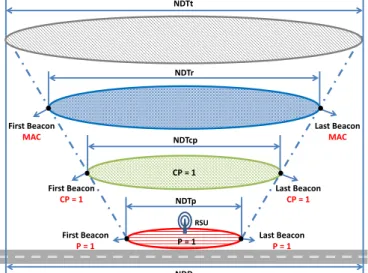
5.2 Handover Coverage Parameters Defined in Y-Comm . . . 54
5.3 Proactive Handover and Application to VANET Proposed in (Ghosh, 2016) . . . 56
CONTENTS
5.5 New Proactive Resource Allocation and Contentions Applied to
Acquiring a Channel in a Wireless Network . . . 59
5.5.1 No Contention . . . 61
5.5.2 Partial Contention . . . 62
5.5.3 Full Contention . . . 62
5.6 Summary . . . 63
6 Calculating the Probability of Contention in Mobile Networks using T and N 64 6.1 Probability Of Contention Between Two MNs Competing for the Same Network . . . 64
6.1.1 No Contention . . . 66
6.1.2 Partial Contention . . . 66
6.1.3 Full Contention . . . 67
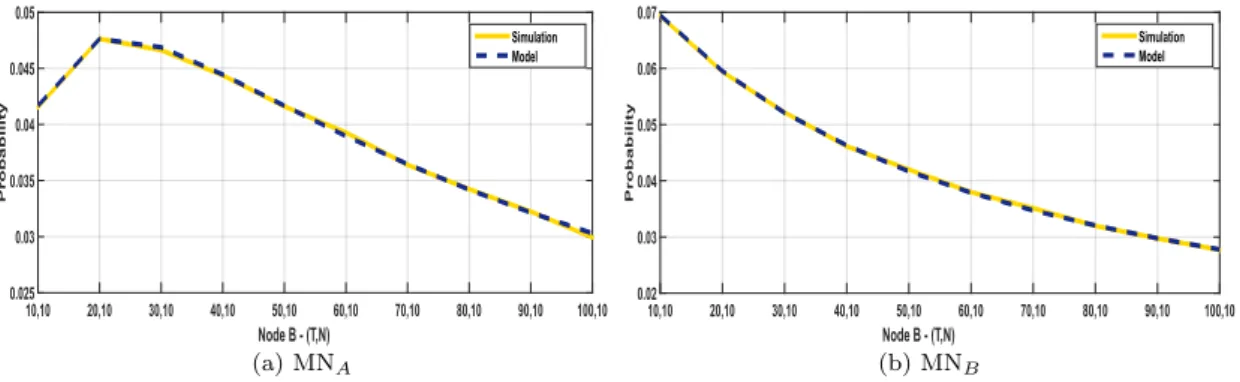
6.1.4 Comparison of Results for Two Nodes . . . 68
6.2 Probability Of Contention Between Three MNs Competing for the Same Network . . . 71
6.2.1 No Contention . . . 73
6.2.2 Partial Contention . . . 73
6.2.2.1 Partial Contention: Condition 1 . . . 74
6.2.2.2 Partial Contention: Condition 2 . . . 74
6.2.2.3 Partial Contention: Condition 3 . . . 75
6.2.2.4 Partial Contention: Condition 4 . . . 75
6.2.2.5 Partial Contention: Condition 5 . . . 76
6.2.2.6 Partial Contention: Condition 6 . . . 77
6.2.2.7 Partial Contention: Condition 7 . . . 77
6.2.3 Full Contention . . . 78
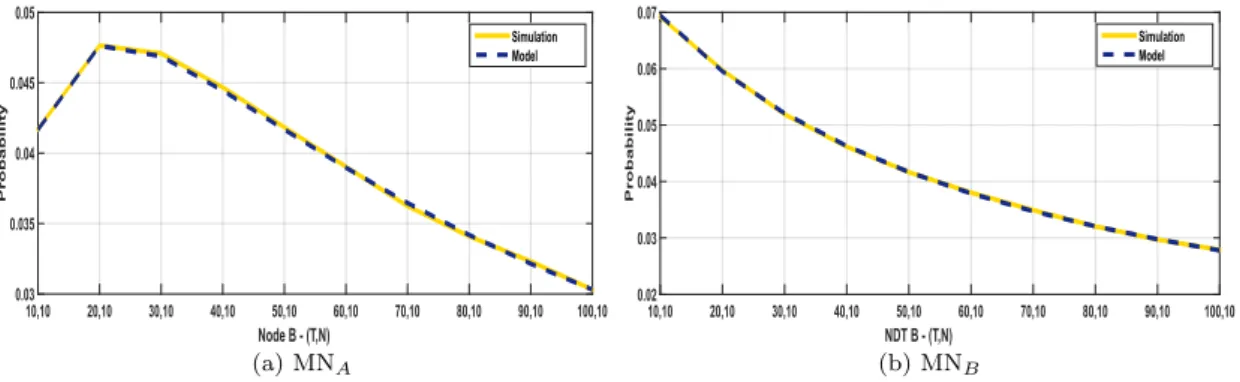
6.3 Observations From Two and Three Node Scenario . . . 82
6.4 Summary . . . 83
7 Queuing Models for Proactive Resource Allocation 85 7.1 Queuing Model Using Decision System . . . 85
CONTENTS
7.2.1 Request Management in the Contention Queue . . . 88
7.2.2 New Proactive Markov Queuing Model . . . 90
7.3 Results and Discussion . . . 91
7.4 Effects ofα and β . . . 93
7.5 Calculating α and β . . . 94
7.6 Probability of a Request Staying in the Contention Queue . . . . 96
7.7 Summary . . . 98
8 Application to VANET systems 99 8.1 Designing and Implementation of VANET Testbed . . . 99
8.1.1 MDX Deployment . . . 100
8.1.2 A41 Deployment . . . 100
8.1.3 Application Description . . . 101
8.2 MDX and A41 Coverage Map Result . . . 103
8.3 Application of Contention Probabilities . . . 106
8.3.1 Results and Discussion . . . 109
8.4 Summary . . . 113
9 Conclusion and Future Work 114 9.1 Contribution of the Thesis . . . 114
9.2 Conclusion . . . 116
9.3 Future Work . . . 116
9.3.1 Exploring an Operational Space . . . 116
9.3.2 Developing Proactive Handover and Resource Allocation Algorithm for VANET Testbed . . . 117
References 119
List of Figures
1.1 Core and Peripheral Networks (Mapp et al., 2016) . . . 2
1.2 Illustrating Time Before Handover & Network Dwell Time (Mapp et al., 2012) . . . 4
2.1 Handover Classification (Cottingham, 2009) . . . 10
3.1 Exponential Probability Density Function . . . 26
3.2 Markov Chain Model . . . 29
3.3 VANET Communication . . . 31
3.4 WAVE Protocol Stack (Hartenstein and Laberteaux, 2009) . . . . 32
3.5 BSM Message Format . . . 33
4.1 Pure ALOHA Protocol . . . 37
4.2 Successful Transmission Cases . . . 38
4.3 Unsuccessful Transmission . . . 38
4.4 Successful Transmission . . . 39
4.5 Slotted ALOHA Protocol . . . 41
4.6 Probability of Maximum Success . . . 44
4.7 Classical Handover Multi-Channel Queueing System . . . 44
4.8 Classical Handover Multi-Channel State Diagram . . . 45
4.9 Useful Service vs Mobile Service . . . 48
5.1 YComm Reference Framework (Mapp et al.,2016) . . . 51
5.2 Handover in Y-Comm Framework . . . 53
5.3 Network Coverage (Mapp et al., 2012) . . . 54
LIST OF FIGURES
5.5 Communication Range Segmentation . . . 58
5.6 Request for Channel Allocation . . . 60
5.7 Contention Probability Conditions for Two MNs Scenario . . . 61
6.1 Variables for Two Node Scenario . . . 65
6.2 Probability of No Contention - Simulation vs Model . . . 68
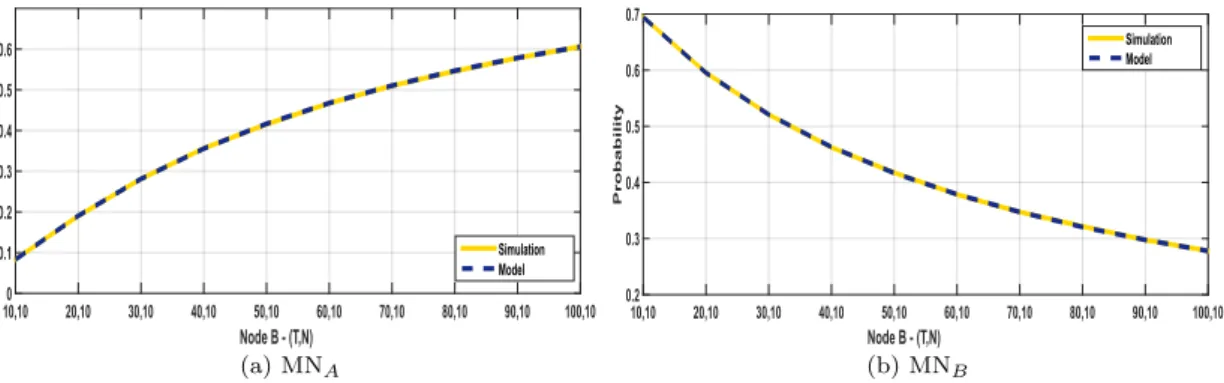
6.3 Probability of Partial Contention - Simulation vs Model . . . 70
6.4 Probability of Full Contention - Simulation vs Model . . . 71
6.5 Contention Probability Conditions for Three MNs Scenario . . . . 71
6.6 Contention Probability Conditions forM NA . . . 72
6.7 Variables for Three Node Scenario . . . 73
6.8 Probability of No Contention: Three Node - Simulation vs Model 79 6.9 Probability of Partial Contention (M NA): Three Node - Simula-tion vs Model . . . 80
6.10 Probability of Full Contention: Three Node - Simulation vs Model 81 6.11 Number of Conditions for N Nodes . . . 83
7.1 Proactive Resource Allocation Queuing System with α . . . 86
7.2 Proactive Resource Allocation State Diagram withα . . . 86
7.3 Proactive Resource Allocation Queuing System with α and β . . . 87
7.4 Contention Queue Management . . . 89
7.5 Proactive Resource Allocation State Diagram withα and β . . . . 90
7.6 MRT results as a function of arrival rates . . . 92
7.7 Throughput results as a function of arrival rates . . . 92
7.8 THRP results as a function of α for different λ . . . 93
7.9 MRT results as a function of for different λ . . . 94
7.10 β Calculation . . . 95
7.11 Proactive Contention Queue . . . 96
8.1 Network Diagram. . . 101
8.2 Packet forwarding from RSU to Server. . . 102
8.3 Coverage Map. . . 104
8.4 Power Received for Each Packet - MDX Testbed vs FSPL. . . 105
LIST OF FIGURES
8.6 Full Coverage and Overlapping Map for A41, Watford Way,
Hen-don, London . . . 108
8.7 T Split up . . . 109
8.8 Probability of α . . . 110
8.9 Probability of β . . . 111
8.10 General Probability of a Request Reaching the Channel Queue . . 112
8.11 Probability of a Request Not Being Affected by β . . . 112
List of Tables
2.1 Comparison of Different Network Management Mechanisms . . . . 23
6.1 Probability of Contention: Simulation Vs Model; M NA (50,10)
and M NB (10,10). . . 70
8.1 RSU Location Information. . . 100
Notations
5G 5th generation mobile network
AP Access Point
BS Base Station
BSM Basic Safety Message CAC Call Admission Control CAM Cooperative Awareness Message CINR Carrier to Interference Noise Ratio
D2D Device to Device
D2I Device to Infrastructure DSRC Dedicated Short Range Communication EDGE Enhanced Data for GSM Evolution ETSI European Telecommunications Standards Institute FIFO First In First Out FSPL Free Space Path Loss GPRS General Packet Radio Service GPS Global Positioning System GSM Global System for Mobile ICA Intersection Collision Alert
IP Internet Protocol
IPv6 Internet Protocol version 6 LAN Local Area Network LIFO Last In First Out
LoS Line of Sight
LTE Long Term Evolution MAC Media Access Control
LIST OF TABLES
MATLAB Matrix Laboratory
MN Mobile Node
MT Mobile Terminal
NDD Network Dwell Distance NDT Network Dwell Time OMNeT++ Objective Modular Testbed in C++
PHY Physical Layer
PoA Point of Attachment PVD Probe Vehicle Data QoE Quality of Experience QoS Quality of Service RAT Radio Access Technology
RSA Road Side Alert
RSS Received Signal Strength RSSI Received Signal Strength Indicator
RSU Road-side Unit
SINR Signal to Interference Noise Ratio SUMO Simulation for Urban Mobility TBH Time Before Handover TCP Transmission Control Protocol TfL Transport for London UDP User Datagram Protocol
UE User Equipment
UMTS Universal Mobile Telecommunications System V2I Vehicle to Infrastructure V2P Vehicle to Pedestrian V2V Vehicle to Vehicle VANET Vehicular Ad-hoc Network Veins Vehicles in Network Simulation VPN Virtual Private Network WAVE Wireless Access in Vehicular Environments WLAN Wireless Local Area Network WSMP WAVE Short Messaging Protocol
TEH Time taken to execute a handover
RH Handover radius
ν Velocity of the mobile node
RE Exit radius
Υ Time before handover
ℵ Network dwell time
~ Time to handover
T Time to get resource
N Resource hold time
% Handover prepare time
N Number of nodes
Z Delay due to contention
tc Current time
tdet Detection Time
tcon Configuration time treg Registration time tadp Adaptation time
τ Reciprocal of T
η Reciprocal of N
λ Total arrival rate
λef f Effective arrival rate
µs Service rate
S Number of server/channel
Q Maximum number of request in queue
U Total number of users in the system
µm Mobility rate
µi Service rate for state i
ρ Traffic intensity
Pi State probability
γ Throughput
α Full contention among arrivals around same time
β Requests leaving the queue due to Full contention
Chapter 1
Introduction
W
e are rapidly moving towards a world in which mobile systems will be oper-ated using the 4A’s paradigm of seamless communication: Anytime, Anywhere, Anything and Anyhow. This includes support for seamless connectivity in highly mobile environments. With the rapid development of mobile communication technologies such as WiFi, femtocells, Long-Term Evolution (LTE), Vehicular Ad-Hoc Network (VANET), the integration of various other wireless networks known as Heterogeneous Networking (HetNet) has become necessary to provide Mobile Nodes (MNs) with ubiquitous communication. For example, where, an MN can connect to a nearby LTE, the calls rejected by LTE networks due to lack of radio access can overflow to overlaying WiFi networks, thus reducing the call blocking probability and improving bandwidth utilization in cellular overlay net-works. However, this may result in frequent forced handoffs in those areas covered by small cells and leads to extra signalling overheads (Huang et al., 2011). In these environments, traditional handover techniques, which depend on a reactive approach, have been found to be inadequate because of high speeds of vehicles as resources must be quickly allocated and deallocated as the mobile user moves around. Hence, good resource management must be considered as a key enabling functionality to allow seamless connectivity in mobile environment.This issue needs to be addressed in future network requirements such as 5th generation mobile networks (5G). The 5G standardisation framework will be de-fined by 2020, and 5G architecture is expected to accommodate a wide range of use cases from the most important vertical sectors namely: Automotive, Energy,
Industry 4.0, Health, Media, and Entertainment. These use cases have more demanding network requirements, especially in terms of latency, bandwidth, cov-erage, and resilience. According to the 5G Infrastructure Public Private Part-nership (5G PPP), the most important performance targets that 5G needs to achieve are: latency should be below 5ms, and device density should be up to
100 devices/m2, along with tight constraints on territory and population
cover-age for supporting all possible services. 5G will also integrate different enabling technologies and networks leading to a heterogeneous environment in which the MN switches seamlessly between networks while maintaining the required Qual-ity of Service (QoS) for its applications (Olwal et al., 2016). Furthermore, it is important that 5G is very efficient in terms of resource allocation because 5G will be deployed on a global scale.
The Internet is currently evolving. Instead of large, global, but individually-managed networks, a core network is being deployed which is fast and getting faster by the use of optical switching. Peripheral wireless networks will be situ-ated at its edges. A core endpoint is an entity which is at the edge of the core network and is used to connect different types of peripheral networks to the core infrastructure as shown in Figure 1.1. In order to ensure consistent and seamless interoperability as the MN moves around, it is crucial to have the ability to an-ticipate future network conditions with adequate precision. Therefore, one of the main challenges is handover and how to manage the mobility of MN as well as its effects on resource allocation.
CORE NETWORK QoS, Secure Connection
PERIPHERAL WIRELESS NETWORK PERIPHERAL WIRELESS NETWORK Core Endpoints
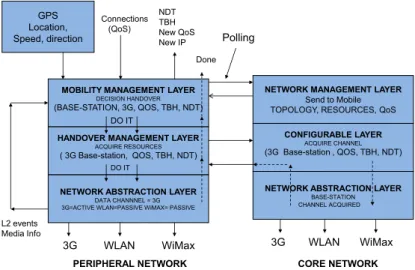
Figure 1.1: Core and Peripheral Networks (Mapp et al., 2016)
Proactive behaviour by systems refers to anticipatory, self-initiated and change-oriented behaviour in different situations. Proactive behaviour involves acting in
advance of a future situation, rather than just reacting. It means taking control and making things happen rather than just adjusting to a situation or waiting for something to happen. Therefore, this proactive approach helps any system to perform better than a traditional reactive approach. This applies to wireless networks where the handover and resource allocation currently follow a reactive approach which can be enhanced by using a proactive approach (Saxena and Roy, 2009). It is very important to provide a seamless service to all the users in a network and therefore, these users and their contention for resources have to be looked in detail.
Any proposed solution must also be scalable because in the future the MN may have the ability to handover to hundreds of possible target networks (Ulvan et al.,
2010). Knowing the velocity and current position of an MN could help to estimate where the MN is heading. Thus, the next position of MN where handover might be performed can be predicted (Mapp et al., 2016). Hence, using this approach, proactive handover in which the MN actively attempts to decide where and when to handover has been shown to be an efficient handover policy mechanism to minimize packet loss and service disruption as an impending handover can be signalled to the higher layers of the network protocol stack (Mapp et al., 2012). This approach has been shown to be effective in mobile environments (Ghosh,
2016).
In addition to the need for new handover decision mechanisms, there is also a need for better resource reservation mechanisms due to varying traffic character-istics, QoS application requirements and wireless channel conditions at the access point. Efficient resource management is needed to optimize the performance of a wireless network because only a limited number of simultaneous calls can be hosted by a wireless cell. Therefore, incoming handoff calls and new calls should not compromise the quality of the ongoing calls in the cell. Traditionally, user contention has been used to analyse the need for specific resources such as ra-dio channels by mobile users. However, it is possible to use this contention to proactively manage these resources. This thesis explores the use of contention to provide better resource management in highly mobile networks.
One key application area of proactive resource allocation is in Intelligent Transport Systems (ITS) which can be implemented using VANETs.
Charac-teristics of VANET such as high velocity, smaller coverage range and mobility pattern are serious challenges in providing seamless handover, resource allocation and in moving the services from the previous Road-side Unit (RSU) to the new RSU. HetNet for vehicular communication, comprising VANET and LTE (Ucar
et al., 2015) have been considered in Cooperative ITS (C-ITS). Vehicular users
experience strong data rate fluctuations as their locations change rapidly (
Abou-zeid et al., 2013). Besides, available resources are limited in a cell must be used
by new calls and handover calls. In addition, the radio resource scarcity and the increasing number and capacity needs of mobile users make it mandatory to utilize the available resources in an efficient way (Boujelben et al., 2014). There-fore, developing proactive handover and resource allocation models for high speed mobile systems would be the best option to achieve a realistic model which can be applied to most of the communication systems.
MN
WIRELESS NETWORK
NDT TBH
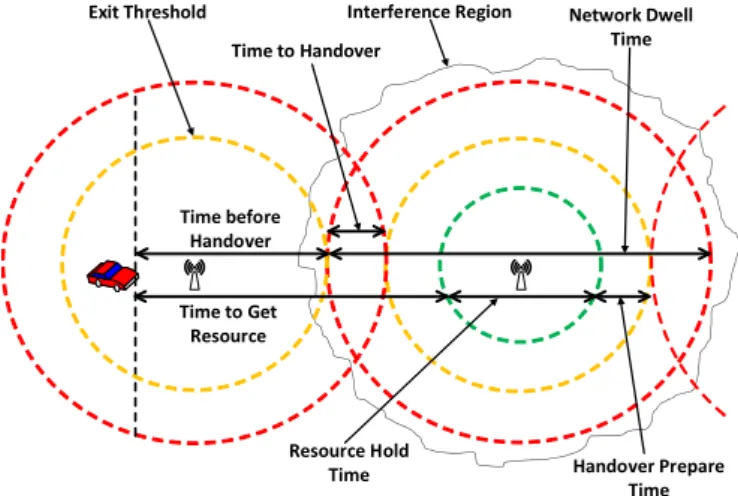
Figure 1.2: Illustrating Time Before Handover & Network Dwell Time (Mapp
et al., 2012)
Vertical handover techniques are used to maintain the connection between the MN and the core network via the core endpoint as the user moves around (Mapp
et al.,2016). Y-Comm is an architecture that has been designed to build future
mobile networks by integrating communications, mobility, QoS, and security. It accomplishes this by dividing the future internet into two frameworks: Core and Peripheral Frameworks. The researchers of Y-Comm have made major contri-butions in the areas of proactive handover to provide seamless communication by introducing the ability to accurately estimate Time Before Handover (TBH) which is the time after which the handover should occur and Network Dwell Time
(NDT) which is the time the MN will spend in the coverage of the new network as shown in Figure1.2. These two parameters were used to study seamless handover in mobile environment.
In this thesis, a detailed investigation has been presented on how these two pa-rameters can be used to aid the management of resources in a proactive handover scenario by analysing the contention between mobile users for communication channels in wireless networks, hence, leading to better resource management. These two parameters allow us to determine the time when different nodes will need to acquire and release resources due to mobility. Therefore, it is possible to explore periods of contention for resources which, in turn, will allow us to develop heuristic proactive algorithms to optimise the use of the resources.
1.1
Research Aims and Objectives
The main aim of this thesis is to address the issues highlighted above by looking at developing mechanisms for better resource management to ensure seamless communication in highly mobile environment such as vehicular networks. The primary focus is to study the effects proactive resource allocation in a wireless network. Models are developed to calculate the probability of an MN acquiring resources before it reaches the next coverage network based on different contention types. Further, the application of this approach to a real VANET has been presented.
Considering the scope above, the main research question of this thesis will be outlined in the following subsection.
1.1.1
Key Research Questions
This thesis looks at exploiting user contention to optimize proactive resource allocation in future networks. Some of the key Research Questions that have to be addressed in this thesis are:
1. What are the time parameters that is required to analyse and understand the contention for resources in a highly mobile environment?
2. What are the different types of contention that occur when acquiring a resource based on user mobility?
3. What are the different mathematical conditions that will identify the oc-currence of contention?
4. How can these conditions be used to develop an analytical model to calculate the probability of contention for a resource among different MNs?
5. What are the aspects that have to be considered to develop a queuing model for a proactive resource allocation and how well does this approach perform when compared to the classical resource allocation model?
6. How do we build a VANET testbed and acquire the necessary parameters in order to apply the proposed approach to VANETs?
1.1.2
Solution Approach
This thesis provides a more comprehensive analysis of contention for resources. Some of the concepts of Y-Comm architecture such as NDT, TBH and Exit Times have been used to provide a framework to investigate resource allocation issues. Y-Comm has been used to study seamless handover in both homogeneous and heterogeneous networks. This thesis, also explains the overall approach by showing the application to VANET testbed and articulates that in highly mobile environments, it is necessary to consider a proactive approach to handover and resource allocation model which is based on a probabilistic rather than a fixed coverage approach. Furthermore, the developed proactive model is compared with traditional resource allocation approach. Finally, this thesis presents the results from analytical model, simulation and the testbed data collected from the VANET Testbed.
The key contributions of this thesis are therefore as follows:
• A proactive approach has been formulated by analysing the contention among various users in trying to acquire a radio channel in a wireless cell.
• Using probabilistic techniques, the contention among various mobile users in trying to acquire a communication channel in a wireless cell has been analysed. We find the probabilities of No Contention, Partial Contention and Full Contention.
• Two new queuing models are introduced: the first calculates the probabil-ity that a MN will never acquire a channel amongst various simultaneous requests for the channel and hence, the MN can be immediately instructed to be handed over to another network.
• A second case proposes a further refinement by introducing a concept of a contention queue which is used to analyse users waiting to acquire the channel before they reach the coverage of the next network.
• Using simulation, this work has shown that these two new approaches sig-nificantly improve the overall system performance compared to reactive handover multi-channel queueing models in terms of mean response time and throughput.
• It has been demonstrated that how these new parameters can be calculated for any wireless network.
• Application of this approach to a VANET network has been presented.
• Preliminary results show that this approach can be effective in improving the overall network performance.
1.2
Thesis Outline
The following is an outline of the final thesis:
• Chapter 2: the literature review presents a critical review of the existing solutions and approaches produced by researchers, scientists and groups.
• Chapter 3: details the methods and approaches used for conducting this research. The methods comprises of simulation using matrix laboratory
(MATLAB) tool, analytical modelling using exponential probability dis-tribution function (PDFs) and queueing theory and finally, the proposed approach is applied in the VANET testbed.
• Chapter 4: a more comprehensive analysis of contention and their effects in wired network such as Ethernet for the traditional network access protocols such as Pure ALOHA and Slotted ALOHA were presented. Also, elabo-rates the contention for resources by MNs in a classical reactive handover scenario. This chapter also details the queueing analysis of the classical approach and highlights the need for better approach.
• Chapter 5: introduces the proactive system and also describes Y-Comm framework. Proactive handover and coverage segmentations of a wireless network is presented. Different contention types involved in acquiring the resources are described.
• Chapter 6: The analytical model to calculate the probability of contention for two and three nodes scenario is presented in this chapter.
• Chapter 7: details the queueing analysis of the two different proactive ap-proach and the results are presented comparing the classical apap-proach.
• Chapter 8: discusses the VANET Testbed in detail and shows the applica-tion of proactive approach.
• Chapter 9: concludes this thesis with a summary of the thesis and directions for future work, in order to ensure continual improvement in the current and related field of study.
Chapter 2
Literature Review
Because of the emergence of Smart Cities, there is now an attempt to support seamless communication in highly mobile environments. Several research efforts were carried out looking at routing, security and applications for highly mobile environment but very few addressed handover and resource allocation issues. Re-cent endeavours in (Almulla et al., 2014) and (Li et al., 2014) clearly show that researchers are interested in proactive handover or predictive handover mecha-nisms, however these efforts considered parameters like user preferences, user lo-cation and applilo-cation requirements and thus used techniques such as proactive caching but failed to analyse the effects of the lower layers on these parameters as highlighted in (Ghosh et al.,2013,2014a). This Chapter presents an extensive analysis of various research efforts that looked into handover and resource allo-cation for mobile networks. Before looking into existing work, a comprehensive understanding of different handover types is necessary which is as shown in the following section.
2.1
Advanced Handover Classification
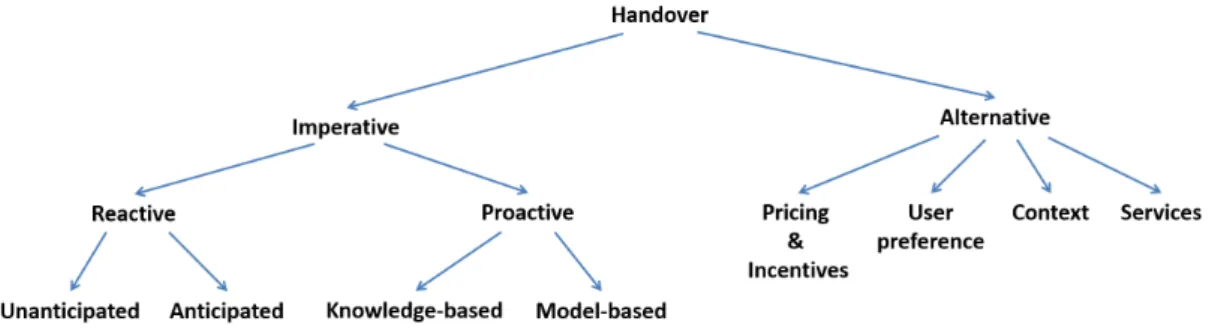
Handovers in a wireless network can be divided into two advanced type as shown in Figure 2.1. Imperative handovers occur when the MN changes its Point-of-Attachment (PoA) because it has determined by technical analysis based on parameters such as coverage, signal strength, and the QoS offered by the new
network. There may be a severe loss of performance or loss of connection if they are not performed and therefore, it is called as an imperative handover. In con-trast, alternative handovers occur due to reasons other than technical issues such as preference for a given network based on price or incentives. Hence there is no severe loss of performance or loss of connection if an alternative handover does not occur (Cottingham, 2009).
Figure 2.1: Handover Classification (Cottingham, 2009)
Imperative handovers are, in turn, divided into two types that is reactive and proactive handover. As explained previously reactive handover responds to changes in the low-level wireless interfaces as to the availability or non-availability of certain networks and it can be further divided into unanticipated and antic-ipated handover. Unanticantic-ipated handovers are hard handovers where the MN is heading out of range of the current PoA and there is no other access point (AP) or base station (BS) to which to handover. Anticipated handovers are soft handovers which describe the situation where there are alternative BS to which the MN may handover. Proactive handover policies which uses soft handover at-tempt to know the condition of the various networks at a specific location before the MN reaches that location (Cottingham, 2009).
Proactive policies allow MNs to calculate the time before handover which en-ables them to minimize packet loss and latency experienced during handovers. Presently, two types of proactive handovers are being explored by various re-searchers. The first is knowledge based where the signal strengths of available wireless networks is known by measuring beforehand for a given area such as a city. This could involve physically driving around and taking these readings. Due to the effects of seasonal changes on wireless propagation these
measure-ments need to be taken in different seasonal contexts. The second is a proactive policy based on a mathematical model which calculates the point when handover should occur and the time that the MN would take to reach that point based on its direction and velocity. The accuracy of this approach is dependent on var-ious factors including location, network topology, the propagation model used, technology, and specific environments, for example, whether the MN is indoor or outdoor (Mapp et al., 2012).
2.2
Handover Techniques in Highly Mobile
En-vironment
A lot of research has been done to investigate handover in mobile heterogeneous environments in order to guarantee the delivery of acceptable QoS in such en-vironments. A joint optimization was proposed in (Bi et al., 2014) to solve the handover problem in heterogeneous networks, especially in VANETs and cellular technologies, to keep a balanced load across all access points (APs) and to maxi-mize the data rate of overall networks. In addition, in (Kirsal,2016) an intelligent handover decision approach was proposed to minimize the handover failures and unnecessary handovers whilst maximizing the usage of resources. However, the limitations of current reactive networks were highlighted in (Bastug et al.,2014). Several studies of the vertical handover procedure, mobility management and common radio resource management schemes in heterogeneous environments have been reported in the literature (Ben Elhadj et al., 2016; Seaman et al., 2012;
Vilaplana et al., 2014; Xenakis et al., 2016). These studies show that there are
several dynamic factors that must be considered in vertical handover decisions for effective network usage including policies to determine whether or not to handover as well as mechanisms to determine the best network to which to handover. In order to guarantee the delivery of acceptable QoS in such environments; a decision has to be taken on whether or not a handover should be executed based on many factors such as the speed of the user, network conditions, response time of the networks. Service and buffer management issues were explored in (Gemikonakli
channel wireless networks.
The authors in (Zhang et al., 2011) have attempted to address handovers from macro cells to femto cells for high speed nodes, which may encounter useless handovers as well as increasing signalling overhead based on the mobility state of node. Work in (Hossain et al., 2015) showed the advantages of deploying femto-cells and the performance enhancement provided by macrocell/picocell/femtocell integration. The maxmium velocity considered for the mobile user was 36km/h and therefore, did not show the effects of higher velocity on the call dropping probability. Hence, the mobile users moving out of the cell without service due to high mobility was not captured. In (Ulvan et al., 2010) the authors proposed a client-based handover decision procedure, where the MN periodically sends its position relative to the serving cell which maintains a database of all possible target cells to where the handover might be performed. The likely path of the MN was estimated in advance by a probabilistic approach using the remaining time before handover and the handover probability was derived. The authors in
(Patanapongpibul et al., 2006) have also proposed a client-based handover for
MN in Mobile Internet Protocol version 6 (IPv6) wireless networks supporting both horizontal and vertical handoffs.
Proactive handover policies attempt to know the condition of the various networks at a specific location before the MN reaches that location (Almulla
et al., 2014). In addition to this, the Mobile IPv6 Fast Handover (FMIPv6)
operates in two modes: Predictive and Reactive. In a Predictive Fast Handover, a MN is able to send an Fast Binding Update (FBU) to the New Access Router (NAR) when it is attached to the Previous Access Router (PAR) even before the MN attaches to the NAR, which then establishes forwarding for its traffic
(Schmidt et al., 2014).
An IEEE 802.11 AP driven handover algorithm using network virtualization and high level abstractions provided by the 5G-EmPOWER framework was pre-sented in (Zeljkovic et al., 2017). Proactive and transparent handover steered by a centralized controller which uses RSSI values to estimate the distance of the user from the AP was proposed to reduce the amount of handover and to avoid unnecessary one. The study in (Feirer and Sauter, 2017) shown that a proactive process is necessary to achieve a proper and seamless roaming performance in a
dense wireless environment using a IEEE 802.11k amendment. The shortcoming of this approach is that the number of channel scans needed increases as the num-ber of available APs increases. Transport layer handoff issues were highlighted in
(Sinky et al.,2015) and the authors proposed a handoff-aware cross-layer assisted
multi-path TCP in (Sinky et al.,2016) to improve service continuity during han-dovers through proactive congestion window adjustments in mobile heterogeneous wireless networks.
A proactive unnecessary handover avoidance scheme was proposed in (Wang
et al., 2014) for the LTE-A small cells. Unnecessary handover was avoided by
calculating the probability of the active time during the dwell time in one cell and comparing the same to find if pre-defined threshold exceeds certain value. Here, a model to estimate the dwell time in the small cell was not considered. To reduce handoff call dropping rate and maintain acceptable new call blocking rate while providing efficient bandwidth utilization, a distributed bandwidth reserva-tion scheme called the mobility-predicreserva-tion-aware bandwidth reservareserva-tion (MPBR) scheme was proposed in (Nadembega et al., 2015a). MPBR consists of a hand-off time estimation scheme, an available bandwidth estimation scheme and an efficient call admission control scheme. The results indicated that the proposed scheme had an increased probability of providing acceptable QoS to mobile users.
2.3
Prediction: Mobility and Network
Connec-tion Time
In (Yan et al., 2010) a survey of vertical handover decision algorithms in fourth
generation heterogeneous wireless networks was presented. Twelve different al-gorithms were evaluated and grouped based on the criteria they use for making handover decisions. Three algorithms among the twelve used the Network Con-nection Time estimation technique which is the duration that a Mobile Terminal (MT) remains connected to a PoA. MT lifetime or travel time within the WLAN was proposed in (Zahran et al., 2006) and (Yan et al., 2008). The shortest dis-tance between the point at which handover is initiated and WLAN boundary was presented in (Mohanty and Akyildiz, 2006).
The work in (Gomes et al., 2016) has highlighted the importance of mobility prediction for the cloudified mobile networks in the migration of content-caches located at the edge of network which optimizes their resources and achieves sig-nificant bandwidth savings. The authors in (Becvar et al.,2014) have proposed a prediction algorithm for the number of resources required by the users at the tar-get cell after handover. Connectivity management as a service (CMaaS), a new control plane for 5G network architecture was proposed and the performances of reactive and proactive CMaaS for Device to Infrastructure (D2I) links, and reactive CMaaS for the Device to Device (D2D) links were studied. According to the study the proactive CMaaS achieved less than 3 ms round-trip time (RTT) delays but comes at the expense of an increasingly complicated control plane as a larger number of rules need to be computed and communicated by the controller every second compared to reactive CMaaS (Yazc et al., 2014).
Since, mobility results in channel gains which varies with time, Abou-zeid
et al. (2013) have shown that the data rates experienced by the mobile user in
the future can be predicted by exploiting the user mobility patterns with the correlation of location and received signal strength. The work has presented a long-term predictive resource allocation plans for the BS’s by exploiting the radio maps and mobility pattern.
There are several approaches through which Resource Reservation can be im-plemented. These solutions are QoS routing, Medium Access Control (MAC) scheduling mechanisms and admission control. In the case of high traffic load, there is no admission control available for rejecting traffic so as to support QoS for the existing traffic (Yu et al., 2013). According to (Yu et al., 2013), MAC scheduling mechanisms are essential for managing bandwidth allocation and im-plementing service differentiation towards distinct types of sessions. The impact of mobility on the infra-structureless IEEE 802.11p MAC performance by inves-tigating the mobility factors such as velocity and number of neighbouring nodes were evaluated in (Alasmary and Zhuang, 2010). The work showed that the rel-ative speed of the MN has a significant impact on channel access at the MAC layer, disregarding the number of communicating nodes. This work was carried out to achieve better fairness in terms of how long each node shares the medium based on the estimated time it spends in the active transmission range.
A mobility prediction scheme for MNs was proposed in (Nadembega et al.,
2015b) Probability and DempsterShafer processes were applied to predict the
likelihood of the next destination based on the users habits (e.g., frequently vis-ited locations). In addition, a second-order Markov chain process was applied at each road junction for predicting the likelihood of the next road segment transi-tion, given the direction to the destination and the path from the trip origin to that specific road junction. Terminal mobility prediction for ultra dense networks based on Support Vector Machine was proposed in (Challita et al.,2017). A Sup-port Vector Machine was used to obtain the vector index of the mobile terminal and regression algorithms to predict the location of the mobile user and based on the prediction information the proposed scheme make reservations of the needed resources in advance. The approach proposed in (Fazio et al., 2014) showed how a statistical approach based on mobility prediction technique can enhance system performance using In-Advance Multiplexing Call Admission Control (IAM-CAC) scheme for cellular networks.
2.4
Cooperation in Wireless Networks
Cooperative techniques in wireless networks have been recently proposed and are aimed to enhance the efficiency of data dissemination and resource allocation. Potential benefits of cooperation and its challenging issues in wireless commu-nication networks were discussed in (Zhuang and Ismail, 2012). Three coopera-tion scenarios were examined, namely, cooperacoopera-tion to improve channel reliability through spatial diversity, cooperation to improve throughput through resource aggregation, and cooperation to achieve seamless service provision. The study highlighted that cooperative decision making should be based on cross-layer de-sign among transport, network, MAC and Physical (PHY) layers.
Utilization of roadside wireless local area networks (RS-WLANs) as a network infrastructure was investigated in (Liang and Zhuang,2012) and shown that coop-erative caching at the AP consume more bandwidth and buffer storage resources at the AP, than direct transmission. This demonstrates that in order to make the best use of techniques such as caching and storage it is necessary to know the exact amount of data which can be transmitted to the user in a given time. This
helps in reducing the usage for buffer space. However, according to (Ismail and
Zhuang, 2012) BS/AP can perform its own resource allocation to support the
MT, while at the same time cooperate with other available networks BSs/APs, hence, no central resource manager is required.
2.5
Call Admission Control
Call Admission Control (CAC) is an important part of resource management and hence, a lot of work has been used to analyse CAC schemes, for example, a CAC scheme using a cross layer approach to adapt the transmission power in PHY layer and to optimize the contention window size in the MAC layer on the basis of the vehicle density estimation was proposed in (Bejaoui, 2012,
2014). A priority level computing function was also introduced which is based on vehicular parameters to make the scheduling and resource allocation process fairer. Security, Link Quality, Roadside conditions, Precedence class and waiting times are the network parameters considered in the proposed function.
Carvalho et. al. (Carvalho et al.,2013) proposed a Joint CAC (JCAC) scheme which considers the ratio between the radius of the co-located Radio Access Tech-nologies (RATs) and selects the smallest one for non-real-time service classes and the biggest RAT for real-time service classes. A joint optimization was proposed
in (Bi et al., 2014) to solve the handover problem in heterogeneous networks, in
particular VANETs and cellular technologies, to keep a balanced load across all access point and to maximize the data rate of overall networks. A mobility-aware CAC algorithm with a first-in-first-out (FIFO) Handoff Queue (HQ) to accom-modate more handoff calls if no channels are available and if HQ is not full in mobile hotspots was proposed in (Kim et al.,2013)
Self-Organizing Network (SON) is a new approach, which has self-configuration, self-optimization and self-healing functionalities for minimizing human efforts. A self-configuration algorithm with three self-optimization functions: Admission Control, Handover and Load Balancing for newly added Femto Cell has been proposed in (Boujelben et al., 2014). An algorithm for proactive resource reser-vation has been proposed in (Ukil and Sen,2010) based on teletraffic theory and the concepts of adaptive filtering. The limitations of current reactive networks
has been highlighted in (Bastug et al.,2014) and the authors proposed a proactive caching networking paradigm where predictable users’ peak data traffic demands can be reduced by proactively serving.
Congestion avoidance, which is enforced using CAC algorithms, is also im-portant to avoid degradation in the quality and performance of a network. The question of whether to accept a new call, based on whether this new call can be supported with the desired QoS is dealt by CAC schemes (Bashar et al., 2010). An adaptive JCAC model was proposed in (Kaur and Selvamuthu,2014) for bal-ancing loads among LTE-UMTS networks. Along with considering the service requirements of an user, the proposed model selects an interface for a new call based on the load conditions of LTE and UMTS interfaces. CAC based on ser-vice demands to assign proper network in LTE networks using femtocells was proposed in (Khan et al., 2016). In dense environments the proposed approach produces undesirable amounts of link delay and signalling overhead.
A handoff algorithm based on CAC for heterogeneous networks was proposed
in (Kabiri et al., 2016). The proposed algorithm selects a target BS from a
list of neighbouring candidate BSs by taking into account multiple criteria such as measured received signal strength (RSS) and signal-to-interference-plus noise ratio (SINR), predicted RSS and SINR, and number of free resource blocks of neighbouring BSs. In addition, logistic smooth transition autoregressive model was used to predict the RSS and SINR samples. An optimized handoff scheme based on mobility prediction, signal strength, and availability of resources for femtocell networks called as OHMPCAC was presented in (Cheikh et al., 2016). The aim was to find the suitable AP and to reduce unnecessary handoffs.
2.6
Network Utility Maximisation and Selection
In 1998, Kelly et al. (Kelly et al., 1998), introduced the notion of Network Util-ity Maximization (NUM) and formulated resource allocation as an optimization problem for the first time. The authors assumed a wired network consisting of fixed capacity links and a set of users that wanted to transmit data to a set of destination nodes. The path of the traffic is known a priori and does not change during the optimization process. The main assumptions of this framework are
that utility functions of the transmission rates are concave in nature and that all links have a fixed capacity.
This work was extended to look at inelastic flows where the utility function was linked to Quality of Experience (QoE) as a function of the bandwidth being deliv-ered to applications such as HTTP, VoIP and IPTV (Liu et al.,2007). Such tech-niques have also been used to investigate multi-hop wireless networks (Chiang,
2005). This approach was further extended to look at networks with high SINR and derived utility functions for common applications in this environment (
Ty-chogiorgos and Leung, 2014).
Though this approach has been effective, its usefulness is limited in mobile het-erogeneous environments for two reasons. The first is handover in which users are continually being switched between different base-stations. The rate of handover is determined by the speed and path taken by the user and therefore has to be modelled for this framework. In (Trestian et al., 2017), the authors looked at re-source allocation for multimedia applications in a network of LTE small cells. The work assumed that mobile devices have a Handover (HO) monitor application, which allows them to calculate Time Before Handover and Network Dwell time to ensure seamless connectivity (Shaikh et al., 2007b). So managing handover is now a key part of resource management in modern networks. The second issue is that heterogeneous environments may involve several networks with different qualities of service. This introduces network selection issues based on different criteria depending on if the handover is imperative or alternative (Mapp et al.,
2009). In addition, in these environments, we need to simultaneously allocate resources fairly to users, and at the same time ensure the efficient management of several different networks. It should be realised that it may be difficult to opti-mize these two factors in the face of network selection by mobile users. In (Pervaiz
and Bigham, 2009), the authors looked at network selection in competitive
net-works using a game-theory approach. This effort developed a network selection algorithm based on reputation, degradation, price and availability.
2.7
Proactive and Predictive Resource
Alloca-tion
Research into resource allocation in communications networks has a long and distinguished history. The aim of this research is to develop efficient resource algorithms to allocate resources so as to enhance network stability and to enforce a level of fairness amongst users. Knowing the velocity and current position of an MN could help to estimate where the MN is heading, thus the next position of the MN where handover might be performed can be predicted. Proactive handover in which the MN actively attempts to decide when and where to handover has been shown to be an efficient handover policy mechanism to minimize packet loss and service disruption. In addition, an impending handover can be signalled to the higher layers of the network protocol stack (Mapp et al., 2012).
The authors in (El Gamal et al., 2017) proposed a proactive networking paradigm where the network anticipates user demand for networking resources in advance and utilizes this predictive ability to reduce the peak to average ra-tio of the wireless traffic, and thus yielded savings in the required resources to guarantee certain QoS metrics. The system and method presented focused on the existing cellular architecture and involved the design and analysis of learning algorithms, incentive techniques and predictive resource allocation strategies to maximize the efficiency of proactive cellular networks. In addition, a hierarchical VANET architecture was proposed in (Zhao et al., 2018) which supports content caching at different layers. The authors used the vehicle dataset collected from a VANET testbed deployed in the city of Porto, Portugal. The proposed model supports prefetching mechanism assisted by vehicle mobility prediction. The pre-dicted locations of the vehicles are used to pre-fetch users content before their explicit requests. The proposed mobility prediction solution in (Zhao et al.,2018) is a simple Markov chain-based model, which adaptively selects the first- or the second-order Markov chain model based on the available trace quality.
A user-selective resource allocation scheme was proposed in (Liu et al., 2016) to proactively avoid the problem of interference mitigation for Mobile to Mobile (M2M) communication in LTE networks. The proposed scheme manages the radio resource blocks assignment to the M2M pairs, M2M neighbours, and the
far-away users with less interference. Authors in (Guo et al., 2016) investigated the proactive resource allocation method performance gain by exploiting the ap-plication level, network level and user level information. A resource allocation planning optimization problem was formulated for pre-downloading the files to be requested to users, which optimizes the transmission duration at each BS along the trajectory of multiple mobile users to minimize the maximal transmission completion time.
The problem of optimal proactive caching was studied in (Tadrous and Eryil-maz,2016) and the authors suggested that the service provider performs proactive service decisions depending on the degree of uncertainty about future requests to minimize its expected convex cost over time while maintaining on-time delivery of requested content. The proposed approach did not focus on the high mobility and handover issues. Proactive Caching approach for Icnbased VANETs (PeRCeIVE) to place the right content at the right node in-time was proposed in (Grewe et al.,
2016). The proposed approach showed that a directed placement of data will im-prove the performance of the network by distributing the content with a minimal number of replicas one-hop away from the consumer. The approach demonstrated a content distribution mechanism based on geo-location, the current velocity and the heading direction of a vehicle. With the service provider’s ability to track and statistically predict future requests of its users, a proactive caching of the peak hour demand ahead during off-peak times was proposed in (Tadrous et al.,2016) to smooth out network traffic. The proposed approach did not consider the high mobility scenarios were statistical prediction might not yield required QoS.
According to (Albasheir and Kadoch,2016) as more and more innovative mo-bile services are being introduced, the LTE evolved packet core (EPC) require more resources, and does not have the capabilities to properly utilize the unused bandwidth of the guaranteed bearer when the reserved bandwidth is not fully used by the mobile service, the unused guaranteed bandwidth is considered as wasted resources and consequently the whole LTE/EPC network efficiency gets affected. Therefore, an adaptive technique to enhance the resource reservation was proposed to analyze the ongoing mobile traffic usage, forecast the mobile ser-vice resource consumption, provide time-series model, identify the unused/wasted resources, and utilize those resources by other services. Authors in (Mari et al.,
2014) have shown how the system may benefit from elements of future knowledge, even statistical or partial. Flexibility in resource allocation with prediction-based strategies was found to improve the energy efficiency of delay-tolerant transmis-sions. A quota-based utilization balance algorithm (QUBA) design was proposed
in (Chung et al., 2014) to ensure fairness of resource usage and maximize the
overall utility of all users in a heterogeneous networking environment. The fo-cus of the proposed approach was to statistically balance traffic loads among the dominant networks with high data rates and to regulate excess traffic loads of extremely heavy users to help in maintaining the fairness among all users.
2.8
Research Gap
Most of the existing work have focused on achieving fairness through techniques like cross layering and modifying the MAC layer. Call admissions and resource allocation were decided based on the cost functions and priority schemes. Though all the efforts discussed above have provided some useful results, what is clearly missing is a method of analysing contention of network resources. This is true in a highly mobile environment where networks resources must be quickly allocated to and de-allocated from mobile devices. Hence there are three possible outcomes: a MN gets the wireless channel and leaves the network after being served; the MN gets the wireless channel but leaves the network due to mobility; the MN leaves the network coverage due to mobility without being served. If these scenarios can be analysed before MNs reach the next wireless network, then it should be possible to signal to the MN that it will not be served and hence it should do a vertical handover to another network.
To the best of my knowledge, there is no work which has focused on assuring that a high speed MN gets its required resources or reserves the resource which will be utilised in an estimated time in a group of available heterogeneous networks based on its mobility. In all these efforts described above, no new analytical model of resource contention was presented, which is the focus of this research.
Recently, proactive handover mechanisms and estimating the network connec-tion time was given importance but a full fledged proactive resource allocaconnec-tion have not been investigated in detail. Therefore, there is a need for new CAC
algorithms based on the contention for resources by MNs entering the network. The ability to analyse this scenario in detail should lead to better resource man-agement algorithms as it should reduce the contention for resources.
In this thesis this scenario is analysed using contention analysis to yield No Contention, Partial Contention and Full Contention. In addition, we show how the system can be further extended by adding a contention queue that looks at the contention between incoming requests and requests waiting in the contention queue to be served. Contention analysis has been applied to Pure Aloha and Slotted Aloha as well as to wired and wireless systems. Table 2.1 shows all the mechanisms discussed, the networks to which they can be applied and the goals that each mechanism can achieve. It shows that contention analysis can be applied to all the different types of networks that have been discussed and can help to achieve fairness as well as good overall networking performance.
T able 2.1: Comparison of Differen t Net w ork Managemen t Mec hanisms X = Supp orted N = Not Supp orted P = P artially Supp orted Mec hanism P ap ers Analytical Metho d Net w orks F airness P erformance Net w ork Utilit y Maximization ( Kelly et al. , 1998 ), ( Liu et al. , 2007 ), Utilit y F unction Wired + Wireless X N ( Chiang , 2005 ), ( T restian et al. , 2017 ), ( T yc ho giorgos and Leung , 2014 ) Net w ork Selection ( Shaikh et al. , 2007b ), ( Mapp et al. , 2009 ), TBH or Game Theory HetNet P N ( P erv aiz and Bigham , 2009 ) Reactiv e Hando v er ( Bi et al. , 2014 ), ( Kirsal , 2016 ) Mark o v Pro cess HetNet N X Proactiv e Hando v er ( Bastug et al. , 2014 ), ( Mapp et al. , 2012 ) Lo cation or user preferences HetNet N N ( Alm ulla et al. , 2014 ) Adv ance d Proactiv e Hando v er ( Ghosh et al. , 2013 ), ( Ghosh et al. , 2014a ) TBH and NDT V ANET P N Predictiv e T ec hniques ( El Gamal et al. , 2017 ), ( Zh ao et al. , 2018 ) Prefetc hing + Mark o v Pro cess V ANET + Cellular N X Con ten tion Analysis Prop osed Mo del TBH, NDT + Mark o v Pro cess All Net w orks X X
Chapter 3
Research Methodology
In general there are three specific methods to address the issues highlighted in this research. The first is analytical modelling in which an analytical model is developed to capture the key parameters and to generate estimated solutions. The second method is the use of simulation to analyse different outcomes based on scenarios which capture the problems being explored. Finally, the third method is to build a testbed to perform experiments which would give insight into the problem. In this thesis all these three methods are used. Firstly, an analytical model will be explored and this will then be verified using simulation techniques. Finally, a testbed will be used to analyse different scenarios and to gain new insights into the issues.
3.1
Analytical Modelling
Analytical Modelling is a mathematical technique used for exploring, explaining, and making predictions about complex processes. Constructing these mathemat-ical models is an extensive process were a number of parameters affecting the system have to be considered accurate in order to achieve a reliable model (
Wit-tevrongel and Phung-Duc, 2016).
In this study, a tractable analytical model has been proposed to calculate the probability of contention for resources by MNs based on communication range of the AP and the mobility of mobile users in femtocell/macrocell networks.
Therefore, the exponential distribution has been considered, and this is due to the fact the proposed probability model has to take into account several variables and their iteration. Since this a complicated process, it is appropriate to consider a simple distribution first to understand the system rather than choosing a complex distribution. Also, to the best of knowledge of the author, there is no work which has done such an extensive analysis of contention for resources in a highly mobile environment.
Secondly in this study, queueing analysis has been conducted to showcase the benefits of using a proactive resource allocation and the application of the analytical model developed to the queueing system is presented. Also, critical operations involved in such proactive resource allocation queue management are explained in detail and how the relevant parameters are calculated is explained.
3.1.1
Exponential Distribution
The exponential distribution is one of the commonly used distributions to describe continuous random variables. It is often used to model lifetimes of products and times between random events called as interarrival times such as arrivals of customers in a queueing system or arrivals of orders (Balakrishnan, 1996). The distribution has one rate parameter, λ. If our random variable X follows an exponential distribution, then we say
X ∼Exp(λ) (3.1) Its probability density function (PDF) is
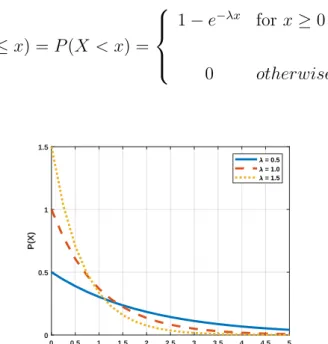
f(x) = λe−λx for x≥0 0 otherwise, (3.2) the resultant PDF graph is shown in Figure3.1 and cumulative probabilities can be calculated using the following equation.
P(X ≤x) =P(X < x) = 1−e−λx for x≥0 0 otherwise. (3.3) 0 0.5 1 1.5 2 2.5 3 3.5 4 4.5 5 x 0 0.5 1 1.5 P(X) = 0.5 = 1.0 = 1.5
Figure 3.1: Exponential Probability Density Function The main features of this distribution are:
1. The random variable can only take positive values. 2. Exponential decay - therefore larger values are unlikely.
3. The rate of arrival is fixed byλand hence, larger values correspond to more rapid decay.
One of the primary uses of the exponential distribution is as a model for the times between events occurring randomly in time. The probabilities for the times between the events are described by the exponential distribution and the probabilities for the number of events taking place in a given period are described by the Poisson distribution. Both of these events occur randomly in time at a constant average rateλ. This is known as a Poisson process (Balakrishnan,1996) and the Poisson probability is as shown below:
P(x; µ) = (e
−µ)(µx)
where, x is the actual number of successes that result from the experiment, and µ is the mean number of successes.
3.1.2
Queuing Theory
Queueing theory deals with one of the most unpleasant experiences of life, wait-ing. Erlang was the first who examined congestion problems at the beginning of 20th century, and his work inspired mathematicians and engineers to deal with queueing problems using probabilistic methods. Queueing theory became a field of applied probability, and many of its results have been used in traffic engineer-ing, operations research, reliability theory, computer science, telecommunication, just to mention some (Jain,2015).
The service discipline and structure of service will tell us the number of servers and capacity, i.e., the maximum number of customers or jobs in the system includ-ing the ones that are currently beinclud-ing served. The service discipline determines how the next customer is selected for service. The most commonly used service disciplines are First In First Out (FIFO) in which who comes earlier leaves earlier, Last In First Out (LIFO) in which who comes later leaves earlier, Random Service (RS) where the customer is selected randomly, etc. The service and interarrival times of jobs are usually independent random variables (Jain, 2015).
The aim of analytical models based on queueing theory is to get the perfor-mance measures of the system which are probabilistic. The properties such as density function, distribution function, mean and variance of the following ran-dom variables: number of customers in the system, utilization of the server/s, busy time of a server, idle time of the server, number of waiting customers, wait-ing time of a customer and response time of a customer are explored uswait-ing the queueing theory. The result heavily depends on the assumptions concerning the distribution of interarrival times, service times, number of servers, capacity and service discipline (Jain, 2015).
3.1.2.1 Kendall‘s Notation
A notation originated by Kendall to describe a queueing system is denoted as shown below:
A/B/m/K/n/D
where
• A: distribution function of the interarrival times
• B: distribution function of the service times,
• m: number of servers,
• K: capacity of the system, the maximum number of customers in the system including the one being serviced,
• n: population size, number of sources of customers,
• D: service discipline.
In this thesis, two types of queueing system are used as explained below:
• M/M/1 : represents the queue length with infinite size in a system having a single server, where arrivals are determined by a Poisson process and job service times have an exponential distribution.
• M/M/m/K: represents the queue length with finite size (K) in a system
having 0m0 number of servers, where arrivals are determined by a Poisson process and job service times have an exponential distribution.
Queuing theory can be explored by modelling, measuring, and analysing the arrival times, wait times, and service times of queuing sys