Journal of Physics: Conference Series
PAPER • OPEN ACCESS
Effects of soapmaking process on soap stability with dragon fruit peels
extract
To cite this article: M Purwanto et al 2021 J. Phys.: Conf. Ser. 1726 012001
View the article online for updates and enhancements.
BICAME III 2020
Journal of Physics: Conference Series 1726 (2021) 012001
IOP Publishing doi:10.1088/1742-6596/1726/1/012001
Effects of soapmaking process on soap stability with dragon
fruit peels extract
M Purwanto, E S Yulianti, I N Nurfauzi and Winarni
Institut Teknologi Kalimantan, Karang Joang, Balikpapan 76127, Indonesia E-mail: [email protected], [email protected], [email protected], [email protected]
Abstract. This research aims to know the effects of extract composition on the solid soap properties (i.e. pH and hardness). The extract composition and reaction time were varied at 1 to 1.5 wt.% and 20 to 40 minutes, respectively. The red dragon fruit peels (Hylocereus polyrhizus) extract was obtained by maceration method followed by evaporation process, in order to remove the remaining ethanol (EtOH). The solid soap is made by reacting Virgin Coconut Oil (VCO) with sodium hydroxide (NaOH) and several additives. The results showed that the prepared solid soaps contain pH (8.29 – 10), hardness (55.763 – 380.167 mm/s). It indicates that solid soap with reaction time 20 minutes with 1.5 wt.% extract has the best stability among all the formed soaps.
1. Introduction
Along with the increasing population growth, the demand for daily needs has also increased. One of the most important human needs is skin care products in the form of soap. Solid soap is a derivative product of oil as the results of sodium or potassium with fatty acid obtained by saponification reaction of fatty acid and alkali solution which produces glycerol as by product [1]. Soap consists of surfactant molecules which has hydrophobic (functional group -R) and hydrophilic (functional group -COONa) parts [2].
Generally, soap is solid and liquid in shape, which produces foam and various scents. Recently, there are 3 types of solid soap. They are opaque, translucent and transparent soap. Transparent soap has a great demand in public due to its interesting and shiny appearance and its possibility to be used as herbal soap. Moreover, transparent soap is good for herbal soap base because it contains safe ingredients for all skin types and can be varied with other herbal additives [3].
The types of soap are very diverse, depending on what additional ingredients are added into the soap, including antibacterial, antioxidant, and other soaps. One of the most popular types of soap is antioxidant soap. Antioxidants are one of the substances in phytochemical compounds that act as electron donors to oxidant compounds to inhibit the oxidation process. The process of compound oxidation can cause phytochemical compound damage such as discoloration, aroma and physical damage.
Free radical is one of the reactive oxygen compounds which has unpaired electron so it tends to be unstable. This unpaired electron is trying to bind with another electron to keep its stability. Antioxidant is used to prevent rancidity and other physical damage as the results of oxidation. Free radical can cause degenerative diseases due to damaged cell function.
Naturally, human body produces antioxidant in the form of limited number of immune cells. External antioxidant is needed to fulfil the demand of antioxidant in human body. It can be obtained from fruits and vegetables as source of vitamin C, vitamin E, Se, Zn, and glutathione [4].
BICAME III 2020
Journal of Physics: Conference Series 1726 (2021) 012001
IOP Publishing doi:10.1088/1742-6596/1726/1/012001
2
In Balikpapan, there are various types of fruits and vegetables which grow naturally and some of them can be seen below on the table 1.
Table 1. Comparison of IC50 values for fruit peels in Balikpapan
Fruit Peels IC50 (mg/L)
Rambutan 31.722
Red Dragon Fruit 31.4
Plantain 46.82
Salak 224.78
Pineapple 602.56
Dragon fruit (Hylocereuspolyrhizus) is plants like cactus which grows in the tropics and sub-tropics region so its growth doesn’t depend on the season and it can be found easily in Balikpapan [5]. Dragon fruit peel is used for the utilization of its remaining part so it doesn't need to be thrown away. Dragon fruit peel has the highest number of antioxidants among any other fruits in Balikpapan. Its peels contain antioxidant level with inhibition concentration (IC50) 31.4 mg/L [6-10].
The aims of this study are to find out the influences of soapmaking process and characteristics of solid soap with additions of dragon fruit peels extract, especially stability of the solid soaps.
2. Material
Red dragon fruit (Hylocereus polyrhizus) were purchased from Jalan Soekarno-Hatta km. 24, Balikpapan. Ethanol (EtOH) were purchased as solvent for maceration process. Virgin coconut oil (VCO) was purchased from Sofia VCO. Sodium hydroxide (NaOH) were purchased from Merck. Propylene glycol (PG), distilled water, sugar, stearic acid, triethanolamine (TEA), glycerine, ethylene diamine tetra acetic acid (EDTA) and butyl hydroxy toluene (BHT) were used as additives.
3. Method
Some of the methods used in this study were as follows:
3.1 Dragon fruit peels extraction
Dragon fruits purchased from Soekarno Hatta Street km. 24 were separated from their peels. After being cleaned and rinsed, dragon fruit peels were cut into pieces and dried using oven with operating temperature 55℃ for 24 hours. The dried dragon fruit peels were grinded using blender until completely small like powder in shape. Then dried dragon fruit peels powder was soaked with ethanol 70 % v/v by ratio 1:10 for 3 days as maceration process without changing the solvent. The result of maceration process was filtered to separate filtrate and residue. The filtrate was evaporated at 55℃ with vacuum condition to separate viscous extract from remaining ethanol.
3.2 Solid soap making process
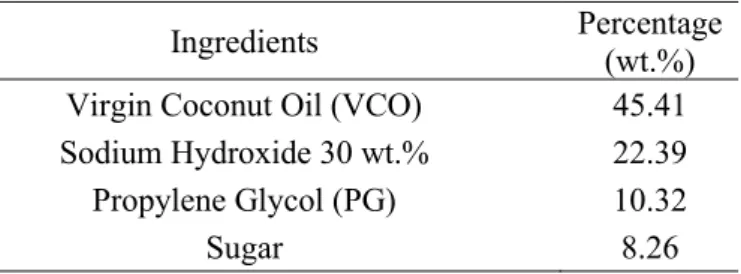
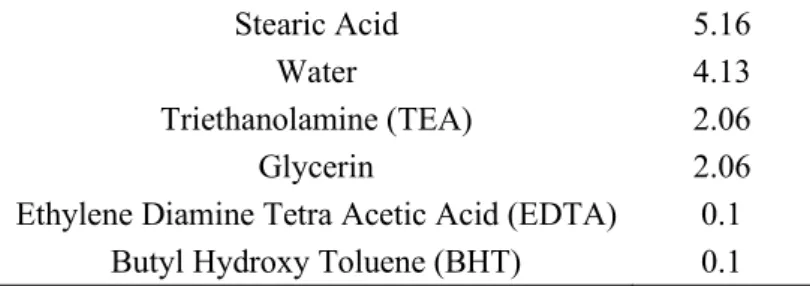
In this study, the soapmaking process used was Cognis modified formulation (2003) [11]. Table 2. Formulation of the solid soap
Ingredients Percentage (wt.%)
Virgin Coconut Oil (VCO) 45.41
Sodium Hydroxide 30 wt.% 22.39
Propylene Glycol (PG) 10.32
BICAME III 2020
Journal of Physics: Conference Series 1726 (2021) 012001
IOP Publishing doi:10.1088/1742-6596/1726/1/012001 Stearic Acid 5.16 Water 4.13 Triethanolamine (TEA) 2.06 Glycerin 2.06
Ethylene Diamine Tetra Acetic Acid (EDTA) 0.1
Butyl Hydroxy Toluene (BHT) 0.1
As mentioned on the table 2, VCO, BHT and stearic acid were dissolved until homogenous at operating temperature 60℃ with stirring velocity 250 rpm. Then sodium hydroxide solution was added into the dissolved mixture until viscous mass was formed. Glycerin, PG, EDTA, and TEA were added followed by sugar and water until the homogenous mixture was formed. Fragrance oil can be added based on suit one’s taste into the mixture. The stirring process was carried out with variations in reaction time at 20, 30 and 40 minutes. Then the number of extracts were added into mixture with variations of 0; 1; 1.25; and 1.5 wt.%.
3.3 Solid soap characterization
In this study, we used some methods to characterize samples. Organoleptic analysis carried out was a preference or hedonic test to observe its color, scent, and hardness by 20 panelists. They were untrained panelist and were asked to express their responses about their interest in these solid soap products in general.
To study its stability, solid soap was studied using needle penetrometer after storage time for 2-3 weeks. The variations of storage time were modified by arranged environmental conditions to shorten the storage time.
Figure 1. The process of testing the hardness
of solid soap using needle penetrometer
Figure 1 represents the illustration of testing the hardness of solid soap using needle penetrometer. The samples were placed inside a cylindrical test cup with diameter 55 mm and height 35 cm and were duplicated into 3 pieces for storage time 2, 7, and 14 days. Test cup was placed under the penetrometer and the sample was penetrated by needle to know the numbers stated in penetrometer and penetration time needle penetrated the samples [12].
To study solid soaps alkalinity, pH meter was used. Solid soap was dissolved with water to measure its alkalinity using pH meter. The alkalinity of soaps is important to determine the feasibility of soap to be used as bath soap. Moreover, alkalinity is also an indicator of potential irritation to the skin [13].
BICAME III 2020
Journal of Physics: Conference Series 1726 (2021) 012001
IOP Publishing doi:10.1088/1742-6596/1726/1/012001
4
4. Results and Discussion
After all the soap has been made, the following tests are carried out.
4.1 Organoleptic analysis
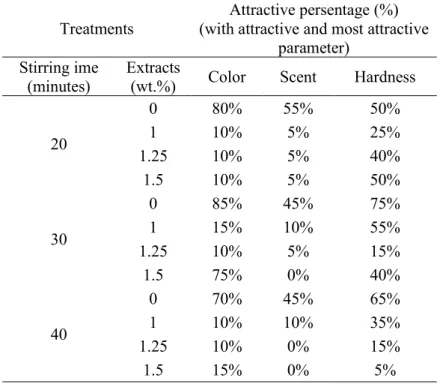
In this study, organoleptic analysis was carried out to found out consumer’s interest to these prepared solid soaps by 20 panelists in order to observed the color, scent and hardness of the soaps. The parameters used were most attractive, attractive, quite attractive, less attractive, not attractive.
Table 3. The results of organoleptic tests for the color, scent and hardness
Treatments
Attractive persentage (%) (with attractive and most attractive
parameter) Stirring ime
(minutes)
Extracts
(wt.%) Color Scent Hardness
20 0 80% 55% 50% 1 10% 5% 25% 1.25 10% 5% 40% 1.5 10% 5% 50% 30 0 85% 45% 75% 1 15% 10% 55% 1.25 10% 5% 15% 1.5 75% 0% 40% 40 0 70% 45% 65% 1 10% 10% 35% 1.25 10% 0% 15% 1.5 15% 0% 5%
Based on the table 3, the color difference between each treatment was not too significant due to the difference in the addition of the dragon fruit peels extract used in each treatment was not too large. Prepared bar soap without the addition of dragon fruit peels extract (blank) will be milky white. Pure dragon fruit peels extract is basically dark red brown, so the prepared solid soaps will be dark yellow to dark brown. Therefore, the more additions of the dragon fruit peels extract into the soaps, the darker the color will be produced.
The results of the organoleptic test of solid soap to scent at the highest level of attractive and most attractive were at the stirring time variable of 20 minutes without the addition of extract. In this condition, the panelists apparently preferred solid soap with stronger fragrance oil. It shows that the higher the addition of extract, the weaker the effect of fragrance to soap mixture will be.
The highest lever for hardness selected by panelists was in the stirring time variable of 30 minutes without the addition of extract. Panelists preferred soap with high hardness, where the hardness of the soap was influenced by the amount of extract added into the soap mixture.
4.2 Alkalinity analysis
Based on the results of this study, the pH value of solid soap tends to decrease along with the increasing concentration of dragon fruit peels extract used. The solid soap obtained in this study has a pH range between 8.79 – 10. According to SNI standardization, the pH range of solid soap between 9 – 11. Solid soap prepared in this study has liabilities to meet SNI standards for several variables. This is presumably
BICAME III 2020
Journal of Physics: Conference Series 1726 (2021) 012001
IOP Publishing doi:10.1088/1742-6596/1726/1/012001
due to the addition of extract containing alkaloid compounds in prepared solid soaps which affected the alkalinity (pH) of solid soaps.
Figure 2.The results of soap’s alkalinity (pH) for each formula and stirring time
In addition, shown in figure 2, it can be seen the effect of stirring time to prepared solid soap’s alkalinity. By the increasing of the stirring time, can cause a decrease in the pH of the prepared soaps. This is due to the longer stirring time causes the greater interaction time between oil and alkali which will approach equilibrium so that the alkali resides will be lower and produced soaps will not be too alkaline [14].
4.3 Stability analysis
The testing process used a needle penetrometer with the ASTM method D 5-6 Standard test method for penetration of bituminous materials 2006, Indonesian National Standard for asphalt penetration method SNI 06-2456-1991 and the previous method by Agustini et al. [12] for the stability test of solid soap that has been modified.
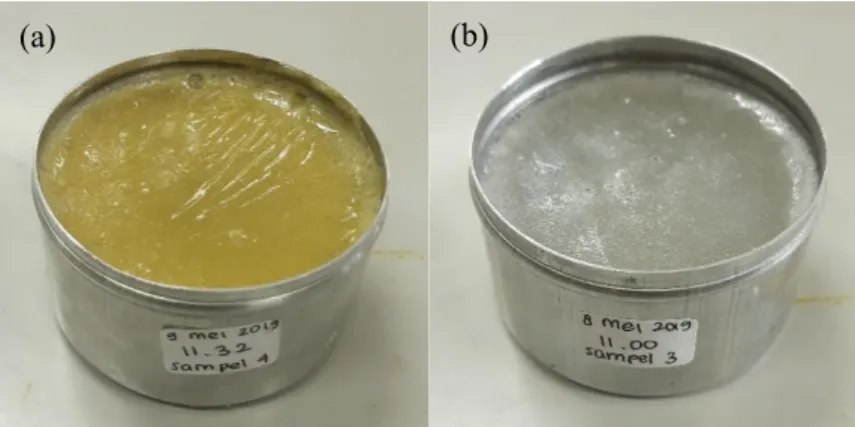
Figure 3. Prepared solid soaps that were placed inside test cups. Figure (a) showed prepared soap with addition of extract and (b) was prepared soap without addition of extract (blank).
Figure 3 represents the prepared soap that were placed inside the test cup with the addition of extract and without extract, respectively. The data obtained are the depth of the penetration needle penetrates the soap that is read on the penetration clock and the time when penetration needle penetrates the soap until it was reached the bottom of the cup. From the data gathered, the penetration rate is obtained in
(b) (a)
BICAME III 2020
Journal of Physics: Conference Series 1726 (2021) 012001
IOP Publishing doi:10.1088/1742-6596/1726/1/012001
6
units of mm/s. It indicates that the greater the penetration rate, the softer the structure of the solid soap is.
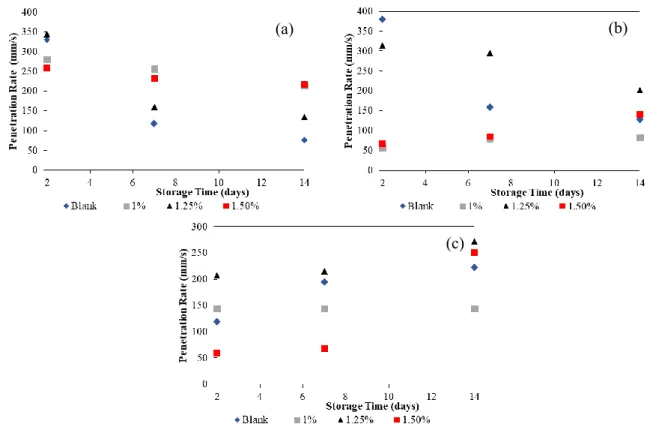
Figure 4. Penetration rate of solid soap at the stirring time of 20 minutes (a), 30 minutes (b) and 40 minutes (c).
The stability of solid soaps is indicated by penetration rate during storage time at room temperature. Storage time refers to previous study to see how the stability of soap after being stored for 2 weeks. The decrease of penetration rate signifies the structure of the soap is getting harder each time [15]
Figure 4 (a) showed that the penetration rate for all formulas tends to decrease along with the duration of the storage time. This is because solid soap experienced hardening due to storing at room temperature until a certain time which is called the aging period. The aging period is the time needed for solid soap to reacts perfectly. It happens because when the soap has made, there is still a remaining reaction that goes on so at the beginning of its formation, the soap still feels soft and springy. The aging period causes the prepared solid soap to evaporate water content to increase the hardness of the soap during the storage time [16].
Moreover, the addition of the amount of extract effects the hardness of the soap. It can be seen from Figure 4 (a) where in the second week, the blank solid soap showed the smallest penetration rate among the other variables with the addition of the extract. It shows that the greater the amount of the extract addition, the less hardness the soap will be.
Thick extract of dragon fruit peels contains water so the addition of the extract will increase the water content in the soap. The soap water content which the extract has been added is influenced by flavonoids, flavanols, glucose, caffeine, and saponins content in extracts that are easily bound to water. In addition, hydrolysis of saponins can also produce sugar which is hygroscopic, so it will increase the water content in the soap bar. The higher the water content in the soap, the softer the soap will be and easily dissolve in water then it will run out quickly when used [3].
Figure 4 (b) is a graph of the stability of solid soap at stirring time of 30 minutes. Based on the graph, the formula for blank and the addition of the extract 1.25 wt.% tend to decrease the penetration rate.
(a) (b)
BICAME III 2020
Journal of Physics: Conference Series 1726 (2021) 012001
IOP Publishing doi:10.1088/1742-6596/1726/1/012001
While the formula for 1 wt.% and 1.5 wt.% extract addition tend to increase the penetration rate during the storage time.
Based on this graph, it can be seen that the amount of extract has not affect the hardness of the soap, where the results of the hardness of the soap show a different behavior for each variable. It can be caused by other factors which have more influence on the hardness of the solid soap. Stirring time for the saponification process is thought to be the major factor which influences the hardness of the solid soap. Saponification is the hydrolysis process of fatty acids in the presence of alkali. The reaction between fat and alkali can produce soap and glycerin as by product. So, it can be referred that one of the things that affects the hardness of the soap is stirring time [17].
In addition, the longer the stirring time, the more soaps are produced. This is because the stirring process can increase the chance of interaction between reactant particles to make it possible to increase soap products and the hardness of the soap. If the saponification process has reached equilibrium conditions at a certain time, then it cannot continue to be reacted despite the addition of stirring time. The stirring time of saponification process to achieve equilibrium condition varies for each soap formulation. This causes the solid soap to increase its penetration rate every time because there is oil content that was not reacted and become an emulsion in soap products [18].
When penetration rates on second weeks between all extracts were compared, soap with additional extract of 1% and 1.5% might be classified as a feasible soap because their penetration rate are relatively lower than the amount of extracts for another variables.
Based on Figure 4 (c), all formulations have tendency to increase penetration rates. It shows that the addition of extract does not affect the hardness of the soap. The penetration rate of prepared shops had increased each time but did not show any effect of the addition of extracts on the hardness of the soap. It indicates that the saponification process was affected the hardness of the soap. At stirring time for 40 minutes, all the soap gets softer each time.
One of the things that causes the soap to become softer was at the stirring time of 30 minutes, there are 2 conditions of soap stability that are getting softer while the other one getting harder. The harder soap is soap with the addition of small amount of extract, and the other one experiences a decrease of hardness each time. When the stirring time is increased into 40 minutes, the prepared soap had a softer texture. It is because the saponification process cannot react the remaining oil into soap so that there is still the amount of oil that goes along with soap products [11].
Moreover, stirring time also affects the breakdown of sucrose into glucose and fructose. One of the ingredients needed for soapmaking process is sugar (sucrose). If sucrose is warmed up for a long time, more sucrose will break down so it can reduce the hardness of the soap [19].
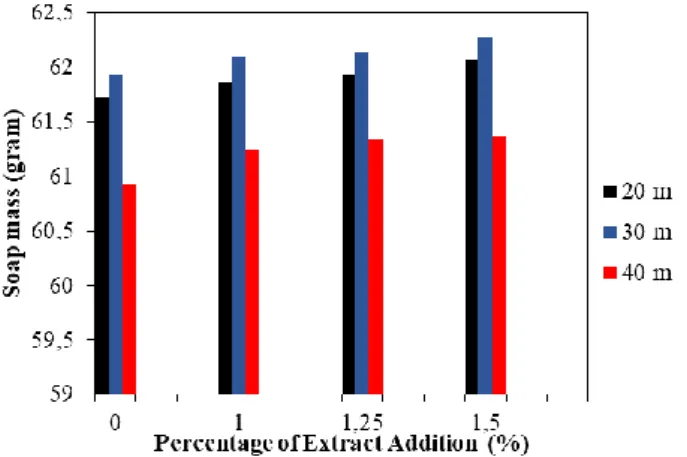
Figure 5. Comparison of solid soap mass for each formula
Based on figure 5, the mass of prepared solid soap at stirring time of 40 minutes has decreased after an increase from stirring time 20 minutes to 30 minutes. Increasing the penetration rate each time can be caused by the longer the stirring time, the lower the quality and quantity of solid soap will be
BICAME III 2020
Journal of Physics: Conference Series 1726 (2021) 012001
IOP Publishing doi:10.1088/1742-6596/1726/1/012001
8
produced. The prepared soap will lose mass due to the presence of foam from the stirring process at stirring rate of 250 rpm for 40 minutes. When the soap will be formed into the test cup, the formed foam must be separated so the mass of the solid soap decreases. Foam which cannot be separated from the prepared soap will be trapped and will affect the stability of the soap due to the air trapped in it.
This condition causes a decrease in the quality of soap during storage time. So based on this study, the stirring time of 40 minutes is the worst condition compared to other stirring times. Then it can be stated that the stirring time to reach equilibrium for this formulation is 30 minutes with extract addition at 1 wt.% and 1.5 wt.% as the best amount of addition.
5. Conclusion
The solid soap was prepared well where the soapmaking process with addition of dragon fruit peels extract affected the color and hardness of prepared soap. The longer the stirring time, the darker and harder the soaps will get. The alkalinity (pH) of solid soap was affected by stirring time, where the longer the stirring time, the smaller the pH of the soap will be with pH range for all soaps between 8.28 – 10. The best stirring time for this formulation is 30 minutes with the best conditions for extract addition of 1 wt.% and 1.5 wt.%. The further study is expected to discover solid soap formulations and the soapmaking process. The further characterization is needed for the amount of unsaponified oil, free alkali and water content in the soap.
Acknowledgements
The authors would like to express gratitude from Laboratorium Kimia Institut Teknologi Kalimantan (ITK), Laboratorium Farmakologi Universitas Mulawarman (UNMUL) and Laboratorium Teknik Universitas 17 Agustus 1945 (UNTAG) for technical support, from colleagues and lecturers for assistance and encouragement.
References
[1] BSN (The National Standardization Agency of Indonesia) 2016 Indonesian national standard: solid soap
[2] Spitz L 2016 Soap manufacturing technology (London: Elsevier)
[3] Widyasanti A, Nugraha D and Rohdiana D 2017 Study of transparent soap making from castor oil-based with the addition of white tea extract (Camellia sinensis) as an active ingredient J. Agric. Sci. 1 140–151
[4] Sayuti K and Yenrina R 2015 Natural and synthetic antioxidants (Padang: Andalas University Press)
[5] Kristanto D 2008 Dragon fruit: cultivation in pots and gardens (Jakarta: Penebar Swadaya) [6] Niah R and Hilda 2016 Antioxidant activity of red dragon fruit peels ethanol extract Pelaihari,
South Kalimantan with DPPH method (2,2-diphenyl-1-picrylhydrazyl) J. Pharmascience 3 36–42
[7] Zulhipri, Yusnetty B and Dyaningtyas R P 2012 Phytochemical content and antioxidant activity test of rambutan peels methanol extract (Nephelium lappaceum L) variety of Binjai and Lebak Bulus JRSKT2 156–161
[8] Jami’ah S R, Ifaya M, Pusmarani J and Nurhikma E 2018 Antioxidant activity test of plantain peels methanol extract (Musa paradisiaca sapientum) using DPPH method (2,2-diphenyl-1-picrylhydrazyl)J. Mandala Pharmacon Indonesia4 33–38
[9] Fitrianingsih S P, Lestari F and Aminah S 2014 Antioxidant activity test of salak peels ethanol extract (Salacca zalacca (Gaertner) Voss) using DPPH scavenging method SNaPP 2014 Proc.
of Science, Technology, and Health 49–55
[10] Hatam S F, Suryanto E and Abidjulu J 2013 Antioxidant activity of pineapple peels extract (Ananas comosus (L) Merr) Pharmacon–J. Pharmacy2 8–12
[11] Hernani E, Chasanah U and Indriani T 2013 Effects of glycerin and propylene glycol on physical, chemical and SPF characteristics of cream o/w type with cocoa seed extract (Theobroma cacao L.) (cocoa extract concentration 10 wt. %, 15 wt. % and 20 wt. %) PharmaScienta2 31–42
BICAME III 2020
Journal of Physics: Conference Series 1726 (2021) 012001
IOP Publishing doi:10.1088/1742-6596/1726/1/012001
[12] Agustini, N W S and Winarni A H 2017 Characteristics and antioxidant activity from transparent solid soap enriched with carotenoid crude extract of Chlorella pyrenoidosa J. Postharvest Biotechnol. Mar. Fish. 12 1–12
[13] Hasibuan R, Adventi F and Rtg R P 2019 Effect of temperature reaction, speed of reaction and reaction time in making soap from coconut oil (Coco nuficera L.) Chem. Eng. J. USU 8 11– 17
[14] Wijana S, Pranowo D and Taslimah M Y 2010 Scaling up of liquid soap production from recycled frying oil J. Agric. Technol.11 114–122
[15] Sukawaty Y, Husul W and Artha A V 2016 Formulation of bar soap with bawang tiwai (Eleutherie bulbosa (Mill.) Urb.) bulbs ethanol extract Pharmaceutical Media–J. Pharmaceutical Sci.13 14–22
[16] Sulastri L and Rizikiyan Y 2016 Formulations transparent soap solid lime juice (Citrus aurantifolia Swingle) Med. Sci.–J. Pharmaceutical Sci.1 8–16
[17] Nurhadi S C 2012 Shower gel soap making with active ingredients mikroalga chlorrea pyrenoidosa beyerinck and labandula lativolia chaix essential oil (Malang: Universitas Ma Chung)
[18] Bidilah S A, Rumape O and Mohamad E 2017 Optimization of stirring time and volume of KOH to liquid soap with used cooking oil-based J. Entropy12 55–60
[19] Jannah B, Polii B N and Siregar H C H 2009 Physical characteristic of transparent soap with addition of honey in different concentration (Bogor: Institut Pertanian Bogor)