Editorial Board
. . . . . . . . . . . . . . . . . . . . . . . . . . . . . . . . . . . . . . . . . . . . . . . . . . S6392010 American Heart Association Guidelines for Cardiopulmonary Resuscitation
and Emergency Cardiovascular Care Science
Part 1: Executive Summary
John M. Field, Co-Chair; Mary Fran Hazinski, Co-Chair; Michael R. Sayre; Leon Chameides; Stephen M. Schexnayder; Robin Hemphill; Ricardo A. Samson; John Kattwinkel; Robert A. Berg; Farhan Bhanji; Diana M. Cave; Edward C. Jauch; Peter J. Kudenchuk; Robert W. Neumar;
Mary Ann Peberdy; Jeffrey M. Perlman; Elizabeth Sinz; Andrew H. Travers; Marc D. Berg; John E. Billi; Brian Eigel; Robert W. Hickey; Monica E. Kleinman; Mark S. Link; Laurie J. Morrison; Robert E. O’Connor; Michael Shuster; Clifton W. Callaway; Brett Cucchiara; Jeffrey D. Ferguson; Thomas D. Rea;
Terry L. Vanden Hoek OOOOOOOOOOOOOOOOOOOOOOOOOOOOOOOOOOOOOOOOOOOOOOOOOOOOOOOOOOOOOOOOOOOOOOOOO S640 Part 2: Evidence Evaluation and Management of Potential or Perceived Conflicts of Interest
Michael R. Sayre, Co-Chair; Robert E. O’Connor, Co-Chair; Dianne L. Atkins; John E. Billi; Clifton W. Callaway; Michael Shuster; Brian Eigel; William H. Montgomery; Robert W. Hickey;
Ian Jacobs; Vinay M. Nadkarni; Peter T. Morley; Tanya I. Semenko; Mary Fran Hazinski OOOOOOOOOOOOOOOOO S657 Part 3: Ethics
Laurie J. Morrison, Chair; Gerald Kierzek; Douglas S. Diekema; Michael R. Sayre;
Scott M. Silvers; Ahamed H. Idris; Mary E. Mancini OOOOOOOOOOOOOOOOOOOOOOOOOOOOOOOOOOOOOOOOOOOOOOOO S665 Part 4: CPR Overview
Andrew H. Travers, Co-Chair; Thomas D. Rea, Co-Chair; Bentley J. Bobrow;
Dana P. Edelson; Robert A. Berg; Michael R. Sayre; Marc D. Berg; Leon Chameides;
Robert E. O’Connor; Robert A. Swor OOOOOOOOOOOOOOOOOOOOOOOOOOOOOOOOOOOOOOOOOOOOOOOOOOOOOOOOOOOO S676 Part 5: Adult Basic Life Support
Robert A. Berg, Chair; Robin Hemphill; Benjamin S. Abella; Tom P. Aufderheide; Diana M. Cave;
Mary Fran Hazinski; E. Brooke Lerner; Thomas D. Rea; Michael R. Sayre; Robert A. Swor OOOOOOOOOOOOOOO S685 Part 6: Electrical Therapies: Automated External Defibrillators, Defibrillation, Cardioversion, and Pacing
Mark S. Link, Chair; Dianne L. Atkins; Rod S. Passman; Henry R. Halperin; Ricardo A. Samson;
Roger D. White; Michael T. Cudnik; Marc D. Berg; Peter J. Kudenchuk; Richard E. Kerber OOOOOOOOOOOOOOO S706 Part 7: CPR Techniques and Devices
Diana M. Cave, Chair; Raul J. Gazmuri; Charles W. Otto; Vinay M. Nadkarni; Adam Cheng;
Steven C. Brooks; Mohamud Daya; Robert M. Sutton; Richard Branson; Mary Fran Hazinski OOOOOOOOOOOOOO S720 Part 8: Adult Advanced Cardiovascular Life Support
Robert W. Neumar, Chair; Charles W. Otto; Mark S. Link; Steven L. Kronick;
Michael Shuster; Clifton W. Callaway; Peter J. Kudenchuk; Joseph P. Ornato; Bryan McNally; Scott M. Silvers; Rod S. Passman; Roger D. White; Erik P. Hess; Wanchun Tang;
Daniel Davis; Elizabeth Sinz; Laurie J. MorrisonOOOOOOOOOOOOOOOOOOOOOOOOOOOOOOOOOOOOOOOOOOOOOOOOOOO S729 Part 9: Post–Cardiac Arrest Care
Mary Ann Peberdy, Co-Chair; Clifton W. Callaway, Co-Chair; Robert W. Neumar; Romergryko G. Geocadin; Janice L. Zimmerman; Michael Donnino; Andrea Gabrielli; Scott M. Silvers; Arno L. Zaritsky;
Raina Merchant; Terry L. Vanden Hoek; Steven L. Kronick OOOOOOOOOOOOOOOOOOOOOOOOOOOOOOOOOOOOOOOOOO S768
Supplement to
Circulation
JO U R N A L O F T H E AM E R I C A N HE A R T AS S O C I A T I O N
CIRCULATION (ISSN 0009-7322) is published weekly except combined the first two weeks in January and the last two weeks in December by Lippincott Williams & Wilkins at 16522 Hunters Green Parkway, Hagerstown, MD 21740. Business offices are located at 530 Walnut Street, Philadelphia, PA 19106-3621. Production offices are located at 351 West Camden Street, Baltimore, MD 21201-2436. Individuals may subscribe for their personal use at the following rates: $216 for members of an American Heart Association scientific council and $386 for nonmembers; international: $371 for members of an American Heart Association scientific council and $649 for nonmembers. Periodicals postage paid at Hagerstown, MD, and additional mailing offices. POSTMASTER: Send address changes to CIRCULATION, American Heart Association, Lippincott Williams & Wilkins, 16522 Hunters Green Parkway, Hagerstown, MD 21740.
Volume 122
n
Number 18
n
Supplement 3
November 2, 2010
Part 10: Acute Coronary Syndromes
Robert E. O’Connor, Chair; William Brady; Steven C. Brooks; Deborah Diercks; Jonathan Egan;
Chris Ghaemmaghami; Venu Menon; Brian J. O’Neil; Andrew H. Travers; Demetris Yannopoulos OOOOOOOOOO S787 Part 11: Adult Stroke
Edward C. Jauch, Co-Chair; Brett Cucchiara, Co-Chair; Opeolu Adeoye; William Meurer;
Jane Brice; Yvonne (Yu-Feng) Chan; Nina Gentile; Mary Fran HazinskiOOOOOOOOOOOOOOOOOOOOOOOOOOOOOOOO S818 Part 12: Cardiac Arrest in Special Situations
Terry L. Vanden Hoek, Chair; Laurie J. Morrison; Michael Shuster; Michael Donnino;
Elizabeth Sinz; Eric J. Lavonas; Farida M. Jeejeebhoy; Andrea Gabrielli OOOOOOOOOOOOOOOOOOOOOOOOOOOOOOO S829 Part 13: Pediatric Basic Life Support
Marc D. Berg, Chair; Stephen M. Schexnayder; Leon Chameides; Mark Terry; Aaron Donoghue;
Robert W. Hickey; Robert A. Berg; Robert M. Sutton; Mary Fran HazinskiOOOOOOOOOOOOOOOOOOOOOOOOOOOOOO S862 Part 14: Pediatric Advanced Life Support
Monica E. Kleinman, Chair; Leon Chameides; Stephen M. Schexnayder; Ricardo A. Samson;
Mary Fran Hazinski; Dianne L. Atkins; Marc D. Berg; Allan R. de Caen; Ericka L. Fink; Eugene B. Freid; Robert W. Hickey; Bradley S. Marino; Vinay M. Nadkarni; Lester T. Proctor; Faiqa A. Qureshi;
Kennith Sartorelli; Alexis Topjian; Elise W. van der Jagt; Arno L. Zaritsky OOOOOOOOOOOOOOOOOOOOOOOOOOOOO S876 Part 15: Neonatal Resuscitation
John Kattwinkel, Co-Chair; Jeffrey M. Perlman, Co-Chair; Khalid Aziz; Christopher Colby; Karen Fairchild; John Gallagher; Mary Fran Hazinski; Louis P. Halamek; Praveen Kumar; George Little;
Jane E. McGowan; Barbara Nightengale; Mildred M. Ramirez; Steven Ringer; Wendy M. Simon;
Gary M. Weiner; Myra Wyckoff; Jeanette Zaichkin OOOOOOOOOOOOOOOOOOOOOOOOOOOOOOOOOOOOOOOOOOOOOOOOO S909 Part 16: Education, Implementation, and Teams
Farhan Bhanji, Chair; Mary E. Mancini; Elizabeth Sinz; David L. Rodgers; Mary Ann McNeil; Theresa A. Hoadley; Reylon A. Meeks; Melinda Fiedor Hamilton; Peter A. Meaney;
Elizabeth A. Hunt; Vinay M. Nadkarni; Mary Fran HazinskiOOOOOOOOOOOOOOOOOOOOOOOOOOOOOOOOOOOOOOOOOO S920
2010 American Heart Association and American Red Cross Guidelines for
First Aid
Part 17: First Aid
David Markenson, Co-Chair; Jeffrey D. Ferguson, Co-Chair; Leon Chameides; Pascal Cassan;
Kin-Lai Chung; Jonathan Epstein; Louis Gonzales; Rita Ann Herrington; Jeffrey L. Pellegrino; Norda Ratcliff;
Adam SingerOOOOOOOOOOOOOOOOOOOOOOOOOOOOOOOOOOOOOOOOOOOOOOOOOOOOOOOOOOOOOOOOOOOOOOOOOOOOOOOOO S934
This supplement is also available online at: http://circ.ahajournals.org/content/vol122/18_suppl_3/. All articles are open access.
If the AHA Guidelines for CPR and ECC Science are to be cited, we suggest using the Executive Summary. The citation is: Field JM, Hazinski MF, Sayre MR, Chameides L, Schexnayder SM, Hemphill R, Samson RA, Kattwinkel J, Berg RA, Bhanji F, Cave DM, Jauch EC, Kudenchuk PJ, Neumar RW, Peberdy MA, Perlman JM, Sinz E, Travers AH, Berg MD, Billi JE, Eigel B, Hickey RW, Kleinman ME, Link MS, Morrison LJ, O’Connor RE, Shuster M, Callaway CW, Cucchiara B, Ferguson JD, Rea TD, Vanden Hoek TL. Part 1: executive summary: 2010 American Heart Association Guidelines for Cardiopulmonary Resuscitation and Emergency Cardiovascular Care. Circulation.2010;122(suppl 3): S640 –S656.
Otherwise, each article should be cited individually. The complete citation of each article is included in the footnotes section on the first page of its respective article.
If the AHA/American Red Cross Guidelines for First Aid are to be cited, the following citation should be used: Markenson D, Ferguson JD, Chameides L, Cassan P, Chung K-L, Epstein J, Gonzales L, Herrington RA, Pellegrino JL, Ratcliff N, Singer A. Part 17: first aid: 2010 American Heart Association and American Red Cross Guidelines for First Aid.Circulation.2010;122(suppl 3):S934 –S946.
ISSN: 1524-4539
Copyright © 2010 American Heart Association. All rights reserved. Print ISSN: 0009-7322. Online
72514
Circulation is published by the American Heart Association. 7272 Greenville Avenue, Dallas, TX
DOI: 10.1161/CIR.0b013e3181fdf7aa
2010;122;S639
Circulation
Editorial Board
http://circ.ahajournals.org/cgi/content/full/122/18_suppl_3/S639
located on the World Wide Web at:
The online version of this article, along with updated information and services, is
http://www.lww.com/reprints
Reprints: Information about reprints can be found online at
[email protected]
410-528-8550. E-mail:
Fax:
Kluwer Health, 351 West Camden Street, Baltimore, MD 21202-2436. Phone: 410-528-4050.
Permissions: Permissions & Rights Desk, Lippincott Williams & Wilkins, a division of Wolters
http://circ.ahajournals.org/subscriptions/
Subscriptions: Information about subscribing to Circulation is online at
by on May 15, 2011
circ.ahajournals.org
Supplement to
Circulation
2010 American Heart Association Guidelines for
Cardiopulmonary Resuscitation and Emergency
Cardiovascular Care Science
Senior Science Editors
Mary Fran Hazinski*
John M. Field*
Associate Science Editors
Leon Chameides
Robin Hemphill
Peter J. Kudenchuk
Ricardo A. Samson
Stephen M. Schexnayder
Elizabeth Sinz
Special Contributors
Brenda Schoolfield
Janet Butler
Heba Costandy
Cathryn Evans
Pierce Goetz
Sallie Young,
Pharmacotherapy Editor
Acknowledgments
Jeannette Allison
David Barnes
Jennifer Denton
Lana M. Gent
Colleen C. Halverson
Jody Hundley
Alicia Pederson
Kara Robinson
Tanya Semenko
Nina Tran
Paige Walker
2010 American Heart Association and American
Red Cross Guidelines for First Aid
AHA/American Red Cross First Aid Science Advisory Board
David Markenson (Co-Chair)
Jeffrey D. Ferguson (Co-Chair)
*Co-lead senior science editors for Part 1. Ms Hazinski also served as senior science editor for Parts 2, 3, 4, 5, 7, 13, 14, 15, 16, 17, and for the basic life support and/or pediatric portions of Parts 6 and 11. Dr Field also served as senior science editor for Parts 6, 8, 9, 10, 11, and 12.
ISSN: 1524-4539
Copyright © 2010 American Heart Association. All rights reserved. Print ISSN: 0009-7322. Online
72514
Circulation is published by the American Heart Association. 7272 Greenville Avenue, Dallas, TX
DOI: 10.1161/CIRCULATIONAHA.110.970889
2010;122;S640-S656
Circulation
Hoek
Callaway, Brett Cucchiara, Jeffrey D. Ferguson, Thomas D. Rea and Terry L. Vanden
Mark S. Link, Laurie J. Morrison, Robert E. O'Connor, Michael Shuster, Clifton W.
Marc D. Berg, John E. Billi, Brian Eigel, Robert W. Hickey, Monica E. Kleinman,
Neumar, Mary Ann Peberdy, Jeffrey M. Perlman, Elizabeth Sinz, Andrew H. Travers,
Farhan Bhanji, Diana M. Cave, Edward C. Jauch, Peter J. Kudenchuk, Robert W.
Schexnayder, Robin Hemphill, Ricardo A. Samson, John Kattwinkel, Robert A. Berg,
John M. Field, Mary Fran Hazinski, Michael R. Sayre, Leon Chameides, Stephen M.
Cardiopulmonary Resuscitation and Emergency Cardiovascular Care
Part 1: Executive Summary: 2010 American Heart Association Guidelines for
http://circ.ahajournals.org/cgi/content/full/122/18_suppl_3/S640
located on the World Wide Web at:
The online version of this article, along with updated information and services, is
http://www.lww.com/reprints
Reprints: Information about reprints can be found online at
[email protected]
410-528-8550. E-mail:
Fax:
Kluwer Health, 351 West Camden Street, Baltimore, MD 21202-2436. Phone: 410-528-4050.
Permissions: Permissions & Rights Desk, Lippincott Williams & Wilkins, a division of Wolters
http://circ.ahajournals.org/subscriptions/
Subscriptions: Information about subscribing to Circulation is online at
by on May 15, 2011
circ.ahajournals.org
Part 1: Executive Summary
2010 American Heart Association Guidelines for Cardiopulmonary
Resuscitation and Emergency Cardiovascular Care
John M. Field, Co-Chair*; Mary Fran Hazinski, Co-Chair*; Michael R. Sayre; Leon Chameides;
Stephen M. Schexnayder; Robin Hemphill; Ricardo A. Samson; John Kattwinkel; Robert A. Berg;
Farhan Bhanji; Diana M. Cave; Edward C. Jauch; Peter J. Kudenchuk; Robert W. Neumar;
Mary Ann Peberdy; Jeffrey M. Perlman; Elizabeth Sinz; Andrew H. Travers; Marc D. Berg;
John E. Billi; Brian Eigel; Robert W. Hickey; Monica E. Kleinman; Mark S. Link; Laurie J. Morrison;
Robert E. O’Connor; Michael Shuster; Clifton W. Callaway; Brett Cucchiara; Jeffrey D. Ferguson;
Thomas D. Rea; Terry L. Vanden Hoek
T
he publication of the2010 American Heart Association Guidelines for Cardiopulmonary Resuscitation andEmergency Cardiovascular Caremarks the 50th anniversary
of modern CPR. In 1960 Kouwenhoven, Knickerbocker, and Jude documented 14 patients who survived cardiac arrest with the application of closed chest cardiac massage.1That same year, at the meeting of the Maryland Medical Society in Ocean City, MD, the combination of chest compressions and rescue breathing was introduced.2Two years later, in 1962, direct-current, monophasic waveform defibrillation was de-scribed.3 In 1966 the American Heart Association (AHA) developed the first cardiopulmonary resuscitation (CPR) guidelines, which have been followed by periodic updates.4 During the past 50 years the fundamentals of early recogni-tion and activarecogni-tion, early CPR, early defibrillarecogni-tion, and early access to emergency medical care have saved hundreds of thousands of lives around the world. These lives demonstrate the importance of resuscitation research and clinical transla-tion and are cause to celebrate this 50thanniversary of CPR. Challenges remain if we are to fulfill the potential offered by the pioneer resuscitation scientists. We know that there is a striking disparity in survival outcomes from cardiac arrest across systems of care, with some systems reporting 5-fold higher survival rates than others.5–9 Although technology, such as that incorporated in automated external defibrillators (AEDs), has contributed to increased survival from cardiac arrest, no initial intervention can be delivered to the victim of cardiac arrest unless bystanders are ready, willing, and able to act. Moreover, to be successful, the actions of bystanders and other care providers must occur within a system that coordi-nates and integrates each facet of care into a comprehensive whole, focusing on survival to discharge from the hospital.
This executive summary highlights the major changes and most provocative recommendations in the2010 AHA
Guide-lines for CPR and Emergency Cardiovascular Care (ECC).
The scientists and healthcare providers participating in a comprehensive evidence evaluation process analyzed the sequence and priorities of the steps of CPR in light of current scientific advances to identify factors with the greatest potential impact on survival. On the basis of the strength of the available evidence, they developed recommendations to support the interventions that showed the most promise. There was unanimous support for continued emphasis on high-quality CPR, with compressions of adequate rate and depth, allowing complete chest recoil, minimizing inter-ruptions in chest compressions and avoiding excessive ventilation. High-quality CPR is the cornerstone of a system of care that can optimize outcomes beyond return of spontaneous circulation (ROSC). Return to a prior quality of life and functional state of health is the ultimate goal of a resuscitation system of care.
The2010 AHA Guidelines for CPR and ECCare based on the
most current and comprehensive review of resuscitation litera-ture ever published, the2010 ILCOR International Consensus
on CPR and ECC Science With Treatment Recommendations.10
The 2010 evidence evaluation process included 356 resuscita-tion experts from 29 countries who reviewed, analyzed, evalu-ated, debevalu-ated, and discussed research and hypotheses through in-person meetings, teleconferences, and online sessions (“web-inars”) during the 36-month period before the 2010 Consensus Conference. The experts produced 411 scientific evidence re-views on 277 topics in resuscitation and emergency cardiovas-cular care. The process included structured evidence evaluation, analysis, and cataloging of the literature. It also included
rigor-The American Heart Association requests that this document be cited as follows: Field JM, Hazinski MF, Sayre MR, Chameides L, Schexnayder SM, Hemphill R, Samson RA, Kattwinkel J, Berg RA, Bhanji F, Cave DM, Jauch EC, Kudenchuk PJ, Neumar RW, Peberdy MA, Perlman JM, Sinz E, Travers AH, Berg MD, Billi JE, Eigel B, Hickey RW, Kleinman ME, Link MS, Morrison LJ, O’Connor RE, Shuster M, Callaway CW, Cucchiara B, Ferguson JD, Rea TD, Vanden Hoek TL. Part 1: executive summary: 2010 American Heart Association Guidelines for Cardiopulmonary Resuscitation and Emergency Cardiovascular Care.Circulation.2010;122(suppl 3):S640 –S656.
*Co-chairs and equal first co-authors.
(Circulation. 2010;122[suppl 3]:S640 –S656.)
© 2010 American Heart Association, Inc.
ous disclosure and management of potential conflicts of interest, which are detailed in Part 2: “Evidence Evaluation and Man-agement of Potential and Perceived Conflicts of Interest.”
The recommendations in the 2010 Guidelines confirm the safety and effectiveness of many approaches, acknowledge ineffectiveness of others, and introduce new treatments based on intensive evidence evaluation and consensus of experts. These new recommendations do not imply that care using past guidelines is either unsafe or ineffective. In addition, it is important to note that they will not apply to all rescuers and all victims in all situations. The leader of a resuscitation attempt may need to adapt application of these recommenda-tions to unique circumstances.
New Developments in Resuscitation Science
Since 2005
A universal compression-ventilation ratio of 30:2 performed by lone rescuers for victims of all ages was one of the most controversial topics discussed during the 2005 International Consensus Conference, and it was a major change in the2005
AHA Guidelines for CPR and ECC.11 In 2005 rates of
survival to hospital discharge from witnessed out-of-hospital sudden cardiac arrest due to ventricular fibrillation (VF) were low, averaging #6% worldwide with little improvement in the years immediately preceding the 2005 conference.5Two studies published just before the 2005 International Consen-sus Conference documented poor quality of CPR performed in both out-of-hospital and in-hospital resuscitations.12,13The changes in the compression-ventilation ratio and in the defibrillation sequence (from 3 stacked shocks to 1 shock followed by immediate CPR) were recommended to mini-mize interruptions in chest compressions.11–13
There have been many developments in resuscitation science since 2005, and these are highlighted below. Emergency Medical Services Systems and CPR Quality
Emergency medical services (EMS) systems and healthcare providers should identify and strengthen “weak links” in the Chain of Survival. There is evidence of considerable regional variation in the reported incidence and outcome from cardiac arrest within the United States.5,14 This evidence supports the importance of accurately identifying each instance of treated cardiac arrest and measuring outcomes and suggests additional opportunities for improving survival rates in many communities. Recent studies have demonstrated improved outcome from out-of-hospital cardiac arrest, particularly from shockable rhythms, and have reaffirmed the importance of a stronger emphasis on compressions of adequate rate and depth, allowing complete chest recoil after each compression, minimizing interrup-tions in compressions and avoiding excessive ventilation.15–22
Implementation of new resuscitation guidelines has been shown to improve outcomes.18,20 –22A means of expediting guidelines implementation (a process that may take from 18 months to 4 years23–26) is needed. Impediments to implemen-tation include delays in instruction (eg, time needed to produce new training materials and update instructors and providers), technology upgrades (eg, reprogramming AEDs), and decision making (eg, coordination with allied agencies
and government regulators, medical direction, and participa-tion in research).
Documenting the Effects of CPR Performance by Lay Rescuers
During the past 5 years there has been an effort to simplify CPR recommendations and emphasize the fundamental importance of high-quality CPR. Large observational studies from investiga-tors in member countries of the Resuscitation Council of Asia (the newest member of ILCOR)27,28 –30 and other studies31,32 have provided important information about the positive impact of bystander CPR on survival after out-of-hospital cardiac arrest. For most adults with out-of-hospital cardiac arrest, bystander CPR with chest compression only (Hands-Only CPR) appears to achieve outcomes similar to those of conventional CPR (com-pressions with rescue breathing).28 –32 However, for children, conventional CPR is superior.27
CPR Quality
Minimizing the interval between stopping chest compressions and delivering a shock (ie, minimizing the preshock pause) improves the chances of shock success33,34 and patient sur-vival.33–35Data downloaded from CPR-sensing and feedback-enabled defibrillators provide valuable information to resus-citation teams, which can improve CPR quality.36These data are driving major changes in the training of in-hospital resuscitation teams and out-of-hospital healthcare providers. In-Hospital CPR Registries
The National Registry of CardioPulmonary Resuscitation (NRCPR)37and other large databases are providing new infor-mation about the epidemiology and outcomes of in-hospital resuscitation in adults and children.8,38 – 44 Although observa-tional in nature, registries provide valuable descriptive informa-tion to better characterize cardiac arrest and resuscitainforma-tion out-comes as well as identify areas for further research.
Deemphasis on Devices and Advanced Cardiovascular Life Support Drugs During Cardiac Arrest
At the time of the 2010 International Consensus Conference there were still insufficient data to demonstrate that any drugs or mechanical CPR devices improve long-term outcome after cardiac arrest.45Clearly further studies, adequately powered to detect clinically important outcome differences with these interventions, are needed.
Importance of Post–Cardiac Arrest Care
Organized post– cardiac arrest care with an emphasis on multidisciplinary programs that focus on optimizing hemo-dynamic, neurologic, and metabolic function (including ther-apeutic hypothermia) may improve survival to hospital dis-charge among victims who achieve ROSC following cardiac arrest either in- or out-of-hospital.46 – 48Although it is not yet possible to determine the individual effect of many of these therapies, when bundled as an integrated system of care, their deployment may well improve outcomes.
Therapeutic hypothermia is one intervention that has been shown to improve outcome for comatose adult victims of
Field et al Part 1: Executive Summary S641
by on May 15, 2011
circ.ahajournals.org
witnessed out-of-hospital cardiac arrest when the presenting rhythm was VF.49,50Since 2005, two nonrandomized studies with concurrent controls as well as other studies using historic controls have indicated the possible benefit of hypo-thermia following in- and out-of-hospital cardiac arrest from all other initial rhythms in adults.46,51–56Hypothermia has also been shown to be effective in improving intact neurologic survival in neonates with hypoxic-ischemic encephalopa-thy,57– 61and the results of a prospective multicenter pediatric study of therapeutic hypothermia after cardiac arrest are eagerly awaited.
Many studies have attempted to identify comatose post– cardiac arrest patients who have no prospect for meaningful neurologic recovery, and decision rules for prognostication of poor outcome have been proposed.62Therapeutic hypother-mia changes the specificity of prognostication decision rules that were previously established from studies of post– cardiac arrest patients not treated with hypothermia. Recent reports have documented occasional good outcomes in post– cardiac arrest patients who were treated with therapeutic hypother-mia, despite neurologic exam or neuroelectrophysiologic studies that predicted poor outcome.63,64
Education and Implementation
The quality of rescuer education and frequency of retraining are critical factors in improving the effectiveness of resusci-tation.65– 83Ideally retraining should not be limited to 2-year intervals. More frequent renewal of skills is needed, with a commitment to maintenance of certification similar to that embraced by many healthcare-credentialing organizations.
Resuscitation interventions are often performed simulta-neously, and rescuers must be able to work collaboratively to minimize interruptions in chest compressions. Teamwork and leadership skills continue to be important, particularly for advanced cardiovascular life support (ACLS) and pediatric advanced life support (PALS) providers.36,84 – 89
Community and hospital-based resuscitation programs should systematically monitor cardiac arrests, the level of resuscitation care provided, and outcome. The cycle of measurement, interpretation, feedback, and continuous qual-ity improvement provides fundamental information necessary to optimize resuscitation care and should help to narrow the knowledge and clinical gaps between ideal and actual resus-citation performance.
Highlights of the 2010 Guidelines
The Change From “A-B-C” to “C-A-B”The newest development in the2010 AHA Guidelines for CPR
and ECCis a change in the basic life support (BLS) sequence of
steps from “A-B-C” (Airway, Breathing, Chest compressions) to “C-A-B” (Chest compressions, Airway, Breathing) for adults and pediatric patients (children and infants, excluding newly borns). Although the experts agreed that it is important to reduce time to first chest compressions, they were aware that a change in something as established as the A-B-C sequence would require re-education of everyone who has ever learned CPR. The
2010 AHA Guidelines for CPR and ECC recommend this
change for the following reasons:
● The vast majority of cardiac arrests occur in adults, and the highest survival rates from cardiac arrest are reported among patients of all ages with witnessed arrest and a rhythm of VF or pulseless ventricular tachycardia (VT). In these patients the critical initial elements of CPR are chest compressions and early defibrillation.90
● In the A-B-C sequence chest compressions are often delayed while the responder opens the airway to give mouth-to-mouth breaths or retrieves a barrier device or other ventilation equipment. By changing the sequence to C-A-B, chest compressions will be initiated sooner and ventilation only minimally delayed until completion of the first cycle of chest compressions (30 compressions should be accomplished in approximately 18 seconds).
● Fewer than 50% of persons in cardiac arrest receive bystander CPR. There are probably many reasons for this, but one impediment may be the A-B-C sequence, which starts with the procedures that rescuers find most difficult: opening the airway and delivering rescue breaths. Starting with chest compressions might ensure that more victims receive CPR and that rescuers who are unable or unwilling to provide ventilations will at least perform chest compressions. ● It is reasonable for healthcare providers to tailor the
sequence of rescue actions to the most likely cause of arrest. For example, if a lone healthcare provider sees a victim suddenly collapse, the provider may assume that the victim has suffered a sudden VF cardiac arrest; once the provider has verified that the victim is unresponsive and not breathing or is only gasping, the provider should immediately activate the emergency response system, get and use an AED, and give CPR. But for a presumed victim of drowning or other likely asphyxial arrest the priority would be to provide about 5 cycles (about 2 minutes) of conventional CPR (including rescue breathing) before ac-tivating the emergency response system. Also, in newly born infants, arrest is more likely to be of a respiratory etiology, and resuscitation should be attempted with the A-B-C sequence unless there is a known cardiac etiology. Ethical Issues
The ethical issues surrounding resuscitation are complex and vary across settings (in- or out-of-hospital), providers (basic or advanced), and whether to start or how to terminate CPR. Recent work suggests that acknowledgment of a verbal do-not-attempt-resuscitation order (DNAR) in addition to the current stan-dard—a written, signed, and dated DNAR document—may decrease the number of futile resuscitation attempts.91,92This is an important first step in expanding the clinical decision rule pertaining to when to start resuscitation in out-of-hospital car-diac arrest. However, there is insufficient evidence to support this approach without further validation.
When only BLS-trained EMS personnel are available, termination of resuscitative efforts should be guided by a validated termination of resuscitation rule that reduces the transport rate of attempted resuscitations without compro-mising the care of potentially viable patients.93Advanced life support (ALS) EMS providers may use the same termination of resuscitation rule94 –99or a derived nonvali-dated rule specific to ALS providers that when applied will
decrease the number of futile transports to the emergency department (ED).95,97–100
Certain characteristics of a neonatal in-hospital cardiac arrest are associated with death, and these may be helpful in guiding physicians in the decision to start and stop a neonatal resuscitation attempt.101–104There is more variability in ter-minating resuscitation rates across systems and physicians when clinical decision rules are not followed, suggesting that these validated and generalized rules may promote uniformity in access to resuscitation attempts and full protocol care.105
Offering select family members the opportunity to be present during the resuscitation and designating staff within the team to respond to their questions and offer comfort may enhance the emotional support provided to the family during cardiac arrest and after termination of a resuscitation attempt. Identifying patients during the post– cardiac arrest period who do not have the potential for meaningful neurologic recovery is a major clinical challenge that requires further research. Caution is advised when considering limiting care or withdrawing life-sustaining therapy. Characteristics or test results that are predictive of poor outcome in post– cardiac arrest patients not treated with therapeutic hypothermia may not be as predictive of poor outcome after administration of therapeutic hypothermia. Because of the growing need for transplant tissue and organs, all provider teams who treat postarrest patients should also plan and implement a system of tissue and organ donation that is timely, effective, and supportive of family members for the subset of patients in whom brain death is confirmed or for organ donation after cardiac arrest.
Resuscitation research is challenging. It must be scientifically rigorous while confronting ethical, regulatory, and public rela-tions concerns that arise from the need to conduct such research with exception to informed consent. Regulatory requirements, community notification, and consultation requirements often impose expensive and time-consuming demands that may not only delay important research but also render it cost-prohibitive, with little significant evidence that these measures effectively address the concerns about research.106 –109
Basic Life Support
BLS is the foundation for saving lives following cardiac arrest. Fundamental aspects of adult BLS include immediate
recognition of sudden cardiac arrest and activation of the
emergency response system, early performance of
high-quality CPR, and rapiddefibrillationwhen appropriate. The
2010 AHA Guidelines for CPR and ECC contain several
important changes but also have areas of continued emphasis based on evidence presented in prior years.
Key Changes in the2010 AHA Guidelines for CPR and ECC
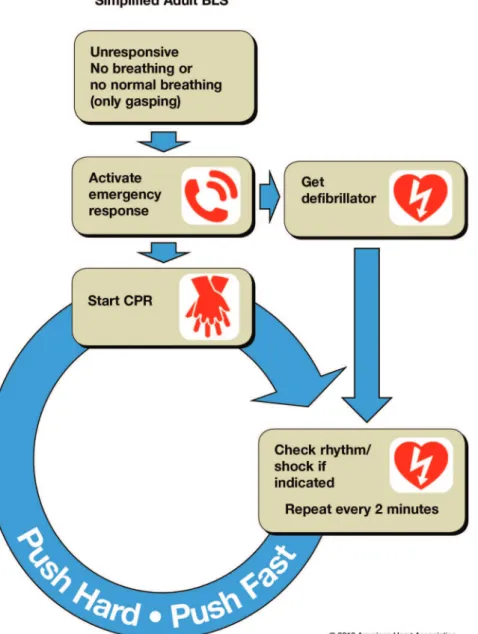
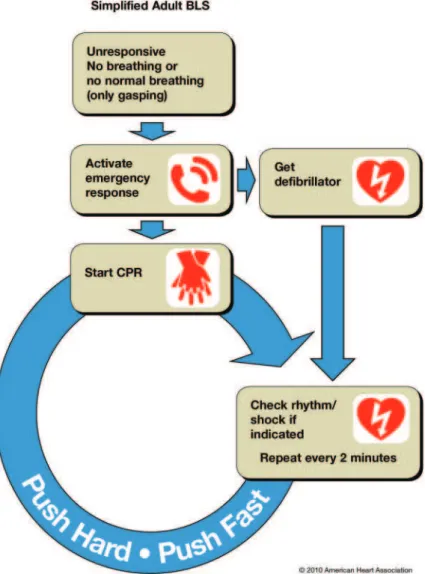
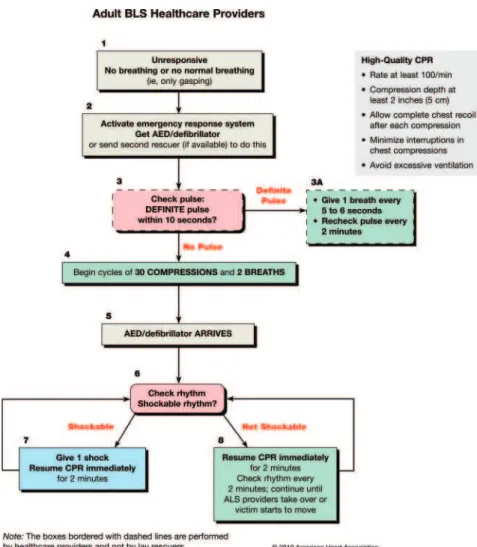
● The BLS algorithm has been simplified, and “Look, Listen and Feel” has been removed from the algorithm. Performance of these steps is inconsistent and time consuming. For this reason the2010 AHA Guidelines for CPR and ECC stress immediate activation of the emergency response system and starting chest compressions for any unresponsive adult victim with no breathing or no normal breathing (ie, only gasps).
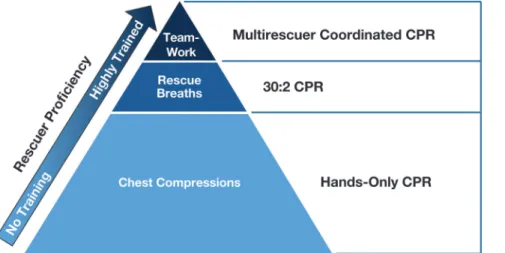
● EncourageHands-Only (compression only) CPRfor the untrained lay rescuer. Hands-Only CPR is easier to perform by those with no training and can be more readily guided by dispatchers over the telephone.
● Initiate chest compressions before giving rescue breaths (
C-A-B rather than C-A-B-C). Chest compressions can be started
immediately, whereas positioning the head, attaining a seal for mouth-to-mouth rescue breathing, or obtaining or assembling a bag-mask device for rescue breathing all take time. Begin-ning CPR with 30 compressions rather than 2 ventilations leads to a shorter delay to first compression.
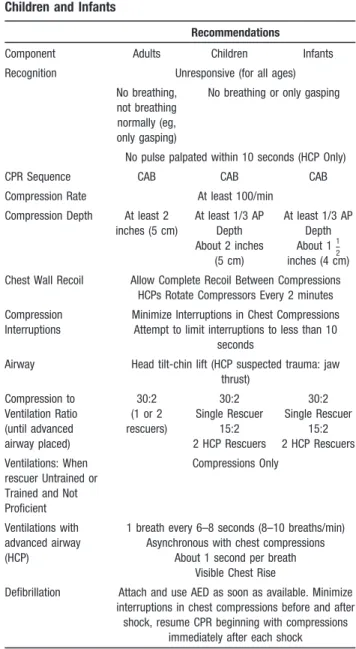
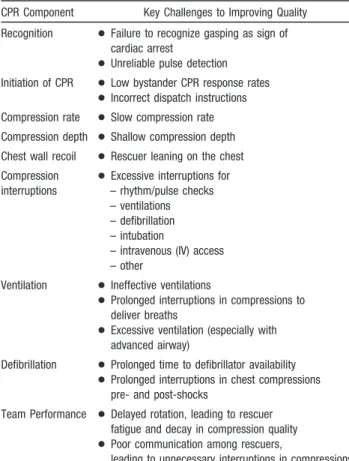
● There is an increased focus on methods to ensure that high-quality CPR is performed. Adequate chest compres-sions require that comprescompres-sions be provided at the appro-priate depth and rate, allowing complete recoil of the chest after each compression and an emphasis on minimizing any pauses in compressions and avoiding excessive ventilation. Training should focus on ensuring that chest compressions are performed correctly. The recommended depth of com-pression for adult victims has increased from a depth of 11⁄2 to 2 inches to a depth of at least 2 inches.
● Many tasks performed by healthcare providers during resus-citation attempts, such as chest compressions, airway man-agement, rescue breathing, rhythm detection, shock delivery, and drug administration (if appropriate), can be performed concurrently by an integrated team of highly trained rescuers in appropriate settings. Some resuscitations start with a lone rescuer who calls for help, resulting in the arrival of additional team members. Healthcare provider training should focus on building the team as each member arrives or quickly delegat-ing roles if multiple rescuers are present. As additional personnel arrive, responsibilities for tasks that would ordi-narily be performed sequentially by fewer rescuers may now be delegated to a team of providers who should perform them simultaneously.
Key Points of Continued Emphasis for the2010 AHA Guidelines for CPR and ECC
● Early recognition of sudden cardiac arrest in adults is based on assessing responsiveness and the absence of normal breathing. Victims of cardiac arrest may initially have gasping respirations or even appear to be having a seizure. These atypical presentations may confuse a rescuer, caus-ing a delay in callcaus-ing for help or beginncaus-ing CPR. Traincaus-ing should focus on alerting potential rescuers to the unusual presentations of sudden cardiac arrest.
● Minimize interruptions in effective chest compressions until ROSC or termination of resuscitative efforts. Any unnecessary interruptions in chest compressions (including longer than necessary pauses for rescue breathing) de-creases CPR effectiveness.
● Minimize the importance of pulse checks by healthcare providers. Detection of a pulse can be difficult, and even highly trained healthcare providers often incorrectly assess the presence or absence of a pulse when blood pressure is abnormally low or absent. Healthcare providers should take no more than 10 seconds to determine if a pulse is present. Chest compressions delivered to patients subsequently found not to be in cardiac arrest rarely lead to significant
Field et al Part 1: Executive Summary S643
by on May 15, 2011
circ.ahajournals.org
injury.110 The lay rescuer should activate the emergency response system if he or she finds an unresponsive adult. The lay rescuer should not attempt to check for a pulse and should assume that cardiac arrest is present if an adult suddenly collapses, is unresponsive, and is not breathing or not breathing normally (ie, only gasping).
CPR Techniques and Devices
Alternatives to conventional manual CPR have been devel-oped in an effort to enhance perfusion during resuscitation from cardiac arrest and to improve survival. Compared with conventional CPR, these techniques and devices typically require more personnel, training, and equipment, or apply to a specific setting. Some alternative CPR techniques and devices may improve hemodynamics or short-term survival when used by well-trained providers in selected patients.
Several devices have been the focus of recent clinical trials. Use of the impedance threshold device (ITD) improved ROSC and short-term survival when used in adults with out-of-hospital cardiac arrest, but there was no significant improvement in either survival to hospital discharge or neurologically-intact survival to discharge.111 One multicenter, prospective, randomized con-trolled trial112,112acomparing load-distributing band CPR (Auto-pulse) with manual CPR for out-of-hospital cardiac arrest demonstrated no improvement in 4-hour survival and worse neurologic outcome when the device was used. More research is needed to determine if site-specific factors113or experience with deployment of the device114 influence effectiveness of the load-distributing band CPR device. Case series employing me-chanical piston devices have reported variable degrees of success.115–119
To prevent delays and maximize efficiency, initial training, ongoing monitoring, and retraining programs should be offered on a frequent basis to providers using CPR devices. To date, no adjunct has consistently been shown to be superior to standard conventional (manual) CPR for out-of-hospital BLS, and no device other than a defibrillator has consistently improved long-term survival from out-of-hospital cardiac arrest.
Electrical Therapies
The 2010 AHA Guidelines for CPR and ECC have been
updated to reflect new data on the use of pacing in bradycar-dia, and on cardioversion and defibrillation for tachycardic rhythm disturbances. Integration of AEDs into a system of care is critical in the Chain of Survival in public places outside of hospitals. To give the victim the best chance of survival, 3 actions must occur within the first moments of a cardiac arrest120: activation of the EMS system,121provision of CPR, and operation of a defibrillator.122
One area of continued interest is whether delivering a longer period of CPR before defibrillation improves out-comes in cardiac arrest. In early studies, survival was im-proved when 1.5 to 3 minutes of CPR preceded defibrillation for patients with cardiac arrest of.4 to 5 minutes duration prior to EMS arrival.123,124 However, in 2 more recent randomized controlled trials, CPR performed before defibril-lation did not improve outcome.125,126 If $2 rescuers are
present CPR should be performed while a defibrillator is being obtained and readied for use.
The 1-shock protocol for VF has not been changed. Evidence has accumulated that even short interruptions in CPR are harmful. Thus, rescuers should minimize the interval between stopping compressions and delivering shocks and should resume CPR immediately after shock delivery.
Over the last decade biphasic waveforms have been shown to be more effective than monophasic waveforms in cardio-version and defibrillation.127–135However, there are no clin-ical data comparing one specific biphasic waveform with another. Whether escalating or fixed subsequent doses of energy are superior has not been tested with different wave-forms. However, if higher energy levels are available in the device at hand, they may be considered if initial shocks are unsuccessful in terminating the arrhythmia.
In the last 5 to 10 years a number of randomized trials have compared biphasic with monophasic cardioversion in atrial fibrillation. The efficacy of shock energies for cardioversion of atrial fibrillation is waveform-specific and can vary from 120 to 200 J depending on the defibrillator manufacturer. Thus, the recommended initial biphasic energy dose for cardioversion of atrial fibrillation is 120 to 200 J using the manufacturer’s recommended setting.136 –140If the initial shock fails, providers should increase the dose in a stepwise fashion. Cardiover-sion of adult atrial flutter and other supraventricular tachycardias generally requires less energy; an initial energy of 50 J to 100 J is often sufficient.140If the initial shock fails, providers should increase the dose in a stepwise fashion.141Adult cardioversion of atrial fibrilla-tion with monophasic waveforms should begin at 200 J and increase in a stepwise fashion if not successful.
Transcutaneous pacing has also been the focus of several recent trials. Pacing is not generally recommended for pa-tients in asystolic cardiac arrest. Three randomized controlled trials142–144indicate no improvement in rate of admission to hospital or survival to hospital discharge when paramedics or physicians attempted pacing in patients with cardiac arrest due to asystole in the prehospital or hospital (ED) setting. However, it is reasonable for healthcare providers to be prepared to initiate pacing in patients with bradyarrhythmias in the event the heart rate does not respond to atropine or other chronotropic (rate-accelerating) drugs.145,146
Advanced Cardiovascular Life Support
ACLS affects multiple links in the Chain of Survival, including interventions to prevent cardiac arrest, treat cardiac arrest, and improve outcomes of patients who achieve ROSC after cardiac arrest. The2010 AHA Guidelines for CPR and ECCcontinue to emphasize that the foundation of successful ACLS is good BLS, beginning with prompt high-quality CPR with minimal interrup-tions, and for VF/pulseless VT, attempted defibrillation within minutes of collapse. The new fifth link in the Chain of Survival and Part 9: “Post–Cardiac Arrest Care” (expanded from a subsection of the ACLS part of the2005 AHA Guidelines for
CPR and ECC) emphasize the importance of comprehensive
multidisciplinary care that begins with recognition of cardiac arrest and continues after ROSC through hospital discharge and beyond. Key ACLS assessments and interventions provide an
essential bridge between BLS and long-term survival with good neurologic function.
In terms of airway management the2010 AHA Guidelines
for CPR and ECChave a major new Class I recommendation
for adults: use of quantitative waveform capnography for confirmation and monitoring of endotracheal tube placement. In addition, the use of supraglottic advanced airways contin-ues to be supported as an alternative to endotracheal intuba-tion for airway management during CPR. Finally, the routine use of cricoid pressure during airway management of patients in cardiac arrest is no longer recommended.
There are several important changes in the 2010 AHA
Guidelines for CPR and ECC regarding management of
symptomatic arrhythmias. On the basis of new evidence of safety and potential efficacy, adenosine can now be consid-ered for the diagnosis and treatment of stable undifferentiated wide-complex tachycardia when the rhythm is regular and the QRS waveform is monomorphic. For symptomatic or unsta-ble bradycardia, intravenous (IV) infusion of chronotropic agents is now recommended as an equally effective alterna-tive to external pacing when atropine is ineffecalterna-tive.
For 2010 a new circular AHA ACLS Cardiac Arrest Algo-rithm has been introduced as an alternative to the traditional box-and-line format. Both algorithms represent restructured and simplified formats that focus on interventions that have the greatest impact on outcome. To that end, emphasis has been placed on delivery of high-quality CPR with minimal interrup-tions and defibrillation of VF/pulseless VT. Vascular access, drug delivery, and advanced airway placement, while still recommended, should not cause significant interruptions in chest compression or delay shocks. In addition, atropine is no longer recommended for routine use in the management of pulseless electrical activity (PEA)/asystole.
Real-time monitoring and optimization of CPR quality using either mechanical parameters (eg, monitoring of chest compression rate and depth, adequacy of chest wall relax-ation, length and duration of pauses in compression and number and depth of ventilations delivered) or, when feasi-ble, physiologic parameters (partial pressure of end-tidal CO2 [PETCO2], arterial pressure during the relaxation phase of chest compressions, or central venous oxygen saturation [ScvO2]) are encouraged. When quantitative waveform cap-nography is used for adults, guidelines now include recom-mendations for monitoring CPR quality and detecting ROSC based on PETCO2values.
Finally the2010 AHA Guidelines for CPR and ECCcontinue to recognize that ACLS does not end when a patient achieves ROSC. Guidelines for post– cardiac arrest man-agement have been significantly expanded (see Part 9) and now include a new Early Post–Cardiac Arrest Treatment Algorithm.
Post–Cardiac Arrest Care
The2010 AHA Guidelines for CPR and ECCrecognize the
increased importance of systematic care and advancements in the multispecialty management of patients following ROSC and admission to the hospital that can affect neurologically intact survival. Part 9: “Post–Cardiac Arrest Care” recognizes the importance of bundled goal-oriented management and
interventions to achieve optimal outcome in victims of cardiac arrest who are admitted to a hospital following ROSC. We recommend that a comprehensive, structured, integrated, multidisciplinary system of care should be imple-mented in a consistent manner for the treatment of post– cardiac arrest patients.
Initial and later key objectives of post– cardiac arrest care include
● Optimizing cardiopulmonary function and vital organ per-fusion after ROSC
● Transportation to an appropriate hospital or critical-care unit with a comprehensive post– cardiac arrest treatment system of care
● Identification and intervention for acute coronary syn-dromes (ACS)
● Temperature control to optimize neurologic recovery ● Anticipation, treatment, and prevention of multiple organ
dysfunction
The primary goal of a bundled treatment strategy for the patient after cardiac arrest includes a consistently applied comprehensive therapeutic plan delivered in a multidisci-plinary environment leading to the return of normal or near-normal functional status. Patients with suspected ACS should be triaged to a facility with reperfusion capabilities and a multidisciplinary team prepared to monitor patients for multi-organ dysfunction and initiate appropriate post– cardiac arrest therapy, including hypothermia. Prognostic assessment in the setting of hypothermia is changing, and experts qualified in neurologic assessment in this patient population and integration of prognostic tools are essential for patients, caregivers, and families and are reviewed in detail in Part 9. As a guide to therapy, a new algorithm and a table of integrated goal therapy care were developed.
Stabilization of the Patient With ACS
The2010 AHA Guidelines for CPR and ECC
recommenda-tions for the evaluation and management of ACS have been updated to define the scope of training for healthcare provid-ers who treat patients with suspected or definite ACS within the first hours after onset of symptoms. Within this context several important strategies and components of care are defined and emphasized by these guidelines and include systems of care for patients with ST-elevation myocardial infarction (STEMI), prehospital 12-lead electrocardiograms (ECGs), triage to hospitals capable of performing percutane-ous coronary intervention (PCI), and comprehensive care for patients following cardiac arrest with confirmed STEMI or suspected ACS.
A well-organized approach to STEMI care requires inte-gration of community, EMS, physician, and hospital re-sources in a bundled STEMI system of care. An important and key component of STEMI systems of care is the performance of prehospital 12-lead ECGs with transmission or interpretation by EMS providers and advance notification of the receiving facility. Use of prehospital 12-lead ECGs has been recommended by theAHA Guidelines for CPR and ECC
since 2000 and has been documented to reduce time to
Field et al Part 1: Executive Summary S645
by on May 15, 2011
circ.ahajournals.org
reperfusion with fibrinolytic therapy.147–153 More recently, prehospital 12-lead ECGs have also been shown to reduce the time to primary percutaneous coronary intervention (PCI) and can facilitate triage to specific hospitals when PCI is the chosen strategy.154 –161When EMS or ED physicians activate the cardiac care team, including the cardiac catheterization laboratory, significant reductions in reperfusion times are observed.
The ACS guidelines also make new recommendations for triage of patients to PCI centers after cardiac arrest. The performance of PCI has been associated with favorable outcomes in adult patients resuscitated from cardiac arrest, and it is reasonable to include cardiac catheterization in standardized post– cardiac arrest protocols as part of an overall strategy to improve neurologically intact survival in this patient group. In patients with out-of-hospital cardiac arrest due to VF, emergent angiography with prompt revascularization of the infarct-related artery is recommended. The ECG may be insensitive or misleading following cardiac arrest, and coronary angiography after ROSC in subjects with arrest of presumed ischemic cardiac etiology may be reasonable, even in the absence of a clearly defined STEMI. Clinical findings of coma in patients before PCI are common following out-of-hospital cardiac arrest and should not be a contraindication to consider-ation of immediate angiography and PCI.
Adult Stroke
Part 11 emphasizes the early management of acute ischemic stroke in adult patients. It summarizes out-of-hospital care through the first hours of therapy. Approximately 795 000 people suffer a new or repeat stroke each year, and stroke remains the third leading cause of death in the United States. By integrating public education, 911 dispatch, prehospital detection and triage, hospital stroke system development, and stroke unit management, significant improvements in stroke care have been made. Important components of the stroke system of care are summarized in Part 11.
As with STEMI patients, prearrival hospital notification by the transporting EMS unit has been found to significantly increase the percentage of patients with acute stroke who receive fibrinolytic therapy. The 2010 AHA Guidelines for
CPR and ECC recommend that every hospital with an ED
have a written plan that is communicated to EMS systems describing how patients with acute stroke are to be managed in that institution. Triage of patients with acute stroke directly to designated stroke centers is a new Class I recommendation, which has been added to the Stroke Algorithm. Another new Class I recommendation is admission of the stroke patient to a dedicated stroke unit managed by a multidisciplinary team experienced in stroke care.
Since publication of the2005 AHA Guidelines for CPR and ECC, additional data have emerged extending the time window for administration of IV rtPA to select patients with acute ischemic stroke. These guidelines now recommend IV rtPA for patients who meet the eligibility criteria for the National Institute of Neurological Disorders and Stroke (NINDS) or the Third European Cooperative Acute Stroke Study (ECASS-3) if rtPA is administered by physicians in the setting of a clearly defined protocol with a knowledgeable
team and institutional commitment. However, it is important to emphasize the continued time-dependent reperfusion win-dow and that earlier treatment is better and is associated with improved outcome. Patients ineligible for standard IV brinolytic therapy may be considered for intra-arterial fi-brinolytic therapy or mechanical revascularization at selected centers with specialized capabilities.
Finally these guidelines recommend admission to a stroke unit within 3 hours of presentation to the ED. Recent studies establish that stroke unit care is superior to care in general medical wards, and positive effects of stroke unit care can persist for years. The benefits from treatment in a stroke unit are comparable to the beneficial effects achieved with IV rtPA.
Overall stroke care has progressed dramatically since it was first incorporated into the ECC mission. Improvements in education, prehospital management, hospital system develop-ment, and acute treatments have lead to significant improve-ments in patient outcomes.
Special Situations
Cardiac arrest in special situations may require special treatments or procedures beyond those provided during stan-dard BLS or ACLS. Because of difficulty in conducting randomized clinical trials in these areas or their infrequent occurrence, these unique situations call for an experienced provider to go “beyond basics,” using clinical consensus and extrapolation from typical circumstances. The topics covered in the 2005 AHA Guidelines for CPR and ECC have been reviewed, updated, and expanded to 15 specific cardiac arrest situations. These guidelines emphasize the “above and be-yond” knowledge required as well as the anticipatory clinical acumen to provide timely care and unique interventions.
Topics include significant periarrest features that may be important to prevent cardiac arrest or that require special post– cardiac arrest care and intervention beyond the usual care defined in these guidelines. Topics with these potentially unique features include asthma, anaphylaxis, pregnancy, morbid obesity, pulmonary embolism, electrolyte imbalance, ingestion of toxic substances, trauma, accidental hypother-mia, avalanche, drowning, electric shock/lightning strikes, and special procedural situations affecting the heart, includ-ing PCI, cardiac tamponade, and cardiac surgery.
Pediatric Basic Life Support
The majority of pediatric cardiac arrests are asphyxial, with only approximately 5% to 15% attributable to VF.8,9,27,162,163 Animal studies164 –166 have shown that resuscitation from asphyxial arrest is best accomplished by a combination of ventilations and chest compressions. This has recently been confirmed in a large community pediatric study,27which not only showed that the best resuscitation results from asphyxial arrest were from a combination of ventilations and chest compressions but also that the small number of children with asphyxial arrest who received compression-only CPR had no better results than those who received no bystander CPR.
Although animal studies and pediatric series support the importance of ventilation for asphyxial arrest, data in adults suggest that chest compressions are critical for resuscitation from VF arrest, with ventilations being less important. Therefore
we continue to support a combination of ventilations and chest compressions for pediatric resuscitation but emphasize that sudden witnessed cardiac arrest in the adolescent, such as might occur during an athletic event, should be treated as a VF arrest, with emphasis on chest compressions and early defibrillation. Compression-only CPR is encouraged for bystanders who are not trained in giving ventilations or are hesitant to do so.
Despite the importance of providing a combination of venti-lations and chest compressions for resuscitation of victims from asphyxial arrest (including most children) as described above, a switch to a C-A-B (Chest compressions, Airway, Breathing) sequence was recommended for ease of teaching. Theoretically this should delay ventilation by a maximum of about 18 seconds (less time if 2 recuers are present).
There is again great emphasis on “push hard, push fast,” allowing the chest to completely recoil after each compres-sion, minimizing interruptions in chest compressions, and avoiding excessive ventilation. To achieve effective chest compressions, rescuers are advised to compress at least one third the anterior-posterior dimension of the chest. This corresponds to approximately 11⁄2 inches (4 cm) in most infants and 2 inches (5 cm) in most children.
Pediatric Advanced Life Support
The following are the most important changes and reinforce-ments to recommendations in the2005 AHA Guidelines for
CPR and ECC:
● There is additional evidence that many healthcare provid-ers cannot quickly and reliably determine the presence or absence of a pulse in infants or children.167 The pulse assessment is therefore again deemphasized for healthcare providers. For a child who is unresponsive and not breath-ing normally, if a pulse cannot be detected within 10 seconds, healthcare providers should begin CPR.
● More data support the safety and effectiveness of cuffed endotracheal tubes in infants and young children, and the formula for selecting the appropriately sized cuffed tube has been updated.
● The safety and value of using cricoid pressure during emergency intubation has been questioned. It is therefore recommended that the application of cricoid pressure should be modified or discontinued if it impedes ventila-tion or the speed or ease of intubaventila-tion.
● Monitoring capnography/capnometry is again recom-mended to confirm proper endotracheal tube (and other advanced airway) position and may be useful during CPR to assess and optimize quality of chest compressions. ● The optimal energy dose required for defibrillation (using
either a monophasic or biphasic waveform) in infants and children is unknown. When shocks are indicated for VF or pulseless VT in infants and children, an initial energy dose of 2 to 4 J/kg of either waveform is reasonable; doses higher than 4 J/kg, especially if delivered with a biphasic defibrillator, may also be safe and effective.
● On the basis of increasing evidence of potential harm from high oxygen exposure after cardiac arrest, once spontane-ous circulation is restored, inspired oxygen should be titrated to limit the risk of hyperoxemia.
● New sections have been added on resuscitation of infants and children with a single ventricle, after a variety of palliative procedures, and with pulmonary hypertension. ● There is recognition that for some young victims of sudden
death, no cause of death is found on routine autopsy but these victims are found to have a genetic ion channel defect (channelopathy) that predisposes them to a fatal arrhyth-mia. It is therefore recommended that young victims of a sudden, unexpected cardiac arrest should have an unre-stricted, complete autopsy when possible with appropriate preservation and genetic analysis of tissue. Detailed testing may reveal an inherited channelopathy that may also be present in surviving family members.
Neonatal Resuscitation
The etiology of neonatal arrests is nearly always asphyxia. Therefore, the A-B-C sequence has been retained for resus-citation of neonates unless there is a known cardiac etiology. Assessment, Supplementary Oxygen, and
Peripartum Suctioning
When assessing an infant’s cardiorespiratory transition and need for resuscitation, the best indicators were found to be increasing heart rate, effective respirations, and good tone. Pulse oximetry, with the probe attached to the right upper extremity, should be used to assess any need for supplemen-tary oxygen. Studies demonstrate that healthy babies born at term start with an oxygen saturation of,60% and will take
.10 minutes to reach a saturation of.90%. Hyperoxia can be toxic, particularly to the preterm infant. For babies born at term, it is best to begin resuscitation with room air rather than 100% oxygen. Any supplementary oxygen administered should be regulated by blending oxygen and air, using oximetry to guide titration of the blend delivered.
The role of peripartum suctioning has been deemphasized. There is no evidence to support airway suctioning in active babies, even in the presence of meconium. The available evidence does not support or refute the routine endotracheal suctioning of non-vigorous infants born through meconium-stained amniotic fluid.
Chest Compressions
The recommended compression-ventilation ratio remains 3:1 because ventilation is critical to reversal of newborn asphyxial arrest and higher ratios may decrease minute ventilation. If the arrest is known to be of cardiac etiology, a higher ratio (15:2) should be considered. If epinephrine is indicated, a dose of 0.01 to 0.03 mg/kg should be administered IV as soon as possible. When using the endotracheal route it is likely that a larger dose (0.05 mg/kg to 0.1 mg/kg) will be required.
Postresuscitation Care (Post-Cardiac Arrest Care)
Therapeutic hypothermia is recommended for babies born near term with evolving moderate to severe hypoxic-ischemic en-cephalopathy. Cooling should be initiated and conducted under clearly defined protocols with treatment in neonatal intensive care facilities and the capabilities for multidisciplinary care.
Field et al Part 1: Executive Summary S647
by on May 15, 2011
circ.ahajournals.org
Ethics
The duration of resuscitation for newborns with prolonged cardiac arrest was reviewed. In a newly born baby with no detectable heart rate that remains undetectable for 10 minutes, it is appropriate to consider stopping resuscitation. When gestation, birth weight, or congenital anomalies are associ-ated with almost certain early death and an unacceptably high morbidity is likely among the rare survivors, resuscitation is not indicated.
The role of simulation in education was assessed. The task force concluded that although it is reasonable to use simulation in resuscitation education, the most effective methodologies remain to be defined. Briefings and debriefings during learning improve acquisition of content knowledge, technical skills, or behavioral skills required for effective, safe resuscitation. Education
“Education, Implementation, and Teams” is a new section in
the 2010 AHA Guidelines for CPR and ECC.Major
recom-mendations and points of emphasis in this new section include the following:
● Bystander CPR dramatically improves survival from car-diac arrest, yet far less than half of arrest victims receive this potentially lifesaving therapy.
● Methods to improve bystander willingness to perform CPR include formal training in CPR techniques, including compression-only (Hands-Only) CPR for those who may be unwilling or unable to perform conventional CPR; educating providers on the low risk of acquiring an infection by performing CPR; and specific training directed at helping providers overcome fear or panic when faced with an actual cardiac arrest victim.
● EMS should provide dispatcher instructions over the tele-phone to help bystanders recognize victims of cardiac arrest, including victims who may still be gasping, and to encourage bystanders to provide CPR if arrest is likely. Dispatchers may also instruct untrained bystanders in the performance of compression-only (Hands-Only) CPR. ● BLS skills can be learned equally well with “practice while
watching” (video-based) training as through longer, tradi-tional instructor-led courses.
● To reduce the time to defibrillation for cardiac arrest victims, AED use should not be limited only to persons with formal training in their use. However, AED training does improve performance in simulation and continues to be recommended.
● Training in teamwork and leadership skills should continue to be included in ALS courses.
● Manikins with realistic features such as the capability to replicate chest expansion and breath sounds, generate a pulse and blood pressure, and speak may be useful for integrating the knowledge, skills, and behaviors required in ALS training. However, there is insufficient evidence to recommend their routine use in ALS courses.
● Written tests should not be used exclusively to assess the competence of a participant in an advanced life support (ACLS or PALS) course (ie, there needs to be a perfor-mance assessment as well).
● Formal assessment should continue to be included in resuscitation courses, both as a method of evaluating the success of the student in achieving the learning objectives and of evaluating the effectiveness of the course.
● The current 2-year certification period for basic and ad-vanced life support courses should include periodic assess-ment of rescuer knowledge and skills with reinforceassess-ment provided as needed. The optimal timing and method for this assessment and reinforcement are not known and warrant further investigation.
● CPR prompt and feedback devices may be useful for training rescuers and may be useful as part of an overall strategy to improve the quality of CPR for actual cardiac arrests. ● Debriefing is a learner-focused, nonthreatening technique
to assist individual rescuers or teams to reflect on and improve performance. Debriefing should be included in advanced life support courses to facilitate learning and can be used to review performance in the clinical setting to improve subsequent performance.
● Systems-based approaches to improving resuscitation per-formance, such as regional systems of care and rapid response systems, may be useful to reduce the variability of survival for cardiac arrest.
First Aid
Once again, a review of the literature on many topics relevant to first aid found that little investigation is being carried out in this field, and many recommendations have had to be extrapolated from research published in related fields. The following are new recommendations or reinforcements of previous recommendations.
● Evidence suggests that, without training, laypersons and some healthcare professionals may be unable to recognize the signs and symptoms of anaphylaxis. Therefore, initial or subsequent administration of epinephrine for anaphy-laxis by either of these groups may be problematic. This issue takes on added importance in view of legislation permitting the practice in some jurisdictions.
● Except in diving decompression injuries, there is no evi-dence of any benefit of administration of oxygen by first aid providers.
● The administration of aspirin by a first aid provider to a victim experiencing chest discomfort is problematic. The literature is clear on the benefit of early adminis-tration of aspirin to victims experiencing a coronary ischemic event except when there is a contraindication, such as true aspirin allergy or a bleeding disorder. Less clear, however, is whether first aid providers can recog-nize the signs and symptoms of an acute coronary syndrome or contraindications to aspirin and whether administration of aspirin by first aid providers delays definitive therapy in an advanced medical facility. ● No evidence of benefit was found for placing an
unrespon-sive victim who is breathing in a “recovery” position. Studies performed with volunteers appear to show that if a victim is turned because of emesis or copious secretions, the HAINES (High Arm IN Endangered Spine) position is an example of a recovery position that may have some theoretic advantages.