An Exploration into the Influence of Servicescape
Cues on Perceptions of Counterfeit Products.
by
Natalie Kate Rebecca Counsell
A thesis submitted in partial fulfilment for the
requirements of the degree of Doctor of Philosophy
at the University of Central Lancashire
Abstract Purpose
The purpose of this research is to examine the role of servicescape theory in the counterfeit context and explore the extent to which servicescape cues influence perceptions of counterfeit products.
Literature
Following extensive examination of the current literature surrounding counterfeit activity it was discovered that counterfeits can be sold in a variety of
environments; market stalls and car boots sales through to the legitimate retail environments. In the instances where the counterfeit has been integrated into the legitimate retail environment, weaknesses in the supply chain are usually to blame. These occurrences can be a major concern for both brands and
consumers as they pose not only a risk to brand image but also a threat to consumer safety.
Much of the current literature which explores consumer perceptions of counterfeit products concentrates on tangible product attributes and their influence. This research expands the current knowledge by examining further influential factors in the form of environmental cues. As a means of discussing the various elements which constitute a retail environment, the concept of servicescape is incorporated and analysed into the literature discussion.
Following a comprehensive exploration of the various cues that may be present within a retail environment, the extent to which these cues influence consumer behaviour is explored.
Further to this, as a means of understanding the ways consumers generate perceptions of counterfeit products, the processes of sensation and perception are analysed.
Methodology
The methodology chapter contained within this thesis considers both the
philosophical positioning and the data collection methods used by this research. The philosophical positioning of the researcher is one of a
constructivist-interpretive nature. Focus groups in conjunction with photo elicitation were the core data collection methods used. This combination of methods allowed an excellent opportunity for discussion and insights to be gathered and emotions to be recorded surrounding the issues of counterfeiting, servicescape and
perception formation.
Findings
The findings which were identified by this research contribute extensively to the existing knowledge regarding counterfeiting and servicescape. The key themes highlighted the influence of human variables on perceptions of counterfeit products. Within this theme were a number of subsidiary themes including the influence of image, socio-demographics, other individuals within the counterfeit purchase environment, customer characteristics, human/social crowding and the influence of staff in the counterfeit purchase environment. In addition to this, levels of privacy also appeared to be an influential cue amongst participants in relation to their perceptions of product authenticity. Levels of spatial crowding were also an influential factor used by the research participants as a means of forming perceptions regarding product authenticity. From examination of the data, it was also made apparent that branding categorisation within a counterfeit
purchase environment was particularly influential. Finally, servicescape permanency was noted to be a key theme throughout the focus group
discussions. It appeared that a purchase environment‟s level of permanency was a key influencer when determining whether or not it sold counterfeit products.
CONTENTS PAGE NUMBER Introduction 1 Aim 6 Thesis Structure 7 Research Questions 7 Research Objectives 8
Context Literature – The Counterfeit Environment 10
Defining the Area 10
Counterfeiting and its Economic Impact 14
Counterfeit Origin and the Implications for Genuine Brands 18
Counterfeit Association and Brand Image 26
Brand Image Risk Caused by deceptive Counterfeit Products 27
The Risks Involved for the Counterfeit Consumer 28
Counterfeiting in Relation to Logistics
and Supply Chain Management 30
Anti-Counterfeiting Strategies 46
Counterfeiting in Relation to Law and Politics 47
Morality, Ethics and Lawfulness 53
Further Elements which Influence Counterfeit
Purchasing Habits 54
The Influence of Others and the Extent to which
Image is Important 59
The Concept of Self-Image 61
Demographic influencers 63
The Influence of Income 63
Education as an Influencer 64
Why do Individuals Make the Counterfeit Purchase? 65
Price Advantage 66
Highly Taxed Products 67
The Quality of Counterfeits 68
Gender as an Influencer 69
Age as an Influential Factor 71
Awareness of Counterfeit Trade – What Types of
Counterfeits do Consumers Buy? 72
Further Reasoning as to why Individuals Buy Counterfeits 75
The Role of the Consumer in Anti-Counterfeit Measures 76
Types of Counterfeit Consumer 77
Summary 77
Focal Literature – Servicescape and Perception Formation 79
Defining Perception 79
Perception Formation 80
Stimuli Groupings 82
Defining „Behavioural Setting‟ 85
Defining „Environment‟ 85
The Counterfeit Purchase Environment 90
The Influence of Physical Surroundings 93
Bitner‟s Model of Servicescape 95
Further Exploration of Servicescape 100
The Influence of Servicescape on Consumer Perception 102
The Counterfeit Servicescape 103
Perceptions of Quality 107
The Influential Environment 108
Methodology 118
Concepts of Philosophical Positioning Within the Research 118
Ontological Positioning – Constructivism 120
Epistemological Positioning – Interpretivism 122
Methods of Data Collection 124
The Population of Interest 124
Getting „in touch‟ with the Population 124
Focus Group Composition 131
Introducing the Focus Groups 133
Conducting the Focus Groups 134
The Benefits of Adopting the Focus Group Approach 135
Visual Data and Photo Elicitation 142
Data Analysis and Discussion 148
Human Variables 149
Image and Counterfeit Product Perception 149
Consumer Susceptibility 153
Social Acceptance 154
The Use of Self-Image Theory when Determining Product
Authenticity 155
The Concept of Image and Association in the Counterfeit Context 160 The Influence of Socio-Demographics on Perceptions
of Counterfeit Products 161
Negative Association 165
The Influence of other Individuals within the
Counterfeit Purchase Environment 167
Customer Characteristics 168
Human/Social Crowding 169
The Influence of Staff within the Counterfeit
Purchase Environment 171
The Physical Appearance of Staff in the Environment 173
The Influence of Staff Characteristics 173
The Availability of Privacy in the Environment 175
The Influence of Branding Categorisation 180
Perceptions of Servicescape Permanency 181
Conclusion 189
Key Findings and the Original Contribution 189
Future Contributions to Knowledge 195
The Practical Implications of the Study 197
A Reflection of the Research Experience 199
REFERENCES
APPENDICES
Appendix 1 – Images used during the photo elicitation process i Appendix 2 – A critical evaluation of the work conducted xi Appendix 3 – Case Studies: The hazards of counterfeit product consumption xvi Appendix 4 – The focus group schedule xxi
FIGURES AND TABLES PAGE NUMBER
Figure 1.0 18
European Customs Seizures Staake and Fleisch (2008, p39)
Figure 1.1 21
Risk Profile as Seen by Different Industries Staake and Fleisch, (2008, p7)
Figure 1.2 34
Counterfeit Goods Seized in the EU (in million items) between 2000 and 2006
Staake and Fleisch, (2008, p4)
Figure 1.3 42
Possible flows of counterfeits into the legitimate distribution channel
OECD, (2008, p360)
Figure 1.4 56
Cognitive-Dissonance Model Explaining
Counterfeit Purchase Processes Eisend and Schuchert-Guler, (2006, p16)
Figure 1.5 73
Awareness of counterfeit trade with respect to different products
Staake and Fleisch, (2008, p49)
Figure 1.6 81
The Perceptual Process Wright (2006, p110)
Figure 1.7 83
The Stimulus-Organism-Response Paradigm Findlay (1992)
Figure 1.8 88
The Sensation and Perception Formation Process Counsell (2011)
Figure 1.9 95
Bitner‟s Servicescape Model Bitner (1992, p60)
Figure 2.0 98
Bitner‟s Servicescape Model (specific areas of interest – shaded) Bitner (1992, p60)
Figure 2.1 125
Social Networking Sites by Age Group
Mintel (2008)
Figure 2.2 127
The „Snowballing‟ Effect
Counsell (2012)
Figure 2.3 128
Title Bar and Title Image of Facebook group „Faking it – Research‟
Figure 2.4 129
„Faking it – Research screen Shot
Figure 2.5 130
„Faking it – Research‟ wall discussion
Figure 2.6 131
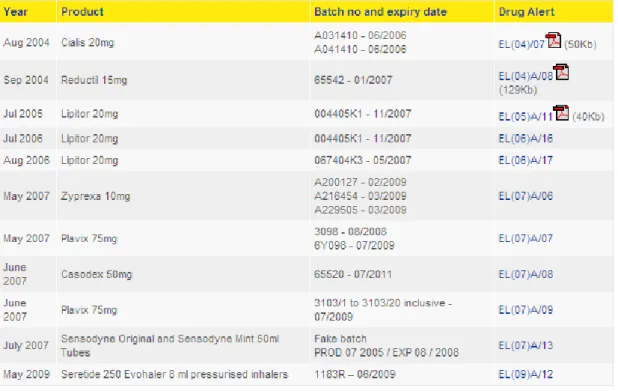
Table 1.0 32 Drug Alerts Issued relating to Counterfeit
Medicines (Aug 2004- May 2009) MHRA (2010)
Table 1.1 37
Number of Cases and Number of Articles
Seized within different Product Categories (2006) Staake and Fleisch, (2008, p5)
Table 1.2 50
Personal allowances for individual travellers (Dutch Law) Dutch Customs, (2010)
Recognition and Acknowledgements
I would like to express my sincere thanks and appreciation to the following people:
My Parents
Thank you for supporting me in so many ways My Fiancé
Thank you for your love and encouragement Professor Peter Stokes
For your words of inspiration and guidance Dr Antje Cockrill
For your specialist direction and thoughts Dr Ian Ashman
Thank you for your helpful words of advice and encouragement My Friends
Zoe, Emma, Catherine, Simon, Chris, Marilena, Stella and Deborah – Thank you for being a listening ear and a constant source of advice
1 Introduction
For a growing number of individuals, the consideration of a „fake‟ purchase is one which leaves them unfazed. In fact, a study conducted by the International Chamber of Commerce in 2009 revealed that, “80% of consumers spanning the developed and developing world regularly purchase counterfeit and pirated products, showing little remorse or fear of the consequences, including potential health and safety risks to themselves or their families” (International Chamber of Commerce, 2009) [accessed 14/01/2010]. This issue of debate is also
discussed by Bosworth (2006, p2) when he highlights that “while branded firms complain bitterly about the scale and impact of counterfeiting and piracy, the feeling invoked amongst individuals and even governments tends to be more ambiguous.”
Today‟s consumers appear to be quickly becoming part of a „counterfeit culture‟, where almost anything that is desired can be faked and offered at a so-called bargain price (Ang et al., 2001; Bosworth, 2000). A visit to a local outdoor
market will most likely allow you to witness rows of wooden benches drowned in fake designer bags, fake sunglasses and fake watches (Brand Management, 2003). For some, this is where they believe counterfeiting ends (Gentry et al., 2001); an impulse purchase at your local market or car boot sale. This,
however, is not always the case (DeKieffer, 2006). Delener (2000) suggests that “international trade in counterfeit products is worth about 3-6% of overall world merchandise trade.” Six years later the size of the problem was estimated by Cheung and Prendergast (2006) to be at least 6%. This highlights the
2
The act of counterfeiting, as defined by The Economist (2003, p1), is
“something that is forged, copied or imitated without the perpetrator having the right to do it, and with the purpose of deceiving or defrauding.” In contrast, the definition of piracy should be defined as these are two terms which are found to be regularly confused; “the unauthorized copying of the content of a fixed medium of expression, such as films, musical recordings, and computer software” (Chow, 2000, p2). The important clarification between the two acts remains in the way the process is conducted. With pirated products, the original product is present in order to make a copy. With counterfeiting, the original product need not necessarily be present in order to make the copy.
There can be many misperceptions between the terms counterfeiting and piracy and this is sometimes demonstrated in published works, the significance of which will be discussed at a later point in the thesis. It is crucial, however, that the two acts remain distinct. This research concentrates specifically on the act of counterfeiting. Further definitions and their implications will be discussed at a later point within the research however it is the factors of deception or fraud which are frequently mentioned within the definitions of counterfeiting which should worry most. There appears to be many consumers who believe that they are able to distinguish a counterfeit from a legitimately-produced version of a product (Gentry et al., 2001). As a result of this confidence, many of these consumers possess a belief that they have never purchased or consumed a fake product. During a study conducted by Rutter and Bryce in 2008, 63.1 per cent of respondents stated that they had never to their knowledge purchased a counterfeit product. Which such an abundance of deceptive counterfeit products on the market today, this is very difficult to believe.
3
With technology advancing at an immense rate, the quality levels of counterfeit products and the methods which the counterfeit manufacturers use to make copies of the originals are also making impressive progressions. Newland (1998, p1), for example, establishes the connection between technology and counterfeit product quality over a decade ago when stating that “ever-more sophisticated technology is making counterfeit copies of brand names look so authentic that neither consumers nor shops can tell the difference.” Speaking eight years later in 2006 De Chernatony and McDonald suggest that “many companies have found that counterfeit packaging of their products can be copied to such a professional level that only under microscopes could any differences be noticed” (De Chernatony and McDonald, 2006, p388). The result of these technology advancements is that the counterfeit product‟s ability to deceive is growing ever stronger; a worrying realisation for both brands and consumers.
Counterfeiting, however, is not a modern issue. For thousands of years, counterfeiting has been known to be a significant crime affecting various communities across the world. Nummedal (2007), for example, speaks of counterfeit money dating back 2000 years to Roman times. With this to consider, however, there is still a significant amount to learn about the subject of counterfeiting and this is no doubt due to the fact that counterfeit
manufacturing is developing at such an immense rate. Anything that can be created legally can usually also be created illegally and so any advancements in the legal markets are quickly mimicked by the counterfeiters.
4
Due to the counterfeit industry being one which appears to be
ever-strengthening, the critical literature examination included within this research highlights the immense scale of the issue with reference to not only focal economic issues but also to the many other areas which are affected by
counterfeit presence; areas such as marketing, law, politics, logistics and supply chain management and, as stated previously, technology. Whilst exploring the various fields that can be influenced by the presence of counterfeits, the authors Staake and Fleisch (2008) were considered to be of particular benefit. The authors‟ research includes a broad insight into both the consumer perspective and the commercial perspective of counterfeiting. Detailed within Staake and Fleisch‟s (2008) publication is data from a number of reputable sources
including European Customs who offer information regarding levels of product seizure and the specific categories of counterfeit products which are most often seized. Staake and Fleisch (2008) also offer other substantial data such as risk assessments for various markets in relation to counterfeit activity. Information such as this is not readily available in many other publications and so Staake and Fleisch (2008) was considered to be a pivotal inclusion within this study.
Marketing and retail standpoints are important to consider with reference to the counterfeiting industry as a comprehensive analysis of both provide both an insight into the supply and demand perspective of the subject matter. Both the supply and demand perspective of this complex subject area need to be
understood in order to appreciate why this phenomenon arose, why it continues to grow, and what could possibly be done, if anything, to reduce any negative outcomes.
5
An exploration of the economic perspective assists in divulging information regarding the extent to which counterfeit presence is considered to be affecting various branches of the retail industry. Scrutiny of the economic viewpoint also encourages us to consider how any negative implications of an illegal market such as this may be measured.
Further to this, national and international law is examined as the law that governs one country may differ drastically over the border. Due to the fact that laws regarding counterfeiting vary considerably dependent upon the country to which you are referring, brands which operate on an international level, in particular, can feel the strain (Dutton, 2004).
In addition to the laws which direct a country and its occupants, politics and relative governmental bodies are explored. The political nature and
governmental bodies which structure a country can very much influence the ways in which anti-counterfeiting schemes are approached (Arnould, Price and Zinkhan, 2004; Porteous, 2001).
Further to this, an exploration of the technology advancements in relation to the counterfeiting industry is included. This discussion of related technology
considers how organisations are attempting to reduce counterfeit threat with the use of new technologies. This area of the literature analysis also discusses how technological advancements can also play at being the enemy for some
legitimate organisations. An example of this is supported by Paradise (1999, p1) who states, “advances in technology have led to an explosion of counterfeit products”.
Finally, an understanding of the logistical nature of the organisations which are threatened by counterfeiting is considered. In addition to this, the ways in which
6
they manage their supply chains provides useful information regarding why and how some organisations might be targeted over other, similar brands. Through this analysis of supply chain management, it was learnt that there is an
increasing tendency for counterfeit products to be deceptively filtered into the supply chains of genuine brands at particular points of weakness (DeKieffer, 2006). In these instances, the counterfeit products are of such high quality that they are able to deceive others into believing that they are the genuine article. These counterfeit products can then be distributed using the genuine brand‟s supply chain and be ultimately found in the genuine stores amongst other legitimate items (Balfour et al., 2005). It was through the realisation that
counterfeit products could potentially be sold in a great variety of environments, anything from market stalls to the genuine retail environments, that the study‟s focus began to consider the counterfeit purchase environment and its potential to influence.
Aim
Whilst exploring the literature, it was noted that the environments in which counterfeits are sold is a particularly under researched area. Further to this, the extent to which a purchase environment is influential to counterfeit product perceptions was completely overlooked. It appears that, until this point, the majority of the literature which focuses on perceptions of counterfeit products concentrates on product packaging and other tangible aspects of the product. The aim of this research is to explore the existing knowledge relating to
servicescape theory and transfer it into the context of the counterfeit
7
relevant in the counterfeit context and the extent to which they are able to influence consumer perceptions of product authenticity.
Thesis Structure
In order to discover more about purchase environments, the significant literature in relation to this area was critically examined. The concept of servicescape; “the environment in which the service is assembled and in which the seller and consumer interact, combined with tangible commodities that facilitate
performance or communication of the service” (Booms and Bitner, 1981, p36) was found to be crucial to this research. The focal author within this literature base was Bitner (1992) who developed the core servicescape framework. The literature concerning servicescape and the elements which construct a
servicescape were studied in detail and the work of various other theorists in the area such as Mudzanani (2008), Ezeh and Harris (2007), Reimer and Kuehn (2005) and Lin (2004) were used to construct the strategic, research questions.
Research Questions
1. Does the servicescape in which a counterfeit product is sold influence consumer perceptions of the counterfeit product?
2. Which servicescape cues have the greatest influence on consumer perceptions of counterfeit products?
8
3. Are there servicescape cues which influence counterfeit product
perceptions but haven‟t yet been identified by the current servicescape literature?
4. Do consumers consider there to be a difference between those
servicescapes which sell counterfeit products and those servicescapes which sell legitimate products?
Research Objectives
1. To explore the extent to which servicescape cues influence consumer perceptions of counterfeit products.
2. To discover which servicescape cues have the greatest influence on consumer perceptions.
3. To discover whether there are additional cues which influence
perceptions of counterfeit products and are independent to the literature concerning legitimate products.
4. To explore consumer perceptions of legitimate servicescapes and
counterfeit servicescapes and to determine whether consumers perceive there to be a difference between the two.
Subsequent to the focus of the research being defined, further literature needed to be explored as a means of understanding the concept of perception. The research that was considered within the literature discussion includes theories that examine perception as both an outcome and as a process. This chapter also explores the elements which are thought to comprise a retail environment (the stimuli) and the extent to which they are thought to be influential.
9
Following the critical literature examination, the data collection methods which were used to address the research questions are evaluated and explained. The focal data collection method which was used within this research was focus groups and so a qualitative approach was adopted. To complement the data collection, the philosophical approach of this research is also injected into the discussion. The philosophical positioning is a particularly insightful segment of any research as it allows the researcher‟s thoughts and beliefs regarding the process of gathering knowledge to be explored.
Subsequent to the data collection methods and philosophical nature of the research being defined, the research‟s data discussion and analysis is presented. This chapter analyses the key themes which were highlighted by the focus group discussions. These themes are discussed in relation to how they complement the current literature yet also provide a significant and original contribution to the existing field of knowledge.
The issue of counterfeiting is a global concern which affects a significant number of legitimate retailers on a daily basis. The more that can be learnt regarding such an influential and illegal operation, the more likely it is that strategies can be implemented to reduce the power of the counterfeit manufacturers and distributors. In addition to this, with an increase of knowledge regarding the consumer perspective of counterfeiting, the more efficiently retailers will be able to deter counterfeit purchase and, more importantly, inform consumers about the potential dangers of counterfeit product consumption.
10
Context Literature – The Counterfeit Environment
The following chapter provides a context in which to place the research
questions. In other words, before examining the deeper relevance of the focal literature and its relevance to this study‟s aims, an exploration of the context surrounding the key issues will take place. Counterfeiting is a vast issue which spans a wide variety of areas including technology, logistics, consumer
behaviour, law and retail, to name but a few. The following chapter explores these various areas which are impacting upon the counterfeit industry and subsequently, the legitimate victims which they target.
Defining the Area
By way of defining the area of specific interest, “a counterfeit, on a strict
definition, is something that is forged, copied or imitated without the perpetrator having the right to do it, and with the purpose of deceiving or defrauding. Such rights are legally enshrined in patents, copyright, trademarks, industrial designs and other forms of intellectual-property protection” (The Economist, 2003, p1). In order to develop a comprehensive comparison, further definitions must be injected into this discussion. Chow (2000, p2) also discusses the area by stating that, “counterfeiting involves an attempt to pass off the counterfeit as an
authentic product, including the same trade dress and including the name and address of the manufacturer on the product.” It is interesting and useful to compare the definitions provided by two very different sources as they offer the opportunity to observe the perspectives of both an academic and commercial viewpoint. From observation of the above definitions, it can be noted that the Economist (2003) viewpoint has more of a commercial viewpoint and
11
concentrates on intellectual-property right protection and infringement.
Alternatively, Chow (2000) concentrates more on the process of counterfeiting and what it attempts to achieve.
An interesting ingredient of both the above definitions is the use of the word „deceiving‟ or the suggestion of consumer deception. More recently, in 2006, Bosworth suggested considering a „spectrum of deception‟ that involves
extremes of „super-deceptive‟ (“branded and counterfeit goods appear identical and impossible to tell apart”) and completely non-deceptive (“all buyers are able to distinguish the counterfeit from the genuine article”). The purpose of
Bosworth‟s study was to categorise a counterfeit‟s ability to deceive. That said, although one counterfeit product could be categorised as falling on a certain point on the spectrum of deception by one consumer, another consumer may place the same counterfeit product on a vastly different point on the spectrum of deception. In other words, a counterfeit‟s ability to deceive greatly depends on the circumstances in which it is placed and the individuals with which it is interacting. This research project‟s aim is to explore this concept further by considering the various environments in which counterfeits can be purchased and the extent to which they can affect consumer perceptions of the counterfeit product.
Further to this, the consideration of official bodies and their definition of
counterfeiting should be included. The World Trade Organisation developed an agreement known, in short, as the TRIPS agreement (Agreement on Trade-related Aspects on Intellectual Property Rights). Within this agreement the term “counterfeit trademark goods” includes, “any goods bearing, without
12
aspects from the trademark registered for such goods” (World Trade Organisation, 1994). This definition, created in 1994, is still used as a foundation to define the issue which the TRIPS agreement addresses. This definition however appears to, again, suggest an element of deception. This suggestion of deception appears to be a regular occurrence among those definitions formed before Bosworth‟s (2006) consideration of the spectrum of deception. Authors developing a definition for „counterfeit‟ more recently should ensure Bosworth‟s (2006) spectrum of deception is considered so that a
comprehensive definition can be formed.
A further definition which recognises the weaknesses of those definitions previously discussed yet also acknowledges the work of Bosworth‟s (2006) spectrum needs to be highlighted and used as a foundation of understanding for this research. A definition which appears to satisfy this need is one which is shaped by Staake and Fleisch in 2008. Staake and Fleisch (2008, p3) state product counterfeiting to be, “the unauthorised manufacturing of articles which mimic certain characteristics of genuine goods and which may pass themselves off as registered products of licit companies.” This definition is stronger as it recognises that there may only be some element of product imitation, it may not be the entirety of the product. Another interesting component of this definition is the suggestion of the counterfeit product mimicking “certain characteristics” of the legitimately-produced, genuine goods. Staake and Fleisch‟s (2008)
definition suggests that it may not be the entire product which may hold the power to deceive; it may be as little as one detail which could make the suggestion of genuine-brand design and ownership. A further strength of this definition is the fact that it acknowledges the rights of products and brands by referring to them as “registered products”.
13
In order to strengthen this definition, further clarity will be sought from a professional body and incorporated into the discussion. An example of this is the International Trademark Association‟s Anti-Counterfeiting Division‟s (2007) definition which states counterfeiting to be, “the deliberate use of a false mark that is identical with or substantially indistinguishable from a registered mark.” What is interesting about this definition is that although the term „substantially indistinguishable‟ is used which may suggest the capability of some level of deception however it may not be an essential ingredient. In addition to this, the definition itself focuses on the „mark‟ used on the specific product, not the entirety of the product. This definition, in addition to Staake and Fleisch‟s, suggests that a product may become a counterfeit product with the inclusion of only one, perhaps small, characteristic.
An important aspect to mention within this discussion is the differentiation between a „counterfeit‟ product and a „pirated‟ product. Chow (2000, p2)
extends this deliberation by stating that, “counterfeiting should be distinguished from copyright piracy, which refers to the unauthorized copying of the content of a fixed medium of expression, such as films, musical recordings, and computer software.” The phenomenon of piracy and counterfeiting must be distinguished from one another as they are usually typical of very different markets. As previously mentioned, the primary victims of piracy are markets such as film, music and computer software. In contrast to this, due to the nature of
counterfeiting, counterfeit activity expands into a wide range of other territories including clothing, accessories, pharmaceuticals, food and drink, jewellery, machinery, money and perfume to name but a few.
14 Counterfeiting and its Economic Impact
Further to defining the phenomenon, an understanding must be developed of the affect it has on the global market. A recent report from the International Chamber of Commerce (ICC) stated that “counterfeiting and piracy has grown to into a global business valued at more than US$750 billion” (ICC, 2009). In addition to this, “The World Customs Organisation estimates counterfeiting accounts for 5%-7% of global merchandise trade” (Balfour et al., 2005). Several other reputable sources also report similar figures and suggest that 5 to 10 per cent of world trade is generated from counterfeit goods (Bowman, 2006);(Green and Smith, 2002); (Nia and Zachkowsky, 2000);(Simons, 2005).
An interesting consideration when discussing the extent to which counterfeit presence is affecting the economic market is the degree to which these figures have the ability to be precise. When conducting an examination of the literature in this field, it can be noted that many authors use approximations when
describing counterfeit market strength (eg: Bowman, 2006). Green and Smith (2002) noted this deliberation when they stated that the:
“assessment of the losses associated with counterfeiting varies widely. There is no agreement about the factors that should be taken in to account when calculating the scale of counterfeiting. Should it be measured by production costs of counterfeits, sales lost by associated brands, damages to brand equity, total sales of counterfeits, or some combination of measures?” (Green and Smith, 2002, p4).
With the above in mind, dependant on how an individual or organisation wishes to portray the counterfeit issue, statistics could be presented in varying lights. Differing measures could be quoted giving differing perspectives of the current
15
situation regarding counterfeiting. In addition to this, although educated assumptions regarding the extent of the counterfeit issue can be made, these approximations must always be approached with caution as data regarding illegal markets is not easily obtainable or, more importantly, likely to be as reliable as data relating to legal markets. With this to consider, generating an accurate statistical representation of the current counterfeit issue is likely to be challenging.
Another consideration in relation to this issue is the observation that some sources in the field of interest, although reputable, present statistics referring to the extent to which both counterfeiting and piracy affect the economic market. Some examples of this form of statistical representation are those statistics provided by ICC in 2009 and those presented by The Organisation for Economic Co-Operation and Development. In instances such as these, a situation can be presented in a very different light and the issue can be
misconstrued. Without segregating the statistics concerning counterfeiting and piracy, it is impossible to begin to understand the extent to which each
individual phenomenon might be influencing the economy and the targeted brands. This issue is, however, recognised by Staake and Fleisch (2008, p3) when they state that the estimates provided by sources are highly questionable and “counterfeit market share among world merchandise trade is more in the order of 1% to 2%”. Even if counterfeit market share is lower than some
presume, the extent to which counterfeit presence may be damaging should not be underestimated.
With this to consider, it may be in the interest of anti-counterfeit organisations to present and publish somewhat inflated statistics in order to gain the attention of
16
consumers. By presenting the situation with „statistical evidence‟ which
suggests counterfeit presence to be affecting the economy in greater measures, anti-counterfeit organisations may feel that this will help discourage consumers from making corrupt purchases.
An example of an instance of possible biased representation was documented by the UK government website in May 2009 when they quoted David Lammy, Minister of State for Intellectual Property. David Lammy (2009) stated that “Counterfeiting and piracy rob our economy of millions of pounds every year - intellectual property crime is worth £1.3billion in the UK with £900 million of this flowing to organised crime”. These figures appear to be somewhat specific for an illegal market. As mentioned previously, statistics which are presented in such a way need to be approached with caution. Another factor which suggests these figures should be approached with caution is the fact that the acts of counterfeiting and piracy are grouped and, as mentioned previously, this is a mistake as the statistics presented are less specific.
Further consideration of the negative impact of counterfeit presence is the implication that counterfeiting takes advantage of the financial investments which legitimate, genuine brands make with regards to market research and product development. In addition to this, organisations can be discouraged from investing in economies which have significant issues with counterfeit activity. In support of this, Paradise (1999, p2) speaks of the U.S. trade dispute with China which highlighted the counterfeit epidemic. This reluctance to trade with an economy which is suffering greatly from counterfeit impact may be due to the fact that anything that has a brand image has the potential to be targeted by counterfeiters. If a counterfeited version of a product integrates itself into the
17
market, it is likely that the genuine brand reputation will suffer (McLean, 2011). In respect of this, organisations should choose wisely if they are thinking of expanding into new markets and consider the extent to which their brand reputations may be put in jeopardy.
Staake and Fleisch (2008) source the International Chamber of Commerce when they consider that the risks associated with counterfeit presence are very much dependent upon the initial state of the country‟s economy:
“The national income tax within the developed countries is reduced since counterfeit goods are largely manufactured by unregistered
organisations. Social implications result from the above-mentioned costs as society pays for the distorted competition, eventually leading to less innovative products, higher taxes, unemployment, and a less secure environment as the earnings from counterfeiting are often used to finance other illegal activities.” (Staake and Fleisch, 2008, p6).
However, in some countries that are less developed, counterfeiting can prove to be a greater source of income for those who are struggling (Balkun, 2006). With this to consider, some countries and areas of the world may be at greater risk of counterfeit activity than others. If brands are considering international expansion or diversification, they should take time to consider the environment in which they may be operating. Further to this, counterfeit product country of origin should be discussed.
18
Counterfeit Origin and the Implications for Genuine Brands
To many, China is considered to be one of the world‟s greatest sources of counterfeit goods (Gentry et al, 2006; Simons, 2005; Balfour et al, 2005; Hung, 2003; Benjamin, 2003). However with further consideration of the literature, it is recognised that “fakes are prevalent in both developed and developing
countries” (Gentry et al, 2006, p245). The following is statistical data in relation to illicit articles seized in European Customs in 2006. The product categories included are as follows:
Foodstuffs, alcoholic and other drinks Perfumes and cosmetics
Clothing and accessories a) sportswear
b) other clothing (ready to wear)
c) Clothing accessories (bags, sunglasses etc) Electrical equipment
Computer equipment (hardware)
CD (audio, games, software) DVDs, cassettes Watches and jewellery
Toys and games Cigarettes
Medicines Other Figure 1.0
European Customs Seizures Staake and Fleisch (2008, p39)
19
Accompanying the data is useful detail segmenting the type of product and the product‟s country of origin. What is extremely interesting to notice in relation to this data is the prevalence of seized products which are sourced from China. The majority of every product group seizures, except for „foodstuffs, alcoholic and other drinks‟ and „medicines‟ had Chinese origins. The product categories which had the highest percentages of seizures from Chinese distribution routes were toys and games (85%), cigarettes (83%), clothing accessories (81%) and other (82%). In addition to this, 88% of seizures involved with the product category „CD (audio, games, software), DVD and cassette‟ were sourced from China. This category, however, is likely to be mainly pirated products due to the nature of the goods and so will not be considered as a focal category; the concentration of this study is solely counterfeit products. It is also useful to note the various counterfeit product categories mentioned included in this data. This information is useful as it indicates the extent of the counterfeit issue within various industries. It appears that dependent upon the product market in question, the prevalence of counterfeit activity may vary. Information such as this may indicate those markets which may be a greater liability to brands wishing to diversify.
As mentioned previously, although China is one of the primary sources of counterfeit goods, many other countries are involved in the manufacture and distribution of illicit products. With reference to the data (Figure 1.0) quite a high percentage of seizures involved products from India, Hong Kong, The United Arab Emirates, Turkey, Spain, Vietnam and the Ukraine. Some statistics which might surprise consumers include the fact that 7 in every 100 sportswear
20
product seizures at EU Customs originated in Switzerland. In addition to this, 1 in 50 electrical equipment seizures completed at EU customs originated in the USA (Staake and Fleisch, 2008).
This important and interesting data allows a perspective to be gained regarding the origin of specific counterfeit product types. This information could be useful for organisations when deciding which countries may be less reliable when attempting to source materials, product parts etc. Additionally, depicting countries which may be of greater threat regarding counterfeit production may be useful when organising channels of distribution. The fewer amount of times that channels of distribution pass through countries which are known to be of higher risk, the more the threat of counterfeits being integrated within the legitimate supply chain is reduced.
Determining the specific areas of the world which pose the greatest threat is important for organisations, specifically those which operate on a multi-national or global level. Not only is the geographic location important, the specific
industry is also an important factor to consider. If an organisation wishes to diversify, they should consider analysing the industry risk in relation to counterfeit presence before investing.
Staake and Fleisch (2008, p7) explore the related risk of counterfeit presence in several industries; pharmaceutical, luxury goods, aviation and fast-moving consumer goods. The analysis presented discloses the risk related to loss of revenue, brand name and reputation, competitive disadvantage and consumer safety and liability claims.
21
Figure 1.1
Risk Profile as Seen by Different Industries
Staake and Fleisch (2008, p7)
As can be noted from examination of Figure 1.1, the pharmaceutical industry considers competitive disadvantage risk and loss of revenue risk as being low however brand name and reputation risk along with consumer safety and liability claims risk is considered high. These results are most likely due to the nature of consumption surrounding the product. In particular reference to the high risk associated with consumer safety and liability claims, a large proportion of counterfeit pharmaceutical products will be ingested into the body and so any negative outcomes will most likely be inflicted on the individual who has
consumed the counterfeit medication. The Medicines and Healthcare Products Regulatory Agency (MHRA, 2010) [accessed 04/02/10] support this by stating
22
that “numerous fatalities have occurred around the world” in relation to
counterfeit pharmaceuticals. “All counterfeit medicines are dangerous” (MHRA, 2010) [accessed 04/02/10].
When referring to Figure 1.1, the aviation industry also reports a high risk of consumer safety and liability claims along with a low risk of loss of revenue. Similar to the pharmaceutical industry, if counterfeit products are active within the aviation market, lives could also be lost. In response to this safety risk “Airbus, one of the world‟s leading aircraft manufacturers, is deeply interested in developing a system to ensure authenticity of spare parts during their whole lifecycle. This could significantly reduce the risk of counterfeit parts and consequently improve aircraft safety” (Kheiravar, 2008, p8). The aviation industry also has a low risk of loss of revenue associated with counterfeit presence, similar to that of the pharmaceutical industry. Competitive
disadvantage in the aviation industry is, however, considered medium risk. This risk is slightly higher than in the pharmaceutical industry.
The possible reasoning behind the pharmaceutical industry and the aviation industry having low risk of revenue loss may be related to the channels through which the specific counterfeit products are sold. From examination of the
current literature, there appears to be a prevalence of counterfeit
pharmaceutical products which have infiltrated the legitimate supply chains (DeKieffer, 2006). In addition to this, in her 2008 publication, Kheiravar explores the current issue of counterfeit presence within the aviation industry‟s licit
supply chains. It may be that due to the fact that many of the counterfeit products in these two industries are integrated within the legitimate supply
23
chains, the industries in question have the opportunity to generate revenue from sales of the illegal goods. Thus, the risk of revenue loss within these specific industries is considered low.
In comparison, Figure 1.1 suggests that the risks associated with loss of revenue to the fast-moving consumer goods and luxury goods industries are slightly higher. The risk within these industries is considered medium. This may be due to the fact that consumers may be more likely to knowingly purchase luxury counterfeit products and fast-moving consumer goods of a counterfeit nature and therefore the counterfeit could be considered competition to the genuine brand. In the instances of pharmaceuticals, consumers may be less likely to knowingly purchase a counterfeit because they may consider the personal risks involved.
Within a survey conducted by the Anti-Counterfeiting Group (ACG) in 2003, 1,000 English-speaking consumers were asked, “Which, if any, of the following goods would you knowingly purchase as counterfeit, assuming you thought the price and quality of the goods was acceptable?” The results of the study were as follows: Pharmaceuticals (1%), Food (3%), Children‟s toys (4%), Car parts (5%), Alcohol (7%), Electrical goods (9%), Perfumes and Fragrances (13%), Watches (18%) and Clothing and Footwear (27%) (Staake and Fleisch, 2008).
If manufacturers of counterfeit pharmaceuticals are aware that there is only a very small percentage of consumers who will knowingly purchase their
counterfeit goods then they are likely to do what they can to convince consumers that the goods they are selling are legitimate and genuine. For
24
example, if a consumer wishes to buy a legitimate, genuine product, they will most likely do what they can to reduce the risks of accidently purchasing a counterfeit e.g.: by buying from a reputable, legitimate retail outlet. Because of these types of consumer risk-avoidance techniques, it may be that
manufacturers of counterfeit pharmaceutical goods attempt to integrate their counterfeit products into licit supply chains in order to increase their chances of retail. A similar situation could be suggested regarding the aviation industry.
In instances where the counterfeit goods being produced are more likely to be willingly purchased by consumers who are aware of their illicit status, eg: clothing and footwear (Staake and Fleisch, 2008, p50) the need for counterfeit manufacturers to deceive is reduced. Because of this, the need for their
counterfeit goods to be integrated into licit supply chains in order to sell is also likely to be reduced. Referring again to Figure 1.1, perhaps due to the
consumer safety and liability claims risks being lower in the industries of luxury goods and fast-moving consumer goods, consumers may be more willing to take the risk of a knowledgeable counterfeit purchase. In these situations it may be less likely that the legitimate, genuine retailers will still benefit financially from the counterfeit product sales because many of the counterfeit purchases will be available through alternate, illicit channels.
With regards to the high risk related with brand name and reputation within both the luxury goods industry and the fast-moving consumer goods industry, this result may be due to the risk of negative association. Arnould et al. (2004, p121) elaborates on this consideration:
25
“The symbolic nature of brands has been recognised since the 1950s. Researchers recognised that the set of feelings, ideas and attitudes that consumers have about brands were crucial to purchase behaviour. They found that brands consist of both „objective attributes‟ such as package size and raw materials used, and the intangible beliefs, feelings, and associations that congeal around them.” (Arnould et al., 2004, p121).
When considering the concept of association and within this the intangible elements with which this study is most concerned, Arnould et al. (2004, p121) suggest that “associations may extend to the kinds of people who use the brand and situations in which consumption is appropriate.” This is a particularly
interesting contemplation in relation to Figure 1.1 and the concern of
counterfeiting. It may be that association could sometimes be the catalyst which advances an individual‟s desire to buy into a brand. These feelings and beliefs which surround brands could allow the consumer to buy into both a product and an image. This concept could also be considered in light of a counterfeit version of a brand. Consumers may make a counterfeit purchase because they may feel that by owning a product made by a certain brand, or a product that
appears to be made by a certain brand, they become more strongly associated with the „typical consumer‟ of that brand. By associating themselves with these „typical consumers‟ an individual may feel that they themselves will appear to possess some of the traits of this typical consumer, for example, affluence or style. In instances such as this, individuals may be buying into a brand purely for status purposes as they aspire to be related to others who have made similar purchases.
26
However, it must be considered that association may also have adverse effects as it is association that caused the brand Burberry so many problems. In this instance the consumer may consider not buying in to the legitimate brand due to the individuals with which it is sometimes associated, largely those people who have counterfeit versions of the Burberry products.
Bothwell (2005) from the BBC News adds to this by discussing Burberry‟s situation; “their distinctive beige check, once associated with A-listers, has now become the uniform of a rather different social group: the so-called Chav.” It is interesting that although many people know that Burberry products are
counterfeited in vast quantities and it is these fake products that are usually purchased by the certain individuals which some consumers do not want to be associated with, individuals may still consider not buying the legitimately -produced Burberry articles as the negative association is still strong. It may be this issue which has influenced the luxury goods industry and the fast-moving consumer goods industry‟s perception of brand name and reputation risk (detailed in Figure 1.1).
Counterfeit Association and Brand Image
With the example of Burberry to consider, it could be assumed that once a brand has connections with counterfeit activity, their days of success are over. When referring to the literature, Hung (2003, p60) suggests that “counterfeit presence can overwhelm the sale of authentic products in addition to damaging their product distinctiveness and brand image.” Further to this, Nia and
Zaichkowsky (2000) speak of lost revenues and jobs for the genuine brands. Delener (2000, p18) also discusses this issue and states that “consumers do
27
not always realise that they have purchased a counterfeit product. They send the product back to the company whose „name‟ is on it for a replacement. In the interest of customer service, the company may replace the product. They might not want to publicly announce that they received a counterfeit for fear of bad publicity. This leads to brand equity erosion, which in turn leads to a loss of market share.” A further anecdote told by Lamb et al., (2007, p176) reads, “counterfeit Levi jeans made in China are hot items in Europe, where Levi Strauss had trouble keeping up with demand. The knock-offs look so much like the real thing that the unsuspecting victims don‟t know the difference – until after a few washes when the belt loops falls off and the rivets begin to rust.” What is important to note in relation to these quotations, however, is the
consumer‟s level of awareness in the counterfeit purchase. If, as Delener (2000) suggests, the consumer is unaware that the item they have purchased is
counterfeit then it could be understandable for negative quality perceptions to tarnish the genuine brand‟s image. If, however, the consumer has purchased in a non-deceptive manner and is aware that they have purchased a counterfeit product, any negative associations with the product are unlikely to be related to the genuine brand in question. In other words, the level of deception involved in the purchase influences the extent to which the genuine brand‟s image may be damaged if negative perceptions of quality occur.
Brand Image Risk caused by Deceptive Counterfeit Products
With regards to the high risk associated with brand names and reputation in the pharmaceutical industry this may, again, be directly related to the channels through which the counterfeit pharmaceutical products are sold. On a rising
28
number of occasions, counterfeit products possessing a pharmaceutical industry brand name are purchased through licit supply chains (DeKieffer, 2006). Although the retailers in the licit supply chains may be unaware of the counterfeit status of the product being sold, the product has been integrated into the licit supply chain by deceptive means and is therefore considered a
deceptive counterfeit product. Because on many occasions the end consumer is unaware of the pharmaceutical product being a counterfeit, any negative
outcomes are directly related to the brand which has had its trademark infringed. This exploration may begin to give explanation to the high risk associated with the pharmaceutical industry and its brand names and reputation.
Data in relation to counterfeit presence such as Figure 1.1 could be argued to be more useful from the perspective that acute statistics are not being stated and perhaps relied upon. In the instance of Figure 1.1, risks are measured in relation to one another and so specific industries could use the method of risk assessment as a guide to understanding which areas of the industry are at most risk. By doing this, budgets directed towards anti-counterfeiting measures have the capability to be more strategic and effective.
The Risks Involved for the Counterfeit Consumer
It isn‟t, however, just the brand that can suffer from the presence of counterfeit products. The consumer can also be put in great danger by consuming low quality imitations. In relation to this matter, Kafchinski and Shelley (2009, p1) state, “Health and safety are compromised by counterfeiting. Fake auto parts and electrical equipment put their users in dangerous situations. Global trade in
29
counterfeit cigarettes has significant health and economic effects. Also, the rise of counterfeit pharmaceuticals, and the shift of these counterfeits from lifestyle drugs to disease prevention and life-saving medicines, produces the most direct hazards to public health and safety throughout the developing and developed worlds.” Barnes (1996, p24) also speaks of the potential threats to consumers, “In 1995, the US FDA warned the public that the well-known Nutramigen baby food, formulated for children allergic to dairy proteins, had been counterfeited. They had to assume that the fraudulent product might contain these proteins, and thus be a danger to the lives of the children.” Further to this, Michelle Roberts, the BBC News health editor, discloses a case surrounding counterfeit pharmaceuticals. These are drugs which people are relying upon to save lives and they are being made in inferior circumstances, sometimes with little or no active ingredients (Roberts, 2012). Some counterfeit medication is even causing resistance to the genuine drugs once the patient begins taking the correct
prescribed course, “Researchers who looked at 1,500 samples of seven malaria drugs from seven countries in South East Asia say poor-quality and fake tablets are causing drug resistance and treatment failure.” These are all shocking accounts of consumer hazards which demonstrate how far counterfeit
manufacturers will go in order to make a profit. It seems that almost anything, anywhere, can be counterfeited. Even those products which you would hope could be trusted, for example pharmaceuticals, have been victimised by the counterfeit manufacturers.
With this to consider, some genuine products we already know are bad for us. The counterfeit versions of these products are, however, said to be even worse, “some researchers have detected signs that counterfeit cigarettes have higher
30
(and sometimes considerably higher) levels of tar, nicotine and carbon monoxide emissions. Therefore, whatever the health implications associated with the use of tobacco, they are likely to be greater in the case of counterfeit cigarettes verses known brands.” (Avery, 2008, p390). Some may think that although they smoke, they would still never buy counterfeit cigarettes. Their naivety does, however, not account for deceptive counterfeit products and with counterfeit cigarettes estimated to account for 2-3% of total global consumption (Avery, 2008), it seems that counterfeit cigarettes cannot always be avoided. Please refer to Appendix 3 for further details of consumer hazards relating to counterfeit consumption.
With so many potential threats to consider, the environments which pose the greatest hazards must be explored. Is there ever really a „trustworthy‟ sales environment?
Counterfeiting in Relation to Logistics and Supply Chain Management
This research‟s focus refers to the environments in which counterfeit products are sold and the extent to which servicescape features influence perspectives of counterfeit product. With this in mind, it is important to recognise that counterfeit products are available in a wide variety of circumstances and formats including car boot sales, markets, pubs or, to the furthest extreme, the legitimate, genuine retail outlets (Simons, 2005);(MHRA, 2010);(DeKieffer, 2006).
With such a variety of environmental opportunities within which to purchase a counterfeit product, the methods by which counterfeit products manage to infiltrate themselves, particularly within legitimate environments, must be
31
examined. This segment of the literature discussion will explore the current publications which detail accounts of counterfeit products within licit supply chains. The literature discussion will also consider statistics provided by
customs officials regarding counterfeit product seizures at country borders. The points at which counterfeit products could possibly enter the legitimate supply chains will also be considered.
One of the major occurrences which may imply the counterfeit industry‟s escalating strength is the increasing recognition of counterfeit product
prevalence within licit supply chains (DeKieffer, 2006). DeKieffer, speaking in reference to the years 2001 to 2006, stated that:
“over the past five years, there have been over 140 reported incidents of counterfeit and mislabelled drugs being sold by legitimate pharmacies in the United States. Thousands of patients have consumed these
medications, sometimes with dire consequences. The true extent of counterfeits in the legitimate market, however, is unknown.” (DeKieffer, 2006, p325).
This statement offered by DeKieffer (2006) only begins to expose the current issues regarding counterfeit products being infiltrated into legitimate supply chains. In fact, when referring to the MHRA‟s website (2010) [available at:
www.MHRA.gov.uk] there is specific consumer information regarding counterfeit medicines and counterfeit medical devices.
32 Table 1.0
Drug Alerts Issued relating to Counterfeit Medicines (Aug 2004- May 2009)
(MHRA, 2010)
Table 1.0 has been sourced directly from the MHRA site and gives examples of the specific counterfeit products which have been exposed within legitimate supply chains between 2001 and 2006. Some of these products have even been found in their counterfeit form on more than one occasion, in some instances ranging over a year apart, eg: Lipitor (20mg). This repetition of product counterfeiting suggests that weaknesses within the licit supply chains are not always being recognised by the manufacturers within an efficient space of time. Due to this delayed reaction of anti-counterfeiting strategy, distributors
33
of counterfeit goods appear to have been able to attack the channel of distribution with repeated offences.
When discussing the extent of the counterfeit issue within the pharmaceutical industry, the World Health Organisation (WHO) estimates that “up to 1% of medicines available in the developed world are likely to be counterfeit. This figure rises to 10% globally, although in some developing countries they
estimate that one third of medicines are counterfeit.” (Medicines and Healthcare products Regulatory Agency (MHRA), 2010) [accessed 03/02/2010].
These figures, again, must be approached with some caution as statistics regarding the counterfeit industry are unlikely to be reliable (Green and Smith, 2002). These figures do, however, adopt some precautionary measures by stating that the data is „estimated‟. The figures provided, however, may assist in beginning to understand the variation in counterfeit product prevalence in
34 Figure 1.2
Counterfeit Goods Seized in the EU (in million items) between 2000 and 2006 Staake and Fleisch, (2008, p4)
As mentioned previously, dependent on the way statistics are presented, they can appear to tell a different story. Methods of counterfeit control and methods of inspection within the European Union (EU) may have varied during the seven year period and this would suggest that a direct comparison of „year-to-year‟ statistics may not be as reliable as first assumed. For example, dependant on the frequency of inspection and the inspection strategies used, the level of goods seized is likely to vary.
Another element to consider within this framework is the fact that these figures represent the European Union. Speaking in 2011, the EU currently consists of twenty-seven countries. What is vital to notice is that the time frame presented in Figure 1.2 begins in 2000 and concludes in 2006. When considering the
35
European Union‟s expansion and the relative dates of its growth, the statistics which are delivered as part of this table represent varying quantities of
countries. Up until 2003 there were only fifteen countries in the European Union. Ten more countries joined in 2004 with a subsequent two countries joining in 2007. With reference to this, it must be acknowledged that although there are now twenty-seven members of the Union, a maximum of twenty-five countries will have their Customs statistics represented within Figure 1.2. In addition to this, those countries which have their statistics incorporated in 2006 may not have their statistics represented earlier.
However, what is interesting and somewhat useful regarding Figure 1.2 is that there is a suggestion of a gradual, though not consistent, increase in the amount of counterfeit goods that are being seized at EU borders. Although these figures should be examined with caution there is, however, a suggestion that there is a gradual increase in counterfeit product movement within the EU. However, if EU anti-counterfeiting strategies have varied slightly over the years specified within Figure 1.2, the data provided could be interpreted in different ways. For example, if during 2005 the EU had varied their anti-counterfeiting strategies and directed them more specifically towards reducing counterfeit products initially entering the supply chain, the reduced 2005 figures may imply that the strategies used that year were more successful than those used in 2004. This would be due to the fact that counterfeit products appear to be less successful in their attempts at reaching EU borders for distribution elsewhere.
However, it could also be considered that the lower figures related to 2005 may suggest failures with regards to EU anti-counterfeiting strategies. For example, if EU counterfeit product detection tactics within the year 2005 were altered, it
36
may be that the same amount of counterfeit products were passing through the borders but they may just not have been detected under the new guidelines.
In order to clarify the above discrepancies, EU Customs should be aware of any variances in their anti-counterfeiting tactics and the relative outcomes. Also, some anti-counterfeiting strategies may take longer than 12 months to display any successes and so strategies may have to not only be tracked in relation to their initial results but also tracked over an extended period of time. EU
Customs should also take into account that anti-counterfeiting tactics and frequency of border inspection may vary from country to country.
Figure 1.2 is yet another example of statistics regarding counterfeit presence having the ability to be interpreted in different ways.
Staake and Fleisch (2008, p5) continue to provide some interesting information regarding counterfeit activity and piracy by offering the following table:
37 Table 1.1
Number of Cases and Number of Articles Seized within different Product Categories (2006)
Staake and Fleisch, (2008, p5)
Before any discussion can be formulated surrounding Table 1.1, several matters need to be highlighted. The first point of relevance is the fact that the figures which were provided to construct this table were provided by the Taxation and Customs Union. With this to consider, there may be a possibility that the figures could be biased. The Taxation and Customs Union may want to provide statistics which reflect an increasing success in illegal product seizures. As suggested previously, statistical representation and the data source is
38
Another detail which must be considered is the fact that Table 1.1‟s statistics are a combination of counterfeit product and pirated product seizures. As mentioned previously within the chapter, fusing the statistics regarding counterfeiting and piracy in such a way means that counterfeit and pirated product seizures are unable to be distinguished from one another. When referring to the definition of pirated products provided earlier in the chapter, the sections within Table 1.1 regarding „computer equipment‟ and „media‟ may be categories which house pirated goods. This is assumed due to the definition stating that pirated goods are produced via “the unauthorized copying of the content of a fixed medium of expression, such as films, musical recordings, and computer software”.
An additional factor to take into account with regards to Table 1.1 is the fact that the statistics, although published in 2008, are representative of the year 2006. Table 1.1‟s statistics are, however, useful to a great extent due to the fact that they detail and categorise specific product types. By categorising in this way, an appreciation can be gathered of the particular counterfeit product groups which are most likely to be distributed in the greatest volumes. For example, when referring to Table 1.1, the „number of cases‟ refers to the number of instances where a seizure has been conducted within that particular counterfeit product category. Further to this, the „number of articles‟ refers to the total number of items that have been seized within the specified category. When considering these statistics as a whole, the lower the statistic relating to the „number of cases‟ and the higher the relative „number of articles‟, the more likely it is that that specific counterfeit product category is distributed in greater volumes. This is an interesting notion as it is likely that, dependant on the volumes of