THE FLIPPED MATHEMATICS CLASSROOM: A MIXED METHODS STUDY EXAMINING ACHIEVEMENT, ACTIVE LEARNING, AND PERCEPTION
by HEATHER RAMAGLIA B.S., University of Kansas, 2004 M.S., University of Kansas, 2007 M.S., Baker University, 2011 AN ABSTRACT OF A DISSERTATION
submitted in partial fulfillment of the requirements for the degree
DOCTOR OF PHILOSOPHY
Department of Curriculum and Instruction College of Education
KANSAS STATE UNIVERSITY Manhattan, Kansas
Abstract
This study addresses how the flipped method of classroom instruction differs from traditional classroom instruction when comparing student achievement measures in middle and high school mathematics classrooms. The flipped classroom is defined by the Flipped Learning Network (2014) as an instructional method that moves direct instruction outside of the classroom in order to make room in the classroom for a more interactive learning environment where students can actively engage in the content. The flipped classroom strategy theoretically allows teachers the time to develop mathematical ideas and the ability to facilitate that development. For the Common Core State Standards initiative to be effective, teachers need to engage students in new learning experiences that support college and career readiness. By implementing a technology based instructional approach, like the flipped classroom strategy, teachers are able to blend twenty-first century skills with the development of the essential habits of mind of
mathematically proficient students (Brunsell & Horejsi, 2013).
This study seeks to understand how the flipped method of classroom instruction can lead to improved student achievement in mathematics courses and improve student perceptions about math in order to encourage course consumption in the future (Zollman, 2011). A modified explanatory sequential mixed methods design was used, and it involved collecting quantitative data and then explaining the quantitative results with in-depth qualitative data. In the
quantitative phases of the study, NWEA Mathematics MAP Assessment data were collected from middle school students and course common final assessment scores were collected from middle school and high school students in a large Midwestern suburban school district to determine how student math achievement was impacted for students in a flipped classroom as compared to a traditionally instructed classroom. The frequency of active learning incidents was
also collected during classroom observations. The qualitative phase was conducted as a follow up to the quantitative results to help explain the quantitative results. In this exploratory follow-up, student and teacher perceptions of mathematics achievement as a result of the flipped classroom approach to instruction with middle and high school math students and how those perceptions might be different than those of students and teachers in traditionally taught
classrooms along with descriptions of observable active learning incidents in the school district were explored.
THE FLIPPED MATHEMATICS CLASSROOM: A MIXED METHODS STUDY EXAMINING ACHIEVEMENT, ACTIVE LEARNING, AND PERCEPTION
by HEATHER RAMAGLIA B.S., University of Kansas, 2004 M.S., University of Kansas, 2007 M.S., Baker University, 2011 A DISSERTATION
submitted in partial fulfillment of the requirements for the degree
DOCTOR OF PHILOSOPHY
Department of Curriculum and Instruction College of Education
KANSAS STATE UNIVERSITY Manhattan, Kansas
2015
Approved by; Major Professor Dr. David S. Allen
Copyright
HEATHER RAMAGLIA 2015
Abstract
This study addresses how the flipped method of classroom instruction differs from traditional classroom instruction when comparing student achievement measures in middle and high school mathematics classrooms. The flipped classroom is defined by the Flipped Learning Network (2014) as an instructional method that moves direct instruction outside of the classroom in order to make room in the classroom for a more interactive learning environment where students can actively engage in the content. The flipped classroom strategy theoretically allows teachers the time to develop mathematical ideas and the ability to facilitate that development. For the Common Core State Standards initiative to be effective, teachers need to engage students in new learning experiences that support college and career readiness. By implementing a technology based instructional approach, like the flipped classroom strategy, teachers are able to blend twenty-first century skills with the development of the essential habits of mind of
mathematically proficient students (Brunsell & Horejsi, 2013).
This study seeks to understand how the flipped method of classroom instruction can lead to improved student achievement in mathematics courses and improve student perceptions about math in order to encourage course consumption in the future (Zollman, 2011). A modified explanatory sequential mixed methods design was used, and it involved collecting quantitative data and then explaining the quantitative results with in-depth qualitative data. In the
quantitative phases of the study, NWEA Mathematics MAP Assessment data were collected from middle school students and course common final assessment scores were collected from middle school and high school students in a large Midwestern suburban school district to determine how student math achievement was impacted for students in a flipped classroom as compared to a traditionally instructed classroom. The frequency of active learning incidents was
also collected during classroom observations. The qualitative phase was conducted as a follow up to the quantitative results to help explain the quantitative results. In this exploratory follow-up, student and teacher perceptions of mathematics achievement as a result of the flipped classroom approach to instruction with middle and high school math students and how those perceptions might be different than those of students and teachers in traditionally taught
classrooms along with descriptions of observable active learning incidents in the school district were explored.
Table of Contents
List of Figures ... x
List of Tables ... xi
Acknowledgements ... xiii
Chapter 1 - Introduction ... 1
Statement of the Problem ... 3
Purpose of the Study ... 6
Research Questions ... 7
Suggestions from and Limits of Current Research ... 9
Limitations/Delimitations ... 10
Definition of Terms ... 11
Summary ... 14
Chapter 2 - Review of Literature ... 16
Philosophical and Theoretical Foundations ... 16
Constructivism ... 17
Differentiated Instruction ... 22
Flipped Classroom Research ... 25
Advantages and Disadvantages of the Flipped Classroom ... 34
Recommendations for Implementation ... 37
Explanatory Sequential Mixed Methods Research ... 39
Summary of Literature ... 42
Chapter 3 - Methodology ... 47
Overview of the Research Design ... 47
Research Method ... 49
Population, Sample, Setting ... 52
Quantitative Data Collection ... 54
Qualitative Data Collection ... 59
Limitations of the Data and Methodology ... 65
Chapter 4 - Results ... 69
Overview ... 69
Student Achievement Measures ... 75
Active Learnng Incidents ... 103
Student Perceptions ... 114
Teacher Perceptions ... 125
Summary of Findings ... 141
Chapter 5 – Summary, Conclusions, and Recommendations ... 144
Overview ... 144
Significant Findings and Discussion ... 146
Emergent Themes ... 151
Implications for Student Achievement and Classroom Instruction ... 154
Limitations of the Study ... 158
Recommendations for Future Study ... 160
Concluding Thoughts ... 163
References ... 166
Appendix A – Research Instruments ... 173
List of Figures
Figure 1: Visual Model of Explanatory Sequential Project Flow ... 51
Figure 2: Scatterplot of Final Exam Data for Regular Geometry ... 83
Figure 3: Error Bar Graph for the Sem 1 Common Final for Regular Geometry ... 85
Figure 4: Error Bar Graph for the Sem 2 Common Final for Regular Geometry ... 86
Figure 5: Scatterplot of Final Exam Data for Honors Geometry ... 90
Figure 6: Error Bar Graph for the Sem 1 Common Final for Honors Geometry ... 92
Figure 7: Error Bar Graph for the Sem 2 Common Final for Honors Geometry ... 93
Figure 8: Scatterplot of Final Exam Data for PreAlgebra ... 97
Figure 9: Error Bar Graph for the Sem 1 Common Final for PreAlgebra ... 99
Figure 10: Error Bar Graph for the Sem 2 Common Final for PreAlgebra ... 100
Figure 11: Scatterplot of NWEA Math MAP Assessment Data for PreAlgebra ... 102
Figure 12: Student Interview Theme Similarities and Differences between Groups ... 124
List of Tables
Table 1: Quantitative Data Source Alignment to Research Questions ... 58
Table 2: Qualitative Data Source Alignment to Research Questions ... 64
Table 3: Descriptive Statistics for Student Grade Level in Flipped vs. Traditional Classrooms ... 76
Table 4: Descriptive Statistics for Student Gender in Flipped vs. Traditional Classrooms ... 77
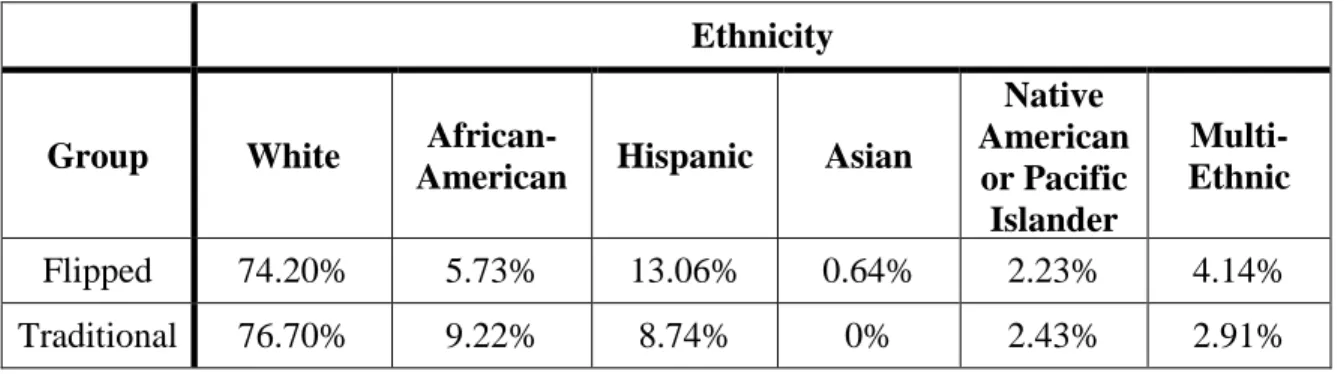
Table 5: Descriptive Statistics for Student Ethnicity in Flipped vs. Traditional Classrooms ... 78
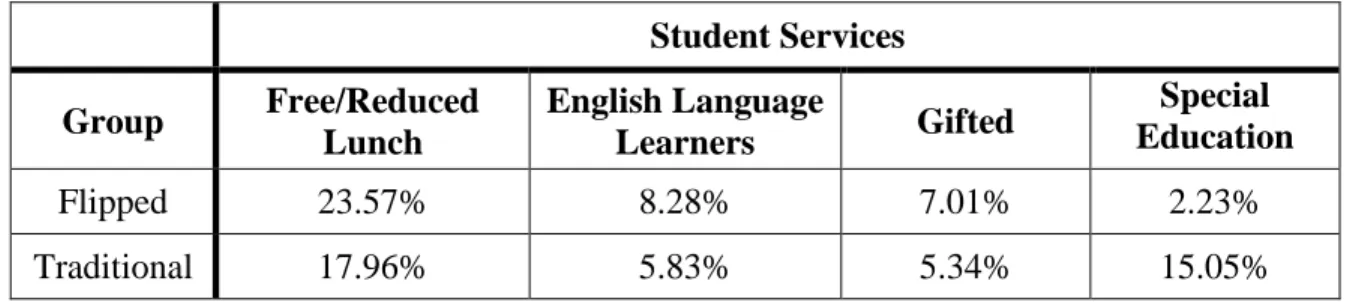
Table 6: Descriptive Statistics for Student Services in Flipped vs. Traditional Classrooms ... 79
Table 7: Descriptive Statistics for Student Grade Level in Regular Geometry ... 79
Table 8: Descriptive Statistics for Student Gender in Regular Geometry ... 80
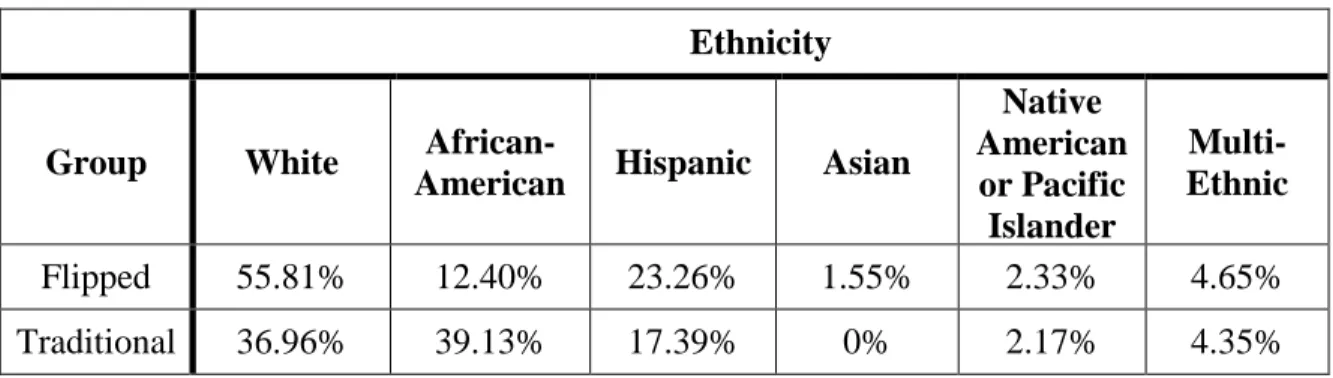
Table 9: Descriptive Statistics for Student Ethnicity in Regular Geometry ... 81
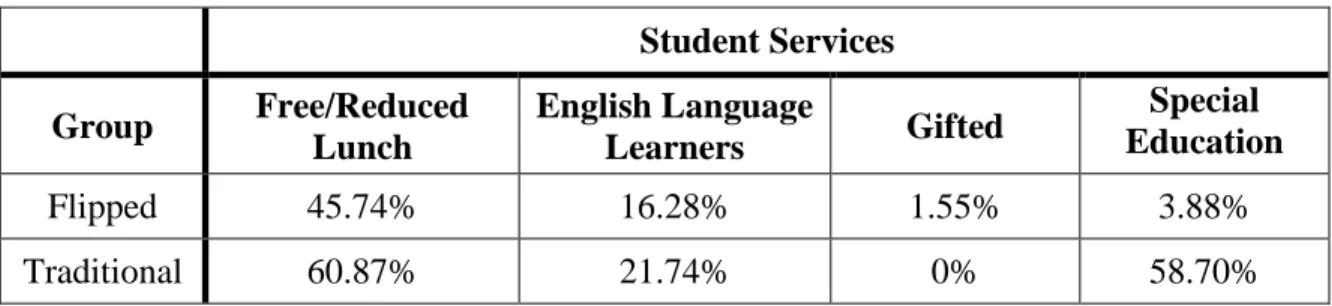
Table 10: Descriptive Statistics for Student Services in Regular Geometry ... 82
Table 11: Descriptive Statistics for Final Exam Scores in Regular Geometry ... 82
Table 12: Levene's Test for Equality of Variances for Regular Geometry... 84
Table 13: Independent samples t-Test for Regular Geometry ... 84
Table 14: Descriptive Statistics for Student Grade Level in Honors Geometry ... 87
Table 15: Descriptive Statistics for Student Gender in Honors Geometry ... 87
Table 16: Descriptive Statistics for Student Ethnicity in Honors Geometry ... 88
Table 17: Descriptive Statistics for Student Services in Honors Geometry ... 89
Table 18: Descriptive Statistics for Final Exam Scores in Honors Geometry ... 89
Table 19: Levene's Test for Equality of Variances for Honors Geometry ... 91
Table 20: Independent samples t-Test for Honors Geometry ... 91
Table 21: Descriptive Statistics for Student Grade Level in PreAlgebra ... 94
Table 22: Descriptive Statistics for Student Gender in PreAlgebra ... 94
Table 23: Descriptive Statistics for Student Ethnicity in PreAlgebra ... 95
Table 24: Descriptive Statistics for Student Services in PreAlgebra ... 96
Table 25: Descriptive Statistics for Final Exam Scores in PreAlgebra ... 96
Table 26: Levene's Test for Equality of Variances for PreAlgebra ... 98
Table 27: Independent samples t-Test for PreAlgebra ... 98
Table 29: Descriptive Statistics for MAP Scores in PreAlgebra ... 101
Table 30: ANCOVA for NWEA MAP ... 103
Table 31: Active Learning Incident by Count ... 105
Table 32: Active Learning Incident by Percent ... 106
Table 33: Active Learning Incident by Type ... 107
Table 34: Two-Way Contingency Table Analysis of Active Learning Incidents ... 108
Table 35: Open, Axial, and Selective Codes for Active Learning ... 109
Table 36: Joint Display of Quantitative Active Learning Data and Qualitative Theme ... 111
Table 37: Student Interview Class Routines Table of Themes ... 117
Table 38: Student Interview Homework/Videos Table of Themes ... 118
Table 39: Student Interview Effort Table of Themes ... 119
Table 40: Student Interview Ability Table of Themes ... 120
Table 41: Student Interview Structure for Learning Table of Themes ... 121
Table 42: Teacher Interview Class Routines Table of Themes ... 127
Table 43: Teacher Interview Lesson Planning Table of Themes ... 129
Table 44: Teacher Interview Effective Instructional Strategies Table of Themes ... 131
Table 45: Teacher Interview Videos/Homework Table of Themes ... 133
Table 46: Teacher Interview Student Effort Table of Themes ... 134
Acknowledgements
Thank you to all of the people that helped me throughout my post-secondary career that put me on the path towards achieving this goal. Thanks to all of the math teachers I have had the privilege of working, collaborating, and laughing with throughout my time in the school district studied. Their support, encouragement, and dedication to their chosen profession are what undoubtedly kept me going. Thank you to my
committee members and my instructors in the Curriculum and Instruction program for their time and providing such valuable feedback throughout this entire process. A special thank you to the Director of Assessment and Research in the school district studied for his time and willingness to provide additional support and guidance throughout my data collection and analysis phase.
Thank you to my grandmother, Dell, who constantly kept tabs on where I was in the process and encouraged me to keep going. Her energy and interest in education made this an exciting journey. Thanks also to my parents, Vince and Dara, who without their love and support throughout my lifetime would have made this an impossible task. Their devotion to loving and supporting their family is unmatched and encouraging in itself. Most importantly, thank you to my wonderful husband, Tim, who never doubted me, always supported me, and constantly cheered me on. Also thank you to Gia, Vita, and Vinny who unselfishly shared their "Mommy Time" and humor. Without all of you this would never have happened.
Chapter 1 - Introduction
Throughout the history of the United States, political and societal factors have heavily influenced mathematics education (NCTM, 1970). Whether it was
industrialization in the mid-1800s, innovations in science and technology like the telephone, the light bulb, the internet, or the need to compete in a global economy, the need for more individuals with technical skill sets have steadily increased (National Center for Educational Statistics, 2011).
The Common Core movement has risen, in recent times, as a response to the reality that engineering and technology define nations as world powers. It draws on the political and social needs to maintain and grow an economy and compete with the rest of the world and impacts educational research (The Common Core State Standards
Initiative, 2014). The focus in the educational community involves suggestions for alternate methods of instruction and a shift away from a drill based approach to learning discrete skills. Common Core suggests a focus on the interconnectedness of math and the balance of procedures and concepts along with developing 21st century learners that are well versed in technology (The Common Core State Standards Initiative, 2014).
Exploring this movement further, political and social factors have teachers of mathematics concerned about accountability (U.S. Department of Education, 2015). How do we focus on standardized approaches to measure student learning, yet shift away from a discrete skills approach? How do we use our traditionally published textbooks to teach in a more thematic and connected manner? How do we improve our vertical discussions about content, and our content knowledge in general, in order to broaden our scope and get a handle on the bigger picture that we need for student success? How do
we teach all students at the level and rigor that Common Core expects and still
differentiate and scaffold instruction in a way that meets the needs of all learners? All of these are very pertinent issues that arise from the current movement. Embedded in these are issues related to collaboration, grading practices, and the meaning of homework in our classrooms (Ellis & Berry, 2005).
With any movement potentially come more questions than answers, but the one constant that remains is instruction (Leinwand, 2009). In current times, coming off of No Child Left Behind and the current accountability system, the rigor of Common Core seems to overshadow the bigger need, developing mathematical thinking and problem solving in students. According to Leinwand (2009), in order to meet that need and the demands of technology, and society, the focus in math education needs to be on instruction. It is instruction that can foster the collaboration and growth amongst teachers. With effective instruction, students can learn to dig deeper and extend their understanding. They can learn to pursue challenging tasks and process through new situations. With effective math instruction, students can also learn why math makes sense of the world and why it is essential in growing our nation and economy instead of being a source of fear and anxiety (Leinwand).
In order for teachers to focus on instruction and address all the demands placed upon them in a technologically advanced society, many have turned to alternative approaches to instruction. According to Milman (2012), embedding technology and meeting students on their terms has become a popular way to address all of the challenges and because of that the flipped classroom has emerged as a method of instruction that is growing in popularity. A flipped classroom is loosely defined as a method of instruction
where the teacher creates a video of the concept or procedure to be introduced and has students view the video at home before class as their homework. In theory, the in-class time would then be freed up to allow students to engage in tasks that allow for deeper learning around the content in which students can discuss topics with their peers, collaborate around project-based learning activities, or modeling activities while the teacher facilitates the experience (Milman).
Statement of the Problem
Mathematics education in the United States has come under scrutiny in recent years due to low math achievement as measured by national and international
assessments. National data released by ACT in 2012 showed that 46% of all high school students that took the ACT exam met the benchmark with a score of 22 or higher on the mathematics portion of the exam. A student scoring a 22 on the math portion of the ACT is said to be ready to enter College Algebra at most four-year institutions in the United States (ACT, 2014). Based on this data, 54% of all high school students tested on the ACT in 2012 were underprepared to take a college math course for credit during their freshman year at a four-year institution (ACT, 2012). Similar to the ACT data, the most recent report released by the United States Department of Education regarding the results of the 2013 National Assessment of Educational Progress (NAEP), 42% of fourth graders nationwide achieved the status of proficient or above, 36% of 8th graders were at
proficient or above, and 26% of high school seniors were at proficient or above (National Center for Educational Statistics, 2014). When tracking these students up to the college level, research has shown that 60% of students enrolled in two-year college programs in the United States are placed into math courses below the level of College Algebra.
Because of this, 75% of these same students end up failing or dropping their math courses and then leave college without earning a degree (Boaler, 2013).
When thinking about student mathematics achievement from an international perspective, the United States rank showed a slight improvement on international
assessments as compared to other nations in recent years. In the most recent 2011 report from the Trends in International Mathematics and Science Study (TIMSS) produced by the Institute for Educational Sciences and the National Center for Educational Statistics, the data showed that the United States as a whole ranked eleventh out of fifty tested countries on fourth grade benchmarks and ninth out of forty-two tested countries on eighth grade benchmarks (National Center for Educational Statistics, 2011).
With the national and international data highlighting the need for reform in K-12 mathematics education, other research has been conducted to address what seems to indicate success for students in terms of achieving a four-year college degree at any major institution. Zollman (2011) presented research he conducted on entering freshman at a regional conference of the National Council of Teachers of Mathematics (NCTM) in 2011. In his research, Zollman identified three indicators of success that could determine if a student would go on to complete a four-year college degree. The first indicator of success, according to Zollman, was high school math course consumption. Students that completed Algebra as their highest math course in high school had an 8% chance of going on to a four-year institution and earning a degree. This statistic changed dramatically for students whose highest course was Algebra 2. Those students completing Algebra 2 had a 40% chance of going on to college and earning a degree. Once a student took a fourth level math course in high school, their chance of completing
a college degree ranged from 62-80% depending on the course they completed (Zollman).
The second indicator of success that Zollman (2011) highlighted from his research indicated that the higher the math course taken, the more likely students are to go on to complete a college degree regardless of their ethnic background. In fact, Zollman noted that this indicator had a higher success rate for Hispanic and African-American students. The third indicator of success impacted the quantity of math taken by students in high school. Students who took more math courses were also more likely to go on to complete a four-year college degree. Once again, Zollman noted that all three indicators of success were not impacted by socioeconomic status, race, or ethnicity (Zollman).
Based on this national, international, and college achievement data, it seems clear that students in the United States need more math and higher quality math instruction than what they may be currently receiving. Students should have an opportunity to feel connected to mathematics. Teachers need a way to develop student understanding and interest in mathematical concepts and ideas in order to encourage students to continue to take more math courses in high school, and upper level math courses, to increase their chances of college success and improve the standing of the United States as a nation. According to the Common Core State Standards initiative, helping students to develop mathematical habits of mind through the Standards for Mathematical Practice, “develop student practitioners of the discipline of mathematics” (The Common Core State
reform. Many teachers, in recent years, have looked into using the flipped classroom approach to instruction as a way to address these demands.
What is appealing about the flipped classroom approach to instruction for secondary and post-secondary teachers of mathematics is the instructional time gained inside the scheduled class time (Brunsell & Horejsi, 2013). By using this instructional strategy, teachers are able to use class time to develop understanding in students. They are able to present students with more meaningful tasks that develop problem-solving skills. Students are then able to collaborate, justify, and defend their processes while the teacher facilitates and guides them. Students are able to walk away from the experience more engaged in their own learning and with the ability to analyze new situations by thinking critically about mathematical concepts and ideas (Brunsell & Horejsi, 2013). This is incredibly timely given the transition to more rigorous standards and the focus on modeling and argumentation provided by the Common Core State Standards (The Common Core State Standards Initiative, 2014). Modeling with mathematics and mathematical discourse are critical factors in developing conceptual understanding in students. Instructional strategies, like the flipped classroom model, seem to support these features. This approach seems to allow time in class for more meaningful differentiation opportunities and for the development of mathematical discussions that can lead to deeper understandings of mathematical content, promote connections across topics, and increase student achievement in the area of mathematics (Strayer, 2007; Tucker, 2012).
Purpose of the Study
This study addresses how the flipped method of classroom instruction differs from traditional classroom instruction when comparing student achievement measures in
middle and high school mathematics classrooms. A modified explanatory sequential mixed methods design (Creswell & Plano Clark, 2011) was used, and it involved collecting quantitative data and then explaining the quantitative results with in-depth qualitative data. In the quantitative phases of the study, NWEA Mathematics MAP Assessment data and common mathematics semester final assessment grades were collected from middle school and high school students in a large Midwestern suburban public school district to determine how the flipped classroom approach to instruction differed in terms of student achievement measures as compared to a traditionally instructed classroom. As a second component of the quantitative phases, data were collected with respect to the frequency of active learning incidents observed in
classrooms in order to further assess differences associated with the flipped classroom as compared to the traditional classroom.
The qualitative phase was conducted as a follow up to the quantitative phase to help explain the quantitative results. In this exploratory follow-up, student and teacher perceptions of mathematics achievement as a result of the flipped classroom approach to instruction with middle school and high school math students and how those perceptions might be different than those of students and teachers in traditionally taught classrooms in the school district were explored. Similarly, as a follow-up to the second quantitative focus regarding the frequency of observable active learning incidents, qualitative
descriptions of the observed incidents were also explored.
Research Questions
The study will focus on the following research questions: 1. Overarching Question:How do middle school and high school math students’ and their teachers’ perspectives about learning mathematics in a flipped classroom support the quantitative results about their academic achievement as compared to their traditionally taught peers?
a. Quantitative Focus
i. How does the flipped classroom approach, in the secondary mathematics classroom, impact measures of student learning as identified by course semester final exams and NWEA Mathematics MAP data?
ii. How does the flipped classroom approach to instruction differ in terms of the frequency of observable active learning incidents as compared to the frequency of observable active learning incidents in the traditional classroom?
b. Qualitative Focus
i. Do student perceptions about their learning in a flipped
mathematics classroom differ from student perceptions about their learning in a traditionally instructed classroom, and in what ways? ii. Do teacher perceptions about their teaching and their students'
learning in a flipped mathematics classroom differ from teacher perceptions about their teaching and their students' learning in a traditionally instructed classroom, and in what ways?
iii. In what ways do the active learning incidents observed in a flipped classroom compare to the active learning incidents observed in a traditionally instructed classroom?
Suggestions from and Limits of Current Research
Previous research on the flipped classroom approach to instruction has focused on content areas outside of mathematics. These studies highlight increased student
achievement, positive student perceptions, and an increase in project-based learning approaches during class time (Flumerfelt & Green, 2013; Pierce & Fox, 2012; Davies, Dean, & Ball, 2013; Wilson, 2013; Herreid & Schiller, 2013). Some studies also focused on the drawbacks of the instructional approach by discussing student resistance to the format, lack of understanding on the students’ part around the content presented in the videos, and overall poor quality of instruction presented in the videos that were used or created (Herreid & Schiller, 2013; Strayer, 2012).
All of the studies considered, however, have researched high school or post-secondary classrooms. The content area of mathematics was also underrepresented in the research (Pugalee, 2001; Wilson, 2013; Strayer, 2012). Implementation of the flipped classroom in a middle school or high school math classroom is not available in most of the research and discussion of the model. The studies available also primarily focused on quantitative achievement outcomes and quantifiable perceptions using a Likert Scale (Pierce & Fox, 2012). Little research has been conducted on how students perceive mathematics and their ability in their math classrooms as a result of engagement in the flipped classroom approach to instruction. Research is also limited in regards to teacher perceptions about the effectiveness of the flipped classroom approach to instruction and
its impact on student learning, and on detailed descriptions of how the model is
implemented in the classroom. Even less research has focused specifically on describing those perceptions and implementation in a qualitative manner (Flumerfelt & Green, 2013; Pierce & Fox, 2012; Davies, Dean, & Ball, 2013; Wilson, 2013; Missildine, Fountain, Summers, & Gosselin, 2013).
Limitations/Delimitations
Due to the nature of this study being conducted in classrooms where teachers were choosing to experiment with the flipped classroom approach to instruction in mathematics, results are not generalizable or transferrable beyond the specific population from which the sample was drawn. Also due to the variances between teachers using the flipped classroom approach to instruction, results may not be generalized or transferred to all flipped classrooms as compared to traditionally structured mathematics classrooms.
In order to account for variances in student ability upon entering the flipped mathematics classroom, norm-referenced fall assessment data was compiled as a pre-assessment of student ability and compared for growth with spring pre-assessment data, where available, using the same instrument. Due to the potentially large pool of
participants and discrepancies between teachers and implementation practices, research was limited to comparing two middle school classrooms and four high school classrooms where half used the flipped method of classroom instruction and half used a more
Definition of Terms
1. Academic Achievement – student mastery of intended mathematics objectives as recorded by course letter grades and percentages (School District Data, 2015).
2. Active Learning - opportunities where students engaged in mathematical discourse with their peers, modeling activities, and project-based learning activities.
3. Common Core State Standards in Mathematics – grade level mathematics standards developed by the National Governor’s Association of the United States and the Council of Chief State School Officers in order to address the deficiencies and inconsistencies between states’ mathematics programs (The Common Core State Standards Initiative, 2014).
4. Constructivism – theory of learning defined by Bruner (1960) as the process in which students construct their own understandings based upon existing knowledge and their own experiences.
5. Differentiated Instruction – instructional design in which teachers adjust content to meet the needs of various cognitive levels of students (Tomlinson, 2005).
6. Flipped Classroom – method of instruction where traditional lectures over mathematical procedures and concepts are videotaped and viewed by students outside of class prior to the class period in which they will be using and/or applying the information (The Flipped Learning Network, 2014).
7. Formative Assessment – method of assessment that involves checking for student understanding or progress and can be used to evaluate instruction.
This type of assessment can be formal in the form of written journal entries, exit slips, homework, or quizzes. This type of assessment can also be informal in the form of student responses to in class questions, teacher observations, peer-to-peer interactions, or discussions (NCTM, 2014). 8. Guided Practice – examples of mathematical tasks that involve mathematical
concepts and/or procedures that students complete under direct supervision of the teacher in order to develop mastery of the course objective being presented (Hunter, 1982).
9. Instructional Strategy – techniques utilized by teachers to promote mastery of objectives, understanding of content, and independent learning in students. 10.NWEA MAP – norm-referenced assessment administered two to three times
per year and is aligned to the Common Core State Standards in Mathematics known as the Measures of Academic Progress (NWEA, 2015).
11.Project-Based Learning – method of learning in which students are engaged in real-world, complex tasks that involve multiple solution pathways and
multiple objectives, and require reasoning, discussion, and justification in order to acquire deeper understanding (Edutopia, 2015).
12.Mathematical Argumentation and Discourse – Defined by The Common Core State Standards Initiative as, “Mathematically proficient students understand and use stated assumptions, definitions, and previously established results in constructing arguments. They make conjectures and build a logical
progression of statements to explore the truth of their conjectures. They are able to analyze situations by breaking them into cases, and can recognize and
use counterexamples. They justify their conclusions, communicate them to others, and respond to the arguments of others. They reason inductively about data, making plausible arguments that take into account the context from which the data arose. Mathematically proficient students are also able to compare the effectiveness of two plausible arguments, distinguish correct logic or reasoning from that which is flawed, and—if there is a flaw in an argument—explain what it is. Elementary students can construct arguments using concrete referents such as objects, drawings, diagrams, and actions. Such arguments can make sense and be correct, even though they are not generalized or made formal until later grades. Later, students learn to determine domains to which an argument applies. Students at all grades can listen or read the arguments of others, decide whether they make sense, and ask useful questions to clarify or improve the arguments” (The Common Core State Standards Initiative, 2014).
13.Modeling Activities – activities in which students demonstrate their understanding through mathematical representations, whether they be algebraic, pictorial displays, discourse, simulations, or other facets (The Common Core State Standards Initiative, 2014).
14.Secondary Mathematics – the level of mathematics defined by a student’s grade level. Secondary mathematics students in this study are students enrolled in 7th grade through 12th grade.
15.Summative Assessment – method of assessment that describes student mastery of intended learning objectives. This method is formal and final in
nature and demonstrates what students know and have retained as measured by course objectives (NCTM, 2014).
16.Traditional Classroom Approach– a pedagogical approach that is represented by a method of instruction where the teacher reviews new mathematics content in class, students engage in guided practice, independent practice, and then practice additional problems at home for homework (Hunter, 1982).
Summary
Based on the research already conducted, there are many implications for using the flipped classroom strategy in the middle and high school mathematics classroom. Some of the research suggests that when implemented effectively, student achievement and perception about mathematics improve (Hanover Research Council, 2013). The research also suggests that using the strategy frees up instructional time traditionally spent on passive instructional techniques and makes room for more authentic, modeling, and project-based learning experiences (Strayer, 2007; Tucker, 2012). In order to support the Standards for Mathematical Practice, specifically math practice number four, model with mathematics, and math practice number three, construct viable arguments and critique the reasoning of others, teachers need time with students to develop those habits of mind.
The flipped classroom strategy theoretically allows teachers the time to develop mathematical ideas and the ability to facilitate that development. For the Common Core State Standards initiative to be effective, teachers need to engage students in new learning experiences that support college and career readiness. By implementing a technology based instructional approach, like the flipped classroom strategy, teachers are able to
blend twenty-first century skills with the development of the essential habits of mind of mathematically proficient students (Brunsell & Horejsi, 2013). This study seeks to understand how student achievement in the flipped mathematics classroom compares to student achievement in traditionally instructed classrooms, and how student and teacher perceptions about teaching and learning in math might differ between the two groups.
Chapter 2 - Review of Literature
Philosophical and Theoretical Foundations
This study utilized both a post-positivist and social constructivist world view. The focus was to determine how a specific instructional strategy compared to a more traditional instructional approach with respect to student achievement measures in a secondary mathematics classroom while also providing detailed information about teacher and student perceptions on the course instructional techniques. Based on these worldviews, it was the assumption of the researcher that maximizing instructional time in the classroom could impact student learning as measured by course semester final exam grades and by norm-referenced assessments, where available. However it was also the assumption of the researcher that intentionally designed lessons that meet course objectives, allow for equal access, and differentiate for learners were also essential components to impacting that same achievement as measured by the aforementioned measures. In order to identify potential best practices in terms of mathematics
instruction, it was essential to collect both quantitative achievement data and qualitative perception data from the participants involved.
This study focused on the theoretical foundation of constructivism as it applies to student learning. Thoughts about how learners construct knowledge can be seen in the ideas of John Dewey when he suggested that students are products of their own personal experiences; however the term constructivism as a theory of learning was developed by Bruner (1960) and Piaget (1950). Using constructivist ideas, learners actively interact with new content in order to make sense of material by experiencing and merging that information with prior learning experiences (Hoover, 1996). Through this learning
theory, students involved in a flipped classroom experience should be able to engage in more hands-on, visual or interactive classroom activities. These experiences would allow them to construct new meaning for themselves based on prior learning experiences including knowledge gained from the videos they watched and from other previous opportunities to connect with mathematics.
Constructivism
Research centered on how students learn mathematics is abundant. Several theorists have offered explanations and recommendations for classroom instruction and teacher qualifications in order to maximize understanding and student achievement in the classroom. With the most recent reform movement surrounding the Common Core State Standards in Mathematics, discussions of constructivist approaches to teaching and learning mathematics have come to the forefront.
Constructivism is a theory of learning that is typically credited to Piaget, Bruner, and Vygotsky. Piaget (1950) theorized that intelligence is constructed by the learner when trying to make sense of the world around them. This theory emphasizes the active construction of knowledge as a means of maximizing learning experiences (Southwest Educational Development Laboratory, 1994). Constructivism takes on several different forms throughout education. Types of constructivism include cognitive constructivism, radical constructivism, and social constructivism (Doolittle, 2015). Cognitive
constructivism is one of the basest forms of constructivism and is the form developed by Piaget. This form focuses primarily on how learning develops in children and is defined as what goes on inside the learner’s head (University of Berkley, 2015). Radical
(2013) and focuses on the premise that knowledge is not only constructed by an individual’s experience, but also by that person’s perception of reality. Social
constructivism is often attributed to Vygotsky’s work and is the form that combines the tenants of radical and cognitive constructivism while also focusing on the idea that knowledge can also be shared and acquired through social experiences (Doolittle, 2015). This form of constructivism is the form most often seen throughout the Standards for Mathematical Practice.
Social constructivism has several important components. Central to this theory is the idea that students make choices about whether or not new information should be accepted (Epstein, 2002). If a student chooses to accept the new information, he or she will then attempt to fit the new information into his or her preconceived notions about the world (Epstein, 2002). Constructivists often argue that students learn best when they are in control of their learning and when they are aware of their control (Epstein, 2002). A consideration, however, is that with this theory students sometimes form misconceptions about particular concepts (Southwest Educational Development Laboratory, 1994). If a student is presented with new information that contradicts his or her existing ideas about the world, he or she may try to accommodate both views instead of changing his or her existing ideas (Southwest Educational Development Laboratory, 1994)
As cited in Epstein (2002), there are nine principles of learning in which most social constructivists subscribe. The principles are that learning should be active,
students have to learn how to learn, kinesthetic learning experiences and problem solving enhance learning, language affects learning, social activity produces meaningful learning experiences, students need contextual information and conceptual information to learn,
learning takes time, and motivation to learn is essential. These principles give way to guidelines for teaching and learning (Epstein, 2002). According to the Southwest Educational Development Laboratory (1994), teachers in a constructivist classroom should emphasize the importance of knowledge, beliefs, and skills a student brings to learning. Instruction in a constructivist classroom should rely on a student’s readiness, organizing the curriculum in a spiraling fashion, and going beyond the curriculum mandated by the school or district (Huitt, 2003).
Social constructivism has several expectations of the learning environment in order for the classroom to truly be considered constructivist. For students in a
constructivist mathematics classroom, an observer could expect to see them focusing on problem solving skills, applying math concepts to real world situations, expanding on knowledge, and collaborating with their teacher and their peers (Stiff, n.d.). In a constructivist classroom, students are responsible for learning and they are engaged in social discourse (Southwest Educational Development Laboratory, 1994). Students are actively involved in inquiry-based learning that requires them to make predictions and apply higher order thinking skills (Huitt, 2003).
For the teacher in a constructivist classroom, an observer could expect to see a lesson that begins with an assessment of students’ prior knowledge so that the concept can begin with students’ experiences (Huitt, 2003). Teachers in a mathematics classroom that is based in constructivism would be using raw data, primary sources, and interactive materials that provide hands-on experiences linked to real world situations (Southwest Educational Development Laboratory, 1994). Teachers would be posing problems and asking open-ended questions (Stiff, n.d.). Lessons would focus on encouraging the
students to analyze, predict, justify, and defend their ideas (Southwest Educational Development Laboratory, 1994). Students’ ideas and opinions would be encouraged, supported, and respected (Epstein, 2002).
In order for students to have the opportunities to construct meaning, teachers should also have knowledge of what types of activities they can design in order to deepen student understanding. Skemp (2006) defines deep understanding of mathematical content as relational understanding, which represents the idea that a student “knows what to do and why” (p. 89). A teacher that focuses on relational understanding and allowing students to construct meaning recognizes that,
It is necessary to provide a structure and a set of plans that support the
development of informed exploration and reflective inquiry without taking the initiative or control away from the student. The teacher must design the tasks and projects that stimulate students to ask questions, pose problems, and set goals. Students will not become active learners by accident, but by design, through the use of plans that we structure to guide exploration and inquiry. (Richards, 1991, p. 38).
When implemented effectively, the constructivist mathematics teacher benefits from situations where mathematics content becomes easier for students to remember due to the constructed meaning and the connections made between concepts, and the development of an environment that promotes discourse and satisfaction on the part of the learner (Skemp, 2006).
Because of this, it is also important for the teacher in a constructivist mathematics classroom to be cognizant of how he or she constructs meaning and how he or she acts
upon his or her own interpretations of meaning as it relates to mathematics content. Since constructivists believe that meanings are social products, how teachers, themselves, learned mathematics and constructed meaning of the content plays a significant role in how they deliver mathematics instruction in the classroom (März & Kelchtermans, 2013). Greenes (1995) states,
The teacher is a model of a mathematical investigator, practicing the
mathematical behavior, the investigative processes expected from students. He or she is a resource, assisting students with the location of relevant tools,
information, and other materials (Greenes, 1995, p. 61).
Ausubel used these ideas to create his own learning theory also centered on constructivist principles. Ausubel hypothesized that the meaning learners constructed was based upon what knowledge he or she already possessed (Ivie, 1998). Using that rationale, it seems natural for teachers to build upon prior knowledge by using advanced organizer techniques to assist students in constructing new meanings. Similarly, it also seems logical that teachers would need to design instruction in such a way that they are able to help students build background knowledge, while at the same time providing opportunities for students to engage in meaningful mathematical tasks where the teacher can then facilitate a productive discussion (Ivie, 1998).
A social constructivist would highlight that the discussion experience itself can allow students to reflect and critique the concepts being analyzed and allow them the opportunity to construct their own meaning. Ausubel would argue that this kind of process begins with advanced organizers (Ivie, 1998). Simon (2004) would also suggest that the process fits with his ideas related to meaningful task selection (Simon & Tzur).
Simon’s idea of selecting appropriate tasks also relates to the importance of effective questioning techniques and the development of meaningful mathematical discourse. This can be seen in a scenario presented by Schifter (1996) in the article, A Constructivist Perspective on Teaching and Learning Mathematics. The scenario examines a
measurement task designed by a teacher that led to her students constructing knowledge related to why standardized measurements are necessary to the real world.
Using these two theories, teachers are able to ground mathematical concepts in natural and meaningful applications, and construct a learning experience in which students can use their own experience and knowledge to solidify the concepts. Based on this belief that knowledge can be constructed by the learner and that advanced organizers, meaningful task selection, and mathematical discourse are vehicles to facilitate that experience, many teachers have been experimenting with alternate methods of instruction for their classrooms.
Differentiated Instruction
As another response to the need for more meaningful mathematics instruction, increased student achievement, and with the onset of the Common Core State Standards, teachers have been working to identify ways to meet the needs of all students and
improve in their chosen profession. One component of meeting the needs of today’s learners and making math accessible to more students, in order to increase achievement, is through varying instructional strategies, aforementioned, and differentiation.
Differentiated instruction seems to be a challenging topic for many secondary math teachers due to space and time limitations and the pressure that many feel to “cover”
course objectives in order to prepare students for a high stakes assessment (Tomlinson, 2005).
Differentiation is a solution to boosting learner confidence in mathematics and achievement. According to Tomlinson (2005), it is necessary for students to feel reassured and confident about their abilities in an era where anxiety around math runs high. Tomlinson notes, “Our success as teachers in helping students see themselves as competent in the subjects we teach will affect the rest of their lives” (p. 13) Because of this, using a traditional one-size-fits-all approach to mathematics instruction is not sufficient in building the confidence students need in order to achieve success in mathematics. Tomlinson continues this thought when she says, “self-efficacy is born only when any student encounters something that the student believes to be out of reach” (p. 13). Meeting the needs of all students in the classroom in order to build that
confidence requires teachers to differentiate their instruction. This can be challenging in a secondary setting where instruction is often limited by time and quantity of content.
In response to this challenge, Ollerton (2014) suggests that differentiation
happens no matter what the teacher intends to do with his or her instruction. He mentions that even when a closed question is asked in the classroom, students inevitably process the solution at different rates and with different magnitudes of confidence. Similarly, Ollerton suggests that offering three tiers of instruction to students is also not practical. He states that there are more than three levels of cognition and students will need opportunities to learn according to their readiness. Because of this, Ollerton states, “Differentiation, therefore, is probably the most complex and important issue for teachers to engage with” (p. 43)
In order for teachers to differentiate instruction in the classroom effectively, Ollerton (2014) suggests that teachers be more cognizant of how they select tasks for students. Simon and Tzur (2004) would also seemingly agree with Ollerton that having teachers select meaningful and appropriate tasks for students to complete will allow for the mathematics to be more engaging and will highlight the usefulness of mathematics (Simon & Tzur). Von Glasersfeld (2013) would further suggest that teacher expertise in the content, in conjunction with intentional and strategic planning around high quality mathematical tasks, is also essential in order to differentiate instruction. He would suggest that the teacher has to be able to think on his or her feet in order to ask appropriate questions that deepen the students’ thinking and help to develop the mathematical concepts and connections. Without the expertise of the content on the teachers’ part, thoughtful questions cannot be asked (Glasersfeld, 2013). Similarly, since student experiences, and how they will personally interpret the experiences in the
classroom, cannot be scripted or anticipated. It is the expertise of pedagogy, student learning, and content knowledge on the teacher’s part that makes it necessary for them to stay flexible and adaptable to new situations (Schifter, 1996).
The question then becomes, aside from intentional and strategic planning around appropriate mathematical tasks, how can teachers maximize class time in order to provide the opportunities to differentiate for all students? One such method that has grown in popularity has been the flipped classroom approach to instruction. According to current research, this model has the potential to maximize instructional time and provide students more opportunities for discourse and modeling during the school day (Strayer, 2007; Tucker, 2012).
History has shown that teachers have continuously experimented with changing the nature of the traditional classroom. The traditional classroom is typically defined as an environment where a teacher delivers new content to learners with the intention that learners will then practice the new information on their own, usually outside of the structured class time (Hunter, 1982).
Flipped Classroom Research
One of the most popular approaches in recent times has become known as flipping the classroom. The “flipped classroom” has recently become an educational phenomenon where teachers utilize and integrate technology in their classrooms by changing the traditional classroom setup (Brunsell & Horejsi, 2013). Instead of students entering class, reviewing a previous lesson, taking notes over new material, and working on practice problem sets at home for homework, teachers are recording their traditional lectures and allowing students to view them at home in place of homework. Students then are able to come into class with prior knowledge of the new learning and are able to interact with more authentic tasks and problems then they might otherwise be able to do at home on their own (Brunsell & Horejsi, 2013).
The flipped classroom has recently been defined as an instructional strategy that replaces traditional lectures with videos or screencasts that are available to students outside of class time. In class work is then devoted to more interactive and hands-on experiences (Bull, Ferster, & Kjellstrom, 2012). These hands-on or active learning experiences are consistent with constructivist principles in that they support the process in which students construct their own understandings based upon existing knowledge and
their own experiences (Bruner, 1960). Flipped learning has also been defined by the Flipped Learning Network as,
A pedagogical approach in which direct instruction moves from the group learning space to the individual learning space, and the resulting group space is transformed into a dynamic, interactive learning environment where the educator guides students as they apply concepts and engage creatively in the subject matter (The Flipped Learning Network, 2014).
Ideas surrounding the flipped classroom approach to instruction are hardly new in the sense that many educators have experimented with inverting the role of traditional content delivery with the role of practice or homework. Many have argued that the mainstream definition of the flipped classroom is just “a repackaging of old ideas” (Bergmann & Sams, 2014). Bergmann and Sams (2014), two of the pioneers of the flipped classroom approach, agree that the ideas of pre-teaching content match very closely with the strategies surrounding the flipped classroom.
Other sources have noted that many teachers have been “flipping” their
classrooms for years in terms of expecting students to read novels outside of class time in order to explore text features and discuss ideas during class time (Berrett, 2012). Some have stated, “Classes in history and literature have long used the ‘flipped’ method requiring reading outside of class in preparation for in-class discussion” (Datig & Ruswick, 2013).
The major difference with those approaches in other content areas and the approaches involved in current flipped classroom methods tend to primarily refer to the role of technology in classroom instruction. According to Principles to Actions:
Ensuring Mathematical Success for All by NCTM (2014), “An excellent mathematics program integrates the use of mathematical tools and technology as essential resources to help students learn and make sense of mathematical ideas, reason mathematically, and communicate their mathematical thinking” (NCTM, p. 5). Bergmann and Sams (2014) state that educators that flip their classrooms “…are simply leveraging emerging
technology to deliver instruction in a way that was not possible before” (p. 20).
The flipped classroom approach to instruction, as it is currently defined, has been dated back to the early 1990s. The first record of a flipped classroom began in a Harvard University physics classroom with Professor Erik Mazur, who is now the Dean of
Applied Physics at Harvard (Mazur, 2005). Mazur structured his course in such a way that allowed students to choose how they learned in a manner that met their learning needs. Since this took place in the early 1990s, technology was limited and as technology improved over the years, several of Mazur’s colleagues adapted this instructional style (Mazur, 2005).
After Mazur’s instructional experiment, little research on the implementation of the flipped classroom model, specifically in a mathematics classroom, was found (Pugalee, 2001; Wilson, 2013; Strayer, 2012). Research involving the approach across content areas was more prevalent. Much of the research centered on high school or university level courses. Throughout the research found on the flipped classroom approach, several key ideas were clear. Students engaged in a flipped classroom
typically had increased achievement on formative or summative assessments (Flumerfelt & Green, 2013; Pierce & Fox, 2012; Davies, Dean, & Ball, 2013; Wilson, 2013;
format initially, but by the end of the experience reflected that their understanding had increased (Flumerfelt & Green, 2013; Pierce & Fox, 2012; Davies, Dean, & Ball, 2013; Wilson, 2013; Missildine, Fountain, Summers, & Gosselin, 2013; Strayer, 2012). Teachers implementing the strategy were able to devote in-class time to the use of case studies or project-based learning tasks (Herried & Schiller; 2013; Pierce & Fox, 2012). The research also discusses potential drawbacks to the approach and the need for meaningful in-class experiences in order to support the strategy (Herried & Schiller, 2013; Strayer, 2012).
Little scientific evidence about the effectiveness of the current definition of the flipped classroom approach to instruction exists in current research (Goodwin & Miller, 2013). According to some nonscientific data sources, teachers who have utilized the flipped classroom approach to instruction have seen an increase in student achievement on tests, an improvement in student attitudes, and a decrease in the failure rate of some courses (Goodwin & Miller, 2013). Based on these anecdotal and survey reports, researchers have determined that flipping the classroom may have benefits to student learning if implemented effectively (Goodwin & Miller, 2013).
Elements of the flipped classroom have been studied in isolation, which have also led to some of the scientific research designs surrounding the flipped classroom. For example, according to a study by Pugalee (2001) out of the University of North Carolina that focused on high school Algebra 1 students, participants who were shown to be struggling math learners that were engaged in classrooms involving constructivist principles and the use of graphing technology, were found to provide a more meaningful way for students to conceptualize concepts of linearity. This particular study highlighted
themes related to the role of technology in the mathematics classroom and the importance of classroom learning experiences designed to promote exploration and mathematical discourse. Both ideas surround the rationale for instructors experimenting with moving direct-instruction outside of the classroom in a 21st century way in order to maximize class time for more meaningful learning experiences (Pugalee, 2001).
Several studies have highlighted increased student achievement on assessments as a result of the flipped classroom implementation. Flumerfelt and Green (2013)
conducted a study to determine if using the flipped classroom approach in a secondary government class in conjunction with the Lean Model for increasing productivity in the business world would increase student achievement by reducing course failure rates. Researchers found that failure rates in the course decreased and overall student achievement increased by 11% in the flipped classroom. Another study focused on implementing the flipped classroom approach with renal pharmacology students at the university level and found that final exam scores improved overall from the previous year by 3.9% (Pierce & Fox, 2012).
A third study, also at the university level, focused on students learning about technology through the use of a flipped classroom, traditional or simulation-based classroom design. Results of this study overwhelmingly supported the use of the flipped classroom approach over the other two methods in terms of increasing student
achievement (Davies, Dean, & Ball, 2013). The study utilized pre- and post-assessment data to compare all three methods and found that students in all three courses began with pre-test scores between 30% and 40% demonstrating that students came into the course with similar prior knowledge. The post-test data highlighted increased improvement by
students in the flipped classroom and the regular classroom with students improving scores by 50% or more where improvements in the simulation-based classroom showed an approximate 40% improvement (Davies, Dean, & Ball, 2013).
Similar to the other studies, but grounded in a mathematics classroom, one study focused on implementing the flipped classroom model with an introductory college level statistics course. The instructor used the method in two of his statistics courses and utilized a traditional approach in two other statistics courses. He found that overall course grades were almost ten points higher in the two courses that utilized the flipped classroom model than those that did not (Wilson, 2013).
A fifth study at the university level, focused on comparing three types of classroom instruction in nursing courses, traditional lecture only (LO), lecture and lecture-capture back-up (LLC), and the flipped classroom approach (LCI) (Missildine, Fountain, Summers, & Gosselin, 2013). The LLC approach consisted of traditional lecture supplemented with instructional videos to be viewed outside of class time, where the LCI approach consisted of the lecture videos to be viewed prior to class time so that class time could be devoted to active learning activities. Researchers reported that student achievement in the LCI classroom was significantly higher than in the other two classrooms in terms of examination scores for students (Missildine, Fountain, Summers, & Gosselin, 2013).
Along with student achievement, much of the research examined student perceptions of the flipped classroom approach. In the study that focused on renal
pharmacology students, researchers conducted a ten-question opinion survey using a five-point Likert scale to determine students’ perceptions of the model (Pierce & Fox, 2012).
Response to the survey was voluntary with 73% of the students responding. Of those that responded, 80% said the flipped classroom approach increased their confidence on the final exam, 78% said that being able to view class lectures prior to class was extremely important, and 62% would have liked more teachers to use the strategy in other courses (Pierce & Fox, 2012).
The study that examined the flipped classroom approach, a simulation-based classroom approach, and a traditionally based classroom approach to teach students about technology also surveyed student opinions about the various methods (Davies, Dean, & Ball, 2013). This study concluded that students in the flipped classroom reflected that the method was a better way to facilitate learning and differentiate instruction whereas opinions in the traditional classroom were less favorable and the simulation-based classroom was negative (Davies, Dean, & Ball, 2013).
In the study that focused on comparing the LO, LLC, and LCI approaches to instruction with college level nursing students, student perceptions were that the LCI approach was much more work and their satisfaction scores were less high. Researchers noted that “student satisfaction may not be a good indicator of learning” (Missildine, Fountain, Summers, & Gosselin, 2013).
A fourth study, also at the college level, focused on graduate students. Researchers compared three groups of students, full time graduate students, graduate students with jobs, and Ph.D. students (Chen, Wang, Kinshuk, & Chen (2014). They focused on creating a learning experience through an online learning platform that could complement in class activities. The videos they created tended to span two hours and students reflected that the course-load was too heavy and the material presentation was
difficult to understand. Researchers noted that Ph.D students were more motivated to complete the content, whereas the other two groups were resistant to the new methods of instruction (Chen, Wang, Kinshuk, & Chen (2014).
Two other studies also surveyed student opinions about the flipped classroom design. Both studies focused on an introductory statistics course at the university level. The first study, aforementioned, found that students’ overall view of mathematics improved (Wilson, 2013). The overall percentile rank on teacher evaluations completed by students in the flipped statistics course was 9.55% higher than traditionally taught statistics courses (Wilson, 2013). However, the second study that also focused on students in statistics did not find that students’ opinions of the strategy were favorable. Students in the flipped classroom found it difficult to understand what was expected of them and felt like they were “lost” (Strayer, 2012).
A third feature of the research on flipped classrooms pertains to how class time was utilized, given that students were receiving lectures via video outside of class time. Two studies in particular described the use of case studies and project-based activities during scheduled class meetings. The first study, conducted with renal pharmacology students, described how researchers created module based podcasts to be used outside of class time by students so that during class they could engage in interactive case studies (Pierce & Fox, 2012). Students worked through patient cases that required them to intervene for patients with progressive conditions and to respond to patients in emergency situations. Because of this structure, students were able to simulate real life experiences and respond, as they would need to in the field. Students were also able to engage in discussions with other students about methods, interventions, and evaluations of patients
through the use of the simulation, which paralleled experiences they were likely to have in their careers (Pierce & Fox, 2012).
The second study surveyed several high school teachers as to the benefits of using the flipped classroom approach. Many who responded reflected that the flipped
classroom strategy allowed them to use case studies and project-based learning activities during class time to deepen student understanding of content (Herreid & Schiller, 2013). Teachers in this study felt as though the strategy made it possible to embed more
authentic learning opportunities and enrich student-learning experiences through the use of case studies (Herreid & Schiller, 2013).
The last key feature of the research was summarized nicely by one study in particular that discussed the potential drawbacks of the flipped classroom approach. In the survey study conducted by Herreid and Schiller (2013), teachers reported that students new to the method were resistant and uncomfortable in the initial stages. This response was supported by the research done by Strayer (2012) in the introductory, college level statistics course when students reflected that they were unhappy with the method of instruction due to the unclear nature of the approach (Strayer). Another drawback, based on Herreid and Schiller’s (2013) survey data, was that the instructional videos and the in-class work needed to be carefully tailored for each course and student demographic. Researchers noted that in order for the flipped strategy to be effective, students needed to be engaged in meaningful in-class work that made it necessary to watch the custom-made video lectures outside of class time.