School of Accounting Curtin University
Global Corporate Social Responsibility Disclosure Practices
Faisal
This thesis is presented for the Degree of Doctor of Philosophy
of
Curtin University
ii Declaration
To the best of my knowledge and belief this thesis contains no material previously published by any other person except where due acknowledgement has been made.
This thesis contains no material which has been accepted for award of any other degree or diploma in any university.
Signature:
iii Abstract
This thesis provides comparative evidence on corporate social responsibility disclosure (CSRD) practices by many of the world’s largest companies. Specifically, it investigates the relationship between company characteristics, institutional factors, the presence of a voluntary assurance statement, and internal contextual aspects with the extent of CSRD in sustainability reports. The thesis approach is based on legitimacy theory tenets to better explain the motivations of these prominent companies to communicate CSRD.
The data collection focuses on the 2009 sustainability reports sourced from 460 highly visible public companies from 44 separate countries. Key Global Reporting Initiative (GRI) items are used as the benchmark disclosure checklist. The empirical results indicate that the average level of overall CSRD is 56.8 percent. Labour practices is the most disclosed theme by companies (66.4 percent) followed by economic (60.2 percent), society (57.0 percent), environmental (56.7 percent), human rights (49.0 percent), and product responsibility themes (46.0 percent).
Statistical analysis indicates that high-profile industries, the presence of a voluntary assurance statement and a corporate social responsibility committee positively influence the extent of corporate social responsibility disclosures. Interestingly, companies operating in emerging markets disclose more sustainability information than communitarian or Anglo-American jurisdictions. Consistent with legitimacy theory, these results suggest that companies which are more likely impacted by their community demonstrate higher accountability and transparency by increasing CSRD communication to better address stakeholders’ expectations.
Overall, the empirical results have theoretical and practical implications for key stakeholders to improve drivers of CSRD. First, this thesis provides evidence that legitimacy theory can help explain the extent of corporate social responsibility disclosures. Second, this thesis adds new insights on the positive role of the voluntary assurance statements and corporate social responsibility committees in motivating companies to provide more extensive and higher credible sustainability reports.
iv
Acknowledgements
I am grateful to ALLAH for blessing me to proceed through the PhD program and complete this thesis.
I am greatly indebted to my principal supervisor, Professor Greg Tower for his guidance, advice and enthusiasm throughout the project. Without his support and patience, the completion of this thesis would not have been possible. His extremely valuable feedback and timely counsel is much appreciated. He always encourages me to publish my research in reputable accounting journals. I also wish to express my gratitude to my supervisor, Dr. Rusmin, for his supervision, advice and encouragement. I must thank you for being so kind to me.
I would like to thank to the Ministry of National Education, The Republic of Indonesia and Diponegoro University for the financial assistance provided for my studies. Thanks also are due to the staff at Curtin University for assisting me in various ways.
I would like also acknowledge the following people for their assistance and support. To Drs. Daryono Rahardjo, MM, Professor Emita Astami, Dr. Tarmizi Ahmad and Professor F.X Sugiyanto thank you so much for giving me support in pursuing in PhD program.
My very special thanks go to my beloved wife Nora Puspita Ratna for her exceptionally love, patience, sacrifice, understanding and support. My most precious children, Muhammad Farid Ayyasyi, Niswa Idzakiya Faisal and Nayla Mazaya Faisal have provided me with their unfailing understanding. I would never have been able to complete this without my family by my side.
v Table of Contents Page Title Page i Declaration ii Abstract iii Acknowledgements iv Table of Contents v List of Tables ix
List of Figures xii
List of Appendices xiii
Abbreviations xiv
Related Thesis Publications xv
Chapter One - Overview of the Study 1
1.0 Introduction 1
1.1 Background 2
1.2 Research Questions and Thesis Objectives 5
1.3 Significance of the Thesis 6
1.4 Assumptions and Limitations 8
1.5 Outline of the Thesis 10
1.6 Summary 10
Chapter Two - Literature Review and Hypotheses Development 11
2.0 Introduction 11
2.1 Overview of Corporate Social Responsibility Disclosure 11 2.2 Prior Theoretical Perspectives and Determinants in CSRD
Studies
16
2.3 Motivations for CSRD 32
2.4 Legitimacy Theory 38
2.5 Hypotheses 42
vi
2.5.1 Industry Type and CSRD 44
2.5.3 The Presence of Voluntary Assurance Statements and CSRD
45
2.5.4 Jurisdictional Business Systems and CSRD 47
2.5.5 The Presence of a CSR Committee and CSRD 50
2.6 Summary 53
Chapter Three - Research Approach 55
3.0 Introduction 55
3.1 The Research Paradigm 55
3.2 Research Methods 59 3.2.1 Data Collection 59 3.2.2 Sample Selection 60 3.2.3 Measurement Variables 61 3.2.3.1 Dependent Variable 62 3.2.3.2 Independent Variables 71 3.2.3.3 Control Variables 78 3.3 Statistical Analysis 79 3.4 Summary 79
Chapter Four - Descriptive Statistics and Univariate Analysis 81
4.0 Introduction 81
4.1 Levels and Themes of Global CSRD 81
4.2 Overview Levels and Themes of CSRD per Country 85 4.3 Levels of CSRD-Core and CSRD-Additional Indicators 89 4.4 Levels of Core and Additional Indicators of each CSRD
Theme
90
4.5 Levels of Core and Additional Indicators of each Category 91
4.6 Individual Indicators of CSRD 98
4.7 Descriptive Statistics and Univariate Analysis for Industry Type
vii
4.8 Descriptive Statistics and Univariate Analysis for 104 The Presence of Voluntary Assurance
4.9 Descriptive Statistics and Univariate Analysis for the Presence of CSR Committee
106
4.10 Univariate Analysis for Jurisdictional Business Systems 108 4.11 Univariate Analysis for Individual Indicators of CSRD 109
4.12 Summary 120
Chapter Five - Multivariate Analysis 122
5.0 Introduction 122
5.1 Descriptive Statistics for Model Variables 119
5.2 Outlier Tests 127
5.3 Assumptions of Regressions Analysis 128
5.3.1 Normality 129
5.3.2 Linearity 129
5.3.3 Homoscedasticity 130
5.3.4 Multicollinearity 132
5.4 Multiple Regression Analysis of CSRD 134
5.5 Additional Multiple Regressions by Theme 140
5.5.1 Economic 141 5.5.2 Environmental 142 5.5.3 Labour Practices 144 5.5.4 Human Rights 146 5.5.5 Society 148 5.5.6 Product Responsibility 149 5.6 Sensitivity Analysis 151 5.6.1 Firm Size 151 5.6.2 Industry Type 152
5.6.3 Jurisdictional Business Systems 154
viii
Chapter Six - Discussion and Implications 157
6.0 Introduction 157
6.1 The Extent of CSRD 157
6.2 6.3
Insights Regarding Themes of CSRD Determinants of CSRD
162 172
6.3.1 Firm Size 174
6.3.2 Industry Type 175
6.3.2 The Presence of Voluntary Assurance 176
6.3.4 Jurisdictional Business Systems 177
6.3.5 The Presence of CSR Committee 179
6.4 Implications 180
6.5 Summary 185
Chapter Seven - An International Study of CSR Communication 186
7.0 Overview of the Study 186
7.1 The Main Findings 187
7.2 Contributions of Thesis 189
7.3 Future Research Suggestions 190
7.4 Concluding Remarks 192
References 194
ix
List of Tables
Table Title Page
Table 2.1 Prior Theoretical Perspectives and Determinants in CSRD Studies
20
Table 2.2 Motivations: Why Companies Provide Corporate Social Responsibility Disclosure (CSRD)
36
Table 2.3 Summary of Hypotheses 53
Table 3.1 Two Paradigms of Social Science Research 57
Table 3.2 Sample Selection 61
Table 3.3 Key Studies that Measure CSRD 65
Table 3.4 The 2006 GRI Performance Indicators 66
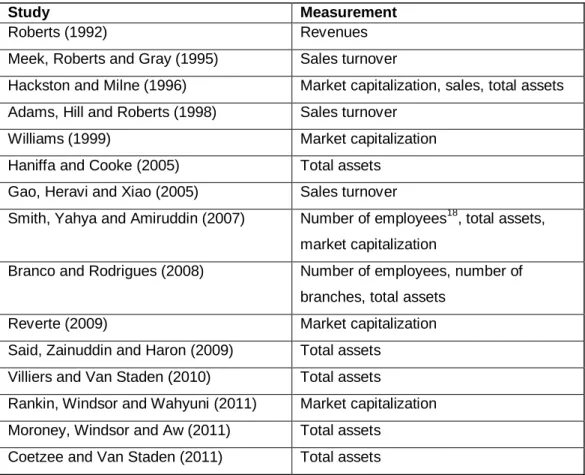
Table 3.5 Previous Studies of Firm Size Measurement 72
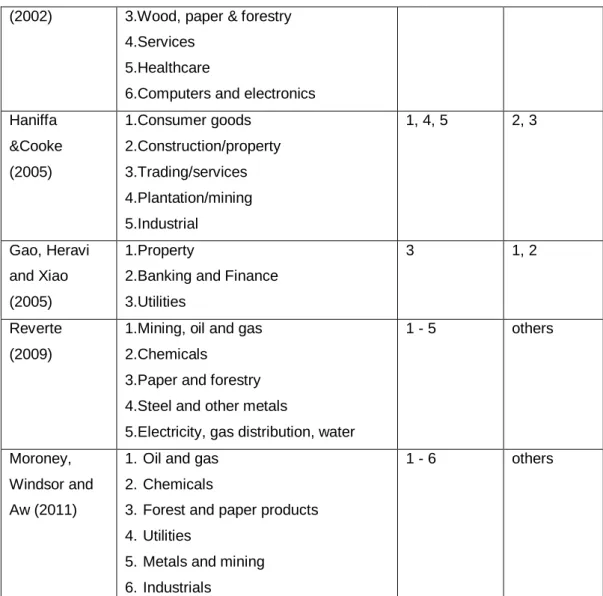
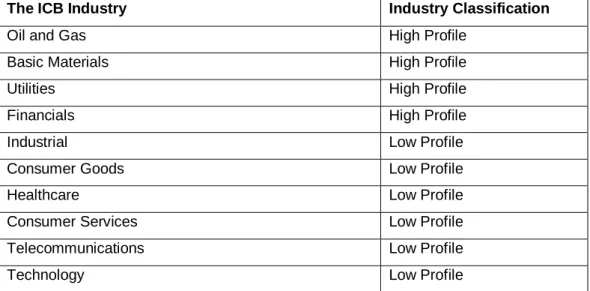
Table 3.6 Previous Studies of Industry Classification 73 Table 3.7 Industry Classification of Sample Companies 75 Table 3.8 Previous Studies Measures for the Presence of
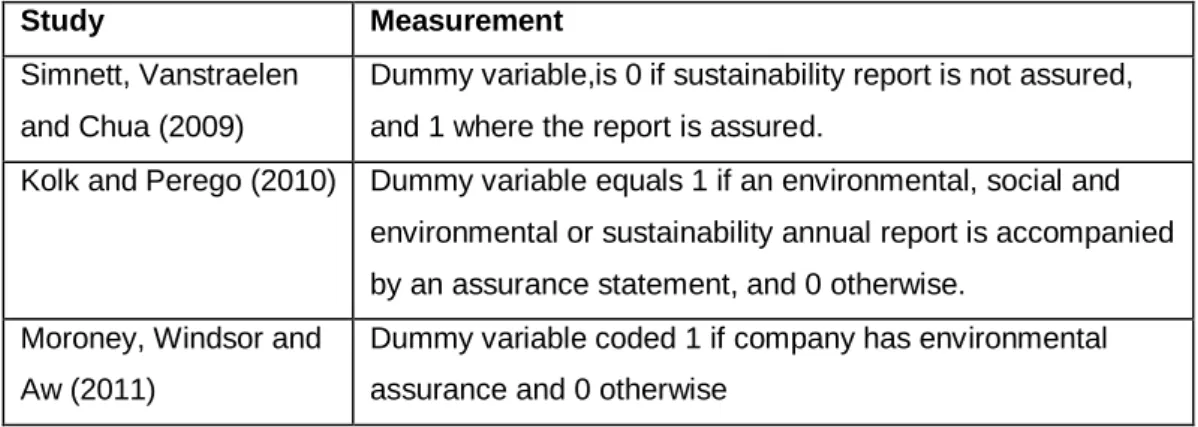
Voluntary Assurance Statement
76
Table 3.9 Previous Studies of Jurisdictional Classification 77 Table 3.10 Previous Studies Measures for the Presence of a CSR
Committee Measurement
77
Table 4.1 Levels and Key Themes of CSRD 84
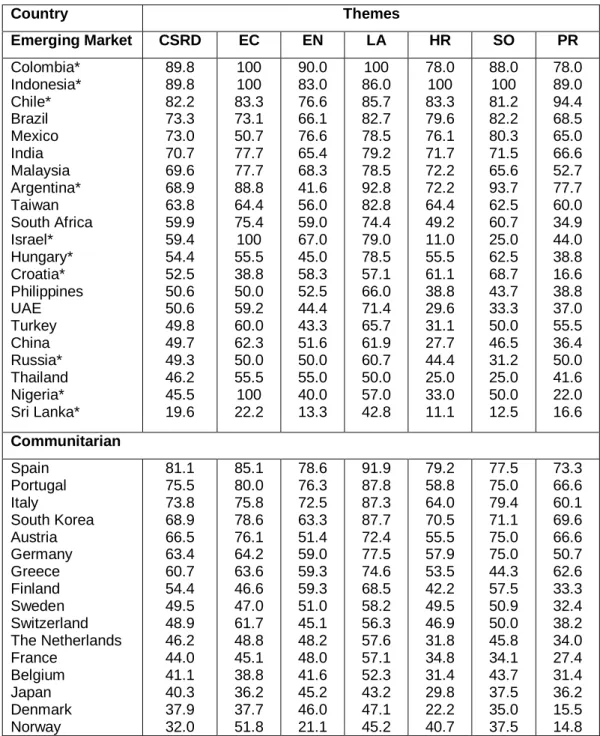
Table 4.2 Levels and Key Themes of CSRD by Country 86
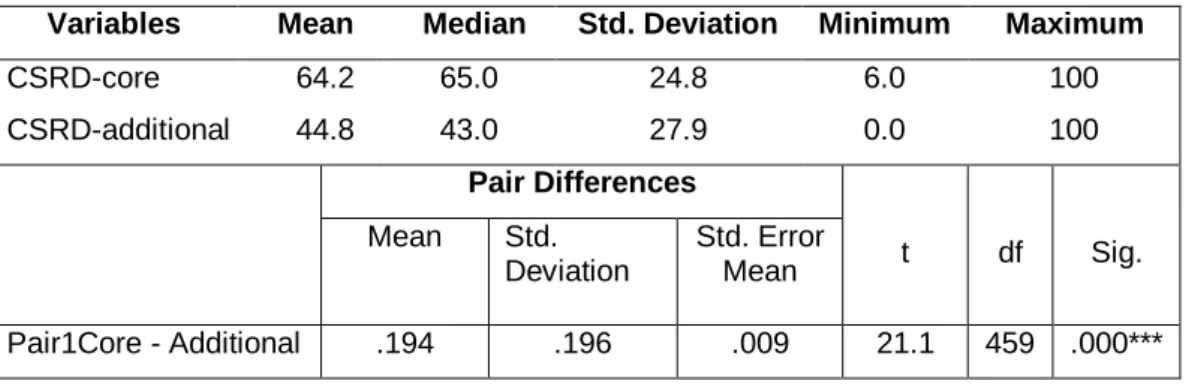
Table 4.3 Descriptive Statistics for Core and CSRD-Additional Indicators and Paired Samples t-tests
89
Table 4.4 Paired Samples t-tests for Core and Additional Indicators
91
Table 4.5 Levels of Individual Indicators of CSRD 99
Table 4.6 Descriptive Statistics of Industry Classification 102 Table 4.7 Independent Samples t-tests of Industry Type Effects 103 Table 4.8 Descriptive Statistics of Voluntary Assurance Providers 104
x
Table Title Page
Table 4.9 Independent Samples t-tests of the Presence of Voluntary Assurance Statement
105
Table 4.10 Descriptive Statistics of the Presence of a CSR Committee
106
Table 4.11 Independent Samples t-tests of the Presence of a CSR Committee
107
Table 4.12 One-way ANOVA Tests for Jurisdictional Variable 108 Table 4.13 Independent Samples t-tests for Individual Indicators of
CSRD
112
Table 5.1 Descriptive Statistics for Continous Variables 123 Table 5.2 Descriptive Statistics for Categorical Variables 125 Table 5.3 Descriptive Statistics for Mahalanobis Scores 128 Table 5.4 Normality Test for Residuals Distribution 129
Table 5.5 Glesjer Tests 132
Table 5.6 Multicollinearity Analysis 132
Table 5.7 Pearson Correlation 133
Table 5.8 Multiple Regressions Analysis Results: CSRD 134
Table 5.9 Multiple Regressions: Economic Theme 141
Table 5.10 Multiple Regressions: Environmental Theme 143 Table 5.11 Multiple Regressions: Labour Practices Theme 145 Table 5.12 Multiple Regressions: Human Rights Theme 146
Table 5.13 Multiple Regressions: Society Theme 149
Table 5.14 Multiple Regressions: Product Responsibility Theme 150 Table 5.15 Multiple Regressions Results: Alternative Measures of
Firm Size
152
Table 5.16 Multiple Regressions Results: Alternative Measures of Industry Type
153
Table 5.17 Multiple Regressions Results: Alternative Measures of Jurisdictional Business Systems
154
xi
Table Title Page
Table 6.1 Summary Hypotheses Testing 173
Table 7.1 Summary Thesis Findings 187
Appendix Tables Page
Table A-1 Core and Additional Performance Indicators A-1 Table B-1 Independent Sample t-tests for Assurance Provider B-1 Table C-1 Independent Sample t-tests for the CSR Committee
Structure
C-1
Table D-1 Mahalanobis and Cook’s Distance Scores D-1
Table E-1 Multiple Regression Full Samples E-1
xii
List of Figures
Figure Title Page
Figure 4.1 Levels of CSRD Theme 82
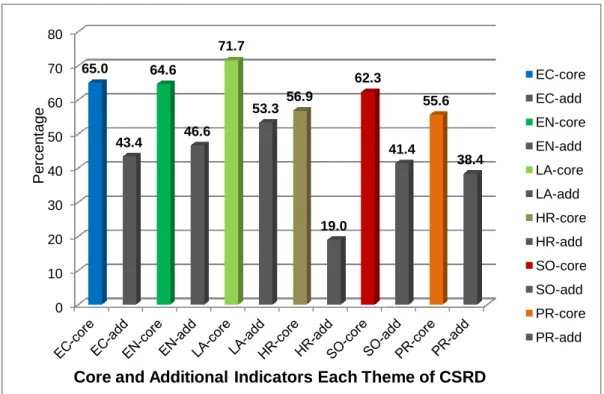
Figure 4.2 Core and Additional Indicators for Each Theme of CSRD 90
Figure 4.3 Economic Themes: Core and Additional 92
Figure 4.4 Environmental Themes: Core and Additional 93 Figure 4.5 Labour Practices Themes: Core and Additional 94
Figure 4.6 Human Rights Themes: Core and Additional 95
Figure 4.7 Society Themes: Core and Additional 97
Figure 4.8 Product Responsibility Themes: Core and Additional 98
Figure 5.1 Histogram of Firm Size 124
Figure 5.2 Linearity 130
xiii
List of Appendices
Appendix Title Page
Appendix A Core and Additional Performance Indicators A-1 Appendix B Independent Samples t-tests for Assurance Provider B-1 Appendix C Independent Samples t-tests for the CSR
Committee Structure
C-1
Appendix D Outliers D-1
Appendix E Regression Analysis With and Without Outliers E-1 Appendix F Noteable International Guidance for Sustainability
Reporting
xiv Abbreviations ANOVA Analysis of Variance
ASX Australian Stock Exchange
CERES Coalition for Environmentally Responsible Economies CSR Corporate Social Responsibility
CSRD Corporate Social Responsibility Disclosure
EC Economic
EN Environmental
EPA Environmental Protection Authorities
FTSE Financial Times and London Stock Exchange
GHG Green House Gas
GRI Global Reporting Initiative
HR Human Rights
IAASB International Auditing and Assurance Standards Board IASB International Accounting Standards Board
ICB Industry Classification Benchmark IFAC International Federation of Accountants IFC International Finance Corporation
ISO International Organisation for Standardisation ILO International Labour Organisation
KLSE Kuala Lumpur Stock Exchange
LA Labour Practices
MNE Multi National Enterprise
NGO Non-Government Organisation
OECD Organisation for Economic Co-operation and Development
OLS Ordinary Least Squares
PR Product Responsibility
ROA Return on Assets
SA Social Accountability
SO Society
TBL Triple Bottom Line
TRI Total Release Inventory
UN United Nations
UNPRI United Nations Principles for Responsible Investment VESAD Voluntary Environmental and Social Disclosure VIF Variance Inflation Factor
xv
Related Thesis Publications
Refereed Publications
Faisal, F., G. Tower, and R. Rusmin. 2012. Legitimising Corporate Sustainability Reporting Throughout the World. Australasian Accounting Business and Finance 6 (2): 19-34.
Faisal, F., G. Tower, and R. Rusmin. 2012. Communicating key labour issues in a global context. Journal of Human Resource Costing and Accounting 16 (4): 320-340
Journal Article under Editorial Review
Faisal, F., G. Tower, and R. Rusmin. 2012. Do internal organisational systems matter for environmental communication? Business Strategy and the Environment
Faisal, F., G. Tower, and R. Rusmin. 2012. A cross-country study of social disclosure practices in sustainability reports. Corporate Social Responsibility and Environmental Management.
Refereed Conference Papers
Faisal, G. Tower, and R. Rusmin. 2011. Corporate Sustainability Reporting in the International Arena. Presented at the European Accounting Association Annual Congress, Rome, Italy, 20 – 22 April 2011
Faisal, G. Tower, and R. Rusmin. 2011. Factors Influencing Social Disclosure in Sustainability Reports: Evidence from Companies World-Wide. Presented at the British Accounting Association (BAA) Annual Conference, Birmingham, England, 12 – 14 April 2011
Faisal, G. Tower, and R. Rusmin. 2010. International Insights Concerning Corporate Social Responsibility Disclosure Practices. Presented at Curtin Business School Doctoral Colloquium, Perth, Western Australia, 30 September – 1 October 2010.
1
CHAPTER ONE OVERVIEW OF THE STUDY
1.0 Introduction
This thesis investigates the extent1 of corporate social responsibility disclosure (CSRD)2 of 460 highly visible public companies from 44 countries in their sustainability reports for the 2009 financial year. Using legitimacy theory, the thesis empirically examines the interaction of company characteristics, the presence of a voluntary assurance statement, institutional factors, and internal context variables, to explain variations in the extent of CSRD across jurisdictional business systems. Considering the interaction of these variables may help to assist in explaining why companies provide such extra voluntary communication. An index composed of 79 individual indicators from the Global Reporting Initiative (2006) is used to calculate the level of CSRD. Further, the findings of this thesis enable a better understanding of the factors that explain CSRD communication. For instance, this thesis provides insights into how the presence of a voluntary assurance statement and a corporate social responsibility (CSR) committee motivate companies to provide more credible sustainability reports.
This chapter is structured as follows. It begins by giving the background to the research, the research’s questions and objectives, its significance,
1The term ‘extent’ and is used interchangeably with ‘level’. 2
Corporate social responsibility disclosure (CSRD) is used synonymously with other terms such as sustainability reporting, citizenship reporting, social reporting, and triple bottom line (TBL) reporting.CSRD can be defined as “the provision of financial and non-financial information relating to an organisation’s interaction with its physical and social environment as stated in the annual report or separate social reports” (Hackston and Milne 1996, 78). This definition covers six themes: economic, environmental, labour practices, human rights, society, and product responsibility (GRI 2006).The term CSRD is used throughout the thesis to describe the company’s communication of their economic, social, and environmental activities and impacts of company.
2
assumptions and limitations, and an outline of the thesis. Section 1.1 outlines the issues relating to the development of corporate social responsibility disclosure (CSRD) studies. Section 1.2 provides the research questions and thesis’s objectives. An explanation of the importance of the thesis is presented in Section 1.3, while Section 1.4 introduces the assumptions and limitations of this study. Section 1.5 gives an outline of the thesis, which is followed by a summary of this chapter.
1.1 Background
Recent rapid global transformation has seen an increased demand placed on corporations not only to perform financially but also to be good corporate citizens3. One of the most important aspects of this transformation is the growing importance of corporate social responsibility (CSR) activities (KPMG 2008). The increasing demand on companies to be more responsible is evidenced by the increased corporate social responsibility disclosures in many firms around the world (Bebbington, Larrinaga and Moneva 2008). CSRD typically comprises information about corporation’s activities with regard to social and environmental issues such as enviromental protection, labour practices, human rights, community involvement, and product responsibility (Gray et al. 2001). It also can be seen as a mechanism that corporations utilise in order to provide information to stakeholder groups and to demonstrate the extent to which corporate activities are consistent with the relevant public (Gray, Owen and Maunders 1987). The KPMG International Survey provides data that corporate social responsibility disclosure has gone mainstream, with nearly 80 percent of the largest 250 companies from 22 countries issuing stand-alone reports, up from about 50 percent in 2005 (KPMG 2008).
3Corporate citizenship can be defined as “the ways in which companies enact the strategies and operating practices that affect stakeholders and the natural environment, combined with the rights, duties and responsibilities that companies have to the societies in which they operate” (Waddock 2006, 22).
3
Past studies document that the extent of CSRD is closely associated with firm characteristics, as well as general contextual and internal factors (Gray, Kouhy and Lavers 1995; Adams 2002). However, beyond these factors, knowledge about the process that underlie the development of corporate social responsibility disclosure is still limited, as the extent and type of CSRD practices differ from country to country (Gao, Heravi and Xiao 2005; Chapple and Moon 2005; Aerts, Cormier and Magnan 2006; Baughn, Bodie and McIntosh 2007). Furthermore, most prior studies have been conducted in a single country setting. However, CSRD studies with data from a single country only face potential difficulties in linking their empirical results to the political, economic or cultural characteristics of broader jurisdictional units (Williams 1999). By contrast, the international comparisons made in this thesis offer deeper insights.
This thesis attempts to overcome the single-country limitations of previous research by comparing corporate social responsibility disclosure across jurisdictions. In particular, this thesis explores the extent of CSRD practices in emerging market countries, which have not received adequate attention in previous corporate social responsibility disclosure literature. More broadly, this thesis intends to look at the extent of global CSRD practices using a rich data set in 44 countries.
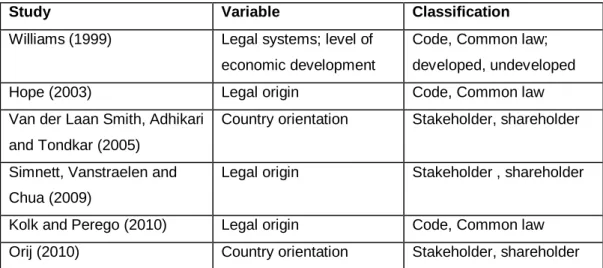
There has been international research examining institutional factors that may influence corporate social responsibility disclosure (see for example Williams 1999; Buhr and Freedman 2001; Newson and Deegan 2002; Holland and Foo 2003; Chapple and Moon 2005; Van der Laan Smith, Adhikari and Tondkar 2005; Xiao et al. 2005; Baughn, Bodie and McIntosh 2007; Orij 2010). These studies note that country/region, culture, the stage of nation’s social and economic development and its legal and regulatory context are important determinants of the level and type of CSRD. However, these studies look at the influence of only institutional or
4
contextual factors on CSRD. They tend to ignore the impact of internal factors that influence the extent of corporate social responsibility disclosure. As argued by Adams (2002) the internal processes of reporting, such as those used to make CSRDs, may be influenced by the existence of internal entities such as a CSR committee.
This thesis extends past research by investigating the role of the corporate social responsibility committee. Specific internal organisational systems are vital to enable companies to adequately monitor changing societal expectations and to mitigate the risk associated with these (Rankin, Windsor and Wahyuni 2011). The presence of a CSR committee can be seen as a mechanism of legitimacy and reputation, as its role is to ensure that the company is managed in a socially responsible way and the stakeholder’s expectations are addressed (Michelon and Parbonetti 2012). Hence, the presence of a CSR committee may potentially demonstrate a greater willingness and committment to consider wider corporate social responsibility issues within the decision-making framework of the company (Kent and Monem 2008).
The emergence of and increase in corporate social responsibility disclosure reflects the increasing demand for corporate transparency. To enhance the level of CSRD, various stakeholder groups are also demanding a voluntary assurance statement in companies’ sustainability reports (Moroney, Windsor and Aw 2011). This thesis also examines the potentially related role of voluntary assurance statements in enhancing the level of CSRD. Past studies in the corporate social responsibility disclosure literature have not given sufficient attention to the significance of the presence of a voluntary assurance statement. In summary, this thesis adds the literature by providing a clear theoretical framework for understanding the determinants of CSRD.
5
To date, while there is no universal framework, a number of reporting frameworks have been developed to integrate CSR performance into a composite unified account. Despite the fact that these internationally recognized reporting frameworks differ in content and in the industry and region in which they are used, the Global Reporting Initiative (GRI) is one of the most important drivers of the quality of sustainability reports (Li et al. 2011). This thesis utilises the GRI Guidelines (2006) as the benchmark for disclosure checklist items.
The GRI is a comprehensive measurement that investigates all aspects of corporate social responsibility (GRI 2006; Rankin, Windsor and Wahyuni 2011). Godfrey and Hatch (2007) suggest that it is important for researchers to consider all aspects of CSR, such as economic, environmental, and social aspects The GRI (2006) Guidelines consist of six themes. These are economic, environmental, labour practices, human rights, society, and product responsibility. All of these themes are considered relevant for this thesis as they enable a more detailed analysis of economic, social and environmental indicators.
1.2 Research Questions and Thesis Objectives
In order to improve the quality and quantity of corporate social responsibility disclosure, it is important to study not only the current extent and quality of CSRD practices, but also to investigate the factors influencing CSRD (Adams, Hill and Roberts 1998). Therefore, the key research questions of this thesis are:
(1) What is the extent of corporate social responsibility disclosure (CSRD) across the sample?
(2) What company characteristics, the presence of a voluntary assurance statement, institutional and internal factors, explain corporate social responsibility disclosure (CSRD) communication?
6
To answer these questions, this thesis pursues two objectives. The first is to provide comparative evidence about corporate social responsibility disclosure practices using data from a large number of companies from around the world; that is, to determine the extent to which corporate social responsibility disclosure varies across jurisdictions. The second is to analyse how company characteristics, the presence of voluntary assurance statements, institutional and internal factors account for corporate social responsibility disclosure.
1.3 Significance of the Thesis
This thesis makes several major contributions. First, previous studies of corporate social responsibility disclosure practices have almost solely focused on annual reports. Few cross-country studies have been conducted using sustainability reports. Past studies generally assume that annual reports contain a limited number of key social and environmental information. The KPMG survey in 2008 finds that some companies still integrate financial information with corporate social responsibility information in the one annual report. However, the annual reports a limited number and narrow range of CSR indicators and information (Frost et al. 2005).
Some past studies have shown that companies now rely more heavily on alternative media to communicate CSR information, such as discrete reports or the internet (Frost et al. 2005; Ho and Taylor 2007; Joshi and Gao 2009). Such studies’ findings raise questions about the importance of the annual report as the main channel for conveying CSR information. The findings of Frost et al. (2005) posit that annual reports provide less insight into corporate social responsibility than stand-alone sustainability reports. Accordingly, this thesis focuses solely on sustainability reports as a better media source for capturing and analysing CSR information. This research
7
focus enables companies’ corporate social responsibility disclosure details in sustainability reports to be more fully comprehended.
Second, this thesis explores the role of voluntary assurance statements increasing the level and credibility of disclosed information (Simnett, Vanstraelen and Chua 2009; Moroney, Windsor and Aw 2011). A great number of companies rely on assurance statements to improve the credibility and transparency of their CSR information. Over 60 percent of sustainability reports issued by companies in France, Spain, Korea, and Italy include such assurance statements (KPMG 2008). This raises questions about what drives companies to seek voluntary assurance statements on sustainability reports and, further, the extent to which the presence of a voluntary assurance statement changes the level of voluntary disclosure, such as CSRD. Despite more demand for assurance statements, research on the effect of such statements on corporate social responsibility disclosure is rare (Moroney, Windsor and Aw 2011). The empirical findings of this thesis will improve understanding of how the use assurance statements affects CSRD.
Third, this thesis looks at companies throughout the globe using a rich data set in 44 countries rather than merely looking at the corporate social responsibility disclosure in a single country, as has been the case in most past disclosure studies. However, it is difficult to determine the extent of regional or global CSRD with data from only a single country, because political, economic and national institutions or cultural characteristics of broader jurisdictional units differ (Adams, Hill and Roberts 1998; Williams 1999). Further, a multi-country sample allows for the introduction of country and/or jurisdictional specific effects as a significant institutional dimension (Aerts, Cormier and Magnan 2006, 302). Differences in the type of corporate governance systems (see for example Van der Laan Smith, Adhikari and Tondkar 2005), the type of business systems (see for
8
example Buhr and Freedman 2001; Chapple and Moon 2005), the type of legal system and the level of its enforcement (see for example Williams 1999; Buhr and Freedman 2001; Holland and Foo 2003), level of economic development (see for example Buhr and Friedman 2001; Xiao et al. 2005), and culture (Orij 2010) are the main sources of variations among jurisdictions. These element have potentially important ramifications on corporate social responsibility disclosure and overall corporate communication (Aerts, Cormier and Magnan 2006).
Fourth, this thesis analyses all types of corporate social responsibility disclosure rather than just a single social or environmental disclosure theme. Prior studies are often limited to very specific environmental or social aspects, and overlook elements of corporate social responsibility. This thesis utilises a more comprehensive measurement construct to better investigate corporate communication. By assesing all the types of CSRD, this thesis examines a broader set of values, issues, and processes that companies must address; it does this in order to more fully highlight their societal interactions (Ho and Taylor 2007).
Finally, this thesis contributes to future research and development in CSRD by testing legitimacy theory. Legitimacy theory seeks to understand what factors may cause variability in corporate social responsibility disclosures and to what extent the variables of interest within an organisation may influence organisational actions in seeking legitimacy (Haniffa and Cooke 2005). Deegan (2002) and Islam and Deegan (2008) argue that legitimacy theory is widely used to explain CSRD. They posit that corporate social responsibility disclosure in annual reports is best explained as a tool for maintaining legitimacy.
9 1.4 Assumptions and Limitations
This thesis has assumptions and limitations that are consistent with past empirical studies. First, there are so many variables that could be examined as proxies of firms’ characteristics, institutional, and internal factors that may influence corporate social responsibility disclosure practices, that it is not at all possible to analyse all possible variants. Second, this thesis solely focuses on stand-alone sustainability reports. In doing so, it is assumed these documents provide economic, environmental, and social information. Third, it is assumed that the GRI4 indicators comprehensively cover all major aspects of corporate social responsibility. Fourth, this thesis assumes that the 79 indicators used as checklist benchmarks in the GRI (2006) are voluntary in each jurisdiction. Fifth, this thesis focuses on one period only (2009) and an English version of sustainability reports, which limits the generalisability for other time periods and the representation of countries in this thesis. Finally, since the disclosure index is developed based on the information disclosed in the stand-alone reports, it may reduce the number of companies that could be in the sample. This is a limitation in that it is likely that bigger firms will have stand-alone sustainability reports, therefore the sample may be biased towards larger firms.
This thesis employs a disclosure index to measure the extent of corporate social responsibility disclosures. It is assumed that each disclosure item is deemed equally important and therefore each item is awarded the same score when it is disclosed (Cooke 1991; Meek, Roberts and Gray 1995). Whilst, this could be questioned, any other form of weighting is fraught with problems of subjectivity. Moreover, the scoring approach gives a ‘1’ if an item is disclosed and ‘0’ if not disclosed, subject to the applicability of the item. This technique arguably loses the subtleties of different levels of
4
The Global Reporting Initiative (GRI) Framework (2006) is intended to serve as a generally accepted framework for reporting on an organisation’s economic, environmental, and social performance (GRI 2006, 3).
10
disclosure of any item (Ho 2009, 205), but is justified and employed because it reduces subjectivity.
These assumptions and limitations are common to most quantitative accounting disclosure studies. Despite them, it is argued that deep insights will be generated from this research thesis.
1.5 Outline of the Thesis
This thesis comprises seven chapters and is organised as follows: Chapter 1 provides an introduction of the background to the research questions and objectives of the thesis, the significance of the thesis, its assumptions and limitations, and an outline of thesis. Chapter 2 presents the literature review of global corporate social responsibility disclosure (CSRD), various theoretical frameworks and the hypotheses development.
Chapter 3 discusses the research approach and the specific research methods of data collection, sample and sampling, measuring variables, model specification, and statistical testing. Chapter 4 reports the descriptive statistics and univariate analysis. Chapter 5 presents the multivariate analysis of the findings of the relationships between CSRD and the predictor variables, and the results of the hypotheses’ testing and sensitivity analysis. Chapter 6 discusses the implications of the thesis’s findings. Finally, Chapter 7 summaries the conclusions and suggests directions for future research.
1.6 Summary
This chapter provides an overview of the thesis. The research questions and objectives of this thesis are outlined, and its significance, assumptions and limititations are noted. The chapter ends with an outline of thesis to provide a more succint overview of its organisation. The following chapter presents the literature review and hypotheses development.
11
CHAPTER TWO
LITERATURE REVIEW AND HYPOTHESES DEVELOPMENT
2.0 Introduction
This chapter reviews the relevant literature in order to understand the research that has been conducted on corporate social responsibility disclosure (CSRD). Section 2.1 provides an overview of CSRD. Section 2.2 focuses on prior theoretical perspectives and determinants that have been used in CSRD studies. Section 2.3 reviews past studies of the motivations of companies to provide CSRD information. Section 2.4 presents the concepts and definitions of legitimacy. This is followed by Section 2.5,an outline the formulation of the hypotheses to test the relationship between CSRD and predictor variables. Finally, Section 2.6 provides a summary of this chapter.
2.1 Overview of Corporate Social Responsibility Disclosure
Corporate social responsibility (CSR) is defined as a concept, programs, policies, and practice that has been applied and adapted to a wide variety of business contexts, and the economic, political, cultural and social relationshipsthey have to the societies in which they operate (Baughn, Bodie and McIntosh 2007; Fukukawa 2010). Waddock (2006) defines CSR as the ways in which companies enact the strategies and operating practices that affect stakeholders and the natural environment, combined with the rights, duties and responsibilities that companies have to societies in which they operate.
Corporate social responsibility arises out of the relatively simple idea that corporations have obligations to society that extend beyond mere profit-making activities (Godfrey and Hatch 2007). CSR is driven by the need for social and environmental concerns to be included in businesses’ decisions
12
and operations, and for the increased interaction of business with stakeholders (Van Marrewijk 2003). It relates to complex issues such as pollution, waste, resource depletion, and workers’ treatment, the power of large corporations, local communities, product quality and safety (Gray, Owen and Maunders 1987; Branco Rodrigues 2006; Ho and Taylor 2007).
Many companies have sought to meet the growing demands for corporate social responsibility by producing corporate social and environmental reports. Corporate communication in the form of annual reports, stand-alone reports or websites is essential for stakeholders understanding companies and for companies to manage their external relationships (Joshi and Gao 2009). Communicating its CSR activities and performance effectively to its key stakeholders, such as customers, employees, investors, suppliers, and community groups, helps a company to build trust and credibility among these groups that matter most to them (KPMG 2008). Unerman (2008) adds that corporate social responsibility disclosure is a potentially powerful medium which corporations can use to try to influence the perceptions of stakeholders, thereby contributing toward maximizing the earning potential of their reputation.
There is growing evidence that companies are publicing their corporate social responsibility credentials by providing more CSR information (Adams and Zutzhi 2004; Adams and Frost 2007; Cooper and Owen 2007). An increase in the amount of corporate communication on corporate social responsibility disclosure as well as the breadth of material covered may be in response to greater public demands for a more socially responsible approach by corporations (Frost et al. 2005).
Corporate social responsibility disclosure has been defined by previous studies in a variety of ways. Gray et al. (2001, 329) argue that CSRD can typically be thought of as comprising information relating to a corporation’s
13
activities, aspirations, and public image with regard to environmental, community, employee, and consumer issues. The term corporate social responsibility disclosure (CSRD) is used throughout this thesis to describe a company’s economic, social, and environmental impacts. Often-mentioned definitions for CSRD which combine social and environmental aspects are as follows:
Corporate social reporting is the process of communicating the social and environmental effects of organisations' economic actions to particular interest groups within society and to society at large. As such, it involves extending the accountability of organisations (particularly companies), beyond the traditional role of providing a financial account to the owners of capital, in particular, shareholders. Such an extension is predicated upon the assumption that companies do have wider responsibilities than simply to make money for their shareholders (Gray, Owen and Adams 1996, 3).
Voluntary environmental and social disclosure (VESAD) as information voluntarily provided by organisations related to their activities, programs and application of resources deemed to affect the public. These disclosures extend beyond traditional financial accounting, encompassing details related to employees, products and consumers, community services and environmental impact, prevention and reduction (Williams 1999, 231).
Corporate social disclosure is the provision of financial and non-financial information relating to a company’s interaction with its physical and social environment as stated in corporate annual reports or corporate social reports (Hackston and Milne 1996, 78).
Further, the GRI (2006, 3) defines corporate social responsibility disclosure as “the practice of measuring, disclosing, and being accountable to internal and external stakeholders for organisational performance towards the goal of sustainable development”. This thesis adopts the definition given by the GRI (2006) because it is broader than other definitions and it clearly covers six themes (financial and non-financial performance), which are economic, environmental, labour practice, human rights, society, and product responsibility. Moreover, this
14
definition emphasises qualitative and quantitative measurements and it also considers wider stakeholder groups.
As an attempt to codify best practice reporting, several bodies have been active in developing corporate social responsibility disclosure guidelines. Examples are the Organisation for Economic Co-operation and Development (OECD) Guidelines for Multinational Enterprises; the United Nations (UN) Global Compact; the United Nations Principles for Responsible Investment (UNPRI); the Coalition for Environmentally Responsible Economies (CERES) Principles; the International Organisation for Standardisation (ISO) 26000, and the Social Accountability (SA) 8000 standard. At an international level, the Global Reporting Initiative (GRI) is arguably the most dominant influencing agent (Ballou, Heitger and Landes 2006). The GRI’s sustainability reporting guidelines are the most notable guidelines. They are comprehensive, respected and accepted as representing current best practice for CSRD (Deegan 2006; Christopher and Filipovic 2008).
This thesis uses the Global Reporting Initiative (2006) Guidelines version5 (G3) for several reasons. First, the guidelines are a globally accepted framework (Frost et al. 2005; Cahaya et al. 2011). Second, the GRI (2006) framework is considered the most comprehensive reporting guideline and has gained widespread credibility through a rigorous, global multi-stakeholder feedback process (Li et al. 2011). It provides a structure for the base content of reporting (Bouten et al. 2011). Finally, the GRI (2006) framework informs organisations about how they can disclose their sustainability performance. It does this through guidelines, protocols,
5
The Global Reporting Initiative (GRI) Guidelines are first published in 1999. The second version (G2) is launched in 2002 and the third version (G3) in 2006. The current guidelines (G3.1) are published in 2011, and the next version (G4) will be launched in 2013. As this study uses 2009 sustainability reports, the GRI (2006) Guidelines version G3 is the most relevant disclosure benchmark.
15
sector supplements, detailed lists of performance metrics and other disclosure indicators (Li et al. 2011). As noted by GRI (2006), the overall goals of the guidelines are to enhance the quality, rigor, and utility of CSRD.
The 2006 guidelines (G3) comprise three main parts, these being:
1. Reporting principles. The principles are intended to help achieve transparency – a value and a goal that underlies all aspects of CSRD. There are a number of reporting principles, these being: a. Materiality. The information in a report should cover topics and
indicators that reflect the organisation’s significant economic, environmental, and social impacts or that would substantively influence the assessments and decisions of stakeholders.
b. Stakeholder inclusiveness. The reporting organisation should identify its stakeholders and explain in the report how it has responded to their reasonable expectations and interests.
c. Sustainability context. The report should present the organisation’s performance in the wider context of sustainability. d. Completeness. The coverage of the material topics and
indicators and the definition of the report’s parameters should be sufficient to reflect significant economic, environmental, and social impacts and enable stakeholders to assess the reporting organisation’s performance in the reporting period.
2. Reporting guidance. The purpose of reporting guidance is to control the power to govern the financial and operating policies of an enterprise and to participate in the financial and operating policy decisions of the entity but not the power to control those policies. 3. Standard disclosures. The standard disclosures are intended to
specify the base content that should appear in the sustainability report. The disclosures are divided into three sections:
16
a. Strategy and profile. Disclosures that set the overall context for understanding organisational performance such as its strategy, profile, and governance.
b. Management approach. Disclosures that cover how an organisation addresses a given set of topics in order to provide the context for understanding performance in a specific area. c. Performance indicators. Indicators that elicit comparable
information on the economic, environmental, and social performance of the organisation (GRI 2006; Deegan 2007).
In relation to the management approach and performance indicators, the GRI section on sustainability performance indicators is classified into economic, environmental, and social categories. These are considered to be three critical categories. Social indicators are further categorised by labour practices, human rights, society, and product responsibility (GRI 2006).
Further, the economic, environmental, and social performance indicators can each be broken down into two categories, namely core and additional performance indicators (see Chapter 3 for further details). Core performance indicators are intended to identify generally applicable indicators and are assumed to be material for most organisations. While, additional performance indicators represent emerging practice or address topics that may be material for some organisations, but are not material for others (GRI 2006).
2.2 Prior Theoretical Perspectives and Determinants in CSRD Studies Several theories attempt to explain corporate social responsibility disclosure practices. Gray, Kouhy and Lavers (1995) argue that empirical investigations of CSRD practices have utilised a very wide variety of literature that draws upon many different theoretical perspectives. These
17
theoretical frameworks are agency theory, political economy theory, legitimacy theory, stakeholder theory, and institutional theory (Deegan 2006, 272). A selection of works that use each of these theories is listed in Table 2.1 below.
Some previous studies have used political economy theory (see for example Williams 1999; Amran and Devi 2007), legitimacy theory (see for example Adams, Hill and Roberts 1998; Cormier and Gordon 2001; Patten 2002; Newson and Deegan 2002; Ahmad and Sulaiman 2004; Haniffa and Cooke 2005; Magness 2006; Van Staden and Hooks 2007; Branco and Rodrigues 2008; Aerts and Cormier 2009; Faisal, Tower and Rusmin 2012a, 2012b), stakeholder theory (see for example Roberts 1992; Van der Laan Smith, Adhikari and Tondkar 2005; Eljido-Ten 2007; Cahaya, Porter and Brown 2008; Brammer and Pavelin 2008; Gunawan 2010; Orij 2010; Michelon and Parbonetti 2012), and institutional theory (see for example Rahaman, Lawrence and Roper 2004; Aerts, Cormier and Magnan 2006; Amran and Haniffa 2011; Cahaya et al. 2011) to explain determinants of corporate social responsibility disclosure.
Current studies have also employed multiple other theoretical lenses in explaining corporate social responsibility disclosure practices (see for example Rankin, Windsor and Wahyuni 2011; Coetzee and Van Staden 2011; Mahadeo, Hanuman and Soobaroyen 2011). Legitimacy theory is widely used to explain the motivations and determinants of companies that engage in CSRD (see Table 2.2). Consistent with Deegan (2002), Table 2.1 and Table 2.2 show that corporate social responsibility disclosure is most relevant explained as a tool for maintaining legitimacy. This thesis thus utilises legitimacy theory as the theoretical framework to explain variations incorporate social responsibility disclosure practices.
18
The growing amount of accounting research in the corporate social responsibility disclosure area has generally focused on the extent and determinants of CSRD in a single country (see for example Trotman and Bradley 1981; Teoh and Thong 1984; Cowen, Ferreri and Parker 1987; Belkaoui and Karpik 1989; Patten 1991; Ness and Mirza 1991; Roberts 1992; Patten 1991; Hackston and Milne 1996; Deegan and Gordon 1996; Neu, Warsame and Pedwell 1998; Tsang 1998; Cormier and Gordon 2001; Patten 2002; Cormier and Magnan 2003; Al-Tuwaijiri, Christensen and Hughes 2004; Haniffa and Cooke 2005; Cormier, Magnan and Van Velthoven 2005; Gao, Heravi and Xiao 2005; Naser et al. 2006; Nurhayati, Brown and Tower 2006; Magness 2006; Branco and Rodrigues 2008, 2008a; Clarkson et al. 2008, Said, Zainuddin and Haron 2009; Reverte 2009; Rankin, Windsor and Wahyuni 2011; Coetzee and Van Staden 2011; Mahadeo, Hanuman and Soobaroyen 2011). On the international front, research is now examining the institutional factors that influence CSRD (see for example Adams, Hill and Roberts 1998; Williams 1999; Buhr and Freedman 2001; Newson and Deegan 2002; Holland and Foo 2003; Welford 2005; Chapple and Moon 2005; Van der Laan Smith, Adhikari and Tondkar 2005; Xiao et al. 2005; Baughn, Bodie and McIntosh 2007; Ho and Taylor 2007; Aerts and Cormier 2009). These studies have concluded that country of origin (Newson and Deegan 2002; Van der Laan Smith, Adhikari and Tondkar 2005), cultural and institutional factors (Buhr and Freedman 2001), the stage of a nation’s social and economic development (Chapple and Moon 2005; Xiao et al. 2005), legal and regulatory context (Holland and Foo 2003), and jurisdictional business systems (Faisal, Tower, and Rusmin 2012a, 2012b) are important determinants of the level and type of corporate social responsibility disclosure. Baughn, Bodie and McIntosh (2007) argue that the relationship between corporate social responsibility disclosure and a country’s economic, political, and social contexts reflects the importance of a
19
country having the requisite institutional capacity to promote and support corporate social responsibility disclosure practices.
Table 2.1 provides a summary of past studies with regard to the determinants of and theories applied to CSRD. This review is intended to develop the direction and the key of areas examination of this thesis by integrating many prior studies which have examined the effect of specific of company characteristics with companies operating in a single and/or multiple country from a single or multiple theories. These studies are presented in order from the oldest to the most recent.
20
Table 2.1 Prior Theoretical Perspectives and Determinants in CSRD Studies
Study Sample of Study Theory Determinants of CSRD
Trotman and Bradley (1981) 207 Australian firms Not specified Size, social pressures, management decision Teoh and Thong (1984) 100 Malaysian firms Not specified Size, country of origin, ownership
Cowen, Ferreri and Parker (1987) 134 US firms Not specified Size, industry
Belkaoui and Karpik (1989) 23 US firms Not specified Leverage, size, systematic risk, ROA Andrew et al. (1989) 119 Malaysian and Singaporean firms Not specified Size
Patten (1991) 156 Fortune 500 firms Legitimacy Size, industry
Ness and Mirza (1991) 131 UK firms Agency Industry
Roberts (1992) 130 Fortune 500 firms Stakeholder Political committee, leverage, public affairs staff, philanthropic, ROE, risk, age, industry
Hackston and Milne (1996) 47 New Zealand firms Not specified Size, industry Deegan and Gordon (1996) 197 Australian firms Not specified Size , industry type
Tsang (1998) 17 Singaporean firms Not specified Industry
Adams, Hill and Roberts (1998) 150 firms from 6 countries Legitimacy Size, industry, country of domicile
Williams (1999) 356 firms from 7 countries Political economy Culture, political & civil system, size, industry Moneva and Llena (2000) 160 Spanish firms Stakeholder International operations
Buhr and Freedman (2001) 248 US and Canadian firms Not specified Culture, institutional factors Cormier and Gordon (2001) 3 Canadian firms Legitimacy Ownership status, size Newson and Deegan (2002) 150 multinational firms Legitimacy Country of origin, industry
Patten (2002) 122 US firms Legitimacy Media
Gao, Heravi and Xiao (2005) 33 Hong Kong firms Not specified Size, industry Cormier, Magnan and Van Velthoven
(2005)
337 German firms Institutional Risk, ownership, fixed assets, size, age
Haniffa and Cooke (2005) 160 Malaysian firms Legitimacy Culture, governance characteristics, size, multiple listings, industry, profitability
21 Table 2.1 (continued)
Study Sample of Study Theory Determinants of CSRD
Van der Laan Smith, Adhikari and Tondkar (2005)
58 firms from US, Denmark, Norway Stakeholder Country of origin
Magness (2006) 44 Canadian firms Legitimacy Size, external financing, press releases Ho and Taylor (2007) 50 Japanese & US firms Not specified Size, profitability, leverage, industry Clarkson et al. (2008) 191 US firms Socio political Economic performance
Brammer and Pavelin (2008) 450 UK firms Not specified Size, industry Branco and Rodrigues (2008) 12 Portuguese firms Legitimacy Size
Kent and Monem (2008) 22 Australian firms Not specified Media, audit committee, CSR committee Joshi and Gao (2009) 49 multinational firms Not specified Size, profitability
Liu and Anbumozhi 175 Chinese firms Not specified Government power, size
Aerts and Cormier (2009) 158 firms from US and Canada Legitimacy Industry, leverage, media exposure, environmental performance
Da Silva M and Aibar-Guzman (2009) 109 Portuguese firms Not specified Size, quotation on the stock market Reverte (2009) 46 Spanish firms Not specified Size, industry, media
Orij (2010) 600 firms from 22 countries Stakeholder Culture
Dilling (2010) 124 firms from 25 countries Not specified Size, governance committee Islam and Deegan (2010) 2 multinational firms Legitimacy,
media-agenda
Media
Rankin, Windsor and Wahyuni (2011) 187 Australian firms Institutional governance theory
Governance, Environmental Management System, size, industry
Coetzee and Van Staden (2011) 19 South African firms Stakeholder, Legitimacy, media-agenda
Size, risk, social performance, number of fatalities
Mallin and Michelon (2011) 100 KLD firms Legitimacy CSR committee, CEO duality, multiple directorships
22
As highlighted in Table 2.1, Trotman and Bradley (1981) investigate why companies provide corporate social responsibility information and examine association between characteristics of companies (size, systematic risk, social pressures and management’s decision horizon) and corporate social responsibility disclosure. They look at 207 firms listed on the Australian Stock Exchange (ASX). Their results demonstrate that companies which provide CSR information are on average, larger in size and have a higher systematic risk. In addition, their results show that there is a positive association between company size, degree of social pressures and long-term decisions-making and the amount of CSRD.
Teoh and Thong (1984) examine corporate social responsibility disclosure 100 Malaysian companies using the questionnaire survey approach. They also use personal interviews with senior management to obtain information regarding aspects of corporate social performance and reporting, namely social awareness and social involvement. They find that most of the companies interviewed state that they focus on social involvement, specifically relating to employees and product/services. Their results show that company size, country of origin, and corporate ownership have a significant impact on the extent of CSRD.
Cowen, Ferreri and Parker (1987) test the relationship between corporate characteristics (size, and industry type) and the propensity to disclose types of CSR information. A sample of 134 US Fortune 500 companies operating in ten industries is used. Their results show that corporate size has a significant impact upon environment, energy, fair business practice, community involvement and other disclosures. Industry category also appears to have influenced on energy and community involvement communication.
23
Belkaoui and Karpik (1989) investigate the relationship between a firm’s social disclosure, social performance and economic performance. Using 23 of the US’s leading companies, they find that there is a significant and positive association between social disclosure and social performance, social disclosure and political visibility (i.e. size and systematic risk), and a negative association between social disclosure and contracting and monitoring costs (measured by leverage).
Andrew et al. (1989) provide evidence about corporate social responsibility disclosure practices in Malaysia and Singapore. Using 119 annual reports of publicly-listed companies for the year ending 1983, they find that the level of CSRD in both countries is 26 percent. Large and medium size companies disclosed more social information than small companies. Moreover, they note the human resources are the main type of social information disclosed by companies.
Patten (1991) studies corporate social responsibility disclosure through the lens of legitimacy theory. He examines whether CSRD relates to public pressure and firm profitability. the level of CSRD is measured by counting the number of pages of disclosure in the annual report for each seven themes: the environment, energy, fair business practices, human resources, community involvement, products, and other disclosures. The public pressure variable is measured by firm size and industry classification. 156 US companies listed on the Fortune 500 in 1985 are utilised as his sample. The results reveal that size and industry are significant predictor variables as determinants of CSRD US company.
Ness and Mirza (1991) utilise agency theory to test the relationship between environmental disclosures and type of industry. Focusing on 131 leading UK companies in 1984, their results indicate that there is a positive association between environmental disclosure and type of industry. In
24
addition, they argue that oil companies disclose more environmental issues as they are perceived to be damaging the environment, thus their managements place a heavier emphasis on environmental disclosure in annual reports.
Roberts (1992) empirically tests the determinants of corporate social responsibility disclosure. Stakeholder power, strategic posture, and a company’s past and current economic performance are used to explain the level of correlation between CSRD and economic performance. Three stakeholder power variables included are: percentage of ownership in the firm held by management and shareholders holding more than 5 percent of common stock, amounts contributed by the firm to its corporate political action committee, and average debt to equity ratio. Two strategic posture variables included are the average number of public affairs staff employed by the firm and the sponsorship of a philanthropic foundation by the firm. Economic performance is measured by the average annual change in return on equity (ROE) and systematic risk. By using a sample from 130 large Fortune 500 companies, Roberts marshals strong evidence that the intensity of stakeholder power, strategic posture, and economic performance can predict or explain CSRD.
Hackston and Milne (1996) provide a description of New Zealand companies’ corporate social responsibility disclosure practices. They examine the determinants of CSRD among these companies (size, industry, profitability, and country of ownership). Using the largest 47 companies listed on the New Zealand Stock Exchange in 1992 as their sample. Six types of social disclosure are used to measure the extent of CSRD. The six categories are environment, energy, employee health and safety, employee other, products, and community involvement. Their results show that size, industry, and country of ownership are determinants of CSRD.
25
Deegan and Gordon (1996) explore the environmental disclosure practices of 197 Australian companies from 1981 to 1991. They find that, first, the amount of environmental disclosure in Australia is low, on average 186 words. Second, in the period of 1988 to 1991 there is an increase in environmental disclosure which they posit is caused by an increasing number of companies. Finally, they find that there are statistically significant relationships between the size of company, industry type and the level of environmental disclosure.
Tsang (1998) uses a longitudinal study of corporate social responsibility disclosure in Singapore, based on 17 companies from three industries, namely banking, food and beverages, and hotel. The period covered is 1986 to 1995. His study uses four specific social responsibility themes─namely, the environment, human resources, community involvement, and other category. The results show that most information disclosed is in the areas of human resources and community. In addition, the industry type affects the level of CSRD. For example, the banking industry have the highest of proportion of companies disclosing corporate social responsibility information followed by food and beverages and then hotels.
Adams, Hill and Roberts (1998) identify factors that influence the corporate social responsibility disclosure of 150 firms in six European countries in 1993. These countries are France, Germany, the Netherlands, Sweden, Switzerland, and the UK. The content analysis approach is used to measure the extent of CSRD. Legitimacy tenets are employed to explain the motivation of firms to disclose their corporate social responsibility disclosure practices. Their results show that the extent of CSRD is positively related to the size of firm and the type of industry.
26
Using samples from seven Asia-Pacific countries, Williams (1999) looks at the corporate social responsibility disclosure practices of 356 firms from Australia, Singapore, Hong Kong, the Philippines, Thailand, Indonesia, and Malaysia for the year 1994. Five themes of CSRD, namely the environment, energy, human resources, products and customers, and community involvement are analysed by content analysis to measure the extent of CSRD in each country. His findings indicate that the extent of CSRD is negatively related to culture (uncertainty avoidance and masculinity) and political system. His results also show that size and industry type affect the extent of CSRD.
Buhr and Freedman (2001) explore the role of culture and institutional factors on voluntary environmental disclosure. Using a longitudinal approach, they compare the environmental disclosure of 56 Canadian and US firms in 1988 and 68 firms (in each country) in 1994. Using content analysis methods, they measure the level of environmental disclosure in four areas: legal events and/or capital expenditure (costs), emissions, management, and miscellaneous. The results show that the extent of environmental disclosure of Canadian firms is higher than US firms both in the year 1988 and in the year 1994. They argue that the differences in the level of disclosure are affected by political system and business climate.
Newson and Deegan (2002) look at corporate social responsibility disclosure practices in Australia, Singapore, and South Korea. Specifically, they examine whether large multinational corporations adopt similar CSRD policies and if not, whether the dissimilarities are affected by country of origin and industry of operation. Using 149 large multinational firms, they investigate the extent of CSRD in eight themes, namely environmental, energy, diversity, fair business practices, human resources, community involvement, products, and other. Their results find that the extent of CSRD is 19 percent. Human resources have the highest levels of
27
disclosure by companies, followed by community involvement. As for disclosure in each country, they find that the level of CSRD of Australian firms is the highest, followed by Singapore and South Korea. Australian firms provide the highest disclosure for health and safety; while Singapore firms have the highest levels of disclosure for training and empowering employees. South Korean firms disclose most about protecting the environment from their operations and products. The authors conclude that country of origin and industry of operation as the main determinants of corporate social responsibility disclosure.
Gao, Heravi and Xiao (2005) investigate the determinants of corporate social responsibility disclosure in 154 annual reports of 33 Hong Kong listed companies from 1993 to 1997. Their research find that industry and firm size have an impact on the level of disclosure. Cormier, Magnan and Van Velthoven (2005) identify determinants of corporate environmental disclosures. Their sample comprises 304 firm year observations of seventy six large German companies from 1992 to 1998. Results show that risk, ownership, fix assets age, and firm size determine the level of environmental disclosures.
Haniffa and Cooke (2005) explore corporate social responsibility disclosure practices in Malaysia for the years 1996 and 2002. They use a sample of 160 non-financial companies listed on the Kuala Lumpur Stock Exchange (KLSE) in 1996. Content analysis and a disclosure index approach are used to measure the extent of CSRD. Their results indicate that there is a significant difference in the extent and variety of CSRD in Malaysian non-financial companies’ annual reports. In addition, their results show that there is a significant difference in the themes of CSRD (the environment, employees, community, and products). Regarding the level of CSRD, the results indicate scores of 16.3 percent in 1996 and 17.1 percent in 2002. The multivariate tests show that culture and