Enhanced Root Extraction and
Document Classification Algorithm
for Arabic Text
by
Amal Alsaad
A thesis submitted for the degree of Doctor of Philosophy
Department of Electronic and Computer Engineering College of Engineering, Design and Physical Sciences
Brunel University London February 2016
Abstract
Many text extraction and classification systems have been developed for English and other international languages; most of the languages are based on Roman letters. However, Arabic language is one of the difficult languages which have special rules and morphology. Not many systems have been developed for Arabic text categorization. Arabic language is one of the Semitic languages with morphology that is more complicated than English. Due to its complex morphology, there is a need for pre-processing routines to extract the roots of the words then classify them according to the group of acts or meaning.
In this thesis, a system has been developed and tested for text classification. The system is based on two stages, the first is to extract the roots from text and the second is to classify the text according to predefined categories. The linguistic root extraction stage is composed of two main phases. The first phase is to handle removal of affixes including prefixes, suffixes and infixes. Prefixes and suffixes are removed depending on the length of the word, while checking its morphological pattern after each deduction to remove infixes. In the second phase, the root extraction algorithm is formulated to handle weak, defined, eliminated-long-vowel and two-letter geminated words, as there is a substantial great amount of irregular Arabic words in texts. Once the roots are extracted, they are checked against a predefined list of 3800 triliteral and 900 quad literal roots. Series of experiments has been conducted to improve and test the performance of the proposed algorithm. The obtained results revealed that the developed algorithm has better accuracy than the existing stemming algorithm. The second stage is the document classification stage. In this stage two non-parametric classifiers are tested, namely Artificial Neural Networks (ANN) and Support Vector Machine (SVM). The system is trained on 6 categories: culture, economy, international, local, religion and sports. The system is trained on 80% of the available data. From each category, the 10 top frequent terms are selected as features. Testing the classification algorithms has been done on the remaining 20% of the documents. The results of ANN and SVM are compared to the standard method used for text classification, the terms frequency-based method. Results show that ANN and SVM have better accuracy (80-90%) compared to the standard method (60-70%). The proposed method proves the ability to categorize the Arabic text documents into the appropriate categories with a high precision rate.
Table of Contents
Abstract ... ii Acknowledgements ... vi Declaration ... vii Chapter 1 Introduction ... 1 1.1 Motivations ... 2 1.2 Contribution to Knowledge ... 51.3 Aims and Objectives ... 7
1.4 Thesis Structure ... 8
1.5 List of Publications ... 9
Chapter 2 Literature Review ... 10
2.1 Arabic Stemming and Root Extraction ... 10
2.2 Documents Classification ... 25
2.3 Summary ... 33
Chapter 3 Arabic Language Characteristics ... 35
3.1 General Characteristics ... 35
3.2 Arabic Morphology ... 41
3.2.1 Definition of Morphology ... 41
3.2.2 Conditions of Derivation ... 41
3.2.3 Origins of Morphology... 42
3.2.4 The Use and Purpose of Morphology ... 45
3.3 Words Derivation Methods ... 46
3.3.1 Minimal Derivation(رغصلأاقاقتشلإا ) ... 46
3.3.3 Supreme Derivation (ريبكلاقاقتشلإا ) ... 47
3.3.3 Grand Derivation (ربكلأاقاقتشلإا ) ... 49
3.3.3 The Giant Derivation (را بُكلاقاقتشلإا ) ... 50
3.4 Roots and Derivation Patterns... 51
3.4.1 Verb Patterns ... 51
3.4.2 Noun Patterns ... 54
3.5 Summary ... 56
Chapter 4 Roots Extraction ... 57
4.1 Methodology ... 58
4.1.1 First Phase ... 58
4.1.2 Second Phase ... 60
3.1.3 Third Phase ... 61
4.2 Implementation ... 62
4.3 Results and Discussion ... 68
Chapter 5 Documents Classification ... 72
5.1 Feature Selection ... 72
5.1.1 Methodology ... 72
5.1.2 Implementation... 73
5.1.3 Experiments and Results ... 74
5.1.4 Main Feature Selection ... 76
5.2 Terms Frequency-based Classification ... 81
5.2.1 Methodology ... 81
5.2.2 Implementation... 81
5.2.3 Results ... 83
5.3 Artificial Neural Networks Classification ... 85
5.3.1 Introduction ... 85
5.3.2 Methodology ... 86
5.3.3 Implementation... 90
5.3.4 Results ... 91
5.4 Support Vector Machine Classification ... 92
5.4.1 Methodology ... 92
5.4.2 Implementation... 94
5.4.3 Results ... 94
5.5 Overall Results Discussion ... 95
5.6 Summary ... 98
Chapter 6 Conclusions and Future work ... 99
6.1 Conclusions ... 99
6.1.1 The Root Extraction Algorithm ... 100
6.1.2 Feature Selection and Classification ... 101
6.2 Future Work ... 102
References ... 103
Appendix A: Java Implementation Codes ... 109
Appendix B: Matlab Implementation Codes ... 113
Appendix C: ANN Classification Results ... 114
C.1 Training Database ... 114
C.2 Testing Database ... 118
Appendix D: SVM Classification Results ... 121
D.1 Training Database ... 121
I would like dedicate my thesis to my beloved parents Munirah Alabdulrahman and Salman Alsaad
Acknowledgements
First, I would like to express my deep and sincere gratitude to my supervisor Dr. Maysam Abbod, whom I am greatly indebted to for the continuous advice and guidance during this research. I appreciate his patience, support, and encouragement, in which this research would not be completed without. I am very grateful for him for giving me the opportunity to do and achieve this PhD. Dr Maysam Abbod is an outstanding supervisor and I have been very fortunate to be a PhD student under his supervision. Also, thanks to my second supervisor Dr Tatiana Kalgenova for her great advice and encouragement which gave me the key to overcome the obstacles in which I faced during the journey of my PhD.
Many thanks to my dear parents and my beloved siblings, Amani, Abdullah and Imtinan for their love and support, for having faith in me, and being there for me at all times. A big thank you to my dear friend Hasna Alqahtani, for helping me gain a strong faith and confidence in myself, for her continuous and immense support, and for brightening my days and standing by me all the way. Last but not least, many thanks to my precious friends, Sara Althowaini and Amal Bensasi for their great support and encouragement, for cheering me up and putting a smile on my face when I most needed, and for being there for me in the good and the hard times through this rough journey.
Statement of Originality
Declaration
I certify that the effort in this thesis has not previously been submitted for a degree nor has it been submitted as part of requirements for a degree. I also certify that the work in this thesis has been written by me. Any help that I have received in my research work and the preparation of the thesis itself has been duly acknowledged and referenced.
Signature of Student
Amal Alsaad
List of Figures
Figure 1.1. Top Ten Languages in the Internet 2015 – in millions of users. ... 3
Figure 1.2. Percentages of Users Growth in the Internet ... 3
Figure 1.3. Tri-literal Root Types Popularity in Arabic Text ... 5
Figure 2.1. Steps of Arabic Light Stemming Algorithms ... 11
Figure 4.1. Flowchart Representation of Phase 1. ... 60
Figure 4.2. Instantiation of the removeStopWords() Function. ... 63
Figure 4.3. Code Implementation to Remove ... 64
Figure 4.4. Implementation of the Pattern Matching Process. ... 65
Figure 4.5. Implementation of the checkTriRoots() Function. ... 66
Figure 4.6. Code Implementation for Handling Hamzated Words. ... 66
Figure 4.7. Code Implementation to Handle Geminated ... 67
Figure 4.8. Proposed Algorithm vs Khoja’s Testing Results ... 70
Figure 5.1. Implementation of the calculateIdf() function. ... 74
Figure 5.2. Implementation of the calculate tfidf() function. ... 74
Figure 5.3. Implementation of the Terms Frequency-based Classifier. ... 82
Figure 5.4. Flowchart Representation of the Terms ... 83
Figure 5.5. Biological Neuron Model. ... 86
Figure 5.6. An Artificial Neuron ... 87
Figure 5.7. An Artificial Neural Network Structure. ... 87
Figure A.1. Instantiation of the removeStopWords() Function. ... 109
Figure A.2. Code Implementation to Remove ... 109
Figure A.3. Implementation of the Pattern Matching Process. ... 109
Figure A.4. Implementation of the checkTriRoots() Function... 110
Figure A.5. Code Implementation for Handling Hamzated Words. ... 110
Figure A.6. Code Implementation to Handle Geminated ... 110
Figure A.7. Implementation of the calculateIdf() function. ... 111
Figure A.8. Implementation of the calculate tfidf() function. ... 111
Figure A.9. Implementation of the Terms Frequency-based Classifier. ... 112
Figure B.1. Instantiation of the ANN classification code. ... 113
Figure B.2. Instantiation of the SVM classification code. ... 113
Figure C.1. ANN Classification Results of the ‘Culture’ ... 114
Figure C.2. ANN Classification Results of the ‘Economy’ ... 115
Figure C.3. ANN Classification Results of the ‘International’ ... 115
Figure C.4. ANN Classification Results of the ‘Local’ ... 116
Figure C.6. ANN Classification Results of the ‘Sports’ ... 117
Figure C.7. ANN Classification Results of the ‘Culture’ ... 118
Figure C.8. ANN Classification Results of the ‘Economy’ ... 118
Figure C.9. ANN Classification Results of the ‘International’ ... 119
Figure C.10. ANN Classification Results of the ‘Local’ ... 119
Figure C.11. ANN Classification Results of the ‘Religion’ ... 120
Figure C.12. ANN Classification Results of the ‘Sports’ ... 120
Figure D.1. SVM Classification Results of the ‘Culture’ ... 121
Figure D.2. SVM Classification Results of the ‘Economy’ ... 121
Figure D.3. SVM Classification Results of the ‘International’ ... 122
Figure D.4. SVM Classification Results of the ‘Local’ ... 122
Figure D.5. SVM Classification Results of the ‘Religion’ ... 123
Figure D.6. SVM Classification Results of the ‘Sports’ ... 123
Figure D.7 SVM Classification Results of the ‘Culture’ ... 124
Figure D.8. SVM Classification Results of the ‘Economy’ ... 124
Figure D.9. SVM Classification Results of the ‘International’ ... 125
Figure D.10. SVM Classification Results of the ‘Local’ ... 125
Figure D.11. SVM Classification Results of the ‘Religion’ ... 126
List of Tables
Table 2.1. Outputs of Light Stemming vs Root-based Stemming. ... 12
Table 2.2. Letters Encoding for the Word (اهينومتلأس). ... 15
Table 2.3. Example of Encoding for Lemmas and Patterns. ... 15
Table 2.4. Results of Proposed vs Khoja's Method. ... 16
Table 2.5. Percentages of Irregular Words in Arabic ... 17
Table 2.6. Al-Ameed's Prefix and Suffix Lists. ... 18
Table 2.7. Al-Ameed's Infix Pattern Lists... 19
Table 2.8. Performance of the Algorithm in All Categories. ... 20
Table 2.9. Possible Analysis for the Word AymAn – ناميا . ... 23
Table 2.10. List of Prefixes and Suffixes. ... 24
Table 2.11. Recall, precision and F1 for SVM bi-class discrimination ... 27
Table 2.12. Mean Values of Recall, Precision and F1. ... 27
Table 2.13. Performance of SVM, TR and TULM ... 28
Table 2.14. Performance of Neural Networks, TF-IDF and M-SVM ... 29
Table 2.15. Results of Associative Classifier for the Arabic text data set. ... 32
Table 2.16. Results of Associative Classifier with Large Number of Classification Rules. ... 32
Table 3.1. Arabic Diacritics ... 37
Table 3.2. Meanings of the Word (بلق) ... 37
Table 3.3. Lexical Categories of the Word (نيع) ... 38
Table 3.4. Variations and Meanings of the Word (ملع). ... 40
Table 3.5. Morphological Variations of the Word (بهذ). ... 41
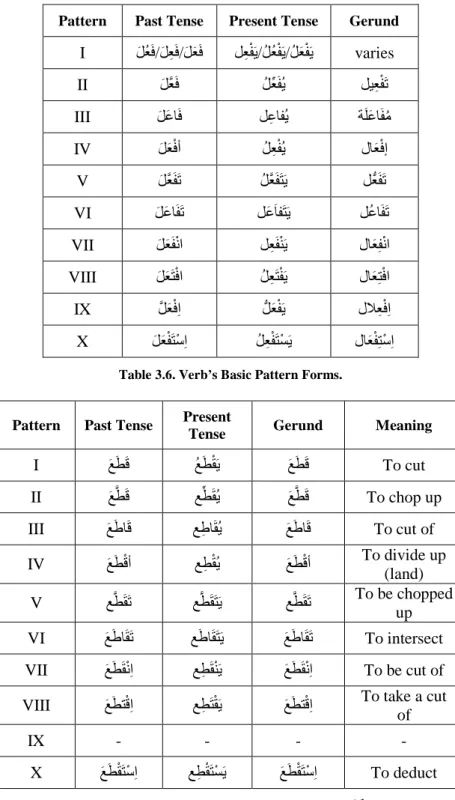
Table 3.6. Verb’s Basic Pattern Forms. ... 52
Table 3.7. Basic Pattern Forms of the Verb (عطق). ... 52
Table 3.8. Patterns of the Verb (بتك) Considering the Person, Number and Gender. ... 53
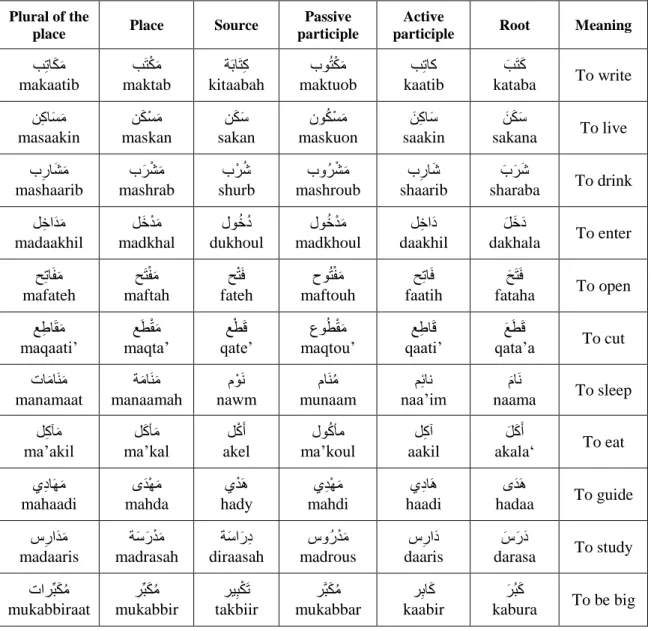
Table 3.9. Noun Patterns Examples with Different Letters Order. ... 54
Table 3.10. Plural Noun Patterns Examples. ... 55
Table 4.1. Arabic Patterns and Roots. ... 59
Table 4.2. Proposed Algorithm vs Khoja's Testing Results. ... 70
Table 5.1. Terms extracted via Root-stemming ... 75
Table 5.2. Terms extracted via light stemming ... 76
Table 5.3. Number of Documents for each Category ... 77
Table 5.4. Features Selected for the 'Culture-ةيفاقث' Category. ... 78
Table 5.5. Features Selected for the 'Economy-ةيداصتقا' Category. ... 78
Table 5.6. Features Selected for the 'International-ةيملاع' Category. ... 79
Table 5.8. Features Selected for the 'Religion-ةينيد' Category. ... 80
Table 5.9. Features Selected for the 'Sports-ةيضاير' Category. ... 80
Table 5.10. Terms Frequency-based Classification Results. ... 84
Table 5.11. ANN Classification Results. ... 91
Table 5.12. SVM Classification Results. ... 95
Table 5.13. Overall Results of each Classification Method. ... 95
List of Abbreviations
AC Associative Classification
AFP Agence France Press
AMI Average Mutual Information
ANN Artificial Neural Networks
CCA Corpus of Contemporary Arabic
FS Feature Selection
IDF Inverse Document Frequency
IR Information Retrieval
LDC Linguistic Data Consortium
MSA Modem Standard Arabic
M-SVM Multi-Category Support Vecto Machine
SVM Support Vector Machine
TF Term Frequency
TF-IDF Term Frequency-Inverse Document Frequency
TR Trigger Classification
1
Chapter 1
Introduction
During the past few years, the construction of digitalized content is rapidly increasing, raising the demand of information retrieval, text classification and automatic data tagging applications. There are few researches in this field for Arabic data due to the complex nature of Arabic language and the lack of standard corpora.
Text classification, which is also known as text categorization or topic identification, is the assignment of discovering if a piece of text belongs to any of a predefined set of classes [1]. Another definition states that the goal of text classification is to learn classification methods which can be implemented to classify documents automatically [2]. Text classification requires the use of text pre-processing methods to represent the text before pre-processing text classification. Such methods include text stemming methods, such as removal of insignificant characters, affixes and stop words.
However, most work focuses on improving Arabic stemming algorithms, or topic identification and classification methods and experiments. No work has been conducted to include an efficient stemming method within the classification algorithm, which would lead to more efficient outcome.
2
In this thesis, an advanced stemming algorithm for Arabic text is developed. In addition, a new approach to identify significant keywords for Arabic corpora is presented. As well, different text classification methods are implemented using the extracted keywords as the main features for classification. At last, the results of the classifications methods are evaluated and compared to each other in terms of accuracy and efficiency.
1.1
Motivations
The rapid increase of digitalized textual data has raised the demand for text mining and national language processing tools and methodologies, to represent these data in an as efficient way as possible. This requires feature extraction and different implementations of text processing algorithms for representing the data as required. Text mining methods and algorithms are used in many different information retrieval systems such as search engines, clustering, classification, and other text mining systems.
Arabic language is the 5th amongst the most used languages around the world, and according to Internet World Stats (www. internetworldstats.com), it is the 4th most used language with more than 168 millions of online users as of November 2015, as seen in Figure 1.1. In addition, Arabic is on the top of the list as the fastest growing language on the web, with a growth rate of 6,592.5% between 2000 and 2015, as shown in Figure 1.2.
This indicates that the construction of Arabic data is growing rapidly, rising the need for standard data mining and natural language processing tools to represent and analyze this data in the most efficient way. Yet because of its complex morphological structure there were no available standard Arabic text mining and morphological analysis tools until recently [3]. However, many studies have been conducted to get efficient stemming results in Arabic Information Retrieval systems [4].
3 Figure 1.1. Top Ten Languages in the Internet 2015 – in millions of users.
Figure 1.2. Percentages of Users Growth in the Internet by Language between 2000 – 2015.
In Arabic, both orthography and morphology lead to a great amount of lexical variations where one given word can occur among a large number of dissimilar forms [5]. This would enlarge the indexing structure volume and reduce the performance of the system. Another difficulty in Arabic morphological analysis arises because of the different letter forms of the tri-literal verbs. Verbs, which have
tri-literal roots, are categorized to sound and unsound verbs [6]. Sound (حيحص verbs (
are those which do not include a vowel nor a long vowel in their root. Sound verbs
are divided into three different types, consonant verbs, double-lettered (geminated) verbs and hamzated verbs. Consonant verbs are those that do not have a hamza in
0 100 200 300 400 500 600 700 800 900 1000 0.00% 1000.00% 2000.00% 3000.00% 4000.00% 5000.00% 6000.00% 7000.00%
4
their roots nor any duplicate letters like the verb (ََرَصَن ,( and they represent 58% of tri-literal root types popularity in Arabic language as can be seen in Figure 1.3 below.
Double-lettered (geminated) verbs are those that end with two identical letters in there root such as ( (َ دَم , representing about 8% of Arabic root types popularity. The third type of sound verbs includes verbs that have a hamza in their root like the verb (ََلَکأ . ( As shown in Figure 1.3, the hamzated letter could be in the beginning (hamzated faa), in the middle (hamzated ain) or at the end (hamzated lam), and these represent about 7% of Arabic root types popularity.
Unsound verbs are divided into three types, quasi-sound verbs, hollow verbs and defective verbs. Quasi-sound verbs are those where the first root letter is a weak letter such as (ََدَعَو .( Hollow verbs, are verbs whose second root letter is a weak letter, for example the verb (لاق . ( The middle weak letter of these roots can be a waw, yaa or
alif, and the mid-waw and mid-yaa types of verbs represent around 12% of Arabic root types popularity as can be seen in Figure 1.3. Defective verbs are verbs whose third root letter is a weak letter such as the verb (اعَد (.In some cases, weak verbs are written with a long vowel that is different from the one of their root following specific Arabic linguistic rules. In other cases, long vowels in verbs are deleted depending on the tense of the verb, becoming eliminated-long-vowel verbs. These cases represent about 30% of the Arabic text [7]. Yet the majority of Arabic
stemmers lack the capability of handling these cases. In Figure 1.3, the popularity
5 Figure 1.3. Tri-literal Root Types Popularity in Arabic Text
1.2
Contribution to Knowledge
In this thesis, it is contributed to the field by introducing an advanced root extraction algorithm for Arabic text, as well as developing and testing a classification system for Arabic text which employs an advanced root based stemming method. The root extraction algorithm is derived following two main steps. The first is to process the text to remove affixes from the text, including prefixes, suffixes and infixes. At the same time as removing affixes from the text, the word is checked against its morphological pattern depending on its length after each deduction. If a morphological pattern is matched, the root will be extracted. Otherwise, the process continues to the second step of the root extraction, that is where the algorithm is extended to handle different types of words. These include weak, hamzated, eliminated-long-vowel and two-letter geminated words. After the roots are extracted, they are verified by checking them against a list of predefined roots, containing 3800 trilateral and 900 literal roots. The performance of the algorithm is then tested by performing a number of experiments. The results which are achieved shows that the introduced algorithm is more accurate than the root extraction algorithms that are developed until now.
The second contribution is the document classification where the root extraction algorithm is employed in the stemming stage of the classification. In this part, two
58% 8% 7% 5% 3% 2% 2% 15% Consonant Doubled Mid-waw Mid-yaa Hamzated-lam Hamzated-faa Hamzated-ain Other
6
main non-parametric classifiers are tested. These classifiers are Artificial Neural Networks (ANN) and Support Vector Machine (SVM). The system is trained on six different categories: culture, economy, international, local, religion and sports. The system is trained on 80% of the collected database. From each category the top ten frequent terms are selected as features. Testing the classification methods has been done on the remaining 20% of the documents. The results of ANN and SVM are compared to the standard method used for text classification, the terms frequency-based method. The results obtained indicate that ANN and SVM have better accuracy (80-90%) compared to the standard method (60-70%). The proposed method proves the ability to categorize the Arabic text documents into the appropriate categories with a high precision rate while selecting the top features of each category and employing the root extraction algorithm in the text preprocessing stage.
7
1.3
Aims and Objectives
In this work, the main aim is to introduce a root algorithm that handles the cases as
shown in Figure 1.3, as well as affixes removal via implementing morphological
analysis techniques and specific linguistic rules. It is also intended to deliver a new
approach to identify significant keywords for Arabic corpora, and implement and evaluate different text classification methods. The aim of this project will be achieved by the following objectives:
Literature review of previous work related to Semitic Languages Data Mining, Arabic Text Root Extraction and Text Classification algorithms.
Derive an efficient algorithm for the Arabic Text Root Extraction system via a linguistic approach handling weak, hamzated, eliminated-long-vowel and two-letter geminated words.
Design and building of the Root Extraction System, as well as conducting a series of simulation experiments to test the accuracy of root extraction and overall performance of the system.
Derivation and implementation of the Feature Selection algorithm, where features of text are selected to be employed for classification.
Conduct further research on Arabic Text Classification methods, and implement efficient and suitable classification algorithms comprising the Root Extraction system. These include Terms Frequency-based method, Artificial Neural Networks (ANN), and Support Vector Machine (SVM).
Selecting and collecting of Arabic data sets and corpuses to evaluate and to test and evaluate the classification algorithms.
Design and building of each classification algorithm.
Design and carry out a series of simulation experiments to test the accuracy and efficiency of the classification systems.
8
1.4
Thesis Structure
The thesis is divided in 6 chapters which are as follows:
Introduction: This chapter talks about the research briefly, the objectives of the research, the place which the research is designed for, the addition to knowledge and the research outline.
Literature Review: This chapter illustrates some previous studies in the research field including Arabic language morphology.
Arabic Language Characteristics: In this chapter, the language complexity is explained including its orthography and morphology which made it challenging to find the words roots using standard text mining algorithms. The challenges are elaborated and the challenges are demonstrated with associated examples for clarification.
Roots Extraction: Roots extraction methods are reviewed in this chapter and tested. A new methodology is designed and developed that is more accurate than the existing methods. The results show the improvements of the proposed methodology.
Document Classification Methods: This chapter shows three text classification methods, namely, terms frequency-based method, support vector machine, and neural networks. The results for all the methods are presented and compared eventually.
Conclusion and Future Work: This is the final chapter which illustrates the stages of the research in brief and presents some ideas that may improve the system in the future.
9
1.5
List of Publications
Parts of the work detailed in this thesis have been presented in national and international scholarly publications, as follows:
1. Amal Alsaad, The Research Student Poster Conference 2012, held on the 14th
March 2012.
2. Amal Alsaad, and Maysam Abbod. Brunel University’s School of Engineering
and Design Research Conference, ResCon12, 18-20 June 2012, Brunel University.
3. Amal Alsaad, Maysam Abbod and Tatiana Kalgenova. “Arabic Textual Data
Mining via Machine Learning & Linguistic Constraints”. Brunel University’s School of Engineering and Design Research Conference, ResCon13.
4. Amal Alsaad, Maysam Abbod and Tatian Kalgenova. “Enhanced Root
Extraction Algorithm for Arabic Text” Brunel University Research Student Conference, Showcasing the best in postgraduate research, 11–12 March 2014.
5. Amal Alsaad, and Maysam Abbod. “Arabic Text Root Extraction via
Morphological Analysis and Linguistic Constraints”. The 16th UKSim-AMSS International Conference on Modelling and Simulations, 26-28 March 2014. Cambridge University, Emmanuel College.
6. Amal Alsaad, and Maysam Abbod. “Enhanced Topic Identification Algorithm
for Arabic Corpora”. The 17th UKSim-AMSS International Conference on Modelling and Simulations, 25-27 March 2015. Cambridge University, Emmanuel College.
10
Chapter 2
Literature Review
In this chapter, a discussion of previous work which has been conducted to develop Arabic topic identification and documents classification methods is presented.
2.1 Arabic Stemming and Root Extraction
Arabic morphology and root extraction is a significant aspect of Arabic information retrieval and data mining. Many scholars and researchers have long noted the complexity of written Arabic language, as compared to English and many other European languages which have traditionally been used in testing. Heavy inflection distinguishes meanings of words, as do patterns of prefixes, suffixes and even infixes. As a result, morphological analysis is an extremely important pre-processing step in the preparation of any Arabic text for analysis. In recent years, an increasing number of studies have been conducted to examine and evaluate methodologies for Arabic stemming, Arabic morphological analysis and Arabic text root extraction [8] [9] [10].
The main two approaches consist of light stemmers, and root-based stemmers [9]. Light stemmers are employed mainly in information retrieval, where the main concept is to eliminate prefixes and suffixes from a word, generating a stem. In that
11
way, the ideal forms of representative indexing for words is derived [11]. In Figure 2.1, is an example of the general steps of Arabic light stemming algorithms [3]. The reason why light stemmers are not concerned with root extraction is that words variants do not always have the same meaning even if they were generated from the same root [5] [12]. Thus, light stemmers intend to improve reduction of feature/keyword whilst maintaining the exact meaning of the word.
The second approach is root-based stemming, where roots of the words are extracted by defining morphological analysis techniques. As the roots are extracted, the words are then grouped accordingly [9]. The fundamental two steps in root-based stemmers are to firstly remove prefixes and suffixes, and to secondly extract the roots by analyzing the words depending on their morphological components. That is usually achieved by identifying rule-based techniques, patterns table lookup, or by a combination of both. Root based stemmers take into account that Arabic complex morphology leads to a great amount of lexical variation, and as mentioned previously, this would enlarge the indexing structure volume and reduce the performance of the system. Therefore, root-based stemming is ideal for minimizing the index volume while enhancing the system performance, bearing in mind that the meanings words which are formed of the same root are similar. As well, tri-literal roots represent the vast majority of Arabic language roots, comprising the basis of 80-85% of all Arabic words. Another cause why root-based stemmers are used is that words entered as user query in information retrieval systems does not exactly match those included in the relevant documents [13]. In Table 2.1 shows a simple example
Figure 2.1. Steps of Arabic Light Stemming Algorithms 1. Normalize word Remove diacritics Replace آ ،أ ،إ with ا Replace ة with ه Replace ى with ي 3. Stem prefixes Remove prefixes: و ، ـلل ، ـلاف ، ـلاك ، ـلاب ، ـلاو ، ـلا 3. Stem suffixes Remove suffixes: ي ، ه ، ةي ، ني ، نو ، تا ، نا ، اه
12
of words of the same root processed by both a light stemmer and a root-based stemmer [14].
Word Meaning Light stemming
output Meaning
Root-based
stemming output Meaning
ةبتكملا the library /
the bookcase ةبتكم
library /
bookcase بتك to write
بتاكلا the writer بتاك writer بتك to write
باتكلا the book باتك book بتك to write
Table 2.1. Outputs of Light Stemming vs Root-based Stemming.
In 2010, M. K. Saad and W. Ashour carried out a study evaluating the different stemming algorithms available to date for use with Arabic language text [3]. Regarding to light stemming, the researchers emphasised that this approach is usually used to ensure that the original meaning of the words is retained, despite having the same root and similar meanings in many cases. One example of standard Arabic light stemming tools is implemented in Apache Lucene in Java.
With regards to based stemmers, the researchers noted the tri-literal root-based stemmer proposed by Al-Shalabi et al. in 2003 [15]. Al-Shalabi, Kanaan, and Muaidi have developed a root extraction algorithm for tri-literal roots, which does not make use of any dictionary. The algorithm counts on giving weights to a word letters, for each letter, the weight is multiplied by the position of it. Consonant letters were weighted of zero, where different weight values were assigned to the letters in the word sa’altumuniha - اهينومتلأس, as affixes are formed by a mixture of these letters. Specific computations are then performed over these weights to extract the correct root. Another similar stemming algorithm for Arabic tri-literal words is Al-serhan stemmer [16]. It employs Back Propagation Neural Network to extract roots from five letters Arabic words. Four types of input were generated encoded with binary digits, one relates to the original letters, while the other three classify the letters group of the word sa’altumuniha - اهينومتلأس depending on their occurrence frequency as an affix letter.
13
Saad and Ashour have also evaluated Khoja’s root-based stemmer, which is one of the earliest and most well-known techniques developed for Arabic text stemming that was introduced in 1999 [17]. Referring to a study by Sawalhi and Atwell, Khoja stemmer was found to achieve the best performance in terms of accuracy for tri-literal roots, with an accuracy measure of 75% [18]. However, in the field of natural language processing, accuracy is significantly important, and 75% still falls below the target.
Also, Saad and Ashour identified a number of weaknesses in Khoja’s stemming algorithm [3]. Khoja’s stemmer eliminates the longest suffix and the longest suffix and prefix, and then matches the rest of the word against a list of verbal and noun patterns to extract the root. Another step is performed to check the correctness of the root by checking it against a list of roots. If the extracted root is found, it is then preserved as the root of the word. The stemmer utilizes a number of linguistic data files, including lists of all diacritic characters, punctuation characters, definite article, and stop words. The stemmer also handles some cases of Arabic tri-literal words that are weak, hamzated, geminated or eliminated-long-vowel. But the algorithm has a number of weaknesses. Firstly, the word munaddamat - تامظنم which means (organizations) is stemmed to the root dama-aa - آمظ which means (he became thirsty) instead of the correct root nadama - مظن. Another issue is that when the word is deducted to a tri-literal word, the weak letter is deleted in the first place, and then the last letter is doubled, or another weak letter or an alif is added to the word. That leads to extracting a root that is of another word, which is not related to the word. For example, the extracted root of the word riwayat - تاياور is rayaya - يير, where the correct root is rawaya - يور. As well, the extracted root for the word akhar - رخآ is
kharara - ررخ, where the correct root is akhara - رخأ. The use of a dictionary, for instance, entails maintenance to ensure that as new words are discovered they continue to be handled correctly. While rigid adherence to the processing order of affixes can similarly result in errors, for example the words tastaghrik - قرغتست and
14 rukbataih - هيتبكر were found not to be stemmed to their roots gharaka - قرغ and
rakaba - بكر, respectively.
Lastly, the researchers offer new on-line tools for scholars and evaluators, integrating stemming and light-stemming algorithms and a stop-words list into the popular Machine Learning and Data Mining tools WEKA and RapidMiner.
Another study on Arabic stemming and root extraction was performed by E. M. Saad, M. H. Awadalla and A. Aljami in 2010 [19]. The study focussed on the challenge of text representation, extracting features that are most representative of the text, and mainly on Arabic verb pattern extraction. Proponents of the value of patterns in accuracy of feature extraction, the researchers proposed an enhanced approach to extraction of both the stem and the lemma, using pattern matching. Their approach implemented an encoding scheme distinguishing original from non-original letters which was generated for each pattern and then matched against input text to extract the root, pattern and lemma of a word. Yet the corpus used for their study was not specified.
The first step in the proposed process is to divide the words into two groups – one consisting of letters that are likely affixes and the other consisting of letters that are likely an original part of the stem. Each letter in the affixes group is then assigned a unique code, whilst the original letters were all assigned the code “0000”. The researchers also retained and assigned to the shaddah ( ّ) a unique code, in contrast to many approaches, which opt to repeat the letter before the shaddah, noting that in some patterns it serves as one of the distinguishing letters. A sample of the encoding table used is shown in Table 2.2. A pattern code table is then generated from all possible combinations of the letter codes, in which the letters “ف”, “ع” and “ل” are the stem characters. This results in each pattern having 1260 possible combinations. Examples given are “لعف”, which is encoded as “000100001001”, and “لعاف”, which is encoded as “0001101000001001”, wherein the “1010” represents the added “ا”.
15
Letter Code Letter
Pronunciation س 0001 Seen أ 0010 Hamza ل 0011 Lam ت 0100 Ta’a م 0101 Meem و 0110 Waw ن 0111 Noon ي 1000 Ya’a ه 1001 Ha’a ا 1010 Alef ةُدش 1011 Shaddah others 0000 -
Table 2.2. Letters Encoding for the Word (اهينومتلأس).
Arabic morphological rules are then applied to accomplish further reduction of the codes for each pattern. For example, some patterns such as لتعم ،حيحص and زومهم, do not exist in some verb forms and therefore can be eliminated from the code table. Samples of input and output encoding for lemmas and patterns are shown in Table 2.3.
Input Output code Pattern Lemma
0001-0000-0000 1-1-1 لعف لعف
0001-0000-0000-0100 1-1-1-0 تلعف لعف Table 2.3. Example of Encoding for Lemmas and Patterns.
The researchers then applied their algorithm which we summarise in the following steps: Step 1: generation of codes table
- Eliminate incorrect case records
Step 2: normalization
- Read a word
- Eliminate diacritics, except shaddah - Change all hamzah forms to (أ)
16 - Change maddah to hamzatedalef (أ)
- Change alef maqsora to alef (ا)
Step 3: encoding and matching
- Encode input word as in encoding table
- Match input word against the code table to extract codes of equal
value (root, pattern, and lemma)
- If there is more than one code match, then go to post processing
Step 4: post processing
- Manual check for the highest percentage of occurring patterns using
conjugation reference work
In analysing their results, the researchers ran the same data through a Khoja stemmer for comparison. They found that the proposed method achieved an overall rate of accuracy of 92%, which increased to 96% after adding in the post-processing step. A comparison of the two methodologies’ results by type is shown in the table below. The researchers’ proposed methodology using encoding and pattern matching appears to have achieved a higher rate of accuracy than the Khoja stemmer.
Type #Tested Words Proposed Method Khoja’sMethod Not Stemmed Accuracy ملاس (Salem) 1019 99% 256 70% صقان (Nakes) 478 89% 41 50% فوجأ(Ajwaf) 962 98% 72 61% (Methal) لاثم 647 97% 71 69% نيعلا زومهم (Hamza-Ain) 368 98% 153 48% ملالا زومهم (Hamza-Lam) 404 99% 126 58% ءافلا زومهم (Hamza-Faa) 610 96% 63 73% Total 4488 96% 782 61%
17
Likewise, Al-Nashashibi, Neagu and Yaghi have developed an improved root extraction technique for Arabic words, while recognising the prevalence of irregular words in Arabic texts [10]. They determined that irregular forms such as weak, two-letter geminated, hamzated and eliminated-long-vowel words accounted for about 30% of Arabic texts. Table 2.5 summarises their analysis.
Form Percentage weak 13% two-letter geminated 7% hamzated 11% eliminated-long-vowel 2%* Total 33% * of weak words: 12%
Table 2.5. Percentages of Irregular Words in Arabic.
Taking into account that many of the stemmers developed since Khoja’s stemmer did not further address these areas, in 2010 the researchers proposed an approach to root extraction which met this need by focussing on improvements in the variety of irregular linguistic cases handled [10]. Their approach used a rule-based light stemmer based on the model developed by Al-Ameed [20]. The stemmer included a pattern-based infix remover and then was enhanced with an algorithm to address weak, eliminated-long-vowel, hamzated and geminated words. Accuracy of the roots extracted was checked against a pre-defined list of 5,405 tri-literal and quad-literal roots.
For their study, the researchers used a corpus consisting of a collection of 380 texts taken from online Arabic sources (newspapers, magazines, academic and other) published between 23/7/2008 and 1/2/2009, covering nine different categories. These are: politics, economics, social, sports, music, education and health, arts, culture and literature, and religious texts. The distribution of the collection was approximately fifty texts per category. As a pre-processing step, English letters, punctuation,
18
nunations, assimilation marks, short vowels, kasheeda, function words and numerals were removed from the experimental data set. For their function words list, the researchers developed a list of 2,549 words including prepositions, pronouns, conjunctions, interjections and verbs such as kana wa akhawatuha - اهتاوخأ و ناك and similar verbs such as asbaha - حبصًأ, amsa - ىسمًأ and ma zala - لازام. The plural and dual forms of the function words were included in the list as well. The Al-Ameed root extraction process used for this study consists of two parts: a rule-based light stemmer and a pattern-based infix remover. The light stemmer removed affixes using four pre-defined lists of prefixes and two pre-defined lists of suffixes, as shown in Table 2.6 [10]. Proposed Prefix lists Prefix List1 { A, t, n, w, y, m, k, b, f, l } Prefix List2
{ Al, ll, sy, sA, st, sn, kA, fA, bA, ly, lt, ln, ft, fy, fn, wt, wy, wm, wA, wb, bm, km, mt, fl, An, mn, lA, wl, wn, wk, fb, fm, lm, yt, yn, tt, tn, tm, nt, nn, At }
Prefix List3
{ wAl, bAl, fAl, kAl, wll, wsy, wst, wsn, wsA, wlA, wly, wlt, wln, fsy, mst, Ast, Alm, AAl, sAl, fAn, AA, yst, nst, tst }
Prefix List4 { wbAl } Proposed Prefix lists Prefix List1 { A, t, n, w, y, h, k, Y, p} Prefix List2
{ An, yn, wn, At, hm, hn, hA, km, kn, nA, wA, tm, ny, tn, th, yh, A', yA, tA, tk, yp, np, nh, ty, Aw, nk, hmA, kmA, thm, tkm, wt }
Table 2.6. Al-Ameed's Prefix and Suffix Lists.
After that, infixes were removed based upon pattern-matching tri-literal and quad-literal words to pre-defined lists, as shown in Table 2.7.
19
Triliteral Infix Patterns
{ fEl, fAEl, fAEwl, fEA'l, fEAl, fEwl, fEyl, fwEl, fwAEl, fwAEyl, fyEl, fyAEl, fEyEyl, fEyEAl, fwyEl, ftEl, ftEAl, fAEyl, fEwEl }
Quadliteral Infix Patterns
{ fEll, fEAlyl, fEAll, fElAl, fElwl, fElyl, fEyll }
Table 2.7. Al-Ameed's Infix Pattern Lists.
After removing the infixes, the resultant roots were matched against the predefined list of tril-iteral and quadliteral roots. In cases where a match was not found, the researchers’ “correction algorithm” was applied. The correction algorithm contains 5,737 corrections words in 71 predefined lists, based on linguistic works by Ar-Rhazi [21], and Bayyomee, Kolfat and Al-Shafe’e [22]. These rules target in particular irregular words. For example, in weak words, the long vowel was replaced according to Arabic grammar rules. For two-letter geminated words, eliminating the extra letter where found and doubling the appropriate stem letter. However, it is not given how the algorithm handles the cases of neither eliminated-long-vowel words, nor words containing hamza.
As indicated above, the accuracy of the output was determined by matching each root against predefined lists of tri- and quad-literal roots, and then counting the number of successful matches. As well, it does not appear that the researchers did any manual checking of those matches, to ensure that they were indeed correct. As a measure of comparison, the same data was run through the Al-Ameed process only, without the researchers’ correction algorithm. The full results by category are shown in Table 2.8, wherein the authors use “RB-A” to refer to the test using the Al-Ameed
method alone and “RB-A-corr” to refer to the test using the Al-Ameed method plus their correction algorithm.
20
Category RB-A (%) RB-A-corr (%)
Politics 58.89 73.3 Economics 58.16 71.39 Religious Texts 62.99 75.01 Social 60.56 74.79 Music 58.7 73.78 Educational 60.67 74.81 Sports 56.91 70.37 Arts 61.41 74.27 Average 59.79 73.47
Table 2.8. Performance of the Algorithm in All Categories.
The researchers found that on average the correction algorithm improved the accuracy of the results by about 14%, with a relative improvement of about 23%. They identified also some limitations in the rule lists for future improvement. For example, adding rules for extracting two-letter geminated roots and more infix patterns. For fuller context, the researchers proposed applying the correction algorithm to various other stemmers in future tests.
Last but not least, in 2007 researchers Darwish and Oard developed two different tools which aimed at improving Arabic morphology techniques used in Information Retrieval (IR) [23]. The first tool they developed, dubbed Sebawai, is a shallow morphological analyser which generates stems and probability measures. The second tool, dubbed Al-Stem, is a light stemmer which utilises the probability statistics generated by Sebawai to develop the set of prefixes and suffixes to be removed. By combining the roots and stems generated by Sebawai with the stems generated by Al-Stem, the researchers intended to improve upon what they had identified as weaknesses in prior-developed methodologies based upon finite state transducers. That is where uncertainties were being introduced into indexes, and the datasets that could be analysed were limited.
The authors’ Sebawai analyser was based on the commercial Arabic morphological analyser ALPNET, which was developed by Beesley and Buckwalter. In their work, rules are programmed into a finite state transducer using a set of 4,500
21
roots [24] [25] [26]. However, Sebawai trains on a list of word-root pairs to derive templates to produce stems from roots, construct a list of prefixes and suffixes, and estimate the occurrence probabilities of templates, stems and roots. The word-root pair list to be used with a tool such as Sebawai could be one that is already available in a pre-existing analyser, generated manually, or automatically constructed through the parsing of a dictionary. For their study, the researchers used the pre-existing list provided by ALPNET, which in turn generated this list from two other lists. One list which is extracted from a corpus of Arabic text taken from a 14th century religious work entitled Zad al-Me’ad (داعملا داز), and contained more than 9,606 words. The other list was extracted from the Linguistic Data Consortium (LDC) Arabic corpus of newswire stories and containing 562,684 words.
Words from the first list which were not successfully analysed by ALPNET were excluded. The total number of words which were successfully analysed was 9,606 words. While words from the LDC corpus which were not successfully analysed, a total of 292,216, were separated from those which were successfully analysed (270,468), and two lists were then retained: “LDC-Pass” and “LDC fail”. It was found that ALPNET tended to fail on words which are of the following types:
a- Named entities and Arabized words, which are words that are adopted from other languages. An example of these includes the word
dymwqratiyah - ةيطارقوميد (Democracy). b- Misspelled words.
c- Words with roots not in the root list: An example of that is the word
jawaĎ - ظاوج (seldom used word that means pompous).
d- Words with templates not programmed into the finite state transducer. ALPNET uses a separate list of allowed templates for each root. These lists are not comprehensive. An example of that is the word
musaylamah - ةمليسم (miniature of mslmh – ةملسم, a person who is safe or peaceful).
22
e- Words with complex prefixes or suffixes: An example of that is the word bilkhurafat - تافارخلاب (with the superstitions).
Nonetheless, words that were successfully analysed were rechecked by manual verification and were found to be correct in all cases. As well, in cases where words yielded more than one analysis, all combinations of the word plus all roots for each of those combinations were found correct and were also utilised for the training.
During training, the Sebawai analyser aligned the characters in word pairs and applied regular expressions in order to isolate the prefix, suffix and stem template. As an example, the authors gave the pair kataba - تكب and wakitabahum - مهباتكو, from which would be ascertained the letter waw - ‘و’ (meaning and, written as wa in the beginning of the word) as the prefix, and hum - ‘مه’ as the suffix and CCAC as the stem template, where “C” represents the letters pertaining to the root. Simultaneously, the training module increased its number of observed occurrences of the prefix, suffix and stem template by one. At the end of the training, probabilities were calculated using equations (2.1-2.3), where S1 and S2 represent character strings and T represents a template:
( 2.1 ) ( 2.2 )
( 2.3 )
Within the root detection process, the Sebawai analyser reads in an Arabic word and generates all possible combinations of the prefix, suffix and template letters by breaking the word into three parts. In such that: the first part always consists of letters which constitute a valid entry in the list of prefixes, the last part always constitutes a valid entry in the list of suffixes, and the middle part contains no less than two letters. The first and last parts could also be null. As an example, the authors provided an example of all possible analyses for the word Ayman - ناميا is shown in Table 2.9.
23
Stem Prefix Template Suffix Root
ناميا - AymAn # لاعيف - CyCAC # نمأ - Amn نأمي – ymAn ا - A لاعف - CCAC # نمي – ymn نأم – mAn يا – Ay لعف – CCC # نأم – mAn ميأ – Aym # لعف – CCC نا - An ميأ – Aym أمي – ymA ا – A لعف – CCC ن – n أمي – ymA
Table 2.9. Possible Analysis for the Word AymAn – ناميا .
If the stem is found to fit one of the templates, then a root is generated. The root is then checked against a list of approximately 10,000 roots generated from an Arabic dictionary. The probability for the root is calculated as in equation (2.4) :
( 2.4 )
While the word analysed is of two letters only, initial testing showed that the Sebawai analyser failed on all 2-letter stems, thus adjustments were made to compensate. Two-letter stems were ‘corrected’ by doubling the last letter and by adding weak letters before or after. Similarly, for stems with a weak middle letter, new stems were generated by substituting the middle letter with other weak letters. Additional probabilities were calculated for these three cases. The root probability formula was also adjusted to account for these additional probabilities through equation ( 2.5 ) as:
P(root) = P(S1 begins a word, S1 is a prefix) * P(S2 ends a word, S2 is a suffix) * P(T is a template) * P(letter substitution or letter addition) ( 2.5 )
Another improvement made was the application of “smoothing”, or discounting erroneously-produced suffixes and prefixes resulting from misalignment during the word-root pairing process. To achieve that, the researchers employed the Witten-Bell discounting technique [23]. In addition, a list of particles was developed using the Arabic grammar book An-Nahw Ash-Shamil [27]. Also, a stem check against these
24
particles was applied. The complete list of the particles is incorporated in the distribution of Sebawai by K. Darwish in 2002 [28]. Finally, a normalization strategy was employed to account for variations in spelling as well as to improve analysis performance. The strategy included the normalization of the letters yaa - ي and the letter alif - ا variants, as well as stripping all diacritics.
In order to evaluate and measure the accuracy and performance level of the Sebawai analyser, the researchers compared the results of Sebawai to those of ALPNET, considering matches as correct and non-matches as false. A further, manual check of the failures was then performed to confirm if the words were in fact incorrect, or simply not identified by ALPNET. For the first list, which was constructed with the aid of Zad al-Me’ad, Sebawai analyser analysed all words where the initial results showed that 8,206 roots out of 9,606 were found correctly (86.4%). Following manual evaluation, however, the actual number of correct roots was estimated to be 8,800 (92.7%). For the second (LDC) list, the analyser analysed 128,169 words out of 292,216 (43.9%) where 58,000 roots, (21%) only, were estimated to be correct.
After the prefixes and suffixes are generated by the Sebawai analyser along with their corresponding probabilities, they are used to build the researchers’ second tool contribution, the Al-Stem stemmer. Affixes with a probability above 0.5 were accepted as candidates, and then the candidate list was manually confirmed. The contents of the final affixes lists are shown in Table 2.10.
Prefixes Suffixes ،مب ،تن ،تس ،تو ،تم ،تل ،تي ،تب ،لاب ،لاف ،لاو ،لا ،اف ،او ،يف ،يس ،يل ،يو ،لل ،لا ،مف ،مك ،مو ،مل اب ،اه ،نه ،مه ،مك ،مت ،هت ،يت ،نا ،هو ،نو ،او ،تا ا ،ي ،ه ،ة ،هي ،ني ،ان ،كت ،ةي Table 2.10. List of Prefixes and Suffixes.
At last, each of Sebawai morphological analyser and Al-Stem stemmer were evaluated in an experiment using the LDC2001T55 corpus collection, containing 383,872 articles from the Agence France Press (AFP) Arabic newswire of around 50
25
different topics, with a collection averaging 118 documents per topic. Each document in this corpus contains a title field, a description field and a narrative field. For the experiment, two queries were formed for each topic: one against the title and description fields (td), and one against just the title field (t). Tests were then performed for each length of query using index terms which consisted of words (w), lightly-stemmed words (lw), stems and roots. Two methods were used in obtaining the stems: either the top stem found by the Sebawai analyser or the top stem found by both the Sebawai analyser and ALPNET, if generated. Similar methods were used for obtaining the roots: either the top root found by the Sebawai analyser or the top root found by both the Sebawai analyser and ALPNET, if generated.
2.2
Documents Classification
One valuable contribution in the field of Text Classification came from a study by Abbas and Smaili’s in 2005 [29]. The study focuses on comparing topic identification methods. Abbas and Smaili examined the effectiveness of the Term Frequency-Inverse Term Frequency (TF.IDF) approach versus the Support Vector Machines (SVM) approach in identifying topics within a corpus comprised of 5120 articles (2,855,069 words) taken from Akhbar Al Khaleej - جيلخلا رابخأ daily newspaper, covering the topics of sport, local news, international news and economy.
For their experiments, the researchers defined “topic” as “a subset of the language associated to particular events”, and a document would be considered relevant whenever its content is connected to the associated event. To begin, the researchers tokenize the corpus by splitting each word found into prefix, stem and suffix, and then remove the suffix. Non-content words were removed from the results as well. The frequency which each word appeared was calculated, as well as its “documents frequency”, which is the number of documents in which the word appeared at least once. The results were then reduced to distinct words, and finally to those which appeared more than two times. The final vocabulary used consisted of 42,877 words. Next, an internal representation of each document was constructed by
26
transforming it into compact vector form, whereby the dimension of the vector corresponded to the number of distinct tokens found, and each entry in the vector represented the weight of each token.
In the TF.IDF approach, each document d is represented as a vector D = (d1, d2,…,dv). Each element in the vector represents the weight of a given word wi in the
document. That is calculated as di = TF(w,d) * IDF(w). That is Term Frequency TF(w,d)), which is the number of times a word w occurs in a given document d, multiplied with the inverse document frequency (IDF(w)). IDF(w) is calculated as log( N/DF(w) ), where N represents the total number of documents and DF(w) represents the number of documents in which a word w occurs at least once. Equation (2.6) was used to calculate the similarity between documents (Sim(Dj,Di)):
( 2.6 )
In the SVM approach, two vectors are used, and the relationship is defined by equation ( 2.7 ) as:
( 2.7 )
where w is the vector orthogonal to the hyperplane and b is the distance from the hyperplane to its origin. For their experiment, the researchers used only linear kernels and the tool SVMlight.
The researchers evaluated their results based on recall, precision and the measure F1 = 2*Recall*Precision/Recall+Precision, as shown in Table 2.11.
27
Topic
International Local Economy Sport
Rec Prec F1 Rec Prec F1 Rec Prec F1 Rec Prec F1
International - - - 99.22 100 99.61 100 99.22 99.61 100 100 100 Local 99.22 100 99.61 - - - 89.06 92.68 90.83 97.66 99.21 98.43 Economy 100 99.22 99.61 89.06 92.68 90.83 - - - 97.66 100 98.81
Sport 100 100 100 97.66 99.21 98.43 97.66 100 98.81 - - -
Table 2.11. Recall, precision and F1 for SVM bi-class discrimination
Traditional advantages of the SVM method are seen as the ability to handle a large number of features and to work with real and large-scale data, and Abbas and Smaili found this to be the case in their experiments as well. As seen in Table 2.12
SVM showed an advanced ability to discriminate topics, and outperformed TF.IDF with an overall F1 score of 97.88% versus 90.95%.
Recall Precision F1 measure
TF.IDF 90.82 91.18 90.95
SVM 97.26 98.52 97.88
Table 2.12. Mean Values of Recall, Precision and F1.
Another important study on Arabic text classification that been carried out to evaluate different topic identification methods was done by Abbas, Smaili and Berkani in 2011 [30]. Abbas et al. evaluated six topic categorisation methods over a large corpus of Arabic data. The methods evaluated were the Support Vector Machines (SVM), Triggers-based Classifier (TR), Topic Unigram Language Model (TULM), Neural Networks, Term Frequency/Inverse Document Frequency and Multi-Category SVM (M-SVM). Their findings were that the SVM was clearly the superior method for their corpus. The study used an in-house corpus derived from a selection of articles from an online Arabic newspaper, consisting of 9,000 documents pertaining to six categories and totalling 9,813,366 words.
For their experiments, the text was pre-processed to remove punctuation, digits and stop words, and a light stemmer was also used. Smaller, category-specific
28
vocabularies of about 300 words were built for testing the TR method, and a larger general vocabulary was built for use by the other five methods by concatenating the individual vocabularies. The researchers used the term frequency (TF) method in constructing the vocabularies, and the similarity function in equation ( 2.8 ) for the TF-IDF test: ( 2.8 )
For the Neural Networks method, the researchers opted to use a separate network per category for training and a multi-layer perception for categorization. For the TR method, Average Mutual Information (AMI) values were calculated for each of the words in the vocabularies to determine the most important triggers. The researchers chose 250 triggers to use for each topic.
For the M-SVM method, the researchers used 1,400 documents for training and reserved 10% of the corpus for test, and the size of the vocabulary used was 8,000 words. Measures used in the evaluation of their results were recall, precision and F1. As seen in as seen in Table 2.13 and Table 2.14, the results of the study clearly showed SVM to be the superior method on all three measures:
Method Topic SVM TR TULM Re Pr F1 Re Pr F1 Re Pr F1 Culture 97.33 95.51 96.41 82.66 80.55 81.60 70.55 89.5 78.90 Religion 96.93 99.32 96.11 96.33 83.56 89.50 94 86.33 90.00 Economy 96.26 96.57 96.42 83.50 84.05 83.77 82.66 82.33 82.50 Local 96.13 96.55 96.34 86.25 82.53 84.35 78.33 80 79.15 International 98.26 96.88 97.56 93.33 90.66 91.97 94.50 85.66 89.86 Sports 99.20 99.59 99.40 96 97.33 96.66 93.66 98.33 95.94 average 97.35 97.40 97.37 89.67 86.44 88.02 85.61 87.02 86.31
29
Method Topic
Neural Networks TF-IDF M-SVM
Re Pr F1 Re Pr F1 Re Pr F1 Culture 75 86.66 80.40 71.33 88.43 78.96 75 78 76.47 Religion 92 87.33 89.60 93.33 86.95 90.03 95 96 95.50 Economy 81.33 85.33 83.30 83.33 80.64 81.96 83.5 75 79.02 Local 75.25 90.50 82.20 80 76.92 78.43 74 64 68.64 International 92.55 83.33 87.70 93.33 84.33 88.60 86.75 83 84.83 Sports 94.50 90.66 92.54 94 100 96.91 90 89.5 89.75 average 85.10 87.30 86.20 85.88 86.21 86.04 84.04 80.91 82.44
Table 2.14. Performance of Neural Networks, TF-IDF and M-SVM
The researchers found it noteworthy that the M-SVM method appears to have achieved the lowest level of performance, given its strong theoretical background. However, they noted also that M-SVM is also generally used over a larger vocabulary. The researchers also noticed greater variability over certain topics, such as “Local”, particularly in terms of recall; for other topics, such as “Economy”, there seemed to be significantly more convergence of the performance indicators. They attribute the success of the TR method to the smaller size of its vocabularies, noting also an increase in performance as the number of triggers increases per topic.
Another method applied for text classification with various algorithms is Associative Classification (AC), and it was presented as a new approach for classification in the last decade of research on the subject. One of the latest studies on associative classification was published in 2012 by Ghareb, Hamdan and Abu Bakar [4]. In their study, the researchers compared the single rule prediction and multiple rule prediction methods of Associative Classification. Their findings showed superior accuracy from the multiple rule prediction method.
The researchers used corpora which consisted of 5640 documents derived from articles from a selection of Arabic online news sources and from two established online corpora: Dr. Mourad Abbas’ corpus of 2004 news articles from Al-Khaleej - جيلخلا and Al-Watan - نطولا, and Dr. Latifa Al-Sulaiti’s Corpus of Contemporary
30
Arabic (CCA). Significantly, the researchers believed this to be the largest Arabic-language corpora used in such experiments to date. The corpora consist of seven different categories; culture, economy, politics, sports, education, health and information technology.
The process of constructing the associative classifier starts with a text pre-processing phase, in which non-Arabic letters, digits, punctuation marks and stop words are removed. As well, a stemming process was also applied at this phase. However, no lists or details on the stemming process were specified. Next, the data undergoes a feature selection (FS) process, in which the researchers used the TF-IDF method to assign weight values and distinguish the more important features. From this point, class association rules were generated using an Apriori algorithm similar to that used by Antoine and Zaiane in their 2002 study [31]. In determining the importance of the class association rules, the researchers used measures for “minimum support” and “minimum confidence”. The support threshold determines the minimum frequency of occurrence within the data. Each candidate term set, beginning with 1-term sets, then 2-term sets, and so on through the m-term set, was generated from terms in the previous set which passes the minimum support threshold.
The Support of the class association rules was calculated as the percentage using equation ( 2.9 ):
( 2.9 )
where Tjcorresponds to a set of frequent terms [t1 & t2 &…& tm] which represents
the “rule terms”, Ci signifies the Category of this rule which is the “rule head”,
sup(Tj Ci) is the number of documents in the data set that match terms of R, and N
31
The accuracy of the class association rules, or “rule confidence”, was calculated by the probability as in equation ( 2.10 ):