Power MOSFET
IRLZ34, SiHLZ34
Vishay Siliconix
FEATURES
• Dynamic dV/dt Rating
• Logic-Level Gate Drive
• R
DS(on)Specified at V
GS= 4 V and 5 V
• 175 °C Operating Temperature
• Fast Switching
• Ease of Paralleling
• Simple Drive Requirements
• Compliant to RoHS Directive 2002/95/EC
DESCRIPTION
Third generation Power MOSFETs from Vishay provide the
designer with the best combination of fast switching,
ruggedized device design, low on-resistance and
cost-effectiveness.
The TO-220AB package is universally preferred for all
commercial-industrial applications at power dissipation
levels to approximately 50 W. The low thermal resistance
and low package cost of the TO-220AB contribute to its
wide acceptance throughout the industry.
Notes
a. Repetitive rating; pulse width limited by maximum junction temperature (see fig. 11). b. VDD = 25 V, Starting TJ = 25 °C, L = 285 μH, Rg = 25 Ω, IAS = 30 A (see fig. 12).
c. ISD≤ 30 A, dI/dt ≤ 200 A/μs, VDD≤ VDS, TJ≤ 175 °C.
d. 1.6 mm from case.
e. When mounted on 1" square PCB (FR-4 or G-10 material).
PRODUCT SUMMARY
VDS (V) 60 RDS(on) (Ω) VGS = 5.0 V 0.050 Qg (Max.) (nC) 35 Qgs (nC) 7.1 Qgd (nC) 25 Configuration Single N-Channel MOSFET G D S TO-220AB GD S AvailableRoHS*
COMPLIANTORDERING INFORMATION
Package TO-220ABLead (Pb)-free IRLZ34PbF
SiHLZ34-E3
SnPb IRLZ34
SiHLZ34
ABSOLUTE MAXIMUM RATINGS
(T
C= 25 °C, unless otherwise noted)
PARAMETER SYMBOL LIMIT UNIT
Drain-Source Voltage VDS 60
V
Gate-Source Voltage VGS ± 10
Continuous Drain Current VGS at 5 V
TC = 25 °C
ID
30
A
TC = 100 °C 21
Pulsed Drain Currenta I
DM 110
Linear Derating Factor 0.59 W/°C
Single Pulse Avalanche Energyb E
AS 128 mJ
Maximum Power Dissipation TC = 25 °C PD 88 W
Peak Diode Recovery dV/dtc dV/dt 4.5 V/ns
Operating Junction and Storage Temperature Range TJ, Tstg - 55 to + 175
°C
Soldering Recommendations (Peak Temperature) for 10 s 300d
Mounting Torque 6-32 or M3 screw 10 lbf · in
IRLZ34, SiHLZ34
Vishay Siliconix
THERMAL RESISTANCE RATINGS
PARAMETER SYMBOL TYP. MAX. UNIT
Maximum Junction-to-Ambient RthJA - 62
°C/W
Case-to-Sink, Flat, Greased Surface RthCS 0.50
-Maximum Junction-to-Case (Drain) RthJC - 1.7
SPECIFICATIONS
(T
J= 25 °C, unless otherwise noted)
PARAMETER SYMBOL TEST CONDITIONS MIN. TYP. MAX. UNIT Static
Drain-Source Breakdown Voltage VDS VGS = 0 V, ID = 250 μA 60 - - V
VDS Temperature Coefficient ΔVDS/TJ Reference to 25 °C, ID = 1 mA - 0.070 - V/°C Gate-Source Threshold Voltage VGS(th) VDS = VGS, ID = 250 μA 1.0 - 2.0 V
Gate-Source Leakage IGSS VGS = ± 10 V - - ± 100 nA
Zero Gate Voltage Drain Current IDSS
VDS = 60 V, VGS = 0 V - - 25
μA VDS = 48 V, VGS = 0 V, TJ = 150 °C - - 250 Drain-Source On-State Resistance RDS(on)
VGS = 5.0 V ID = 18 Ab - - 0.050
Ω
VGS = 4.0 V ID = 15 Ab - - 0.070
Forward Transconductance gfs VDS = 25 V, ID = 18 Ab 12 - - S
Dynamic
Input Capacitance Ciss VGS = 0 V,
VDS = 25 V,
f = 1.0 MHz, see fig. 5
- 1600
-pF
Output Capacitance Coss - 660
-Reverse Transfer Capacitance Crss - 170
-Total Gate Charge Qg
VGS = 5.0 V
ID = 30 A, VDS = 48 V
see fig. 6 and 13b
- - 35
nC
Gate-Source Charge Qgs - - 7.1
Gate-Drain Charge Qgd - - 25
Turn-On Delay Time td(on)
VDD = 30 V, ID = 30 A
Rg = 6.0 Ω, RD = 1.0 Ω, see fig. 10b
- 14
-ns
Rise Time tr - 170
-Turn-Off Delay Time td(off) - 30
-Fall Time tf - 56
-Internal Drain Inductance LD Between lead,
6 mm (0.25") from package and center of die contact
- 4.5
-nH
Internal Source Inductance LS - 7.5
-Drain-Source Body Diode Characteristics Continuous Source-Drain Diode Current IS
MOSFET symbol showing the integral reverse - - 30 A D S G D
IRLZ34, SiHLZ34
Vishay Siliconix
TYPICAL CHARACTERISTICS
(25 °C, unless otherwise noted)
Fig. 1 - Typical Output Characteristics, TC = 25 °C
Fig. 2 - Typical Output Characteristics, TC = 150 °C
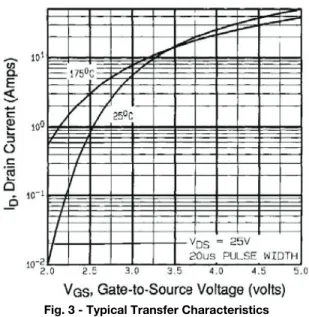
Fig. 3 - Typical Transfer Characteristics
IRLZ34, SiHLZ34
Vishay Siliconix
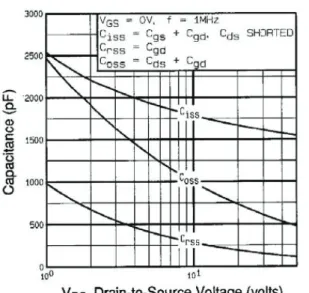
Fig. 5 - Typical Capacitance vs. Drain-to-Source Voltage
Fig. 6 - Typical Gate Charge vs. Drain-to-Source Voltage
Fig. 7 - Typical Source-Drain Diode Forward Voltage
IRLZ34, SiHLZ34
Vishay Siliconix
Fig. 9 - Maximum Drain Current vs. Case Temperature
Fig. 10a - Switching Time Test Circuit
Fig. 10b - Switching Time Waveforms
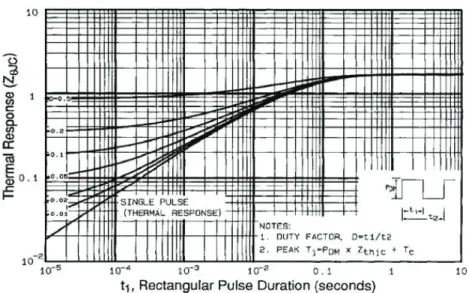
Fig. 11 - Maximum Effective Transient Thermal Impedance, Junction-to-Case
Pulse width ≤ 1 µs Duty factor ≤ 0.1 % RD VGS RG D.U.T. 5 V + -VDS VDD VDS 90 % 10 % VGS td(on) tr td(off) tf
IRLZ34, SiHLZ34
Vishay Siliconix
Fig. 12a - Unclamped Inductive Test Circuit Fig. 12b - Unclamped Inductive Waveforms
Fig. 12c - Maximum Avalanche Energy vs. Drain Current
RG IAS 0.01 Ω tp D.U.T. L VDS + -VDD 5 V Vary tp to obtain required IAS IAS VDS VDD VDS tp QGS QGD QG VG 5 V D.U.T. VGS VDS 0.3 µF 0.2 µF 50 kΩ 12 V
Current regulator Same type as D.U.T.
+
-IRLZ34, SiHLZ34
Vishay Siliconix
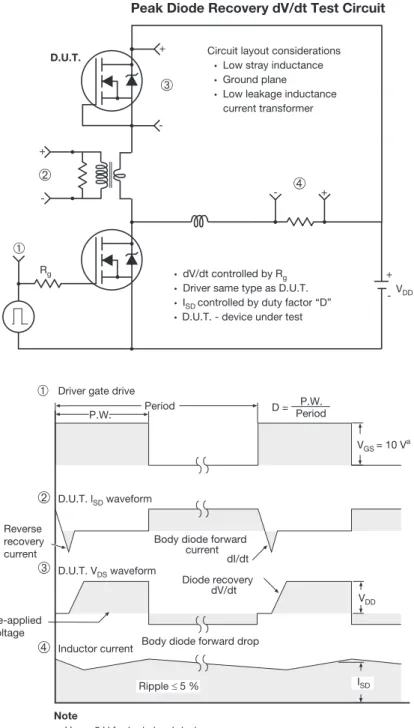
Fig. 14 - For N-Channel
Vishay Siliconix maintains worldwide manufacturing capability. Products may be manufactured at one of several qualified locations. Reliability data for Silicon Technology and Package Reliability represent a composite of all qualified locations. For related documents such as package/tape drawings, part marking, and reliability data, see www.vishay.com/ppg?91327.
P.W. Period
dI/dt Diode recovery
dV/dt
Ripple≤ 5 %
Body diode forward drop Re-applied
voltage Reverse recovery current
Body diode forward current
VGS= 10 Va
ISD
Driver gate drive
D.U.T. lSD waveform D.U.T. VDS waveform Inductor current D = P.W. Period + -+ + +
-Peak Dio
d
e Recovery
d
V/
d
t Test Circuit
VDD
• dV/dt controlled by Rg
• Driver same type as D.U.T.
• ISD controlled by duty factor “D”
• D.U.T. - device under test
D.U.T. Circuit layout considerations
• Low stray inductance
• Ground plane
• Low leakage inductance current transformer
Rg
Note
a. VGS = 5 V for logic level devices
Legal Disclaimer Notice
www.vishay.com
Vishay
Disclaimer
ALL PRODUCT, PRODUCT SPECIFICATIONS AND DATA ARE SUBJECT TO CHANGE WITHOUT NOTICE TO IMPROVE
RELIABILITY, FUNCTION OR DESIGN OR OTHERWISE.
Vishay Intertechnology, Inc., its affiliates, agents, and employees, and all persons acting on its or their behalf (collectively,
“Vishay”), disclaim any and all liability for any errors, inaccuracies or incompleteness contained in any datasheet or in any other
disclosure relating to any product.
Vishay makes no warranty, representation or guarantee regarding the suitability of the products for any particular purpose or
the continuing production of any product. To the maximum extent permitted by applicable law, Vishay disclaims (i) any and all
liability arising out of the application or use of any product, (ii) any and all liability, including without limitation special,
consequential or incidental damages, and (iii) any and all implied warranties, including warranties of fitness for particular
purpose, non-infringement and merchantability.
Statements regarding the suitability of products for certain types of applications are based on Vishay’s knowledge of typical
requirements that are often placed on Vishay products in generic applications. Such statements are not binding statements
about the suitability of products for a particular application. It is the customer’s responsibility to validate that a particular
product with the properties described in the product specification is suitable for use in a particular application. Parameters
provided in datasheets and/or specifications may vary in different applications and performance may vary over time. All
operating parameters, including typical parameters, must be validated for each customer application by the customer’s
technical experts. Product specifications do not expand or otherwise modify Vishay’s terms and conditions of purchase,
including but not limited to the warranty expressed therein.
Except as expressly indicated in writing, Vishay products are not designed for use in medical, life-saving, or life-sustaining
applications or for any other application in which the failure of the Vishay product could result in personal injury or death.
Customers using or selling Vishay products not expressly indicated for use in such applications do so at their own risk. Please
contact authorized Vishay personnel to obtain written terms and conditions regarding products designed for such applications.
No license, express or implied, by estoppel or otherwise, to any intellectual property rights is granted by this document or by
any conduct of Vishay. Product names and markings noted herein may be trademarks of their respective owners.
Material Category Policy
Vishay Intertechnology, Inc. hereby certifies that all its products that are identified as RoHS-Compliant fulfill the
definitions and restrictions defined under Directive 2011/65/EU of The European Parliament and of the Council
of June 8, 2011 on the restriction of the use of certain hazardous substances in electrical and electronic equipment
(EEE) - recast, unless otherwise specified as non-compliant.
Please note that some Vishay documentation may still make reference to RoHS Directive 2002/95/EC. We confirm that
all the products identified as being compliant to Directive 2002/95/EC conform to Directive 2011/65/EU.
Vishay Intertechnology, Inc. hereby certifies that all its products that are identified as Halogen-Free follow Halogen-Free
requirements as per JEDEC JS709A standards. Please note that some Vishay documentation may still make reference
to the IEC 61249-2-21 definition. We confirm that all the products identified as being compliant to IEC 61249-2-21
conform to JEDEC JS709A standards.