Knight, HE (2018) Using routinely collected data to evaluate the performance and quality of English NHS maternity services. PhD (research paper style) thesis, London School of Hygiene & Tropical Medicine. DOI: https://doi.org/10.17037/PUBS.04650762
Downloaded from: http://researchonline.lshtm.ac.uk/4650762/ DOI:10.17037/PUBS.04650762
Usage Guidelines
Please refer to usage guidelines at http://researchonline.lshtm.ac.uk/policies.html or alterna-tively [email protected].
Using routinely collected data to evaluate the performance
and quality of English NHS maternity services
Hannah Knight
Thesis submitted in accordance with the requirements for the degree of
Doctor of Philosophy, University of London
April 2018
Department of Health Services Research and Policy
Faculty of Public Health and Policy
London School of Hygiene and Tropical Medicine
Supervisor: David Cromwell
Declaration
I, Hannah Ellin Knight, confirm that the work presented in this thesis is my own. Where information has been derived from other sources, I confirm that this has been indicated in the thesis.
Full name Hannah Ellin Knight
Signed
Date: 20th April 2018
Total word count
(excluding references and appendices)
Dedication
This thesis is dedicated to my son, who is due to be born this summer. Though he is currently the size of an aubergine, he has given me a deeper and more personal understanding of the data I have analysed over the last few years. Like all expectant mothers, I hope for his safe entry into this world. This thesis seeks, in a small way, to help turn this hope into a reality for more women and their babies.
Table of Contents
Acknowledgements ... 5 Abstract ... 6 List of Tables ... 8 List of Figures ... 10 Abbreviations ... 12 I. Overview of thesis ... 14 1.1. Thesis structure ... 141.2. Contributions of the candidate...15
1.3. Funding ...15
1.4. Thesis aim and objectives ...16
1.5. Other outputs...17
2. Background ... 20
2.1. Maternity services in England ...20
2.2. Challenges facing maternity services ...22
2.3. Evaluating the performance and quality of maternity services ...25
3. Thesis methodology and data sources ... 33
3.1. Overview of thesis methodology ... 33
3.2. Data sources used in this thesis ...34
3.3. Why use routinely collected data for evaluating maternity care? ...41
3.4. Ethics...46
4. Data quality assessment and validation: an illustration using method of delivery data.. 49
5. Development and validation of techniques to overcome missing data on obstetric history ... 60
6. Uptake and success of vaginal birth after caesarean section ...74
7. Routine induction of labour at 39 weeks in nulliparous women aged 35 or over ... 95
8. Does consultant presence on the labour ward at the time of birth influence perinatal outcomes? ... 122
9. Construction and validation of a composite adverse neonatal outcome measure ...147
10. Discussion...181.
Appendix 1. MIS Pilot Project Survey...195
Appendix 2. MIS Pilot Project Data Items ...197
Appendix 3a. Section 251 approval ...201
Appendix 3b. MIS Pilot Project Data Sharing Agreement . ...205
Acknowledgements
First and foremost, I would like to thank my supervisors, David Cromwell and Ipek Gurol-Urganci, for their expert guidance over the last five years. It has been a long but rewarding journey. Thank you for bearing with me as I juggled PhD and work commitments. I am privileged to call you my colleagues, and hope that the submission of this thesis marks just the ‘end of the beginning’ of our collaboration.
In addition to my supervisors, I would like to thank the range of clinical and methodological experts who kindly contributed to this research: Jan van der Meulen, Gordon Smith, Sam Oddie, Katie Harron, Lynn Copley, Tahir Mahmood, David Richmond and Allan Templeton. I am indebted to all the unnamed midwives, doctors, maternity support workers, ward clerks, and clinical coders who enter data into NHS electronic maternity and patient administration systems on a daily basis, and to the women and babies whose data I have been fortunate to analyse. I am also grateful to the 19 NHS trusts who participated in the Maternity Indicators Pilot Project and agreed for their data to be included in this PhD thesis. In addition, I would like to thank NHS Digital for their help in supplying and linking the data. Whilst being able to conduct this work ‘part-time’ has had many benefits, five years of evening and weekend studying has been undeniably demanding and I am much indebted to my husband, family, friends and colleagues for their patience, support and encouragement throughout this process. I look forward to spending more time with all of you in the near future.
Abstract
This ‘publication style’ thesis comprises a collection of research papers, each of which seeks to address a different element of the overall aim: to determine the extent to which
electronic data, captured routinely as part of clinical care and hospital administration, can be used to evaluate the performance and quality of English NHS maternity services. These routine data sources present opportunities for research groups to examine whether current practice and outcomes in NHS maternity services meet guidelines and standards, and to guide research and initiatives to improve the quality of maternity care at a regional and national level. However, the difficulty faced by clinicians, managers and service users in interpreting some of the currently available maternity statistics highlights the need to improve the usefulness of the information being produced to evaluate NHS maternity services.
The first part of this thesis comprises a review of the advantages and limitations of existing routinely collected data sources for these purposes. The review identifies three key
challenges relating to 1) the handling of missing or inconsistent information, 2) the
definition of key exposure, outcome and confounding variables relevant to maternity care and 3) adjustment for confounding variables.
In the second part, novel techniques are developed to address current weaknesses in the secondary analysis of these data. The findings show that these new methods can be used to derive accurate information on two key data items: 1) the method of delivery and 2) the parity status of women, although misclassification rates are higher for some subgroups of women. This section demonstrates that overall the quality of administrative data is sufficient to support the evaluation of maternity care but that some organisational-level statistics are sensitive to inconsistencies in the data. Consequently, it is recommended that publications of quality indicators should describe how data were prepared and analysed, in order for results to be replicable.
In the third part, a series of retrospective cohort studies are described that illustrate how these new methodological techniques can be used to overcome the three challenges identified in the part 1.
The first study calculated rates of attempted and successful vaginal birth after caesarean section, which had not previously been done using administrative data at national and provider-level basis (Chapter 6), and found that among women who attempted a trial of labour for their second birth, almost two-thirds successfully achieved a vaginal delivery. A second study evaluated a clinical intervention (induction of labour) designed to prevent rare outcomes such as perinatal mortality which are impractical to investigate by experimental methods (Chapter 7); it found that bringing forward the routine offer of induction of labour from the current recommendation of 41±42 weeks to 40 weeks of gestation in nulliparous women aged >=35 years might reduce overall rates of perinatal death.
A third study examined an important health policy question about when staff should be present on the labour ward (Chapter 8) and involved the linkage of administrative, staffing and clinical datasets. The study found no difference in the rate of maternal and neonatal morbidity according to the presence of consultants on the labour ward. A final study
examined whether administrative data provided a cost effective way of monitoring perinatal outcomes using a composite indicator of adverse outcomes. The study found that a
measure developed in Australia could be adapted to English data, and had good concurrent and predictive ability (Chapter 9).
The thesis concludes that hospital administrative datasets, linked with other sources of clinical data where necessary, are a valuable resource for population-based service
evaluations. Taken together, the novel techniques developed, validated and applied as part of this programme of work, advance our understanding of the ways in which routinely collected maternity data can and cannot be used to support the evaluation of maternity services. Whilst these data are not perfect and there is certainly a need to improve their completeness and consistency, this research demonstrates that it is possible to develop techniques to identify and manage data errors, and methods to clearly define key exposure, outcome and confounding variables. Together, these allow answers to be found to many potential questions about maternity care.
List of Tables
Chapter 4
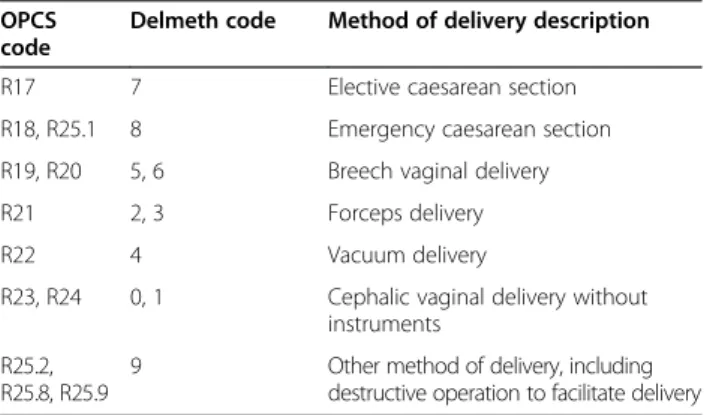
Table 1. Correspondence between OPCS procedure delivery codes and maternity tail
“delmeth” delivery codes………...…53 Table 2. Impact of mode of delivery definition on resulting maternity statistics: three case
studies………...…54
Chapter 5
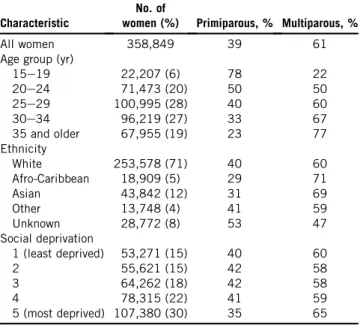
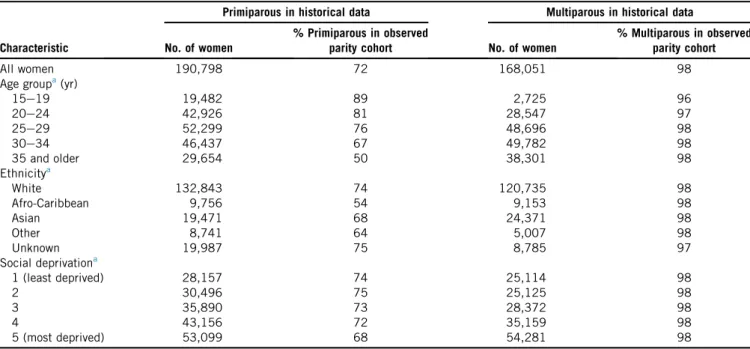
Table 1. Quality of maternity tail and parity information in HES records of women who gave birth between April 2009 and March 2010 ………...67 Table 2. The primiparous and multiparous status of women who gave birth between April
2009 and March 2010 by various maternal characteristics at the time of delivery...67 Table 3. Agreement between parity coded in the maternity tail (observed parity cohort)
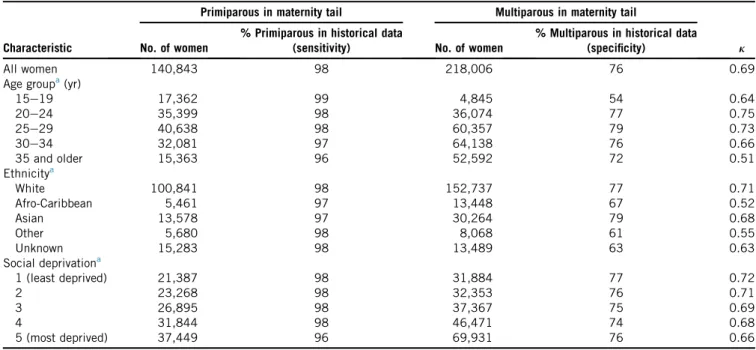
andparity derived from historical data………...68
Table 4. Levels of agreement in parity among different patient groups as coded in the
maternity tail (observed parity cohort) and derived from historical data ………...…69 Table 5. Performance of the look-back technique at predicting primiparous/multiparous
status when calculated using 9 years of historical data (April 2000 to March 2009).70
Chapter 6
Table 1. Rate of attempted vaginal birth after caesarean section (VBAC) in 143,970 women according to maternal and obstetric risk factors………....86 Table 2. Rate of vaginal birth after caesarean section (VBAC) success in 75,086 women who
attempted VBAC, according to maternal and obstetric risk factors………...87 Table 3. Attempted and successful vaginal birth after caesarean section (VBAC) by indication
for primary caesarean section……….………...88
Chapter 7
Table 1. Pregnancy characteristics of 77,327 women according to induction of labour…...105 Table 2. Perinatal outcomes after induction of labour compared with expectant
management (primary analysis)……….………...…..109
Chapter 8
Table 2. Crude and adjusted odds ratios for adverse perinatal outcomes, comparing in-hours
and out-of-hours……….………...133
Table 3. Crude and adjusted odds ratios for adverse perinatal outcomes among term
deliveries, comparing in-hours and out-of-hours………....133
Chapter 9
Table 1. Incidence (per 100 births) for conditions and procedures indicative of neonatal
morbidity……….……….………...169 Table 2. Association of E-NAOI with maternal and infant characteristics………....171 Table 3. Rates of hospital readmission or death among infants discharged home, up to their
List of Figures
Chapters 1-3
Figure 1. The maternity care pathway in England ...20 Figure 2. Annual number of live births in England and Wales between 1980 and 2016 ...22 Figure 3. Overview of the data flows from healthcare providers into the HES ...36 Figure 4. Demonstration of how episodes, providers spells and continuous inpatient spells
relate to each other……….……… 37
Chapter 4
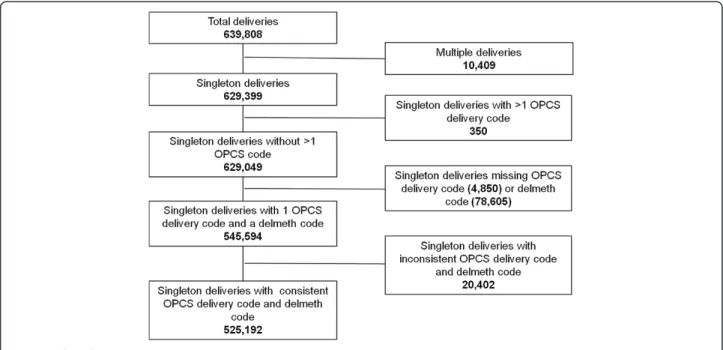
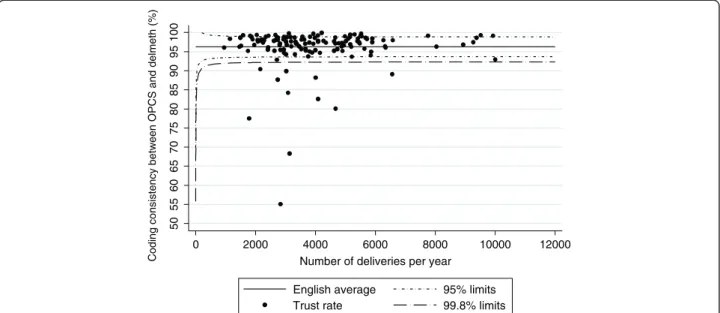
Figure 1. Flow chart ...55 Figure 2. Funnel plot showing consistency between OPCS mode of delivery code and
delmeth code for English NHS trusts (2009/10) ………..56 Figure 3. Mean difference plots: Impact of using different method of delivery definitions on
trust-level rates of: a) emergency caesarean section; b) third and fourth degree perineal tears amongst instrumental deliveries, and c) elective caesarean section for breech presentation………...…57
Chapter 5
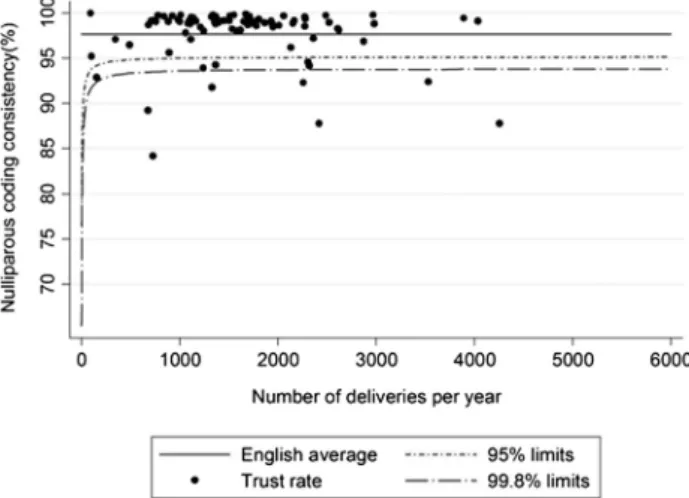
Figure 1. The funnel plot showing the proportion of women coded as primiparous in the observed parity data (2009-10) who were correctly identified from the historical data by English National Health Service trusts………...…68 Figure 2. The proportion of women delivering in 2009-10 for whom a previous pregnancy
was found in the historical data set, stratified by the parity coded in the 2009-10 delivery record, age group (years), and region of residence………...69
Chapter 6
Figure 1. Selection of cohort. ERCS, elective repeat caesarean section; VBAC, vaginal birth after caesarean section………...85 Figure 2. Funnel plots showing rates of attempted vaginal birth after caesarean section
(VBAC) A and successful VBAC B among women who had a primary caesarean section in English NHS trusts between 2004 and 2011, adjusted for maternal
characteristics and clinical risk factors………...89 Figure 5. Interpretation of a funnel plot ...47
Figure 1. Cohort selection flow chart ...104 Figure 2. Composition of cohort by week of gestation ...106 Figure 3. Perinatal outcomes after induction of labour compared with expectant
management, by week of gestation of induced labour……….……..107
Chapter 8
Figure 1. Selection of the cohort ... 129 Figure 2. Number of births, by hour and mode of birth ...131
Chapter 9
Figure 1. Data flow diagram ...160 Figure 2. Rate of neonatal morbidity by gestational age at birth identified by the E-NAOI..162 Figure 3. Funnel plot showing the proportion of infants identified by the E-NAOI in the
English NHS in 2014/15, adjusted for maternal and infant characteristics …………..163
Abbreviations
AHRQ Agency for Healthcare Research and Quality
BMI body mass index
CI confidence internal
CS caesarean section
CPAP continuous positive airway pressure
ERCS elective repeat caesarean section
IMD Index of Multiple Deprivation
IV intravenous
HES Hospital Episode Statistics
HIE hypoxic ischaemic encephalopathy
HSCIC Health and Social Care Information Centre
ICD-10 International Classification of Diseases, 10th Edition
IQR interquartile range
IVH intraventricular haemorrhage
MIS maternity information system
NAOI Neonatal Adverse Outcome Indicator
NHS National Health Service
NHSLA National Health Service Litigation Authority
NICE National Institute of Health and Clinical Excellence
NMPA National Maternity and Perinatal Audit
NNT number needed to treat
ONS Office for National Statistics
OPCS-4 Office of Population Censuses and Surveys Classification of Interventions and Procedures, version 4
OR odds ratio
PPH postpartum haemorrhage
RCOG Royal College of Obstetricians and Gynaecologists
RCM Royal College of Midwives
RCT randomised controlled trial
RR risk ratio
SD standard deviation
SES socioeconomic status
UK United Kingdom
I.
Overview of thesis
1.1. Thesis structure
This ‘publication style’ thesis comprises a collection of research papers, each of which seeks to address a different aspect of the overall aim: to determine the extent to which electronic data captured routinely as part of clinical care and hospital administration can be used to evaluate English NHS maternity services.
This introductory chapter provides an overview of the thesis as a whole, including the aims and objectives of the work. Chapter 2 provides background context for the work carried out. The overall methodology and data sources are described in Chapter 3.
The papers in chapters 4 and 5 are methodological in nature and seek to demonstrate how the analysis of routinely collected maternity data can be improved through the application of novel techniques for data validation and handling of missing data.
Chapters 6, 7 and 8 each contain a case study that demonstrates how the novel techniques developed in the methodological chapters can be applied to answer important clinical and health policy questions in the field of maternity care.
Chapter 9 demonstrates how a composite adverse neonatal outcome indicator developed using Australian routine data can be translated, adapted and validated using routinely collected, linked English hospital data.
Finally, Chapter 10 draws together the findings from the research carried out and makes a series of recommendations.
1.2. Contributions of the candidate
I have spent the last six and a half years working within the Clinical Quality department at the Royal College of Obstetricians and Gynaecologists (RCOG). My role has evolved during this time, but a consistent theme has been the design, management, analysis and
reporting of a programme of work to provide maternity services in the UK with clinically meaningful and methodologically robust performance measures, that can be used to inform quality improvement initiatives.
As part of my contract with the RCOG, I had the opportunity to pursue a PhD alongside my job, with the aim of supporting the overall programme of work and at the same time advancing my academic development. The work contained within this thesis has been informed by, and is related to, the RCOG programme of work, but is not a formal project output.
I have designed and undertaken the analyses contained within this thesis myself, with appropriate guidance from my supervisors. My contributions and those of other authors are given at the start of each chapter.
1.3. Funding
The PhD was funded, in-part, by the RCOG, who were also my employers throughout the time I undertook this work. The RCOG played no part in the design and conduct of the research, nor the interpretation and presentation of the results.
1.4. Thesis aim and objectives
The broad aim of this thesis is to advance understanding of the ways in which routinely collected maternity data (a term which I use to refer to data that are routinely collected for either clinical or hospital administrative purposes) can and cannot be used to support the evaluation of English NHS maternity services.
The objectives of the research described in this thesis were:
1. To review the advantages and limitations of existing hospital administrative and clinical datasets, for the purposes of evaluating patterns of care and outcomes among hospital-based maternity services;
2. To develop techniques to address current weaknesses in the secondary analysis of these data, particularly in relation to the handling of missing or inconsistent information. This work sought to overcome concerns about data quality related to key data items, including mode of birth and parity. These data items are particularly important for the construction of maternity statistics and yet suffer from high data incompleteness;
3. To demonstrate how the novel techniques developed in objective 2 can facilitate applied research aiming to answer clinically relevant questions in maternity care. Specifically:
• To define a subgroup of women giving birth following a primary caesarean section, and investigate the demographic and obstetric factors associated
with the uptake and success of vaginal birth after caesarean section (VBAC) in this group.
• To define a subset of hospitals with good quality data, and to define
appropriate comparison groups that allow an examination of the association between induction of labour at term and selected maternal and perinatal outcomes in nulliparous women aged 35 years and over.
• To link three different sources of routinely collected data (hospital
administrative data, electronic maternity records and obstetric staffing rotas) to determine whether rates of obstetric intervention and outcome change “out-of-hours,” i.e., when consultants are not providing dedicated, on-site labour ward cover.
4. To evaluate the feasibility of constructing a composite indicator for severe adverse neonatal outcome. Such a measure could overcome reliance on individual diagnosis codes that may suffer from issues of low statistical power and under-recording in routine data.
1.5. Other outputs
Over the period that I conducted this research, I have also contributed to the production of the following reports and research articles. Although not a formal part of this thesis, much of this work draws on and has been shaped by the research I have undertaken as part of my PhD:
a) Geary RS*, Knight HE*, Carroll FE, Gurol-Urganci I, Cromwell DA, van der Meulen JH. A step-wise approach to developing indicators to compare the performance of maternity units using hospital administrative data. BJOG 2017;
https://doi.org/10.1111/147-1-0528.15013. (*joint first authors)
b) NMPA project team. National Maternity and Perinatal Audit: Clinical Report 2017. RCOG London, 2017.
c) Harron KL, Doidge JC, Knight HE, Gilbert RE, Goldstein H, Cromwell DA, van der Meulen JH. A guide to evaluating linkage quality for the analysis of linked data. Int J Epidemiol. 2017 Oct 1;46(5):1699-1710. doi: 10.1093/ije/dyx177.
d) NMPA Project Team. National Maternity and Perinatal Audit: Organisational report 2017. RCOG: London, 2017.
e) Knight HE, Gurol-Urganci I, Mahmood T. Audit in Medical Research. In O'Brien S and Fiona Broughton-Pipkin F (eds) Introduction to research methodology for specialists and trainees. Cambridge University Press: Cambridge, 2017.
f) Carroll FE, Knight HE, Cromwell DA, Gurol-Urganci I, van der Meulen JH. Patterns of maternity care in English NHS trusts 2013/14. RCOG: London, 2016.
g) In 2014 I was seconded to the Department of Health for 9 months to provide analytical support and expertise to the Morecambe Bay Investigation into the management, delivery and outcomes of maternity and neonatal care at the Trust over a 10 year period. Kirkup B. The Report of the Morecambe Bay Investigation. The Stationary Office: London, 2015.
h) Knight HE, Cromwell DA, van der Meulen JH, Gurol-Urganci I, Richmond D, Mahmood TA, Dougall A, Johnson S. Patterns of maternity care in English NHS hospitals
2. Background
2.1. Maternity services in England
Pregnancy is a time of sustained contact with the health service. The NHS maternity care pathway is complex and spans contraception services, pre-pregnancy care through to antenatal and delivery care and then early years and mainstream and specialist children’s services (Figure 1).
Figure 1. The NHS maternity care pathway in England
Source: National Audit Office1
Pregnancy and birth are among the most common reasons for contact with the NHS, and obstetric admissions are the leading cause of hospitalisation for women in England, accounting for 636,401 discharges in 2016/17.2 For many women, pregnancy is their first
experience of being a regular user of the health service. The maternity care pathway therefore represents a unique opportunity for health professionals to support women to maximise their own health, as well as their child’s health and development, during
pregnancy, birth and beyond, through the promotion of healthy lifestyles and potential interventions.3 4
Pregnant women receive care from a variety of different health professionals. All women see a midwife for their first antenatal (‘booking’) appointment. Midwives then act as the care coordinator for the remainder of the pathway and as lead professional for those at low risk of complications. For women at higher risk or undergoing medical procedures, care is also provided by doctors, led by consultant obstetricians. Care of healthy babies is provided by midwives, while neonatal doctors and nurses provide care to babies who need additional support, for example because they are born prematurely or have clinical conditions or concerns.
Since the early 1990s, maternity care policy in England has promoted women’s choice of place of birth. There are three types of location in which women can give birth: obstetric units (OU), midwifery units (MU) (either alongside an obstetric unit [AMU] or freestanding [FMU]) and at home. The number of AMUs in England has quadrupled since 2007, from 26 to 106. 68% of obstetric units are now co-located with a midwifery unit.5 Despite the increasing
availability of midwifery units and national policy that now recommends that women at low risk of complication should be encouraged to plan to give birth in a midwifery-led setting,6 7
the proportion of women giving birth in these settings is around 14%. An estimated 2% of women give birth at home, with the remainder (84%) giving birth in an OU.8 Significant
variation between services in the use of midwifery-led settings has also been reported (4-31%).8
2.2. Challenges facing maternity services
There have been considerable fluctuations in the number of women giving birth in England over the last four decades (Figure 2). Between 2001 and 2012 the annual number of births rose at a rate of approximately 2% per year to its highest level in over 40 years. In 2013 the number of births per annum fell slightly to just under 700,000 and has remained at this level for the last four years.9
Figure 2. Annual number of live births in England and Wales between 1980 and 2016
Source: Office for National Statistics9
At the same time as increasing birth numbers, there has been increasing pressure on the frontline NHS workforce due in part to challenges with recruitment and staff retention in the wake of austerity, the Brexit referendum vote and the lessons learned from the Mid
Staffordshire hospital scandal.10 11 Maternity staffing is no exception. The ratio of midwives
0 100,000 200,000 300,000 400,000 500,000 600,000 700,000 800,000 1980 1985 1990 1995 2000 2005 2010 2015 Annua l num be r o f l iv e bi rt hs Year
to births has fallen,12 with significant between-unit variation in the number of beds per
rostered midwife.5 In 2017, 88% of obstetric units reported a gap in their middle grade
obstetric rota and 83% reported that locum cover was required to staff their middle grade rotas in the previous 3 months.5 The level of continuity of carer (i.e. seeing the same midwife
throughout the antenatal, intrapartum and postnatal period) that maternity services provide is low, regardless of which model of midwifery staffing is used.5
Another challenge facing maternity services is that the characteristics of women giving birth are changing. An increasing number of pregnancies are occurring to women over the age of 35, obese women, and women with co-morbidities.1 4 9 13 An increase in the rate of multiple
births associated with fertility treatment 14 has also led to greater need for specialist
care. The rising number of women born outside the UK also presents issues for maternity services related to language and social expectations of care.9
The NHS spends around £2.6 billion each year on maternity services, which represents around 3% of health spending.1 This is about the same proportion as a decade ago. Nearly a
fifth of the maternity budget is spent on clinical negligence cover, which totalled £482 million in 2012-13. Maternity care accounts for around a third of the total NHS clinical negligence bill, higher than any other clinical specialty, and the total cost of claims is rising.1
Despite the increasing clinical, staffing and financial pressures on maternity services, giving birth in England is likely to be safe for the overwhelming majority women and babies.15 The
rate of stillbirth in England is 3.93 per 1,000 births, while 8.8 women per 100,000 die during pregnancy or shortly after giving birth.13 16 The overall perinatal mortality (stillbirth or the
1000 births between 2003 and 2015.9 However, stillbirth rates in England remain higher than
in many other European countries where rates below 2 per 1000 have been achieved.17 18
In 2008, the Kings Fund report ‘Safe births: everybody’s business’ concluded that, whilst the majority of births are safe, “some births are less safe than they could or should be.”15 There
have been a series of reports documenting cases of inadequate care over the last decade,15
19 20 and the safety and the quality of care delivered by maternity units still continues to
attract a high level of public interest. For example, a 2017 confidential enquiry report into term, intrapartum-related perinatal deaths found that that in 80% of cases, different care might have prevented the baby’s death.21 There is also evidence of substantial variation in
maternal and perinatal mortality within England across women from different socioeconomic and ethnic backgrounds.13 16
Rates of other more common birth outcomes such as emergency caesarean section, obstetric haemorrhage and severe perineal tears have also been shown to vary among hospitals, even after accounting for differences in maternal clinical and demographic characteristics between areas.5 22 23 This variation is a source of concern because it suggests
the care that women receive is dependent upon where they live, and implies that NHS resources may not be being used in the most efficient way.
In 2017, almost half of Care Quality Commission (CQC) inspections of maternity services resulted in assessments that were either rated ‘inadequate’ (7%) or ‘requires improvement’ (41%).24 A recent report by the National Audit Office concluded that there was “significant
and unexplained local variation in performance against indicators of quality and safety, cost, and efficiency.”
In conclusion, like many NHS services, maternity services have been under sustained
pressure over the last decade. Several new policy initiatives have been introduced in recent years aimed at improving the safety, effectiveness and experience of maternity care, reducing unnecessary intervention, and reducing inequalities.1 425
In order to understand the extent to which maternity services are coping with this increased pressure and judge the success of new policy initiatives, clinically meaningful and technically robust methods of measuring and evaluating the performance of services are required. Such information would allow the NHS to examine whether current practice in maternity care meets guidelines and standards, and to compare service provision and maternal and neonatal outcomes among providers. The next section of this thesis will consider the challenges that valid and accurate measurement poses, and explain the rationale for this thesis.
2.3. Evaluating the performance and quality of maternity services
2.3.1. Measuring quality in health care
The importance of measurement in healthcare has been understood for at least 150 years. In 1863, Florence Nightingale in the 3rd edition of her Notes on Hospitals wrote about the need
for hospital-level statistics on surgical complication rates, “If wisely used, these statistics would tell us more about the relative value of particular operations and modes of treatment than we have any means of ascertaining at present.”26
This drive towards measuring outcomes in healthcare of course needs to be done with the well-known adage originally penned by William Bruce Cameron in mind: “Not everything that can be counted counts, and not everything that counts can be counted.”27
Quality in healthcare is a multifaceted concept, not amenable to a single performance measure or simple metric. There is broad agreement that the key domains of quality are: effectiveness, capacity, safety, patient-centeredness, equity, access and timeliness,28 yet
within each clinical specialty, there is varying agreement about what aspects of care should be evaluated within these domains.
The accurate measurement of the processes and outcomes of care is now seen as crucial for guiding service improvement.29-32 Such information aims to fulfil various roles: informing
policy making at regional and national levels; supporting clinicians and providers to improve care through comparative benchmarking; identifying unexpected levels of performance to protect public safety, and providing consumer information to facilitate choice of maternity care provider.
2.3.2. Measuring quality in maternity care
Maternal and perinatal health statistics are considered to be among the best indicators of the effectiveness of an entire health system, because pregnant women require a system that functions well 24 hours a day across the whole range of services, from community care to the most specialised of hospital treatments.33
The RCOG defines high quality women’s health care as “a medical service which focuses on [women’s] needs, is safe and effective and meets their expectations”.3 However, the
evaluation of maternity care extends beyond this because there are two individuals to consider: the mother and the baby. Furthermore, the needs of mother and baby are not always aligned during pregnancy and sometimes a careful balance between the two has to be sought by the care team. For example, pre-eclampsia is a condition that can arise during the third trimester, characterised by hypertension and proteinuria. Left untreated, it can develop into life-threatening eclampsia. The only cure for pre-eclampsia is to end the pregnancy by delivering the baby. However, in practice most women with this condition continue their pregnancy under close observation until 37 weeks of gestation to minimise the risks to the baby associated with preterm delivery.34
As this example illustrates, what constitutes ‘good’ quality maternity care is therefore highly dependent upon the individual context, which includes a woman’s individual preferences as well as factors such as parity, past obstetric history, fetal presentation, length of gestation, and the presence of pre-existing or pregnancy-related clinical conditions.
There are three major categories of measure that can be applied to the different domains of quality in healthcare. Quality measures may cover the structure of care (the setting in which care is organised and delivered); the processes of care (what was done, to whom and when) or the outcomes of the care received.31 These categories of measure each have relative
strengths and weaknesses. Outcome measures are of greater intrinsic interest, but are often hard to interpret because differences in outcome across organisations may not necessarily reflect differences in the quality of care.35 Conversely, process measures are only
appropriate as direct measures of the quality of care if there is strong evidence for a particular treatment or intervention: the more patients without contraindications who receive a proven therapy, the better.35
Process measures are important in maternity care because the ability to provide an
appropriate response to emergency situations is one of the pillars of a high-quality service. Obstetric emergencies, such as fetal distress or dystocia, may develop rapidly and without warning, often in previously uncomplicated pregnancies, and quick decisions have to be taken by the care team about which intervention to use. However, using process indicators to measure quality in maternity care is problematic because the most common obstetric interventions (e.g. induction of labour; caesarean section) are not associated with an ‘optimal’ rate, and cannot be compared against a national standard or benchmark. Outcome measures are crucial in the assessment of patient safety, but they also pose
problems for monitoring the quality of maternity care, because poor outcomes are relatively rare. Maternal mortality may act as a sentinel indicator but the signal to noise ratio is too low to be used for quality improvement.36 Perinatal mortality is a more common outcome,
yet only a minority of cases have a known cause37 and it is therefore not necessarily appropriate to use these cases to make judgments on quality of care.
Instead, many quality indicators in maternity care are based on obstetric complications, such as severe postpartum haemorrhage or perineal lacerations. However, again not all of these complications are preventable and statistical power can also be an issue with some of these rarer morbidities, particularly if rates are stratified by maternal characteristics, or derived for small maternity units. Several composite indicators of maternal and neonatal morbidity have been developed and now require further validation.38-41
Outcomes include not only mortality and morbidity, but also women’s experience of care. It is also important to reflect not only what outcomes are important for an individual mother
and her baby during the current pregnancy, but how decisions taken in one pregnancy can impact on future pregnancies the mother may have. In a publicly funded health system such as the NHS, there are also wider health policy economic considerations about maximising outcomes for the greatest number of women and babies.
Perhaps the most commonly used maternity indicator, the overall caesarean section rate, is one of the most difficult to interpret. Lower caesarean section rates are often assumed to reflect better care. However, there is also a threshold below which the caesarean section rate is too low and babies may be harmed. One problem is that there are no established guidelines for determining this threshold. A second problem is that as maternal request for caesarean section is now an option supported by national guidance,42 this measure may no
longer be a reliable marker of quality of care but rather one of patient choice. The caesarean section rate is also complicated by the fact that it can be considered both a process of care and an 'outcome' of other processes of care further downstream, for example induction of labour.
Several techniques have been proposed that could aid the interpretation of the caesarean section rate, for example, stratification by type of caesarean section or specific delivery characteristics,4344 or statistical adjustment that takes into account risk factors for caesarean
section among different populations.45 46 However, these techniques have not yet been
applied to national maternity statistics for England; instead official maternity statistics for England continue to publish the overall caesarean section rate in each hospital.2
Exploring variations in maternity care without a full understanding of the clinical
complexities may lead to erroneous conclusions. For example, a higher proportion of women in the South of England have a caesarean section than in the North,47 which has been used as
evidence by some commentators that women from more affluent areas are “too posh to push”.48 However, further exploration of the data demonstrated little variation between NHS
trusts in rates of elective caesarean section.45 Most variation in overall rates of caesarean
section was associated with rates of emergency caesarean section, which reflects how clinicians respond to emergency situations during labour (e.g. fetal distress or dystocia) rather than the choices that women make about how they want to deliver their baby. It is partly due to the complexity illustrated by this example that there is an ongoing debate about what information should be used to evaluate the quality of maternity care.
2.3.3. Rationale for thesis
There has been growing interest in performance monitoring and quality improvement in maternity care, both in the UK and elsewhere. Many performance indicators for maternity care have been proposed, although little consensus has been reached within the specialty on a “minimum core set”. A review of guidance documents produced by the RCOG revealed 290 quality indicators covering 96 clinical categories, with up to 18 definitions for each
category.49
It is not clear why progress towards a consensus has not been made in this field, which is concerning because medical errors are more common in maternity care than other medical specialties.50 Maternity litigation claims, as a group, are the most expensive clinical
negligence claims reported to the NHS Litigation Authority (NHSLA) and the second highest by volume.51 Furthermore, when errors are made these have the potential to adversely
The starting point for the work contained in this thesis was a recognition that a growing number of organisations in England were beginning to use routinely collected data for evaluating maternity services, and/or producing information about local services for the public. These organisations included both public sector and voluntary organisations (such as the CQC, NHS Digital and Birthchoice UK), as well as commercial companies (such as Dr Foster Intelligence and CHKS). Routine data were also being used more regularly by academics to conduct research in maternity care.45 52
However, the information produced by some of these groups was often difficult to interpret because the analysis either failed to adequately take into account some of the challenges described in section 2.3.2, or failed to describe how the common pitfalls of using this type of data were tackled. For example, the comparative statistics published by NHS Digital and Birthchoice UK were not presented in a way that revealed how much variation might be due to the influence of random fluctuations, and also did not use methods to take into account differences in the case mix between hospitals. In other specialties with more established performance monitoring,53 it is widely accepted that conclusions about quality of care can
only reasonably be drawn after differences due to these factors have been removed. The difficulty faced by clinicians, managers and service users in interpreting some of the currently available maternity statistics highlights the need to improve the usefulness of the information being produced on NHS maternity services. This thesis focuses on several of the methodological issues which have not been given due attention in some of the previous publications to make use of routinely collected maternity data.
Despite the inherent conceptual and practical challenges, the development of methods for defining key processes and outcomes in maternity care using routinely collected data would
not only guide research and initiatives to improve the quality of maternity services at regional and national level, but would support obstetricians and midwives through
comparative benchmarking and the ability to monitor safety and identify unexpected levels of performance. These data, together with appropriate structural indicators and measures of maternity service user experience, would also provide information that would help women choose their maternity care provider.
3. Thesis methodology and data sources
3.1. Overview of thesis methodology
The studies within this thesis were based on retrospective cohort design, and make use of routinely collected data sources. In this thesis, the term routinely collected data is used to refer collectively to hospital administrative data and data collected as part of routine clinical care.
While some commentators have argued that experimental methods are the gold standard for evaluation and that observational methods hold little value, it is increasingly accepted that observational studies may provide a complementary approach for evaluating
effectiveness in healthcare, and that “policymakers need data from both approaches when making decisions about health services.”54
Like any study design, retrospective cohort studies have both advantages and limitations.55
The specific pros and cons of using routinely collected data for retrospective cohort studies in maternity care are discussed further in section 3.3, with particular emphasis on the following elements: clarity of population definition, measurement of outcome and exposure variables, and measurement of confounders.
More generally, an advantage of retrospective, population-based cohort studies is that they can offer large, representative samples impossible to achieve with experimental methods, in which the type of patients, providers and settings that consent to participate are often atypical. This is particularly important for studies in maternity in which adverse outcomes are often rare.
Retrospective cohort studies also have the advantage over experimental methods of maintaining the integrity of the context in which care is delivered, which helps to ensure they have good external validity. External validity refers to the extent to which results of a study can be generalised to other situations and to other people. This is an important concept in health services research that aims to evaluate the effectiveness of interventions within real health systems.
On the other hand, the retrospective nature of the data used in these studies, which has often not been collected primarily for the purposes of the research, means that the recording of risk factors may not cover all relevant confounders, and/or that the quality of the data on confounding variables may be insufficient. The ability to draw causal conclusions based on the results (i.e. the internal validity of the study) may therefore be undermined because of the role of unrecognised confounding factors.
Finally, an advantage of cohort studies is that the exposure has been recorded before the outcome occurs, which can allow the temporal sequence of risk factors and outcomes to be assessed. There is usually no reason to suspect that systematic differences in recording will exist between groups of patients. However, this is an important assumption to test through validation studies or sensitivity analyses when designing a retrospective cohort study using routine data.
3.2. Data sources used in this thesis
Before discussing the advantages and limitations of using routinely collected data for retrospective cohort studies, the two sources of data used in this thesis (Hospital Episode
Statistics (HES) and data from electronic maternity IT systems) will be briefly described in turn.
Although both data sources constitute routinely collected data, they serve different primary purposes. The primary purpose of hospital administrative datasets like HES is that they support the allocation of resources to hospitals for the care they deliver, and the data are typically entered into patient administration systems by clerical coders from discharge summaries. In contrast, during direct clinical care, data are also routinely collected in clinical information systems for the purpose of monitoring the patient’s condition, and aiding
continuity of care and referrals between professionals. As this thesis illustrates, both types of data can be processed and used for other purposes, known collectively as 'secondary uses' of data.
Capturing electronic data once at the point of care, with extracts available for secondary use is advantageous both in terms of efficiency and cost-effectiveness. Avoiding duplication in data capture reduces the burden on frontline clinicians and administrative staff, and reduces the time lag between when data are captured and when they are available for other, non-clinical purposes. Users of secondary data include the national governments and regulatory bodies, academic researchers and commercial healthcare organisations.
3.2.1. Hospital Episode Statistics (HES)
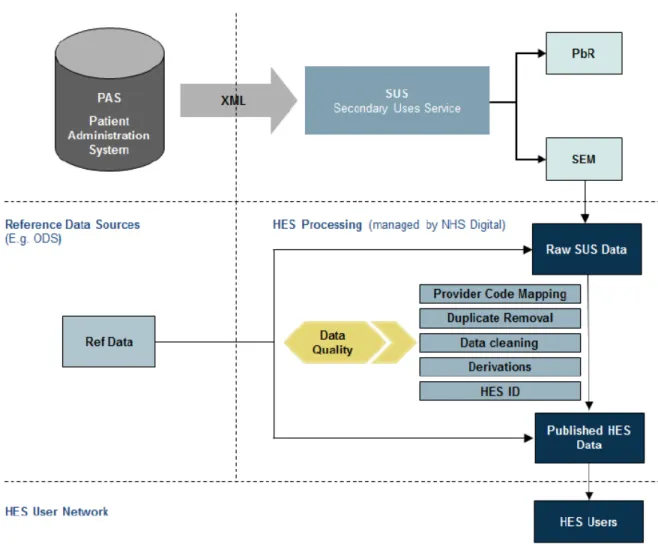
HES is a data ‘warehouse’ that includes records of all admissions, A&E attendances and outpatient appointments at NHS hospitals in England, accounting for over 125 million records per financial year.56 The data are extracted from the patient’s notes and entered
Figure 3. Overview of the data flows from healthcare providers into the HES dataset
Source: NHS Digital. "The processing cycle and HES data quality"
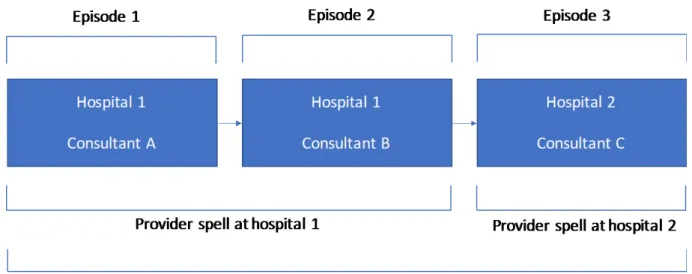
The basic unit of activity in HES is the finished consultant episode, covering the period a patient is under the care of one consultant. A patient's entire stay in hospital is known as a provider spell. A provider spell can be made up of one or more episodes of care delivered by the provider NHS organisation. If the patient is transferred to another hospital, dies or is discharged, the episode and the provider spell end. If a patient is transferred directly from one hospital provider to another, this results in a continuous inpatient spell or ‘super-spell’.
The relationship between episodes, provider spells and continuous inpatient spells is summarised in Figure 4.
Figure 4. Demonstration of how episodes, providers spells and continuous inpatient spells relate to each other
In the HES inpatient database, each record contains data on the patient demographics (for example, age, sex, ethnicity, postcode), the episode of care (for example, hospital name, date of admission and discharge) and clinical information. Diagnoses for each patient are recorded using the International Classification of Diseases, 10th edition (ICD-10).57
Procedures performed during an episode are coded using the Office of Population, Censuses and Surveys Classification of Surgical Operations and Procedures, 4th revision (OPCS).58
In addition, each episode related to the delivery of a baby can capture details about the labour and delivery (for example, mode of delivery, gestational age and birthweight) in supplementary data fields known as the HES ‘maternity tail’. For multiple births, each maternal delivery record can hold up to 9 baby tails (up to 6 prior to 2002). For babies’ birth
episodes, a similar ‘baby tail’ exists. For an individual mother-baby pair, the two ‘tails’ should contain the same information; however, there is no routine linkage of maternal and baby records within HES: the maternal NHS number is not available on the baby record or vice versa. The maternity (or baby) tail is not compulsory and the level of data completeness varies across NHS trusts. The level of data completeness has improved over time,52 59 but
varies between different NHS trusts: in 2014, data on onset of labour and gestational age were available in 85% and 82% of all delivery episodes, respectively. The majority of records missing this information were from trusts that failed to submit any ‘maternity tail’
information for births under their care.
One of the advantages of HES is that each patient is assigned a unique identifier (the HESID). This makes it possible for researchers to study longitudinal patterns of care, such as rates of unplanned readmission following a particular procedure, as well as enabling the tracking of patients between hospitals without needing access to any personal identifiers. HESID is assigned using a deterministic rule-based algorithm based on NHS number, local patient identifier, sex, date of birth and postcode.
For the purposes of the work contained within this thesis, HES records were defined as relating to a delivery (i.e. belonging to the mother) if ‘method of delivery’ information was found in any procedure field (OPCS codes R17 - R25) and/or the maternity tail field. For the analyses in which HES birth records (i.e. records belonging to the baby) were used (see Chapters 8 and 9), births were identified by the presence of ICD-10 codes Z37-Z38, HRG codes N01-N05 (neonates) or HES fields relating to episode type, method of admission, age at start of episode and level of neonatal care.
3.2.2. Maternity Information Systems (MIS) Pilot
The majority of NHS hospitals in the UK use electronic Maternity Information Systems (MIS) to capture detailed demographic and clinical information related to each pregnancy and delivery under their care. These databases often include data from antenatal booking through to postnatal care. Although each MIS collects slightly different information, there is sufficient similarity between MIS to allow a minimum dataset to be developed.
This thesis used a dataset created as part of the RCOG MIS Pilot Project. Building on a successful feasibility study conducted in 7 NHS trusts in South West England, the MIS Pilot Project aimed to assess the feasibility of creating a multi-centre dataset using electronic maternity records for the purpose of developing clinically meaningful performance indicators for maternity care. A secondary aim of the pilot was to assess the feasibility of linking this dataset with HES data for a subset of women giving birth in English NHS trusts.
The MIS pilot began by contacting trusts to request their interest in participating. A survey was disseminated to all Clinical Directors of UK trusts / health boards with a maternity service (n = 164) (Appendix 1), and respondents were asked for information about their MIS and whether their organisation would be interested in participating in the pilot study. Ninety trusts responded positively and 25 were shortlisted on the basis of their size, geographic location, and type of MIS. Telephone calls were conducted with the clinical director and lead midwife for informatics at each trust to determine their ability to supply the required data item and their willingness to participate in the pilot. Following these telephone calls, 19 of the 25 trusts confirmed that they were able to participate. Each trust
supplied a retrospective 12-month extract of patient-level MIS data in accordance with a pre-defined specification (Appendix 2).
In order to collect patient identifiable data (NHS number, date of birth, post code) required for linkage with HES without informed consent from individual women in the cohort, it was necessary to seek relevant regulatory approval (Section 251) and to prepare data sharing agreements with each of the participating units (Appendix 3). Permissions were also granted for the database to be used for the purposes of this thesis.
The individual NHS trust extracts were cleaned and pooled to create a single database comprising 112,458 infants born between 1 April 2012 and 31 March 2013, representing approximately 15% of the total number of births in the UK during this period.
The participating maternity units ranged in size from 1,800 to 9,800 deliveries per year. Two were large specialist women’s hospitals, 15 were teaching/university hospitals, and two were district general hospitals. Fifteen of the maternity units were located in England, one in Scotland, one in Wales, and two in Northern Ireland. All had an obstetric unit able to provide the full spectrum of obstetric care.
For the births in English units, MIS records were linked with the HES database by the HSCIC Data Linkage and Extract Service using a deterministic linkage algorithm based on the
following patient identifiers: NHS number, date of birth, postcode and sex. 99.8% of mothers and 99.1% of babies in the MIS cohort could be linked with a HES birth record, giving a total match rate of 99.4%. 82.4% of the linked records matched exactly on all four identifiers (match rank 1).
A linked MIS/HES dataset has the advantage of containing more detailed information than either data source alone. For example, the MIS dataset contains information on maternal and neonatal outcomes that are not captured in HES, and HES contains information on events that happen after discharge from maternity services, for example, admission to neonatal care.
3.3. Why use routinely collected data for evaluating maternity care?
Although they have some important limitations, routinely collected data sources are often ideal for conducting retrospective cohort studies. In countries in which routinely collected datasets exist, these are attractive data sources for evaluating health interventions and services due to their often large sample sizes, lack of selection bias, and the relatively low costs of accessing these data compared to conducting primary data collection.
Turning specifically to routinely collected maternity data, in countries with national birth registers such as Sweden and Finland, these datasets cover the whole population and therefore minimise the possibility of selection bias.60 In England, more than 96% of all
deliveries occur in NHS hospitals and are captured by HES.6 Home births should in theory
also be recorded in HES but in practice are often missing. Although these account for only a small proportion (approximately 3%) of all births, they represent an important group and their absence limits the purposes for which HES can be used. Home births are recorded in the ONS birth register and, in the majority of hospitals, are entered on to the local electronic maternity record system. Linkage with these datasets therefore offers opportunities to capture these missing births and provide a truly population-based sample.
The HES dataset captures multiple procedures and diagnoses at the patient level, providing a rich description of patient characteristics and clinical risk factors for cohort studies. Many variables relevant for defining processes and outcomes of maternity care are recorded in HES, in particular in the diagnosis and procedure fields and in the ‘maternity tail’. However, not all relevant information is captured and the level of clinical detail that would be needed for some questions to be adequately addressed is insufficient. For example, several
important risk factors for maternal and neonatal outcomes, such as maternal BMI at
booking, smoking and alcohol consumption, are not recorded in HES. This means they cannot be taken into account as possible confounders, although record linkage can extend the range of data items available and thus can improve the validity and quality of hospital
administrative data. For example, MIS data routinely contains information about maternal risk factors that are captured at the booking appointment (BMI, smoking, alcohol use) as well as several outcomes important that are not available in HES, including estimated blood loss at delivery and the baby’s Apgar score at 5 minutes.
In addition to limitations related to the level of clinical detail available in HES, concerns have been expressed about the accuracy and completeness of diagnosis and procedure coding,19
which call into question its credibility as a reliable source of maternity data and limit its usefulness for cohort studies. For example, in a letter published in the BMJ in 2012, Brennan et al. (2012) expressed their surprise at finding over 17,000 male inpatient admissions to obstetric services between 2009 and 2010.61 This letter generated widespread concern that
basic information, in this case the sex of the patient, was being erroneously entered on a large scale. However, a reply from the database administrators revealed that almost all of these episodes were related to male newborns and were therefore likely to have been
birth-related episodes treated by associate specialties, rather than data entry errors.62 This
example highlights how, at first glance, routine data can be misleading if not subjected to careful data quality checks and systematic analysis.
A recent systematic review of discharge coding accuracy in HES data found that primary diagnosis accuracy has improved from 73.8% to 96.0% in the ten years since the introduction of Payment by Results.63 Nonetheless, there are important issues around the standardisation
of data definitions among units submitting data to a national data warehouse. Divergent coding practices can undermine meaningful comparisons and lead to inappropriate incentives and penalties being given to hospitals. Discrepancies in coding tend to occur where confusion exists about the definition of a particular data item. For example, in maternity care, uncertainty can be caused by the different ways in which the terms 'elective' and ‘emergency' caesarean section are used. The term 'elective' is variously used to describe a caesarean with no medical indication or a prelabour caesarean. In other situations, the terms 'elective' and 'emergency' are used to reflect a measure of the urgency. A similar problem exists around induction of labour, specifically in the distinction between induction (initiation) and augmentation (speeding up) of labour, both of which are performed using similar drugs and procedures. Lack of clarity around important clinical definitions such as these can lead to over- or under-estimation of the true rate.
The methodological element of this thesis will focus on some specific challenges that have not been given due attention in some of the previous publications to make use of routinely collected maternity data. These specific issues are summarised below:
In all epidemiological research, the problems arising from missing data need to be
considered and dealt with appropriately. These investigations should involve evaluating the completeness and distribution of key data fields. Although an advantage of cohort studies is that the exposure is usually recorded before the outcome occurs, in routinely collected data sources an important issue that must be considered and tested is selective data
incompleteness in different subpopulations. For example, data may be more likely to be entered electronically into the hospital discharge summary for a patient if a procedure was performed that is chargeable for reimbursement or if something unusual happened during the admission. Conversely, if a baby is born very prematurely and is transferred straight to the neonatal unit, data may not get entered onto the maternity system used to populate the birth record on the hospital’s administrative system. The assumption that data are missing at random can often be tested through validation studies or sensitivity analyses.
Other methods to examine the internal consistency of routinely collected data include developing coding frameworks that combine diagnosis, procedure and administrative codes to assess miscoding. In this way, records with implausible values and hospitals with divergent coding practices can be identified and excluded from the analysis. Chapter 4 describes an example of this type of approach applied to the information on method of delivery available in English hospital administrative data.
Alternatively, if problems of data incompleteness or inconsistency are identified, methods to improve completeness that draw upon the unique features of the dataset can sometimes be developed. For example, there may be an alternative source of information within the database, or it may be possible to construct a replacement variable using a longitudinal
‘look-back’ approach. Chapters 4 and 5 describe the development of techniques in relation to missing information on method of delivery and parity in the HES database.
2. Defining obstetric populations and outcomes
Evaluating maternity care requires that key obstetric events can be reliably identified in the data source. The most fundamental event to be able to define is the birth episode itself, but other obstetric characteristics and outcomes will also be important depending on the specific question being asked.
As discussed above, routine datasets often provide a rich description of patient
characteristics and clinical risk factors but can be limited by the amount of detail available or data completeness. Attention needs to be given to selecting the most appropriate
combination of codes to define important groups of women, which often involves working with clinical experts to develop coding frameworks that combine diagnosis, procedure and administrative codes to minimise under- or over-ascertainment and reduce misclassification bias. Chapters 4 to 9 all include examples of this type of work. For example, in Chapter 7 it was necessary to apply the ‘look-back’ technique described in Chapter 5 to define a group of women having their second baby following a primary caesarean section, and to seek clinical input to be able to exclude those women with contraindications for VBAC. Likewise, in Chapter 8, the appropriate comparison group for examining the association of induction of labour with perinatal mortality also required careful consideration and construction. Attempts should also be made to examine the concurrent validity of these definitions, for example by comparing the prevalence of a condition within the dataset to known national
prevalence rates. An example of this type of work can be found in Chapter 9 in relation to severe adverse neonatal outcomes.
3. Adjusting for confounders
As discussed in section 3.1, being able to take confounding factors into account is a vital element of a well-conducted observational study. This may involve developing multivariate regression models to adjust for maternal characteristics or obstetric risk factors. Chapters 6 to 9 all include examples of controlling for case mix between maternity providers, as well as discussions on the limitations of routine data for this purpose when not all relevant risk factors can be identified in the data.
Routine data is good at capturing certain characteristics, however a particular limitation of HES maternity data is that for information governance restrictions there is no direct link between the mother’s and the baby’s record. This prevents an examination of how maternal characteristics or obstetric risk factors impact on neonatal outcomes. However, as
described in Chapters 8 and 9, this limitation can be partially overcome through data linkage.
Presentation of data using funnel plots
A funnel plot is a graphical method for comparing the performance of institutions using cross- sectional statistics. The main advantage of this technique is that it takes the size of each institution into account. This is important because the amount by which a trust’s indicator value may vary from the national mean is influenced by random fluctuations that are related to the number of deliveries at its maternity unit (Figure 5).
The control limits within funnel plots highlight how much of the variation among
organisations is over and above what would be expected due to chance alone. Several of the funnel plots presented in this thesis show evidence of a phenomenon known as
overdispersion. Overdispersion occurs when there is a greater degree of variability among providers than can be explained by chance and the existence of a few outlying units.
Important explanations for overdispersion are differences in data quality, limitations of risk-adjustment methods and clinical uncertainty.
The research contained within this thesis is exempt from UK National Research Ethics Service (NRES) approval because it involves the secondary use of existing datasets of anonymised data for service evaluation:
http://www.hra.nhs.uk/documents/2016/06/defining-research.pdf. All record-level data used in my research was de-identified and drawn solely from two sources. Approvals for the use of HES data were obtained as part of the standard NHS Digital data access process. The use of the RCOG MIS dataset for the purposes of this thesis is covered by a Data Sharing Agreement with each of the participating NHS trusts and
3.4. Ethics
Development of techniques to analyse routinely collected maternity
data
In Chapter 3, the advantages and limitations of routinely collected maternity data for evaluating hospital-based maternity services were reviewed (thesis objective 1) and a case was made for careful handling of these data in order for robust conclusions to be drawn. Particular challenges related to internal validity were highlighted: 1) assessing data
completeness and accuracy, 2) defining obstetric populations and outcomes and 3) adjusting for confounders
In this section, the focus moves to thesis objective 2: the development of techniques to address current weaknesses in the secondary analysis of routine maternity data. The themes within this section relate particularly to the handling of missing or inconsistent information and the definition of obstetric populations.
4. Data quality assessment and validation: an illustration using
method of delivery data
This chapter comprises a published paper based on a detailed analysis of the completeness and consistency within HES of a particularly key data item for maternity services: the method of delivery. This single piece of information is required for the construction of a great
number of different maternity statistics, either to define the numerator (for example, the caesarean section rate), the denominator (for example, the rate of severe perineal tears among instrumental deliveries), or both.
In the HES database, method of delivery can be entered twice: 1) as a procedure code in the core HES database, and 2) in the supplementary maternity tail. 87% of delivery records have both data items present, but it is not clear which is the preferred data source, and no
standard definitions of method of delivery are available for secondary users of HES. It is therefore critical that the impact of different ways of handling missing or inconsistent data is considered when selecting methods to define groups of women that have given birth by a particular method.