for Development of National
Farm Animal Genetic Resources Management Plans
Management of small
populations at risk
Guidelines
Initiative pour la Diversité des Animaux Domestiques Initiative for Domestic Animal Diversity Iniciativa para la Diversidad de los Animales Domésticos Food and Agriculture Organization of the United Nations Organisation des Nations Unies pour l'alimentation et l'agriculture Organización de las Naciones Unidas para la Agricultura y la AlimentatciónForeword
10
1. Introduction
12
1.1 The importance of livestock 12
1.2 Reasons for loss of animal diversity 13
1.3 Global Strategy for the Management of Farm
Animal Genetic Resources 17
1.4 Objectives for conservation 18
1.5 Conservation strategies 20
1.6 The goal and structure of these Guidelines 21
2. Survey and Analysis of Present Position
24
2.1 Understanding the Diversity 26
2.2 Sources of Existing Information on a Breed 28
2.3 Design and Conduct of a Census 29
2.4 Analysis of census data. 32
2.5 Organizing breeders to monitor performance 34
2.6 Conduct of a Survey 35
2.7 Designing the Survey Questionnaire 37
3. Considering the Options
44
3.1 Attracting support for projects 46
3.2 Shaping National Action Plans 48
3.2.1 Livestock and biodiversity. 48
3.2.2 Sustainability 50
3.2.3 Equitable sharing of the benefits arising from Genetic Resources. 51
3.3 Opportunities for improving economic performance. 52
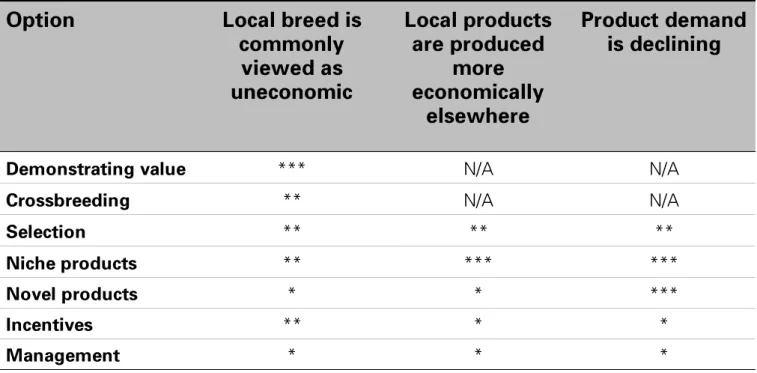
3.3.1 Determine the facts about economic performance. 53 3.3.2 Incorporate the indigenous breed into a crossbreeding scheme. 53 3.3.3 Selection within the indigenous breed. 55 3.3.4 Examine the potential of niche markets for high quality products. 57
3.3.5 Developing novel products. 58
3.3.6 Incentive payments. 58
3.3.7 Improving the management. 59
3.4 Choosing the conservation strategy 61
3.4.1 Categorization of conservation strategies. 61 3.4.2 Priorities among strategies of active conservation. 62 3.4.3 Aspects particular to cryoconservation. 63
3.4.4 Making the decision. 65
4. The Design of In vivo Conservation Programmes
68
4.1 An introduction to some relevant genetic concepts 68
4.1.1 Genetic variation and rates of inbreeding. 68
4.1.2 Generation intervals. 72
4.1.3 The average relationship of a population. 74
4.2 Coping with the history of the population 75
4.2.1 Bottle necks. 75
4.2.2 Genetic defects. 75
4.2.3 Populations in genetic melt-down. 77
4.3 The genetic structure of the conserved population 78
4.3.2 Cryoconservation as a means of reducing inbreeding. 80
4.3.3 Selection of sires and dams. 81
4.3.4 Commercial use. 84
4.3.5 The introduction of new unrelated animals. 85
4.4 The physical structure of the conserved population 87
4.4.1 Selecting the sires and dams to enter a nucleus population. 87
4.4.2 Location of the nucleus. 88
4.4.3 Mating systems for a dispersed nucleus. 89
4.4.4 Recording. 89
4.5 Monitoring, recording and research 90
4.5.1 Recording and the database. 90
4.5.2 Monitoring. 90
4.5.3 Incorporating some research. 91
4.6 Coping without pedigree recording 91
4.7 A Note on the Use of Cryoconserved Material 93
4.7.1 Controlling genetic defects. 93
4.7.2 Dispersed nucleus. 94
4.8 Expertise Required 95
5. Cryoconservation
97
5.1 The Basics of Cryoconservation. 101
5.1.1 Semen. 101
5.1.2 Embryos recovered in vivo. 103
5.1.3 Embryos produced from in vitro maturation and fertilization. 103
5.1.4 DNA. 107
5.1.5 Somatic cells. 108
5.2 Achievable objectives from using cryoconserved material 110
5.2.1 Re-establishing an extinct breed. 111
5.2.2 New breed development. 114
5.2.3 Supporting in vivo conservation. 115 5.2.4 Research into identifying single genes of large effect. 116
5.2.5 DNA studies. 117 5.2.6 Achievable objectives for the genome-bank as a whole. 117
5.3 Obtaining donor animals for cryoconservation 118 5.4 Overview of standards and procedures 122
5.4.1 Facilities. 122
5.4.2 Procedures for health monitoring. 123 5.4.3 Techniques for freezing and thawing of semen. 124 5.4.4 Techniques for the freezing and thawing of embryos. 125 5.4.5 Mating design during embryo recovery. 126 5.4.6 Collection and processing of DNA samples. 127
5.5 Storage of samples 128
5.5.1 Identification. 128
5.5.2 Division of samples into two subsets. 131
5.5.3. Location of samples. 132
5.5.4 Containers. 132
5.5.5 Maintaining storage. 133
5.6 Grading of health status for semen and embryos 133
5.6.1 Grading mammalian semen. 133
5.6.2 Grading of avian semen. 135
5.6.3 Grading embryos. 136
5.6.4 Consequences of grading on storage. 137
5.7 Size of the samples to be frozen 140
5.8 Access and use 145
5.8.1 Legal framework for access to material stored. 145 5.8.2 Procedures for access to breeding materials. 146 5.8.3 Procedures for studies using DNA only 147 5.8.4 Replenishment and retention of stocks. 148
6. Organization, Communication and Training in Conservation
151
6.1 Organization 151
6.1.1 National sovereignty and community benefit. 151 6.1.2 Ownership of animals and products. 152 6.1.3 Responsibilities for recording and selection. 153 6.1.4 Ownership and access to records. 153 6.1.5 Basic standards of husbandry. 154
6.2 Participation in Conservation Projects 154
6.2.1 Individual or private farmers. 154
6.2.2 Breed Associations. 154
6.2.3 The State 155
6.2.4 The National Focal Point (NFP). 156 6.2.5 Non-governmental organizations (NGOs). 156
6.2.6 Zoos or farm parks. 156
6.2.7 Private companies. 156
6.3 Monitoring and evaluation systems 157
6.4 Communication 159
6.4.1 Audiences. 160
6.4.2 Communication tools. 161
6.5 Training 162
6.5.1 Topics to be taught in higher education 164 6.5.2 Training of farmers and extension workers. 168
7. Concluding Remarks
170
7.1 A summary of the Guidelines 170
Annex 1 Health Surveillance and Regulations for
Collection and Storage of Semen
173
A1.1 General Aspects of Cryoconserving Semen 174
A1.2 The Quarantine Station 175
A1.2.1 Conditions for approval of the facilities. 176
A1.2.2 Health testing. 177
A1.2.3 Domestication and training of the animals. 177
A1.2.4 Movement of animals. 179
A1.3 The Semen Collection Centre: General 180 A1.4 The Semen Collection Centre: Animal Housing and
the Collection Room 181
A1.4.1 Animal housing. 181
A1.4.2 The collection room. 182
A1.4.3 Control of the health status during the
semen collection period. 183
A1.5 The Semen Collection Centre: the Processing and Storage Unit. 184
A1.5.1 Semen processing laboratory. 185 A1.5.2 Glassware washing and disinfection room. 186
A1.5.3 Semen pre-storage room. 186
A1.5.4 Semen storage room. 186
A1.6 Approval of the Facilities and Personnel. 188 A1.7 Aspects Special to Conservation Programmes 189
A1.7.1 Compulsory requirements. 189
A1.7.2 Individual Health Testing. 190
A1.7.3 Grading donors and semen. 191
Annex 2 Health Surveillance and Regulations for
Collection and Storage of Embryos
195
A2.1 Embryo Production And Storage 195
A2.2 The Concept of Officially Approving
the Embryo Collection Teams 196
A2.2.1 Competence of the personnel. 197
A2.2.2 Appropriate equipment. 197
A2.2.3 A permanent laboratory. 198
A2.2.4 Health conditions for donor animals. 199
A2.3 The Categorization of the Health Status of the Embryos 199
A.2.3.1 Grade A health status of the embryo. 199 A.2.3.2 Grade B health status of the embryo 200
Annex 3 Technical Procedures for Cryoconservation of Semen
201
A3.1 Cryoconservation of Bull Semen 201
A3.2 Cryoconservation of Boar Semen 202
A3.3 Cryoconservation of Ram Semen 203
A3.4 Cryoconservation of Rabbit Semen 204
A3.5 Cryoconservation of Stallion semen 205
A3.6 Cryoconservation of Buck Semen 206
A.3.7 Cryoconservation of Rooster Semen 207
A3.8 Crypopreservation of Buffalo Semen 208
Annex 4 Technical Procedures for Cryoconservation of Embryos
210
A.4.1 Cryoconservation of Bovine Embryos 210 A4.2 Cryoconservation of Ovine and Goat Embryos 211
A4.3 Cryoconservation of Rabbit Embryos 211
Annex 5 Technical Procedures for DNA Extraction
213
A5.1 DNA extraction from mammalian blood 214
A5.2 DNA extraction from avian blood 215
Annex 6 Principles Underlying Simulations
to Determine Recommended Sample Sizes
217
A6.1 Simulation of semen requirements. 217
A6.1.1 Objective 5.2.1: re-establishment of a breed using semen. 217 A6.1.2 Objective 5.2.2: New breed development. 218 A6.1.3 Objective 5.2.3: Supporting in vivo conservation. 218 A6.1.4 Objective 5.2.4: Research into identifying
single genes of large effect. 218
1
Foreword
3
Use of these GuidelinesIn recognition of the importance of animal genetic resources (AnGR), and of the sizeable portion that is currently at risk of loss, and in keeping with FAO’s mandate and the Convention on Biological Diversity (CBD) a special action programme for the Global Management of Farm Animal Genetic Resources was launched by FAO in 1992.
One of the objectives of this Programme is the development of Guidelines for country use. The Primary Guideline Document (FAO, 1996), mainly targeted towards policy makers, is designed to help countries get started to identify the main elements and objectives of an animal genetic resources management plan, and to outline the strategic policy directions required to fulfil these objectives. The Primary document is complemented and supported by four secondary documents targeted mainly at those that implement policy, administratively and technically, covering the following issues: characterization, livestock production systems description, active breed use and development, and managing populations at risk to provide guidance for the management of areas identified in the primary document. These Guidelines looks at the specific aspects, options and techniques for the management of populations at risk.
Many have contributed to the development of these Guidelines, with this current version being prepared by: Drs. J.A. Woolliams1, D.P. Gwaze2, T.H.E. Meuwissen3, D. Planchenault4, J.-P. Renard5, M. Thibier6 and H. Wagner7
1
Roslin Institute (Edinburgh), Roslin, Midlothian EH25 9PS, U.K.
2
Ministry of Mines, Environment and Tourism, Harare, Zimbabwe.
3
ID-DLO, Lelystad, The Netherlands.
4
Bureau des ressources génétiques (BRG), Paris, France.
5
INRA, Jouy-en-Josas, France.
6
Centre national d’études vétérinaires et alimentaires (CNEVA), Paris, France.
7
FAO, Rome, Italy.
The Guidelines take the form of a step-by-step manual: the first step being to evaluate the present situation by population censuses and surveys; the second step, to choose between the various conservation options; the third step, to make a technical design for the chosen conservation option; the fourth step is to construct a thorough organization, communication and training plan for the project.
The Guidelines form a manual on how to set about conserving small animal populations at risk. The Guidelines will be periodically reviewed incorporating the information and experience that accumulates on the conservation of AnGR.
1
1.
Introduction
■ The importance of livestock
■ Reasons for loss of animal diversity
■ The Global Strategy for the Management of Animal Genetic Resources ■ Objectives for conservation
■ Conservation strategies
■ The goal and structure of the Guidelines
2
1.1 The importance of livestockWhy consider conservation?
Domestication of farm animal species was initiated some 12,000 years ago when people began maintaining animals for work power, food, fibre, and other agricultural uses. Today about 40 mammalian and avian species have been domesticated, and are all important for food and agriculture. But, the majority of the world’s livestock production is derived from only 14 species which comprise some 5,000 breeds.
Approximately 1.96 billion people, 40 per cent of the world population, depend on livestock directly to meet part or all of their daily needs. An estimated 12 per cent of all people depend almost entirely on products obtained from ruminant livestock - cattle, yaks, sheep and goats. Livestock transform forage and crop residues, which are inedible to humans, into nutritionally important food products. Approximately 40 per cent of the total land available in developing countries can be used only for some form of livestock forage production. Animals account for 19 per cent of the world's food directly. They also provide draught power and fertilizer for crop production, bringing their overall contribution up to 25 per cent, and thus are essential components in achieving sustainable food security. In addition, livestock serves as a very important cash reserve in many of the mixed farming and pastoral
systems, thereby providing an important form of risk reduction. In total, animals meet an estimated 30 per cent of the value of human requirements for food and agriculture. Due to rapid population growth, consumption of food and agricultural products is increasing. Hence, animals are a crucial element in meeting future global requirements, and are likely to improve the quality of life of many rural communities.
Many breeds of domestic livestock are threatened or endangered. Based on a world wide survey, the World Watch List for Domestic Animal Diversity (WWL-DAD:2, FAO/UNEP 1995) classified 27% (390/1433) of breeds as threatened or endangered (to be defined more precisely in Chapter 2). Extrapolation to the 5,000 breeds believed to exist, indicates that there are between 1,200 and 1,600 threatened breeds on the planet. Globally, it is estimated that about 50 or more breeds are lost per year, which is approximately one breed per week. While many breeds are down to numbers which make the future of these breeds very insecure without action to conserve them, others are in imminent danger of extinction if nothing is done.
2
1.2 Reasons for loss of animal diversityWhat are the forces at work?
There are several factors which place breeds at risk of loss and threaten domestic animal diversity. By far the greatest cause for genetic erosion is the growing trend to global reliance on a very limited number of modern breeds suited for the high input-output needs of industrial agriculture. This trend is of paramount concern as about 50% of the total variation at the quantitative level is between breeds, the remainder being common to all breeds. Hence moving to a few breeds would eliminate a considerable amount of variation in the species, in addition to jeopardizing readily available gene combinations in other remaining unique gene resources. This has been further amplified by the possibility to access germplasm worldwide and the development and easy movement of highly selected breeds.
Reasons for loss of farm animal genetic resources
• Introduction of exotic germplasm
• Poor agricultural policies
• Restriction of development to a few breeds
• Changing market requirements
• Degradation of ecosystems
• Natural disasters
• Political unrest and instability
In developed countries progress in advanced breeding and reproductive technology have lead to substantial increases in agricultural production in some production systems. The basis for this success was the possibility to develop and apply these technologies, and to access many diverse breeding populations harbouring desired genes or gene combinations. This was further amplified by the possibility to access germplasm worldwide and the development and easy movement of highly selected breeds. What was successful on one hand was deleterious on the other, since improvement programmes this century have only concentrated on a few breeds in each species, using high level inputs, and also upon just one or two traits with the improvement activity being carried out in comparatively benign environments. Proliferation was amplified through application of reproductive technologies, mainly through artificial insemination. Other modern biotechnologies, such as embryo transfer and cloning once it becomes more efficient, may further aggravate the problem if adequate precautions are not taken. The result to date is that a large number of breeds and strains which were highly adapted to very specific environmental and feeding conditions are now threatened, or extinct.
During the history of domestic livestock breeding, all over the world, there have already been a very large number of breeds created, many of which have become extinct., Provided the rate of creation of new breed populations parallels the rate of
extinction there is no cause for concern.
However, for the past 100 years this has not been the case: there has been a high increase in the rate of extinction of breeds and varieties which has far outstripped the rate of creation. This represents a dramatic loss of genetic variation within the global pool of domestic stocks. In Europe alone, 60 breeds of livestock have become extinct this century and a further 200 are
considered to be endangered (Maijala et al., 1984). In many other countries undergoing rapid agricultural development and change there has been a tendency to focus livestock breeding programmes on relatively few breeds without fully identifying, evaluating and taking steps to conserve the wide range of local stocks available (Hodges, 1990).
For the developing world, there are several primary factors responsible for diminishing animal genetic diversity:
• The introduction of exotic germplasm whereby exotic or other, often non-adapted, breeds have been introduced followed by rapid spread through indiscriminate crossbreeding. This has frequently arisen through wrong advice, often given in externally funded projects, and this has been exacerbated in many cases by flawed and misleading comparisons being made between the indigenous breed and the exotic germplasm. The net result has been that some indigenous breeds or landraces have been lost or displaced;
• Changes in breeders= preferences to other breeds have occurred because of short-term socio-economic influences. These influences may arise from poor agricultural policies which promote quick fixes that are not sustainable in the long term, or from changing (possibly transient) market requirements for the products;
• The complete ecosystem in which the breed was developed may be under threat and the decline is a symptom of some wider forces at work;
• Natural disasters such as drought and diseases;
• Wars and other forms of political unrest and instability.
The locally adapted indigenous breeds in developing countries often have low absolute production figures while productivity itself is often remarkably high, when the production environment and the level of input are taken into consideration. Indigenous breeds produce and reproduce despite the sometimes very harsh environmental conditions, and are considered an important asset since they have developed over time valuable adaptive traits. This productivity in harsh environments is critically important since the vast majority of the world cannot sustain high input/output systems.
The Meishan pig.
This breed originates from China and is renowned for its high litter size. The breed has been used to produce commercial lines with high reproductive rates by international pig breeding
companies. These developments have also uncovered a gene that has a large effect on litter size.
There is a little doubt that the 160 or so developing countries harbour the majority of the world's animal genetic resources, much of which will be of short and longer term interest to other countries. Ready access to this gene pool will also benefit developed countries.
2
1.3 Global Strategy for the Management of Farm Animal Genetic ResourcesWhat efforts are being made to address the problem?
In recognition of the importance of animal genetic resources (AnGR), and of the sizeable portion which are currently at risk of loss, and in keeping with FAO’s mandate and the Convention on Biological Diversity (CBD) a special action programme for the Global Management of Farm Animal Genetic Resources was launched by FAO in 1992.
This Programme has as its objective to establish practical mechanisms and set of key actions by countries that aim, in particular, at:
• developing and making better use of animal genetic resources adapted to the world's major medium-input and low-input production environments, so as to enable their agricultural systems to intensify sustainably; and
• overcoming the serious threat of genetic erosion amongst the remaining 5,000 or so remaining breed resources of the 14 main farm animal species.
The framework of the Programme comprises four basic components:
• An inter-governmental mechanism whereby governments can directly guide international policy development, within the Commission on Genetic Resources for Food and Agriculture;
• A global, country-based structure with three elements: (i) focal points and networks, including the provision of a National Focal Point responsible for implementing and maintaining the networks within the country, and for undertaking technical exchanges with FAO on the Global AnGR programme; (ii) a stakeholders mechanism to properly involve the broad range
of parties; and (iii) use of the country-secure Domestic Animal Diversity Information System (DAD-IS; see the Internet http://www.fao.org/dad-is);
• A programme of technical activities, of six elements: (i) characterization; (ii) in-situ utilization and conservation; (iii) in-situ and ex-situ conservation; (iv) guidelines and action planning; (v) the development of a communications and information system, and relevant training; and (vi) co-ordination;
• Expert cadres to guide development of the strategy, and maximise the cost-effectiveness of country participation.
As mentioned above, one of the objectives of this Programme is the development of Guidelines for country use. The Primary Guideline Document (FAO, 1996), mainly targeted towards policy makers, is designed to help countries get started to identify the main elements and objectives of an animal genetic resources management plan, and to outline the strategic policy directions required to fulfil these objectives. The Primary document is complemented and supported by four secondary documents targeted mainly at those that implement policy, administratively and technically, covering the following issues: characterization, livestock production systems description, active breed use and development, and managing populations at risk to provide guidance for the management of areas identified in the primary document. This Guideline looks at the specific aspects, options and technics for the management of populations at risk.
2
1.4 Objectives for conservationHow will conservation help?
The objectives for AnGR conservation includes economic, social and cultural, environmental, risk reduction, research and training.
These objectives have been summarised elsewhere (Hodges, 1987; Henson, 1992).
• animal diversity should be maintained for its economic potential in allowing to respond quickly and swiftly to changes in market conditions, consumer preferences or environmental conditions.
• animal diversity has an important social and cultural role. Animals are integral part of ceremonies and habits of social ethnic groups. In modern societies they provide recreation possibilities. Farm parks can serve as teaching aid for the urban. The tourism industry may be important in many countries, and may rely on the specific environment of which the local domestic breeds are an integral part.
• animal diversity is an integral part of an agro eco-system. The loss of this diversity would contribute to higher risk in the production system, reduced ability to respond to change, degradation of the environment in question and could ultimately lead to its destruction. Marginal areas and low to medium input production systems, and increased integration of livestock into agricultural production will be important for food production in the developing world. Maintenance and development of adapted breeds are of critical importance to ensure this can be achieved sustainably without adverse environmental impact.
• domestic animal diversity is important insurance to enable response to possible, but yet unknown, requirements in the future. It is risky to rely on only a few breeds: a concentration on a small number of breeds results in losses of genes and gene combinations which are not relevant at present, but which could become relevant in the future. Conserving domestic animal diversity is reducing the risk and enhancing food security. At issue is not only the possible accentuated loss of diversity but the lack of readily available gene combinations, particularly for adaptive fitness to specific environments when AnGR are lost.
• animal diversity should be conserved for research and training. This may include basic biological research in immunology, nutrition, reproduction, genetics and adaptation to climatic and other environmental changes. Genetically distant breeds are needed for research into disease resistance and susceptibility helping to a better understanding of the underlying mechanisms and to the development of better treatments or management of the disease. The conservation activity serves as training for all stakeholders and this in turn leads to greater awareness, knowledge and reduced risk.
Objectives for conservation
• Economic potential
• Social and cultural considerations
• Environmental considerations
• Risk reduction
• Research and training
2
1.5 Conservation strategiesWhat does conservation means in practice?
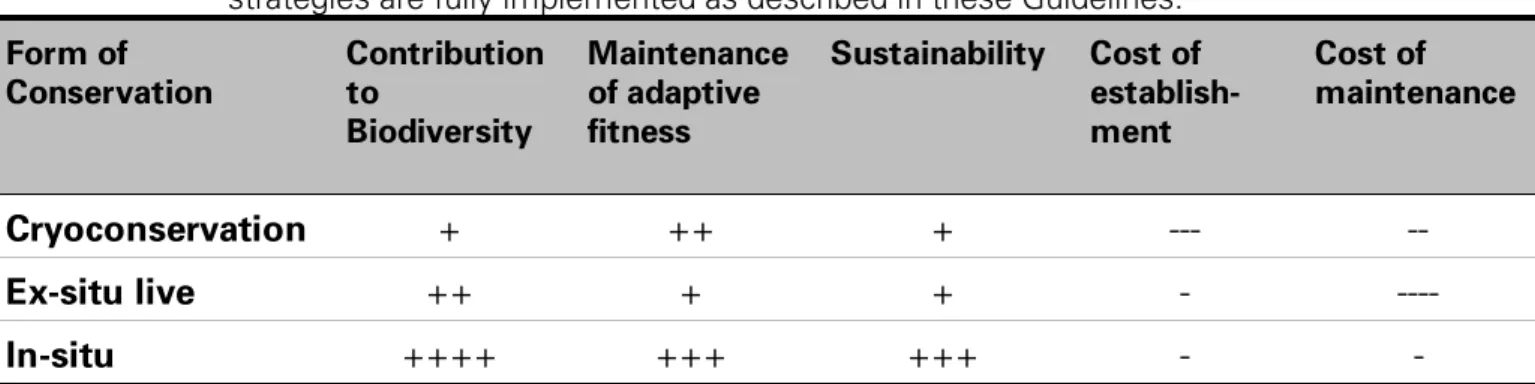
Conservation strategies can be categorized as either conserving animals in-situ, in the environment in which they were developed, or ex-situ, all other cases. The latter can be further divided into ex-situ in vivo conservation and cryogenic storage.
The CBD in its Article 8 gives clear priority to in-situ conservation and refers to it as the recovery and maintenance of species or breeds in the environment in which they have developed. This strategy is also the most preferred as the animals continue to evolve in their original habitat.
Article 9 considers ex-situ conservation as: (i) the maintenance of small, closely managed populations outside their adapted environment in artificial or semi artificial settings; and (ii) freezing (cryoconservation) of genetic material such as semen, embryos, DNA, cells or ova. Ex-situ cryoconservation does not allow for further evolutionary progress of breeds which they would have undergone in their natural environment. In-situ and ex-situ conservation is complementary, not mutually exclusive. The decision will depend on a thorough evaluation of the situation and the possibilities to use one or the other strategy. For example, it is important to note that frozen germplasm can play an important role in support of in vivo animal conservation strategies.
2
1.6 The goal and structure of these GuidelinesHow is the rest of this document going to help?
The objective of these guidelines is to provide technical arguments and a decision aid between the available various options as well as to provide guidelines on how to design and establish animal conservation programmes and genome banks. The considerations and reflections are intended to be relevant to all species of domestic livestock, and where appropriate (for example in cryoconservation) species-specific guidance is given.
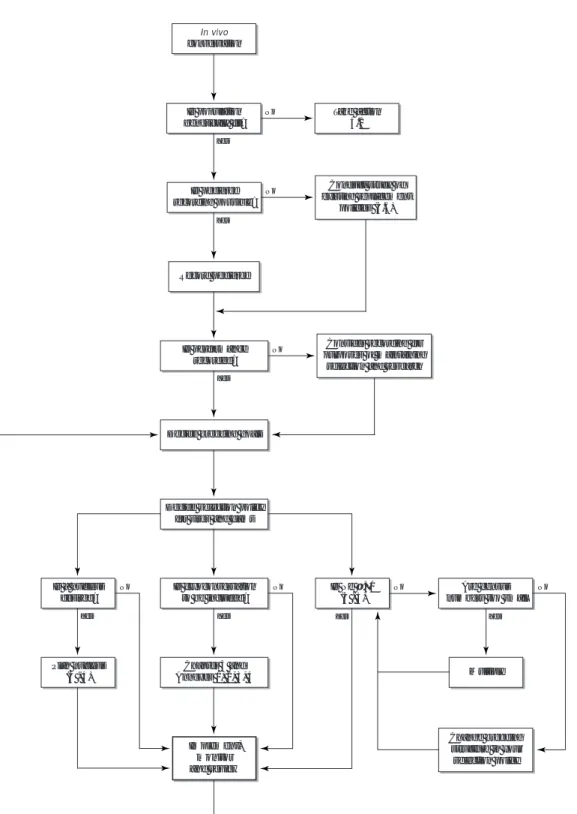
This document is designed to provide the necessary technical background for people wanting to set up, implement and monitor conservation programmes. Chapter 2 provides the information on how to evaluate the state of animal genetic resources in the country. These results are used in Chapter 3 to decide between the various options for conservation. Chapter 4 describes the design of in vivo conservation plans, and Chapter 5 describes cryoconservation plans. The techniques available for cryoconservation are often complex and precise and this necessitates a more detailed description, but it is not intended to emphasise this option more than the in vivo conservation plans, which in
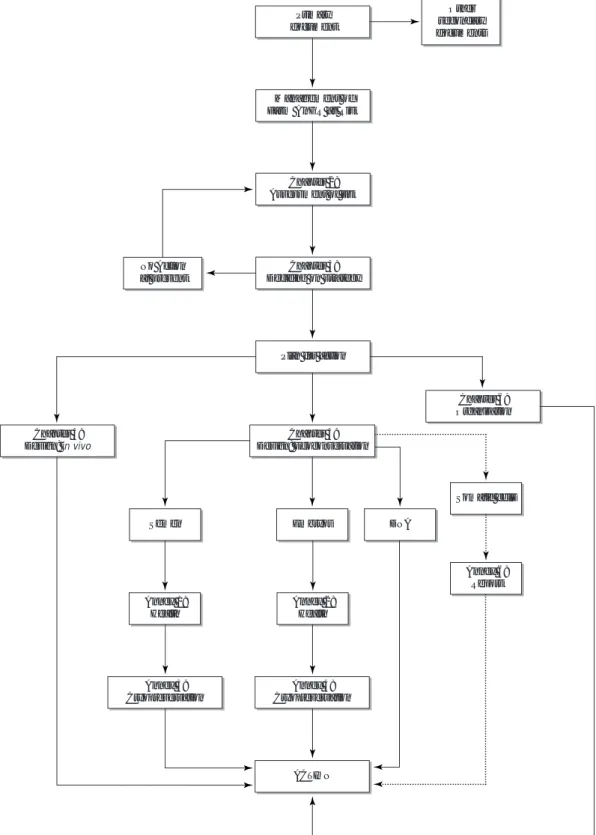
contrast are more diverse in form. In fact the in vivo conservation plans are considered more important. Chapter 6 outlines the management of conservation plans, with special emphasis on ownership, personnel and training. Chapter 7 contains concluding remarks. The structure of the Guidelines is shown diagrammatically in Fig. 1.1.
References
Hodges, J. (1987) (editor). Animal genetic resources - strategies for
improving use and conservation. FAO Animal Production and Health Paper
66.
Henson, E. L. (1992). In-situ conservation of livestock and poultry. FAO Animal Production and Health Paper 99.
FAO/UNEP (1995). World watch list for domestic animal diversity, 2nd edition. B. Scherf (ed.). Food and Agriculture organisation of the United Nations, Rome.
FAO (1998). Primary Guidelines for Development of National Farm Animal
Genetic Resources Management Plans. Domestic Animal Diversity Information System, Stage 2.0. 7 September (http://dad.fao.org/dad-is/reference/library/library.htm), FAO, Rome.
Primary document
Management of Farm AnGR at Risk
Other secondary documents No Action at present Chapter 2: Assessment of risk Chapter 3: Deciding on strategy
Plan for action
Chapter 5: Design: Ecoconservation Chapter 4: Design: in vivo Semen Embryos Annex 1: Health Annex 2: Health DNA Somatic cells Annex 6: Report
Figure 1.1: The structure of the guidelines
Chapter 6: Organization Annex 3: Cryopreservation Annex 4: Cryopreservation ACTION
1
2.
Survey and Analysis of Present Position
■ Understanding the diversity
■ Sources of information on a breed ■ Design and conduct of a census ■ Analysis of census data
■ Organizing breeders to monitor performance ■ Conduct of a survey
■ Designing a survey questionnaire ■ Categorizing the risk status
The first step in conservation is to be aware of the animal genetic resources that exist within a country. This information can be obtained initially from written or oral records. Conservation projects will nevertheless require the current state of resources to be ascertained to a high degree of certainty. This involves setting up a partial or complete census to obtain the basic information on what breeds exist within a country and how numerous each breed is. This information will begin to pinpoint conservation needs.
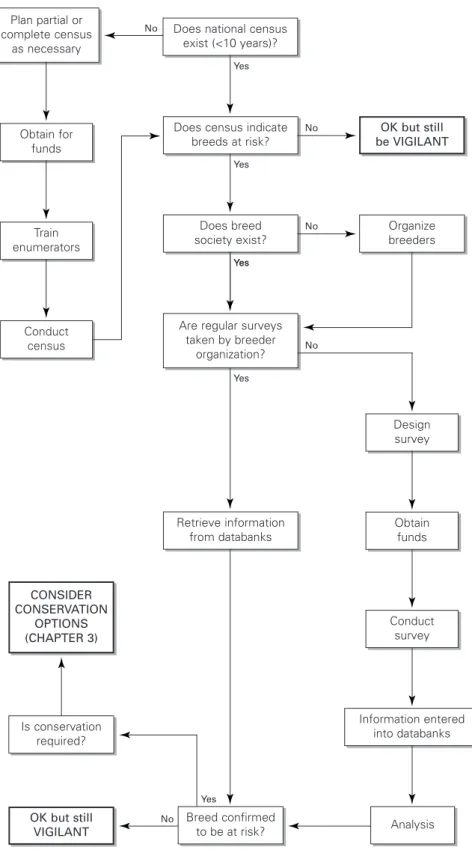
However these needs can only be taken further if we can learn more about the population dynamics of the breeds (are they increasing or decreasing in numbers) and what each breed is valued for and how it is managed. This information is obtained through regular surveys conducted in collaboration with organizations of owners of the breeds. The results of the survey enable it to be categorized according to its risk of extinction, which is an initial consideration in giving priority for active conservation, and can give insight into the possible reasons for the endangerment. The process described in this Chapter is summarized diagrammatically in Fig. 2.1.
Does national census exist (<10 years)?
Does census indicate breeds at risk? OK but still be VIGILANT Organize breeders Plan partial or complete census as necessary Obtain for funds Train enumerators Conduct census Does breed society exist?
Are regular surveys taken by breeder
organization?
Retrieve information from databanks
Figure 2.1: Assessing the current position
Design survey Obtain funds Conduct survey Information entered into databanks Analysis Breed confirmed to be at risk? Yes Yes Yes Yes Yes No No No No OK but still VIGILANT CONSIDER CONSERVATION OPTIONS (CHAPTER 3) Is conservation required? Yes No
2
2.1 Understanding the DiversityWhat is a breed and its role in diversity?
The present day diversity within farm animal species may be viewed as the result of a long history of human practice with geographical, sociological and economic influences. For each breed, the primary influences contributing to the final population were complex and included founder effects, migration, mutation, natural selection and selection by man. Even today, one or another of these influences can help to create new animal populations, just as they have contributed, since the beginning, to the loss of many populations.
In order for man to impose his own selection pressure on his animals, he must first control some of the principal components of mortality rates determined by natural selection. He is able to control population size to ensure there is sufficient food for his selected stock, and is able to conserve fodder for periods of the year when forage is not available. He is able to protect his stock from predators and to supply housing or shelter from climatic extremes and is also able to protect livestock from parasites and diseases. The weakening of natural selection pressures has an immediate effect on the survivability (or fitness) of individuals within his flocks and herds and enables him to impose his own selection criteria (meat, milk, wool, draught, work, etc.). The final result of these combined selection pressures, man and nature, in their myriad of forms, is the vast range of distinct populations or breeds that exist today and have existed in the past.
The term most commonly used to describe livestock populations or varieties is ‘breeds’. A number of different technical definitions of ‘breed’ have been published. One example is:
“a group of animals that has been selected by man to possess a uniform appearance that is inheritable and distinguishes it from
other groups of animals within the same species. It is a product of artificial choice of characters that are not necessarily strategies for survival but are favoured by man for economic, aesthetic, or ritual reasons, or because they increase the social status of the owner of the animals”. (Clutton-Brock, 1981)
Pedigree recording has enhanced this definition by supplying parentage and relationship information for many of the “developed” breeds. The concept of breed, however, encompasses any population which falls within definable parameters. In essence it may apply to any group of animals which are located in a geographical area, have some phenotypic characteristics in common, and are recognized by local people as local type. This wider concept has led to the acceptance of “breed” (as used in the Convention on Biological Diversity, by FAO, and in these Guidelines) as a cultural term.
Hall and Ruane (1993) considered that in the Old World the number of breeds are correlated with human population and land area, implying that in the past conditions favouring growth in human population also favoured the diversification of breeds. The same authors state that peripheral and remote countries have the highest ratio of breeds per million people, implying that remoteness can also promote diversification (see also Darwin, 1859).
In an evolutionary classification a primary population characterizes the most important grouping of breeds, occupying the position (the missing link) between the wild species and the standardized (or fixed) breed (Lauvergne, 1982). Whilst this aspect is not directly the subject of these guidelines, it is very important to understand these primary populations because they are the first effort made by men towards the domestication of farm animals and have preceded the standardized breeds which they have derived from them. By encouraging inventories and appropriate conservation of breeds, those breeds closer in evolutionary terms to the primary populations may be identified and these may help to clarify the process of evolution after domestication. As a result genes that have been lost in the more specialized and standardized breeds may be recovered. Such perspectives, developed further in the secondary Guideline for
Characterization of AnGR aid in the establishment of priorities for conservation of the myriad of genetically diverse breeds that we have inherited
2
2.2 Sources of Existing Information on a BreedWhere does information on a breed exist?
The first step for conservation of the domesticated animal genetic resources in a country is to make an inventory of all the existing documentation on this subject. The history of livestock populations can be very rich and may have been written down in different documents. National or regional works on livestock population or agricultural development report a large number of different breed names all referring to one basic population. Conversely, several distinct strains may share a single breed name. This is why the bibliographical work is an essential point for knowing the initial populations of a country and its history. There have been many meetings of groups to discuss genetic resources in many different regions of the world, and these have produced many documents, publications, theses, reports and plans. Although the operational actions stemming from these discussions have often been disappointing, all of them have given a good description of many diverse breeds. Beyond the proceedings of these groups there are many important individual contributions, such as: veterinary dissertations, ethnological literature, and reports of interviews with specialists, old farmers, chroniclers, etc. Some general summaries of this information may exist (e.g. Epstein, 1971).
However the extent of information available will vary according to the different breeds. For breeds from developed countries the information may be detailed and extensive, including pictures of the animals considered worthy examples. For developing countries the extent of the information may well be very limited (especially in written form), and it
is only possible to localize, and to characterize an indigenous breed only if its existence was recognized as a breed! It may prove worthwhile to consult the bibliographies of other countries about indigenous breeds, especially those countries which have had historical links with the area in question. When information is limited, an important pool of information that may prove valuable is interviews with farmers, the older farmers in particular.
With the CBD accepting country sovereignty over genetic resources, nations are responsible for describing and documenting their own resources. To assist countries obtain, collate, record and base decisions on this information FAO is developing the Domestic Animal Diversity Information System (DAD-IS) for country use.
With the history in mind and the knowledge of how different breeds may relate to each other it is now feasible to consider identifying more complete information on the current position relevant to the task in hand.
2
2.3 Design and Conduct of a CensusWhat is involved in planning for a census?
A snapshot of the current distribution of the AnGR within a country, or a region, is essential so that future steps may be planned with accurate information. A census is a good way of achieving this objective and in its simplest form is a counting of head; but with careful design and analysis it can yield much more information (see 2.4) with only a little extra effort.
The census information is obtained in two stages: (i) a partial census to identify breeds that may be at risk; (ii) a complete census (or as near complete as is feasible) of those breeds identified in the partial census as possibly being at risk.
Both partial and complete censuses must be well planned with respect to their precise objectives, data required, experimental and questionnaire design, training required, collation and analysis of data, storage of data, and reporting of results.
In our context a census is where surveyors (enumerators) meet the farmer on one occasion to obtain straightforward information on numbers of head and some desirable ancillary information. A complete census is therefore very expensive, and it may be that a partial census is an appropriate first step. There are international funds available for the purpose of conducting a well-planned census (contact FAO, UNEP, World Bank), since it is recognized that good conservation is based upon good and reliable information.
In the Guidelines a minimal set of questions are suggested to ask each farmer, and these need to be addressed in an easily understandable form:
• the numbers of different breeds on the farm
• the number of animal for each breed
• the demographic structure by sex and by age group for each breed
• the primary uses of each breed
• sources of breeding replacements and crossbreeding activities
• the geographical location
• the owners age
• some information about the owners family (e.g. number of children, education, farmer=s status, etc.).
A census must be carried out in the field within a short period to avoid climatic or commercial effects. For example, in seasonal systems of production the numbers of animals will vary dramatically according to whether the count is before or after lambing or calving, or before or after the typical time for culling. Ignoring these factors will introduce serious
biases into the data making it uninterpretable, thus wasting the investment. Therefore a decision needs to be taken on when, and over what period of time, the census will be taken.
Statistical help in the design is strongly recommended. There are various issues this guidance should address: what information will be required to achieve the objectives of the census in statistical terms (and if the original objectives are not achievable, what are achievable objectives?); allocation of tasks to enumerators to avoid potential confounding; stratification of the census by region, especially if the period of the census is unavoidably long in relation to the production or the seasonal cycle; information to be recorded for use in subsequent analysis; methods of recording; storage of enumerators’ records for future reference; the form of database that is available to store the records for analysis; the transfer of information from the enumerators’ records to the database; the form of the analysis; and the analysis itself.
Many enumerators must be recruited; it is important to consider how much one enumerator may achieve in one day. Adequate training must be given to the enumerators to ensure that, among other tasks: they ask the questions in the right way to obtain the required information; they fully understand the purpose of their questions, so that they can answer any questions the farmer might ask on what is required; they can interpret correctly what will be shown or told them by the farmer.
This preparation, together with conduct and the analysis of data combine to make the high price of a census. Many developing countries have not yet conducted a complete census of their animal population. Data from a partial census is only an estimate, and if these estimates are based on small or poorly designed samples the picture of the animal genetic resources will be vague at best.
For small populations at risk, when they are very localized, when no migration is present, it may be sufficient to make a census only within the region concerned. The cost will be lower and the work less. In this case, we must accept that the snapshot provided by the census has a clear
centre, but has vague margins, since the relationships between the different breeds cannot be studied.
In the developed countries, where many economical changes can affect the effective population size and, sometimes, its localization, it is possible to recommend a new complete census every ten years. In the developing countries, which represents most of the animal genetic resources available, cost restricts the regular complete census but a partial census of some breeds may be possible more often. Geographical constraints may rule out a complete census altogether. It is to be hoped that the funds for a global census can be found as soon as possible.
2
2.4 Analysis of census data.What information can a census provide?
In all cases statistical advice should be used to help summarize the vast amount of information that arises from the census to obtain sound interpretation of the data obtained.
The results of a well-planned census will show for each breed:
• the number of animals
• the demographic structure by sex and by age group
• the number of herds keeping the breed
• the distribution of herd size for the breed
• the distribution of total herd size where the breed is kept
• the geographical location of the breed
• the age distribution of the owners
• some information about owner=s family
• the associations with the keeping of other breeds
• some sociological aspects
• some description of the production system in which the breed is kept
Summaries of the total national population will be derived from pooling the information over the breeds.
Further information can then be developed by using information available from other databases. Thus combining the census data with external information such as climatic data, sanitary data, sociological and economic data, it may be possible to explain some of the correlations observed between breed numbers, geographical locations, family size of the owner and herd size.
All this information is important for planning the following surveys and having a first view of the relationship between breeds and their environmental conditions. It transforms the overview of traditional breeds from the bibliographic search (2.2) into what is going on today. In particular:
• a census is a good tool to identify urgent actions for conservation projects by identifying those breeds which are at low numbers.
• a census can act as an early warning of future conservation needs. For example, it is not the same thing if a small population is in the hands of old or young farmers: in the former case, it indicates that this breed is kept today only for sentimental reasons; in the second case, some economical aspect may be in play.
A census is more than statistical data. Its conduct and the communication of its results raises the profile of the conservation principles and the value attached to the genetic resources. It is the starting point for a continuous surveillance in the form of monitoring programs. If some breeding programs already exist, a census will
consolidate them. If there are no breeding programs in existence and no data is available, a census is a good precursor to initiating them.
2
2.5 Organizing breeders to monitor performanceHow can more detailed information be obtained?
To go beyond the information contained in the census it is best to operate through organizations of owners who are interested in conserving and promoting their breed (hereafter termed Breed Associations). It may be that such organizations do not exist and if so efforts should be made to encourage their formation. For a breed with a small census size, the numbers of keepers may be small, and the formation of a Breed Association may be helped in its early stages by the provision of some services either by Government (directly, or indirectly through research institutes) or a non-governmental organization (NGO). The formation of a Breed Association is in the interests of parties interested in conserving the breed, since its conservation cannot move forward unless enough owners of the breed support the process and participate. This is particularly the case where it is hoped to conserve the breed in-situ (see 1.5) as favoured by the Convention, since the keepers of the breed, i.e. the indigenous farmers exert considerable influence over both the breed and the environment in which the breed was developed. Given these constraints it is desirable to tackle this problem as early in the process as possible.
The formation of a Breed Association is in the interests of the farmers since it provides a means to market and promote the breed, and generally to be pro-active in support of the breed.
There are many possible roles for a Breed Association, but two roles central to conservation are developing a registered Herd Book and organizing performance recording among its members, perhaps in collaboration with other agencies such as Research Institutes, NGOs or
other parties to the conservation process (see 6.1.2). The continuous monitoring by the Breed Association of numbers and performance will have a financial overhead, but the Convention recognizes this process as an important part of conserving biodiversity. Therefore funding bodies will consider well argued proposals for support, and a Breed Association would be an essential component of a fully-fledged conservation proposal. The form the Breed Association may take will vary from breed to breed, country to country and no typical model is proposed.
A Breed Association will most likely form a biased sample of the owners, in terms of herd size or quality of management. However the degree of bias can be partly assessed by comparison of the herds in the Breed Association with the census results.
An established Breed Association thus forms an important basis for the regular monitoring of the breed by means of surveys to summarize the information collected by the Society.
2
2.6 Conduct of a SurveyHow does a survey differ from a census?
In a census there is no dynamic data; for example is a breed increasing or decreasing in numbers? Furthermore, there is no information that might be used to develop a conservation plan that is sustainable: how does the breed perform, how is it managed? So, it is very important for future decisions to have a profile of the breeds’ evolution, not just a snapshot. Only a regular survey providing continual monitoring of performance can give this dynamic information.
The survey will likely be organized centrally, through the Ministry of Agriculture or its agent. The survey is conducted by asking the Breed Associations that represent the breed to provide information on various aspects of the breed=s performance. The design of the questionnaire is discussed in the next section. To obtain the required information the
organizer of the survey need not contact every farmer, as in the census, but need only communicate with one contact person for each breed involved in the survey. If well organized, surveys on several breeds can be carried out simultaneously.
The regularity of the survey questionnaire will depend on how good the Breed Association is: if it is well organized and has a good infrastructure of associated support (Herd Books for registration, help from scientific or technical institutions to aid the collection of data) then every 3 years may be acceptable. Otherwise it is recommended that the survey is conducted annually. This helps to promote interest and to improve the communication within the Breed Association.
In all the steps that follow the value of good communication and good publicity cannot be underestimated. The results of the survey, the classification of the risk status, and the conservation initiatives that follow the survey must be made available to the Breed Associations and the owners if interest is to be maintained and fostered. Good publicity to encourage interest in the breeds in all risk categories will be invaluable and may arrest decline in numbers and increase the sense of ownership of the breed.
At the national level, all information about animal genetic resources coming from different origins (databases or surveys), must be collected and stored in the same database which may be termed the National AnGR Database. It must include all breeds of a species, not only the endangered ones. We must not forget that under certain conditions even large populations can decrease rapidly and reach an endangered status within a short term.
The information on the database can be used to work on scientific or non-scientific problems of other institutions. For example, analysis of survey information should be used to encourage detailed evaluation of endangered breeds by research institutes taking care that lifetime, holistic assessments are made.
It is anticipated that the surveys for all breeds will be co-ordinated through the National Focal Point. In all cases the results should be made available to the National Focal Point for inclusion in the Global AnGR programme and communication through networks within the country. There may be benefits from communicating the results to other stakeholders and parties involved in conservation not yet included in the networks. Most importantly, these results should be acted upon.
2
2.7 Designing the Survey QuestionnaireWhat questions should be asked in a survey?
A major difficulty is the need for getting objective information, which is crucial for any comparison of data from different breeds and areas. Subjective information is much easier to get but is much less useful. FAO have gained much in understanding many of the limitations and strengths on the current (i.e. 1997) set of variables recommended for collecting data on each breed; this is in terms of interpretation, the ease/difficulty of obtaining the particular items in some countries, use of the data items and the formatting of questionnaires. It is anticipated that a major review will be conducted, lead by FAO and involving countries, which will cover the definition of relevant data variables, and the methods of collection and analysis. This review will lead to an upgrade of the databanking system and, in turn, will form a major component of the third stage of DAD-IS.
The staged development of the databanks will involve: (i) the progression from collection of the basic data (e.g. breed name, visual description, uses, numbers of animals) to more advanced data (performance characteristics, description of the prediction environment, management definition); and (ii) the evolution of AnGR databanks within each country, whilst protecting compatibility with a global databank (i.e. permitting countries to extract particular data items stored locally, and to pass this information for international collation and interpretation that is both meaningful and consistent across countries).
With this in mind, detailed questions will not be recommended here, but instead some perspectives on relevant topics are presented. Given this staged development, it may be that some of these perspectives will not be addressed either in the current FAO recommendations, or the revised recommendations (because of the difficulties of definition, or in anticipation of difficulties in data collection). Readers are referred to WWL-DAD:2 for the list of items that comprise the current FAO recommendations.
At the beginning of 1997 (Jan 15th), the National Focal Point for France in the FAO Strategy, has started an AnGR survey to update the database. 51 questionnaires were sent to the 51 correspondents for the 51 cattle breeds in France. After two months, only 20% had been returned. After a second call (March 20th), the rate had risen to 40% by 80 days after the start, and to 75% at 100 days after the start.
This experience gives reason to think, that for a satisfactory response in an AnGR survey it is important to consider carefully, how much time must be reserved for each phase (collection, data entry, analysis, result) and how strictly the deadlines can be set. Too short times may impair the quality and inhibit
co-operation, and too demanding requirements may retard the work seriously. Thus, a suitable compromise has to be found!
One of the advantages of the staged development of survey information is that many of the questions will remain the same, and after two or three years, it is possible to facilitate the work by pre-filling parts of the questionnaire with information from the previous survey and asking only for its verification or modification. A compromise will need to be found between the ease of filling in the forms and getting exact and comparable information between breeds. For many descriptive parts it is best to encourage the person replying to use his own language, so that replies can be obtained more easily, rapidly, and more accurately; however this is at a cost of extra difficulties in processing the data collected. The use of scientific terms instead of popular ones can avoid confusion. All the terms must be clear. The development of a training manual for the correspondents may be useful.
In many countries, the motivation for filling in the questionnaire decreases because of: (i) lack of useful feedback; or (ii) lack of reward for the extra work. To address the first point it is very important to transmit all the information concerning all the national breeds to the Breeders Organizations, and that the information is further communicated to the individual owners. For the second point, a suitable system of reward should be developed.
Present and future perspectives on information obtained from surveys.
General information Besides the local name of a breed, it is important to include all synonyms, as this is a help in identifying a breed, and aids future collation across countries. The region within a country where the breed is located is of interest since it allows other important information on climate, prevalent diseases and general environment to be accessed from other databanks. The primary and all secondary uses of the breed should be identified. A description of the physical appearance of the breed is necessary, such as size and weight, colouring, horns, and other visible characteristics that may be used to define the breed etc. The organization which prepared the reply to the questionnaire (name, address) is vital for communications concerning the breed.
Breed development. Information on the population numbers and trends (breeding females, males in service, males in AI service) is important for the evaluation of the endangerment status of the breeds (see 2.8). Useful information on population structure includes the age distribution of breeding males and females (used for calculating generation intervals, see 4.2). Data on the distribution of breed numbers between juveniles capable of breeding in the future and adults should also be obtained where this can be clearly defined, since the juveniles are important to the immediate future of the breed. The proportion of females that are straight bred allows the threat to the breed from crossbreeding to be evaluated. Where appropriate, additional information on the relative age of straight-bred females (e.g. are first offspring always purebred or always crossbred) may help define the crossbreeding system and refine the calculation of generation interval. Information on the cryoconservation of germplasm (numbers of semen doses, embryos) can help indicate the stage of development of the breeds and their conservation activities.
Management conditions. Obtaining information upon management conditions is particularly important since, (i) as described in 1.2, indigenous breeds are very often under threat from misleading comparisons with other breeds and crossbreds; and (ii) they are an important aspect of the sustainability of the production system. A primary cause of the poor design of comparisons is the preferential treatment of particular breed groups. It would be helpful for survey questions to move towards providing some clues as to the extent of any preferential treatment and the different environmental roles played by the breed groups on a farm. Some items of relevance are: type of management (stationary, transhumant, nomadic; who is in charge of day-to-day management (e.g. the owner or a hired hand); the housing of the animals, when and for how long; the use of by-products from other farm outputs as a significant part of the feed; the need for supplementary feedstuffs grown outside the farm; endemic diseases, and which diseases are controlled by vaccination. Whilst the survey may
usefully seek answers to questions as to whether a breed is more harshly treated than another, the responses are still subjective and cannot be used as a substitute for a properly designed scientific comparison (see also 3.2.1).
Breed performance and special qualities. This is necessary for characterizing the breed, and should attempt to assess overall lifetime economic performance (which will depend very much on performance measures such as age at first breeding, re-breeding interval, litter size and longevity) and not solely upon the ability to produce the commercial products (such as milk yield, number of eggs per year) which form the main use of the breed. Proper breed comparisons can only be made in a properly designed study, but the supposed relative performance may help to interpret population dynamics. The breed may be kept for some special qualities, not covered in detail by the survey, and it is important to ensure that there is a clear opportunity for such qualities (e.g. lack of water supply, resistance to a disease) to be stated by the corresponding organization. Breed performance is only useful if associated with clear information on the stressors that constrain the production environment, and the level of feed and other inputs.
Additional information. Different links with other databases coming from breeders organizations or scientific institutions may be usefully established. Results from studies of genetic distances may be relevant. An opportunity to present results from conservation
programmes may be given. Other information relevant to good management of AnGR may be requested e.g. size of herd by age of owner (as mentioned previously in 2.4).
2
2.8 Categorization of Risk StatusHow is the risk of extinction determined?
From a conservation standpoint the most important outcome of the census and the survey is the categorization of risk status for the extinction of the breed. The census may give a preliminary indication of risk but the survey should be able to refine the risk analysis by divining underlying trends and causes.
Breeds may be classified in seven categories: extinct, critical, critical maintained, endangered, maintained, endangered maintained, not at risk and unknown. The categorization is based on overall population size, number of breeding females and the trend in population size, i.e. whether the population size is increasing, decreasing or stable. This is why it is important to organize a regular survey to enable informed categorization and the appropriate prioritization.
3
ExtinctA breed is categorized as extinct if it is no longer possible to easily recreate the breed population. This situation becomes absolute when there are both no breeding males (semen) and breeding females (oocytes) nor embryos remaining. In reality extinction may be realized well before the loss of the last animal, gamete or embryo.
3
CriticalA breed is categorized as critical if: The total number of breeding females is less than 100 or the total number of breeding males is less than or equal to 5;
or
the overall population size is close to, but slightly above 100 and decreasing and the percentage of females being bred pure is below 80%.
3
Critical maintainedAs for Critical, but for which active conservation programmes are in place or populations are maintained by commercial companies or research institutes.
3
EndangeredA breed is categorized as endangered if: the total number of breeding females is between 100 and 1000 or the total number of breeding males is less than or equal to 20 and greater than 5;
or
the overall population size is close to, but slightly below 100 and increasing and the percentage of females being bred pure is above 80%; or
the overall population size is close to, but slightly below 1000 and decreasing and the percentage of females being bred pure is below 80%.
3
Endangered maintainedAs for Endangered, but for which active conservation programmes are in place or populations are maintained by commercial companies or research institutes.
3
Not at riskA breeds is categorized as not at risk if: the total number of breeding females and males are greater than 1000 and 20, respectively,
or
If the population size approaches 1000 and the percentage of females being bred pure is close to 100%, and the overall population size is increasing.
3
UnknownSelf explanatory, but also a call to action: find out!
If categorization of a particular breed is borderline, further consideration should be given to factors such as:
• degree of crossbreeding in the population
• reproductive rate and generation interval of the population. Populations with low reproductive rates are at relatively greater risk than populations of high reproductive capacity of comparable size.
• special peculiarities and characteristics of the production system (intensive, extensive, nomadic etc.)
• historic and current rates of decline in population numbers
• geographic isolation of the population or its concentration in one or a few locations that would place it at risk as a result of climatic, economic or political changes or disease outbreak.
The number of animals actively used in artificial insemination, and/or the amount of semen and number of embryos stored, and/or the number of herds (or flock) as collected in the other parts of the questionnaire will have to be considered as the use of AI is an indicator that the effective population size may be smaller than that indicated by the number of breeding males alone and so the category would increase in priority. Existing storage of suitably sampled germplasm could reduce the priority for conservation (see Chapter 5).
As a result of the census and surveys the risk status of the national breeds can be assessed and priorities for action can be identified. Populations deemed at additional risk with respect to the above considerations would be placed in the next higher category. The next step is to determine what action is required.
References
Clutton-Brock, J. (1981). Domesticated animals from early times. p. 26. British Museum (Natural History) and Heinemann, London.
Darwin, C. (1859). On the origin of species. C.A. Watts and Co., Ltd., London, U.K.
Epstein, H. (1971). The origin of the domestic animals of Africa. Vols. I & II. Africana Publishing Corporation, New York, U.S.A.
Hall, S.J. and Ruane, J. (1993). Livestock breeds and their conservation: a global overview. Conservation Biology 7: 815-825.
Lauvergne, J.J. (1982). Genetics in animal populations after domestication: the consequences for breeds conservation. Proceedings of the Second World Congress on Genetic Applied to Livestock Production, Madrid, Vol. VI, pp. 77-85.
1
3.
Considering the Options
■ Attracting support for projects ■ Shaping National Action Plans
■ Opportunities for improved economic performance ■ Choosing the conservation strategy
The survey and its analysis will identify the needs for conservation of breeds of farm AnGR in a country. However it will generally be the case that the endangerment of breeds has been brought about by economic and cultural forces and that these trends will continue unless they are addressed, otherwise the conservation activity will not be sustainable in the long term.
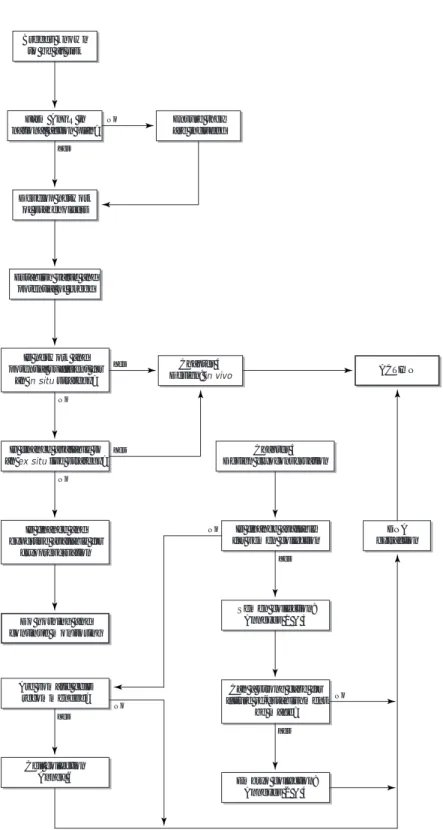
Therefore the widest possible base of support should be pursued and this can best be achieved by placing the livestock project into a wider context. By this means support can be harnessed from governments, non-governmental organizations, farmers and the public. In doing so the opportunities for sustainable conservation, and the relative priorities they may have, will become more clear. Finally, general objectives can be formulated that have a good chance of success in obtaining both political and financial support, and are achievable. After these foundations the more detailed technical design of the programme can be considered and the associated operational and financial plans can be developed. Fig. 3.1 summarizes the decision process described in Chapter 3.
Breeds known to be at risk
Farm AnGR in national action plan?
Develop network of stakeholders
Establish value and potential of breed
Is network and potential sufficient for
an in situstrategy?
Is finance available to an ex situlive strategy?
Is finance and expertise available for
cryopreservation
Chapter 5 Design cryoconservation
Is finance available for semen collection
DNA extraction
Semen collection: Annexes 1 & 3
Can a strong case for future re-establishment be made? Embryo collection: Annexes 2 & 4 Do nothing and continue monitoring
Are somatic cells recommended?
Cell collection Annex 6
Figure 3.1: Considering the options
Ensure they are included
Yes No
Chapter 4
Design: in vivo ACTION
Yes Yes No No No No Yes Yes No Yes