*Corresponding author:Patrick Ball
School of Pharmacy, Faculty of Science and Engineering University of Wolverhampton, City Campus
INTERNATIONAL JOURNAL OF CURRENT MEDICAL AND
PHARMACEUTICAL RESEARCH
ISSN: 2395-6429, Impact Factor: 4.656
Available Online at www.journalcmpr.com
Volume 4; Issue 6(A); June 2018; Page No. 3384-3392
DOI: http://dx.doi.org/10.24327/23956429.ijcmpr20180469
Research Article
EXPLORING CHOCOLATE CONSUMPTION EFFECT ON MOOD AND CONCENTRATION
Khawla Belal, Hana Morrissey and *Patrick Ball
School of Pharmacy, Faculty of Science and Engineering University of Wolverhampton, City Campus Wulfruna Street, WV1 1LY
ARTICLE INFO ABSTRACT
Chocolate is commonly craved and eaten during depressive mood states and has shown to improve negative moods and reduce stress. Exams and assessments are known to be stressful, leading to a worse mood in those prone to mood disorders. This study explored whether the consumption of chocolate by university students increased during assessments and examination periods, and whether it had an effect on their mood and concentration. A total of 50 students from fourth-year Master of Pharmacy, participated in this study. Participants completed a questionnaire designed to identify both their knowledge of chocolate and preferences towards it. Participants were also given a fact card on chocolate, for which they completed a fact card checklist. Data was analysed using Microsoft Excel™ and a simple coding system to work out mean averages; open-ended questions were analysed qualitatively by identifying themes, comparators and their significance. Results were checked for correlations with students’ mood and concentration with the amount and consumption of chocolate during examinations and assessments, compared to other times of the year, with gender, age and ethnicity taken into account. The increase in the consumption of chocolate was equivalent in both male and female (58%) during examination periods, compared to other times of the year; where there was greater consumption in females than males. In conclusion, chocolate consumption increased in 60% of university students around assessment and examination periods and had a greater effect on the mood and concentration of the female participants in comparison to the male.
Copyright © 2018 Khawla Belal, Hana Morrissey and Patrick Ball. This is an open access article distributed under the Creative Commons Attribution License,
which permits unrestricted use, distribution, and reproduction in any medium, provided the original work is properly cited.
INTRODUCTION
Cocoa is produced through fermentation of seeds from pods of the cacao tree, Theobroma cacao. The beans are dried, roasted and crushed, resulting in high-fat unsweetened chocolate. This is then pressed into cakes and alkalized to form cocoa powder, which is combined with sugar and cocoa butter, and sometimes milk, to form chocolate (Bruinsma & Taren, 1999). Dark chocolate consists of cocoa mass, cocoa butter and sugar; milk chocolate contains extra milk solids and fats, and white chocolate is the same as milk chocolate, apart from the cocoa base (Parker, Parker & Brotchie, 2006).
Ground cacao seeds are rich in cacao butter, which contains a potent mixture of phytochemicals that have various medicinal properties; these phytochemicals include polyphenols – flavanols and proanthocyanidins, involved in the prevention of degenerative disease; and methylxanthines – particularly theobromine (Manach, Scalbert, Morand, Rémésy & Jiménez, 2004). Chocolate has shown to improve symptoms of anxiety and depression and help increase feelings of calm and contentedness; and both the flavanols and methylxanthines are believed to assist in the mood enhancing effects of chocolate(Manach et al., 2004).
Rhijn (2000) stated that the most likely psychopharmacological mechanism behind mood elevation is both stimulation and release of endorphins; the latter of which is caused by all palatable foods.
As chocolate craving has some aspects of addiction, it has been attempted to identify any psychoactive ingredients. A variety of which have been found, including theobromine, tyramine and phenylethylamine. However, their concentrations are too low to have any psychoactive effect and appear in greater concentrations in non-craved foods (Chan, 1998; Hetherington & Macdiarmid, 1993; Rozin, Levine & Stoess, 1991; Weingarten & Elston, 1991; Ottley, 2000). Furthermore, Michener & Rozin (1994) state that if psychoactive ingredients were involved in chocolate addiction, dark chocolate should be the most preferred chocolate and cocoa powder should likewise satisfy cravings. However, in their study, the participants showed that milk chocolate was most preferred, when comparing the consumption of milk, dark, white chocolate and cocoa powder.
Michener & Rozin (1994) also found that white chocolate only intermediately reduced craving, whereas milk chocolate satisfied craving much more effectively. This led to a belief that chocolate’s aroma has a sensory effect, or biologically
Article History:
Received 10th March, 2018 Received in revised form 3rd April, 2018
Accepted 11th May, 2018 Published online 28th June, 2018
Key words:
active compounds in chocolate had a pharmacological effect. To date, it has not been found whether chocolate craving is a need for sensory gratification or includes an attempt to balance the chemistry of the brain, but Macht & Dettmer (2006) examined the emotional changes in 37 women after eating a chocolate bar, an apple, or nothing. Participants rated their individual states 5, 30, 60 and 90 minutes after eating. The results demonstrated both the apple and the chocolate reduced hunger, elevated mood, and increased activation, but the effects of chocolate were greater. Chocolate also induced joy and reduced tiredness. These positive emotions were highest at 5 and 30 minutes after eating, suggesting early mechanisms such as sensory pleasure, provide greater emotional effects of chocolate than late mechanisms like neurochemical changes.
High quantities of phenolic phytochemicals also known as flavanols are found in cocoa (Aron & Kennedy, 2008; Lee, Kim, Lee, & Lee, 2003; McShea et al., 2008). In a study conducted by Scholey et al. (2010), participants consuming a high dose flavanol beverage showed better performance in reaction times, response rates, accuracy in certain tests, and reduced mental fatigue. Additionally, Commenges et al. (2000) stated that flavanols directly affect cerebral blood flow. Similarly, Francis, Head, Morris, & Macdonald (2006) showed that drinking cacao high in flavanols for five days increased cerebral blood flow in participants undergoing a cognitive task, compared to low-level flavanol cocoa having no such effect. Brain scans of participants tasting chocolate showed increased blood flow to areas such as the thalamus, which are frequently linked with antidepressant action (Geday, Hermansen, Rosenberg, & Smith, 2005; Smith, 1999; Smith & Geday, 2001).
Based upon the above, this project considered which chocolate is most preferred and investigated whether participants found chocolate improved their concentration during periods of assessment and examinations, particularly when tired. Incidentally, Macht & Mueller (2007) found that eating chocolate, immediately reduced experimentally induced negative mood compared to drinking water, whilst none or slight effects were found on neutral and positive moods.
They also demonstrated that palatable chocolate improved negative mood compared to unpalatable chocolate or nothing; although the effects of this were short lived, lasting approximately 3 minutes. They hypothesized that the habit of eating to cope with stress is contributed by the immediate effects of palatable foods. However, there is no substantial evidence suggesting stress is reduced by eating; Greeno & Wing (1994) investigated the effects of eating on negative emotions, but the results were inconclusive. Consequently, this project intended to address the gap in research and investigate the effects of chocolate on stress. This project did not include research exploring the length of time of any effects chocolate may have, due to limited resources.
On the subject of stress, Al Sunni & Latif (2014) conducted a controlled clinical study on 60 2nd year medical students to explore whether the consumption of chocolate could reduce perceived stress. Martin et al., (2009) demonstrated nutritional interventions have a positive effect on many biological risk factors produced by stress, with cocoa products being amongst them. The results of the study conducted by Al Sunni & Latif (2014) were based on a daily consumption of 40g of chocolate for 2 weeks, participants were divided equally into three groups of a Dark Chocolate group (DC), Milk Chocolate group
(MC) and White Chocolate group (WC). The results showed on average, mean stress scores decreased by 2 and 3 points in DC and MC, respectively. As white chocolate did not decrease stress, it suggests the reduction of stress by DC and MC were due to cocoa solids present in only these two chocolates but absent in white; rather than the sweet nature of chocolate.
Chocolate cravings were found in 40% of females and 15% of males, 75% of whom state that no other substance can satisfy their desire (Rozin, Levine & Stoess, 1991; Weingarten & Elston, 1991). Indeed, Al Sunni & Latif (2014) found a greater statistical difference in female students compared to male. Likewise, Roelfsema et al., (1993) stated that during stress, the hypothalamic-pituitary-adrenal axis response varies greatly between males and females; with a greater sensitivity of the adrenal cortex in women, compared to men.
One of the richest sources of flavanol antioxidants are cocoa solids (Miller et al., 2008). Stress causes an increase in lipid peroxidation and imbalances antioxidant and enzyme activities (Lucca et al., 2009); consequently, antioxidant supplementation is considered a favourable way to improve stress (Milesi, Lacan, Brosse, Desor & Notin, 2009; Carillon, Notin, Schmitt, Simoneau & Lacan, 2014).
Zellner et al. (2006) observed the rate of over and undereating in response to stress. The results showed 73% of participants overate when stressed; chocolate was the most common sweet food eaten. Responding to the reason behind their food choices, participants stated that the food comforted them or tasted good, and thus they ate in order to feel positive in a dire situation. Conversely, Polivey, Herman &McFarlane (1994) found people who ate cookies when stressed, felt happier and it formed as a distraction, but did not decrease their anxiety.
Similarly, Olivera & Wardlea (1999) conducted a questionnaire on 212 undergraduate students, including both male and female, on the effects of stress on eating behaviour and food. Seventy-three percent of participants stated their snacking behaviour increased; with stress being associated with consuming high-fat and highly palatable snack foods, compared to more meal-type foods. Likewise, the most frequently eaten food was chocolate in 70% of participants.
Subsequently, a longitudinal study recording both stress and eating habits over several weeks, conducted by Stone & Brownwell (1994), indicated that dietary response to stress was possibly based on individual differences, with some people being either constantly hyperphagic or constantly hypophagic. In the same way, Wallis & Hetherington (2009) investigated the relationship between stress and eating, by exploring self-reported changes in consumption of snack foods; they similarly found an almost equal number of participants eating more (46.9%) and eating less (53.1%). They also found that stress-related consumption of chocolate was mostly independent of emotional eating status; where an increased intake was reported in both emotional and unemotional eaters.
International Journal Of Current Medical And Pharmaceutical Research, Vol. 4, Issue, 6(A), pp.3384-3392, June, 2018
level 5-10 minutes before the exam; and during the first half of the exam (Spangler, Perkrun, Kramer & Hofmann, 2002). It was also found that negative mood increases further during the examination and decreases greatly after it is finished (Stowell, Tumminaro & Attarwala, 2008). This study focused on exploring the coping strategies of negative emotions that students practise during examination periods, particularly with the involvement of chocolate.
Concept
Food preferences change according to mood states; with ‘junk food’ being more preferred during negative mood states and healthy foods during positive mood states (Lyman, 1982). Stress can cause food consumption to increase; in the animal study by Meisel, Hays, Del Paine & Luttrel (1990), this was demonstrated by finding an increase in the body weight of female Syrian hamsters when socially stressed by being caged in a group, compared to those kept separately. Similarly, Morley, Levine & Rowland (1983) found an increase in sucrose consumption in response to stress in rats, when they underwent the ‘pinch-tail’ test; implying endogenous opioid peptides were involved in the control of stress-induced eating. Chocolate is commonly craved and eaten during depressive mood states (Hill & Heaton-Brown, 1994; Macdiarmid & Hetherington, 1995;Willner et al., 1998). In the literature, chocolate is described as one of the most commonly craved foods (Pelchat, 1997; Weingarten & Elston, 1991) which is likely to be due to its good taste, a link with childhood experiences, and its effects on mood (Molinari & Callus, 2012; Parker, Parker, &Brotchie, 2006).
Examinations and assessments are known to be stressful and lead to a worse mood in those prone to mood disorders (Marszał-Wiśniewska, Goryńska & Strelau, 2012). Stress is defined as “the non-specific response of the body to any demand for change” (Al Sunni & Latif, 2014). Al Sunni & Latif (2014) concluded that dark chocolate intake blunted the body’s response to the brain signals of stress; in particular, the response of the adrenal gland, which produces cortisol.
This study aimed to investigate whether the consumption of chocolate by university students increased around assessments and examination periods, and whether it had an effect on their mood and concentration.
Design
The study was a questionnaire-based design; it included review of the literatures, the formation of an educational leaflet and a knowledge-based questionnaire. A sample of 70 fourth-year Pharmacy students were enrolled, in order to achieve a possible of 50 participants’ feedback on the leaflet and 50 completed questionnaires. Ethics approval was granted by the Pharmacy Ethics Review Board on November 15th, 2017 reference number 2017-5-HM. Personal identification of participants was not recorded.
Materials
The questionnaire consisted of two parts; the first, testing the knowledge on chocolate, and the second, on the participants chocolate consumption. Part 1 of the questionnaire was adopted from an article on the benefits of chocolate on the brain (Manach, Scalbert, Morand, Rémésy & Jiménez, 2004)and consisted of eight questions. They evaluated participants’ views on chocolate, and whether the views affected their chocolate consumption. Part 2 (12 questions)was
developed by the researcher to explore if a relationship exists between chocolate consumption and stress; using an examination as a known source of stress in undergraduate students (Appendix 1).
The concept of the fact card was to provide an information leaflet to participants on a subject which is not well-known. It was developed based on the literature on what chocolate is, its effects on mood, and included a diagram portraying how chocolate is made.
A fact-card checklist was also developed to gain feedback from participants on what they thought of both the design and content of the fact card.
Dataanalysis
The data collected from the questionnaires and fact card feedback were anonymous. Demographics such as gender, age and ethnicity were collected. A Microsoft Excel™ master sheet was created to collate the data from the questionnaires and the fact card feedback. A simple coding system was designed to enter the data onto the grid and used to workout means. The open-ended questions were analysed qualitatively by identifying themes, comparators and their significance. The data was analysed by checking for any patterns and correlations with students’ mood and concentration, with the consumption of chocolate, as well as the amount of chocolate consumed during examinations and assessments, compared to other times of the year. Gender, age and ethnicity were also cross linked with these correlations and patterns.
RESULTS
The researcher distributed 70 surveys with only 50 being eligible (complete) for the inclusion in this analysis (return rate of 71.7%), the analysis was based on data collected from the study sample of a total of 50 participants, the largest proportion were females (72% females, 24% males and 4% preferred not to say)and those under the age of 25 years old (21-25 years old at 88%, 26-30 years old at 4% and >30 years old at 8%) and from British/Asian background (British/Asian at 70%, British/Black 6%, British/White 2%, British/Arab at 16% and mixed race at 6%).
Question 1 asked participants to select from a number of options of what they believed were the components of chocolate. There were six options; five correct and one incorrect. Only nine (18%) of all participants selected all five correct answers; and 12 (24%) of all participants selected the single incorrect answer (Figure 1).
Figure 1 Participants’ responses to ‘what is chocolate?’
Question 2 provided a selection of benefits of chocolate, and asked participants to select the options they believed to have evidence of benefit. In this question just four participants (8%)
11 21 9 19 10 12
39 29 41 31 40 38
0 10 20 30 40 50 60
No.
of
r
es
pond
ant
s
Components of chocolate
Question 1: What is chocolate?
selected all nine correct answers. The majority of participants (72%), selected ‘antioxidant’ as being a benefit of chocolate and six participants (12%) selected the single incorrect option; more information can be found in Figure2.
Figure 2 Participants’ responses to benefits of chocolate
Question 3 asked participants to select from a number of options, of what they thought were considered as benefits of chocolate on brain health. Twenty participants selected all five correct answers. The most commonly selected benefit of chocolate on brain health, by 82% of participants (n=41) was improvement of mood in general, followed by 74% of participants selecting improvement in depression symptoms. More information can be found in Figure3.
Figure 3 Participants’ selections on considered benefits
health
Questions 4 to 8 consisted of a series of statements on chocolate, and questioned participants on whether the nature of these statements was either true or false. Question 4 included a statement on chocolate accumulating in t
involved in learning and memory; 66% of participants (n=33) believed it to be true and answered correctly with equal percentage (67%) of the males and females’ population and 70% were in the age group of 21-25 years. Question 5 asked the participants whether chocolate increased blood flow to the brain and promoted and protected the formation of new neurones, 68% of participants (n=34) answered correctly, 78% of all females and 52% of all males. Question 6 asked participants whether chocolate and cocoa improved cognitive function in both young and old people with mild cognitive impairment; 74% of participants answered correctly; including69% of all females and 83% of all males. Question 7 asked participants whether elderly individuals who con a daily cocoa drink showed a significant improvement in cognitive tests, 72% of participants answered correctly; 72%
37
30 32 41
13
20 18 9
0 10 20 30 40 50 60 Chocolate has been shown to improve depression symptoms
Chocolate has been shown to improve anxiety
symptoms
Chocolate has been shown to enhance feelings of calmness and contenedness
Improvement in mood in general calmness and
symptoms of chronic fatigue syndrome No . o f re sp o nd ant s
Benefits of chocolate on brain health
Question 3: What are the benefits of chocolate on brain health?
Selected Not selected
selected all nine correct answers. The majority of participants g a benefit of chocolate and six participants (12%) selected the single incorrect option;
Participants’ responses to benefits of chocolate
Question 3 asked participants to select from a number of options, of what they thought were considered as benefits of chocolate on brain health. Twenty participants selected all five correct answers. The most commonly selected benefit of health, by 82% of participants (n=41) was improvement of mood in general, followed by 74% of participants selecting improvement in depression symptoms.
Participants’ selections on considered benefits of chocolate on brain
Questions 4 to 8 consisted of a series of statements on chocolate, and questioned participants on whether the nature of these statements was either true or false. Question 4 included a statement on chocolate accumulating in the brain regions involved in learning and memory; 66% of participants (n=33) believed it to be true and answered correctly with equal percentage (67%) of the males and females’ population and 25 years. Question 5 asked articipants whether chocolate increased blood flow to the brain and promoted and protected the formation of new neurones, 68% of participants (n=34) answered correctly, 78% of all females and 52% of all males. Question 6 asked e and cocoa improved cognitive function in both young and old people with mild cognitive impairment; 74% of participants answered correctly; including69% of all females and 83% of all males. Question 7 asked participants whether elderly individuals who consumed a daily cocoa drink showed a significant improvement in cognitive tests, 72% of participants answered correctly; 72%
of all females and 75% of all males. Question 8 asked participants whether single doses of high flavanol dark chocolate improved performance in cognitive tests, 70% answered correctly; 72% of all females and 67% of all males.
The second part of the questionnaire undertaken by this study was based on the preferences of participants towards chocolate. Question 9 asked whether participan chocolate; 96% answered yes (n=48) one male and one female. Question 10 asked participants how often they consumed chocolate. The most commonly selected option was ‘a few times a week’ by 54% of participants; these participants consisted of 56% of all females and 50% of all males. Participants who ate chocolate less than once a week were 14% of all females and 8% of all males, of which 14% from an Asian ethnic background and 12.5% from a Middle Eastern background. There were 11% of all females stated chocolate once a week, compared to 25% of all males; whilst 31% of all females and 8% of all males ate chocolate every day (Figure 4).
Figure 4 Participants’ frequency of chocolate consumption.
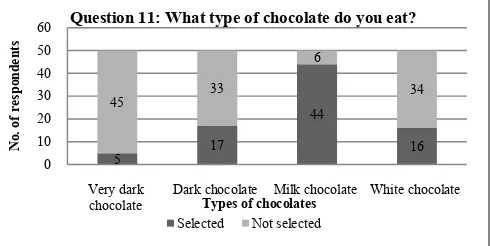
Question 11 asked participants to select the type
they ate. Milk chocolate was most commonly selected by 88% of participants (n=44); which included 92% of all females and 75% of all males. White chocolate was chosen by 22% of all females and 58% of all males. Very dark chocolate was chosen by 50% of participants older than 31year of age and 63% of participants from Middle Eastern background chose dark chocolate, 50% chose milk chocolate and 12.5% chose very dark chocolate Figure 5).
Figure 5 Types of chocolate consumed by participants
Question 12 provided a selection of certain situations and asked participants whether their consumption of chocolate increased in the stated situations. The majority of participants (88%) stated their chocolate consumption increased when they craved it. The options of ‘when I am sad’ and ‘when I am happy’ were least selected; by 40% of participants in both
20 3 30 47 Induce calmness and improve symptoms of chronic fatigue syndrome
None of the above
Question 3: What are the benefits of chocolate on brain health?
13 27 37 23 0 10 20 30 40 50 60
Everyday A few times a
week No . o f res po n den ts
Frequency of chocolate consumption
Question 10: How many times a week do you eat chocolate? Selected 5 17 45 33 0 10 20 30 40 50 60 Very dark chocolate Dark chocolate No . o f res po n den ts
Types of chocolates
Question 11: What type of chocolate do you eat?
Selected
of all females and 75% of all males. Question 8 asked participants whether single doses of high flavanol dark ormance in cognitive tests, 70% answered correctly; 72% of all females and 67% of all males.
The second part of the questionnaire undertaken by this study was based on the preferences of participants towards chocolate. Question 9 asked whether participants ate chocolate; 96% answered yes (n=48) one male and one female. Question 10 asked participants how often they consumed chocolate. The most commonly selected option was ‘a few times a week’ by 54% of participants; these participants ll females and 50% of all males. Participants who ate chocolate less than once a week were 14% of all females and 8% of all males, of which 14% from an Asian ethnic background and 12.5% from a Middle Eastern background. There were 11% of all females stated eating chocolate once a week, compared to 25% of all males; whilst 31% of all females and 8% of all males ate chocolate every
Participants’ frequency of chocolate consumption.
Question 11 asked participants to select the type of chocolate they ate. Milk chocolate was most commonly selected by 88% of participants (n=44); which included 92% of all females and 75% of all males. White chocolate was chosen by 22% of all females and 58% of all males. Very dark chocolate was chosen y 50% of participants older than 31year of age and 63% of participants from Middle Eastern background chose dark chocolate, 50% chose milk chocolate and 12.5% chose very
Types of chocolate consumed by participants
Question 12 provided a selection of certain situations and asked participants whether their consumption of chocolate increased in the stated situations. The majority of participants (88%) stated their chocolate consumption increased when they e options of ‘when I am sad’ and ‘when I am happy’ were least selected; by 40% of participants in both
7 6
43 44
A few times a week
Once a week Less than once a week
Frequency of chocolate consumption
Question 10: How many times a week do you eat chocolate? Not selected 44 16 6 34
Dark chocolate Milk chocolate White chocolate
Types of chocolates
Question 11: What type of chocolate do you eat?
International Journal Of Current Medical And Pharmaceutical Research, Vol. 4, Issue, 6(A), pp.3384-3392, June, 2018
cases. There were 42% of all females chose ‘when I am sad’, compared to 25% of all males. Where 60% of participants said that their chocolate consumption usually increases during examination periods; this included 58% of all males and females. Additionally, 53% of all females said their chocolate consumption increased during stress, compared to 42% of all males. There were 42% of all females and 42% of all males said their chocolate consumption increased during social occasions; and 75% of all females stated an increase in chocolate consumption when they were offered it free, compared to 42% of all males.
Question 13 asked participants whether they felt stressed before exams, (88%) said yes, 86% of all females and 92% of all males. Question 14 asked participants whether their chocolate consumption increased when up-late studying for exams; 66% stated ‘yes’, 67% of all females and 58% of all males; with 88% of Middle Eastern descent, 63% of Asian descent, 67% of Black descent and 67% of Other. Forty-two percent of all males said they did not increase their chocolate consumption compared to 33% of all females.
Question 15 asked participants whether they ate chocolate just before exams; 54% stated ‘no’. Participants who stated ‘yes’ consisted of 44% of all females and 42% of all males; with 50% from Middle Eastern descent, 43% of Asian descent, and 67% of Black descent. Furthermore, there were 43% of the 21 to 25 years group, 50% of 26 to 30yearsgroup and 75% of >31 years group.
Question 16 asked participants whether they ate chocolate during open book exams; 28% of all females said ‘yes’ compared to 25% of all males. Question 17 asked participants whether eating chocolate helped to keep them focused; 42% of participants selected ‘yes’, 47% of all females compared to 17% of all males. Question 18 asked participants whether eating chocolate helped to keep them calm, 58% answered ‘yes’; 69% of all females compared to 29% of all males, 61% were from the 21 to 25 year old group.
Questions 19 and 20 of the questionnaire were open-ended. Question 19 asked participants about their perception of the effect of eating chocolate on their emotional well-being. Thirty-six percent of participants commented chocolate induced positive emotion; ‘It helps me feel happy - childlike, so it helps uplift my mood’ was one of the responses. Sixteen percent of participants stated it lowered negative emotions, including stress during exams; ‘I feel chocolate improves my mood immediately and helps calm me down when I feel stressed during exams’, was one of the comments, and another; ‘It distracts me when I'm stressed’. Twelve percent of participants stated they loved, craved and could not live without chocolate. Twelve percent of participants stated their chocolate consumption increased during and prior to their menstrual cycle; ‘Chocolate definitely gives me a sense of calmness and enjoyment during my menstrual cycle or PMS’, was one statement. Eight percent of participants found chocolate to have a health benefit and stated they used it to self-medicate; ‘I take dark chocolate to help lower high blood pressure and stress’. Eight percent of participants stated although they love chocolate, they believed it to have a negative effect on health, and inducing low self-esteem from weight gain, that chocolate can cause; however, one participant commented ‘over eating chocolate has health consequences (oral health for example) but eating it in small amounts is useful. Personally, it improves my mood.’ Eight percent found
chocolate to have no emotional effect; ‘I don't think chocolate has an effect on my emotional well-being because I don't particularly like sweet food,’ was one participant’s comment (Table 1).
Table 1 Participants’ comments on their perception on the effect of chocolate on their emotional well-being.
Question 19: Do you have any additional comments about your perception of the effect of eating chocolate on your emotional well-being?
Comparator Surrogate Frequency
Induces positive emotion
Happy, calm, improves
mood, 9
Lowers negative emotion Reduces stress 4
Love chocolate
Cravings, cannot live without
it 3
Consumption during a
particular period
PMS, Period and menstrual
cycle 3
Health Benefit
Lowers blood-pressure,
anti-oxidant 2
Negative effect
Health risk, lowers
self-esteem and weight gain 2
No effect No emotional effect 2
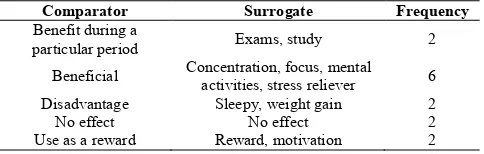
Question 20 asked participants about their perception of the effect of chocolate on their ability to concentrate and perform mental activities. Fourteen percent of participants stated they benefitted from chocolate consumption during studies and exams; ‘Helps before exams to perform better in exams’ was one participant’s response. Forty-three percent of participants stated chocolate helped to undertake mental activities and to concentrate and focus better; ‘chocolate helps me to relax and being relaxed helps me focus.’ Fourteen percent of participants found chocolate to have a negative effect, one participant stated they believed chocolate may help, but the increase in weight gain could lead to stress, whilst another participant stated, ‘chocolate does not enhance my concentration; instead it makes me sleepy.’ Fourteen percent of participants stated they found no effect from chocolate, whilst other14% stated they used chocolate as a reward and a motivation in carrying out their studies (Table 4).
Table 2 Participants’ response on their perception of the effect of chocolate on their ability to concentrate and perform mental
activities.
Question 20: Do you have any additional comments about your perception of the effect of eating chocolate on your ability to
concentrate and perform mental activities?
Comparator Surrogate Frequency
Benefit during a
particular period Exams, study 2
Beneficial Concentration, focus, mental
activities, stress reliever 6
Disadvantage Sleepy, weight gain 2
No effect No effect 2
Use as a reward Reward, motivation 2
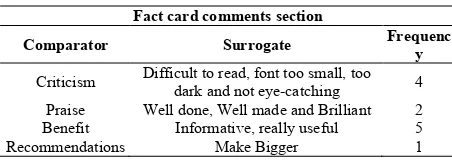
Participants were asked to give their feedback on the fact card via means of completing the fact card checklist; 98% of participants found the fact card to be informative, 92% found it to be well presented, 92% stated prior to reading the fact card they did not know the information given, and 86% said they would share the information given with others.
Table 3 Participants’ comments on fact card
Fact card comments section
Comparator Surrogate Frequenc
y
Criticism Difficult to read, font too small, too
dark and not eye-catching 4
Praise Well done, Well made and Brilliant 2
Benefit Informative, really useful 5
Recommendations Make Bigger 1
DISCUSSION
The return rate for completed surveys in this study was high (71.5%), in comparison to known normally poorer survey completion rate.
The first part of the questionnaire was knowledge based, it gave an insight into the level of knowledge the participants had on the effect of chocolate on the brain. Participants’opinions may have been formed as a result of personal experiences. The most commonly chosen benefit of chocolate was ‘antioxidant’ by 72% of participants.Miller et al. (2008) stated that cocoa solids is one of the richest sources of flavanol antioxidants. A clear majority of participants (88%) believed a benefit of chocolate on brain health was improving mood in general, 67% of both males and females, equally believed the active ingredient of chocolate accumulated in the brain regions involved in learning and memory, it formed an indicative factor, suggesting chocolate consumption may be equal in both genders in the study sample. Similarly, the responses to the statements of chocolate’s effects on blood flow to the brain and improvement in cognitive functions, displayed a consistency of equal responses from both males and females.
The second part of the questionnaire was exploring the participants’ chocolate preferences. Overall, the results demonstrated a consistent correlation in a greater chocolate consumption in females, compared to males; with a greater number of females consuming chocolate daily, compared to a greater number of males consuming chocolate once a week. These results support the findings of Rozin, Levine&Stoess(1991) and Weingarten &Elston (1991), in which chocolate cravings were found in 40% of all females and 15% of all males. Furthermore, Michener & Rozin (1994) found most participants preferred milk chocolate, in comparison with dark chocolate, white chocolate and cocoa powder. They also found white chocolate only reduced immediate cravings, compared to milk chocolate which satisfied cravings more efficiently. The results in this study have shown 88% of participants ate milk chocolate, which was the highest percentage compared to dark, very dark and white chocolate. A greater number of females (92%) compared to 75% of males ate milk chocolate, whilst more males (58%) ate white chocolate compared to 22% of females; thus,also supporting the findings of Rozin, Levine & Stoess(1991) and Weingarten and Elston (1991). In the same way, this study found 42% of all females said they ate chocolate when they were sad, compared to 25% of all males.
Nonetheless, of the 60% of participants who said their chocolate consumption increased during examination periods, the percentage of males and females were equal (58%); suggesting the demographic trends of a greater chocolate consumption leaning towards the female population, is not inclusive of examination periods. As a majority of both males and females stated they felt stressed before examinations, this may be a contributing factor to their chocolate consumption.
Skinner & Brewer (2002) found, apart from coping strategies, negative emotions of mainly anxiety increases as the exam approaches. This study found a similar percentage of participants ate chocolate just before exams (46%) compared to those who did not (54%), this corresponded with Stone & Brownwell’s (1994) findings, which indicated that dietary response to stress was possibly based on individual differences, with some people being either constantly hyperphagic or constantly hypophagic; similarly, this finding may suggest why the current study found 66% of participants’ chocolate consumption to increase when they were up-late studying for an exam, along with only 30% eating chocolate during exams; the latter may also be as a consequence of negative mood increasing further during the exam (Stowell, Tumminaro&Attarwala, 2008).This is believed to be due to the fact that during stress, the hypothalamic-pituitary-adrenal axis response varies greatly between males and females; with a greater sensitivity of the adrenal cortex in women, compared to men (Roelfsema et al., 1993); and thus, a more pronounced response towards chocolate was shown in the female participants, compared to the male participants.
Of the 42% of participants who said chocolate helped to keep them focused, it included 47% of females, compared to a much lower percentage of 17% of males; similarly, of the 58% of participants who stated chocolate helped to keep them calm, included was 69% of females, compared to 29% of males. These findings are comparatively similar to that found by Al Sunni & Latif (2014), where there was a greater statistical difference in female students compared to male students in reducing stress through chocolate consumption. This could be on the basis that during stress, the hypothalamic-pituitary-adrenal axis response varies greatly between males and females; with a greater sensitivity of the adrenal cortex in women, compared to men (Roelfsema et al., 1993).In addition to the closed-ended or multiple choice questions; participants were asked whether they had any additional comments; and were asked for their opinion on the effect of chocolate on their emotional wellbeing, the majority stated that they hadexperienced positive effects; ‘I feel chocolate improves my mood immediately and helps calm me down when I feel stressed during exams’ (Participant [P] 3).
Of the participants who felt no emotional positive effect from chocolate, one participant stated, ‘I don't think chocolate has an effect on my emotional well-being because I don't particularly like sweet food’ (P7); this can be likened to the findings of Macht& Mueller (2007), who stated palatable chocolate improved negative mood compared to unpalatable chocolate; as such, palatability is based on individual likeness. With regards to the fact card developed in this study; 98% of participants found it informative and 92% found it to be new information; demonstrating the effect of chocolate on one’s mood was unknown to many.
Limitations
International Journal Of Current Medical And Pharmaceutical Research, Vol. 4, Issue, 6(A), pp.3384-3392, June, 2018
age groups were likewise disproportionate, with 88% of participants being in the age range of 21to 25 years. These disproportions mean the statistics concluded from this study in relation to the demographics, may not be an accurate representation to general undergraduate students’ population.
CONCLUSION
In conclusion, this study found chocolate consumption to increase in 60% of university students during assessments and examination periods; these included an equal number of both male and female participants. However, when comparing the consumption of chocolate during emotional stress and feelings of sadness, a greater number of females consumed chocolate in comparison to males. The results also indicated, a considerable number of females showed chocolate consumption helped in keeping them calm (69%) and being able to focus and concentrate better (47%), compared to 29% of males in keeping them calm and 17% in being able to focus better.
This study also found chocolate to be almost equally consumed and not consumed prior to exams; which supported findings of dietary response to stress being based on individual differences, with some people being consistently hyperphagic or consistently hypophagic. Preferences towards chocolate consumption during periods of negative emotional well-being and when undertaking mental activities consisted of a large portion of participants. However, amongst those who chose no such preference, a display of dislike towards chocolate was shown; supporting the findings of the mood enhancing effects of chocolate, being based on palatability and thus a likeness for chocolate.
Despite chocolate’s positive effect on their mood, some participants had a growing concern of the health risks associated from eating large amounts of chocolate and thus stated they would eat it in small amounts. A minority of participants had worries on the effect of chocolate on their oral health, whilst the majority of concerns were based on weight gain and the consequential health risks associated with this.
On the whole, participants stated their chocolate consumption increased during assessments and examination periods due to various reasons, ranging from use as a reward or motivation to study, a reliever of stress, and a form of distraction, as we all to help keep focus and concentrate better.
While acknowledging the possibility of health associated risks due to weight gain from overeating, chocolate may form as a potent antidote to relieve stress in students during exams and assessments, whilst also assisting in increasing concentration; and thus, producing a safer alternative to certain medications through a reduced risk of side effects. Further research should be undertaken in a wider group of participants for greater evidence and support in light of this topic.
Funding:Self-funded
Conflict of intreat:Nil known
References
Al Sunni, A.& Latif, R. (2014).Effects of chocolate intake on Perceived Stress; a Controlled Clinical Study. International Journal of Health Sciences. 8(4), 393-401.
Available online at:
https://ijhs.org.sa/index.php/journal/article/view/948 (accessed 15/04/18)
Aron, P. & Kennedy, J. (2008). Flavan-3-ols: Nature, occurrence and biological activity. Molecular Nutrition and Food Research. 52(1), 79-104.DOI: 10.1002/mnfr.200700137
Chan W. (1998).British Nutrition Foundation Conference report: Stimulating Thoughts: Caffeine and Food.BNF Nutrition Bulletin. 23(3), 226-233. DOI: 10.1111/j.1467-3010.1998.tb01122.x
Bruinsma, K.,&Taren, D. (1999). Chocolate: Food or Drug? Journal of the American Dietetic Association. 99(10), 1249-1256. DOI: 10.1016/S0002-8223(99)00307-7 Carillon, J., Notin, C., Schmitt, K., Simoneau, G.&Lacan, D.
(2014). Dietary Supplementation with a Superoxide Dismutase-Melon Concentrate Reduces Stress, Physical and Mental Fatigue in Healthy People: A Randomised, Double-Blind, Placebo-Controlled Trial.Nutrients.6(6), 2348–2359. DOI: 10.3390/nu6062348
Commenges, D., Scotet, V., Renaud, S., Jacqmin-Gadda, H., Barberger-Gateau, P.&Dartigues, J. (2000).Intake of flavonoids and risk of dementia.European Journal of Epidemiology. 16(4), 357-363. DOI: 10.1023/A:1007614613771
Folkman, S.& Lazarus, R. (1985). If it changes it must be a process: Study of emotion and coping during three stages of a college examination. Journal of Personality and Social Psychology. 48(1), 150-170. DOI: 10.1037/0022-3514.48.1.150
Francis, S., Head, K., Morris, P.& Macdonald, I. (2006).The effect of flavanol-rich cocoa on the fMRI response to a cognitive task in healthy young people.Journal of Cardiovascular Pharmacology.47(Suppl 2), S215-S220. DOI: 10.1097/00005344-200606001-00018
Geday, J., Hermansen, F., Rosenberg, R.& Smith, D. (2005). Serotonin modulation of cerebral blood flow measured with positron emission tomography (PET) in humans. Synapse. 55(4), 224-229. DOI: 10.1002/syn.20112 Greeno, G.& Wing, R. (1994).Stress-induced eating.
Psychological Bulletin. 115(3), 444-464.DOI: 10.1037/0033-2909.115.3.444
Hetherington, M.&Macdiarmid, J. (1993). “Chocolate addiction”: a preliminary study of its description and its relationship to problem eating. Appetite. 2(3), 233-246. DOI: 10.1002/eat.10232
Hill, A.& Heaton-Brown, L. (1994). The experience of food craving: A prospective investigation in healthy women. Journal of Psychosomatic Research. 38(8), 801-814. Lee, K., Kim, Y., Lee, H.& Lee, C. (2003). Cocoa has more
phenolic phytochemicals and a higher antioxidant capacity than teas and red wine. Journal of Agricultural and Food Chemistry. 51(25), 7292-7295. DOI: 10.1021/jf0344385
Lucca, G., Comim, CM., Valvassori, SS., Réus, GZ., Vuolo, F., Petronilho, F…….Quevedo J. (2009). Effects of chronic mild stress on the oxidative parameters in the rat brain. Neurochemistry international. 54(5-6), 358-362. DOI: 10.1016/j.neuint.2009.01.001
Lyman, B. (1982). The nutritional values and food group characteristics of foods preferred during various emotions. The Journal of Psychology.112(First-half), 121-127.
Clinical Psychology. 34(1), 129-138. DOI: 10.1111/j.2044-8260.1995.tb01445.x
Macht, M. & Dettmer, D. (2006).Everyday mood and emotions after eating a chocolate bar or an apple.
Appetite. 46(3), 332-336. DOI:
10.1016/j.appet.2006.01.014
Macht, M.& Mueller, J. (2007). Immediate effects of chocolate on experimentally induced mood states.Appetite. 49(3), 667-674. DOI: 10.1016/j.appet.2007.05.004
Manach, C., Scalbert, A., Morand, C., Rémésy, C.& Jiménez, L. (2004). Polyphenols: food sources and bioavailability. The American Journal of Clinical Nutrition. 79(5), 727-747. DOI: 10.1093/ajcn/79.5.727 Marszał-Wiśniewska, M., Goryńska, E.&Strelaua, J.
(2012).Mood change in a stressful exam situation: The modifying role of temperament and motivational tendencies. Personality and Individual
Differences.52(7), 839-844. DOI:
10.1016/j.paid.2012.01.009
Martin, FP., Rezzi, S., Peré-Trepat, E., Kamlage, B., Collino, S., Leibold, E…….Kochhar, S. (2009).Metabolic effects of dark chocolate consumption on energy, gut microbiota, and stress-related metabolism in free-living subjects.Journal of proteome research. 8(12), 5568-5579. DOI: 10.1021/pr900607v McShea, A., Ramiro-Puig, E., Munro, S., Casadesus, G.,
Castell, M. & Smith, M. (2008). Clinical benefit and preservation of flavonols in dark chocolate manufacturing. Nutrition Reviews. 66(11), 630-641.DOI: 10.1111/j.1753-4887.2008.00114.x
Meier, B., Noll, S. &Molokwu, O. (2017). The sweet life: The effect of mindful chocolate consumption on mood.
Appetite. 108(1), 21-27. DOI:
10.1016/j.appet.2016.09.018
Meisel, R., Hays, T., Del Paine, S.& Luttrell, Y. (1990). Induction of obesity by group housing in female Syrian hamsters. Physiology & Behavior.47(5), 815-817. DOI: Physiology & Behavior. 47(5), 815-817 DOI:10.1016/0031-9384(90)90002-L
Michener, W. & Rozin, P. (1994). Pharmacological versus sensory factors in the satiation of chocolate craving. Physiology & Behavior. 56(3), 419-422. DOI: 10.1016/0031-9384(94)90283-6
Milesi, MA., Lacan, D., Brosse, H., Desor, D.&Notin, C. (2009). Effect of an oral supplementation with a proprietary melon juice concentrate (Extramel®) on stress and fatigue in healthy people: a pilot, double-blind, placebo-controlled clinical trial. Nutrition Journal. 8(40), 1475-2891. DOI: 10.1186/1475-2891-8-40
Miller, KB., Hurst, WJ., Payne, MJ., Stuart, DA., Apgar, J., Sweigart, DS. & Ou, B. (2008). Impact of alkalization on the antioxidant and flavanol content of commercial cocoa powders.Journal of agricultural and food chemistry. 56(18), 8527-8533. DOI:10.1021/jf801670p Molinari, E. & Callus, E. (2012). Psychological drivers of
chocolate consumption. Chocolate and Health. 1(1), 137-153.
Morley, J., Levine, A.& Rowland, N. (1983). Stress induced eating.Life Sciences.32(3), 2169-2182. DOI: 10.1016/0024-3205(83)90415-0
Olivera, G. & Wardlea, J. (1999). Perceived Effects of Stress on Food Choice. Physiology & Behaviour. 66(3), 511-515.
Ottley, C. (2000). Food and mood. Nursing Standard. 15(2), 46-52.
Parker, G., Parker, I. & Brotchie, H. (2006).Mood state effects of chocolate.Journal of Affective Disorders. 92(2), 149-159. DOI: 10.1016/j.jad.2006.02.007 Pelchat, M. (1997).Food cravings in young and elderly
adults. Appetite.28(2), 103. DOI:
10.1006/appe.1996.0063
Polivy, J., Herman, P. & McFarlane, T. (1994). Effects of anxiety on eating: does palatability moderate distress-induced overeating in dieters? Journal of Abnormal Psychology. 103(3), 505-510.
Rhijn, V. (2000).Mood and Chocolate.The Mind.1 (1),
1.Available at:
http://www.nutrition-matters.co.uk/html_docs/the_mind/MoodandChocolate. htm (accessed 16/04/18)
Roelfsema, F., van den Berg, G., Frölich, M., Veldhuis, JD., van, A., Buurman, MM.&Etman, BH. (1993). Sex-dependent alteration in cortisol response to endogenous adrenocorticotropin. The journal of clinical endocrinology and metabolism. 77(1), 234-240. DOI: 10.1210/jcem.77.1.8392084
Rozin, P., Levine, E. & Stoess, C. (1991).Chocolate craving and liking. Appetite. 17(3), 199-212. DOI: 10.1016/0195-6663(91)90022-K
Schmidt, S., Tinti, C., Levine, L. & Testa, S. (2010). Appraisals, emotions and emotion regulation: An integrative approach. Motivation and Emotion. 34(1), 63-72. DOI: 10.1007/s11031-010-9155-z
Scholey, A., French, S., Morris,P., Kennedy, D., Milne, A.& Haskell, C. (2010). Consumption of cocoa flavanols results in acute improvements in mood and cognitive performance during sustained mental effort. Journal of Psychopharmacology. 24(10), 1505-1514. DOI: 10.1177/0269881109106923
Skinner, N. & Brewer, N. (2002). The dynamics of threat and challenge appraisals prior to stressful achievement events. Journal of Personality and Social Psychology. 83(3), 678-692.DOI: 10.1037/0022-3514.83.3.678 Smith, D. (1999). Neuroimaging of serotonin uptake sites
and antidepressant binding sites in the thalamus of
humans and ‘higher’ animals.European
Neuropsychopharmacology. 9(6), 537-544. DOI: 10.1016/S0924-977X(99)00042-5
Smith, D. & Geday, J. (2001). PET neuroimaging of clomipramine challenge in humans: Focus on the thalamus. Brain Research. 892(1), 193-197. DOI: 10.1016/S0006-8993(00)03237-6
Smith, D. (2013). Benefits of flavanol-rich cocoa-derived products for mental well-being: A review. Journal of Functional Foods. 5(1), 10-15. DOI: 10.1016/j.jff.2012.09.002
Spangler, G., Perkrun, R., Kramer, K.& Hofmann, H. (2002). Students’ emotions, physiological reactions, and coping in academic exams. Anxiety, Stress, and Coping. 15(4), 413-432. DOI: 10.1080/1061580021000056555 Stone, A. & Brownell, K. (1994). The stress-eating paradox:
International Journal Of Current Medical And Pharmaceutical Research, Vol. 4, Issue, 6(A), pp.3384-3392, June, 2018
Stonewell, J., Tumminaro, T.&Attarwala, M. (2008). Moderating effects of coping on the relationship between test anxiety and negative mood. Stress and Health. 24(4), 313-321. DOI: 10.1002/smi.1186
Wallis, D.& Hetherington, M. (2009).Emotions and eating. Self-reported and experimentally induced changes in food intake under stress. Appetite. 52(2), 355-362. DOI: 10.1016/j.appet.2008.11.007
Weingarten, H. & Elston, D. (1990).The phenomenology of food cravings. Appetite. 15(3), 231-246. DOI: 10.1016/0195-6663(90)90023-2
Weingarten, H. & Elston, D. (1991). Food cravings in a college population. Appetite. 17(3), 167-175. DOI: 10.1016/0195-6663(91)90019-O
Willner, P., Benton, D., Brown, E., Survijt, C., Davies, G., Morgan, J. & Morgan, M. (1998). “Depression” increases “craving” for sweet rewards in animal and human models of depression and craving. Psychopharmacology. 136(3), 272-283.DOI: 10.1007/s002130050566
Zellner, D., Loaiza, S., Gonzalez, Z., Pita, J., Morales, J., Pecora, D. & Wolf, A. (2006). Food selection changes under stress. Physiology & Behavior. 87(4), 789-793. DOI: 10.1016/j.physbeh.2006.01.014
How to cite this article:
Khawla Belal et al (2018) 'Exploring Chocolate Consumption Effect On Mood And Concentration', International Journal of Current Medical And Pharmaceutical Research, 04(6), pp. 3384-3392.