Type of the Paper (Article)
1
A Framework for Improving the Interpersonal
2
Relationship of the Elderly with Mild Cognitive
3
Impairment by Using Speaker Recognition and Social
4
Network Platforms
5
Tan-Hsu Tan 1, Fu-Rong Jean 1, Chia-Jung Lin 1, Tsung-Yu Liu 2 and Yung-Fa Huang 3,*
6
1 Department of Electrical Engineering, National Taipei University of Technology, Taipei, Taiwan, R.O.C.;
7
8
2 Department of Multimedia and Game Science, Lunghwa University of Science and Technology, New Taipei,
9
10
11
12
13
14
15
16
17
18
19
20
21
22
23
24
25
26
27
Taiwan, R.O.C.; [email protected]
3 Department of Information and Communication Engineering, Chaoyang University of Technology, Taichung, Taiwan, R.O.C.; [email protected]
* Correspondence: [email protected]; Tel.: +886-4-2332-3000
Abstract: This study aims to develop an elderly care system for improving the interpersonal relationship of the elderly with mild cognitive impairment (MCI) by employing the speaker recognition technique and association functionality of social network platforms. Firstly, the speaker recognition units based on the Gaussian Mixture Model (GMM) and Gaussian Mixture Model-Universal Background Model (GMM-UBM) are implemented to identify the visitor via individual input utterance. After the visitor is identified, the proposed system will be linked to the private database and social network platforms to extract the associated message of two parties. Experimental results indicate that the speaker recognition unit based on GMM-UBM achieves the best performance. Finally, five elderly persons are invited to measure the usability of the proposed system. A questionnaire is used to survey the five elderly persons, and the result indicates that the proposed system is highly potentially applicable in improving the interpersonal relationship of the elderly with MCI.
Keywords: mild cognitive impairment (MCI); speaker recognition; Gaussian Mixture Model (GMM); Universal Background Model (UBM)
28
29
1. Introduction
30
Mild Cognitive Impairment (MCI) refers to a person whose memory ability is more severely
31
degraded than a normal person of the same educational level and age, but who has not yet shown
32
other manifest dementia symptoms [1]. Previous works have indicated that MCI may be an early
33
symptom of dementia [2]. The elderly person with dementia will face many difficulties in daily life
34
without the help of a caregiver. As the number of the elderly with dementia increases, the resulting
35
care expense becomes a heavy financial burden for a family and government. Dementia
36
development can be delayed or even reversed (in case of reversible-dementia) if the elderly can be
37
properly treated in the early stage of dementia, such as MCI. Thus, how to slow down the memory
38
lapses is critical for the elderly with MCI, since this can postpone the development of dementia.
39
This study aims to improve the memory of elderly persons with MCI by applying the speaker
40
recognition technology together with the association functionality of the social network platform,
41
thereby enhancing their interpersonal relationships and slowing down the development of
42
dementia. Firstly, this study will develop a speaker recognition unit to identify the identities of the
43
will be linked to self-built database as well as the social network platform to retrieve historical data
45
associated with both parties. In this way, the associated message will allow the elderly with MCI
46
immediately to go back to the good old days and share beautiful things of both parties and thus
47
achieves the effect of the reminiscence therapy. Moreover, the proposed system can stimulate the
48
memory of the elderly with MCI, hence alleviating the tendency of cognitive decline.
49
The speech recognition technology has been used in elderly care and health care [3]. Recently,
50
speaker recognition technology [4] has also been used to develop the elderly care system. A
51
framework of the ubiquitous healthcare system based on cloud computing and speaker recognition
52
for monitoring an elderly life has been presented in the work of Ou et al. [4]. However, the
53
application of speaker recognition to elderly care is still very limited. With our best knowledge, the
54
proposed system would be the first work exploring speaker recognition and a social network
55
platform in order to improve the interpersonal relationship of the elderly with MCI.
56
2. System framework
57
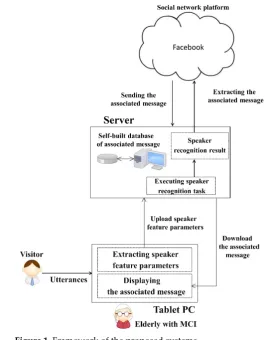
Figure 1 shows a framework of the proposed system. The execution procedure of the system is
58
described as follows:
59
1. The elderly with MCI holds a tablet PC to receive the utterance of the visitor, and then
60
the tablet PC captures the feature parameters of the utterance.
61
2. The tablet PC uploads the feature parameters to the server.
62
3. The server performs the task of speaker recognition.
63
4. According to the recognition result, the identity and background information of the
64
visitor will be shown on the PC screen, and then the message associated with two
65
parties obtained from the self-built database as well as the social network platform will
66
be sent to the tablet PC and displayed on the PC screen.
67
3. Proposed Methods
68
3.1. Speaker Recognition
69
Human physiological characteristics are intrinsically beneficial to recognize personal identity
70
credentials. As human voices are easily generated, captured, and transmitted, they can be easily
71
applied to intelligent home automation, voice-controlled user interfaces, and personal identification.
72
As a result, speaker recognition has been becoming an intuitive and valuable technology for
73
identifying a person by his/her voice.
74
The category of speaker recognition can be classified as either speaker verification or speaker
75
identification [5,6]. When an unknown speaker claims an identity, the purpose of the speaker
76
verification task is to confirm whether this claim is true or not. On the contrary, the task in speaker
77
identification is to recognize an unknown speaker from a group of recognized persons (denoted as
78
closed or in-set speaker identification). The main purpose of this study is to assist the elderly persons
79
with MCI quickly identifying their visitors and all the speech features of the visitors have been
80
already included in the database server in advance. This study is therefore classified as an
81
application of speaker identification.
82
84
Figure 1. Framework of the proposed systems
85
86
3.2. Speech Features (Mel-Frequency Cepstrum Coefficients, MFCCs)
87
One of the most popular short-term acoustic features are the Mel-frequency cepstral coefficients
88
(MFCCs) which are derived based on the auditory model of the human ear. They have been
89
well-known to be very effective in speech recognition. Therefore, the MFCC features are also
90
commonly employed in speaker recognition. Since human have higher resolution in low frequency
91
bands, we can partition the frequency range in the frequency domain with the Mel- frequency scale
92
for matching the auditory characteristics of the human ear. For the Mel-frequency scale it is almost
93
linear spacing below 1000 Hz and logarithmic spacing above 1000 Hz.
94
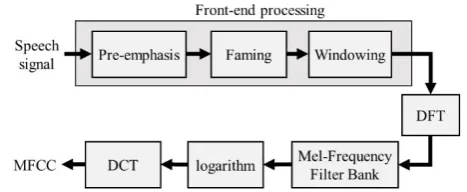
Figure 2 shows the procedure of obtaining the MFCC coefficients from a speech sampling
95
stream. The speech sampling stream is first high-pass filtering for pre-emphasis and then multiplied
96
by a window function for calculating the short-term Fourier power spectrum. A linearly spaced
97
Mel-frequency filter-bank analysis is performed on the spectrum to produce the spectrum energy
98
(also known as the filter-bank energy coefficients) in each Mel-frequency channel. Finally, MFCC
99
coefficients are obtained by performing discrete cosine transform (DCT) on the logarithmic-scale
100
energy spectrum and preserving a number of leading coefficients. In the experiments, twelve
101
MFCCs and one log energy were used as the static feature vector.
103
Figure 2. The procedure of extracting the MFCCs from a speech signal
104
3.3. Gaussian Mixture Model (GMM)
105
The Gaussian mixture model (GMM) has been widely used in speech and speaker recognition
106
[6,7]. There are three essential parameters in each GMM so that a GMM can be mathematically
107
expressed as
108
(1)
109
where is the number of mixture components, represents the weight, the mean vector, and
110
the covariance matrix of the i-th mixture component. Based on this GMM parameters we can
111
calculate the probability density for any speech features that are produced as a linear combination of
112
the mixture components.
113
We employ the K-means algorithm to initialize the model’s parameters and then apply the
114
Expectation-Maximization algorithm (EM) to progressively optimize the parameters of the GMM.
115
For a sequence of T training feature vectors , , the GMM likelihood
116
can be computed as the text following an equation need not be a new paragraph. Please punctuate
117
equations as regular text.
118
. (2)
119
For a common speaker identification task, in the beginning a GMM is obtained for each speaker.
120
During testing, the speech feature sequence for an unknown speaker is compared against every
121
GMM, and the most likely speaker (with the highest-scoring GMM) is selected as the identified
122
speaker as
123
(3)
124
where S is the total number of known speakers, and represents the identified speaker. Applying
125
the Bayesian theorem to Eq. (3), we obtain
126
(4)
127
Assume that the probability of occurrence for each speaker is the same, all the feature vectors are
128
mutually independent, and the likelihoodof the GMM given the observed feature sequence is
129
calculated in logarithmic scale. Eq. (4) can then be replaced by
130
(5)
According to the recognition result, the identity and background information of the visitor will be
132
shown on the PC screen, and then the message associated with two parties obtained from the
133
self-built database as well as the social network platform will be sent to the tablet PC and displayed
134
on the PC screen.
135
136
3.4. Universal Background Model (UBM) and GMM-UBM Model.
137
The universal background model (UBM) [6,7] is basically a large GMM trained to represent
138
features distribution for all speakers. Therefore, we can use the UBM to solve the problem of
139
insufficient training corpus. When applying the UBM to speaker recognition, at first we don’t exploit
140
the EM algorithm to train each speaker's model. Instead, we use the EM algorithm and most of
141
speaker's voices to train a UBM, and then adapt each speaker model by using his/her individual
142
corpus based on the maximum a-posterior (MAP) adaptation criterion.
143
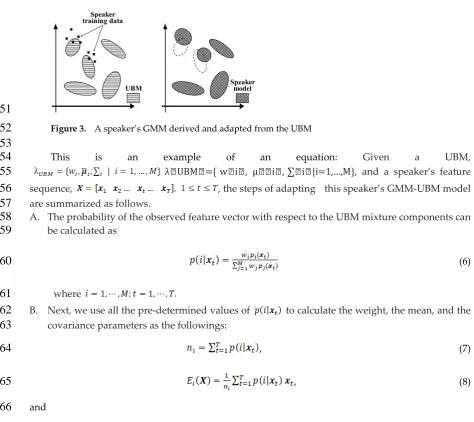
This GMM-UBM approach utilizes the UBM as an alternate speaker model and as an initial
144
model for each speaker since it is capable of tracing most of the speech utterance variation but
145
cannot be covered by using only a few corpus to obtain. As shown in Figure 3, in this approach a
146
speaker’s GMM is derived and adapted from the UBM by updating the well-trained UBM
147
parameters. As this GMM-UBM model can more truly reflect the distribution of each speaker’s
148
features, performance degradation due to the drawback of insufficient training corpus can then be
149
compensated.
150
151
Figure 3. A speaker’s GMM derived and adapted from the UBM
152
153
This is an example of an equation: Given a UBM,
154
λ�UBM�={ w�i�, μ��i�, ∑�i�|i=1,…,M}, and a speaker’s feature
155
sequence, , the steps of adapting this speaker’s GMM-UBM model
156
are summarized as follows.
157
A. The probability of the observed feature vector with respect to the UBM mixture components can
158
be calculated as
159
(6)
160
where
161
B. Next, we use all the pre-determined values of to calculate the weight, the mean, and the
162
covariance parameters as the followings:
163
, (7)
164
, (8)
165
and
(9)
167
C. Finally, adjust the model weight, model mean, and model covariance by using the MAP
168
adaptation update equations as follows.
169
, (10)
170
(11)
171
and
172
(12)
173
where are adaptation coefficients, is a scaling factor that ensures
174
the sum of the mixture weights equal to unity, and is a fixed factor related to the parameter
175
. In the experiments, we set .
176
In the GMM-UBM approach, we usually calculate the score (a matching measure) for a target
177
speaker in the logarithmic scale as follows.
178
, (13)
179
where is the logarithmic score, is the test sentence spoken by an unknown speaker,
180
is the UBM, and is the target speaker’s GMM adapted from the UBM.
181
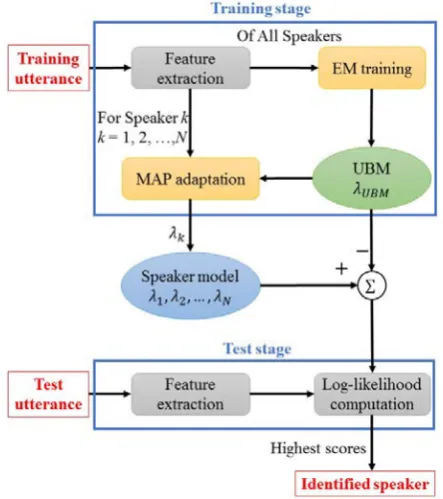
The architecture of the speaker identification system based on the GMM-UBM approach is
182
shown in Figure 4. At the training stage, we use a large amount of background speech corpus to
183
train the global UBM. Next, each speaker’s GMM model is derived from the UBM and adapted by
184
using his or her individual corpus based on the MAP adaptation update procedure. At the test stage,
185
the logarithmic score must be calculated for every known person, and the person with the highest
186
188
Figure 4. The speaker identification system based on the GMM-UBM approach
189
190
3.5. Facebook Graph API.
191
The OAUTH [8], a third-party authentication platform, provides an open protocol to allow
192
secure authorization with a simple and standard method for web, mobile and desktop applications.
193
The authorization flow and each step of the process of obtaining an access token is shown in Figure
194
5. OAUTH allows the Resource Owner to provide a token rather than his/her account name and
195
password. By using this secure manner, it enables the third-party users to access some certain
196
information that the Resource Owner has stored in a particular server.
197
Client Application
Access service
Grant access Resource Owner
Access data
Issue authz code
Issue access token
Resource Server
Delegate authentication
authorization
Authorization Server
198
Figure 5. The authorization flow for the OAUTH 2.0 protocol
199
Facebook is a popular online social networking service platform that let users share and send
200
text or multimedia messages to one another. The Facebook Graph API is a programming framework
201
based on the low-level HTTP-based API for conveniently accessing and writing Facebook
202
information. The Facebook Graph API also makes use of the OAUTH 2.0 protocol to offer secure
203
paths that developers can access to users’ information. In this study we use the Facebook Graph API
204
to retrieve related photos of identified visitors and elderly with MCI.
A series of experiments was conducted using a speech corpus, and speaker models based on
207
GMM and GMM-UBM. The details are described as follows.
208
209
4.1. Speaker Corpus.
210
An open speech corpus provided by Chunghwa Telecom was employed [9]. This corpus
211
consists of isolated Mandarin numeral with a sampling frequency of 10 kHz. The corpus is
212
composed of 50 male and 50 female speakers; each one recorded a single Mandarin numeral from 0
213
to 9, each numeral was repeated 6 times. According to our survey, the number of visitors is generally
214
less than 20. Therefore, 20 speakers are randomly selected from this corpus, including 10 male and
215
10 female speakers, respectively, to form a 20-person corpus. This new version is denoted as
216
corpus-1 for simplicity. The speech feature is represented by a 39-dimensional vector, which is
217
composed of MFCC, Delta MFCC, and Delta-Delta MFCC. The frame length and the frame shift are
218
25 ms and 10 ms, respectively.
219
220
4.2. Training and Test Corpus
221
The corpus-1 is further divided into training and test corpus. The training corpus is used to
222
train the Universal Background Model (UBM) and individual speaker model. The training
223
procedure using corpus-1 is described as follows. The first four utterances of the speaker are used as
224
training data, and the remaining two utterances serve as test data. Among them, the UBM is
225
obtained by training all 20 speakers’ utterances, and then two utterances were randomly selected
226
from the training data of each speaker to obtain the target speaker’s GMM-UBM model by use of the
227
maximum a-posterior (MAP) algorithm [10].
228
229
4.3. Results of Speaker Recognition
230
Table 1 shows the resultant accuracy of speaker recognition by means of the Gaussian Mixture
231
Model (GMM) and the GMM-UBM Model with different number of Gaussian mixture components.
232
Table 1 indicates that when the Gaussian mixture is 64, the recognition rate of the speaker
233
recognition system based on the GMM model is the highest, which is 85.5%. When the Gaussian
234
mixture is 128, the recognition rate is 85.25%. The recognition rate of the speaker recognition system
235
based on the GMM-UBM model is 95% when the Gaussian mixture is 64, and the recognition rate is
236
96.5% when the Gaussian mixture is 128, which is the best performance. Therefore, the GMM-UBM
237
model far outperforms the GMM model. As a result, the speaker recognition system developed in
238
this study will use a GMM-UBM model with a Gaussian mixture of 128 for the speaker model.
239
Table 1. Speaker recognition rate for corpus-1
240
Gaussian
mixture GMM (%) GMM-UBM (%)
16 80.5 93.25
32 84.25 94
64 85.5 95
128 85.25 96.5
241
4.4. Results of Care System Experiments with Speaker Recognition
242
The system developed in this research combines speaker recognition technology with
243
multimedia information sharing on the social networking site (Facebook). Five elderly persons with
244
MCI, consisting of 2 male persons and 3 female persons, have been invited to participate the
245
experiments in their residences. Their ages are between seventy-six and eighty-two years old. Firstly,
246
the voices of visitors (eight persons for each case) are recorded to train the speaker models, which
247
are then stored on the server. When the visitor speaks to the elderly, his/her speech feature
248
parameters will be extracted by the tablet PC and then are transmitted to the server for speaker
recognition. As the identity of the visitor is identified, the server will request the third-party
250
authentication platform (Facebook Graph API in this study) to retrieve the associated message of the
251
two parties, such as photos. Then the associated message is sent to the tablet PC to display on the
252
screen. The speaker recognition rates of all cases are higher than 96% when the GMM-UBM model is
253
employed with a mixture of 128.
254
Table 2 shows the information about the five elderly people who joined the experiment. They
255
are represented by the codes U1~U5. Three women and two men, aged 65 or older, have met the
256
definition of the elderly family. In addition, in the interview before the experiment, the elderly
257
people said that they usually have poor memory or take a long time to think about things. This
258
phenomenon may be one of the symptoms of MCI, so it is the requirement for the experiment in this
259
study.
260
Table 2. The information about the five elderly people
261
262
263
Before the system starts to perform the identification work, we recorded the voices of all
264
visitors/friends and then train the voice to get the speaker model and stored it in the server. During
265
the experiment, the users only need to connect to the network and upload the characteristic
266
parameters of the voice of the visitor/friends to be identified to the server to obtain the identification
267
result. At the same time, after obtaining the user authorization, the server requests the photo from
268
the third-party authentication platform of Facebook Graph API. Then, the photos of the two parties
269
were displayed sequentially in the form of a slide show.
270
The purpose of the care system developed in this study is to improve the memory of the MCI
271
elderly people. Therefore, we invite five elderly people to use the platform in their own homes.
272
When relatives/visitors visit, the elderly people use the handheld mobile device to perform the
273
previous procedure. After the test is completed, a questionnaire survey is conducted to understand
274
the feedback and satisfaction of the users to the system platform.
275
276
Table 3. The information about the five elderly people
277
278
The questionnaire for this experiment is divided into two parts: system operation and
279
satisfaction of use. The first part refers to the System Usability Scale (SUS) [10] created by John
280
Brooke in 1986. The scale consists of 10 topics, including the positive statements of odd items and the
281
negative statements of even items. Each question was evaluated using a 5-level likert scale. The
282
degree of consent is marked with 1 to 5 points: 1 point represents very disagree, 2 points means
283
disagreement, 3 points means no opinion, 4 points means consent, and 5 points means very agree.
284
Table 3 is a scoring standard for system usability evaluation [11]. The second part is based on the
285
user's assessment of the system's benefits, based on the personal experience to assess whether the
286
system used provides effective assistance.
287
User ID U1 U2 U3 U4 U5
Gender Female Male Female Female Male
Ages 82 80 77 76 79
SUS Scores SUS Grade Percentage (%) SUS Scores SUS Grade Percentage (%)
84.1 ~ 100 A+ 96 ~ 100 71.1~72.5 C+ 60 ~ 64
80.8 ~ 84 A 90 ~ 95 65~71 C 41 ~ 59
78.9 ~ 80.7 A− 85 ~ 89 62.7~64.9 C− 35 ~ 40
77.2 ~ 78.8 B+ 80 ~ 84 51.7~62.6 D 15 ~ 34
74.1 ~ 77.1 B 70 ~ 79 0~51.7 F 0 ~ 14
There are 10 questions in total, of which “Q1-A” is the first question of the first part of the
289
questionnaire. For example: “Q1-1” is the first part of the questionnaire. For part of the first question,
290
the degree of consent is indicated by 1 to 5 points, 5 points means very agree, and 1 point means very
291
disagree.
292
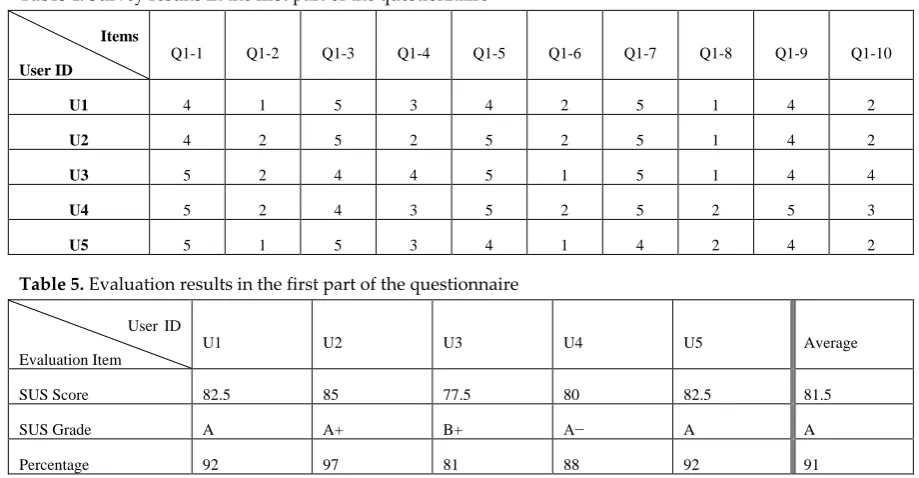
Table 5 is the percentage of SUS obtained according to the scores given by the system for each
293
user according to Table 4. From Table 5, it is observed that the SUS scores of the five silver hairs are
294
all above 77 and the average value is 81.5. According to Table 3, the SUS grade of 81.5 is A, and the
295
percentage grade is about 91. This result shows that the system is more usable than the other 90% of
296
the system, that is, the score of the system is the top 10%, which means that the user has a high
297
degree of willingness to recommend the system to friends. In summary, the five elderly people gave
298
a good evaluation of the use of this care system.
299
Table 4. Survey results in the first part of the questionnaire
300
Items
User ID
Q1-1 Q1-2 Q1-3 Q1-4 Q1-5 Q1-6 Q1-7 Q1-8 Q1-9 Q1-10
U1 4 1 5 3 4 2 5 1 4 2
U2 4 2 5 2 5 2 5 1 4 2
U3 5 2 4 4 5 1 5 1 4 4
U4 5 2 4 3 5 2 5 2 5 3
U5 5 1 5 3 4 1 4 2 4 2
Table 5. Evaluation results in the first part of the questionnaire
301
User ID
Evaluation Item
U1 U2 U3 U4 U5 Average
SUS Score 82.5 85 77.5 80 82.5 81.5
SUS Grade A A+ B+ A− A A
Percentage 92 97 81 88 92 91
302
Table 6 shows the results of the second part of the questionnaire filled by the five elderly
303
people. There are 8 questions in total, of which “Q2-A” is the second question of the second part of
304
the questionnaire. From Table 6, it is observed that among the 40 points, the users gave a score of 35
305
or more, with an average of 36.4 points, which means that the elderly people think that using the
306
system is quite helpful to improve the quality of care.
307
Table 6. Survey results in the second part of the questionnaire
308
Question
No. Q2-1 Q2-2 Q2-3 Q2-4 Q2-5 Q2-6 Q2-7 Q2-8 Scores
U1 4 4 5 5 5 4 5 4 36
U2 5 4 4 4 5 5 4 4 35
U3 5 5 4 5 5 4 5 5 38
U4 5 5 4 5 5 4 5 4 37
U5 4 5 5 5 5 4 5 3 36
Average 4.6 4.6 4.4 4.8 5 4.2 4.8 4 36.4
309
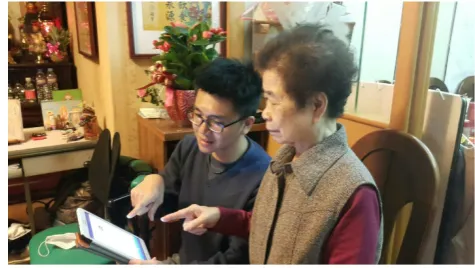
Figure 6 illustrates a scenario of the experiment held in a residence. In the experiments, five
310
elderly persons are invited to measure the usability of the proposed system [10,11]. From the score
results of the questionnaire used to survey the five elderly persons, it exhibits a very positive
312
feedback of system usability, which reaches top 10%. Therefore, the proposed system is highly
313
potentially applicable in improving the interpersonal relationship of the elderly with MCI.
314
315
Figure 6. A scenario of the experiment held in a residence
316
317
5. Conclusions
318
This study has presented a care system to improve the interpersonal relationship of the elderly
319
with MCI by employing the speaker recognition technique and association functionality of social
320
network platforms. In the care system, two speaker recognition units based on the GMM and
321
GMM-UBM is implemented to identity the visitor via individual input utterance. After the visitor is
322
identified, the care system can be linked to the private database and social network platforms to
323
extract the associated information of two parties to show on the tablet PC held by the elderly with
324
MCI. Moreover, via the effect of the reminiscence therapy using association data, they can easily go
325
back to the good old days and share beautiful things. Besides warming up their interaction in a very
326
short time, this method stimulates the memory of the elderly with MCI, hence alleviating the
327
tendency of cognitive decline. Experimental results indicate that the speaker recognition unit based
328
on GMM-UBM obtains the best performance. Finally, five elderly persons are invited to measure the
329
usability of the proposed system. A questionnaire is used to survey the five elderly persons, and it
330
exhibits a very positive feedback of system usability, which reaches top 10%. Therefore, the
331
proposed system is highly potentially applicable in improving the interpersonal relationship of the
332
elderly with MCI.
333
Author Contributions: “conceptualization, TH. Tan and FR. Jean; methodology, FR. Jean; software, CJ. Lin.;
334
validation, TH. Tan, FR. Jean. and YF. Huang; investigation, CJ. Lin.; resources, TH. Tan and TY. Liu.; data
335
curation, TY. Liu; writing—original draft preparation, FR. Jean; writing—review and editing, TH. Tan and YF.
336
Huang; project administration, TH. Tan; funding acquisition, TH. Tan and YF. Huang”.
337
Funding: This research was funded by Ministry of Science and Technology of Taiwan under Grant MOST
338
105-2221-E-027-112, MOST 106-2218-E-027-017, MOST 106-2221-E-324-020 and MOST 107-2221-E-027-106.
339
Conflicts of Interest: The authors declare no conflict of interest.
340
1. Akl, A.; Taati, B.; Mihailidis, A. Autonomous unobtrusive detection of mild cognitive impairment in older
343
adults. IEEE Trans. Biomed. Eng. 2015, 62(5), 1383–1394.
344
2. Ritchie, K.; Artero, S.; Touchon, J. Classification criteria for mild cognitive impairment: a population-based
345
validation study. Neurology, 2001, 56(1), 37-42.
346
3. Zhao, Y. Speech-recognition technology in health care and special-needs assistance. IEEE Signal Processing
347
Magazine 2009, 87-90.
348
4. Ou, Y.-Y.; Shih, P.-Y.; Chin, Y.-H.; Kuan, T.-W.; Wang, J.-F.; Shih, S.-H. Framework of Ubiquitous
349
Healthcare System Based on Cloud Computing for Elderly Living, Proceedings of Asia-Pacific Signal and
350
Information Processing Association Annual Summit and Conference. Kaohsiung, Taiwan, 29 Oct.-1Nov.
351
2013.
352
5. Chang, S.-W. Performance Evaluation and Improvement of Speaker Recognition under Multiple
353
Environments, Master Thesis, Department of Electrical Engineering, National Taipei University of
354
Technology, Taipei, Taiwan, July 31 2003.
355
6. Togneri, R. & Pullella, D. (2011). An overview of speaker identification: accuracy and robustness issues,”
356
IEEE Circuits and Systems Magazine, 23-61.
357
7. Reynolds, D. A.; Quatieri, T. F.; Dunn, R. B. Speaker verification using adapted Gaussian mixture models.
358
Digital Signal Processing, 2000, 10(1-3), 19-41.
359
8. OAuth 2.0 official website: https://oauth.net/ (accessed on 20 Jan. 2017).
360
9. Chunghwa Telecom Laboratories website: http://www.chttl.com.tw/en/index/ (accessed on 2 Jan. 2017).
361
10. Bangor, A.; Kortum, P.; Miller, J. Determining what individual SUS scores mean: adding an adjective
362
rating scale. Journal of Usability Studies 2009, 4(3), 114-123.
363
11. Sauro, J. Measuring Usability with the System Usability Scale (SUS), 2 Feb. 2011. Available online:
364
https://measuringu.com/sus/ . (accessed on 20 Jan. 2017).
365