1
Conceptualizing the FinDD API Plug-in: A Study of BIM-FM
1Integration
23
Pärn1, E.A. and Edwards2, D. J. 4
5
1Lecturer, Faculty of Technology Environment and Engineering 6
Birmingham City University, UK 7
Email: [email protected] 8
9
2Professor of Plant and Machinery Management 10
Faculty of Technology Environment and Engineering 11
Birmingham City University, UK 12
Email: [email protected] (Corresponding Author) 13
14 15 16 Manuscript
2 HIGHLIGHTS
17
The research presents a client driven application programming interface (API)
18
‘software’ plug-in ‘FM intelligent design data’ (FinDD) for Autodesk Revit as an
19
entirely new and novel approach to BIM-FM integration.
20
Participatory action research (PAR) reports on the specification of a client’s bespoke
21
COBie data requirements through the use of totems that visualise rich semantic FM
22
data in 3D objects. Totems extend the use and application of COBie thereby
23
minimising costs incurred by the FM team to update and maintain the as-built BIM.
24
User group feedback and coding of their responses and requirements provided guidance
25
on the functionality of the API plug-in and also afforded direction for future research.
26
The FinDD API plug-in is an entirely novel approach to automating the input and
27
retrieval of semantic FM data from the as-built BIM therefore, reducing the necessity to
28
update/ create model geometry during the O&M stages of the development.
29
This paper also challenges the standard COBie data drops and the spreadsheet format
30
approach to integrating FM semantic data with as-built BIM.
3 ABSTRACT
34
This research paper reports upon a client driven approach to iteratively develop the FinDD
35
application programming interface (API) plug-in. FinDD integrates building information
36
modelling (BIM) and facilities management (FM) via the novel development and application
37
of totems. Totems visualise rich semantic FM data in a 3D object to extend the use and
38
application of COBie thereby minimising costs incurred by the FM team to update and
39
maintain the as-built BIM. Participatory action research was used to develop the proof of
40
concept and involved a study of two multi-storey, mixed-use educational buildings (with a
41
contract value worth ≥ £150 million UK Sterling) located within Birmingham, UK. The lead 42
researcher worked for the client’s estates department and was instrumental in liaising with
43
members of the project management team, synthesising their semantic data requirements and
44
developing the FinDD API plug-in for Autodesk Revit. Research findings reveal that whilst
45
FinDD was positively received as a bespoke extension of COBie (that was tailored to
46
specifically meet client needs), further development is required to mitigate software
47
inflexibility and augment automation of semantic data transfer, storage and analysis. Future
48
work will validate the API plug-in via user experience and integrate additional databases such
49
as post occupancy evaluations (POE).
50 51
KEYWORDS 52
Facilities management, building information modelling, application programming interface
53
plug-in, totems, COBie
54 55
INTRODUCTION 56
The rapid pace of computerisation within the twenty first century has created a digital
57
economy to effectively challenge the modern capitalist economy [26]. The digital age is
58
maturing at an exponential pace and with it, the need for businesses and organisations to
59
increase their capacity for adopting automated data driven decision making [21]. The
60
digitalisation of modern organisations manifests itself from two key sources: i) the
61
transformation effects of general purpose technologies (hardware) in the field of information
62
and communication; and ii) the overwhelmingly vast inter-connectivity afforded by network
63
based data and the internet [13]. Within a construction context, computerisation has the
64
inherent potential to drastically change procedural methods employed for operating and
65
maintaining buildings [20]. Such technological advancements have extended the decision
66
support for strategic facilities planning, space planning, asset management and scenario
4
simulation [42]. Throughout a building’s life-cycle this procedural transition is further
68
expedited by BIM technology [1]. BIM models are increasingly associated with multiple
69
layers and sources of data/ information which extend beyond the model authoring tool
70
capacity, namely: Building Automation Systems (BAS) [27] Computer Aided Facility
71
Management Systems (CAFM) [6], System Information Model (SIM) [38], Electronic
72
Document Management Systems (EDMS) [28] and Computerized Maintenance Management
73
Systems (CMMS) [46]. BIM consequently assists the design team during inception but also
74
proves itself invaluable to the facilities management team (FMT) during occupation
75
[34;47;45;58]. Indeed, Boussabaine and Kirkham [9] reported that 80 percent of an asset’s 76
cost derives from the building’s operations and maintenance (O&M). Maintenance is a
77
necessity for sustaining the availability and reliability of a building’s assets, which in turn 78
ensures productivity for its operations and a safe working environment [5;3]. This is because
79
BIM can provide an information conduit and repository (containing for example,
80
manufacturer specifications and maintenance instructions linked to building components) in
81
support of O&M activities [51] .
82 83
Rapid digitisation of building design and construction has impacted upon the later stages of
84
building operation, most notably witnessed after the UK further developed COBie
85
(Construction Operation Building Information Exchange) in 2014 to support its level two
86
mandate [57;11]. COBie documentation together with BIM implementation promotes an
87
opportunity for improved data hand-over for facilities managers and building owners [23;24].
88
BIM and facilities management (FM) integration (BM-FM) can be utilised for the building’s 89
O&M [2]. BIM can potentially support the integration of data from multiple perspectives
90
within a digital environment that allows different stakeholders (i.e. structural engineers,
91
architects, quantity surveyors, subcontractors) to share and exchange relevant information
92
[33]. Yet in practice, over 70% of completed projects fail to provide a 3D model and
93
corresponding COBie data set at the project’s hand-over stages for the Client and facilities
94
management team (FMT) [22]. Moreover, many practitioners consider that COBie provides
95
universal coverage of all FM related parameters and fails to selectively filter what data is
96
relevant to a building’s bespoke O&M requirements [55]. Recent literature [6] also
97
emphasized that: i) a BIM developed through design and construction often does not
98
comprehensively provide the semantic FM information required at hand-over by the FMT.
99
This is because although the client’s O&M requirements are defined at the project’s outset in
100
the employer’s information requirements (EIR); the relevance of this information to the
5
facilities manager can be questionable leaving designers to second guess what semantic data
102
will be usable during O&M; and ii) data within BIM for FM is not fully exploited for the
103
decision support knowledge inherent within it, therefore, the opportunity to enhance a
104
building’s performance using rich semantic data is lost. Case studies of contemporary FM
105
practice illustrate the amorphous range of services covered by FM and that data within BIM
106
models created during design and construction do not necessarily take full consideration of
107
those who use/ manage facilities during building occupation [4]. Moreover, databases that
108
support O&M for the FMT often develop organically during building occupancy and use, and
109
reside in disparate databases that are frequently underutilised and/ or lack interconnectivity
110
[6]. This progressive growth of building data presents new opportunities for a deeper analysis
111
of rich semantic O&M data that can support an informed Community of Practice (CoP)
112
(consisting of the design team, contractors, FMT and building owners). For example, a
113
building’s operational performance data allows the CoP to develop optimised strategic
114
maintenance plans. However, it also facilitates direct comparison between actual and
115
predicted building performance thus proving invaluable to designers and contractors who
116
seek to improve the performance of future building developments.
117 118
Given this contextual backdrop, this research reports upon the iterative development of the
119
bespoke FinDD application programming interface (API) plug-in Autodesk Revit that
120
manages semantic FM data in a BIM so that accurate cost estimations for building
121
maintenance works can be produced using New Rules of Measurement (NRM3). This is
122
achieved through the development of a totem that acts as a room-based data repository for 123
FM. To develop this API plug-in, participatory action research was used to develop the proof
124
of concept and involved industrial collaboration with a Client and FMT who funded and
125
managed two multi-storey educational buildings located in Birmingham, UK. Associated
126
research objectives are to: i) critically evaluate and report on state of the art data management
127
tools and applications used to manage O&M knowledge in practice; ii) improve the
128
efficiency and effectiveness of semantic building data capture, access and management via
129
the API plug-in as a first step towards augmenting decision making for future O&M policies
130
and procedures; and iii) enhance the financial efficiency of a building’s O&M. Through
131
research dissemination, the authors aspire to engender wider academic debate, challenge
132
current thinking and contribute to the ensuing academic discourse by sharing contemporary
133
and innovative developments within industry practice.
6 DISRUPTIVE TECHNOLOGY: AUTOMATION OF KNOWLEDGE WORK IN FM 136
Disruptive technologies were first defined by Clayton [19]; namely: new technologies having
137
lower cost and enhanced performance measured by traditional criteria, which then
138
relentlessly move up market, eventually displacing established competitors. McKinsey [43]
139
predicts that automation of knowledge work will become the second largest disruptive
140
technology over the next 10 years with an estimated 5-7 trillion dollar impact across a wide
141
range of industry sectors. Knowledge work tools can reduce costs by helping organisations
142
improve efficiency, but they can also substantially raise standards by delivering a fast,
143
consistent and high-quality customer service [48]. Consecutive knowledge worker tasks can
144
be automated through sophisticated analytics tools [43]. This potential generates openings for
145
radical change in the way that 21st century businesses and organisations operate [52].
146 147
Within the Architectural, Engineering, Construction and Owner-operated (AECO) sector,
148
early signs of automation of knowledge work are evident through BIM adoption which
149
affords a digital environment to store, share and integrate information for future use [53].
150
BIM represents a new disruptive technology that has significantly decreased the number of
151
manual processes involved previously in the design stages of construction [59]. It enables
152
extensive stakeholder collaboration between the various parties to the construction contract
153
(during the design and construction phases) via a single integrated model [4]. Consequently,
154
new knowledge and insight can be gained in design feasibility prior to construction
155
commencing. Despite the many palpable benefits of BIM application during the design and
156
construction stages, case-studies of its application during the O&M stage of building
157
occupancy remain scant [35;6]. The inherent value of BIM-FM integration is derived from
158
improvements to: current manual processes of information handover; accuracy of, and
159
accessibility to rich semantic FM data; and efficiency increases in work order execution
160
[34;6]. From an operational perspective, BIM can embed key product and asset data, and
161
generate a three-dimensional computer model that can be used to improve information
162
management throughout a project’s lifecycle [32]. Therefore, BIM deployment is invaluable
163
to organisations that seek to obtain greater value from the technology [39;40]. However,
164
capturing the ever-growing data requirements of buildings for FM is a complicated process
165
because delivering efficient O&M is contingent upon information generated within a
166
digitized 3D BIM and the effective synthesis and utilisation of complex/ voluminous data
167
[44;7]. An additional issue is the failure to capture relevant data for O&M; instead designers
168
tend to focus on the production of geometry during the design and construction phases. This
7
issue has often been attributed to a poor client brief and/ or building specification [18],
170
particularly in relation to late engagement of the FMT [40].
171 172
BIM data requires a structured method of information categorisation that can be tracked,
173
validated and extracted [25]. However, within a multiple collaborative stakeholder BIM
174
environment, the model-related information is rapidly assimilated and becomes more difficult
175
to manage. Boton et al., [8] speculated that “the management of raw data (e.g. from BIM as
176
well as from other sources) is not really conceptually formalized so far.” Others have argued
177
that many of the information related issues only focus on data-interoperability. For example,
178
Grilo et al., [29] argued that BIM should create a broader base for interoperability in order to
179
be fully utilisable, which should include standards on communication, coordination,
180
cooperation and collaboration. Whilst specifications such as PAS 1192-3 [12] provide a
181
framework to support BIM enabled FM, there still remains little guidance on how to translate
182
this standard into practice. The proliferation of data accumulated with as-built models1, much
183
of which is peripheral during the O&M phase, becomes a matter of concern for the FMT in
184
terms of extracting critical and relevant information and knowledge [38]. To further
185
exacerbate this issue, not all data are contained within one federated model, with the FMT
186
often linking additional relevant external databases to the BIM to create an enormous
187
integrated multi-dimensional model [56;38]. This rapid and organic expansion of
188
accumulated and stored building data means that semantic dataanalytics in the FM sector is 189
essential if palpable O&M cost benefits are to be realised. However, generating meaningful
190
decisions from this vast pool of complex data is increasing challenging for the FMT and
191
building owners [50]. Hence, the need for automated work knowledge using computerisation.
192 193
HARNESSING THE VALUE FROM SEMANTIC DATA FOR FMT 194
Lee et al. [37] identified eight information dimensions which can be managed within a BIM
195
during a building’s life cycle. These dimensions are: i) maintenance needs; ii) acoustics; iii)
196
process; iv) cost; v) energy requirements; vi) crime deterrent features; vii) sustainability; and
197
viii) people’s accessibility. This eclectic mix of data requires highly structured
object-198
orientated modelling techniques to engender creative thinking within the FMT [7]. For
199
example, Matthews et al. [41] , explored adaptation of cloud-based technology with object 200
1 As-built models in this context represent a building as constructed vis-à-vis the original building design as
8
oriented workflow for as-built BIM scheduling. Similarly, new object-orientated modelling
201
techniques adopted in tandem with semantic data analytics can be utilised in the O&M stages
202
(Oskoiue et al., 2012). Many benefits associated with BIM-FM integration relate to data 203
accessibility for O&M purposes, but as the building evolves, so does the complexity of
204
historical data (ibid.). Harnessing data for analysis in FM represents a new shift in the way
205
pro-active maintenance has formerly been prescribed in the sector. Rigorous data analytics
206
have already been successfully applied in other industries driven by the potentially huge cost
207
savings on offer [14]. A building’s O&M could reap similar benefits. The extant literature is
208
replete with cases justifying data analysis for O&M; these include: FM Visual Analytics
209
System (FMVAS) for failure [45];visual approach for maintenance management [16];
object-210
oriented method of asset maintenance management [30;31]; ‘Visualizer’- decision-support
211
tool for service life prediction [36]; and knowledge-based BIM (K-BIM) developed on the
212
basis of as constructed information of the facility used to enhance an FM organisation’s 213
competitive advantage [15]. However, whilst previous research has predominantly focused
214
upon specific and individual O&M tasks, there remains a notable shortage of holistic
215
guidance that encapsulates all O&M related information for decision making purposes. Case
216
studies of exemplary practices are therefore urgently needed at the O&M stage to
217
demonstrate the potential value harnessed from semantic data analysis with BIM.
218 219
RESEARCH DESIGN AND APPROACH 220
The research design employed participatory action research (PAR) (cf.[17;54]) to produce a
221
client driven application programming interface (API) ‘software’ plug-in (FinDD). Although
222
PAR has many progenitors, it can be broadly classed as collective self-experimentation
223
amongst participants that is augmented by evidential reasoning (participation), fact-finding
224
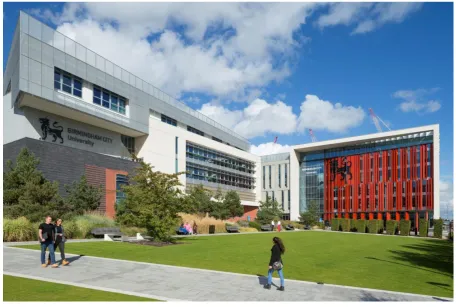
(action) and learning (research) (cf. [49;12]). Two multi-storey educational buildings
225
provided the basis for this research inquiry and were designed and constructed consecutively
226
in Birmingham, UK over an 18 month period (refer to Figure 1). The contract value was
227
worth ≥ £150 million UK Sterling and created 100,000 sq ft of new office space; albeit future
228
plans seek to expand the development further. The lead researcher collaborated directly with
229
the building’s estates team (who coordinated project management and acted as the client’s 230
representative) but also engaged with all parties within the Project Management Team (PMT)
231
to gather project information through liaising with each stakeholder. The PMT included the
232
client’s representatives (i.e. the Building’s Estates Department) and design related disciplines 233
(including the BIM Process Manager, the lead Architect, Contractor’s Construction Manager,
9 the Contractor’s BIM Manager, Principle Designer for Mechanical Engineering and 235
Plumbing and the Lead Structural Engineer). Note that the Estate’s Department held four
236
fundamental roles, namely that of: client’s representative; BIM process manager; project
237
manager; and Estates Department and consequently, covered all three major phases of the
238
building’s life cycle. 239
240
In operational terms, a five stage process was adopted for the development of the FinDD API
241
plug-in for Autodesk Revit, namely: stage one: development of the totem. Totems act as a
242
virtual repository that synthesised all relevant information sources into one integral area,
243
usually a room, for ease of access; stage two: development of the asset information matrix 244
(AIM). This phase was instigated during the design, construction and use of the first building.
245
It specifically sought to identify relevant semantic data and information sources from PMT
246
members and strategies for integration into the totems; stage three; development of the 247
FinDD database representation. The data sources identified in stage two were bi-248
directionally linked to the totems via the plug-in to allow changes to be updated in the model;
249
stage four: conceptualising the enterprise application. Members of the PMT defined their 250
user requirements of FinDD; and stage five: back-end and front-end software development. 251
Object classes and their functionality were defined (back-end development) and a graphical
252
user interface (front-end development) was designed. The API plug-in development process
253
was iterative with each iteration taking into account client driven aspirations, stakeholder
254
experience and user feedback.
255 256
The primary qualitative data, was collected through seven ‘focus group’ project team 257
meetings held over an 18 month period (January 2015-June 2016) and was supplemented by
258
phone calls and emails to afford additional clarification when required. Secondary
259
quantitative data sources further complemented information obtained and consisted of project
260
documents including BIM execution plans (BEP), employer’s information requirements 261
(EIR’s) and project execution plans (PEP). These archival records of project BIM
262
documentation and contracts provided: i) an account of current practices through the
263
exploration of stakeholder expectations; and ii) collaborating organisations with opportunities
264
to learn from everyday experiences of PMT stakeholders.
10 FIVE STAGES OF FINDD API DEVELOPMENT: DISCUSSION AND FINDINGS 267
At the outset of the development, some of the PMT group members were inexperienced at
268
utilising BIM technologies. However, as building one progressed and team confidence grew,
269
the idea for the FinDD API plug-in was conceived and proficiency/ competency gains were
270
secured in building two. This iterative process enabled: the PMT group to mature as a
271
collaborative partnership; individual parties to avoid unnecessary dispute(s); and both
272
buildings to be constructed to all parties’ satisfaction. Efficiency gains were also made by 273
individual PMT members who acquired new knowledge that allowed them to streamline
274
project management and reduce costs without adversely impacting upon quality. For
275
example, the Architect who employed ten people during building one, reduced their team to
276
five people for building two by learning how to optimise the production of drawings with
277
BIM. A Principal Architect said: “One of the bigger benefits that we’ve learned going into
278
phase II is how to keep drawing sets coordinated and segregation of the model into work-279
sets2, and split the model into groups and layers so that we don’t produce a single drawing 280
and come back to it as we did before with AutoCAD - in that sense we have become a lot 281
smarter with how we model with BIM.”
282 283
These five aforementioned stages of the FinDD API-plug-in development are now discussed
284
in further detail; the ensuing narrative is complemented with pertinent feedback from
285
members of the PMT to provide additional insight.
286 287
Development of the totem 288
When formulating the totem concept to ensure BIM-FM data integration, the PMT
289
considered the data requirements for FM and model structure for data retrieval. The ambition
290
was to generate a totem that would deliver interoperability and encapsulate the following
291
attributes: i) increased coordination between the contractor and design team stakeholders
292
during model development; ii) enhanced communication between project stakeholders; iii)
293
informed decision making; and iv) ease of navigation within the cloud-based BIM model. In
294
practice, each individual totem holds all relevant semantic FM data that is pertinent to that
295
particular space (including room finishes, services, lighting and frequency of maintenance).
296
As this was not a government funded project development and building one was under
297
construction prior to 2014, the use of COBie was not mandatory, although the data
298
2 A ‘work-set’ is restricted collection of building objects (i.e. walls, doors, floors, stairs, etc.) which may be
11
requirements and model structure of the API plug-in were heavily informed by the COBie
299
standard. The client demanded that all members of the PMT use Autodesk products when
300
developing the models in an attempt to overcome interoperability issues. The totem was
301
conceived and developed to extend the functionality of the room object in Autodesk Revit, as
302
the ability to embed and link rich semantic FM data at this level was fundamental to the FMT
303
and client requirements.
304 305
The different PMT members each added room specific information into the totems; the
306
contractors were then able to retrieve asset related information for guidance during
307
construction and attach progress photos to each totem. The totems themselves connected to
308
multiple external databases which provided access to room specific O&M manuals,
309
maintenance frequency codes for different spaces and product fact sheets.
310 311
Asset information matrix and totem integration 312
The totems’ information requirements were defined in the asset information matrix (AIM)
313
and semantic FM data within the AIM was classified according to the NRM3 standard.
314
Utilising the NRM3 standard assisted the FMT with cost estimation and cost planning for
315
building O&M works. Semantic data was input into the totem by design team members
316
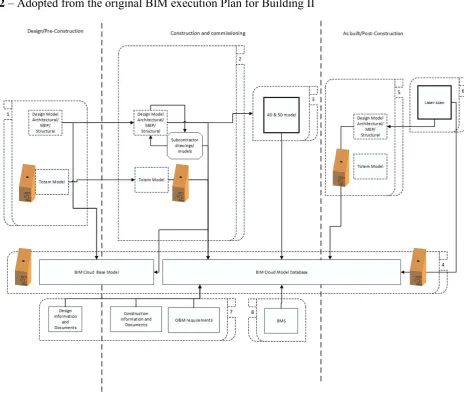
according to the AIM for the various stages of development (i.e. RIBA ‘plan of work’ stages 317
3-5) and corresponding to data drops 3, 4 and 5 in COBie. Figure 2 illustrates the schematic
318
design to achieve information feed (via totems) at all three stages of the buildings’ life cycle 319
(namely: i) design/ pre-construction; ii) construction and commissioning; and iii) as-built/
320
post construction). Two interlinked BIM cloud models are apparent. The first model contains
321
three separate models that cover architectural, structural and MEP 3-D models that are
322
merged into one federated model (e.g. pipes, services and structural elements). This federated
323
model was used for: avoiding clashes; facilitating 4D and 5D modelling; and providing a
324
single point of truth, accessible via the cloud, where totems could be linked and updated. The
325
second cloud database includes additional information and resources such as photographs of
326
progress on site during construction works, notes taken on programme of works and
mark-327
ups of any amendments or ‘BIM snags’ that were required within the BIM model itself. The
328
contractor then monitored and managed these data drops into the totem on a weekly basis
329
from the federated model. The cloud based BIM and totem data was managed by the
330
contractor on site but was created by the estates management team on the client’s behalf. 331
Totems were gradually populated throughout construction to provide a complete and accurate
12
record of the as-built development. Other documents not directly related to the BIM (such as
333
equipment fact sheets, O&M manuals, documentation and drawings) were linked into the
334
cloud based federated model via the totems. The cloud database was also populated by the
335
estates management team and design teams who recorded a snagging list of defects and any
336
remedial actions required. A laser scan was then conducted which was then compared to the
337
as-built BIM model. Currently the estates and research team are exploring ways in which
338
Building Management Systems data (as an external source of data) will be linked via totems
339
into the cloud based model.
340 341
Development of the FinDD database representation. 342
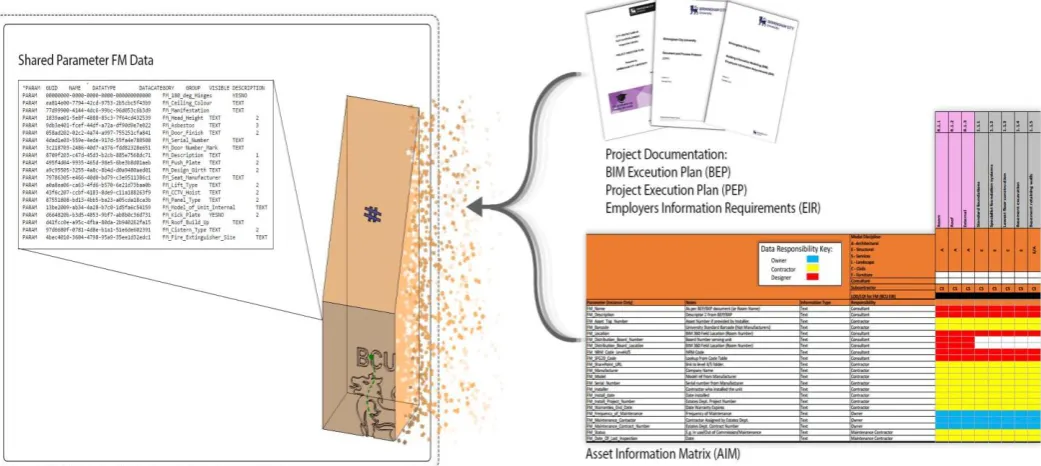
Figure 3a presents a schematic representation of the databases that were integrated within the
343
totem; whilst Figure 3b illustrates FM parameters contained within an individual totem (for
344
example, project documentation (including: BEP; PEP; EIR; and AIM). Within the federated
345
cloud model, databases that contain tasks, checklists, embedded data and snags are
346
complemented with other external databases that are linked to the totem via a URL link to the
347
client’s Sharepoint. Sharepoint represents a secure on-line open access repository and storage 348
area that is populated by an ecliptic range of pertinent business information and resources
349
including project documentation. Password protection within Sharepoint restricted PMT
350
members’ access to relevant data only thus preventing them from accessing other more
351
sensitive business intelligence that was unrelated to this development. Typical data accessed
352
by the PMT on Sharepoint included photographs of the development, O&M manuals, reports
353
and drawings. A senior member of the PMT said: “We have the NRM3 classification in our 354
models, breaking all the O&M costing down in the models component by component. These 355
all link to the maintenance codes, SFG203 which is the standard maintenance frequency 356
code. This was implemented as a result of the mandate where RIBA [Royal Institute of British 357
Architects] and RICS [Royal Institute of Chartered Surveyors] are requesting the use of 358
NRM3 coding instead of the typical UniClass format. Essentially what we will have is an 359
output of models that are all aligned to the NRM3 as well as O&M documentation which is 360
similarly aligned to the NRM3 coding. So we have a direct relationship between object and 361
the O&M documentation for that object. The maintenance codes work in such a way that we 362
can go from object through to maintenance code - we can do this for all our objects and we 363
3SFG20 Standard Maintenance Specification for Building is developed to help customize maintenance regimes
13 can start planning simultaneously the maintenance procedures for each space, which will 364
allow us to bring in the asset list into a system and it will tell us the maintenance required 365
during its lifetime.” 366
367
During development work, three other external databases were ear-marked for future
368
integration into the information totem (refer to Figure 3a). These databases were: the building
369
management system (BMS) to control and monitor the building's mechanical and electrical
370
equipment; student attendance monitoring (SAMs) to gain insight into how the building was
371
being used by occupants; and SITS to assist in both course and student management. During
372
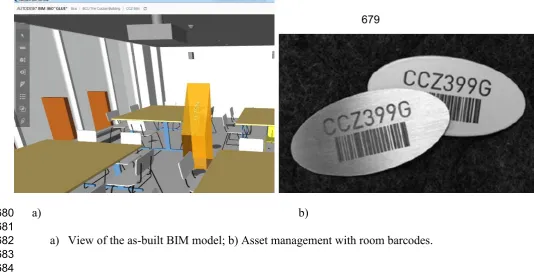
the O&M phase, the client utilised room barcodes to aid the management of assets by
373
allowing cost-effective access to totem data via mobile devices (i.e. tablets) by scanning
374
room barcodes (refer to Figure 4). Each barcode was bi-directionally linked to corresponding
375
room based totems in the as-built BIM thus enabling the FM semantic data to be mapped into
376
any CAFM software utilised at the later stages of the development.
377 378
Conceptualising the enterprise application. 379
During the PMT focus group discussions that sought to determine user requirements/
380
functionality, four main lessons emerged regarding the use of BIM and totems during the
381
project, namely: i) the creation of totems; ii) limitations of a semi-automatic totem; iii) 382
inflexibility of software providers; and iv) lack of software integration. First, totems were 383
originally conceived and adopted towards the end of building one when the estates
384
management team realised that FM requirements (such as building heating and cooling loads,
385
and building usage) could have been uploaded into the BIM at the design stage to inform the
386
design and better meet client expectations. A MEP designer said: “Design data, such as
387
ventilation rates, cooling loads could have been included in the design stages already, as the 388
M &E contractors are often playing catch up from the other design team…” Second, it was
389
apparent that the totems developed were not fully automated and hence, as changes to
390
specification occurred, manual updates were needed in the model. For example, when the
391
contractor altered a specification provided by the Architect or MEP designer (at the
392
construction and commissioning stages). The contractor stated: The totems still lacked 393
automation, what would have been good was to have a live feed of the changes in the model 394
with the totems, as they currently did not capture all of the changes in the model, some 395
information had to be manually added to the totems…” Third, the BIM software designers
396
(as external providers) were unwilling to implement bespoke modifications and amendments
14
to their software. For example, information could not be exported into other file formats for
398
usage in room data sheets or for snagging lists post construction. A BIM Manager said: “We
399
were unable to export the totem information directly out of the software into a PDF, which 400
could then be used as a room data sheet…” Fourth, the BIM model structure had a distinct
401
lack of software integration capability and therefore, when accessing the totem corresponding
402
room elevational views were inaccessible and had to be extracted from other databases of
403
drawings within the BIM model. A Project Manager said: “What would be useful is if we
404
could have direct views of reflected ceiling plans, room elevations and floorplans just by 405
clicking the totems faces, makes it easier to then share the model with subcontractors…”
406 407
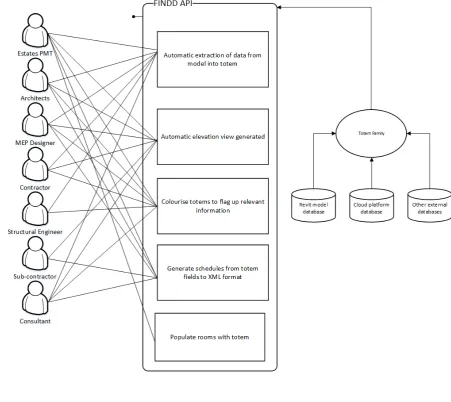
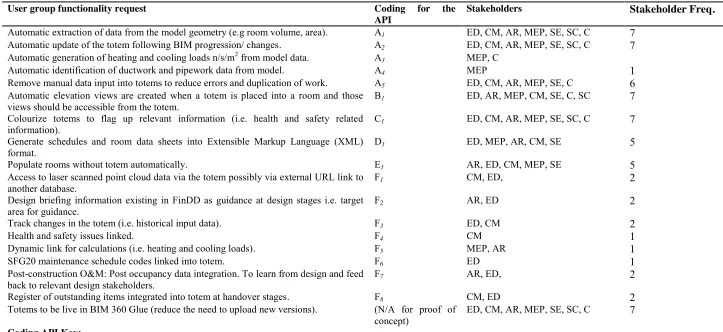
Verbal and written responses were subsequently noted and then categorised into An, Bn, Cn,
408
Dn, En and Fn bandings for brevity by the research team (refer to Figure 5 and Table 1).
409
Once these bandings were established, they were presented back to group members for
sign-410
off approval before the API was developed further in the BIM authoring tool Revit. This
411
stage in the process was particularly important because it illustrates early development stages
412
of the plug-in and object classes, and how the functionality of Revit was extended to suit user
413
requirements for the totem.
414 415
Back-end and front-end software development. 416
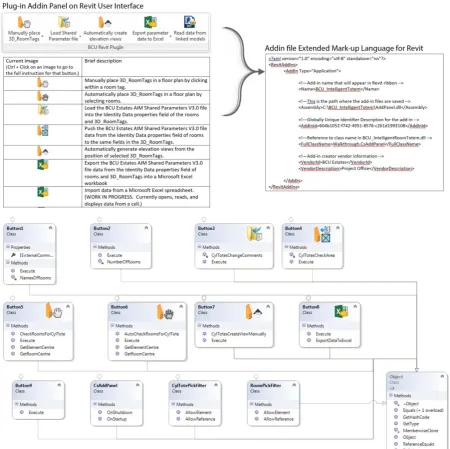
Figure 6 presents a graphical illustration of the Revit user interface for the plug-in and
417
describes Revit add-in functionality. The object class diagram presents a schematic of the
418
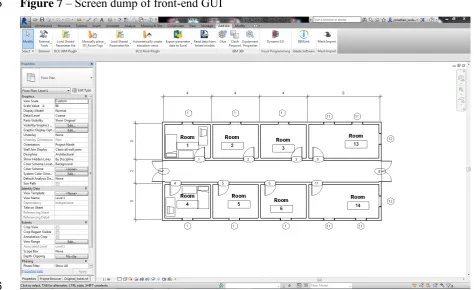
functionality and behaviour of these add-in files for Revit. For example, button two informs
419
users how many rooms include a totem within the room; where all classes connect to the
420
object class which represents the totem. Figure 7 presents the front-end graphical user
421
interface of the FinDD plug-in developed. At this juncture, FinDD represents a proof of
422
concept that demonstrates its feasibility; further development and expansion is now planned
423
and will include naming buttons to better describe functionality to future users who are less
424
familiar with its development. When reflecting upon the development and FinDD, a
425
representative from the Estates Department said: “Building two has been one of most 426
successful BIM project in our business, it has really pushed BIM all the way through the 427
process right through to FM, and we haven’t actually done this on any other project to date. 428
Possibly in the future we could benefit from having a direct feed of BMS data, and live Post 429
Occupancy Evaluation (POE) fed into the totems to inform architects and the FMT on how 430
15 CONCLUSIONS
432
The extant literature is replete with recommendations for far greater BIM-FM integration as a
433
means of producing accurate design data (both geometric and semantic) for handover to the
434
building’s client. Importantly, this integration presents an ideal opportunity for data retrieval
435
and use during the O&M stages of building occupancy. Yet to date, case studies of
practice-436
based initiatives are scant or provide rudimentary insight into the myriad of opportunities
437
available to clients and the building’s facility management team. This is most likely due to 438
two fundamental reasons. First, computerisation technology is developing at an exponential
439
pace and hence, keeping abreast of the latest knowledge and developments presents a major
440
challenge for both industry and academia. Second, securing access to large construction
441
project developments means consequential data generated with an as-built BIM is a hugely
442
complex and difficult task and only achievable with a client’s approval. Even then, legal
443
contracts covering data disclosure, copyright/ ownership rights and data protection can lead
444
to exorbitant costs being incurred by a research team and delays to secure agreements with all
445
parties concerned. The extant literature on BIM-FM integration also points to the specific
446
limitations of data integration between BIM and FM related data authoring platforms, as well
447
as the lack of standardised methodology for such data transfer.
448 449
Fortuitously, a proactive client and project management team who acknowledged the benefits
450
of collaboration with academia assisted this research. Given their invaluable insight and
451
support, the FinDD API plug-in and the integral FinDD totem were first developed and then
452
enhanced through the development of an API (proof of concept) in the BIM authoring tool
453
Revit; where the innovative use of the FinDD totem represented a bespoke adaptation of
454
'COBie data drops' to suit the client’s needs. At each incremental stage of the developmental 455
process, limitations and applications of FinDD were categorised under the guise of future
456
work. Such work includes: addressing software inflexibility within the FinDD totem and
457
implementing automatic data analytics; validating the API plug-in via user experience; and
458
integrating additional databases into the totem such as post occupancy evaluations (POE).
459
Each extension of FinDD will continue to pose unique challenges and opportunities but as
460
other bespoke API plug-ins emerge from the literature, the likelihood that a hybrid plug-in is
461
developed increases; such will yield broader appeal and improved software upgrades.
462 463
Regardless of future developments, FinDD also allows an invaluable feedback loop/ of
464
16
sensor data used by the building management system (BMS) on building usage fed into the
466
totem will facilitate a better visual understanding of building performance and usage for the
467
client and FMT. Observations accrued from the case study have also shown how an object
468
orientated workflow can provide structure and develop complex as-built BIM models whilst
469
embedding key O&M related information. These inherent attributes of FinDD will provide
470
openings for clients and members of the PMT to learn from developments, improve their
471
performance and reflect upon how future technological advancements can further enhance a
472
building’s performance. 473
474
ACKNOWLEDGEMENTS 475
The authors wish to thank Mr Richard Draper, Mr Jonathan Wolsey and their colleagues
476
within Birmingham City University’s Estates Department; and Mr Chris Johnston and Mr
477
Rafal Daszczyszak, Wilmott Dixon (construction contractors) for all their invaluable help,
478
support and guidance.
17 REFERENCES
481
[1] Abanda, F.H., Vidalakis, C., Oti, A.H. and Tah, J.H.M. (2015) A Critical Analysis of
482
Building Information Modelling Systems Used in Construction Projects, Advances in
483
Engineering Software, Vol. 90, pp. 183-201.
484
[2] Arayici, Y., Onyenobi, T.C. and Egbu, C.O. (2012) Building Information Modelling
485
(BIM) for Facilities Management (FM): The MediaCity Case Study Approach,
486
International Journal of 3D Information Modelling, Vol. 1, No. 1, pp. 55-73.
487
[3] Atkin, B., Brooks, A., (2009) Total Facilities Management, 3rd Ed. John Wiley & Sons:
488
London.
489
[4] Azhar, S. (2011) Building Information Modeling (BIM): Trends, Benefits, Risks and
490
Challenges for the AEC industry, Leadership and Management in Engineering, Vol. 11,
491
No. 3, pp. 241-252.
492
[5] Barrett, P., S., (1995) Facilities Management Towards Best Practice. Blackwell Science:
493
London.
494
[6] Becerik-Gerber, B., Jazizadeh, F., Li, N. and Calis, G., (2012) Application Areas and
495
Data Requirements for BIM-Enabled Facilities Management. Journal of Construction
496
Engineering and Management, Vol. 138, No. 3, pp. 431-442.
497
[7] Bentley, K., and Workman, B., (2003) Does the Building Industry Really Need to Start
498
Over - A Response from Bentley to Autodesk's BIM-Revit Proposal for the Future.
499
Bentley, BIM White Paper, pp.6-7.
500
[8] Boton, C., Halin, G., Kubicki, S., and Forgues, D., (2015) Challenges of Big Data in the
501
Age of Building Information Modeling: A High-Level Conceptual Pipeline, Book
502
chapter, Cooperative Design, Visualization, and Engineering, pp.48-56.
503
[9] Boussabaine, A. and Kirkham, R., (2008) Whole Life-Cycle Costing: Risk and Risk
504
Responses. John Wiley & Sons: London.
505
[10]British Standards Institution (BSI), (2014a) PAS 1192-3:2014 Specification for
506
information management for the operational phase of assets using building information
507
modelling. The British Standards Institution Ltd, London.
508
[11]British Standards Institution (BSI) (2014b). BS 1192-4:2014. Collaborative production
509
of information. Part 4: Fulfilling employer’s information exchange requirements using 510
COBie – Code of practice. BSI Standards Limited, September 2014.
511
[12]Brock, K. and Pettit, J. (2007) Springs of Participation: Creating and Evolving Methods
512
for Participatory Development. Practical Action: Warwickshire.
18
[13]Brynjolfsson, E. and Hitt, L.M. (2000) Beyond Computation: Information Technology,
514
Organizational Transformation and Business Performance, The Journal of Economic
515
Perspectives, Vol. 14, No. 4, pp. 23-48
516
[14]CCC (2001) Advancing Discovery in Science and Engineering. Computing Community
517
Consortium. Spring 2011.
518
[15]Charlesraj C. and Paul, V., (2014) Knowledge-Based Building Information Modelling
519
(K-BIM) for Facilities Management. Proceedings of 31st International Symposium on
520
Automation and Robotics in Construction and Mining, ISARC 2014, pp. 936-941.
521
[16]Chen, H., M., Hou, C., C. and Wang, Y., H., (2013) A 3D Visualized Expert System For
522
Maintenance And Management of Existing Building Facilities Using Reliability-Based
523
Method, Expert Systems Applications, Vol. 40, No. 1, pp. 287–299.
524
[17] Chevalier , J.M. and Buckles, D.J. (2013) Participatory Action Research: Theory and
525
Methods for Engaged Inquiry. Routledge: London.
526
[18]Cheung, F.K.T., Rihan, J., Tah, J., Duce, D., Kurul, E. (2012) Early Stage Multi-Level
527
Cost Estimation for Schematic BIM Models, Automation in Construction, Vol. 27, pp.
528
67-77.
529
[19]Clayton, M., C., (1997) The Innovator’s Dilemma- When New Technologies Cause
530
Great Firms to Fail, Harvard Business School Press Boston, Massachusetts, pp. 9-14.
531
[20]Curry, E., O’Donnell, J., Corry, E., Hasan, S., Keane, M. and O’Riain, S. (2013) Linking
532
Building Data in the Cloud: Integrating Cross-domain Building Data using Linked Data,
533
Advanced Engineering Informatics, Vol. 27, No. 2, pp. 206-219.
534
[21]Dearborn, J. (2015) Data Driven: How Performance Analytics Delivers Extraordinary
535
Sales Results. John Wiley & Sons: London.
536
[22]Eadie, R., Browne, M., Odeyinka, H., McKeown, C. and McNiff, S. (2013) BIM
537
Implementation Throughout the UK Construction Project Lifecycle: An Analysis,
538
Automation in Construction, Vol 36, pp. 145-151.
539
[23]East, E.W. (2007) Construction Operations Building Information Exchange (COBIE):
540
Requirements Definition and Pilot Implementation Standard, Report no.: ERDC/CERL
541
TR-07-30, Construction Engineering Research Laboratory (CERL): IL, USA. Available
542
on-line via: file:///C:/Users/pc%20user/Downloads/ADA491932.pdf [Accessed June,
543
2016].
544
[24]East, B., (2014) Construction-Operations Building Information Exchange (COBie),
545
NIBS, Available online at: http://www.wbdg.org/resources/cobie.php, [Accessed
546
February, 2016].
19
[25]Fan, H., Xue, F. and Li, H. (2015) Project-based As-needed Information Retrieval from
548
Unstructured AEC Documents, ASCE Journal of Management in Engineering, Vol. 31,
549
No. 1. DOI: 10.1061/(ASCE)ME.1943-5479.0000341.
550
[26]Frey, C.B. and Osborne, M.A. (2013) The Future Employment: How Susceptible are
551
Jobs to Computerisation? Machines and Employment Workshop, Oxford University
552
Engineering Sciences Department and Oxford Martin Programme on the Impacts of
553
Future Technology, September 17th, 2013. Available online at:
554
http://www.oxfordmartin.ox.ac.uk/downloads/academic/The_Future_of_Employment.pd
555
f [Accessed: January, 2016].
556
[27]Forns-Samso, F., Laine, T. and Hensel, B., (2012) Building Information Modelling
557
Supporting Facilities Management. In: Proceedings ECPPM Ework and Ebusiness in
558
Architecture, Engineering and Construction, pp. 51–57
559
[28]Goedert, J.D. and Meadati, P., (2008) Integration of Construction Process
560
Documentation into Building Information Modelling. Journal of Construction
561
Engineering Management Vol. 134, No. 7, pp. 509–516.
562
[29]Grilo, A. and Jardim-Goncalves, R., (2010) Value Proposition on Interoperability of BIM
563
Andand Collaborative Working Environments. Automation Construction, Vol. 19, No.
564
5, pp. 522-530.
565
[30]Hassanain, M., A., Froese, T. and Vanier, D., (2003) Implementation of a Distributed,
566
Model-Based Integrated Asset Management System. ITcon Vol.8, pp.119–134.
567
[31]Hassanain, M., A., Froese, T., M., and Vanier, D., J., (2001) Development of a
568
Maintenance Management Model Based on IAI Standards, Artificial Intelligence
569
Engineering. Vol. 15, No.2, pp. 177–193.
570
[32]HM Government, (2012) Industrial Strategy: Government and Industry in Partnership
571
Building Information Modelling. HM Government: London, UK. Available online at:
572
https://www.gov.uk/government/uploads/system/uploads/attachment_data/file/34710/12-573
1327-building-information-modelling.pdf [Accessed: June, 2016].
574
[33]Jung, Y. and Joo, M. (2011) Building Information Modelling (BIM Framework for
575
Practical Implementation, Automation in Construction, Vol. 20, No. 2, pp. 126-133.
576
[34]Kassem, M., Kelly, G., Nashwan, D., Serginson, M. and Lockley, S., (2015) BIM in
577
Facilities Management Applications: A Case Study of a Large University Complex. Built
578
Environment Project and Asset Management, Vol. 5, No. 3, pp.261 – 277.
579
[35]Kelly, G., Serginson, M., Lockley, S., Nashwan, D. and Kassem, M., (2013) BIM for
580
Facility Management: A Review and A Case Study Investigating the Value and
20
Challenges. Proceedings of the 13th International Conference on Construction
582
Applications of Virtual Reality, 30-31 October 2013, London, UK. Available online at:
583
http://itc.scix.net/data/works/att/convr-2013-20.pdf [Accessed: October, 2016].
584
[36]Kyle, B. R., Vanier, D. J., Kosovac, B., Froese, T. M., (2002) Information needs towards
585
service life asset management, 17th International CODATA Conference on Data and
586
Information for the Coming Knowledge Millennium, (Baveno, Italy), pp. 1-18.
587
[37]Lee, A., Aouad, G., Cooper, R., Fu, C., Marshall-Ponting, A., Tah, J. and Wu, S (2005)
588
nD Modelling Driver or Enabler for Construction Improvement? RICS Research Paper
589
Series, London. Vol. 5, pp.1–16.
590
[38]Love, P. E., J. Matthews and S. Lockley (2015). "BIM for Built Asset Management."
591
Built Environment Project and Asset Management.
592
[39]Love P. E. D., Simpson. I., Hill, A. and Standing, C., (2013) From Justification to
593
Evaluation: Building Information Modelling for Asset Owners. Automation in
594
Construction, Vol. 35, pp. 208-216.
595
[40]Love, P., E., D., Matthews, J., Simpson, I., Hill, A., and Olatunji, O., (2014) A Benefits
596
Realization Management Building Information Modelling Framework for Asset Owners,
597
Automation in Construction, Vol. 37, pp. 1-10.
598
[41]Matthews, J., Love, P., E., D., Heinemann, S., Chandler, R., Rumsey, C. and Olatunj, O.,
599
(2015) Real Time Progress Management: Re-Engineering Processes for Cloud-Based
600
BIM in Construction. Automation in Construction, Vol 58, p. 38-47.
601
[42]McGregor, W. and D. S.-S. Then (1999). Facilities management and the business of
602
space. London, Arnold. pp.10-12.
603
[43]McKinsey Global Institute (2013) Disruptive Technologies: Advances that will
604
Transform Life, Business, and the Global Economy, McKinsey and Company. Available
605
on-line
606
via:file:///C:/Users/pc%20user/Downloads/MGI_Disruptive_technologies_Full_report_
607
May2013.pdf [Accessed: May, 2016]
608
[44]Mohandes, S., R., Hamid, A., R., A. and Sadeghiand Sadeghi, H., (2014) Exploiting
609
Building Information Modelling Throughout the Whole Lifecycle of Construction
610
Projects. Journal of Basic Applied Science, Vol. 4, No. 9, pp.16-27.
611
[45]Motamedi, S., A., Setayeshgar, S., Soltani, M., M. and Hammad, A., (2013) Extending
612
BIM to Incorporate Information for RFID Tags Attached to Building Assets. Proceedings
613
from 4th Construction Specialty Conference, May 29 to June 1, Montreal, Canada.
21
[46]Motawa, I., Almarshad, A., (2013) A Knowledge-Based BIM System for Building
615
Maintenance. Automation in Construction Vol. 29, pp.173–182.
616
[47]Patacas, J., Dawood, N., Vukovic, V., Kassem, M., (2015) BIM for Facilities
617
Management: Evaluating BIM Standards in Asset Register Creation and Service Life
618
Planning. Journal of Information Technology in Construction, Vol. 20, No. 10, pp.
313-619
318.
620
[48]Rainbird AI, (2015) The Automation of Knowledge Work, White Paper. Available on
621
line via:
622
http://rainbird.ai/content/uploads/2015/12/RainBird_WhitePaper_KnowledgeAutomation
623
_Digital.pdf [Accessed: May, 2016]
624
[49]Reason, P. and Bradbury, H. (2008) (Eds.) The Sage Handbook of Action Research:
625
Participative Inquiry and Practice. Sage: California.
626
[50]Russell, A.D., Chiu, C.-Y., Korde, T (2009) Visual Representation of Construction
627
Management Data. Automation Construction. Vol. 18, pp. 1045–1062.
628
[51]Sabol, L., (2008) Challenges in Cost Estimating with Building Information Modelling.
629
IFMA World Workplace. Available on line via:
630
https://www.academia.edu/3879014/2_sabol_cost_estimating [Accessed: March, 2016].
631
[52]Sagiroglu, S. and Sinanc, D. (2013) Big Data: A Review, IEEE International Conference
632
on Collaboration Technologies and Systems (CTS), 20-24 May, San Diego, US.
633
Available on line via:
634
http://ieeexplore.ieee.org/stamp/stamp.jsp?tp=&arnumber=6567202 [Accessed: May
635
2016]
636
[53]Shafiq, M. T., Matthews, J. and Lockley, S. (2013) A Study of BIM Collaboration
637
Requirements and Available Features in Existing Model Collaboration Systems, Journal
638
of Information Technology in Construction (ITcon), Vol. 18. pp. 148-161. Available on
639
line via: http://nrl.northumbria.ac.uk/13119/1/2013_8.content.07723.pdf [Accessed: May
640
2016].
641
[54]Smith, L., Ronsenzweig, L. and Schmidt, M. (2010) Best Practices in the Reporting of
642
Participatory Action Research: Embracing Both the Forest and the Trees, The
643
Counseling Psychologist, Vol. 38, No. 8, pp. 1115–1138.
644
[55]Smith, P. (2014) BIM and the 5D Project Manager, Procedia – Social and Behavioural
645
Sciences, Vol. 119, pp. 475-484.
646
[56]Succar, B., (2009) Building Information Modelling Maturity Matrix. (Chapter),
647
Handbook of Research on Building Information Modelling and Construction
22
Informatics: Concepts and Technologies, pp. 8-50. Available on line via:
649
http://www.academia.edu/186259/Building_Information_Modelling_Maturity_Matrix
650
[Accessed: May, 2016].
651
[57]Vernikos, V.K., Goodier, C.I., Broyd, T.W., Robery, P.C. and Gibb, A.G.F. (2014)
652
Building Information Modelling and its Effect on Off-site Construction in UK Civil
653
Engineering. Proceedings of the ICE - Management, Procurement and Law, Vol. 167
654
(MP3), pp. 152 - 159.
655
[58]Volk, R., Stengel, J. and Schultmann, F. (2014) Building Information Modelling (BIM)
656
For Existing Buildings Literature Review and Future Needs, Automation in
657
Construction, Vol. 38, March, pp. 110-124.
658
[59]Watson, A. (2010) BIM-A Driver for Change. In Proceedings of the International
659
Conference on Computing in Civil and Building Engineering Nottingham: Nottingham
660
University Press pp. 30-32.
23 Figure 1 – Buildings one (Parkside - left) and two (Curzon - right)image courtesy of
664
Wilmott Dixon.
665
24 Figure 2– Adopted from the original BIM execution Plan for Building II
669
25 Figure 3a– Schematic database representation for FinDD
672
673 674
Figure 3b– FM parameters embedded within the totem
675
26 Figure 4 -As built-BIM used for asset data access and retrieval via the totem
677
678
679
a) b)
680 681
a) View of the as-built BIM model; b) Asset management with room barcodes.
27 Figure 5 - Conceptualisation of enterprise application FinDD API
688 689
28 Table 1– User group feedback and coding of the narrative
691
User group functionality request Coding for the
API
Stakeholders Stakeholder Freq.
Automatic extraction of data from the model geometry (e.g room volume, area). A1 ED, CM, AR, MEP, SE, SC, C 7
Automatic update of the totem following BIM progression/ changes. A2 ED, CM, AR, MEP, SE, SC, C 7
Automatic generation of heating and cooling loads n/s/m2 from model data. A3 MEP, C
Automatic identification of ductwork and pipework data from model. A4 MEP 1
Remove manual data input into totems to reduce errors and duplication of work. A5 ED, CM, AR, MEP, SE, C 6
Automatic elevation views are created when a totem is placed into a room and those views should be accessible from the totem.
B1 ED, AR, MEP, CM, SE, C, SC 7
Colourize totems to flag up relevant information (i.e. health and safety related
information). C1 ED, CM, AR, MEP, SE, SC, C 7
Generate schedules and room data sheets into Extensible Markup Language (XML) format.
D1 ED, MEP, AR, CM, SE 5
Populate rooms without totem automatically. E1 AR, ED, CM, MEP, SE 5
Access to laser scanned point cloud data via the totem possibly via external URL link to
another database. F1 CM, ED, 2
Design briefing information existing in FinDD as guidance at design stages i.e. target area for guidance.
F2 AR, ED 2
Track changes in the totem (i.e. historical input data). F3 ED, CM 2
Health and safety issues linked. F4 CM 1
Dynamic link for calculations (i.e. heating and cooling loads). F5 MEP, AR 1
SFG20 maintenance schedule codes linked into totem. F6 ED 1
Post-construction O&M: Post occupancy data integration. To learn from design and feed
back to relevant design stakeholders. F7 AR, ED, 2
Register of outstanding items integrated into totem at handover stages. F8 CM, ED 2
Totems to be live in BIM 360 Glue (reduce the need to upload new versions). (N/A for proof of concept)
ED, CM, AR, MEP, SE, SC, C 7
Coding API Key:
An. Automatic extraction/ update/ input of data from the model into the totem; Bn. Automatic elevation view generated; Cn Colourize totems to flag up relevant information;
. Dn Generate schedules from totem fields to XML format; En Populate rooms with totems; and Fn Future work – currently under construction.
Stakeholder Key:
29 Figure 6 – Back-end development (Revit user interface and object class diagram)
692
30 Figure 7– Screen dump of front-end GUI
695