Impact of the Uses of Various Technologies on the Thermal
Performance and Energy Efficiency of UK Hotel Buildings:
Application to Hilton Hotels in the UK
Abdulazeez Juwon Rotimi
A thesis submitted to the University of West London in partial fulfilment
of the requirements for the degree of
Doctor of Philosophy
School of Computing and Engineering
University of West London,
United Kingdom
i
Abstract
A substantial reduction in the amount of carbon dioxide emissions resulting from human activities
is required to curb global warming and this has led to the development of numerous measures to
ensure that cleaner and more efficient energy sources are utilised in all facets of people’s daily
lives.
Globally, buildings account for almost half of the energy use in both developed and developing
nations. Commercial buildings account for a sizeable proportion of this building energy
consumption and this trend will probably continue to increase. Therefore, concerted efforts are
currently being directed at the development and application of effective building strategies and
measures to improve energy efficiency in buildings.
This study evaluates the impact of various energy efficiency measures and technologies on the
thermal and energy performance of UK hotel buildings using a whole building dynamic simulation
software (application to Hilton hotels) with a focus on the knock-on effects that these technologies
will have on the overall energy performance and efficiency of UK hotels, either installed
individually or in various combinations. The study employs a quantitative research approach
underpinned by the thermal analysis simulation of various case study hotel buildings to address
the supposition that dynamic climatic conditions, building energy consumption estimates, building
energy efficiency improvement strategies and building thermal behaviour can be appropriately
simulated to enhance the energy efficiency of commercial buildings and abate the unfavourable
effects of global climate change.
The outcome of the research presents a practical approach of estimating the energy consumption
ii
energy improvement measures. The research also demonstrates that holistic consideration, design
and retrofitting of different types of building façade energy improvement measures such as
enhanced glazing and window properties and appropriate ventilation of double-skin-façades can
improve the thermal and energy performance of existing hotel buildings. Additionally, the research
results established that retrofit Combined Heat and Power (CHP) in relatively large hotels, either
sized maximally or with reduced capacity of more than half of the maximum size, can provide
sizeable environmental and economic benefits. However, results of the evaluation of the current
decarbonisation of the UK power grid indicate that the environmental benefits of fossil fuel
powered CHP become less pronounced for the future grid projections. Moreover, optimum CHP
size design can be obtained via evaluation of the relationship between the core building
iii
Declaration of Authorship
I, Abdulazeez Rotimi, declare that this thesis entitled, ‘Impact of the Uses of Various Technologies on the Thermal Performance and Energy Efficiency of UK Hotel Buildings: Application to Hilton
Hotels in the UK and the work presented in it are my own. I confirm that:
This work was done wholly or mainly while in candidature for a research degree at this
University.
Where any part of this thesis has previously been submitted for a degree or any other
qualification at this University or any other institution, this has been clearly stated.
Where I have consulted the published work of others, this is always clearly attributed.
Where I have quoted from the work of others, the source is always given. With the
exception of such quotations, this thesis is entirely my own work.
I have acknowledged all main sources of help.
Where the thesis is based on work done by myself jointly with others, I have made clear
exactly what was done by others and what I have contributed myself.
Parts of this work have been published, or are currently under review to be published, as
journal papers.
Signed:
iv
Table of Contents
Abstract ... i
Declaration of Authorship ... iii
List of Figures ... viii
List of Tables ... xiii
List of Acronyms/Abbreviations ... xv
Acknowledgements ... xxii
List of Published and Submitted Journal Papers ... xxiii
Chapter 1: General Introduction ... 1
1.1 Background ... 1
1.2 Aim ... 5
1.3 Identified knowledge gap ... 6
1.4 Objectives ... 7
1.5 Motivation and research questions ... 10
1.6 Thesis outline and chapter layout ... 11
Chapter 2: Literature Review ... 15
2.1 CO2 Emission Reduction and Energy Consumption ... 15
2.2 Energy Efficiency and CO2 Emission Reduction in Buildings ... 20
2.3 Building Modelling and Simulation ... 23
2.3.1 Building energy performance modelling for compliance and actual energy consumption estimation ... 27
2.3.2 Studies on performance gap and estimation of building energy performance ... 30
2.4 Measures of Improving Building Energy Performance ... 36
2.5 Building Façade and Window Glazing ... 37
2.5.1 Studies on the impact of window glazing and glazing energy improvement measures ... 40
2.5.2 Studies on the impact of glazed building façades on building energy performance ... 47
2.6 Combined Heat and Power (CHP) ... 51
2.6.1 Definition of CHP ... 52
2.6.2 Types of CHP and applications ... 54
2.6.3 CHP financing ... 58
2.6.4 Benefits of CHP ... 61
2.6.5 UK Grid Decarbonisation and Air quality ... 63
v
3.1 Research Paradigm ... 75
3.2 Research Design ... 76
3.3 Ethical Considerations ... 77
3.4 Building simulation methodology ... 78
3.4.1 CIBSE TM 54 Methodology ... 82
3.5 Selection of Simulation Tool ... 86
3.5.1 TAS building simulation software ... 88
3.6 TAS Building Simulation Principle ... 89
3.7 EDSL TAS 3D Modelling Process ... 92
3.8 Thermal Simulation Process ... 94
3.9 Plant/systems Modelling ... 96
3.10 UK Building Regulation Model ... 97
Chapter 4: Estimation and Validation of Energy Consumption in Existing Hotel Buildings in the UK Using Dynamic Simulation Software ... 99
4.1 Introduction ... 99
4.2 Building Description ... 100
4.2.1 Building description for Hilton Reading Hotel ... 101
4.2.2 Building description for Hilton London Heathrow Airport Terminal 4 ... 104
4.2.3 Building description for Hilton London Gatwick Airport Hotel... 108
4.3 Study Method ... 112
4.3.1 3D modelling ... 113
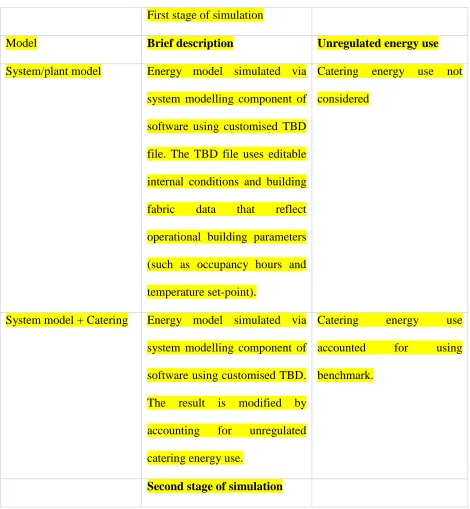
4.3.2 Simulation process ... 114
4.4 Results and Discussion ... 126
4.4.1 Energy consumption and validation for Hilton Reading Hotel ... 126
4.4.2 Energy consumption and validation for Hilton London Heathrow Airport Terminal 4 and Hilton London Gatwick Airport. ... 136
4.5 Summary and Conclusion ... 147
4.6 Recommendations ... 148
Chapter 5: Impact of Extraction Fans in the Cavity of the East and West Double Skin Facade on the Thermal and Energy Performance of Hilton London Heathrow Airport Terminal 4 ... 149
5.1 Introduction ... 149
5.2 Building Description ... 151
5.3 Study Method ... 151
5.3.1 3D modelling ... 151
vi
5.4 Results and Discussion of Results ... 154
5.4.1 Results of the impact of extraction fans in DSF cavity for the building model simulation in Edinburgh ... 174
5.5 Summary and Conclusion ... 185
Chapter 6: Impact of Window Films on the Energy Performance of Existing UK Hotel Buildings 187 6.1 Introduction ... 187
6.2 Building Description ... 188
6.3 Study Method ... 188
6.3.1 3D modelling ... 189
6.3.2 Simulation process ... 189
6.4 Results and Discussion for Impact of Window Films on Hilton Reading Hotel (Glazed Curtain Wall) 193 6.4.1 Case study result with window films on all orientations of the building ... 193
6.4.2 Case study result for Hilton Reading Hotel with window films on different orientations of the building ... 216
6.5 Results and Discussion for Impact of Window Films on Hilton London Heathrow Airport Terminal 4 (Conventional framed structure and Wall) ... 219
6.5.1 Case study result with window films on all orientation of the building ... 220
6.6 Results and Discussion for the Impact of Window Films on Hilton Reading Hotel (Glazed Curtain Wall) Building Model Simulation in Edinburgh ... 231
6.7 Summary and Conclusion ... 240
Chapter 7: Optimum Size Selection of CHP Retrofitting in Existing UK Hotel Buildings ... 245
7.1 Introduction ... 245
7.2 Building Description ... 249
7.3 Case Study Method ... 249
7.3.1 3D modelling ... 250
7.3.2 Simulation process ... 250
7.4 Results and Discussion of Results ... 252
7.4.1 Base model (without CHP) ... 252
7.4.2 Model with maximum capacity of CHP... 253
7.4.3 Model with CHP; 307kWe ... 259
7.5 Summary and Conclusion ... 271
Chapter 8: Conclusions and Recommendations ... 273
vii
8.1.1 Case study 1: Estimation and validation of energy consumption in existing UK hotel buildings 274
8.1.2 Case Study 2: Effect of DSF and its cavity space ventilation on the thermal and overall energy of existing hotel buildings ... 275
8.1.3 Case study 3: Impact of window films on the energy performance of existing UK hotel buildings 277
8.1.4 Case study 4: Optimum size selection of CHP retrofitting in existing UK hotel building 278
8.2 Limitations of the Studies in this Research ... 279
8.3 Recommendations for Future Study ... 280
viii
List of Figures
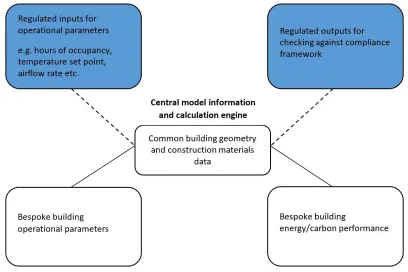
Figure 2.1: Use of common central model for multiple applications (CIBSE, 2015) ... 29
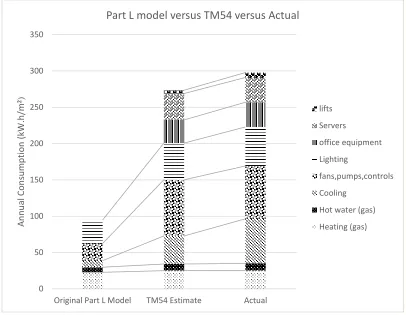
Figure 2.2: Case study result for Part L model and the TM54 estimates against actual measurement (CIBSE, 2013a). ... 32
Figure 2.3: Typical CHP configuration (EPA, 2018) ... 53
Figure 2.4 UK Electricity generation trajectory by technology (BEIS 2018a) ... 66
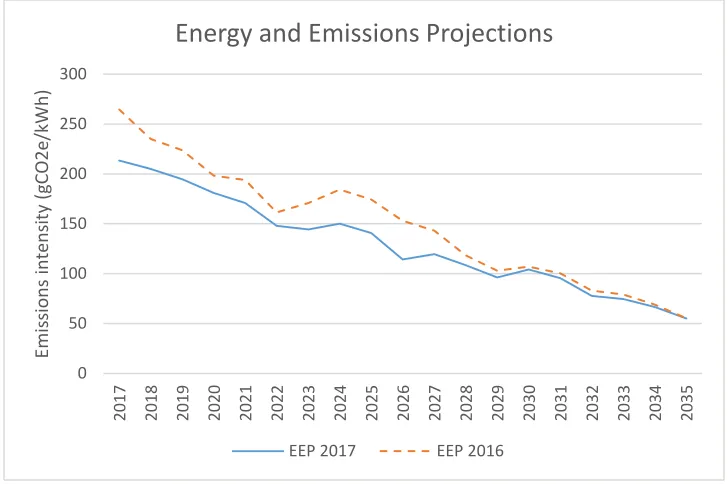
Figure 2.5: UK Grid emissions intensity (BEIS, 2018a) ... 68
Figure 3.1: Summary of the TM54 methodology for estimating the operational energy consumption at the design stage (CIBSE 2013a). ... 84
Figure 3.2: Heat transfer mechanisms in a building (reproduced from EDSL, 2015b) ... 90
Figure 3.3: Floor modelling process ... 93
Figure 3.4: Building thermal simulation process ... 95
Figure 3.5: TAS systems simulation process ... 96
Figure 3.6: TAS UK Building Regulation Studio Process ... 97
Figure 4.1: Architectural plan of Hilton Reading Hotel ... 103
Figure 4.2: Architectural plan of Hilton London Heathrow Airport Terminal 4 Hotel ... 107
Figure 4.3: Architectural plan of Hilton London Gatwick Airport hotel ... 111
Figure 4.4: Summary of case study methodology for building energy estimation and validation ... 125
Figure 4.5: Typical floor plan showing floor usage and allocation of zones (Hilton Reading) . 126 Figure 4.6: TAS 3D model of the building (Hilton Reading) ... 127
Figure 4.7 Showing UK Building Regulation simulation results (Hilton Reading) ... 128
Figure 4.8: Showing Plant/system simulation results (Hilton Reading) ... 130
ix
Figure 4.10: Breakdown of annual energy consumption into natural gas and electricity (Hilton
Reading). ... 134
Figure 4.11: Showing systems simulation result + Catering energy use vs. Building Reg. vs. Actual building consumption (Hilton Reading) ... 135
Figure 4.12: Typical floor plan showing floor usage and allocation of zones (Hilton London Heathrow hotel) ... 137
Figure 4.13: TAS 3D model of the building (Hilton London Heathrow hotel) ... 138
Figure 4.14: Energy performance result from plant/system simulation (Hilton London Heathrow hotel) ... 139
Figure:.4.15: Annual systems simulation result + Catering energy use vs. Actual building consumption (Hilton London Heathrow hotel) ... 141
Figure 4.16: Breakdown of annual energy consumption into natural gas and electricity (Hilton London Heathrow) ... 142
Figure 4.17: Typical floor plan showing floor usage and allocation of zones (Hilton London Gatwick Airport hotel) ... 144
Figure 4.18: TAS 3D model of the building (Hilton London Gatwick Airport hotel) ... 144
Figure 4.19: Showing building performance result ... 146
Figure 5.1: Summary of case study methodology ... 153
Figure 5.2: Zoning of atrium and adjoining double skin façade. ... 154
Figure 5.3: External temperature, DSF cavity temperature and Atrium temperature result without extraction fans vs. time (day, hour) throughout the year. ... 156
Figure 5.4: Difference in resultant temperature between the east DSF cavity and adjoining central atrium (without extract fan) ... 158
Figure 5.5: Difference in the resultant temperature between the west DSF cavity and adjoining central atrium (without an extract fan) ... 158
Figure 5.6: DSF Cavity simulation result for a typical cold mostly cloudy day ... 160
x
Figure 5.8: Temperature of thermal sensor installed in the east facing DSF cavity ... 163
Figure 5.9: DSF façade thermal sensor temperature reading vs DSF façade simulation temperature
result ... 164
Figure 5.10: Resultant temperature difference between the DSF cavity and central atrium (with
and without extraction fan) ... 166
Figure 5.11: The difference in resultant temperature in the central atrium space due to the effect of
the extraction fan... 168
Figure 5.12: Overall energy consumption result for simulation with and without extract fan ... 170
Figure 5.13: Impact of DSF cavity extraction fan on the heating and cooling energy consumption
... 172
Figure 5.14: Annual overall energy consumption result (without extract fan vs. with extract fan vs
extract fan in operation in summer only) ... 174
Figure 5.15: External temperature of CIBSE London TRY weather data vs. CIBSE Edinburgh
TRY weather data ... 175
Figure 5.16: External temperature, DSF cavity temperature and Atrium temperature result without
extraction fans vs. time (day, hour) throughout the year (Edinburgh model). ... 176
Figure 5.17: Difference in resultant temperature between the east DSF cavity and adjoining central
atrium (Edinburgh model without extract fan) ... 178
Figure 5.18: Difference in the resultant temperature between the west DSF cavity and adjoining
central atrium (Edinburgh model without an extract fan). ... 178
Figure 5.19: DSF Cavity simulation result for a typical cold mostly cloudy day (Edinburgh model)
... 180
Figure 5.20: DSF Cavity simulation result for a typical Hot sunny day (Edinburgh model) ... 182
Figure 5.21: Resultant temperature difference between the DSF cavity and central atrium (with
and without extraction fan) for Edinburgh model... 184
Figure 6.1: Summary of case study method... 191
xi
Figure 6.3: Impact of window films on heating energy consumption ... 197
Figure 6.4: Impact of window films on cooling energy consumption ... 199
Figure 6.5: Impact of window films on the cooling load profile for a typical hot sunny summer day. ... 201
Figure 6.6: Impact of window films on the heating load profile for a typical cold mostly clear winter day... 203
Figure 6.7: Impact of window films on the radiant temperature on a typical hot sunny summer day ... 204
Figure 6.8: Impact of window films on overall lighting energy consumption ... 205
Figure 6.9: Impact of window films on CO2 emissions ... 207
Figure 6.10: Impact of window films on natural gas cost ... 209
Figure 6.11: Impact of window films on electricity cost ... 211
Figure 6.12: Impact of window films on overall energy cost ... 213
Figure 6.13: Typical floor plan showing zone allocation and building orientation ... 217
Figure 6.14: Impact of window films applied to the east or west facing windows on the overall energy consumption. ... 218
Figure 6.15: Simulation overall energy consumption results (Hilton London Heathrow) ... 220
Figure 6.16: Impact of window films on heating energy consumption (Hilton London Heathrow) ... 222
Figure 6.17: Impact of window films on cooling energy consumption (Hilton London Heathrow) ... 224
Figure 6.18: Impact of window films on CO2 emissions (Hilton London Heathrow) ... 227
Figure 6.19: Impact of window films on overall energy cost ... 229
xii
Figure 6.21: Impact of window films on heating energy consumption (Hilton Reading, Edinburgh
simulation) ... 234
Figure 6.22: Impact of window films on cooling energy consumption (Hilton Reading, Edinburgh simulation) ... 236
Figure 6.23: Impact of window films on CO2 emissions (Hilton Reading, Edinburgh simulation) ... 238
Figure 7.1 Typical energy savings of a CHP system relative to traditional energy sources of heat and power generation in the UK (Carbon Trust, 2010). ... 247
Figure 7.2: Summary of case study method... 251
Figure 7.3: showing the breakdown of building energy demand ... 253
Figure 7.4: Total energy consumption result (without CHP vs. with CHP) ... 254
Figure 7.5: Electricity generation results and total energy consumption... 256
Figure 7.6: Cost and carbon emission result (without CHP vs. with CHP) ... 258
Figure 7.7: Total energy consumption result (without CHP vs. with 307kWe CHP) ... 260
Figure 7.8: Electricity generation results and total energy consumption (307kWe CHP)... 262
Figure 7.9: Cost and carbon emission result (without CHP vs. with 307kWe CHP) ... 264
Figure 7.10: Impact of UK Grid decarbonisation on the carbon emissions for the CHP installation ... 267
xiii
List of Tables
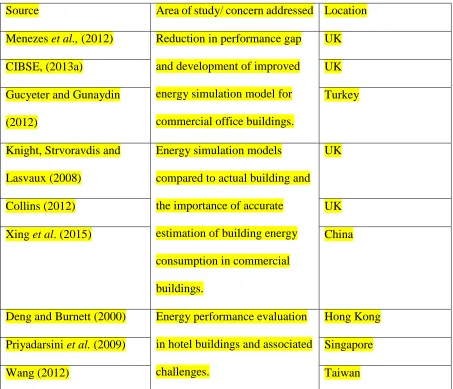
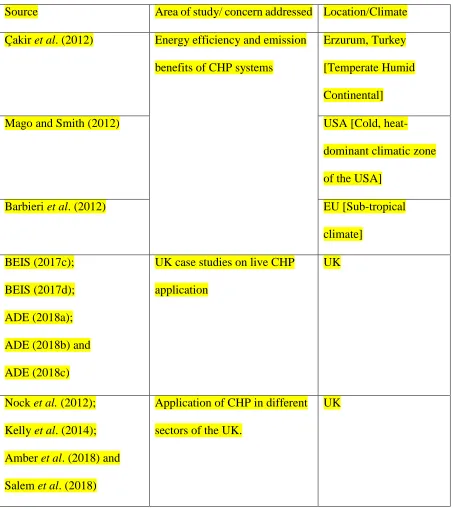
Table 2.1 Summary table of previous studies on performance gap and estimation of building
energy performance ... 35
Table 2.2: Summary table of previous studies on the impact of window glazing and glazing energy improvement measures ... 45
Table 2.3: Summary table of previous studies on the impact of glazed building façade on building energy performance ... 50
Table 2.4: Types of CHP and application ... 54
Table 2.5: CHP financing options ... 59
Table 2.6: UK Grid emissions intensity data set... 67
Table 2.7: Summary table of previous studies on performance and application of CHP Systems in efficient energy production ... 73
Table 3.1: General description of input used in the models ... 81
Table 4.1: General description of input used in each model... 112
Table 4.2: Modelling and simulation parameters based on the case study building’s characteristics (Hilton Reading hotel) ... 115
Table 4.3: Modelling and simulation assumptions based on NCM building type and use for Hilton Reading Hotel ... 116
Table 4.4: Summary of building services input (Hilton Reading hotel) ... 117
Table 4.5: Modelling and simulation parameters based on the case study building’s characteristics (Hilton London Heathrow Airport Terminal 4) ... 118
Table 4.6: Modelling and simulation assumptions based on NCM building type and use for Hilton London Heathrow Airport Terminal 4 ... 119
xiv
Table 4.8: Modelling and simulation parameters based on the case study building’s characteristics
(Hilton London Gatwick Airport) ... 121
Table 4.9: Modelling and simulation assumptions based on NCM building type and use for Hilton
London Gatwick Airport) ... 122
Table 4.10: Summary of building services input (Hilton London Gatwick Airport) ... 123
Table 6.1: Performance Properties of PR 70 EXT applied to a typical single and double pane clear
or tinted window (3M, 2016) ... 192
Table 6.2: Performance Properties of PR 40 EXT applied to a typical single and double pane clear
or tinted window (3M, 2016) ... 193
Table 6.3: Summary table showing percentage difference between simulation result without
window film compared to simulation result incorporating window films on all orientation ... 215
Table 6.4: Summary table showing percentage difference between simulation result without
window film compared to simulation result incorporating window films on all orientation (Hilton
London Heathrow) ... 230
Table 6.5: Summary table showing percentage difference between simulation result without
window film compared to simulation result incorporating window films on all orientation (Hilton
Reading, Edinburgh simulation) ... 240
Table 7.1: UK electricity emissions factor projections ... 266
Table 7.2: Summary table showing percentage difference between key simulation results without
xv
List of Acronyms/Abbreviations
ADE Association of Decentralised Energy
AHU Air Handling Units
ASHRAE American Society of Heating, Refrigerating and Air Conditioning
Engineers
BEEM Building Energy and Environmental Modelling
BEIS Department for Business, Energy and Industrial Strategy
BLAST Building Loads Analysis and System Thermodynamics
BRE Building Research Establishment
BREEAM Building Research Establishment Environmental Assessment Method
BRUKL Building Regulations United Kingdom Part L
BS British Standard
CAD Computed Aided Design
CCGTs Combined Cycle Gas Turbines
CCL Climate Change Levy
CEN European Committee for Standardization
CIBSE Chartered Institution of Building Services Engineer
CFD Computational Fluid Dynamics
xvi
CCHP Combined Cooling and heating and Power
CHP Combined Heat and Power
CHPQA Combined Heat and Power Quality Assurance Programme
CO2 Carbon-dioxide
CO2-eq Carbon-dioxide equivalent
COP Conference of Parties
CRC Carbon Reduction Commitment
DCLG Department of Community and Local Government
DECC Department of Energy and Climate Change
DOE-2 Department of Energy
DHW Domestic Hot Water
DSF Double Skin Façade
DSM Dynamic Simulation Model
DSY Design Summer Years
ECA Enhanced Capital Allowances
ECM Energy Conservation Measures
EDSL Environmental Design Solution LTD
xvii
EN ISO International Organisation for Standardisation, European Norm
EPA United States Environmental Protection Agency
EPBD Energy Performance of Building Directive
EPC Energy Performance Certificate
ERMs Energy Retrofit Measures
ESCO Energy Service Company
ESP-r Integrated energy modelling tool
ETTV Envelope Thermal Transfer Value
EU European Union
EUI Energy Use Intensity
FCU Fan Coil Units
gCO2e Grams Carbon-dioxide equivalent
GHG Green House Gas
G-Value coefficient of solar energy transmittance of glass
HDD Heating Degree Days
HVAC Heating Ventilation and Air Conditioning
IEA International Energy Agency
xviii
ISO International Organisation for Standardisation
K Unit of measurement of temperature, Kelvin
Kg Kilo-grams
kWh/m2 Kilowatt hours per square metre
kWe Kilowatt electricity
LCICG Low Carbon Innovation Coordination Group
LED Light-emitting Diode
LEED Leadership in Energy and Environmental Design
LSG Light to Solar Gain
MtCO2 Metric Tons of Carbon-dioxide
MW Mega-Watt
MWe Mega-Watt electricity
MWh Mega-Watt-Hour
NCM National Calculation Methodology
NEEAPs National Energy Efficiency Action Plans
NOx Nitrogen Oxide
OECD Organization for Economic Cooperation and Development
xix
ORC Organic Rankine Cycles
Pa Pascal
PDSYs Probabilistic Design Summer Years
PFI Private Finance Initiative
POE Post Occupancy Evaluation
ppm parts per million
PV-CHP Photovoltaic Combined Heat and Power
RCEP Royal Commission on Environmental Pollution
SAP Standard Assessment Procedure
SBEM Simplified Building Energy Model
SC Shading Coefficient
SHGC Solar Heat Gain Coefficient
T Temperature
TAS Thermal Analysis Software
TBD TAS Building Designer
Tc Thermal comfort
TM Technical Memorandum
xx
TWh Terawatt-hour
UHI Urban Heat Island
UK United Kingdom
UKCP United Kingdom Climate Projections
UNEP-SBCI United Nations Environmental Protection - Sustainable Building and
Climate Initiative
UNFCCC United Nations Framework Convention on Climate Change
US United States
USGBC United States Green Building Council
UTC Universal Time Coordinated
UV Ultraviolet
U-Value Thermal transmittance
VAV Variable Air Volume
VB Venetian Blinds
WCDH Weighted Cooling Degree Hours
WMO World Metrological Organisation
xxi
Dedicated To
My beloved parents,
Surv. Ibrahim Mohammed Rotimi
&
Hajia Ajoke Rotimi
Who have dedicated their lives for me and my wellbeing with boundless
love and support
xxii
Acknowledgements
I am grateful to all those with whom I have had the pleasure to work with throughout the course
of my research. I am thankful to the entire supervisory team: Dr. Anastasia Mylona, Dr. Paulina
Godfrey, and Mr. Darren Cook for their guidance and valuable insight throughout my doctoral
studies. I am particularly grateful and indebted to my principal supervisor, Dr. Ali
Bahadori-Jahromi for his guidance, extensive personal, technical and professional support and who has
taught me in-depth knowledge about research and life in general. I am also very thankful to him
for providing me with the opportunity to gain teaching experience and training.
The support of my family members has been highly important to me in the pursuit of my doctorate
degree. I would like to express my gratitude to my parents and siblings (Amina and
Mohammed-awal) for their endless prayers and support. I am also grateful to all my friends, particularly
Abubakar Sani Kawuwa and Oluwatoyin Ajibade, for their encouragement and counsel. A very
special mention to my fiancée, Amina Abdulsalam for her unfaltering emotional support, kind
wishes and prayers.
Above all, I would like to thank the almighty Allah, for life, good health, His infinite mercies and
xxiii
List of Published and Submitted Journal Papers
Parts of the work presented in this thesis have appeared in the following publications that have been produced in advance of this thesis:
1. Rotimi, A., Bahadori-Jahromi, A., Mylona, A., Godfrey, P. and Cook, D. (2017). ‘Estimation and Validation of Energy Consumption in UK Existing Hotel Building Using Dynamic Simulation Software’, Sustainability. Multidisciplinary Digital Publishing Institute 9 (8) p. 1391. https://doi.org/10.3390/su9081391
2. Bahadori-Jahromi, A., Rotimi, A., Mylona, A., Godfrey, P. and Cook, D. (2017) ‘Impact of Window Films on the Overall Energy Consumption of Existing UK Hotel Buildings’,
Sustainability. Multidisciplinary Digital Publishing Institute, 9(5), p. 731.
https://doi.org/10.3390/su9050731
3. Rotimi, A., Bahadori-Jahromi, A., Mylona, A., Godfrey, P. and Cook, D. (2017) ‘Impact of cavity extraction fans on thermal and energy performance of existing UK hotel’.
Proceedings of the Institution of Civil Engineers – Engineering Sustainability,
https://doi.org/10.1680/jensu.17.00017
4. Rotimi, A., Bahadori-Jahromi, A., Mylona, A., Godfrey, P. and Cook, D. (2018) ‘Optimum size selection of CHP retrofitting in existing UK hotel building’,
Sustainability- Multidisciplinary Digital Publishing Institute, 10(6) p. 2044.
1
Chapter 1: General Introduction
1.1
Background
The complex and wide-ranging effects of climate change can include a rise in sea levels, flooding,
drought and increased temperature (WMO, 2013). The certainty of the adverse impact of climate
change and the possibility that the increasing cause of global warming pollutants (greenhouse
gases) is human activities is now widely acknowledged (Taylor et al., 2010; UKCP, 2010; Amoako-Attah, 2015). A substantial reduction in the amount of carbon dioxide (CO2)emissions
resulting from human activities is required to curb global warming, which has led to the
development of numerous measures to ensure that cleaner and more efficient energy sources are
utilised in all facets of people’s lives. The historic legally binding universal agreement to curb
climate change that was recently reached in the United Nations Framework Convention on Climate
Change (UNFCCC) Conference of Parties (COP) 21 further shows the increased global
commitment to limit anthropogenic climate change (UNFCCC, 2015). The agreement aims to
ensure the global temperature rise in this century is significantly below 2 degrees Celsius and to
limit the temperature increase even further to 1.5 degrees Celsius above pre-industrial levels
(UNFCCC, 2015).
The United Kingdom (UK) is amongst the leading countries taking significant measures to
generally improve energy efficiency. This helps the UK accomplish two main strategic aims in its
energy policy of reducing CO2 emissions to agreed standards and to ensure the sustainable
provision of affordable energy to meet increasing demand (Amoako-Attah, 2015). Therefore, a
law was put in place to ensure a 60% reduction in CO2 emissions by 2050, following the Royal
Commission on Environmental Pollution’s (RCEP) report in 2000 (RCEP, 2000). This target has
2
reducing the CO2 emissions from buildings (residential and commercial) since studies/analysis
have shown that they account for a substantial proportion of the country’s emissions (Carbon Trust,
2013). The UK building stock is one of the oldest in Europe, with over a third of dwellings
constructed before 1945 and one quarter of the of non-domestic building stock constructed before
1940 (National Energy Efficiency Action Plans (NEEAPs), 2017). Therefore, to achieve the CO2
emissions reduction, it is important to significantly reduce emissions from existing buildings which
makes up the bulk of buildings.
Among existing buildings, a considerable number of studies have been conducted on improving
the thermal performance and efficiency of dwellings primarily because they account for most of
the existing buildings and consume more energy than the commercial and public administration
(Department of Energy & Climate Change, 2015). However, to attain the UK’s overall goal of
reducing CO2 emissions by 80%, it is equally imperative that the thermal performance and
efficiency of non-domestic buildings be effectively studied (BRE, 2000). Possible explanations
for the high emissions in hotels can be attributed to the fact that hotels generally prioritise comfort
of guests and the guest mind-set is centred on experiencing luxury without the added pressure of
behaving in an energy efficient manner that they might encounter elsewhere (Roberts, 2008).
Moreover, hotels operate on a 24/7, 365 days a year basis. This unique occupancy behaviour makes
reducing emissions a further challenge. The Carbon Trust (2013) highlighted that although
emissions from dwellings are more than that of the commercial buildings, emissions from
commercial buildings, offices, factories, hotels, hospitals and schools account for 18% of the UK’s
CO2 emissions with an annual energy consumption of 300TWh (Carbon Trust, 2013). This
3
Additionally, energy efficiency measures are more cost effective in commercial buildings because
they are typically larger than dwellings.
It is important to make informed strategic decisions and investments in relation to energy
performance improvements which incorporate cost effective and sustainable environmental
considerations. These decisions and solutions should be knowledge based and sustainable. An
important initiative that started against the backdrop of the historic Paris Conference of Parties
(COP) 21 Agreement by over 100 leading corporates is the ‘science-based targets’ (Carbon Trust,
2016a). According to the Carbon Trust (2016a), a science-based target is defined as a carbon
emission reduction target that is in line with the measure of reductions needed to achieve the global
temperature increase below 2˚C compared to pre-industrial temperatures as described in the
assessment reports of the Intergovernmental Panel on Climate Change (IPCC). The initiative
entails making revolutionary commitments to set carbon emissions targets that are underpinned
with the best available science; over 170 companies have made commitments, with approximately
2 major businesses per week signing up (Carbon Trust, 2016b). This new corporate commitment
shown by leading companies will only encourage other companies in all sectors, including the
hospitality industry, to align their decarbonisation and energy efficiency strategies with the
science-based target. Some of the measures that can be employed to achieve reduced CO2
emissions, particularly in commercial buildings, include implementing energy efficiency and
management, retro-fitting new technologies (relating to both the building fabric, lighting, Heating
Ventilation and Air Conditioning (HVAC) and the activities within) and exploring onsite
building-integrated thermal and electrical generation such as, Combined Heat and Power (CHP) and solar
4
To evaluate the effectiveness of the various options, computer aided dynamic simulation software
packages are normally used. Collins (2012), argues that the need to estimate annual energy
consumption in existing buildings and the built environment at large is becoming ever more
important, as greater attention is now being placed on effectively controlling utility costs, total
energy consumption and CO2 emissions. Estimated energy use can be utilised for various purposes
such as justification for proposed refurbishment works, developing budgets for utility costs,
demonstrating compliance with certain regulation targets etc. The European Union (EU) ‘Energy
Performance of Building Directive’ (EPBD), which is aimed at helping its member states attain
higher energy efficient buildings, places emphasis on the necessity to develop certain
methodologies for energy performance estimation and the issuance of an energy performance
certificate (Gucyeter & Gunaydin, 2012). The directive specifically makes it compulsory for all
member states to develop national calculation methodologies that are in conformity with the
structure of the directive’s findings (EPBD, 2002). In the UK, two main systems are used for
domestic and non-domestic buildings to demonstrate compliance with the EPBD directive. The
Standard Assessment Procedure (SAP) for the energy rating of a dwelling is used for domestic
buildings whereas the Simplified Building Energy Model (SBEM) which accommodates a broader
variety of building types is used for non-domestic buildings (BRE, 2006). “Part L: Conservation
of Fuel and Power” of the Building Regulations governs the energy efficiency of new buildings
(of all types) in England and Wales with extensions such as L2A for new non-domestic buildings
and L2B for work in existing non-domestic buildings (BRE, 2006). Although there has been
significant progress made in the area of tools (software packages) designed to estimate the energy
5
the energy performance of an actual building with real occupancy behaviour and activities
(Menezes et al., 2012).
Therefore, from the issues highlighted above and a review of the relevant body of knowledge, this
research aims to address the impact of the use of various energy improvement technologies or
measures on the thermal performance and energy efficiency of UK hotel buildings with the aid of
a computational dynamic simulation software (with application to Hilton hotels). The energy
improvement measures that are considered are the efficient technologies which are been marketed
by numerous suppliers; the impact of these technologies on the overall building energy
performance is examined when installed individually and in different combinations. A review of
past research indicates that studies investigating the effect of interventions and technologies on the
thermal performance and efficiency of hotels in the UK have mostly been done on the design of
new buildings. Moreover, when these technologies are examined in existing buildings, the
interdependency and knock-on effects that they have on the overall energy performance of the
building are not analysed. This research aims to contribute to this gap in knowledge by analysing
the interdependency and impact that these various technologies have on buildings, thereby helping
building professionals and hotel management in making relatively quick and informed decisions
in the application of various energy improvement interventions/technologies towards improving
the thermal performance and energy efficiency of hotels.
1.2
Aim
The main focus of this research is to evaluate the impact of various technologies on the thermal
performance and energy efficiency of hotel buildings using holistic whole building simulation
models. The holistic models are developed with thermal analysis simulation software to enable
6
performance and efficiency of hotel buildings. The simulations give results in formats that allow
for the drilling down of individual systems or plant items and also enable the study of the effect of
improvements/interventions made to buildings, that is, considering the adverse or knock-on effects
that these improvements might have on each other. For example, the introduction of LED lamps
meant to reduce the lighting energy consumption can have an impact on the overall cooling load
(i.e. by reducing the amount of heat emitted as compared to conventional halogen lights),
consequently increasing the heating requirement and how this affects the efficacy of solar film
installation in windows or an existing shading system.
1.3
Identified knowledge gap
This research makes a scholarly contribution with an approach employing the practical application
of whole building thermal analysis simulation software to examine the energy and thermal
performance of existing buildings. In particular, this whole building simulation approach considers
the knock-on effects of the different installed energy improvement measures on the energy
performance of buildings. This work also identifies from the literature some areas requiring further
research.
1. Reduction of the performance gap between estimated building energy consumption using
dynamic simulation models and the actual site consumption, especially in hotel buildings.
2. Impact of building façades, particularly the double-skin façade (DSF) and its cavity space
ventilation, on the thermal performance and the overall energy performance of existing
hotel buildings.
3. Impact of glazing and glazing energy improvement retrofit on the energy performance of
7
4. Impact of Combined Heat and Power (CHP) systems on the energy performance of existing
UK hotel buildings and optimum size selection in CHP retrofitting.
1.4
Objectives
The objectives presented below are employed to achieve the aim of this research:
1. Estimation and validation of energy consumption in existing UK hotel building using
dynamic simulation software.
Tasks to achieve aim:
a. Collection of all necessary data such as CAD plans, building fabric makeup,
plants/system information and operating energy consumption and site survey to
verify the collected data.
b. Creation of a hotel model on the dynamic simulation software using the collected
data
c. Estimation of annual energy consumption of the hotel using the Building
Regulation Part L model.
d. Estimation of annual energy consumption of the hotel using a bespoke energy
model. This is done through the systems modelling component of the dynamic
simulation software.
e. Improvement of the system modelling result by estimating and accounting for
(unregulated energy use) catering energy use.
f. Validation of the model’s results and comparison against actual building
8
2. Evaluation of the impact of extraction fans in the cavity of the east and west double-skin
facade on the overall energy consumption and thermal performance of existing UK hotel
buildings.
Tasks to achieve aim:
a. Collection of all necessary data such as architectural plans, building fabric makeup,
plants/system information and operating energy consumption. A site survey was
also undertaken to verify the collected data.
b. Development of the hotel model in the dynamic simulation software using the data
obtained.
c. Estimation of the annual overall energy consumption of the hotel via the system
modelling component of the dynamic simulation software.
d. Improvement of the system modelling result by including estimation of unregulated
energy use (catering energy use); subsequently, validation of the model’s results
and comparison against actual building operational energy consumption.
e. Incorporation of extraction fans in the DSF cavity of the hotel building model and
comparison of the energy and thermal performance to the hotel model without the
extraction fans.
3. Evaluation of the impact of window films on the overall energy consumption of existing
UK hotel buildings.
9
a. Collection of all necessary data such as architectural plans, building fabric makeup,
plants/system information and operating energy consumption. A site survey and
visitation were also undertaken to verify collected data.
b. Development of a hotel model on the dynamic simulation software using the data
obtained.
c. Estimation of the annual overall energy consumption of the hotel via the system
modelling component of the dynamic simulation software.
d. Improvement of the system modelling result by including estimation of unregulated
energy use (catering energy use); subsequently, validation of the model’s results
and comparison against actual building operational energy consumption.
e. Incorporation of window films into the hotel building model and comparison of the
energy performance to the hotel model without the window films.
4. Evaluation of the impact of CHP systems on the energy performance of existing UK hotel
buildings and optimum size selection in CHP retrofitting.
Tasks to achieve aim:
a. Collection of all required data including architectural plans, building fabric
properties, plants/system information, building occupancy information and
operating energy consumption; a site survey and visitation were also undertaken to
verify the collected data.
b. Creation of a hotel model on the dynamic simulation software using the collected
data.
c. Estimation of the annual total energy consumption of the hotel through
10
verification of the model’s results via comparison of the model result against actual
building operational energy consumption.
d. Incorporation of the CHP into the hotel building model to evaluate the possible
maximum CHP size based on the hotel’s base heating load with the priority to meet
Domestic Hot Water (DHW) demand, which is substantial and consistent
throughout the year; hence, ensuring that all the heat produced by the CHP is
utilised.
e. Reduction of the estimated maximum size by 10%, 20%, 30%, 40%, 50%, 60% and
70%. Subsequently, critical analysis of the CHP performance over this range is
employed as a basis of selection of the optimum CHP size.
1.5
Motivation and research questions
The main motivating factors that are driving this research are the potential it has towards
contributing to existing knowledge and contribution to business. The need to reduce carbon
emissions due to the adverse impact of global warming has prompted responses especially in the
UK building regulation, which favours building fabrics and technologies that increase the
airtightness of buildings. This has increased the risk of overheating in buildings especially in
regard to increasing warmer future weather predictions, which means more energy might be
expended in the future for cooling especially in hotels which prioritise customer satisfaction. This
research will therefore contribute to ongoing research trends that focus on providing sustainable
solutions to this intricate balancing challenge in providing efficient buildings. The contribution to
business for this research is from its potential to highlight possible energy improvement measures
to hotel decision makers and provide them with an idea of where they can invest their money and
11
Additionally, the potential of this research to answer the research questions is another motivating
factor. These research questions are:
What methodology can be adopted to use thermal analysis software as a simple and
practical approach in the estimation and validation of energy consumption in existing UK
hotel buildings?
What are the effects of various improvement interventions and technologies on the
efficiency of hotels in the present climatic conditions?
Which of the various technologies are the most appropriate in improving the efficiency of
hotels based on their interdependency with each other?
Which of the considered technologies/interventions are the most appropriate for new
buildings and which are best suited as retrofits for existing buildings?
1.6
Thesis outline and chapter layout
Chapter 1: General introduction
The introduction chapter presents a general background of the study area highlighting the
relevance of the research topic to the United Kingdom’s commitment to reducing energy
consumption in buildings. It also lays out the research aim and objectives and identifies the
knowledge gap, the motivation behind the research and the research questions.
Chapter 2: Literature review
The literature review chapter presents a critical evaluation of key issues underpinning the aim and
objectives of this research. These include the existing body of knowledge on energy efficiency,
building carbon emissions reduction, building modelling and simulation, building energy
12
Chapter 3: Methodology
This chapter lays out the research method employed for the study. It highlights the research
philosophy, research design, ethical concerns and the general modelling and simulation process
used in the study.
Chapter 4: Estimation and validation of energy consumption in existing hotel buildings in
the UK using dynamic simulation software
This chapter presents an approach of estimating and validating the energy consumption of an
existing hotel building. The approach helps to reduce the expected performance gap between the
operational energy estimate and actual building energy use.
Chapter 5: Impact of extraction fans in the cavity of the east and west double-skin façade
(DSF) on the overall energy consumption of an existing UK hotel building
This chapter presents a case study exploring the impact of installed extraction fans in the DSF
cavity of an existing hotel building on the thermal and energy performance of the building. it
considers the prevailing thermal condition of the DSF cavity space and consequently, examines its
influence on the thermal behaviour of the adjoining large central atrium and its impact on the total
energy performance of the building.
Chapter 6: Impact of window films on the overall energy consumption of existing UK hotel
buildings
This chapter investigates the holistic energy performance improvement potentials of solar window
13
case study hotel buildings. It interrogates the holistic models to evaluate the impact of the solar
window films on the various components of the buildings’ energy consumption.
Chapter 7: Optimum size selection of Combined Heat and Power (CHP) retrofitting in
existing UK hotel buildings
This chapter evaluates the impact of CHP systems on the energy performance of existing UK hotel
buildings with the aid of whole building simulation software, including an approach of optimum
size selection in CHP retrofitting.
Chapter 8: Conclusions and Recommendations
This final chapter presents the main conclusions deduced from the previous chapters including a
summary of the conclusions of the studies undertaken in the thesis. This chapter also highlights
the practical application of the outcome of the thesis, the study limitations, its modest contributions
15
Chapter 2: Literature Review
2.1
CO2 Emission Reduction and Energy Consumption
Considerable scientific proof of the manifestation of climate change, its man-made origin and
possible overwhelming impacts continue to accrue (IEA, 2013a). King et al. (2015) highlighted that owing to the increased man-made emissions of greenhouse gases (GHG), there have been
higher global temperature and sea level rises in recent times compared to the preceding decade.
Consequently, in order to mitigate the severe environmental costs for billions of people, it is
imperative to keep the global rise in temperature, which is already 0.8oC, above the pre-industrial
level to 2 oC below this level (King et al., 2015). The environmental consequences include more extreme drought, gales, heat waves and flooding that can result in loss of livelihood for millions,
increased global migration, tensions and the risk of war.
The adverse impact of GHG emissions has global consequences and thus, tackling climate change
involves coordinated action by nations around the world. Therefore, the UNFCCC was established
in 1992 as the foremost body for international action on climate change. This international
convention has been subscribed to by195 countries and negotiations are focused on four major
areas (Committee on Climate Change, 2017):
Abating greenhouse gas emissions
Adapting to climate change
Reporting of national emissions
16
According to the UNFCCC (2014), Article 2 of the UNFCCC 1992 convention states that the main
aim of the convention is to accomplish the stabilization of GHG concentrations in the atmosphere
at a level that would mitigate harmful anthropogenic interference with the global climate. This
level should be attained in a timely manner to enable natural adaptation of ecosystems to climate
change, to guarantee that food production is not endangered and to allow economic development
to proceed in a sustainable fashion. However, the recent CO2 concentration in the atmosphere has
increased to 400 ppm (parts per million) from 270 ppm in the pre-industrial period and continues
to increase in excess of 2 ppm annually (United States Environmental Protection Agency, 2016).
This current relentless increase in the levels of atmospheric CO2 further highlights the seriousness
of the situation. According to the IEA (2013a) in order to help guard against the adverse impacts
of climate change, the global international consensus is that maintaining the concentration of GHG
at below 450 ppm of CO2 equivalent is in agreement with a near 50% chance of achieving the 2°C
target below the pre-industrial level. Moreover, some experts argue that the perils earlier thought
to be correlated with a global temperature increase of about 4°C are presently associated with an
increment of just over 2°C. Similarly, the dangers formerly linked with 2°C are now believed to
arise with just a 1°C temperature increase (Smith et al., 2009).
To improve the chances of adequately curbing the impact of climate change, it is imperative that
the GHG emissions, especially CO2 from global energy consumption, is significantly reduced, as
it is the primary source of GHG emissions. Energy is central to all economic and social
development and an enhanced quality of life. Energy is defined as the ability to do work and it is
available in different forms, for example, mechanical, electricity, thermal, chemical, nuclear,
radiant, gravitational and sound (Bilgen, 2014). The main sources of energy can be fossil fuels
17
solar, geothermal) and fissile material derived from atoms like uranium, plutonium, etc (Bilgen,
2014).
According to the IEA World Energy Outlook (IEA, 2016), the energy sector was responsible for
over two-thirds of the overall global GHG emissions in 2010 with around 90% of this energy
associated GHG emissions being from CO2 and about 9% from methane (CH4) and its effect is
normally analysed in terms of carbon-dioxide equivalent (CO2-eq). Nonetheless, the global energy
consumption remains on the increase, mainly driven by fossil fuels, which account for more than
80% of global energy consumption, a proportion of which has steadily been on the increase since
the mid-1990s (IEA, 2013a).
Additionally, the fast growth witnessed in the use of coal in recent times has basically abated
primarily due to increased environmental concerns (IEA, 2016). Therefore, there was a 0.1%
marginal but encouraging reduction in CO2 emissions from combustion of fossil fuel, cement
production and other processes globally in 2015 (Olivier et al., 2016). However, this reduction in global emissions, which can be better described as a stall in CO2 emissions, was not accidental,
especially if the uncertainty in the trend from the data sources are taken into account. Rather, the
reduction was due to structural changes in the global economy, the improvement in global energy
efficiency and in the energy mix of major world players (Olivier et al., 2016). Furthermore, for the first time in at least four decades, the stalling or reduction in emissions is not wholly or partly
associated with an economic downturn (IEA, 2015). Especially since emissions across the
Organization for Economic Cooperation and Development (OECD) continued to dissociate from
economic growth, similarly, emission records from China indicated initial signs of a diminishing
correlation between economic expansion and emission growth, even though it is not yet completely
18
Commission on the trend in global CO2 emissions (Olivier et al., 2016) provided the key data
behind the stall in global CO2 emissions observed in 2015 as follows:
Two major global players, China and the United States, decreased their CO2
emissions by 0.7% and 2.6% respectively compared to 2014. One key factor
responsible for the Chinese reduction in CO2 emissions was the change in their
energy mix and the economy. The energy mix in China witnessed a 1.5%
reduction in coal and 1% increase in the proportion of renewable fuel in primary
energy consumption. The increase in non-fossil fuels was attained due to growth
in nuclear energy by 29%, hydropower by 5% and others such as wind and solar
energy by 21%. Similarly, the United States significantly reduced their CO2
majorly due to a 13% reduction in coal consumption, which is the largest
comparative reduction in any fossil fuel consumption in over half a century, with
most of the electricity produced by gas fired plants.
There was also a 3.4% and 2.2% reduction in emissions by the Russian Federation
and Japan respectively, although this was negated by 5.1% and 1.3% increases in
emissions by India and the European Union respectively. Moreover, there were
increased emissions from a substantial group of the smallest countries. The 1.3%
increase in the European Union’s CO2 emissions was preceded by four years of
reductions in annual emissions on a 3.1% average rate. This stagnation and
subsequent increase was largely caused by a 4.6% increase in the consumption of
natural gas for space heating and generation of electricity and a 4% increase in
diesel consumption in the transport sector. Conversely, there was a 1.3% in
19
mainly due to a considerable 29% larger share of non-fossil fuel electricity from
wind, solar and hydropower. The increased share of renewable electricity resulted
in a 1.8% reduction in coal consumption, which was mainly used in the power
generation sector.
The slowdown in energy-linked CO2 emissions, as highlighted above, was primarily due to a 1.8%
improvement in the energy intensity of the global economy, a shift strengthened by the
improvement in energy efficiency along with the global expansion in the use of cleaner and mostly
renewable energy sources (IEA, 2016). Therefore, it is important that further global efforts aimed
at improving energy sector efficiency are needed, as the current trend demonstrates the potential
of low-carbon energy consequently giving credibility to meaningful action on global climate
change. This is particularly the case as it is widely acknowledged that transformative change in
the energy sector, which accounts for at least two-thirds of global GHG emissions, is crucial to
attain the goals of the COP21 Paris Agreement on climate change (IEA, 2016).
Most countries that are party to the Paris Agreement are on track to attain, and in some cases,
surpass several of the targets set in their Paris Agreement commitments. Although this is adequate
to slow the predicted rise in global energy-linked emissions, it is not sufficient to limit the global
warming to less than 2 0C (IEA, 2016; Committee on Climate Change, 2017). Moreover, the new
US Administration has declared that it will quit the Agreement. However, several other countries,
organisations, and subnational governments have reaffirmed their commitment in response to this
announcement (Committee on Climate Change, 2017). These countries include major stakeholders
such as China, India, the EU, Canada, Mexico and Australia; also, within the US, there is the US
Climate Alliance of states (accounting for around a fifth of US emissions and two-fifths of US
20
commitments and advancement in establishing global national-level policies denote that the global
shift towards a low-carbon economy is well in motion (Committee on Climate Change, 2017).
2.2
Energy Efficiency and CO2 Emission Reduction in Buildings
The effect of greenhouse gases like CO2 from human activities resulting in global warming and
climate change is generally recognised and proof of its impacts on buildings needs little
justification (UKCP, 2010; Amoako-Attah, 2015). It is also widely acknowledged that average
temperatures will probably continue to increase, indicating that peak summer temperatures in the
UK will increase by up to 7 degrees Celsius over the coming century (CIBSE, 2005; Kendrick et al., 2012). CIBSE (2005), This expected temperature increase will have considerable effects on the indoor thermal condition of UK buildings, with major concerns such as overheating, the
implementation of various passive cooling and comfort cooling strategies and the possible impact
of these strategies on energy use.
Any approach implemented to achieve a comfortable internal building environment in the light of
increasing temperatures must be energy efficient as presently, research works on the sources of
emissions show that buildings account for bulk of the emissions. In the UK, studies have revealed
that the direct CO2 emissions from buildings account for at least 19% of the UK GHG emissions
(Committee on Climate Change, 2017). Moreover, the UK emissions decreased by 6% in 2016,
although this improvement was unbalanced as the reduction was almost solely attributed to power
generation, where there was a swift fall in coal power generation and a resultant 24% reduction in
emissions (Committee on Climate Change, 2017).
21
influenced by the amount and quality of the energy consumption in the building, are internal and
external air pollution, associated health hazards, energy dependence and security. Moreover,
building energy consumption also poses significant energy-linked challenges to sustainable
development, which includes mortality linked to indoor cooking, insufficient energy resources to
facilitate economic growth and development, inequality in the accessibility to modern energy
services and global climate change (Ürge-Vorsatz et al., 2015). Many developed and developing countries have established regulations aimed at the reduction of building energy consumption by
significantly improving the energy efficiency of buildings (Sorgato et al., 2016). Therefore, it is clear that an adequate focus is needed to mitigate against emissions from buildings. This can be
achieved by considerably improving the energy efficiency of buildings thus reducing energy
consumption and CO2 emissions.
CIBSE (2012) describes an energy efficient building as a building that consumes the minimum
amount of energy to provide the required internal environment and services in a cost efficient and
environmentally viable way; that is, energy efficiency does not compromise on comfort. Energy
efficiency is important in both new and existing buildings as new buildings designed for
low-carbon systems can forestall expensive future retrofit and reduce energy utility cost (Committee
on Climate Change, 2017). Furthermore, improvement in the energy efficiency of the existing
building stock can reduce emissions and energy utility costs, enhance competitiveness and asset
values for business, improve the internal building environment, help to reduce fuel poverty and
improve the suitability of the building for the incorporation of low-carbon heating in the future
(Committee on Climate Change, 2017).
Primarily in UK buildings, about half of the energy demand is utilised for space heating, especially
22
the highest consumption of energy by unit floor because of longer periods of occupancy and high
hot water demand (BRE, 2000). The possible positive impact of an already warming and even
warmer predicted future climate on energy consumption is the reduction in heating energy use. A
report by the Intergovernmental Panel on Climate Change (IPCC) advocates that an 18% reduction
in CO2 emissions (14.5 MtCO2) is attainable for commercial and public-sector buildings by
implementation of no/low cost energy efficiency strategies (IPCC, 2007). In addition, the potential
for a further reduction of 23% (18 MtCO2) is possible through the incorporation of
micro-generation technologies. The Low Carbon Innovation Coordination Group LCICG report (2012)
suggests that there is substantial potential for energy savings across the UK’s existing, new and
refurbished buildings. LCICG (2012), highlighted that energy savings of up to 18 MtCO2 by 2020
are achievable by application of innovative energy saving measures in non-domestic buildings and
a further 86 MtCO2 by 2050, depending on the implementation rate of the energy saving measures.
The potential cost savings from these abatement measures can be up to £13 billion by 2050.
The energy saving prospects highlighted by these and similar reports have been among the key
drivers indicating that improving energy efficiency can assist to mitigate the dangerous effect of
anthropogenic climate change. Holmes and Hacker (2007) opined recent impetus seems to have
shifted from the desire to reduce costs and conserve limited resources towards curtailing the
production of CO2, which in terms of urgency is of much greater importance. However, it is
economic considerations that will always dominate. Generally, the approach of global decision
makers and governments towards improving energy efficiency in buildings is aimed at developing
23
Regulatory measures (such as building regulations)
Soft instruments (these consist mainly of voluntary standards, for example, certifications
that go beyond regulatory requirements)
Economic incentives (such as tax exemptions/reductions and capital subsidies which can
encourage the owner to undertake energy saving measures/refurbishments)
2.3
Building Modelling and Simulation
Due to the increasing need to ensure energy efficiency and reduction in CO2 emissions, building
performance modelling has become an integral component of building design (Spitz et al., 2012; CIBSE, 2015). Building simulations or models are powerful computational tools which are
generally utilised in the aspect of building design to assess regulatory compliance, evaluate
changing weather or climate data on overheating analysis and estimate energy performance, which
helps in curbing CO2 emissions, thermal mass evaluation, etc. (Amoako-Attah and B-Jahromi,
2013). Hence, building energy simulation is a powerful tool that allows a building to be modelled
as a complete system, thus accounting for the intricate dynamic thermal interactions in a building’s
external and internal environments (Hygh et al., 2012).
According to Spitz et al. (2012), energy simulation is usually employed to estimate the energy performance of a building and enhance occupants’ thermal comfort; it is also used to lessen the
building’s environmental footprint throughout its entire life cycle and reduce the cost of
construction and operation. Due to the recent advancement in building thermal regulations
introduced by numerous countries, the energy performance of buildings is rapidly increasing and
consequently, an efficient modern building requires almost no energy for heating, compared to a
24
2012). The accuracy of the energy simulation is generally as good as the quality of input data
available used for the thermal model (Calleja Rodríguez et al., 2013; Babaei et al., 2015). Therefore, simulation accuracy depends on various dynamic input parameters such as occupancy
characteristics and weather data, both of which are difficult to replicate in modelling to match that
of the real building, especially at the design stage.
The choice of weather data used for the simulation has a considerable impact on the result.
According to Holmes and Hecker (2007), building service engineers can only use the weather data
of a year to run building simulations, while the World Meteorological Organisation defines climate
as a 30-year period so as to reduce the effect of natural inter-annual differences in the weather
data. This poses a question of which year’s weather data should be used. Generally, the weather
data employed in building simulation models contain hourly records of the core weather variables
(like temperature, solar radiation, relative humidity and wind speed) at a location in cl