Article
A Multi-Agent System Based Approach to Fight
Financial Fraud: An Application to Money
Laundering
Claudio Alexandre1,∗ID and João Balsa1
1 Faculdade de Ciências da Universidade de Lisboa (BioISI-MAS), Campo Grande, 1749-016, Lisboa, Portugal
* Author to whom correspondence should be addressed.
Academic Editor: name
Version December 19, 2017 submitted to Appl. Sci.
Abstract:The anti-money laundering (AML) process has failed both in identifying suspicious cases in
1
due time as in assisting the AML analysts in decision making. Starting from a new generic anti-fraud
2
approach, this article presents the main aspects related to the development of a multi-agent system
3
that goes beyond the capture of suspicious transactions, seeking to assist the human expert in the
4
analysis of suspicious behaviour. First, a transactional behavioural profile of clients is obtained
5
in a data mining process. A set of rules, obtained through data mining over a real database, in
6
conjunction with specific rules based on legal aspects and in the expertise of the AML analysts make
7
up the agents’ knowledge base. The cases for which the system was unable to suggest a decision are
8
flagged as requiring more detailed analysis. The system analysed 6 months of real transactions and
9
indicated several suspicious profiles, a set of these suspects was investigated by the AML analysts
10
who proved the suspicion of several cases, including some that had not been identified by the systems
11
in execution.
12
Keywords:multi-agent system; decision support; anti-money laundering; anti-fraud
13
1. Introduction
14
In the last decades, money laundering has been increasingly recognized as a significant global
15
problem and was given special attention by almost every government in the world. An evidence that
16
money laundering is a global worry was the prioritization of its combat at the same level of the most
17
relevant global issues [1]. The large amount of money involved in this crime and the social issues
18
involved, justify the prioritisation in anti-money laundering (AML) [2]. The stages and a graphical
19
scheme of a typical money laundering process was shown and explained in [3].
20
Most of the current rules and recommendations are targeted to transactions involving cash, which
21
are the most common at the beginning of the money laundering process. This type of bank transaction,
22
normally carried out in person, favours monitoring. Unlike subsequent virtual transactions, whose
23
objective is to hinder the monitoring of this money’s trajectory.
24
Most financial institutions already use semi-automated processes, determined by current
25
regulations, for signalling suspicious transactions of money laundering, based on client information
26
bank register, averages, standard deviations and pre-established fixed rules, usually with origin in
27
empirical observations or the human experience of the AML analysts. However, the growing volume
28
of transactions, coupled with the frequent publication of new national and international regulations,
29
have led to inefficiency in this human analysis process.
30
With the aim of making the AML process more effective, we developed a multi-agent based
31
approach to support decision making in this process. Introducing a version of the methodology of
32
client behavioural profiles, intelligent agents analyse and signal suspicious transactions, and assist the
33
AML analyst in making signalling decisions. The Belief-Desire-Intention (BDI) model, adopted in the
34
development and implementation of the system, easily uses the behavioural profiles found, as well as
35
the implementation of specific rules, both normative based and according to the risk involved. These
36
characteristics, among other benefits, improve the efficiency of the process, facing the increase in the
37
volume of transactions with the future gradual reduction of human intervention.
38
The experiment we conducted, over one year of real transactions, revealed a set of suspicious
39
profiles considered adequate by the human specialists of the bank that finances this project, since, in
40
addition to the cases already known, new suspects were signalised and validated.
41
In the following sections, the new anti-fraud strategy is presented (section two), followed by the
42
analysis of related work (section three). The process of creating and building the agents’ knowledge
43
bases is presented in section four. The AML multi-agent system design and implementation is described
44
in section five. The article concludes with an analysis of results (section six) and with some conclusions
45
and future work comments (section seven).
46
2. Standard Anti-Fraud Strategy and a New Approach
47
The Know Your Customer (KYC) policy, defined by the Basel Committee1in [4], is like a best
48
practices guide in the sense that it details the procedures to be followed to prevent fraud. Based on
49
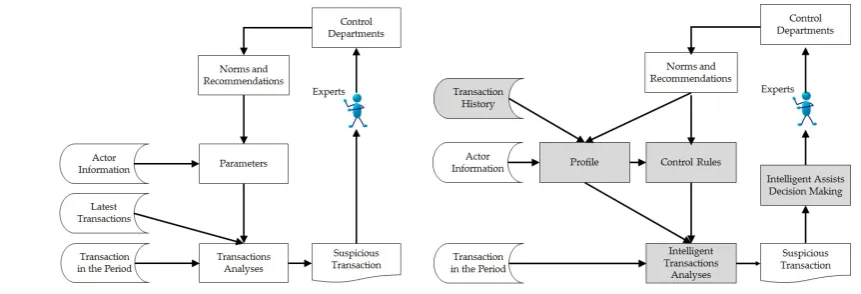
the cited document it is possible to map a generic flow to combat fraud or swindling in economic
50
activity (Figure1), in the cases in which this type of crime occurs in operations directly or indirectly
51
computerized.
52
Figure 1.General Flow to Fight Fraud Figure 2.New General Flow to Fight Fraud
53
54
The generic process of fraud prevention is based on regulations and recommendations issued by
55
control offices and uses parameters that set limits for quantities and values involved in transactions.
56
The analysis of the transactions is carried out in a short period of time and the majority is carried out
57
by a human analyst.
58
Some authors classify money laundering as a predicate crime, i.e., a crime that always occurs due
59
to some other underlying crime that would illicitly provide its author proceeds that later he, or others,
60
will intend to camouflage [5]. However, it is possible to analyse the money laundering crime as an
61
instance of a generic process of fraud or swindle and and we can see the AML activity as a special case
62
of what happens in a general flow of fraud-fighting in the financial sector.
63
1 The BCBS - Basel Committee on Banking Supervision, linked to the BIS - Bank for International Settlements, was established
Figure 3.New Anti-Money Laundering Flow
On the other hand, experience has shown that the AML process running as an instance of
64
the generic flow to fight fraud is an inefficient process, because it fails in identifying and reporting
65
suspicious transactions. This inefficiency causes a systemic error because the lack of real cases interferes
66
in the development of new norms and recommendations with good quality.
67
A new version of the general flow to fight fraud is showed in Figure2, whose objective is to
68
mitigate the identified risk. The creation of profiles of the actors participating in the activity are
69
based on 1) their complete history of performed operations; 2) the replacement of the current fixed
70
parameters by production rules, based on these profiles and the norms and existing recommendations;
71
and 3) the use of intelligence at some points of the process. This way, the quality level in the capture of
72
suspicious operations and, especially, of decision making by the specialist, is clearly improved.
73
Creating a new instance of the generic flow proposed in Figure2for the ML crime, it is possible
74
to draw a stream like the one shown in the Figure3, that corresponds to what is commonly used by
75
financial institutions, and presented in [6].
76
3. Related Work
77
The adaptability of the "modus operandi" of fraudsters and the lack of systematized information
78
linking suspect transactions to evidence of crime are obstacles to a more rapid advance in automating
79
the process of preventing and combating money laundering activities. However, since the first widely
80
publicized system in the AML area, the FinCEN Artificial Intelligence System (FAIS) [7], developed and
81
used by the Financial Crimes Enforcement Network (FinCEN), many artificial intelligence techniques
82
have been used in the search for a good system.
83
Data mining, machine learning and clustering techniques have been widely used in the attempt to
84
identify suspected money laundering cases, as in Zhang [8], where a discretization process was applied
85
to a data set to find a more adequate set of clusters. Kingdon [9] proposed that an artificial intelligence
86
approach should model individual clients and look forunusualrather thansuspiciousbehaviour. There
87
are also statistical approaches, like the ones described in Liu and Zhang [10] and Tang and Yin [11].
88
In Le-Khac and Kechadi [12], the authors present a case study corresponding to the application of
89
a knowledge base solution that combines data mining techniques, clustering, neural networks and
90
genetic algorithms to detect money laundering patterns. Chang and Chang [13] proposed the use
91
of decision trees based on C4.5 to induce rules and use them to validate the identified cluster. Larik
92
& Haider [14] focus their work on the debit and credit information made by clients of a financial
93
institution to identify suspicious transactions.
94
In his survey about clustering, Sabau [15] asserts that clustering has proven itself a recurrently
95
applied solution for detecting fraud and concludes that k-means based clustering algorithms with
96
Euclidean distance as dissimilarity metric are the most commons used ones.
Regarding the use of agent based approaches in AML, there are few authors that have considered
98
them. In Gao [16], an agent architecture is defined to include a set of specialized agents, such as data
99
collecting agents, monitoring agents, a behaviour diagnosis agent, and a reporting agent.
100
Xuan and Pengzhu [17] present an agent-based approach that, besides the inclusion of reporting
101
and user agents, include Negotiation and Diagnosing agents that are ultimately responsible for the
102
most critical decisions, taken on the basis of information provided by two other groups of agents: data
103
collecting and supervising. Rajput [18] use ontologies and rules in the creation of a specialized system
104
to detect money laundering suspicious transactions.
105
The works mentioned above focus only on the signalling of suspicious transactions stage; use a
106
small amount of data for testing; and do not assist the human expert in decision making. The system
107
we present in this paper seeks to overcome the above mentioned limitations.
108
4. Building the Agents’ Knowledge Bases
109
A database with real data reflecting the transactional behaviour of clients has a significant amount
110
of attributes necessary for the control and management of the business involved. Of course, not all
111
of these attributes are relevant to a search for suspicious transactions. The selection of the relevant
112
attributes and the possible generation of new attributes must reflect the transactional database and
113
allow the identification of suspicious behaviour [19].
114
Two years of current account transactions from a Brazilian bank were used in the first stage of the
115
process. The accounts of the 5.2 million clients of this bank receive, on average, 85 million transactions
116
per year. The analysis of the database showed that less than 10% of the clients are made up of corporate
117
entities (commercial companies, industries, governments, etc.), however, they are responsible for more
118
than 90% of the values transacted.
119
Tests carried out showed that the client type attribute was not enough to offer a good
120
characterization of the groups formed in this unsupervised data base. Thus, to better characterize the
121
clients, the database was divided: one with individual clients and another with corporate type clients.
122
The procedure described below was performed independently for each database.
123
4.1. Client Transactional Behaviour Strategy
124
The rules that constitute the Agents’ knowledge bases were obtained through a process detailed
125
in Algorithm1. From each base, transactions whose characteristics are irrelevant in this context (for
126
example tariffs, commissions, interest, taxes, etc.) were excluded, resulting in 35 million relevant
127
transactions (Algorithm1- Step 1).
128
With the purpose of establishing transactional behaviour profiles, in a certain period, we created
129
a set of attributes, which aggregate quantities and segment characteristics for each actor of the process.
130
The period measured is directly related to the nature of the business involved, presenting the maximum
131
possible duration, for example quarterly, semi-annual, annual, etc.
132
One year of transactions was used to generate the client transactional behaviour profile, that is,
133
database information such as: the account age, the number of transactions generated, the number of
134
used services, the amount sent to other banks and to the accounts of the own bank, and the number
135
of movements divided into six ranges of values. A twelfth attribute was created and nameddebt
136
percentage, representing, in a weighted way in the period analysed, the time that the money remained
137
in the customer account [20] [3] (Algorithm1- Step 2).
138
This database table with active customer profiles in the analysed year has 2.4 million lines, each
139
line representing a unique element formed by 3-tuple: client, agency and account. Over this table, the
140
non-supervised inductive learning procedure was executed using clustering, seeking groups of clients
141
with similar and mutually exclusive characteristics. The algorithm K-means was used in classification
142
and the algorithms PART and J48 in generation of production rules, executed 11 times (number of
143
attributes minus 1) (Called algc, algr1 and algr2, respectively, in Algorithm1- Step 3).
Two sets of rules, one of each algorithm used, with the least number of incorrectly sorted instances
145
were selected (Algorithm 1- Step 4) and, together with the clusters that gave rise to these rules,
146
represent the result of the process (Algorithm1- Step 5).
147
Algorithm 1Learning Process
1: Input:TotalTransactionsBase-TTB 2: procedureLEARNINGPROCESS( )
3: RelevantTransactions-RT←TTB analysis .Step 1
4: ClientPro f iles-CP←RT attribute selection / generation .Step 2
5: Numbero f Clusters-k←Number of CP Attributes - 1 .Step 3
6: whilek>1do
7: Seto f Clusters-Cl←Classification algorithm (algc (CP, k))
8: VectorError1-E1 (k)←Calculates Classification Error (algr1 (Cl)) 9: VectorError2-E2 (k)←Calculates Classification Error (algr2 (Cl))
10: k←k - 1
11: end while
12: Indexo f MinorError-idx←Finds Minor (E1, E2) .Step 4
13: FinalClassi f ication-FC←algc (CP, idx)
14: RuleSet1-R1←algr1 (FC)
15: RuleSet2-R2←algr2 (FC)
16: returnsFC, R1, R2 .Step 5
17: end procedure
4.2. Cautious Approach to Risk
148
The analysis of the generated clusters, for the two customer segments, allowed the identification
149
of characteristics such as: high turnover of high values, with full transfer to other financial institutions
150
(high risk); or movement of values close to the legal limit to communication to regulatory agencies
151
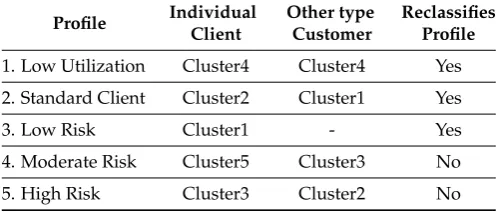
(moderate risk). This analysis resulted in the classification shown in Table1.
152
With this classification, it is possible to define a better strategy, offering differentiated treatment to
153
the groups of clients, according to their level of risk. Despite the excellent level of accuracy obtained in
154
the evaluation of the generated rules, around 99% for both customer segments, an error of one percent
155
represents more than 26 thousand transactions and cannot be ignored.
156
The confusion matrix generated by the rules algorithms has identified the rules that, because they
157
are applicable to two or more groups of clients, represent the one percent error mentioned. That is,
158
rules classify customers as belonging to more than one profile. Probably there is a configuration of the
159
parameters of the algorithms used that allows to minimize this error, however, the number of rules
160
increases significantly, making the cost / benefit little attractive. The decision was to reclassify the
161
profiles that do not represent risk or have low risk (profiles one, two and three), as shown in Table1.
162
Thus, the transaction that belongs to one of these three groups will be reclassified, only for analysis
163
process, if there is a rule that satisfies the condition. Thus, the problem was corrected conservatively
164
using the same amount of rules.
165
For example, in the database used for data mining, 33 rules classify customers as individual client
166
belonging to risk profiles two and three, corresponding to 1.85% of the total. However, these rules also
167
classify 0.06% of customers originally belonging to the standard profile. The reclassification consists
168
of, during the process of searching for a suspicious transaction, consider these standard clients as
169
belonging to the risk groups, without modifying the original classification.
170
The classification of profiles also allows the creation of specific rules, whether based on current
171
regulations or inspired by transactional behaviour. As already mentioned, this work used one year of
172
information to generate the profiles, obtaining monthly totals and allowing to select maximum values
Table 1.Classification of Generated Profiles
Profile Individual Client
Other type Customer
Reclassifies Profile
1. Low Utilization Cluster4 Cluster4 Yes
2. Standard Client Cluster2 Cluster1 Yes
3. Low Risk Cluster1 - Yes
4. Moderate Risk Cluster5 Cluster3 No
5. High Risk Cluster3 Cluster2 No
in the year for each relevant attribute. It was established that the search for suspicious transactions
174
will always start one month before the date requested for analysis. In this way the behaviour for one
175
month of transactions will always be used for comparison with the profiles.
176
5. AML Multi-Agent System
177
The goal of this system is to support the AML process in a financial institution and the global
178
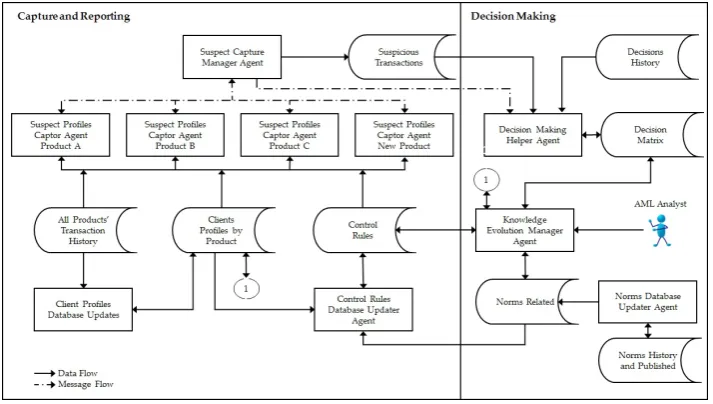
system architecture is presented in Figure4.
179
The system will keep up a profile for each customer, based on the transaction history, which will
180
be used along with the rules created from official regulations to combat money laundering, to the
181
capture and signal suspicious transactions processed by the various business systems. The system will
182
decide on some marked cases and learn from the aid provided by the AML analyst during the decision
183
making process of the most complex cases. It will also monitor norms and recommendations posted
184
by organs of control, flagging those involving money laundering. New rules to capture suspicious
185
transactions, including new regulations and possible changes in profiles, will be suggested.
186
The database with profile history reflecting the learning period and a set of rules constitute the
187
primary knowledge base of the agents. The set of rules is formed by:
188
1. DM Rules – rules generated in the data mining process, which will be used to review the original
189
classification of clusters
190
2. Legal Rules – rules based on legal regulations and general guidelines that guide the fight against
191
the crime of money laundering
192
3. Profile Rules – rules that reflect the specific knowledge of the bank about AML and the risk
193
management according to the groups of profiles generated
194
The profiles to be analysed complete the set of information that will be manipulated by the system
195
in the process of capture and analysis of suspicious transactions, the main focus of this work.
196
To achieve the proposed objectives, it is necessary to define a set of entities capable of making
197
decisions, using existing knowledge and learning from the decisions taken by the human analysts.
198
These entities need to have action autonomy and be able to communicate with one another. Besides,
199
the system should be scalable and flexible. These features point to a set of deliberative agents that are
200
able to review and extend their knowledge, working in a environment fully observable, deterministic,
201
static and discrete [21].
202
To model this system we chose a methodology based on Wooldridge [22], and in the study about
203
the major Agent-Oriented Software Engineering (AOSE) carried out by Bawa [23]. Bawa performed
204
a comparison between five methodologies. ThePrometheusmethodology was selected, tested and
205
verified to comply with all the criteria that we consider relevant to this work (ease of use; few graphics
206
representation; accessible documentation, clear and preferably with examples; support tool for easy
207
installation, preferably for windows environment).
208
Padgham [24] presents all aspects of this methodology, accompanied by a set of examples. The
209
support tool is called PDT (Prometheus Design Tool), and works as an Eclipse plug-in. All these agents
Figure 4.Global System Architecture
and environmental characteristics are supported by the selected methodology. Although the detailed
211
design produced by PDT can be straightforwardly converted to a specific and proprietary language, it
212
is generic and can be used in a range of agent programming platforms.
213
Considering characteristics such as: quantity and relevance of available historical data that will be
214
used for decision making; the aforementioned need, during the process, for review and expansion of
215
the knowledge acquired; the possibility of developing new sub-objectives/objectives; we understand
216
that Belief-Desire-Intention (BDI) is the appropriate model to adopt. Moreover,Prometheusis strongly
217
targeted to BDI. Figure5shows the main system elements that make up the adopted BDI model and
218
how they link to our problem.
219
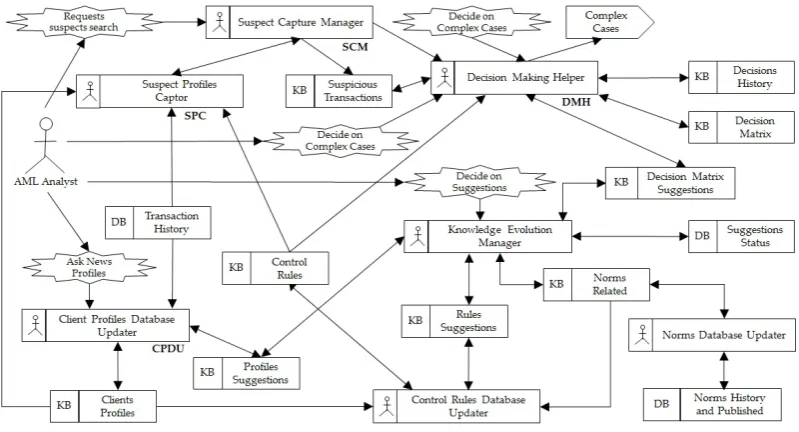
Figure6shows a partial system overview (only the main elements) that results from the application
220
of the methodology. The graphical symbols used in the system overview diagram representactors
221
like the AML Analyst;datawhich can be internal data indicating knowledge bases as the KB Control
222
Rules or external as the DB Transaction History;perceptsas Requests Suspicious Transactions; and
223
agents. Many other diagrams, with additional details, were generated, however, they are omitted in
224
this paper2. The system overview is enough in this context and the following sections describe the
225
agents.
226
5.1. Agents Description
227
There is a Suspect Profiles Captor (SPC) agent for each product (current accounts, investment
228
funds, currency exchanges, etc.). This approach has two advantages. Firstly, this allows us to model
229
each agent’s knowledge according to the specificities each product has. Secondly, it makes scalability
230
easier, in the sense that the creation of a new product can be incorporated in the system just by adding
231
a new agent specialized in it. In the analysis of transactions, agents use the current control rules
232
generated by the previously described process, based on customer profiles, the norms on AML and in
233
the internal rules of the financial institution.
234
Whenever a SPC agent identifies a suspicious transaction, it informs the Suspect Capture Manager
235
agent (SCM) that in its turn is responsible for forwarding it to some other SPC agents. So, SPC
236
agents have two working modes:transaction oriented, in which the agents try to capture suspicious
237
transactions with no assumptions regarding clients;client oriented, in which agents try to capture
238
Figure 5.System BDI Model
suspicious transactions for clients that were identified by another SPC agent and communicated by
239
SCM.
240
The SPC agent decision making occurs when at least one rule in Legal Rules or Profile Rules is
241
triggered and decision is based on the risk level of the profile, characterized mainly by the cluster to
242
which it belongs.
243
A Suspect Capture Manager agent can receive an external analysis request and command for
244
execution by specialist SPC or command it autonomously. When receiving information from an SPC
245
that a suspicious transaction has been identified, it forwards it to some other SPC agents search in
246
client mode. After receiving all reply messages, SCM announces to the Decision Making Helper agent
247
(DMH) the existence of suspicious transactions. The default time for automatic capture execution and
248
knowledge about existing SPC agents compose the basic information for agent decision making.
249
The Decision Making Helper agent performs the analysis of the previously signaled transactions
250
and conducts a learning process. The DMH agent has autonomy to decide amongst three possibilities
251
regarding a signalization: accept it, discard it, or send it for further (human) analysis. So, this agent
252
assumes the role of the AML Analyst in the analysis of suspicious transactions. Decisions taken by
253
this agent and those reported by the AML Analyst, are stored in the historical decisions database and
254
are used in the learning process to evolve the decision matrix. This agent is also responsible for the
255
changes suggested in the decision matrix and the update of this knowledge base, after the suggestions
256
are validated by the AML Analyst.
257
The decision making of this agent uses the defined decision matrix and what was learnt from the
258
history of decisions about complex cases.
259
The internal knowledge of the system is formed by the profiles base, the norms and
260
recommendations base, the control rules base and the decision matrix. For each one of these knowledge
261
bases there is an agent responsible for its evolution.
262
The Client Profiles Database Updater (CPDU) agent acts in the analysis of transaction history to
263
generate client profiles and subsequent comparison with the base of existing profiles. This process can
264
be triggered by a user request or autonomously by the agent. New arising profiles are suggested to the
265
AML Analyst. The CPDU agent updates the profiles data-base with the profiles that are validated.
266
The Norms Database Updater (NDU) agent purpose is to search for norms and regulations newly
267
published by official agencies, and that are related to the AML process. This agent acts independently
268
seeking new published norms, saving them and then selecting those related with AML, suggesting
269
them to the AML Analyst for study and possible validation. The validated norms are then incorporated
270
into the historic database of norms.
271
The Control Rules Database Updater (CRDU) agent has as main objective to ensure the evolution
272
of the control rules database, that is a key element in the system architecture. The first stage of this
273
development process is the generation of new rules, confronted with the current rules and based on
274
new profiles and new norms existing. CRDU then suggests these new rules to AML Analyst and the
275
validated rules are incorporated into the control rules database.
276
The Knowledge Evolution Manager (KEM) agent executes tasks such as: controling the
277
suggestions made by agents for evolution of the knowledge bases; maintaining interface with
278
AML Analyst in the validation procedure, deletion or extension of these suggestions; and maintain
279
communication with other agents to command and control all process. The interface maintained with
280
the authenticated AML Analyst allows it to analyze and validate the suggestions.
281
The evolution of the knowledge bases and the learning process existing in system are intended,
282
primarily, to mitigate the risk of the occurrence of false positive and / or false negative, common in
283
systems based only on a set of rules and behaviour norms[16].
284
5.2. Agents Interaction
285
The framework chosen to implement the system, which will be discussed below, uses natively
286
the internal structure of the decision making mechanism of the Procedural Reasoning System (PRS)
Figure 7.Example of the Interaction Process Between Agents
model and the Knowledge Query and Manipulation Language (KQML) to establish a simple but
288
efficient communication process. "For example, the KQML performativetellis used with the intention
289
of changing the receiver’s beliefs, whereasachieveis used with the intention of changing the receiver’s
290
goals", that is, with the performative label it is possible to identify the intent of the message sender
291
[25].
292
Cooperation among SPC agents happens through their direct interaction with the SCM agent,
293
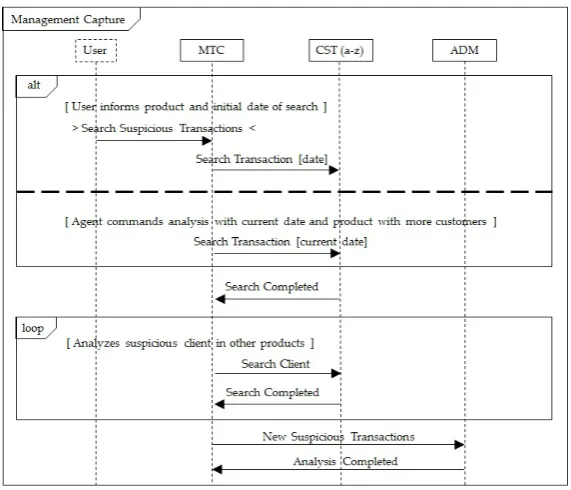
that coordinates the tasks and receives the results. Only the SCM agent knows all the SPC agents
294
existing; besides, it can identify the products that the suspect client uses in the institution. Figure7
295
shows, briefly, an example of the interaction process between agents.
296
Interaction amongst other agents (DMH, MER, NDU, CRDU, CPDU) has the role to trigger in
297
each of these agents the goal to perform the task under its responsibility. In other words, all agents
298
have their own specific expertise, and they have independent and not conflicting goals. On the other
299
hand, there is plenty of cooperation for the achievement of a common goal.
300
5.3. System Implementation
301
Departing from [26] and based on [27] and [28], the JaCaMo framework [29] was chosen. The
302
tutorial presented in AAMAS2015 [30] reinforced this understanding. The framework is flexible in
303
interaction with other programming languages, mainly java; native access to major database platforms;
304
good interface and documentation; license free; and BDI native.
305
JaCaMo is based on three independent platforms: a)Jasonfor programming the agents level,
306
inspired by the BDI architecture; b)CArtAgOfor programming the environment level, that is composed
307
of one or more workspaces, used to define the topology of the environment; c)Moisefor programming
308
the organizations level, defining the existing social groups and sub-groups, social tasks and behaviour
309
rules that will allow the achievement of social goals [29] [25].
310
The rules obtained in the data mining process were written as Jason rules and used in a similar
311
process as used in Prolog. The knowledge bases, and external databases, are accessed in MySQL
312
using artefacts written in Java to improve the performance in access, due to the volume of data. All
313
knowledge and external databases are used by the system as beliefs, representing the states of the
314
environment and the knowledge acquired.
Figure 8.Examples of rules, as codified in the KB.
6. Results
316
The real data used in this work refer to two years, with 30.5 million and 35.2 million relevant
317
transactions, respectively. The client transactional behavioural profiles were generated from the data
318
of the first year, the reference base. The search for suspicious transactions was executed over six
319
months of relevant transactions in the second year, resulting in 17.1 million transactions. Over these
320
transactions, 3.2 million transactional client behavioural profiles were generated for those months.
321
The systems in use in most banking institutions are strongly based on client information bank
322
register, that’s why they can identify as suspicious the incompatibility between the sum of transaction
323
values and the customer income or billing information. The system proposed in this article does not
324
use the same client information bank register and therefore will not signal such situations as suspicious.
325
This system is based on the client’s transactional behaviour and should be adopted as a complementary
326
tool. The initial strategy used to select suspect profiles for verification by human analysts and examples
327
of reports issued by system was shown in [31].
328
The characteristics described above justify why the result obtained by the system here presented
329
did not identify the same suspects identified by systems actually running. However, it is important to
330
highlight that this system has signalled cases that were confirmed by human analysts and that were
331
not identified in the past by the systems in execution.
332
The process of searching for suspicious transactions, implemented to date, can be divided into
333
3 phases: reclassifying the profiles or adjusting the confusion matrix; the capture of suspicious
334
transactions; and the analysis of the captured transactions. The system uses as beliefs a set of 132 rules
335
(104 of classification, 28 normative and profiles based), as well as the classification of customers in the
336
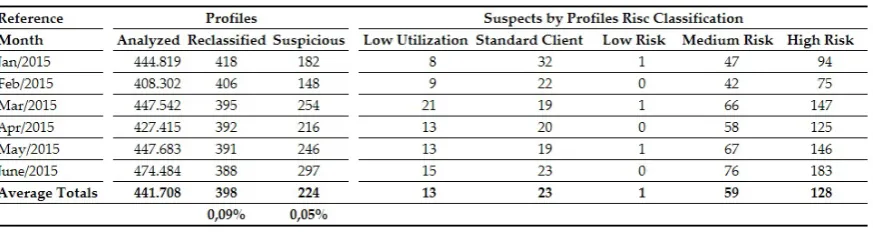
indicated profiles. These beliefs are re-evaluated only once for each capture process. For example, in
337
the first month evaluated, 418 profiles were reclassified, leaving the “standard profile” to “medium”
338
and “high risk” profiles, only in that analysis. Table2shows a summary of the results obtained, where
339
profiles are indicated as suspicious in the six months analysed. Figure8shows some examples of the
340
rules used in the process.
Table 2.Summary of results for 6 months
Table 3.AML Analist analysis result
The average percentage of 0.05% of suspect profiles with respect to the period and the amount
342
of profiles analysed is a feasible amount to be analysed by human analysts, considering a normal
343
AML process. However, considering that the analysis of these results is an additional task to the
344
analysts’ daily routine, we have reduced the number of profiles that will be investigated. The strategy
345
adopted was to investigate 38 profiles of which 16 were repeatedly flagged as suspects in the six
346
months analysed plus 22 other profiles flagged in the five months.
347
Table3shows the AML Analyst investigation result. It is important to highlight the following
348
aspects about the 38 analysed cases: a) 26 cases were not considered suspects, but the analysts did
349
not consider them false positive, because there were indications of non-standard procedures; b) 12
350
cases were confirmed as suspects, six of which will required more in-depth investigations by bank
351
branch involved, and six were clearly identified as suspects; c) all cases classified by the system as
352
being "high risk" had not been previously reported; d) of the six fully confirmed suspects 4 had never
353
been previously reported.
354
Considering the purpose of the system to assist the AML analyst and its learning ability, it is
355
possible to observe that the analysis phase need refinement, considering the 26 cases indicated as
356
suspicious but not confirmed, even though these were not considered false positive.
357
7. Conclusions
358
The systems currently in use by financial institutions are strongly based on client information
359
bank register. They have failed in the steps of capture suspicious transactions and do not assist human
360
specialists.
361
With our work we explored new approaches to combat both fraud and money laundering, and
362
have described a multiagent system that is successful in this task, using specialization and cooperation
363
between intelligent agents, in order to optimize and improve the quality of the process of signalling
364
suspicious profiles in the anti-money laundering process.
To build the agents’ knowledge bases we used some machine learning techniques to identify risk
366
groups and to create the client transactional behaviour profiles. These profiles were used as a marker
367
for future behaviour.
368
The results obtained show the feasibility of systematic use and establish a new front to combat
369
this crime. The quality of the results has been attested by the verification realized by the anti-money
370
laundering analyst in the signalled suspicious transactions, in which it is worth highlighting thatall
371
cases classified by the system as being "high risk" suspects had not been previously reported; of the 6 fully
372
confirmed suspects 4 had never been previously reported by any other system running.
373
As next future step we will review and improve the analysis phase, considering the 26 cases
374
indicated as suspicious but not confirmed, even though these were not considered false positive. The
375
strategy will be to complete the learning based on the decisions of the AML analyst, thus allowing
376
better signalling.
377
References
378
1. Madinger, J.Money laundering: a guide for criminal investigators, 3th ed.; CRC: Boca Raton, FL, 2012.
379
2. Cser, A. The Truth About Machine Learming in Fraud Prevention [WEBINAR]. Kount, 2017. Retrieved from
380
http://www.kount.com/kount-events/webinar-the-truth-about-machine-learning-in-fraud-prevention.
381
3. Alexandre, C.; Balsa, J., New Advances in Information Systems and Technologies; Springer International
382
Publishing: Cham, 2016; Vol. 1, chapter Integrating Client Profiling in an Anti-money Laundering
383
Multi-agent Based System, pp. 931–941.
384
4. Committee in Basle. Customer Due Diligence for Banks. Technical report, Working Group on Cross-border
385
Banking - Basel Committee on Banking Supervision - Bank for International Settlements, 2001.
386
5. Canas, V.O Crime de Branqueamento: Regime de Prevenção e de Repressão; 2004. 335p.
387
6. Alexandre, C.; Balsa, J. A Multiagent Based Approach to Money Laundering Detection and Prevention.
388
Proceedings of the International Conference on Agents and Artificial Intelligence; Loiseau, S.; Filipe, J.;
389
Duval, B.; van den Herik, H.J., Eds.; SciTePress: Lisbon, 2015a; Vol. 1, pp. 230–235.
390
7. Senator, T.E.; Goldberg, H.G.; Wooton, J.; Cottini, M.A.; Khan, A.F.U.; Klinger, C.D.; Llamas, W.M.; Marrone,
391
M.P.; Wong, R.W.H. The Financial Crimes Enforcement Network AI System (FAIS) Identifying Potential
392
Money Laundering from Reports of Large Cash Transactions. AI Magazine1995,16, 21–39.
393
8. Zhang, Z.M.; Salerno, J.J.; Yu, P.S. Applying Data Mining in Investigating Money Laundering Crimes.
394
Proceedings of the Ninth ACM SIGKDD International Conference on Knowledge Discovery and Data
395
Mining; ACM: New York, NY, USA, 2003; KDD ’03, pp. 747–752.
396
9. Kingdon, J. AI Fights Money Laundering. IEEE Intelligent Systems2004,19, 87–89.
397
10. Liu, X.; Zhang, P. A Scan Statistics Based Suspicious Transactions Detection Model for Anti-money
398
Laundering (AML) in Financial Institutions. Multimedia Communications (Mediacom), 2010 International
399
Conference on, 2010, pp. 210–213.
400
11. Tang, J.; Yin, J. Developing an intelligent data discriminating system of anti-money laundering based on
401
SVM. Machine Learning and Cybernetics, 2005. Proceedings of 2005 International Conference on, 2005,
402
Vol. 6, pp. 3453–3457.
403
12. Le-Khac, N.A.; Kechadi, M.T. Application of Data Mining for Anti-money Laundering Detection: A Case
404
Study. Proceedings of the 2010 IEEE International Conference on Data Mining Workshops; IEEE Computer
405
Society: Washington, DC, USA, 2010; pp. 577–584.
406
13. Chang, W.; Chang, J. Using clustering techniques to analyze fraudulent behavior changes in online auctions.
407
Networking and Information Technology (ICNIT), 2010 International Conference on, 2010, pp. 34–38.
408
14. Larik, A.S.; Haider, S. Clustering based anomalous transaction reporting. Procedia Computer Science2011,
409
3, 606 – 610.
410
15. Sabau, A.S. Survey of Clustering based Financial Fraud Detecton Research.Informatica Economica2012,16.
411
16. Gao, S.; Xu, D.; Wang, H.; Wang, Y. Intelligent Anti-Money Laundering System. Service Operations and
412
Logistics, and Informatics, 2006. SOLI ’06. IEEE International Conference on, 2006, pp. 851–856.
413
17. Xuan, L.; Pengzhu, Z. An Agent Based Anti-Money Laundering System Architecture for Financial
414
Supervision. Wireless Communications, Networking and Mobile Computing, 2007. International
415
Conference on, 2007, pp. 5472–5475.
18. Rajput, Q.; Khan, N.S.; Larik, A.S.; Haider, S. Ontology Based Expert-System for Suspicious Transactions
417
Detection. Computer and Information Science2014,7, 103–114.
418
19. Paula, E.L.; Ladeira, M.; Carvalho, R.N.; Marzagão, T. Deep Learning Anomaly Detection as Support
419
Fraud Investigation in Brazilian Exports and Anti-Money Laundering. 15th IEEE International Conference
420
on Machine Learning and Applications, ICMLA 2016, Anaheim, CA, USA, December 18-20, 2016, 2016, pp.
421
954–960.
422
20. Alexandre, C.; Balsa, J. Client Profiling for an Anti-Money Laundering System. ArXiv e-prints2015b,
423
[arXiv:cs.LG/1510.00878]. http://adsabs.harvard.edu/abs/2015arXiv151000878A.
424
21. Russell, S.; Norvig, P.Artificial Intelligence: A Modern Approach, 3rd ed.; Prentice Hall Press: Upper Saddle
425
River, NJ, USA, 2009.
426
22. Wooldridge, M.An Introduction to Multiagent Systems, 2nd ed.; Wiley Publishing: Chichester, UK, 2009.
427
23. Bawa, A.; Attri, V.K. A Study of Tools Used in Implement Agent Oriented Software Engineering.
428
International Journal of innovative Research in Computer and Communication Engineering2015, 3. http:
429
//www.ijircce.com/upload/2015/may/40_A_Study.pdf, Acessado em 15/09/2015.
430
24. Padgham, L.; Winikoff, M.Developing Intelligent Agent Systems: A Practical Guide; John Wiley & Sons Ltd:
431
Chichester, West Sussex PO19 8SQ, England, 2004; chapter 8, pp. 155–171.
432
25. Bordini, R.H.; Hübner, J.F.; Wooldridge, M.Programming Multi-Agent Systems in AgentSpeak Using Jason
433
(Wiley Series in Agent Technology); John Wiley & Sons, 2007.
434
26. Fisher, M.; Bordini, R.; Hirsch, B.; Torroni, P. Computational Logics and Agents - A Roadmap of Current
435
Technologies and Future Trends. Computational Intelligence2007,23, 69–91.
436
27. Boissier, O.; Bordini, R.; Hübner, J.; Ricci, A.; Santi, A. Multi-agent Oriented Programming with JaCaMo.
437
Sci. Comput. Program.2013,78, 747–761.
438
28. Shehory, O.; Sturm, A. Agent-Oriented Software Engineering: Reflections on Architectures, Methodologies,
439
Languages, and Frameworks; SpringerLink : Bücher, Springer Berlin Heidelberg, 2014.
440
29. Bordini, R.H.; Dix, J. Programming Multiagent Systems. InMultiagent Systems, 2nd ed.; Weiss, G., Ed.; The
441
MIT-Press: London, England, 2013; chapter 13, pp. 587–639.
442
30. Baldoni, M.; Baroglio, C.; Capuzzimati, F.; Micalizio, R. Programming with Commitments and Goals in
443
JaCaMo+. Proceedings of the 2015 International Conference AAMAS; , 2015; pp. 1705–1706.
444
31. Alexandre, C.; Balsa, J. Um Sistema Multiagente no Combate ao Branqueamento de Capitais. RISTI
-445
Revista Ibérica de Sistemas e Tecnologias de Informação2017, pp. 1 – 17.
446