208
Essential Medicines Availability And Affordability:
A Case Study Of The Top Ten Registered
Diseases In Builsa District Of Ghana
Edmund Mohammed Nyanwura, Reuben K. Esena
Abstract: The survey was a cross sectional descriptive study, that employed both quantitative and qualitative approaches, following the standardized World Health Organization and Health Action International (WHO/ HAI) methodology (WHO and HAI, 2008a). Price and availability data for 29 medicines were collected from 11 service delivery facilities and 4 private licensed chemical sellers‘ stores. Medicine prices were compared with international reference prices (IRPs) to obtain a median price ratio. The daily wage of the lowest paid unskilled government worker was used to gauge the affordability of medicines. The mean availability of 29 essential medicines was 64.1% (SD ± 24.1) for all the medicines outlets. The mean availability of 20 essential medicines for the Clinic and Health Centre levels was 85.0 % (SD ± 17) higher than the private Licensed Chemical Sellers 71.3 % (SD ± 35.6). The mean availability of 10 essential medicines for Community Health Services levels was 62.5 % (SD ± 41.1) and lower than the private Licensed Chemical Sellers 77.5 % (SD ± 32.2). Artesunate+Amodiaquine used as first line for malaria treatment was found in 80% of medicine outlets. The prices of medicines to patients were high at the public sector facilities with a comparative Median Price Ratio (MPR) of 1.84 times international reference prices, while that of the private sector was 2.05 times. The average treatment for adult disease conditions was not affordable at 1.67 days‘ wage, but 0.78 days‘ wage for a child‘s disease condition. The availability of essential medicines for the treatment of the top ten diseases of 2009 in the Builsa district is quite acceptable. The average cost of treatment for the common diseases was unaffordable, with the median price ratio of medicines above the acceptable range of 1.5 for public facilities.
Index Terms: Availability, Affordability, Essential Medicine, Builsa District.
————————————————————
1.1 Background
Medicines are an essential component of health care delivery in any country. They span all major areas of health care delivery (GNDP, 2004b); however, there is evidence that medicines shortage is a major barrier to access to essential medicines in sub-Saharan Africa (Jitta et al., 2003). Even though medicines are the most significant tool that society possesses to prevent, alleviate, and cure diseases (Quick, 2003(a), WHO, 2004a), more than one-third of the world‘s population lacks reliable access to essential medicines (WHO, 2004a, Jamshed et al., 2009), a situation that undermines health systems' objectives of equity, efficiency and health development. The situation is even worse in many poor African countries, where it is estimated that 50%-60% of the populace lacks such access (Tetteh, 2008, DFID, 2004).
This makes recording of the top ten causes of illness in every area useful, so that the essential medicines needed for their prevention, alleviation and cure would be made available. In Ghana, the percentage availability of fourteen (14) key medicines surveyed in 2002 was 73.9% in public facilities, with a median stock out duration of 79.5 days (GNDP, 2002). Another survey of thirty-nine (39) key medicines revealed availability of less than 50% in public sector for twenty-seven (27) medicines; while prices of the medicines were high and unaffordable for many (GNDP, 2006). However, there is no single solution to medicines access problem given its multiple
dimensions: availability, acceptability, affordability and
accessibility (Tetteh, 2008, Obrist et al., 2007). This study sought to determine the availability and affordability dimensions of medicines access; and concentrated mainly on availability and affordability of essential medicines for the treatment of the top ten registered diseases for 2009 in the Builsa district.
1.2 Statement of the Problem
Clients‘ attendance in Builsa district health facilities continuously increased from 66,825 people in 2007 to 86,956 clients in 2008 and 102,915 attendants in 2009; translating into 0.8 through 1.27 OPD visits per capita over the period (DHMT, 2010). Meanwhile, the technical personnel remain the same, and thereby leading to less quality services. Such heavy patient load contributes to frequent stock-outs of essential medicines. Medicines are essential to health service delivery, and yet there is no community pharmacy to support the needy when the public facilities run out of stock; and thus compound the problem of access to essential medicines to the community. This study therefore seeks to assess the availability of essential medicines for the treatment of the top ten registered diseases for the year 2009, and the affordability of these essential medicines to clients in the Builsa district as a measure of access to medicines by the populace.
————————————————
Edmund Mohammed Nyanwura, Sandemsa Hospital,
P. O. Box 4 Sandema UER Ghana
PH- +233244580199. E-mail: [email protected]
Reuben K. Esena [Corresponding Author] is currently
a lecturer at the University of Ghana School of Public Health, Legon-Accra, Ghana.
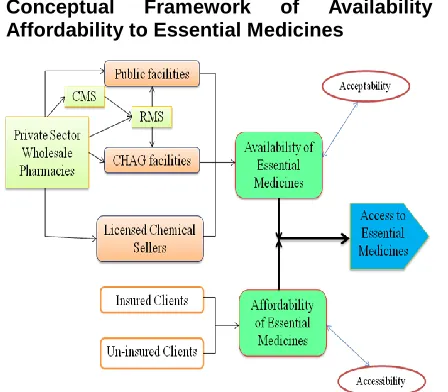
1.3 Conceptual Framework of Availability and Affordability to Essential Medicines
Figure 1: Some factors leading to Access to Essential Medicines
Access to essential medicines (Figure 1) depends on their availability at the health delivery points (HDP) and Licensed Chemical Sellers (LCS), that get their supplies from the Regional Medical Stores (RMS) and Private Pharmacies; and their affordability to the populace through the National Health Insurance Scheme or out of pocket payment. Access to essential medicines could be limited due to the non-availability of medicines at service delivery points and un-affordability due to uninsured client status or lack of money for out of pocket payment.
1.4 Justification
Access to medicines to combat HIV/AIDS, malaria and tuberculosis has improved worldwide. However, the availability of affordable essential medicines is still inadequate in both public and private sectors for the poor (Lufesi et al., 2007). Currently, there are large gaps in the availability of medicines in both public and private sectors, as well as a wide variation in prices which render essential medicines unaffordable to poor people. In the public sector, generic medicines are only available in 38.1% of facilities, and the average cost is 250% more than the international reference price. Similarly, these medicines are available in 63.3% of private sector facilities and cost on average about 610% more than the international reference price (WHO, 2009). This study assessed the access to essential medicines relevant to inhabitants of the Builsa district, and factors that affect the availability of these medicines in the district. This will also serve as a baseline for future evaluation of the impact of the scheduled delivery of medicines from the Regional Medical Stores to the district. Findings from this study would sensitize health managers on access to essential medicines in primary health care. It will also help to prioritize and target areas of work in medicines policy implementation for consumers.
1.5.1 General Objectives
The general objective of the study is to determine the availability and affordability of essential medicines used in the treatment of the top ten registered diseases in Builsa District in the year 2009.
1.5.2 Specific Objectives
The specific objectives of the survey are to:
1. Assess the availability of essential medicines for the
treatment of the top ten diseases in health facilities of Builsa district.
2. Determine the level of affordability of essential
medicines to the clients who visit the health facilities.
3. Identify some factors which affect the availability of
essential medicines in the health facilities.
Literature Review
Introduction
Every year infectious diseases kill about 13 million people; about 30,000 deaths a day, most in developing countries (Rojo, 2001). Most of the premature deaths and the incapacity cases associated with infectious diseases could be avoided if the poor had access to medicines. In 2008, malaria, a curable illness, continued to be the disease claiming the highest number of victims, ―followed by HIV/AIDS, diarrhoeal
diseases, lower respiratory infections, and perinatal
conditions. These five diseases account for 50% of all deaths in Ghana, and 68% of deaths among children under 14 years old‖ (WRI, 2008). Similarly in Builsa district, Malaria, Pneumonia and Anaemia, were the leading causes of death in 2008 and contributed 45% of all deaths (DHMT, 2009). These deaths could be averted if promptly attended to with the right essential medicines. Essential Medicines are a limited range of medicines selected to meet priority health-care needs that contribute to better health health-care, better drug management, better use of financial resources, and thereby greater access to care (Quick, 2003(b), Robertson and Hill, 2007).
Access to Essential Medicines
210
Availability of Essential Medicines
Essential medicines are those that satisfy the priority health care needs of the population. They are selected with regard to public health relevance, evidence on efficacy and safety and comparative cost effectiveness. They are intended to be available within the context of functioning health systems at all times in the appropriate dosage forms and at a price the individual and the community can afford (WHO, 2004a). To enable a high level availability of essential medicines, they have to be procured continuously, so that they do not get out of stock. For the purpose of this work, the following categories have been used to describe availability:
≤ 50% very low
51 - 65% low
66 - 80% fairly high
> 80% high
Percentage availability should not be overemphasized in comparing different surveys, because other medicines, strengths or dosage forms may have been used (Gelders et al., 2006). Comparisons could only be made if the survey areas were in the same WHO Region, and the WHO/ HAI methodology list of medicines was used.
Procurement of Essential Medicines
The effectiveness of medicine supply systems in achieving a reliable supply of essential medicines needs to be continually and objectively assessed. The medicines management cycle involves four basic functions: selection, procurement, distribution and use (Quick, 2003(a), Lufesi et al., 2007). The selection of the medicines depends on the main disease conditions prevailing at the area, and their inclusion in the National Essential Medicines List. The Regional Medical Stores receives their supplies from the central medical stores, and distributes the medicines to the public health facilities; from where the clients get them to use. Since it is a full cost recovery system, a secured source of funding is required to sustain the procurement system.
Bamako Initiative of Revolving Drug Fund
One of the major indices of the performance of the primary healthcare delivery remains improved access to essential drugs. The more commonly used mechanisms to address inequities in rural access to medicines was the establishment of revolving drug funds, whereby a capital investment allows for the initial purchase of medicines and revenues from medicine sales or user fees are used to replenish stock. Sustainable and successful schemes have been described across Africa (Waning et al., 2009, Ali, 2009, Umenai and Narula, 1999). The Bamako Initiative (BI) was introduced by WHO/UNICEF in 1987 through a strategic adoption by African Ministers of Health to improve access to essential drugs for the most vulnerable in the society and thus improve their health outcomes (Chukwuani et al., 2006). About 20 years post-inception, the outcomes and/or impact of the Bamako Initiative on the health indices of many implementing African countries remains varied, with not so significant improvement in health status being registered in a majority of countries. However, a review of literature suggests that the poor outcomes may be attributable to issues more fundamental than just the absence of adequate funding (Chukwuani et al., 2006) A study was undertaken in 21 Primary Health Care
centres with Bamako Initiative drug revolving funds and 12 Primary Health Care centres without Bamako Initiative drug revolving funds, all in Enugu State of Nigeria. It was observed that the Bamako Initiative facilities had a better availability of essential drugs with an average of 35.4%, than the non-Bamako Initiative (Uzochukwu et al., 2002). If the medicines are made available, as illustrated earlier on, they have to be affordable to achieve access to them.
Affordability of Essential Medicines
A large portion of the population is denied access to medicines; especially due to a lack of purchasing power (Santhosh and Anni, 2009). About 10 million people, most of them in low- and middle-income countries - die needlessly every year because they do not have access to existing medicines and vaccines (Leach et al., 2005). The price of medicine is considered one of the most important obstacles to the access (HAI, 2003). The purchase of medicines contributes significantly to the health care budget of developing countries, and drug expenditures may amount to 50%–90% of non-personnel costs (Quick et al., 1997). Measuring and understanding the reasons for the price of medicines is the first stage in developing medicine pricing policies that would ensure the affordability of medicines (Babar et al., 2007). To enable discussion in this work, we have used the following cut-off points of MPRs to represent acceptable local price ratios:
public sector - patient price: MPR ≤ 1.5
private sector retail - patient price: MPR ≤ 2.5
MPRs above these values are considered excessive local prices (Gelders et al., 2006). One of the best ways of illustrating the impact of medicine prices on the cost of health care for an individual is to compare the cost of treatment with people‘s actual income. The National Health Insurance Act 650 was passed in 2003 in Ghana, and was intended to replace the out of pocket payment system which had made health care costs prohibitive for a large portion of Ghana‘s poor. It had a goal of providing universal coverage of affordable high quality healthcare and ultimately to improve the overall health status (WHO and HAI, 2008b). As at May 2010, 78,452 people had registered with the National Health Insurance Scheme in the Builsa District with a population of 81,624 representing 96.1%; although the number of people with valid cards could not be ascertained.
Measuring Medicines Availability and Affordability
will be conducted, the availability is measured by the percentage of facilities in a sector that has a particular tracer medicine. Essential Medicines Management in the Ghana Health Service Essential medicines in the Ghana Health Service have been grouped into the following categories: (GNDP, 2004a)
Level A - Community
Level B1 - Health Centre without Doctor
Level B2 - Health Centre with Doctor
Level C - District Hospital
Level D - Regional / Teaching Hospital
Level SD - Specialist Medicines
Level PD - Programme Medicines
Programme Medicines are those used in Public Health Programmes of the Ghana Health Service or Ministry of Health and as such used within the guidelines of the specific programmes that ran in the district. Apart from that, the district is limited to medicines below the level of Regional Hospital, since the referral facility is a District Hospital. Essential medicines are those that satisfy the priority health care needs of the population. They are selected with due regard to public health relevance, evidence on efficacy and safety, and comparative cost-effectiveness (UN, 2009).
List of Tracer Medicines
The Chief Pharmacist‘s Office of the Ministry of Health/ Ghana Health Service focusing on the medicines usually used for the management of the top ten causes of out-patient attendances, selected fifty-nine (59) and forty-one (41) tracer medicines for the regional/district and the health centre levels respectively (Yellu, 2009). Out of these essential medicines list, twenty-nine (29) commonly used for the treatment of the top ten recorded diseases in the Builsa district in 2009 were selected for the study; twenty (20) for Health Centres and ten (10) for CHPS Centres. Top Ten Registered Causes of Health Facility Attendances in Builsa district Table 1 below is the list of the leading ten causes of health facility attendances according to the outpatient department visits for 2009 in the Builsa district (DHMT, 2010). This table did not differ much from the Regional burden of diseases that only had Pregnancy related complications (0.9%) in place of Anaemia (0.8%) in the district (GHS, 2010). [Table 1]
Table 1: Top ten registered attendances for 2009 in Builsa District
Cause of Attendance Cases %
Malaria 52,700 51.21
Other Acute Respiratory
Infections 13,282 12.91
Rheumatism & joint pains 6,000 5.83
Pneumonia 4,822 4.69
Diarrheal diseases 2,522 2.45
Skin disease & ulcers 2,341 2.27
Acute eye infections 1,377 1.34
Hypertension 1,226 1.19
Anaemia 831 0.81
Enteric Fever 473 0.46
All other causes 17,342 16.85
M
ETHODS3.1 Study Design
The study was a cross-sectional descriptive survey of health facilities that assessed the availability of tracer essential medicines and their prices. It applied the standardized World
Health Organization and Health Action International
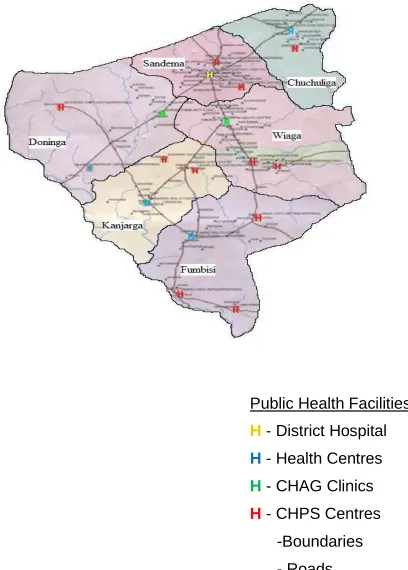
methodology (WHO and HAI, 2008a). In-depth Interviews with managers of health facilities as key informants was conducted qualitatively to identify the factors that affect the availability of medicines. The Builsa District (Figure 2) was curved out of the Kassena-Nankana district in 1975. It is one of the nine districts in the Upper East Region of Ghana. The district is situated on the south-western part of the region, lying
between longitudes 10 05‖ West and 10
35‖ West and latitudes
100 20‖ North and 100 50‖ North. It shares boundaries with the
Nankana West District to the north, the Kassena-Nankana East District to the east, the Sissala East district of the Upper West Region to the west, and to the south with the West Mamprusi District of the Northern Region. It covers an area of 2,220 square kilometres that constitutes about 25.1 % of the total land area of the Upper East Region. The capital of the district is Sandema. [Fig. 2.]
Figure 2: Map of Upper East Region of Ghana showing
212 Builsa District currently has an estimated population of 81,624
people, extrapolated from the 2000 population census, with an approximate annual growth rate of 0.7% (GSS, 2005). The District has mean monthly temperatures ranging between
21.90 C and 34.10 C, and can rise to 450 C in March, while the
lowest are recorded in January. Rainfalls are very torrential and range between 85 mm and 1150 mm per annum (GSS, 2002). Between July and October in particular most rivers and streams overflow their banks and cutting off settlements; and thereby, hindering distribution of essential medicines. The dry season is long with dry harmattan winds, and similar to other districts in northern Ghana, it is largely rural with highly dispersed settlements (Binka et al., 1996). Markets are the major centres for social and economic livelihood of the people. Every sub-district capital has a main market. Fumbisi and Doninga markets have a cycle of 6 days, while the rest operate once in every three days. It is on market days that the populace get means of transport to the health facilities for care. [Fig 3]
Figure 2: Map of Builsa district showing health facilities Builsa district (Figure 3) is divided into six (6) SubDistricts. They are Sandema, with the district hospital; Chuchuliga, Doninga, Fumbisi, Kanjarga, with a health centre each; and Wiaga, that has a Catholic Community Clinic. In the Doninga sub-district, Siniensi also has a Presbyterian Community Clinic. The district has eleven (11) functional Community-based Health Planning and Services compounds (CHPS) located at Bachongsa, Chansa, Gbedema, Gbedembilisi, Kadema, Kalijisa, Kori, Kunkwak, Mutiensa, Muzidema and Namonsa. Three (3) are yet to be furnished and two (2) are still under construction. There are eight (8) Licensed Chemical Stores in the district; three (3) located in Sandema, three (3) in Fumbisi and two (2) in Wiaga which also
contribute greatly to meeting the health needs of the people. There are a total of eighty-eight (88) outreach points where basic health services are rendered to the people at the community level. In the hundred and forty (140) communities of the district, there are 280 Community Based Agents (CBA), who volunteer to assist in preventive and social medicine by selling some medicines to members of the communities. Among other health personnel, Builsa district has one (1) medical doctor, four (4) medical assistants, one (1) pharmacist and two (2) pharmacy technicians (DHMT, 2010).
Study Population
The study populations were categorized as follows:
Medicine outlets: One (1) Government District Hospital, four (4) Public Health Centres, two (2) Christian Health Association of Ghana Clinics (CHAG), eleven (11) Community-based Health Planning and Services compounds (CHPS), eight (8) Licensed Chemical Sellers Stores;
Essential medicines: Twenty-nine (29) selected tracer essential medicines used for the treatment of the top ten diseases in the district (Appendix 5); and
In-depth interview: Fifteen (15) managers of the medicine outlets of all the health facilities or their representatives.
Sample Size and Sampling Method
The sample size was fifteen (15) health facilities. That comprised of one (1) district hospital, four (4) public health centres, two (2) CHAG clinics, four (4) CHPS compounds and four (4) private licensed chemical sellers. The district hospital, four (4) health centres and two (2) clinics in the district were selected purposively because they are the main point of call for the sick in the district. A simple random sampling technique was used to select four (4) of the eleven (11) functioning CHPS compounds and four (4) of the eight (8) licensed chemical sellers‘ stores. All managers of the medicines outlets of the selected health facilities or their representative were also selected purposively as well, for the in-depth interviews.
Study Variables
The study variables were: access to essential medicines, (i.e. the availability of the key tracer essential medicines at the health facilities and the selling prices of those medicines to the clients). Other variables were: the type of facility, the distance of the facility from the district hospital and the profession of the manager.
Data Collection Techniques/ Methods & Tools
Data were collected by observation of a list of twenty-nine (29) tracer essential medicines, and their prices collated on a data compilation sheet according to the standardized World Health Organization/ Health Action International (WHO/HAI) methodology (WHO and HAI, 2008a). Of the tracer essential medicines included in the survey, fourteen (14) belonged to the list of core medicines included by WHO/HAI, and fifteen (15) were selected as supplementary medicines. The medicines were selected on the basis of being the basic ones used for treatment of the top ten diseases of 2009 (Table 1),
with inputs from practicing pharmacists, pharmacy
technicians, a medical assistant and a medical doctor. For Public Health Facilities
H - District Hospital H - Health Centres
H - CHAG Clinics
each medicine, information was collected on the availability and price of the lowest-priced generic equivalent (LPG) found at each medicine outlet. There were fifteen (15) in-depth-interviews conducted with the managers of the medicine outlets at the time of data collection. The interview covered areas of making medicines available and how their prices are determined. Interview guide was used to gather the appropriate data.
Quality Control
The research tools were pre-tested in the War Memorial Hospital, (i.e. the district hospital of the Kassena-Nankana West District) and the Chiana Health Centre which is in the Kassena-Nankana East district and closest to Sandema. The pre-test was done to ensure its suitability and adjustments were made to suite the environment of the study settings. All members of the research team were involved in pre-testing of the questionnaire that ensured its suitability, and adjustments were made to suite the environment of the study settings. All
data were collected in June 2010 (2nd and 3rd), to minimize
possible bias of one facility receiving new stock of what others already surveyed do not have. Two data collectors with the requisite skills and competence were recruited and trained in a two-day workshop to ensure the reliability and reproducibility of the survey. Data was always checked on the field to ensure that all information was properly collected and recorded. Risk of multiple entries was minimized by coding the medicine outlets and entering the questionnaire in ascending order, identifying records that have been entered more than once and removing the duplicated records. Attempt was also made to enter all data at the end of the day of collection. Data on price of available medicines were entered into the pre-programmed electronic survey Microsoft Excel workbook as part of the WHO/HAI methodology using the double entry technique. Data checking function of the workbook was run to highlight erroneous entries and outliers were verified and corrected as necessary.
Data Processing and Analysis
The WHO-HAI 2007 International Medicines Price Workbook version 5 part I of 2009 and Statistical Package for the Social Sciences (SPSS) version 16 of 2007 were used to enter, edit and analyse quantitative data from the medicine outlets. Descriptive statistics including frequency, mean and standard deviation were used. Essential medicine availability was calculated as the percentage of non-expired medicines found at individual sampling facilities. Data analysis was based on a total of eleven health service delivery facilities and four private licensed chemical sellers‘ stores. Medicine prices were compared with international reference prices (IRPs) to obtain a median price ratio of at least four outlets in a sector, where the daily wage of the lowest paid unskilled government worker was used to gauge the affordability of medicines for the treatment of the top ten registered diseases (WHO and HAI, 2008a). The international reference prices used were the median prices of high quality multi-source medicines offered to developing and middle-income countries by different suppliers (MSH and WHO, 2009). International reference prices were converted to local currency using the exchange
rate (buying rate) on 2nd June 2010, the first day of data
collection, at a rate of 1.4315 Ghanaian Cedis per one United States Dollars (www.xe.com, 2010). The QSR Nvivo programme (version 8 of 2009) was used to analyse the
qualitative data on factors affecting the availability of essential medicines. The interviews were transcribed, coded into nodes and analyzed by themes and sub-themes as trees.
Ethical Considerations/ Issues
The Ghana Health Service Ethical Review Committee on
Research Involving Human Subjects (GHS-ERC: 3, 27th May
2010) granted ethical clearance for the study. The consent of the Regional Director of Health Service, the District Director of Health Service and the managers of the sampled medicine outlets were sought. There were minimal ethical issues of clients‘ clinical confidentiality since it dealt with medicines in the health facilities and their managers. Data collected was stored and managed to ensure that neither the health facilities nor the managers are identifiable in the research documents or reported to the authorities. The managers had the option to decline participation, but all participated and were invited for the dissemination of results. There is no conflict of interest, apart from the academic and public health importance of this survey; although I am a staff of the District Health Services.
Limitations
The study did not survey seven (7) Community-based Health Planning and Services (CHPS) compounds and four (4) Licensed Chemical Sellers (LCS) stores due to limited resources and time constrain. Due to epidemiological transitions, new diseases may now be drawing more attention than they were in 2009, for which more attention might be given. Percentage of medicines availability at the time of data collection may not be the same all year long. The minimum wage used for calculation of affordability is that of the formal sector, where many people in Builsa district do not belong to.
RESULTS
Characteristics of the Study Population
The eleven (11) health service delivery facilities sampled for the survey comprised of a district hospital, four (4) public health centres, two (2) Christian Health Association of Ghana (CHAG) clinics and four (4) of the eleven (11) functional Community-based Health Planning and Services (CHPS) compounds (Table 2). Nine (9) of the interviewed persons were the substantive managers of their respective health service delivery facilities. Six (6) out of the eleven (11), representing 54.5 % of respondents were females. The interviewed were made up of two (2) Medical Assistants (MA), two (2) Midwives (M), two (2) Nurses (N), one (1) Pharmacy Technician, four (4) Community Health Officers (CHO) and four (4) Medicines Counter Assistants (MCA). The four (4) private licensed chemical sellers (LCS) stores sampled were all managed by males, and two (2) of the interviewed were the proprietors of the stores. As shown in Table 1, the farthest medicine outlet of the study was the Fumbisi Health Centre, situated about 33.5 km from the district hospital at Sandema.
Availability of Essential Medicines
214 100%
82.76%
68.97% 75.86%
72.41%75.86% 79.31%
37.93%
24.14% 31.03%
55.17% 75.86%
65.52%68.97%
44.83%
0% 20% 40% 60% 80% 100% 120%
1 2 3 4 5 6 7 8 9 10 11 12 13 14 15
Surveyed Outlets by Codes
%
A
v
a
il
a
b
il
it
y
o
f
M
e
d
ic
in
e
s
Fig. 3. Percentage of medicines availability in medicine outlets
The study found that the overall, mean percentage availability of twenty-nine (29) selected essential medicines in all fifteen (15) surveyed outlets in the district was 64.1% (SD ± 24.1). The most common cause of health facility attendance was malaria (51.21%), and none of the four (4) medicines for the condition surveyed was present in all the facilities [Fig.5.]
Fig. 4. Percentage of facilities with Anti-Malarial Medicine One Licensed Chemical Store did not have anti-malarial medicine and one clinic did not have Artesunate + Amodiaquine nor Artemether + Lumefantrine. The availability of twenty (20) essential medicines for the Clinic and Health Centre levels (85.0 % (SD ± 17)) in comparison with the Licensed Chemical Sellers (71.3 % (SD ± 35.6)) are presented [Fig. 6.].
Fig.5. Percentage Availability of 20 medicines of Health Centre Level
The essential medicines [ten, 10] for Community Health Services levels (62.5 % (SD ± 41.1)) in comparison with the Licensed Chemical Sellers (77.5 % (SD ± 32.2) are also presented [Fig. 7.]
Fig.6. Percentage Availability of 20 medicines of Community Level
Affordability of Essential Medicines
All the service delivery facilities in the district use the National Health Insurance Medicines Prices for their clients and the median price ratio (MPR) of the selected medicines that were present in four or more outlets presented in Tables 3 & 4. The service delivery facilities and the Licensed Chemical Sellers (LCS) Stores had MPR of 2.71 and 1.98 respectively, while in all fifteen (15) medicine outlets, the MPR was 2.74. In the treatment of adult disease conditions, eight (8) out of nine (9) require wages of a day or more [Table 5]. Malaria in pregnancy and hypertension in pregnancy require 2.7 and 8.7 days‘ wages respectively for treatment. [Table 3, 4 and 5] 0%
10% 20% 30% 40% 50% 60% 70% 80% 90% 100%
Artesunate + Amodiaquine
Artemether + Lumefantrine
Tablet Quinine Injection Quinine 80%
46.70%
40%
53.30%
Mean Percentage Availability
0 10 20 30 40 50 60 70 80 90
Private LCS (n=4) Health Centres + CHAG Clinics (n=6)
71.3
85
Mean Percentage Availability
0 10 20 30 40 50 60 70 80 90 100
Private LCS (n=4) Community-based Health Planning and Services (n=4) 77.5
62.5
Table 1: Median Medicine Price Ratio (MPR) for Selected Essential Medicines
Median Price Ratio
All Medicine
Outlets (n=15)
All Service Delivery Facilities
(n=11)
Private LCS Stores
(n=4)
# of
medicines 27 26 12
Median
MPR 2.74 2.71 1.98
25th
Percentile MPR
1.76 1.72 1.69
75th
Percentile MPR
6.13 5.78 2.51
Minimum
MPR 0.73 0.73 0.98
Maximum
MPR 498.98 182.24 26.56
Table 2: Median Price Ratio of individual Medicines found in all outlets
No Medicine Name
Public Sector MPR (n=11)
Private Sector MPR (n=4)
1 Albendazole 31.87 26.56
2 Amoxicillin
suspension 2.17 2.33
3 Amoxycillin 1.68 0.98
4 Co-trimoxazole 1.38 1.38
5 Co-trimoxazole
suspension 2.16 2.49
6 Metronidazole 2.74 2.05
7 Metronidazole
suspension 1.65 1.91
8 Paracetamol 1.84 3.68
9 Paracetamol
suspension 1.43 1.79
Median MPR 1.84 2.05
Table 3: Affordability of Treatment for Adult Disease Conditions
Co
n
d
it
ion
s
Medicine name & strength
Rx Dura
tion (Day s)
Tot al #
of unit
s per Rx
Median treatm
ent price [US $]
Day s’ wag
es
Ma
laria
Tab. Amodiaquine
+ Artesunate;
150+50mg
3 24 2.79 1.3
Tab. Quinine;
300mg 7 42 5.86 2.7
O
ther
A
RI Tab. Cotrimoxazole;
80+400mg
7 28 0.39 0.2
Salbutamol
Inhaler 30 200 4.54 2.1
Rheum
ati
s
m
&
joi
nt
p
ai
ns
Tab. Diclofenac;
50mg 7 21 0.88 0.4
P
neum
on
i
a
Cap. Amoxycillin;
250mg 7 42 1.47 0.7
Tab.
Erythromycin; 250mg
7 56 3.12 1.0
Di
arr
heal
di
s
eas
e
s Tab.
Metronidazole; 200mg
7 42 0.58 0.3
A
c
ute
ey
e
inf.
Tetracycline Eye
Oint; 1% 7 1 0.69 0.3
Hy
perte
ns
ion
Tab. Nifedipine;
20mg 30 60 3.77 1.7
Tab. Methyldopa;
250mg 30 180 18.84 8.7
A
naem
i
a
Tab. Fersolate;
200mg 90 360 2.51 1.2
Tab. Folic Acid;
5mg 30 30 0.21 0.1
E
nteri
c
F
ev
er
Tab.
Ciprofloxacin; 500mg
14 28 5.86 2.7
Average number of days work for full course of treatment
216
Table 4: Affordability of Treatment for Paediatric Disease Conditions
Factors Affecting Availability of Essential Medicines
Most of the service delivery facilities procure medicines from the Regional Medical Store (RMS) through the District Health Administration (DHA). This means that the availability of medicines in the service delivery facilities depend on that of the RMS. All the Licensed Chemical Sellers (LCS) stores purchase their medicines from private pharmaceutical companies, through their sales vans. Most of the service delivery facility managers complained about the reasons they did not have some medicines. Some said:
“…The Regional Medical Stores sometimes don’t have the medicines we need; and other times they are close to expiry. You bring it and it gets expired on you. Procurement procedures for unavailable medicines are cumbersome with the certificate of non-availability, so we wait till the medical stores get them.”
“…Sometimes we make requisition through the District Health Administration to the Regional Medical Stores, but it delays at the DHA and so we ran out of stock completely. Other times, some of the medicines meant for our centre are given to some other place and you have to start tracing to get them back.”
“…You can see the store here. The storage facilities and conditions here are poor. A small store room and there is no air-conditioner available.”
“…You know that CHPS compounds are not allowed to stock some types of medicines, so those medicines are usually not supplied to us. We (CHOs) do not also know the use of some of the medicines, but diseases that require those drugs are normally referred to the hospital.”
For most of the private Licensed Chemical Sellers‘ respondents, the reasons given for not having some of the essential medicines were:
“…The pattern of prescriptions from the hospital prevents us from stocking other drugs that may expire because nobody comes to buy them. Also some of the medicines are costly and the people usually don’t buy them. But the main reason is that the Pharmacy Council people prevent us from selling many types of medicines.”
DISCUSSIONS
Introduction
This study is the first evaluation of access to essential medicines in the Builsa District; and it is intended to provide relevant information for planning effective primary health care for the community. In particular, the study sought to determine the availability and affordability of essential medicines, so as to influence health managers and redirect health policy makers to factors that affect pharmaceutical care provisions.
Availability of Essential Medicines
Although availability of essential medicines is one of the most important objectives of the national medicines' policies, unavailability of essential medicines remains a major problem (WHO and HAI, 2008a, Elamin et al., 2010, GNDP, 2004b). Availability was noted in all medicine outlets surveyed. In general, the mean percentage availability of twenty-nine (29)
Co n d it ion s Medicine name & strength Rx Durati on (Days) Total # of units per Rx Media n treatm ent price [US $] Days‘ wages Malar ia T a b . A rt e me th e r + L u mef a n tr ine ; 2 0 +1 2 0 mg
3 12 1.74 0.8
In j. Qu inin e ; 6 0 0
mg 1 1 0.69 0.3
Ot h e r A R I S u s p . C o tr im o x a z o le; 8 +4 0 mg/ m
l 7 100 0.90 0.4
R h e u ma tis m & join t p a ins S y r. P a ra c e ta m o l; 2 4 mg /ml
3 100 0.56 0.3
P n e u mon ia S u s p . A mo x y c ill i n ; 2 5 mg/ ml
7 100 0.98 0.5
In j. C e ft riax o n e ; 1
g 1 1 3.66 1.7
D iar rh e a l d is e a s e s P u lv . OR S
3 6 1.26 0.6
S u s p . Met ro n ida z o
le 7 100 0.91 0.4
S k in d is e a s e & u lc e rs P o v ido n e Io d ine T in c . 10%
14 100 1.60 0.7
C lot rim a z o le C re a
m 14 2 4.19 1.9
A n a e mi a S u s p . Fer ro u s S a lt ; 1 5 mg/ ml
30 400 2.51 1.2
T a b . A lbe n d a z o le; 4 0 0
mg 1 1 0.84 0.4
T y p h o id Fev e r S u s p . C h lor a mph e n ic o l; 2 5 mg/ ml
14 300 2.09 1.0
Average number of days work for full course of
essential medicines in all medicine outlets in the Builsa district was 64.1% (SD ± 24.1) [Figure 6]. This was low because of the inclusion of the Community-based Health and Planning Services (CHPS) compounds in the sample. The CHPS compounds have very low availability of essential medicines because in the current Essential Medicines List (GNDP, 2004a), only five (5) medicines are classified as level ‗A‘ to be used in community facilities in addition to medicines for national programmes. The Community-based Health Planning and Services (CHPS) compounds had a mean availability of 37.9% (SD ± 34.5) is in line with other findings of 34.9% (WHO and HAI, 2008b, WHO, 2010) [Laos PDR] where there was generally low availability of key essential medicines at village level in remote areas (Syhakhang et al., 2008). The district-wide mean percentage availability was low as compared to surveys conducted in Sudan (Elamin et al., 2010) where the mean in all sectors was above 88% and 82% by (Cheraghali and Idries, 2009). The mean availability of twenty (20) essential medicines for the level of Health Centres in public health service delivery facilities other than CHPS compounds; and private medicine outlets were 85.0% (SD ± 17.0) and 71.3% (SD ± 35.6) respectively (Figure 6). These figures are close [73.9% and 82.2 %] to the national survey conducted in 2002 which sampled the district hospital in Builsa (GNDP, 2002). In that survey, only fourteen (14) medicines were assessed. The mean availability of the private sector is higher than the global survey of 63.2% (WHO, 2010). Low availability of medicine increases disease burden and reduces confidence in the use of public health services; a major source of care for the poor (Loewenson, 2000). This problem could be addressed by enhancing the scheduled delivery by the Regional Medical Stores, which are responsible for ensuring that quality medicines are available and at affordable prices.
Prices of Essential Medicines
It was generally believed that the prices of medicines at government facilities were lower than those at private stores (Asenso-Okyere et al., 1998), such that, affordability of medicines is consistently lower in private sector (WHO and HAI, 2008b). It is not surprising that the findings from this study show that patient prices for [the lowest priced] generic medicines in the public health service delivery facilities was 1.84 times higher than international reference prices (Table 5). This figure is lower than that of the private medicine outlets (2.05) and consistent with findings in previous surveys (GNDP, 2006, GNDP, 2004b, Kotwani et al., 2009). The private sector MPR is acceptable, but the public sector MPR is higher than it should be (Gelders et al., 2006). This may be explained by the fact that public health service delivery facilities use National Health Insurance Medicines Prices that were set in October 2009 for the clients. These prices are higher than the International Reference Prices of the Management Sciences for Health (MSH and WHO, 2009). In contrast, the private chemical sellers determine their selling prices from the amount they buy them. Patient prices ranged from 0.73 times international reference price for Artemether + Lumefantrine, to 498.98 times the international reference price for Salbutamol Inhaler (Table 3). It is worth noting that only generic medicines were found in all the medicine outlets.
Affordability of Essential Medicines
High cost of medicines are major barriers to accessing medicines and achieving better health outcomes (GNDP, 2002, Everard, 2003). Affordability in this work is calculated in terms of the number of days the lowest paid unskilled government worker would have to work to pay for one treatment course for an acute condition or one month‘s treatment for a chronic condition. At the time of the survey, the lowest paid unskilled government worker earned 5.24 Ghana Cedis (US$ 2.17) as at 2012. On the average, the lowest paid government worker needed a 1.67 days‘ wages to treat an adult‘s disease condition and 0.78 days‘ wages for a child‘s disease condition (Tables 4 and 5). A previous survey in Ghana had an average of 1.16 days‘ wage for an adult‘s
disease condition and 1.06 days‘ for a child‘s disease
condition (GNDP, 2002). A complete course of treatment of malaria, the cause of about 51% of all cause morbidity, was 1.3 days‘ wage; much higher than a survey conducted in Sudan which 0.62 days‘ wage (Cheraghali and Idries, 2009). It was noted in this study that, medicines were found to be unaffordable to the un-insured population and those without valid insurance cards. For malaria and hypertension in pregnancy, it required 2.7 and 8.7 days‘ wages to manage them, but with the free maternal care policy of the Government, they are affordable. The medicines for these conditions have a low availability of 53.3% and 13.3% respectively (Figure 7), hindering access to them.
Factors Contributing to Non-availability of Essential Medicines
Lack of access to medicines is known to be symptomatic of wider problems relating to how health services are organized, financed and delivered (WHO, 2004b). A major factor identified as contributing to unavailability of essential medicines in service delivery facilities is the unavailability of medicines in the Regional Medical Stores (GNDP, 2002). Some of the facilities lack adequate space in their stores to be able to stock sufficiently and not ran out of stock frequently. The continuous increase in outpatient attendance has led to an increase in the maximum stock levels for the facility stores, and the small stores cannot take the required quantities of medicines. None of the respondents in the survey attributed unavailability of medicines to the lack of pharmacy professionals. But the only facility that had trained pharmacy personnel had all the surveyed medicines available (Table 1 and Figure 4) which brings to bare the need of equipping Health Centres with Pharmacy Technicians.
CONCLUSIONS
AND
RECOMMENDATIONS
Conclusions
218 (2.05) is acceptable to the community. It is catastrophic for an
individual to use a whole days‘ wage to pay for a commonly occurring disease condition.
Recommendations
The study recommends that:1. Annual surveys should be conducted on the essential
medicines for the treatment of the top registered diseases in the district.
2. Health Managers in the Builsa district should make
essential medicines for the treatment of the commonly occurring disease conditions available at all times.
3. There is the need for the Ghana Health Service [GHS]
to provide Pharmacy Technicians in Health Centres in the District to assist in the management of medicines.
References
[1]. Ali, G. K. M. (2009) Accessibility of medicines and
primary health care: The impact of the revolving drug fund in Khartoum State. African Journal of Pharmacy
and Pharmacology, 3, 70-77.
[2]. Asenso-Okyere, W. K., Anum, A., Osei-Akoto, I. &
Adukonu, A. (1998) Cost Recovery in Ghana: Are there any changes in health care seeking behaviour? Health
Policy and Planning, 13, 181-188.
[3]. Babar, Z. U., Ibrahim, M. I., Singh, H., Bukahri, N. I. &
Creese, A. (2007) Evaluating drug prices, availability, affordability, and price components: implications for
access to drugs in Malaysia. PLoS Med, 4, e82.
[4]. Binka, F. N., Kubaje, A., Adjuik, M., Williams, L. A.,
Lengeler, C., Maude, G. H., Armah, G. E., Kajihara, B., Adiamah, J. H. & Smith, P. G. (1996) Impact of permethrin impregnated bednets on child mortality in Kassena-Nankana district, Ghana: a randomized controlled trial. Tropical Medicine and International
Health, 1, 147-154.
[5]. Cameron, A., Ewen, M., Ross-Degnan, D., Ball, D. &
Laing, R. (2009) Medicine prices, availability, and affordability in 36 developing and middle-income
countries: a secondary analysis. Lancet, 373, 240-9.
[6]. Cheraghali, A. M. & Idries, A. M. (2009) Availability,
affordability, and prescribing pattern of medicines in
Sudan. Pharm World Sci, 31, 209-15.
[7]. Chukwuani, C., Olugboji, A. & Ugbene, E. (2006)
Improving access to essential drugs for rural communities in Nigeria: the Bamako initiative re-visited.
Pharm World Sci., 28, 91-5.
[8]. DFID (2004) Increasing access to essential medicines in
the developing world: UK Government policy and plans. London. Department for International Development.
[9]. DHMT (2009) 2008 Annual Performance Review. Builsa
District Health Administration. Unpublished.
[10]. DHMT (2010) 2009 Annual Performance Review. Builsa
District Health Administration. Unpublished.
[11]. Elamin, E. I., Ibrahim, M. I. M. & Yousif, M. A. E. (2010)
Availability of Essential Medicines in Sudan. Sudanese Journal of Public Health, 5.
[12]. Everard, M. (Ed.) (2003) Access to medicines in
low-income countries, The Netherlands, IOS Press Ohmsha for WHO Regional Office Europe.
[13]. Gelders, S., Ewen, M., Noguchi, N. & Laing, R. (2006)
Price, availability and affordability. An international comparison of chronic disease medicines. Background report prepared for the WHO Planning Meeting on the Global Initiative for Treatment of chronic diseases held in Cairo in December 2005. Bulletin of the World Health Organization. World Health Organization and Health Action International.
[14]. GHS (2010) Upper East Regional Health Directorate
2009 Annual Report.
[15]. GNDP (2002) An Assessment of the Pharmaceutical
Sector in Ghana, Ghana National Drugs Programme, Ministry of Health.
[16]. GNDP (2004a) Ghana Essential Medicines List, Ghana
National Drugs Programme, Ministry of Health.
[17]. GNDP (2004b) National Drug Policy, Ghana National
Drugs Programme, Ministry of Health.
[18]. GNDP (2006) Medicine Prices in Ghana: A comparative
study of Public, Private and Mission sector medicine prices, Ghana National Drugs Programme, Ministry of Health.
[19]. GSS (2002) 2000 Population and Housing Census,
summary report of final results. Accra, Ghana. Ghana Statistical Service Special Report.
[20]. GSS (2005) 2000 Population and Housing Census.
Upper East Region. Analysis for District Data and Implication for Planning. Ghana Statistical Service.
[21]. HAI (2003) Medicine prices-A new approach to
measurement. Bulletin of the World Health Organization. Geneva, Health Action International and World Health Organization.
[22]. Jamshed, S., Babar, Z. U. D., Ibrahim, M. I. M. &
Hassali, M. A. A. (2009) Generic Medicines as a Way to
Improve Access and Affordability: A proposed
Framework for Pakistan. Journal of Clinical and
Diagnostic Research, 3, 1596-1600.
[23]. Jitta, J., Whyte, S. R. & Nshakira, N. T. (2003) The
availability of drugs: what does it mean in Ugandan
Primary Care. Health Policy Plan, 65, 167-179.
[24]. Kotwani, A., Gurbani, N., Sharma, S. & Chaudhury, R. R.
(2009) Insights for policymakers from a medicine price survey in Rajasthan. Indian Journal of Medical
[25]. Leach, B., Paluzzi, J. E. & Munderi, P. (2005) Prescription for Healthy Development: Increasing Access to Medicine. UN Millennium Project. Report of the Task Force on HIV/AIDS, Malaria, TB and Access to Essential Medicines Earthscan. Working Group on Access to Essential Medicines. Sterling.
[26]. Loewenson, R. (2000) Essential Drugs in Southern
Africa Need Protection from Public Health Safeguards under TRIPs. Bridges Comment.
[27]. Lufesi, N. N., Andrew, M. & Aursnes, I. (2007) Deficient
supplies of drugs for life threatening diseases in an African community. BioMed Central Health Services Research, 7.
[28]. Mendis, S., Fukino, K., Cameron, A., Laing, R., Filipe, A.
J., Khatib, O., Leowski, J. & Ewen, M. (2007) The availability and affordability of selected essential medicines for chronic diseases in six low- and
middle-income countries. Bull World Health Organ, 85, 279-88.
[29]. MSH & WHO (2009) International Drug Price Indicator
Guide. In Frye, J. E. (Ed.) Management Sciences for Health.
[30]. Obrist, B., Iteba, N., Lengeler, C., Makemba, A.,
Mshana, C., Nathan, R., Alba, S., Dillip, A., Hetzel, M., Mayumana, I., Schulze, A. & Mshinda, H. (2007) Access to health care in contexts of livelihood insecurity: a
framework for analysis and action. PLoS Med 4,
1584-1588.
[31]. Quick, J., Rankin, J., Laing, R., O'connor, R. &
Hogerzeil, H. (1997) Managing drug supply. 2nd Ed.
West Hartford (Connecticut). Kumarian Press, 7-9.
[32]. Quick, J. D. (2003(a)) Ensuring access to essential
medicines in developing countries: a framework for
action. Clinical Pharmacology & Therapeutics, 73,
279-283.
[33]. Quick, J. D. (2003(b)) Essential medicines twenty-five
years on: closing the access gap Health Policy Planning,
18, 1-3.
[34]. Robertson, J. & Hill, S. R. (2007) The Essential
Medicines List for a Global Patient Population. Clinical Pharmacology & Therapeutics, 82.
[35]. Rojo, P. (2001) Access to essential drugs in developing
countries. Gaceta Sanitaria, 15, 540-545.
[36]. Santhosh, M. R. & Anni, S. (2009) Policy Booklet on
Access to Medicines in India. CENTAD.
[37]. Syhakhang, L., Sengaloundeth, S., Paphassarang, C.,
Freudenthal, S. & Wahlström, R. (2008) Availability of essential drugs and sustainability of village revolving drug funds in remote areas of Lao PDR Studies in
HSO&P, 23, 514-543.
[38]. Tetteh, E. (2008) Providing affordable essential
medicines to African households: the missing policies
and institutions for price containment. Soc Sci Med, 66,
569-81.
[39]. Umenai, T. & Narula, I. S. (1999) Revolving drug funds:
a step towards health security. Bulletin of the World
Health Organization, 77, 167-171.
[40]. UN (2009) The Millennium Development Goals Report
2009, New York: UN Department of Economic and Social Affairs. United Nations.
[41]. Uzochukwu, B. S., Onwujekwe, O. E. & Akpala, C. O.
(2002) Effect of the Bamako-Initiative drug revolving fund on availability and rational use of essential drugs in primary health care facilities in south-east Nigeria.
Health Policy Plan, 17, 378-83.
[42]. Waning, B., Maddix, J., Tripodis, Y., Laing, R., Leufkens,
H. G. & Gokhale, M. (2009) Towards equitable access to medicines for the rural poor: analyses of insurance claims reveal rural pharmacy initiative triggers price competition in Kyrgyzstan. International Journal for Equity in Health, 8.
[43]. WHO (2004a) Equitable access to essential medicines:
a framework for collective action. Bulletin of the World Health Organization,
http://whqlibdoc.who.int/hq/2004/WHO_EDM_2004.4.pdf .
[44]. WHO (2004b) The World Medicines Situation.
WHO/EDM/PAR/2004.5. Bulletin of the World Health Organization.
[45]. WHO (2009) Strengthening the Global Partnership for
Development in a Time of Crisis
[46]. WHO (2010) Continuity and Change. Implementing the
3rd WHO Medicines Strategy 2008 - 2013. Bulletin of the World Health Organization.
[47]. WHO & HAI (2008a) Measuring medicine prices,
availability, affordability and price components: 2nd Edition. Management Sciences for Health (MSH).
[48]. WHO & HAI (2008b) United Nations MDG 8 Report.
Access to Affordable Essential Medicines. Bulletin of the
World Health Organization, 35-44.
[49]. WRI (2008) Improving access to essential drugs through
conversion Franchising. World Resource Institute, 2.
www.xe.com (2010) XE Universal Currency Converter.
[50]. Yellu, F. D. (2009) Monitoring and supervision of
medicines management and related pharmaceutical activities in Ghana World Health Organization Essential