Research Article
A Framework for the Assessment of Temporal Artifacts in
Medium Frame-Rate Binary Video Halftones
Hamood-Ur Rehman and Brian L. Evans
Wireless Networking and Communications Group, Department of Electrical and Computer Engineering, The University of Texas at Austin, Austin, TX 78712, USA
Correspondence should be addressed to Hamood-Ur Rehman,[email protected]
Received 1 May 2010; Accepted 2 August 2010
Academic Editor: Zhou Wang
Copyright © 2010 H. Rehman and B. L. Evans. This is an open access article distributed under the Creative Commons Attribution License, which permits unrestricted use, distribution, and reproduction in any medium, provided the original work is properly cited.
Display of a video having a higher number of bits per pixel than that available on the display device requires quantization prior to display. Video halftoning performs this quantization so as to reduce visibility of certain artifacts. In many cases, visibility of one set of artifacts is decreased at the expense of increasing the visibility of another set. In this paper, we focus on two key temporal artifacts, flicker and dirty-window-effect, in binary video halftones. We quantify the visibility of these two artifacts when the video halftone is displayed at medium frame rates (15 to 30 frames per second). We propose new video halftoning methods to reduce visibility of these artifacts. The proposed contributions are (1) an enhanced measure of perceived flicker, (2) a new measure of perceived dirty-window-effect, (3) a new video halftoning method to reduce flicker, and (4) a new video halftoning method to reduce dirty-window-effect.
1. Introduction
Bit-depth reduction must be performed when the number of bits/pixel (bit-depth) of the original video data is higher than the bit-depth available on the display device. Halftoning is a process that can perform this quantization. The original, full bit-depth video is called the continuous-tone video, and the reduced bit-depth video is called the halftone video. Bit-depth reduction results in quantization artifacts.
Binary halftone videos can suffer from both spatial and temporal artifacts. In the case of binary halftone videos produced from grayscale continuous-tone videos, there are two key temporal artifacts. These temporal artifacts are flicker and dirty-window-effect (DWE). Of these two tem-poral artifacts, halftone flicker has received more attention in publications on video halftoning [1–5]. Hilgenberg et al. briefly discuss the DWE artifact in [6]. They have, however, not used the term dirty-window-effect to refer to this particular artifact.
The DWE refers to the temporal artifact that gives a human viewer the perception of viewing objects, in the halftone video, through a “dirty” transparent medium, such
as a window. The artifact is usually disturbing to the viewer because it gives the perception as if a pattern were laid on top of the actual video. Like other artifacts, dirty-window-effect contributes to a degraded viewing experience of the viewer. Although this artifact is known and has been referred to in the published literature [6], as far as we know, a quantitative perceptual criteria to assess this artifact has not been published. The artifact has been evaluated qualitatively in [6].
to as high frequency temporal noise in [2]. A recent approach to form a perceptual estimate of flicker has been discussed in [1].
For reasons discussed above, it is desirable to reduce these temporal artifacts in the halftone videos. Therefore, per-ceptual quantitative measures for evaluating these artifacts are desirable. Quantitative assessment of temporal artifacts can facilitate comparison of binary halftone videos produced using different algorithms. Temporal artifact quality assess-ment criteria can also be combined with the assessassess-ment of spatial artifacts to form an overall quality assessment criteria for binary halftone videos. Video halftoning algorithm design can benefit from the temporal artifact evaluation criteria presented in this paper. The perception of temporal artifacts is dependent on the frame-rate at which the halftone video is viewed. For example, for medium frame rate (15 to 30 frames per second) binary halftone videos, flicker between successive halftone frames will correspond to temporal frequencies at which the human visual system (HVS) is sensitive [8].
In this paper, we present a framework for the quantitative evaluation of the temporal artifacts in medium frame rate binary halftone videos produced from grayscale continuous-tone videos. We utilize the proposed quality assessment framework to design video halftoning algorithms. The pro-posed contributions of this paper include (1) an enhanced measure of perceived flicker, (2) a new measure of perceived dirty-window-effect, (3) a new video halftoning method to reduce flicker, and (4) a new video halftoning method to reduce dirty-window-effect.
The rest of the paper is organized as follows. Flicker and dirty-window-effect in binary halftone videos are discussed in detail in Section 2. Section 3 presents the proposed technique to assess temporal artifacts.Section 3also presents halftoning algorithms that reduce temporal artifacts based on the proposed quality assessment techniques. The paper concludes with a summary of the proposed contributions in
Section 4.
2. Flicker and Dirty-Window-Effect
As discussed in the previous section, dirty-window-effect refers to the temporal artifact that causes the illusion of viewing the moving objects, in the halftone video, through a dirty window. In medium frame-rate binary halftone videos, the perception of dirty-window-effect depends pri-marily on both the continuous-tone and the corresponding halftone videos. Consider two successive continuous-tone frames and their corresponding halftone frames. Assume that some objects that appear in the first continuous-tone frame change their spatial position in the second, successive, continuous-tone frame, but the corresponding halftone frames do not “sufficiently” change in their halftone patterns at the spatial locations where the continuous-tone frames changed. When each of the two halftone frames is viewed independently, it represents a good perceptual approximation of its corresponding continuous-tone frame. However, when the two halftone frames are viewed in
Figure1: Frame 1 of the caltrain sequence.
Figure 2: Frame 1 of the caltrain sequence halftoned using Ulichney’s 32×32 void-and-cluster mask [9].
a sequence, if the change in their binary patterns does not “sufficiently” reflect the corresponding change in the continuous-tone frames, the halftone video can suffer from perceivable dirty-window-effect. DWE should not be visible if the successive continuous-tone frames are identical.
We now present an example to illustrate the point discussed in the paragraph above. For this illustration, each frame of the standard caltrain sequence [10] was indepen-dently halftoned using Ulichney’s 32-by-32 void-and-cluster mask [9]. Figures 1 and2 show the first continuous-tone frame and first halftone frame, respectively, of the caltrain sequence. Figures 3 and 4 show the second continuous-tone frame and second halfcontinuous-tone frame, respectively.Figure 5
Figure3: Frame 2 of the caltrain sequence.
Figure 4: Frame 2 of the caltrain sequence halftoned using Ulichney’s 32×32 void-and-cluster mask [9].
values in the, successive, halftone frames. Note that locations of some of these dark pixels overlap with locations that represent change of scene (due to moving objects or due to camera motion) inFigure 5. These are the spatial locations where perception of DWE is very likely in the halftone video. This was found to be the case when we viewed the halftone sequence at frame rates of 15 and 30 frames-per-second (fps). For comparison, Figure 7 shows absolute difference of the first two frames halftoned using Gotsman’s technique [2], which is an iterative halftoning technique. It can be seen by comparing Figures6and7withFigure 5that Gotsman’s method [2] produces less DWE than the frame independent void-and-cluster method. This was our observation when these videos were viewed at frame rates of 15 fps and 30 fps.
Now, consider a scenario where the values of grayscale pixels within a (spatial) region of a continuous-tone frame are close to the values of the corresponding pixels in the next (successive) continuous-tone frame. If such is the case, one
Figure5: Absolute difference of frame 1 (Figure 1) and frame 2 (Figure 3) of caltrain sequence.
Figure6: Absolute difference of the halftone for frame 1 (Figure 2) and frame 2 (Figure 4) of the caltrain sequence. White pixels indicate a change in halftone value, that is, a bit flip. Halftoning on frames 1 and 2 was performed by using Ulichney’s 32×32 void-and-cluster mask.
would expect the corresponding binary halftone frames to have similar pixels values as well. However, it is possible that although each of the corresponding binary halftone frame is perceptually similar to its continuous-tone version, when viewed in a sequence the two successive halftone frames toggle their pixel values within thesamespatial region. This can result in the perception of flicker.
Figure7: Absolute difference of frame 1 and frame 2 of caltrain sequence halftoned using Gotsman’s iterative method.
Figure8: Absolute difference image computed from frames 40 and 41 in the trevor sequence halftoned using frame-independent error diffusion.
large number of frames. The technique is also not objective, since visual inspection of the difference image is required. Moreover, higher flicker will be depicted with this technique whenever there is a scene change in the video. This should be considered a false positive. At a scene change, the binary patterns are expected to change quite a bit to reflect the scene change. This does not mean higher flicker. At a scene change, temporal masking effects of the HVS also need to be taken into account [11]. Hsu et al. proposed a method based on the difference image technique to provide a quantitative assessment of flicker for the entire halftone sequence [3]. They have called their assessment measure average flicker rate (AFR), which they compute by adding the “on” pixels in the absolute difference image and then dividing the resulting sum by the total number of pixels in the frame. AFR is evaluated for all adjacent pairs of halftone frames and plotted
as a function of frame number to give the flicker performance of the entire video. In this paper, for the evaluation of halftone flicker, we modify the approach proposed in [1].
3. Proposed Technique
In this section, we propose a framework that can be utilized to evaluate temporal artifacts in medium frame-rate binary video halftones. We assume that each frame of the halftone video is a good halftone representation of the corresponding continuous-tone frame. This is, for example, the case when each continuous-tone frame is halftoned independently to produce the corresponding halftone frame. The proposed quality evaluation framework also depends on the continuous-tone video from which the halftone video has been produced. Therefore, our quality assessment measure is a full-reference (FR) quality assessment measure. Before we proceed with the presentation of the proposed framework, we describe some observations about binary halftone videos as follows.
(1) Flicker and dirty-window-effect in a binary halftone video represent local phenomena. That is, their perception depends on both the temporal and spatial characteristics of the halftone video. Thus, flicker or DWE may be more observable in certain frames and in certain spatial locations of those frames. In our observation, the perception of DWE is higher if the moving objects (or regions) are relatively flat. This means that moving objects with higher spatial frequencies (or with higher degree of contrast) are less likely to cause the perception of DWE. Similarly, the perception of flicker is higher if the similar cor-responding spatial regions of two successive halftone frames have higher low spatial frequency (or low contrast) content. It is interesting to note that for still image halftones, it has been reported that the nature of dither is most important in the flat regions of the image [12]. This phenomenon is due to the spatial masking effects that hide the presence of noise in regions of the image that have high spatial frequencies or are textured.
(2) Due to temporal masking mechanisms of the human visual system (HVS) [11,13], the perception of both flicker and DWE might be negligible at scene changes.
Ci−1 L
Scene cut
detection SSIM K +
Q
Ci Filter P +
Artifact map
Di−1 S
− R HVS
Di
+
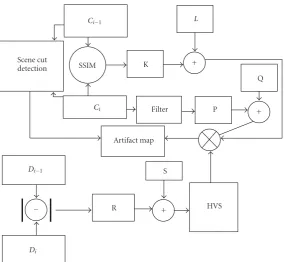
Figure9: Graphical depiction of the halftone temporal artifact quality assessment framework.
Certain halftoning algorithms produce videos that have high DWE but low flicker. An example is a binary halftone video produced by using ordered-dither technique on each grayscale continuous-tone frame independently. Similarly, there are halftoning algorithms that produce videos with high flicker but low DWE. An example is a binary halftone video produced by halftoning each grayscale continuous-tone frame independently using Floyd and Steinberg [14] error diffusion algorithm.
The observations discussed above are reflected in the design of the framework for evaluation of temporal artifacts, which we introduce now. To facilitate the clarity of presen-tation, we utilize the notation introduced in [1]. We adapt that notation for the current context and have described it in
Table 1. Please refer to the notation inTable 1regarding the terminology used in the rest of this paper.
LetIbe the total number of frames inVc. LetMbe the
total number of pixel rows in each frame ofVc, and letNbe
the total number of pixel columns in each frame ofVc.
3.1. Halftone Dirty-Window-Effect Evaluation. It has been explained in the previous section that dirty-window-effect may be observed if, between successive frames of a halftone video, the halftone patterns do not change sufficiently in response to a changing scene in the continuous-tone video. Based on our observations on DWE, note thatDWEi(m,n)
is a function of Cd,i,i−1(m,n), Ds,i,i−1(m,n), and Wi(m,n).
Therefore,
DWEi(m,n)= f
Cd,i,i−1(m,n),Ds,i,i−1(m,n),Wi(m,n)
.
(1)
Figure10: Structural dissimilarity map of the first two frames of the continuous-tone caltrain sequence.
For theith halftone frame, we also define perceived average dirty-window-effect as
DWEi=
m
nDWEi(m,n)
M·N . (2)
Perceptual dirty-window-effect Index DWE of a halftone videoVdis defined as
DWE=
iDWEi
(I−1) . (3)
Table1: Notation.
Ci:ith frame of continuous-tone (original) video,Vc;
Ci(m,n): pixel located atmth row andnth column of the continuous-tone frameCi;
Cs,i,j(m,n): local similarity measure between continuous-tone framesCiandCjat pixel location (m,n); Cs,i,j: similarity map/image between continuous-tone framesCiandCj;
Cd,i,j(m,n): local dissimilarity measure between continuous-tone framesCiandCjat pixel location (m,n); Cd,i,j: dissimilarity map/image between continuous-tone framesCiandCj;
Di:ith frame of halftoned video,Vd;
Di(m,n): pixel located atmth row andnth column of the halftone frameDi;
Ds,i,j(m,n): local similarity measure between halftone framesDiandDjat pixel location (m,n); Ds,i,j=similarity map/image between halftone framesDiandDj;
Dd,i,j(m,n): local dissimilarity measure between halftone framesDiandDjat pixel location (m,n); Dd,i,j: dissimilarity map/image between halftone framesDiandDj;
DWEi(m,n): local perceived DWE measure at pixel location (m,n) in theith halftone frame (i≥2);
DWEi: perceived DWE map/image at theith halftone frame (i≥2);
DWEi: perceived average DWE observed at theith halftone frame (i≥2);
Fi(m,n): local perceived flicker measure at pixel location (m,n) in theith halftone frame (i≥2); Fi: perceived flicker map/image at theith halftone frame (i≥2);
Fi: perceived average flicker observed at theith halftone frame (i≥2).
Wi(m,n): local contrast measure at pixel location (m,n) in theith continuous-tone frame; Wi: contrast map/image ofCi;
Vc: continuous-tone video;
Vd: the corresponding halftone video.
Figure 11: Normalized standard deviation map of the second continuous-tone frame of the caltrain sequence.
number. The DWE performance of the entire halftone video is given by the single number DWE, the Perceptual DWE Index. The framework introduced thus far is quite general. We have not described the form of the function in (1). We have also not described how to calculate the arguments of this function. We provide these details next.
We now describe a particular instantiation of the framework introduced before. DWEi(m,n), Cd,i,i−1(m,n), Ds,i,i−1(m,n), and Wi(m,n) constitute the maps/images
DWEi, Cd,i,i−1, Ds,i,i−1, and Wi, respectively. To evaluate
DWEi(m,n) in (1), we need the (local) contrast map of Ci,Wi, dissimilarity map between continuous-tone frames Ci and Ci−1, Cd,i,i−1, and the similarity map between the
successive halftone frames Di andDi−1,Ds,i,i−1. We derive Cd,i,i−1from the Structural Similarity (SSIM) Index Map [15]
evaluated between the continuous-tone framesCiandCi−1.
We will denote this derived measure by SSIM{Ci,Ci−1}. We
scale SSIM{Ci,Ci−1}to have its pixels take values between 0
and 1 inclusive. For the dissimilarity map, we set
Cd,i,i−1=1−SSIM{Ci,Ci−1}. (4)
For the similarity map, we set
Ds,i,i−1=(1− |Di−Di−1|)∗p, (5)
where prepresents the point spread function (PSF) of the HVS and|Di−Di−1| represents absolute difference image
for successive halftone framesDiandDi−1. We are assuming
that the HVS can be represented by a linear shift-invariant system [16] represented by p. For the evaluation of p, we utilize Nasanen’s model [17] to form a model for HVS. The pixel values of the mapDs,i,i−1are between 0 and 1 inclusive.
We wantWito represent an image that has pixels with values
proportional to the local contrast content. UsingWi, we want
0.08 0.09 0.1 0.11 0.12 0.13 0.14 0.15 0.16
DW
E
0 5 10 15 20 25 30 35
Frame number Void-and-cluster
Floyd-Steinberg error diffusion Gotsman
Figure 12: Caltrain perceived average DWE in three different halftone videos. The top curve is for (frame-independent) void-and-cluster halftone. The middle curve is for halftone sequence produced using (frame-dependent) Gotsman’s technique. The lowest curve is for (frame-independent) Floyd and Steinberg error diffusion halftone.
(via pixel wise division) by the mean image, which is also computed by replacing each pixel by the mean value of pixels in a 3×3 local window around the pixel. This gives usWi. Wiis further normalized to have pixel values between 0 and
1 inclusive. With these maps defined, we define (1) as
DWEi(m,n)=(1−SSIM{Ci,Ci−1}(m,n))·Ds,i,i−1(m,n)
·(1−Wi(m,n)).
(6)
Observe thatDWEi(m,n)∈[0, 1]. This instantiation of
the DWE assessment framework is depicted inFigure 9. In
Figure 9,K,P, andR each has a value of−1.L,Q, andS
have each a value of 1. The “Artifact Map” isDWEi. Each of
its pixels,DWEi(m,n), is a product of three terms. At pixel
location (m,n), the first term measures the local dissimilarity between the successive continuous-tone frames. A higher value of the first term, (1−SSIM{Ci,Ci−1}(m,n)), will mean
that the successive frames have a lower structural similarity in a local neighborhood of pixels centered at pixel location (m,n). This will in turn assign a higher weight to any DWE observed. This reflects the fact that the “local” scene change should result in higher perception of DWE if the halftone pixels do not change “sufficiently” between the successive frames. The second term, Ds,i,i−1(m,n), depends on the
number of pixels that stayed the same in a neighborhood around (and including) pixel location (m,n). It gives us a measure of perceived DWE due to HVS filtering. Since the HVS is modeled as a low-pass filter in this experiment,
Ds,i,i−1(m,n) will have a higher value, if the “constant” pixels
form a cluster as opposed to being dispersed. The third term,
0.13 0.135 0.14 0.145 0.15 0.155
DW
E
0 5 10 15 20 25 30 35
Frame number Gotsman
Modified Gotsman
Figure13: Caltrain DWE reduction: The bottom curve (dashed) depicts perceptual improvement with modified Gotsman’s tech-nique.
(1−Wi(m,n)), measures thelowcontrast content in a local
neighborhood centered at Ci(m,n). A higher value of this
term will result in higher value of perceived DWE. This is to incorporate spatial masking mechanisms of HVS. This term can also be viewed as representing the amount of low spatial frequency content. We incorporate the effect of scene changes by settingDWEito zero. This is where scene change detection
comes into play. This accounts for temporal masking effects. Note that between successive continuous-tone frames Ci−1
and Ci, a very low average value of SSIM{Ci,Ci−1} can
indicate a change of scene. Any scene change detection algorithm can be utilized, however. For the results reported in this paper, we determined scene changes in the videos through visual inspection and manually setDWEito zero at
frames where a scene change is determined to have occurred.
3.2. Experimental Results on DWE Assessment. We first discuss the DWE evaluation results on the standard caltrain sequence [10].Figure 10shows the dissimilarity mapCd,2,1.
In this map/image, the brighter regions depict the areas where the first two frames of the caltrain sequence are structurally dissimilar. These are the regions where DWE is likely to be observed, if the corresponding halftone pixels do not “sufficiently” change between the successive halftone frames. Figure 11 shows W2. In this map, the luminance
0 0.05 0.1 0.15 0.2 0.25 0.3 0.35
P
erce
ive
d
ave
ra
ge
fl
ic
ke
r
0 20 40 60 80 100
Frame number Void-and-cluster
Floyd-Steinberg error diffusion Gotsman
Figure14: Perceived Average Flicker evaluation in three different halftones of the trevor sequence. Note the relatively higher value of Perceived Average Flicker for (frame-independent) Floyd and Steinberg error diffusion halftone video.
threshold array was formed by using a 32 × 32 void-and-cluster mask [9]. The second sequence was formed by halftoning the sequence using Gotsman’s technique [2]. The third halftone sequence was formed by halftoning each frame independently using Floyd and Steinberg [14] error diffusion.Figure 12 depictsDWEi plotted as a function of
frame number. According to this plot, the ordered-dither halftone sequence has highest DWE. Gotsman’s technique has relatively lower DWE, whereas the error diffusion based halftone sequence has the lowest DWE. These results are consistent with our visual inspection observations when the sequence was played back at frame rates of 15 fps and 30 fps.
3.3. Validation of the DWE Assessment Framework. In this section, we present our results on the validation of the DWE assessment framework. To establish the validity of the DWE assessment framework, we modified Gotsman’s technique [2] such that our DWE assessment criteria were incorporated while generating the halftone sequence. This resulted in reduction of DWE in most halftone sequences. We briefly describe Gotsman’s method to generate a halftone video [2]. Gotsman’s method is geared towards reducing flicker in halftone videos. The first frame of the halftone video is generated by independently halftoning the cor-responding continuous-tone frame. This is done via an iterative technique which requires an initial halftone of the image as the initial guess (or the starting point). The initial halftone of the image is iteratively refined, via toggling the bits, until a convergence criterion is met. The technique results in achieving a local minimum of an HVS model-based perceived error metric. For the first halftone frame, the initial guess or the starting point can be any halftone of the first continuous-tone frame. The starting point of each subsequent frame is taken to be the preceding halftone
0 0.05 0.1 0.15 0.2 0.25 0.3 0.35
P
erce
ive
d
ave
ra
ge
fl
ic
ke
r
0 20 40 60 80 100
Frame number FDFSED
FIFSED
Figure 15: Perceived Average Flicker comparison between the frame-dependent Floyd and Steinberg error diffusion (FDFSED) and frame-independent Floyd and Steinberg error diffusion (FIFSED) halftones of the trevor sequence. FDFSED results in reduced flicker.
Continuous-tone pixel (input)
+ +
Error filter
+
−
Quantizer
Halftone pixel (output)
Figure16: Error diffusion for image halftoning.
frame. This causes each subsequent frame to converge to a halftone which has a lot of pixels that do not toggle (with respect to the preceding halftone frame), particularly when there is no scene change. This results in producing halftone frames that are temporally better correlated than those gen-erally produced using a frame-independent (or intraframe) approach. Our modification to this technique is as follows. The first halftone frame is generated independently, just like in Gotsman’s original technique. However, unlike Gotsman’s technique [2], the initial guess for a subsequent frame is not taken to be the preceding halftone frame in its entirety. Instead, we only copy certain pixels from the previous frame. In particular, to determine the initial guess of a frame (other than the first frame), we produce a frame-independent halftone of the corresponding continuous-tone frame using a 32×32 void-and-cluster mask [9]. Then certain pixels of this frame that meet a criteria, to be described next, are replaced by pixels from the previous halftone frame. What pixels from the previous frame need to be copied is determined based on our DWE assessment technique. For the ith halftone frame (i ≥ 2), Di, if a pixel location (m,n) in the initial
halftone is such that ((1 −SSIM{Ci,Ci−1}(m,n)) · (1 − Wi(m,n)))≤T, then the pixel from the preceding halftone
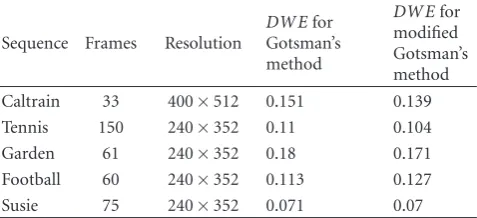
Table2: Evaluation of DWE Index. A higher value indicates higher DWE.
Sequence Frames Resolution
DWEfor Gotsman’s method
DWEfor modified Gotsman’s method Caltrain 33 400×512 0.151 0.139
Tennis 150 240×352 0.11 0.104
Garden 61 240×352 0.18 0.171
Football 60 240×352 0.113 0.127
Susie 75 240×352 0.071 0.07
threshold that controls the amount of dirty-window-effect reduction. WithT=0.09, we produced the caltrain halftone and compared it with Gotsman’s technique.Figure 13depicts the reduction in perceived DWE due to our modification of Gotsman’s algorithm. Evaluation via visual inspection confirmed the reduction in perceived DWE. Table 2shows more results for comparison of DWE Index,DWE, evaluation for five different sequences [10]. The number of frames reported inTable 2is for 30 fps playback. Thus,Table 2gives
DWE for 30 fps playback. For the modified method,T =
0.09. Two points can be concluded based on the results reported in the table. For most sequences, improvement in the perception of DWE due to modified Gotsman’s method is marginal. This was the case during our visual evaluation of the sequences. One exception to this was the caltrain sequence. This observation reinforces the fact that perception of DWE is content dependent. It is interesting to note that the modified Gotsman’s method actually produced the football sequence with a slightly higher DWE. This is due to the fact that in the modified Gotsman’s method, it is the content of the initial frame halftone that is controlled via the modified method. However, since the method iteratively improves the halftone frame, there is no explicit control on how the halftone frame changes subsequently, and there is a possibility for a scenario like this.
3.4. Halftone Flicker Evaluation. The development of frame-work for halftone flicker evaluation will parallel the approach, utilized above, for the evaluation of DWE, since flicker and DWE are related artifacts. The development presented below is based on the framework proposed in [1]. Based on our discussion on flicker above, we note that
Fi(m,n) is a function of Cs,i,i−1(m,n), Dd,i,i−1(m,n), and Wi(m,n). Thus,
Fi(m,n)= f
Cs,i,i−1(m,n),Dd,i,i−1(m,n),Wi(m,n)
. (7)
For the ith halftone frame, Perceived Average Flicker is defined as
Fi=
m
nFi(m,n)
M·N . (8)
Perceptual Flicker IndexFof a halftone videoVd is defined
as
F=
iFi
(I−1). (9)
Perceived Average FlickerFi can be plotted (against frame
number) to evaluate flicker performance of individual halftone frames. Perceptual Flicker Index F gives a single number representing flicker performance of the entire halftone video. Next, we present a particular instantiation of the framework discussed thus far.
Fi(m,n),Cs,i,i−1(m,n),Dd,i,i−1(m,n), andWi(m,n)
con-stitute the maps/imagesFi, Cs,i,i−1,Dd,i,i−1, andWi,
respec-tively. Therefore, to evaluateFi(m,n) in (7), we need the local
contrast map ofCi,Wi, similarity map between
continuous-tone frames Ci and Ci−1, Cs,i,i−1, and the dissimilarity
map between the successive halftone frames Di and Di−1, Dd,i,i−1. We setCs,i,i−1 to be a map based on the Structural
Similarity (SSIM) Index Map [15] evaluated between the continuous-tone framesCi andCi−1. This will be denoted
by SSIM{Ci,Ci−1}. SSIM{Ci,Ci−1}is scaled to have its pixels
values between 0 and 1 inclusive. For the dissimilarity map, we set
Dd,i,i−1=(|Di−Di−1|)∗p, (10)
where p represents the point spread function (PSF) of the HVS. This is based on the assumption that the HVS can be represented by a linear shift-invariant system [16] represented by p. Dd,i,i−1 can have its pixels take values
between 0 and 1 inclusive.Wiis evaluated exactly as in the
case of DWE, already described inSection 3.1. We define (7) as
Fi(m,n)=SSIM{Ci,Ci−1}(m,n)·Dd,i,i−1(m,n)
·(1−Wi(m,n)).
(11)
Note that Fi(m,n) ∈ [0, 1]. This instantiation of the
flicker assessment framework is depicted in Figure 9. In
Figure 9, K, Q, and R each have a value of 1. L, and S
have each a value of 0. P has a value of −1. The “Artifact Map” is Fi.Fi(m,n) has the form described in [1]. We do
evaluateWi differently in this paper. For clarity, we repeat
the description of Fi(m,n) as provided in [1]. Fi(m,n) is
a product of three terms. At pixel location (m,n), the first term measures the local similarity between the successive continuous-tone frames. A higher value of the first term, SSIM{Ci,Ci−1}(m,n), will mean that the successive frames
have a higher structural similarity in a local neighborhood of pixels centered at pixel location (m,n). This will in turn assign a higher weight to any flicker observed. This is desired because if the “local” scene does not change, perception of any flicker would be higher. The second term,
Dd,i,i−1(m,n), depends on the number of pixels that toggled
in a neighborhood around (and including) pixel location (m,n). It gives us a measure of perceived flicker due to HVS filtering. Since the HVS is modeled as a low pass filter in this experiment, Dd,i,i−1(m,n) will have a relatively higher
value, if the pixel toggles form a cluster as opposed to being dispersed. The third term, (1 −Wi(m,n)), measures the
low contrast content in a local neighborhood centered at
Ci(m,n). A higher value of this term will result in higher
of scene changes by setting Fi(m,n) to a low value (zero,
e.g.), if a scene change is detected between continuous-tone frames Ci−1 and Ci. This is to account for temporal
masking effects. For the results reported in this paper, we (manually) determined scene changes in the videos through visual inspection and manually set Fi to zero whenever
a scene change is determined to have occurred between successive continuous-tone framesCi−1andCi.
3.5. Experimental Results on Flicker Assessment. Now we discuss the flicker evaluation results on the standard trevor sequence [10]. This sequence was halftoned using three techniques. The first halftone sequence was formed by using ordered-dither technique on each frame independently. The threshold array was formed by using a 32 × 32 void-and-cluster mask [9]. The second sequence was formed by halftoning the sequence using Gotsman’s technique [2]. The third halftone sequence was formed by halftoning each frame independently using Floyd and Steinberg [14] error diffusion.Figure 14depictsFiplotted as a function of frame
number. As you can see on this plot, the error diffusion-based halftone sequence has higher flicker relative to the other two compared halftone sequences. Authors’ visual evaluation of the sequences played back at frame rates of 15 fps and 30 fps revealed highest flicker in the sequences generated using Floyd and Steinberg [14] error diffusion.
3.6. Validation of the Flicker Assessment Framework. To validate the flicker assessment framework proposed in this paper, we will utilize the flicker assessment framework to modify an existing video halftoning algorithm. If this modification results in improvement of perceived flicker at medium frame rates, then the proposed framework is valid. This is the case as will be shown next. We modify frame-independent Floyd and Steinberg error diffusion algorithm to reduce flicker. As described before, frame-independent Floyd and Steinberg error diffusion (FIFSED) algorithm halftones each frame of the continuous-tone video independently using Floyd and Steinberg error diffusion [14] algorithm for halftone images. The general set up for image error diffusion is shown inFigure 16. In this system, each input pixel, from the continuous tone image, to the quantizer is compared against a threshold to determine its binary output in the halftoned image. We modify FIFSED and introduce frame-dependence in the algorithm. The modified algorithm will be called frame-dependent Floyd and Steinberg error diffusion (FDFSED) algorithm. To make the algorithm frame-dependent (or interframe), we will incorporate threshold modulation for flicker reduction. The idea of threshold modulation to reduce flicker was originally conceived by Hild and Pins [4], and later used in [5]. FDFSED works as follows. The first halftone frame is generated by halftoning the first continuous-tone frame using image error diffusion algorithm. In this algorithm, the error diffusion quantization threshold is kept a constant [14]. For the generation of subsequent halftone frames, the quantization threshold is not constant. Instead, the quantization threshold is modulated based on our flicker
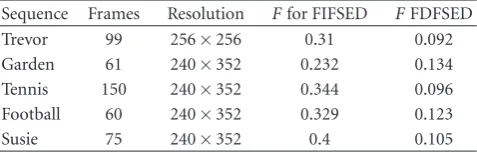
Table3: Evaluation of Flicker Index. A higher value indicates higher flicker.
Sequence Frames Resolution Ffor FIFSED FFDFSED
Trevor 99 256×256 0.31 0.092
Garden 61 240×352 0.232 0.134
Tennis 150 240×352 0.344 0.096
Football 60 240×352 0.329 0.123
Susie 75 240×352 0.4 0.105
assessment framework. In the generation of eachithhalftone frame for (i≥2),Di, the quantization thresholdTi(m,n) for
a pixel location (m,n) is determined as follows:
Ti(m,n)
=
⎧ ⎪ ⎪ ⎪ ⎪ ⎪ ⎪ ⎪ ⎪ ⎨ ⎪ ⎪ ⎪ ⎪ ⎪ ⎪ ⎪ ⎪ ⎩
0.5−Z·(SSIM{Ci,Ci−1}(m,n)·(1−Wi(m,n)))
ifDi−1(m,n)=1,
0.5+Z·(SSIM{Ci,Ci−1}(m,n)·(1−Wi(m,n)))
ifDi−1(m,n)=0.
(12)
As seen in (12), the amount of threshold perturba-tion is determined by Z · (SSIM{Ci,Ci−1}(m,n) · (1 − Wi(m,n))), where Z is a constant that controls the effect
of (SSIM{Ci,Ci−1}(m,n)·(1−Wi(m,n))) onTi(m,n). The
threshold modulation is designed to reduce flicker in the halftone video.
WithZ = 0.1 in (12), we produced the trevor halftone using FDFSED and compared with that generated using FIFSED.Figure 15depicts the reduction in perceived average flicker in the trevor halftone produced using FDFSED. Visual evaluation of the two halftone sequences (generated using FIFSED and FDFSED methods) by the authors confirmed the reduction in perceived average flicker in the sequence generated using FDFSED method. Table 3 shows more results for comparison of flicker Index,F, evaluation for five different sequences [10]. For FDFSED algorithm, we used
Z =0.1 in (12).Table 3shows the values of flicker Index,F
for the number of frames indicated in the table. The number of frames reported in Table 3 is for 30 fps playback. Thus,
Table 3 gives F, for 30 fps playback. As can be seen in the table, use of FDFSED resulted in significant reduction of flicker in every halftone sequence. The results are consistent with the authors’ visual evaluation at 30 frames per second.
4. Conclusion
discussed. We also presented two new video halftoning algorithms which were designed by modifying existing video halftoning algorithms. The modifications were based on the perceptual quality assessment framework and were thus geared towards reducing the temporal artifacts. Results of comparisons between the halftone videos generated using the original and the modified algorithms were presented and discussed.
References
[1] H. Rehman and B. L. Evans, “Flicker assessment of low-to-medium frame-rate binary video halftones,” in Proceedings of the IEEE Southwest Symposium on Image Analysis and Interpretation (SSIAI ’10), pp. 185–188, Austin, Tex, USA, May 2010.
[2] C. Gotsman, “Halftoning of image sequences,”Visual Com-puter, vol. 9, no. 5, pp. 255–266, 1993.
[3] C.-Y. Hsu, C.-S. Lu, and S.-C. Pei, “Video halftoning preserv-ing temporal consistency,” inProceedings of IEEE International Conference on Multimedia and Expo (ICME ’07), pp. 1938– 1941, July 2007.
[4] H. Hild and M. Pins, “A 3-d error diffusion dither algorithm for half-tone animation on bitmap screens,” in State-of-the-Art in Computer Animation, pp. 181–190, Springer, Berlin, Germany, 1989.
[5] Z. Sun, “Video halftoning,” IEEE Transactions on Image Processing, vol. 15, no. 3, pp. 678–686, 2006.
[6] D. P. Hilgenberg, T. J. Flohr, C. B. Atkins, J. P. Allebach, and C. A. Bouman, “Least-squares model-based video halftoning,” inHuman Vision, Visual Processing, and Digital Display V, vol. 2179 ofProceedings of SPIE, pp. 207–217, San Jose, Calif, USA, February 1994.
[7] C.-Y. Hsu, C.-S. Lu, and S.-C. Pei, “Power-scalable multi-layer halftone video display for electronic paper,” inProceedings of IEEE International Conference on Multimedia and Expo (ICME ’08), pp. 1445–1448, Hannover, Germany, June 2008. [8] J. Robson, “Spatial and temporal contrast-sensitivity functions
of the visual system,”Journal of the Optical Society of America, vol. 56, no. 8, pp. 1141–1142, 1966.
[9] R. A. Ulichney, “Void-and-cluster method for dither array generation,” inHuman Vision, Visual Processing, and Digital Display IV, J. P. Allebach and B. E. Rogowitz, Eds., vol. 1913 of Proceedings of SPIE, pp. 332–343, San Jose, Calif, USA, February 1993.
[10] R. P. I. Center for Image Processing Research,
http://www.cipr.rpi.edu/resource/sequences/index.html.
[11] W. J. Tam, L. B. Stelmach, L. Wang, D. Lauzon, and P. Gray, “Visual masking at video scene cuts,” inHuman Vision, Visual Processing, and Digital Display VI, vol. 2411 ofProceedings of SPIE, pp. 111–119, February 1995.
[12] R. A. Ulichney, “Review of halftoning techniques,” inColor Imaging: Device-Independent Color, Color Hardcopy, and Graphic Arts V, vol. 3963 ofProceedings of SPIE, pp. 378–391, San Jose, Calif, USA, January 2000.
[13] B. Girod, “The information theoretical significance of spatial and temporal masking in video signals,” in Human Vision, Visual processing, and Digital Display, vol. 1077 ofProceedings of SPIE, pp. 178–187, 1989.
[14] R. Floyd and L. Steinberg, “An adaptive algorithm for spatial grayscale,” in Proceedings of SID International Symposium, Digest of Technical Papers, pp. 36–37, 1976.
[15] Z. Wang, A. C. Bovik, H. R. Sheikh, and E. P. Simoncelli,
“Image quality assessment: from error visibility to structural similarity,”IEEE Transactions on Image Processing, vol. 13, no. 4, pp. 600–612, 2004.
[16] T. N. Pappas, J. P. Allebach, and D. L. Neuhoff, “Model-based digital halftoning,”IEEE Signal Processing Magazine, vol. 20, no. 4, pp. 14–27, 2003.