DOI: 10.26502/droh.0015
Dental Research and Oral Health Vol. 2 No. 4 – December 2019
Research Article
Efficacy Study of Sensitive Tooth Paste with Natural Extract
Sudhir Sawarkar, Jayaganesh Sankar
*, Furtado Mellissa Andrea
Dabur Research and Development, International Business Division, Dubai,United Arab Emirates
*
Corresponding Author: Jayaganesh Sankar, Dabur Research and Development, International Business
Division, Dubai, P. O. Box. 6399, United Arab Emirates, E-mail: [email protected]
Received:14 September 2019; Accepted:01 October 2019; Published:16 November 2019
Citation: Sudhir Sawarkar, Jayaganesh Sankar, Furtado Mellissa Andrea. Efficacy study of sensitive tooth paste
with natural extract. Dental Research and Oral Health 2 (2019): 081-088.
Abstract
People notice the pain is aggravated after a bite of ice
cream or spoon of hot soup intake. The tooth sensitivity otherwise called as ‘Dentin Hypersensitivity’; the
Dentin hypersensitivity is not a personal problem and it
is easily rectified by the regular oral hygiene method.
The main objective of the study was to evaluate the
clinical efficacy of sensitive tooth paste with herbal
extract to decrease the Dentinal Hypersensitivity issue.
The primary objective is to estimate of this study
sensitivity of teeth through the Mean Visual Analogue
Scale Scores method. The secondary objective is to
estimate the recovery of gum inflammation reduction,
gum strengthening, smoothening effect, cleaning. The
Primary efficacy analysis was done by comparison of
Screening and EOS of all variables using Non
Parametric (Non Normal) Wilcoxon Signed Ranks Tes;
it is similar to Paired t test. Mean visual Analogue scale
score reduced up-to 66.3% in Air evaporative stimuli
and 74.6% in Thermal stimuli. Gingival index score
reduced before and after treatment. Gum strengthening
was confirmed by reduction of redness, edema and
glazing from the all the patients who have used the
Sensitive toothpaste. Gum Soothening was confirmed
from the reduction towards bleeding on probing after
the use of sensitive toothpaste by the patients. The
plaque Index score helps to quantify the deposit of
plaque on the teeth. There was a considerable decrease
in plaque Index score from screening to End Of Study
(EOS). Mean change of plaque index score at screening
was 1.56 and it was declined to 0.96 at EOS. The
present study confirms that the toothpaste decreases
plaque and gingivitis scores at significant levels. It is
suggested that an herbal extract containing toothpaste
could be a useful approach for gingivitis prevention and
that it may be recommended for daily oral hygiene
procedures. Regular use of herbal active tested tooth
paste will helps to relief from the sensitivity issue and
Dental Research and Oral Health - Vol. 2 No. 4 – December 2019 Keywords: Sensitive teeth; Licorice extract;
Cinnamon extract; Potassium nitrate oral hygiene
1. Introduction
In general the pain was noticed during the intake of hot
or cold foods and it is caused by the cavity in teeth or
the presence of sensitive teeth. People noticed the pain
is aggravated after a bite of ice cream or spoon of hot
soup intake. The tooth sensitivity otherwise called as ‘Dentin Hypersensitivity’; the Dentin hypersensitivity is
not a perineal problem and it is easily rectified by the
regular oral hygiene method. Dentin hypersensitivity is
not defects of pathology associated with teeth, it is
medically explained as a painful response to thermal,
chemical, mechanical treatment or osmotic stimulant
applied to opened dentinal tubules [1]. Dentin
hypersensitivity affects the people with any age and
predominately it affects the age group between 20 and
50 and the issue is higher in female when compared to
male. Dentinal tubules are responsible and play a crucial
role in Dentin hypersensitivity, it helps to transfer the
stimulant and irritant potential up to the pulp. Blocking
of dentinal tubules and reduce the diameter of dentinal
tubules are helpful to get rid-off from the sensitivity
issue of teeth. The enamel thinner is responsible for the
tooth sensitivity and it is presented in the outer layer of
the teeth and protect the teeth. However the hard brush
usage, improper brushing, frequently eating acidic food,
acidic juices also cause the enamel layer damage [1- 3].
Many researchers proved and exclusively studied the
effect of potassium nitrate on teeth sensitive issue [1, 2,
4]. Many scientists proved that the toothpaste containing
the 5% potassium and its salt usage up to 5 to eight
weeks reduced the Dentin hypersensitivity. However,
there is no authentic reaction mechanism proved yet.
Many scientists revealed that the potassium ions get
deposited in the dentin cavities and prevent the sensitive
issue temporally; and continuous usage is helpful to
deposit the more amount of potassium ions. Recently,
many scientists proved the efficacy of sensitive
toothpaste after mouth rinsing or certain period. So in
recent days, many dentists recommended to brush with
sensitive toothpaste at least twice per day. Recent days,
many people move towards the natural remedy
especially for the health and hygiene segment. Many
herbal combinations, materials are helpful to solve the
teeth sensitive issue [5-7]. We have exclusively worked
out with the synergistic combination of chemical and
natural active against the teeth sensitive and develop the
tooth sensitive tooth paste. The main objective of the
study was to evaluate the clinical efficacy of sensitive
tooth paste with herbal extract to overcome or decrease
the Dentinal Hypersensitivity issue. The primary
objective is estimate the sensitivity issue of teeth
through the Mean Visual Analogue Scale Scores
method and the secondary objective is recovery of gum
inflammation reduction, gum strengthening,
smoothening effect, cleaning. This study also aimed to
study the any adverse effect of the developed tooth
paste through the clinical study.
2. Materials and Methods
The study protocol was designed as an open label,
non-randomized and single arm study. The safety and
efficacy of natural active based sensitive toothpaste
study carried out in adult subjects with having the
Dental hypersensitivity issue. An overall study
conducted with 30 subjects and subjects is divided into
15 male and 15 female; the overall all study period is 30
days. The trial conducted in line with the ICMR’ Ethics
Guidelines and followed the regular Indian Good
clinical practice (GCP) and ICH-GCP E6 guidelines.
The study was conducted in one common center located
in Coimbatore, Tamil Nadu, India, however the subjects
were sourced and brought to the common center for the
study and investigation. Descriptive information was
considered from Treatment group for Subject
Dental Research and Oral Health - Vol. 2 No. 4 – December 2019
The Primary efficacy analysis was done by comparison
of Screening and EOS of all variables using Non
Parametric (Non Normal) Wilcoxon Signed Ranks
Test and it is similar to Paired t test. Mean Visual
Analogue Scale Scores after being exposed to air
evaporative stimuli (VAS - A) and Mean Visual
Analogue Scale Scores after being exposed to thermal
stimuli (VAS - C) from Screening through End of the
study was calculated using the Wilcoxon Signed Ranks
Test. Similarly the gingival and plaque index score was
calculated based on visual analogue scale score. Cotton
Gauze Method performed to estimate the smell test and
it performed by the end of the study period. Yellowish
stains measured by the mean sulfide production level.
Data Entry, Editing and Checking was done by Clinical
Data Management personnel at Consortium Clinical
Research Pvt. Ltd., and the data are examined by the
statistical standard method with proper sample size. The
present study was designed as a non- randomized,
unblinded, observational trial carried out from the
Month of September 2018 and completed in November
2018. Both Male and Female subjects with Hyper
Sensitivity in Teeth/Tooth were enrolled in the study All
the Subjects enrolled were from an urban area with age
group of 18 to 55 (inclusive) years. After meeting the
eligibility criteria along with the good general health
and a baseline plaque index (PI) mean > 1.0 and
presence of established gingivitis were included in the
study. A mean gingivitis score should be > 1.0,
according to the criteria used by Binny et al. Subjects
who were not using any other treatment for at least past
3 months were enrolled in this study.
Sample Composition details
Tested sensitive toothpaste prepared with international
regulatory bodies approved ingredients and INCI list
details are as below;
Composition details
Sorbital, silica, Aqua, Polyethylene glycol 1500;
Glycerin, Potassium nitrate; titanium dioxide, Sodium
carbody methyl cellulose, herbal extract derived from
Anacyclus pyrethrum, Acacia Arabica, Mimusops
elengi, Symplocos racemose, Syzygium cumini; flavor,
tri sodium ortho phosphate, sodium benzoate,
Glycyrrhiza glabra extract, sodium saccharin, methyl
paraben, propyl paraben. They applied 1.0 gm/use
(approximately 1 inch) of the Tooth Paste on their wet
Tooth Brush and brushed at-least for 2-3 minutes at
each application after brushing rinse mouth only with
thoroughly plain water. Brushing was done twice a
day-Morning after waking up and just before going to bed
(nothing was eaten or drunk except plain water after
brushing at night). They returned back to the study
examination center on the date as requested by the site
team along with the left over tooth paste and used tooth
brush for the estimation of tooth sensitivity and safety
study.
3. Results
The sensitivity of teeth was reduced significantly at
EOS when compared to screening period, which was
confirmed further from the sensitivity parameters
VAS-A (VAS-Air Evaporative Stimuli) Score and VVAS-AS-C
(Thermal Stimuli) Score. Mean visual Analogue scale
score reduced up-to 66.3% in Air evaporative stimuli
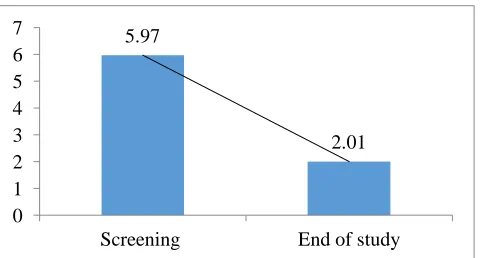
and 74.6% in Thermal stimuli (Table 1). Mean changes
of VAS score from screening and end of study pictorial
data furnished in the Figure1 and Figure 2. The
graphical representation clearly indicates that, the
significant improvement in the before and after
treatment due to the continuous usage of sensitive tooth
paste.
The gum Inflammation reduction was confirmed by the
results of the gingival Index score as well as it was
Dental Research and Oral Health - Vol. 2 No. 4 – December 2019
Herbal Sensitive toothpaste; around 0.85 Gingival index
score reduced before and after treatment (table 2). Gum
strengthening was confirmed by reduction of redness,
edema and glazing from the all the patients who have
used the Sensitive toothpaste. Gum Soothening was
confirmed from the reduction towards bleeding on
probing after the use of sensitive toothpaste by the
patients. The plaque Index score helps to quantify the
deposit of plaque on the teeth. There was a considerable
decrease in plaque Index score from screening to EOS.
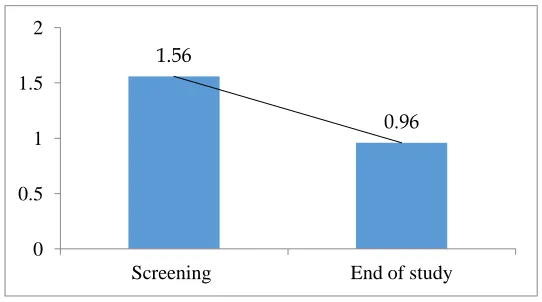
Mean change of plaque index score at screening was
1.56 and it was declined to 0.96 at EOS and it is highly
significant as shown in the (table 3) and (Figure 3).
This is also a proof of the effect of tooth decay
alleviation of Tooth Paste when used in the Subjects as
per package instructions. (Table 4) reflects the change
in the smell of breath from screening to End of study.
There was a significant change in the mean of smell of
breath score that is 4.83 at screening changed to 1.97 on
the EOS.
Values in the parenthesis indicated the standard deviation values of (n=30) tested subjects
Table 1:Mean Visual Analogue Scale Scores (VAS-A) from Screening to 30 days (EOS) in the subjects
Figure 1:Mean changes of VAS-A score for air evaporative stimuli from screening to 30 days 5.97
2.01
0 1 2 3 4 5 6 7
Screening End of study
S. No. Efficacy Parameters Screening End of Study Results (Reduction
VAS Score in%)
1. Mean Visual Analogue Scale Scores
to air evaporative stimuli (VAS-A) 5.97 (0.48) 2.01 (0.39) 66.3%
2. Mean Visual Analogue Scale Scores
Dental Research and Oral Health - Vol. 2 No. 4 – December 2019
Figure 2:Mean changes of VAS-A score for Thermal stimuli from screening to 30 days
Variables Screening EOS Mean Change
Gingival Index scores
Mean 1.77 0.92
0.85
N 30 30
Std. Deviation 0.25 0.09
Table 2:Mean Change of Gingival Index Score from Screening to 30 days (EOS) in the Subjects
Figure 3:Mean changes of Plaque Index score from screening to 30 days 6.44
1.63
0 2 4 6 8
Screening End of study
1.56
0.96
0 0.5 1 1.5 2
Dental Research and Oral Health - Vol. 2 No. 4 – December 2019
Variables Screening EOS Mean Change
Plaque Index Score
Mean 1.56 0.96
0.6
N 30 30
Std. Deviation 0.25 0.08
Table 3:Mean Change of Plaque Index Score from Screening to 30 days (EOS) in the Subjects
Variables Screening EOS Mean Change
Smell of Breath Score
Mean 4.83 1.97
2.86
N 30 30
Std. Deviation 0.75 0.76
Table 4:Mean Change of Smell of Breath Score from Screening to 30 days (EOS) in the Subjects.
S. No.
Parameters analyzed
Median Value ρ values
(At 5%)
Screening EOS
1. VAS-A (Air Stimuli) 6 2.1 < 0.05
2. VAS-C (Thermal Stimuli) 6.4 1.6 < 0.05
3. Gingival Index Score 1.77 0.92 < 0.05
4. Plaque Index Score 1.48 0.96 < 0.05
5. Odor of Breath Score 5 2 < 0.05
6. Sulfide Color Score 5 2 < 0.05
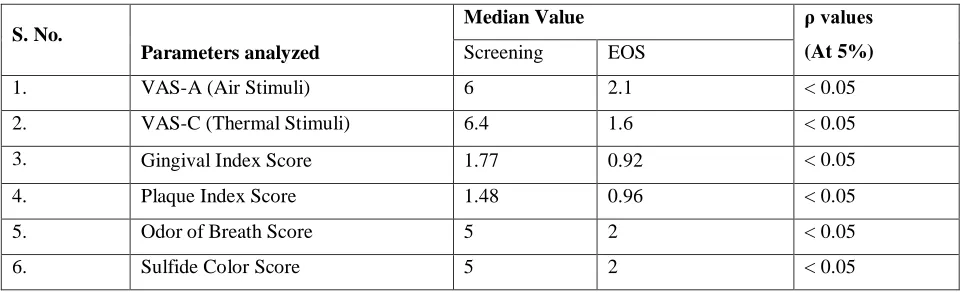
Table 5:Parameters Analysed from Screening to EOS and their respective “ρ values” Sensitive Toothpaste study.
Overall six parameters were used in the Sensitive
Toothpaste study to assess the various aspects of teeth,
namely Air stimuli, thermal Stimuli, Gingival index
score, Plaque index score, Sulfide color score and odor
of breath score. VAS-A (Air Stimuli) and VAS-C
(Thermal Stimuli) used to assess the sensitivity of the
teeth, the results of VAS-A score depicts the
considerable change in the median value of 6.00 at
screening in 2.1 on the EOS. VAS -C score from 6.4 to
1.6 from screening to EOS respectively, which in turn
showed the p Value is <0.05. Both Air-stimuli and
Thermal Stimuli score significantly decreased at 5%
statistical level, it confirms that the tested toothpaste
work in sensitive teeth and help to get rid-off from the
Dental Research and Oral Health - Vol. 2 No. 4 – December 2019
Gingival index score was used to assess the reduction in
gum inflammation, gum strengthening and gum
soothening. Median gingival Index score changed from
screening to EOS which confirmed the reduction in the
gum inflammation in the screening value of 1.77 to 0.92
at the EOS and the p value is < 0.05. The plaque index
score used to assess the plaque formation and tooth
decay alleviation, the median change of plaque index
score from 1.48 at screening to 0.96 at EOS showed the
considerable reduction in the plaque formation and
tooth decay alleviation the p value is highly significant
p <0.05. Freshness of breath was assessed using mean
smell test score and mean sulfide production level.
Median value changed from 5 at screening to 2 at the
end of study for both mean smell test and mean sulfide
production level. For both the parameters the p value is
< 0.05.
4. Discussion
The efficacy endpoints VAS-A score showed 66.3%
reduction and VAS-C showed 74.6% reduction when
compared from baseline, Gingival Index, Plaque Index,
Smell of breath and Sulfide production test was
compared between screening and the last visit. All the
parameters showed considerable reduction when
compared with baseline. The mean change differences
between screening and End of study was statistically
significant and the p <0.05 for all the parameters
analyzed. Recently, there has been a growing interest in
natural products. The plaque-reducing effects of other
herbal-based active agents have previously been
described by various studies. In the present study, the
application of testing sensitive toothpaste containing
natural herbal ingredients showed considerable
reductions in plaque accumulation and gingival
inflammation. Anti-gingivitis properties of Acacia
Arabica exclusively studied by Tangade et al. [8].
Through the clinical study, the incorporation of 1% of
Acacia Arabica significantly reduced the sensational
issues [9]. Glycyrrhiza glabra uralensis extract having
the higher anti-microbial activity [10], many researchers
proved that the activity of anti-microbial and prevent the
dental caries [11].
Many researchers proved that the cinnamon bark help to
improve the oral hygiene, in addition to that, the
combination of cloves and cinnamon bark helps to
improve the sensitive teeth [12, 13]. An herbal active
are mainly helping to maintain the oral hygiene and kills
the bacteria in the mouth; oral hygiene directly
proportional to the teeth helps and helps to prevent the
tooth decay, enamel decay, teeth ulcer, yellowing of
teeth and sensitivity etc. [12, 14]. Chemical active like
potassium nitrate helps prevent the teeth from the high
heat or cold intake, it helps and forms a new dentin
layer and prevent from the external high heat/cold
affect. Similarly the herbal actives are helping to
prevent the enamel damage and improve the oral
hygiene. The improvement of oral hygiene is immensely
useful to prevent the dentin layer and helps to maintain
the chemical deposition layers peel off. The present
study confirms that the synergistic effect of herbal
actives along with potassium nitrate helps to prevent the
teeth from sensitivity issue and helps to make a happy
smile.
5. Conclusion
The study concluded that the sensitivity of teeth was
reduced significantly at EOS when compared to
screening period, which was confirmed from the
sensitivity parameters VAS-A (Air Evaporative Stimuli)
Score and VAS-C (Thermal Stimuli) Score. Herbal
actives toothpaste is free from fluoride and no harm
chemicals, the natural active ingredients improve the
teeth and protect the teeth naturally. The present study
also confirms that the decrease plaque and gingivitis
scores at significant levels. It is suggested that an herbal
Dental Research and Oral Health - Vol. 2 No. 4 – December 2019
for gingivitis prevention and that it may be
recommended for daily oral hygiene procedures.
Natural active ingredients along with the potassium ions
helps fill and block the exposed nerves thereby reducing
the exposure to outside objects. Regular use of herbal
active tested tooth paste will helps to relief from the
sensitivity issue and makes a happy smile.
Acknowledgement
The researchers thank Mr. Krishna Kumar Chutani,
CEO and Mr. Subba Rao - Head of operation for their
constant encouragement and support for the study.
References
1. Pradeep AR, Sharma A. Comparison of clinical
efficacy of a dentifrice containing calcium,
sodium phosphosilicate to a dentifrice
containing potassium nitrate and to a placebo
on dentinal hypersensitivity: a randomized
clinical trial. J Periodontol 8 (2010): 1167–
1173.
2. Frechoso SC, Menéndez M, Guisasola C,
Arregui I, Tejerina JM, et al. Evaluation of the
efficacy of two potassium nitrate bioadhesive
gels (5% and 10%) in the treatment of dentin
hypersensitivity. A randomized clinical trial. J
Clin Periodontol 30 (2003): 315–320.
3. Cai L, Wu CD. Compounds from Syzygium
aromaticum possessing growth inhibitory
activity against oral pathogens. J Nat Prod 59
(1996): 987–990.
4. Schiff T, Zhang YP, DeVizio W, Volpe AR,
Proskin HM. et al. A randomized clinical trial
of the desensitizing efficacy of three
dentifrices. Compend Contin Educ Dent 21
(2000): 4–10.
5. Prabu seenivasan, Jayakumar M, Ignacimuthu
S. In vitro antibacterial activity of some plant
essential oils. BMC Complement Altern Med 6
(2006): 39.
6. Bajaj N, Tandon S. The effect of Triphala and
Chlorhexidine mouthwash on dental plaque,
gingival inflammation, and microbial growth.
Int J Ayurveda Res 2 (2011): 29–36.
7. Chanda D, Shanker K, Pal A, Mani D, Darokar
MP, et al. Safety evaluation of Trikatu, a
generic Ayurvedic medicine in Charles Foster
rats. J Toxicol Sci 34 (2009): 99–108.
8. Tangade PS, Mathur A, Tirth A, Kabasi S, et
al. Anti-gingivitis Effects of Acacia
arabica-containing Toothpaste. The Chinese Journal of
Dental Research 15 (2012): 49-53.
9. Mariyam Roqaiya, Wajeeha Begum, Rumaiza
Jahufer. Acacia Arabica (Babool) - A - review
on ethnobotanical and Unani traditional uses as
well as phytochemical and pharmacological
properties. Int J Pharm Phytopharmacol Res 4
(2015): 315-321.
10. Kim HJ, Jang HN, Bae JY, Ha JH, Park SN.
Antimicrobial activity, quantification and
bactericidal activities of Licorice active
ingredients. Korean J Microbiol Biotechnol 42
(2014): 386-392.
11. Young-Soon Choi, Jin-Young Kim, Ha-Ram
Nah, Bo-Geum Seo, Do-Hyun An , et al.
Anti-caries effect of the Glycyrrhiza uralensis
extract. Biomedical Research 28 (2017):
8271-8275.
12. Prajapati PK, Sarkar PK, Nayak SV, Joshi RD,
Ravishankar B. Safety and toxicity profile of
some metallic preparations of Ayurveda. Anc
Sci Life25 (2006): 57–63.
13. Shoji S. A drug over the millennia:
pharmacognosy, chemistry, and pharmacology
of licorice. Yakugaku zasshi 120 (2000):
Dental Research and Oral Health - Vol. 2 No. 4 – December 2019 14. Lynch RJ. Zinc in the mouth, its interactions
with dental enamel and possible effects of
caries; a review of the literature. Int Dent J61
(2011): 46–54.
15. Pradeep AR, Happy D, Garg G. Short-term
clinical effects of commercially available gel
containing Acacia arabica: a randomized
controlled clinical trial. Australian Dental
Journal 55 (2010): 65–69.
This article is an open access article distributed under the terms and conditions of the