O R I G I N A L A R T I C L E
Open Access
Updated Rice Kinase Database RKD 2.0:
enabling transcriptome and functional
analysis of rice kinase genes
Anil Kumar Nalini Chandran
1, Yo-Han Yoo
1, Peijian Cao
2, Rita Sharma
3, Manoj Sharma
4, Christopher Dardick
5,
Pamela C Ronald
6,7*and Ki-Hong Jung
1*Abstract
Background:Protein kinases catalyze the transfer of a phosphate moiety from a phosphate donor to the substrate molecule, thus playing critical roles in cell signaling and metabolism. Although plant genomes contain more than 1000 genes that encode kinases, knowledge is limited about the function of each of these kinases. A major obstacle that hinders progress towards kinase characterization is functional redundancy. To address this challenge, we previously developed the rice kinase database (RKD) that integrated omics-scale data within a phylogenetics context.
Results:An updated version of rice kinase database (RKD) that contains metadata derived from NCBI GEO expression datasets has been developed. RKD 2.0 facilitates in-depth transcriptomic analyses of kinase-encoding genes in diverse rice tissues and in response to biotic and abiotic stresses and hormone treatments. We identified 261 kinases specifically expressed in particular tissues, 130 that are significantly up- regulated in response to biotic stress, 296 in response to abiotic stress, and 260 in response to hormones. Based on this update and Pearson correlation coefficient (PCC) analysis, we estimated that 19 out of 26 genes characterized through loss-of-function studies confer dominant functions. These were selected because they either had paralogous members with PCC values of <0.5 or had no paralog.
Conclusion:Compared with the previous version of RKD, RKD 2.0 enables more effective estimations of functional redundancy or dominance because it uses comprehensive expression profiles rather than individual profiles. The integrated analysis of RKD with PCC establishes a single platform for researchers to select rice kinases for functional analyses.
Keywords:Rice kinase database, Phylogenomics, Functional redundancy, Mutant analysis, Meta-analysis, Pearson correlation coefficient, Transcriptome
Background
Protein kinases are involved in diverse cellular and bio-logical processes. Elucidation of their roles is limited; func-tions for only 61 kinases in rice (Oryza sativa) have been ascribed (Yamamoto et al. 2012). This subset represents approximately 4.1 % of all kinase genes in that genome. Since sequencing of the entire rice genome was completed in 2005 (IRGSP 2005), diverse omics datasets have been generated that include genome-wide expression analysis
using microarrays as well as RNA-seq, re-sequencing of 3000 rice accessions, protein–protein interactomes, gene regulatory networks, and metabolic pathways. Because these databases use very different platforms for formatting, it has been a challenge to integrate publicly available data-sets to facilitate functional genomics studies (Chandran and Jung 2014; Alexandrov et al. 2015).
Functional redundancy is a significant obstacle to the identification of gene functions. Completed whole-genome sequences enable researchers to estimate the extent of func-tional redundancy due to gene duplications. From 20 to 60 % of the rice genome is tandemly or segmentally dupli-cated (Itoh et al. 2007; Lin et al. 2008). In addition, 21,403 proteins in rice have been assigned to 3856 paralogous
* Correspondence:[email protected];[email protected]
6
Department of Plant Pathology and the Genome Center, University of California, Davis, CA 95616, USA
1Graduate School of Biotechnology & Crop Biotech Institute, Kyung Hee University, Yongin 446-701, Republic of Korea
Full list of author information is available at the end of the article
© 2016 The Author(s).Open AccessThis article is distributed under the terms of the Creative Commons Attribution 4.0 International License (http://creativecommons.org/licenses/by/4.0/), which permits unrestricted use, distribution, and reproduction in any medium, provided you give appropriate credit to the original author(s) and the source, provide a link to the Creative Commons license, and indicate if changes were made.
Chandranet al. Rice (2016) 9:40
protein family groups, thus demonstrating that more than 50 % of all rice genes annotated to non-transposable element (non-TE) gene models have functional redundancy because of their paralogous relationships (Lin et al. 2008). However, not all paralogous genes have such redundancy. Knock-out mutant analysis has identified light response-defective phenotypes in T-DNA insertional mutant lines for nine gene family members that are predominantly expressed under high illumination (Jung et al. 2008). In addition, 79 of 127 ubiquitously expressed genes which have been functionally characterized through loss-of-function studies belong to gene families (Jung et al. 2015). In both cases, functional dominance of the characterized genes within a particular family has been readily estimated through phylogenomics analyses that integrate metadata from diverse expression datasets within a phylogenetics context (Jung et al. 2015).
To date, six phylogenomics databases have been devel-oped for rice. These include kinase, glycosyltransferase, glycoside hydrolase, transcription factor, transporter, and cytochrome p450 databases (Jung et al. 2015). Rice kinase database (RKD) was the first of these to be established, and it has provided a basic framework for all others (Dardick et al. 2007; Jung et al. 2010). Application of RKD in facilitating functional genomic studies was previously demonstrated. For example, phylogenomics approach played a major role in the identification of a set of MAPK, MAPKK, and MAPKKK genes that are part of same signaling cascades, and in predicting the regulatory model of a light-inducible kinase gene (Jung et al. 2010).
One unique feature of RKD compared with other data-bases is an option to integrate protein–protein interaction network data based on yeast two-hybrid or tandem affinity purification tagging analyses (Dardick et al. 2007). A large set of this integrated transcriptomic data, retrieved from the National Center for Biotechnology Information Gene Expression Omnibus (NCBI GEO; www.ncbi.nlm.nih.gov/ geo/. accessed on November 21, 2015), is a main provider of diverse biological information about interesting kinase genes for further functional studies (Cao et al. 2008; Jung et al. 2010). The current format of those da-tabases for integrating transcriptome data has proven cumbersome because users must mine data from a list of datasets within NCBI GEO. However, Genevestiga-tor, RiceXPro, and Rice Oligonucleotide Array Database (ROAD; www.ricearray.org/, accessed on December 2, 2015) have recently integrated these meta-expression data through classification and reconstruction to en-hance accessibility (Zimmermann et al. 2008; Cao et al. 2012; Sato et al. 2013).
Here, we describe RKD 2.0, an updated RKD that inte-grates metadata from genes expressed in particular tissues and in response to abiotic/biotic stresses and
hormone treatments. Using these data, a genome-wide meta-analysis of expression patterns for all predicted rice kinases have been performed and identified kinase-encoding genes with distinct expression patterns. Also, steps involved in the construction and application of RKD 2.0 has been discussed.
Results and discussion
Updated features of RKD 2.0
The earlier version, RKD, presented phylogenomics data for 1508 kinases comprising 65 subfamilies, and a group of kinase genes that could not be assigned to any of those subfamilies (Dardick et al. 2007; Jung et al. 2010). Because that version utilized all gene models (splicing var-iants), the integrated transcriptome information showed redundant expression data for multiple models produced from a particular locus. However, for the current version, we selected one representative model per locus based on the information available from rice genome annotation project (RGAP) database (Ouyang et al. 2007) that could provide a simplified and comprehensive visualization of the integrated data. Likewise, instead of taking individual datasets from NCBI GEO (Barrett et al. 2011), Affymetrix-based anatomical metadata (ROAD; http://www.ricear ray.org/expression/experiment_search.php, accessed on December 2, 2015), used in ROAD (Cao et al. 2012) have been integrated within the phylogenic tree context. Fur-thermore, meta-analysis with diverse datasets of genes that are expressed in response to biotic and abiotic stresses as well as hormones treatment was performed. Unlike the average normalized intensity data used for an anatomical meta-expression database, log2fold-change data for
treat-ment versus control have been introduced. Differential
expression in response to five pathogens (Magnaporthe
grisea, MG; Magnaporthe oryzae, MO; rice stripe virus,
RSV;Xanthomonas oryzaepv.oryzae, Xoo; and the brown
plant hopper, BPH), in addition to five abiotic stresses (drought, salt, cold, heat, and submergence) and six hormones (abscisic acid, ABA; brassinolide, BL; gibber-ellic acid, GA; indole-3-acetic acid, IAA; trans-zeatin, tZ; and jasmonic acid, JA) were also analyzed. The re-sults are presented in Additional files 1, 2, 3, 4 and 5: Tables S1-S5. The expression data used for meta-analysis from anatomical tissues and in stress responses were based on Affymetrix array data downloaded from the NCBI GEO (Cao et al. 2012; Zimmermann et al. 2008). For hormone responses, those expression data were based on Agilent 44 K arrays (GSE39429) (NCBI
GEO; http://www.ncbi.nlm.nih.gov/geo/query/acc.cgi?
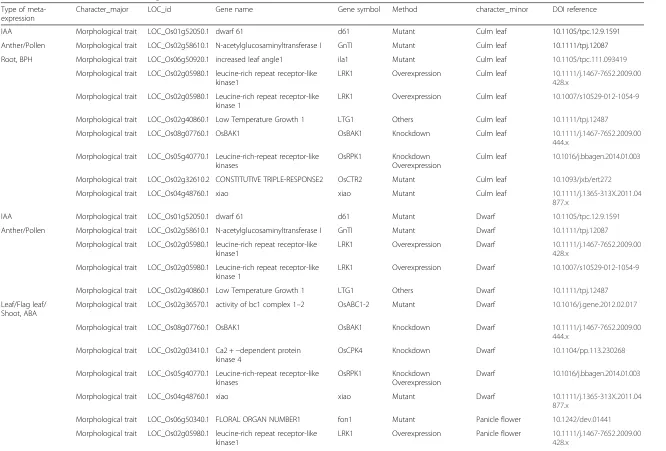
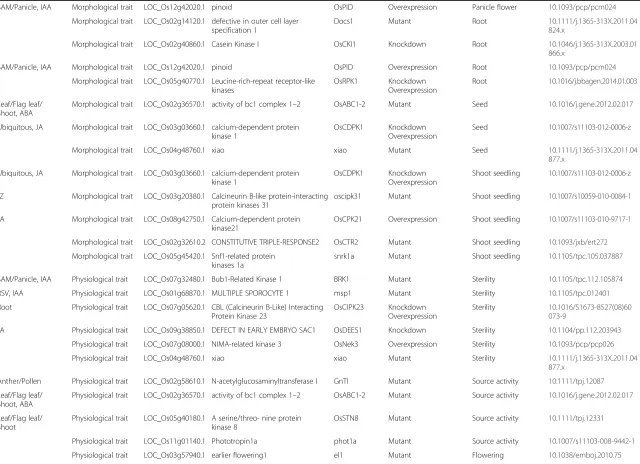
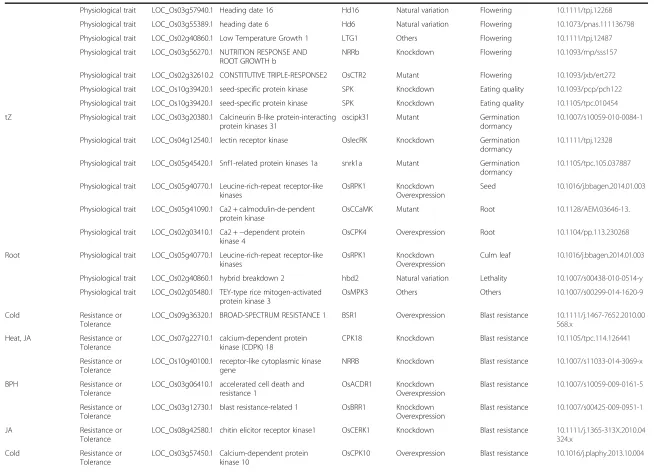
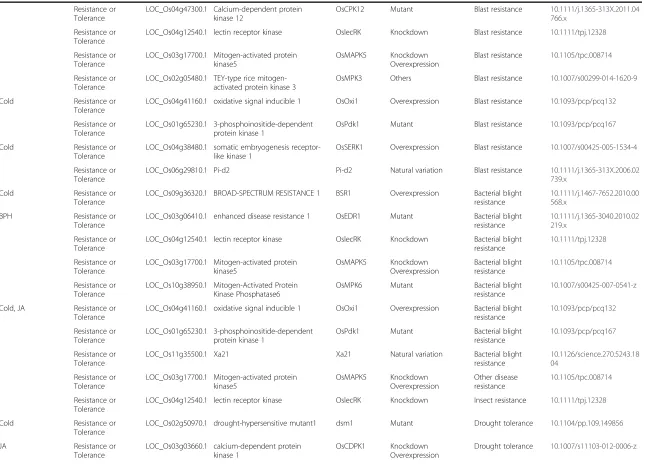
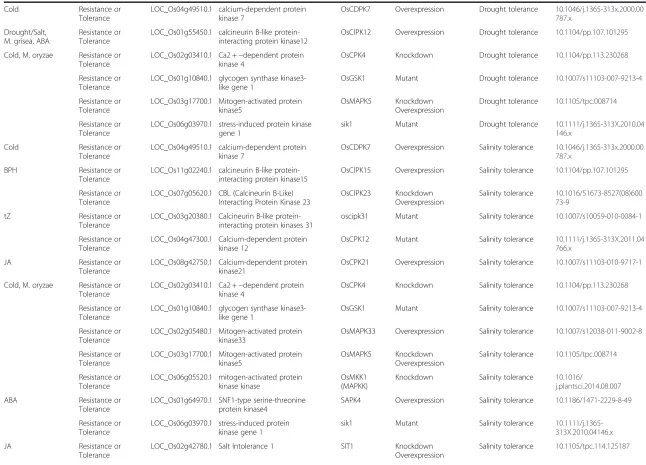
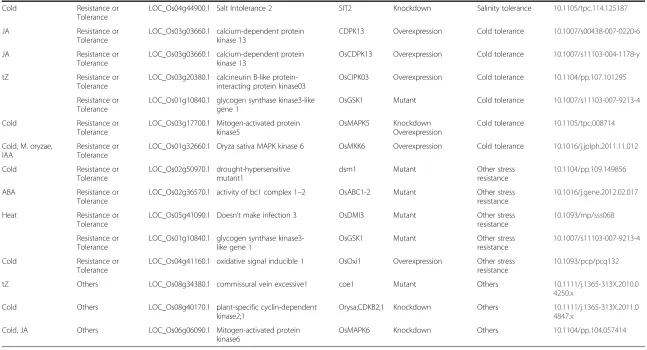
Table 1Functional information for kinase genes with known functions
Type of meta-expression
Character_major LOC_id Gene name Gene symbol Method character_minor DOI reference
IAA Morphological trait LOC_Os01g52050.1 dwarf 61 d61 Mutant Culm leaf 10.1105/tpc.12.9.1591
Anther/Pollen Morphological trait LOC_Os02g58610.1 N-acetylglucosaminyltransferase I GnTI Mutant Culm leaf 10.1111/tpj.12087
Root, BPH Morphological trait LOC_Os06g50920.1 increased leaf angle1 ila1 Mutant Culm leaf 10.1105/tpc.111.093419
Morphological trait LOC_Os02g05980.1 leucine-rich repeat receptor-like kinase1
LRK1 Overexpression Culm leaf 10.1111/j.1467-7652.2009.00 428.x
Morphological trait LOC_Os02g05980.1 Leucine-rich repeat receptor-like kinase 1
LRK1 Overexpression Culm leaf 10.1007/s10529-012-1054-9
Morphological trait LOC_Os02g40860.1 Low Temperature Growth 1 LTG1 Others Culm leaf 10.1111/tpj.12487
Morphological trait LOC_Os08g07760.1 OsBAK1 OsBAK1 Knockdown Culm leaf 10.1111/j.1467-7652.2009.00 444.x
Morphological trait LOC_Os05g40770.1 Leucine-rich-repeat receptor-like kinases
OsRPK1 Knockdown Overexpression
Culm leaf 10.1016/j.bbagen.2014.01.003
Morphological trait LOC_Os02g32610.2 CONSTITUTIVE TRIPLE-RESPONSE2 OsCTR2 Mutant Culm leaf 10.1093/jxb/ert272
Morphological trait LOC_Os04g48760.1 xiao xiao Mutant Culm leaf 10.1111/j.1365-313X.2011.04 877.x
IAA Morphological trait LOC_Os01g52050.1 dwarf 61 d61 Mutant Dwarf 10.1105/tpc.12.9.1591
Anther/Pollen Morphological trait LOC_Os02g58610.1 N-acetylglucosaminyltransferase I GnTI Mutant Dwarf 10.1111/tpj.12087
Morphological trait LOC_Os02g05980.1 leucine-rich repeat receptor-like kinase1
LRK1 Overexpression Dwarf 10.1111/j.1467-7652.2009.00 428.x
Morphological trait LOC_Os02g05980.1 Leucine-rich repeat receptor-like kinase 1
LRK1 Overexpression Dwarf 10.1007/s10529-012-1054-9
Morphological trait LOC_Os02g40860.1 Low Temperature Growth 1 LTG1 Others Dwarf 10.1111/tpj.12487
Leaf/Flag leaf/ Shoot, ABA
Morphological trait LOC_Os02g36570.1 activity of bc1 complex 1–2 OsABC1-2 Mutant Dwarf 10.1016/j.gene.2012.02.017
Morphological trait LOC_Os08g07760.1 OsBAK1 OsBAK1 Knockdown Dwarf 10.1111/j.1467-7652.2009.00 444.x
Morphological trait LOC_Os02g03410.1 Ca2 +−dependent protein kinase 4
OsCPK4 Knockdown Dwarf 10.1104/pp.113.230268
Morphological trait LOC_Os05g40770.1 Leucine-rich-repeat receptor-like kinases
OsRPK1 Knockdown Overexpression
Dwarf 10.1016/j.bbagen.2014.01.003
Morphological trait LOC_Os04g48760.1 xiao xiao Mutant Dwarf 10.1111/j.1365-313X.2011.04 877.x
Morphological trait LOC_Os06g50340.1 FLORAL ORGAN NUMBER1 fon1 Mutant Panicle flower 10.1242/dev.01441
Morphological trait LOC_Os02g05980.1 leucine-rich repeat receptor-like kinase1
LRK1 Overexpression Panicle flower 10.1111/j.1467-7652.2009.00 428.x
Chandran
et
al.
Rice
(2016) 9:40
Page
3
of
SAM/Panicle, IAA Morphological trait LOC_Os12g42020.1 pinoid OsPID Overexpression Panicle flower 10.1093/pcp/pcm024
Morphological trait LOC_Os02g14120.1 defective in outer cell layer specification 1
Docs1 Mutant Root 10.1111/j.1365-313X.2011.04 824.x
Morphological trait LOC_Os02g40860.1 Casein Kinase I OsCKI1 Knockdown Root 10.1046/j.1365-313X.2003.01 866.x
SAM/Panicle, IAA Morphological trait LOC_Os12g42020.1 pinoid OsPID Overexpression Root 10.1093/pcp/pcm024
Morphological trait LOC_Os05g40770.1 Leucine-rich-repeat receptor-like kinases
OsRPK1 Knockdown Overexpression
Root 10.1016/j.bbagen.2014.01.003
Leaf/Flag leaf/ Shoot, ABA
Morphological trait LOC_Os02g36570.1 activity of bc1 complex 1–2 OsABC1-2 Mutant Seed 10.1016/j.gene.2012.02.017
Ubiquitous, JA Morphological trait LOC_Os03g03660.1 calcium-dependent protein kinase 1
OsCDPK1 Knockdown Overexpression
Seed 10.1007/s11103-012-0006-z
Morphological trait LOC_Os04g48760.1 xiao xiao Mutant Seed 10.1111/j.1365-313X.2011.04 877.x
Ubiquitous, JA Morphological trait LOC_Os03g03660.1 calcium-dependent protein kinase 1
OsCDPK1 Knockdown Overexpression
Shoot seedling 10.1007/s11103-012-0006-z
tZ Morphological trait LOC_Os03g20380.1 Calcineurin B-like protein-interacting protein kinases 31
oscipk31 Mutant Shoot seedling 10.1007/s10059-010-0084-1
JA Morphological trait LOC_Os08g42750.1 Calcium-dependent protein kinase21
OsCPK21 Overexpression Shoot seedling 10.1007/s11103-010-9717-1
Morphological trait LOC_Os02g32610.2 CONSTITUTIVE TRIPLE-RESPONSE2 OsCTR2 Mutant Shoot seedling 10.1093/jxb/ert272
Morphological trait LOC_Os05g45420.1 Snf1-related protein kinases 1a
snrk1a Mutant Shoot seedling 10.1105/tpc.105.037887
SAM/Panicle, IAA Physiological trait LOC_Os07g32480.1 Bub1-Related Kinase 1 BRK1 Mutant Sterility 10.1105/tpc.112.105874
RSV, IAA Physiological trait LOC_Os01g68870.1 MULTIPLE SPOROCYTE 1 msp1 Mutant Sterility 10.1105/tpc.012401
Root Physiological trait LOC_Os07g05620.1 CBL (Calcineurin B-Like) Interacting Protein Kinase 23
OsCIPK23 Knockdown Overexpression
Sterility 10.1016/S1673-8527(08)60 073-9
JA Physiological trait LOC_Os09g38850.1 DEFECT IN EARLY EMBRYO SAC1 OsDEES1 Knockdown Sterility 10.1104/pp.112.203943
Physiological trait LOC_Os07g08000.1 NIMA-related kinase 3 OsNek3 Overexpression Sterility 10.1093/pcp/pcp026
Physiological trait LOC_Os04g48760.1 xiao xiao Mutant Sterility 10.1111/j.1365-313X.2011.04 877.x
Anther/Pollen Physiological trait LOC_Os02g58610.1 N-acetylglucosaminyltransferase I GnTI Mutant Source activity 10.1111/tpj.12087
Leaf/Flag leaf/ Shoot, ABA
Physiological trait LOC_Os02g36570.1 activity of bc1 complex 1–2 OsABC1-2 Mutant Source activity 10.1016/j.gene.2012.02.017
Leaf/Flag leaf/ Shoot
Physiological trait LOC_Os05g40180.1 A serine/threo- nine protein kinase 8
OsSTN8 Mutant Source activity 10.1111/tpj.12331
Physiological trait LOC_Os11g01140.1 Phototropin1a phot1a Mutant Source activity 10.1007/s11103-008-9442-1
Physiological trait LOC_Os03g57940.1 earlier flowering1 el1 Mutant Flowering 10.1038/emboj.2010.75
et
al.
Rice
(2016) 9:40
Page
4
of
Table 1Functional information for kinase genes with known functions(Continued)
Physiological trait LOC_Os03g57940.1 Heading date 16 Hd16 Natural variation Flowering 10.1111/tpj.12268
Physiological trait LOC_Os03g55389.1 heading date 6 Hd6 Natural variation Flowering 10.1073/pnas.111136798
Physiological trait LOC_Os02g40860.1 Low Temperature Growth 1 LTG1 Others Flowering 10.1111/tpj.12487
Physiological trait LOC_Os03g56270.1 NUTRITION RESPONSE AND ROOT GROWTH b
NRRb Knockdown Flowering 10.1093/mp/sss157
Physiological trait LOC_Os02g32610.2 CONSTITUTIVE TRIPLE-RESPONSE2 OsCTR2 Mutant Flowering 10.1093/jxb/ert272
Physiological trait LOC_Os10g39420.1 seed-specific protein kinase SPK Knockdown Eating quality 10.1093/pcp/pch122
Physiological trait LOC_Os10g39420.1 seed-specific protein kinase SPK Knockdown Eating quality 10.1105/tpc.010454
tZ Physiological trait LOC_Os03g20380.1 Calcineurin B-like protein-interacting protein kinases 31
oscipk31 Mutant Germination dormancy
10.1007/s10059-010-0084-1
Physiological trait LOC_Os04g12540.1 lectin receptor kinase OslecRK Knockdown Germination dormancy
10.1111/tpj.12328
Physiological trait LOC_Os05g45420.1 Snf1-related protein kinases 1a snrk1a Mutant Germination dormancy
10.1105/tpc.105.037887
Physiological trait LOC_Os05g40770.1 Leucine-rich-repeat receptor-like kinases
OsRPK1 Knockdown Overexpression
Seed 10.1016/j.bbagen.2014.01.003
Physiological trait LOC_Os05g41090.1 Ca2 + calmodulin-de-pendent protein kinase
OsCCaMK Mutant Root 10.1128/AEM.03646-13.
Physiological trait LOC_Os02g03410.1 Ca2 +−dependent protein kinase 4
OsCPK4 Overexpression Root 10.1104/pp.113.230268
Root Physiological trait LOC_Os05g40770.1 Leucine-rich-repeat receptor-like kinases
OsRPK1 Knockdown Overexpression
Culm leaf 10.1016/j.bbagen.2014.01.003
Physiological trait LOC_Os02g40860.1 hybrid breakdown 2 hbd2 Natural variation Lethality 10.1007/s00438-010-0514-y
Physiological trait LOC_Os02g05480.1 TEY-type rice mitogen-activated protein kinase 3
OsMPK3 Others Others 10.1007/s00299-014-1620-9
Cold Resistance or Tolerance
LOC_Os09g36320.1 BROAD-SPECTRUM RESISTANCE 1 BSR1 Overexpression Blast resistance 10.1111/j.1467-7652.2010.00 568.x
Heat, JA Resistance or Tolerance
LOC_Os07g22710.1 calcium-dependent protein kinase (CDPK) 18
CPK18 Knockdown Blast resistance 10.1105/tpc.114.126441
Resistance or Tolerance
LOC_Os10g40100.1 receptor-like cytoplasmic kinase gene
NRRB Knockdown Blast resistance 10.1007/s11033-014-3069-x
BPH Resistance or Tolerance
LOC_Os03g06410.1 accelerated cell death and resistance 1
OsACDR1 Knockdown Overexpression
Blast resistance 10.1007/s10059-009-0161-5
Resistance or Tolerance
LOC_Os03g12730.1 blast resistance-related 1 OsBRR1 Knockdown Overexpression
Blast resistance 10.1007/s00425-009-0951-1
JA Resistance or Tolerance
LOC_Os08g42580.1 chitin elicitor receptor kinase1 OsCERK1 Knockdown Blast resistance 10.1111/j.1365-313X.2010.04 324.x
Cold Resistance or Tolerance
LOC_Os03g57450.1 Calcium-dependent protein kinase 10
OsCPK10 Overexpression Blast resistance 10.1016/j.plaphy.2013.10.004
Chandran
et
al.
Rice
(2016) 9:40
Page
5
of
Resistance or Tolerance
LOC_Os04g47300.1 Calcium-dependent protein kinase 12
OsCPK12 Mutant Blast resistance 10.1111/j.1365-313X.2011.04 766.x
Resistance or Tolerance
LOC_Os04g12540.1 lectin receptor kinase OslecRK Knockdown Blast resistance 10.1111/tpj.12328
Resistance or Tolerance
LOC_Os03g17700.1 Mitogen-activated protein kinase5
OsMAPK5 Knockdown Overexpression
Blast resistance 10.1105/tpc.008714
Resistance or Tolerance
LOC_Os02g05480.1 TEY-type rice mitogen-activated protein kinase 3
OsMPK3 Others Blast resistance 10.1007/s00299-014-1620-9
Cold Resistance or Tolerance
LOC_Os04g41160.1 oxidative signal inducible 1 OsOxi1 Overexpression Blast resistance 10.1093/pcp/pcq132
Resistance or Tolerance
LOC_Os01g65230.1 3-phosphoinositide-dependent protein kinase 1
OsPdk1 Mutant Blast resistance 10.1093/pcp/pcq167
Cold Resistance or Tolerance
LOC_Os04g38480.1 somatic embryogenesis receptor-like kinase 1
OsSERK1 Overexpression Blast resistance 10.1007/s00425-005-1534-4
Resistance or Tolerance
LOC_Os06g29810.1 Pi-d2 Pi-d2 Natural variation Blast resistance 10.1111/j.1365-313X.2006.02 739.x
Cold Resistance or Tolerance
LOC_Os09g36320.1 BROAD-SPECTRUM RESISTANCE 1 BSR1 Overexpression Bacterial blight resistance
10.1111/j.1467-7652.2010.00 568.x
BPH Resistance or Tolerance
LOC_Os03g06410.1 enhanced disease resistance 1 OsEDR1 Mutant Bacterial blight resistance
10.1111/j.1365-3040.2010.02 219.x
Resistance or Tolerance
LOC_Os04g12540.1 lectin receptor kinase OslecRK Knockdown Bacterial blight resistance
10.1111/tpj.12328
Resistance or Tolerance
LOC_Os03g17700.1 Mitogen-activated protein kinase5 OsMAPK5 Knockdown Overexpression Bacterial blight resistance 10.1105/tpc.008714 Resistance or Tolerance
LOC_Os10g38950.1 Mitogen-Activated Protein Kinase Phosphatase6
OsMPK6 Mutant Bacterial blight resistance
10.1007/s00425-007-0541-z
Cold, JA Resistance or Tolerance
LOC_Os04g41160.1 oxidative signal inducible 1 OsOxi1 Overexpression Bacterial blight resistance
10.1093/pcp/pcq132
Resistance or Tolerance
LOC_Os01g65230.1 3-phosphoinositide-dependent protein kinase 1
OsPdk1 Mutant Bacterial blight resistance
10.1093/pcp/pcq167
Resistance or Tolerance
LOC_Os11g35500.1 Xa21 Xa21 Natural variation Bacterial blight resistance
10.1126/science.270.5243.18 04
Resistance or Tolerance
LOC_Os03g17700.1 Mitogen-activated protein kinase5 OsMAPK5 Knockdown Overexpression Other disease resistance 10.1105/tpc.008714 Resistance or Tolerance
LOC_Os04g12540.1 lectin receptor kinase OslecRK Knockdown Insect resistance 10.1111/tpj.12328
Cold Resistance or Tolerance
LOC_Os02g50970.1 drought-hypersensitive mutant1 dsm1 Mutant Drought tolerance 10.1104/pp.109.149856
JA Resistance or Tolerance
LOC_Os03g03660.1 calcium-dependent protein kinase 1
OsCDPK1 Knockdown Overexpression
Drought tolerance 10.1007/s11103-012-0006-z
Table 1Functional information for kinase genes with known functions(Continued)
Cold Resistance or Tolerance
LOC_Os04g49510.1 calcium-dependent protein kinase 7
OsCDPK7 Overexpression Drought tolerance 10.1046/j.1365-313x.2000.00 787.x
Drought/Salt, M. grisea, ABA
Resistance or Tolerance
LOC_Os01g55450.1 calcineurin B-like protein-interacting protein kinase12
OsCIPK12 Overexpression Drought tolerance 10.1104/pp.107.101295
Cold, M. oryzae Resistance or Tolerance
LOC_Os02g03410.1 Ca2 +−dependent protein kinase 4
OsCPK4 Knockdown Drought tolerance 10.1104/pp.113.230268
Resistance or Tolerance
LOC_Os01g10840.1 glycogen synthase kinase3-like gene 1
OsGSK1 Mutant Drought tolerance 10.1007/s11103-007-9213-4
Resistance or Tolerance
LOC_Os03g17700.1 Mitogen-activated protein kinase5
OsMAPK5 Knockdown Overexpression
Drought tolerance 10.1105/tpc.008714
Resistance or Tolerance
LOC_Os06g03970.1 stress-induced protein kinase gene 1
sik1 Mutant Drought tolerance 10.1111/j.1365-313X.2010.04 146.x
Cold Resistance or Tolerance
LOC_Os04g49510.1 calcium-dependent protein kinase 7
OsCDPK7 Overexpression Salinity tolerance 10.1046/j.1365-313x.2000.00 787.x
BPH Resistance or Tolerance
LOC_Os11g02240.1 calcineurin B-like protein-interacting protein kinase15
OsCIPK15 Overexpression Salinity tolerance 10.1104/pp.107.101295
Resistance or Tolerance
LOC_Os07g05620.1 CBL (Calcineurin B-Like) Interacting Protein Kinase 23
OsCIPK23 Knockdown Overexpression
Salinity tolerance 10.1016/S1673-8527(08)600 73-9
tZ Resistance or Tolerance
LOC_Os03g20380.1 Calcineurin B-like protein-interacting protein kinases 31
oscipk31 Mutant Salinity tolerance 10.1007/s10059-010-0084-1
Resistance or Tolerance
LOC_Os04g47300.1 Calcium-dependent protein kinase 12
OsCPK12 Mutant Salinity tolerance 10.1111/j.1365-313X.2011.04 766.x
JA Resistance or Tolerance
LOC_Os08g42750.1 Calcium-dependent protein kinase21
OsCPK21 Overexpression Salinity tolerance 10.1007/s11103-010-9717-1
Cold, M. oryzae Resistance or Tolerance
LOC_Os02g03410.1 Ca2 +−dependent protein kinase 4
OsCPK4 Knockdown Salinity tolerance 10.1104/pp.113.230268
Resistance or Tolerance
LOC_Os01g10840.1 glycogen synthase kinase3-like gene 1
OsGSK1 Mutant Salinity tolerance 10.1007/s11103-007-9213-4
Resistance or Tolerance
LOC_Os02g05480.1 Mitogen-activated protein kinase33
OsMAPK33 Overexpression Salinity tolerance 10.1007/s12038-011-9002-8
Resistance or Tolerance
LOC_Os03g17700.1 Mitogen-activated protein kinase5
OsMAPK5 Knockdown Overexpression
Salinity tolerance 10.1105/tpc.008714
Resistance or Tolerance
LOC_Os06g05520.1 mitogen-activated protein kinase kinase
OsMKK1 (MAPKK)
Knockdown Salinity tolerance 10.1016/
j.plantsci.2014.08.007
ABA Resistance or Tolerance
LOC_Os01g64970.1 SNF1-type serine-threonine protein kinase4
SAPK4 Overexpression Salinity tolerance 10.1186/1471-2229-8-49
Resistance or Tolerance
LOC_Os06g03970.1 stress-induced protein kinase gene 1
sik1 Mutant Salinity tolerance 10.1111/j.1365-313X.2010.04146.x
JA Resistance or Tolerance
LOC_Os02g42780.1 Salt Intolerance 1 SIT1 Knockdown Overexpression
Salinity tolerance 10.1105/tpc.114.125187
Cold Resistance or Tolerance
LOC_Os04g44900.1 Salt Intolerance 2 SIT2 Knockdown Salinity tolerance 10.1105/tpc.114.125187
JA Resistance or Tolerance
LOC_Os03g03660.1 calcium-dependent protein kinase 13
CDPK13 Overexpression Cold tolerance 10.1007/s00438-007-0220-6
JA Resistance or Tolerance
LOC_Os03g03660.1 calcium-dependent protein kinase 13
OsCDPK13 Overexpression Cold tolerance 10.1007/s11103-004-1178-y
tZ Resistance or Tolerance
LOC_Os03g20380.1 calcineurin B-like protein-interacting protein kinase03
OsCIPK03 Overexpression Cold tolerance 10.1104/pp.107.101295
Resistance or Tolerance
LOC_Os01g10840.1 glycogen synthase kinase3-like gene 1
OsGSK1 Mutant Cold tolerance 10.1007/s11103-007-9213-4
Cold Resistance or Tolerance
LOC_Os03g17700.1 Mitogen-activated protein kinase5
OsMAPK5 Knockdown Overexpression
Cold tolerance 10.1105/tpc.008714
Cold, M. oryzae, IAA
Resistance or Tolerance
LOC_Os01g32660.1 Oryza sativa MAPK kinase 6 OsMKK6 Overexpression Cold tolerance 10.1016/j.jplph.2011.11.012
Cold Resistance or Tolerance
LOC_Os02g50970.1 drought-hypersensitive mutant1
dsm1 Mutant Other stress resistance
10.1104/pp.109.149856
ABA Resistance or Tolerance
LOC_Os02g36570.1 activity of bc1 complex 1–2 OsABC1-2 Mutant Other stress resistance
10.1016/j.gene.2012.02.017
Heat Resistance or Tolerance
LOC_Os05g41090.1 Doesn’t make infection 3 OsDMI3 Mutant Other stress resistance
10.1093/mp/sss068
Resistance or Tolerance
LOC_Os01g10840.1 glycogen synthase kinase3-like gene 1
OsGSK1 Mutant Other stress resistance
10.1007/s11103-007-9213-4
Cold Resistance or Tolerance
LOC_Os04g41160.1 oxidative signal inducible 1 OsOxi1 Overexpression Other stress resistance
10.1093/pcp/pcq132
tZ Others LOC_Os08g34380.1 commissural vein excessive1 coe1 Mutant Others 10.1111/j.1365-313X.2010.0 4250.x
Cold Others LOC_Os08g40170.1 plant-specific cyclin-dependent kinase2;1
Orysa;CDKB2;1 Knockdown Others 10.1111/j.1365-313X.2011.0 4847.x
Cold, JA Others LOC_Os06g06090.1 Mitogen-activated protein kinase6
OsMAPK6 Knockdown Others 10.1104/pp.104.057414
et
al.
Rice
(2016) 9:40
Page
8
of
features are available in the new rice kinase database (RKD 2.0; http://ricephylogenomics-khu.org/kinase/ index.php, accessed on February 20, 2016).
Meta-analysis of expression data available for kinase genes with known functions
Using information from OGRO, the Overview of Func-tionally Characterized Genes in Rice online database (OGRO; http://qtaro.abr.affrc.go.jp/ogro/table. Accessed 20 October 2015) (Yamamoto et al. 2012), 61 RGAP loci related to kinases that have been functionally character-ized were retrieved. Among them, function of a subset of kinase genes were related to more than one trait. Thus, 61 kinases are associated with 124 traits. Although these genes were broadly classified as conferring morpho-logical traits (35 genes), physiomorpho-logical traits (27), stress responses resistance (59), or other biological functions (3) (Table 1), 63 of them are associated with multiple func-tions. Among those for morphological traits, 10 genes each target for culm leaves and dwarfism. Another three
genes each are related to panicle/flower formation and seeds, four to roots and five to seedling development. The major physiological effects of rice mutants lead to sterility (6 genes), indicating that the genes in this category are im-portant for fertilization and embryo development. The physiological-trait classification also includes four genes related to source activity, six for flowering, two for eating quality, and one for seed production. In that group, mutations of three genes are attributed to germination dormancy. In addition to the panicle-dependent effect, physiological effects can be observed in the roots (two genes) and culm leaves (one gene). Mutation of one gene causes lethality. The stress-response classification is subdi-vided into genes that function in biotic stresses, abiotic stresses, and resistance to mechanical stresses such as lodging. With regard to biotic stresses, 15 genes have roles in blast resistance, eight including Xa21gene involved in bacterial blight resistance (Song et al. 1995) , function of a gene associated with insect resistance and one in resist-ance to other diseases. For abiotic stresses, eight genes are
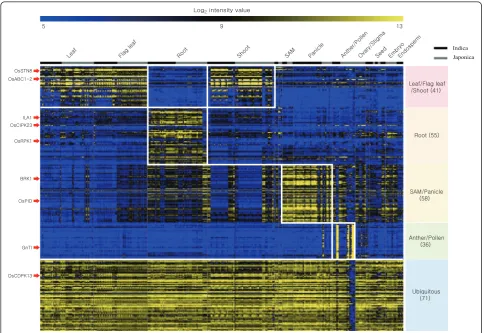
Fig. 1Heatmap analysis of kinase genes showing anatomical preferred expression pattern. Gene expression pattern reveals five tissue-preferential groups and the total genes in each group is shown in parenthesis. Affymetrix dataset includes the gene expression profiles from both indica and japonica subspecies plant samples. Sample profiling from subspecies are represented using black and grey bars for indica and japonica respectively. Log2-transformed intensity values were taken for generating heatmap and the scale is given above the heatmap. Genes with red arrow pointing the heatmap are the known genes
associated with drought, 15 with salinity, six with chilling, and another five with other types of stresses. Analysis of previously characterized genes indicates that kinases plays diverse role in physiology and growth of rice plants.
Functional assignment of rice kinase genes using expression data
To assess the biological functions of rice kinases, meta-expression profiles generated from a large collection of microarray-based expression datasets available in NCBI GEO have been used. Global analysis with anatomical data suggested that 55 kinases are predominantly expressed in the roots, 41 in the leaves/shoots, 58 in the callus/panicles, 36 in anthers/pollen and 71 genes are ubiquitously expressed (Fig. 1; Additional file 1: Table S1). Of these, functions for 16 genes have been elucidated through genetics and molecular studies (Table 1). For example,
LOC_Os05g40770 is categorized under root preferred
featured anatomical expression group in the current investigation. Previous study revealed that OsRPK1/
LOC_Os05g40770 is expressed in the root tips and
encodes a Ca2 +-independent leucine-rich-repeat (LRR)
receptor-like kinase (RLK). Transgenic rice plants
over-expressing OsRPK1 showed undeveloped adventitious
and lateral roots (Zou et al. 2014).
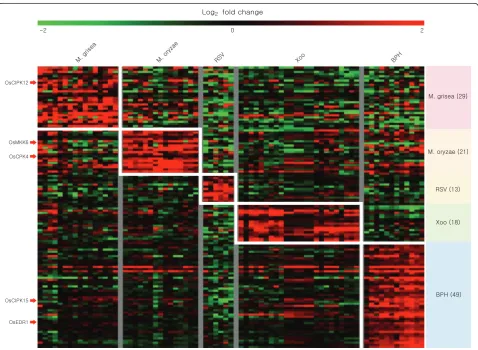
Biotic stress-related meta-expression data revealed sig-nificant upregulation in response to MG (29 kinases), MO (21 kinases), RSV (13 kinases), Xoo (18 kinases), and BPH (49 kinases) (Fig. 2; Additional file 2: Table S2). Of these, functions have been elucidated for eight genes
(Table 1).OsACDR1/LOC_Os03g06410, for which present
meta-analysis revealed induction under BPH infection, en-codes a putative Raf-like mitogen-activated protein kinase kinase kinase (MAPKKK) and plays a positive regulatory role against fungal infection by modulating defense related gene expression (Kim et al. 2009).
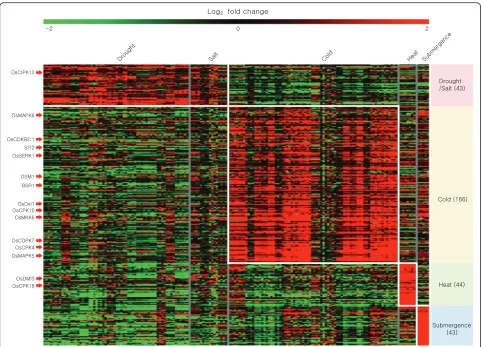
Abiotic stress-related meta-expression data showed that 43 kinases are induced by drought or salt stress, 166 by low temperature, 44 by heat, and 43 by submer-gence (Fig. 3; Additional file 3: Table S3). Of these, func-tions of 23 kinase genes have been elucidated (Table 1).
They include calcium-dependent protein kinaseOsCDPK7/
LOC_Os04g49510which acts as positive regulator for stress conditions and confers cold, salt and drought resistance on overexpression (Saijo et al. 2000). Interestingly, we also noted the cold depend induction ofOsCDPK7in the abiotic stress dataset based analysis and provides a hint about more potential candidates in the featured groups. Furthermore, the genes that are differentially expressed (log2 fold change >2 andP< 0.05) in root under heavy metal treatment were analyzed to reveal the potential kinase genes involved in soil toxicity. It was revealed that 21 genes were upregulated whereas expressions of 92 genes were declined under arsenic treatment in soil. Similarly, 44 and 79 genes are induced and declined by cadmium treatment, respectively. More numbers of kinase genes were responsive to chro-mium: expressions of 142 genes are induced; and that of 206 genes were reduced. In case of lead treatment in soil, 36 genes are upregulated and 54 genes are downregulated (Additional file 4: Table S4).
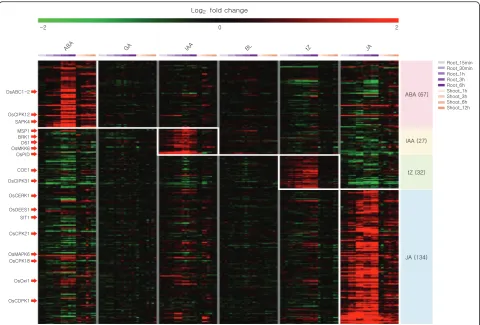
The meta-expression data for hormone responses indi-cated that 67 kinases are up-regulated upon ABA treat-ment, 27 by IAA, 32 by tZ, and 134 by JA treatment
(Fig. 4; Additional file 5: Table S5). Among them, func-tions of 18 genes have been characterized previously.
Based on the featured expression data, it is evident that these 947 kinases may serve as potential primary targets for further functional studies, with 261 related to anatomy; 130, to biotic stresses; 296, to abiotic stresses; and 260, to hormone responses.
Evaluation of functional redundancy or functional dominance for rice kinases with known functions via PCC analysis
Regarding morphological or physiological traits, the roles played by 26 kinases have been identified through loss-of-function studies. Pearson correlation coefficient (PCC) can be used to measure the linear dependence
between two genes, with a value of ‘1’ representing a
perfect, positive correlation. Among paralogous kinase members, PCC values are useful indicators when evalu-ating functional similarities. PCC values for one to three family members closely linked to each kinase have been generated based on anatomical meta-expression
Fig. 3Heatmap analysis of kinase genes related to abiotic-stress responses. Abiotic stress responsive kinase genes heatmap is generated using log2-transformed fold change values under four stress conditions. Number of stress responsive genes in each condition is shown inside parenthesis after the applied abiotic stress. Genes with red arrow pointing the heatmap are the known genes
data. These data, summarized in Table 2 and Fig. 5, in-dicated that 10 kinases exist independently from a clade and another nine have no closely linked members with PCC values >0.5. This explains functional dominancy for the 73 % of kinases with known functions. There-fore, the PCC approach can provide useful estimates of functional redundancy or dominance among family members. In addition, integrating anatomical expres-sion data within the phylogenetics context serves as an effective platform for examining functional dormancy or redundancy within a gene family. Examples of inte-grated anatomical expression data for subgroups of three kinase families are shown in Fig. 6. Compared with other members, the dominant expression of
OsCDPK1 (LOC_Os03g03660) has a PCC value of 0 to
0.5 (Fig. 6a) and predominant expression of OsBAK1
(LOC_Os08g07760) produces a PCC value below zero
(Fig. 6B), while OsABC1-2 (LOC_Os02g36570) has
redundant expression patterns with PCC values above
0.5 with LCO_Os09g07660 (Fig. 6c). In the case of
OsABC1-2, functional studies have used RNAi to
re-press the exre-pression of OsABC1-2 to overcome the
functional redundancy. The observed phenotype might have been caused by suppression of multiple targets
closely linked with LOC_Os09g07660 in that tree.
Fur-ther investigation is needed to clarify this possibility.
Conclusions
Of the 1508 kinases featured in RKD 2.0, functions for all except 61 kinases require further examination. This new database will enable researchers to select target kinases more effectively for additional characterization. The predominant expression found among paralogous kinases might be a valuable indicator of functional dom-inance. Based on loss-of-function analyses and applica-tion of PCC values between a kinase and its paralog, we were able to explain the dominancy of 19 kinases with PCC values above 0.5 as well as those that form independ-ent clades in a phylogenetic tree. Primary candidates for loss-of-function studies can be chosen by identifying kin-ase genes with dominant expression and then comparing them with closely linked family members. These meta-expression data also serve as a source of information about the location and/or conditions that can be applied
in subsequent assessments as well as situations in which true functional redundancy may exist. Additional datasets, such as predicted protein–protein interaction networks, further enhance database utility by indicating direct tar-gets regulated by kinases. With the use of gene-indexed mutants that cover at least half of the rice genome, accu-mulation of diverse omics data will further enhance the functionality of such phylogenomics databases.
Methods
Collection of microarray data
Anatomy: Expression data for the anatomical tissues/ organs were retrieved from ROAD (Cao et al. 2012).
Abiotic stress: The dataset for abiotic stresses com-prised multiple samples from NCBI GEO under the series GSE6901, GSE16108, GSE21651, GSE24048,
GSE25176, GSE26280, GSE33204, GSE37940, and
Fig. 5Estimations of functional dominancy for rice kinases, based on meta-expression data.Y-axis, number of kinases with known functions;X-axis, different groups of kinases with known functions, based on range of PCC values or existence of paralogs in subfamilies
Table 2Rice kinase paralogs with known roles based on loss-of-function studies, and PCC values calculated for paralog pairings
a
Indicates the rice kinase genes which have been functionally characterized and identified from OGRO database (http://qtaro.abr.affrc.go.jp/ogro/table)
b
Indicates paralogs of rice kinase genes in gene column which are identified from RKD 2.0 databases
c
Indicates Pierson correlation coefficient (PCC) value between paralog pairs in gene and paralog columns
d
Indicates rice kinase genes (marked with red letters) used in Figure6. Brown box has 0.5 > PCC value and is estimated to have redundant roles among paralogs; green one with negative PCC value and uncolored area with 0 < PCC value < 0.5 are estimated to have predominant roles among paralogs
Internode_pith_parenchyma
7 10 13
7 10 13
7 10 13
a
b
c
PCC value : 0.379
PCC value : 0.794 PCC value : -0.241
t
GSE38023. Experiment IDs in the Array express dataset
(Array Express; https://www.ebi.ac.uk/arrayexpress/.
Accessed 2 December 2015) included E-MEXP-2267and E-MEXP-2401. Altogether, 145 individual experiments were parsed for this analysis.
Biotic stress: The GEO series for the biotic stress data-base involved GSE7256, GSE30941, GSE41798, GSE18361, GSE36272, GSE29967, and GSE11025. In all, 103 individ-ual samples were analyzed under these seven series.
Hormone response: For analyzing hormone-related meta-expression, we relied upon the Agilent 44 K array data GSE39429, as generated by Sato et al. (2013).
Collection of RNA-Seq data
RNA-Seq anatomical expression dataset consisting of 27 tissues/organs were retrieved from source data devel-oped by Wang et al. (2015). In addition, spatio-temporal transcriptome data of rice root in response to phosphate starvation and recovery were used (Secco et al. 2013).
PCC analysis
An anatomy dataset was used for estimating PCC values among neighboring genes within a subclade. For each gene, the intensity level of the RGAP gene model probes was fetched and formatted in pairs using in-house scripts. For every pair of genes that showed expression across a range of experiments, a PCC value was calculated using the Microsoft Excel function.
Heatmap analysis
To examine the expression patterns of kinase genes in various rice tissues/organs as well as in response to abiotic/biotic stresses or hormone treatments, we used a meta-expression analysis based on 1150 Affymetrix array data plus GEO series GSE39429, which utilized the Agi-lent 44 K microarray platform (GEO platform GPL6854).
We then uploaded the log2 normalized intensity data
(tab-delimited text format) into Multi Experiment Viewer (MEV; http://www.tm4.org/, accessed on October 20, 2015) and created the desired heatmaps (Fig. 1; Additional file 1: Table S1). In addition, we developed a meta-expres-sion database for biotic stress responses to MG, MO, RSV, Xoo, and BPH (Fig. 2; Additional file 2: Table S2), a meta-expression database for responses to drought, salt, cold, heat, and submergence (Fig. 3; Additional file 3: Table S3), and a meta-expression database for responses to six hormones (ABA, GA, IAA, BL, JA, and cytokinin/trans-Zeatin) (Fig. 4; Additional file 5: Table S5). Expression data for selected kinases were presented by heatmaps. For other methods used for construction of RKD 2.0, RKD original version retains the details (Dardick et al. 2007).
Additional files
Additional file 1: Table S1.Rice kinases with patterns of anatomical expression. (XLSX 25 kb)
Additional file 2: Table S2.Rice kinases with abiotic stress responses. (XLSX 19 kb)
Additional file 3: Table S3.Rice kinases with biotic stress responses. (XLSX 28 kb)
Additional file 4: Table S4Rice kinases differentially expressed under root heavy metal treatment. (XLSX 62 kb)
Additional file 5: Table S5.Rice kinases with hormone responses. (XLSX 25 kb)
Abbreviations
NCBI GEO, National Center for Biotechnology Information Gene Expression Omnibus; non-TE, non-transposable element; PCC, Pearson correlation coefficient; RGAP, rice genome annotation project database; RKD, rice kinase database; ROAD, rice oligonucleotide array database
Competing interests
The authors declare that they have no competing interests.
Author contributions
JKH, PCR and CD conceived and designed the experiments. AKNC and YYH performed the experiment. JKH, PC, WJH, RS and MS analyzed the data, AKNC, YYH. PCR and JKH prepared the manuscript. All authors read and approved the final manuscript.
Acknowledgements
This work was carried out with the support of“Cooperative Research Program for Agriculture Science & Technology Development (Project No. PJ01182602)”, Rural Development Administration, Republic of Korea, and was part of the DOE Joint BioEnergy Institute (http://www.jbei.org) supported by the U. S. Department of Energy, Office of Science, Office of Biological and Environmental Research, through contract DE-AC02-05CH11231 between Lawrence Berkeley National Laboratory and the U. S. Department of Energy. The United States Government retains and the publisher, by accepting the article for publication, acknowledges that the United States Government retains a non-exclusive, paid-up, irrevocable, world-wide license to publish or reproduce the published form of this manuscript, or allow others to do so, for United States Government purposes.
Author details 1
Graduate School of Biotechnology & Crop Biotech Institute, Kyung Hee University, Yongin 446-701, Republic of Korea.2China Tobacco Gene Research Center, Zhengzhou Tobacco Research Institute, Zhengzhou 450001, China.3School of Computational & Integrative Sciences, Jawaharlal Nehru University, New Delhi 110067, India.4School of Biotechnology, Jawaharlal Nehru University, New Delhi 110067, India.5Appalachian Fruit Research Station, United States Department of Agriculture–Agricultural Research Service, 2217 Wiltshire Road, Kearneysville, WV 25442, USA.6Department of Plant Pathology and the Genome Center, University of California, Davis, CA 95616, USA.7The Joint Bioenergy Institute, Emeryville, CA 95616, USA.
Received: 4 March 2016 Accepted: 8 July 2016
References
Alexandrov N, Tai S, Wang W, Mansueto L, Palis K, Fuentes RR, Ulat VJ, Chebotarov D, Zhang G, Li Z, Mauleon R, Hamilton RS, McNally KL (2015) SNP-seek database of SNPs derived from 3000 rice genomes. Nucleic Acids Res 43:D1023–D1027 Barrett T, Troup DB, Wilhite SE, Ledoux P, Evangelista C, Kim IF, Tomashevsky M,
Marshall KA, Phillippy KH, Sherman PM, Muertter RN, Holko M, Ayanbule O, Yefanov A, Soboleva A (2011) NCBI GEO: archive for functional genomics data sets–10 years on. Nucleic Acids Res 39:D1005–D1010
Cao PJ, Bartley LE, Jung KH, Ronald PC (2008) Construction of a rice glycosyltransferase phylogenomic database and identification of rice-diverged glycosyltransferases. Mol Plant 1:858–877
Cao P, Jung KH, Choi D, Hwang D, Zhu J, Ronald PC (2012) The rice oligonucleotide array database: an atlas of rice gene expression. Rice (N Y) 5:17
Chandran AKN, Jung KH (2014) Resources for systems biology in rice. J Plant Biol 57:80–92
Dardick C, Chen J, Richter T, Ouyang S, Ronald P (2007) The rice kinase database. A phylogenomic database for the rice kinome. Plant Physiol 143:579–586 IRGSP (2005) The map-based sequence of the rice genome. Nature 436:793–800 Itoh T, Tanaka T, Barrero RA, Yamasaki C, Fujii Y, Hilton PB, Antonio BA, Aono H,
Apweiler R, Bruskiewich R, Bureau T, Burr F, Costa de Oliveira A, Fuks G, Habara T, Haberer G, Han B, Harada E, Hiraki AT, Hirochika H, Hoen D, Hokari H, Hosokawa S, Hsing YI, Ikawa H, Ikeo K, Imanishi T, Ito Y, Jaiswal P, Kanno M, Kawahara Y, Kawamura T, Kawashima H, Khurana JP, Kikuchi S, Komatsu S, Koyanagi KO, Kubooka H, Lieberherr D, Lin YC, Lonsdale D, Matsumoto T, Matsuya A, McCombie WR, Messing J, Miyao A, Mulder N, Nagamura Y, Nam J, Namiki N, Numa H, Nurimoto S, O’Donovan C, Ohyanagi H, Okido T, Oota S, Osato N, Palmer LE, Quetier F, Raghuvanshi S, Saichi N, Sakai H, Sakai Y, Sakata K, Sakurai T, Sato F, Sato Y, Schoof H, Seki M, Shibata M, Shimizu Y, Shinozaki K, Shinso Y, Singh NK, Smith-White B, Takeda J, Tanino M, Tatusova T, Thongjuea S, Todokoro F, Tsugane M, Tyagi AK, Vanavichit A, Wang A, Wing RA, Yamaguchi K, Yamamoto M, Yamamoto N, Yu Y, Zhang H, Zhao Q, Higo K, Burr B, Gojobori T, Sasaki T (2007) Curated genome annotation ofOryza sativassp.japonicaand comparative genome analysis withArabidopsis thaliana. Genome Res 17:175–183 Jung KH, Lee J, Dardick C, Seo YS, Cao P, Canlas P, Phetsom J, Xu X, Ouyang S,
An K, Cho YJ, Lee GC, Lee Y, An G, Ronald PC (2008) Identification and functional analysis of light-responsive unique genes and gene family members in rice. PLoS Genet 4:e1000164. doi:10.1371/journal.pgen.1000164 Jung KH, Cao P, Seo YS, Dardick C, Ronald PC (2010) The rice kinase
phylogenomics database: a guide for systematic analysis of the rice kinase super-family. Trends Plant Sci 15:595–599
Jung KH, Kim SR, Giong HK, Nguyen MX, Koh HJ, An G (2015) Genome-wide identification and functional analysis of genes expressed ubiquitously in rice. Mol Plant 8:276–289
Kim JA, Cho K, Singh R, Jung YH, Jeong SH, Kim SH, Lee JE, Cho YS, Agrawal GK, Rakwal R, Tamogami S, Kersten B, Jeon JS, An G, Jwa NS (2009) Rice OsACDR1 (Oryza sativa accelerated cell death and resistance 1) is a potential positive regulator of fungal disease resistance. Mol Cells 28:431–439 Lin H, Ouyang S, Egan A, Nobuta K, Haas BJ, Zhu W, Gu X, Silva JC, Meyers BC,
Buell CR (2008) Characterization of paralogous protein families in rice. BMC Plant Biol 8:18
Ouyang S, Zhu W, Hamilton J, Lin H, Campbell M, Childs K, Thibaud-Nissen F, Malek RL, Lee Y, Zheng L, Orvis J, Haas B, Wortman J, Buell CR (2007) The TIGR rice genome annotation resource: improvements and new features. Nucleic Acids Res 35:D883–D887
Saijo Y, Hata S, Kyozuka J, Shimamoto K, Izui K (2000) Over-expression of a single Ca2 +−dependent protein kinase confers both cold and salt/drought tolerance on rice plants. Plant J 23:319–327
Sato Y, Takehisa H, Kamatsuki K, Minami H, Namiki N, Ikawa H, Ohyanagi H, Sugimoto K, Antonio BA, Nagamura Y (2013) RiceXPro version 3.0: expanding the informatics resource for rice transcriptome. Nucleic Acids Res 41:D1206–D1213 Secco D, Jabnoune M, Walker H, Shou H, Wu P, Poirier Y, Whelan J (2013)
Spatio-temporal transcript profiling of rice roots and shoots in response to phosphate starvation and recovery. Plant Cell 25:4285–4304
Song WY, Wang GL, Chen LL, Kim HS, Pi LY, Holsten T, Gardner J, Wang B, Zhai WX, Zhu LH, Fauquet C, Ronald P (1995) A receptor kinase-like protein encoded by the rice disease resistance gene, Xa21. Science 270:1804–1806 Wang J, Qi M, Liu J, Zhang Y (2015) CARMO: a comprehensive annotation platform
for functional exploration of rice multi-omics data. Plant J 83:359–374. doi:10. 1111/tpj.12894
Yamamoto E, Yonemaru J-I, Yamamoto T, Yano M (2012) OGRO: the overview of functionally characterized genes in rice online database. Rice 5:1–10 Zimmermann P, Laule O, Schmitz J, Hruz T, Bleuler S, Gruissem W (2008)
Genevestigator transcriptome meta-analysis and biomarker search using rice and barley gene expression databases. Mol Plant 1:851–857
Zou Y, Liu X, Wang Q, Chen Y, Liu C, Qiu Y, Zhang W (2014) OsRPK1, a novel leucine-rich repeat receptor-like kinase, negatively regulates polar auxin transport and root development in rice. Biochim Biophys Acta 1840:1676–1685
Submit your manuscript to a
journal and benefi t from:
7Convenient online submission
7Rigorous peer review
7Immediate publication on acceptance
7Open access: articles freely available online
7High visibility within the fi eld
7Retaining the copyright to your article