2068
Towards The Development Of A Personalized
Nutrition Knowledge-Based System: A
Mixed-Methods Needs Analysis Of Virtual Dietitian
Manuel B. Garcia, Joel B. Mangaba, Albert A. Vinluan
Abstract: Albeit the potent association between nutrition and health has been repeatedly corroborated in the field of nutrition science through evidence-based approaches, the prevalence of inadequate nutrition among Filipino households is still too high. Therefore, the goal of this study was to pinpoint nutrition challenges faced by Filipino young adults and evaluate whether a personalized nutrition knowledge-based system is a potential nutrition intervention tool. A mixed-methods needs analysis approach was operated to arrive at a panoramic profile of a nutrition knowledge-based system through the participation of respondents in an online survey (n = 85) and focus groups (n = 4). The assessment was grounded from the influencing factors of health and nutritional status such as food selection, nutrition barriers, poor eating habits, nutrition knowledge, and with the inclusion of nutrition application for technical feedback. The findings exploited the fact that people do not track what they eat, let alone the nutrients it contained, which eventually leads to undereating or overeating. There was also a commonness in lack of nutrition knowledge to make healthier food choices. Fortunately, the willingness of participants to point their directions towards a healthier lifestyle through the use of a nutrition knowledge-based system was evident. The paper then concluded with recommendations for future studies and how its findings might be utilized for the development of a personalized nutrition system.
Index Terms: Personalized Nutrition, Knowledge-Based System, Nutrition Tool, Dietetics, Needs Analysis, Nutrition Application. —————————— ——————————
1 INTRODUCTION
The latest National Nutrition Survey (NNS) of the Food and Nutrition Research Institute (FNRI) revealed that there is a multitude of contemporary inadequate nutrition problems and challenges among Filipinos [1]. To date, NNS is the main source of data that classifies Filipino citizenry's nutritional and health status. As such, the realization of nutritional adequacy has been advocated under the Philippine Plan of Action for Nutrition (PPAN) 2017-2022 in agreement with the Philippine Development Plan (PDP) of the 10-point Economic Agenda of President Rodrigo Duterte [2]. In nutrition science research, an adequate nutrition means the full acquisition of the nutritional needs of the person with a proper macronutrient distribution based from the recommended daily allowances of all essential minerals and vitamins [3] relative to the recommended energy and calorie intakes per day (e.g., Philippine Dietary Reference Intakes [4]). Aside from the conclusions of NNS, a more recent study also publicized the inadequacy for most macro- and micronutrients among Filipino adolescents and schoolchildren [5]. During these age groups, poor nutrition is associated with an increased risk of diabetes, hypertension, coronary heart disease, and obesity, thus rendering a crucial role for childcare providers to guide children in inaugurating a healthy eating pattern and smarter food choices [6]. Labeled as a critical and neglected age group, young people also reached the epidemic levels of overweight and obesity [7], with about one in three adolescents affected worldwide. The current state of nutrition status is truly alarming and urgently needs to be solved.
1.1 Background of the Study
In terms of nutrition interventions, or strategies to enhance the nutritional status of an individual, the health community has a myriad of experience in creating and evaluating intervention techniques [8] both implemented alone or in combination with other comprehensive nutrition care practices. As early as 1983, the Food and Agriculture Organization of the United Nations has already highlighted several nutrition interventions as well as a detailed set of criteria for selecting the most appropriate strategy for nutritional improvement [9]. To name a few, these nutrition interventions include school feeding, promotion of breastfeeding, nutritional rehabilitation, family planning, and face-to-face nutritional communication. Further, a novel breed of nutrition tool has also emerged due to computer revolution from web-based and mobile apps to wearable devices [10].
Fig. 1. Mean Height and Weight of Filipino Adults by Region.
Technology-based intervention tools are now gaining traction ____________________________________
• Manuel B. Garcia: Professor, College of Computer Studies, FEU Institute of Technology and Student, Graduate School, University of the East
• Joel B. Mangaba: Professor, College of Computer Science, University of Makati and Professor, Graduate School, University of the East • Albert A. Vinluan: Dean, College of Computer Studies, New Era
2069 in the field of nutrition. For instance, Food-O-Meter [11] is an
online nutrition intervention tool designed for adolescents to improve their dietary intake of specific nutrients such as fiber, vitamin C, iron, calcium, and fat. Based from both short-term (1-month) and medium-term (3-month) impact evaluations, however, there was no significant changes in fat intake for the intervention group. As such, Food-O-Meter was suggested to be developed further to improve its effectiveness as a nutrition intervention tool. Another technology-based intervention tool is the Quest to Lava Mountain – a computer game on dietary and physical activity behaviors [12]. After playing an average of 4.6 hours during the six-week intervention, decreased sugar consumption and a higher physical activity attitude among children were publicized. These computer-based intervention tools along with other examples in a recent systematic review [13] only revealed a preliminary evidence. It is still difficult to determine which type is more effective although any strategy with technology is more appealing among youths. The use of knowledge-based system is also underexplored.
1.2 Study Objectives
This study therefore is focused on identifying challenges faced by Filipino young adults in their nutrition as well as assess the applicability and suitability of a nutrition knowledge-based system as an intervention tool. This study is also an attempt to provide a panoramic profile of a nutrition knowledge-based system called ―Virtual Dietitian‖ which was initially cited in the development of ―Plan-Cook-Eat‖ – a progressive web meal planner application [14]. The panoramic profile is intended to lay the foundation for dietary change interventions along with the implementation of a theoretically-based approach. On the other hand, the inclusion of participants in this study serve as a participatory model prior to the final development of Virtual Dietitian making them as somewhat system co-designers and source of feedback. These variables are considered as effective components when implementing nutrition intervention [15].
TABLE1
FOCUS GROUP GUIDE QUESTIONS
Variables Questions
Nutrition Knowledge
1. How do you think nutrition knowledge, or lack thereof, affects your food intake?
2. What comes into your mind when you hear or think of health foods or eating healthy? 3. What do you think is the effect of knowing the nutrition information of foods you eat?
Food Selection
1. How do you select your food daily?
2. Do you consider micro and macronutrients when choosing foods? Why or why not?
Nutrition Barriers
1. What are the reasons that prevent you from selecting and eating healthy meals?
2. Which foods are the most difficult to avoid?
Poor Eating Habits
1. Do you calculate the amount of calories in a meal and its total in a day? Why or why not? 2. How would you describe your eating habit or pattern in a daily basis?
Nutrition Application
1. In what way do you think a nutrition app can help you to consume healthier foods?
2. What features do you think are helpful for your nutritional status? Why?
2 METHODS
At its core, the study utilized a mixed-methods needs analysis approach using a focus group and online survey methodology to achieve a balanced quantitative and qualitative exploration.
Simultaneous deployment of both quantitative and qualitative methods covers a deeper comprehension of a phenomenon, in which there exists too little prior research [16]. In this case, the development of a nutrition knowledge-based system was the phenomenon under study. The focus group design was used as the qualitative method to extract participants’ opinions and beliefs regarding their nutrition problems and how solutions could be aided by a nutrition system. Such method has been demonstrated as a useful tool in gathering exploratory data in the initial phase of a research study [17]. In addition, an online survey was also utilized to offer a complementary perspective of the nutrition systems development, which was executed in parallel with the focus group. Quantitative data was fixated on the evaluation of nutrition knowledge-based system features to arrive at a description of the proposed solution. Data from both methodologies was analyzed independently.
2.1 Participants in Focus Groups and Online Survey For the focus groups, participants were recruited over a six-week period through the employment of multiple community-based recruitment strategies which are considered as standard methods in the field of health and medical research [18]. These include internet postings, direct recruitment of potential study participants, referrals from non-investigators, and a snowball sampling. A set of eligibility and selection criteria was placed to ensure that the results are caused by the intervention and not by other factors. The criteria for focus groups were: (1) Filipino, (2) male and female young adults (ages 18-35 years old), (3) who are in good health, (4) could provide informed consent, and (4) two days of food record. Young adults were specifically chosen as they are at the forefront of the obesity epidemic and in need of public health interventions [19]. On the other hand, the online survey was distributed using social networking websites. The only eligibility criterion was that the participants should be a Filipino to match the ethnographic profile of the focus group and the background of the study.
2.2 Data Collection and Analysis
2070 TABLE2
FREQUENCY DISTRIBUTION OF DEMOGRAPHIC,SOCIOECONOMIC, AND ANTHROPOMETRIC VARIABLES OF PARTICIPANTS
Variables Focus Groups (n = 4, t = 20) Online Survey (n = 85) Total n (%)
f % 95% CI f % 95% CI
Age
18yrs – 25yrs 13 65.00 62.1 – 68.3 53 62.35 58.3 –
65.1 66 (62.86)
26yrs – 30yrs 7 35.00 31.9 – 38.2 23 27.06 24.4 –
29.9 30 (28.57)
31yrs – 35yrs 0 0.00 - 9 10.59 8.2 – 12.5 9 (8.57)
Living Condition
With Family 15 75.00 70.4 – 78.9 39 45.88 40.1 – 49.3 54 (51.43)
With Roommates 3 15.00 13.1 – 16.9 24 28.24 24.3 –
31.1 27 (25.71)
Alone 2 10.00 8.5 – 11.1 22 25.88 21.2 –
28.4 24 (22.86) Monthly Household Income
Poor (< PHP 9,520) 0 0.00 - 2 2.35 1.9 – 2.8 2 (1.90)
Low Income (PHP 9,520 – PHP 19,040) 0 0.00 - 6 7.06 5.1 – 8.9 6 (5.71)
Lower Middle Income (PHP 19,040 – PHP 38,080) 0 0.00 - 51 60.00 56.2 –
64.3 51 (48.57) Middle Middle Income (PHP 38,080 – PHP 66,640) 17 85.00 82.1 – 88.2 25 29.41 26.4 –
33.3 42 (40.00) Upper Middle Income (PHP 66,640 – PHP 114,240) 3 15.00 12.9 – 17.5 1 1.18 0.8 – 1.4 4 (3.81) Current Physical Activity
Sedentary (Little or no exercise) 5 25.00 23.4 – 26.9 41 48.24 47.2 –
50.1 46 (43.81) Light (Exercise 1-3 times/week) 7 35.00 32.2 – 38.3 13 15.29 13.1 –
17.2 20 (19.05)
Moderate (Exercise 4-5 times/week) 2 10.00 8.5 – 12.1 12 14.12 11.8 –
15.1 14 (13.33) Active (Daily exercise or intense exercise 3-4 times/week) 3 15.00 13.2 – 17.6 16 18.82 15.9 –
21.2 19 (18.10) Very Active (Intense exercise 6-7 times/week) 3 15.00 13.1 – 17.1 3 3.53 2.1 – 5.0 6 (5.71)
Extra Active (Very intense exercise daily) 0 0.00 - 0 0.00 - 0
Nutritional Status
Underweight (BMI < 18.5 kg/m²) 4 20.00 18.6 – 21.2 12 14.12 11.9 –
16.2 16 (15.24)
Normal (BMI >= 18.5 and < 25 kg/m²) 8 40.00 38.2 – 41.8 36 42.35 41.1 –
44.2 44 (41.90)
Overweight (BMI >= 25 and < 30 kg/m²) 3 15.00 13.2 – 16.9 27 31.76 29.7 –
33.2 30 (28.57) Obese (BMI >= 30 kg/m²) 5 25.00 24.1 – 26.5 10 11.76 9.2 – 13.1 15 (14.29) Average Number of Meals a Day
Two 1 5.00 3.5 – 5.4 12 14.12 12.1 –
16.0 13 (12.88)
Three 12 60.00 54.1 – 65.5 39 45.88 43.2 –
48.1 51 (48.57)
Four 4 20.00 18.2 – 22.5 23 27.06 24.1 –
29.9 27 (25.71)
More than Four 3 15.00 12.1 – 17.5 11 12.94 9.2 – 15.1 14 (13.33)
Energy Consumption
< 1000 kcal 1 5.00 3.9 – 5.5 0 0.00 - 1 (0.95)
>= 1000 kcal and < 2000 kcal 7 35.00 32.1 – 38.2 21 24.71 21.2 –
26.5 28 (26.67)
>= 2000 kcal and < 3000 kcal 11 55.00 32.1 – 38.2 26 30.59 27.5 –
33.1 37 (35.24) >= 3000 kcal and < 4000 kcal 1 5.00 3.5 – 5.4 34 40.00 37.2 –
42.1 35 (33.33)
>= 4000 kcal 0 0.00 - 4 4.71 3.1 – 5.8 4 (3.81)
3 RESULTS
AND
DISCUSSION
The primary objectives of the study were to identify nutrition challenges faced by Filipino young adults, and assess whether a nutrition knowledge-based system is a prospective nutrition intervention tool. To do this, the variables sought in the profile of respondents must establish a clear picture that paints their nutrition challenges. First, the robust connection of household income with adequate nutrition has been established, where low socioeconomic status limits the access to high quality food
2071 profile. The strategic use of meal spacing could compensate
the urge of people who eat more food in a day. For instance, a person who is used to eat a lot in a day could divide meals and calorie requirements depending on the preferred meal spacing. On that way, there is a guarantee that calorie requirement is being met regardless of how many times they eat in a day. The calorie requirement is commonly based on Total Daily Energy Expenditure (TDEE) which was explained on Plan-Cook-Eat [14]. Depending on body goals, an individual may select either a calorie surplus, calorie deficit, or the exact value of TDEE. Based from this, the weight of an individual will either be increased, decreased, or maintained. Lastly, BMI illustrates an image of participants’ nutritional status as key determinant on predicting chronic diseases [23]. It is also considered as a good indicator of excess adiposity and an inexpensive method for assessing body fatness along with other anthropometric measurements [24]. Table 2 presents the frequency distribution of participants in terms of demographic, socioeconomic, and anthropometric variables for both focus groups and online survey. The study found a high number of people living either with their family (51.43%) or roommate (25.71%) and have a monthly income household of lower middle income (48.57%). Their physical activity is sedentary (43.81%) with a normal BMI (41.90%) and usually need to consume daily calories from 2000 to 3000 kcal (35.24%). Their meal spacing is three meals a day (48.57%). The first goal of the data gathering was to elicit opinions and views concerning nutrition challenges and how it could be aided by a nutrition knowledge-based system. Through a focus group design, the guide questions revolved around the following concepts: nutrition knowledge, nutrition barriers, food selection, poor eating habits, and nutrition application. Some excerpts of the qualitative data from the focus group sessions were presented on each UI. Second, system features emerged from the sessions were rated in an online survey to gauge the acceptability of other potential users. High fidelity prototype designs were created as well to represent the user interface before the final system exists. Results were shown on Table 3. Finally, a functional architecture for the system was developed initially as a basis for Virtual Dietitian.
Fig. 2. App UI Screens: Meal Plan and Nutrition Facts Label.
Nutrition knowledge has been credited for providing the necessary power for people to be a smarter decision-maker when it comes to food selection and dietary choice [25]. It is also evident nutrition knowledge affects attitudes, which has
been a useful construct for food evaluations [26]. However, sessions from the focus groups revealed that people lack the needed nutrition knowledge to make healthier food choices. Figure 1 shows the app screens that generates a personalized meal plan with the nutrition information to inform users on the nutrients contained on each ingredient and meal. In my opinion, eating healthy means eating vegetables and fruits, and avoiding fatty foods like Lechon and fried foods. [P2] It is difficult to track nutrients because I don’t even know how to that’s why I eat food whatever is available in the table. [P4] Because I don’t know what kind of foods to eat and what not to eat, I just eat whatever is delicious and affordable. [P5] My knowledge in terms of nutrition is limited. I stay healthy by following suggestions from other people whom I know is healthy themselves. I want to consult with dietitians or nutritionists but it will be expensive for me especially that I want to have a regular meeting so that I can achieve my fitness goals in life. [P10] In my opinion, yes, an app that generates meal plan will be very helpful for me because I don’t have to think, plan, or calculate the nutrients, the fat, those kind of data, and other stuff. [P11]
Fig. 3. App UI Screens: Food Tracker and Grocery List.
2072 given by our dad. [P5] I want to have a personal diary where I
can log my food, or an app to do that for me automatically. [P7] I just eat whenever I want and whatever food is available and what I can buy which is why I am not sure how many times I eat in a day or how much in terms of calorie stuff. [P19] Calculating the data every day is tedious so I don’t do it. I also do not know where and how to start. [P20]
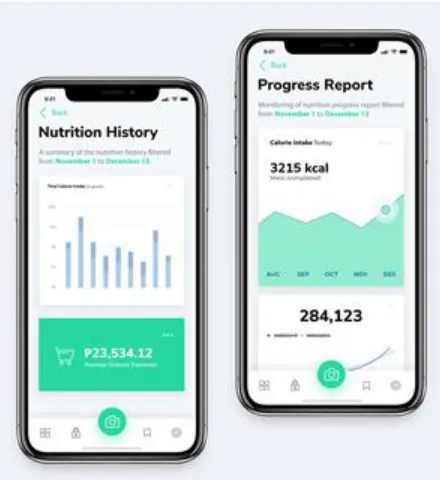
Fig. 4. App UI Screens: Nutrition History and Progress Report.
Tracking and monitoring nutrition progress is also vital in painting a picture of dietary habits. Identifying this eating habit, although tedious when done manually, could deliver a better well-being especially that it is associated with health-related quality of life [29] and school performance [30]. The challenging task of monitoring nutrition progress could be ease by automating the task using an application. Therefore, nutrition history and progress report were included in the list of features (See Figure 3). It also includes interactive charts as graphical representations of data for easier understanding. Tracking nutrition is already available in other apps so I think automatically selecting meals for me based from what I should eat will be helpful for me. [P6] I want to lose weight but I don’t know how much to eat or what should I eat to achieve my goal. [P7] I like to keep track of my calories and to be warned if I am about to eat more than I should have. [P11] There should be a list of recipes, the nutrients per meal, and recommendations if it should be my meal. [P13]
Fig. 5. Proposed Nutrition System Architecture.
The system architecture (See Figure 5) was grounded on processes and features that emerged from the focus group sessions, and evaluated on the online survey. The interface includes modules such as meal planner, food tracker, recipe analyzer, grocery list, nutrition report, and progress report. Personal information was also added such as age, height, weight, and physical activity for the calculation of TDEE, and restrictions (allergies, religion) and preferences (dietary type, body goal) as recommended in Plan-Cook-Eat [14].
Fig. 6. Meal Plan with Equivalent Nutrition Facts per Meal.
2073 monitor their nutrition but will only do so if it is easy to do.
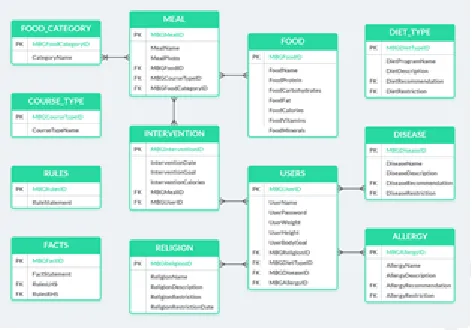
Hence, the emerged features and system architecture along with the added designs of meal plan and equivalent nutrition facts (Figure 6) and conceptual data model (Figure 7) were identified to fulfill the ease in monitoring and diet planning.
Fig. 7. Proposed Conceptual Data Model.
Table 3 illustrates the most rated nutrition system features that must be first considered in developing a nutrition knowledge-based system as an intervention tool such as meal planner (M=4.87, SD±0.12), food tracker (M=4.91, SD±0.11), grocery list (M=4.23, SD±0.34), nutrition fact (M=4.56, SD±0.41), nutrition history (M=4.31, SD±0.19), as well as progress report (M=4.69, SD±0.22). The result of the quantitative exploration was in line with the findings of Plan-Cook-Eat [14] where an application is suggested to integrate nutrition knowledge throughout the modules. The use of nutrition facts in meals, for instance, help users to assist in selecting food while learning the nutrients of each ingredient although the meal selection is automatically performed by the meal planner module. The inclusion of more nutrition-related modules were also warranted. Fortunately, food tracker was emerged from participants’ selected features. This module is the food diary version of the nutrition system. The importance of nutrition history and progress report were also evident on the study. It only means that although people do not generally track what and the amount of food they eat; they are still willing to monitor their nutrient intake.
TABLE3
EVALUATION OF THE PROPOSED NUTRITION SYSTEM FEATURES
Features Purpose Mean
Meal Planner Recommend food recipes 4.87 Nutrition Fact Display nutrition information 4.56 Food Tracker Monitor calories and nutrients 4.91 Grocery List Generate ingredients to buy 4.23 Nutrition History View history of food intake 4.31 Progress Report Monitor weight progression 4.69
4 CONCLUSION
Adequacy of nutrient intake is a cornerstone of leading a healthy lifestyle as lack thereof is associated with increased morbidity and mortality, and an overall decreased quality of life. Therefore, it is important to ensure the maintenance of a good nutritional status. Unfortunately, the findings exploited the fact that people do not track what they eat, let alone the
nutrients it contained, which eventually leads to undereating or overeating. There is also a prevalence in lack of nutrition knowledge to make healthier food choices which is usually dependent on family members’ preferences [31]. Affordability [32] and accessibility [33] are also essential factors in making food choices. Fortunately, the willingness of participants to point their directions towards a healthier lifestyle through the use of a nutrition knowledge-based system is evident on the findings. Therefore, this study is a confirmation that such computer-based application is needed not only as a nutrition intervention tool but also as part of the overall health sector. On a side note, there are study limitations that should be reported and addressed. First, perceptions of the participants with regards to existing nutrition tools were not gathered. As such, a comparison was not made between the existing apps to the proposed nutrition knowledge-based system. Further, data gathered from the online survey was self-reported. It is also important to note that the topics discussed on the focus groups were limited on the following concepts: poor eating habits, nutrition knowledge, nutrition barrier, food selection, and nutrition application. There is a possibility that there are still other variables and concepts that needs to be exploited to fully comprehend the nutrition challenges of Filipino young adults. And in terms of age, the results might also differ when the age bracket is changed, i.e., infants, adolescents, adults [34]. It is also worth exploring other factors such as pregnancy, athleticism, nutritional disorders and chronic diseases. Nevertheless, the findings of the study will be integrated in the next phase of the project which is the development of the final version of the nutrition knowledge-based system called ―Virtual Dietitian‖. Future nutrition applications, systems, and tools could also take advantage from the findings of this study by ensuring that their system is compliant to the needs of their users and could provide a straightforward solution to their nutrition challenges. As mentioned in literature, the inclusion of participants though a participatory model is essential to the effectiveness of a nutrition intervention strategy along with its theoretical basis. In the case of Virtual Dietitian, the grounding framework of the knowledge-based system will use Nutrition Care Process as the systematic approach to ensure the quality and consistency of individualized nutrition care. Implemented by dietitians and nutritionists to their patients, this approach includes four stages such as nutrition assessment, diagnosis, intervention, and monitoring and evaluation. Good nutrition is an important criterion of leading a healthy lifestyle which is why it is important to maximize technology in achieving it.
ACKNOWLEDGMENT
The authors wish to thank all the study participants and FEU Institute of Technology for funding the research.
REFERENCES
[1]. Food and Nutrition Research Institute, "8th National Nutrition Survey: Overview," ed. Philippines, 2015. [2]. National Nutrition Council, "Philippine Plan of Action
for Nutrition 2017-2022: A Call to Urgent Action for Filipinos and its Leadership," Department of Heatlh, Ed., ed. Philippines, 2017.
2074 Encyclopedia of Life Support Systems (EOLSS)
Publications, 2011.
[4]. Food and Nutrition Research Institute, "Philippine Dietary Reference Intakes," ed. Philippines, 2015. [5]. I. Angeles-Agdeppa, L. Denney, M. Toledo, V. A.
Obligar, E. Jacquier, A. Carriquiry, et al., "Inadequate nutrient intakes in Filipino schoolchildren and adolescents are common among those from rural areas and poor families," Food & Nutrition Research, 2019.
[6]. Public Health Agency, "Nutrition matters for the early years: Guidance for feeding under fives in the childcare setting," 2013.
[7]. N. Akseer, S. Al-Gashm, S. Mehta, A. Mokdad, and Z. A. Bhutta, "Global and regional trends in the nutritional status of young people: a critical and neglected age group," Annals of the New York Academy of Sciences, vol. 1393, pp. 3-20, 2017. [8]. A. C. Sauer, J. Li, J. Partridge, and S. Sulo,
"Assessing the impact of nutrition interventions on health and nutrition outcomes of community-dwelling adults: a systematic review," Nutrition and Dietary Supplements, 2018.
[9]. FAO Food Policy and Nutrition Division, "Selecting Interventions for Nutritional Improvement: A Manual," ed. Rome: Food and Agriculture Organization of the United Nations, 1983.
[10]. A. L. Eldridge, C. Piernas, A.-K. Illner, M. J. Gibney, M. A. Gurinović, J. H. M. De Vries, et al., "Evaluation of New Technology-Based Tools for Dietary Intake Assessment—An ILSI Europe Dietary Intake and Exposure Task Force Evaluation," Nutrients, vol. 11, 2018.
[11]. L. Maes, T. L. Cook, C. Ottovaere, C. Matthijs, L. A. Moreno, M. Kersting, et al., "Pilot evaluation of the HELENA (Healthy Lifestyle in Europe by Nutrition in Adolescence) Food-O-Meter, a computer-tailored nutrition advice for adolescents: a study in six European cities," Public Health Nutrition, vol. 14, pp. 1292-1302, 2011.
[12]. S. V. Sharma, R. Shegog, J. Chow, C. Finley, M. Pomeroy, C. Smith, et al., "Effects of the Quest to Lava Mountain Computer Game on Dietary and Physical Activity Behaviors of Elementary School Children: A Pilot Group-Randomized Controlled Trial," Journal of the Academy of Nutrition and Dietetics, vol. 115, pp. 1260-1271, 2015.
[13]. G. R. do Amaral e Melo, F. de Carvalho Silva Vargas, C. M. dos Santos Chagas, and N. Toral, "Nutritional interventions for adolescents using information and communication technologies (ICTs): A systematic review," PLOS ONE, vol. 12, p. e0184509, 2017. [14]. M. B. Garcia, "Plan-Cook-Eat: A Meal Planner App
with Optimal Macronutrient Distribution of Calories Based on Personal Total Daily Energy Expenditure," presented at the International Conference on Humanoid, Nanotechnology, Information Technology, Communication and Control, Environment, and Management (HNICEM), Ilocos Norte, Philippines, 2019.
[15]. T. B. Sahay, F. D. Ashbury, M. Roberts, and I. Rootman, "Effective Components for Nutrition Interventions: A Review and Application of the
Literature," Health Promotion Practice, vol. 7, 2006. [16]. L. A. Palinkas, "Qualitative and Mixed Methods in
Mental Health Services and Implementation Research," Journal of Clinical Child & Adolescent Psychology, vol. 43, pp. 851-861, 2014/11/02 2014. [17]. S. Dawson, L. Manderson, and V. Tallo, A manual for
the use of focus group: International Nutrition Foundation for Developing Countries, 1993.
[18]. Office of the Human Research Protection Program, Guidance and Procedure: Recruitment and Screening Methods and Materials. Los Angeles: University of California, 2019.
[19]. Institute of Medicine and National Research Council, Investing in the Health and Well-Being of Young Adults. Washington, DC: The National Academies Press, 2015.
[20]. Z. Mohd Shariff, K. G. Lin, S. Sariman, H. S. Lee, C. Y. Siew, B. N. Mohd Yusof, et al., "The relationship between household income and dietary intakes of 1-10 year old urban Malaysian," Nutrition research and practice, vol. 9, pp. 278-287, 2015.
[21]. C. Olson, C. F. Bove, and E. O. Miller, "Growing up poor: Long-term implications for eating patterns and body weight," Appetite, 2007.
[22]. K. Melzer, B. Kayser, W. H. M. Saris, and C. Pichard, "Effects of physical activity on food intake," Clinical Nutrition, vol. 24, 2005.
[23]. N. T. T. Tran, C. L. Blizzard, K. N. Luong, N. L. V. Truong, B. Q. Tran, P. Otahal, et al., "The importance of waist circumference and body mass index in cross-sectional relationships with risk of cardiovascular disease in Vietnam," PLOS ONE, 2018.
[24]. D. S. Freedman and B. Sherry, "The Validity of BMI as an Indicator of Body Fatness and Risk Among Children," Pediatrics, 2009.
[25]. J. Z. Ilich, J. A. Vollono, and R. A. Brownbill, "Impact of Nutritional Knowledge on Food Choices and Dietary Intake of College Students," Journal of the American Dietetic Association, 1999.
[26]. S. L. Crites and S. N. Aikman, "Impact of nutrition knowledge on food evaluations," European Journal of Clinical Nutrition, vol. 59, 2005.
[27]. U. T. X. Phan and E. Chambers, "Motivations for choosing various food groups based on individual foods," Appetite, vol. 105, 2016.
[28]. J. S. Ingels, R. Misra, J. Stewart, B. Lucke-Wold, and S. Shawley-Brzoska, "The Effect of Adherence to Dietary Tracking on Weight Loss: Using HLM to Model Weight Loss over Time," Journal of Diabetes Research, 2017.
[29]. C. Ruano-Rodríguez, L. Serra-Majem, and D. Dubois, "Assessing the impact of dietary habits on health-related quality of life requires contextual measurement tools," Frontiers in pharmacology, 2015. [30]. S. Y. Kim, S. Sim, B. Park, I. G. Kong, J.-H. Kim, and H. G. Choi, "Dietary Habits Are Associated With School Performance in Adolescents," Medicine, vol. 95, pp. e3096-e3096, 2016.
[31]. T. R. Wenrich, J. L. Brown, M. Miller-Day, K. J. Kelley, and E. J. Lengerich, "Family members' influence on family meal vegetable choices," Journal of nutrition education and behavior, 2010.
2075 "Consumer food choices: the role of price and pricing
strategies," Public Health Nutrition, vol. 14, pp. 2220-2226, 2011.
[33]. K. Tangtrakul, "Food Accessibility and Food Choice: A Comparative Analysis of Food Choice in Developed and Developing Populations," Middle States Geographer, vol. 43, pp. 35-43, 2010.