4
MMDA E-Ticketing System
Angilyn Leoncio, Florocito Camata
Abstract: The research focuses primarily on the following problems and solutions cited by the researchers. Scientific methods were applied to this research from observation by each of the participants and consolidated a common observation. Aside, from the research made, through actual observation, observation was made through using the internet. These were various references related to the subject matters, us observed and referred to as well, local and foreign comparisons were made also. Model of eTicketing were looked as a model from the various models and applicability to the Philippine situation were made. Upon making these application and models work together, the research goes on to interview and conducted surveys at Edsa and Commonwealth Avenue, both in Quezon City. The Proponents conducted the study with the survey and analysis that has been done to their area of Investigation which was the main building of Metropolitan Manila Development Authority Office located at Guadalupe, Makati City, this government is involved in providing services and implementing regulation regarding traffic issues. The enforcers and MMDA Main Guadalupe Makati City are involved in this research. The researchers agreed to conduct investigation on different enforcers but different assigned locations because distinct enforcers have diverse assigned place, particularly to those enforcers whose places are assigned by the MMDA main office. Enforcers who are in the MMDA are more approachable for the reason that they are the ones that we interview on the first part of the research. The researchers discuss the results of the frequency of the driver respondents in terms of age, type of vehicle, category of vehicle. Researchers also discuss the assessment and significant difference of the driver-respondents on the existing and proposed traffic violation ticketing system for MMDA.
Keywords: Automated Mobile Ticketing System for MMDA
————————————————————
I.
I
NTRODUCTIONThe present system of traffic ticketing, through the local ticketing system, most of the time is totally inconvenient to both the traffic enforcer, the deemed violators, and the public at large as well. Actual experiences of the researchers were observed personally while riding a public conveyance system or private service that has been called for traffic violations and some of the questionnaires used in this research work. This research work was deemed for the months of July and August. The team through collective efforts researched on the internet, on surveys, on interviews, and actual observation and revalidation of our hypothesis for this research. The proposed research is bounded by some restrictions. It includes advantages and disadvantages of the system. The proposed system is faster and efficient in forwarding the data on the server. It includes the peripheral problems that may cause by its limitations such as Power interruption, Data connection failure, and the likes. As introduced in this research from the actual experiences, and from the set of questions and interviews, the researchers identified that the proposed system is much better in terms of effectiveness, reliability, accuracy, speed, security, and user-friendliness. Most of the ticketing system with in Metro Manila, or other urban centers in other provinces, Angeles City in the Province of Pampanga, Dagupan City in Pangasinan, San Fernando City in La Union, in Baguio City in the Cordillera Autonomous Region, and most of the cities in other provinces, it is mostly through manual ticketing system. The problem cited for this research is the inconveniences brought to the traffic enforcers by taking so much time in writing and signing to the Local Ordinance Violation Receipt, that describes the violation of the drivers being called or apprehended for traffic violations. Another problem for the apprehended traffic violators was due to the time given for the traffic enforcers to note the traffic violations; it gives more time for both the enforcers and violators to negotiate on the said violations. Thus, giving more time lost than productive time is used if this has been already punched in to the time of violation. With such, occurrences and usual practices happening, the riding public in general is affected by such inconveniences as the vehicle will pull over to some spot on the road, that supposedly use for
other vehicles using the road. So with such actual observation, the researcher noted this as one of the problems that manual ticketing can cause to every day flow of traffic. Second, as the team noted, the roads should be used to its worthiness, meaning giving more time for productive use and economic use. Thus, modernizing the manual ticketing system needs to be given attention. Modernizing is not enough, if it still as the old manual system in being sluggish or too slow. So a much faster and real time input, meaning as the traffic violation punches on real time, the violation, it will send such record to the data center what time exactly the violation occurred. Thus, in this case, mere punching in will automatically computes the violation and sends it on real time to the center. So at the end of the day, computation or liquidation or collection of fees will be centralized. With such, it will be more efficient than the old manual ticketing system. Another point to ponder, the more the time spent on negotiation, will usually lead to corruption or bribery. So as to mitigate the effect of corruption and/or bribery, the system that the research seeks to solve is transparency. In the sense that, actual and real time reporting should be done simultaneously with punching the violation.
1. GENERAL OBJECTIVES
The main objective is to automate the ticketing system of traffic and safety division for MMDA.
1.1 Specific Objectives
1. To evaluate the existing manual system and the proposed system for the following criteria:
a. Effectiveness b. Reliability c. Accuracy d. Speed e. Security
f. User-friendliness
2. To provide accounts to admin and enforcer for security.
2.
S
TATEMENT OF THE PROBLEMAs introduced in this research from the actual experiences, and from the set of questions and interviews, the following problems were identified;
Assessment of the existing and proposed Traffic Violation Ticketing System for MMDA in terms of the following criterion;
a. Effectiveness v.v. MMDA manual ticketing system and proposed eTicketing system, in terms of actual violations from the point of violation to the central office, real time reporting and accounting and recording of collections.
b. Reliability v.v. MMDA manual ticketing system and proposed eTicketing system, in terms of actual reporting, will it really reflect the report from the time of apprehension/citing of violation to the actual ticketing, among the others like issues of transparency on the conduct of enforcers among others.
c. Accuracy, v.v. MMDA manual ticketing system and proposed eTicketing system, in terms of true value of penalties and collection, inputted, on the actual ticketing/apprehension of drivers.
d. Speed, v.v. MMDA manual ticketing system and proposed eTicketing system, in terms of real time sending of report from point of violation to the central office.
e. Security, v.v. MMDA manual ticketing system and proposed eTicketing system, in terms of the records or data being as it is on the time of ticketing , and
f. User-friendliness v.v. MMDA manual ticketing system and proposed eTicketing system, in terms of irate enforcers and drivers, misunderstanding of information among others.
All of the stated problems will be tackled on this research and be presenting results from data available to the researcher.
SCOPE AND LIMITATIONS
To offer a proposal on the existing manual ticketing within Metro Manila covered by MMDA or Metro Manila Development Act. The proposed research is bounded by some restrictions. It includes advantages and disadvantages of the system. The proposed system is faster and efficient in forwarding the data on the server. It includes the peripheral problems that may cause by its limitations such as Power interruption, Data connection failure, and the likes.
2.1SIGNIFICANCE OF THE STUDY
The study will be useful trend for government, especially to those agencies whose job is to detain those drivers or vehicle who violates the rule and regulation along the road particularly to the enforcer of Metropolitan Manila Development Authority (MMDA). This study will improve their system.
Social- It will improve the speed of transaction for when the violators are in a hurry, it will be more time saving and less bribery. The MMDA will also gain more trust from the drivers for their intact reliability.
Education- The researchers gain knowledge about on how system inside of MMDA works. The study also let the
researcher know about many ways on how to combine technologies, such as android phone and Bluetooth printer. Economic- The system needs gadgets so the technology companies will gain more orders. It will need lesser order of paper for the ticket because the data will be sent directly to the database.
Technology- It improves the security of the site MMDA for there is a username and a password that is online. The merging between technologies, the Android phone, Bluetooth printer and being online are advantages that the people will know of what they will buy as a pair.
3.
R
ESEARCH METHODOLOGY3.1 System Design
3.1.1 Planning
The development of the project includes the usage of Android Phone. The researchers used php to develop the interface, and used MySql as the database engine.
3.1.2 Designing of Graphical User Interface
This deals with the interpretation of illustrations before the coding starts. It is how the system in general should be
Implementing the system
Windows 7 for OS Printer for reports 2 Levels of Users for Login
Designing of GUI
Login Form Main Form OVR Forms Activity log Forms
Planning
Materials to be used: Android phone Programming languages: Php
Create Database
Create table for user login Create table for violator’s information
Create database for violations list
reading
Evaluating the system
Survey given to 30 respondents Evaluate using statistical treatments
Testing and Debugging
Input violator’s data using Android phone
Software Program
6 implemented. The designing and creating of User Interface
was done using php. The php offers easy to use graphical user interface commands to build the forms for MMDA management.
Figure 2. Login Window
Figure 3. Main Window
Figure 4. Violator’s information Window
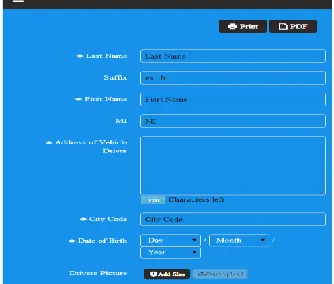
In the Violator’s Information Window, the enforcer can add information about the violator’s; consisting the name, address, city code, date of birth, license number, plate number, type of vehicle, violator’s images, signature, email address, and also the enforcer can add the violation that the violator’s commit.
Figure5. Sample receipt
Figure 5. Sample receipt
3.1.3 Software Programming
The diagram below is the Input, Process, and Output data flow diagram of the Automated Mobile Ticketing System for MMDA.
Figure 6. Data Flow Diagram of Automated Mobile Ticketing System for MMDA.
3.1.4 Database Creation
3.1.5 Testing and Debugging
The system was tested by MMDA (Metro Manila Development Authority) enforcer. To test the effectiveness, reliability, accuracy, speed, security and user-friendliness of the whole system.
3.1.6 Evaluating the System
Data were analyzed using statistical technique and in order to have systematic collection, presentation, analysis, and interpretation of quantitative data.
3.1.7 Implementing
For demonstration purposes the study was implemented using the Android mobile phone (touch screen technology) for MMDA enforcer. The system has only 2 levels of users, for the administrator and for the enforcer only since they were the ones who be going to use the system often.
4.
R
ESULTS ANDD
ISCUSSIONSTable 1.1 Frequency of driver-respondents in terms of Age.
Age Interval Frequency Percentages
19-26 6 20
27-34 13 43.33
35-42 8 26.67
43-50 1 3.33
51-58 0 0
59-66 2 6.67
Total N=30 100%
Table 1.1 shows from the Frequency of Driver-Respondents in terms of Age, that most of the frequency of the respondents were from age 27 to 34 with percentage of 43.33% or 13 frequency, out of the total sample of thirty (30). Most of the respondents were middle aged drivers. Followed by respondents middle ageing 35 to 42, with frequency of eight (8) and percentage of twenty-six point sixty seven (26.67%) percent. Then, from 19 to 26, with six (6) frequency and percentage of twenty (20) percent, then age of 59 to 66, frequency of two (2) with percentage of six point sixty seven (6.6 7%) percent, middle age of 43 to 50, with frequency of one (1) frequency and three point thirty three (3.33) percent and lastly no frequency for age 51 to 58.
Table 1.2 Frequency of driver in terms of Type of Vehicle
Type of Vehicle frequency Percentages
PUV 14 46.67
Private 12 40
Commercial 4 13.33
Total N=30 100%
Table 1.2 shows that from the following data, of all the thirty (30) samples, most of the respondents were driving Public Utility Vehicle (PUV) with frequency of fourteen (14) and percentage of forty six point sixty seven (46.67%) percent. Followed by Private, vehicles owned privately like green plates vehicle, not used for any other use aside from private used only with frequency of twelve (12) and percentage of forty (40%) percent and last by Commercial vehicles, like delivery vans, trucks, company shuttle bus, among the likes has frequency of four (4) and percentage of thirteen point thirty three (33%) percent.
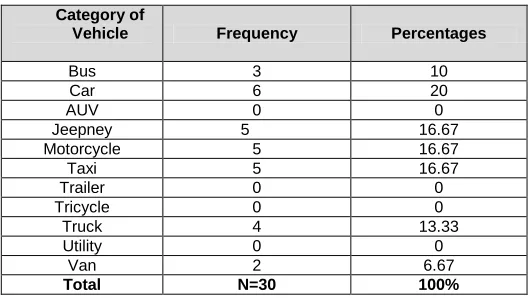
Table 1.3 Frequency of driver in terms of Category of Vehicle
Category of
Vehicle Frequency Percentages
Bus 3 10
Car 6 20
AUV 0 0
Jeepney 5 16.67
Motorcycle 5 16.67
Taxi 5 16.67
Trailer 0 0
Tricycle 0 0
Truck 4 13.33
Utility 0 0
Van 2 6.67
Total N=30 100%
Table 1.3 shows that from the following data, the most frequent respondent were cars, with frequency of six (6) or twenty (20%) percent, followed by jeepney, motorcycle, and taxi, each with frequency of five (5) or sixteen point sixty-seven percentages respectively, then next in rank by truck with four (4) frequency or thirteen point thirty three (33%) percent, then bus with three (3) frequency or ten (10%) percent, then van with frequency of two (2) or six point sixty seven (6.67%) percent and lastly no respondents from AUV, Trailer, Tricycle, or Utility.
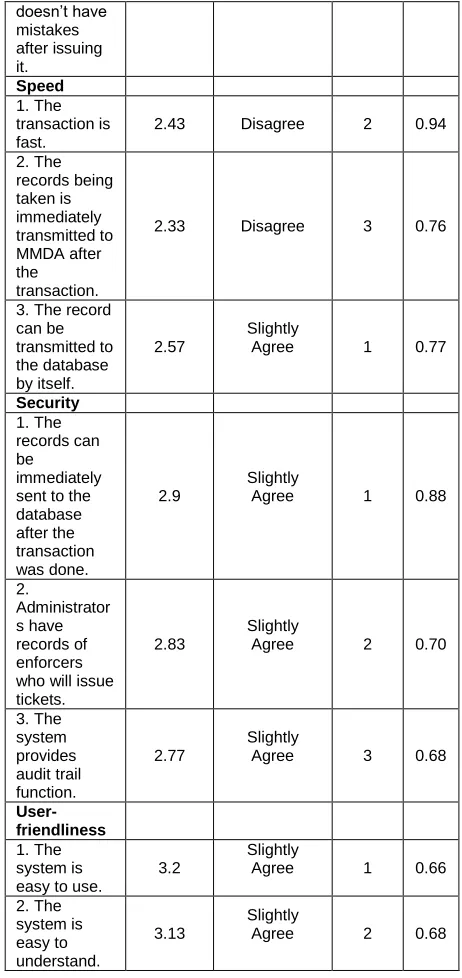
Table 2 .1 Assessment of the Driver-Respondents on the Existing System.
Existing System Criteria Weighte
d Mean
Verbal
Interpretation Rank SD Effectivenes
s
1. Records are directly transmitted to the MMDA database after each transaction has taken place.
2.93 Slightly
Agree 1 0.74
2. They return the daily transaction report to the office.
2.67
Slightly
Agree 2 0.48
Reliability 1. I am satisfied on the functionality of your current system.
3.03
Slightly
Agree 1 0.72
2. The function of the system doesn’t have failure.
2.93
Slightly
Agree 2 0.74
Accuracy 1. The system is free from errors.
2.23 Disagree 2 0.68
8 doesn’t have mistakes after issuing it. Speed 1. The transaction is fast.
2.43 Disagree 2 0.94
2. The records being taken is immediately transmitted to MMDA after the transaction.
2.33 Disagree 3 0.76
3. The record can be transmitted to the database by itself. 2.57 Slightly
Agree 1 0.77
Security 1. The records can be immediately sent to the database after the transaction was done. 2.9 Slightly
Agree 1 0.88
2.
Administrator s have records of enforcers who will issue tickets.
2.83
Slightly
Agree 2 0.70
3. The system provides audit trail function. 2.77 Slightly
Agree 3 0.68
User-friendliness 1. The system is easy to use.
3.2
Slightly
Agree 1 0.66
2. The system is easy to understand. 3.13 Slightly
Agree 2 0.68
Table 2.1 shows the Assessment of the Driver-Respondents on the Existing System were made as to criteria; Effectiveness, generally speaking, to both question 1 and 2, SLIGHTLY AGREE with a ranking of 1 and Standard Deviation of 0.74 and 0.48 respectively; Reliability, to both question 1 and 2, SLIGHTLY AGREE with a ranking of 1 and 2 and Standard Deviation of 0.72 and 0.74; Accuracy, as to the existing system with a response of DISAGREE to both question as to satisfaction and being error free, with ranking of 2 and 1, respectively and Standard Deviation of 0.68 and 0.67; Speed, this is in relation to the existing system of manual ticketing with SLIGHTLY AGREE, rank of 1 with Standard Deviation of 0.77, likewise, pertaining to the existing manual system that transaction is fast response of DISAGREE, rank 2 with Standard Deviation of 0.94 and lastly to question number 2, with response of DISAGREE rank 3 with Standard Deviation of 0.76 ; Security, This pertaining to the existing
system with response of SLIGHTLY AGREE rank of 1 with Standard Deviation of .88, followed by question number 2 with response of SLIGHTLY AGREE, ranked 2, with Standard Deviation 0.70 and lastly, the 3rd question, with response of SLIGHTLY AGREE, 3rd rank, with Standard Deviation 0.68;User-friendliness, This pertaining to the existing system regarding user-friendliness and easy to understand, both with response of SLIGHTLY AGREE, rank 1 and 2, with Standard Deviation of 0.66 and 0.68 respectively. Generally, summarizing the said data, most of the responses gathered were in SLIGHT AGREEMENT with the present system and DISAGREEMENT with ACCURACY and SPEED of the existing system of ticketing.
Table 2 .2 Assessment of the Driver-Respondents on the Proposed Traffic Violation Ticketing System for MMDA
Proposed System Criteria Weighted
Mean
Verbal
Interpretation Rank SD Effectiveness
1. Records are directly transmitted to the MMDA database after each transaction has taken place.
3.97 Agree 2 0.72
2. They return the daily transaction report to the office.
4.27 Agree 1 0.58
Reliability 1. I am satisfied on the
functionality of your current system.
3.97 Agree 1 0.72
2. The function of the system doesn’t have failure.
3.9 Agree 2 0.76
Accuracy 1. The system is free from errors.
3.47 Slightly Agree 2 0.82
2. The ticket doesn’t have mistakes after issuing it.
3.63 Agree 1 0.72
Speed 1. The transaction is fast.
3.43 Slightly Agree 1 0.90
2. The records being taken is immediately transmitted to MMDA after the transaction.
3.27 Slightly Agree 2 0.91
3. The record can be transmitted to the database by itself.
Security 1. The records can be immediately sent to the database after the
transaction was done.
3.63 Agree 1 0.72
2.
Administrators have records of enforcers who will issue tickets.
3.37 Slightly Agree 3 0.81
3. The system provides audit trail function.
3.5 Agree 2 0.73
User-friendliness 1. The system
is easy to use. 4.07 Agree 1 0.69 2. The system
is easy to understand.
4.03 Agree 2 0.67
Table 2.2 shows that from the following data, the following assessments were made as to criteria; Effectiveness, generally speaking, to both question 1 and 2, AGREE with a ranking of 1 and 2 with Standard Deviation of 0.72 and 0.58 respectively; Reliability, to both question 1 and 2, AGREE with a ranking of 1 and 2 and Standard Deviation of 0.72 and 0.76; Accuracy, as to the proposed system with a response to question 1, SLIGHTLY AGREE and question 2, AGREE as to satisfaction and being error free, with ranking of 2 and 1, respectively and Standard Deviation of 0.82 and 0.72; Speed, this is in relation to the proposed system of ticketing with SLIGHTLY AGREE, to both question 1, 2, and 3 with the ranking of 1, 2, and 3 and Standard Deviation of 0.90, 0.91, 0.94;Security,This pertaining to the proposed system with response of AGREE rank of 1 with Standard Deviation of 0.72, followed by question number 3 with response of AGREE, ranked 2, with Standard Deviation 0.73 and lastly, the 2nd question, with response of SLIGHTLY AGREE, 3rd rank, with Standard Deviation 0.81; User-friendliness, This pertaining to the proposed system regarding user-friendliness and easy to understand, both with response of AGREE, rank 1 and 2, with Standard Deviation of 0.69 and 0.67 respectively. Generally, summarizing the said data, most of the responses gathered were in AGREE with the proposed system and SLIGHTLY AGREE with ACCURACY, SPEED and SECURITY of the proposed system of ticketing.
Table 3.1 Significant difference between the Existing and Proposed Traffic Violation Ticketing System for MMDA
Criteria Computed Z
Tabulated
Z Decision Conclusion
Effectiveness -10.71 ±1.96 Reject
Ho Significant
Reliability -6.32 ±1.96 Reject
Ho Significant
Accuracy -8.35 ±1.96 Reject
Ho Significant
Speed -5.45 ±1.96 Reject
Ho Significant
Security -5.04 ±1.96 Reject Ho Significant
User-Friendliness -5.86 ±1.96
Reject
Ho Significant
Table 3.1 shows that from the following data that computed Z is higher than the tabulated Z which concluded that there is a significant difference between existing and proposed system in terms of effectiveness, reliability, accuracy, speed, security, and user-friendliness. In relay with the result that proposed system for MMDA is better than the existing system in terms of effectiveness, reliability, accuracy, speed, security and user-friendliness.
4.1 Conclusions
In light of these findings, the proponents concluded that; Base on the result of our surveys, the motorists believed that the proposed system is more effective and efficient than the manual system they currently used. Most of the driver-respondents believed that the manual ticketing can be improved into automated ticketing system which is more capable and efficiency than the existing system. The proposed system includes confirmation on printing of the ticket to generate reports of violator’s record and previous transaction with less error than the existing system. The proponents also put the proposed system online and real time application on recording actual traffic violation, and record it directly via mobile signal, through a secured internet access data storage system and reporting it to the central office. The respondents are satisfied with the proposed ticketing system by using android phone and IMZ series mobile printer provides lesser time in the process of issuing ticket. The proposed system is faster and secure to use than the existing system. The more the time spent on negotiation, will usually lead to corruption or bribery. So as to mitigate the effect of corruption and/or bribery, the system that the research seeks to solve is transparency. In the sense that, actual and real time reporting should be done simultaneously with punching the violation.
4.2 Recommendations
The following recommendations are being offered:
1. MMDA (Metro Manila Development Authority) is using the manual ticketing system which is slow, expose to corruption, and not real time. The proponents recommend the proposed system, Automated Mobile Ticketing System using Android mobile phone (touch screen technology) for MMDA.
2. For the MMDA, the proposed system will be use within 5 years; the gadgets and application are still functioning.
3. For the future researchers who would like to conduct a study like the proposed system, the proponents recommend the enhancement of the gadgets for further use.
4. The proponents recommend making the cities in (NCR) to become a wifi zone to be able to access in any part of NCR where the transaction will be done, example of the wifi zone in NCR like cities of Makati and Taguig.
R
EFERENCES[1] Flores (2012) Victory Liner offers hassle-free online
ticketing system
10 [2] Montealto (2013) SPOTTED: EDSA bus with touch
screen ticketing
system[Online]http://www.techei.com.ph/news/spooted-edsa-bus-with-touch-screen-ticketing-system
[3] SCHUMPETER (1982) the concept of innovation was strengthened and spread through the classic works of economist Joseph A. Schumpeter in
http://www.scielo.cl/scielo.php?pid=S0718-27242012000100002&script=sci_arttext
[4] Belgacom (2007). SMS ticketing was launched as a
pilot project
http://www.eltis.org/index.php?id=13&study_id=3426 [5] J R Parking (2010) study the ratty and outdated citation
system https://www.gatewayticketing.com/
[6] Philippines’ Department of Transportation and Communications (2014) a project that speed up ticketing in the three train lines in Metro Manila, Philippines http://www.techinasia.com/automated-train-ticketing-system-philippines/
[7] Philippine Airlines (2010) electronic version of the paper ticket http://www1.philippineairlines.com/about-pal/frequently-asked-questions/electronic-ticketing/
[8] Passenger Boarding Monitoring and Control System (2011) http://maritimereview.ph/2011/02/e-ticketing-booking-system-to-start-this-summer/
[9] House Bill 3748 (2013) proposed Act Establishing a
Single Traffic Ticketing System
ttp://www.topgear.com.ph/news/bill-seeks-country-wide-unified-traffic-violation-ticketing-system