13
Abstract
In phenomenography the aim is to describe and classify people’s conceptions. Teachers have to be aware of the various alternative conceptions on which pupils are relying in their reasoning when they try to understand a concept or a phenomenon. Marton’s variation theory of learning gives guidance to teachers how to design a successful teaching intervention by taking into account discernment, variation and simultaneity.
In this article comprehensive school pupils’ conceptions on the concept of weight in the pulley surrounding have been studied using phenomenographic method. Pupils from 5th, 7th and 9th grades compared the weight
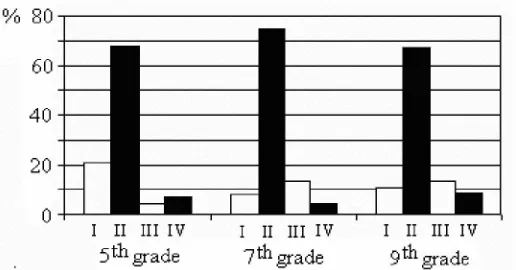
of a small standard mass and a big bag hanging in a pulley at different positions in balance. In all the three age groups the majority (about 70%) of the pupils stated that the lower hanging bag is heavier. From the pupils’ justifications five hierarchical categories were found: Motion, Position, Appearance, Material and No reasoning. Only about 5% of the seventh graders and 10% of the ninth graders seem to have an idea about the scientific explanation based on the immobility of the hanging objects.
Next, in order to change these conceptions a teaching intervention was planned so that in three successive demonstrations the critical features found in the earlier study about pupils’ conceptions were varied. After the teaching about 40% of the fifth graders and 45% of the ninth graders perceived that they have to pay atten-tion to the immobility of the objects.
Finally, it is shown how the cognitive conflicts and the four patterns of variation gradually change the pupils’ ideas toward the scientific explanation. Teachers can help pupils by using successive demonstrations with appropriate variation and taking up in discussion pupils’ misconceptions and the critical features in the demonstration.
Key words: phenomenography, variation theory, pupils’ conceptions, teaching intervention.
Introduction
Already when starting their studies in science pupils will have plenty of different con-ceptions about different concepts, phenomena and events. However, the scientific expla-nations of physical phenomena often differ from and are in conflict with intuitive ideas based on everyday experiences. In 1980s studies on pupils’ alternative conceptions be-came central in science education research (see e.g. Duit, 2006, Driver, Squires, Rushworth & Wood-Robinson, 1994). The aim in these studies was to find out what kind of difficul-ties pupils had in understanding the scientific concepts and models of explanations
(theo-CHANGING PUPILS’ CONCEPTIONS
ABOUT WEIGHT APPLYING
VARIATION THEORY
Maija AHTEE
University of Helsinki, Finland E-mail: [email protected]
Olavi HAKKARAINEN
models that would reveal the ways how to bring about the necessary changes. Early on, Posner, Strike, Hewson & Gertzog (1982) introduced four conditions for conceptual change: pupils have to realize that their old way of thinking does not work and that the scientific conceptions are more intelligible, plausible, and fruitful than their own conceptions. Later different theoretical models have been developed to explain the conceptual change like misconception repair (Chi, Slotta & de Leeuw, 1994), knowledge-in-pieces (diSessa, 1993), synthetic meaning (Vosniadou, 1994), and sociocultural view (Ivarsson, Schoultz & Säljö, 2002).
Teaching methods like cognitive conflict and analogies have been developed to change pupils’ ideas (see Driver, Asoko, Leach, Mortimer & Scott, 1994). Cognitive conflict i.e. the realisation of the need to change existing ideas is the first step toward conceptual change so that pupils will not to simply recall the scientific fact through rote memorization and soon after science instruction return back to alternative conceptions (Tsai & Chang, 2005). One common instructional strategy to foster conceptual change is to confront stu-dents with discrepant events that contradict their existing conceptions. This is intended to invoke a cognitive conflict that induces students to reflect on their conceptions as they try to resolve the conflict. Kang, Scharmann & Noh (2004) have found a significant correla-tion between the cognitive conflict induced by a discrepant event and the conceptual change. However, they warn that cognitive conflict is only one of the important factors to be con-sidered in concept learning rather than a necessary prerequisite for it.
Tao & Gunstone (1999) found when studying the process of conceptual change in force and motion using computer simulation programs that conceptual change for many students was context dependent and unstable. In addition, it has been stressed that also motivational and affective factors as well as recognition that science is socially constructed has to be taken into account in models of conceptual change (Pintrich, Marx & Boyle, 1993; Tyson, Venville, Harrison & Treagust, 1997; Lee, Kwon, Park, Kim, Kwon & Park, 2003). Ivarsson et al. (2002) have taken a more radical position. According to them, con-ceptual change results from changes in the way how students use intellectual tools in vari-ous contexts, and the change actually occurs at the societal level. Schoultz, Säljö & Wyndhamn (2001) have shown that human reasoning is tool dependent on its nature. Ac-cording to them when children’s reasoning is supported by a cultural artefact (like the globe) they appear to be familiar with highly sophisticated modes of reasoning. This is considered as a rather strong argument for a sociocultural interpretation of mind.
15
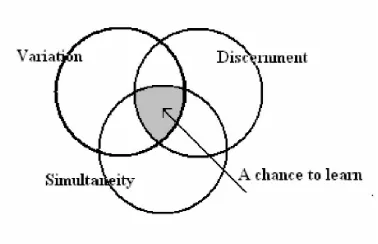
Volume 1, 2007 variation theory to learn something pupils have to experience and to discern it in different
ways (see Marton & Booth, 1997; Marton & Tsui, 2004). The variation theory provides a way to describe the conditions necessary for learning.
Phenomenography – classification and description of conceptions
Phenomenography is a fairly recent research tradition (see e.g. Marton, 1981; Svensson, 1997; Marton & Pong, 2005). Pupils make their own interpretations and conclusions from different phenomena and conceptions on the basis of their own experiences and knowl-edge structures. In the phenomenographic research method the data is obtained by col-lecting pupils’ descriptions how a certain phenomenon or concept appear to them, how they understand it. From these descriptions the researcher has to find out the different interpretations and the reasons behind these interpretations. To be able to do this the researcher has to have good knowledge and understanding about the physics behind the phenomenon and its connections and s/he has to know also in which kind of situations pupils may have met this phenomenon earlier. In other words, s/he has to be acquainted with the pupils’ background and world view.
In the phenomenographic research the first thing is to find out what pupils have no-ticed about the phenomenon, to which features or properties they have paid attention. For every phenomenon there is a limited number of critical features. The corresponding cat-egories form the referential perspective or what aspect which denotes the overall meaning assigned to the phenomenon (Marton & Booth, 1997; Pang, 2003). The categories of pu-pils’ conceptions tell the teachers how the pupils have understood the phenomenon. They help the teacher to avoid in her/his teaching examples and sayings that may strengthen the wrong ideas and stress ways that may help the pupils to change their wrong ideas.
When the researcher tries to understand how pupils’ different conceptions have been formed s/he is looking at the structural perspective or how aspect. S/he pays attention to the expressions how the pupils explain the phenomenon and to the contexts in which the pupils join the phenomenon. The basic assumption in phenomenography is that different pupils see the phenomenon in different ways depending on their experiences and aware-ness. The key feature of a way of experiencing something (both the structural and referen-tial aspects) is “the set of different aspects of the phenomenon as experienced that are simultaneously present in focal awareness” (Marton & Booth, 1997, p. 101). Marton & Pong (2005) have given a good example how the referential and structural aspects are intertwined in the concept PRICE.
Variations as the starting point in learning
Figure 1. The conditions of learning according to the variation theory.
Marton et al. (2004) point out that in the learning situation it is necessary to pay close atten-tion to what varies and what stays invariant in order to understand what is possible to learn in that situation and what not. They have identified four patterns how teaching can be varied so that the pupils will discern critical features and keep them in their awareness:
1. Contrast. In order to experience something new the pupils have to have earlier experi-ences with which they can compare the new features and then keep them in their aware-ness. To understand red colour one has to have experiences of other colours. To under-stand what a tree is, pupils have to have experiences also about something that are not trees.
2. Generalization. To fully understand the main idea and to separate the irrelevant aspects from a concept or a phenomenon the pupils have to have many different examples from this concept or phenomenon.
3. Separation. In order to distinguish a certain aspect or factor from other aspects or factors this aspect or factor has to vary while the other aspects or factors stay invariant. This is familiar thing in physics experiments. In order to find the cause of a certain variable in a phenomenon we have to vary this variable to give it different values while the other variables stay invariant. To understand that weight and volume are different concepts the pupils have to have had experiences that the bodies of different size can have the same weight and that the bodies of same size can have different weights.
4. Fusion. When there are many factors that the pupil has to take into account s/he will understand the meaning of the different factors just when s/he has experienced the effects of these factors simultaneously. In our study pupils started to perceive the simi-larity of weight and force concepts just when they realized from the pulley demonstra-tion that the posidemonstra-tion or size of the bodies did not change the balance of the system. In their study Ling, Chik & Pang (2006) have applied the two first patterns when they planned teaching the colour of light to primary pupils. They wanted the pupils to understand that sunlight (white light) is needed in the formation of a rainbow. They found two critical points that pupils had to understand in this phenomenon. The first critical aspect was that the prism was only a tool that splits the sunlight into colours, it will not create a rainbow by itself. They used the pattern of con-trast to show that sunlight splits in prisms, soap bubbles and water drops. For the other critical point, a part-whole relationship between sunlight and the colours of a rainbow, they used the pat-tern of generalization in the form of analogy. At the beginning the marathon runners are grouped together so that the individual persons cannot be identified. In the course of the race due to their different speeds the runners are separated.
To change pupils‘ conceptions on weight
Pupils’ conceptions on weight
17
Volume 1, 2007 ideas about the force concept that students have to assimilate in order to understand the concept
properly. These are for example force as the cause of acceleration, forces like gravity as an action-at-a-distance and tactile forces, force as an interaction between bodies, balanced and unbalanced forces and so on. There are several studies that focus especially on students’ concep-tions about weight and gravity (e.g. Galili, 2001; Palmer, 2001).
Pupils relate different ideas to the weight of an object. For example, Kang et al. (2004) found that pupils used the term ‘weight’ in the meaning of ‘natural’ heaviness of certain materi-als; matter like iron is heavy and matter like plastic is light by nature. Ioannides & Vosniadou (2002) found that younger children thought that force is an internal property of an object related to its weight and the older children thought that force is an acquired property of objects that move as the result of an agent pushing or pulling them. Young children when comparing two objects of equal mass but different volume will claim that the larger (less dense) object is lighter. A very stable belief is that being “lower (closer to the earth) implies heavier” for objects sus-pended on the pulley (Champagne et al. 1980; Palmer, 2001). Gunstone & White (1981) found with a bicycle wheel fastened as a pulley that 27% of first year university physics students rea-soned a lower hanging block of wood to be heavier than a higher hanging bucket of sand (of the same mass). Some of these students drew even inappropriate analogies to seesaws or beam balances. In Mohapatra’s and Bhattacharyaa’s (1989) pencil-and paper test about 60% of the ninth graders stated that the downward force on the lower hanging body was more than that on the higher hanging body, even though it was mentioned in the question that the two bodies were of equal mass. The researchers concluded that the pupils applied the image of a physical balance to the case of the pulley.
Finding the conceptions
Phenomenographic method was used to find 5th, 7th and 9th graders’ conceptions about weight when two bodies of different size were hanging in a pulley in balance (Hakkarainen & Ahtee, 2005). Pupils wrote their responses to the question: What can you say about the weight of the standard mass A and the bag B compared to each other? in the situation shown in Figure 2. They had also to give reasons for their thinking.
Figure 2. A standard mass and a bag are hanging in a pulley. The pulley moves
freely and the string is very light.
Figure 3. Distribution of the pupils’ answers in the referential categories: I Standard mass is heavier; II Bag is heavier; III Bag and standard
mass weigh the same, IV Rejected. The amount of the pupils: 5th
grade 97, 7th grade 98, 9th grade 104.
From the pupils’ justifications the following five structural categories were found and placed in hierarchical order according to the abstraction level. An example of the pupils’ an-swers is given in each case.
1. Motion. The scientifically correct argument is based on the movement or immobil-ity of the bag, the standard mass or the flywheel. This idea includes some notion of the idea of effects of gravity i.e. of the force concept. The bag and the standard mass stay at their positions.
2. Position. The argument is based on the positions of the bag and the standard mass. The bag hangs lower.
3. Appearance. The pupils pay attention to the concrete appearance of the bag and the standard mass. The standard mass looks heavy.
4. Material. The pupils give concrete properties to the bag and the standard mass. The standard mass is of metal and the bag is of plastic.
5. No argument or confusing idea. In most cases the pupils only stated their thought about the weights of the bag and of the standard mass compared to each other. The bag is heavier than the standard mass.
Figure 4. Distribution of the pupils’ arguments in the structural categories: 1
Motion, 2 Position, 3 Appearance, 4 Material, 5 No argument or con-fusing idea.
19
Volume 1, 2007 tempting to conclude that some of the 7th graders see that the position argument is not correct.
When they had no other explanation to give they chose the alternative no argument.
Changing the conceptions
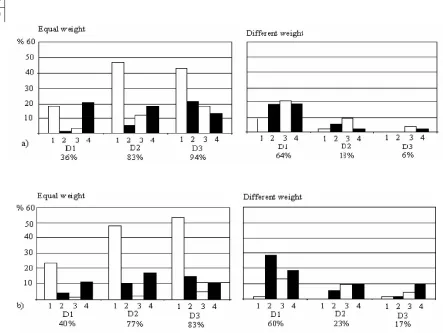
The pulley study gave information about pupils’ conceptions. In order to change these conceptions a teaching intervention was planned so that the positions of the objects hanging in the pulley were changed in regard to each other (Ahtee & Hakkarainen, 2005). In the three successive demonstrations (see Figure 5) the critical features found in the pupils’ conceptions were varied. After each demonstration (D1 – D3) the 5th and 9th graders (other pupils than in the earlier study) had to compare the weight of the two objects hanging in the pulley. They wrote their answers to the questions: What can you say about the weight of the standard mass and the bag compared to each other? Why do you think so?
Figure 5. The successive demonstrations with three different positions of the
pulley in balance.
The pupils were, however, first asked to compare with their hands the weight of the small standard mass and the bigger bag in order to get them to pay attention to the concept of weight. The results of this work are reported by Hakkarainen (2005). This pre-activity had an effect on the results. After the first successive demonstration D1 40% of the ninth graders made the correct choice (the standard mass and the bag having the same weight) and 24% of them justified their choice according to the motion model. Whereas, in the earlier study (Hakkarainen & Ahtee, 2005), when the pupils just compared the weights of the standard mass and the bag without this pre-activity, only 13% of the ninth graders (see Figure 3) had chosen the correct alternative and only 9% from all ninth graders used the motion model to justify this choice (see Figure 4).
Figure 6. The changes in the structural categories 1. Motion, 2. Position, 3. Appearance and Material, 4. None a) in the fifth grade and b) in the ninth grade in the cases when pupils had made the correct choice, equal weight, or the wrong choice, different weight after the dem-onstrations D1, D2, D3. The percentage underneath indicates the amount of the choice after each demonstration.
The teaching intervention
21
Volume 1, 2007
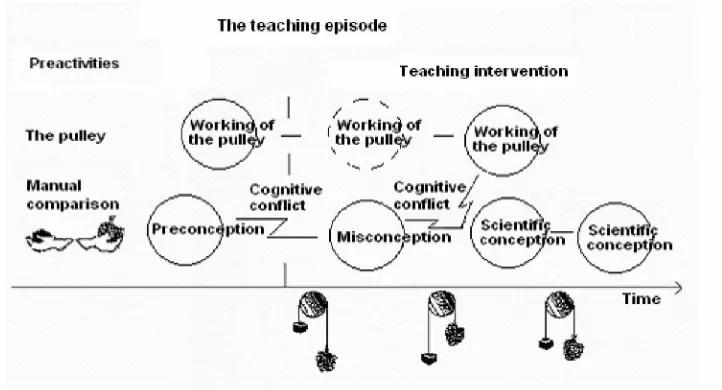
Figure 7. The teaching episode showing how a pupil uses the working of the
pulley and ends up with the scientific conception after the first pul-ley demonstration.
The four patterns of variation were used in the teaching episode. Pupils have had earlier experiences about the weight of different objects – they have lifted and carried objects of different size, form and material (contrast). These came forward also when the pupils wrote their reasoning. In the teaching intervention counterexamples were shown for pupils’ most general explanations (separation) like the bigger the object the heavy it is, or the lower the object hangs in the pulley the heavier it is. In this way the pupils are guided to check their thinking and concentrating on the central idea (generalization). In order to be able to take into account all the relevant facts pupils have to experience these simultaneously (fusion).
Before the teaching intervention about 90% of the fifth graders and nearly 70% of the ninth graders have a typical preconception that the standard mass feels to be heavier than the bag (Hakkarainen, 2005). The first pulley demonstration causes, however, a cognitive conflict because about 70% of the fifth and ninth graders have before this situation also the precon-ception that the lower hanging bag is heavier (Hakkarainen & Ahtee, 2005). When the pupil understands to combine the facts that the objects are staying at their positions even that the fly wheel is moving freely s/he ends with the notion that the standard mass and the bag have to have the same weight. The fact that the objects stay at their positions in the freely moving pulley is a critical detail (Viennot, Chauvet, Colin & Rebmann, 2005).
It is important that a real pulley is shown to the pupils. In Vosniadou’s and Brewer’s (1992) study primary pupils were interviewed about the form of the Earth and about people’s living on it. The pupils stated for example that people cannot live on the other side of the Earth because they fall off. Later Schoultz et al. (2001) found that when the globe was present in the interview pupils had no difficulties understanding that people can live also on the other side of the globe. In our study the pulley functions as a prosthetic device for thinking in a similar way as the globe in the study by Schoultz et al. (2001).
Figure 8. The teaching episode showing how a pupil finds the scientific con-ception after the second pulley demonstration by taking into ac-count the working of the pulley.
After the last successive demonstration still about 15% of the ninth graders and 20% of the fifth graders explained the objects to have the same weight because they are at the same level. These pupils had not in any of the demonstrations paid any attention to the critical detail – the objects were not moving. For these pupils the third demonstration supported their mis-conception. In the two earlier demonstrations it was easier to notice the immobility of the objects because the experience supports the idea that the heavier object starts to move down-ward and the lighter object updown-ward. About 22% of the fifth graders and 11% of the ninth graders explained the weightiness of the objects on the basis of the appearance or material composition of the objects. The teaching intervention did not change their proportion nearly at all. This is understandable because in the pulley demonstrations there was no variation in those aspects.
When pupils do not understand the function of gravitation they will lean on their earlier reasoning. This happened when half a year later the pupils were asked to compare the weights of the hanging objects in the pulley (Hakkarainen & Ahtee, 2007). The amount of those ninth graders who paid attention to the immobility of the objects was the same as after the teaching intervention whereas the fifth graders gave the same arguments as the pupils who had not taken part in the teaching intervention. The ninth graders had studied the basic facts about gravitation during their physics lessons but not the fifth graders.
It is the teacher’s task to try to find suitable demonstrations and examples so that pupils having misconceptions about the critical features will notice the conflict between their think-ing and the scientific explanation. From the learnthink-ing point of view it is also important that the teacher discusses with pupils the critical features like in the case of the pulley demonstration the meaning of gravitation and the freely moving flywheel. In their article about the effect of showing the concrete globe on pupils’ arguments Vosniadou, Skopeliti and Ikospentaki (2005) stress that the teacher has to bring forward pupils’ own preconceptions and assumptions and explain why the planet Earth can be understood both flat and spherical.
References
Ahtee, M. & Hakkarainen, O. (2005). Importance of the order of demonstrations in changing pupils’
conceptions. NORDINA, Nordic Studies in Science Education, 1, 31-42.
Caramazza, A., McCloskey, M. & Green, B. (1981). Naive beliefs in “sophisticated subjects:
Misconcep-tions about the trajectories of objects. Cognition, 9, 117-123.
23
Volume 1, 2007
mechanics. American Journal of Physics, 48, 1074-1079.
Chi, M. T. H., Slotta, J. D. & deLeeuw, N. (1994). From things to process. A theory of conceptual change
for learning science concepts. Learning and Instruction, 4, 27-43.
Claxton, G. (1993). Minitheories: a preliminary model for learning science. In P. J. Black & A. M. Lucas
(Eds.) Children’s informal ideas in science. London: Routledge.
Dekkers, P.J.J.M. & Thijs, G.D. (1998). Making productive use of students’ initial conceptions in
devel-oping the concept of force. Science Education, 82, 31-51.
diSessa, A. (1993). Toward an epistemology of physics. Cognition and Instruction, 10, 105-225.
Dreyfus, A., Jungwirth, E., & Eliovitch, R. (1990). Applying the “cognitive conflict” strategy for
concep-tual change: Some implications, difficulties, and problems. Science Education, 74, 555-569.
Driver, R., Asoko, H., Mortimer, E. & Scott, P. (1994). Constructing Scientific Knowledge in the
Class-room. Educational Researcher, 23 (7), 5-12.
Driver, R., Squires, A., Rushworth, P. & Wood-Robinson, V. (1994). Making sense of secondary science.
Research into children’s ideas. London: Routledge.
Duit, R. (2006). Bibliography – STCSE. Students’ and Teachers’ Conceptions and Science Education.
http://www.ipn.uni-kiel.de/aktuell/stcse/stcse.html(checked 2.5.2007)
Galili, I. (2001). Weight versus gravitational force: historical and educational perspectives. International
Journal of Science Education, 23, 1073-1093.
Gilbert, J. K., Osborne, R. J. & Fensham, P. J. (1982). Children’s science and its consequences for
teaching. Science Education, 66 (4), 623-633.
Gunstone, R. F. & White, R. T. (1981). Understanding gravity. Science Education, 65, 291-299.
Hakkarainen, O. (2005). Mental models in manual weight comparisons between two objects of different
size. Themes in Education, 6 (2), 151- 167.
Hakkarainen, O. & Ahtee, M. (2005).Pupils’ mental models of a pulley in balance.Journal of Baltic
Science Education, 4, 26-34.
Hakkarainen, O. & Ahtee, M. (2007). The durability of conceptual change in learning the concept of
weight in the case of a pulley in balance.International Journal of Science and Mathematics Education,
5(3), 461-483.
Ioannides, C. & Vosniadou, S. (2002). The changing meaning of force. Cognitive Science Quarterly, 2,
5-62.
Ivarsson, J., Schoultz, J. & Säljö, R. (2002). Map reading versus mind reading: Revisiting children’s
understanding of the shape of the Earth. In M. Limón & L. Mason (Eds.), Reconsidering conceptual
change: Issues in theory and practice.Dordrecht: Kluwer Academic Publishers, 77-99.
Kang, S., Scharmann, L.C. & Noh, T. (2004). Reexamining the role of cognitive conflict in science
con-cept learning. Research in Science Education, 34, 71-96.
Lee, G., Kwon, J., Park, S. S., Kim, J. W., Kwon, H. G. & Park, H. C. (2003). Development of an
instru-ment for measuring cognitive conflict in secondary-level science classes. Journal of Research in Science
Teaching, 40, 585-603.
Limón, M. (2001). On the cognitive conflict as an instructional strategy for conceptual change: a critical
appraisal. Learning and Instruction, 11, 357-380.
Ling, L. M., Chik, P. & Pang, M. F. (2006). Patterns of variation in teaching the colour of light to primary
3 students. Instructional Science, 34, 1-19.
Marton, F. (1981). Phenomenography – describing conceptions of the world around us. Instructional
Science, 10, 177-200.
Marton, F. & Booth, S. (1997). Learning and awareness. Mahwah, NJ: Lawrence Erlbaum.
Marton, F. & Pong, W. Y. (2005). On the unit of description in phenomenography. High Education
Research & Development, 24 (4), 335-348.
Marton, F., Runesson, U. & Tsui, A.B. (2004). The space of learning. In F. Marton, & A.B.Tsui (Eds.)
Classroom discourse and the space of learning. New Jersey: Lawrence Erlbaum, 3-62.
Marton, F. & Tsui, A.B.M. (Eds.) (2004). Classroom discourse and the space of learning. New Jersey:
Lawrence Erlbaum.
Posner, G. J., Strike, K. A. Hewson, P. W. & Gertzog, W. A. (1982).Accommondation of a scientific
conception: Toward a theory of conceptual change. Science Education, 66, 211-227.
Schoultz, J., Säljö, R. & Wyndhamn, J. (2001). Heavenly talk: Discourse, artifacts, and children’s
under-standing of elementary astronomy. Human Development, 44, 103-118.
Svensson, L. (1997). Theoretical foundations of phenomenography. Higher Education Research &
Devel-opment, 16 (2), 159-171.
Tao, P. & Gunstone, R. F. (1999). The process of conceptual change in force and motion during
compu-ter-supported physics instruction. Journal of Research in Science Teaching, 36, 859-882.
Tsai, C.- C. & Chang, C. - Y. (2005). Lasting effects of instruction guided by the conflict map:
Experi-mental study of learning about the causes of seasons. Journal of Research in Science Teaching, 42 (10),
1089-1111.
Tyson, L.M., Venville, G.J., Harrison, A.G., & Treagust, D.F. (1997). A multidimensional framework for
interpreting conceptual change events in the classroom. Science Education, 81, 387-404.
Viennot, L. (1979). Spontaneous reasoning in elementary dynamics. European Journal of Science
Edu-cation, 1, 205-221.
Viennot,L., Chauvet, F., Colin, P., & Rebmann, G. (2005). Designing strategies and tools for teacher
training: The role of critical details, examples in optics. Science Education, 89, 13-27.
Vosniadou, S. (1994). Capturing and modelling the process of conceptual change.Learning and
Instruc-tion, 4, 45-69.
Vosniadou, S. (1999). Conceptual change research: state of the art and future directions. In W. Schnotz,
S. Vosniadou & M. Carretero (Eds.) New perspectives on conceptual change. Amsterdam: Pergamon, 3
-13.
Vosniadou, S. & Brewer, W. F. (1992). Mental models of the earth: A survey of the conceptual change in
childhood. Cognitive Psychology, 24, 535-585.
Vosniadou, S., Skopeliti, I. & Ikospentaki, K. (2005). Reconsidering the role of artifacts in reasoning:
Children’s understanding of the globe as a model of the Earth. Learning and Instruction, 15 (4), 333-351.