ANALYSIS
OF
MINAPADI
AQUACULTURE
DEVELOPMENT
TREND
IN
WEST
JAVA
PROVINCE
Annes Ilyas *, Asep. A.H. Suryana **, Rosidah**, Atikah Nurhayati** *) Bachelor of Fisheries and Marine Sciences Faculty, University of Padjadjaran **) Lecturer of Fisheries and Marine Sciences Faculty, University of Padjadjaran
Email : [email protected]
ABSTRACT
The fisheries sector is an important sector for the people of Indonesia and can be used as a prime mover of the national economy. Minapadi aquaculture is a fisheries sector with a system of rice and fish aquaculture which is cultivated together in a rice field. West Java Province as one of the biggest producing regions of Minapadi fisheries in Indonesia, and is considered as a potential area for Minapadi aquaculture. The development of Minapadi aquaculture in West Java Province caused a development trend. The Trend shows changes in the value of the main indicators that are relatively stable changes in population, changes in prices, changes in technology, and increased productivity. This study has the purpose to analyze the development trends of Minapadi aquaculture in West Java Province. The study was conducted in May - September 2019. The method used in this study is the literature survey to determine trends in the development of competitive aquaculture in 18 districts and nine cities in West Java Province. After all, data has been processed, the data will be analyzed descriptively. Primary data in the form of expert judgment consisted of 13 people regarding the proportion of competitiveness of aquaculture in Minapadi aquaculture. Secondary data in the form of statistical data on Minapadi Aquaculture in the year 2000-2016 the Department of Maritime Affairs and Fisheries of West Java Province. The results of this study indicate that the development of mini aquaculture in the regencies/cities of West Java Province experienced fluctuating changes from 2000 to 2016.
Keywords: Development, Minapadi Aquaculture, Trends, West Java
GSJ: Volume 7, Issue 11, November 2019, Online: ISSN 2320-9186
INTRODUCTION
West Java Province has an area of 37.087,92 km2 (Source: Special Plants of West Java Province, Geographic Information System calculation with a coastline of 832,69 km (Source: Map of zoning plans for coastal areas and small islands of West Java Province). Based on the sea management authority of 0-12 miles, the sea area of West Java Province is 1.552.890,67 ha and has 19 small islands (Regional Planning and Development Agency West Java 2018). West Java Province is a region that has natural conditions suitable for the development of aquaculture, especially freshwater aquaculture. This is supported by a large number of freshwater resources in West Java because it is supported by high rainfall. The average annual rainfall is generally above 2.000 mm. The amount of rain is estimated to be 180 days/year so that West Java has many rivers, swamp lakes, situ and other puddles (Suryana 2013).
Administratively, the area of West Java Province is divided into 27 Regency/cities, covering 18 regency and 9 cities, namely Bogor, Sukabumi, Cianjur, Bandung, West Bandung, Garut, Tasikmalaya, Ciamis, Kuningan, Cirebon, Majalengka, Sumedang, Indramayu, Subang, Purwakarta, Karawang, Bekasi, and Pangandaran as well as the City of Bogor, Sukabumi, Bandung, Cirebon, Bekasi, Depok, Cimahi, Tasikmalaya and the City of Banjar. Sukabumi Regency is the largest regency area in West Java Province with an area of 4.145,70 km2 (11.72 percent of the area of West Java Province), while the smallest area is Cirebon City which is 37.36 km2 (0,11 percent of the total area of the Province West Java). West Java Province consists of 627 regencies, 645 villages and 5.312 villages (Bappeda West Java 2018).
The fisheries sector is an important sector for the people of Indonesia and can be used as a prime mover (prime mover) of the national economy. Based on the fisheries sector has a huge potential view from the waters of Indonesia which has an area of 5,8 million km2. Also besides, Indonesia has a coastline of 95.181
km, which is largely the basis of fisheries economic activities (Maritime and Fisheries Agency Fisheries 2009). The great potential of the fisheries sector can also be seen from the volume of Indonesian fisheries production. Based on the publication of the Directorate General of Aquaculture in 2013 stated that fisheries production in Indonesia has various types of aquaculture, namely aquaculture, ponds, ponds, cages, floating nets and rice fields. Minapadi Aquaculture according to Tupan et al., (2013) is a system of how to care for fish on the sidelines of rice plants in the paddy fields, like a slice between two seasons of rice plants and/or rearing fish as a substitute for palawija in paddy fields. Due to growing media enriched with organic fertilizer and increase the production of plankton that is the source of fish meal. In fact, according Montazeri (2012) minapadi is one of the technologies of agricultural land for environmental quality improvements in anticipation of climate anomalies because this minapadi is an integrated aquaculture can improve the productivity of paddy fields, namely: increased incomes through increased production of rice 10%; increased diversity of agricultural products due to fish production; increasing soil and water fertility (reducing fertilizer by 30%) can also reduce the pest of Brown Wereng on rice plants.
According to Effendi (2013), minapadi has several advantages that help reduce pests and diseases, increasing the potential of wetland, increase fish production ponds and height of the water area and increase revenue for the two businesses of rice and fish. According to Anwar (2012), the weakness of the minapadi system is that excessive application of pesticides to rice can also affect fish life and the ease of pests such as snakes, frogs, and birds entering the fields.
irrigation and fertility levels related to the existence of natural food for fish.
According to Khairuman and Amri (2002 in Aryanto 2016), several types of fish suitable to be raised in the fields include goldfish, silver carb, tilapia, carp, dumbo catfish and giant prawns. According to Suharti (2003 in Hanifah 2016) revealed that goldfish and other types of carp are the best types of fish maintained in the fields, because these fish can grow well even in shallow water, and are more resistant to the sun's heat.
According to Maryati (2010: 129) states the trend is a movement (tendency) up or down in the long run, which is obtained from the average change over time. On average these changes can increase or decrease. If the average change increases, it is called a positive trend or the trend has an upward trend. Conversely, if the average change decreases it is called a negative trend or a trend that has a downward trend.
The trend shows changes in the value of a variable that is relatively stable in population changes, changes in prices, changes in technology, and increased productivity. According to Narafin (2013: 196) said income forecast (sales) is a process of estimating the activity of products that will be sold or leased in the future in certain circumstances and made based on historical data that has occurred or may occur.
METHOD
This research was conducted at the Maritime Affairs and Fisheries Office of West Java Province in May – September 2019 which aims to analyze the development trend of capture fisheries in West Java Province. The method used in this study is a survey literature method to determine the development trend of capture fisheries in ten regencies and one city in West Java Province. The data used secondary data that is realized in the form of numbers and analyzed using descriptive statistics. The technique used to retrieve secondary data is obtained from the statistical data of Marine Affairs and Fisheries Office of West Java Province.
DATA ANALYSIS
Data analysis was performed using qualitative descriptive analysis. Qualitative descriptive analysis in this study is intended to get the development trend of Minapadi aquaculture in the Regency/City of West Java Province.
1. Determine the main indicators and variables including human resources, facilities and infrastructure, production and production value, the application of science and technology for mini-aquaculture fisheries, and productivity. 2. The stage of the research is to take data on
the aquaculture of aquaculture in West Java Province from 2000 to 2016.
3. Identify priority weights or relative importance between indicators, variables, and sub-variables.
4. Taking primary data in the form of expert opinion (expert judgment) which gives weight to the main indicators and variables. As for the experts who were respondents as many as 13 people consisting of lecturers from the Department of Social Economics of Fisheries and Marine Sciences Faculty (FMSF) Padjadjaran University and aquaculture lecturers from FMSF Padjadjaran University, Head of Aquaculture in West Java Province, Head of Production and Business Section, Head of Facilities and Infrastructure Section and Head Fish and environmental health section.
5. Calculate the weight of the results of the expert judgment of each indicator, variable and sub-variable.
6. Processing data that has been obtained during the study, using secondary data, namely fisheries statistics of West Java Province in 2016 to determine the competitiveness profile of each regency/city.
from secondary data and calculate values based on weights and scores obtained. Score = 𝐷𝑎𝑡𝑎 𝑒𝑎𝑐ℎ 𝑅𝑒𝑔𝑒𝑛𝑐𝑦/𝐶𝑖𝑡𝑦𝑇𝑜𝑡𝑎𝑙 𝑃𝑟𝑜𝑣𝑖𝑛𝑐𝑒 𝐷𝑎𝑡𝑎 𝑥 100
Value = Weight x score
As for productivity is calculated from fishery statistical data of West Java Province. Here's the formula productivity is calculated for the main indicators of competitiveness of fisheries (Yulistyo 2011):
a. Productivity Production per Land
𝑃𝑝𝑡 =𝑃𝑖𝑘
𝑇𝑖𝑘 …... (1)
Information :
ppt : Productivity production per land area (tonnes/m2)
P : Total Production (tons)
The types of fish produced are in the hatchery and enlargement stage including fish, shrimp, and other aquatic animals.
T : Total Land Area (m2) i : Regency i (i = 1, ..., 27) k : The period time
b. Productivity Production per Workforce
𝑃𝑝𝑛 = 𝑃𝑖𝑘
𝑁𝑖𝑘 ... (2)
Information :
PPN : Productivity per workforce production (tons/person)
P : Total Production (tons)
The types of fish produced are in the hatchery and enlargement stage including fish, shrimp, and other aquatic animals.
N : The total number of fish aquaculture workers (people) i : Regency i (i = 1, ..., 27) k : The period time
c. Productivity Production Value per Land Area
𝑃𝑛𝑝𝑡 =𝑁𝑃𝑖𝑘
𝑇𝑖𝑘 ... (3)
Information :
Pnpt : The productivity of the production value per land area (IDR /m2)
NP : Values Production (Rupiah) The types of fish produced are in the hatchery and enlargement stage including fish, shrimp, and other aquatic animals.
T : Total land area (m2) i : Regency i (i = 1, ..., 27) k : period of time
d. Productivity Production Value per Workforce
𝑃𝑛𝑝𝑛 =𝑁𝑃𝑖𝑘
𝑁𝑖𝑘 ... (4)
Information :
Pnpt : The productivity of the production value per workforce (IDR / person) NP : Values Production (Rupiah)
The types of fish produced are in the hatchery and enlargement stage including fish, shrimp, and other aquatic animals.
T : The total number of fish aquaculture workers (people) i : Regency i (i = 1, ..., 27) k :The period time
8. Warned of the competitiveness of fisheries among all regencies/ cities in West Java Province based on the value-weighted.
9. Specifies criteria for the competitiveness of fisheries throughout the regencies/cities in West Java Province using quartiles with Minitab application. The criteria are divided into four quartiles, Q1 is an area with very high competitive, Q2 is an area with high competitiveness, Q3 is an area with sufficient competitive, Q4 is an area with low competitiveness.
a. Minapadi Aquaculture Fisheries Production Development Index
𝐼𝑃𝑃𝑖𝑗𝑘 = 𝑄𝑖𝑗𝑘
𝑄𝑖𝑗𝑘𝑙 𝑥 100 ... (1)
Information :
IPP : Minapadi Aquaculture Fisheries Production Development Index Q : Production Volume (tons)
The types of fish produced are in the hatchery and enlargement stage including fish, shrimp, and other aquatic animals.
I : Regency i (i = 1, ..., 27)
A : Types of Fisheries Classification K : The period time
Kl : 1 year before a Period time
b. Fisheries Household / Fishing Company Development Index (Labor)
𝐼𝑃𝑁𝑖𝑗𝑘 = 𝑁𝑖𝑗𝑘
𝑁𝑖𝑗𝑘𝑙 𝑥 100 ... (3)
Information :
IPN : Labor Development Index
N : Number of Fish Aquaculture Workers (people)
I : Regency i (i = 1, ..., 27)
A : Types of Fisheries Classification K : The period time
Kl : 1 year before a period time
c. Aquaculture Facility Development Index
𝐼𝑃𝑄𝐹𝑖𝑗𝑘 = 𝑄𝑓𝑖𝑗𝑘
𝑄𝑓𝑖𝑗𝑘𝑙 𝑥 100 ….………..….(3)
Information :
IPP : Aquaculture Facility Development Index
Q : Facility Volume (pieces)
Types of facilities used are milling plots, enlargement plots, and water pumps
I : Regency i (i = 1, ..., 27)
A : Types of Fisheries Classification
K : The period time
Kl : 1 year before a period of timeIndeks
d. Aquaculture Production Facilities and Infrastructure Development Index
𝐼𝑃𝑄𝑠𝑖𝑗𝑘 = 𝑄𝑠𝑖𝑗𝑘
𝑄𝑠𝑖𝑗𝑘𝑙 𝑥 100 ……..……….(4)
Information :
IPS : Aquaculture Production Facilities and Infrastructure Development Index S : Fisheries Production Facilities and
Infrastructure (unit)
Types of facilities and infrastructure used are fertilizer, feed, and lime
I : Regency i (i = 1, ..., 27)
A : Types of Fisheries Classification K : The period time
Kl : 1 year before a period time
e. Aquaculture Area Development Index
𝐼𝑃𝐿𝑠𝑖𝑗𝑘 =𝑄𝐿𝑖𝑗𝑘
𝑄𝐿𝑗𝑘𝑙 𝑥 100 ……….(5)
Information :
IPL : Aquaculture Area Development Index QL : The volume of fish farming area (ha) I : Regency i (i = 1, ..., 27)
A : Types of Fisheries Classification K : The period time
Kl : 1 year before a period time
RESULTS AND DISCUSSION
Table 1. Ranking of Minapadi Aquaculture Competitiveness in Regency / City of West Java Province
Regency/
City X1 X2 X3 X4 X5
Final
Score Ranked
Competitiv eness Category Tasikmalaya
Regency 11.953 8.174 1.466 3.755 1.500 26.848 1
Very High Cianjur
Regency 3.773 3.097 5.276 3.395 1.148 16.688 2 Garut
Regency 0.000 0.000 5.297 10.889 0.301 16.487 3 Ciamis
Regency 0.976 0.637 5.483 0.094 1.072 8.262 4
Bogor
Regency 0.025 1.606 0.040 0.057 4.975 6.703 5
High Karawang
Regency 0.000 5.971 0.054 0.141 0.408 6.574 6
Bandung
Regency 3.148 0.000 0.949 0.286 0.399 4.783 7
Majalengka
Regency 0.145 0.000 0.120 0.168 3.282 3.715 8
Tasikmalaya
City 0.000 0.004 1.077 0.284 1.016 2.381 9
Sukabumi City 0.021 0.000 0.033 0.006 2.180 2.240 10
Enough Bandung City 0.000 0.000 0.046 0.193 1.306 1.545 11
Kuningan
Regency 0.000 0.000 0.165 0.195 1.183 1.543 12 Bekasi
Regency 0.007 0.000 0.002 0.002 1.194 1.205 13 West Bandung
Regency 0.000 0.000 0.034 0.144 0.507 0.685 14 Sumedang
Regency 0.000 0.000 0.000 0.154 0.000 0.154 15
Low Sukabumi
Regency 0.000 0.000 0.000 0.139 0.000 0.139 16 Banjar City 0.000 0.000 0.035 0.000 0.000 0.035 17 Cimahi City 0.000 0.013 0.000 0.000 0.000 0.013 18 Bogor City 0.000 0.000 0.007 0.000 0.000 0.007 19 Cirebon
Regency 0.000 0.000 0.000 0.000 0.000 0.000
20 Indramayu
Regency 0.000 0.000 0.000 0.000 0.000 0.000 Subang
Regency 0.000 0.000 0.000 0.000 0.000 0.000 Purwakarta
Advanced Table 1
Regency/
City X1 X2 X3 X4 X5
Final
Score Ranked
Competitiv eness Category Bekasi City 0.000 0.000 0.000 0.000 0.000 0.000
Depok City 0.000 0.000 0.000 0.000 0.000 0.000 Pangandaran
Regency 0.000 0.000 0.000 0.000 0.000 0.000 (Source: Data Processing Results)
Information :
X1 = Human Resources
X2 = Minapadi Aquaculture Service Facility
X3 = Facilities and Infrastructure of Minapadi Aquaculture X4 = Minapadi Aquaculture Production
X5 = Application of Science and Technology of Minapadi Aquaculture
The results of this study are in the form of graphs of development between regencies/cities in West Java. This overall development graph shows the movement of the development of mini aquaculture in an area with other regions, as well as how far the area can realize the potential of its variables. The index value of aquaculture development in the period of 2000 - 2016 includes the index of development of RTP (households fisheries), facility development index, facility and infrastructure development index, land area development index, and minapadi aquaculture production development index.
The development of mini aquaculture in West Java Province during the period of 2000 - 2016 experienced fluctuating changes. The development of Q1 category production areas is not so harmonious when production increases are not supported by human resources, facilities, and infrastructure which did not increase significantly. This can be seen when the
development of human resources, facilities, facilities and infrastructure in the Q1 region which tends to increase but not as significant as production. Regions in the Q1 and Q2 categories have increased production even though the existing facilities and facilities have decreased. The facilities include logging and enlargement plots, while the facilities and infrastructure include feed, fertilizer, and lime. The area of land used for these minapadi activities from each region has a varying area and has fluctuating developments. However, the region Q1 category has a land area that is superior to other regions as well as experiencing significant ups and downs in land area development.
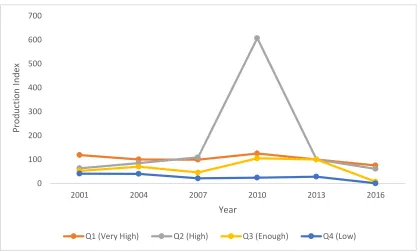
Figure 1. Development Index of Minapadi RTP in West Java Province
The graph above shows that the areas with a high competitive category (Q2) have increased and decreased very significantly. In 2007 the region had an index value of 108,5, then experienced an increase in 2010 with an index value of 606,7 to decline again in 2013 with an index value of 100.
Regions with a very high competitiveness category (Q1) have experienced insignificant increases and decreases. During the period 2001-2016, this region only experienced one time RTP increase is in 2010 with an index value of 125. Areas with sufficiently competitive categories (Q3) have experienced significant increases and decreases. In 2016 there was a significant decrease, where the index value obtained was 6,67. While regions with low competitiveness (Q4) categories did not experience significant ups and downs and even tended to be constant. The index value obtained by this region during the period 2001-2016 ranges from 0-40.
2. Facility Trend Development Index
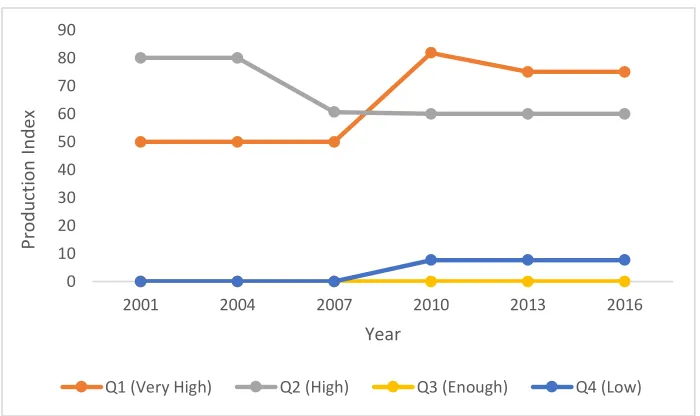
The facility used within periods of 15 years in aquaculture minapadi varies greatly. During the period The developments many facilities Minapadi aquaculture from year to year in West Java Province (Figure 2). The graph illustrates areas with very high competitiveness (Q1) categories which experienced a very significant increase in facilities in 2010. However, in the previous three periods, the index value of this region was constant with a value of 50. Then it decreased in 2013 with an index value of 75 and continued to be constant until 2016.
0 100 200 300 400 500 600 700
2001 2004 2007 2010 2013 2016
P
ro
d
u
ct
io
n
I
n
d
ex
Year
Figure 2. Development Index of Minapadi Facilities in West Java Province
Areas with a high competitiveness category (Q2) experienced a significant decrease in 2007 with an index value of 60. The values obtained in each period tend to be the same which means that there are no additional facilities that are too large. So in 2007 until 2016 the graph shows constant or equal values. Regions with sufficient competitiveness (Q3) do not experience increases and decreases but get a constant value. The value obtained is 0 and did not change during the period 2001-2016. While regions with low competitiveness (Q4) category
experienced an increase in 2010 with an index value of 7,7. However, in the previous three periods, the region's index value was constant with a value of 0, then it was always constant with a rate of 7,7 until 2016.
3. The Trend of Facilities and Infrastructure Development
The facilities and infrastructure used in mini-aquaculture activities for 15 years vary widely and fluctuate (Figure 3).
Figure 3. Minapadi Facilities and Infrastructure Development Index in West Java Province 0
10 20 30 40 50 60 70 80 90
2001 2004 2007 2010 2013 2016
P
ro
du
ct
io
n
Ind
e
x
Year
Q1 (Very High) Q2 (High) Q3 (Enough) Q4 (Low)
0 50 100 150 200 250
2001 2004 2007 2010 2013 2016
P
ro
d
u
ct
io
n
I
n
d
ex
Year
The graph above can be predicted that the regions with very high competitiveness (Q1) categories have experienced significant increases and decreases. In 2007 the region had an index value of 119,8, then experienced an increase in 2010 with an index value of 219,5 to a very significant decline again in 2013 with an index value of 76,5.
Regions with very high competitiveness (Q1) experience very significant ups and downs. In 2007 it experienced an increase with an index value of 136,1 but experienced a very significant
decrease in 2010 with an index value of 54. Regions with sufficiently competitive categories (Q3) experienced a very significant increase. The increase occurred in 2010 and 2013 with index values of 26,17 and 64 respectively, where the index value in the previous period was 0,02. While regions with low competitiveness (Q4) categories did not experience significant increases and decreases, even tended to be constant. The index value obtained by this region during the period 2001-2016 ranged from 1-18,3.
4. Production Trend Development Index The data used in observing the development of Minapadi aquaculture production is over for 15 years from the period
2001-2016. During this period the development of Minapadi aquaculture production in West Java Province was very volatile (Figure 4).
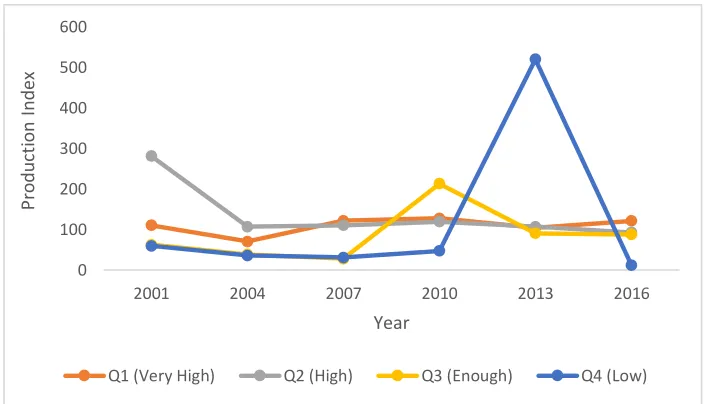
Figure 4. Minapadi Production Development Index in West Java Province
The graph above shows that regions with very high competitiveness (Q1) categories experienced insignificant increases and decreases. In 2007 the region experienced an increase from the previous period with a value of 70,5 and then increased by 122. In the next three periods, the index value of the development of mini-aquaculture production in this region was almost the same.
Regions with a high competitiveness category (Q2) experienced a very significant decrease in 2004 with an index value of 107,1 from the previous period with a value of 281.
Regions with a fairly competitive category (Q3) experienced a very significant increase in 2010 with an index value of 213. Then decreased the amount of production in 2013 with an index value of 91. While areas with low competitiveness (Q4) categories experienced significant increases and decreases. In 2010 the region had an index value of 47,2, then it increased in 2013 with an index value of 519,8 until it declined again in 2016 with an index value of 12. This shows that this region produced a very high amount of production in the year 2013 during the period 2001-2016.
0 100 200 300 400 500 600
2001 2004 2007 2010 2013 2016
P
ro
d
u
ct
io
n
I
n
d
ex
Year
5. Land Development Trend Index
The data used in looking at the development of minapadi cultivated land area is over for15 years from the period 2001-2016.
During this period the development of large-scale aquaculture land in West Java Province fluctuated (Figure 5).
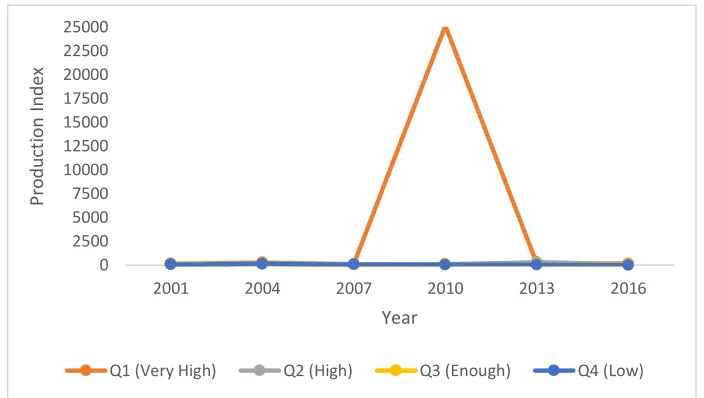
Figure 5. Minapadi Land Development Index in West Java Province
The graph above shows that regions with very high competitiveness (Q1) categories have experienced very significant increases and decreases. In 2007 the region had an index value of 78,1, then experienced a significant increase in 2010 with an index value of 25.128,4 until it declined again in 2013 with an index value of 100. This shows that this region experienced a very high expansion of Minapadi aquaculture land in 2010 during the period 2001-2016.
Regions with high competitiveness (Q2) experienced a very significant increase in 2013 with an index value of 256 from the previous period with a value of 80,3. The next period in 2016 experienced a very significant decline with an index value of 79,6. Areas with sufficiently competitive categories (Q3) experienced insignificant increases and decreases. The index value obtained is not too much different from each period. While the regions with low competitiveness (Q4) categories experienced a significant increase and decrease. In 2001, the index value obtained was 47,4 which then experienced an increase in land expansion in 2004 with an index value of 10,8 to a decrease in
land area in 2007 with an index value of 48,7. The decline in land area in this region continued until the 2016 period with an index value of 0.
CONCLUSION
Based on the results of research that has been carried out obtained several conclusions as follows:
The development of mini aquaculture in the regencies/cities of West Java Province is seen from the aspects of human resources, facilities, facilities and infrastructure, production, and the area of cultivated land which experienced fluctuating changes from 2001 to 2016. The development of human resources in the area of high competitiveness experienced a very significant increase and decrease in 2010. The development of the land areas in the very high competitiveness category experienced a very significant increase and decrease in 2010.
REFERENCES
[1] Amri, K. 2002. SmartBook Aquaculture of 15 Fish Consumption. Agromedia. Jakarta. 0
2500 5000 7500 10000 12500 15000 17500 20000 22500 25000
2001 2004 2007 2010 2013 2016
P
ro
d
u
ct
io
n
I
n
d
ex
Year
[2] Anwar, S. 2012. Intercropping Planting Patterns. Agrotechnology. R&D: Dustpan.
[3] Aryanto, D. D. 2016. Analysis of Mina Padi Farming Income in Margoluwih Village, Seyegan Regency, Sleman Regency. Essay. Published. Faculty of Agriculture. Yogyakarta Muhammadiyah University: Yogyakarta.
[4] Regional Planning Agency of West Java Province. 2018. Final Draft Plan Regional Medium-Term Development (RPJMD) of West Java Province 2018-2023. Bandung.
[5] EfFendi, M. 2013. Minapadi Indoor Swimming is accessed from the website page: http: // epetani. deptan.go.id/budidaya/mina-padi-kolam-in-8111. (Accessed on September 25, 2019 at 18.03 WIB).
[6] Hanifah, N. 2014. Analysis of the Household Welfare Level of Minapadi Cultivators in
Majalaya, Ciparay and Pacet Regency, Bandung Regency. Essay. Published. Faculty of Fisheries and Marine Science. Padjadjaran University: Jatinangor.
[7] Hermawan, A., Amanah, S., & Fatchiya, A. 2017. Participation of Fish Cultivators in the Aquaculture Business Group in Tasikmalaya Regency, West Java. Journal of Counseling, 13 (1): 1-13.
[8] Maryati. 2010. Statistics of Economics and Business. Revised Edition. Second Printing Yogyakarta (UPP) AMPYKPN.
[9] Narafin. M. 2013. Corporate Budgeting. Third Edition. Jakarta: Salemba Empat.