Why Should There Be an NICHD?
abstract
In its nearly 5 decades of existence, the Eunice Kennedy Shriver Na-tional Institute of Child Health and Human Development has expended $23 billion in conducting and supporting research and translating dis-coveries to practice. The resulting dramatic impact on peoples’ lives and improved health for children and families, chronicled herein, are a testament to the benefits of having this institute at the National Insti-tutes of Health.Pediatrics2011;127:325–333
AUTHOR:Duane F. Alexander, MD
National Institutes of Health, Bethesda, Maryland
KEY WORDS
research, pediatric research, pediatric disease, history
ABBREVIATIONS
NICHD—Eunice Kennedy Shriver National Institute of Child Health and Human Development
NIH—National Institutes of Health AAP—American Academy of Pediatrics
AMSPDC—Association of Medical School Pediatric Department Chairs
PSDP—Pediatric Scientist Development Program Hib—Haemophilus influenzaetype b
SIDS—sudden infant death syndrome
This article is based on an invited presentation at the annual meeting of the Association of Medical School Pediatric Department Chairs; March 5, 2010; Tampa, FL.
Dr Alexander began working at the NICHD in 1968 and served as director of the institute from 1986 to 2009.
www.pediatrics.org/cgi/doi/10.1542/peds.2010-2029
doi:10.1542/peds.2010-2029
Accepted for publication Nov 10, 2010
Address correspondence to Duane F. Alexander, MD, Fogarty International Center, National Institutes of Health, Building 16, Room 217, MSC 6705, Bethesda, MD 20892. E-mail: duane. [email protected]
PEDIATRICS (ISSN Numbers: Print, 0031-4005; Online, 1098-4275).
Copyright © 2011 by the American Academy of Pediatrics
FINANCIAL DISCLOSURE:The author has indicated he has no financial relationships relevant to this article to disclose.
By act of Congress there has been a National Institute of Child Health and Human Development (NICHD) at the US National Institutes of Health (NIH) since 1962. The ensuing nearly 5 de-cades have seen an enormous growth in medical knowledge and advances in ability to enhance healthy develop-ment and save lives. Nowhere have these changes been more dramatic than in obstetrics and pediatrics, and the NICHD often played a leading or fa-cilitating role that is often unrecog-nized or underappreciated. Recount-ing the institute’s historical role in these transformations provides a dra-matic example of how the presence of the NICHD fostered and enhanced our ability to improve the well-being of our children and families, as well as the benefits to pediatricians and the Amer-ican people from having an NICHD.
Setting the stage for the advent of the NICHD requires returning to look at the NIH of 1960. Like most of the rest of the federal government, the NIH was much different from what it is today. Mostly it was smaller. It had moved to the Bethesda campus, constructed for it only in 1940. The National Cancer In-stitute was the only separate inIn-stitute until after World War II, and the extra-mural program did not exist until after the war. There were only 8 institutes, and the total NIH budget was $400 mil-lion in 1960. The dramatic growth spurt of the NIH under Director James Shannon and his friends and allies Congressman John Fogarty and Sena-tor Lister Hill, chairs of their appropri-ations subcommittees for the NIH, was just beginning, and the NIH budget dou-bled in the next 3 years. In this NIH search portfolio, there was little re-search on children or pregnancy.
This situation was about to change. The immediate precipitating factor was clinical research. The major focus of the NIH had been basic biomedical laboratory-based research. With a
con-gressional appropriation in the 1950s, the NIH built a large research hospital on its Bethesda campus that opened in 1953. Patients could be brought to this clinical center from all over the world to participate in research on their dis-ease or condition and receive free care in return. The outside medical commu-nity had nothing like this and pres-sured the NIH to have a comparable clinical research program extramu-rally. In response, the NIH in 1959 – 1960 announced a new grant program for general clinical research centers that would provide support for the cost of hospitalization and research personnel for the study of patients with a spectrum of diseases. These grants were directed to adult medicine departments.
The exclusion of the possibility of fund-ing for pediatrics infuriated Dr Robert E. Cooke, chair of the Department of Pediatrics at Johns Hopkins. He sched-uled an appointment with NIH Director Shannon to protest this limitation and ask that eligibility for general clinical research center grants be expanded to include pediatric departments and children. As Dr Cooke described it,1Dr Shannon’s response was that expan-sion was not necessary because chil-dren were basically small adults, and answers would be found from adult studies and extrapolated to children.
Cooke departed politely but deter-mined to do something to change this situation if he got the chance. The op-portunity came a few months later when John Kennedy was elected Pres-ident. Through his friendship with the President-elect’s sister, Eunice Kennedy Shriver, whom he had gotten to know through their mutual interest in mental retardation, Cooke was ap-pointed to what we would today call the “transition team” to develop pro-posed initiatives in health, education, and welfare for the new administra-tion. Chaired by Wilbur Cohen, with no
reluc-tance because of cost was overcome by persuasion from his sister Eunice, and the proposal for a new Child Health Institute was part of the Presi-dent’s first health message to Con-gress. With strong support from child advocacy and disability groups, the American Academy of Pediatrics (AAP), the American College of Obstetricians and Gynecologists, the national Parent-Teacher Association, and per-suasion from Eunice Kennedy Shriver, Congress passed legislation establish-ing the NICHD* at the NIH, and Presi-dent Kennedy (with Eunice beside him) signed the bill into law on October 12, 1962.1
Since it became operative in 1963 as the ninth NIH institute, the NICHD has spent more than $23 billion on re-search on maternal and child health and disability; its current budget is $1.3 billion per year. It is appropriate to ask what the return has been on this investment for children, women, and families. Why do we need an NICHD? How have we benefited from having it?
Any institute’s activities can be catego-rized as passive or active. The passive activities are those funded in response to proposals initiated by non-NIH scien-tists that undergo a process of com-petitive scientific peer review to select the projects that are the most signifi-cant or promising. Institute staff provide advice and oversight but not initiation. This passive category consti-tutes approximately three-fourths of an institute’s resources. The active cat-egory comprises research and related activities in which institute staff play an active role, with outside expert ad-vice, in targeting, planning, soliciting, or managing the research of non-NIH scientists or serve as researchers in the institute’s intramural program.
Over the years there has been enor-mous scientific progress from the pas-sive component; the NICHD alone has supported the research of 9 scientists who received the Nobel prize for their work. Nonetheless, it is the active role—the research solicited, the col-laborations and partnerships estab-lished, the paths that otherwise would not have been taken—that relates most directly to the added value of hav-ing an NICHD or any institute. This ac-tive role includes efforts by the NICHD to enhance training and career devel-opment, selectively assist in moving a field ahead, answer a question or solve a problem in treatment or public health that is not otherwise being ad-dressed, or translate research more rapidly to practice. The methods an in-stitute uses in pursuing this active pro-cess include holding research confer-ences or consensus conferconfer-ences on a targeted topic, developing special training mechanisms, establishing cooperative/collaborative research networks, initiating topical studies, mounting public education campaigns, contracting for specific research or product development, targeting intra-mural or extraintra-mural resources to a particular problem, and partnering with other agencies or organizations. All these methods have been used by NICHD staff in their active roles.
TRAINING AND CAREER DEVELOPMENT
The starting point in building a research enterprise is attracting and training re-search scientists. Every field is attempt-ing to get the “brightest and best” to work in their areas and have the re-search and grantsmanship skills needed to succeed in the highly competitive world of obtaining research funding sup-port. As a new institute, the NICHD in-vested heavily in training from its begin-ning to help scientists in its fields of interest compete successfully.
In the mid-1980s, the leadership of ac-ademic pediatrics became concerned about the future supply of trained re-searchers as the next leaders and research-oriented department chairs. A committee was formed by the Asso-ciation of Medical School Pediatric De-partment Chairs (AMSPDC) under the chairmanship of Dr Fred Battaglia of Colorado. He asked the NICHD to sup-port and host a meeting of leading research-oriented academic pediatri-cians. This request was readily agreed to, and a dozen people met at the NICHD to address this issue. There was quick agreement on the need for improved intensive research training for new pe-diatricians with potential for leader-ship, providing protected time for this research training, and commitment to junior faculty status when completed. What was lacking was a mechanism to support such a program. The NICHD proposed using a new NIH career de-velopment program award (Physician Scientist Career Development Pro-gram Award [K-12]) that provided funds to a medical school department for research career development preparation for promising young physician-scientists for up to 5 years. The problems with these grants that resulted in little use were mainly the limited number of departments that had enough quality staff to train many people at once and the large out-year cumulative costs. The NICHD suggested that the grant time for NICHD support be shortened to 2 or 3 years, that years 3 through 5 be supported by the aca-demic faculty site, that the AMSPDC be the grantee rather than a single medi-cal school (to enable a central national recruitment and placement process to include the best laboratories in any discipline), that the AMSPDC augment NICHD funds by soliciting support from additional sources to permit a larger program, and that the progress of each trainee be monitored by an over-sight committee of the AMSPDC. This *In 2007, Congress renamed the NICHD the Eunice
basic proposal with modifications was agreed to enthusiastically. A K-12 grant application was prepared, submitted for peer review, and funded by the NICHD as the Pediatric Scientist Devel-opment Program (PSDP). This pro-gram, currently led by Dr Peggy Hostet-ter, has been highly successful; its graduates have achieved high rates of NIH funding. Additional support has been provided by the AMSPDC, the AAP, the American Pediatric Society, the March of Dimes, pediatric hospitals, and others. Living up to expectations, some of its early participants have al-ready become research-intensive de-partment chairs. A counterpart pro-gram for Canadian pediatricians has been established and funded by Can-ada, sharing the organization infra-structure of the PSDP. Comparable programs have been established in the NICHD for reproductive scientists and for rehabilitation scientists. The PSDP is a prime example of what can be ac-complished when an institute engages with its constituent scientific commu-nity to address a shared problem.
Valuable as the PSDP has been, the number of physician-scientists gradu-ating from the program was less than 10 per year, only a fraction of the num-ber needed. Again in consultation with the scientific communities, the NICHD in the 1990s initiated a program with features similar to those of the PSDP but based in individual pediatric de-partments rather than in the AMSPDC. These Physician Scientist Career De-velopment Program Award grants to 20 sites, awarded competitively, constitute the Child Health Research Ca-reer Development Program and provide comparable research preparation for 3 to 4 scholars each per year, together graduating 20 to 40 newly trained re-search pediatricians per year who have an exceptional track record in acquiring research support.
In an effort to encourage and assist
pediatricians (especially neonatolo-gists) and obstetrician-gynecologists (especially maternal-fetal medicine and infertility specialists) in pursuing research as a career and collaborat-ing to address the problems of prema-turity and neonatal mortality, the NICHD partnered with the University of Colorado beginning in 1988 to spon-sor a conference on maternal-fetal-neonatal medicine in Aspen, Colorado. Led initially by Joe Butterfield and now by Bill Hay, this popular conference for fellows in these subspecialties has persuaded many of them to give re-search a try, and many have gone on to succeed in academic careers as NIH-funded investigators.
NETWORKS
The National Cancer Institute and Na-tional Heart, Lung, and Blood Institute have a history of successfully using co-operative multisite clinical trial net-works with common protocols to as-sess effectiveness and safety of therapeutic interventions. In the mid-1980s the NICHD made a decision to use this mechanism to conduct clinical trials in obstetrics (maternal-fetal medicine) and pediatrics (neonatol-ogy). These 2 networks were funded by peer-reviewed, competitively awarded cooperative agreement grants; NICHD staff participated in the group’s gover-nance and decision-making and sup-ported a study and data-coordinating center. The group of principal investi-gators and NICHD staff select the top-ics and develop the study design and protocol, which receives outside re-view, and establish a data and safety-monitoring committee that reports to the institute’s director. First funded in 1986, there are currently 14 maternal-fetal medicine and 16 neonatal sites, plus data centers. The networks have played a significant role in shaping and improving practice in their fields. For example, routine administration of in-travenous immunoglobulin to
prema-ture infants, home uterine activity monitoring, and pulse oximetry during labor were all shown to have no bene-fit, and their use was stopped. On the other hand, antenatal steroid adminis-tration to women in preterm labor to accelerate lung development and re-duce respiratory distress syndrome,† administration of 17-OH progesterone to prevent premature labor in women with a previous preterm birth,2 and use of inhaled nitric oxide for hypoxic near-term neonates to reduce the need for extracorporeal membrane ox-ygenation3were all shown to be effec-tive and have moved into practice. Beyond the immediate benefits, nu-merous scientists have learned clini-cal trial methodology by assisting in the networks and have gone on to de-sign and conduct cooperative clinical trials on their own. The network mech-anism has proved so successful that the NICHD has established other re-search networks in pediatric and ob-stetric pharmacology, pediatric injury and intensive care/rehabilitation, ado-lescent AIDS, and global maternal and child health.
NEWBORN SCREENING
The excitement engendered by demon-stration that the severe mental retar-dation associated with the genetic metabolic disease phenylketonuria could be prevented by neonatal detec-tion and dietary treatment played a major role in the successful argu-ments for establishment of the NICHD. If a disease that inevitably resulted in severe-to-profound retardation could be identified in newborns by screening 1 drop of their blood for the disorder, and its symptoms could be prevented
by dietary treatment, there was a huge potential not for phenylketonuria treatment alone but also from possibly finding other genetic metabolic disor-ders that could similarly be detected by newborn screening in time to initi-ate preventive treatment. One role for the NICHD would be to lead the search for other phenylketonurias. The first contribution of the NICHD to this field was to conduct a comparison study of physical and intellectual function at age 7 of children with phenylketonuria identified by newborn screening and treated with the protective diet in com-parison to their siblings without phe-nylketonuria. The study showed that the treated children with phenylketo-nuria performed as well as their unaf-fected siblings.4With this information, the public health system moved to ini-tiate universal screening of newborns for phenylketonuria, which every state implemented. But unfortunately, con-ditions like phenylketonuria were few and far between. Either the screen was difficult or very expensive or there was no effective treatment. One exciting ex-ception was newborn screening for congenital hypothyroidism, developed by Dr Del Fisher in his University of Cal-ifornia San Francisco laboratory with NICHD support. Using the same filter-paper blood spots obtained for phe-nylketonuria screening, he developed and automated microassays for thy-roid hormone and thyrotropin to yield a diagnosis in time to begin thyroid hormone–replacement therapy before brain damage occurred. This assay added 1000 children who were annu-ally spared mental retardation caused by congenital hypothyroidism to the 250 children annually avoiding the ad-verse effects of phenylketonuria.5
For a number of years these 2 disor-ders remained the only ones screened for in newborns in every state. Most states screened for several other dis-orders, but there was no consistency,
and the conditions for which a child was screened depended on the state in which he or she was born. People at the NICHD believed that newborn screening was a vastly underused technology and that the state-to-state variation was intolerable; they pushed an initiative to expand and standardize newborn screening, bringing Dr Rod Howell, one of the world’s leading ex-perts in newborn screening, to the NICHD to lead this effort. In coopera-tion with the Health Resources and Services Administration, the Centers for Disease Control and Prevention, the American College of Medical Genet-ics, and the Secretary’s Advisory Com-mittee on Hereditary Disorders in New-borns and Children (chaired by Dr Howell), this initiative moved forward rapidly. A standard list of 29 conditions for which all newborns should be screened has been agreed to and im-plemented in states with 90% of US births; the inconsistency is disappear-ing, and research is proceeding to de-velop screening tests and effective treatments for many other disorders.
VACCINES
Research on vaccines is not a primary assignment for the NICHD (the National Institute of Allergy and Infectious Dis-eases has the lead role at the NIH). However, the contributions of Drs John B. Robbins and Rachel Schneerson in the NICHD intramural program repre-sent a national treasure in vaccine de-velopment for the NIH. Captivated as pediatric residents by the devastating impact ofHaemophilus influenzaetype b (Hib) meningitis on children and fam-ilies, this team made developing a vac-cine to prevent this disease their life’s work. They were fortunate to be in the NICHD intramural program with its long-term stable funding, because their creative and unconventional ideas would have given them difficulty in acquiring extramural funding. First, Robbins and Schneerson concluded
that the protective antigen of Hib was its capsular polysaccharide and not a protein, as widely thought. Their re-search confirmed this hypothesis, and they contributed to the development of a successful Hib capsular polysaccha-ride vaccine by using this sugar as the antigen. Unfortunately, it was not suffi-ciently immunogenic to induce protec-tive levels of antibody formation in chil-dren younger than 15 months, the time at which the incidence of Hib meningi-tis was highest. Their innovative solu-tion to this problem was to covalently bind (conjugate) the Hib capsular poly-saccharide to a protein to form a con-jugate that induced protective levels of antibody when administered concur-rently with routine bacterial vaccines of infants (diphtheria-tetanus toxoids-pertussis vaccine). A Hib conjugate vaccine was licensed by the Food and Drug Administration in 1987. Soon thereafter, Hib meningitis and other systemic infections caused by this or-ganism at all ages quickly began to dis-appear. Before the use of Hib conju-gate, there were 15 000 to 20 000 cases of Hib meningitis in the United States annually; today it is rarely seen. Hib meningitis exerted a mortality rate of
⬃10% plus a high (30%) rate of mor-bidity including deafness or brain in-jury, which made it the nation’s leading cause of acquired mental retardation. Eliminating this disease is one of the NIH’s all-time major contributions to public health, and it earned Robbins and Schneerson the Lasker Award and the World Health Organization Louis Pasteur Award. A bronze plaque at the entrance to their NICHD laboratory notes the historic significance of the site at which their research “elimi-nated the scourge of this disease for children everywhere.”
stan-dard care for children. They also developed licensed vaccines for ty-phoid fever and pertussis. They con-tinue their research into the develop-ment of vaccines for Shigella,
Escherichia coli 0157, cholera, an-thrax, and malaria.
OTHER INTRAMURAL RESEARCH CONTRIBUTIONS
The NICHD’s own scientists in its intra-mural program have produced signifi-cant advances through their research beyond the work on vaccines. Three ex-amples illustrate the far-reaching im-pact of this research. One of these examples is the use of luteinizing-hormone–releasing hormone analogs for effective treatment of precocious puberty. This research built on the NICHD-supported Nobel Prize–winning research by Drs Roger Guillemin and Andrew Schally that first isolated and identified releasing factors from the hypothalamus that cause the pituitary gland to secrete its hormones into the circulation. Intrigued by their possible use in treating infertility or providing contraception, the NICHD extramural program supported by contract the creation of more potent analogs of these factors for clinical use. The ana-logs proved useful for treating pros-tate cancer and inducing ovulation. The intramural pediatric endocrinol-ogy program, led by Dr Gordon Cutler, in collaboration with Dr Bill Crowley at the Massachusetts General Hospital, initiated a protocol to study use of one of these analogs to stop the early initi-ation of puberty caused by too-early hormone secretion. This intervention worked spectacularly, reversing or stopping the signs of precocious pu-berty and restoring the lives, physical features, and growth of these children to normal. It is now the standard ther-apy for these children.
Another major discovery, made by Drs Griff Ross and Judy Vaitukaitis in the
NIH Clinical Center, was that the sub-unit of human choriogonadotropin ap-peared in a pregnant woman’s blood even before the first missed menstrual period and, thus, served as the earliest marker of pregnancy and could serve as an early pregnancy test. Until that time, definitive early diagnosis of preg-nancy (including ectopic pregpreg-nancy) required a bioassay that exposed frogs or rabbits to the woman’s urine and took several days. Industry seized on this discovery and quickly devel-oped the home pregnancy test kit, which gave an instant result from a urine dipstick, and sells them over-the-counter today.
A third major advance from the NICHD intramural program was the work of Dr Bill Gahl in developing effective treatment for the rare disease cystino-sis. The research progress against this disease was demonstrated dramati-cally⬃15 years ago when Senator Ted Kennedy visited the NIH and asked to see some research patients from the clinical center. The NICHD’s Bill Gahl was chosen to present 2 families with the rare genetic metabolic disease cystinosis. This disease results from inability to remove cystine from the cells of the body, which crystallizes in the eyes, kidneys, and other organs, re-sulting in severe kidney disease, growth-stunting, loss of vision, and death by adolescence. Dr Gahl de-scribed a family with children affected by the disease. The oldest boy and girl were not present; they had died before their teenage years from severe kid-ney disease. A third child was present; his life had been saved at the age of 10 by kidney transplantation, which had not been available to his older siblings, but he was blind and his growth was severely stunted. A fourth child from another family was also present; he was born after NICHD research had helped develop a drug called cysteam-ine that solubilized the cystcysteam-ine and
fa-cilitated its removal from the body. An NICHD clinical trial had shown this treatment to be safe and highly effec-tive. This child had been diagnosed with cystinosis before the age of 1 and was begun on cysteamine immedi-ately. At the age of 8 he appeared in ev-ery way like a normal third-grader— his vision and physical size were normal, his kidney function was normal, he was doing well in school, and he loved playing baseball. Senator Kennedy left awed by this demonstration of how children were being helped by research from the insti-tute his family began.
HIV/AIDS
pre-venting breast milk transmission, and reducing acquisition of disease by ado-lescents. Treatment trials in children continue but are mostly done outside the United States, because instead of an ep-idemic of pediatric AIDS, the number of new cases in infants and children in the United States has become too small to provide an adequate sample size for study.
AUTISM
Autism, similar to HIV/AIDS, is an area in which the NICHD saw a developing need and moved in early. The NICHD held a ma-jor conference on autism research be-fore the condition became a visible pub-lic concern and initiated a new centers program (the Collaborative Programs of Excellence in Autism) to expand re-search. The NICHD director was desig-nated by Congress to chair the first Inter-Institute Autism Coordinating Com-mittee. Today, the NICHD is second only to the National Institute of Mental Health in the amount of funding provided for au-tism research.
PUBLIC EDUCATION CAMPAIGNS
Sometimes a public education campaign is the best way to get research results into practice. The best known of those initiated by the NICHD is the “Back to Sleep” campaign to reduce the risk of sudden infant death syndrome (SIDS). When early data from Europe and Aus-tralia indicated that back-sleeping in-fants had a lower incidence of SIDS than stomach-sleeping infants, the NICHD worked with an expert committee estab-lished by the AAP to review and evaluate all the scientific data on this topic. The expert committee concluded that the new data were convincing and that the AAP should recommend that infants be placed on their backs to sleep to re-duce the risk of SIDS. An advisory group convened by the NICHD recommended (1) not proceeding with a public informa-tion campaign until the impact of the AAP recommendation was assessed and
un-til the NICHD obtained data to show whether back-sleeping increased the risk for aspiration pneumonia or suffo-cation and (2) that this information be evaluated after 2 years. That advice was followed. The group of advisors recon-vened in 2 years (1994) and learned that only a slight nonsignificant increase in back-sleeping had occurred along with a nonsignificant decline in the SIDS rate and that data collected from 2 countries showed no increase in the risks of aspi-ration pneumonia or airway obstruction from back-sleeping. The advisors unani-mously endorsed moving ahead with the Back to Sleep public education cam-paign. Multiple agencies of the Public Health Service (Centers for Disease Con-trol and Prevention, Health Resources and Services Administration/Maternal and Child Health Bureau, Indian Health Service) joined in the planning of the campaign, led by the NICHD and the AAP. The campaign was launched by the US Surgeon General in June 1994, who urged public adoption of the recommen-dation of the AAP, not of the government. Change followed quickly: in 5 years back-or side-sleeping increased from⬃15% to nearly 80%, and the SIDS rate was cut in half. Reductions since then have con-tinued at a much slower pace, but SIDS moved from the second leading cause of infant death to third. Similar campaigns that are focusing on increasing calcium intake and reducing obesity have been initiated by the NICHD.
LEARNING
The process of learning is a major com-ponent of human development and has been studied by the NICHD since its ear-liest days. In 1985, at the instigation of the Association for Children With Learn-ing Disabilities, Congress established an Interagency Committee on Learning Dis-abilities to be chaired by the director of the NICHD and charged with providing a report to Congress on learning disability with recommendations for actions. One major recommendation was to establish
learning disability research centers for an integrated multidisciplinary research approach. The NICHD funded 5 of these centers, and from them came the basic information on how children normally learn to read and factors that interfere with this process. A key concept was the role of “phonemic awareness,” the matching of letters and sounds that needed to be present to learn to read or remediated for children with problems in learning, along with techniques for successfully teaching this concept. Dr Reid Lyon, who led this program, was charged with developing “clinical trials in the classroom” to conduct transla-tional research in applying what had been learned in reading research into teaching practice. The Department of Ed-ucation was brought into this process of solicitation, peer review, and joint fund-ing with the NICHD of the research and its oversight and dissemination. Congress was so impressed with this work that they established the National Reading Panel, led by the NICHD, to review the sci-entific literature and provide research-based recommendations for effective teaching. The National Reading Panel did its work so well that Congress estab-lished the Institute of Education Sciences in the Department of Education to oper-ate on the NIH model of competitive peer review and funding of top-quality re-search and required schools to use research-based instruction to receive federal funding assistance. With these changes, the quality of research funded by the Institute of Education Sciences be-came on a par with the NIH and the Na-tional Science Foundation and is being used to improve instruction; student scores on performance tests are moving slowly upward. Research from the NICHD and the Institute of Education Sciences is now moving beyond reading into math and science learning.
DAY CARE
work-force, which was a marked increase. Social and behavioral scientists, pedi-atricians, and parents themselves were raising concerns about family impact, care quality, and child learning and behavior after this substantial change. The studies of this phenome-non that had been performed were small and short-term and had incon-sistent results. Only the NICHD had the staff expertise and resources to put to-gether a study of sufficient size and du-ration to answer the significant ques-tions being asked and address the anxieties felt by many people. Dr Ed Zi-gler, a leading expert on Head Start and day care, strongly endorsed the need for a study that only the NICHD could do. The NICHD agreed to proceed and asked Dr Sarah Friedman, a devel-opmental psychologist on the insti-tute’s staff, to lead the effort. It would be a quite different study for the be-havioral science community. It would involve multiple sites (10) to recruit a large enough number of children in a short time for the study. There would be a common protocol developed by the principal investigators and imple-mented at each site, children would be recruited at birth before child care ar-rangements were made, and they would be followed at least into school age with standard observations and tests to answer specific questions on which everyone agreed beforehand. Af-ter some initial reluctance, this pro-cess was accepted with cooperation and commitment from the investiga-tors. Results at ages 3, 5, and 7 years were reassuring: care was variable; good-quality care was beneficial; there was little or no evidence that the day care experience was harmful; and the relationship of the child to the mother was a far more powerful predictor of outcome than the day care experience. Parents became comfortable with the day care experience, which was gener-ally seen as positive, and the study find-ings led to promulgation of standards
that raised the safety and quality of child care facilities and providers.
CONGRESSIONAL DIRECTIVES
With the NICHD’s positive perfor-mance, Congress assigned it more responsibilities.
● In 1990 Congress established the National Center for Medical Rehabil-itation Research and located it in the NICHD. Believing that rehabilita-tion is, in a sense, a recapitularehabilita-tion of development and that it would be compatible with the institute’s re-search on disability, Congress and the community felt that the NICHD was the best home for it. The NICHD has provided resources to grow and mature this research program to ensure that the rehabilitation needs of children are addressed.
● Congress directed the NICHD to con-duct a study of adolescent health and take a comprehensive and lon-gitudinal look at the health and well-being of this understudied popula-tion in which much disease and positive or negative health behav-iors begin. The NICHD, with much support from other organizations, has funded three 5-year waves of this study, which is the nation’s ma-jor source of information on the health of its adolescents.
● The Best Pharmaceuticals for Chil-dren Act, championed by the AAP, assigned the NICHD the responsibil-ity for testing generic drugs in chil-dren for dose and safety, if industry did not do the testing, and working with the pediatric community in pri-oritizing these studies.
● The Newborn Screening Saves Lives Act of 2008 assigned the NICHD lead responsibility for developing and assessing new newborn screening tests and treatments.
● The Children’s Health Act of 2000 charged the NICHD with leading a
consortium of federal agencies to design and implement a longitudi-nal study of environmental influ-ences on children’s health and de-velopment. That work is still in progress, and pilot studies in van-guard centers are being performed to determine the final National Chil-dren’s Study methodology, content, and protocol.
CONCLUSIONS
Clearly both the active and passive components of the NICHD have value and made major contributions. Two things to look at in considering these contributions are changes in indica-tors and statistics and changes in peo-ple’s lives, due in part to this research.
Changes in indicators include the following:
● The NICHD budget grew from $307 million in 1986 to $1.3 billion in 2010.
● The US infant mortality rate de-clined from 25.3 in 1000 live births in 1962 when the NICHD was estab-lished to 6.7 in 1000 in 2008. ● The birth weight at which 50% of
neonates survive declined from
⬃1500 g in 1960 to⬃750 g in 2008. ● Newborn screening has increased from 1 disorder (phenylketonuria) in 1963 to 29 today, and the number continues to grow.
● The mother-to-child transmission rate of HIV in the United States has declined from 27% in 1994 to 1% to 2% in 2010.
● Hib meningitis in the United States has declined from 15 000 to 20 000 cases per year before 1987 to nearly zero today.
Effects on lives include the following:
● If the couple has difficulty conceiv-ing, diagnosis and effective treat-ment are available because of re-search from the NICHD.
● To diagnose pregnancy, they can use an over-the-counter pregnancy test kit that was developed from NICHD research.
● If problems occur during preg-nancy, effective management is available for many (diabetes, peclampsia, preterm labor) as a re-sult of NICHD research.
● Screening during pregnancy for se-vere congenital anomalies in the fetus is available routinely by maternal blood tests, ultrasound, amniocentesis, or chorionic villus sampling developed by NICHD research.
● If a newborn infant has problems, treatments such as resuscitation, surfactant, respirators, intrave-nous fluids, and special nutrition, developed from NICHD research, are available.
● Every newborn infant leaves the hospital with a Band-Aid on his or her heel from where drops of blood were obtained for 29 different disor-der screenings (the same in all states), which were developed through NICHD research.
● The infant’s first ride home is in an infant safety car seat, fostered and promoted by NICHD research. ● When infants are put down to sleep
for a nap or the night, they are placed on their back rather than their stomach, which is an
applica-tion of NICHD research and informa-tion from an NICHD educainforma-tion cam-paign to reduce the risk of SIDS. ● When infants get their 2-month
im-munizations, the Hib vaccine and other conjugate vaccines they re-ceive routinely were developed by or with assistance from NICHD research.
● If a child attends day care, parents are reassured by the results of NICHD research that it will benefit and not harm the child.
● When the child begins school, the mainstreaming of children with physical or mild intellectual disabil-ity into regular classrooms exists because of NICHD research that has shown mutual benefit, and the tech-niques used to teach reading will have come from NICHD research.
From this record of accomplishment it would be easy to conclude that there is not another institute at the NIH whose research has had such a widespread
and beneficial impact on people’s lives as that from the NICHD.
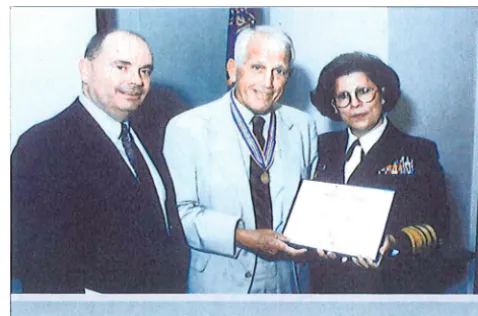
It has been 50 years since Dr Cooke put
forward the proposal for a new NIH in-stitute focusing on child health and de-velopment as a way to improve preg-nancy outcome and reduce death and disability in infants and children.
He is shown here (Fig 1) at the NICHD’s 30th anniversary celebration in 1992 receiving the highest honor of the US Public Health Service, the Surgeon
General’s Medallion, from Surgeon General Antonia Novello, formerly Dep-uty Director of the NICHD. He has said that even he did not foresee the enor-mous progress that has been made
from implementation of his idea.
It is to be hoped that all pediatricians and others who care for mothers and children will feel a sense of pride in
being part of this magnificent institu-tion and have a better sense of why there should be an NICHD.
REFERENCES
1. Cooke RE. The origin of the National Institute of Child Health and Human Development. Pediatrics. 1993;92(6): 868 – 871
2. Meis PJ, Klebanoff M, Thom E, et al; Na-tional Institute of Child Health and Human Development Maternal-Fetal Medicine U n i t s N e t w o r k . P r e v e n t i o n o f r e c u r
r e n t p r e t e r m d e l i v e r y b y 1 7 a l p h a -hydroxyprogesterone caproate [published correction appears inN Engl J Med. 2003 Sep 25;349(13):1299].N Engl J Med. 2003; 348(24):2379 –2385
3. Neonatal Inhaled Nitric Oxide Study Group. Inhaled nitric oxide in full-term and nearly full-term infants with hypoxic
respira-tory failure. N Engl J Med. 1997;336(9): 597– 604
4. Alexander D. The National Institute of Child Health and Human Development and phenylketonuria.
Pediatrics. 2003;112(6 pt 2):1514 –1515 5. Alexander D, van Dyck PC. A vision of the
fu-ture of newborn screening.Pediatrics. 2006; 117(5 pt 2):S350 –S354
FIGURE 1
DOI: 10.1542/peds.2010-2029 originally published online January 3, 2011;
2011;127;325
Pediatrics
Duane F. Alexander
Why Should There Be an NICHD?
Services
Updated Information &
http://pediatrics.aappublications.org/content/127/2/325
including high resolution figures, can be found at:
References
http://pediatrics.aappublications.org/content/127/2/325#BIBL
This article cites 5 articles, 2 of which you can access for free at:
Subspecialty Collections
atistics_sub
http://www.aappublications.org/cgi/collection/research_methods_-_st
Research Methods & Statistics
b
http://www.aappublications.org/cgi/collection/medical_education_su
Medical Education following collection(s):
This article, along with others on similar topics, appears in the
Permissions & Licensing
http://www.aappublications.org/site/misc/Permissions.xhtml
in its entirety can be found online at:
Information about reproducing this article in parts (figures, tables) or
Reprints
http://www.aappublications.org/site/misc/reprints.xhtml
DOI: 10.1542/peds.2010-2029 originally published online January 3, 2011;
http://pediatrics.aappublications.org/content/127/2/325
located on the World Wide Web at:
The online version of this article, along with updated information and services, is
by the American Academy of Pediatrics. All rights reserved. Print ISSN: 1073-0397.