Open Access
Research
Development of the Knee Quality of Life (KQoL-26) 26-item
questionnaire: data quality, reliability, validity and responsiveness
Andrew M Garratt
1,2, Stephen Brealey*
2, Michael Robling
3, Chris Atwell
3,
Ian Russell
4, William Gillespie
5, David King
6for the DAMASK Trial Team
Address: 1National Resource Centre for Rehabilitation in Rheumatology, Pb 23, Vinderen, 0319 Oslo, Norway, 2Department of Health Sciences,
York Trials Unit, Seebohm Rowntree Building, University of York, Heslington, York YO10 5DD, UK, 3Department of Primary Care and Public
Health, Cardiff University, Neuadd Meirionydd, Heath Park, Cardiff, CF14 4YS, UK, 4Institute of Medical and Social Care Research, Brigantia
Building, Penrallt Road, University of Wales Bangor, Gwynedd, LL57 2AS, UK, 5Hull York Medical School, University of York, York, YO10 5DD,
UK and 6X-ray Department, York Hospital, Wigginton Road, York, YO31 8HE, UK
Email: Andrew M Garratt - [email protected]; Stephen Brealey* - [email protected]; Michael Robling - [email protected]; Chris Atwell - [email protected]; Ian Russell - [email protected]; William Gillespie - [email protected];
David King - [email protected] * Corresponding author
Abstract
Background: This article describes the development and validation of a self-reported questionnaire, the KQoL-26, that is based on the views of patients with a suspected ligamentous or meniscal injury of the knee that assesses the impact of their knee problem on the quality of their lives.
Methods: Patient interviews and focus groups were used to derive questionnaire content. The instrument was assessed for data quality, reliability, validity, and responsiveness using data from a randomised trial and patient survey about general practitioners' use of Magnetic Resonance Imaging for patients with a suspected ligamentous or meniscal injury.
Results: Interview and focus group data produced a 40-item questionnaire designed for self-completion. 559 trial patients and 323 survey patients responded to the questionnaire. Following principal components analysis and Rasch analysis, 26 items were found to contribute to three scales of knee-related quality of life: physical functioning, activity limitations, and emotional functioning. Item-total correlations ranged from 0.60–0.82. Cronbach's alpha and test retest reliability estimates were 0.91–0.94 and 0.80–0.93 respectively. Hypothesised correlations with the Lysholm Knee Scale, EQ-5D, SF-36 and knee symptom questions were evidence for construct validity. The instrument produced highly significant change scores for 65 trial patients indicating that their knee was a little or somewhat better at six months. The new instrument had higher effect sizes (range 0.86–1.13) and responsiveness statistics (range 1.50–2.13) than the EQ-5D and SF-36.
Conclusion: The KQoL-26 has good evidence for internal reliability, test-retest reliability, validity and responsiveness, and is recommended for use in randomised trials and other evaluative studies of patients with a suspected ligamentous or meniscal injury.
Published: 10 July 2008
Health and Quality of Life Outcomes 2008, 6:48 doi:10.1186/1477-7525-6-48
Received: 18 June 2007 Accepted: 10 July 2008
This article is available from: http://www.hqlo.com/content/6/1/48
© 2008 Garratt et al; licensee BioMed Central Ltd.
Background
The recognition that randomised trials and similar forms of evaluative study should include patients' views about outcome has contributed to a huge growth in the develop-ment and testing of instrudevelop-ments that measure aspects of health and quality of life from the perspective of the patient [1]. The majority have been developed for specific patient populations [1], including patients with knee problems [2]. Several generic instruments that are suitable for application across different patient populations have also been evaluated in patients with knee problems [2], including the EQ-5D [3] and SF-36 [3-9], the two most widely evaluated measures of health status [1].
In selecting an instrument for a specific population or type of knee problem, it is important that consideration is given to both questionnaire content and the population in which it has been evaluated [10]. For an instrument to be considered appropriate for assessing the health out-comes of patients with a specific knee problem supporting evidence including reliability, validity and responsiveness must be available. Furthermore, if an instrument is to have content validity as a measure of health outcome that is relevant to patients, then its content should be based on the views of patients [10]. It follows that an instrument for patients' with knee problems must be based on an assess-ment of the impact of the condition on patient quality of life.
Sixteen instruments that are specific to knee problems with evidence for reliability and validity were identified by a recent systematic review [2]. Such a large number can confuse clinicians and researchers wishing to select an instrument for application in randomised trials and clini-cal practice. The lack of standardisation in the choice of instruments limits the generalisability of results. Further-more, of the five instruments included in the review that were based on the views of patients in relation to instru-ment developinstru-ment and the content of individual ques-tions, there was no instrument specific to ligamentous or meniscal injury of the knee that also had adequate evi-dence for reliability and validity. An instrument specific to ligamentous or meniscal injury of the knee that is based on the views of patients will have greater content validity and hence is more likely to be responsive to changes in quality of life that are important to patients. These meas-urement properties are a prerequisite for a patient-reported instrument that is to be used in randomised trials and other forms of evaluative research.
This article describes the development of a knee-specific quality of life instrument based on the views of patients that has been used in a randomised trial and survey eval-uating whether general practitioners (GPs) should have access to Magnetic Resonance Imaging (MRI) for patients
with a suspected ligamentous or meniscal injury. The instrument was developed following in-depth interviews with patients and was assessed against criteria necessary for a self-reported instrument that will be used as an out-come measure within randomised trials and other forms of evaluative research including data quality, reliability, validity and responsiveness to change [10].
Methods
Instrument development
In-depth interviews were conducted with a pre-deter-mined sample size of 35 patients to elicit how their knee injury affects their lives. Purposive sampling was used to select a stratified sample in relation to age, sex, severity, stage of management and condition – meniscal or liga-mentous injuries. Interviews were conducted in two cen-tres, Cardiff and York. They were audio-recorded and transcribed. Thematic analysis of the transcripts was undertaken by two researchers independently.
The resulting items were reviewed by the trial manage-ment group and piloted through a postal survey of 80 patients recruited from orthopaedic and physiotherapy departments at York Hospitals NHS Trust. Questionnaires were assessed for data quality including missing data and response frequencies. The questionnaire also included a question asking patients if they would be willing to attend an interview to discuss the questionnaire in more detail. These cognitive debriefing interviews conducted with twelve patients, were designed to assess whether they had any difficulties with particular items and if there were important areas not covered by the questionnaire.
Focus groups held with clinicians and patients in Cardiff and York were designed to assess content and face validity; the extent to which the items address the intended subject matter and whether relevant aspects of health and quality of life are adequately covered. The clinician focus groups included two GPs and three physiotherapists (Cardiff) and a GP, physiotherapist and consultant radiologist (York). The patient focus groups included three (Cardiff) and six patients (York). All focus groups followed a semi-structured topic guide and patients completed the ques-tionnaire.
Data collection
to an orthopaedic specialist for suspected meniscal or lig-amentous injuries. The main exclusion criteria were that the patient needed urgent orthopaedic referral or had non-traumatic arthropathy, chronic instability of the knee, a previous MRI examination within the same epi-sode of care, or previous surgical intervention (excluding diagnostic arthroscopy) on the same knee. These eligibil-ity criteria were designed to help ensure a valid sample of patients were included in the trial. For example, the upper age limit of 55 years inclusive was used as this is when the onset of osteoarthritis occurs [13]. The injuries consist-ently referred to are those of the menisci, and cruciate or collateral ligaments [14,15] so these are the type of patients GPs were asked to recruit. GP's also attended a two-hour education seminar that included the clinical assessment and management of patients with knee prob-lems [16].
Questionnaires were also sent to patients invited to take part in a postal survey in Cardiff which comprised two cohorts: all recent GP referrals to the University Hospital of Wales and Llandough Hospital for MRI or orthopaedic consultation; and patients listed for an arthroscopy of the knee. These questionnaires included the Lysholm Knee Score [17], a widely used clinically-derived instrument for assessing ligament injuries of the knee. Postal reminders were sent at two and four weeks, and patients were con-tacted by telephone at six weeks.
Statistical analysis
Individual items were assessed for missing data. Principal component analysis (PCA) was used to identify interre-lated variables or components of quality of life within the questionnaire items [18]. Items with poor component loadings were considered for removal. Items were further assessed for their contribution to the identified compo-nents with Rasch analysis [19], a form of item response theory (IRT) using the WINSTEPS programme [20]. IRT assumes that a measurement construct such as knee-related quality of life can be represented by an ordered continuum that ranges from the minimum to maximum level of functioning. IRT models produce a hierarchy in which items are positioned according to the proportion of patients who report a limitation, and patients are posi-tioned according to the total number of items in which they report a limitation [21]. Two mean square fit statis-tics assess the extent to which unpredicted responses to an item are given by patients whose position in the hierarchy as determined by their knee-related quality of life, is either close to the items position (Infit statistic) or far from the items position (Outfit statistic) in the hierarchy of items. It is generally recommended that the two fit statistics range from 0.7–1.3 [21,22].
The instrument was assessed for internal consistency reli-ability using item-total correlation and Cronbach's alpha [10]. Test-retest reliability was assessed through a second questionnaire mailed to a random sample of every second patient taking part in the GP referral cohort of the Cardiff survey at two weeks. Patients reporting no change on the knee-specific transition question "Compared with 2 weeks ago, how is your knee now?" were included in the test-retest analysis [10,23]. To be acceptable for use in groups of patients the estimates of reliability should exceed 0.70 [10,24].
The validity of the new instrument was assessed through comparisons with self-reported health status instruments and questions about knee symptoms. It was hypothesised that the new instrument would have a higher level of cor-relation of around 0.7 with the Lysholm Knee Score than the two generic instruments the EQ-5D and SF-36. Mod-erate levels of correlation of 0.5 were expected with the EQ-5D scores. Higher levels of correlation were expected for the EQ-5D items relating to mobility and pain than for self-care or anxiety-depression. Similarly, higher correla-tions in the range 0.5–0.7 were expected for the SF-36 scales of physical function, role-physical and bodily pain than for the scales of general health, vitality and mental health. Low to moderate levels of correlation above 0.4 were expected with patient responses to questions about number of days off work or normal activities in the past four weeks. It was hypothesised that instrument scores would reflect the different categories of symptoms in the form of a linear association, the highest and lowest KQoL-26 scores being for patients having symptoms none of the time and all of the time respectively. It was hypothesised that patients who had or were considering changing job because of their knee would have lower scores than their counterparts.
Ethics
The study was designed to comply with the Declaration of Helsinki as adopted by the World Medical Association. Northern and Yorkshire Multi-Centre Research Ethics Committee reviewed and approved the study (reference number MREC/1/3/59).
Results
Instrument development
Analysis of the interview transcripts produced a 38-item instrument which was scaled with three types of five-point adjectival scales of "totally limited/unable to do" to "not limited at all", "all of the time" to "none of the time" and "extremely" to "not at all". The instrument was piloted using a postal survey and 47 (58.8%) were returned com-pleted. Twelve questionnaires were also completed by patients attending the focus groups. With regards to miss-ing data, when pilotmiss-ing the questionnaire 52 (88.1%) patients completed all items. The focus groups and fol-low-up interviews confirmed the content and face validity of the questionnaire following the addition of two items about financial concerns and feelings of getting old relat-ing to the knee problem.
Data collection
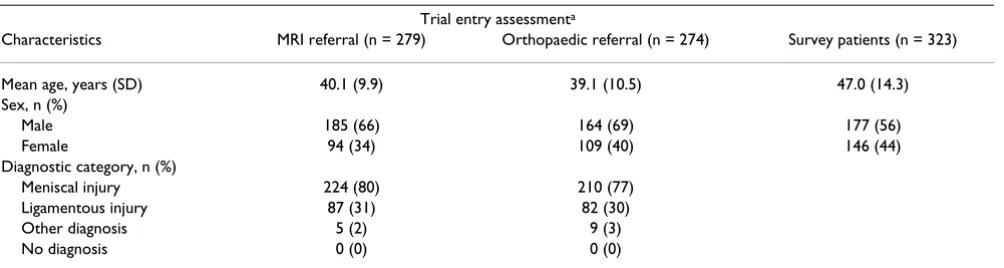
The 559 patients who took part in the trial completed the 40-item questionnaire. Of the 547 patients invited to take part in the Cardiff survey, 323 (59.0%) returned a com-pleted questionnaire. For the trial and survey patients the mean ages were 39.67 (sd = 10.23) and 47.02 (sd = 14.29) and the number of females was 204 (36.6%) and 146 (43.5%) respectively (Table 1).
Statistical analysis
The majority of items have four or fewer missing responses in total, the mean number of missing responses being 0.12 (sd = 0.67) with a range of 0 to 9 (2.3%) patients that did not respond to a particular item. All forty items were completed by 751 (85.1%) patients. The larg-est number of missing responses was eleven items for one
patient which is just over one quarter of the items. Across the 0–4 response scale, means ranged from 1.05 to 3.47 for the items "avoiding turning, twisting or sideways movements" and "crossing the road" respectively. The former item had the highest floor effect of 35.4%. The item "staying seated for 15 minutes" had the highest ceil-ing effect of 62.0%. The spread of the item means indi-cates that items are measuring different degrees of knee-related quality of life.
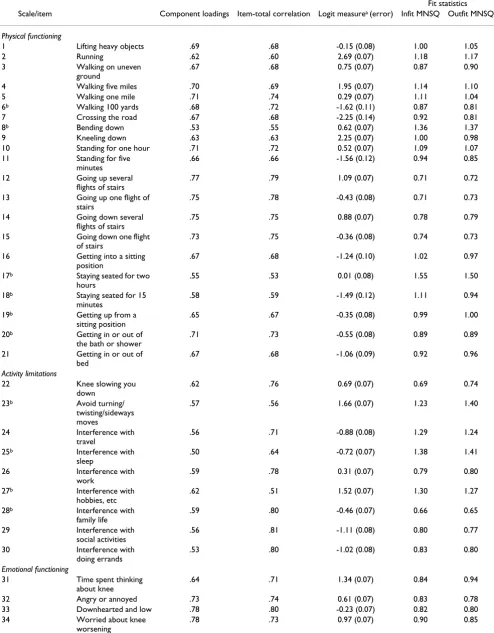
Principal component analysis gave five components with eigenvalues above 1.0 explaining 64.1% of the total vari-ation between patients. The great majority of the items were making a strong contribution to the first component of the unrotated solution. Rotation served to identify clin-ically recognisable aspects of knee-related quality of life; the first, second and fourth components comprising items relating to physical functioning, activity limitations and emotional functioning respectively. The third and fifth components included six items relating to getting into or out of a lowered position and two items relating to bend-ing and kneelbend-ing down respectively. The majority of these items and items within the physical functioning compo-nent had higher loadings within the first factor of the unrotated solution and the majority had loadings over 0.4 within the first component of the rotated solution. They were therefore assessed for their contribution to the hypothesised scale of physical functioning. As shown in Table 2, all items have component loadings above 0.5, the great majority above 0.6.
Table 2 shows that for three scales the majority of items fit the Rasch model with Infit and Outfit statistics between 0.8 and 1.2, the great majority within the recommended range 0.7–1.3 [22]. This is further evidence that the instru-ment comprises three scales of knee-related quality of life. Within physical functioning, items 8 "bending down" and 17 "staying seated for two hours" have poor Infit and Out-fit statistics which indicates that they do not Out-fit the Rasch model very well and may not be sufficiently contributing
Table 1: Patient characteristics
Trial entry assessmenta
Characteristics MRI referral (n = 279) Orthopaedic referral (n = 274) Survey patients (n = 323)
Mean age, years (SD) 40.1 (9.9) 39.1 (10.5) 47.0 (14.3)
Sex, n (%)
Male 185 (66) 164 (69) 177 (56)
Female 94 (34) 109 (40) 146 (44)
Diagnostic category, n (%)
Meniscal injury 224 (80) 210 (77)
Ligamentous injury 87 (31) 82 (30)
Other diagnosis 5 (2) 9 (3)
No diagnosis 0 (0) 0 (0)
Table 2: Principal component analysis, item-total correlation, logit measure and fit statistics (n = 559)
Fit statistics
Scale/item Component loadings Item-total correlation Logit measurea (error) Infit MNSQ Outfit MNSQ
Physical functioning
1 Lifting heavy objects .69 .68 -0.15 (0.08) 1.00 1.05
2 Running .62 .60 2.69 (0.07) 1.18 1.17
3 Walking on uneven
ground
.67 .68 0.75 (0.07) 0.87 0.90
4 Walking five miles .70 .69 1.95 (0.07) 1.14 1.10
5 Walking one mile .71 .74 0.29 (0.07) 1.11 1.04
6b Walking 100 yards .68 .72 -1.62 (0.11) 0.87 0.81
7 Crossing the road .67 .68 -2.25 (0.14) 0.92 0.81
8b Bending down .53 .55 0.62 (0.07) 1.36 1.37
9 Kneeling down .63 .63 2.25 (0.07) 1.00 0.98
10 Standing for one hour .71 .72 0.52 (0.07) 1.09 1.07
11 Standing for five
minutes
.66 .66 -1.56 (0.12) 0.94 0.85
12 Going up several
flights of stairs
.77 .79 1.09 (0.07) 0.71 0.72
13 Going up one flight of
stairs
.75 .78 -0.43 (0.08) 0.71 0.73
14 Going down several
flights of stairs
.75 .75 0.88 (0.07) 0.78 0.79
15 Going down one flight
of stairs
.73 .75 -0.36 (0.08) 0.74 0.73
16 Getting into a sitting
position
.67 .68 -1.24 (0.10) 1.02 0.97
17b Staying seated for two
hours
.55 .53 0.01 (0.08) 1.55 1.50
18b Staying seated for 15
minutes
.58 .59 -1.49 (0.12) 1.11 0.94
19b Getting up from a
sitting position
.65 .67 -0.35 (0.08) 0.99 1.00
20b Getting in or out of
the bath or shower
.71 .73 -0.55 (0.08) 0.89 0.89
21 Getting in or out of
bed
.67 .68 -1.06 (0.09) 0.92 0.96
Activity limitations
22 Knee slowing you
down
.62 .76 0.69 (0.07) 0.69 0.74
23b Avoid turning/
twisting/sideways moves
.57 .56 1.66 (0.07) 1.23 1.40
24 Interference with
travel
.56 .71 -0.88 (0.08) 1.29 1.24
25b Interference with
sleep
.50 .64 -0.72 (0.07) 1.38 1.41
26 Interference with
work
.59 .78 0.31 (0.07) 0.79 0.80
27b Interference with
hobbies, etc
.62 .51 1.52 (0.07) 1.30 1.27
28b Interference with
family life
.59 .80 -0.46 (0.07) 0.66 0.65
29 Interference with
social activities
.56 .81 -1.11 (0.08) 0.80 0.77
30 Interference with
doing errands
.53 .80 -1.02 (0.08) 0.83 0.80
Emotional functioning
31 Time spent thinking
about knee
.64 .71 1.34 (0.07) 0.84 0.94
32 Angry or annoyed .73 .74 0.61 (0.07) 0.83 0.78
33 Downhearted and low .78 .80 -0.23 (0.07) 0.82 0.80
34 Worried about knee
worsening
to the construct of physical functioning. Similarly, three items within activity limitations and two items within emotional functioning have poor fit statistics. Item 22 is borderline.
For the three scales, all but one of the item-total correla-tions are above 0.40. Removal of items 6, 8, 17, 18, 19 and 20 from the physical functioning scale which includes those performing poorly in the Rasch analysis, gave final item-total correlations of 0.60–0.81 and a Cronbach's alpha of 0.94. Removing four items from the activity lim-itations scale including those performing poorly in the Rasch analysis, gave final items-total correlations of 0.70– 0.82 and an alpha of 0.91. Removing four items from the
emotional functioning scale including those performing poorly in the Rasch analysis, gave final item-total correla-tions of 0.74–0.81 and an alpha of 0.91.
Of the 109 randomly selected patients from the GP refer-ral cohort of the Cardiff survey, 86 (78.9%) completed a two-week retest questionnaire. The intra-class correlations for the two sets of scores for the 27 patients stating that there was no change in their knee were 0.93, 0.87 and 0.80 for the physical functioning, activity limitations and emotional functioning scales respectively. These reliabil-ity estimates meet the criteria necessary for group level comparisons [10,26].
35b Embarrassed or
self-conscious
.62 .68 -1.16 (0.08) 1.17 1.10
36 Bad temper or
grumpy
.72 .76 -1.14 (0.08) 0.77 0.77
37 Frustrated .69 .75 0.38 (0.07) 0.76 0.74
38b Worry about future .79 .73 0.64 (0.07) 0.90 0.94
39b Worry about money .60 .58 -1.03 (0.09) 1.62 1.58
40b Think that you are
getting old
.52 .39 -0.38 (0.08) 1.79 1.87
a Logits of lower magnitude represent decreasing quality of life. b Item removed from final version.
Table 2: Principal component analysis, item-total correlation, logit measure and fit statistics (n = 559) (Continued)
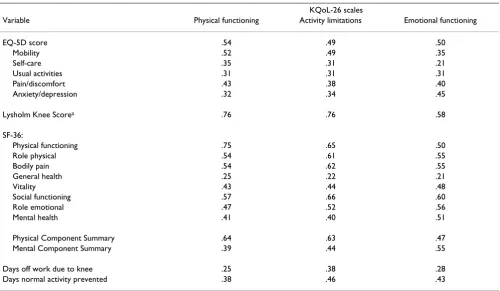
Table 3: Correlation between KQoL-26 scores, EQ-5D, Lysholm Knee Score, SF-36 and days affected by knee problem (n = 559)
KQoL-26 scales
Variable Physical functioning Activity limitations Emotional functioning
EQ-5D score .54 .49 .50
Mobility .52 .49 .35
Self-care .35 .31 .21
Usual activities .31 .31 .31
Pain/discomfort .43 .38 .40
Anxiety/depression .32 .34 .45
Lysholm Knee Scorea .76 .76 .58
SF-36:
Physical functioning .75 .65 .50
Role physical .54 .61 .55
Bodily pain .54 .62 .55
General health .25 .22 .21
Vitality .43 .44 .48
Social functioning .57 .66 .60
Role emotional .47 .52 .56
Mental health .41 .40 .51
Physical Component Summary .64 .63 .47
Mental Component Summary .39 .44 .55
Days off work due to knee .25 .38 .28
Days normal activity prevented .38 .46 .43
a Cardiff survey data (n = 323)
The score distributions for the new instrument now referred to as the KQoL-26, are computed by summing the items where half or more are completed for the relevant scale and transforming to a 0–100 scale. The scores were approximately normal on a scale of 0–100 where 100 is the best possible knee-related quality of life. Means scores were 59.1 (sd = 18.8), 51.05 (sd = 25.2) and 40.4 (sd = 21.4) for the physical functioning, activity limitations and emotional functioning scales respectively. Therefore the instrument has the potential to measure differences in
knee-related quality of life in cross-sectional or longitudi-nal studies.
The results of the tests of validity are shown in Tables 3 and 4. The correlations between KQoL-26 scores, the Lysholm, EQ-5D, SF-36 and knee-related questions are shown in Table 3. As hypothesised the highest correla-tions are with the Lysholm Knee Score. This is higher than that hypothesised which may reflect the high level of reli-ability of the new instrument [10,26]. As hypothesised, in general the KQoL-26 had the highest correlations with
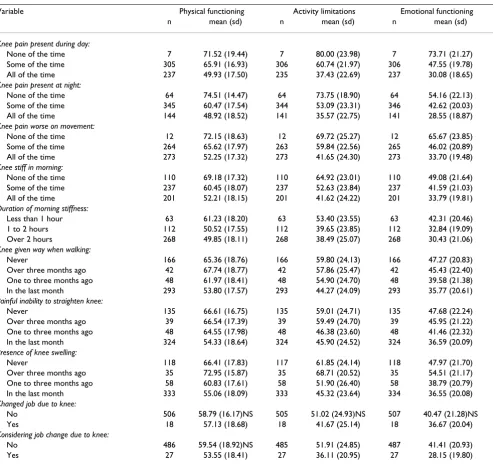
Table 4: Mean (standard deviation) KQoL-26 scoresa by responses to knee-related questions
Variable Physical functioning Activity limitations Emotional functioning
n mean (sd) n mean (sd) n mean (sd)
Knee pain present during day:
None of the time 7 71.52 (19.44) 7 80.00 (23.98) 7 73.71 (21.27)
Some of the time 305 65.91 (16.93) 306 60.74 (21.97) 306 47.55 (19.78)
All of the time 237 49.93 (17.50) 235 37.43 (22.69) 237 30.08 (18.65)
Knee pain present at night:
None of the time 64 74.51 (14.47) 64 73.75 (18.90) 64 54.16 (22.13)
Some of the time 345 60.47 (17.54) 344 53.09 (23.31) 346 42.62 (20.03)
All of the time 144 48.92 (18.52) 141 35.57 (22.75) 141 28.55 (18.87)
Knee pain worse on movement:
None of the time 12 72.15 (18.63) 12 69.72 (25.27) 12 65.67 (23.85)
Some of the time 264 65.62 (17.97) 263 59.84 (22.56) 265 46.02 (20.89)
All of the time 273 52.25 (17.32) 273 41.65 (24.30) 273 33.70 (19.48)
Knee stiff in morning:
None of the time 110 69.18 (17.32) 110 64.92 (23.01) 110 49.08 (21.64)
Some of the time 237 60.45 (18.07) 237 52.63 (23.84) 237 41.59 (21.03)
All of the time 201 52.21 (18.15) 201 41.62 (24.22) 201 33.79 (19.81)
Duration of morning stiffness:
Less than 1 hour 63 61.23 (18.20) 63 53.40 (23.55) 63 42.31 (20.46)
1 to 2 hours 112 50.52 (17.55) 112 39.65 (23.85) 112 32.84 (19.09)
Over 2 hours 268 49.85 (18.11) 268 38.49 (25.07) 268 30.43 (21.06)
Knee given way when walking:
Never 166 65.36 (18.76) 166 59.80 (24.13) 166 47.27 (20.83)
Over three months ago 42 67.74 (18.77) 42 57.86 (25.47) 42 45.43 (22.40)
One to three months ago 48 61.97 (18.41) 48 54.90 (24.70) 48 39.58 (21.38)
In the last month 293 53.80 (17.57) 293 44.27 (24.09) 293 35.77 (20.61)
Painful inability to straighten knee:
Never 135 66.61 (16.75) 135 59.01 (24.71) 135 47.68 (22.24)
Over three months ago 39 66.54 (17.39) 39 59.49 (24.70) 39 45.95 (21.22)
One to three months ago 48 64.55 (17.98) 48 46.38 (23.60) 48 41.46 (22.32)
In the last month 324 54.33 (18.64) 324 45.90 (24.52) 324 36.59 (20.09)
Presence of knee swelling:
Never 118 66.41 (17.83) 117 61.85 (24.14) 118 47.97 (21.70)
Over three months ago 35 72.95 (15.87) 35 68.71 (20.52) 35 54.51 (21.17)
One to three months ago 58 60.83 (17.61) 58 51.90 (26.40) 58 38.79 (20.79)
In the last month 333 55.06 (18.09) 333 45.32 (23.64) 334 36.55 (20.08)
Changed job due to knee:
No 506 58.79 (16.17)NS 505 51.02 (24.93)NS 507 40.47 (21.28)NS
Yes 18 57.13 (18.68) 18 41.67 (25.14) 18 36.67 (20.04)
Considering job change due to knee:
No 486 59.54 (18.92)NS 485 51.91 (24.85) 487 41.41 (20.93)
Yes 27 53.55 (18.41) 27 36.11 (20.95) 27 28.15 (19.80)
a KQoL-26 scores range from 0 to 100;0 is the worst possible and 100 the best possible knee-related quality of life
aspects of the EQ-5D and SF-36 relating to physical health. The KQoL-26 physical functioning and activity limitations had the largest correlations with the EQ-5D mobility and pain items. As expected the emotional func-tioning scale had the largest correlation with the EQ-5D anxiety and depression item. The KQoL scales had a simi-lar moderate level of correlation with EQ-5D index scores. The KQoL-26 physical functioning and activity limita-tions scales had the largest correlalimita-tions with the SF-36 scales of physical functioning, social functioning, bodily pain and role-physical. The emotional functioning scale had the largest correlations with social functioning and role-emotional. This KQoL scale also had the highest cor-relation with the SF-36 mental component summary scores, the other two scales having higher correlations with the physical component summary scores. The corre-lations with the number of days off work and on which normal activity was prevented because of the knee were of a low to moderate level. As expected, the activity limita-tions scale scores had the highest level of correlalimita-tions with responses to these two questions.
Table 4 shows the results of the tests of validity in compar-ison to knee symptoms and change of job. The results are statistically significant for 26 of the 30 tests. The sample sizes are relatively small for those patients who have changed or are considering changing their job because of their knee, however three of the results are statistically sig-nificant, the largest differences being found for the activity limitations scale.
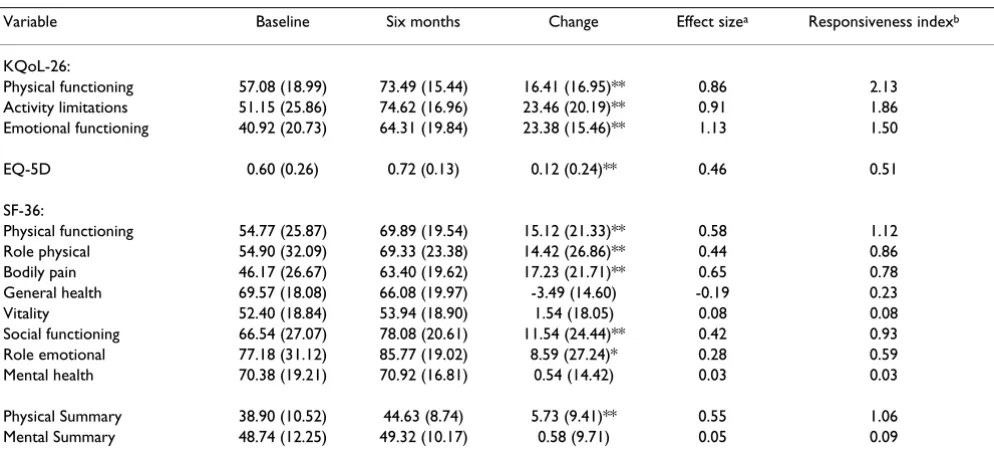
Of the 559 trial patients sent a six month questionnaire, 472 (84.4%) responded. Of these, 65 indicated that they had undergone an improvement of "a little better or somewhat better" on the knee-related health transition question. Table 5 shows the score changes, effect sizes and responsiveness index for these patients. With the excep-tion of four SF-36 scale scores, all the instruments show a significant score improvement at six months. The KQoL-26 shows an improvement of 16.41, 23.38 and 23.46 points on scales of physical functioning, emotional func-tioning and activity limitations respectively. The KQoL-26 has the three highest effect sizes and responsiveness statis-tics.
Discussion
There are a large number of knee-specific instruments for measuring the health status and outcomes of patients with knee problems. Few have been adequately evaluated for the measurement properties deemed necessary for self-reported measures of health and quality of life [2]. Only three of the five instruments that incorporate the views of patients have been adequately evaluated for reliability and validity. Of these, the Knee Pain Scale [27] and Oxford Knee Score [28] were developed in patients with osteoarthritis and there is limited empirical evidence for the internal construct validity, including the results of fac-tor and principal component analysis, of the scales of the Knee Injury and Osteoarthritis Outcome Score [2,29]. The WOMAC is another instrument that has had wide applica-tion, but for patients with osteoarthritis and was not
Table 5: Mean (standard deviation) scores and responsiveness index for trial patients (n = 65) who have undergone a knee-related health improvement of "a little better or somewhat better" at six months
Variable Baseline Six months Change Effect sizea Responsiveness indexb
KQoL-26:
Physical functioning 57.08 (18.99) 73.49 (15.44) 16.41 (16.95)** 0.86 2.13
Activity limitations 51.15 (25.86) 74.62 (16.96) 23.46 (20.19)** 0.91 1.86
Emotional functioning 40.92 (20.73) 64.31 (19.84) 23.38 (15.46)** 1.13 1.50
EQ-5D 0.60 (0.26) 0.72 (0.13) 0.12 (0.24)** 0.46 0.51
SF-36:
Physical functioning 54.77 (25.87) 69.89 (19.54) 15.12 (21.33)** 0.58 1.12
Role physical 54.90 (32.09) 69.33 (23.38) 14.42 (26.86)** 0.44 0.86
Bodily pain 46.17 (26.67) 63.40 (19.62) 17.23 (21.71)** 0.65 0.78
General health 69.57 (18.08) 66.08 (19.97) -3.49 (14.60) -0.19 0.23
Vitality 52.40 (18.84) 53.94 (18.90) 1.54 (18.05) 0.08 0.08
Social functioning 66.54 (27.07) 78.08 (20.61) 11.54 (24.44)** 0.42 0.93
Role emotional 77.18 (31.12) 85.77 (19.02) 8.59 (27.24)* 0.28 0.59
Mental health 70.38 (19.21) 70.92 (16.81) 0.54 (14.42) 0.03 0.03
Physical Summary 38.90 (10.52) 44.63 (8.74) 5.73 (9.41)** 0.55 1.06
Mental Summary 48.74 (12.25) 49.32 (10.17) 0.58 (9.71) 0.05 0.09
a ES = Mean change in score divided by the standard deviation of baseline score
b RI = Mean change in score divided by the standard deviation of score changes in stable subjects
developed solely for knee problems [30]. Therefore the instrument has less content validity as a measure of the effect of a patient's knee problem on their quality of life and may also be less responsive than an instrument that is specific to the knee [10].
The KQoL-26 is a self-reported questionnaire for assessing knee-related quality of life that is based on the views of patients and satisfies the requirements of a patient-reported outcome measure that is suitable for randomised trials [10]. The instrument has undergone a more exten-sive evaluation than the great majority of instruments described in a recent systematic review [2]. Based on patient interviews, focus groups, piloting and follow-up interviews, instrument development ensured that the views of patients with knee problems formed the basis of item construction. Therefore the KQoL-26 has high con-tent validity as a measure of knee-related quality of life. The instrument was then evaluated for reliability, con-struct validity and responsiveness to change in a large sample of patients with a suspected ligamentous or meniscal injury. The result is an instrument that has the measurement characteristics necessary for a patient-reported outcome measure for use in evaluation [10].
The response rate to the Cardiff survey of 59.0% was con-siderably lower than the trial where patients had a stronger incentive to return a completed questionnaire. The KQoL-26 takes patients around five minutes to com-plete which is acceptable for an instrument that is to be used alongside other instruments within a questionnaire booklet for assessing health outcomes. The low levels of missing data for the 26 items are further evidence that the instrument is acceptable to patients as a self-reported postal questionnaire. Scale scores were computable for 557 (99.6%) of the 559 trial patients who returned a base-line questionnaire. The results of principal component analysis and Rasch analysis are strong evidence that the 26-items contribute to three knee-related quality of life scales: physical functioning, activity limitations and emo-tional functioning. The final item-total correlations ranged from 0.6 to 0.82, which are within widely accepted standards [10,24,26]. The estimates for internal and test-retest reliability are all above 0.80 which suggests that the instrument is suitable for use in applications involving groups of patients including randomised trials. Physical functioning, the most important scale for capturing varia-tion between patients and the most responsive according to the responsiveness index, may be appropriate for use by individual patients, including clinical practice [10].
Twelve of the 16 knee-specific instruments included in a systematic review have been tested for test-retest reliabil-ity, the majority of which produced test-retest correlations over 0.7 [2]. The present study asked patients to complete
a health transition question so that only those patients stating that there had been no change in their knee condi-tion in the two weeks between administracondi-tions were included in the test-retest analysis. None of the test-retest studies reported in the review used transition questions but the great majority had shorter times between test and retest questionnaires of between 1 and 14 days to ensure that the patients' knee condition had not changed [2]. The reliability estimates for the KQoL-26 are acceptable and over 0.8, the lowest being for the emotional functioning scale which might be expected given the content of the knee transition question. Higher test-retest estimates might have been produced with three transition questions which directly related to the content of the three KQoL-26 scales.
The tests of responsiveness also followed the application of a criterion based on a health transition question. Patients were selected who stated that they had undergone an improvement of a little or somewhat better on a widely used transition question [23]. In contrast to tests of responsiveness of following treatment previously used to assess knee-specific instruments [2], such a criterion has the advantage that it is patient-reported and hence is designed to determine the level of change that is of impor-tance to them. Using the criterion of treatment of known efficacy may show which instrument is the most respon-sive in relation to existing interventions, but the most common application of patient-reported outcome meas-ures is in the evaluation of new interventions including the randomised comparison with existing interventions which will produce more marginal gains in terms of clin-ical effectiveness. Smaller levels of change or differences in patient outcomes between interventions are of greater rel-evance and hence it is important that instruments are responsive to what patients' perceive to be small levels of change.
and normal activity was prevented. Emotional function-ing had the highest correlations with EQ-5D scores for anxiety/depression and mental component summary scores. This scale also had the highest correlation of all with the SF-36 scale of role-emotional.
Nine existing knee instruments have been correlated with the SF-36 for purposes of assessing validity [2]. The range of the correlations found between the KQoL-26 and the SF-36 scales was generally higher than that found for exist-ing instruments. In common with the majority of these instruments, the highest correlations were found between the KQoL-26 and the SF-36 scale of physical functioning. The Edinburgh Knee Function Scale [31], Knee Outcome Survey Activities of Daily Living Scale [32] and Oxford Knee Score [28] are the only instruments that based on the evidence included in this review, had correlations over 0.7 with the SF-36 physical functioning scale. Only the Oxford Knee Score had a larger correlation of 0.78 which was in a postoperative group; correlations for the pre-operative group were more modest. In contrast to the KQoL-26, none of the review instruments had correla-tions over 0.5 with the mental health and role-emotional scales of the SF-36. This shows the importance of the KQoL-26 emotional functioning scale which had the larg-est correlations with these two SF-36 scales. Moreover, none of the review instruments had such consistently high correlations with the SF-36 scales of social functioning and role-physical as the KQoL-26 scale of activity limita-tions. This is evidence that the KQoL-26 has evidence for validity that exceeds that for existing knee instruments.
KQoL-26 scores were also significantly related to knee symptoms, activity limitations and work limitations. Large differences were found for the emotional function-ing scale, an aspect of quality of life not covered by exist-ing knee-specific instruments [2]. This is further evidence that the new instrument is assessing the broad impact on patient quality of life.
Finally, the three KQoL-26 scales produced highly signifi-cant score changes in patients who had what is recognised to be an important improvement on a self-reported knee-related health transition question at six months [24]. The three scales scores were more responsive than the EQ-5D and SF-36 scales, particularly with respect to emotional functioning. Together with the evidence for the reliability and validity of the instrument, this further underpins the use of the KQoL-26 as a primary outcome measure within randomised trials.
Conclusion
The KQoL-26 has good evidence for data quality, reliabil-ity, validity and responsiveness to important changes in health. The KQoL-26 is recommended as an instrument
that assesses aspects of health and quality of life that are important to patients with ligamentous or meniscal inju-ries.
Competing interests
The authors declare that they have no competing interests.
Authors' contributions
AMG conceived and designed the study, conducted the analysis and drafted the manuscript. SB contributed to the design of the study, acquired ethical approval, collected data, and commented on the manuscript. MR contributed to the design of the study, acquired ethical approval, lected data, and commented on the manuscript. CA col-lected data, contributed to analysis of data from patient interviews and focus groups, and commented on the man-uscript. IR contributed to the design of the study and com-mented on the manuscript. WG contributed to the design of the study and commented on the manuscript. DK con-tributed to the design of the study and commented on the manuscript. All authors read and approved the final man-uscript.
Acknowledgements
We thank the UK Medical Research Council for funding. The list of contrib-utors to the study can be found at http://www.york.ac.uk/healthsciences/ centres/trials/damask/contributros_damask.htm. We are indebted to the patients responding to the questionnaire and especially those patients (and clinicians) who participated in the interviews and focus groups.
References
1. Garratt AM, Schmidt L, Mackintosh A, Fitzpatrick R: Quality of life measurement: bibliographic study of patient assessed health outcome measures. BMJ 2002, 324:1417-1419.
2. Garratt AM, Brealey S, Gillespie W: Patient-assessed-assessed health instruments for the knee: a structured review. Rheu-matology (Oxford) 2004, 43:1414-1423.
3. Hollingworth W, Mackenzie R, Todd CJ, Dixon AK: Measuring changes in quality of life following magnetic resonance imag-ing of the knee: SF-36, EuroQol or Rosser index? Qual Life Res
1995, 4:325-334.
4. Dunbar MJ, Robertsson O, Ryd L, Lidgren L: Appropriate ques-tionnaires for knee arthroplasty. Results of a survey of 3600 patients from The Swedish Knee Arthroplasty Registry. J Bone Joint Surg [Br] 2001, 83:339-44.
5. Jette DU, Jette AM: Physical therapy and health outcomes in patients with knee impairments. Phys Ther 1996, 76:1178-1187. 6. Shapiro ET, Richmond JC, Rockett SE, McGrath MM, Donaldson WR: The use of a generic, patient-based health assessment (SF-36) for evaluation of patients with anterior cruciate ligament injuries. Am J Sports Med 1996, 24:196-200.
7. Kiebzak GM, Campbell M, Mauerhan DR: The SF-36 general health status survey documents the burden of osteoarthritis and the benefits of total joint arthroplasty: but why should we use it? Am J Manag Care 2002, 8:463-474.
8. Lingard EA, Katz JN, Wright RJ, Wright EA, Sledge CB: Validity and responsiveness of the Knee Society Clinical Rating System in comparison with the SF-36 and WOMAC. J Bone Joint Surg [Am]
2001, 83:1856.
Publish with BioMed Central and every scientist can read your work free of charge
"BioMed Central will be the most significant development for disseminating the results of biomedical researc h in our lifetime."
Sir Paul Nurse, Cancer Research UK
Your research papers will be:
available free of charge to the entire biomedical community
peer reviewed and published immediately upon acceptance
cited in PubMed and archived on PubMed Central
yours — you keep the copyright
Submit your manuscript here:
http://www.biomedcentral.com/info/publishing_adv.asp
BioMedcentral 11. Brooks R, EuroQol Group: EuroQol: the current state of play.
Health Policy 1996, 37:53-72.
12. Ware JE, Kosinski M, Dewey JE: How to score Version 2 of the SF-36 Health Survey. Lincoln, QualityMetric Incorporated 2000. 13. Beard SM, Perez I, Touch S, Bickerstaff D: Magnetic Resonance
Imaging (MRI) in the Management of Knee Disorders. Shef-field: Trent Institute for Health Services Research, Universi-ties of Leicester, Nottingham and Sheffield. Guidance Note for Purchasers 1999.
14. International Statistical Classification of Diseases and Related Health Problems. 10th edition. World Health Organisa-tion; 1992:642-643.
15. McAlindon TE, Cooper C, Kirwan JR, Dieppe PA: Knee pain and disability in the community. Br J Rheumatol 1992, 31:189-192. 16. Brealey SD, Atwell C, Bryan S, Coulton S, Cox H, Cross B, Fylan F,
Garratt A, Gilbert FJ, Gillan MG, Hendry M, Hood K, Houston H, King D, Morton V, Orchard J, Robling M, Russell IT, Torgerson D, Wadsworth V, Wilkinson C: The DAMASK trial protocol: a pragmatic randomised trial to evaluate whether GPs should have direct access to MRI for patients with suspected inter-nal derangement of the knee. BMC Health Serv Res 2006, 6:133. 17. Lysholm J, Gillquist J: Evaluation of knee ligament surgery results with special emphasis on use of a scoring scale. Am J Sports Med 1982, 10:150-154.
18. Jolliffe IT: Principal component analysis. New York, Springer-Verlag; 1986.
19. Andrich D: Rasch models for measurement. Newbury CA, Sage Publications; 1988.
20. Linacre JM, Wright BD: A User's Guide to WINSTEPS BIG-STEPS: Rasch-Model Computer Programs. MESA Press; 2000. 21. Ryser L, Wright BD, Aeschlimann , Mariacher-Gehler S: A new look at the Western Ontario and McMaster Universities Oste-oarthiritis Index using Rasch Analysis. Arthritis Care and Research
1999, 12:331-335.
22. Wright BD: Reasonable mean-square fit values. In Rasch meas-urement transactions. Part 2 Edited by: Wright BD, Linacre JM. Chicago, MESA; 1996:370.
23. Juniper EF, Guyatt GH, Willan A, Griffith LE: Determining a mini-mal important change in a disease-specific quality of life questionnaire. J Clin Epidemiol 1994, 47:81-87.
24. Nunnally JC, Bernstein IH: Psychometric theory. 3rd edition. New York, McGraw-Hill; 1994.
25. Guyatt G, Walter S, Norman G: Measuring change over time: assessing the usefulness of evaluative instruments. J Chon Dis
1987, 40:171-178.
26. Streiner GL, Norman RD: Health measurement scales: A prac-tical guide to their development and use. 3rd edition. Oxford, Oxford University Press; 2003.
27. Rejeski WJ, Ettinger WH, Shumaker S, Heuser MD, James P, Monu J, Burns R: The evaluation of pain in patients with knee osteoar-thritis: the Knee Pain Scale. J Rheumatol 1995, 22:1124-1129. 28. Dawson J, Fitzpatrick R, Murray D, Carr A: Questionnaire on the
perception of patients about total knee replacement. J Bone Joint Surg [Br] 1998, 80-B:63-69.
29. Roos EM, Roos HP, Ekdahl C, Lohmander LS: Knee Injury and Osteoarthritis Outcome Score (KOOS) – validation of a Swedish version. Scand J Med Sci Sports 1998, 8:439-448. 30. Bellamy N, Buchanan WW: A preliminary evaluation of the
dimensionality and clinical importance of pain and disability in osteoarthritis of the hip and knee. Clin Rheum 1986, 5:231-241.
31. Leigh Brown AP, Kennedy ADM, Grant AM, Campbell J, Macnicol MF, Torgerson DJ: The development and validation of the Edin-burgh Knee Knee Function Scale: a simple tool for outcome assessment in non-surgical patients. Knee 1999, 6:115-123. 32. Irrgang JJ, Snyder-Mackler L, Wainner RS, Fu FH, Harner CD: