Published by:Universiti Tun Hussein Onn Malaysia (UTHM) and Concrete Society of Malaysia (CSM) 34 http://penerbit.uthm.edu.my/ojs/index.php/IJSCET
Supply Chain Management (SCM): The Extent of its Application and
Features in the Successful Delivery of Construction Projects
Amade Benedict*
Department of Project Management Technology, Federal University of Technology P.M.B. 1526 Owerri, Nigeria.
*Corresponding E-mail: [email protected]
Received 1 February 2017; Revised 27 August 2017; Accepted 30 August 2017
Abstract
This study specifically sought to identify the extent and level of awareness of and adoption of the concept of SCM, identify and evaluate key features of SCM for successful construction project delivery in Nigeria. The study adopted an exploratory research design method of investigation consisting of the quantitative and qualitative methods. A purposive and convenient sampling was deployed in selecting the sample size. A semi-structured interview, case study, personal observation and questionnaire survey was carried out in a construction firm located in Abuja. The data were analyzed using descriptive statistics; Relative Importance Index (RII) and Cronbach's Alpha reliability test. The studies found out that majority of the respondents have not heard about the SCM concept, while a few of them have heard about it. The study further revealed the following features as key, they include; level of awareness/adoption of SCM was abysmally low. Findings from the 8 key features for successful SCM construction project delivery revealed the following; disseminating quality information across the various chains, deploying web based and other software and portals as well as the application of internet in improving the effectiveness of construction, ensuring that the level of service and price of suppliers are better, applying activity based costing and management as a performance measure via the elimination of non-value adding activities across the chain, top management needs to continually implement policies that would stimulate the interests of all and sundry, relationship management and trust building, communication and environmental pressures from specialists and other professionals about the benefits of SCM, and outlining trade finance as a pre-condition for successful supply chain finance.
Keywords: Supply Chain Management, Features of Construction Supply Chain Management, Construction Projects, Relative Importance Index, Case Study.
1.0 Introduction
The construction industry portrays some degree of semblance with the manufacturing sector in a myriad of ways. Their processes and products are somehow unique and complex, while their degree of similarity ranges from high complexity and uncertainty, to consumer influence on product, and fragmentation in its processes, as well as the complex network of its stakeholders involving different organizations and relationships [1]. [2], [3], argued that SCM is still at its infancy in the construction industry and as such its importance to the construction industry and projects are unprecedented. SCM is adjudged to be an epitome of evolutionary and cumulative innovation that metamorphosed from the internal activities of an organization via the reduction of waste and value adding as the main reasons for improving overall effectiveness of a supply chain (SC) entity.
Published by:Universiti Tun Hussein Onn Malaysia (UTHM) and Concrete Society of Malaysia (CSM) 35 http://penerbit.uthm.edu.my/ojs/index.php/IJSCET
materials, transforming the materials into intermediate and finished products while distributing the finished products to the users. SC can occur in the services and manufacturing organizations, although the level of complexity of each chain may vary between industries and firms. SC as defined by [6] as a network of connected and interdependent organizations mutually and cooperatively working together to control, manage, and improve the flow of materials and information from suppliers to end users. In a nutshell, a typical SC is linked to materials, information, services, procuring links possessing the characteristics of supply, transformation, and demand.
[2] in their own view stated that SCM can be seen as an example of evolutionary and cumulative innovation that is always seen to have emanated from internal programmes that are aimed at improving overall effectiveness. The main focus of SCM according to them is not limited to the internal efficiencies of an organization alone, but has extended to methods of eliminating waste and adding value within the SC. [7] opined that SCM seeks to improve on performance via the better use of internal and external capabilities in order to form a seamlessly coordinated SC thereby elevating inter-company competition to inter-SC competitors.
This work critically assessed to a greater extent the reasons for the slow adoption of this innovative ideology within the Nigerian construction industry as well as its projects. With the increasing global competition there is need for the Nigerian construction industry to form alliance with CSC stakeholders and influence the productivity of its industry and projects, more should be done in the area of stakeholders within the project. At the end of this study, the upward and downward linkages of the CSC would have been put in the right perspective to propel the Nigerian construction into achieving competitive advantage over their peers in the global construction industry by way of eliminating waste, increasing continuous improvement and the deployment of modern day technologies while also creating the mindset for achieving an operational and efficient industry.
1.1 Statement of the Problem
The Nigerian construction industry has continued to occupy an important position in the nation’s economy even though its contribution to the global construction business is going to be the next preferred destination as stated by the report of the Global Construction Perspectives and Oxford Economics. With the current liberal global economic order, it is challenging for the Nigerian firms in the construction sector to remain competitive. Most of the firms within the Nigerian construction industry have been bedeviled with difficulty in delivering value to their customers and on schedule [8]; [9]; [10]. There have been cases of customer dissatisfaction resulting from the inability of products and services delivered by the firms to aptly meet the needs and expectations of end users. One of the criticisms bedeviling the Nigerian construction industry [11] is the increasing rate of delays in the delivery of projects. Given the diverse nature of the industry, lack of stability, susceptibility to fluctuation in demand cycle, uncertainty in production, unspecific project, product demand and most specifically divergent skills etc. The outcome of all these have really affected the industry, giving room for the ensuing problems. These delays often results to schedule and cost overruns, disputes, litigation and consequent abandonment of projects as the major problem confronting the construction industry.
Published by:Universiti Tun Hussein Onn Malaysia (UTHM) and Concrete Society of Malaysia (CSM) 36 http://penerbit.uthm.edu.my/ojs/index.php/IJSCET
leading to hostility and litigations here and there thus hampering strategic and coordinated modes of project management. They further opined that, to address this impasse, collaborative forms or working and partnering related ventures should be looked into in order to facilitate the delivery of construction projects to schedule, cost and specification.
According to [14], one of the areas of construction project delivery where waste is still prevalent is between the various SC partners. They opined that each of the partners choose to work for their individual objectives without considering the effects of their singular actions on the downstream process of the SC thus leading to wastage via ineffective supplier relationships and transactions. The importance of trust as a key driver of collaborative endeavours and project performance in the industry has still not been accepted fully thus leading to the inhibiting of collaborative relationship among the parties in a construction project. It is against this backdrop that the Construction Industry reform in the U.K sought to change the tide of this unsatisfactory adversariality in the sector to a more relational and trust-based sector by promoting relational tendencies amongst clients, contractors, interface within the CSC via partnering arrangements as exemplified by Latham’s and Egan’s report of 1994 and 1998 respectively. The revolution brought in by information technology (IT) has changed the operational mechanisms of most industries and the construction industry is no exception. The use of IT in the construction industry is limited and this has led to the lack of cooperation, and adverse relationship among the different SC stakeholders. The proper deployment of its facilities within the industry would aid information flow across the SC. A typical deployment of a Computer Aided Design (CAD) for purposes of drafting reduces cycle time, productivity and accuracy while reducing cost of production. This study specifically attempts; to identify the extent and level of awareness of the adoption of the concept of SCM in the Nigerian construction industry, to identify and evaluate key features for successful SCM in project delivery in the Nigerian construction industry.
The outcome from this study will be of utmost importance to all and sundry. In particular, the outcome will create an enabling environment for both the public and private sector drivers in the Nigerian construction industry to launch into the real construction business where the individual stakeholders within the CSC will align themselves in providing innovative ideas that will help create value in support of achieving competitiveness in the construction industry. The outcome from this research will provide a plethora of opportunities all of which will provide ample opportunities for research into construction supply chain management (CSCM).
2.0 Literature Review
Published by:Universiti Tun Hussein Onn Malaysia (UTHM) and Concrete Society of Malaysia (CSM) 37 http://penerbit.uthm.edu.my/ojs/index.php/IJSCET
Years back, the procurement system in Nigeria has been characterized by the non adherence to the principles of tendering in the selection of competent contractors that possesses the financial, managerial, technical skills to deliver construction projects to schedule, cost, and quality objectives [9]. Incidences of abuse of the procurement system by the public agencies have led to loss of resources. They further stated that the country might have lost huge sums of money as a result of abuse of procedures, inflation of contract sums, lack of transparency, lack of the use of competency based competition and merit as key criteria for the award of public contracts. The Nigerian construction industry is highly susceptible to questionable tendencies [17], due to its heterogeneous nature. One of the factors affecting meaningful development in the industry is the issue of corruption. The international community according to [17] sees corruption and other unethical issues as a ritual that ensues at different stages of the country’s workforce. They further opined that the causative factor precipitating corruptible tendencies usually emanates from bribe taking and the abuse of procurement processes by political allies of government officials. The political allies and government officials involved in such corruptible tendencies rarely get prosecuted in most developing countries of the world and as such they continue unabatedly in the same cycle of corruption due to the vulnerable nature of their institutions.
Different methods of procuring construction projects abound in the literature [18]; [8]; [19]. The different methods include; design build (DB), build own operate and transfer (BOOT), build operate and transfer (BOT), construction management, management contracting, public private partnership (PPP), concessioning, partnering, framework agreements, design build finance and operate (DBFO), build transfer and operate (BTO), etc. In Nigeria, the most widely used method is the traditional procurement method, otherwise known as the design bid build (DBB) method [20]; [21]. Despite the criticisms trailing the continued use of the design bid build method of procurement in Nigeria, its use has continued to dominate the country’s procurement process irrespective of the criticisms of the method. Given the draw backs of the design bid build method of procurement, other modern methods of procurement gradually started crawling into the Nigerian construction industry [22]; [23]. The build own operate and transfer for instance was used in the construction of the Murtala Mohammed Airport II by Bicourtney Aviation Management. Others are the development of Dolphin Estate through a Public Private Partnership (PPPs) arrangement between the Lagos State Government and HFP Construction Limited [24]. The modern/innovative/non-conventional methods of procuring construction projects in Nigeria are not strange, even though the methods came into being in Nigeria in the early nineties, [8]; [22]; [24] their adoption into the industry has not seen the light of the day as many of them fail during their conception stage. Notably, among these are the cancellations of Lagos-Ibadan express way by the federal government, the Kuto-Bagana Bridge over the River Benue failed as the parties (Kogi and Nasarawa States) could not keep to their own end of the bargain. Others are the Victoria Island-Epe express road built by the Lekki Concession Company (LCC) [24].
2.1 Nature of SC in the Construction Industry
In a bid to thoroughly understand the concept of SCM in the construction industry, it is imperative to critically assess the different SCs from the very beginning [25]. According to [26], the temporary nature of CSCs and demand driven nature of the industry makes it very different compared to the manufacturing and service industries. In order to achieve a feasible and effective SCM strategy, it will be important to have an idea of how CSCs operates. CSC consists of different stakeholders who are distinct service providers like subcontractors, designers, consultants, transporters, manufacturers of materials and equipment [26].
Published by:Universiti Tun Hussein Onn Malaysia (UTHM) and Concrete Society of Malaysia (CSM) 38 http://penerbit.uthm.edu.my/ojs/index.php/IJSCET
stated that in a typical traditional construction environment, various contractual engagements are entered into between the various parties until the entire project is consummated. This scenario, i.e. the CSC, is akin to an extended enterprise in which all the firms or parties viz; project developer, architect, engineering firms, contractors, subcontractors and suppliers virtually operate as different business units representing the individual business functions like marketing, design, engineering, component manufacture, supply, assembly and delivery.
According to [3], the formula identified as key to the successful reform of the U.K. construction industry is the involvement of contractors during the early stage of decision making. The idea behind SCM is to align organizations within a SC via integrating trust, improving communication, effective collaboration between each systems and processes. Contractors according to [28] select their partners from amongst their supply base and from the open market at the same time creating room for effective collaboration during the life span of the project. [29] opined that, the client and main contractor build relationships with multiple tier suppliers by unifying the entire team thereby adding value to the client’s goals and objectives. As a result of the stiff competition faced by the construction industry, larger construction companies have resorted to deploying flexible mechanisms such as outsourcing, externalization, subcontracting in order to contend with the rigidity posed by the ensuing phenomenon [30]. Subcontracting according to [31] is a long-standing practice of the construction industry the world over and has been adjudged to be a cost-effective means of delivering projects. As a result of the nature of the specialist’s works involved and the unsatisfactory practices ensuing from the industry, disputes are bound to occur amongst the stakeholders which are a common phenomenon in the industry.
The nature of the construction industry according to [32] requires a large number of specialists working together. Most, at times, the workers are specialized tradesmen that are unique in a specific aspect of the constriction works. These specialist tradesmen are called the subcontractors. The subcontractors offer various services like equipment, materials, skilled tradesmen and the technical knowhow in the course of executing the projects, while the main contractor (MC) is strictly responsible for managing the entire work process in order to satisfy and meet the client’s objectives. Specialist contractors or subcontractors according to [33] carry out construction works that requires skilled labour from main specific trades like electrical, plumbing, iron works, etc. for which they possess adequate skills on. Due to the nature of their specialization, the work is limited in scope within the entire project.
Certain problems do arise when coordinating the activities of the subcontractors as opined by [28]. Some of these problems are usually in the form of task sequencing and overlapping job site logistics and skills integration amongst others. While other problems could be as a result of substandard work quality, project delays, labour wage disputes [31]. According to [34], there has been a considerable growth in the non-traditional ways of employing via the casual/temporary, part time and contract/subcontract employment. The growth in this employment is further driven by economic gains, technological and regulatory drifts as well as increased product market uncertainties.
There is need to select capable and reliable suppliers on the basis of evidence, engaging those who will be capable of providing value for money through a competitive and effective procurement process within the entire CSC. As opined by [35], Capability Assessment Toolkit (CAT) is continuously been used as a tool in carrying out pre-qualification exercise in most construction activities of its establishments. Collaborating Industry Directions [36] view that SC performance skyrockets whenever there is sync between suppliers and the customers. As most buyers get frustrated whenever suppliers do not acknowledge their purchase orders, revise their schedules or order changes [36].
Published by:Universiti Tun Hussein Onn Malaysia (UTHM) and Concrete Society of Malaysia (CSM) 39 http://penerbit.uthm.edu.my/ojs/index.php/IJSCET
approach of customer-supplier relationship which favours collaborative relationship that is based on mutual benefit and trust. It is vital to design a strategic partnership with suppliers in order to achieve a successful SC.
2.2 Conceptual Framework of the Study
A conceptual framework according to [38] categorizes and describes concepts relevant to a study while also mapping the relationships among the various constructs. In the course of carrying out this study, a conceptual framework was developed to elucidate the relationships between the independent and dependent variable. In this study, the dependent variable is successful construction project delivery, while the independent variables comprises of; instituting trust and long term relationships amongst supply chain partners, supply chain finance, supply chain and continuous performance measurement, quality management, information technology, supply base management, senior management‘s involvement, and supply chain orientation.
2.2.1 Information Technology
According to [39], information technology (IT) has been adjudged to be an essential ingredient for organizational survival, success and enhancing SCM activities via supporting and integrating business processes across the various functional units. According to [40], the construction industry is adjudged to be an information dependant industry given its diversity in terms of information generated procedures that are associated with detailed drawings and photos, cost analysis sheets, budget reports, risk analysis, charts, contract documents, and planning schedules. According to [26], IT has altered the way information is stored and transferred from one place to another and the construction sector is no exception to this. [26] further opined that the use of IT in construction is limited in the areas of accounting, project control, drafting, wireless communications etc. Example of firms that had utilized IT resources in achieving transformational growth according to [26] include; Wal-Mart, Dell Computers etc. In the construction sector, computer aided design (CAD) has consistently helped in reducing cycle time, productivity and accuracy whenever there is need for a change in design. While other construction firms use productivity and cost reduction software applications like Primavera, CAD design tools, enterprise information portals for multi-project visibility and other costing and scheduling modules. [41] opined that RFID technologies can help improve SCM activities via the reduction of inventory losses, increase in efficiency and speed of processes, while also improving information accuracy.
2.2.2 Supply Base Management
Published by:Universiti Tun Hussein Onn Malaysia (UTHM) and Concrete Society of Malaysia (CSM) 40 http://penerbit.uthm.edu.my/ojs/index.php/IJSCET
basic products and services. They further went on to state that one of the fastest ways of achieving higher SC quality, is via supply base rationalization, that is, the process of selecting the right mix and number of suppliers for a given purchase category or commodity.
2.2.3 Supply Chain Orientation
[45] defined SCO as the extent to which there is predisposition among SC partners towards seeing SC as an integrated entity and on satisfying the needs of the chain in an integrated manner. When this orientation, which is a management philosophy, is implemented in an organization, it would lead to the manifestation of SCM philosophy within the nooks and crannies of the organization. Therefore in order to smoothen the integration of supply chain, most business organization needs an aspect of technology that can support integration properly. According to [46], a firm’s SCO is usually developed based on the culture of the organization. While, trust, commitment, sharing of common relationship-building foundations, compatibility between organizations and the support of top management all contributes to a firm’s SCO. Therefore, organizations implementing SCM as a matter of urgency must first have a SCO in place [47]. [45], opined that credibility, top management support, commitment, benevolence (trust), cooperative norms, and organizational compatibility are critical ingredients that are necessary for a successful SCM. While [48] included communication and environmental pressure as SCO features that could lead to organizational performance.
2.2.4 Supply Chain and Continuous Performance Measurement
Measuring the performance of a process is most times a daunting challenge to firms [49]. According to [50], difficulties usually emanates during the definition of metrics, this is followed by when using the information provided. The use of standardized metrics according to [50] is to appraise the performance of suppliers while providing a feedback as a measure for the improvement of SCM. Although [51] opined that given the importance of performance measurement, its impact has not been felt in the construction industry. [49] further opined that some researchers adopted the balanced score card (BSC) and activity based costing (ABC) methods in evaluating SC performance. According to [52], project SC metrics span the entire SC with specific focus on common processes as well as the capturing of all aspects of SC performance. The Supply Chain Operations Reference (SCOR) model developed by the SC Council in 1996, provided a comprehensive framework in tracking performance and as such has been the basis for SC improvement in terms of global and site specific projects. The SCOR Model according to [53] is considered as the key to strategic decision making and the most rigorous for SC performance evaluation. [53] further opined that SCOR model enables firms to critically assess the configuration of their SCs. It also helps in identifying and eliminating redundant and wasteful practices along the different SCs. By integrating well known concepts of business process re-engineering (BPR), benchmarking and process measurement, the SCOR model provides a medium for cross functional framework for improving SC performance. The SCOR model according to [52], uses five (5) key aspects of SCs viz; plan, source, make, deliver and return (PSMDR) as building blocks in describing SC. The figure below depicts how the SCOR model can be deployed in a typical CSC.
Published by:Universiti Tun Hussein Onn Malaysia (UTHM) and Concrete Society of Malaysia (CSM) 41 http://penerbit.uthm.edu.my/ojs/index.php/IJSCET
function. It can further present a variety of options for SC leaders to consider in locating warehouses, setting inventory levels, creating or revising transport routes, removing distribution tiers and re-engineering business process [55].
According to [56], most leading companies manage their SC performance by holistically defining the solution and scope of resolving SC issues; avoid unintended consequences by approaching their SC as interactive systems. [57] further argued that to improve performance in SCs, there is need to apply quality standards such as the ISO 9000, electronic data interchange (EDI) usage, JIT and lean principles in achieving performance targets. While [58] was of the view that to achieve proper performance measures, activity based costing and management should be deployed in identifying any non-value adding activity across a SC. [59] on the other hand stated that in measuring the performance of construction works, the actual and planned schedule and cost performance could be achieved using the earned value management metric.
2.2.5 Senior Management‘s Involvement
Senior management’s involvement or management leadership or top management, is a situation that involves the top management of an organization inculcating on its employees the need to value supplier-customer relationships by way of sharing tactical SC information and education [60]. [7], opined that top management should be conversant with the competitive benefits that can accrue from the impact of strategic purchasing and IT on effective supply chain relationships with a view to remaining competitive in the market. [61] argued that the support from top management is key for purposes of coordinating the different departments within an organization for training of employees and the development of suppliers as well. [62] are of the view that in order to achieve optimum supply chain quality management, the top management of an organization needs to communicate, motivate and commit as well as continuously implement policies that would stimulate the interest of all and sundry. They further stated that the possible barriers to successful supply chain integration includes; managerial complexity, and lack of vision from top management as well as a weak corporate culture of an organization.
2.2.6 Instituting Trust and Long Term Relationships among Supply Chain Partners
Trust may be defined as the belief that an individual’s word or intention would be relied upon and as such that individual will fulfill his/her own obligation. As the degree of trust between the different SC partners evolves, there is the tendency for a mutual flow of materials and information between the different individuals in the SC. The issue of trust according to [62] is a major hindrance to the collaborative tendencies of most SC partners if the issue of trust is not properly instituted and clearly defined from the onset. In relationship development, trust is important as it eliminates tension and helps build confidence. According to [63] SC relationships plays a significant role in achieving the goals and objectives of an organization. A properly developed long-term relationship with suppliers within a SC will help in developing a well managed SC that will have an effect on the competitiveness of the entire chain. [37] and [7] opined that a long-term relationship with few suppliers will enable effective communication and if the relationship is strategically coordinated, will have a positive impact on the financial performance of the firms as a result of a well integrated industrial relations that precipitates into speedy delivery of quality goods and services. [63] further stated that SCM is related with relationship management which is made up of suppliers and customers. The composition makes up the components of SCM practices which lead to information sharing thus making up part of the pillar for a solid SC relationship.
Published by:Universiti Tun Hussein Onn Malaysia (UTHM) and Concrete Society of Malaysia (CSM) 42 http://penerbit.uthm.edu.my/ojs/index.php/IJSCET
goal congruency, and integrated information sharing as means of achieving SC performance. While [65] identified extent of information sharing, joint planning, goal congruence, personal interactions as well as trust amongst SC partners as essential for SC collaboration that is likely to provide improved business success.
2.2.7 Quality Management
Successful SCM according to [16] depends on how well quality and technology are introduced and managed within the framework of a social and technical system of a SC. In the construction industry, for instance, separate quality control activities amongst the main contractors and subcontractors would not bring the desired quality objective envisaged, but with an integrated and all encompassing effort within the entire SC quality is certain. To this end, the quality management literature has beamed its searchlight on understanding the critical dimensions of quality. For instance, it was found that product quality is highly correlated with customer focus, employment empowerment, supplier quality management, supplier performance and internal quality information usage [16]. [66] opined that the quality of information dissemination is key in the success of supply chain activities, thus satisfying the needs of the end users. [67] are of the view that the purpose of any supply chain is to achieve competitive advantage perfectly, rapidly and profitably by maintaining and sustaining and IT based and quality driven capabilities to their end users. [68] further argued that reducing the number of subcontractors to a sizeable few will go a long way in addressing quality related issues inherent in most construction projects. They further stated that in order to achieve quality as a norm, the concept of quality needs to be integrated throughout the entire supply chain.
2.2.8 Supply Chain Finance
The current global economic recession and its attendant grip on credit are impacting on the flow of trades as well as pressure on buyers and suppliers the world over [69]. Financial supply chain deals with the movement of funds along the SCs. As most firms are recognizing the importance of working capital to support their businesses, there is need to tap into a more sustainable and integrated approach to liquidity management with the aid of the systematic and consistent approach offered by the financial supply chain management (FSCM). The optimization mechanism brought by the FSCM as opined by [69] can be achieved by a collaboration in managing accounts payable, accounts receivable, cash and risk. The final objective of the FSCM is to achieve a visible purchase-to-order and order-to-cash process that will lead to efficiency and cost savings throughout the chain. [70] stated that the main purpose of the SCF is to achieve a multi-win-win situation between the various upstream, downstream and third party logistics in a typical SC setting. [69] further stated that certain conditions needs to be put in place for a successful SCF management within a project. They further opined that the an organization (corporate) with its bank’s assistance needs to get its key stakeholders on board; an outline trade finance facility is also a precondition for a successful SCF programme as this has been proved to have been the critical ingredient for efficient supplier finance solutions for clients.
3.0 Methodology
Published by:Universiti Tun Hussein Onn Malaysia (UTHM) and Concrete Society of Malaysia (CSM) 43 http://penerbit.uthm.edu.my/ojs/index.php/IJSCET
given population. Abuja, the Federal Capital Territory (FCT) situated in the North Central region of Nigeria constituted the study area.
Table 1:Sample Size Determination from Population
Construction Company
Location Population (N) Sample Size (n)
CCC Abuja, F.C.T. 758 487
The study deployed the use questionnaires in collating data from the sampled respondents using the face-to-face method. While also a semi-structured interview session was carried out in the course of data collection in the case study organization. The Likert five-point scale was employed to explore the respondent’s opinions in relation to the questions posed in the study, where the step “1” represents least important and “5” is strongly important in the first instance. While in the second instance, the percentage of adoption of certain SCM principles in construction project delivery were outlined for the respondents to choose from. The main reason behind the adoption of the Likert scale was to give some degree of flexibility of choice to reflect the intensity of respondent views. The questionnaire targeted groups consisting of long-experienced persons in the field of SCM related activities in the Nigerian construction industry. The use of questionnaires and semi-structured interviews raises two data quality issues namely, validity and reliability. Specific statistical methods were used to analyze the data, starting with the descriptive analysis by providing a summary of respondent characteristics, in addition to their organizational characteristics. In analyzing the data further statistical analysis were required in understanding and investigating the most appropriate analysis to be used. Cronbach’s Alpha was used to measure internal consistency of the results. Cronbach‘s alpha is one of the most popular reliability statistic used for measurement of reliability of scale. Cronbach‘s alpha (α) is given by the formula;
………(1)
where k= number of items, = variance of the sum of all items; and =variance of the ith item. [71] and [72] opined that a Cronbach’s value of 0.50 to 0.70 is regarded as adequate proof of internal consistency. In this study, Cronbach’s Alpha coefficient was calculated using SPSS version 17.0
Relative importance index (RII) was used to analyze the results of the extent and level of awareness/adoption of the concept of SCM as well as identify and evaluate key features for successful SCM in the Nigerian construction industry. Relative Importance Index RII has been used in construction related research by such authors like [19], [73], [74], [75].
Published by:Universiti Tun Hussein Onn Malaysia (UTHM) and Concrete Society of Malaysia (CSM) 44 http://penerbit.uthm.edu.my/ojs/index.php/IJSCET
Where, Ni is the number of respondents where ki=1 to 5 or more on the Likert scale, N is the total number of questionnaire collected, and Rh is the highest value in ranking order. In this study, RII was calculated using a Microsoft excel programmed software.
4.0 Results and Discussions
The organization for the case study was analyzed based on its location, organizational profile, case study project description, nature of construction related activities and projects as it relates to SCM. In order to respect the anonymity of the construction company and for ethical reasons, the construction firm (case organization) was referred to as construction company C and thus assigned the name CCC. CCC is a leading construction firm in collaboration with its subsidiaries offers integrated construction solutions and other related services. The company in collaboration with its subsidiaries makes it possible for the company to realize multifaceted projects with the highest level of performance by effectively managing and fulfilling construction projects from the initial idea through to planning, design, engineering, construction, operation and maintenance. With its attendant desire for reliability with unmatched breadth and depth of expertise as well as a strong penchant for supply chains gave rise to assurance and guaranteed success in the delivery of the client’s objectives. CCC’s project site located in Mpape, a suburb in the FCT participated in this study.
4.1 Description of the Case Study Project
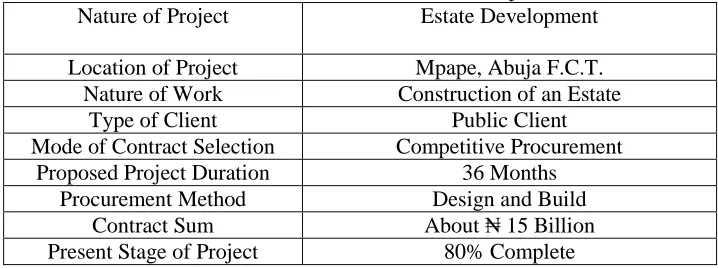
CCC’s project consists of construction of an estate for residential housing of public employees located within the Mpape area of the FCT. The vast area of land for the project was initially a virgin land covered with shrubs and trees of all kinds. Giving the rocky nature of the area, an extensive land clearing and blasting of the rocks and stones was carried out with the help of bulldozers, compressing machines, jack hammers and electronic blasting equipment, etc. The table below shows some of the characteristics of CCC’s project.
Table 2:Characteristics of CCC’s Project
Nature of Project Estate Development
Location of Project Mpape, Abuja F.C.T. Nature of Work Construction of an Estate
Type of Client Public Client
Mode of Contract Selection Competitive Procurement
Proposed Project Duration 36 Months
Procurement Method Design and Build
Contract Sum About ₦ 15 Billion
Present Stage of Project 80% Complete
4.2 Respondents in the CCC’s Project
Published by:Universiti Tun Hussein Onn Malaysia (UTHM) and Concrete Society of Malaysia (CSM) 45 http://penerbit.uthm.edu.my/ojs/index.php/IJSCET
4.3 Questionnaire Response Rate Analysis
In this chapter, the study firstly presents the results of the survey in the form of descriptive and inferential statistics using tables, figures and charts as well as other non-parametric statistical tools to arrive at the findings in the first instance. Secondly, the findings from the case study organizations were presented from the outcomes of the interviews, discussions, narratives, walkthroughs, and observations which were presented using tables, photographs etc. The study population consists of 487 personnel from a construction firm named CCC. Questionnaires were self-administered to the professionals in the construction firm mentioned earlier. The number of questionnaires distributed based on the sample size earlier determined and those retrieved as well as those found useable for the analysis are shown in table 3.
Table 3: Questionnaire Response
Construction Company Questionnaire Sent Questionnaire Retrieved Questionnaire Found Useable
CCC 487 437 403 (82.75%)
4.4 Reliability and Validity Tests
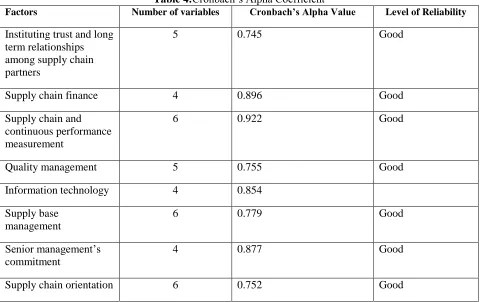
The internal consistencies of each item in each category of the questions on factors for successful SCM of construction project delivery in the Nigerian construction industry were determined using the Cronbach’s alpha coefficient. The Cronbach’s alpha has been adjudged to be appropriate in determining the reliability and validity of data. The table IV shows the value of the internal consistency of the various items under study using SPSS version 17.0.
Table 4:Cronbach’s Alpha Coefficient
Factors Number of variables Cronbach’s Alpha Value Level of Reliability
Instituting trust and long term relationships among supply chain partners
5 0.745 Good
Supply chain finance 4 0.896 Good
Supply chain and continuous performance measurement
6 0.922 Good
Quality management 5 0.755 Good
Information technology 4 0.854
Supply base management
6 0.779 Good
Senior management’s commitment
4 0.877 Good
Published by:Universiti Tun Hussein Onn Malaysia (UTHM) and Concrete Society of Malaysia (CSM) 46 http://penerbit.uthm.edu.my/ojs/index.php/IJSCET
The Cronbach’s Alpha coefficient for all the main eight (8) criteria for factors of successful supply chain management in construction project delivery which were identified from the literature are 0.745, 0.896, 0.922, 0.755, 0.854, 0.779, 877, and 0.752 respectively. This is an indication that the instrument is perfect in terms of reliability and as such possesses an adequate proof of internal consistency. As rightly stated earlier on, a reliability value of less than 0.6 is usually adjudged poor, 0.6-0.7 acceptable, while over 0.8 is adjudged to be good [71], [72]. The findings further states that higher Cronbach’s Alpha coefficient values indicates that the data generated are reliable as they possess a relatively high internal consistency and can be generalized to reflect opinions of all the respondents in the target/study area. The study hence deduced that all the main eight (8) criteria for factors of successful supply chain management in construction project delivery are reliable and was later used for further analysis.
4.5 Respondents Characteristics
In the first section of the questionnaire the respondent’s characteristics as regards their nationality, discipline, years of experience, qualifications as well as types of project executed etc are presented.
Table 5:Demographic Responses
Nationality of Respondents
Frequency Percentage
Nigerians 315 78.16
Foreigners 88 21.84
Total 403 100%
Respondents Discipline
Project Managers 74 17.62
Engineers 106 22.08
Architects 63 15.63
Builders 89 18.36
Quantity Surveyors 51 12.66
Others 20 4.96
Total 403 100%
Academic Qualification
Frequency Percentage
OND/ND 90 22.33
HND/B.Sc/B.Tech/B.Eng 178 44.17
MBA/M.Sc/M.Eng 127 31.51
PhD 8 1.99
Total 403 100%
Years of Experience in the Industry
Frequency Percentage
1-5 years 52 12.90
6-10 years 71 17.62
11-15 years 75 18.61
16-20 years 122 30.27
Over 21 years 83 20.60
Published by:Universiti Tun Hussein Onn Malaysia (UTHM) and Concrete Society of Malaysia (CSM) 47 http://penerbit.uthm.edu.my/ojs/index.php/IJSCET
Concept of CSCM
Frequency Percentage
Heard of CSCM 322 79.90
Not heard of CSCM 81 20.10
Total 403 100%
Extent of involvement in any CSCM activity
Frequency Percentage
Not been involved 132 32.75
Been involved 57 14.14
About to be involved 214 53.10
Total 403 100%
4.5.1 Nationality of Respondents
From the nationality of the respondents, the findings indicates that 315 (78.16%) of the respondents are Nigerians, while 88 (21.84%) are foreigners. This implies that the aforementioned construction firms comprises of a mix of home and foreign nationals whom are well experienced in their own rights to deliver quality projects to Nigerians.
4.5.2 Respondents Discipline
In terms of the respondents discipline, 106 (17.62%) are engineers, 74 (18.36%) are project managers, 89 (22.08%) builders, 63 (15.63%) are architects, 51 (12.66%) are quantity surveyors, while others are 20 (4.96%). This finding demonstrates that the respondents are professionals in their own rights and as such they possess the technical knowledge needed to contribute to the research thus providing the needed insights into the research. As stated by [19], the representation of all the professionals in the industry denotes an equal and adequate representation of every professional.
4.5.3 Respondent’s Years of Experience in the Industry
The experience of the respondents in the industry shows that majority 122 (30.27%) put in between 16-20 years, 83 (20.60%) over 21 years, 75 (18.61%) 11-15 years, 71 (17.62%) spent 6-10 years, while 52 (12.90%) of the respondents have spent between 1-5years. The response from the findings indicate that since majority of the respondents have spent 16-20 years in the industry, it implies that the respondents must have understood the technicalities as well as gained ample experience in dealing with issues bordering the industry. Hence they are fit to contribute their wealth of experience in the survey.
4.5.4 Respondent’s Academic Qualification
Published by:Universiti Tun Hussein Onn Malaysia (UTHM) and Concrete Society of Malaysia (CSM) 48 http://penerbit.uthm.edu.my/ojs/index.php/IJSCET
4.6 Concept of CSCM
The finding from the study depicts that majority of the respondents 322 (79.90%) have not heard of the concept of CSCM, while 81 (20.10%) have heard about it and as such are not knowledgeable in CSCM. The results of the findings could be attributed to the low level of awareness of what the concept is all about. Another reason for the large proportion of respondents affirming not to have heard of the concept may be that the respondents don’t know that the concept exist and as such a concerted effort should be made towards educating them on the need and gains ensuring there from the application of the concept.
4.7 Extent of Involvement in Any CSCM Activity
The finding from the study shows the extent of involvement of the respondents in CSCM related activity. Majority of the respondents 132 (32.75%) have not been involved in any CSCM activity, while 214 (53.10%) were about to be involved, and 57 (14.14%) have already been involved in CSCM activity. This implies that majority of the respondents are ignorant of the concept of SCM. As earlier stated, most of the respondents are not aware that they are deploying some of the techniques as depicted in the eight (8) features of successful SCM construction project delivery identified in the literature. Hence there is need to adequately educate the respondents on these key features.
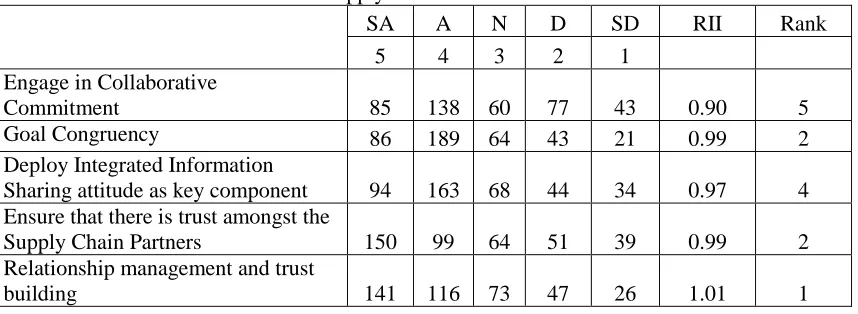
Table 6:Relative Importance Index Score for Instituting Trust and Long Term Relationships among
Supply Chain Partners
SA A N D SD RII Rank
5 4 3 2 1
Engage in Collaborative
Commitment 85 138 60 77 43 0.90 5
Goal Congruency 86 189 64 43 21 0.99 2
Deploy Integrated Information
Sharing attitude as key component 94 163 68 44 34 0.97 4 Ensure that there is trust amongst the
Supply Chain Partners 150 99 64 51 39 0.99 2
Relationship management and trust
building 141 116 73 47 26 1.01 1
The results presented in table 6 shows that the most important factor for instituting trust and long term relationships among SC partners is relationship management and trust building with a RII of 1.01 and ranked first. While the results indicate that engaging in collaborative commitment has the least relative importance index RII of 0.90 and ranked fifth. Ensuring that there is trust amongst the supply chain partners and goal congruency are the next in the list of the highest ranked factors.
Table 7:Relative Importance Index Score for Supply Chain Finance
SA A N D SD RII Rank
5 4 3 2 1
Getting organization’s stakeholders on board via the bank’s financial
assistance 124 77 86 64 52 0.91 4
Outline trade finance as a
Published by:Universiti Tun Hussein Onn Malaysia (UTHM) and Concrete Society of Malaysia (CSM) 49 http://penerbit.uthm.edu.my/ojs/index.php/IJSCET
chain finance
Tendency to achieve a visible
purchase-to-order 108 129 64 51 51 0.93 3
Ability to deploy an order-to-cash
process 103 137 73 56 34 0.95 2
The results presented in table 7 shows that the most important factor for supply chain finance is online trade finance as a pre-condition for a successful supply chain finance with a RII of 0.98 and ranked first. While the results indicate that getting the organization’s stakeholders on board via the bank’s financial assistance has the least relative importance index (RII) of 0.91 and ranked fourth. Ability to deploy an order-to-cash process and tendency to achieve a visible purchase-to-order are the next in the list of the highest ranked factors.
Table 8: Relative Importance Index Score for Supply Chain and Continuous Performance Measurement
The results presented in table 8 indicates that the most important factor for supply chain and continuous performance measurement is applying activity based costing and management as a performance measure via the elimination of non-value adding activities across the chain with a RII of 1.05 and ranked first. While the results show that holistically defining the solutions and scope of resolving supply chain issues has the least relative importance index (RII) of 0.88 and ranked sixth. Applying different quality standards such as ISO 9000 in achieving our project objectives and deploying Just-in-time and lean techniques in achieving our performance targets are the next in the list of the highest ranked factors.
SA A N D SD RII Rank
5 4 3 2 1
Holistically define the solutions and scope of
resolving supply chain issues 86 116 81 69 51 0.88 6
Avoid unintended consequences by
approaching our supply chain as interactive
systems 103 133 64 56 47 0.93 4
Apply different quality standards such as ISO
9000 in achieving our project objectives 146 120 56 47 34 1.00 2 Deploy Just-in-time and lean techniques in
achieving our performance targets 159 86 47 60 51 0.97 3
Apply Activity based costing and
management as a performance measure via the elimination of non-value adding activities
across the chain 180 94 60 43 26 1.05 1
Deploy earned value management metrics in
Published by:Universiti Tun Hussein Onn Malaysia (UTHM) and Concrete Society of Malaysia (CSM) 50 http://penerbit.uthm.edu.my/ojs/index.php/IJSCET
Table 9:Relative Importance Index Score for Quality Management
SA A N D SD RII Rank
5 4 3 2 1
Adopt and implement ISO 9000 systems
in improving the quality of our projects 184 94 51 43 31 1.04 4 Disseminating quality information across
the various chains 249 77 43 21 13 1.16 1
Maintain and sustain an IT based and
quality driven capability 176 137 39 31 20 1.08 3
Minimize the number of
contractors/subcontractors to a sizeable
number 94 120 86 60 43 0.91 5
Integrate the concept of quality
management system throughout the entire
supply chain 240 77 43 26 17 1.14 2
The findings presented in table 9 indicates that the most important factor for quality management is disseminating quality information across the various chains with a RII of 1.16 and ranked first. While the results show that minimizing the number of contractors/subcontractors to a sizeable number has the least relative importance index (RII) of 0.91 and ranked fifth. Integrating the concept of quality management system throughout the entire supply chain and maintaining and sustaining an IT based and quality driven capability are the next in the list of the highest ranked factors.
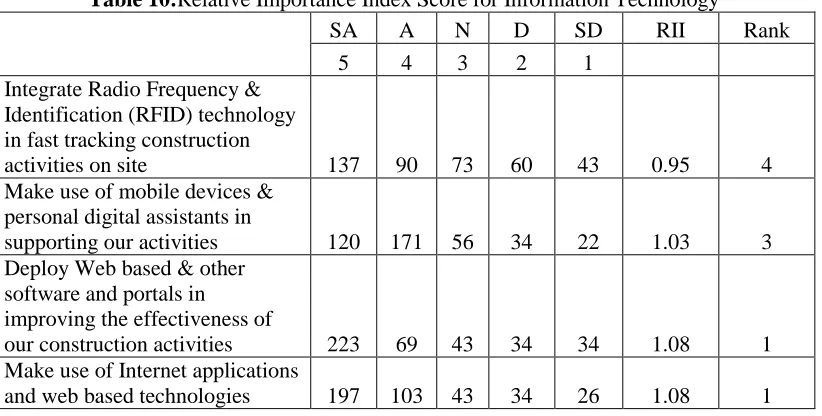
Table 10:Relative Importance Index Score for Information Technology
SA A N D SD RII Rank
5 4 3 2 1
Integrate Radio Frequency & Identification (RFID) technology in fast tracking construction
activities on site 137 90 73 60 43 0.95 4
Make use of mobile devices & personal digital assistants in
supporting our activities 120 171 56 34 22 1.03 3
Deploy Web based & other software and portals in improving the effectiveness of
our construction activities 223 69 43 34 34 1.08 1 Make use of Internet applications
and web based technologies 197 103 43 34 26 1.08 1
Published by:Universiti Tun Hussein Onn Malaysia (UTHM) and Concrete Society of Malaysia (CSM) 51 http://penerbit.uthm.edu.my/ojs/index.php/IJSCET
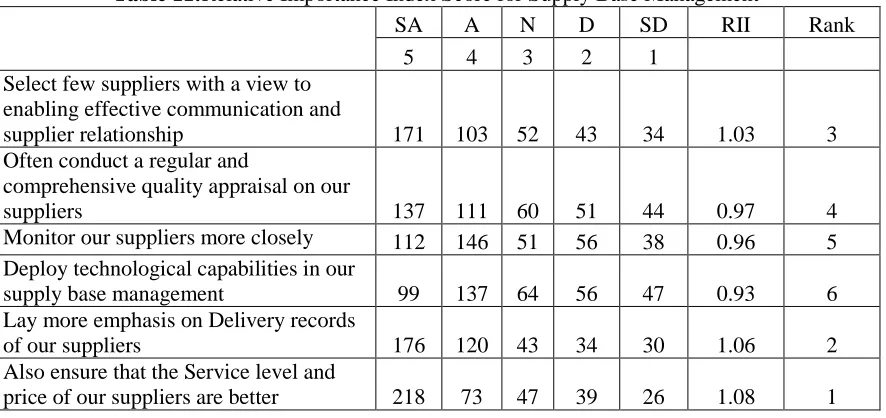
Table 11:Relative Importance Index Score for Supply Base Management
SA A N D SD RII Rank
5 4 3 2 1
Select few suppliers with a view to enabling effective communication and
supplier relationship 171 103 52 43 34 1.03 3
Often conduct a regular and
comprehensive quality appraisal on our
suppliers 137 111 60 51 44 0.97 4
Monitor our suppliers more closely 112 146 51 56 38 0.96 5 Deploy technological capabilities in our
supply base management 99 137 64 56 47 0.93 6
Lay more emphasis on Delivery records
of our suppliers 176 120 43 34 30 1.06 2
Also ensure that the Service level and
price of our suppliers are better 218 73 47 39 26 1.08 1
The findings presented in table 11 indicates that the most important factor for supply base management is ensuring that the service level and price of suppliers are better with a RII of 1.08 and ranked first. While the results show that deploying technological capabilities in our supply base management has the least relative importance index (RII) of 0.93 and ranked sixth. Laying more emphasis on delivery records of our suppliers and selecting few suppliers with a view to enabling effective communication and supplier relationship are the next in the list of the highest ranked factors.
Table 12:Relative Importance Index Score for Senior Management’s Commitment
SA A N D SD RII Rank
5 4 3 2 1
We believe top management needs to communicate effectively its policy
directions 94 120 77 69 43 0.91 4
We believe top management needs to motivate its employees towards the
realization of their objectives 150 112 60 47 34 1.00 2 Top management needs to commit to the
achievement of the concept 103 129 73 56 42 0.94 3
Top management needs to continually implement policies that would stimulate
interests of all and sundry 180 90 56 43 34 1.03 1
Published by:Universiti Tun Hussein Onn Malaysia (UTHM) and Concrete Society of Malaysia (CSM) 52 http://penerbit.uthm.edu.my/ojs/index.php/IJSCET
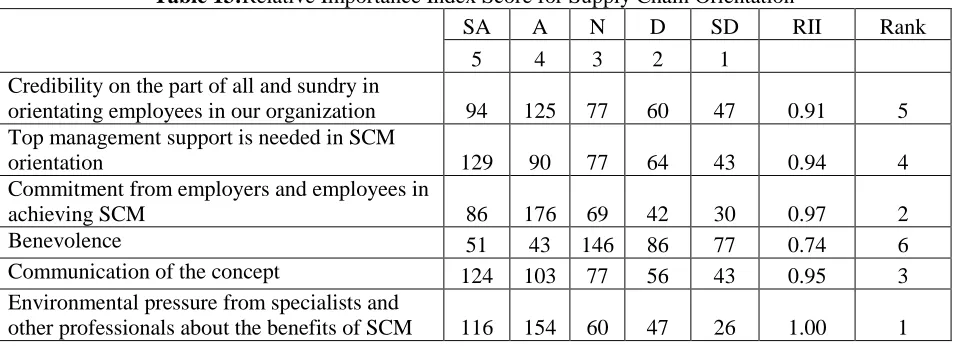
Table 13:Relative Importance Index Score for Supply Chain Orientation
SA A N D SD RII Rank
5 4 3 2 1
Credibility on the part of all and sundry in
orientating employees in our organization 94 125 77 60 47 0.91 5 Top management support is needed in SCM
orientation 129 90 77 64 43 0.94 4
Commitment from employers and employees in
achieving SCM 86 176 69 42 30 0.97 2
Benevolence 51 43 146 86 77 0.74 6
Communication of the concept 124 103 77 56 43 0.95 3
Environmental pressure from specialists and
other professionals about the benefits of SCM 116 154 60 47 26 1.00 1
The findings in table 13 indicates that the most important factor for supply chain orientation is environmental pressure from specialists and other professionals about the benefits of SCM with a RII of 1.00 and ranked first. While the findings depict that benevolence has the least relative importance index (RII) of 0.74 and ranked sixth. Commitment from employers and employees in achieving SCM and communication of the concept are the next in the list of the highest ranked factors.
In discussing the findings from the results proper, we looked at the various issues raised from the analysis of the research questions posed at the beginning of this research. The case study findings also show that the level of awareness/adoption of the SCM concept is abysmally low even though some of the construction firms were applying the concept in the delivery of their construction projects unknowingly. From the findings so far, CCC were to a greater extent applying majority of the SCM concepts judging from their assessment of the eight (8) main and forty (40) sub-criteria. Reasons for the deployment of the SCM success factors even though the response gotten from the respondents regarding their level of awareness of the concept was abysmally low, could be as a result of the firm is a foreign based multinational company hence they must have been conversant with the techniques right from their home country and the tendency to apply the concept becomes eminent. It is also surprising to state that the respondents in the construction firm were also ignorant of the fact that they were applying some of the SCM techniques in the delivery of their construction projects. In the area of IT application, quality management, supply chain continuous performance measurement and instituting trust and long term relationships among supply chain partners, the construction firm was up to date to a larger extent. While in the second instance, the construction firm performed low in the areas of SBM, SCF, SMC and SCO to a lesser extent. As stated by [39] IT has been adjudged to be an essential factor for the survival, success, and enhancement of various business organizations. The importance of IT in SCM cannot be undermined as information has always been the pivot in the management of most concerns [62]. On the aspect of quality management, [68] opined that for quality projects to emerge in a SC environment there is need to streamline all efforts towards the different areas with a view to enhancing quality from the end users point of view. [57] is of the view that the importance of continuous improvement processes with the SC entities as a measure for ensuring the satisfaction of all entities within the chain from the source point to the users by sharing information for purposes of improving the performance and effectiveness of the entire chain. The outcome of this exercise often leads to cost reduction, improved delivery time, improved quality and reduced inventory.
Published by:Universiti Tun Hussein Onn Malaysia (UTHM) and Concrete Society of Malaysia (CSM) 53 http://penerbit.uthm.edu.my/ojs/index.php/IJSCET
together. In relationship development, trust is critical as it tends to eliminate tension while helping to build confidence. Trust and flexibility according precipitates innovation and skills sharing that would lead to some benefits to the SC entities. While for effective collaboration amongst the various SC partners there is need for relationship management and trust building as one amongst other key variables to be considered in entrenching a successful outcome.
Published by:Universiti Tun Hussein Onn Malaysia (UTHM) and Concrete Society of Malaysia (CSM) 54 http://penerbit.uthm.edu.my/ojs/index.php/IJSCET
towards the realization of their objectives and top management needs to commit to the achievement of the concept are the next in the list of the highest ranked factors. The findings from the study agrees with that of [62] who are of the view that for optimum SC management to ensue, there is need for top management of an organization to continually implement policies that would stimulate the interests of all parties within the chain. [7] further opined that one of the vital functions of top management in any organization is to stimulate the entrenchment of values that would improve on the organization’s performance. Commitment from employers and employees in achieving SCM and communication of the concept are the next in the list of the highest ranked factors. The findings from this study is in line with [48] who stated that communications and environmental pressures could lead to an organization fostering the acceptance of SCO in an organization. [45] further opined that SCO extends to a stage where there is some sort of predisposition amongst the different partners in a SC which ultimately would lead to the formation of an integrated whole. He further stated that if this orientation which is a management philosophy per se is implemented in an organization, would definitely lead to the manifestation of SCM philosophy within such an organization.
5.0
Conclusions
From the results obtained, analyzed, and discussed, the study now concludes that; there is a general low level of awareness of the concept of SCM as applicable in the Nigerian construction industry. On the extent of involvement in CSCM related activity, we conclude that there were few response concerning the involvement of respondents in CSCM related activity 14.14%, while 53.10% were about to be involved and 32.75% have not yet been involved in any CSCM related activity. Findings from the case study organization also revealed some interesting features. CCC was found to have deployed majority of the SCM key features to a greater extent even though the response gotten from the respondents regarding their level of awareness of the concept was abysmally low. It is also surprising to state that most of the respondents were ignorant of the fact that they were applying some of the SCM techniques in the delivery of their construction projects. The study finally concludes that the most important feature for successful SCM construction project delivery includes; disseminating quality information across the various SC entities. This is followed in that order by deploying wed based and other software and portals as well as the application of internet technologies in improving the effectiveness of construction, ensuring that the level of service and price offered by suppliers are better, applying activity based costing and management as a performance measure via the elimination of non-value adding activities across the chain, top management needs to continually implement policies that would stimulate the interests of all and sundry, relationship management and trust building, communication and environmental pressures from specialists and other professionals about the benefits of SCM and outlining trade finances as a pre-condition for successful supply chain finance.
Published by:Universiti Tun Hussein Onn Malaysia (UTHM) and Concrete Society of Malaysia (CSM) 55 http://penerbit.uthm.edu.my/ojs/index.php/IJSCET
countries of the world where the concept has fully been embraced into the delivery of most modern day, cutting edged construction projects.
References
[1] A. Aloini, R. Dulmi, V. Mininno, and S. Ponticelli, “A Conceptual Model for Construction Supply Chain Management Implementation. In: S.D. Smith (Ed.) Proceedings 28th Annual ARCOM Conference, Association of Researchers in Construction Management. 3-5 Sept, 2012, Edinburgh, U.K. pp 675-685. 2012.
[2] A. Akintoye, G. McIntosh, and E. Fitzgerald, “A Survey of Supply Chain Collaboration and Management in the UK Construction Industry”, European Journal of Purchasing & Supply Management, vol, 6, pp.159-168. 2000.
[3] M. Saad, M. Jones, and P. James, “A Review of the Progress Towards the Adoption of Supply Chain Management Relationships in Construction”, European Journal of Purchasing & Supply Management, vol. 8, pp.173-183. 2002.
[4] R. Vrijhoef, and L. Koskela,. “Roles of Supply Chain Management in Construction. Proceedings of IGLC-7, 26-28 July 1999 at the University of California, Berkeley, CA, U.S.A. pp. 133-146. 1999
[5] S.M. Ahmed, S. Azhar, and I. Ahmad, “Supply Chain Management in Construction. Scope, Benefits and Barriers”, Delhi Business Review, vol. 3 no. 1, pp. 1-6. 2002.
[6] M. Christopher, “Logistics and Supply Chain Management: Creating Value-Adding Networks” (4th ed.)U.K., Pearson Education Limited. ISBN:978-0-273-73112-2. 2011.
[7] I.J. Chen, and A. Paulraj, “Towards a Theory of Supply Chain Management: The Constructs and Measurements”, Journal of Operations Management, vol. 22, pp. 119-150. 2004.
[8] B. Amade, “An Evaluation of Factors Constraining the Implementation of Public Private Partnerships in Construction Infrastructure Projects in Nigeria”, International Journal of Science & Engineering Investigations, vol. 1 no. 9, pp. 106-117. 2012a
[9] J.A. Ayangade, A. B. Wahab, and O. Alake, “An Investigation of the Performance of Due Process Mechanism in the Execution of Construction Projects in Nigeria”, Civil Engineering Dimension, vol. 11 no. 1, pp. 1-7. 2009.
[10] E.O. Ayodele, and O.M. Alabi, “Abandonment of Construction Projects in Nigeria: Causes and Effects”, Journal of Emerging Trends in Economics & Management Sciences, vol. 2 no.2, pp. 142-145. 2011.
[11] A.A. Aibinu, and G.O. Jagboro, “The Effects of Construction Delays on Project Delivery in Nigerian Construction Industry”, International Journal of Project Management, vol. 20, pp. 593-599. 2002.
[12] E. Equere, and L.C.M. Tang, “Dearth of Automation: The Consequences in Nigerian Construction Industry”, Retrieved from http://www.googlescholar.com. pp. 101-107. 2010.
[13] D. Bishop, A. Felstead, A. Fuller, N. Jewson, K. Kakavelakis, and L. Unwin, “Constructing Learning: Adversarial and Collaborative Working in the British Construction Industry”, Learning as Work Research Paper, 13, January, pp. 1-35.2008.
[14] E. Zimmer, O. Salem, A. Genaidy, and R. Shell, “Case Study: Lean Supply Chain Management in Construction Projects”, Proceedings for the 16th Annual Conference of the International Group for Lean Construction, pp.381-388. 2008.
Published by:Universiti Tun Hussein Onn Malaysia (UTHM) and Concrete Society of Malaysia (CSM) 56 http://penerbit.uthm.edu.my/ojs/index.php/IJSCET
[16] C. Kuei, C.N. Madu, C. Lin, and W.S. Chow, “Developing Supply Chain Strategies Based on the Survey of Supply Chain Quality and Technology Management”, International Journal of Quality & Reliability Management, vol. 19, no. 7, pp. 889-901. 2002.
[17] L.O. Oyewobi, B.O. Ganiyu, A.A. Oke, A.W. Ola-Awo, and A.A. Shittu, “Determinants of Unethical Performance in Nigerian Construction Industry”, Journal of Sustainable Development, vol. 4, no.4, pp. 175-182. 2011.
[18] E.O.P. Akpan, B. Amade, S.E. Okangba, and C.O. Ekweozor, “Constructability Practice and Project Delivery Processes in the Nigerian Construction Industry”, Journal of Building Performance, vol. 5, no. 1, pp. 10-21. 2014.
[19] S.O. Babatunde, A. Opawole, and I.C. Ujaddughe, “An Appraisal of Project Procurement Methods in the Nigerian Construction Industry”, Civil Engineering Dimension, vol. 12, no. 1, pp. 1-7. 2010.
[20] B. Amade, “Partnering Mechanisms and the Procurement of Building Construction Projects Delivery”, International Journal of Advanced Scientific & Technical Research, vol. 6, no. 2, pp. 596-620. 2012b.
[21] M.O. Dada, “Client and Contractor Organization’s Assessment of Design-Bid-Build Procurement Practice in Nigeria”, Civil Engineering Dimensions, vol. 15, no. 1,pp. 1-10. 2013.
[22] M.O. Dada, and G.M. Oladokun, “Analysis of Critical Success Factors for Public Private Partnerships in Nigeria”, Alam Cipta, vol. 5, no.2, pp. 13-26. 2012.
[23] I. Mbamali, and A.J. Okotie, “An Assessment of the Threats and Opportunities of Globalization on Building Practice in Nigeria”, American International Journal of Contemporary Research, vol. 2, no. 4, pp. 143-150. 2012.
[24] O.A. Oyedele, “Construction Project Financing for Sustainable Development of Nigerian Cities”, FIG Working Week, Environment for Sustainability, Abuja, Nigeria. 6—10 May. pp 1-17. 2013.
[25] T.K. Hai, M.Y. Aminah, I. Syuhaida, and L.F. Wei, “Reviewing the Construction Supply Chain Challenges and Construction Supply Chain Management Strategic Management”, International Journal of Civil Engineering & Structures, vol. 1, no.1, pp. 8-18. 2012.
[26] N. Viswanadham, and V. Kumar, “Design of Competitive Indian Construction Supply Chain Networks”, 153-192. 2006.
[27] H. Voordijk, and R. Vrijhoef, “Improving Supply Chain Management in Construction: What Can Be Learned From The Aerospace Industry”, In D.J. Greenwood, (Ed) 19th Annual ARCOM Conference, 3-5 Sept, University of Brighton. Association of Researchers in Construction Management. pp. 837-846. 2003
[28] S. Ronchi, “Managing Subcontractors and Suppliers in the Construction Industry”, Supply Chain Forum. An International Journal, vol. 7,no.1, pp. 24-33.2006.
[29] R. Hope, “A Vision for the Future of Construction: Supply Chain Management and Integration”, A Nottingham Trent University JCT Student Essay Competition. Retrieved from http://www.googlescholar.com. 2012.
[30] F.T. Edum-Fotwe, R. McCaffer, and M.Z. ABD Majid, “Subcontracting or Co-contracting: Construction Procurement in Perspective”, pp. 1-7. 1998.
[31] F. Yik, J. Lai, K.T. Chan, and E. Yiu, “Best Practices in Managing Specialist Subcontracting Performance”, A Report Submitted to the Construction Industry Institute, June, Hong Kong. 2006.
[32] L. Lin, and P. Gibson, “Implementing Supply Chain Quality Management in Subcontracting System for Construction Quality”, Journal of System & Management Sciences, vol. 1, no.1, pp.46-58. 2011.