Challenges and prospects of ICTs in management
communication in Nigeria
Esther O. DUROWOJU
1, Adams O. U. ONUKA
1, Ruth O. Ajisegiri
21. Institute of Education, University of Ibadan, Ibadan, Nigeria 2. Department of Educational Foundation and Counselling
Corresponding author email: [email protected]
ABSTRACT: This study was carried out to find out what managers perceive to be the challenges and prospects of utilising ICTs in management communication since it is an overt secret that management is a communicative profession and the bedrock of a successful management effort is effective communication. The ex-post facto research procedure was employed, while 300 subjects spreading across six industries were used for the study. A questionnaire titled Challenges and Prospect of Utilizing ICTs in Management Communication Questionnaire (CPUIMCQ) designed and validated by the researchers was used to gather data, which were analysed using percentages. Findings were that challengesincluded: epileptic power supply, high cost of procurement of computer hardware, possible loss of job by some professionals, information insecurity, internet fraud etc.While prospects included speedy provision of information, ability to store vast information, speedy and intelligent decision-making as well as operation and transportation cost reduction among others. Recommendations were among others that enabling environment, particularly assurance of constant power supply be ensured, stakeholders should ensure that procurement of requisite ICT equipment are purchased, made available for use, maintenance and upgraded as the need arises. It was alsorecommended that an ICT policy be formulated and executed to ensure maximum security of management information.
Keywords: Challenges, prospects of ICTs, management communication,
INTRODUCTION
According to the Oxford English Dictionary,the word manage comes from the Italianmaneggiare (to handle — especially tools), which in turn derives from the Latinmanus (hand). The French word mesnagement
(later ménagement) influenced the development in the meaning of the English word management in the 17th and 18th centuries (Wikipedia, 2013). Management means different things to different people and it cuts across all spheres of life be it education, politics, family, religion, health etc. Management, in the context of this paper, refers to the organisation and coordination of the activities of an enterprise in accordance with specified policies geared towards the achievement of clearly defined organisational objectives. Management is often included as a factor of production along with machines, materials, and money. Management may also refer to directors and managers who have the power and responsibility to make decisions forthe success of an enterprise or organisation. As a discipline, management comprises the interlocking functions of formulating corporate policy, and organizing, planning, controlling, and directing the firm's resources to achieving the corporate policy's objectives of the organisation. The size of management can range from one person in a small firm to hundreds or thousands of managers in multinational companies. In large firms, the board of directors formulates the policy which is implemented by the chief executive officer in tandem with his subordinate managers.
41
natural resources to achieve the objectives of an organisation.Since organizations can be viewed as systems, management can also be defined as human action designed to facilitate the production of useful outcomes from a system. It is pertinent to mention that management will be a mirage without effective communication. Through communication a manager or the management transmit and share organisational goals and objectives with the employees so as to ensure optimal actualization of such goals and objectives.Communication is as important as breathing. There is no normal human being who will not communicate with other human beings. Communication is viewed as a process of encoding messages or information by the sender (encoder) and decoding messages or information by the receiver (decoder). Eisenberg and Goodall Jr. (1993), cited by Durowoju (2010),asserted that communication is the process by which information is transmitted and understood between/among two or more people. The purpose of communicating is to share information, idea, messages, knowledge, thoughts and feelings with others. Communication is the single most important skill of any manager. He must be able to communicate effectively in person and in writing. It is also essential to note that before a manager can effectively discharge all his managerial duties, he must be able to share his ideas and plans by communicating with his superiors, peers and subordinates within and outside the organisation as the need arises. He needs goodcommunication skills to be able to plan, organise, direct, supervise, coordinate, monitor, staff, budget, report, and improve the activities within the organisation.
In any organisation, interpersonal communication occurs among the employees: superior(s) verse superior(s), superior(s) verse subordinate(s) or subordinate(s) verse subordinate(s).Various methods through which communication may take place among members of management, management/employees, and employees/employees in an organisation in daily transactions and undertakings and also with the outside world include: face-to-face, telephone, group meetings, formal presentations, memos, traditional mail, fax machines, employee publications, bulletin boards, audio- and videotapes, hotlines, computer conferencing, voice mail, teleconferencing, and videoconferencing.Basically, management communication engages the pragmatic form of communicating effectively in organizations among their individual members and up to the corporate level. It is apparent that the major aspect of a manager’s daily activities involves acquiring and disseminating information. He talks with and to people inside and outside the organisation, managers in other organisations, financial analysts, customers, suppliers, legal practitioners, government and members of press. In our contemporary world of advanced technological development where communication has out-grown the realm of traditional written and spoken forms, and grown to the realm of computer-generated presentations: from e-mail to press conferences and webpages, the effective manager must communicate with brevity and clarity. It is apparent that due to technological advancement, Nigeria and the world at large have become information societiesthat make the best possible use of ICTs.
Crede andMansell (1998) asserted that Information and Communication Technologies (ICTs) are crucially significant for sustainable development in developing countries. Thioune (2003) notes that for the past two decades most developed countries have witnessed fundamental changes that can be traced to ICTs. These multi-dimensional changes have been observed in almost all aspects of life: economics, education, communication, travel as well as management. In management, getting information quickly is important to superiors, peers and subordinates within an organisation. ICTs have made it possible to quickly find and distribute information. Thoiune indicated that many initiatives have taken at the international level to support Africa's efforts to develop communication infrastructure and these efforts are designed to enable African countries, including Nigeria, to find faster ways to achieve durable and sustainable development.
42
In management, ICT is often categorised into two broad types of product which are the traditional computer-based technologies (things you can typically do on a personal computer or using computers at home or at work); and the more recent, and fast-growing range of digital communication technologies (which allow people and organisations to communicate and share information digitally). ICT infrastructures include: radio, tape, mobile phones, television, internet, CD-ROM, E-mail, and computer. . They are being used to access specific information, for communication, to design working documents, and for keeping the accounts of organizations and small-and medium-sized enterprises (e.g. arts and crafts traders).Due to the new wave in the telecommunication industry electronic mail (e-mail) has brought a change in the way communication is being done in organization settings in this modern time. Users of e-mail have the opportunity to quickly form, edit and store messages. Information can be signed and transmitted to many people with a simple click of a mouse. It is essential to mention that another computed-mediated communication is the internet.Other aspects of management communications include developing corporate communication strategies, designing internal and external communications directives, and managing the flow of information, including online communication. New technology forces constant innovation on the part of communications managers (Durowoju, 2010).Advances in telecommunication technology in the last two decades have led to the development of certain computer networks that allow access to a vast amount of information and services (Glowniak, 1995). Of the many computer networks that have been developed, the most prominent and widespread is the internet, a global network of networks that enables computers of all kinds to directly and transparently communicate throughout the world. The Internet Society (2002) has described 'global network of networks' as the 'Information Super-highway' or 'Infobahn' because it constitutes a shared global resource of knowledge, and means of collaboration and co-operation in diverse communities.Internet according to Coiera(1995), is an open and unregulated community of people who communicate freely across an international electronic computer network. It is simply the linking together of individual computers in a network (Mckenzie, 1997).On the part of Farotimi (2001), she submitted that is a powerful tool used for searching, retrieving and disseminating information across the globe. In other words, internet has become one of the most significant channels of communication of our time.Farotimi further reiterated that internet has become more commercialised, and it is increasingly being used by all sectors of society, as against its initial conferment to the military and the academics. Sowande (2002) who was in support of Farotimi asserted that internet has become an indispensable factor for the successful internalization and growth of the capital market. Hence, it is not an understatement to say that internet has made information more accessible to people the world over.
In view of the tremendously benefits that can be derived from wholesome application of ICTs in the Nigerian sector, it became necessary to determine the challenges and prospects of applying ICTs in management communication in Nigeria. Therefore, the study examined the challenges and prospects of using ICTs effectively in management communication in the Nigerian context.
Research Questions
Two questions were raised and answers in this study which were:
What are the challenges of utilising ICTs in Management communication in Nigeria? What are the prospects of using ICTs in Management communication in Nigeria?
METHODOLOGY Research design
An ex-post facto procedure was adopted to carry out the research work, because the variables cannot be manipulated by the researchers.
Population
The population target for this study consisted of all the industries in Lagos State, Nigeria.
Sampling technique and sample
From the several industries in Lagos State, six industries were randomly selected. These industries so selectedwere Education, Banking, Agriculture, Commerce, Hospitality and Tourism, and Health. 50 managers were randomly chosen from each of these industries, totalling 300 participants in this study.
Instrumentation
43
Strongly Disagree. The instrument consisted of threeparts with the first (part A) eliciting information about the respondents. Part B consisted of 9 items dealing the challenges while Part Cwith 16 items concentrated on items dealing with the prospects of using ICTs in management communication.The reliability coefficient of the instrument was validated using a sample of 50 managers while Cronbach alpha was employed to determine the reliability coefficient which was 0.78 and content validity ratio of 0.83.Data Analysis
The resulting data from the study were analysed after collapsing the responses to two categories of only agree and disagree (merging SA with A & D with SD), and using simple percentage.
RESULTS AND DISCUSSION Research question 1
What are the challenges of utilising ICTs in Management communication in Nigeria?
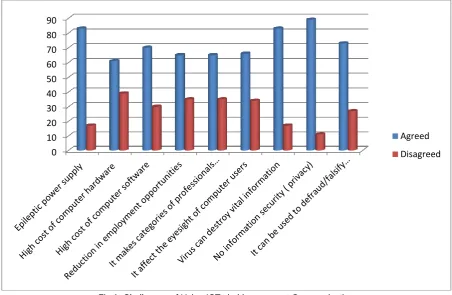
Fig 1. Challenges of Using ICTs in Management Communication
Fig. 1 shows how managers in Lagos, Nigeria perceived what they think constitute the challenges to successfully using ICTs in management communication in Nigeria. They perceive epileptic power supply as a major constraint to utilising ICTs in management communication in Nigeria (97%). 61% of the respondents were of the opinion that the high cost of hardware was a hindrance to effectively use ICT in management communication, while only 45% saw the cost of software as a challenge, implying that the majority of the respondents that it was not a barrier. 65% opined that the use of ICT in communication would result in reduction of employment opportunities for certain group of professionals, and another 65% saw its use by managers would definitely make some workers redundant, 51% felt that it could cause problem for the eyesight thereby reducing the effect of its usefulness. 77% believed that it virus could reduce its usefulness as it might destroy vital documents and thus make information retrieval a difficult endeavour. Other challenges identified by respondents were the fact that document could be falsified, being prone to fraud and that privacy and hence confidentiality could be probably lost by employing ICT in management communication.
From the foregoing, it is obvious that there challenges to wholesome employment of ICT in management communication in Nigeria, because the enabling environment such as constant energy/power has not been put in place or stabilised. This finding is consonance with the finding of Onuka, Adewale and Ajayi (2007) that the assurance of constant power supply was likely to motivate academics and learners to be willing to use ICT in all its ramifications. Another aspect of the result that agrees with the finding of the work of Onuka
0 10 20 30 40 50 60 70 80 90
Agreed
44
et al is the non-availability of adequate funding, which must have led the subjects to believe that hardware and to a lesser extent software were too costly. Respondents also posited that its use in management communication could be open to fraud and also to virus infection and thus, the loss of vital documents. Well, these challenges are not unfounded and yet they are not insurmountable. These observations only calls for some well-articulated policy to ensure that use of ICT are protected and that they could become readily available for purpose at reasonable and affordable prices, in order to ensure that managers in Nigeria catch up with their counterparts in the rest of the world, thereby growing the Nigerian economy.
Research question 2
What are the prospects of using ICTs in Management communication in Nigeria?
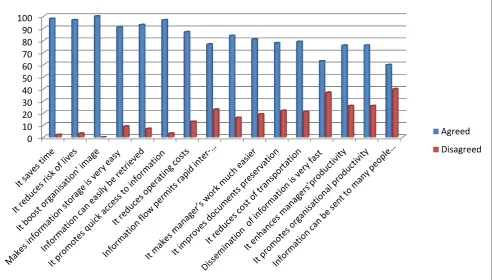
Fig. 2. Prospects of Using ICTs in Management Communication
Fig. 2 above shows the result of the respondents views on question 2 as follows:ICT saves time (98%),makes dissemination of information is very fast (97%), allows for simultaneous information passage to several persons (100%), easy information storage (91%), easy retrieval of information (93%), promotes access to information and intelligent decision-making (97%), reduces operating costs (87%), permits large amount of inflow (77%),boosts organisation’s image (60%), promotes managerial and organisational productivity (76% each respectively), reduction in risk of lives (63%), reduction in transportation costs (79%), improves the process of document preservation (78%), makes the manager’s job much easier (81%), and makes easy accumulation of information for management decision (84%).
The import of the finding in fig. 2 is that there are several benefits of the utilisation of ICT in management communication in Nigeria and they include among others the promotion of information storage and retrieval, managerial and organisational productivity, saving in terms of operating costs, cost of transportation, reduction in time wastage, promotes managerial intelligent decision-making. These are all in conformity with the assertion that CredeandMansell (1998) that ICTs are crucially significant for sustainable development in developing countries and the view of the Internet Society (2002) that internet is 'global network of networks' as the 'Information Super-highway' or 'Infobahn' because it constitutes a shared global resource of knowledge, and means of collaboration and co-operation in diverse communities, which in turn promotes rapid national development. This is so because developmental information can be simultaneously passed to several thousands of managers across for informed decision and action that could engender speedy development across the nation. These findings also confirm the finding of Onuka et al (2007) that the use of ICT can engender information sharing and hence effective cooperative developmental action for the benefit of humanity. It follows that in spite of the few hindrance to the use ICT in management communication as earlier identified in
0 10 20 30 40 50 60 70 80 90 100
Agreed
45
this, its prospects far outweighs those challenges, which therefore, implies Nigerian managers and indeed managers working in Nigeria should be encourage to acquire the requisite skills in ICT and use them in their day to day operations particularly with regard to management, which is the bedrock of organisational actions.CONCLUSION
The work clearly showed that the use of ICTs in management communication in Nigeria has tremendous benefit for the Nigerian society and can also engender national development. The importance of ICT in promoting effective management communication and the subsequent management decision –making facilitation was revealed by this study and the benefits of use in management communication cannot be underrated. It has been revealed that its use by the Nigerian manager will promote collaborative developmental efforts through information sharing process. It has be found also that the few challenges cannot and must be left unattended as they could nevertheless inhibit its effective use in management communication and thus, could slow down the developmental process of the country in this era of rapid developmental process world-wide.
RECOMMENDATIONS
Managers should be encouraged to acquire the requisite knowledge and skills in the use of ICTs in management communication so that they will not lag behind their counterparts in the rest of the world.
Funds should be made available in the appropriate quantity for the purchase and maintenance of ICTs equipment to promote ICTs utilisation in management communication in Nigeria.
National ICT policy should be articulated, executed and promoted to protect confidentiality and to allay the fears of stakeholders that it is porous to information hacking by internet fraudsters.
That effort should be made by various stakeholders to ensure that the enabling environment is in place to stave off possible obstacles to the usage of ICT in management communication in Nigeria.
ICT equipment be constantly upgraded to make them current
REFERENCES
Coiera E. 1995.Medical informatics.BMJ 1995, 310:1381-1386. Retrieved May 23, 2013
Crede A, Mansell R. 1998. Knowledge societies… in a nutshell: Information technologies for sustainable development. Ottawa, Canada: IDRC.
Durowoju EO. 2010.Communication in Management 2010.In Onuka, Adams (ed.) Some Aspects of Management in Distance Learning.Ibadan: University of Ibadan, Distance Learning Centre. pp 97 – 128
Farotimi A. 2001. Internet service provision and use in Nigeria: a case study of an information service provider in Ibadan. In Nwalo, K. I. N. et al (Eds) Education and Information Studies Abstracts Vol. 1 pp. 132
Glowniak JV. 1995.Medical resources on the internet.Ann Intern Med 1995, 123(3):123-131. Martin JW. 1995. The global information society.England : Aslib, P.3.
Mckenzie BC. 1997.Medicine and the internet: introducing on-line resources and terminology.New-York, Oxford University Press 1997, 97.Retrieved May 23, 2010.
Okwudishu CO. 2005. ICTs and digital divide: Implications for open learning and distance education in Nigeria journal of education in developing areas (JEDA) M(13) 2002 – 2010
Onuka AOU, Adewale TM, Ajayi KO. 2007. An Evaluation of the use of internet for Research by Nigerian Education University Lecturers. In
Nigerian Journal of Education Administration and Planning (NAEAP).Vol. 7 No.1, pp. 92-104. (Nigeria)
Onuka AOU. 2010. Total Quality Management in Distance Learning in Onuka, Adams (ed) Some Aspects of Management in Distance Learning. Ibadan: DLC UI pp 13 - 28
The Internet Society. 2002.What is the Internet?Retrieved from [http://www.isoc.org/internet/] webciteRetrieved on March, 2013 The Oxford English Dictionary 4th edition
Sowande IA. 2002. The influence of the internet – an aspect of information communication technology on the Nigeria Stock Exchange.In Nwalo, K. I. N. et al (Ed), Education and Information Studies Abstracts Vol. 1 pp. 132
Thioune RMC. 2003. Information and communication technologies for development in Africa: Opportunities and challenges for community development. Vol. 1 Ottawa: IDRC. Available:http://www.idrc.ca Retrieved June 1, 2010